
New Books in Korean Studies
158 episodes — Page 3 of 4
Ep 139Japanese Immigration and the Korean Minority
Why does Japanese immigration policy have such a bad name? What are the historical origins of tight immigration policies? Where have these policies left immigrants of Korean descent, many of who lost their Japanese nationality in the wake of the Pacific War? Are Koreans in Japan still torn between competing loyalties to North and South Korea? And what prospects are there for immigration reform in Japan, especially given the country’s aging population and urgent need for more labour? Sara Park is a lecturer in Japanese culture at the University of Helsinki, who has written widely on questions of gender, the family, immigration, ethnicity and minorities in Japan. Her latest book in Japanese is ヘルシンキ 生活の練習 (Practice of Life in Helsinki, Tokyo: Chikuma Shobo, 2021), about living through the Finnish Covid-19 lockdown. Duncan McCargo is director of the Nordic Institute of Asian Studies. He has previously published three editions of Contemporary Japan, a widely-assigned introductory text. The Nordic Asia Podcast is a collaboration sharing expertise on Asia across the Nordic region, brought to you by the Nordic Institute of Asian Studies (NIAS) based at the University of Copenhagen, along with our academic partners: the Centre for East Asian Studies at the University of Turku, and Asianettverket at the University of Oslo. We aim to produce timely, topical and well-edited discussions of new research and developments about Asia. About NIAS: www.nias.ku.dk Transcripts of the Nordic Asia Podcasts: http://www.nias.ku.dk/nordic-asia-podcast Learn more about your ad choices. Visit megaphone.fm/adchoices Support our show by becoming a premium member! https://newbooksnetwork.supportingcast.fm/korean-studies
Ep 74Squid Game
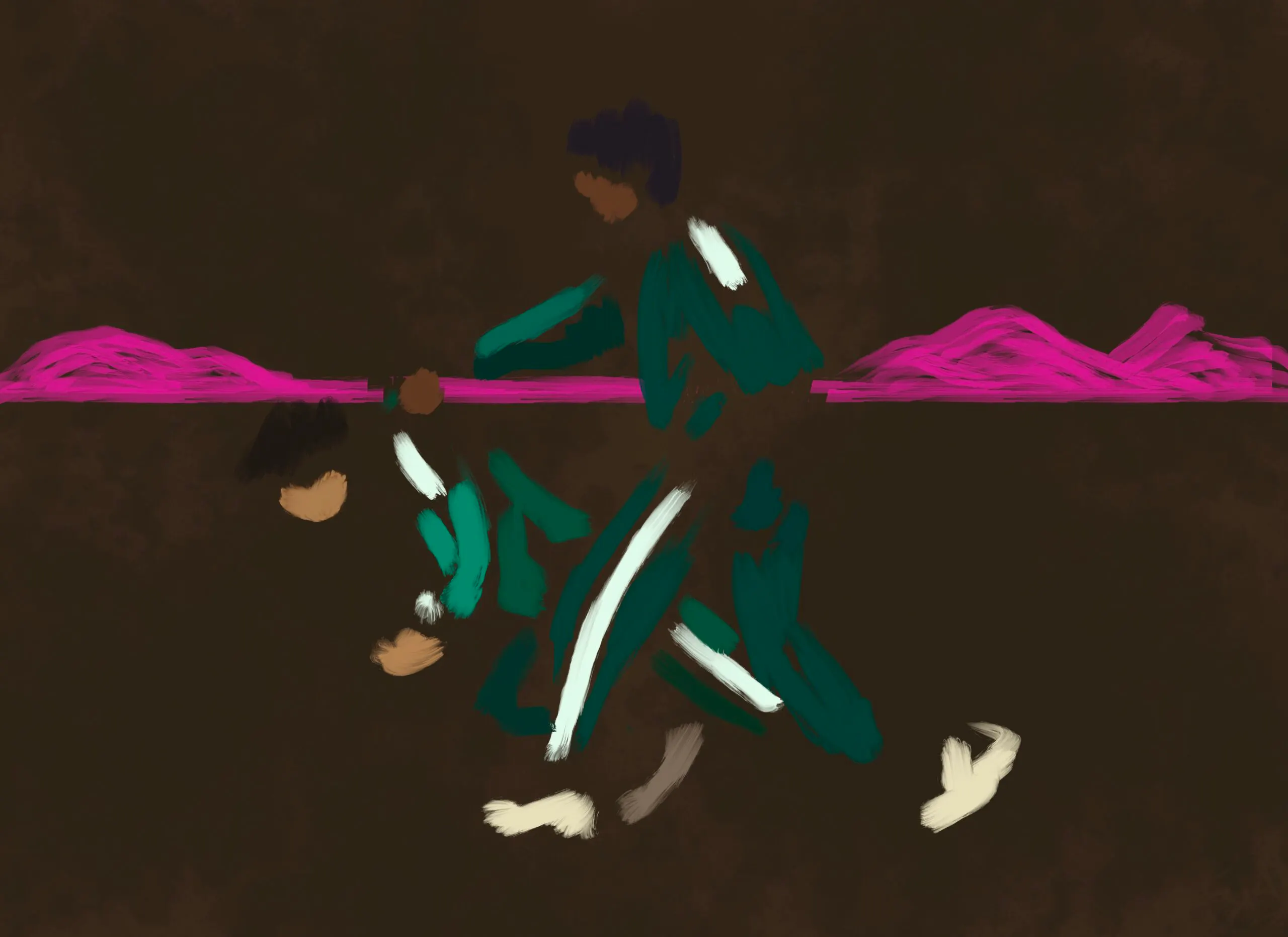
Kyung Hyun Kim talks about the Netflix series Squid Game, its economic and political contexts, and its cultural potential. He also talks about his new book, Hegemonic Mimicry, out from Duke University Press. Prof. Kyung Hyun Kim is a creative writer, a scholar, and a film producer, who is currently a professor in the Department of East Asian Studies, UC Irvine. He has worked with internationally renowned directors such as Hong Sang-soo, Lee Chang-dong and Marty Scorsese, and also with American film producers Jason Blum and Steven Schneider. Prof. Kim is author of Virtual Hallyu: Korean Cinema of the Global Era, The Remasculinization of Korean Cinema, Hegemonic Mimicry: Korean Popular Culture of 21st Century, all of them published by Duke University Press, and a Korean-language novel entitled In Search of Lost G (Ireo beorin G-reul chajaso, 2014) about a Korean mother combing through the US in search of her missing son during his junior year in a Massachusetts prep school. He has coproduced and co-scripted two award-winning feature films Never Forever (2007, Sundance Film Festival’s U.S. Main Competition) and The Housemaid (2010, Cannes Film Festival Main Competition). He has recently written The Mask Debate, his first theatre screenplay, which premiered in February 2021 through UCI’s Illuminations: Chancellor’s Initiative in Arts and Drama YouTube channel. Image: © 2021 Saronik Bosu Music used in promotional material: ‘Horizon Mine’ by krackatoa Learn more about your ad choices. Visit megaphone.fm/adchoices Support our show by becoming a premium member! https://newbooksnetwork.supportingcast.fm/korean-studies
Ep 15Helen Jin Kim, "Race for Revival: How Cold War South Korea Shaped the American Evangelical Empire" (Oxford UP, 2022)
In 1973, Billy Graham, "America's Pastor," held his largest ever "crusade." But he was not, as one might expect, in the American heartland, but in South Korea. Why there? Race for Revival: How Cold War South Korea Shaped the American Evangelical Empire (Oxford UP, 2022) seeks not only to answer that question, but to retell the story of modern American evangelicalism through its relationship with South Korea. With the outbreak of the Korean War, the first "hot" war of the Cold War era, a new generation of white fundamentalists and neo-evangelicals forged networks with South Koreans that helped turn evangelical America into an empire. South Korean Protestants were used to bolster the image of the US as a non-imperial beacon of democratic hope, in spite of ongoing racial inequalities. At the same time, South Koreans used these racialized transpacific networks for their own purposes, seeking to reimagine their own place in the world order. They envisioned Korea as the "new emerging Christian kingdom," that would beat the American evangelical empire in a race for revival. Yet these nonstate networks ultimately foreshadowed the rise of the Christian Right in the US and South Korea in the 1980s and 1990s. Employing a bilingual and bi-national approach, Race for Revival reexamines the narrative of modern evangelicalism through an innovative transpacific framework, offering a new lens through which to understand evangelical history from the Korean War to the rise of Ronald Reagan. Byung Ho Choi is a PhD candidate in the History and Ecumenics program at Princeton Theological Seminary, concentrating in World Christianity and history of religions. His research focuses on the indigenous expressions of Christianities found in Southeast Asia, particularly Christianity that is practiced in the Muslim-dominant archipelagic nation of Indonesia. More broadly, he is interested in history and the anthropology of Christianity, complexities of religious conversion and social identity, inter-religious dialogue, ecumenism, and World Christianity. Sun Yong Lee is a Ph.D. candidate in the Department of History and Ecumenics, studying World Christianity and history of religions at Princeton Theological Seminary. Her research interests center on the history of Christianity in East Asia, Korea in particular. She is especially interested in women’s experiences in their mission encounters and their participation in the formation of Christianity and social changes. Her research expands to social theory of religion and indigenous religions. Learn more about your ad choices. Visit megaphone.fm/adchoices Support our show by becoming a premium member! https://newbooksnetwork.supportingcast.fm/korean-studies
Ep 203Hyaeweol Choi, "Gender Politics at Home and Abroad: Protestant Modernity in Colonial-Era Korea" (Cambridge UP, 2020)
Postcolonial feminist scholarship on the formation of gender relations primarily uses the analytic of colonizer-colonized dyad. In her new monograph, Gender Politics at Home and Abroad: Protestant Modernity in Colonial-Era Korea (Cambridge UP, 2020), Professor Hyaeweol Choi makes an important intervention by examining colonial Korea to propose a new framework that accounts for transnational encounters between national reformists, missionaries, and colonial authorities. Drawing from both major and minor archives in various geographic sites such as Korea, Japan, the US, Sweden, and Denmark, Choi locates the voices of the educated Korean women whose reform rhetoric and activities reflect transnational encounters. Postcolonial studies have shown us how archives are a contentious, political site with prominent feminist scholar Antoinette Burton pointing out the need to understand the interdependence between discursive visibility of minoritized people and their experiences. Through her research, Choi is able to show how educated women, despite their status as an elite minority, points to the larger structure of patriarchy and how it is constantly contested and reshaped by forces such as the state, ideologies of western domesticity, and religion. Gender Politics at Home and Abroad is an important read for scholars and public who are interested in postcolonial feminism, domesticity, transnational history, and colonial modernity. Hyaeweol Choi is a Professor who holds joint appointments with Religious Studies and Gender, Women's and Sexuality Studies at the University of Iowa. She is also a C. Maxwell and Elizabeth M. Stanley Family and Korea Foundation Chair in Korean Studies. Her publications include Gender and Mission Encounters in Korea: New Women, Old Ways (Berkeley: University of California Press, 2009), New Women in Colonial Korea: A Sourcebook (London: Routledge, 2013), and Gender Politics at Home and Abroad: Protestant Modernity in Colonial-era Korea (Cambridge: Cambridge University Press, 2020). Da In Ann Choi is a PhD student at UCLA in the Gender Studies department. Her research interests include care labor and migration, reproductive justice, social movement, citizenship theory, and critical empire studies. She can be reached at [email protected]. Learn more about your ad choices. Visit megaphone.fm/adchoices Support our show by becoming a premium member! https://newbooksnetwork.supportingcast.fm/korean-studies
Ep 445Christopher Carothers, "Corruption Control in Authoritarian Regimes: Lessons from East Asia" (Cambridge UP, 2022)
Political corruption remains … one of the most intriguing and challenging issues in social science research and public policy, perhaps because although it occurs in virtually all polities, its causes, patterns, and consequences often seem unique to each circumstance. – Cadres and Corruption by Xiaobo Lu (2000) Corruption is rampant in many authoritarian regimes, leading most observers to assume that autocrats have little incentive or ability to curb government wrongdoing. Corruption Control in Authoritarian Regimes – Lessons from East Asia, published by Cambridge University Press in 2022, shows that meaningful anti-corruption efforts by nondemocracies are more common and more often successful than is typically understood. Drawing on wide-ranging analysis of authoritarian anti-corruption efforts globally and in-depth case studies of key countries such as China, South Korea and Taiwan over time, Dr. Carothers constructs an original theory of authoritarian corruption control. He disputes views that hold democratic or quasi-democratic institutions as necessary for political governance successes and argues that corruption control in authoritarian regimes often depends on a powerful autocratic reformer having a free hand to enact and enforce measures curbing government wrongdoing. His book advances our understanding of authoritarian governance and durability while also opening up new avenues of inquiry about the politics of corruption control in East Asia and beyond. Christopher Carothers is a scholar of comparative politics and most recently affiliated with the University of Pennsylvania’s Center for the Study of Contemporary China as a post-doctoral fellow. Professor Carothers research focuses on authoritarianism and corruption control with a regional focus on East Asia, and has written for Foreign Affairs, Foreign Policy, Politics and Society and the Journal of Democracy among others. Keith Krueger lectures in the SILC Business School at Shanghai University. Learn more about your ad choices. Visit megaphone.fm/adchoices Support our show by becoming a premium member! https://newbooksnetwork.supportingcast.fm/korean-studies
Ep 125The New Political Cry in South Korea?: The History of Feminist Activisms and Politics in South Korea
The anti-feminist movement in South Korea is gaining global attention. The story has been covered by many western mainstream news outlets including the New York Times, CNN, and BBC. Is this trend a new trend in South Korea? Where does this anti-feminist idea come from? In this episode, we invite Prof. Ju Hui Judy Han and discuss South Korean feminist history and gender politics. We discuss pre- and post-democratization feminist movements, the new president’s worrisome position on gender issues, and predict the future feminist movements in South Korea. We end our conversation with the conclusion that although there have been many obstacles, we cannot overlook the progress at the grassroots level. If you are interested in learning about South Korean feminist history, join Myunghee Lee for this interview with Judy Han. This is the second episode in the series. The first episode can be found here. About the interviewer Myunghee Lee is a Postdoctoral Fellow at NIAS. She also is a Non-resident Fellow at the Center for International Trade and Security at the University of Georgia. Her research focuses on protest, authoritarian politics, and democratization. About the speaker Ju Hui Judy Han is a cultural geographer and assistant professor in Gender Studies at the University of California, Los Angeles. She holds a PhD in Geography from the University of California, Berkeley, and has previously taught at the University of Toronto in Canada. Her comics and writings about (im)mobilities, faith-based movements, and queer politics have been published in journals such as The Scholar & Feminist Online, Critical Asian Studies, positions: asia critique, Geoforum, and Journal of Korean Studies as well as in several edited books such as Rights Claiming in South Korea (2021), Digital Lives in the Global City (2020), Ethnographies of U.S. Empire (2018), and Territories of Poverty (2015). She is currently working on a book on “queer throughlines” and co-writing another book on protest cultures. The Nordic Asia Podcast is a collaboration sharing expertise on Asia across the Nordic region, brought to you by the Nordic Institute of Asian Studies (NIAS) based at the University of Copenhagen, along with our academic partners: the Centre for East Asian Studies at the University of Turku, and Asianettverket at the University of Oslo. We aim to produce timely, topical and well-edited discussions of new research and developments about Asia. About NIAS: www.nias.ku.dk Transcripts of the Nordic Asia Podcasts: http://www.nias.ku.dk/nordic-asia-podcast Learn more about your ad choices. Visit megaphone.fm/adchoices Support our show by becoming a premium member! https://newbooksnetwork.supportingcast.fm/korean-studies
Ep 114Kim Hyun, "Glory Hole" (Seagull Books, 2022)
In this episode, co-translators Suhyun J. Ahn and Archana Madhavan discuss their Korean-to-English translation of Glory Hole by Kim Hyun (Seagull Books, 2022). Released as part of The Pride List from The University of Chicago Press, Glory Hole is a fantastical collection of queer poems that are uncomfortable, bodily, fluid-filled, and delightfully puzzling to read. Across fifty-one bewildering poems, Kim both engages and confuses readers with puns, distorted retellings of American popular culture, dystopian landscapes, robots, and more, all to a relentlessly queer backdrop of longing and sexual desire. Tune in to hear Suhyun and Archana read some of their favorite translations from this collection, talk about their own journeys to translation and translating Glory Hole, and share the challenges and joys of bringing this work into the English language: the Korean wordplay that they reimagine in English; their collaborative process of making sense of these poems in both Korean and English; some favorite (and most frustrating) parts of the translation process, and more! Suhyun J. Ahn is a Korean-English translator who is pursuing a PhD in East Asian Studies at Princeton University. Archana Madhavan is a Korean-English translator who works a day job in tech. Jennifer Gayoung Lee is a writer and data analyst based in New York City. Learn more about your ad choices. Visit megaphone.fm/adchoices Support our show by becoming a premium member! https://newbooksnetwork.supportingcast.fm/korean-studies
Ep 443Katie Stallard, "Dancing on Bones: History and Power in China, Russia and North Korea" (Oxford UP, 2022)
Present-day relations between ‘the West’ and each of China, Russia and North Korea are often fractious to say the least, yet today’s global atmosphere of menace or crisis just as often has to do with history as it does with contemporary disagreements. All states of course seek ‘usable pasts’ which may or may not be in conflict with one another, but as Katie Stallard shows in Dancing on Bones, leaders in each of Beijing, Moscow and Pyongyang have of late gone to particularly great lengths to shape historical narratives which justify their grip on power. Drawing on years of on-the-ground reporting and research in each of these three critically important countries, Stallard mixes analysis of political and historical events with first-hand interviews and reportage to offer a vivid sense of how history is put to ever-changing uses and why this matters. Accessibly written and richly referenced, Dancing on Bones: History and Power in China, Russia and North Korea (Oxford UP, 2022),sheds compelling light on often-under-considered connections between three countries which share much beyond their status as perceived ‘revisionist’ powers. Ed Pulford is a Lecturer in Chinese Studies at the University of Manchester. His research focuses on friendships and histories between the Chinese, Korean and Russian worlds, and indigeneity in northeast Asia. Learn more about your ad choices. Visit megaphone.fm/adchoices Support our show by becoming a premium member! https://newbooksnetwork.supportingcast.fm/korean-studies
Ep 599Markus Bell, "Outsiders: Memories of Migration to and from North Korea" (Berghahn, 2021)
In this timely and insightful new book, Markus Bell presents the case study of Korean-Japanese – “Zainichi” – who have escaped North Korea in the years following the end of the Cold War. Through building alliances and long-distance relationships, Zainichi returnees resist forced integration and push back against life-threatening political purges to forge new ways of belonging and, ultimately, surviving against the odds. Outsiders: Memories of Migration to and From North Korea (Berghahn, 2022) is the story of Korean families who, despite experiencing loss, trauma and dislocation, manage to remake themselves in the process of transplanting their lives. Dr. Markus Bell is an anthropologist specializing in forced migration and labour migration, with over a decade of experience working with displaced people and migrant workers in the Asia Pacific region. He has taught at the Australian National University, University of Sheffield, and Goethe University, Frankfurt. He earned his PhD from the Australian National University in 2016. He works as a long-term consultant for the United Nations International Organisation for Migration, and is also a Research Fellow at La Trobe University, Melbourne. Tweets @mpsbell Lamis Abdelaaty is an assistant professor of political science at the Maxwell School of Syracuse University. She is the author of Discrimination and Delegation: Explaining State Responses to Refugees (Oxford University Press, 2021). Email her comments at [email protected] or tweet to @LAbdelaaty. Learn more about your ad choices. Visit megaphone.fm/adchoices Support our show by becoming a premium member! https://newbooksnetwork.supportingcast.fm/korean-studies
Ep 113The Security Dilemma in the Korean Peninsula: Foreign Policy of Yoon Seok-youl, the Incoming President of South Korea
South Korean presidential election ended and the conservative party candidate, Yoon Suk-yeol won the election. How will he balance the relationships between Korea and the US and China? The current progressive Moon Jae-in administration has pursued strategic ambiguity in foreign policy, trying to maintain a strong alliance relationship with the US while pursuing an economic partnership with China. During the campaign, Yoon promised that he will reverse the Moon’s foreign policy and pursue strategic clarity, emphasizing security concerns in the Korean Peninsula. In this episode, Dr. Sungmin Cho shares his expertise on South and North Korea’s relations with China, North Korea’s newly posed threats this year, and the security dynamics surrounding the Korean Peninsula. Dr. Sungmin Cho is a professor of the Daniel K. Inouye Asia-Pacific Center for Security Studies, an academic institute of the US Department of Defense, based in Hawaii. His area of expertise covers China-Korean Peninsula relations, North Korea’s nuclear program, and the US alliance in East Asia. Dr. Cho has published numerous articles in peer-reviewed journals, including World Politics, The China Journal, Asian Security, Journal of Indo-Pacific Affairs, and Korea Observer. His commentaries also appeared in Foreign Affairs, War on the Rocks, The Diplomat, and Defense One, among others. Prior to the academic career, Dr.Cho served in the Korean Army as an intelligence officer for three years, including seven-month deployment to Iraq. He received his PhD in Government from Georgetown University, his Master’s degree in International Relations from Peking University, and his B.A. in Political Science from Korea University. Disclaimer: Views expressed in the podcast belong to the commentator. The Nordic Asia Podcast is a collaboration sharing expertise on Asia across the Nordic region, brought to you by the Nordic Institute of Asian Studies (NIAS) based at the University of Copenhagen, along with our academic partners: the Centre for East Asian Studies at the University of Turku, and Asianettverket at the University of Oslo. We aim to produce timely, topical and well-edited discussions of new research and developments about Asia. About NIAS: www.nias.ku.dk Transcripts of the Nordic Asia Podcasts: http://www.nias.ku.dk/nordic-asia-podcast Learn more about your ad choices. Visit megaphone.fm/adchoices Support our show by becoming a premium member! https://newbooksnetwork.supportingcast.fm/korean-studies
Ep 44Liora Sarfati, "Contemporary Korean Shamanism: From Ritual to Digital" (Indiana UP, 2021)
Once viewed as an embarrassing superstition, the theatrical religious performances of Korean shamans--who communicate with the dead, divine the future, and become possessed--are going mainstream. Attitudes toward Korean shamanism are changing as shamanic traditions appear in staged rituals, museums, films, and television programs, as well as on the internet. In Contemporary Korean Shamanism: From Ritual to Digital (Indiana University Press, 2021), Liora Sarfati explores this vernacular religion and practice, which includes sensory rituals using laden altars, ecstatic dance, and animal sacrifice, within South Korea's hypertechnologized society, where over 200,000 shamans are listed in professional organizations. In doing so, Sarfati reveals how representations of shamanism in national, commercialized, and screen-mediated settings have transformed opinions of these religious practitioners and their rituals. Applying ethnography and folklore research, Contemporary Korean Shamanism maps this shift in perception about shamanism--from a sign of a backward, undeveloped Korea to a valuable, indigenous cultural asset. Learn more about your ad choices. Visit megaphone.fm/adchoices Support our show by becoming a premium member! https://newbooksnetwork.supportingcast.fm/korean-studies
Ep 140Daniel Y. Kim, "The Intimacies of Conflict: Cultural Memory and the Korean War" (NYU Press, 2020)
In this episode I talk with Daniel Y. Kim, Associate Professor of English and American Studies at Brown University, about his 2020 book Intimacies of Conflict: Cultural Memory and the Korean War, published by New York University Press. Though often considered “the forgotten war,” lost between the end of World War II and the start of the Cold War, the Korean War was, as Daniel Y. Kim argues, a watershed event that fundamentally reshaped both domestic conceptions of race and the interracial dimensions of the global empire that the United States would go on to establish. He uncovers a trail of cultural artefacts that speaks to the trauma experienced by civilians during the conflict but also evokes an expansive web of complicity in the suffering that they endured. Taking up a range of American popular media from the 1950s, Kim offers a portrait of the Korean War as it looked to Americans while they were experiencing it in real time. Kim expands this archive to read a robust host of fiction from US writers like Susan Choi, Rolando Hinojosa, Toni Morrison, and Chang-rae Lee, and the Korean author Hwang Sok-yong. The multiple and ongoing historical trajectories presented in these works testify to the resurgent afterlife of this event in US cultural memory, and of its lasting impact on multiple racialized populations, both within the US and in Korea. The Intimacies of Conflict offers a robust, multifaceted, and multidisciplinary analysis of the pivotal—but often unacknowledged—consequences of the Korean War in both domestic and transnational histories of race. Winner, 2020 Peter C Rollins Prize, given by the Northeast Popular & American Culture Association. Adhy Kim is a doctoral candidate in Comparative Literature at the University of North Carolina at Chapel Hill. Learn more about your ad choices. Visit megaphone.fm/adchoices Support our show by becoming a premium member! https://newbooksnetwork.supportingcast.fm/korean-studies
S1 Ep 31On Korean Zen Buddhism
Anita Feng (Zen Master Jeong Ji) serves as the guiding teacher at Blue Heron Zen Community in Seattle, Washington. She has practiced Zen in the lineage of Zen Master Seung Sahn since 1976. In the late ’70s she lived and studied intensively with Zen Master Seung Sahn at the Providence Zen Center. She received Inka from Zen Master Ji Bong 2008 and received final transmission as a Zen Master in 2015. Learn more about your ad choices. Visit megaphone.fm/adchoices Support our show by becoming a premium member! https://newbooksnetwork.supportingcast.fm/korean-studies
Ep 70Alexa Alice Joubin, "Shakespeare & East Asia" (Oxford UP, 2021)
Shakespeare’s plays enjoy a great deal of popularity across the world, yet most of us study Shakespeare's local productions and scholarship. Shakespeare & East Asia (Oxford University Press, 2021) addresses this gap through a wide-ranging analysis of stage and film adaptations related to Japan, South Korea, China, Singapore, and Taiwan. The book builds on Alexa Alice Joubin’s already extensive publication record regarding the circulation of Shakespeare’s plays in East Asia. In particular, it expands on her previous book, Chinese Shakespeares: Two Centuries of Cultural Exchange (Columbia University Press, 2009). Shakespeare & East Asia focuses on post-1950 adaptations that were produced in, distributed across, or associated with East Asia. Joubin offers a nuanced view of what it means to think about Shakespeare and East Asia by carefully considering the international circulation of various stagings and films. She identifies a quartet of characteristics that distinguish these adaptations: innovations in form, the use of Shakespeare for social critiques, the questioning of gender roles, and the development of global patterns of circulation. The varied body of Shakespearan adaptations she examines are alternately funny, dramatic, and thought-provoking, but never boring. Several of the works described in both the interview and the book are available online through the Global Shakespeares Video and Performance Archive. Amanda Kennell is an Assistant Teaching Professor of International Studies at North Carolina State University. She writes about Japanese media and is currently completing Alice in Japanese Wonderlands: Translation, Adaptation, Mediation, a book about contemporary media and Japanese adaptations of Lewis Carroll’s Alice in Wonderland novels. Learn more about your ad choices. Visit megaphone.fm/adchoices Support our show by becoming a premium member! https://newbooksnetwork.supportingcast.fm/korean-studies
Ep 53David S. Roh, "Minor Transpacific: Triangulating American, Japanese, and Korean Fictions" (Stanford UP, 2021)
In Minor Transpacific: Triangulating American, Japanese, and Korean Fictions (Stanford University Press, 2021), David S. Roh brings Asian Americanist study of Korean American literature in conversation with Asian studies scholars’ work on Zainichi literature—that is, the literature of ethnic Koreans displaced to Japan during the Japanese occupation of Korea—to model what a sustained dialogue between Asian studies and Asian American studies scholarship might reveal about both Korean American and Zainichi literatures. On this episode of New Books in Asian American Studies, David Roh chats about the fortunate happenstances that led him to this project, Younghill Kang’s thoughts on Syngman Rhee and the expansion of US empire in Korea, the legal status of the Zainichi and how it troubles Asian American assumptions about citizenship and nationality, the incorporation of American racial discourse into Kazuki Kaneshiro’s GO, tensions and problems in Asian American studies’ taking up of discourse around so-called “comfort women,” study abroad as it brings together the paths of both real and fictional Korean American and Zainichi lives, and the institutional barriers and structural obstacles to realizing this vision of a sustained minor transpacific framework of inquiry. Tune in for more! David S. Roh is an Associate Professor of English at the University of Utah. Jennifer Gayoung Lee is a writer and data analyst based in New York City. Learn more about your ad choices. Visit megaphone.fm/adchoices Support our show by becoming a premium member! https://newbooksnetwork.supportingcast.fm/korean-studies
Ep 114Alexander Dukalskis, "Making the World Safe for Dictatorship" (Oxford UP, 2021)
In Making the World Safe for Dictatorship (Oxford University Press, 2021) Dr. Alexander Dukalskis looks at the tactics that authoritarian states use for image management and the ways in which their strategies vary from one state to another, using both "promotional" tactics of persuasion and "obstructive" tactics of repression. Using a diverse array of data, including interviews, cross-national data on extraterritorial repression, examination of public relations filings with the United States government, analysis of authoritarian propaganda, media frequency analysis, and speeches and statements by authoritarian leaders, Dukalskis looks at the degree to which some authoritarian states succeed in using image management to enhance their internal and external security, and, in turn, to make their world safe for dictatorship. The book looks closely at three cases, China, North Korea, and Rwanda, to understand in more detail how authoritarian states manage their image abroad using combinations of promotional and obstructive tactics. Dukalskis also presents a new dataset--the Authoritarian Actions Abroad Database--that uses publicly available information to categorize nearly 1,200 instances in which authoritarian states repressed their critical exiles abroad, ranging from vague threats to confirmed assassinations. The database in freely available to researchers! Dr. Alexander Dukalskis is an associate professor in the School of Politics and International Relations at University College Dublin. This interview was conducted by Dr. Miranda Melcher whose doctoral work focused on post-conflict military integration, understanding treaty negotiation and implementation in civil war contexts, with qualitative analysis of the Angolan and Mozambican civil wars. Dr. Melcher also lived in Beijing, China for nearly 10 years. Learn more about your ad choices. Visit megaphone.fm/adchoices Support our show by becoming a premium member! https://newbooksnetwork.supportingcast.fm/korean-studies
Ep 64Yuka Hiruma Kishida, "Kenkoku University and the Experience of Pan-Asianism: Education in the Japanese Empire" (Bloomsbury, 2019)
Kenkoku University and the Experience of Pan-Asianism: Education in the Japanese Empire (Bloomsbury, 2019) by Yuka Kiruma Kishida makes a fresh contribution to the recent effort to re-examine the Japanese wartime ideology of Pan-Asianism by focusing on the experiences of students at Kenkoku University or “Nation-Building University,” abbreviated as Kendai (1938-1945). Located in the northeastern provinces of China commonly designated Manchuria, the university proclaimed to realize the goal of minzoku kyōwa (“ethnic harmony”). It recruited students of Japanese, Chinese, Korean, Taiwanese, Mongolian and Russian backgrounds and aimed to foster a generation of leaders for the state of Manchukuo. Distinguishing itself from other colonial schools within the Japanese Empire, Kendai promised ethnic equality to its diverse student body, while at the same time imposing Japanese customs and beliefs on all students. In this book, Yuka Hiruma Kishida examines not only the theory and rhetoric of Pan-Asianism as an ideal in the service of the Japanese Empire, but more importantly its implementation in the curriculum and the daily lives of students and faculty whose socioeconomic backgrounds were broadly representative of their respective societies. She draws on archival material which reveals dynamic exchanges of ideas about the meaning of Asian unity among the campus community, and documents convergences as well as clashes of competing articulations of Pan-Asianism. Kishida argues that an idealistic and egalitarian conception of Pan-Asianism exercised considerable appeal late into the Second World War, even as mobilization for total war intensified contradictions between ideal and practice. More than an institutional history, this book makes an important intervention into the historiography on Pan-Asianism and Japanese imperialism. Yuka Hiruma Kishida is an associate professor of history at Bridgewater College in Virginia, specializing in modern East Asian history. Shatrunjay Mall is a PhD candidate at the Department of History at the University of Wisconsin-Madison. He works on transnational Asian history, and his dissertation explores intellectual, political, and cultural intersections and affinities that emerged between Indian anti-colonialism and imperial Japan in the twentieth century. Learn more about your ad choices. Visit megaphone.fm/adchoices Support our show by becoming a premium member! https://newbooksnetwork.supportingcast.fm/korean-studies
Ep 96East Asian Cold War History with a Maritime Twist
When did the Cold War in East Asia really begin? According to ADI-NIAS researcher Kuan-Jen Chen, the answer is 1945 – if we view the Cold War through a maritime lens. In conversation with NIAS Director Duncan McCargo, KJ explains how he is using Japanese and Taiwanese sources to gain a more nuanced perspective on East Asian Cold War maritime history, which is far from a simple narrative of American naval dominance. KJ also discusses the relevance of the Cold War context to understanding recent geostrategic developments in the region, and why he is trying to put international historians into a more fruitful dialogue with scholars of international relations. Kuan-Jen Chen (https://kjchen.net/) is the Asian Dynamics Initiative-Nordic Institute of Asian Studies Postdoctoral Fellow in Asian Studies at the University of Copenhagen. He has published articles in various journals including Cold War History and the Journal of American-East Asian Relations. KJ is currently completing a book based on his Cambridge PhD, entitled The Making of America’s Maritime Order in Cold War East Asia: Sovereignty, Local Interests, and International Security. KJ was recently jointly awarded Taiwan’s 2021 Openbook Award in Translation for his co-translation into Chinese of Barak Kushner’s Men to Devils, Devils to Men: Japanese War Crimes and Chinese Justice, Harvard 2015 (see NBN podcast here). The Nordic Asia Podcast is a collaboration sharing expertise on Asia across the Nordic region, brought to you by the Nordic Institute of Asian Studies (NIAS) based at the University of Copenhagen, along with our academic partners: the Centre for East Asian Studies at the University of Turku, Asianettverket at the University of Oslo, and the Stockholm Centre for Global Asia at Stockholm University. We aim to produce timely, topical and well-edited discussions of new research and developments about Asia. Transcripts of the Nordic Asia Podcasts can be found here. About NIAS: www.nias.ku.dk Learn more about your ad choices. Visit megaphone.fm/adchoices Support our show by becoming a premium member! https://newbooksnetwork.supportingcast.fm/korean-studies
Ep 95Understanding South Korea’s Taegukgi Rallies
Why did so many of South Korea’s senior citizens take to the streets between 2016 and 2019? What motivated their participation in rallies? And what do these rallies tell us about the state of South Korea’s democracy? Korea Foundation and Nordic Institute of Asian Studies postdoctoral researcher Myunghee Lee discusses these and other questions with Petra Desatova. Myunghee Lee is a Korea Foundation and Nordic Institute of Asian Studies postdoctoral researcher at the University of Copenhagen. Her research focuses on protest, social movement, authoritarianism, and democratization. Her work appears in journals such as International Security, International Studies Review, and Politics & Gender. The Nordic Asia Podcast is a collaboration sharing expertise on Asia across the Nordic region, brought to you by the Nordic Institute of Asian Studies (NIAS) based at the University of Copenhagen, along with our academic partners: the Centre for East Asian Studies at the University of Turku, Asianettverket at the University of Oslo, and the Stockholm Centre for Global Asia at Stockholm University. We aim to produce timely, topical and well-edited discussions of new research and developments about Asia. Transcripts of the Nordic Asia Podcasts: http://www.nias.ku.dk/nordic-asia-podcast About NIAS: www.nias.ku.dk Learn more about your ad choices. Visit megaphone.fm/adchoices Support our show by becoming a premium member! https://newbooksnetwork.supportingcast.fm/korean-studies
Ep 425Sunhee Koo, "Sound of the Border: Music and Identity of Korean Minority Nationality in China" (U Hawaii Press, 2021)
When faced with some of the complex identity questions which often arise in borderlands, Koreans in China – known as Chosonjok in Korean, Chaoxianzu in Chinese – have long seemed adept at navigating the shifting demands of being both Chinese and Korean. Sunhee Koo’s new book, Sound of the Border: Music and Identity of Korean Minority Nationality in China (U Hawaii Press, 2021), makes a strong case for Chaoxianzu music being a clear index of this, reflecting as it does the layered cultural worlds of this community living in Yanbian prefecture where China, North and South Korea, and the wider world collide. Offering an in-depth account of the shifting styles, genres and themes present in Chaoxianzu musical output across the decades, Koo examines the form and content of Korean folksongs and traditional instrumentation, Chinese- and North Korean-inflected socialist propaganda tunes, and more recent commercialised blends of essentialised ‘ethnic’ music and South Korean pop. Woven into the book’s close musical analysis are rich reflections on the often-tumultuous social and political contexts navigated by Chaoxianzu musicians and their publics over time, all of which reveals that from these intersecting cultural worlds has emerged not so much a musical chimera as a varied and distinctive musical tradition in its own right. Ed Pulford is a Lecturer in Chinese Studies at the University of Manchester. His research focuses on friendships and histories between the Chinese, Korean and Russian worlds, and indigeneity in northeast Asia. Learn more about your ad choices. Visit megaphone.fm/adchoices Support our show by becoming a premium member! https://newbooksnetwork.supportingcast.fm/korean-studies
Ep 413Liang Luo, "The Global White Snake" (U Michigan Press, 2021)
Liang Luo's book The Global White Snake (U Michigan Press, 2021) examines the Chinese White Snake legends and their extensive, multidirectional travels within Asia and across the globe. Such travels across linguistic and cultural boundaries have generated distinctive traditions as the White Snake has been reinvented in the Chinese, Japanese, Korean, and English-speaking worlds, among others. Moreover, the inter-Asian voyages and global circulations of the White Snake legends have enabled them to become repositories of diverse and complex meanings for a great number of people, serving as reservoirs for polyphonic expressions ranging from the attempts to consolidate authoritarian power to the celebrations of minority rights and activism. The Global White Snake uncovers how the White Snake legend often acts as an unsettling narrative of radical tolerance for hybrid sexualities, loving across traditional boundaries, subverting authority, and valuing the strange and the uncanny. A timely mediation and reflection on our contemporary moment of continued struggle for minority rights and social justice, The Global White Snake revives the radical anti-authoritarian spirit slithering under the tales of monsters and demons, love and lust, and reminds us of the power of the fantastic and the fabulous in inspiring and empowering personal and social transformations. Huiying Chen is a Ph.D. candidate at University of Illinois at Chicago. She studies the history of travel in eighteenth-century China. She can be reached at hchen87 AT uic.edu Learn more about your ad choices. Visit megaphone.fm/adchoices Support our show by becoming a premium member! https://newbooksnetwork.supportingcast.fm/korean-studies
Ep 411Su Yun Kim, "Imperial Romance: Fictions of Colonial Intimacy in Korea, 1905-1945" (Cornell UP, 2020)
As in colonial situations elsewhere, Korean experiences of Japanese empire featured many attempts by the imperial authorities to regulate intimate aspects of Korean life, including intermarriage between colonizer and colonized peoples. While official messaging and policy promoted Korean-Japanese unions, cultural output including films, short stories and novels from the time also focused on the topic, including works by Korean writers authored in both Korean and Japanese languages. In Imperial Romance: Fictions of Colonial Intimacy in Korea, 1905-1945 (Cornell UP, 2020), Su Yun Kim places the works of several prominent authors alongside official documents and media reports from the time to show how these reflect the political, ethnic, linguistic and of course affective complexities of romantic relations in an imperial setting. This intriguing book offers a revealing window into a lesser-studied dimension of empire at the interpersonal level, shedding light on questions of identity, domination and sentiment amid a colonial history which remains contested to this day. Ed Pulford is a Lecturer in Chinese Studies at the University of Manchester. His research focuses on friendships and histories between the Chinese, Korean and Russian worlds, and indigeneity in northeast Asia. Learn more about your ad choices. Visit megaphone.fm/adchoices Support our show by becoming a premium member! https://newbooksnetwork.supportingcast.fm/korean-studies
Ep 46Lindsey Miller, "North Korea: Like Nowhere Else" (September, 2021)
It’s a cliche to call North Korea the most isolated country in the world. Those of us living outside the country often have very little idea of what life there is like, often only seeing what its government would like us to see: military parades, missile launches, and joyous crowds. Yet Lindsey Miller, author of North Korea: Like Nowhere Else: Two Years of Living in the World's Most Secretive State (September Publishing: 2021) is a window into how ordinary North Koreans live. They are more than the stereotypes portrayed by their government or by those looking in from outside of the country, as revealed by the photos and stories Lindsey tells in her book. In this interview, Lindsey and I talk about what it was like to live in North Korea, some of the Koreans she met on her stay, and why some of the narratives about the country can be so hard to shift. Lindsey Miller is a musical director and award-winning composer. For the last ten years, she has worked in theatres across the UK, Europe, North America and Asia and has most recently worked with the Royal Shakespeare Company. During 2017–19, Lindsey lived in Pyongyang, North Korea, while accompanying her husband on a diplomatic posting. She can be followed on Twitter at @LindseyMiller87. You can find more reviews, excerpts, interviews, and essays at The Asian Review of Books, including its review of North Korea: Like Nowhere Else. Follow on Facebook or on Twitter at @BookReviewsAsia. Nicholas Gordon is an associate editor for a global magazine, and a reviewer for the Asian Review of Books. He can be found on Twitter at @nickrigordon. Learn more about your ad choices. Visit megaphone.fm/adchoices Support our show by becoming a premium member! https://newbooksnetwork.supportingcast.fm/korean-studies
Ep 117Nicholas Harkness, "Glossolalia and the Problem of Language" (U Chicago Press, 2021)
Speaking in tongues, also known as glossolalia, has long been a subject of curiosity as well as vigorous theological debate. A worldwide phenomenon that spans multiple Christian traditions, glossolalia is both celebrated as a supernatural gift and condemned as semiotic alchemy. For some it is mystical speech that exceeds what words can do, and for others it is mere gibberish, empty of meaning. At the heart of these differences is glossolalia’s puzzling relationship to language. Glossolalia and the Problem of Language (U Chicago Press, 2021) investigates speaking in tongues in South Korea, where it is practiced widely across denominations and congregations. Nicholas Harkness shows how the popularity of glossolalia in Korea lies at the intersection of numerous, often competing social forces, interwoven religious legacies, and spiritual desires that have been amplified by Christianity’s massive institutionalization. As evangelicalism continues to spread worldwide, Glossolalia and the Problem of Language analyzes one of its most enigmatic practices while marking a major advancement in our understanding of the power of language and its limits. Amir Lehman is an MA student in linguistics at UCL. Learn more about your ad choices. Visit megaphone.fm/adchoices Support our show by becoming a premium member! https://newbooksnetwork.supportingcast.fm/korean-studies
Ep 177Grace M. Cho, "Tastes Like War: A Memoir" (Feminist Press, 2021)
The US military camptowns were established shortly after the Second World War in 1945, appropriating the Japanese comfort stations. The Korean government actively supported the creation of camptowns for its own economic and national security interests. Utilizing the Japanese colonial policy, the US military and the South Korean government sought to control camptown women’s bodies through vaginal examinations, isolation wards, and jails, monitoring women for potential venereal diseases. Denigrated as a “traitor” for “mixing flesh with foreigners,” camptown women and their labors were disavowed in Korean society.[1] However, the Korean government also depended on camptown women for its economic development: camptown women’s earnings accounted for 10% of Korea’s foreign currency.[2] Speaking against this silence, Grace Cho’s new memoir, Tastes Like War (Feminist Press at CUNY, 2021), brings to light not only the pain and trauma of militarized violence as experienced by her mother who worked as a camptown woman in the 1960s and 1970s, but also the beauty and poignant resilience of her life. In Tastes Like War: A Memoir (Feminist Press, 2021), Cho explores the connection between food, war, trauma, family, and love. After marrying a merchant marine, Cho’s mother moved to a white town of Chehalis in Washington in the 1970s. Abundance, social mobility, and progress – America promised Cho’s mother what seemed beyond her grasp in Korea. However, the daily traumas of racialized violence and institutionalized abuses at her workplace furthered her fragmentation as a Third World subject whose body and subjectivity were created by complex ties between the histories of empire, militarized and sexual violence, and racialization. To understand the roots of her mother’s schizophrenia, Cho delves into this history, focusing not only on the traumas but also on hope, strength, beauty, and resilience as embodied by her mother. The everyday acts of cooking Korean meals and foraging for mushrooms and blackberries signaled her mother’s will to survive no matter the condition set by the global empire. Through the act of writing, Cho reconstructs the fragments of her mother’s life – illustrating her mother’s persistent and creative drive for life despite the historical violence that continued to condition her present and the future. [1] First quote is from Cho, Haunting the Korean Diaspora, 94 and second quote is from Cho, Tastes Like War, 93. [2] Park, Emmanuel Moonchil, dir. Podŭrapge (Comfort). 2020; Seoul, Korea: Independent, 2020. Vimeo. Da In Ann Choi is a PhD student at UCLA in the Gender Studies department. Her research interests include care labor and migration, reproductive justice, social movement, citizenship theory, and critical empire studies. She can be reached at [email protected]. Learn more about your ad choices. Visit megaphone.fm/adchoices Support our show by becoming a premium member! https://newbooksnetwork.supportingcast.fm/korean-studies
Ep 399Odd Arne Westad, "Empire and Righteous Nation: 600 Years of China-Korea Relations" (Harvard UP, 2021)
Being arguably each side’s most enduring international bond, the China-Korea relationship has long been of great practical and symbolic importance to both. Moreover, as Odd Arne Westad observes in his new book, this has in many ways also been a paradigmatic kind of tie between a large ‘empire’ and smaller (though by no means small) ‘nation’, and thus has much to teach us about past and present international relationships in East Asia and beyond. Westad’s Empire and Righteous Nation: 600 Years of China-Korea Relations (Harvard UP, 2021) is both a highly readable survey of a special dynamic between polities and cultures, and an argument for the important continuities and trends running throughout six centuries of tumultuous Ming, Choson, Qing, Japanese, Soviet, American, Republican, Nationalist and Communist history. As this book convincingly shows, in all its mutual admiration, suspicion, hierarchy and compromise, this has been a deeply revealing relationship and one which – as scholars in both countries would themselves agree – it would benefit today’s world to understand in greater historical context. Ed Pulford is a Lecturer in Chinese Studies at the University of Manchester. His research focuses on friendships and histories between the Chinese, Korean and Russian worlds, and northeast Asian indigenous groups. Learn more about your ad choices. Visit megaphone.fm/adchoices Support our show by becoming a premium member! https://newbooksnetwork.supportingcast.fm/korean-studies
Ep 518Kristen E. Looney, "Mobilizing for Development: The Modernization of Rural East Asia" (Cornell UP, 2020)
Dr. Kristen Looney’s Mobilizing for Development: The Modernization of Rural East Asia published by Cornell University in 2020 interrogates how countries achieve rural development and offers a new way of thinking about East Asia's political economy that challenges the developmental state paradigm. Based on archival research and fieldwork in Asia, the book provides a comparative historical analysis by comparing China's development experience (1980s–2000s) with Taiwan (1950s–1970s) and South Korea (1950s–1970s). The book highlights the role of the state in rural development and sensitize readers to the variation in the region. While the focus is often on institutions, Dr. Looney pushes us to see the dynamic impact of state campaigns on infrastructure, sanitation, and housing in rural areas. The analysis departs from common portrayals of the developmental state as wholly technocratic and demonstrates that rural development was not just a byproduct of industrialization. Rural Modernization campaigns, defined as policies demanding high level of mobilization to affect dramatic change, played a central role in the region and that divergent development outcomes can be attributed to the interplay between campaigns and institutions. As Dr. Looney expands and challenges the developmental state literature, Looney advances a new way of thinking about the political economy of East Asian and encourages political scientists to study rural development. Dr. Kristen Looney is an Assistant Professor of Asian Studies and Government at Georgetown University. Her areas of specialization include comparative politics and the political economy of China and East Asia. Daniella Campos assisted with this podcast. Susan Liebell is an associate professor of political science at Saint Joseph’s University in Philadelphia. Why Diehard Originalists Aren’t Really Originalists recently appeared in the Washington Post’s Monkey Cage and “Retreat from the Rule of Law:Locke and the Perils of Stand Your Ground” was published in the Journal of Politics (July 2020). Email her comments at [email protected] or tweet to @SusanLiebell. Learn more about your ad choices. Visit megaphone.fm/adchoices Support our show by becoming a premium member! https://newbooksnetwork.supportingcast.fm/korean-studies
Ep 1K. Kale Yu, "Understanding Korean Christianity: Grassroot Perspectives on Causes, Culture, and Responses" (Pickwick, 2019)
The cultural landscape plays a momentous role in the transmission of Christianity. Consequently, the global expansion of the church has led to the increasing diversification of world Christianity. As a result, scholars are turning more and more to native cultures as the point of focus. Understanding Korean Christianity: Grassroot Perspectives on Causes, Culture, and Responses (Pickwick, 2019) examines how this new discourse evolved as well as presenting a missional methodology based on the study of the native landscapes of Korea. Kale Yu argues that the process of formulating and communicating Christianity was less consistent than is usually supposed. By immersing the reader in the thought and lived experience of various Korean contexts, Professor Yu recreates the diversity of cultural landscapes experienced by Korean Christians of different periods in history. The result is a new interpretation of cross-cultural missional interactions. Byung Ho Choi is a Ph.D. Student from South Korea in the Department of History & Ecumenics, concentrating in World Christianity and history of religions at Princeton Theological Seminary. Learn more about your ad choices. Visit megaphone.fm/adchoices Support our show by becoming a premium member! https://newbooksnetwork.supportingcast.fm/korean-studies
Ep 25Jeanne Shea et al., "Beyond Filial Piety: Rethinking Aging and Caregiving in Contemporary East Asian Societies" (Berghahn, 2020)
Known for a tradition of Confucian filial piety, East Asian societies have some of the oldest and most rapidly aging populations on earth. Today these societies are experiencing unprecedented social challenges to the filial tradition of adult children caring for aging parents at home. Marshalling mixed methods data, Beyond Filial Piety: Rethinking Aging and Caregiving in Contemporary East Asian Societies (Berghahn, 2020) explores the complexities of aging and caregiving in contemporary East Asia. Questioning romantic visions of a senior’s paradise, chapters examine emerging cultural meanings of and social responses to population aging, including caregiving both for and by the elderly. Themes include traditional ideals versus contemporary realities, the role of the state, patterns of familial and non-familial care, social stratification, and intersections of caregiving and death. Drawing on ethnographic, demographic, policy, archival, and media data, the authors trace both common patterns and diverging trends across China, Hong Kong, Taiwan, Singapore, Japan, and Korea. Jingyi Li is a PhD Candidate in Japanese History at the University of Arizona. She researches about early modern Japan, literati, and commercial publishing. Learn more about your ad choices. Visit megaphone.fm/adchoices Support our show by becoming a premium member! https://newbooksnetwork.supportingcast.fm/korean-studies
Ep 381Eika Tai, "Comfort Women Activism: Critical Voices from the Perpetrator State" (Hong Kong UP, 2020)
Eika Tai’s Comfort Women Activism: Critical Voices from the Perpetrator State (Hong Kong University Press, 2020) tackles the complex histories of Japanese “military sexual violence” and the activism by women in Japan, mostly since the 1990s. Tai’s contribution to scholarship on the so-called “comfort women” issue begins with a helpful overview of both the comfort women movement and also the political and social context in which that movement arose and continues today. Part 2: Activist Narratives, includes four chapters. Chapters 3-5 look at different ways that activists in Japan―primarily Japanese women responding directly or indirectly to the testimony of survivors―have approached the “comfort women” issue. Tai tells the stories of two or three representative activists in each of these chapters, and demonstrates how they encapsulate a particular way of being “activists in the perpetrator state.” Chapter 6 follows the same structural approach, but ties together some of the threads from previous chapters in its analysis of the transnational feminism that led to the Women’s International War Crimes Tribunal in 2000. The book’s conclusion contrasts this approach with the thought of feminist scholar Ōgoshi Aiko, and introduces the idea of “Feminism against Japan’s Military Sexual Violence,” the title of Chapter 7. Because it breaks new ground in understanding not just the question of military sexual violence, but also the histories of philosophical and activist feminisms, Comfort Women Activism will be of interest to historians of East Asia, gender, social movements, and more. Nathan Hopson is an associate professor of Japanese and East Asian history in the Graduate School of Humanities, Nagoya University. Learn more about your ad choices. Visit megaphone.fm/adchoices Support our show by becoming a premium member! https://newbooksnetwork.supportingcast.fm/korean-studies
Ep 120Michael R. Auslin, "Asia's New Geopolitics: Essays on Reshaping the Indo-Pacific" (Hoover Institution Press, 2020)
Is the Indo-Pacific already the most dominant in terms of global power, politics, and wealth? In his newest book, Michael R. Auslin considers the key issues facing the Indo-Pacific which have ramifications for the entire world. Geopolitical competition in the region threatens stability not just in Asia, but globally. In a series of essays, Asia's New Geopolitics: Essays on Reshaping the Indo-Pacific (Hoover Institution Press, 2020) Auslin examines the key issues that are changing the balance of power in Indo-China and globally. He examines China's aggressive global policies and strategies, and its attempts to bend the world to its wishes. He argues that the global focus on the Sino-US competition for power has obscured "Asia's other great game" - the rivalry between long-time foes, China and Japan. He questions whether Kim-Jong-un can control his nuclear weaponry and the implications for safety if he cannot. Auslin examines the plight of women in India and asks whether its "missing women" are potentially hampering any role that India might play on the global stage. Underlying these concerns, the book analyses U.S. strategy in region. If there is be a shift in the global balance of power, what role can and should the U.S. take in limiting China's hegemony? The dramatic final chapter paints a bleak picture of a Sino-American Littoral war in the very near future. Is this the geopolitical trajectory in the Indo-Pacific? Michael R. Auslin offers a "future-history" of what soon could be. Michael Auslin, PhD, is the Payson J. Treat Distinguished Research Fellow in Contemporary Asia at the Hoover Institution, Stanford University. A historian by training, he specializes in US policy in Asia and geopolitical issues in the Indo-Pacific region. Jane Richards is a doctoral student at the University of Hong Kong. You can find her on twitter where she follows all things related to human rights and Hong Kong politics @JaneRichardsHK Learn more about your ad choices. Visit megaphone.fm/adchoices Support our show by becoming a premium member! https://newbooksnetwork.supportingcast.fm/korean-studies
Ep 377Bill Sewell, "Constructing Empire: The Japanese in Changchun, 1905-45" (UBC Press, 2019)
What happens to everyday-life in a city when it becomes subsumed into an empire? Who becomes responsible for the everyday building and management of the new imperial enclave? How do local residents and colonial settlers manage to live side-by-side in new imperial arrangements? In Constructing Empire: The Japanese in Changchun, 1905-45 (University of British Columbia Press 2019), Bill Sewell examines how Chinese, Japanese, Korean, Russian, and other civilians in northeast Asia sought to inscribe Manchuria as theirs, and how Japanese imperial architects and civilians in Changchun engaged in diverse empire-building efforts that transformed the city into a modern urban capital for the puppet state of Manchukuo. Sewell argues that "Constructing empire was a mundane and popularly imagined affair as well as a diplomatic, political, and military one." Although studies on empire tend to focus on elite decisions or actions, Sewell contends that "popular dimensions must also be considered to grasp fully empire's nature." Constructing Empire also reminds us that Changchun, a city in northeast China and today's Jilin province, was a regional trade hub in Qing Inner Asia before the arrival of foreign empire builders. Although the land on which the city was built originally belonged to the Mongolian Front Gorlos Banner, Changchun's first cityscape was constructed by its Chinese settlers in the Qing. After the Russo-Japanese War, Changchun became a boundary between the Russian and Japanese spheres of influence in northeast China and a transfer point for travel between Europe and Asia. Although the Japanese presence in Manchuria was initially under military authority following the Russo-Japanese War, Sewell observes that the presence of Japanese civilians became increasingly strong after the South Manchuria Railway Company (Mantetsu) established transportation infrastructures, coal mines, power-generation facilities, factories, experimental farms, and railway-zone towns. Under Japanese occupation, Changchun was renamed Xinjing (J: Shinkyō) and became the capital of the puppet state of Manchukuo. Sewell shows that constructing empire in Xinjing occurred in diverse contexts and was motivated by colonial imaginaries that allowed Japanese civilians to perceive the urban city and its spaces as places of work, worship, recreation, and residence. Residents of Xinjing were also segregated between the Chinese, Koreans, and the Japanese, with access to spaces and resources in the city unequally distributed. Sewell points out that behind the façades of Pan-Asianism, the Japanese recreated in Xinjing much of the lifestyle that characterized life back home, demonstrating that "there was a closer allegiance to Japanese customs and society than to anything broadly Pan-Asia." Daigengna Duoer is a PhD student at the Religious Studies Department, University of California, Santa Barbara. Her dissertation researches on transnational and transregional Buddhist networks connecting twentieth-century Inner Mongolia, Manchuria, Republican China, Tibet, and the Japanese Empire. Learn more about your ad choices. Visit megaphone.fm/adchoices Support our show by becoming a premium member! https://newbooksnetwork.supportingcast.fm/korean-studies
Ep 375Andray Abrahamian, "Being in North Korea" (Shorenstein Asia-Pacific Research Center, 2019)
As well as presenting practical challenges, addressing the question ‘what is it like in North Korea?’ raises ethical concerns around who is entitled to interpret life in a place so often discussed in luridly exoticizing terms. The awareness of authorial position and sensitivity to shared humanity which runs through Andray Abrahamian’s Being in North Korea (Shorenstein Asia-Pacific Research Center, 2019) is thus one of its real strengths. Weaving together a trove of insights into local society, politics and economics gleaned from years of visits to the country, including many trips as an organiser of local business workshops, Abrahamian offers a convincing and authoritative account of both lesser-known everyday North Korean affairs and clear-eyed interpretations of more familiar macro-level topics. Frank in its acknowledgement of the limits to what an outsider can know about a society that has made opacity the key to its very survival, this is a book which goes as far as anything by a Western outsider is likely to in showing readers what life is like there. Ed Pulford is a Lecturer in Chinese Studies at the University of Manchester. His research focuses on friendships and histories between the Chinese, Korean and Russian worlds, and northeast Asian indigenous groups. Learn more about your ad choices. Visit megaphone.fm/adchoices Support our show by becoming a premium member! https://newbooksnetwork.supportingcast.fm/korean-studies
Ep 368Clara Han, "Seeing Like a Child: Inheriting the Korean War" (Fordham UP, 2020)
Intertwining autobiography and ethnography, Clara Han’s touching new book Seeing Like a Child: Inheriting the Korean War (Fordham University Press, 2020) asks how scholarship can be transformed from a child’s perspective. Through a critique of anthropological practices that assume fully formed “I” in its emphasis on self-reflexivity as well as the prioritization of pre-established epistemological categories in the scholarship on transgenerational trauma, Han shows how distinction between historical and ordinary events breaks down as the violence of war is seeped into everyday lives. The make-believe world interlocks with mundane details of the everyday as a child constructs the world around them through languages that are differently encoded with trauma and joy from the legacy of the war. Divided into four parts, “Part I: Loss and Awakenings” enters into how the trauma of father’s isan kajok (dispersed families) intersect with the memories of illness and affliction of Han’s mother. “Part II: A Future in Kinship, a Future in Language” depicts the process of reconnecting with kin through language while “Part III: The Kids” discusses how sibling relations play an integral role in the inheritance of the Korean War. “Part IV: Mother Tongue” delves into Han’s daughter’s learning about death, loss, and affliction through Han’s father. “Epilogue” further asks how the process of inheriting the trauma of war is gendered and how self-knowledge can lead to anthropological knowledge. Han’s beautifully written and insightful work will be helpful for scholars who are thinking critically about boundaries of knowledge and disciplines, transgenerational trauma and war, and the formation of diasporic communities. Clara Han is Associate Professor of Anthropology at John Hopkins University. Her research interests include care and violence, the catastrophic and the everyday, and kinship relations in Chile and South Korea. Da In Ann Choi is a PhD student at UCLA in the Gender Studies department. Her research interests include care labor and migration, reproductive justice, social movement, citizenship theory, and critical empire studies. She can be reached at [email protected]. Learn more about your ad choices. Visit megaphone.fm/adchoices Support our show by becoming a premium member! https://newbooksnetwork.supportingcast.fm/korean-studies
Ep 57Weijian Shan, "Money Games: The Inside Story of How American Dealmakers Saved Korea's Most Iconic Bank" (John Wiley, 2020)
Money Games: The Inside Story of How American Dealmakers Saved Korea’s Most Iconic Bank (Wiley, 2020) by Weijian Shan’s, is a riveting tale of one of the most successful buyout deals ever: the acquisition and turnaround of what used to be Korea’s largest bank by the American firm Newbridge Capital. Full of intrigue and suspense, this insider's account is told by the chief architect of the deal itself, the celebrated author and private equity investor Weijian Shan. With billions of dollars at stake, and the nation's economic future on the line, Newbridge Capital sought to become the first foreign firm in history to take control of one of Korea’s most beloved financial institutions. In a proud country still reeling from a humiliating International Monetary Fund bailout in the Asian Financial Crisis, Newbridge Capital had to muster every ounce of skill, determination, and patience to bring the deal to closing. Shan takes readers inside the battle to win control of the bank—a delicate, often exasperating process that meant balancing the goals of Newbridge with those of the government, bank employees, and Korea's powerful industrial titans. The author describes how Newbridge transformed and rebuilt the struggling bank into a shining example of modern banking—as well as a massively profitable investment. In the secret world of private equity, few buyouts have been written about with such clarity, detail, and insight—and none with such completeness, covering not only the dealmaking but also the transformation and eventual exit of the investment. It is difficult to introduce the author, Weijian Shan, in a few words. He holds an MA and a PhD from the University of California, Berkeley, and an MBA from the University of San Francisco. He lives in Hong Kong; he is chairman and CEO of PAG, a private equity firm. Prior to PAG, he was a partner at TPG, a private equity firm based in San Francisco. He also worked at the World Bank in Washington and at JP Morgan. He led a number of landmark transactions, including the acquisitions of Korea First Bank and China's Shenzhen Development Bank, both of which made his investors billions of dollars in profits and were made into case studies by Harvard Business School. He also held teaching positions, first in China then at the Wharton School of the University of Pennsylvania, where he founded the China Economic Review. Shan is a frequent contributor to journals and newspapers such as The New York Times, Financial Times, and WSJ. Weijian Shan’s first book ‘Out of the Gobi: My Story of China and America’, was called ‘a deeply affecting memoir’ by the Wall Street Journal and one of The Financial Times’ 2019 top ten Best Books of the Year. It details Shan’s raw will to succeed, and survive, against all odds as a former hard laborer as a member of the Inner Mongolia Construction Army Corp, to become one of the more respected and successful financiers in the ‘new China. Out of the Gobi was published in 2019 by Wiley and became a bestseller. In my interview with him, we spoke about the context of the Asian financial crisis and the international rescue efforts. We discussed how private equity can be a force for good ad create value. I asked what can we learn from the Asian financial crisis of 1998 that we can apply to our current global financial crisis. We also discussed the potential of Asia / West relations. This is in fact an important theme in his previous book too. In short, Money Games is a great book (more than what the title could let you guess) that a diverse readership will find interesting: economists, political scientists, businessmen, policymakers. Learn more about your ad choices. Visit megaphone.fm/adchoices Support our show by becoming a premium member! https://newbooksnetwork.supportingcast.fm/korean-studies
Ep 365David Fedman, "Seeds of Control: Seeds of Control: Japan’s Empire of Forestry in Colonial Korea" (U Washington Press, 2020)
David Fedman's Seeds of Control: Seeds of Control: Japan’s Empire of Forestry in Colonial Korea (University of Washington Press, 2020) is hard to categorize. In a good way. Put simply, it is a broad but sharp look at the history of Japanese forest management in the Korean peninsula, 1910-1945. In this sense, Fedman’s book is an environmental history, to be sure, but also a material history of empire, science, and industry. It is a history of Japan and Korea, but also of transnational networks of knowledge and power. In other words, Seeds of Control is positioned at the intersection of environmental, imperial, and material histories, but it also contributes to studies in the history of science and other fields. Fedman problematizes the ideologies and practices of forest conservation and regeneration (“greenification”) within the asymmetric politics of colonial rule. Part 1 sets the stage with an overview of the institutional transformations of Japanese forestry across the Tokugawa-Meiji divide and the ways that Japanese “stories about the land… were mobilized in service of settler colonialism.” Part 2 begins with the reform of land rights under imperial rule. Fedman then delineates the histories of the Forest Experiment Stations, the timber industry (especially in the Yalu River basin), and the state-led project of civic forestry and the place of Forest Owners Associations. Finally, Part 3 looks at wartime (1937-1945), starting with the uses of “forest-love thought” as an “ideological lubricant” for mobilization and finally the spectacular denuding and exploitation of the Korean peninsula’s forests in support. Because of its transdisciplinarity, this book will appeal to a wide range of academic audiences. Nathan Hopson is an associate professor of Japanese and East Asian history in the Graduate School of Humanities, Nagoya University. Learn more about your ad choices. Visit megaphone.fm/adchoices Support our show by becoming a premium member! https://newbooksnetwork.supportingcast.fm/korean-studies
Ep 363Sharon J. Yoon, "The Cost of Belonging: An Ethnography on Solidarity and Mobility in Beijing's Koreatown" (Oxford UP, 2020)
How vulnerable can you be as a researcher? Why, in a commercially successful city like Wangqing, are Chinese Koreans more successful in their businesses than entrepreneurs from Korea who often have prestigious educational degrees? These are some of the questions Sharon Yoon addresses in her powerful new book, The Cost of Belonging: An Ethnography on Solidarity and Mobility in Beijing’s Koreatown (Oxford University Press, 2020). Through in-depth ethnographic fieldwork in Korean Chinese mum and pop store, underground Korean Chinese church, South Korean megachurch, chaebol (conglomerate) company, and 800 migrant surveys, Yoon shows how hybridity of Korean Chinese people lead to their economic success, but at the emotional cost of belonging in middle-class and longing for gohyang (home). However, Yoon contests the romanticized idea of diasporic homeland by demonstrating how Korean Chinese feel alienated from their homeland (South Korea), while neoliberal restructuring lead to isolation within the ethnic enclaves like Wangqing as people draw ethnic boundaries. She examines how “ethnic boundary-making process" constitute "conflicting notions of class and morality justif[ying] who deserve[s] to belong” in Wangqing between Korean entrepreneurs, expatriates working in chaebol companies, and Korean Chinese (2). Yoon further analyzes how spatial divisions also disempower individuals from breaking the script of distrust and othering. Racialization intersects with gender, as ethnic Others (Korean Chinese)' labor is reduced to feminized and devalued work in chaebol companies. However, their cultural, feminized skills become crucial in the entrepreneurial successes they attain later in their career, which destabilize value embedded in gendered demarcation of labor in the first place. In this well-researched and nuanced monograph, Yoon makes major contributions to East Asian studies, migration studies, and critical race studies through her insights into how globalization is changing the meaning of ethnicity and boundary-making in the context of East Asia. Sharon J. Yoon is assistant professor of Korean studies in the Keough School of Global Affairs at the University of Notre Dame. Her research interests include global and transnational sociology, qualitative methods, and race, ethnicity, and migration. Da In Ann Choi is a PhD student at UCLA in the Gender Studies department. Her research interests include care labor and migration, reproductive justice, social movement, citizenship theory, and critical empire studies. She can be reached at [email protected]. Learn more about your ad choices. Visit megaphone.fm/adchoices Support our show by becoming a premium member! https://newbooksnetwork.supportingcast.fm/korean-studies
Ep 151Elizabeth Son, "Embodied Reckonings: 'Comfort Women,' Performance, and Transpacific Redress" (U Michigan Press, 2018)
In a bustling city-center of Seoul, women in yellow vests protesting over the “final” resettlement between the Japanese and Korean governments every Wednesday is an iconic sight, testifying to the strength and resilience of the “comfort women” movement. In her award-winning book Embodied Reckonings: “Comfort Women,” Performance, and Transpacific Redress (University of Michigan Press, 2018), Elizabeth Son examines a long neglected aspect of the “comfort women” advocacy movement: embodied practices of the former “comfort women” and activists as they protest against the historical amnesia of sexual slavery. Through a transpacific framework, Son shows how the “comfort women” movement holds Asian American and Asian activists together as they collectively address America’s imperialist past and seek redress against militarized sexual violence. Son’s monograph takes the reader to the materiality, physicality, and aurality of the Wednesday demonstrations as the collective presence of former “comfort women” and activists refuse the label “post” of post-colonial, and counter the forced historical amnesia of “comfort women” history. Son further examines the testimonies of “comfort women” during the Women’s Tribunal, which was organized transnationally to highlight the failure of Tokyo Tribunal and other international organizations in recognizing sexual slavery as a crime. Transpacific redressive theater further critiques cultural amnesia, and transpacific memorials connect “comfort women” from formerly colonized nations as well as Japan to rise in solidarity against the universal atrocity of the war. In examining embodied aspects of transpacific redress of the “comfort women” movement, Son’s work asks important questions surrounding the limits/possibilities of transpacific alliances, historical erasure of sexual slavery and the violent legacy of militarized imperialism. Elizabeth Son is Associate Professor and the Director of the Interdisciplinary PhD in Theatre and Drama (IPTD) Program at Northwestern University. She was an inaugural Mellon/ACLS Scholars & Society fellow, and was a scholar-in-residence at KAN-WIN: Empowering Women in the Asian American Community. She continues to partner with KAN-WIN as a crisis hotline volunteer and co-founding member of their “comfort women” justice advocacy team. Learn more about your ad choices. Visit megaphone.fm/adchoices Support our show by becoming a premium member! https://newbooksnetwork.supportingcast.fm/korean-studies
Ep 72Sujung Kim, "Shinra Myojin and Buddhist Networks of the East Asian 'Mediterranean'" (U Hawaii Press, 2020)
Shinra Myojin and Buddhist Networks of the East Asian “Mediterranean” (University of Hawaii Press, 2020) is a fascinating study of the transcultural underpinnings of Medieval East Asian Buddhist traditions with an emphasis on Shinra Myōjin, a deity integral to the institutional development of the Medieval Japanese Tendai faction, the Jimon. It demonstrates the linkage between continental Buddhist Culture and Buddhism in Medieval Japan through the intersectionality of various subjective and objective actors such as, traveling monks from Japan bound for China, merchants and other immigrants from the Korean peninsula, archetypal old man and pestilence deities, as medieval Japanese aristocrats and Shungendō practitioners in the theoretical space of the East Asian Mediterranean. For those interested in transcultural Buddhist studies, Tendai Buddhism, and the diffusion of Buddhism in East Asia, more broadly this interview with Sujung Kim, Associate Professor of Religious Studies at DePauw University, should be an enjoyable and insightful listen. Trevor McManis is a novice monk in a branch of the Vietnamese, Línjǐ school at Phước Sơn temple in Modesto, California. Learn more about your ad choices. Visit megaphone.fm/adchoices Support our show by becoming a premium member! https://newbooksnetwork.supportingcast.fm/korean-studies
Ep 148Minjeong Kim, "Elusive Belonging: Marriage Immigrants and "Multiculturalism" in Rural South Korea" (U Hawai’i Press, 2018)
Studies on marriage migration often portray marriage migrants as victims of globalization and patriarchy. Although there are intersecting oppressions among female migrant workers, the tendency to conflate marriage migration with sex trafficking among humanitarian organizations and scholars lead to erasure of divergent experiences. In her book, Elusive Belonging: Marriage Immigrants and "Multiculturalism" in Rural South Korea (University of Hawai’i Press, 2018), Minjeong Kim challenges this narrative by showing how the feeling of belonging eludes a simple binary between authenticity of love [read as inclusion] and exclusion. Through in-depth interviews with thirty-five Filipinas, twenty-five Korean husbands, and eight Korean community members, Kim explores emotional citizenship created between couples, in-law families, as well as the transnational network of Filipina migrants. As scholarship on citizenship and migration highlights the importance of emotions in creating communities and identities for migrants in their host countries, Kim shows how Filipina’s social identities, along with their locations, intersect with multiplicity of emotions to shape their belonging within diverse national, familial, and co-ethnic spaces. Through her rich ethnography of international marriage couples in rural South Korea, Kim reminds us of the danger of victim narrative that can flatten marriage migrants’ experiences, and offers us a new way of thinking about citizenship that is shaped by migrants themselves through a multiplicity of emotions. Minjeong Kim is Associate Professor and Department Chair of Sociology at San Diego State University. Her research areas include gender, family and international migration, as well as Asian American studies and the media. Da In Choi is a PhD student at UCLA in the Gender Studies department. Her research interests include reproductive justice movement, care labor and migration, affect theory, citizenship, and critical empire studies. She can be reached at [email protected]. Learn more about your ad choices. Visit megaphone.fm/adchoices Support our show by becoming a premium member! https://newbooksnetwork.supportingcast.fm/korean-studies
Mark A. Nathan, “From the Mountains to the Cities: A History of Buddhist Propagation in Korea” (U Hawaii Press, 2018)
From the Mountains to the Cities A History of Buddhist Propagation in Korea (University of Hawaii Press, 2018), written by Mark A. Nathan, is a history of P’ogyo (Buddhist Propagation) on the Korean peninsula from the late 19th century to the beginning of the 21st that switches its focus to... Learn more about your ad choices. Visit megaphone.fm/adchoices Support our show by becoming a premium member! https://newbooksnetwork.supportingcast.fm/korean-studies
Christopher Lovins, “King Chŏngjo: An Enlightened Despot in Early Modern Korea” (SUNY Press, 2019)
Though traditionally regarded as a monarch who failed to arrest the gradual decline of his kingdom, the Korean king Chŏngjo has benefited in recent decades from a wave of new scholarship which has reassessed both his reign and his role in Korean history. The latest to do so is Christopher... Learn more about your ad choices. Visit megaphone.fm/adchoices Support our show by becoming a premium member! https://newbooksnetwork.supportingcast.fm/korean-studies
Sandra Fahy, “Dying for Rights: Putting North Korea’s Human Rights Abuses on the Record” (Columbia UP, 2019)
“The things that are happening to North Korea are happening to all of us…they are part of the human community. To say that this is just a problem for North Korea is to say that North Koreans are not part of the human community.” In her new book, Dying for... Learn more about your ad choices. Visit megaphone.fm/adchoices Support our show by becoming a premium member! https://newbooksnetwork.supportingcast.fm/korean-studies
Hye-Kyung Lee, “Cultural Policy in South Korea: Making a New Patron State” (Routledge, 2018)
Why does Korean cultural policy matter? In Cultural Policy in South Korea: Making a New Patron State (Routledge, 2018), Hye-Kyung Lee, a Senior Lecturer in Cultural and Creative Industries at Kings College, London, demonstrates the importance of South Korea is both an example in comparative cultural policy, and as a fascinating... Learn more about your ad choices. Visit megaphone.fm/adchoices Support our show by becoming a premium member! https://newbooksnetwork.supportingcast.fm/korean-studies
Andray Abrahamian, “North Korea and Myanmar: Divergent Paths” (McFarland, 2018)
At an often-stressful time in global affairs, and with the very idea of the ‘international community’ seemingly under threat, it can be beneficial to look at the ‘global order’ from its disorderly fringes. Andray Abrahamian’s North Korea and Myanmar: Divergent Paths (McFarland, 2018) does precisely this, comparing and contrasting North... Learn more about your ad choices. Visit megaphone.fm/adchoices Support our show by becoming a premium member! https://newbooksnetwork.supportingcast.fm/korean-studies
Sandra Fahy, “Marching Through Suffering: Loss and Survival in North Korea” (Columbia UP, 2015)
Amidst an atmosphere of hope on the Korean Peninsula over the past year, questions over the wellbeing of North Korea’s population have again come to global attention. But this is far from the first time that such a subject has been in the news, for ever since the catastrophic famine... Learn more about your ad choices. Visit megaphone.fm/adchoices Support our show by becoming a premium member! https://newbooksnetwork.supportingcast.fm/korean-studies
Don Baker, “Catholics and Anti-Catholicism in Choson Korea” (U. Hawaii Press, 2017)
Shortly after the introduction of Catholicism into Korea in the late 18th century, Korea’s Confucian government began to persecute Catholics. Why would a Confucian government torture and kill the people it was supposed to protect and nurture? Why would Koreans turn to a religion that differed fundamentally from the established... Learn more about your ad choices. Visit megaphone.fm/adchoices Support our show by becoming a premium member! https://newbooksnetwork.supportingcast.fm/korean-studies
Robert S. Boynton, “The Invitation-Only Zone: The True Story of North Korea’s Abduction Project” (FSG, 2016)
The inspiration for Robert S. Boynton‘s new book began with a photograph in the New York Times in October 2002. In the photo, two middle-aged Japanese couples and a single woman descending from a plane at Tokyo’s Haneda Airport. The headline read, “Tears and Hugs as 5 Abducted Japanese Go... Learn more about your ad choices. Visit megaphone.fm/adchoices Support our show by becoming a premium member! https://newbooksnetwork.supportingcast.fm/korean-studies
Albert L. Park, “Building a Heaven on Earth: Religion, Activism, and Protest in Japanese Occupied Korea” (U of Hawaii Press, )
Christians, like other religious people, have to manage the relationship between their belief in supernatural forces and an afterlife on one side, and how those beliefs impact their daily life on the other. This was especially difficult for Korean Protestant Christians (and members of an indigenous religion influenced by Christianity... Learn more about your ad choices. Visit megaphone.fm/adchoices Support our show by becoming a premium member! https://newbooksnetwork.supportingcast.fm/korean-studies
Byonghyon Choi, “The Annals of King T’aejo: Founder of Korea’s Choson Dynasty” (Harvard UP, 2014)
Byonghyon Choi‘s new book makes a key document of Korean and world history available in English in a volume that will be tremendously useful for both scholarship and teaching. The Annals of King T’aejo: Founder of Korea’s Choson Dynasty (Harvard University Press, 2014) translates an important excerpt from The Veritable... Learn more about your ad choices. Visit megaphone.fm/adchoices Support our show by becoming a premium member! https://newbooksnetwork.supportingcast.fm/korean-studies