
New Books in Islamic Studies
932 episodes — Page 3 of 19
Ep 302Toine van Teeffelen, "The Birthplace of Jesus Is in Palestine: A Memoir" (Wipf and Stock, 2024)
The Birthplace of Jesus Is in Palestine: A Memoir (Wipf and Stock, 2024) is a narrative of a Christian family in Bethlehem in the West Bank. Based on diary entries and interviews from 2000 to 2023, the Dutch author--an anthropologist and peace activist--chronicles the spontaneous reactions of his Palestinian children and wife navigating the challenges posed by curfews and checkpoints. Problems of Palestinian school life are shown from the perspective of teachers and students. Against the background of Israeli occupation and settlement building, the intricacies of Palestinian culture in its daily rhythms and domestic spaces come to life. Throughout the pages, the key Palestinian concept of sumud, or steadfastness, is explored. The memoir details acts of creative nonviolent resistance, individual protests, affirmations of cultural identity, and inspiring examples of Muslim-Christian community. The book also reveals unexpected connections between Palestinian culture in the Bethlehem area and broader Christian values and traditions. An afterword reflects upon implications of Israel's war in Gaza. Roberto Mazza is currently a visiting scholar at the Buffett Institute for Global Affairs at Northwestern University. He is the host of the Jerusalem Unplugged Podcast and to discuss and propose a book for interview can be reached at [email protected]. Blusky and IG: @robbyref Learn more about your ad choices. Visit megaphone.fm/adchoices Support our show by becoming a premium member! https://newbooksnetwork.supportingcast.fm/islamic-studies
Ep 591Abdul Wohab, "Secularism and Islam in Bangladesh: 50 Years After Independence" (Routledge, 2025)
Secularism and Islam in Bangladesh: 50 Years After Independence (Routledge, 2025) comprehensively analyses the syncretistic form of Bengali Islam and its relationship with secularism in Bangladesh from pre-British to contemporary times. It focuses on the importance of understanding the dynamics between religion and secularism within specific cultural contexts. Arguing that extremist interpretations of Islam, which aim to establish a theocratic state, have not been able to influence the pluralistic religious and cultural life of Bangladesh substantially, the book shows that religious and cultural pluralism will continue to thrive despite the apparent threat posed by increasing religiosity among Bangladeshi Muslims. This book is a timely and significant contribution to the discourse on secularism and Islam, with relevance beyond Bangladesh and the wider Islamic world. It will appeal to scholars and researchers working in the fields of South Asian Studies, Asian Religions, and the Sociology of Religion. Learn more about your ad choices. Visit megaphone.fm/adchoices Support our show by becoming a premium member! https://newbooksnetwork.supportingcast.fm/islamic-studies
Ep 268Simon Mayall, "The House of War: The Struggle Between Christendom and the Caliphate" (Bloomsbury, 2024)
A powerful new history detailing the most significant military clashes between Islam and Christendom over the 1,300 years of the Muslim caliphate. From the taking of the holy city of Jerusalem in the 7th century AD by Caliph Umar, to the collapse of the Ottoman Empire following the end of World War I, Christian popes, emperors and kings, and Muslim caliphs and sultans were locked in a 1300-year battle for political, military, ideological, economic and religious supremacy. In this powerful new history of the era, acknowledged expert on the history of the Middle East and the Crusades Simon Mayall focuses on some of the most significant clashes of arms in human history: the taking and retaking of Jerusalem and the collapse of the Crusader states; the fall of Constantinople; the sieges of Rhodes and Malta; the assault on Vienna and the 'high-water mark' of Ottoman advance into Europe; culminating in the Allied capture of Jerusalem in World War I, the final collapse of the Ottoman Empire, the dissolution of the sultanate and the caliphate, and the formation of modern Europe and the modern Middle East. The House of War: The Struggle Between Christendom and the Caliphate (Bloomsbury, 2024) offers a wide, sweeping narrative, encompassing the broad historical and religious context of this period, while focussing on some of the key, pivotal sieges and battles, and on the protagonists, political and military, who determined their conclusions and their consequences. Simon Mayall is a former soldier in the British Army, and an acknowledged expert on the history of the Middle East, and of the Crusades. Much of his 40-year professional career was focussed on the Middle East, and he has strong family and academic interests in the region. His last appointments were as the British Government's Defence Senior Adviser for the Middle East, and the Prime Minister's Security Envoy to Iraq and the Kurdish Region. Caleb Zakarin is editor at the New Books Network. Learn more about your ad choices. Visit megaphone.fm/adchoices Support our show by becoming a premium member! https://newbooksnetwork.supportingcast.fm/islamic-studies
"I have not Finished...": Rokahya Diallo on being Black, Muslim, and frequently interrupted (Emilie Diouf, JP)
Emilie Diouf of Brandeis English, whose monograph on genocide and trauma is forthcoming, joins John to speak with the celebrated French journalist and activist Rokahya Diallo. Diouf places Diallo within a transnational black intellectual tradition, founded in the interwar period in the Negritude movement; it was then that Paulette, Jeanne, and Anne Nardal’s literary salon became a meeting ground for African, Antillean, and African-American intellectuals, in the Parisian suburb of Clamart. The three discuss the slowly changing racial climate in France and globally; how to counter ethnonationalism; as well as the currents of dissent or disdain that threaten to disrupt even leftwing political solidarity. Mentioned in the Episode Diallo has directed 8 documentaries among which her 2013 award winning film, Les Marches de la Liberté (Steps to Freedom) . She is also the author of many books, including most recently, La France tu l’aimes ou tu la fermes or France, Love it or Shut it, a collection of her major articles on the “struggle against oppression in France and globally.” Ne reste pas à ta place, or Don’t try to fit in, (2016) and forthcoming book Le dictionnaire amoureux du féminisme or A Feminist Lover’s Dictionary (Editions Plon, March 2025) Les Indivisibles: humor watchdog organization. Parody ceremony Y’a Bon Awards given to the “most racist sentences” every year. Rokahya Diallo Coordination des Femmes Noir Awa Thiam, La Parole aux Négresses Afrofeminism 2005 Clichy-sous-bois, a Paris banlieue, was the site of major unrest. Zyed Benna, 17, of Tunisian descent, and Bouna Traoré, 15, of Mauritanian descent, died tragically in a substation while trying to avoid detention. The leading French TV station, TF1, made waves (and history) by hiring Harry Roselmack in 2016 Diallo’s own strong X/Twitter presence allows her to talk about being harassed—on Twitter/X itself!--and she has a podcast with Grace Ly, Kiffe Ta Race Diallo’s film Les Marches de la Liberté 2013 From Paris to Ferguson ( De Paris à Ferguson : coupables d'être noirs) 2016 African Americans in Paris: James Baldwin and Josephine Baker in the 1930s, but also Angela Davis in the 1960s being perceived as an Algerian Faiza Guene Just Like Tomorrow (Kif kif demain) Read and Listen to the episode here. Learn more about your ad choices. Visit megaphone.fm/adchoices Support our show by becoming a premium member! https://newbooksnetwork.supportingcast.fm/islamic-studies
Ep 357Mehrdad Alipour, "Negotiating Homosexuality in Islam: A Legal-hermeneutical Examination of Modern Shīʿī Discourse" (Brill, 2024)
What does Islam, particularly Shīʿī Islam, really say about same-sex sexual relations? Can Islamic legal frameworks, rooted in centuries of jurisprudence, ever be used to imagine the possibility of an Islamically valid same-sex marriage? What terms and categories did pre-modern Islamic sources use to describe what we might now call “homosexuality,” and what is meant by the claim that “homosexuality,” as a form of identity, is a modern concept? Is the story of Lot in the Qur’an really about homosexuality? And crucially, what Islamic perspectives exist in response to the deeply homophobic statement “Navigating Differences: Clarifying Sexual and Gender Ethics in Islam,” published in May 2023 and endorsed by those who argue that Islam categorically rejects same-sex sexual relationships? In Negotiating Homosexuality in Islam: A Legal-hermeneutical Examination of Modern Shīʿī Discourse (Brill, 2024), Mehrdad Alipour engages these urgent questions with intellectual rigor and legal precision. Alipour is a scholar of Iranian and Islamic studies whose work focuses on Islamic legal theory, Shi‘i thought, and the evolving discourse around sex, gender, and sexuality in both premodern and modern contexts. He earned his PhD in Arabic and Islamic Studies from the University of Exeter and received traditional training at the Seminary of Qom in Iran. He is currently based at the University of Utrecht in the Netherlands, where he leads the project Beyond Binaries: Intersex in Islamic Legal Tradition, exploring how intersex identities have been understood in Shi‘i legal texts from the 14th to early 20th centuries. Another publication of his, “Navigating Body Politics in Shiʿi Legal Tradition: Examining Sayyid Kāẓim al-Yazdī’s Account of Non-Binary Intersex,” is available online for free to all readers. Rather than offering a theological verdict or issuing new rulings in the book, Alipour turns to the internal tools of the Imāmī Shīʿī legal tradition—most notably, the method of ijtihād—to explore how scholars have historically interpreted and might yet reinterpret questions regarding sexual relations. Through a careful and brilliant analysis of Qur’anic verses, hadith traditions, legal principles, and rational argument, Alipour shows how the Shīʿī legal tradition contains interpretive possibilities that could speak to contemporary understandings of homosexuality as a consensual, identity-based, and egalitarian practice. As Alipour clarifies in our conversation, his study does not attempt to declare what Islamic law must say about same-sex relations, but rather to identify and expand the discursive spaces within which such a conversation can meaningfully take place. By using the very legal principles and interpretive strategies that have shaped Shīʿī jurisprudence across generations, he invites scholars and jurists to consider how Islamic legal thought might respond, faithfully and creatively, to modern realities. The book is a thoughtful and necessary contribution to ongoing debates on Islam, law, and sexual diversity. In our conversation today, Alipour walks us through the book’s key arguments and findings, highlights the significance of applying modern Imāmī ijtihādic principles to the question of same-sex relations, and outlines how core Islamic sources—the Qur’an, sunnah, reason (ʿaql), and consensus (ijmāʿ)—have been interpreted in relation to same-sex intimacy, with special attention to specific gaps in the story of Lot in the Qur’an. He also clarifies key premodern terms that are often cited by contemporary Muslim scholars as referring to homosexuality, unpacking their historical meanings and legal contexts. This here is my conversation with Mehrdad Alipour on his book, Negotiating Homosexuality in Islam: A Legal-hermeneutical Examination of Modern Shīʿī Discourse (Brill, 2024). Learn more about your ad choices. Visit megaphone.fm/adchoices Support our show by becoming a premium member! https://newbooksnetwork.supportingcast.fm/islamic-studies
Ep 355Samuel Ross, "Qur’an Commentary and the Biblical Turn: A History of Muslim Exegetical Engagement with the Biblical Text" (de Gruyter, 2024)
Quran Commentary and the Biblical Turn (de Gruyter, 2024) examines the exegetical relationship between the Quran and the Bible in Islamic intellectual history. As the two have been called "intertwined scriptures" due to the Quran’s frequent invocation of biblical narratives and figures, a question is raised: what is the history of Muslims’ exegetical engagement with the biblical text? Through a survey of 179 Quran commentaries, the book establishes itself with foundations in the longitudinal history of the Bible in Quranic exegesis. From that point, the book offers detailed case studies and historical contextualisation of the history of the use of the Biblical text in Quranic commentaries, which culminated in a “Biblical turn” in the late-nineteenth and early-twentieth centuries. This Biblical Turn, which had global influences and impacts, did not only generate new Muslim views of the Bible but even new interpretations of the Quran itself. Quran Commentary and the Biblical Turn makes interventions in several fields, including Quranic Studies and Biblical reception studies, as well as sub-fields of Islamic Studies focusing on tafsir and Islam in modernity. The book was awarded the BRAIS–De Gruyter Prize in the Study of Islam and the Muslim World. Samuel Ross is an Associate Professor at Texas Christian University in Dallas, Texas, USA. Learn more about your ad choices. Visit megaphone.fm/adchoices Support our show by becoming a premium member! https://newbooksnetwork.supportingcast.fm/islamic-studies
Radio ReOrient Season 12: A Wrap Up and Round Up
In this episode the Radio ReOrient hosts – Hizer Mir, Claudia Radiven, Saeed Khan and Chella Ward – reflect back on this season on ReOrienting History. They ask why history plays such a large role in post-orientalist approaches, and think about the role that history plays in the world around us. That’s all from us this season, but join us again for another season of Radio ReOrient, where we will be exploring Islamosphere and navigating the post-Western. Learn more about your ad choices. Visit megaphone.fm/adchoices Support our show by becoming a premium member! https://newbooksnetwork.supportingcast.fm/islamic-studies
Ep 98Ðermana Kuric on Muslimness in Bosnia
In this episode, Hizer Mir and Chella Ward talked to Ðermana Kuric about Bosnia and Muslimness, focussing on the ways the history of Muslimness in Bosnia interacts with current identities and practices. Ðermana is a researcher whose work concerns hate crime and discrimination in relation to Muslims in Europe. This episode is one of our ‘Forgotten Ummah’ episodes where we consider Muslimness in places outside of those traditional considered to be Muslim. Learn more about your ad choices. Visit megaphone.fm/adchoices Support our show by becoming a premium member! https://newbooksnetwork.supportingcast.fm/islamic-studies
Ep 15Elisabeth Bolorinos Allard, "Spanish National Identity, Colonial Power, and the Portrayal of Muslims and Jews During the Rif War (1909-27)" (Boydell & Brewer, 2021)
How were Moroccan Muslim and Jewish cultures depicted in Spanish literature, journalism, and photography during the Rif War and what did this portrayal reveal about conflicting visions of Spanish identity? Runner-up for the 2017-18 AHGBI-Spanish Embassy Publication Prize Spanish National Identity, Colonial Power, and the Portrayal of Muslims and Jews During the Rif War (1909-27) (Boydell & Brewer, 2021), examines how anxieties about colonial power and national identity are reflected in Spanish literature, journalism, and photography of Moroccan Muslim and Jewish cultures during the Spanish colonisation of Northern Morocco from 1909 to 1927. This understudied period, known as the Rif War, is highly significant because of its role in shaping the identities that came into conflict in the Spanish Civil War (1936-39). Furthermore, the book makes a key contribution to Spanish colonial studies by offering a comparative analysis of Spanish representations of the Iberian Peninsula's cultural and historical relationship with Moroccan Muslims and Jews in this context, showing how conflicting visions of Spanish identity are portrayed through and in relation to them. Learn more about your ad choices. Visit megaphone.fm/adchoices Support our show by becoming a premium member! https://newbooksnetwork.supportingcast.fm/islamic-studies
"Queer Jews, Queer Muslims" with Adi Saleem and Shanon Shah
In this episode of Radio ReOrient, Claudia Radiven and Chella Ward spoke to Adi Saleem and Shanon Shah. They discussed the recent publication of the book Queer Muslims, Queer Jews: Race, Religion, and Representation (Wayne State UP, 2024) that Adi edited and Shannon contributed a chapter. Adi is an assistant professor at the University of Michigan with a focus on the intersection of race and religion, particularly in relation to Jews and Muslims. Shannon is a Visiting Research Fellow at the Department of Theology and Religious Studies at King’s College London with a focus on ethnographic study of religion, contemporary Islam and Christianity, new religious movements, gender and sexuality, popular culture, and social movements. Learn more about your ad choices. Visit megaphone.fm/adchoices Support our show by becoming a premium member! https://newbooksnetwork.supportingcast.fm/islamic-studies
Ep 355Atiya Husain, "No God But Man: On Race, Knowledge, and Terrorism" (Duke UP, 2025)
Atiya Husain’s No God but Man: On Race, Knowledge and Terrorism (Duke University Press, 2025) uses the FBI Most Wanted lists to rethink theoretical relationships between race and Islam in the United States. Husain traces the genealogy of wanted posters and how theories of the “average man” informs the use of photographs and its accompanying descriptions on most wanted posters. To probe this pattern further, she closely considers the activism and Islam of Black revolutionary Assata Shakur and her addition to the FBI Most Wanted Terrorist List in 2013. Shakur was the first woman added to this list and joins Muslims, who are oddly not racialized in the descriptions on the poster. This peculiar pattern forces us to contend with how race as a category oscillates between racelessness and race, and therefore reveals the categorical limitations of the discourses of racialization of Muslims. It is here that the work of Black Studies scholars, such as Sylvia Wynter, offers us necessary conceptual pathways forward. This book will be of interest to anyone thinking about race, Islam, and terrorism, surveillance or security studies, and Black Studies. Learn more about your ad choices. Visit megaphone.fm/adchoices Support our show by becoming a premium member! https://newbooksnetwork.supportingcast.fm/islamic-studies
Ep 101Sinem Arcak Casale, "Gifts in the Age of Empire: Ottoman-Safavid Cultural Exchange, 1500–1639" (U Chicago Press, 2023)
When the Safavid dynasty, founded in 1501, built a state that championed Iranian identity and Twelver Shi’ism, it prompted the more established Ottoman Empire to align itself definitively with Sunni legalism. The political, religious, and military conflicts that arose have since been widely studied, but little attention has been paid to their diplomatic relationship. In Gifts in the Age of Empire: Ottoman-Safavid Cultural Exchange, 1500–1639 (University of Chicago Press, 2023), Dr. Sinem Arcak Casale sets out to explore these two major Muslim empires through a surprising lens: gifts. Countless treasures—such as intricate carpets, gilded silver cups, and ivory-tusk knives—flowed from the Safavid to the Ottoman Empire throughout the sixteenth century. While only a handful now survive, records of these gifts exist in court chronicles, treasury records, poems, epistolary documents, ambassadorial reports, and travel narratives. Tracing this elaborate archive, Dr. Casale treats gifts as representative of the complicated Ottoman-Safavid coexistence, demonstrating how their rivalry was shaped as much by culture and aesthetics as it was by religious or military conflict. Gifts in the Age of Empire explores how gifts were no mere accessories to diplomacy but functioned as a mechanism of competitive interaction between these early modern Muslim courts. This interview was conducted by Dr. Miranda Melcher whose new book focuses on post-conflict military integration, understanding treaty negotiation and implementation in civil war contexts, with qualitative analysis of the Angolan and Mozambican civil wars. You can find Miranda’s episodes on New Books with Miranda Melcher, wherever you get your podcasts. Learn more about your ad choices. Visit megaphone.fm/adchoices Support our show by becoming a premium member! https://newbooksnetwork.supportingcast.fm/islamic-studies
Ep 27Wafik W. Wahba, "Global Christianity and Islam: Exploring History, Politics, and Beliefs" (InterVarsity Press, 2025)
Together, the adherents of Christianity and Islam make up over half of the world's population, and their numbers are expected to keep growing. The influence of these two faiths—and their relations with each other—is seen in politics, economics, and social interactions. Religious identity and aspirations remain powerful and appealing to people around the world. Understanding global realities today requires understanding the histories and dynamics of the world’s largest religions. This book provides a comprehensive overview of Christianity and Islam, covering three interrelated areas: historical developments and encounters, the influence of religion on politics, and religious beliefs and worldviews. Wafik W. Wahba highlights key points of similarity and difference and particular factors that contributed to divergence between the Western world and the Muslim world. Exploring the various narratives that have shaped both Christianity and Islam, he argues, is crucial to understanding current trends in Christian-Muslim interactions and their impact on future relations between the two communities globally. Drawing from decades of experience teaching around the world, Wahba clarifies core beliefs that influence the actions of Muslims and Christians and their attitudes toward the other faith. Global Christianity and Islam: Exploring History, Politics, and Beliefs (InterVarsity Press, 2025) demonstrates how learning from the past should help us avoid repeating mistakes in interactions between religious communities. Dave Broucek, retired missionary, mission educator and mission administrator, is a lifelong learner in the field of global mission. He values authors who provide critical reflection on the history, theology and practice of Christian mission and considers it a privilege to host author interviews to disseminate their work to a wider public. Learn more about your ad choices. Visit megaphone.fm/adchoices Support our show by becoming a premium member! https://newbooksnetwork.supportingcast.fm/islamic-studies
Ep 354Letizia Osti, "History and Memory in the Abbasid Caliphate: Writing the Past in Medieval Arabic Literature" (I. B. Tauris, 2024)
Abu Bakr al-Suli was an Abbasid polymath and table companion, as well as a legendary chess player. He was perhaps best known for his work on poetry and chancery, which would have a long-lasting influence on Arabic literature. His decades of service at the court of at least three caliphs give him a unique perspective as an historian of his own time, although he is often valued as an observer rather than an interpreter of events for posterity. In History and Memory in the Abbasid Caliphate: Writing the Past in Medieval Arabic Literature (I. B. Tauris, 2024), Letizia Osti provides the first full-length English-language study devoted to al-Suli, illustrating how investigating the life, times and works of such a complex individual can serve as a fil rouge for tackling broader, contested concepts, such as biography, autobiography, court culture, and written culture. The result is an exploration of the ways in which the Abbasid court made sense of the past and, in general, of what 'historiography' means in a medieval Arabic context. Letizia Osti is Professor of Arabic Literature and Language at the University of Milan, where she has taught since 2007. She earned her PhD in Arabic Studies from the University of St. Andrews, and is a member of the School of Abbasid Studies and other scholarly societies. Her research has been published widely in journals such as the Journal of Abbasid Studies, the Journal of Arabic and Islamic Studies and Middle Eastern Literatures, and she is the co-author of the 2013 study Crisis and Continuity at the Abbasid Court. Samuel Thrope is Curator of the Islam and Middle East Collection at the National Library of Israel. He earned his PhD at the University of California, Berkeley in 2012. He is the translator of Iranian author Jalal Al-e Ahmad’s 1963 Israel travelogue The Israeli Republic (Restless Books, 2017) and, with Dr. Domenico Agostini, of the ancient Iranian Bundahišn: The Zoroastrian Book of Creation (Oxford University Press, 2021). Learn more about your ad choices. Visit megaphone.fm/adchoices Support our show by becoming a premium member! https://newbooksnetwork.supportingcast.fm/islamic-studies
Ep 353Syaifudin Zuhri, "Wali Pitu and Muslim Pilgrimage in Bali, Indonesia: Inventing a Sacred Tradition" (Leiden UP, 2022)
Syaifudin Zuhri’s book Wali Pitu and Muslim Pilgrimage in Bali, Indonesia: Inventing a Sacred Tradition (Leiden, 2022) is a detailed examination of the recent emergence of the Wali Pitu (“Seven Saints”) tradition in Bali, Indonesia. The study is a multi-sited ethnography of pilgrimage traditions to the grave sites of the Wali Pitu, which is a part of a larger context of rising interest in saint veneration in Indonesia generally, and Muslim religious tourism on the Hindu-majority island of Bali in particular. Themes of the book include saint veneration in historical and contemporary Indonesia, the relationship between religious invention and religious authenticity in Islamic traditions, religious cultures and the economic imperative of the tourism industry, relationships between Hindus and Muslims sharing religious space, and the diversity of approaches to religion and Islamic experience in Southeast Asia. Zuhri’s work offers important new perspectives on Indonesian Islam by examining the creation, experience, economy, and contestations of popular Muslim practices that are only growing in their significance. Dr. Syaifudin Zuhri is a lecturer at the State Islamic University of Sayyid Ali Rahmatullah Tulungagung (UIN SATU) and a former research fellow at the Berlin Graduate School of Muslim Cultures and Societies. Dr. Jaclyn Michael is Assistant Professor of Religion at the University of Tennessee at Chattanooga (USA). She is the author of several articles on Muslim cultural representation, performance, and religious belonging in India and in the United States. Learn more about your ad choices. Visit megaphone.fm/adchoices Support our show by becoming a premium member! https://newbooksnetwork.supportingcast.fm/islamic-studies
David D. Grafton, "Muhammad in the Seminary: Protestant Teaching about Islam in the Nineteenth Century" (NYU Press, 2024)
Uncovers what Christian seminaries taught about Islam in their formative years Throughout the nineteenth century, Islam appeared regularly in the curricula of American Protestant seminaries. Islam was not only the focus of Christian missions, but was studied as part of the history of the Church as well as in the new field of comparative religions. Moreover, Arabic was taught as a cognate biblical language to help students better understand biblical Hebrew. Passages from the Qur'an were sometimes read as part of language instruction. Christian seminaries were themselves new institutions in the nineteenth century. Though Islam had already been present in the Americas since the beginning of the slave trade, it was only in the nineteenth century that the American public became more aware of Islam and had increasing contact with Muslims. It was during this period that extensive trade with the Ottoman empire emerged and more feasible travel opportunities to the Middle East became available due to the development of the steamship. Providing an in-depth look at the information about Islam that was available in seminaries throughout the nineteenth century, Muhammad in the Seminary (NYU Press, 2024) examines what Protestant seminaries were teaching about this tradition in the formative years of pastoral education. In charting how American Christian leaders' ideas about Islam were shaped by their seminary experiences, this volume offers new insight into American religious history and the study of Christian-Muslim relations. The Rev. Dr. David D. Grafton is the Professor of Islamic Studies and Christian-Muslim Relations on the faculty of the Duncan Black Macdonald Center for the Study of Islam and Christian-Muslim Relations at Hartford International University Morteza Hajizadeh is a Ph.D. graduate in English from the University of Auckland in New Zealand. His research interests are Cultural Studies; Critical Theory; Environmental History; Medieval (Intellectual) History; Gothic Studies; 18th and 19th Century British Literature. YouTube channel. Twitter. Learn more about your ad choices. Visit megaphone.fm/adchoices Support our show by becoming a premium member! https://newbooksnetwork.supportingcast.fm/islamic-studies
Cars, Race and Class with Yunis Alam
In this episode of Radio ReOrient, Claudia Radiven and Saeed Khan spoke to Dr Yunis Alam about cars, class and race. They discussed the role that cars play in signifying meaning in terms of status, wealth and taste. These conversations extended to the racialization of car culture in cities like Bradford (UK) and the relationship to criminalization of Muslims. Yunis is Head of Department of Sociology and Criminology, at the University of Bradford. He has particular interests in public sociology, ethnography, ethnic relations, consumption, popular culture and how these relate with and have an impact on identity. Learn more about your ad choices. Visit megaphone.fm/adchoices Support our show by becoming a premium member! https://newbooksnetwork.supportingcast.fm/islamic-studies
Ep 352Lauren E. Osborne, "Hearing Islam: The Sounds of a Global Religious Tradition" (Routledge, 2024)
In Hearing Islam: The Sounds of a Global Religious Tradition, Lauren Osborne delves into the sonic dimensions of Islam, exploring how the tradition’s rich soundscape offers deep insights into culture, identity, and spirituality. In this innovative work, Osborne shifts the focus from the written word to the auditory, asking, "What can we learn about Islam when we enter through its sounds, instead of books?" This approach provides a unique lens through which to study the intersections of modernity, belonging, and pluralism in Muslim-majority cultures. The book explores the centrality of sound within Islam, from the recitation of the Qur’an to the daily practices of prayer, the call to prayer (adhaan), and the sonic expressions found in Islamic chantings, nasheeds, qawwalis, and even contemporary genres like hip-hop. Osborne also tackles the underexplored intersection of deafness and Islam, shedding light on how the experience of deafness intersects with a traditionally "hearing" religion. In today’s interview, Osborne discusses the core themes of the book, including the debates around music’s role in Islam, the relationship between Sufism and music, and the significant cultural conversations surrounding hip-hop’s place within the Islamic world. This book is an essential resource for students of Islam, religious studies, world music, and anyone interested in the profound role of sound in shaping human experiences across diverse cultures. Learn more about your ad choices. Visit megaphone.fm/adchoices Support our show by becoming a premium member! https://newbooksnetwork.supportingcast.fm/islamic-studies
Ep 266Nadira Khatun, "Postcolonial Bollywood and Muslim Identity: Production, Representation, and Reception" (Oxford UP, 2024)
In Postcolonial Bollywood and Muslim Identity: Production, Representation, and Reception (Oxford UP, 2024), Nadira Khatun explores the contentious Muslim identity in contemporary India as reflected in recent Bollywood films. She argues that the approach towards Muslim identity in Bollywood films are influenced by the changing political landscape from Nehruvian India to the rise of BJP, which views Hindus and Muslims as separate religious communities instead of recognizing the syncretic culture manifesting in Hindu-Muslim unity. By analyzing the representation of Muslims in various films like Roja, Fanna, Mission Kashmir, Black Friday, New York, A Wednesday, Sarfarosh, she shows that the militant portrayal of Muslims is good for commercial success as opposed to a secular image. Overall, the study problematizes Muslim identity formation in Bollywood against the backdrop of nationalism and communalism in India. Author: Dr. Nadira Khatun, Associate Professor of Communications, Xavier University, India Host: Dr. Nilanjana Paul, Associate Professor of History, Department of History, The University of Texas Rio Grande Valley. She is the author of Bengal Muslims and Colonial Education, 1854-1947: A Study of Curriculum, Educational Institutions and Communal Politics, Routledge, 2022. Learn more about your ad choices. Visit megaphone.fm/adchoices Support our show by becoming a premium member! https://newbooksnetwork.supportingcast.fm/islamic-studies
Ep 95Exploring Muslim Sicily with Nuha Alshaar and Shainool Jiwa
In this episode Saeed Khan and Hizer Mir take a trip to Muslim Sicily, via a new book edited by Nuha Alshaar. They are also joined for this conversation by Shainool Jiwa, one of the authors whose work is featured in this edited volume. They discuss the period from around 800 CE to the mid-13th century, one characterised by a large Muslim presence which still exerts an important, though sometimes forgotten, influence on the present. This episode is one of our Forgotten Ummah episodes, where we discuss Muslimness in places not traditionally thought of as ‘Muslim’. Learn more about your ad choices. Visit megaphone.fm/adchoices Support our show by becoming a premium member! https://newbooksnetwork.supportingcast.fm/islamic-studies
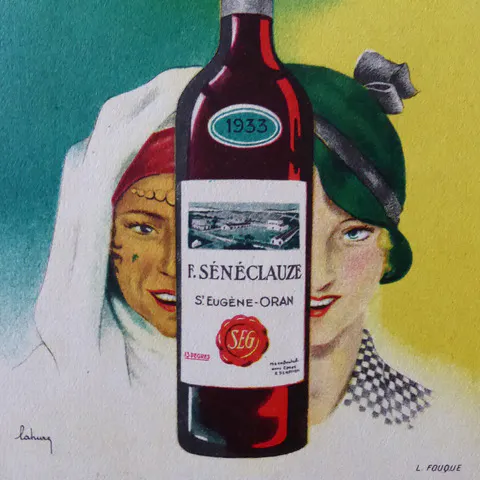
Ep 155Alcohol
In this episode of High Theory, Nina Studer tells us about alcohol. The restrictions and prohibitions, medical and moral discourses surrounding alcohol reveal a great deal about a given society in a particular historical moment. Nina uses alcohol as a lens to analyze the history of French colonization in North Africa. Who consumed alcohol, in what places, how much, and what kinds, what was viewed as healthy and what was viewed as dangerous, even criminal, can help us approach larger questions of gender, class, and nation. If you want to learn more, check out her new book, Hour of Absinthe: A Cultural History of France's Most Notorious Drink (McGill-Queens University Press, 2024). The book explores how the mythologizing of one distilled alcohol led to the creation and fabrication of a vast modern folklore. Mystique and moralizing both arose from the spirit’s relationship with empire. Some claim that French soldiers were given daily absinthe rations during France’s military conquest of Algeria to protect them against heat, diseases, and contaminated water. In fact, the overenthusiastic adoption of the drink by these soldiers, and subsequently by French settlers, was perceived as a threat to France’s colonial ambitions - an anxiety that migrated into French medicine. At the height of its popularity in the late nineteenth century, absinthe reigned in the bars, cafés, and restaurants of France and its colonial empire. Yet by the time it was banned in 1915, the famous green fairy had become the green peril, feared for its connection with declining birth rates and its apparent capacity to induce degeneration, madness, and murderous rage in its consumers. Dr. Nina Studer is a historian working on the 19th and 20th century history of French colonies in North Africa and the Middle East. Her work focuses on the history of drinks, in particular tea, coffee, Fanta/Coca-Cola, Orangina, wine and absinthe. Her doctorate, published as The Hidden Patients: North African Women in French Colonial Psychiatry (Böhlau, 2015) is available via Open Access. Currently she works as an associate researcher at the Institut Éthique Histoire Humanités at the University of Geneva, part of Dr. Francesca Arena’s team looking into the medical history of wet dreams between the 18th and the 20th century. The SNSF-project has the title: “Nuits polluantes: masculinité et médecine en Suisse et en France (XVIII – XX siècles)”. The image for this episode is an advertisement for the Algerian wine "Sénéclauze" from 1933, from the personal collection of Nina S. Studer. Many thanks to Nina for sharing it with us. Learn more about your ad choices. Visit megaphone.fm/adchoices Support our show by becoming a premium member! https://newbooksnetwork.supportingcast.fm/islamic-studies
Ep 351Asim Qureshi and Walaa Quisay, "When Only God Can See: The Faith of Muslim Political Prisoners" (Pluto Press, 2024)
When Only God Can See: The Faith of Muslim Political Prisoners (Pluto Press, 2024), uncovers the unique experiences of Muslim political prisoners held in Egypt and under US custody at Guantanamo Bay and other detention black sites. This groundbreaking book explores the intricate interplay between their religious beliefs, practices of ritual purity, prayer, and modes of resistance in the face of adversity. Highlighting the experiences of these prisoners, faith is revealed to be not only a personal spiritual connection to God but also a means of contestation against prison and state authorities, reflecting larger societal struggles. Written by Walaa Quisay, who has worked closely with prisoners in Egypt, and Asim Qureshi, with years of experience supporting detainees at Guantanamo Bay, the authors' deep connections with prisoner communities and their emphasis on the power of resistance shine through. Learn more about your ad choices. Visit megaphone.fm/adchoices Support our show by becoming a premium member! https://newbooksnetwork.supportingcast.fm/islamic-studies
Ep 9Aliyah Khan on the Muslim Caribbean
In this episode, Saeed Khan and Chella Ward sat down with Dr Aliyah Khan to discuss Muslimness in the Caribbean, drawing on Aliyah’s book Far From Mecca and ongoing important work in this area. This wide-ranging conversation covers decolonial solidarities and neglected histories, and is part of our Forgotten Ummah series, where we investigate Muslimness in places outside of the Middle East and North Africa region in an attempt to ReOrient the normative geography of Muslimness. Learn more about your ad choices. Visit megaphone.fm/adchoices Support our show by becoming a premium member! https://newbooksnetwork.supportingcast.fm/islamic-studies
Ep 93Adnan Husain on Reorienting History
In this episode, Chella Ward and Salman Sayyid talked to Adnan Husain about some of the challenges involved in reorienting history. We spoke about the opportunities and limitations of the idea of ‘the global’ as a way of organising history, and explored the relationship between the global and the decolonial. Adnan Husain is a Medieval European and Middle Eastern historian at Queen’s University, Canada. He has a particular interest in the relationship between Muslims, Jews and Christians in the medieval Mediterranean and we particularly enjoyed talking to him about the question of methodology: how do we write a new history of the world? Learn more about your ad choices. Visit megaphone.fm/adchoices Support our show by becoming a premium member! https://newbooksnetwork.supportingcast.fm/islamic-studies
Ep 350Kecia Ali, "The Woman Question in Islamic Studies" (Princeton UP, 2024)
In The Woman Question in Islamic Studies (Princeton UP, 2024), the Introduction of which is available at the publisher's website, Kecia Ali delves into the deeply entrenched ways sexism continues to shape the academic landscape of Islamic Studies. Despite the growing presence of women scholars in the field, Ali finds that women’s work remains marginalized, relegated to the periphery while male-authored research is treated as more authoritative. Ali tackles this issue with a mix of sharp analysis and humor, showing how gender biases persist at every level of scholarship—from course syllabi to citations to job hiring practices to editorial decisions. Through a combination of broad surveys and focused analyses, she uncovers the patterns of exclusion that, to quote her, “beget exclusion.” The issue isn’t simply of women not being cited or mentioned in indices and footnotes and bibliographies, but also of how women’s scholarship is talked about compared to how men’s scholarship is described, hyped, and promoted. Even male scholars who present themselves as gender-inclusive often overlook or fail to cite women’s scholarship, which further highlights the deep-seated nature of this problem and of the pattern that Ali is exploring. The book doesn't just highlight the problem but also provides actionable strategies for transforming the field. Ali offers a practical "Beginner’s Guide to Eradicating Sexism in Islamic Studies," addressing areas like peer reviewing, citation practices, curriculum design, invitation for lectures and talks. This guide provides scholars with tools to counteract the biases that limit women’s visibility and contribution. With a keen eye on the wider academic context, Ali situates these issues not only within Islamic Studies but as part of broader patterns of gender inequality in disciplines across the academy – such as in Economics, in Political Science, in Philosophy, in the natural sciences, in Jewish Studies, in Religious Studies broadly. The Woman Question in Islamic Studies is both a compelling critique and a roadmap for change, urging scholars to recognize the ethical and intellectual importance of equitable citation and inclusion. In our conversation today, Ali identifies some of the main points of the book, explains how the book came about and what her methodology is; we also discuss why women aren’t being cited and why their exclusion from scholarship matters, why women are more likely than men to be more equitable in their citation practices, and how the book has been received so far and how Ali hopes people will respond. Ali and Lolo Serrano have co-author an article examining gender bias across fifteen years of book reviews in the Journal of the American Academy of Religion (2006–2020), which has been published in the same journal (accessible here). The article concludes that reviewers of all gender consistently prioritize and celebrate men’s scholarship at a disproportionate rate, and male reviewers are found to cite the works of male scholars at a significantly higher rate. This book will appeal to scholars, researchers, students, and others professionals in Islamic Studies, Religious Studies, Gender Studies, and related fields, as well as anyone interested in academic equity and the dynamics of citation practices. It is an essential read for those looking to understand the persistent gender disparities in academia and for educators, researchers, and policymakers seeking practical strategies for fostering a more inclusive and equitable scholarly environment. Moreover, anyone invested in challenging systemic sexism across disciplines, from the humanities to the social sciences, will find Ali’s insights both compelling and transformative. And especially those who don’t believe gender is relevant to their research, or who don’t think there are enough women they can cite in their works, will find the book immensely useful. Learn more about your ad choices. Visit megaphone.fm/adchoices Support our show by becoming a premium member! https://newbooksnetwork.supportingcast.fm/islamic-studies
Ep 121Samar Al-Bulushi, "War-Making as Worldmaking: Kenya, the United States, and the War on Terror" (Stanford UP, 2024)
Since Kenya's invasion of Somalia in 2011, the Kenyan state has been engaged in direct combat with the Somali militant group Al-Shabaab, conducting airstrikes in southern Somalia and deploying heavy-handed police tactics at home. As the hunt for suspects has expanded within Kenya, Kenyan Muslims have been subject to disappearances and extrajudicial killings at the hands of U.S.-trained Kenyan police. War-Making as Worldmaking: Kenya, the United States, and the War on Terror (Stanford University Press, 2024) by Dr. Samar Al-Bulushi explores the entanglement of militarism, imperialism, and liberal-democratic governance in East Africa today. Dr. Al-Bulushi argues that Kenya's emergence as a key player in the "War on Terror" is closely linked—but not reducible to—the U.S. military's growing proclivity to outsource the labor of war. Attending to the cultural politics of security, Dr. Al-Bulushi illustrates that the war against Al-Shabaab has become a means to produce new fantasies, emotions, and subjectivities about Kenya's place in the world. Meanwhile, Kenya's alignment with the U.S. provides cover for the criminalization and policing of the country's Muslim minority population. How is life lived in a place that is not understood to be a site of war, yet is often experienced as such by its targets? This book weaves together multiple scales of analysis, asking what a view from East Africa can tell us about the shifting configurations and expansive geographies of post-9/11 imperial warfare. This interview was conducted by Dr. Miranda Melcher whose new book focuses on post-conflict military integration, understanding treaty negotiation and implementation in civil war contexts, with qualitative analysis of the Angolan and Mozambican civil wars. Learn more about your ad choices. Visit megaphone.fm/adchoices Support our show by becoming a premium member! https://newbooksnetwork.supportingcast.fm/islamic-studies
Ep 289Erik Freas, "Palestine's Christians and the Nationalist Cause: The Late Ottoman and Mandatory Periods" (Routledge, 2024)
Palestine's Christians and the Nationalist Cause: The Late Ottoman and Mandatory Periods (Routledge, 2024) provides an historical overview of Palestine's Christian communities and their role in the Palestinian nationalist movement during the late Ottoman and British mandatory periods. More than being a history of Palestine's Christian Arabs, the book focuses on Palestine's Christians during the formative period of Palestinian Arab national identity, attentive to the broader topic of the relationship between nationalism and religion--in this case, between Arab identity and Islam. Whereas until recently historians have tended to assume that national and religious identities are distinct and mostly mutually exclusive things, more recent scholarship has addressed the fact that often there exists considerable overlap between the two, though it should be noted, often in ways that are not by any means inherently exclusive of those not belonging to the majority faith, as is the case here. The relationship is also an ever-changing one, hence the final chapter of the book, which functions as something of an epilogue regarding the current status of Palestine's Christians vis-à-vis their place in the nationalist cause and relationship with the broader Muslim population. The book will be of interest to historians and scholars focused on the modern Middle East, Palestinian history, Muslim-Christian inter-communal relations, and the relationship between nationalism and religion. Roberto Mazza is currently a visiting scholar at the Buffett Institute for Global Affairs at Northwestern University. He is the host of the Jerusalem Unplugged Podcast and to discuss and propose a book for interview can be reached at [email protected]. Blusky and IG: @robbyref Website: www.robertomazza.org Learn more about your ad choices. Visit megaphone.fm/adchoices Support our show by becoming a premium member! https://newbooksnetwork.supportingcast.fm/islamic-studies
Ep 92Professor Priyamvada Gopal on Anticolonial Resistance
In this episode Chella Ward and Salman Sayyid talked to Professor Priyamvada Gopal, Professor of Postcolonial Studies at the University of Cambridge. We talked about her important work on anticolonial resistance, about the importance of the literary in imagining liberation, and about the relationship between the Muslim and the decolonial – and also had the opportunity to hear about some of her upcoming work. This episode is the first in our series on ReOrienting History. Learn more about your ad choices. Visit megaphone.fm/adchoices Support our show by becoming a premium member! https://newbooksnetwork.supportingcast.fm/islamic-studies

S3 Ep 36In Conversation: Decolonial Activism and Islamophobia in France
In this episode, Amina Easat-Daas interviews Houria Bouteldja on decolonial activism and Islamophobia in France. Learn more about your ad choices. Visit megaphone.fm/adchoices Support our show by becoming a premium member! https://newbooksnetwork.supportingcast.fm/islamic-studies
Ep 349William Gallois, "Qayrawan: The Amuletic City" (Penn State UP, 2024)
William Gallois joins the podcast to discuss his latest book, Qayrawān: The Amuletic City, published by The Pennsylvania State University Press in 2024. Qayrawān: The Amuletic City investigates the fascinating history of the Tunisian city of Qayrawān, which in the last years of the nineteenth century found itself covered in murals. Concentrated on and around the city’s Great Mosque, these monumental artworks were only visible for about fifty years, from the 1880s through the 1930s. This book investigates the fascinating history of who created these outdoor paintings and why. Using visual archaeological methods, Qayrawān highlights the ‘unknown artist’ as an actor of ‘unnoticed agency’ and a practitioner of living traditional arts. Locating pictorial records of the murals from the backdrops of photographs, postcards, and other forms of European ephemera, Gallois identifies a form of religious painting that transposed traditional aesthetic forms such as house decoration, embroidery, and tattooing―which lay exclusively within the domains of women―onto the body of a conquered city. Gallois argues that these works were created by women as a form of “emergency art,” intended to offer amuletic protection for the community, and demonstrates how they differ markedly from “classical” Islamic antecedents and modern modes of Arab cultural production in the Middle East and North Africa. The book challenges tacit assumptions of foreign categories and standards of aesthetics imposed upon Islamic and African art. It contributes to further explorations of the exploration of the ways in which Islam was interwoven with preexisting cultures and forms of expression, particularly in calling for a continued reimagining of the study of “Islamic art.” The book makes welcome contributions to Islamic, African, and Middle Eastern studies, particularly in relation to colonial and art histories. It will be welcomed by scholars of Islamic Studies, African Studies, and Art History. William Gallois is Professor of the Islamic Mediterranean in the Institute of Arab and Islamic Studies at the University of Exeter, in England. In addition to Qayrawān: The Amuletic City, Prof Gallois is the author of A History of Violence in the Early Algerian Colony (2013) and The Administration of Sickness (2008), among other works. Yaseen Christian Andrewsen is a DPhil candidate at the University of Oxford, specialising in Islamic intellectual history in West Africa focusing on issues in Sufism, theology, renewal, and authority. Yaseen is a co-host for the New Books in Islamic Studies podcast. He can be reached by email at: [email protected] Learn more about your ad choices. Visit megaphone.fm/adchoices Support our show by becoming a premium member! https://newbooksnetwork.supportingcast.fm/islamic-studies

S3 Ep 35In Conversation: PREVENT (Preventing Violent Extremism), Academia and Representation
In this episode of In Conversation, Claudia Radiven talks with Abdul-Basit Shaikh on PREVENT (Preventing Violent Extremism), academia and representation. Learn more about your ad choices. Visit megaphone.fm/adchoices Support our show by becoming a premium member! https://newbooksnetwork.supportingcast.fm/islamic-studies
Ep 348Ayesha Jalal, "Muslim Enlightened Thought in South Asia" (Routledge, 2025)
In Ayesha Jalal’s latest work Muslim Enlightened Thought in South Asia (Routledge, 2024) readers are introduced to the “roshan khayali” (enlightened thought) of South Asian Muslim thinkers spanning from the mid-nineteenth century to the present. In the course of eleven chapters Jalal highlights the contributions of diverse Muslim voices to debates about reason, religion, liberality, belonging, and ideology. Familiar South Asian Muslim figures including Mirza Ghalib, Sayyid Ahmad Khan, Muhammad Iqbal, and Fazlur Rahman are brought into conversation with perhaps lesser known intellectuals such as the mid-nineteenth century author Nazir Ahmad, or the twentieth-century artist Syed Sadequain Ahmed Naqvi. Broad themes covered in the book include how these Muslims articulated notions of religion as faith (iman) as compared to religion as identity, South Asian Muslim contributions to global theories of modernity, reason, and “enlightened” thought, how thinkers within Muslim roshan khayali discourse constructed notions of gender and women’s autonomy, and the role of literature and the visual arts in genealogies of South Asian Muslim intellectual thought. Dr. Ayesha Jalal is the Mary Richardson Professor of History at Tufts University (USA). She was awarded the MacArthur “Genius” Fellowship in 1998. She is the author of numerous books and research articles, including The Sole Spokesman: Jinnah, the Muslim League and the Demand for Pakistan (1985), Self and Sovereignty: Individual and Community in South Asian Islam Since 1850 (2000), and Modern South Asia: History, Culture, Political Economy (with Sugata Bose, 2022). Dr. Jaclyn Michael is Assistant Professor of Religion at the University of Tennessee at Chattanooga (USA). She is the author of several articles on Muslim cultural representation, performance, and religious belonging in India and in the United States. Learn more about your ad choices. Visit megaphone.fm/adchoices Support our show by becoming a premium member! https://newbooksnetwork.supportingcast.fm/islamic-studies
Ep 288Cyrus Ali Zargar, "The Ethics of Karbala: Myths, Modernity, and Virtues of Nobility" (Routledge, 2024)
The Ethics of Karbala: Myths, Modernity, and Virtues of Nobility (Routledge, 2024) investigates the relationship between sacred narratives and the development of character. Focusing on the warrior ethos expressed in accounts of the Battle of Karbala, Zargar searches for the place of the martial virtues in modern life and warfare. This book is the first of its kind in taking a virtue ethics approach to the study of Islamic history. It offers an ethical analysis of arguably the most pivotal moment in Islamic history. To do so, it makes use of interdisciplinary methods, especially global philosophy and religious studies, and draws on philosophical concepts spanning from Nietzsche to Iqbal. The book’s clear and engaging prose makes it accessible to readers seeking a profound understanding of intersections between practical philosophy and religious myths. This book targets upper-level undergraduate readers seeking to discover Islamic ethics. It will serve nonspecialists, specialists in Shiʿi Islamic studies, and all those interested in Islamic ethics, virtue ethics, cross-cultural philosophy, Nietzsche studies, military science, and religious studies. Learn more about your ad choices. Visit megaphone.fm/adchoices Support our show by becoming a premium member! https://newbooksnetwork.supportingcast.fm/islamic-studies

S3 Ep 34In Conversation: Islamic Architecture and Europe
In this episode, Ismail Patel speaks with Diana Darke about her new book, “Stealing from the Saracens: How Islamic Architecture shaped Europe”. Learn more about your ad choices. Visit megaphone.fm/adchoices Support our show by becoming a premium member! https://newbooksnetwork.supportingcast.fm/islamic-studies

S3 Ep 32In Conversation: The Far Right and Muslims
In this episode, Ismail Patel talks with Lars Erik Berntzen on the Far Right and the expansion of anti-Muslim sentiment within it. Learn more about your ad choices. Visit megaphone.fm/adchoices Support our show by becoming a premium member! https://newbooksnetwork.supportingcast.fm/islamic-studies

S3 Ep 31In Conversation: Epistemology, Critical Race Theory and Critical Muslim Studies
In this episode, Uzma Jamil is speaking to Stephen Sheehi on epistemology, critical race theory and critical Muslim studies. Learn more about your ad choices. Visit megaphone.fm/adchoices Support our show by becoming a premium member! https://newbooksnetwork.supportingcast.fm/islamic-studies
Ep 258Oishik Sircar, "Ways of Remembering: Law, Cinema and Collective Memory in the New India" (Cambridge UP, 2024)
Ways of Remembering: Law, Cinema and Collective Memory in the New India (Cambridge UP, 2024) tells a story about the relationship between secular law and religious violence by studying the memorialisation of the 2002 Gujarat pogrom--postcolonial India's most litigated and mediatized event of anti-Muslim mass violence. By reading judgments and films on the pogrom through a novel interpretive framework, the book argues that the shared narrative of law and cinema engenders ways of remembering the pogrom in which the rationality of secular law offers a resolution to the irrationality of religious violence. In the public's collective memory, the force of this rationality simultaneously condemns and normalises violence against Muslims while exonerating secular law from its role in enabling the pogrom, thus keeping the violent (legal) order against India's Muslim citizens intact. The book contends that in foregrounding law's aesthetic dimensions we see the discursive ways in which secular law organizes violence and presents itself as the panacea for that very violence. About the Author: Oishik Sircar is a Senior Lecturer at the Melbourne Law School. He was previously the Professor of Law at Jindal Global Law School. His work maps the relationship between law, violence and aesthetics with a particular focus on contemporary India. Along with Ways of Remembering: Law, Cinema and Collective Violence in the New India (CUP 2024), he is the author of Violent Modernities: Cultural Lives of Law in the New India (OUP 2021) and the co-director of the award-winning documentary film We Are Foot Soldiers (PSBT 2010). Priyam Sinha recently graduated with a PhD from the National University of Singapore and has been awarded the Alexander Von Humboldt Postdoctoral Fellowship, starting 2025. She has interdisciplinary academic interests that lie at the intersection of film studies, critical new media industry studies, disability studies, affect studies, gender studies, and cultural studies. She can be reached at https://twitter.com/PriyamSinha Learn more about your ad choices. Visit megaphone.fm/adchoices Support our show by becoming a premium member! https://newbooksnetwork.supportingcast.fm/islamic-studies
Ep 91Pakistan, Populism and the Left
This podcast features Ammar Rashid, a leading figure in left-wing politics in Pakistan, and currently Director of the action-research organization Alliance for Urban Rights, and Research Lead at the public health think tank, Heartfile. This episode of Radio ReOrient is hosted by Sher Ali Tareen with Shehla Khan and Salman Sayyid. The conversation explores the lengthening political crisis in Pakistan by foregrounding the potential for resistance. In this vein, it ranges across several salient themes, notably the genealogy of prevalent political divisions, the current state of the Left, the prospects of coalition building, the nexus between Islamophobia and support for junta rule, and the contested notion of populism. Learn more about your ad choices. Visit megaphone.fm/adchoices Support our show by becoming a premium member! https://newbooksnetwork.supportingcast.fm/islamic-studies

S3 Ep 29In Conversation: Enslaved Muslims in the Americas
A conversation with Dr. Sylviane Diouf on enslaved Muslim in the Americas. Diouf is the author of Slavery's Exiles: The Story of the American Maroons (NYU Press, 2016). Learn more about your ad choices. Visit megaphone.fm/adchoices Support our show by becoming a premium member! https://newbooksnetwork.supportingcast.fm/islamic-studies
Ep 256Daniel Joseph Majchrowicz, "The World in Words: Travel Writing and the Global Imagination in Muslim South Asia" (Cambridge UP, 2023)
This episode features Daniel Majchrowicz, Associate Professor of South Asian Literature & Culture at Northwestern University, discussing his new book, The World in Words: Travel Writing and the Global Imagination in Muslim South Asia published in 2023 by Cambridge University Press. It is a study of South Asia’s global imagination as it was expressed in Urdu-language travel writing from 1840 to the present. The book argues that travel writing in South Asia was a broadly ecumenical genre that let Indian travelers not just describe the world as they found it, but to imagine it as they wished for it to be. Opening this vast South Asian travel atlas, The World in Words introduces a new literary genre, unlocks new forms of literary subjectivity from long-ignored voices, and reveals new modes of circulation, mobility, and connection between India, Asia, and Africa, while also revealing how class, language, gender, race and power formed in colonial and post-colonial South Asia. While this is an academic book that could be used in South Asian studies courses and Islamic Studies courses, it also reads in part like a travelogue as Majchrowicz shares his own journeys discovering texts, libraries, and splendid private collections, sometimes with unexpected but fruitful leads. This text helps to decenter Western colonial travleogues and narratives, and allows for South Asian writers from Khanums' to princes' voices to be heard and studied, while also tracing the development of Urdu as a dominant regional language. Learn more about your ad choices. Visit megaphone.fm/adchoices Support our show by becoming a premium member! https://newbooksnetwork.supportingcast.fm/islamic-studies
S2 Ep 28In Conversation: Critical Race Theory and Black Lives Matter
In this episode, Dr. Hizer Mir speaks with Momodou Taal on Critical Race Theory and Black Lives Matter. Learn more about your ad choices. Visit megaphone.fm/adchoices Support our show by becoming a premium member! https://newbooksnetwork.supportingcast.fm/islamic-studies
Ep 86Anne K. Bang, "Zanzibari Muslim Moderns: Islamic Paths to Progress in the Interwar Period" (Oxford UP, 2024)
Zanzibari Muslim Moderns: Islamic Paths to Progress in the Interwar Period (Oxford UP, 2024) is a historical study of Zanzibar during the interwar years. This was a period marked by rapid intellectual and social change in the Muslim world, when ideas of Islamic progress and development were hotly debated. How did this process play out in Zanzibar? Based on a wide range of sources—Islamic and colonial, private and public—Anne K. Bang examines how these concepts were received and promoted on the island, arguing that a new ideal emerged in its intellectual arena: the Muslim modern. Tracing the influences that shaped the outlook of this new figure, Bang draws lines to Islamic modernists in the Middle East, to local Sufi teachings, and to the recently founded state of Saudi Arabia. She presents the activities of the Muslim modern in the colonial employment system, as a contributor to international debates, as an activist in the community, and more. She also explores the formation of numerous faith-based associations during this period, as well as the views of the Muslim modern on everything from funerary practices and Mawlid celebrations to reading habits. A recurring theme throughout is the question with which many Muslim moderns were confronted: who should implement development? And for whom? Anne K. Bang is Professor of African Islamic History at the University of Bergen. She has published widely on Islamic intellectual exchanges in the Indian Ocean, and particularly on East Africa. She has also led several projects to bring the scriptural sources of this history to wider attention. Ahmed Y. AlMaazmi is an Emirati historian who focuses on the intersection of occultism and imperialism in the Indian Ocean world. After completing his studies in cultural anthropology at Rutgers University as a Fulbright fellow, he pursued a PhD in Near Eastern Studies at Princeton University. His dissertation, An Enchanted Sea: Occultism and Imperialism in the Early Modern Indian Ocean World, 1450-1750, examines the connected histories of occult sciences and empire-building across Arabia, East Africa, and South Asia, told through intellectual projects that accompanied the rise of the Omani Yaʿrubī Empire and its diasporic communities. His recent work includes the article, “I Authored This Book in the Absence of My Slave: Enslaved East Africans and the Production of Occult Knowledge across the Omani Empire,” published in Monsoon Journal. Learn more about your ad choices. Visit megaphone.fm/adchoices Support our show by becoming a premium member! https://newbooksnetwork.supportingcast.fm/islamic-studies
Ep 347Leyla Ozgur Alhassen, "Qur'ānic Stories: God, Revelation, and the Audience" (Edinburgh UP, 2022)
Leyla Ozgur Alhassen’s book Qur’anic Stories: God, Revelation and the Audience (Edinburgh University Press, 2021) provides excellent analyses of several Qur’anic surahs, or chapters, to explore how Qur’anic stories function as narratives – but not just any kind of narratives: narratives with a theological purpose behind them. The specific stories she looks at include those of Maryam, Yusuf, and Musa primarily. Alhassen analyzes the literary themes present in these different chapters, such as the themes of control, knowledge, semantic echoes, and consonance, or themes of family, judgment, evidence, and secrets – whether it’s secrets that the text is withholding from the reader or secrets that characters are keeping from each other. One of the most important contributions that the book makes is to offer one possible and convincing explanation for why stories of the same characters are told in different ways in different chapters of the Qur’an. For example, God is woven into some stories as both a character and an omniscient narrator depending on the larger theme of the surah and the placing of the story; in some instances, God as the omniscient narrator shows the words of a beloved, righteous character as true, thus making a theological statement. Alhassen argues that in such renderings of a story, where it becomes unclear whether a certain quote is God’s or a character’s, the point the text is making there is that God merges His (or Her) words with characters as a reward from God. Other theological statements that the stories seem to be making are that they reveal some insight into divine intent. In this interview, we discuss the origins of the book, how the Qur’an establishes structure and how Qur’anic stories serve as narratives, the main points of each chapter and story, and whether, and how, if at all, it matters that the Qur’an doesn’t give us identical quotes from characters in the various renditions of their stories in order to make an important stylistic choice. Learn more about your ad choices. Visit megaphone.fm/adchoices Support our show by becoming a premium member! https://newbooksnetwork.supportingcast.fm/islamic-studies
Ep 346Shehnaz Haqqani, "Feminism, Tradition and Change in Contemporary Islam: Negotiating Islamic Law and Gender" (Oneworld, 2024)
Shehnaz Haqqani's new book Feminism, Tradition and Change in Contemporary Islam: Negotiating Islamic Law and Gender (Oneworld 2024), masterfully blends textual analysis of pre-modern and modern Islamic consensus with qualitative interviews with Muslims in the contemporary United States, to track how notions of what constitutes Islamic and Islamic tradition shift over time. We learn from her interlocutors that certain Islamic legal rulings can be negotiated, as in the case of child marriage, sexual slavery or even female inheritance, while other legal consensus, such as around women’s interfaith marriage or women leading mixed-gender prayers are not negotiable. Haqqani incisively swifts through these various standards of negotiations and arrives at how legal rulings pertaining to Muslim women’s experiences are met with resistance. It seems then that matters of urgency and relevance, which are inevitably political, dedicate when Islamic law and/or tradition can be negotiated. Haqqani’s book illuminates how Islamic tradition has always been flexible, but male dominated scholarly consensus still dedicates this flexibility (or rather inflexibility from an Islamic feminist perspective). This book will be of interest to those who think on gender, Islam, Islamic feminism, Islamic law, and much more. Dr. Shehnaz Haqqani is an assistant professor at Mercer University and specialises in Islam, with a focus on gender and sexuality. She is a host of the podcast New Books Network. Learn more about your ad choices. Visit megaphone.fm/adchoices Support our show by becoming a premium member! https://newbooksnetwork.supportingcast.fm/islamic-studies
S2 Ep 27In Conversation: Palestine and Decoloniality
In this episode, Dr. Ismail Patel talks with Prof. Hatem Bazian about structural Islamophobia, global politics and the demonisation of the Muslim. Learn more about your ad choices. Visit megaphone.fm/adchoices Support our show by becoming a premium member! https://newbooksnetwork.supportingcast.fm/islamic-studies

S2 Ep 26In Conversation: Epistemology, Islamic Studies and Critical Muslim Studies
In this episode Dr. Uzma Jamil talks with Prof. Setrag Manoukian about his article “Ordinary Matters in Islamic Studies: Notes from the Field” (ReOrient Vol 5, No. 1). Learn more about your ad choices. Visit megaphone.fm/adchoices Support our show by becoming a premium member! https://newbooksnetwork.supportingcast.fm/islamic-studies
Ep 147Fatima Rajina, "British Bangladeshi Muslims in the East End: The Changing Landscape of Dress and Language" (Manchester UP, 2024)
Popular discourse around British Muslims has often been dominated by a focus on Muslim women and their sartorial choices, particularly the hijab and niqab. British Bangladeshi Muslims in the East End: The Changing Landscape of Dress and Language (Manchester UP, 2024) by Dr. Fatima Rajina takes a different angle and focuses on Muslim men, examining how factors like the global war on terror influenced and changed their sartorial choices and use of language. The book denaturalises the ubiquitous and deeply problematic security lens through which knowledge of Muslims has been produced in the past two decades. British Bangladeshi Muslims in the East End offers an alternative reading of these communities and how their political subjectivities emerge. Drawing on historical events, field research and existing academic work, the book aims to address the multiple ways British Bangladeshi Muslim men and women create their relationship with dress and language. This is the first book to empirically examine how dress and language shape the identities of British Bangladeshi Muslims in the East End, using in-depth analysis useful for anyone interested in the study of British Muslims broadly. While the book focuses on a specific Muslim community, the emerging themes demonstrate the interconnectedness of Muslims locally and globally and how they manifest their identities through dress and language. This interview was conducted by Dr. Miranda Melcher whose new book focuses on post-conflict military integration, understanding treaty negotiation and implementation in civil war contexts, with qualitative analysis of the Angolan and Mozambican civil wars. Learn more about your ad choices. Visit megaphone.fm/adchoices Support our show by becoming a premium member! https://newbooksnetwork.supportingcast.fm/islamic-studies

S2 Ep 25In Conversation: Islamophobia, Race and Global Politics
In this episode, Dr. Ismail Patel sits down with Prof. Nazia Kazi to discuss her book “Islamophobia, Race and Global Politics” Learn more about your ad choices. Visit megaphone.fm/adchoices Support our show by becoming a premium member! https://newbooksnetwork.supportingcast.fm/islamic-studies
Ep 575Phillip Lieberman, "The Fate of the Jews in the Early Islamic Near East: Tracing the Demographic Shift from East to West" (Cambridge UP, 2022)
In The Fate of the Jews in the Early Islamic Near East: Tracing the Demographic Shift from East to West (Cambridge UP, 2022), Phillip Lieberman revisits one of the foundational narratives of medieval Jewish history--that the rise of Islam led the Jews of Babylonia, the largest Jewish community prior to the rise of Islam, to abandon a livelihood based on agriculture and move into urban crafts and long-distance trade. Here, he presents an alternative account that reveals the complexity of interfaith relations in early Islam. Using Jewish and Islamic chronicles, legal materials, and the rich documentary evidence of the Cairo Geniza, Lieberman demonstrates that Jews initially remained on the rural periphery after the Islamic conquest of Iraq. Gradually, they assimilated to an emerging Islamicate identity as the new religion took shape, sapping towns and villages of their strength. Simultaneously, a small, elite group of merchants and communal leaders migrated westward. Lieberman here explores their formative influence on the Jewish communities of the southern Mediterranean that flourished under Islamic conquest. Learn more about your ad choices. Visit megaphone.fm/adchoices Support our show by becoming a premium member! https://newbooksnetwork.supportingcast.fm/islamic-studies
Ep 345Youcef Soufi, "Homegrown Radicals: A Story of State Violence, Islamophobia, and Jihad in the Post-9/11 World" (NYU Press, 2025)
Youcef Soufi’s Homegrown Radicals: A Story of State Violence, Islamophobia, and Jihad in the Post-9/11 World (NYU Press, 2025) tells the story of three Muslim university students who disappeared from Winnipeg, Canada. In this gripping narrative, we learn that these young men had become “radicalized”, which brought the attention of Canadian and American security agencies to this small town. What is different about the journey we go on with Soufi is the story of families, friends, and the Muslim community who are left behind grappling with loss, grief, and hyper-surveillance as the result of the disappearance of these young men. From university to the courtroom, and beyond, Soufi’s moving narrative forces us to grapple with the affective injury faced by the Winnipeg Muslim community as discourse of radicalization, Islamophobic state policies, and military response to the war on terror, reminded Muslims of the ungrievability of their lives. Soufi’s writing is poignant; he moves between his scholarly command of Islamic history, archival data, and interviews and deeply vulnerable auto-ethnography. The book is a must read for anyone interested in Muslims and Islam, especially in North America. Learn more about your ad choices. Visit megaphone.fm/adchoices Support our show by becoming a premium member! https://newbooksnetwork.supportingcast.fm/islamic-studies