New Books in Education
1,231 episodes — Page 11 of 25
Ep 18Ourboox: A Conversation with Mel Rosenberg
In this interview, Mel Rosenberg discusses his love for children's literature, what makes for a memorable picture book, and the company he created, Ourboox. Ourboox is a free site that allows people to create online flipbooks and picture books. Mel's collection is available here. Mel Rosenberg is a professor emeritus of microbiology (Tel Aviv University, emeritus) who fell in love with children's books as a small child and now writes his own. He is co-founder of Ourboox, a web platform with some 240,000 ebooks that allows anyone to create and share flipbooks comprising text, pictures and videos. Caleb Zakarin is the Assistant Editor of the New Books Network (Twitter: @caleb_zakarin). Learn more about your ad choices. Visit megaphone.fm/adchoices Support our show by becoming a premium member! https://newbooksnetwork.supportingcast.fm/education
Ep 338Gregory Nobles, "The Education of Betsey Stockton: An Odyssey of Slavery and Freedom" (U Chicago Press, 2022)
The life of Betsey Stockton (ca. 1798–1865) is a remarkable story of a Black woman’s journey from slavery to emancipation, from antebellum New Jersey to the Hawai‘ian Islands, and from her own self-education to a lifetime of teaching others—all told against the backdrop of the early United States’ pervasive racism. It’s a compelling chronicle of a critical time in American history and a testament to the courage and commitment of a woman whose persistence grew into a potent form of resistance. When Betsey Stockton was a child, she was “given, as a slave” to the household of Rev. Ashbel Green, a prominent pastor and later the president of what is now Princeton University. Although she never went to school, she devoured the books in Green’s library. After being emancipated, she used that education to benefit other people of color, first in Hawai‘i as a missionary, then Philadelphia, and, for the last three decades of her life, Princeton—a college town with a genteel veneer that never fully hid its racial hostility. Betsey Stockton became a revered figure in Princeton’s sizeable Black population, a founder of religious and educational institutions, and a leader engaged in the day-to-day business of building communities. In The Education of Betsey Stockton: An Odyssey of Slavery and Freedom (U Chicago Press, 2022), Gregory Nobles illuminates both a woman and her world, following her around the globe, and showing how a determined individual could challenge her society’s racial obstacles from the ground up. It’s at once a revealing lesson on the struggles of Stockton’s times and a fresh inspiration for our own. Learn more about your ad choices. Visit megaphone.fm/adchoices Support our show by becoming a premium member! https://newbooksnetwork.supportingcast.fm/education
Ep 183Christopher Willoughby, "Masters of Health: Racial Science and Slavery in US Medical Schools" (UNC Press, 2022)
Medical science in antebellum America was organized around a paradox: it presumed African Americans to be less than human yet still human enough to be viable as experimental subjects, as cadavers, and for use in the training of medical students. By taking a hard look at the racial ideas of both northern and southern medical schools, Christopher D. E. Willoughby reveals that racist ideas were not external to the medical profession but fundamental to medical knowledge. In this history of racial thinking and slavery in American medical schools, the founders and early faculty of these schools emerge as singularly influential proponents of white supremacist racial science. They pushed an understanding of race influenced by the theory of polygenesis—that each race was created separately and as different species—which they supported by training students to collect and measure human skulls from around the world. Medical students came to see themselves as masters of Black people's bodies through stealing Black people’s corpses, experimenting on enslaved people, and practicing distinctive therapeutics on Black patients. In documenting these practices Masters of Health: Racial Science and Slavery in US Medical Schools (UNC Press, 2022) charts the rise of racist theories in U.S. medical schools, throwing new light on the extensive legacies of slavery in modern medicine. Claire Clark is a medical educator, historian of medicine, and associate professor in the University of Kentucky’s College of Medicine. Learn more about your ad choices. Visit megaphone.fm/adchoices Support our show by becoming a premium member! https://newbooksnetwork.supportingcast.fm/education
Ep 258Rhonda F. Levine, "When Race Meets Class: African Americans Coming of Age in a Small City" (Routledge, 2019)
In When Race Meets Class: African Americans Coming of Age in a Small City (Routledge, 2019), Rhonda Levine provides a 15-year ethnography that follows the lives of individual, low-income African American youth from the beginning of high school into their early adult years. Levine shows how their interaction and experience with multiple institutions (family, school, community) and individuals (parents, friends, teachers, coaches, strangers) shape their hopes, fears, aspirations, and worldviews. Levine explores the volatility and constraints underlying their decision-making and behaviors. Rhonda Levine is Professor of Sociology, Emerita, at Colgate University, USA. Schneur Zalman Newfield is an Assistant Professor of Sociology at Borough of Manhattan Community College, City University of New York, and the author of Degrees of Separation: Identity Formation While Leaving Ultra-Orthodox Judaism (Temple University Press, 2020). Visit him online at ZalmanNewfield.com. Learn more about your ad choices. Visit megaphone.fm/adchoices Support our show by becoming a premium member! https://newbooksnetwork.supportingcast.fm/education
Ep 138Scholar Skills: Unraveling Faculty Burnout
“I’m burned out” is a familiar phrase in higher ed these days. This episode explores: What burnout is and is not. One scholar’s personal experience with burnout. How higher ed’s culture and the “expectation escalation” encourage burnout. Academic capitalism and its relationship to faculty burnout. The missing voices from the conversation on burnout. Imposter syndrome and how it plays out for women, especially, in the academy. Our guest is: Dr. Rebecca Pope-Ruark, Director of the Office of Faculty Professional Development at the Georgia Institute of Technology. She is the author of Unraveling Faculty Burnout: Pathways to Reckoning and Renewal (Johns Hopkins University Press, 2022) and Agile Faculty: Practical Strategies for Managing Research, Service, and Teaching (The University of Chicago Press, 2017) as well as the coeditor of Redesigning Liberal Education: Innovative Design for a Twenty-First-Century Undergraduate Education (Johns Hopkins University Press, 2020). Our host is: Dr. Dana M. Malone, co-producer and co-host of The Academic Life channel. Dana is energized by facilitating meaningful conversations and educational experiences for folks across the academy and beyond. Dana is the author of From Single to Serious: Relationships, Gender, and Sexuality on American Evangelical Campuses, (Rutgers University Press). Listeners to this episode may also be interested in: This Chronicle of Higher Education article on how to cope with Covid-19 burnout. This Inside Higher Ed article on beating pandemic burnout. The Maslach Burnout Inventory for Educators (MBI-ES). This Academic Life conversation on community building and how we show up. This Academic Life conversation on being well in academia. This Academic Life conversation on finding your people and making meaningful connections. Welcome to The Academic Life! You are smart and capable, but you aren’t an island, and neither are we. We reach across our mentor network to bring you podcasts on everything from how to finish that project to how to take care of your beautiful mind. Here on the Academic Life channel, we embrace a broad definition of what it means to be an academic and to lead an academic life. We view education as a transformative human endeavor and are inspired by today’s knowledge-producers working inside and outside the academy. Wish we’d bring on an expert about something? DMs us on Twitter: @AcademicLifeNBN. Learn more about your ad choices. Visit megaphone.fm/adchoices Support our show by becoming a premium member! https://newbooksnetwork.supportingcast.fm/education
Ep 215Adam Laats, "Creationism USA: Bridging the Impasse on Teaching Evolution" (Oxford UP, 2020)
Who are America's creationists? What do they want? Why do they think Jesus rode around on a dinosaur? In Creationism USA: Bridging the Impasse on Teaching Evolution (Oxford UP, 2021), Adam Laats reveals that common misconceptions about creationism have led Americans into a full century of unnecessary culture-war histrionics about evolution education and creationism. In fact, America does not now and never has had deep, fundamental disagreement about evolution. Not about the actual science of evolution, that is, and not in ways that truly matter to public policy. Americans do have significant disagreements about creationism, though, and Laats offers a new way to understand those battles. By describing the history of creationism and its many variations, this book demonstrates that the real conflict about evolution is not between creationists and evolution. The true landscape of American creationism is far more complicated than headlines suggest. Your host, Ryan Shelton (@_ryanshelton) is a social historian of British and American Protestantism and a PhD researcher at Queen’s University Belfast. Learn more about your ad choices. Visit megaphone.fm/adchoices Support our show by becoming a premium member! https://newbooksnetwork.supportingcast.fm/education
Ep 54Transforming the Urban University: Northeastern University, 1996-2006
It is rare to see colleges and universities achieve major and rapid changes in their national rankings. Richard Freeland, the president emeritus of Northeastern University, discusses how they were able to achieve this at Northeastern during his decade leading one of the nation’s largest private universities by doubling down and improving their historic strength in co-operative education. In parallel, Northeastern was able to achieve dramatic improvements in retention and graduation rates, from just 44% to over 70%. He also shares insights from his tenure leading the Massachusetts public higher education system. David Finegold is the president of Chatham University. Learn more about your ad choices. Visit megaphone.fm/adchoices Support our show by becoming a premium member! https://newbooksnetwork.supportingcast.fm/education
Ep 200Naomi A. Moland, "Can Big Bird Fight Terrorism?: Children's Television and Globalized Multicultural Education" (Oxford UP, 2019)
Sesame Street has taught generations of Americans their letters and numbers, and also how to better understand and get along with people of different races, faiths, ethnicities, and temperaments. But the show has a global reach as well, with more than thirty co-productions of Sesame Street that are viewed in over 150 countries. In recent years, the United States Agency for International Development (USAID) has provided funding to the New York-based Sesame Workshop to create international versions of Sesame Street. Many of these programs teach children to respect diversity and tolerate others, which some hope will ultimately help to build peace in conflict-affected societies. In fact, the U.S. government has funded local versions of the show in several countries enmeshed in conflict, including Afghanistan, Kosovo, Pakistan, Jordan, and Nigeria. Can Big Bird Fight Terrorism?: Children's Television and Globalized Multicultural Education (Oxford UP, 2019) takes an in-depth look at the Nigerian version, Sesame Square, which began airing in 2011. In addition to teaching preschool-level academic skills, Sesame Square seeks to promote peaceful coexistence-a daunting task in Nigeria, where escalating ethno-religious tensions and terrorism threaten to fracture the nation. After a year of interviewing Sesame creators, observing their production processes, conducting episode analysis, and talking to local educators who use the program in classrooms, Naomi Moland found that this child-focused use of soft power raised complex questions about how multicultural ideals translate into different settings. In Nigeria, where segregation, state fragility, and escalating conflict raise the stakes of peacebuilding efforts, multicultural education may be ineffective at best, and possibly even divisive. This book offers rare insights into the complexities, challenges, and dilemmas inherent in soft power attempts to teach the ideals of diversity and tolerance in countries suffering from internal conflicts. Sharonee Dasgupta is currently a graduate student in the department of anthropology at UMass Amherst. Learn more about your ad choices. Visit megaphone.fm/adchoices Support our show by becoming a premium member! https://newbooksnetwork.supportingcast.fm/education
Ep 129Where Does Research Really Begin?
Today’s book is: Where Research Begins: Choosing a Research Project That Matters to You (and the World) (U Chicago Press, 2022) by Thomas S. Mullaney and Christopher Rea, which tackles the two challenges every researcher faces with every new project: “How do I find a compelling problem to investigate—one that truly matters to me, deeply and personally? How do I then design my research project so that the results will matter to anyone else?” This easy-to-follow workbook guides you to find research inspiration within yourself, and in the broader world of ideas. Our guest is: Dr. Thomas S. Mullaney, who is Professor of History at Stanford University and Professor of East Asian Languages and Cultures, by courtesy; the Kluge Chair in Technology and Society at the Library of Congress; and a Guggenheim Fellow. He is the author or lead editor of 7 books and the forthcoming The Chinese Computer—the first comprehensive history of Chinese-language computing. His writings have appeared in the Journal of Asian Studies, Technology & Culture, Aeon, Foreign Affairs, and Foreign Policy, and his work has been featured in the LA Times, The Atlantic, the BBC, and in invited lectures at Google, Microsoft, Adobe, and more. He holds a PhD from Columbia University. Our guest is: Dr. Christopher Rea, who is a literary and cultural historian. His research focuses on the modern Chinese-speaking world, and his most recent publications concern research methods, cinema, comedy, celebrities, swindlers, cultural entrepreneurs, and the scholar-writers Qian Zhongshu and Yang Jiang. At University of British Columbia, he is a faculty member and Associate Head, External of the Department of Asian Studies; former Director of the Centre for Chinese Research; an associate of the Hong Kong Studies Initiative; and a Faculty Fellow of St. John’s College. He co-authored with Tom Mullaney, Where Research Begins: Choosing a Research Project That Matters to You (and the World). Our host is: Dr. Christina Gessler, a historian of women and gender. Listeners to this episode may also be interested in: The Craft of Research, by Wayne Booth et al The Research Companion, by Petra Boynton How to Write a Thesis, by Umberto Eco The Art of Creative Research, by Philip Gerald This podcast on learning from your failed research Welcome to The Academic Life! We reach across our mentor network to bring you podcasts on everything from how to finish a project to how to take care of your beautiful mind. On the Academic Life channel we embrace a broad definition of what it means to lead an academic life. We view education as a transformative human endeavor and are inspired by today’s knowledge-producers working inside and outside the academy. DMs us on Twitter: @AcademicLifeNBN. Learn more about your ad choices. Visit megaphone.fm/adchoices Support our show by becoming a premium member! https://newbooksnetwork.supportingcast.fm/education
Ep 79Andrew Fiss, "Performing Math: A History of Communication and Anxiety in the American Mathematics Classroom" (Rutgers UP, 2020)
Performing Math: A History of Communication and Anxiety in the American Mathematics Classroom (Rutgers University Press, 2020) by Dr. Andrew Fiss tells the history of expectations for math communication—and the conversations about math hatred and math anxiety that occurred in response. Focusing on nineteenth-century American colleges, this book analyzes foundational tools and techniques of math communication: the textbooks that supported reading aloud, the burnings that mimicked pedagogical speech, the blackboards that accompanied oral presentations, the plays that proclaimed performers’ identities as math students, and the written tests that redefined “student performance.” Math communication and math anxiety went hand in hand as new rules for oral communication at the blackboard inspired student revolt and as frameworks for testing student performance inspired performance anxiety. With unusual primary sources from over a dozen educational archives, Performing Math argues for a new, performance-oriented history of American math education, one that can explain contemporary math attitudes and provide a way forward to reframing the problem of math anxiety. This interview was conducted by Dr. Miranda Melcher whose doctoral work focused on post-conflict military integration, understanding treaty negotiation and implementation in civil war contexts, with qualitative analysis of the Angolan and Mozambican civil wars. Learn more about your ad choices. Visit megaphone.fm/adchoices Support our show by becoming a premium member! https://newbooksnetwork.supportingcast.fm/education
Ep 37Nancy Woloch, "The Insider: A Life of Virginia C. Gildersleeve" (Columbia UP, 2022)
Virginia C. Gildersleeve was the most influential dean of Barnard College, which she led from 1911 to 1947. An organizer of the Seven College Conference, or “Seven Sisters,” she defended women's intellectual abilities and the value of the liberal arts. She also amassed a strong set of foreign policy credentials and, at the peak of her prominence in 1945, served as the sole woman member of the U.S. delegation to the drafting of the United Nations Charter. But her accomplishments are undercut by other factors: she had a reputation for bias against Jewish applicants for admission to Barnard and early in the 1930s voiced an indulgent view of the Nazi regime. In this biography, historian Nancy Woloch explores Gildersleeve’s complicated career in academia and public life. At once a privileged insider, prone to elitism and insularity, and a perpetual outsider to the sexist establishment in whose ranks she sought to ascend, Gildersleeve stands out as richly contradictory. The book examines her initiatives in higher education, her savvy administration, her strategies for gaining influence in academic life, the ways that she acquired and deployed expertise, and her drive to take part in the world of foreign affairs. Woloch draws out her ambivalent stance in the women’s movement, concerned with women’s status but opposed to demands for equal rights. Tracing resonant themes of ambition, competition, and rivalry, The Insider: A Life of Virginia C. Gildersleeve (Columbia UP, 2022) masterfully weaves Gildersleeve’s life into the histories of education, international relations, and feminism. Jane Scimeca is Professor of History at Brookdale Community College. Learn more about your ad choices. Visit megaphone.fm/adchoices Support our show by becoming a premium member! https://newbooksnetwork.supportingcast.fm/education
Ep 120Making the Most of Academic Conferences: Insights and Tips from Dr. Thomas Tobin
You’re going to an academic conference—and maybe even presenting a project! Whether you are going virtually or in person, for the first time or the tenth, presenting or just attending, you want to feel prepared. Are you? This podcast episode explores: Why we need to go to academic conferences. Why it can be difficult to navigate them. How can you get the most of out of it. Our guest is: Dr. Thomas J. Tobin, who is a founding member of the Center for Teaching, Learning, and Mentoring at the University of Wisconsin at Madison. He is an internationally recognized speaker and author on quality in technology-enhanced education. His latest book is Going Alt-Ac: A Guide to Alternative Academic Careers, written with Katie Linder and Kevin Kelly, from Stylus Publishing. You can find him on Twitter @ThomasJTobin and at his website, Thomasjtobin.com. Our host is: Dr. Christina Gessler, a historian of women and gender and an introvert, who has presented in dozens of academic conference, and like many of our listeners, she is still learning how to make the most of an academic conference. Listeners to this episode may also be interested in: The Chronicle of Higher Ed article “How to Make the Most Out of An Academic Conference” The Chronicle of Higher Ed article “How to Make the Most of a Virtual Conference” The Chronicle of Higher Ed article “How To Cope With Presentation Anxiety” This article on The Introverts’ Guide to Speaking Up Quiet: The Power of Introverts, by Susan Cain The Craft of Research, by Wayne Booth et al The Research Companion, by Petra Boynton The Art of Creative Research, by Philip Gerald Welcome to The Academic Life! We reach across our mentor network to bring you podcasts on everything from how to finish a project to how to take care of your beautiful mind. On the Academic Life channel we embrace a broad definition of what it means to lead an academic life. We view education as a transformative human endeavor and are inspired by today’s knowledge-producers working inside and outside the academy. DMs us on Twitter: @AcademicLifeNBN. Learn more about your ad choices. Visit megaphone.fm/adchoices Support our show by becoming a premium member! https://newbooksnetwork.supportingcast.fm/education
Ep 186Mental Health In Academia 7: Bullying in Academia
We are delighted to welcome you at All for One and One for All: Public Seminar Series on Mental Health in Academia and Society. All for One and One for All talks shine the light on and discuss mental health issues in academia across all levels – from students to faculty, as well as in wider society. Speakers include academics, organisations, and health professionals whose work focuses on mental health. Live Q and A sessions will be held after each talk. For live webinar schedule please visit Lashuel lab website. Follow us on Twitter: @LashuelLab Today’s talk is hosted by Prof. Hilal Lashuel and Galina Limorenko, and we are happy to welcome Prof. Morteza Mahmoudi to discuss bullying in academia. Learn more about your ad choices. Visit megaphone.fm/adchoices Support our show by becoming a premium member! https://newbooksnetwork.supportingcast.fm/education
Ep 253Gurpinder Singh Lalli, "Schools, Space and Culinary Capital" (Routledge, 2022)
Gurpinder Singh Lalli's book Schools, Space and Culinary Capital (Routledge, 2022) introduces the notion of culinary capital to investigate socialisation and school mealtime experiences in an academy school based in the UK. Drawing on interviews collated from children, teachers and staff within the school, the text sheds light on food insecurity in society and schools as being a major issue in educational policy. The book examines schools as a microcosm for society with school food space being the playground for socialisation. It shows how forms of culinary capital can be extended in the school dining hall where social space is negotiated with notions of inclusion and exclusion during mealtime. The book uses gender, class and race to understand the school dining hall as a space where culinary capital can be exchanged and learnt. Thorough research accompanied by ethnographic visuals, field notes and observations, it also explores the sensory impact of school gardens. As such the book will be of interest to students, teachers, school leaders, educators and policy makers in the fields of Education, Sociology, Social Policy and Food Studies. Rituparna Patgiri, PhD is an Assistant Professor of Sociology at Indraprastha College for Women, University of Delhi. She has a PhD in Sociology from Jawaharlal Nehru University (JNU), New Delhi. Her research interests lie in the areas of food, media, gender and public. She is also one of the co-founders of Doing Sociology. Patgiri can be reached at @Rituparna37 on Twitter. Learn more about your ad choices. Visit megaphone.fm/adchoices Support our show by becoming a premium member! https://newbooksnetwork.supportingcast.fm/education
Ep 163Timothy W. Burns, "Leo Strauss on Democracy, Technology, and Liberal Education" (SUNY Press, 2021)
There are few thinkers who engender as much debate about their legacy as Leo Strauss (1899 –1973). His critics and biographers often don’t even agree about what scholarly discipline he practiced. Political theory or philosophy? Was he a proto-neoconservative or a middle-of-the-road Cold War defender of liberal democracy? He is often depicted as a major intellectual influence on sections of the national security state right, especially during the presidency of George W. Bush when he was portrayed as a puppeteer pulling from the grave the strings of such notable hawks as Paul Wolfowitz. But the writings of Strauss often go unexamined. That is partly because they lean towards the abstruse. Strauss was not a general-audience-friendly public intellectual in his day and much of the homage to and attacks on him at this point are to be found in the pages of academic journals and in the halls of think tanks. We are fortunate, therefore, that we can turn to the 2021 book, Leo Strauss on Democracy, Technology, and Liberal Education by Timothy W. Burns for elucidation of Strauss's thinking about how we can preserve liberal democracy in the face of apathy from moderates, classical liberals and traditional conservatives flummoxed by the rise of an aggressive left that questions whether the United States is a democracy at all and an alienated alt-right that regards liberal democracy as now practiced as a character-sapping anachronism leading to civilizational decline. We learn from Burns of Strauss's admiration for Winston Churchill and touting of him as an exemplar of greatness within democracy. In one of the most absorbing sections of the book we learn of a 1941 lecture by Strauss entitled, “German Nihilism” in which he examined the arguments of such groups as rightist German students in the 1920s that liberal democracy fostered moral mediocrity. Burns contrasts in detail the ideas of Strauss and Martin Heidegger and shows that Strauss foresaw that the other man’s emphasis on resoluteness would metastasize into Heidegger’s support for Nazism. Burns tells us that Strauss can speak to us today via his call to defend democratic constitutionalism and its spiritual and religious traditions. That call can lead to charges of elitism against Strauss because it entailed his championing of the idea of an “aristocracy within democracy,” a cadre of cultivated, well-educated leaders who would help maintain the intellectual and cultural moorings of democracies. Let’s hear now from Professor Burns about who Leo Strauss was and what he actually wrote and thought. Hope J. Leman is a grants researcher. Learn more about your ad choices. Visit megaphone.fm/adchoices Support our show by becoming a premium member! https://newbooksnetwork.supportingcast.fm/education
Ep 119Richard V. Reeves, "Of Boys and Men: Why the Modern Male Is Struggling, Why It Matters, and What to Do about It" (Brookings Institution, 2022)
Today I talked to Richard Reeves about his important new book Of Boys and Men: Why the Modern Male Is Struggling, Why It Matters, and What to Do about It (Brookings Institution, 2022). The statistics are stunning. Men have a 9% lower graduation rate from college. One in three men without a completed high school education are now out of the workforce. About 40% of births take place outside of marriage (up from 11% in 1970). And men are 50% more likely to die from Covid-19 than women after contracting the virus. The long and short of it, while also advocating for full, real opportunities for women, short shrift is often being given to the problems men face. Neither ignoring the problem (the liberal choice, often) or suggesting we turn-back-the-clock to the 1950s (the conservative choice, often) will suffice. In this episode, Richard Reeves dares to propose some real solutions regarding education reforms, workplace opportunities, and pro-childrearing roles for all dads, married or otherwise. Richard Reeves is a senior fellow in economic studies at the Brookings Institution. He’s the author of the 2017 book Dream Hoarders and is also a regular contributor to The New York Times, Washington Post, Wall Street Journal, and The Atlantic. Dan Hill, PhD, is the author of ten books and leads Sensory Logic, Inc. (https://www.sensorylogic.com). His newest book is Emotionomics 2.0: The Emotional Dynamics Underlying Key Business Goals. To check out his related “Dan Hill’s EQ Spotlight” blog, visit https://emotionswizard.com. Learn more about your ad choices. Visit megaphone.fm/adchoices Support our show by becoming a premium member! https://newbooksnetwork.supportingcast.fm/education
Ep 82Barbara W. Sarnecka, "The Writing Workshop: Write More, Write Better, Be Happier in Academia" (2019)
Listen to this interview of Barbara Sarnecka, Professor of Cognitive Sciences and Associate Dean of Research and Graduate Studies for Social Sciences, University of California, Irvine. We talk about putting your mind in print. She is the author of The Writing Workshop: Write More, Write Better, Be Happier in Academia. Barbara Sarnecka : "The more quantitative a person's field of study is, the more likely they are to say that they just don't think that writing is a big requirement in their field. And they'll say, 'Well, writing isn't very important. I'm a biologist.' They imagine that writing is somehow for people in the humanities, or it's for playwrights or novelists, or something like that. But whenever anyone fails to be productive as a scientist, it's because they're not writing. It's because they're not publishing manuscripts or they're not producing funding proposals that are getting funded. It's not because they don't have enough ideas for experiments, or because they didn't collect enough data, or because they didn't learn to analyze the data properly. Those things are all kind of trivially easy, and that's why we can subcontract them to graduate students or the statistical consulting center or somebody to do them for us. You can't get somebody else to think for you, and you can't get somebody else to write for you." Find about more about Barbara, including why she chose to self-publish, in this interview. Read the research on Barbara's writing-shop intervention here. Read the research on cascading mentorship here and here. Contact Barbara's editor at [email protected] Daniel Shea is committed to helping scientists write at their best. Contact me at [email protected] Learn more about your ad choices. Visit megaphone.fm/adchoices Support our show by becoming a premium member! https://newbooksnetwork.supportingcast.fm/education
Ep 329Elizabeth Drame et al., "The Resistance, Persistence and Resilience of Black Families Raising Children with Autism" (Peter Lang, 2020)
The Resistance, Persistence and Resilience of Black Families Raising Children with Autism (Peter Lang, 2020) presents nuanced perspectives in the form of counternarratives of what Black families who have children with autism experience at the intersection of race, class, disability and gender. It intentionally centers the expertise of Black parents, challenging what is considered knowledge, whose knowledge counts, and how knowledge can be co-generated for learning, sharing and advocacy. The book speaks directly to Black parents on the autism journey. To right systemic racial inequities and to cultivate culturally responsive practices, it is critical for practitioners and professionals to understand what is known about Black families' experiences with autism in general and how these experiences differ because of our intersecting identities. University faculty and students in programs involving medicine, speech and language pathology, occupational therapy, nursing, political science, school psychology, teaching, special education and leadership can benefit from the wisdom offered by these parents. This text is perfect for several courses, including those in departments of anthropology, women and gender studies, health sciences, psychology, special education, teacher education and administrative leadership. In addition, given the uniquely Black perspective presented in the text, this text is relevant to other fields, including ethnic studies, cultural studies, urban studies and African American studies. It is relevant to individuals who wish to better understand how issues of race and intra-racial differences shape lived experiences with disability in American society. Learn more about your ad choices. Visit megaphone.fm/adchoices Support our show by becoming a premium member! https://newbooksnetwork.supportingcast.fm/education
Ep 131Scholar Skills: Managing and Re-Envisioning the Academic Mid-Career
Ever felt uncertain about how to manage the academic mid-career stage? This episode explores: Why the mid-career stage is so important to mid-career faculty. Strategies for taking control of your mid-career advancement plans. Equity issues surrounding women, academic mothers, and faculty of color. The importance of the department chair for mid-career faculty. Being strategic about your mentoring needs in mid-career. Two critical considerations for mid-career faculty developing programs. Our guest is: Dr. Vicki L Baker, author of Managing Your Academic Career: A Guide to Re-Envision Mid-Career (Routledge). Vicki is the E. Maynard Aris Endowed Professor in Economics and Management at Albion College and serves as the Faculty Director of the Albion College Community Collaborative (AC3), Co-Chair of the Economics & Management Department, and instructor for Penn State University’s World Campus. Prior to joining the academy as a faculty member, Vicki worked at Harvard Business School (Executive Education) and AK Steel Corporation. Vicki is the author of 90 peer-reviewed articles, chapters, invited works, and several books. Recognized as a “Top 100 Visionary” in Education by the Global Forum for Education and Learning (20-21), Vicki is at the forefront of innovation and strategy in faculty and leadership development; her goal is to help faculty members and colleges and universities thrive. She earned her PhD (Higher Education) and MS (Management & Organization) from Penn State University, MBA from Clarion University and BS from Indiana University of Pennsylvania. Vicki also holds a certificate in Human Resource Management from Villanova University and is a certified professional in HR from the Society for Human Resource Management. Our host is: Dr. Dana M. Malone, co-producer and co-host of The Academic Life channel. Dana is energized by facilitating meaningful conversations and educational experiences for folks across the academy and beyond. Dana is the author of From Single to Serious: Relationships, Gender, and Sexuality on American Evangelical Campuses, (Rutgers UP). Listeners to this episode may also be interested in: New Directions in Higher Education volume, Bridging the Research-Practice Nexus: Resources, Tools, and Strategies to Navigate Mid-Career in the Academy. Edited by Vick L. Baker and Aimee LaPointe Terosky. The Evolving Faculty Affairs Landscape - a compilation of publications from Inside HigherEd focused on faculty (several focused at mid-career). This Academic Life channel conversation with Vicki Baker on navigating mid-career choices as a faculty member. This Academic Life channel conversation with Laura Gail Lunsford on how to create a mentor network. How to Chair a Department by Kevin Dettmar (Johns Hopkins). Unraveling Faculty Burnout: Pathways to Reckoning and Renewal by Rebecca Pope-Ruark (Johns Hopkins). Welcome to The Academic Life! You are smart and capable, but you aren’t an island, and neither are we. We reach across our mentor network to bring you podcasts on everything from how to finish that project to how to take care of your beautiful mind. Here on the Academic Life channel, we embrace a broad definition of what it means to be an academic and to lead an academic life. We view education as a transformative human endeavor and are inspired by today’s knowledge-producers working inside and outside the academy. Wish we’d bring on an expert about something? DMs us on Twitter: @AcademicLifeNBN. Learn more about your ad choices. Visit megaphone.fm/adchoices Support our show by becoming a premium member! https://newbooksnetwork.supportingcast.fm/education
Ep 328Kelisha B. Graves, ed., "Nannie Helen Burroughs: A Documentary Portrait of an Early Civil Rights Pioneer, 1900-1959" (U Notre Dame Press, 2019)
Nannie Helen Burroughs (1879-1961) is just one of the many African American intellectuals whose work has long been excluded from the literary canon. In her time, Burroughs was a celebrated African American (or, in her era, a race woman) female activist, educator, and intellectual. Nannie Helen Burroughs: A Documentary Portrait of an Early Civil Rights Pioneer, 1900-1959 (U Notre Dame Press, 2019) represents a landmark contribution to the African American intellectual historical project by allowing readers to experience Burroughs in her own words. This anthology of her works written between 1900 and 1959 encapsulates Burroughs's work as a theologian, philosopher, activist, educator, intellectual, and evangelist, as well as the myriad of ways that her career resisted definition. Burroughs rubbed elbows with such African American historical icons as W. E. B. DuBois, Booker T. Washington, Anna Julia Cooper, Mary Church Terrell, and Mary McLeod Bethune, and these interactions represent much of the existing, easily available literature on Burroughs's life. This book aims to spark a conversation surrounding Burroughs's life and work by making available her own tracts on God, sin, the intersections of church and society, black womanhood, education, and social justice. Moreover, the volume is an important piece of the growing movement toward excavating African American intellectual and philosophical thought and reformulating the literary canon to bring a diverse array of voices to the table. Learn more about your ad choices. Visit megaphone.fm/adchoices Support our show by becoming a premium member! https://newbooksnetwork.supportingcast.fm/education
Ep 35Sherry Boschert, "37 Words: Title IX and Fifty Years of Fighting Sex Discrimination" (New Press, 2022)
A sweeping history of the federal legislation that prohibits sex discrimination in education, published on the fiftieth anniversary of Title IX. “No person in the United States shall, on the basis of sex, be excluded from participation in, be denied the benefits of, or be subjected to discrimination under any education program or activity receiving federal financial assistance.” —Title IX’s first thirty-seven words By prohibiting sex discrimination in federally funded education, the 1972 legislation popularly known as Title IX profoundly changed the lives of women and girls in the United States, accelerating a movement for equal education in classrooms, on sports fields, and in all of campus life. Sherry Boschert's book 37 Words: Title IX and Fifty Years of Fighting Sex Discrimination (New Press, 2022) is the story of Title IX. Filled with rich characters—from Bernice Resnick Sandler, an early organizer for the law, to her trans grandchild—the story of Title IX is a legislative and legal drama with conflicts over regulations and challenges to the law. It’s also a human story about women denied opportunities, students struggling for an education free from sexual harassment, and activists defying sexist discrimination. These intersecting narratives of women seeking an education, playing sports, and wanting protection from sexual harassment and assault map gains and setbacks for feminism in the last fifty years and show how some women benefit more than others. Award-winning journalist Sherry Boschert beautifully explores the gripping history of Title IX through the gutsy people behind it. In the tradition of the acclaimed documentary She’s Beautiful When She’s Angry, 37 Words offers a crucial playbook for anyone who wants to understand how we got here and who is horrified by current attacks on women’s rights. Jane Scimeca is Professor of History at Brookdale Community College. Learn more about your ad choices. Visit megaphone.fm/adchoices Support our show by becoming a premium member! https://newbooksnetwork.supportingcast.fm/education
Ep 182Doron Taussig, "What We Mean by the American Dream: Stories We Tell about Meritocracy" (Cornell UP, 2021)
The American Dream is built on the idea that Americans end up roughly where we deserve to be in our working lives based on our efforts and abilities; in other words, the United States is supposed to be a meritocracy. When Americans think and talk about our lives, we grapple with this idea, asking how a person got to where he or she is and whether he or she earned it. In What We Mean by the American Dream: Stories We Tell about Meritocracy (Cornell UP, 2021), Taussig tries to find out how we answer those questions. Weaving together interviews with Americans from many walks of life--as well as stories told in the US media about prominent figures from politics, sports, and business--What We Mean by the American Dream investigates how we think about whether an individual deserves an opportunity, job, termination, paycheck, or fortune. Taussig looks into the fabric of American life to explore how various people, including dairy farmers, police officers, dancers, teachers, computer technicians, students, store clerks, the unemployed, homemakers, and even drug dealers got to where they are today and whether they earned it or not. Taussig's frank assessment of the state of the US workforce and its dreams allows him to truly and meaningfully ask the question that underpins so many of our political debates and personal frustrations: Did you earn it? By doing so, he sheds new light on what we mean by--and how we can deliver on--the American Dream of today. Doron Taussig is Visiting Assistant Professor of Media and Communication Studies at Ursinus College, and a fellow with the Tow Center for Digital Journalism at Columbia University. Prior to becoming a Professor he was a journalist for ten years. Tom Discenna is Professor of Communication at Oakland University whose work examines issues of academic labor and communicative labor more broadly. Learn more about your ad choices. Visit megaphone.fm/adchoices Support our show by becoming a premium member! https://newbooksnetwork.supportingcast.fm/education
Ep 183Miriam Plotinsky, "Hover Less, Teach More: How to Stop Micromanaging Your Secondary Classroom" (Norton, 2022)
What does it take to create a classroom environment in which students take the initiative in their learning and teachers can let go of the 'exhaustive hyper control' that so often leads to burnout? Miriam Plotinsky has written an engaging, honest and practical book that offers a pathway for teachers who want to make this happen. In this interview, we discuss four stages that Plotinsky identifies as crucial to increasing student autonomy: a teacher mindset shift, the development of deeper relationships, planning for meaningful engagement and choice-based, hands-off instruction. While informed by research, Hover Less, Teach More: How to Stop Micromanaging Your Secondary Classroom (Norton, 2022) draws strongly on Plotinsky's school-based experience as a teacher and instructional specialist and leaves behind academic jargon. It addresses essential questions in classroom teaching practice in a pithy way that will speak to time-poor teachers seeking fresh ideas. Miriam Plotinsky is an instructional specialist with Montgomery County Public Schools in Maryland, and the author of Teach More, Hover Less: How to Stop Micromanaging Your Secondary Classroom. Also a National Board Certified Teacher and certified administrator, she lives in Silver Spring, Maryland. On Twitter: @MirPloMCPS Alice Garner is a historian, teacher and performer with a PhD from the University of Melbourne, Australia. Learn more about your ad choices. Visit megaphone.fm/adchoices Support our show by becoming a premium member! https://newbooksnetwork.supportingcast.fm/education
Ep 224SOAS’ Yoga Studies Online
Raj Balkaran speaks with Jacqui Hargreaves & Ruth Westoby about SOAS’ exciting new online learning platform: Yoga Studies Online. Raj Balkaran is a scholar of Sanskrit narrative texts. He teaches at the Oxford Centre for Hindu Studies and at his own virtual School of Indian Wisdom. For information see rajbalkaran.com. Learn more about your ad choices. Visit megaphone.fm/adchoices Support our show by becoming a premium member! https://newbooksnetwork.supportingcast.fm/education
Ep 316Juan Pablo Pardo-Guerra, "The Quantified Scholar: How Research Evaluations Transformed the British Social Sciences" (Columbia UP, 2022)
How do metrics and quantification shape social science? In The Quantified Scholar: How Research Evaluations Transformed the British Social Sciences (Columbia UP, 2022), Juan Pablo Pardo-Guerra, an Associate Professor in sociology at the University of California, San Diego, explores this question using a case study of British academia. The book combines a rich array of quantitative and qualitative analysis, demonstrating the transformation of working conditions, institutional contexts, and research areas since the introduction of a metrics and quantification regime during the 1980s. Highlighting the complexity and ambivalences of metrics and quantification, as well as the uneven distribution of positive and negative impacts, the book offers essential reading for every academic, irrespective of the nation or institution in which they work. It also will be important for those seeing to better understand the role of metrics and markets in contemporary life. Dave O'Brien is Professor of Cultural and Creative Industries, at the University of Sheffield. Learn more about your ad choices. Visit megaphone.fm/adchoices Support our show by becoming a premium member! https://newbooksnetwork.supportingcast.fm/education
Ep 103K. Linder et al., "Going Alt-Ac: A Guide to Alternative Academic Careers" (Stylus Publishing, 2020)
If you’re a grad student facing the ugly reality of finding a tenure-track job, you could easily be forgiven for thinking about a career change. However, if you’ve spent the last several years working on a PhD, or if you’re a faculty member whose career has basically consisted of higher ed, switching isn’t so easy. PhD holders are mostly trained to work as professors, and making easy connections to other careers is no mean feat. Because the people you know were generally trained to do the same sorts of things, an easy source of advice might not be there for you. Thankfully, for anybody who wishes there was a guidebook that would just break all of this down, that book has now been written. Going Alt-Ac: A Guide to Alternative Academic Careers (Stylus Publishing, 2020) by Kathryn E. Linder, Kevin Kelly, and Thomas J. Tobin offers practical advice and step-by-step instructions on how to decide if you want to leave behind academia and how to start searching for a new career. If a lot of career advice is too vague or too ambiguous, this book corrects that by outlining not just how to figure out what you might want to do, but critically, how you might go about accomplishing that. Zeb Larson is a recent graduate of The Ohio State University with a PhD in History. His research deals with the anti-apartheid movement in the United States. To suggest a recent title or to contact him, please send an e-mail to [email protected]. Learn more about your ad choices. Visit megaphone.fm/adchoices Support our show by becoming a premium member! https://newbooksnetwork.supportingcast.fm/education
Ep 122College Baseball in the Offseason: Meet the Savannah Bananas
Welcome to The Academic Life! In this episode you’ll hear about: The hard work of balancing academics and sports when you attend college on an athletic scholarship. Kyle’s original dream for his life after college, and where he is now. Why you need someone to have your back, and who that person has been in Kyle’s life for the last five years. How playing ball in the college off-season for the Savannah Bananas reminded him about the importance of having fun, and what he had liked about the sport as a kid. How learning to dance taught him not to take himself too seriously. Our guest is: Kyle Luigs, who is the pitcher for the Savannah Banana’s professional premier team. He also works as their camp instructor. Kyle attended the University of North Georgia on a baseball scholarship, and graduated in 2021 with a kinesiology degree. From 2018 to 2021, he played summer baseball for the Savannah Bananas on the CPL team. He played his last year of college baseball at Jacksonville State University, while working on a masters in Sports Management. Our host is: Dr. Christina Gessler, who is the co-producer of the Academic Life. Listeners to this episode may also be interested in: Ballparks: A Journey Through the Fields of the Past, Present, and Future, by Eric Enders The Savannah Bananas University of North Georgia baseball This discussion of How to College This discussion about making a meaningful life A Wonderful Life: Insights on Finding a Meaningful Existence, by Frank Martela You are smart and capable, but you aren’t an island, and neither are we. We reach across our mentor network to bring you podcasts on everything from how to finish that project to how to take care of your beautiful mind. Here on the Academic Life channel, we embrace a broad definition of what it means to be an academic and to lead an academic life. We view education as a transformative human endeavor and are inspired by today’s knowledge-producers working inside and outside the academy. Wish we’d bring on an expert about something? DMs us on Twitter: @AcademicLifeNBN. Learn more about your ad choices. Visit megaphone.fm/adchoices Support our show by becoming a premium member! https://newbooksnetwork.supportingcast.fm/education
Ep 181Jennifer Clary-Lemon et al., "Try This: Research Methods for Writers" (CSU Open Press, 2022)
Try This: Research Methods for Writers (CSU Open Press, 2022) explores interdisciplinary research methods employed in research in writing studies but rarely drawn upon in undergraduate courses. This shifts writing instruction from a model of knowledge delivery and solitary research to a pedagogy of knowledge-making and an acknowledgment of research writing as collective, overlapping, and distributed. Each chapter is organized around methods to approach a particular kind of primary data--texts, artifacts, places, and images. Accompanying "Try This" invention projects in each chapter invite readers to "try" the research methods. Some projects are designed to try during class time and take 5 to 15 minutes, while others are extensive and will take days to accomplish. Each research writing opportunity introduced in a "Try This" invention project is designed to scaffold a research project. Each chapter offers different genres that allow research to circulate and connect meaningfully with audiences, including digital research posters, data visualizations, and short-form presentations. This book is also available as an open access ebook through the WAC Clearinghouse. Learn more about your ad choices. Visit megaphone.fm/adchoices Support our show by becoming a premium member! https://newbooksnetwork.supportingcast.fm/education
Ep 180Thomas S. Mullaney and Christopher Rea, "Where Research Begins: Choosing a Research Project That Matters to You (and the World)" (U Chicago Press, 2022)
The hardest part of research isn't answering a question. It's knowing what to do before you know what your question is. Where Research Begins: Choosing a Research Project That Matters to You (and the World) (University of Chicago Press, 2022) tackles the two challenges every researcher faces with every new project: How do I find a compelling problem to investigate--one that truly matters to me, deeply and personally? How do I then design my research project so that the results will matter to anyone else? This book will help you start your new research project the right way for you with a series of simple yet ingenious exercises. Written in a conversational style and packed with real-world examples, this easy-to-follow workbook offers an engaging guide to finding research inspiration within yourself, and in the broader world of ideas. Read this book if you (or your students): have difficulty choosing a research topic know your topic, but are unsure how to turn it into a research project feel intimidated by or unqualified to do research worry that you're asking the wrong questions about your research topic have plenty of good ideas, but aren't sure which one to commit to feel like your research topic was imposed by someone else want to learn new ways to think about how to do research. Thomas S. Mullaney is professor of history at Stanford University and a Guggenheim fellow. His books include The Chinese Typewriter: A History and Your Computer is on Fire. Christopher Rea is professor of Asian studies at the University of British Columbia. His books include Chinese Film Classics, 1922-1949 and The Age of Irreverence: A New History of Laughter in China. Caleb Zakarin is the Assistant Editor of the New Books Network (Twitter: @caleb_zakarin). Learn more about your ad choices. Visit megaphone.fm/adchoices Support our show by becoming a premium member! https://newbooksnetwork.supportingcast.fm/education
Ep 118Hope for the Humanities PhD
Welcome to The Academic Life! In this episode you’ll hear about: Why a humanities degree actually opens many career paths. The importance of curiosity. The contingency crisis in higher ed. How we can re-evaluate “academic success.” Advice for students and faculty. Our guest is: Dr. Katina Rogers, the author of Putting the Humanities PhD to Work: Thriving in and beyond the Classroom (Duke University Press, 2020). In 2021, she founded Inkcap Consulting to help universities build more supportive and sustainable graduate programs. Her career has included work at The Graduate Center, CUNY, the Modern Language Association, the Scholarly Communication Institute, and the Alfred P. Sloan Foundation. She has two young kids and a deep frustration with higher education, that is inextricably bound up with hope. She holds a PhD in Comparative Literature from the University of Colorado at Boulder. Our host is: Dr. Christina Gessler, who has effectively used her humanities degrees for interesting jobs both inside and outside the academy. She is the co-producer of the Academic Life. Listeners to this episode may also be interested in: The Mushroom at the End of the World: On the Possibility of Life in Capitalist Ruins, by Anna Lowenhaupt Tsing Imagine PhD, created by the Graduate Career Consortium: Next Generation Dissertations Inkcap and its resources Get Sorted: How to Make the Most of Your Student Experience, by Jeff Gill and Will Medd Where Research Begins: Choosing A Research Project that Matters to You, by Thomas Mullaney and Christopher Rea Going Alt-Ac: A Guide to Alternative Academic Careers, by Kathryn Linder, Keven Kelly, and Thomas Tobin The Employability Journal, by Barbara Bassot Candid Advice for New Faculty Members, by Marybeth Gasman You are smart and capable, but you aren’t an island, and neither are we. We reach across our mentor network to bring you podcasts on everything from how to finish that project to how to take care of your beautiful mind. Here on the Academic Life channel, we embrace a broad definition of what it means to be an academic and to lead an academic life. We view education as a transformative human endeavor and are inspired by today’s knowledge-producers working inside and outside the academy. Wish we’d bring on an expert about something? DMs us on Twitter: @AcademicLifeNBN. Learn more about your ad choices. Visit megaphone.fm/adchoices Support our show by becoming a premium member! https://newbooksnetwork.supportingcast.fm/education
Ep 6Bruce J. Dierenfield and David A. Gerber, "Disability Rights and Religious Liberty in Education: The Story Behind Zobrest V. Catalina Foothills School District" (U Illinois Press, 2020)
In 1988, Sandi and Larry Zobrest sued a suburban Tucson, Arizona, school district that had denied their hearing-impaired son a taxpayer-funded interpreter in his Roman Catholic high school. The Catalina Foothills School District argued that providing a public resource for a private, religious school created an unlawful crossover between church and state. The Zobrests, however, claimed that the district had infringed on both their First Amendment right to freedom of religion and the Individuals with Disabilities Education Act (IDEA). In Disability Rights and Religious Liberty in Education: The Story Behind Zobrest V. Catalina Foothills School District (U Illinois Press, 2020), Bruce J. Dierenfield and David A. Gerber use the Zobrests' story to examine the complex history and jurisprudence of disability accommodation and educational mainstreaming. They look at the family's effort to acquire educational resources for their son starting in early childhood and the choices the Zobrests made to prepare him for life in the hearing world rather than the deaf community. Dierenfield and Gerber also analyze the thorny church-state issues and legal controversies that informed the case, its journey to the U.S. Supreme Court, and the impact of the high court's ruling on the course of disability accommodation and religious liberty. David A. Gerber taught American History at the University at Buffalo (SUNY) from 1971 to his retirement in 2012. He was founding Director of the Center for Disability Studies at UB, and served in that capacity from 2009 through 2012. His interests in History have been grown over the course of years to encompass manifestations of personal and social identity in a wide variety of groups and individuals including during the course of his career: African Americans; American Jews; American Catholics; European immigrants, and people with disabilities. Bruce Dierenfield has long been interested in the history of American race relations, and has written a popular textbook on the civil rights movement and another on African-American leadership since enslavement. As Peter Canisius Distinguished Teaching Professor, Dierenfield organized the “African-American Experience,” led student trips to West Africa and the Deep South, and invited distinguished historians and many influential activists of the 1960s to speak on campus Shu Wan is currently matriculated as a doctoral student in history at the University at Buffalo. As a digital and disability historian, he serves in the editorial team of Digital Humanities Quarterly and Nursing Clio. Learn more about your ad choices. Visit megaphone.fm/adchoices Support our show by becoming a premium member! https://newbooksnetwork.supportingcast.fm/education
Ep 95Finding Your Purpose
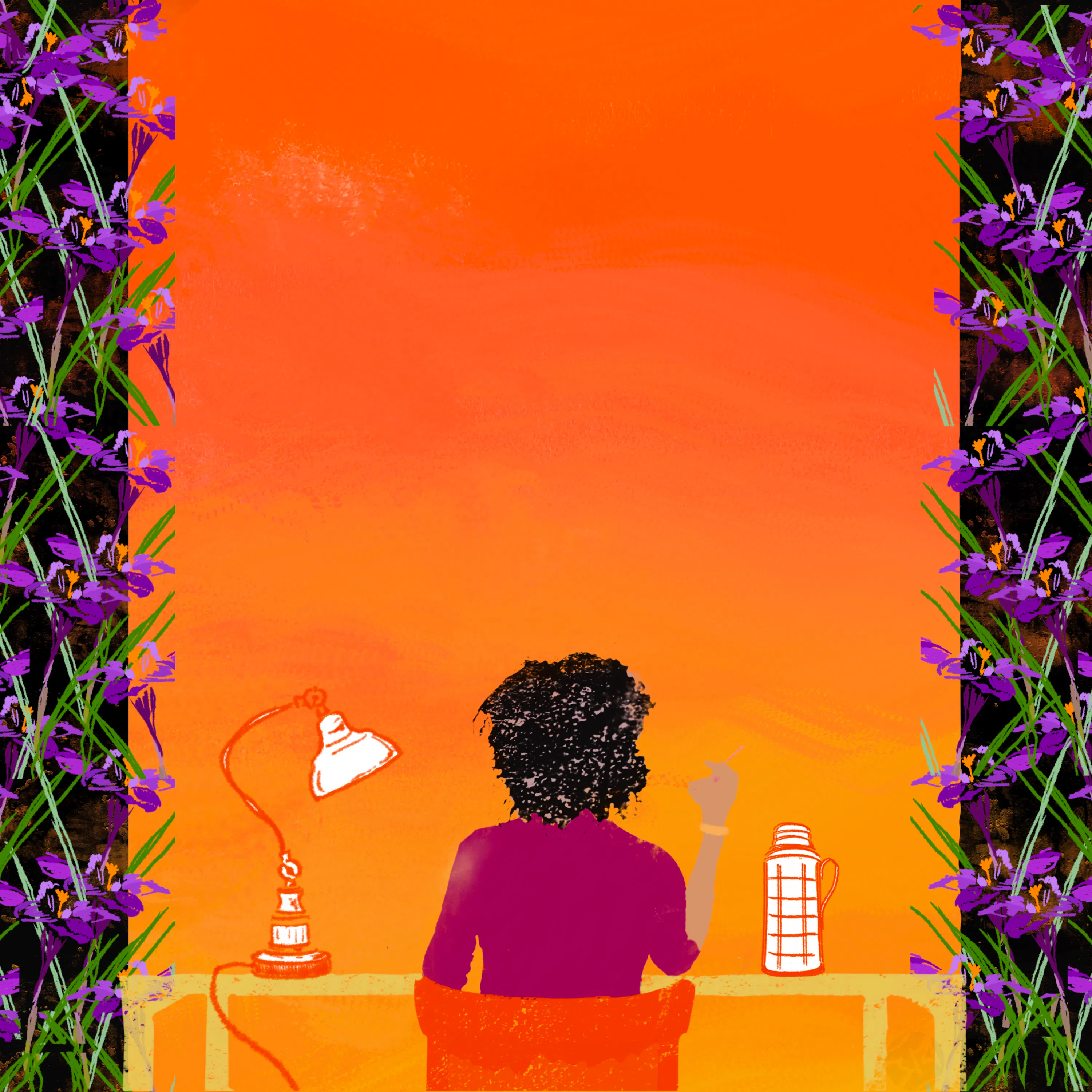
This episode is the edited version of a live event held on June 17 2022 to celebrate the launch of Finding Your Purpose: a Higher Calling Workbook for Justice-Oriented Scholars in an Unjust World. Higher Calling is a project for everyone who decided to become a scholar because they believed in the mission of higher education, and specifically, for everyone who saw participating in and working for higher education as a way to turn the pursuit of justice into a career. It aims to help you understand how to better align a career in academia with your sense of purpose; how to recognize when your purposes are no longer served by academia; how to pursue scholarly purpose outside of an academic career; and when and how to fight back against the broken system which is higher education in the United States. At times, one may wonder if the compromises are too great, the labor conditions untenable, or the barriers to doing meaningful work too high. This project aims to help you navigate these moments alone and in community through essays, exercises, and rituals. You can download the workbook here. Speakers: Hannah Alpert-Abrams organizes the Visionary Futures Collective, and writes about labor, technology, and higher education. Matt Cohen is a professor of English and scholar of Early American literature at the University of Nebraska, Lincoln. Sonya Donaldson is a professor of English and scholar of Africana studies at New Jersey City University. Quinn Dombrowski is an academic technology specialist and digital humanist at Stanford University. Carter Hogan is a writer and new trans folk musician based in Austin, Texas. Image: © 2022 Saronik Bosu Learn more about your ad choices. Visit megaphone.fm/adchoices Support our show by becoming a premium member! https://newbooksnetwork.supportingcast.fm/education
Ep 53Nathan Long on Growth Strategies for Small Private Universities
Nathan Long shares insights from his career leading successful growth strategies for two small private universities. Saybrook University was formed in the 1970s by some of the leading scholars and practitioners in the field of humanist psychology and was an early pioneer in online/hybrid and residential conference education. Long discusses the many benefits to Saybrook of being part of the TCS Education System (see earlier interview with TCS founder Michael Horowitz), one of the few national, non-profit systems of higher education. David Finegold is the president of Chatham University. Learn more about your ad choices. Visit megaphone.fm/adchoices Support our show by becoming a premium member! https://newbooksnetwork.supportingcast.fm/education
Ep 99William C. Kirby, "Empires of Ideas: Creating the Modern University from Germany to America to China" (Harvard UP, 2022)
Earlier this month, U.S. President Joe Biden signed the CHIPS and Science Act, a bill purportedly meant to revive U.S. dominance in research and development. “We used to rank number one in the world in research and development; now we rank number nine,” Biden said at the signing ceremony. “China was number eight decades ago; now they are number two.” And a recent study from Japan’s science ministry reported that China now leads the world not just in quantity of scientific research, but in quality too. The success of the U.S.--and perhaps China, into the future–is due to the “research university”, an academic institution that offers professors the freedom to study and research, and students the freedom to learn, leading to high-quality academic output. Those universities are the subject of Professor William Kirby’s Empires of Ideas: Creating the Modern University from Germany to America to China (Harvard University Press, 2022). In this interview, Professor Kirby and I talk about the research university: Humboldt, Harvard, Berkeley, Tsinghua, Nanjing, and the University of Hong Kong. We also discuss what it means for China, and Chinese institutions, to play a bigger role in world academia. How might that change things? William C. Kirby is Spangler Family Professor of Business Administration and T. M. Chang Professor of China Studies at Harvard University, as well as Chair of the Harvard China Fund and Faculty Chair of the Harvard Center Shanghai. His many books include Can China Lead? Reaching the Limits of Power and Growth (Harvard Business Review Press: 2014) You can find more reviews, excerpts, interviews, and essays at The Asian Review of Books, including its review of Empires of Ideas. Follow on Facebook or on Twitter at @BookReviewsAsia. Nicholas Gordon is an associate editor for a global magazine, and a reviewer for the Asian Review of Books. He can be found on Twitter at@nickrigordon. Learn more about your ad choices. Visit megaphone.fm/adchoices Support our show by becoming a premium member! https://newbooksnetwork.supportingcast.fm/education
Ep 117The Two Keys to Student Retention: A Discussion with Aaron Basko
Welcome to The Academic Life! In this episode you’ll hear about: Why Aaron Basko thinks we are looking at student success backwards. How asking alums why they stayed at a school often tells us more about student needs than asking the students who are withdrawing why they leave. What the “Big Six” for student success is. What two things to evaluate as you decide which college or university will be the right “fit” for you. His advice to parents and incoming students. Our guest is: Aaron Basko, who currently serves as Associate Vice President for Enrollment Services at the University of Lynchburg, in Lynchburg Virginia. With 25 years of experience serving as an enrollment growth specialist and student success strategist for multiple institutions, Aaron has been part of the leadership team that engineered historic growth comebacks at three different colleges and universities. Aaron specializes in creating cross-functional teams for strategic enrollment planning and retention success. A thought leader and author, Aaron has written for The Chronicle of Higher Education, Inside Higher Ed, The Times Higher Education, and the State Department’s Fulbright blog. As a 2015 Fulbright International Education Administrator and capacity building specialist, Aaron also assists institutions with student mobility and international partnership initiatives. Aaron loves to create “a-ha moments” and to help institutions clarify the distinctive voice that will resonate with the right students. Our host is: Dr. Christina Gessler, who holds a PhD in American history. She is the co-producer of the Academic Life. Listeners to this episode may also be interested in: Aaron Basko’s article in Inside Higher Ed on how to attract more liberal arts college students to campus : Liberal arts colleges need new strategies (opinion) “Have We Gotten Student Success Completely Backwards?” and Aaron’s other articles in The Chronicle of Higher Education: Aaron Basko (chronicle.com) This discussion about the college admissions process. Get Real and Get In: How to Get Into the College of Your Dreams by Being Your Authentic Self, by Aviva Legatt This conversation about navigating the ups and downs of student life: How To Human: An Incomplete Manual for Living in a Messed-Up World, by Alice Connor How to College: What to Know Before You Go (and When You’re There), by Andrea Malkin Brenner and Lara Hope Schwartz This conversation about rejection-recovery and dealing with mistakes You are smart and capable, but you aren’t an island, and neither are we. We reach across our mentor network to bring you podcasts on everything from how to finish that project to how to take care of your beautiful mind. Here on the Academic Life channel, we embrace a broad definition of what it means to be an academic and to lead an academic life. We view education as a transformative human endeavor and are inspired by today’s knowledge-producers working inside and outside the academy. Wish we’d bring on an expert about something? DMs us on Twitter: @AcademicLifeNBN. Learn more about your ad choices. Visit megaphone.fm/adchoices Support our show by becoming a premium member! https://newbooksnetwork.supportingcast.fm/education
Ep 179Phillip B. Levine, "A Problem of Fit: How the Complexity of College Pricing Hurts Students—and Universities" (U Chicago Press, 2022)
According to A Problem of Fit: How the Complexity of College Pricing Hurts Students—and Universities (U Chicago Press, 2022) a college education doesn't come with a sticker price and perhaps, he argues, it should. Millions of Americans miss out on the economic benefits of a college education because of concerns around the costs. Financial aid systems offer limited help and produce uneven distributions. In the United States today, the systems meant to improve access to education have in fact added a new layer of deterrence. In A Problem of Fit Levine examines the role of financial aid systems in facilitating (and discouraging) access to college. If markets require prices in order to function optimally, then the American higher-education system--rife as it is with hidden and variable costs--amounts to a market failure. It's a problem of price transparency, not just affordability. Ensuring that students understand exactly what college will cost, including financial aid, could lift the lid on not only college attendance for more people, but for greater representation across demographics and institutions. As he illustrates, our conversations around affordability and free tuition miss a larger truth: that the opacity of our current college-financing systems is a primary driver of inequities in education and society. A Problem of Fit offers a bold, trenchant new argument for an educational reform that is well within rea Phillip B. Levine is the Katharine Coman and A. Barton Hepburn Professor of Economics at Wellesley College, a research associate of the National Bureau of Economic Research, and a nonresident fellow at the Brookings Institution. He is the author, coauthor, or coeditor of five books devoted to statistics, the analysis of social policy, and its effect on individual behavior. Tom Discenna is Professor of Communication at Oakland University whose work examines issues of academic labor and communicative labor more broadly. Learn more about your ad choices. Visit megaphone.fm/adchoices Support our show by becoming a premium member! https://newbooksnetwork.supportingcast.fm/education
Ep 178Claire Nader, "You Are Your Own Best Teacher!: Sparking the Imagination and Intellect of Tweens" (Essential Books, 2022)
You Are Your Own Best Teacher!: Sparking the Imagination and Intellect of Tweens (Essential Books, 2022) provides a variety of teachable antidotes to the punishing forces bearing down on youngsters from harmful marketing, the insidious grip of 'virtual reality' and the tyranny of peer groups. Apprehensive parents and burdened teachers will delight in the lessons of this book for Tweens (9-12 year olds). Tweens, who are whipsawed by relentless distractions, profit-driven manipulations and oncoming addictions, are guided toward elevating their own sense of significance, protection and realizable achievements. Claire Nader introduces the young to Benjamin Franklin, Frederick Douglass and Helen Keller to illustrate their profound awareness and discipline. Claire Nader is a social scientist and activist. Caleb Zakarin is the Assistant Editor of the New Books Network (Twitter: @caleb_zakarin). Learn more about your ad choices. Visit megaphone.fm/adchoices Support our show by becoming a premium member! https://newbooksnetwork.supportingcast.fm/education
Ep 322Decoteau Irby, "Stuck Improving: Racial Equity and School Leadership" (Harvard Education Press, 2021)
An incisive case study of changemaking in action, Stuck Improving: Racial Equity and School Leadership (Harvard Education Press, 2021) analyzes the complex process of racial equity reform within K-12 schools. Scholar Decoteau J. Irby emphasizes that racial equity is dynamic, shifting as our emerging racial consciousness evolves and as racism asserts itself anew. Those who accept the challenge of reform find themselves "stuck improving," caught in a perpetual dilemma of both making progress and finding ever more progress to be made. Rather than dismissing stuckness as failure, Irby embraces it as an inextricable part of the improvement process. Irby brings readers into a large suburban high school as school leaders strive to redress racial inequities among the school's increasingly diverse student population. Over a five-year period, he witnesses both progress and setbacks in the leaders' attempts to provide an educational environment that is intellectually, socioemotionally, and culturally affirming. Looking beyond this single school, Irby pinpoints the factors that are essential to the work of equity reform in education. He argues that lasting transformation relies most urgently on the cultivation of organizational conditions that render structural racism impossible to preserve. Irby emphasizes how schools must strengthen and leverage personal, relational, and organizational capacities in order to sustain meaningful change. Stuck Improving offers a clear-eyed accounting of school-improvement practices, including data-driven instructional approaches, teacher cultural competency, and inquiry-based leadership strategies. This timely work contributes both to the practical efforts of equity-minded school leaders and to a deeper understanding of what the work of racial equity improvement truly entails. Learn more about your ad choices. Visit megaphone.fm/adchoices Support our show by becoming a premium member! https://newbooksnetwork.supportingcast.fm/education
Ep 177Cassidy Puckett, "Redefining Geek: Bias and the Five Hidden Habits of Tech-Savvy Teens" (U Chicago Press, 2022)
Picture a typical computer geek. Likely white, male, and someone you’d say has a “natural instinct” for technology. Yet, after six years teaching technology classes to first-generation, low-income middle school students in Oakland, California, Cassidy Puckett has seen firsthand that being good with technology is not something people are born with—it’s something they learn. In Redefining Geek: Bias and the Five Hidden Habits of Tech-Savvy Teens (U Chicago Press, 2022), she overturns the stereotypes around the digitally savvy and identifies the habits that can help everyone cultivate their inner geek. Drawing on observations and interviews with a diverse group of students around the country, Puckett zeroes in on five technology learning habits that enable tech-savvy teens to learn new technologies: a willingness to try and fail, management of frustration and boredom, use of models, and the abilities to use design logic and identify efficiencies. In Redefining Geek, she shows how to measure and build these habits, and she demonstrates how many teens historically marginalized in STEM are already using these habits and would benefit from recognition for their talent, access to further learning opportunities, and support in career pathways. She argues that if we can develop, recognize, and reward these technological learning habits in all kids—especially girls and historically marginalized racial and ethnic groups—we can address many educational inequities and disparities in STEM. Revealing how being good with technology is not about natural ability but habit and persistence, Redefining Geek speaks to the ongoing conversation on equity in technology education and argues for a more inclusive technology learning experience for all students. Joao Souto-Maior is PhD Candidate in Sociology of Education at the New York University. Learn more about your ad choices. Visit megaphone.fm/adchoices Support our show by becoming a premium member! https://newbooksnetwork.supportingcast.fm/education
Ep 123Opening Up the University for Displaced Students
Welcome to The Academic Life! In this episode you’ll hear about: The Open Learning Initiative (OLIve) operating out of Central European University. The importance of language related to students experiencing displacement. How our guests center theory-informed practice in their work. Three proposals for opening up the university to promote transformative experiences. Advice to others in the field initiating programs for displaced students. Our guests are: Dr. Ian M. Cook and Dr. Prem Kumar Rajaram, two of the three editors of Opening Up the University: Teaching and Learning with Refugees. Dr. Celine Cantat is also an editor on the volume. Ian M. Cook is Director of Studies at the Open Learning Initiative (OLIve), Budapest located at Central European University (CEU). An anthropologist by training, his work focuses on urban India, environmental justice, access to higher education, and podcasting. He strives to make scholarly practice more collaborative and multimodal. He is part of the Allegra Lab editorial collective. Dr. Prem Kumar Rajaram is Professor of Sociology and Social Anthropology at Central European University and Head of the OLIve unit at the same university. He works on issues to do with race, capitalism, and displacement in historical and contemporary perspective. Our host is: Dr. Dana M. Malone, a higher education scholar and practitioner energized by facilitating meaningful conversations and educational experiences. She specializes in college student relationships, gender, sexuality, and religious identities as well as student success and assessment planning. Listeners to this episode may also be interested in: Our featured book: Opening Up the University: Teaching and Learning with Refugees Refugee Education Initiatives Higher Education Supporting Refugees in Europe Refugees and Higher Education: Trans-national Perspectives on Access, Equity, and Internationalization You are smart and capable, but you aren’t an island, and neither are we. We reach across our mentor network to bring you podcasts on everything from how to finish that project to how to take care of your beautiful mind. Here on the Academic Life channel, we embrace a broad definition of what it means to be an academic and to lead an academic life. We view education as a transformative human endeavor and are inspired by today’s knowledge-producers working inside and outside the academy. Wish we’d bring on an expert about something? DMs us on Twitter: @AcademicLifeNBN. Learn more about your ad choices. Visit megaphone.fm/adchoices Support our show by becoming a premium member! https://newbooksnetwork.supportingcast.fm/education
Ep 77Brian Cafarella, "Community College Mathematics: Past, Present, and Future" (CRC Press, 2022)
In Community College Mathematics: Past, Present, and Future (CRC Press, 2022), Brian Cafarella addresses the key questions: How can we build a future model for community college gatekeeper math classes that is both successful and sustainable? Additionally, how can we learn from the past and the present to build such a model? From the 1970’s to the pandemic in the early 2020’s, the book uses interviews with 30 community college faculty members from seven community colleges to explore math curricula as well as trends, initiatives, teaching practices, and mandates that have impacted community college mathematics. Brian Cafarella is a professor in mathematics at Sinclair Community College in Dayton, Ohio. He has taught a variety of courses ranging from developmental math through pre-calculus. Brian is a past recipient of the Roeche Award for teaching excellence and a past recipient of the Ohio Magazine Award for excellence in education. Marc Goulet is Professor in mathematics and Associate Dean in the College of Arts and Sciences at the University of Wisconsin-Eau Claire. Learn more about your ad choices. Visit megaphone.fm/adchoices Support our show by becoming a premium member! https://newbooksnetwork.supportingcast.fm/education
Ep 112The Journal of Higher Education in Prison
Welcome to The Academic Life! In this episode you’ll hear about: How both of today’s guests became involved in higher education in prison. Why this work is personal to them. Funding and representation issues in higher education in prison. The complexities of supporting students who are incarcerated without supporting the carceral system. And a discussion of the Journal of Higher Education in Prison. Our guest is: Dr. Erin Corbett, who earned her doctorate from the University of Pennsylvania, where her dissertation examined the relationship between educational attainment level and post-release employment outcomes for formerly incarcerated people in Connecticut. While pursuing her doctorate, Erin launched a nonprofit that provides not-for-credit, postsecondary level courses in three correctional facilities in Connecticut. She has also taught in correctional facilities in Rhode Island with College Unbound, and guest lectured to incarcerated students in the Iowa through the University of Iowa Liberal Arts Beyond Bars (UI LABB) program. Erin was the Assistant Director for Applied Research at the Institute for Higher Education Policy focusing on federal policy related to the intersection of higher education policy and policy related to educational access for justice-impacted people; and she was the Director of Policy at the Katal Center for Health, Equity, and Justice before transitioning to working with SCEA full time and consulting. Our guest is: Dr. Breea Willingham, incoming Associate Professor of Criminology at UNC Wilmington. Dr. Willingham earned her Ph.D. in American Studies from the State University of New York at Buffalo. As an interdisciplinary scholar, Dr. Willingham’s research examines the intersections of race, gender, higher education, and the injustice system. She is particularly interested in examining Black women’s pathways to incarceration, their experiences with higher education in prison, and providing a platform for Black women impacted by the injustice system to tell their stories. Influenced by her experiences as a sister and aunt of two men serving life sentences, Dr. Willingham’s research also focuses on the societal ramifications of mass incarceration, especially its impact on families. Her work on incarcerated fathers and their children, Black women’s prison narratives, teaching in women’s prisons, and Black women and police violence has been published in academic journals and edited collections. In 2020, Dr. Willingham was appointed Managing Editor of the Journal for Higher Education in Prison, a peer-reviewed journal that publishes on the topics and issues in higher education in prison. Our host is: Dr. Christina Gessler, the co-creator of the Academic Life. Listeners to this episode might also be interested in: The Journal of Higher Education in Prison The Alliance for Higher Education in Prison Ear Hustle, a podcast hosted by persons who are incarcerated at San Quentin A conversation about the Emerson Prison Initiative Dr. Erin Corbett on Beyond Prisons Abolition. Feminism. Now. edited by Angela Davis et al. Punishment and Society, by Breea Willingham Privilege and Punishment, by Matthew Clair No Mercy Here, by Sarah Haley You are smart and capable, but you aren’t an island and neither are we. We reach across our mentor network to bring you experts about everything from how to finish that project, to how to take care of your beautiful mind. Here on the Academic Life channel, we embrace a broad definition of what it means to be an academic and to lead an academic life. We view education as a transformative human endeavor and are inspired by today’s knowledge-producers working inside and outside the academy. Wish we’d bring on an expert about something? DMs us on Twitter: @AcademicLifeNBN. Learn more about your ad choices. Visit megaphone.fm/adchoices Support our show by becoming a premium member! https://newbooksnetwork.supportingcast.fm/education
Ep 40Ann Garcia, "How to Pay for College: A Complete Financial Plan for Funding Your Child's Education" (Harriman House, 2022)
Providing your children with a good education is one of the best gifts you can give. But it’s not straightforward. Education costs and student loan debt are skyrocketing. In some cases, college costs upwards of $300,000 for four years. And calculations for financial aid and merit awards are complex and opaque. How do you find the best education options that fit your budget and are right for your child? And how do you save for your kids’ college without wrecking your own retirement, or putting your other goals completely out of reach? Ann Garcia―known as The College Financial Lady―is a CERTIFIED FINANCIAL PLANNER™ and college finance expert, and is here to help. In How to Pay for College, Ann shows you how to develop a financial plan for college that really works, including: How to save and how much to save. How to find good college choices that fit your budget. How to get scholarships and tax benefits. How to talk to your kids about the costs and benefits of going to college. Plus invaluable information and inside tricks to help you crack the college financial challenge. Detailed explanations of the key elements in planning for college―the FAFSA’s methodology, merit awards, 529 plans, AP credits, student loans, financial aid awards, budgeting, and more―are paired with worksheets and exercises to give you a full picture of your family’s college financial position. This definitive guide gives you everything you need to give your children the best education possible, at a price you can all afford. John Emrich has worked for decades years in corporate finance, business valuation and fund management. He has a podcast about the investment space called Kick the Dogma. Learn more about your ad choices. Visit megaphone.fm/adchoices Support our show by becoming a premium member! https://newbooksnetwork.supportingcast.fm/education
Ep 176Tarez Samra Graban and Wendy Hayden, "Teaching Through the Archives: Text, Collaboration, and Activism" (Southern Illinois UP, 2022)
Archives are much more than silent repositories of historical material. They are rich sites for teaching and learning, for collaboration and for creative and critical exploration of our past, present and future. In their new book, Teaching through the Archives: Text, Collaboration, and Activism (Southern Illinois University Press, 2022), Tarez Samra Graban and Wendy Hayden bring together 37 contributors to explore the many possible uses of archival collections in the teaching of writing and history and in generating scholarly collaboration, pedagogical experimentation and community building within and beyond the university. Section I focuses on how approaching the archive primarily as text fosters habits of mind essential for creating and using archives, for critiquing or inventing knowledge-making practices, and for being good stewards of private and public collections. Section II argues for conducting archival projects as collaboration through experiential learning and for developing a preservationist consciousness through disciplined research. Section III details praxis for revealing, critiquing, and intervening in historic racial omissions and gaps in the archives. The book’s contributors see archives as sites of activism, as places where students can develop critical skills, test and question established research methodologies while also learning to appreciate the specialist knowledge of archivists. Educators in disciplines including rhetoric and composition, literature, history and archival studies will find many inspiring ideas in this book. While the chapters offer university-based case studies, many of the ideas could also be adapted to the secondary classroom and to non-institutional educational settings. In this episode, Alice Garner interviews Tarez Graban about the genesis of the book, the important lessons and possibilities she and Wendy Hayden sought to draw out from the contributors’ research, as well as Dr Graban’s recent work in transnational and postcolonial Southern African archival research and repatriation. More on the editors: Tarez Samra Graban, associate professor in the English department at Florida State University, is the author of Women’s Irony: Rewriting Feminist Rhetorical Histories and coauthor of GenAdmin: Theorizing WPA Identities in the Twenty-First Century. Wendy Hayden, associate professor at Hunter College, CUNY, is the author of Evolutionary Rhetoric: Sex, Science, and Free Love in Nineteenth-Century Feminism. Alice Garner is a historian, teacher and performer with a PhD from the University of Melbourne, Australia. Learn more about your ad choices. Visit megaphone.fm/adchoices Support our show by becoming a premium member! https://newbooksnetwork.supportingcast.fm/education
Ep 168Katherine L. Carroll, "Building Schools, Making Doctors: Architecture and the Modern American Physician" (U Pittsburgh Press, 2022)
In the late nineteenth century, medical educators intent on transforming American physicians into scientifically trained, elite professionals recognized the value of medical school design for their reform efforts. Between 1893 and 1940, nearly every medical college in the country rebuilt or substantially renovated its facility. In Building Schools, Making Doctors: Architecture and the Modern American Physician (U Pittsburgh Press, 2022), Katherine Carroll reveals how the schools constructed during this fifty-year period did more than passively house a remodeled system of medical training; they actively participated in defining and promoting an innovative pedagogy, modern science, and the new physician. Interdisciplinary and wide ranging, her study moves architecture from the periphery of medical education to the center, uncovering a network of medical educators, architects, and philanthropists who believed that the educational environment itself shaped how students learned and the type of physicians they became. Carroll offers the first comprehensive study of the science and pedagogy formulated by the buildings, the influence of the schools’ donors and architects, the impact of the structures on the urban landscape and the local community, and the facilities’ privileging of white men within the medical profession during this formative period for physicians and medical schools. Rachel Pagones is an acupuncturist, educator, and author based in Cambridge, England. Her book, Acupuncture as Revolution: Suffering, Liberation, and Love (Brevis Press) was published in 2021. Learn more about your ad choices. Visit megaphone.fm/adchoices Support our show by becoming a premium member! https://newbooksnetwork.supportingcast.fm/education
Ep 78Jo Mackiewicz and Isabelle Thompson, "Talk about Writing: The Tutoring Strategies of Experienced Writing Center Tutors" (Routledge, 2018)
Listen to this interview with Jo Mackiewicz, professor of rhetoric and professional communication at Iowa State University, and with Isabelle Thompson, emerita professor of technical and professional communication and former coordinator of the English Center at Auburn University. We talk about their book Talk about Writing: The Tutoring Strategies of Experienced Writing Center Tutors (Routledge, 2018) and writing. Jo Mackiewicz : "The more I think about writing center interactions and write books about it, the more I think that the value a tutor brings to learning is this: to show students a thinking process, to show students an analysis process about writing — to show them a self-questioning of yourself as writer, and also a questioning of any sort of text, a questioning of your relationship to the text, a questioning of what you know about the subject matter, of how you evaluate your handling of that subject matter. Tutors model this process for student writers." Contact Daniel at [email protected]. Learn more about your ad choices. Visit megaphone.fm/adchoices Support our show by becoming a premium member! https://newbooksnetwork.supportingcast.fm/education
Ep 77Nicholas Rowe, "The Realities of Completing a PhD: How to Plan for Success" (Routledge, 2021)
Listen to this interview of Nicholas Rowe, researcher and educator based in Finland. We talk his book The Realities of Completing a PhD: How to Plan for Success (Routledge, 2021) and about what needs to change. Nicholas Rowe : "Writing for different purposes, for different audiences is a huge skill, because people are going to need this communication skill in their research proposal when they present their ideas to advisors, but also in their publications when they share their ideas with colleagues. Now, of courses, everybody's systems and processes are different, but the key communicative skills that you need are fairly much the same, and if you don't need them at one stage of a project, you're going to need them at another." Contact Daniel at [email protected]. Learn more about your ad choices. Visit megaphone.fm/adchoices Support our show by becoming a premium member! https://newbooksnetwork.supportingcast.fm/education
Ep 74Covering Higher Ed: A Chat with Sara Custer of Times Higher Education
A special opportunity to hear from Sara Custer, editor of The Campus (Times Higher Education), about the role of journalism and reporting in higher education. Avi and Sara cover topics ranging from the role of media in increasing cross-institution collaboration and sharing during the pandemic to how universities can do a better job supporting their junior scholars. Also, don't miss out on the opportunity to learn how you can publish in Times Higher Education yourself! Avi Staiman is the founder and CEO of Academic Language Experts. Learn more about your ad choices. Visit megaphone.fm/adchoices Support our show by becoming a premium member! https://newbooksnetwork.supportingcast.fm/education
Ep 112Heide Hinrichs and Jo-Ey Tang, "Shelf Documents: Art Library as Practice" (Royal Academy of Fine Arts in Antwerp, 2021)
How can a library change the world? How can an art library change the art school or the gallery? Or even an art practice? In Shelf Documents: Art Library as Practice (Royal Academy of Fine Arts in Antwerp, 2021), artists, writers, curators, teachers, and librarians reflect on how they can use the beloved library as a source of inspiration or a field of action. In thinking about diversity in collections, the publication proposes art libraries as sites of intersubjective communion. shelf documents is rooted in a collaborative book acquisition project, initiated by the artist Heide Hinrichs at the Royal Academy of Fine Arts in Antwerp, in which her group integrated over 200 new titles in art libraries as a way to fill gaps, to amplify voices, and seek out the self-initiated or the overlooked. Heide Hinrichs, Elizabeth Haines, and Jo-ey Tang speak to Pierre d’Alancaisez about working with institutions, working slowly, and working together to interfere with the permanence of libraries. Heide Hinrichs is an artist who works with found and existing materials. For the first Kathmandu Triennale, she developed the project On Some of the Birds of Nepal. In 2018, she published Silent Sisters/Stille Schwestern, an unauthorised German translation of Theresa Hak Kyng Cha’s novel Dictee. Elizabeth Haines is a historian and Vice-Chancellor’s Fellow at the University of Bristol. Her interdisciplinary interest in the materiality of knowledge productions draws on her education in fine arts. Jo-ey Tang is an artist, curator, and writer. He was previously the director of exhibitions at the Beeler Galery at Columbus College of Art & Design and is currently the director of Kadist, San Francisco. The list of books involved in the project is available at second-shelf.org. Pierre d’Alancaisez is a contemporary art curator, cultural strategist, researcher. Sometime scientist, financial services professional. Learn more about your ad choices. Visit megaphone.fm/adchoices Support our show by becoming a premium member! https://newbooksnetwork.supportingcast.fm/education
Ep 181Victoria Reyes, "Academic Outsider: Stories of Exclusion and Hope" (Stanford UP, 2022)
In Academic Outsider: Stories of Exclusion and Hope (Stanford University Press, 2022), sociologist Victoria Reyes combines her personal experiences with research findings to examine how academia creates conditional citizenship for its marginalized members. Reyes draws from her family background, experiences during routine university life, and academic scholarship to theorize the academic outsiders as those who "are constantly reminded that our presence in the academy is contingent and in constant flux" (10-11). She elaborates on how love and worth are assessed in the university and her experiences as a mother in the academy. The final chapter calls for academic justice and offers practical strategies to combat the academy's exclusionary practices. In this book Reyes contributes to important conversations in the university on the experiences of people of color, women, and those from marginalized backgrounds. This book will be of interest to those who experience the academy's conditional citizenship, those who want to understand how the university perpetuates inequality, and those who want to challenge these conditions. Victoria Reyes is Associate Professor in the Department of Gender & Sexuality Studies at the University of California, Riverside. She is the author of Global Borderlands (Stanford, 2019). Reighan Gillam is Associate Professor in the Department of Anthropology at the University of Southern California. She is the author of Visualizing Black Lives: Ownership and Control in Afro-Brazilian Media (Illinois, 2022). Learn more about your ad choices. Visit megaphone.fm/adchoices Support our show by becoming a premium member! https://newbooksnetwork.supportingcast.fm/education