New Books in Economic and Business History
1,665 episodes — Page 4 of 34
Ep 178Orsi Husz, "Bankminded: Banks As Intimate Agents of Everyday Life in Welfare State Sweden" (Palgrave MacMillan, 2025)
In today’s world, it is almost impossible to go through the day without interacting with a bank—whether through a salary payment, a debit card, a credit card, or a digital ID used to access public services online. Yet this intimate relationship between households and banks is relatively recent. In this episode of the New Books Network, I speak with Orsi Husz, Professor at Uppsala University, about her book Bankminded: Banks as Intimate Agents of Everyday Life in Welfare State Sweden. The book traces how, from the late 1950s onwards, banks gradually became embedded in the everyday routines of ordinary people. Through wage accounts, credit cards, financial advice, and identity documents, financial institutions reshaped how households handled money—and how they thought about finance itself. Drawing on rich archival research, Husz shows that this transformation was not simply a story of technology or markets. It involved cultural shifts around class, gender, morality, and identity, as well as the surprising role of the welfare state in expanding everyday banking. The result was what she calls the “bankification” of everyday life—a process that laid the groundwork for the financialised world we inhabit today. If you are interested in the history of banking, the culture of finance, or how modern financial habits emerged, this conversation offers a fascinating perspective on a transformation that most of us now take for granted. You can download the book for free (Open Access) here Listen to the episode to learn how banks became an intimate part of everyday life. Learn more about your ad choices. Visit megaphone.fm/adchoices
Doug Crandell, "Twenty-Two Cents an Hour: Disability Rights and the Fight to End Subminimum Wages" (Cornell UP, 2022)
In Twenty-Two Cents an Hour: Disability Rights and the Fight to End Subminimum Wages (Cornell UP, 2022), Doug Crandell uncovers the harsh reality of people with disabilities in the United States who are forced to work in unethical conditions for subminimum wages with little or no opportunity to advocate for themselves, while wealthy CEOs grow even wealthier as a direct result. As recently as 2016, the United States Congress enacted bipartisan legislation which continued to allow workers with disabilities to legally be paid far lower than the federal minimum wage. Drawing on ongoing federal Department of Justice lawsuits, the horrifying story of Henry's Turkey Farm in Iowa, and more, Crandell shows the history of the policies that have led to these unjust outcomes, examines who benefits from this legislation, and asks important questions about the rise of a disability industrial complex. Exposing this complex—which is rooted in profit, lobbying, and playing on the emotions of workers' parents and families, as well as the public—Crandell challenges readers to reexamine how we treat some of our most vulnerable fellow citizens. Twenty-Two Cents an Hour forces the reader to face the reality of this exploitation, and builds the framework needed for reform. Doug Crandell is Public Service Faculty at the Institute on Human Development and Disability at the University of Georgia. For more than thirty years he has worked in disability advocacy, specifically the intersection of employment, economic justice, and much-needed systems change. Doug Crandell is the author of several book and novels, inlcuding most recently "They're Calling You Home." My co-producer for this episode is Shea Tripp, a graduate student in the Department of Communication, Journalism and Public Relations at Oakland University. Learn more about your ad choices. Visit megaphone.fm/adchoices
Paul Kohlbry, "Plots and Deeds: Agrarian Annihilation and the Fight for Land Justice in Palestine" (Stanford UP, 2026)
The emancipatory potential and limits of land justice, when land is at once home, property, territory, and homeland. Peasant farming was once an integral part of Palestine's agrarian fabric. But after military occupation of the West Bank in 1967, Israeli land confiscations and economic policies pushed rural cultivators into wage labor. In recent decades, Palestinian land titling and private developers have driven the slow transformation of agricultural land into real estate. In Plots and Deeds : Agrarian Annihilation and the Fight for Land Justice in Palestine (Stanford UP, 2026) Paul Kohlbry argues that we should see these changes as part of a larger process of agrarian annihilation, one in which state violence and market coercion together devastate the social, ecological, and economic relationships that make agrarian livelihoods possible. Kohlbry tells the story of those who, refusing annihilation, struggle both for the return of land, and for their return to it. Through long-term engagements in the central highlands of the West Bank, Kohlbry shows how peasant practices and ethics matter for those fighting to rebuild collective attachments to rural places, and the surprising ways that property ownership has become a means of both land dispossession and defense. Going beyond accounts that treat the peasant as a tragic figure or a heroic national symbol, Kohlbry foregrounds the complexity of agrarian life to reveal the relationships between agrarian regeneration and political liberation—ultimately connecting Palestine within a global struggle for land justice. Paul Kohlbry is Assistant Professor of Global Studies at the University of California, Santa Barbara. Morteza Hajizadeh is a Ph.D. graduate in English from the University of Auckland in New Zealand. His research interests are Cultural Studies; Critical Theory; Environmental History; Medieval (Intellectual) History; Gothic Studies; 18th and 19th Century British Literature. YouTube channel. Twitter. Learn more about your ad choices. Visit megaphone.fm/adchoices
Lisa Nakamura, "The Inattention Economy: How Women of Color Built the Internet" (U Minnesota Press, 2026)
The Inattention Economy: How Women of Color Built the Internet (U Minnesota Press, 2026) by Dr. Lisa Nakamura challenges the widespread myth that the internet was born from the labor of a handful of white male entrepreneurs, recovering the uncredited and unpaid contributions of women of color. Focusing on three key inflection points in computing—the microchip era of the 1960s and ’70s, the rise of social media in the 2000s, and A.I.-fueled virtual reality in the 2020s—Dr. Nakamura illuminates these women’s instrumental roles in building new technologies and making them coherent to users. From the Navajo women who manufactured the first semiconductor circuits in New Mexico to Tila Tequila, the queer Vietnamese American refugee who became the first true internet influencer in the MySpace age, to Black virtual reality creators, Dr. Nakamura highlights how women’s gendered and racialized identities have uniquely positioned them to mediate the development and proliferation of new technologies. She exposes how these women have been structurally excluded from racial capitalism’s benefits while their labor is considered as exploitable and inexhaustible as that of machines. Confronting this injustice, she focuses our attention on their work, which undergirds and makes possible the platforms ingrained in our daily lives. Arguing for both recognition and material compensation for these women’s labor, The Inattention Economy is a powerful counterhistory of Silicon Valley and a persuasive call to imagine a different kind of internet. This interview was conducted by Dr. Miranda Melcher whose book focuses on post-conflict military integration, understanding treaty negotiation and implementation in civil war contexts, with qualitative analysis of the Angolan and Mozambican civil wars. You can find Miranda’s interviews on New Books with Miranda Melcher, wherever you get your podcasts. Learn more about your ad choices. Visit megaphone.fm/adchoices
Abe Walker, "Reassembling the UAW: Insurgency, Contention, and the Struggle for Unionism in the American South" (Temple UP, 2026)
When Volkswagen’s Chattanooga Assembly Plant opened in 2012, the United Auto Workers were excited by the golden opportunity to organize in the anti-union South, where their efforts had been routinely thwarted. However, it took ten years and several attempts before the UAW was successful in unionizing the plant. Reassembling the UAW: Insurgency, Contention, and the Struggle for Unionism in the American South (Temple UP, 2026) explains why. Dr. Abe Walker chronicles the organizing campaign from its origin in 2014 to the union’s breakthrough victory in 2024, illustrating what went wrong—and what went right—along the way. Walker provides a systematic analysis of the strategic challenges and tactical shifts, showing the patterns that persisted across three election cycles while highlighting their differences, from global-level alliances to local labor issues. Reassembling the UAW also demonstrates how rebel rank-and-file workers ousted the old-guard leadership and transformed the UAW into a militant union to achieve results. Ultimately, Walker offers valuable lessons for organizational strategy, the power of collective action, and the future of the labor movement. This interview was conducted by Dr. Miranda Melcher whose book focuses on post-conflict military integration, understanding treaty negotiation and implementation in civil war contexts, with qualitative analysis of the Angolan and Mozambican civil wars. You can find Miranda’s interviews on New Books with Miranda Melcher, wherever you get your podcasts. Learn more about your ad choices. Visit megaphone.fm/adchoices
César A. Hidalgo, "The Infinite Alphabet: And the Laws of Knowledge" (Allen Lane, 2026)
We all understand that knowledge shapes the fate of business and the growth of nations, but few of us are aware of the principles that govern its motion. The Infinite Alphabet: And the Laws of Knowledge (Allen Lane, 2026) unravels the laws describing the growth and diffusion of knowledge by taking you from a failed attempt to build a city of knowledge in Ecuador to the growth of China's innovation economy. Through dozens of stories, you will learn why aircraft manufacturers in Italy began manufacturing scooters after the Second World War and how migrants like Samuel Slater shaped the industrial fabric of the United States. Knowledge is the secret to the wealth of nations. But to understand it, we must accept that it is not a single thing, but an ever-growing tapestry of unique ideas, experiences and received wisdom. An Infinite Alphabet that we are only beginning to fathom. César A. Hidalgo, a world-renowned scholar for his work on economic complexity, will walk you through the "three laws" and the many principles that govern how knowledge grows, moves, and decays. By the end of this journey, you will understand why knowledge grows exponentially in the electronics industry and what mechanisms govern its diffusion across geographic borders, social networks, and professional boundaries. Together these principles will teach you how knowledge shapes the world. César A. Hidalgo is a physicist, professor, and author known for pioneering work in economic complexity, data visualization, and applied artificial intelligence. For nine years he led MIT's Collective Learning Group before moving to France to found the Center for Collective Learning (CCL), an international research laboratory with offices at the Toulouse School of Economics and Corvinus University of Budapest. Caleb Zakarin is CEO and Publisher of the New Books Network. Learn more about your ad choices. Visit megaphone.fm/adchoices
Eurie Dahn, "Snack" (Bloomsbury, 2026)
In the hierarchy of foods, snacks are deemed trivial – perhaps even childish – especially in contrast to meals, which are seen as substantial and necessary. The multiple aisles devoted to sweet and savory treats in supermarkets, and the availability of snacks even at places like home improvement and department stores, speak to the popularity of snacking. But the ubiquity of snacks is relatively new and not common to all countries.In Snack (Bloomsbury, 2026), part of the Object Lessons series, Dr. Eurie Dahn traces the story of snacking culture through specific snacks, including Flamin' Hot Cheetos, cheese crackers, and Choco Pies, and in the contexts of ethnicity, popular culture, diet culture, and even parenting. Snack is an idiosyncratic cultural history that offers surprisingly filling food for thought. This interview was conducted by Dr. Miranda Melcher whose book focuses on post-conflict military integration, understanding treaty negotiation and implementation in civil war contexts, with qualitative analysis of the Angolan and Mozambican civil wars. You can find Miranda’s interviews on New Books with Miranda Melcher, wherever you get your podcasts. Learn more about your ad choices. Visit megaphone.fm/adchoices
Entrepreneurial Work Ethic
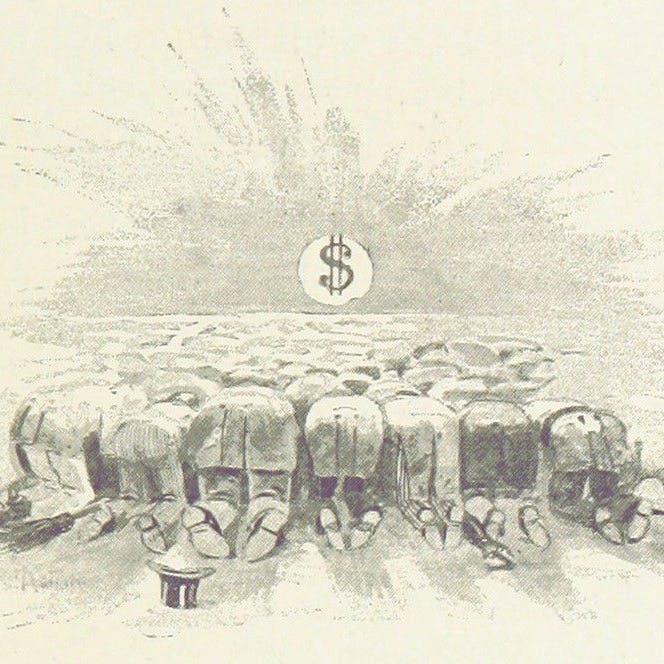
In this episode of High Theory, Saronik talks with Erik Baker about the Entrepreneurial Work Ethic. The dominant work ethic of our current moment, it asks us to constantly create new work for ourselves. Eric contrasts the entrepreneurial work ethic with the industrious work ethic, which valued hard work and drudgery in one’s allotted task. Over the course of the 20th century industriousness was replaced by entrepreneurship in the American economic imaginary. The ultimate villain of the entrepreneurial mode is the bureaucrat, the ultimate failing is complacency. This toxic, exhausting ethos in which the standard of all labor is changing the world, paradoxically stabilizes our economic system, by trapping us in unachievable dreams. We should note that High Theory as an academic side hustle is exemplary of the entrepreneurial work ethic, even if we have no ethics. That’s why we made a Patreon. The transcript of this episode lives here as a WordDoc and here as a PDF. Erik’s new book, Make Your Own Job: How the Entrepreneurial Work Ethic Exhausted America (Harvard UP 2025) explains how this entrepreneurial work ethic took hold, from its origins in late nineteenth-century success literature to the gig economy of today, sweeping in strange bedfellows: Marcus Garvey and Henry Ford, Avon ladies and New Age hippies. Business schools and consultants exhorted managers to cultivate the entrepreneurial spirit in their subordinates, while an industry of self-help authors synthesized new ideas from psychology into a vision of work as “self-realization.” Baker argues that the entrepreneurial work ethic has given meaning to work in a world where employment is ever more precarious––and in doing so, has helped legitimize a society of mounting economic insecurity and inequality. Where work is hard to find and older nostrums about diligent effort fall flat, the advice to “make your own job” keeps hope alive. Erik Baker is a lecturer in the History of Science Department and the director of the senior thesis program for the History & Science concentration. He received his PhD from Harvard and his BA from Northwestern University. He has published on the history of social science and American capitalism in Modern Intellectual History, History of the Human Sciences, and Studies in History and Philosophy of Science. He also writes widely for magazines such as n+1, The Baffler, and The Drift, where he is an associate editor. Image for this episode is an unidentified book illustration from the British Library Commons. It shows a group of people kneeling in front of a dollar sign. It was found for High Theory by Lili Epstein on the Public Domain Image Archive. Learn more about your ad choices. Visit megaphone.fm/adchoices
Pepper Culpepper and Taeku Lee, "Billionaire Backlash: The Age of Corporate Scandal and How it Could Save Democracy" (Bloomsbury, 2026)
Giant companies, launch rockets into space, control satellite communication and develop era-defining AI technologies. But they are also seen as promoting misinformation, undermining democracy and violating privacy. Big banks, reeling since the financial crisis of 2008, continue to be racked with major scandals. Drawing on examples such as the VW scandal in Germany, Cambridge Analytica and Samsung the authors of Billionaire Backlash: The Age of Corporate Scandal and How it Could Save Democracy ( Bloomsbury, 2026) show that these scandals are opportunities for real political change. Learn more about your ad choices. Visit megaphone.fm/adchoices
Michael Kimmel, "Playmakers: The Jewish Entrepreneurs Who Created the Toy Industry in America" (W. W. Norton & Co, 2026)
The untold story of the first-generation Jewish American toymakers who literally manufactured “the century of the child.” In 1902, Morris and Rose Michtom invented the Teddy Bear―bound by clothing scraps, stuffed with sawdust, and given button eyes with a sad, longing expression―in the back room of their Brooklyn candy store. Together they launched the Ideal Toy Corporation, joining a set of other poor, first-generation Jewish toymakers: the Hassenfeld brothers of Hasbro, Ruth Moskowicz and Elliot Handler of Mattel, and Joshua Lionel Cowan of Lionel Trains. From Barbie and G.I. Joe to Popeye, Superman, and Mr. Potato Head, Playmakers: The Jewish Entrepreneurs Who Created the Toy Industry in America (W. W. Norton & Co, 2026) reveals how the toy industry created the idealized American childhood: an enchanted world, full of wild creatures and eternal struggles between good and evil, with endless realms of fantasy and beauty. For much of the twentieth century, every part of the American toy business was largely Jewish―the company founders, executives, and designers, as well as the factory workers, wholesale distributors, retail outlets, and armies of salesmen. A descendant of the founders of the Ideal Toy Corporation, Michael Kimmel shows how these poor, often Yiddish-speaking, tenement-dwelling children of immigrants invented a world they never experienced for themselves. Along with the toys and Jewish toymakers that climbed the ladder of success, Kimmel also portrays the rise of an entire culture focused on children, led by Jewish comic book creators, children’s authors, parenting experts, and child psychologists. The first full-scale toy history of the United States, Kimmel’s story conjures the colorful, imaginative, restless spirits who followed the promise of the American Dream―and describes the ways in which the world they came from molded their beloved creations. Playmakers shows that the overlapping experiences of being a Jew, an immigrant, and a child in twentieth-century America―an outsider looking in, a person desperate to be accepted―created childhood as we know it today. Learn more about your ad choices. Visit megaphone.fm/adchoices
Marianna Dudley, "Electric Wind: An Energy History of Modern Britain by Marianna Dudley" (Manchester UP, 2025)
Electric Wind: An Energy History of Modern Britain by Marianna Dudley (Manchester University Press, 2025) is a cutting-edge history of wind power in Britain. There are turbines on the horizon. The blades whirl with metronomic rhythm. With each rotation, wind is transformed into electricity. An energy revolution is underway. Electric wind rewinds to the beginning to explore the rise of wind energy in modern Britain. From the industrial revolution to the aftermath of war, through energy crises and the changing politics of the late twentieth century, we see how energy has shaped a nation - and how a nation is reflected and refracted through energy. Boldly charting Britain through its wildest, windiest places, this book takes us to the edges of land and beyond to think deeply about the role of nature in politics, science and technology. Visionaries and hippies join engineers and entrepreneurs. Traditions and local cultures meet infrastructure and industry in this captivating history. At a time when action on carbon emissions is urgent, Electric wind offers examples, ideas and stories to fuel change going forwards. This book is an essential read for anyone interested in nature, climate change, landscape and the making of modern Britain. Marianna Dudley is Senior Lecturer in Environmental Humanities at the University of Bristol. She is the author of An Environmental History of the UK Defence Estate (2012). Filippo De Chirico is a Ph.D. Candidate in Energy History at Roma Tre University (Italy). His research focuses on the history of the Italian natural gas sector. Learn more about your ad choices. Visit megaphone.fm/adchoices
Jessica Ann Levy, "Black Power, Inc.: Corporate America and the Rise of Multinational Empowerment Politics" (U Pennsylvania Press, 2026)
Black Power, Inc.: Corporate America and the Rise of Multinational Empowerment Politics, (U Pennsylvania Press, 2026), traces the rise of Black empowerment politics in the United States and Africa. On a cold January day in 1964, civil rights minister turned entrepreneur Rev. Leon Howard Sullivan declared to a group of supporters gathered to witness the launch of Sullivan’s latest venture, Opportunities Industrialization Centers, Inc., “The day has come when we must do more than protest—we must now also PREPARE and PRODUCE!” Occasionally linked with the movement for Black Power, Sullivan and others, including Coca-Cola vice president Carl Ware and Atlanta mayor Andrew Young, were in fact architects of Black empowerment—an intellectual and political movement that championed private enterprise as the key to Black people’s prosperity.Jessica Ann Levy traces Black empowerment’s rise in American politics—from early twentieth-century influences including Booker T. Washington and Marcus Garvey to the cities of postwar America into corporate boardrooms and government offices—and across the Atlantic Ocean to Africa. Civil rights leaders, Black entrepreneurs, white corporate executives, and government officials all championed Black empowerment as a means to address multiple crises in US cities and to blunt some of the more radical aspects of the Black Power movement. Black empowerment politics likewise found application overseas in various Cold War efforts to promote American-style free enterprise in Africa. This was especially the case in South Africa, where US corporate executives and government officials wielded Black empowerment politics to oppose apartheid and divestment.By the early twenty-first century, the idea that private enterprise, including small-scale entrepreneurs and large multinational corporations, should play a leading role in combating racial inequality and empowering Black and other marginalized people featured prominently in various policies and programs at the local, national, and international level. By tracing Black empowerment politics’ evolution, Black Power, Inc. explains its popularity, championed by leaders from Bill Clinton to Nelson Mandela, while also revealing its role in expanding US corporate power, locally and globally. Learn more about your ad choices. Visit megaphone.fm/adchoices
Cheng Li, "Contested Environmentalisms: Trees and the Making of Modern China" (Stanford UP, 2025)
For decades, tree planting and forestry have been pivotal to Chinese environmentalism. During the Mao era, while forests were razed to fuel rapid increases in industrial production, the “Greening the Motherland” campaign promoted conservationist tree-planting nationwide. Contested Environmentalisms: Trees and the Making of Modern China (Stanford UP, 2025) explores the seemingly contradictory rhetoric and desires of Chinese conservation from the early twentieth century through to the present. Drawing on literary, cinematic, scientific, archival, and digital media sources, Cheng Li investigates the emergence, evolution, and devolution of Chinese conservationist ideas. Combining literary, historical, and environmental studies approaches, he shows that these ideas acquired their value and assumed their power precisely because of their malleability and adaptability. Li historicizes authoritarian environmentalism and probes the global-local dynamics underlying conservationist ideas that energize environmental impulses in China. Examining ethnic borderlands, the Beijing political center, and China's growth on the world stage, this book demonstrates the strength of Chinese environmentalism to adapt and survive through tumultuous change lies in what seems to be a weakness: its inconsistency and contestation. Cheng Li is an Assistant Professor of Chinese Studies at Carnegie Mellon University, specializing in modern Chinese environmental literature, film, science fiction, and history. He is a literary scholar and a cultural historian. His research focuses on cultural history, ecocriticism, and infrastructure. Yadong Li is an anthropologist-in-training. He is a PhD candidate of Socio-cultural Anthropology at Tulane University. More details about his scholarship and research interests can be found here. Learn more about your ad choices. Visit megaphone.fm/adchoices
Kim Bowes, "Surviving Rome: The Economic Lives of the Ninety Percent" (Princeton UP, 2025)
The story of ancient Rome is predominantly one of great men with great fortunes. Surviving Rome: The Economic Lives of the Ninety Percent (Princeton UP, 2025) unearths another history, one of ordinary Romans, who worked with their hands and survived through a combination of grit and grinding labor. Focusing on the working majority, Kim Bowes tells the stories of people like the tenant farmer Epimachus, Faustilla the moneylender, and the pimp Philokles. She reveals how the economic changes of the period created a set of bitter challenges and opportunistic hustles for everyone from farmers and craftspeople to day laborers and slaves. She finds working people producing a consumer revolution, making and buying all manner of goods from fine pottery to children’s toys. Many of the poorest working people probably pieced together a living from multiple sources of income, including wages. And she suggests that Romans’ most daunting challenge was the struggle to save. Like many modern people, saving enough to buy land or start a business was a slow, precarious slog. Bowes shows how these economies of survival were shared by a wide swath of the populace, blurring the lines between genders, ages, and legal status.Drawing on new archaeological and textual evidence, Surviving Rome presents a radical new perspective on the economy of ancient Rome while speaking to the challenges of today’s laborers and gig workers surviving in an unforgiving global world. Kim Bowes is professor of archaeology and ancient history at the University of Pennsylvania. She is the author of Houses and Society in the Later Roman Empire and Private Worship, Public Values, and Religious Change in Late Antiquity. Morteza Hajizadeh is a Ph.D. graduate in English from the University of Auckland in New Zealand. His research interests are Cultural Studies; Critical Theory; Environmental History; Medieval (Intellectual) History; Gothic Studies; 18th and 19th Century British Literature. YouTube Channel: here Learn more about your ad choices. Visit megaphone.fm/adchoices
Jon Stobart, "Life in the Georgian Parsonage: Morals, Material Goods and the English Clergy" (Bloomsbury, 2025)
An innovative approach in the field of material culture and consumption studies, Life in the Georgian Parsonage: Morals, Material Goods and the English Clergy (Bloomsbury, 2025) by Dr. Jon Stobart looks at the houses, consumption and lifestyle of Church of England clergy in the long 18th century, linking moral debates and popular representations of the clergy to the material culture of their houses and their motivations as consumers.By focusing on ethical and moral dimensions of consumer practices, it challenges established readings of consumption in the long 18th century as an essentially secular process in which goods were markers of wealth, status and taste, by bringing the clergyman into the frame – their lives, their habits and their homes.Cross-disciplinary in its approach, combining material culture and religious and social history and sitting at the intersection of these fields, Life in the Georgian Parsonage fills a significant gap, enhancing in important ways our knowledge of this group as a crucial but understudied set of 18th-century consumers, while also contributing to understanding the parish clergy of England in the context of 18th-century society and culture. Bringing together a wide range of source material – from probate inventories to personal account books, satirical prints to sermons, diaries to designs for parsonages – the author reconstructs the material lives and household arrangements of the Georgian clergy in glorious detail. Examining the parish clergy over this period of profound social and religious change through the lens of consumption, and consumption through the lives of these clergymen, has a transformative impact both on these areas of enquiry and on our understanding of English society in the 18th century. This interview was conducted by Dr. Miranda Melcher whose book focuses on post-conflict military integration, understanding treaty negotiation and implementation in civil war contexts, with qualitative analysis of the Angolan and Mozambican civil wars. You can find Miranda’s interviews on New Books with Miranda Melcher, wherever you get your podcasts. Learn more about your ad choices. Visit megaphone.fm/adchoices
Geoffrey Jones and Sabine Pitteloud eds., "The Cambridge Companion to the History of Multinationals and Society" (Cambridge UP, 2026)
Geoffrey Jones and Sabine Pitteloud present the latest research on the global history of multinationals and their impact on society and the environment. The Cambridge Companion to the History of Multinationals and Society (Cambridge UP, 2026) brings together leading international scholars, these essays survey key themes in our relationship with multinationals, from taxation and corruption to gender and the climate. Though often associated with large corporations like Apple or Nestlé, the contributors highlight the remarkable diversity in multinational strategies and organizational structures. They challenge the idea of an inescapable rise of multinationals by looking beyond the experience of Western countries and considering the effects of dramatic political shifts. Multinationals have often acted opportunistically, with their resilience carrying social costs through the exploitation of weak regulations, corrupt governments, inequalities, poor human rights, and environmental harm. This is an essential introduction to the historical role of multinationals for scholars and students as well as for policymakers and stakeholders navigating today's economic landscape. Presented by Paula de la Cruz-Fernández. Learn more about your ad choices. Visit megaphone.fm/adchoices
Mattie Armstrong-Price, "Respectability on the Line: Gender, Race, and Labor along British and Colonial Indian Railways" (U California Press, 2026)
Respectability on the Line: Gender, Race, and Labor along British and Colonial Indian Railways (U California Press, 2026) by Dr. Mattie Armstrong-Price offers a social and cultural history of railway labor in Britain and colonial India from the 1840s through World War I. The book treats the railway industry as a microcosm through which to study the history of capitalism in the liberal imperial era. Using company records, Dr. Armstrong-Price shows how executives shaped the domestic and working lives of higher-grade employees with an eye to cultivating their respectability. Meanwhile workers' writings reveal how railway towns provided opportunities for some employees to maintain non-heteronormative living arrangements. The book tracks these histories of everyday life while also outlining stories of early trade unionism. In Britain, railway unionists established benefit funds that mimicked company-sponsored provident funds, while in colonial India workers fought to gain access to company benefits on equal terms. This comparative study shows how industrial labor was made through conflict, subversion, and accommodation across an uneven imperial field. This interview was conducted by Dr. Miranda Melcher whose book focuses on post-conflict military integration, understanding treaty negotiation and implementation in civil war contexts, with qualitative analysis of the Angolan and Mozambican civil wars. You can find Miranda’s interviews on New Books with Miranda Melcher, wherever you get your podcasts. Learn more about your ad choices. Visit megaphone.fm/adchoices
Lucy Lavers et al.," Adventurous Vents: A Journey through the Ventilation Shafts of Britain" (Penguin, 2025)
At the heart of the modern world lie ventilation shafts. We may not notice them, but wherever there are tunnels, sewers, mines, car parks and energy stations under our feet, vents will be doing vital work keeping them cool and fume-free. Vents come in a wonderful and inventive variety of forms. Adventurous Vents: A Journey through the Ventilation Shafts of Britain (Penguin, 2025) by Lucy Lavers, Judy Ovens, Suzanna Prizeman celebrates them both in their own right as intriguing individual structures, and as an innovative way to tell the story of Britain's subterranean industrial development from the eighteenth century to the present day. Here are one hundred of the most interesting ventilation shafts, dotted around Britain, sometimes in the most surprising places. You'll find them masquerading as sculptures and small buildings, adorned with fine details or displaying their purpose with confidence. Whether you're inspired to take off in search of them, or just to admire them from your armchair, vents are fabulous objects. By putting them – perhaps for the very first time – centre-stage, Adventurous Vents celebrates a highly unusual but exciting architectural form. This interview was conducted by Dr. Miranda Melcher whose book focuses on post-conflict military integration, understanding treaty negotiation and implementation in civil war contexts, with qualitative analysis of the Angolan and Mozambican civil wars. You can find Miranda’s interviews on New Books with Miranda Melcher, wherever you get your podcasts. Learn more about your ad choices. Visit megaphone.fm/adchoices
Patrick Chung, "Standardizing Empire: The US Military, Korea, and the Origins of Military-Industrial Capitalism" (U Pennsylvania Press, 2026)
Standardizing Empire: The US Military, Korea, and the Origins of Military-Industrial Capitalism (U Pennsylvania Press, 2026) by Dr. Patrick Chung traces the origins of today’s United States-led capitalist world economy. The nation’s foreign policy during the Cold War saw two unprecedented developments: the continuous global deployment of US soldiers and the creation of a permanent worldwide military base network. In the process, the US military came to control the flow of billions of dollars, large-scale construction projects at home and abroad, the purchase of countless goods and services, and the employment of millions of soldiers and workers. In other words, the Cold War US military became the world’s leading economic actor.To illuminate the political and economic consequences of the US military’s globalization, Dr. Chung focuses on its activities in South Korea between the Korean and Vietnam Wars. Chung shows how the Korean War and the subsequent militarization of South Korea became an important site for the spread of a new economic system, which he calls military-industrial capitalism. Sustained by providing the infrastructure and materials for the US military’s globalization, military-industrial capitalism influenced the development of governments, corporations, and workers throughout the US-led “free world.” As military-industrial capitalism expanded, more of the world depended on the physical and administrative standards used by the US military. Ironically, the creation of a globalized economy facilitated both South Korea’s “economic miracle” and the decline of US industrial might.To clarify how these broader developments transformed everyday life in South Korea and around the world, Standardizing Empire explores three of South Korea’s leading multinational corporations today: shipping company Hanjin, steelmaker POSCO, and car manufacturer Hyundai. These case studies not only trace the companies’ early ties to the US military but also explain how they came to produce, sell, and employ workers worldwide, including in the United States. This interview was conducted by Dr. Miranda Melcher whose book focuses on post-conflict military integration, understanding treaty negotiation and implementation in civil war contexts, with qualitative analysis of the Angolan and Mozambican civil wars. You can find Miranda’s interviews on New Books with Miranda Melcher, wherever you get your podcasts. Learn more about your ad choices. Visit megaphone.fm/adchoices
Eleanor Gordon et al., "Working-Class Courtship, Marriage, and Divorce in Scotland, 1855–1939" (Oxford UP, 2025)
Working-Class Courtship, Marriage, and Divorce in Scotland, 1855–1939 (Oxford UP, 2025) by Professor Eleanor Gordon, Professor Katie Barclay, and Dr. Jeff Meeks is the first book-length study of the history of working-class courtship and marriage in Scotland, from the establishment of civil registration to the introduction in 1939 of legislation which abolished irregular marriage and introduced civil marriage. Adopting a 'life course' approach, the book explores the social, economic, and cultural contexts of romantic partnerships, from courtship through to marital or family dissolution.Drawing from a wide range of sources that capture official accounts and discourses on the one hand, and the testimony and experience of working-class people on the other, the book offers a uniquely broad and textured view of courtship and marriage in this period. In so doing, it advances recent historiographical debates surrounding marriage in the Anglophone world, particularly the mutability of 'love', and whether the late nineteenth and early twentieth centuries constituted a social and cultural 'turning point' for the working classes in terms of choice of marriage partner, the nature of the marital relationship, and the parent-child relationship. The book also engages with debates about extra-marital sexual activity in the nineteenth and early twentieth centuries, whether the family was more or less 'stable' than the contemporary family, and the different ways that marriages broke down before the advent of divorce reform. This has important implications for wider European and North American historiography, and raises timely questions about the primacy of the 'traditional family' in policy and public discourse. This interview was conducted by Dr. Miranda Melcher whose book focuses on post-conflict military integration, understanding treaty negotiation and implementation in civil war contexts, with qualitative analysis of the Angolan and Mozambican civil wars. You can find Miranda’s interviews on New Books with Miranda Melcher, wherever you get your podcasts. Learn more about your ad choices. Visit megaphone.fm/adchoices
Miles Kenney-Lazar, "Socializing Land: Plantations, Dispossession, and Resistance in Laos" (U Hawai’i Press, 2025)
Since 2008, there has been tremendous public interest in the social and ecological ramifications of the global land rush, a rapid increase of capital investment into land, especially for the establishment of agricultural and tree plantations. In Laos, the government has granted five percent of the national territory to investors as long-term land concessions since the early 2000s. Land investments, globally and in Laos, have violently and unjustly dispossessed peasants and Indigenous peoples of their life-giving land, leading to their immiseration. Yet, targeted communities have rarely accepted the theft of their land outright, often struggling to protect their land rights with varying degrees of success. How can these divergent outcomes of land control be understood? In Socializing Land: Plantations, Dispossession, and Resistance in Laos (U Hawai’i Press, 2025), Dr. Miles Kenney-Lazar addresses these questions by investigating the development of Chinese and Vietnamese pulpwood and rubber plantations on the lands of ethnic minority Brou people in eastern Savannakhet of southern Laos. He argues that land should not be viewed as a “thing” but as a set of social relationships among different groups of people. The characteristics of these ties to land play a critical role in determining if and how its use, access, and ownership change—whether land becomes the property of plantation capitalists or remains in the possession of peasant farmers. Furthermore, the book explores the contradictory role of the state, simultaneously pursuing investment-driven economic growth built upon the coercive expropriation of land while pledging to protect a limited set of peasant land rights. Highlighting the sociality of land demonstrates that land transactions are full of friction and contestation. This interview was conducted by Dr. Miranda Melcher whose book focuses on post-conflict military integration, understanding treaty negotiation and implementation in civil war contexts, with qualitative analysis of the Angolan and Mozambican civil wars. You can find Miranda’s interviews on New Books with Miranda Melcher, wherever you get your podcasts. Learn more about your ad choices. Visit megaphone.fm/adchoices
Rosella Cappella Zielinski and Paul Poast, "Wheat at War: Allied Economic Cooperation in the Great War" (Oxford UP, 2025)
The battlefields were not the only places that threatened death during World War I. As conflict raged on and supply lines tightened, the allied powers of France, Britain, and Italy faced a fundamental problem: keeping their soldier and civilian populations safe from starvation. Wheat at War: Allied Economic Cooperation in the Great War (Oxford UP, 2025) describes how, faced with this immense challenge, the Allies devised a multilateral institution--the Wheat Executive--to do what no state could do alone. Rosella Cappella Zielinski and Paul Poast examine the difficult considerations made by the allied powers when ceding authority to an international body that would make decisions for them. Beyond successfully managing wheat shipping and distribution, they argue, the Wheat Executive proved to have significant influence in the evolving landscape of interstate cooperation. As a case study, the Wheat Executive improves our understanding of international institutional design, the importance of commodities during wartime, economic coordination amongst wartime coalition members, and the legacies of international cooperation during the First World War. As one of the first great experiments in supranationalism, the Allies' management of wheat while at war provides lessons about the emergence of international organizations and their contours. Jobie Turner is a military historian who studies logistics in warfare. His most recent work is Feeding Victory: Innovative Logistics from Lake George to Khe Sanh, 1755-1968 which discuss the impact of technology on transportation across three centuries of warfare. Jobie is a retired Colonel in the USAF and a pilot for United Airlines email: here Learn more about your ad choices. Visit megaphone.fm/adchoices
Ep 424Jessi Streib, "The Accidental Equalizer: How Luck Determines Pay After College" (U Chicago Press, 2023)
Are jobs fair? In The Accidental Equalizer: How Luck Determines Pay after College (U Chicago Press, 2023), Jessi Streib, an associate Professor of Sociology at Duke University, uncovers the remarkable story of the way luck shapes the hiring process for a key strata of business jobs in America. Offering a thesis that is initially counterintuitive but clearly argued, empirically grounded, and ultimately compelling, the book introduces the idea of ‘luckocracy’. ‘Luckocracy’ underpins the functioning of important parts of the graduate labour market, and equalises what would otherwise be significant class differences between college graduates. Rich with details, as well as offering a broad new perspective on education and the labour market, the book is essential reading across the social sciences, as well as for anyone interested in understanding work, fairness, and the importance of luck. Dave O'Brien is Professor of Cultural and Creative Industries, at the University of Manchester. Learn more about your ad choices. Visit megaphone.fm/adchoices
Ep 171Claire Provost and Matt Kennard, "Silent Coup: How Corporations Overthrew Democracy" (Bloomsbury, 2023)
As European empires crumbled in the 20th century, the power structures that had dominated the world for centuries were up for renegotiation. Yet instead of a rebirth for democracy, what emerged was a silent coup – namely, the unstoppable rise of global corporate power. Exposing the origins of this epic power grab as well as its present-day consequences, Silent Coup: How Corporations Overthrew Democracy (Bloomsbury, 2023) by Claire Provost & Matt Kennard is the result of two investigative journalist's reports from 30 countries around the world. It provides an explosive guide to the rise of a corporate empire that now dictates how resources are allocated, how territories are governed, and how justice is defined. This interview was conducted by Dr. Miranda Melcher whose doctoral work focused on post-conflict military integration, understanding treaty negotiation and implementation in civil war contexts, with qualitative analysis of the Angolan and Mozambican civil wars. Learn more about your ad choices. Visit megaphone.fm/adchoices
Trish FitzSimons and Madelyn Shaw, "Fleeced: Unraveling the History of Wool and War" (Bloomsbury, 2025)
Not everything about wool is warm and fuzzy. Wool, for millennia the cold climate textile fiber, has a long relationship to war, both in terms of supporting it and causing it. Wool's strategic value in wartime, a position it gained over centuries, and contrived shortages of same in the 20th century, have helped drive consumers' transition to the synthetic fibers that have enabled fast fashion, and as both fiber and cloth are global contemporary pollutants. Fleeced: Unraveling the History of Wool and War (Bloomsbury, 2025) by Professor Trish FitzSimons & Madelyn Shaw argues that the 19th century advent of southern hemisphere large scale sheep pastoralism and northern hemisphere industrialization of the woolen textile industry allowed - at least in part - the huge armies of the 20th century to exist. World War I represented a fundamental shift in the scale of armies and the kind of wars they fought. Demand for wool to outfit the tens of millions of men and women involved in fighting the war or supporting those who did grew way beyond what could be accommodated by any nation's normal supply. The contrived wool shortages of this war had a lasting impact - nations subject to supply chain difficulties began the search for substitutes that led first to the semi-synthetic rayon, and ultimately to the plastic fibers such as polyester and acrylic that dominate today's world of fast fashion. Each chapter of Fleeced begins with a surprising object, document or image that takes us into this fascinating and previously untold history. Change is not necessarily progress. Fleeced explains how competition for wool in wartime helped create our current unsustainable and environmentally disastrous reliance on petrochemical fibers. This interview was conducted by Dr. Miranda Melcher whose book focuses on post-conflict military integration, understanding treaty negotiation and implementation in civil war contexts, with qualitative analysis of the Angolan and Mozambican civil wars. You can find Miranda’s interviews on New Books with Miranda Melcher, wherever you get your podcasts. Learn more about your ad choices. Visit megaphone.fm/adchoices
Elliot Dolan-Evans, "Making War Safe for Capitalism: The World Bank, IMF, and the Conflict in Ukraine" (Bristol UP, 2025)
Making War Safe for Capitalism: The World Bank, IMF, and the Conflict in Ukraine (Bristol UP, 2025) by Dr. Elliot Dolan-Evans examines the impact of World Bank and International Monetary Fund (IMF) economic restructuring programmes during active conflicts. Using a critical political economy perspective, the book explores how these restructuring efforts affect vulnerable communities’ survival amid violence. Chapters provide a detailed case study of Ukraine during the War in Donbas, analysing the controversial reforms in agriculture, gas and pension sectors. The resulting analysis offers valuable insights into how these reforms have influenced Ukraine’s political economy and the survival of conflict-affected populations since the 2022 Russian invasion. This interview was conducted by Dr. Miranda Melcher whose book focuses on post-conflict military integration, understanding treaty negotiation and implementation in civil war contexts, with qualitative analysis of the Angolan and Mozambican civil wars. You can find Miranda’s interviews on New Books with Miranda Melcher, wherever you get your podcasts. Learn more about your ad choices. Visit megaphone.fm/adchoices
Ep 102Alice Wiemers, "Village Work: Development and Rural Statecraft in Twentieth-Century Ghana" (Ohio UP, 2021)
Most development histories focus on large-scale projects and multi-year plans. But how would we understand development differently if we chose a different starting point? In Village Work: Development and Rural Statecraft in Twentieth-Century Ghana (Ohio UP, 2021), Alice Wiemers exchanges the center for the periphery. Writing outwards from Kpasenpke, a village in northern Ghana, Wiemers shows how the daily labor of rural people, local officials and family networks have all shaped a practice of rural statecraft centered on developmentalism. By insisting on the specificity of the hinterland and interchangeability of its so-called “developers”, Village Work proposes a new framework for approaching Ghana’s twentieth century. Elisa Prosperetti is a Visiting Assistant Professor in African history at Mount Holyoke College. Her research focuses on the connected histories of education and development in postcolonial West Africa. Contact her at: www.elisaprosperetti.net. Learn more about your ad choices. Visit megaphone.fm/adchoices
Margaret S. Graves, "Invisible Hands: Fabrication, Forgery, and the Art of Islamic Ceramics" (Princeton UP, 2026)
In the heyday of Islamic art collecting around the turn of the twentieth century, thousands of premodern ceramic objects circulated on the international antiquities market. Invisible Hands: Fabrication, Forgery, and the Art of Islamic Ceramics (Princeton University Press, 2026) tells the story of how traditional craft skills of the Islamic world, often thought to have died out with the advent of industrialization, were redirected toward a thriving new market in the colonial era: the fabrication and fictionalizing of antiquities, especially ceramics.In this stunning work of art history, Dr. Margaret Graves shakes the foundations of the discipline, challenging us to reconsider what is and is not art. She traces how sophisticated fabrications—as modern as they were believed to be medieval—moved within an international network of diggers, dealers, and collectors who took advantage of a largely unregulated marketplace to exchange and amass objects that were fabulous in every sense of the word. She looks at canonical artworks as well as many previously unpublished and rarely seen objects, shedding light on the astonishingly varied ways Islamic ceramics were altered and remade by highly skilled craftspeople to meet the demands of Western collectors. Shifting away from the moralizing stance of past studies on reconstructed Islamic ceramics, Dr. Graves shows how fabrication and forgery became a major site of participation in modern global capitalism and establishes an entirely new paradigm in the history of art.Drawing on a substantive new body of provenance research, archaeology, economic history, and laboratory analysis, Invisible Hands centers previously marginalized objects, reframing the practices of fabrication and forgery as crucial forms of invention and artistic skill worthy of study and admiration. This interview was conducted by Dr. Miranda Melcher whose book focuses on post-conflict military integration, understanding treaty negotiation and implementation in civil war contexts, with qualitative analysis of the Angolan and Mozambican civil wars. You can find Miranda’s interviews on New Books with Miranda Melcher, wherever you get your podcasts. Learn more about your ad choices. Visit megaphone.fm/adchoices
Ilana Gershon, "The Pandemic Workplace: How We Learned to Be Citizens in the Office" (U Chicago Press, 2024)
A provocative book arguing that the workplace is where we learn to live democratically. In The Pandemic Workplace: How We Learned to Be Citizens in the Office (U Chicago Press, 2024) anthropologist Ilana Gershon turns her attention to the US workplace and how it changed—and changed us—during the pandemic. She argues that the unprecedented organizational challenges of the pandemic forced us to radically reexamine our attitudes about work and to think more deeply about how values clash in the workplace. These changes also led us as workers to engage more with the contracts that bind us as we rethought when and how we allow others to tell us what to do. Based on over two hundred interviews, Gershon’s book reveals how negotiating these tensions during the pandemic made the workplace into a laboratory for democratic living—the key place where Americans are learning how to develop effective political strategies and think about the common good. Exploring the explicit and unspoken ways we are governed (and govern others) at work, this accessible book shows how the workplace teaches us to be democratic citizens. Our guest Ilana Gershon is a US focused anthropologist with broad interests in political and legal anthropology, linguistic and media anthropology, science and technology studies, and the anthropology of work She is the Herbert S. Autrey Chair of Anthropology and the Co-Director of the Program in Science and Technology Studies at Rice University. I am joined in this episode by my co-producer Julie Smith, a Master's student in the Department of Communication at Oakland University. Learn more about your ad choices. Visit megaphone.fm/adchoices
Paolo Zannoni, "Money and Promises: Seven Deals That Changed the World" (Columbia Business School, 2024)
In Money and Promises: Seven Deals That Changed the World, the distinguished banker, executive, and historian Paolo Zannoni examines the complex relationship between states and banks that has changed the world. Drawing on in-depth archival research, he explores seven case studies: the republic of Pisa, seventeenth-century Venice, the early years of the Bank of England, imperial Spain, the Kingdom of Naples, the nascent United States during the American Revolution, and Bolshevik Russia in 1917 through 1923. Zannoni also tells the story of how the Continental Congress established the first public bank in North America, exploring the roles of Thomas Jefferson, Benjamin Franklin, and Alexander Hamilton. Spanning many countries, political systems, and historical eras, this book shows that at the heart of these institutions is an intricate exchange of debts and promises. Learn more about your ad choices. Visit megaphone.fm/adchoices
Michelle Jackson, "The Division of Rationalized Labor" (Harvard UP, 2025)
How have jobs changed in the last 150 years? In The Division of Rationalized Labor (Harvard UP, 2025) Michelle Jackson, an Associate Professor in the Department of Sociology at Stanford University examines the original theories about the division of labour and explains why many predictions about the future of work did not emerge. Drawing on detailed case studies of medicine, law, education and manufacturing the book charts the intertwined rise of the sciences, the expansion of occupational responsibilities, and the increasing complexity of work. Theorizing the paradox of specialization, alongside detailed empirical analysis, the book is essential reading across the social sciences and for anyone interested in understanding work and occupations today. Learn more about your ad choices. Visit megaphone.fm/adchoices
Raiford Guins, "King PONG: How Atari Bounced Across Markets to Make Millions" (MIT Press, 2026)
PONG is one of the longest- and most consistently circulating video games. Released in 1972, it remains at our fingertips as Android or iOS app, hosted at freepong.org and the Internet Archive, and even released as A Tiny Game of Pong for the Apple Watch. Despite its simplicity and ubiquity, Atari’s PONG encapsulates far more than the history of a video game and an iconic game company. King PONG: How Atari Bounced Across Markets to Make Millions (MIT Press, 2026) is the first book dedicated to an unassuming game that changed the world. Through the prisms of product positioning, market development, and category creation, Professor Raiford Guins answers the question of why Atari’s inaugural product succeeded and why it endures.The author of Game After and Atari Design, and an excavator of the “Atari landfill” in New Mexico, Professor Guins brings us a unique history that reconsiders the launch of Atari’s PONG through the lens of the company’s business practices. He follows the young Silicon Valley startup from its early days of positioning its new product within the existing coin-op amusement industry to its establishment of a consumer industry for home video games—a story of remarkable market development innovation. Written with a passion for video games and a historian’s insight, the book animates the business exploits of one of the fastest growing and most influential companies ever. This interview was conducted by Dr. Miranda Melcher whose book focuses on post-conflict military integration, understanding treaty negotiation and implementation in civil war contexts, with qualitative analysis of the Angolan and Mozambican civil wars. You can find Miranda’s interviews on New Books with Miranda Melcher, wherever you get your podcasts. Learn more about your ad choices. Visit megaphone.fm/adchoices
Denys Gorbach, "The Making and Unmaking of the Ukrainian Working Class: Everyday Politics and Moral Economy in a Post-Soviet City" (Berghahn Books, 2024)
Industrial workers in Ukraine have a complex political lifeworld because their political action aimed at bringing radical social change coexists with a demobilizing stance that condemns all political participation as corrupt. This contradictory attitude to politics defines the character of populist mass mobilizations that shook Ukraine in 2004 and 2014, as well as the electoral overhaul of 2019 and the popular response to the Russian invasion in 2022. Based on three years of fieldwork in the city of Kryvyi Rih, the book focuses on the moral economy that constitutes the working-class and structures its relations with other social groups. The Making and Unmaking of the Ukrainian Working Class is written by Denys Gorbach, published in 2024 by Berghan Books. Denys Gorbach is a teaching and research adjunct at the University of Versailles-Saint-Quentin. Learn more about your ad choices. Visit megaphone.fm/adchoices
W. Patrick McCray, "README: A Bookish History of Computing from Electronic Brains to Everything Machines" (MIT Press, 2025)
In README: A Bookish History of Computing from Electronic Brains to Everything Machines (MIT Press, 2025), historian Dr. Patrick McCray argues that in order for computers to become ubiquitous, people first had to become interested in them, learn about them, and take the machines seriously. A powerful catalyst for this transformation was, ironically, one of the oldest information technologies we have: books. The author uses a carefully chosen selection of books, some iconic and others obscure, to describe this technological revolution as it unfolded in the half-century after 1945. The book begins with a fundamental question: How does a new technology become well known and widespread? Dr. McCray answers this by using books as a window into significant moments in the history of computing, publishing, and American culture.README offers a literary history of computers and, more broadly, information technologies between World War II and the dot-com crash of the early 21st century. From the electronic brains and cybernetics craze of the 1940s to the birth of AI, the rise of the personal computer, and the internet-driven financial frenzy of the 1990s, books have proven a durable and essential way for people to learn how to use and think about computers. By offering a readable half-century of bookish history, README explains how computers became popular and pervasive. This interview was conducted by Dr. Miranda Melcher whose book focuses on post-conflict military integration, understanding treaty negotiation and implementation in civil war contexts, with qualitative analysis of the Angolan and Mozambican civil wars. You can find Miranda’s interviews on New Books with Miranda Melcher, wherever you get your podcasts. Learn more about your ad choices. Visit megaphone.fm/adchoices
Donald Chew, "The Making of Modern Corporate Finance: A History of the Ideas and How They Help Build the Wealth of Nations" (Columbia Business School Publishing, 2025)
In The Making of Modern Corporate Finance: A History of the Ideas and How They Help Build the Wealth of Nations (Columbia Business School Publishing, 2025) Donald Chew profiles key figures in the development of modern corporate finance while emphasizing their counterintuitive lessons for shareholders, companies, and countries. He deals with such questions as: Why did the stagflation of the 1970s prove so painful and protracted? What explains the U.S. stock market’s forty-year run of 12 percent average annual returns? Why is Japan still mired in a decades-long recession? What accounts for the resilience of U.S. stock markets in the wake of COVID and the Fed’s interest rate hikes? Chew argues that answers to these questions lie ideas formulated and tested by finance scholars―notably, an efficient stock market in which prices reflect the long-run values of public companies and a market for corporate control that exerts pressure on management. Learn more about your ad choices. Visit megaphone.fm/adchoices
David Obst, "Saving Ourselves from Big Car" (Columbia Business School Publishing, 2025)
Streetwise: Saving Ourselves from Big Car (Columbia Business School Publishing, 2025) exposes how “Big Car”―the complex of companies in the automobile, oil, insurance, media, and concrete industries that promote and entrench car dependence―has pursued profit at the expense of the common good. David Obst explores how Big Car gained almost immeasurable influence over our lives, weighing the benefits and the costs of reliance on private automobiles. He details how industry covered up the harms of lead additives, fought against seatbelts, and continues to fund climate-change denialism. Obst considers the future of mobility, surveying how cities―from Taipei to Tempe, Copenhagen to Chicago―are experimenting with forms of transportation that offer alternatives to the dominance of cars. This is a provocative and comprehensive book. Learn more about your ad choices. Visit megaphone.fm/adchoices
Sara Pennell & Jon Stobart, "Auctions and the Consumption of Second-Hand Goods in Georgian England" (Bloomsbury, 2026)
Auctions and the Consumption of Second-Hand Goods in Georgian England (Bloomsbury, 2026) by Dr. Sara Pennell & Professor Jon Stobart provides the first comprehensive examination of household auctions as the key mechanism for recirculating household goods through the 18th and early 19th century. Dr. Pennell and Dr. Stobart contextualise and historicise the importance of used goods to consumer choices, experiences and identities. They tell the stories of the people and things, as well as the broader processes, practices and attitudes that were bound up in the commercial recirculation of used goods through auctions.Auctions and the Consumption of Used Goods in Georgian England rebalances the historiography of second-hand consumption – currently dominated by used clothing and the sale of books, art and antiques – and brings second-hand into the mainstream of household consumption. It also explodes the twin myths that second-hand was the last resort of the poor and that it declined rapidly as Britain industrialised and the supply of new consumer goods increased. The book demonstrates that consumer motivations were far more complex than simple financial necessity and household auctions did not fade to the margins; they remained an important part of how households acquired a wide variety of goods and fulfilled a variety of consumer needs. This interview was conducted by Dr. Miranda Melcher whose book focuses on post-conflict military integration, understanding treaty negotiation and implementation in civil war contexts, with qualitative analysis of the Angolan and Mozambican civil wars. You can find Miranda’s interviews on New Books with Miranda Melcher, wherever you get your podcasts. Learn more about your ad choices. Visit megaphone.fm/adchoices
Bridget Salmon and Andrew Godley, "The Making of the Modern Supermarket: Self-Service Adoption in British Food Retailing, 1950-1975" (Oxford UP, 2025)
What seems mundane today—walking into a supermarket, picking up goods, and paying at a checkout—was once a radical experiment. In our latest New Books Network episode, I speak with Andrew Godley about The Making of the Modern Supermarket t: Self-Service Adoption in British Food Retailing, 1950-1975 (Oxford UP, 2025), co-authored with Bridget Salmon, former archivist at J. Sainsbury plc. This is a book about far more than shopping. It is a history of technology, management, urban planning, consumer behaviour, and how everyday routines were quietly transformed in post-war Britain. Drawing on rare corporate archives, Godley and Salmon reveal how supermarkets were not inevitable but carefully designed organisations shaped by strategic choices, technological constraints, and shifting consumer expectations. In the conversation, we explore how self-service reshaped labour and productivity, why Sainsbury’s distinctive commitment to fresh meat helped define the one-stop supermarket, and how planning initiatives such as the New Towns and Abercrombie’s vision for London influenced retail geography. We also discuss early experiments with computerised ordering, the limits of technological modernisation, and what Sainsbury’s story can—and cannot—tell us about the wider evolution of retailing in Britain and Europe. Finally, Andrew reflects on the surprises hidden in corporate archives and what the history of supermarkets can teach us about today’s transformations—from online grocery shopping to automated checkouts. If you have ever wondered how the modern supermarket came to be—and what it reveals about capitalism, technology, and everyday life—this episode is for you. Learn more about your ad choices. Visit megaphone.fm/adchoices
Ep 400Javiera Barandiaran, "Living Minerals: Nature, Trade, and Power in the Race for Lithium" (MIT Press, 2026)
A sobering investigation of the rush for lithium for electric vehicles, the problematic history of lithium mining, and the consequences for sustainability. Consumers today are buying electric vehicles with lithium-ion batteries motivated by the belief that they are doing good and decarbonizing society. But is sustainable lithium extraction possible? In Living Minerals, Javiera Barandiarán examines the history of lithium mining and uses during the twentieth century, with a specific focus on the two oldest brine-lithium mines: Silver Peak, Nevada, and Salar de Atacama, Chile, where lithium is found as one more element in a liquid mix of salts, minerals, and organisms. For six decades, mining experts have failed to ask about water usage, about waste or brine leakage, and about the ecosystem impacts in delicate deserts. Instead, they have relied on various fictions about the size of reserves, the fate of leaked brine, or the value of waste in facilitating mine development. These fictions, rooted in brine-lithium’s material qualities, could be sustained thanks to powerful mining memories that celebrated resource nationalism. Unique in its historical and multidimensional approach to minerals and mining, based on the novel Rights of Nature paradigm, and using new archival materials from both Chile and the US, the book argues that decarbonizing society requires that we reckon with these realities—or risk deepening our dependency on an unsustainable mining industry. Javiera Barandiarán is Associate Professor in the Global Studies program at the University of California, Santa Barbara. Sandra Elizabeth is a graduate student enrolled at the Department of Sociology in Shiv Nadar University, Delhi- NCR. Her research relates to water- control projects implemented in a low- lying, deltaic region in South- West Indian state of Kerala called Kuttanad– which is dubbed as the state’s rice granary. She can be reached out on X Learn more about your ad choices. Visit megaphone.fm/adchoices
Ep 138Peter S. Goodman, "Davos Man: How the Billionaire Class Devoured Democracy" (Custom House, 2022)
Drawing on decades of experience covering the global economy, New York Times' journalist Peter S. Goodman profiles five representative Davos Men-members of the billionaire class-chronicling how their shocking exploitation of the global pandemic has hastened a fifty-year trend of wealth centralization. Alongside this reporting, Goodman delivers textured portraits of those caught in Davos Man's wake, including a former steelworker in the American Midwest, a Bangladeshi migrant in Qatar, a Seattle doctor on the front lines of the fight against COVID, blue-collar workers in the tenements of Buenos Aires, an African immigrant in Sweden, a textile manufacturer in Italy, an Amazon warehouse employee in New York City, and more in his book, Davos Man: How the Billionaires Devoured the World (Custom House, 2022). Peter S. Goodman is the global economic correspondent for The New York Times, based in New York. Caleb Zakarin is the Assistant Editor of the New Books Network (Twitter: @caleb_zakarin). Learn more about your ad choices. Visit megaphone.fm/adchoices
Luca Cottini, "The Rise of Americanism in Italy, 1888-1919" (U Toronto Press, 2025)
The late nineteenth and early twentieth centuries marked a pivotal time for the United States as the nation emerged as a political and industrial powerhouse and fashioned its new value system. Amid waves of emigration and evolving cultural exchanges, Italy’s relationship with America became a complex tapestry of admiration, critique, and adaptation. This study of Italy’s Americanism explores social debates within Italy regarding emigration, the development of a Columbian narrative, European reactions to the Spanish-American War, the impact of American products on Italian society, and former US president Woodrow Wilson’s military intervention and political propaganda during the First World War. It highlights discussions among Italians about the implications of emigration, contrasting prevailing negative views with a counter-narrative from Italian journalists, scholars, and missionaries who visited the United States. The negotiation of US imports and their incorporation into the Italian national context document the formation of a distinct American subculture and the early phases of the nation’s Americanization. The Rise of Americanism in Italy, 1888-1919 (University of Toronto Press, 2025) provides a unique perspective to assess the early stages of America’s “soft” expansion, as the flow of departing and returning emigrants made Italy a favourable terrain for commercial penetration in Europe, transforming an export ideology into a complex network of transatlantic relations. Luca Cottini, PhD, is an associate professor of Italian in Villanova University. He is also the creator of the popular Youtube channel, Italian Innovators. Caleb Zakarin is CEO and Publisher of the New Books Network. Learn more about your ad choices. Visit megaphone.fm/adchoices
Ep 159Stevan Harrell, "An Ecological History of Modern China" (U Washington Press, 2023)
Is environmental degradation an inevitable result of economic development? Can ecosystems be restored once government officials and the public are committed to doing so? These questions are at the heart of Stevan Harrell's An Ecological History of Modern China (University of Washington Press, 2023), a comprehensive account of China's transformation since the founding of the People's Republic from the perspective not of the economy but of the biophysical world. Examples throughout illustrate how agricultural, industrial, and urban development have affected the resilience of China's ecosystems—their ability to withstand disturbances and additional growth—and what this means for the country's future. Drawing on decades of research, Harrell demonstrates the local and global impacts of China's miraculous rise. In clear and accessible prose, An Ecological History of Modern China untangles the paradoxes of development and questions the possibility of a future that is both prosperous and sustainable. It is a critical resource for students, scholars, and general readers interested in environmental change, Chinese history, and sustainable development. Stevan Harrell is professor emeritus of anthropology and environmental and forest sciences at the University of Washington. His many books include Ways of Being Ethnic in Southwest China. Twitter. Website. Brian Hamilton is chair of the Department of History and Social Science at Deerfield Academy. Twitter. Website. Learn more about your ad choices. Visit megaphone.fm/adchoices
Ep 240Mark Harrison, "Secret Leviathan: Secrecy and State Capacity under Soviet Communism" (Stanford UP, 2023)
The Soviet Union was one of the most secretive states that ever existed. Defended by a complex apparatus of rules and checks administered by the secret police, the Soviet state had seemingly unprecedented capabilities based on its near monopoly of productive capital, monolithic authority, and secretive decision making. But behind the scenes, Soviet secrecy was double-edged: it raised transaction costs, incentivized indecision, compromised the effectiveness of government officials, eroded citizens' trust in institutions and in each other, and led to a secretive society and an uninformed elite. The result is what Dr. Mark Harrison in Secret Leviathan: Secrecy and State Capacity under Soviet Communism (Stanford University Press, 2023) calls the secrecy/capacity tradeoff: a bargain in which the Soviet state accepted the reduction of state capacity as the cost of ensuring its own survival. This book is the first comprehensive, analytical, multi-faceted history of Soviet secrecy in the English language. Dr. Harrison combines quantitative and qualitative evidence to evaluate the impact of secrecy on Soviet state capacity from the 1917 Bolshevik Revolution to the collapse of the Soviet Union in 1991. Based on multiple years of research in once-secret Soviet-era archives, this book addresses two gaps in history and social science: one the core role of secrecy in building and stabilising the communist states of the twentieth century; the other the corrosive effects of secrecy on the capabilities of authoritarian states. This interview was conducted by Dr. Miranda Melcher whose doctoral work focused on post-conflict military integration, understanding treaty negotiation and implementation in civil war contexts, with qualitative analysis of the Angolan and Mozambican civil wars. Learn more about your ad choices. Visit megaphone.fm/adchoices
Nathan Munier, "Zimbabwe's Diamond Trade: The State, Resource Politics and Development" (Cambridge UP, 2025)
What happens when states experience a rapid increase in resource wealth? This book examines the significant diamond find in eastern Zimbabwe in 2006, possibly the largest in over 100 years, and its influence on the institutional trajectory of the country. In Zimbabwe's Diamond Trade: The State, Resource Politics and Development (Cambridge UP, 2025) Dr. Nathan Munier examines how this rapid increase in resource production shaped the policies available to political actors, providing a fresh understanding of the perpetuation of ZANU-PF rule and the variation in the trajectory of institutions in Zimbabwe compared to other Southern African states. This study places Zimbabwe amongst the overall population of resource-wealthy countries such as Angola, Botswana, Namibia and South Africa, especially those that experience a significant increase in production. In doing so, Dr. Munier contributes to the understanding of resource politics, political economy, and comparative African politics. This interview was conducted by Dr. Miranda Melcher whose book focuses on post-conflict military integration, understanding treaty negotiation and implementation in civil war contexts, with qualitative analysis of the Angolan and Mozambican civil wars. You can find Miranda’s interviews on New Books with Miranda Melcher, wherever you get your podcasts. Learn more about your ad choices. Visit megaphone.fm/adchoices
Ep 666Blair Kelley, "Black Folk: The Roots of the Black Working Class" (LIveright, 2023)
In the United States, the stoicism and importance of the “working class” is part of the national myth. The term is often used to conjure the contributions and challenges of the white working class – and this obscures the ways in which Black workers built institutions like the railroads and universities – but also how they transformed unions, changed public policy, and established community. In Black Folk: The Roots of the Black Working Class (LIveright, 2023), Dr. Blair LM Kelley restores the Black working class to the center of the American story by interrogating the lives of laundresses, Pullman porters, domestic maids, and postal workers. The book is both a personal journey and a history of Black labor in the United States from enslavement to the present day with a focus on a critical era: after Southern Emancipation to the early 20th century, when the first generations of Black working people carved out a world for themselves. Dr. Kelley captures the character of the lives of Black workers not only as laborers, activists, or members of a class but as individuals whose daily experiences mattered – to themselves, to their communities, and to “the nation at large, even as it denied their importance.” As she weaves together rich oral histories, memoirs, photographs, and secondary sources, she shows how Black workers of all genders were “intertwined with the future of Black freedom, Black citizenship, and the establishment of civil rights for Black Americans.” She demonstrates how her own family’s experiences mirrors this wider history of the Black working class – sometimes in ways that she herself did not realize before writing the book. Even as the book confronts violence, poor working conditions, and a government that often legislated to protect the interests of white workers and consumers, Black Folk celebrates the ways in which Black people “built and rebuilt vital spaces of resistance, grounded in the secrets that they knew about themselves, about their community, their dignity, and their survival.” Black Folk looks back but also forward. In examining the labor and challenges of individuals, Dr. Kelley sheds light on reparations and suggests that Amazon package processing centers, supermarkets, and nursing homes can be spaces of resistance and labor activism in the 21st century. Dr. Blair LM Kelley is the Joel R. Williamson Distinguished Professor of Southern Studies at the University of North Carolina-Chapel Hill and incoming director of the Center for the Study of the American South, the first Black woman to serve in that role in the center’s thirty-year history. She is also the author of Right to Ride: Streetcar Boycotts and African American Citizenship in the Era of Plessy v. Ferguson from the University of North Carolina Press. Dr. Kelley mentions Dr. Tera W. Hunter’s To ‘Joy My Freedom: Southern Black Women’s Lives and Labors After the Civil War, Duke University’s Behind the Veil oral history project, and Philip R. Rubio’s There’s Always Work at the Post Office: African American Postal Workers and the Fight for Jobs, Justice, and Equality. Learn more about your ad choices. Visit megaphone.fm/adchoices
Robert Yee, "The City's Defense: The Bank of England and the Remaking of Economic Governance, 1914-1939" (Cambridge UP, 2025)
In The City's Defense: The Bank of England and the Remaking of Economic Governance, 1914-1939 , Robert Yee examines how the City of London maintained its status as an international financial center. He traces the role of the Bank of England in restructuring the domestic, imperial, European, and international monetary systems in the aftermath of the First World War Responding to mass unemployment and volatile exchange rates, the Bank expanded its reach into areas outside the traditional scope of central banking, including industrial policy and foreign affairs. It designed a system of economic governance that reinforced the preeminence of sterling as a reserve currency. Drawing on a range of archival evidence from national governments, private corporations, and international organizations, Yee reevaluates our understanding of Britain's impact on the global economic order. Learn more about your ad choices. Visit megaphone.fm/adchoices
Bram de Maeyer, "Building for Belgium: Belgian Embassies in a Globalising World (1945-2020)" (Leuven UP, 2025)
Embassy buildings are the most tangible evidence of a state’s diplomatic presence abroad. State authorities have invested in the architectural conception of purpose-built embassies to flex their diplomatic muscle and project nationhood on foreign soil. While scholars have primarily focused on purpose-built embassies of (former) world powers, Building for Belgium: Belgian Embassies in a Globalising World (1945-2020) (Leuven UP, 2025) by Dr. Bram de Maeyer shifts the perspective by scrutinising the Belgian Ministry of Foreign Affairs’ embassy-building programme from 1945 to 2020. Rather than a conventional political assessment of diplomatic relations, the book foregrounds the often-overlooked architectural lives of embassies and their social, economic, and political entanglements. By examining Belgian embassy projects across all continents, it reveals how the Belgian diplomatic corps has navigated diverse political regimes, geopolitical contexts, cultures, and building codes. More than the outcome of a deliberate policy, the embassy-building programme has been shaped by incidental decisions, private ambitions and personal tastes of Belgian diplomats, ministry officials and politicians. Building for Belgium not only sheds light on diplomatic architecture but also connects domestic conversations about architecture in Belgium with global state-building projects. Offering fresh insights into the politics of space, it will be of value to scholars and practitioners in architecture, urban studies, international relations, cultural heritage, and Belgian and European studies. This interview was conducted by Dr. Miranda Melcher whose book focuses on post-conflict military integration, understanding treaty negotiation and implementation in civil war contexts, with qualitative analysis of the Angolan and Mozambican civil wars. You can find Miranda’s interviews on New Books with Miranda Melcher, wherever you get your podcasts. Learn more about your ad choices. Visit megaphone.fm/adchoices
Toby Green, "The Heretic of Cacheu: Crispina Peres and the Struggle over Life in Seventeenth-Century West Africa" (U Chicago Press, 2025)
The Heretic of Cacheu: Crispina Peres and the Struggle over Life in Seventeenth-Century West Africa (U Chicago Press, 2025) by Professor Toby Green tells the extraordinary story of seventeenth-century West African slave trader Crispina Peres to explore the shifting, sophisticated world in which she lived. In 1665, Crispina Peres, the most powerful trader in the West African slave-trafficking port of Cacheu, was arrested by the Portuguese Inquisition. Her enemies had conspired to denounce her for taking treatments prescribed by Senegambian healers, the djabakós. But who was Peres? And why was the Inquisition so concerned with policing the faith of a West African woman in today’s Guinea-Bissau? In The Heretic of Cacheu, award-winning historian Dr. Green takes us to the heart of this conundrum, immersing us in the atmosphere of an otherwise distant setting. We learn how people in seventeenth-century Cacheu built their houses; styled their clothes; healed themselves from illness; and worshipped, worked, and played. Green renders the haunting realities of the growing slave trade and the rise of European empires in shocking detail. By the 1650s, the relationships between Europe, West Africa, and the Americas were already old and tangled, with slaving ports, colonies, and military bases having intermingled over many generations. But Cacheu also profoundly troubled this dynamic. It was globally connected to places ranging from China and India to Brazil and Colombia, and women such as Crispina Peres ran the town and challenged the patriarchy of empire. For the first time, through surviving documents recording Peres’s case, The Heretic of Cacheu lets readers experience the reality of this unique place and time through a remarkable act of historical recovery. This interview was conducted by Dr. Miranda Melcher whose book focuses on post-conflict military integration, understanding treaty negotiation and implementation in civil war contexts, with qualitative analysis of the Angolan and Mozambican civil wars. You can find Miranda’s interviews on New Books with Miranda Melcher, wherever you get your podcasts. Learn more about your ad choices. Visit megaphone.fm/adchoices
Misty L. Heggeness, "Swiftynomics: How Women Mastermind and Redefine Our Economy" (U California Press, 2026)
A feminist romp through pop culture that illuminates how women influence and shape the economy. Taylor Swift isn't just a pop megastar. She is a working woman whose astounding accomplishments defy patriarchal norms. And while not all women can be Beyoncé or Dolly Parton or Reese Witherspoon, the successes of these trailblazing stars help us understand the central role of women in today's economy. Swiftynomics: How Women Mastermind and Redefine Our Economy (U California Press, 2026) assesses the complex economic lives of everyday American women through the stories of groundbreakers like Taylor Swift, Misty L. Heggeness digs into the data, revealing women's hidden contributions and aspirations—the unexamined value they create by pursuing their own ambitions. She highlights the abundance of productive activity in their daily lives and acknowledges the barriers they still face. Exploring critical reforms regarding caregiving and gendered labor, this book offers advice for women to thrive in an economy that was not built for them. More about the author: Misty L. Heggeness is co-director of the Kansas Population Center, Associate Professor of Economics and Public Affairs at the University of Kansas, and former Principal Economist and Senior Advisor at the US Census Bureau. She is also creator of The Care Board, a dashboard of economic statistics built by and for caregivers that brings their economic contributions into the fold. Learn more about Swifynomics: here Learn more about Misty: here More about the host: Kailey Tse-Harlow is a Chinese-Irish writer born and raised in Boston’s Chinatown. She earned her BA in Film and Television Production from Emerson College and her MFA in Creative Writing from Lesley University. Her nonfiction writing has appeared in MIT News, and she is currently at work on her debut novel with support from Tin House. Based in Cambridge, MA, Kailey lives with her partner and two cats. Alongside her writing, she works as a freelance publicist part-time. Learn more about your ad choices. Visit megaphone.fm/adchoices
Nena Vandeweerdt, "Women and Work Through a Comparative Lens: Gender and the Urban Labor Markets of Premodern Brabant and Biscay" (Leuven UP, 2025)
Women and Work Through a Comparative Lens: Gender and the Urban Labor Markets of Premodern Brabant and Biscay explores women's economic roles in late medieval and early modern Europe, particularly through the lens of craft guilds and regional comparisons with the aim emphasising the visibility of women’s economic activities in premodern Europe. The book explains the nature of guilds at this period, emphasising their male-dominated nature that limited women's formal participation while still allowing them to play significant roles within household economies. Among other topical issues examined in the book are the institutional factors that shaped women's economic roles in the 16th century, with details on how households in Brabant functioned as economic units with women managing income and administration. Also, the book explained how institutions such as guilds, households, informal markets, and town governments shaped women's economic opportunities in the 16th century. Through a comparative approach, the book allows for a deeper understanding of women's visibility and economic conditions, particularly through the analysis of taxation registers and the public versus private nature of women’s work in different trades. The book contains a more nuanced comparison between specific regions in Europe, including Brabant and Biscay, to provide explanation on the North-South divide. The adoption of a comparative approach in the book enables a detailed analysis of women's labor opportunities including the fish trade, bread trade, itinerant informal trading, merchant activity and artisan work by examining two distinct regions. This comparative method reveals the complexities of women's economic positions and the varying factors that shaped their experiences cutting across town policy which placed restrictions due to guild influences. Mariam Olugbodi is a university teacher and a writer, she is the author of the monograph titled: “Stylistic Features in the 2011 and 2012 Final Matches Commentaries in the UEFA Champions League”, published by Grin Verlag. Mariam’s greatest dream is seeing a world where knowledge is accessible to all. She does this through her volunteering roles on open knowledge platforms as a host and an editor. As part of her effort to maintain inclusion and diversity in knowledge transmission, she volunteers as a teacher in crises contexts. Learn more and connect with Mariam through her social links @ (22) Olugbodi Mariam | LinkedIn, Mariam Olugbodi (0000-0001-5027-6644) - ORCID and User:Margob28 - Meta Learn more about your ad choices. Visit megaphone.fm/adchoices