New Books in Economic and Business History
1,649 episodes — Page 24 of 33
Ep 180Zoe Adams, "The Legal Concept of Work" (Oxford UP, 2022)
"Why do we think about some practices as work, and not others? Why do we classify certain capacities as economically valuable skills, and others as innate characteristics? What, moreover, is the role of law in shaping our answers to these questions?" These are just some of the queries explored by Dr. Zoe Adams's analysis of the legal construction, and regulation, of work, in her book The Legal Concept of Work (Oxford University Press, 2022). Spanning from the 14th century to the present day, the book explores how the role of law and legal concepts comes to consider some forms of human labour as work, and some forms of human labour as non-work. It examines why perceptions of these activities can change over time, and how legal constitution impacts the way in which work comes to be regulated, organised, and valued. This interview was conducted by Dr. Miranda Melcher whose doctoral work focused on post-conflict military integration, understanding treaty negotiation and implementation in civil war contexts, with qualitative analysis of the Angolan and Mozambican civil wars. Learn more about your ad choices. Visit megaphone.fm/adchoices
Ep 61Geoffrey Jones, "Deeply Responsible Business A Global History of Values-Driven Leadership" (Harvard University Press, 2023)
In this episode, I interview Professor Geoffrey Jones about his new book Deeply Responsible Business: A Global History of Values-Driven Leadership (Harvard University Press, 2023). For an extraordinary introduction to the content of the book, please visit deeplyreponsible.com . Professor Christopher Marquis, author of Better Business: How the B Corp Movement Is Remaking Capitalism (Yale University Press, 2020) also joined our conversation. Deeply Responsible Business is a global history of deeply responsible business leaders. It offers an invaluable historical perspective, going back to the Quaker capitalism of George Cadbury and the worker solidarity of Edward Filene. Through a series of in-depth profiles of business leaders and their companies, it carries us from India to Japan and from the turmoil of the nineteenth century to the latest developments in impact investing and the B-corps. Geoffrey Jones profiles business leaders from around the world who combined profits with social purpose to confront inequality, inner-city blight, and ecological degradation, while navigating restrictive laws and authoritarian regimes. He found that these leaders were motivated by bedrock values and sometimes—but not always—driven by faith. They chose to operate in socially productive fields, interacted with humility with stakeholders, and felt a duty to support their communities. While far from perfect—some combined visionary practices with vital flaws—each one showed that profit and purpose could be reconciled. Many of their businesses were highly successful—though financial success was not their only metric of achievement. As companies seek to coopt ethically sensitized consumers, Jones gives us a new perspective to tackle tough questions. Inspired by these passionate and pragmatic business leaders, he envisions a future in which companies and entrepreneurs can play a key role in healing our communities and protecting the natural world. Interview by Paula de la Cruz-Fernández, Ph.D. Learn more about your ad choices. Visit megaphone.fm/adchoices
Ep 121Andrea G. McDowell, "We the Miners: Self-Government in the California Gold Rush" (Harvard UP, 2022)
When miners arrived in California seeking their fortune during the gold rush of the 1840s and early 1850s, they encountered a place with few existing legal systems. Recently acquired from Mexico, California was truly America's frontier, and when American miners arrived they did what Americans have always done: they held meetings. In We the Miners: Self-Government in the California Gold Rush (Harvard UP, 2022), Seton Hall law professor Andrea McDowell explains the development and working of miners codes and other legal systems put in place during the heady and often violent early days of the California Gold Rush. Before statehood, miners were on their own to construct a version of direct democracy that reflected their values and gave them power to govern, until the creation of state government and the arrival of corporate mining entities. In McDowell's telling, the early days of the gold rush speak to Americans strong belief in democracy and self-governance, and who gets a say in justice when gold is on the line. Dr. Stephen R. Hausmann is an assistant professor of history at the University of St. Thomas in Minnesota. Learn more about your ad choices. Visit megaphone.fm/adchoices
Ep 355Helen Yaffe, "We Are Cuba!: How a Revolutionary People Have Survived in a Post-Soviet World" (Yale UP, 2020)
In the aftermath of the fall of the Soviet Union, Cuba faced the start of a crisis that decimated its economy. Helen Yaffe examines the astonishing developments that took place during and beyond this period. Drawing on archival research and interviews with Cuban leaders, thinkers, and activists, We Are Cuba!: How a Revolutionary People Have Survived in a Post-Soviet World (Yale UP, 2020) tells for the first time the remarkable story of how Cuba survived while the rest of the Soviet bloc crumbled. Yaffe shows how Cuba has been gradually introducing select market reforms. While the government claims that these are necessary to sustain its socialist system, many others believe they herald a return to capitalism. Examining key domestic initiatives including the creation of one of the world’s leading biotechnological industries, its energy revolution, and medical internationalism alongside recent economic reforms, Yaffe shows why the revolution will continue post-Castro. This is a fresh, compelling account of Cuba’s socialist revolution and the challenges it faces today. Helen Yaffe is a senior lecturer in economic and social history at the University of Glasgow. Her teaching focuses on Latin American and Cuban development. Since 1995, she has spent time living and researching in Cuba. Her doctoral thesis was adapted for publication as Che Guevara: The Economics of Revolution in 2009 and she is the co-author of Youth Activism and Solidarity: The Non-stop Picket- Against Apartheid, 2017. She regularly provides commentary on Cuba for the mainstream media. Morteza Hajizadeh is a Ph.D. graduate in English from the University of Auckland in New Zealand. His research interests are Cultural Studies; Critical Theory; Environmental History; Medieval (Intellectual) History; Gothic Studies; 18th and 19th Century British Literature. YouTube channel. Learn more about your ad choices. Visit megaphone.fm/adchoices
Ep 181Sarah Foss, "On Our Own Terms: Development and Indigeneity in Cold War Guatemala" (UNC Press, 2022)
During the Cold War, U.S. intervention in Latin American politics, economics, and society grew in scope and complexity, with diplomatic legacies evident in today's hemispheric policies. Development became a key form of intervention as government officials and experts from the United States and Latin America believed that development could foster hemispheric solidarity and security. In parts of Latin America, its implementation was especially intricate because recipients of these programs were diverse Indigenous peoples with their own politics, economics, and cultures. Contrary to project planners' expectations, Indigenous beneficiaries were not passive recipients but actively engaged with development interventions and, in the process, redefined racialized ideas about Indigeneity. In On Our Own Terms: Development and Indigeneity in Cold War Guatemala (UNC Press, 2022), Sarah Foss illustrates how this process transpired in Cold War Guatemala, spanning democratic revolution, military coups, and genocidal civil war. Drawing on previously unused sources such as oral histories, anthropologists' field notes, military records, municipal and personal archives, and a private photograph collection, Foss analyzes the uses and consequences of development and its relationship to ideas about race from multiple perspectives, emphasizing its historical significance as a form of intervention during the Cold War. Rachel Grace Newman is a historian of modern Mexico with particular interests in migration, childhood and youth studies, and social inequality. She is Assistant Professor of History at Colgate University. Learn more about your ad choices. Visit megaphone.fm/adchoices
Ep 271Sarah Kunz, "Expatriate: Following a Migration Category" (Manchester UP, 2023)
Who are expatriates? How do they differ from other migrants? And why should we care about such distinctions? Expatriate: Following a Migration Category (Manchester University Press, 2023) by Dr. Sarah Kunz interrogates the contested category of 'the expatriate' to explore its history and politics, its making and lived experience. Drawing on ethnographic and archival research, the book offers a critical reading of International Human Resource Management literature, explores the work and history of the Expatriate Archive Centre in The Hague, and studies the usage and significance of the category in Kenyan history and present-day 'expat Nairobi'. Doing so, the book traces the figure of the expatriate from the mid-twentieth-century era of decolonisation to today's heated debates about migration. The expatriate emerges as a malleable and contested category, of shifting meaning and changing membership, and as passionately embraced by some as it is rejected by others. Dr. Kunz situates the changing usage of the term in the context of social, political and economic struggle and explores the material and discursive work the expatriate performs in negotiating social inequalities and power relations. Migration, the book argues, is a key terrain on which colonial power relations have been reproduced and translated, and migration categories are at the heart of the insidious ways that intersecting material and symbolic inequalities are enacted today. Any project for social justice needs to dissect and interrogate categories like the expatriate, and this book offers analytical and methodical strategies to advance this project. This interview was conducted by Dr. Miranda Melcher whose doctoral work focused on post-conflict military integration, understanding treaty negotiation and implementation in civil war contexts, with qualitative analysis of the Angolan and Mozambican civil wars. Learn more about your ad choices. Visit megaphone.fm/adchoices
S2 Ep 38Historians Examine Thomas Piketty’s Capital and Ideology
Andrew Popp, a professor of history at Copenhagen Business School, and Jonathan Coopersmith, a professor (retired) of history at Texas A&M, talk about a recent special issue they edited in the journal History Compass with Peoples & Things host, Lee Vinsel. The special issue brought together a number of business historians to assess the historical arguments of Thomas Piketty’s 2019 book, Capital and Ideology, which argues that societies have developed a number of ideologies to justify inequality. While largely sympathetic to Piketty’s aims, the historians involved prod and criticize aspects of his argument and evidence. Popp, Coopersmith, and Vinsel also discuss the need for more historians, particularly business historians, to focus on the history of inequality. Learn more about your ad choices. Visit megaphone.fm/adchoices
Ep 52Brian Lander, "The King's Harvest: A Political Ecology of China from the First Farmers to the First Empire" (Yale UP, 2022)
The King's Harvest: A Political Ecology of China from the First Farmers to the First Empire (Yale UP, 2021) is a multidisciplinary study of the ecology of China's early political systems up to the fall of the first empire in 207 BCE. Brian Lander traces the formation of lowland North China's agricultural systems and the transformation of its plains from diverse forestland and steppes to farmland. He argues that the growth of states in ancient China, and elsewhere, was based on their ability to exploit the labor and resources of those who harnessed photosynthetic energy from domesticated plants and animals. Focusing on the state of Qin, Lander amalgamates abundant new scientific, archaeological, and excavated documentary sources to argue that the human domination of the central Yellow River region, and the rest of the planet, was made possible by the development of complex political structures that managed and expanded agroecosystems. Brian Lander is assistant professor of history at Brown University and a fellow of the Institute at Brown for Environment and Society. Caleb Zakarin is the Assistant Editor of the New Books Network. Learn more about your ad choices. Visit megaphone.fm/adchoices
Ep 141Malcolm Harris, "Palo Alto: A History of California, Capitalism, and the World" (Little, Brown, 2023)
Palo Alto is nice. The weather is temperate, the people are educated, rich, healthy, enterprising. Remnants of a hippie counterculture have synthesized with high technology and big finance to produce the spiritually and materially ambitious heart of Silicon Valley, whose products are changing how we do everything from driving around to eating food. It is also a haunted toxic waste dump built on stolen Indian burial grounds, and an integral part of the capitalist world system. In Palo Alto: A History of California, Capitalism, and the World (Little, Brown, 2023), the first comprehensive, global history of Silicon Valley, Malcolm Harris examines how and why Northern California evolved in the particular, consequential way it did, tracing the ideologies, technologies, and policies that have been engineered there over the course of 150 years of Anglo settler colonialism, from IQ tests to the "tragedy of the commons," racial genetics, and "broken windows" theory. The Internet and computers, too. It's a story about how a small American suburb became a powerful engine for economic growth and war, and how it came to lead the world into a surprisingly disastrous 21st century. Palo Alto is an urgent and visionary history of the way we live now, one that ends with a clear-eyed, radical proposition for how we might begin to change course. Malcolm Harris is a freelance writer and the author of Kids These Days: The Making of Millennials and Shit is Fucked Up and Bullshit: History Since the End of History. He was born in Santa Cruz, CA and graduated from the University of Maryland. Twitter. Brian Hamilton is chair of the Department of History and Social Science at Deerfield Academy. Twitter. Website. Learn more about your ad choices. Visit megaphone.fm/adchoices
Ep 114Lisa Haushofer, "Wonder Foods: The Science and Commerce of Nutrition" (U California Press, 2022)
From Gail Borden’s meat biscuit to John Harvey Kellogg’s peptogenic foods for race betterment and Fleishmann’s yeast as both technology of empire and imperfect tool of the global struggle with malnutrition, Lisa Haushofer’s Wonder Foods: The Science and Commerce of Nutrition (University of California Press, 2022) brings together case studies of American and British foods developed and marketed in the century 1840-1940 as modern, scientific miracles of nutritional efficiency―of “doing more.” Wonder Foods deepens our understanding of the dramatic transformations of science, commerce, and their relationship during that century; the effects that those changes had on how food was conceptualized and consumed; and the ways in which these foods were entangled with destructive forces including imperialism and eugenics, racism and sexism. Nathan Hopson is an associate professor of Japanese language and history in the University of Bergen's Department of Foreign Languages. Learn more about your ad choices. Visit megaphone.fm/adchoices
S2 Ep 37The History of Student Loans in the United States
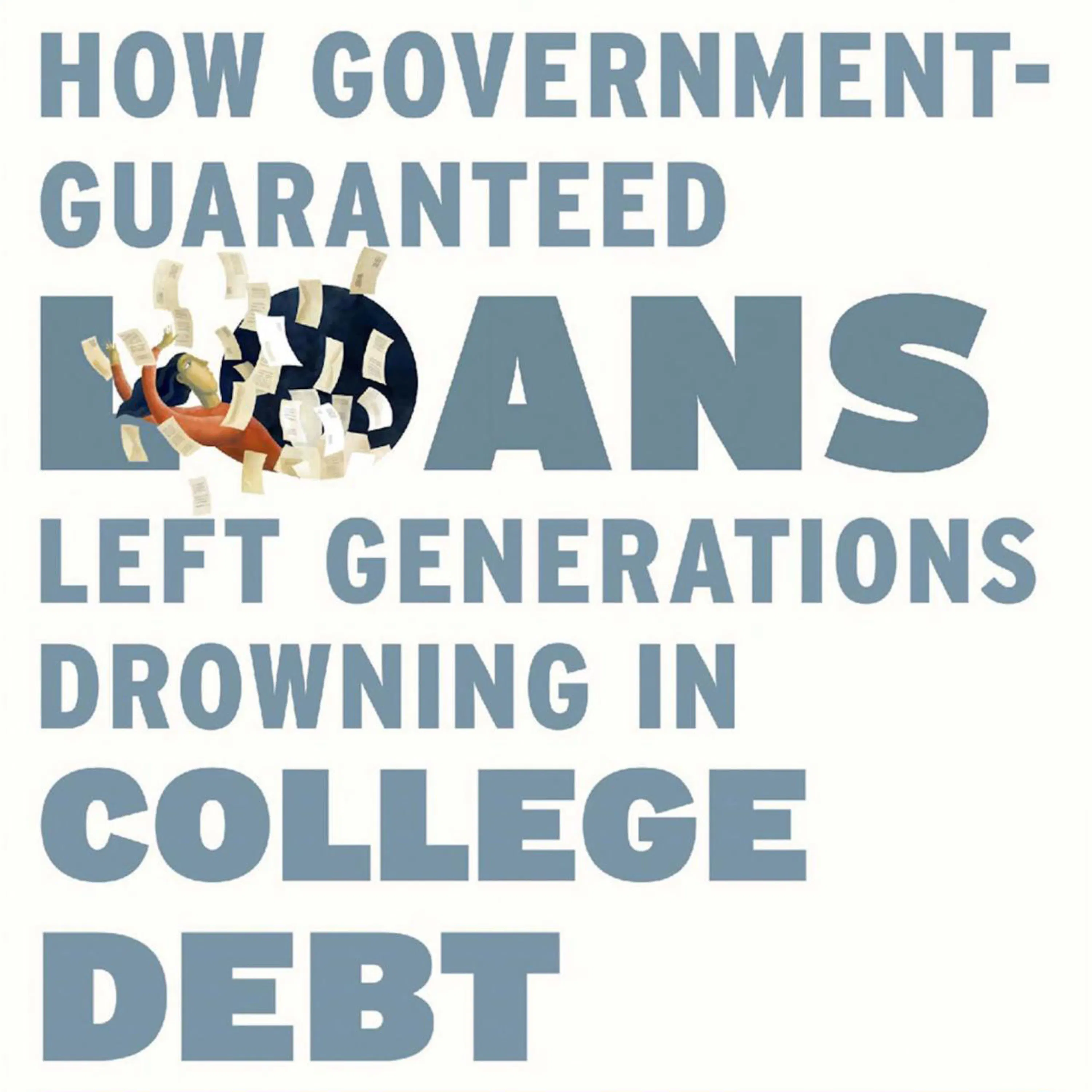
Elizabeth Tandy Shermer, an associate professor of history at Loyola University Chicago, talks about her book, Indentured Students: How Government-Guaranteed Loans Left Generations Drowning in Debt, with Peoples & Things host, Lee Vinsel. Indentured Students examines the long history of student loans in the United States, including important turning points in the 1960s. Shermer argues that elected officials have preferred student loans as an answer to an important social problem, the perceived-need for college education, over more structural solutions. Shermer and Vinsel also talk about what this legacy of debt means today as well as what recent public discussions about student debt might portend for the future. Learn more about your ad choices. Visit megaphone.fm/adchoices
Ep 1302Leigh Campbell-Hale, "Remembering Ludlow But Forgetting the Columbine: The 1927-1928 Colorado Coal Strike" (U Colorado Press, 2023)
Remembering Ludlow But Forgetting the Columbine: The 1927-1928 Colorado Coal Strike (U Colorado Press, 2023) examines the causes, context, and legacies of the 1927 Columbine Massacre in relation to the history of labor organizing and coal mining in both Colorado and the United States. While historians have written prolifically about the 1914 Ludlow Massacre, there has been a lack of attention to the violent event remembered now as the Columbine Massacre in which police shot and killed six striking coal miners and wounded sixty more protestors during the 1927–1928 Colorado Coal Strike, even though its aftermath exerted far more influence upon subsequent national labor policies. This volume is a comparative biography of three key participants before, during, and after the strike: A. S. Embree, the IWW strike leader; Josephine Roche, the owner of the coal mine property where the Columbine Massacre took place; and Powers Hapgood, who came to work for Roche four months after she signed the 1928 United Mine Worker’s contract. The author demonstrates the significance of this event to national debates about labor during the period, as well as changes and continuities in labor history starting in the progressive era and continuing with 1930s New Deal labor policies and through the 1980s. This examination of the 1927–1928 Colorado Coal Strike reorients understandings of labor history from the 1920s through the 1960s and the construction of public memory—and forgetting—surrounding those events. Remembering Ludlow but Forgetting the Columbine appeals to academic and general readers interested in Colorado history, labor history, mining history, gender studies, memory, and historiography. Learn more about your ad choices. Visit megaphone.fm/adchoices
Ep 36American Independent Inventors in an Era of Corporate R&D
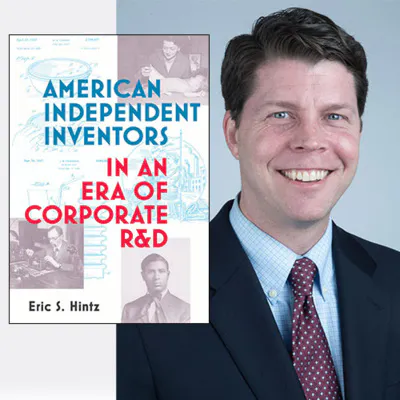
Eric Hintz, a historian and fellowship coordinator with the Lemelson Center for the Study of Invention and Innovation at the Smithsonian Institution’s National Museum of American History, talks about his book, American Independent Inventors in an Era of Corporate R&D, with Peoples & Things host, Lee Vinsel. The two discuss why independent inventors are often invisible in histories of 20th century invention and innovation, the role that independent inventors played in the two world wars, and the complicated history of gender and race around invention, which was a path of both promise and risk for women and black people. Learn more about your ad choices. Visit megaphone.fm/adchoices
Ep 1299James Raven, "The Oxford Illustrated History of the Book" (Oxford UP, 2022)
In 14 original essays, The Oxford Illustrated History of the Book (Oxford UP, 2022) reveals the history of books in all their various forms, from the ancient world to the digital present. Leading international scholars offer an original and richly illustrated narrative that is global in scope. The history of the book is the history of millions of written, printed, and illustrated texts, their manufacture, distribution, and reception. Here are different types of production, from clay tablets to scrolls, from inscribed codices to printed books, pamphlets, magazines, and newspapers, from written parchment to digital texts. The history of the book is a history of different methods of circulation and dissemination, all dependent on innovations in transport, from coastal and transoceanic shipping to roads, trains, planes and the internet. It is a history of different modes of reading and reception, from learned debate and individual study to public instruction and entertainment. It is a history of manufacture, craftsmanship, dissemination, reading and debate. Yet the history of books is not simply a question of material form, nor indeed of the history of reading and reception. The larger question is of the effect of textual production, distribution and reception - of how books themselves made history. To this end, each chapter of this volume, succinctly bounded by period and geography, offers incisive and stimulating insights into the relationship between books and the story of their times. James Raven is Professor of Modern History at the University of Essex and a Fellow of Magdalene College, Cambridge. Formerly he was Reader in Social and Cultural History, University of Oxford, and Professorial Fellow of Mansfield College. He is the author, editor and co-editor of numerous books in early modern and modern British, European and colonial history, including Judging New Wealth (1992); The Practice and Representation of Reading (1996); The English Novel 1770-1829 (2000); Free Print and Non-Commercial Publishing (2000); London Booksellers and American Customers (2002); Lost Libraries (2004); The Business of Books: Booksellers and the English Book Trade (2007); Books between Europe and the Americas (2011); Publishing Business (2014) and Bookscape: Geographies of Printing and Publishing in London before 1800 (2014). Daniel Moran earned his B.A. and M.A. in English from Rutgers University and his Ph.D. in History from Drew University. The author of Creating Flannery O’Connor: Her Critics, Her Publishers, Her Readers, he teaches research and writing at Rutgers and co-hosts the podcast Fifteen-Minute Film Fanatics, found at https://fifteenminutefilm.podb... and on Twitter @15MinFilm. Learn more about your ad choices. Visit megaphone.fm/adchoices
Ep 59John Goodlad, "The Salt Roads: How Fish Made a Culture" (Birlinn, 2022)
The Salt Roads: How Fish Made a Culture (Birlinn, 2022) by John Goodlad is the extraordinary story of how salt fish from Shetland became one of the staple foods of Europe, powered an economic boom and inspired artists, writers and musicians. It ranges from the wild waters of the North Atlantic, the ice-filled fjords of Greenland and the remote islands of Faroe to the dining tables of London’s middle classes, the bacalao restaurants of Spain and the Jewish shtetls of Eastern Europe. As well as following the historical thread and exploring how very different cultures were drawn together by the salt fish trade, Goodlad meets those whose lives revolve around the industry in the twenty-first century and addresses today’s pressing themes of sustainability, climate change and food choices. This interview was conducted by Dr. Miranda Melcher whose doctoral work focused on post-conflict military integration, understanding treaty negotiation and implementation in civil war contexts, with qualitative analysis of the Angolan and Mozambican civil wars. Learn more about your ad choices. Visit megaphone.fm/adchoices
Ep 32Energy Costs, Poverty, and Race
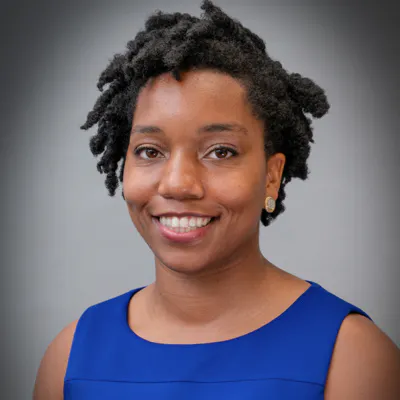
Destenie Nock, an assistant professor in the Engineering and Public Policy and Civil and Environmental Engineering Departments at Carnegie Mellon University and CEO of People’s Energy Analytics, a new startup, talks about her co-authored paper “The Energy Equity Gap: Unveiling Hidden Energy Poverty” with Peoples & Things host, Lee Vinsel. The two also talk about the arc of Nock’s career; poverty, race, and infrastructure in the United States; and how Nock’s new company can help energy utilities identify and address hidden forms of energy poverty. Learn more about your ad choices. Visit megaphone.fm/adchoices
Ep 60Andreas E. Feldmann et al., "The Routledge History of Modern Latin American Migration" (Routledge, 2022)
The Routledge History of Modern Latin American Migration (Routledge, 2022) offers a systematic account of population movements to and from the region over the last 150 years, spanning from the massive transoceanic migration of the 1870s to contemporary intraregional and transnational movements. The volume introduces the migratory trajectories of Latin American populations as a complex web of transnational movements linking origin, transit, and receiving countries. It showcases the historical mobility dynamics of different national groups including Arab, Asian, African, European, and indigenous migration and their divergent international trajectories within existing migration systems in the Western Hemisphere, including South America, the Caribbean, and Mesoamerica. The contributors explore some of the main causes for migration, including wars, economic dislocation, social immobility, environmental degradation, repression, and violence. Multiple case studies address critical contemporary topics such as the Venezuelan exodus, Central American migrant caravans, environmental migration, indigenous and gender migration, migrant religiosity, transit and return migration, urban labor markets, internal displacement, the nexus between organized crime and forced migration, the role of social media and new communication technologies, and the effects of the COVID-19 pandemic on movement. These essays provide a comprehensive map of the historical evolution of migration in Latin America and contribute to define future challenges in migration studies in the region. This book will be of interest to scholars of Latin American and Migration Studies in the disciplines of history, sociology, political science, anthropology, and geography. Javier Mejia is an economist at Stanford University who specializes in the intersection of social networks and economic history. His research interests also include entrepreneurship and political economy, with a particular focus on Latin America and the Middle East. He holds a Ph.D. in Economics from Los Andes University. Mejia has previously been a Postdoctoral Associate and Lecturer at New York University-Abu Dhabi and a Visiting Scholar at the University of Bordeaux. He is also a frequent contributor to various news outlets, currently serving as an op-ed columnist for Forbes Magazine. Learn more about your ad choices. Visit megaphone.fm/adchoices

S2 Ep 31How a California Electricity Utility Caused Deadly Wildfires
Journalist Katherine Blunt, who writes about renewable energy and utilities for the Wall Street Journal, talks about her new book, California Burning: The Fall of Pacific Gas and Electric—and What It Means for America’s Power Grid with Peoples & Things host, Lee Vinsel. The book tells the fascinating story of how declining performance at an electrical utility eventually led to wildfires and staggering loss of human life. Blunt and Vinsel also talk about what this story means for the future of electricity utilities in the face of global climate change. Learn more about your ad choices. Visit megaphone.fm/adchoices
Ep 58Rowan Dorin, "No Return: Jews, Christian Usurers, and the Spread of Mass Expulsion in Medieval Europe" (Princeton UP, 2023)
Beginning in the twelfth century, Jewish moneylenders increasingly found themselves in the crosshairs of European authorities, who denounced the evils of usury as they expelled Jews from their lands. Yet Jews were not alone in supplying coin and credit to needy borrowers. Across much of Western Europe, foreign Christians likewise engaged in professional moneylending, and they too faced repeated threats of expulsion from the communities in which they settled. No Return: Jews, Christian Usurers, and the Spread of Mass Expulsion in Medieval Europe (Princeton University Press, 2023) examines how mass expulsion became a pervasive feature of European law and politics—with tragic consequences that have reverberated down to the present. Drawing on unpublished archival evidence ranging from fiscal ledgers and legal opinions to sermons and student notebooks, Dr. Rowan Dorin traces how an association between usury and expulsion entrenched itself in Latin Christendom from the twelfth century onward. Showing how ideas and practices of expulsion were imitated and repurposed in different contexts, he offers a provocative reconsideration of the dynamics of persecution in late medieval society. Uncovering the protean and contagious nature of expulsion, No Return is a panoramic work of history that offers new perspectives on Jewish-Christian relations, the circulation of norms and ideas in the age before print, and the intersection of law, religion, and economic life in premodern Europe. This interview was conducted by Dr. Miranda Melcher whose doctoral work focused on post-conflict military integration, understanding treaty negotiation and implementation in civil war contexts, with qualitative analysis of the Angolan and Mozambican civil wars. Learn more about your ad choices. Visit megaphone.fm/adchoices
Ep 5Thomas Poell et al., "Platforms and Cultural Production" (Polity, 2022)
Hello, world! This is the Global Media & Communication podcast series. In this episode, our co-hosts Aswin Punathambekar and Jing Wang discusses the book Platforms and Cultural Production (2021) by Thomas Poell, David B. Nieborg, and Brooke Erin Duffy. You’ll hear about: How this collaborative project came about, given each of the authors has distinct interests and disciplinary orientations; Given the two keywords of “platforms” and “cultural production,” how did the authors make sense of these keywords in relation to broader processes of digital infrastructures and imaginaries; How three key sections – social media, games, and journalism – were identified by the authors to explain the idea of “platformization”; How the platforms work as multi-sided markets and the approaches to account for the dynamism and lifecycles at work in platform economies; A discussion of Twitter as a useful case of platformization to grasp the challenges of platform governance; Why the authors chose to specifically focus on the role and agency of cultural producers; How to study cultural practices in various platforms across a wide variety of sociopolitical contexts in both Global North and South; The structural inequalities of platform economies, the precarity of the platform-dependent labor market, and the efforts of cultural producers to face insecurity; The cultural meanings of “creativity” and “authenticity” and the tension between the profit-driven platform logic and the individual search for belonging in social media such as TikTok; The relevance of cultural production and platforms to understanding the present and future of democratic governance and civic life in the post-truth era; The next collaborative project, such as a second volume, conferences, and research networks. About the book Poell, Nieborg, and Duffy explore both the processes and the implications of platformization across the cultural industries, identifying key changes in markets, infrastructures, and governance at play in this ongoing transformation, as well as pivotal shifts in the practices of labor, creativity, and democracy. The authors foreground three particular industries – news, gaming, and social media creation – and also draw upon examples from music, advertising, and more. Diverse in its geographic scope, Platforms and Cultural Production builds on the latest research and accounts from across North America, Western Europe, Southeast Asia, and China to reveal crucial differences and surprising parallels in the trajectories of platformization across the globe. You can find the book from Polity Press HERE. Authors: Thomas Poell is Professor of Data, Culture & Institutions at the University of Amsterdam, program director MA Media Studies, and director of the Research Priority Area on Global Digital Cultures. David B. Nieborg is Associate Professor of Media Studies at the University of Toronto Scarborough with a graduate appointment at the Faculty of Information. Brooke Erin Duffy is Associate Professor in the Department of Communication at Cornell University, where she is also a member of the Feminist, Gender, and Sexuality Studies faculty. Co-Hosts: Aswin Punathambekar is Professor of Communication and Director of the Center for Advanced Research in Global Communication at the Annenberg School for Communication, University of Pennsylvania. Jing Wang is Senior Research Manager at CARGC at the Annenberg School for Communication, University of Pennsylvania. Editor & Producer: Jing Wang Learn more about your ad choices. Visit megaphone.fm/adchoices
Ep 61Truth, Fiction, and Student Loan Forgiveness: A Conversation with Beth Akers
With the Biden Administration's student loan relief coming down the pike, Annika sits down with Dr. Beth Akers, a Senior Fellow at the American Enterprise Institute who specializes in higher education finance. Beth discusses the issue of student debt, and what the Biden relief plan will and will not achieve. You can find more information about Dr. Akers and her recent writing and appearances here. Annika Nordquist is the Communications Coordinator of Princeton University’s James Madison Program in American Ideals and Institutions and host of the Program’s podcast, Madison’s Notes. Learn more about your ad choices. Visit megaphone.fm/adchoices
Ep 24Inventing American Telecommunications
Historian Richard John, professor of journalism at Columbia University, talks about his book, Network Nation: Inventing American Telecommunications, with Peoples & Things host, Lee Vinsel. Network Nation is a history of the telegraph and telephone in the United States, and one of its key findings is that, from the very beginning of these technologies, thinking about the state, regulation, and ideas of political economy was at the heart of business strategy. John and Vinsel also talk about the nature of historical research and why it is so important to go back to primary sources. Learn more about your ad choices. Visit megaphone.fm/adchoices
Ep 220Missing: Men at Work
Over six million prime-age men are neither working nor looking for work; America's low unemployment rate hides the fact that many men have dropped out of the workforce altogether. Our workforce participation rate is on par with that seen during the Great Depression. Why does this problem affect men so acutely? Why is it so specific to America? What are these missing men doing with their time? How do we differentiate between leisure and idleness? Demographer and economist Nicholas Eberstadt, author of Men Without Work (Templeton Press, 2022), discusses these trends and what they mean for America's future. Annika Nordquist is the Communications Coordinator of Princeton University’s James Madison Program in American Ideals and Institutions and host of the Program’s podcast, Madison’s Notes. Learn more about your ad choices. Visit megaphone.fm/adchoices
Ep 20Greg Brew, "Petroleum and Progress in Iran: Oil, Development, and the Cold War" (Cambridge UP, 2022)
From the 1940s to 1960s, Iran developed into the world's first “petro-state,” where oil represented the bulk of state revenue and supported an industrializing economy, expanding middle class, and powerful administrative and military apparatus. In Petroleum and Progress in Iran: Oil, Development, and the Cold War (Cambridge UP, 2022), Gregory Brew outlines how the Pahlavi petro-state emerged from a confluence of forces – some global, some local. He shows how the shah's particular form of oil-based authoritarianism evolved from interactions with American developmentalists, Pahlavi technocrats, and major oil companies, all against the looming backdrop of the United States' Cold War policy and the coup d’état of August 1953. By placing oil at the center of the Cold War narrative, Brew contextualizes Iran's pro-Western alignment and slide into petrolic authoritarianism. Synthesizing a wide range of sources and research methods, this book demonstrates that the Pahlavi petro-state was not born, but made, and not solely by the Pahlavi shah. Grant Golub is an Ernest May Fellow in History and Policy at the Harvard Kennedy School and a PhD candidate in U.S. and international history at the London School of Economics and Political Science (LSE). His research examines the politics of American grand strategy during World War II. Follow him on Twitter @ghgolub. Learn more about your ad choices. Visit megaphone.fm/adchoices
Ep 20Business in Socialist Hungary
Philip Scranton, University Board of Governors Professor Emeritus of the history of industry and technology at Rutgers University-Camden, talks about his book, Business Practice In Socialist Hungary, Volume 1: Creating The Theft Economy, 1945-1957, with Peoples & Things host Lee Vinsel. Scranton’s book examines how leaders in socialist Hungary planned and developed business enterprises in the shattered post-World War II economy and how workers, farmers, and citizens both supported and resisted these aims. Scranton and Vinsel also talk about what this project means for business history, which has tended to focus far too often on Western, rich, capitalist nations. Learn more about your ad choices. Visit megaphone.fm/adchoices
Ep 48The Future of Computer Chips: A Discussion with Julian Kamasa
Microchips are both important and in short supply. So how important? And what can be done to make them more plentiful? Also, what are the geopolitical implications of having the production of microchips concentrated in relatively few hands. Owen Bennett Jones talks microchips with Julian Kamasa of the Centre for Security Studies in Zurich. Owen Bennett-Jones is a freelance journalist and writer. A former BBC correspondent and presenter he has been a resident foreign correspondent in Bucharest, Geneva, Islamabad, Hanoi and Beirut. He is recently wrote a history of the Bhutto dynasty which was published by Yale University Press. Learn more about your ad choices. Visit megaphone.fm/adchoices
Ep 19The History of Electricity in Mexico
In her detailed cultural history of technological change, Electrifying Mexico, Diana Montaño argues that ordinary Mexicans became electrifying agents who actively negotiated the extent and manner electricity entered their lives and lived spaces in Mexico City. An Assistant Professor of History at Washington University in St. Louis, Dr. Montaño's teaching and research interests broadly include the construction of modern Latin American societies with a focus on technology and its relationship to nationalism, everyday life and domesticity. Learn more about your ad choices. Visit megaphone.fm/adchoices
Ep 18The Archaeology of Innovation
Catherine Frieman, an associate professor of European Archaeology at the School of Archaeology, talks about her recent book, An Archaeology of Innovation: Approaching Social and Technological Change in Human Society, with Peoples & Things host, Lee Vinsel. Her book offers a long-term perspective on innovation that only archaeology can offer and draws on case studies from across human history, from our earliest hominin ancestors to the present. The book makes several different arguments, but one of them is that our present narrow focus on pushing the adoption of technical innovations—especially so called “disruptive innovations”—ignores the complex social, technological, and environmental systems that undergirds successful societies. Learn more about your ad choices. Visit megaphone.fm/adchoices
Ep 76Shaping Civilisations: The Sea in Asian History
The ocean is more connective device than barrier, bringing together diverse topics, time-periods and geographies. It has linked and connected the various littorals of Asia into a segmented, yet at the same time, a unitary circuit over roughly the past 500 years since the so-called age of contact initiated a quickening of patterns and engagements that already existed. But despite the centrality of the maritime domain, there hasn’t really been a single study looking at Asia’s seas through a broad macro-lens. Joining Dr Natali Pearson on SSEAC Stories, Professor Eric Tagliocozzo seeks to address this gap. Drawing from his latest book, In Asian Waters: Oceanic Worlds from Yemen to Yokohama (Princeton University Press, 2022), he provides a sweeping account of how the seas and oceans of Asia have shaped the region’s history for the past half millennium, leaving an indelible mark on the modern world in the process. About Eric Tagliacozzo: Eric Tagliacozzo is the John Stambaugh Professor of History at Cornell University, where he teaches Southeast Asian history. He is the director of Cornell's Comparative Muslim Societies Program, the director of the Cornell Modern Indonesia Project, and the contributing editor of the journal Indonesia. Much of his work has centered on the history of people, ideas, and material in motion in and around Southeast Asia, especially in the colonial age. His first book, Secret Trades, Porous Borders: Smuggling and States Along a Southeast Asian Frontier (Yale University Press, 2005), examined many of these ideas by analysing the history of smuggling in the region. His second book, The Longest Journey: Southeast Asians and the Pilgrimage to Mecca (Oxford University Press, 2013), attempted to write a history of this very broad topic from earliest times to the present. For more information or to browse additional resources, visit the Sydney Southeast Asia Centre’s website: www.sydney.edu.au/sseac. Learn more about your ad choices. Visit megaphone.fm/adchoices
Ep 16The History of Temp Work
Historian Louis Hyman, professor and director of the Institute of Workplace Studies at Cornell University’s School of Industrial and Labor Relations, talks about his book, Temp: How American Work, American Business, and American Dream Became Temporary, with Peoples & Things host Lee Vinsel. In this conversation, Hyman and Vinsel chat about how most mid-20th century secure jobs were possessed by white men, how temporary work began to rise after World War Two, and how all this led to the gig-based world we inhabit. Learn more about your ad choices. Visit megaphone.fm/adchoices
Ep 130Ajay Agrawal et al., "Power and Prediction: The Disruptive Economics of Artificial Intelligence" (HBR Press, 2022)
Disruption resulting from the proliferation of AI is coming. The authors of the bestselling Prediction Machines describe what you can do to prepare. Banking and finance, pharmaceuticals, automotive, medical technology, retail. Artificial intelligence (AI) has made its way into many industries around the world. But the truth is, it has just begun its odyssey toward cheaper, better, and faster predictions to drive strategic business decisions--powering and accelerating business. When prediction is taken to the max, industries transform. The disruption that comes with such transformation is yet to be felt--but it is coming. How do businesses prepare? In Prediction Machines, eminent economists Ajay Agrawal, Joshua Gans, and Avi Goldfarb explained the simple yet game-changing economics of AI. Now, in Power and Prediction: The Disruptive Economics of Artificial Intelligence (HBR Press, 2022), they go further to reveal AI as a prediction technology directly impacting decision-making and to teach businesses how to identify disruptive opportunities and threats resulting from AI. Their exhaustive study of new developments in artificial intelligence and the past history of how technologies have disrupted industries highlights the striking phase we are now in: after witnessing the power of this new technology and before its widespread adoption--what they call "the Between Times." While there continue to be important opportunities for businesses, there are also threats of disruption. As prediction machines improve, old ways of doing things will be upended. Also, the process by which AI filters into the many systems involved in application is very uneven. That process will have winners and losers. How can businesses leverage, or protect, their positions? Filled with illuminating insights, rich examples, and practical advice, Power and Prediction is the must-read guide for any business leader or policy maker on how to make the coming AI disruptions work for you rather than against you. Interviewee Avi Goldfarb is the Rotman Chair in Artificial Intelligence and Healthcare and a professor of marketing at the Rotman School of Management, University of Toronto. Avi is also Chief Data Scientist at the Creative Destruction Lab and the CDL Rapid Screening Consortium, a faculty affiliate at the Vector Institute and the Schwartz-Reisman Institute for Technology and Society, and a Research Associate at the National Bureau of Economic Research. Avi’s research focuses on the opportunities and challenges of the digital economy. He has published academic articles in marketing, statistics, law, management, medicine, political science, refugee studies, physics, computing, and economics. Avi is a former Senior Editor at Marketing Science. His work on online advertising won the INFORMS Society of Marketing Science Long Term Impact Award. He testified before the U.S. Senate Judiciary Committee on competition and privacy in digital advertising. His work has been referenced in White House reports, European Commission documents, the New York Times, the Economist, and elsewhere. Peter Lorentzen is economics professor at the University of San Francisco. He heads USF's Applied Economics Master's program, which focuses on the digital economy. His research is mainly on China's political economy. Learn more about your ad choices. Visit megaphone.fm/adchoices
Ep 92Sharon Milagro Marshall, "Tell My Mother I Gone to Cuba: Stories of Early Twentieth-century Migration from Barbados" (U West Indies Press, 2016)
Barbadians were among the thousands of British West Indians who migrated to Cuba in the early twentieth century in search of work. They were drawn there by employment opportunities fueled largely by US investment in Cuban sugar plantations. Tell My Mother I Gone to Cuba: Stories of Early Twentieth-century Migration from Barbados (U West Indies Press, 2016) is their story. The migrants were citizens of the British Empire, and their ill-treatment in Cuba led to a diplomatic tiff between British and Cuban authorities. The author draws from contemporary newspaper articles, official records, journals and books to set the historical contexts which initiated this intra-Caribbean migratory wave. Through oral histories, it also gives voice to the migrants' compelling narratives of their experience in Cuba. One of the oral histories recorded in the book is that of the author's mother, who was born in Cuba of Barbadian parents. Dr. Sharon Milagro Marshall is an award-winning journalist and corporate communication professional from Barbados. Carmen Gomez-Galisteo, Ph.D. is a lecturer at Centro de Educación Superior de Enseñanza e Investigación Educativa (CEIE). Learn more about your ad choices. Visit megaphone.fm/adchoices
Ep 129Liran Einav et al., "Risky Business: Why Insurance Markets Fail and What to Do About It" (Yale UP, 2023)
Why is dental insurance so crummy? Why is pet insurance so expensive? Why does your auto insurer ask for your credit score? The answer to these questions lies in understanding how insurance works. Unlike the market for other goods and services—for instance, a grocer who doesn’t care who buys the store’s broccoli or carrots—insurance providers are more careful in choosing their customers, because some are more expensive than others. In Risky Business: Why Insurance Markets Fail and What to Do About It (Yale UP, 2023), Liran Einav, Amy Finkelstein, and Ray Fisman explore such issues as why insurers want to know so much about us and whether we should let them obtain this information; why insurance entrepreneurs often fail (and some tricks that may help them succeed); and whether we’d be better off with government-mandated health insurance instead of letting businesses, customers, and markets decide who gets coverage and at what price. With insurance at the center of divisive debates about privacy, equity, and the appropriate role of government, this book offers clear explanations for some of the critical business and policy issues you’ve often wondered about, as well as for others you haven’t yet considered. John Emrich has worked for decades years in corporate finance, business valuation and fund management. He has a podcast about the investment space called Kick the Dogma. Learn more about your ad choices. Visit megaphone.fm/adchoices
Ep 139Helen Anne Curry, "Endangered Maize: Industrial Agriculture and the Crisis of Extinction" (U California Press, 2022)
In Endangered Maize: Industrial Agriculture and the Crisis of Extinction (U California Press, 2022), historian Helen Anne Curry investigates more than a hundred years of agriculture and conservation practices to understand the tasks that farmers and researchers have considered essential to maintaining crop diversity. Through the contours of efforts to preserve diversity in one of the world's most important crops, Curry reveals how those who sought to protect native, traditional, and heritage crops forged their methods around the expectation that social, political, and economic transformations would eliminate diverse communities and cultures. In this fascinating study of how cultural narratives shape science, Curry argues for new understandings of endangerment and alternative strategies to protect and preserve crop diversity. Isobel Akerman is a History PhD student at the University of Cambridge studying biodiversity and botanic gardens. Learn more about your ad choices. Visit megaphone.fm/adchoices
Ep 57David Collier and Gerardo L. Munck, "Critical Junctures and Historical Legacies: Insights and Methods for Comparative Social Science" (Rowman & Littlefield, 2022)
Over the past 50 years, scholars across the social sciences have employed critical juncture analysis to understand how social orders are created, become entrenched, and change. In this book, leading scholars from several disciplines offer the first coordinated effort to define this field of research, assess its theoretical and methodological foundations, and use a critical assessment of current practices as a basis for guiding its future. Contributors include stars in this field who have written some of the classic works on critical junctures, as well as the rising stars of the next generation who will continue to shape historical comparative analysis for years to come. David Collier and Gerardo L. Munck's Critical Junctures and Historical Legacies. Insights and Methods for Comparative Social Science (Rowman & Littlefield, 2022) will be an indispensable resource for social science research methods scholars and students. Javier Mejia is an economist at Stanford University who specializes in the intersection of social networks and economic history. His research interests also include entrepreneurship and political economy, with a particular focus on Latin America and the Middle East. He holds a Ph.D. in Economics from Los Andes University. Mejia has previously been a Postdoctoral Associate and Lecturer at New York University-Abu Dhabi and a Visiting Scholar at the University of Bordeaux. He is also a frequent contributor to various news outlets, currently serving as an op-ed columnist for Forbes Magazine. Learn more about your ad choices. Visit megaphone.fm/adchoices
Ep 11Automating Finance
Sociologist Juan Pablo Pardo-Guerra, a professor at University of California San Diego, talks about his book Automating Finance: Infrastructures, Engineers, and the Making of Electronic Markets with Peoples & Things host Lee Vinsel. The book traces the long, largely anonymous, and in some senses boring history of how experts applied computers to financial systems since the 1970s, creating a digital infrastructure of the trading world. The conversation also touches on Pardo-Guerra’s more recent work on how systems of quantitative metrics have been applied to the management of universities and what might be done about it. Learn more about your ad choices. Visit megaphone.fm/adchoices
Ep 118Jeff Fearnside, "Ships in the Desert" (Santa Fe Writer's Project, 2022)
Many of us have likely seen photos of the Aral Sea, and the rusted Soviet-era ships, sitting in the desert with no water in sight. The Aral Sea is now just 10% of its former volume, shrinking down from what was once the fourth-largest body of inland water in the world, after what writer Jeff Fernside calls “one of the worst human-caused environmental catastrophes.” Jeff traveled to the region as a Peace Corps volunteer. Afterward, he turned his experiences into an essay collection, Ships in the Desert (Santa Fe Writers Project: 2022), where Jeff writes about the families he met, his thoughts on missionaries, and his visit to the Aral Sea, where he saw “a fleet of rusting Soviet fishing ships, hammer and sickle still clearly discernible on many, sitting bolt upright in desert sands as if plowing through ocean waves.” Jeff Fearnside is the author of the short-story collection Making Love While Levitating Three Feet in the Air (Stephen F. Austin State University Press: 2006), which won the 2005 SFWP Awards Program. He is also the author of the chapbook A Husband and Wife Are One Satan (Orison Books: 2021), winner of the Orison Chapbook Prize. His work has appeared in literary journals and anthologies such as The Paris Review, Los Angeles Review, Story, and many others. In this interview, Jeff and I talk about what inspired his essays, including what he saw in the barren Aral Sea. You can find more reviews, excerpts, interviews, and essays at The Asian Review of Books, including its review of Ships in the Desert. Follow on Twitter at @BookReviewsAsia. Nicholas Gordon is an associate editor for a global magazine, and a reviewer for the Asian Review of Books. He can be found on Twitter at @nickrigordon. Learn more about your ad choices. Visit megaphone.fm/adchoices

S1 Ep 10Shoddy: Recycled Textiles in History
Historian Hanna Rose Shell, a professor at University of Colorado, Boulder, talks about her book Shoddy: From Devil’s Dust to the Renaissance of Rags with Peoples & Things host Lee Vinsel. Along the way, Shell raises a number of important and interesting things, including the long history of reuse and recycling and how forms of technology and work become tied to social status. With shoddy, it was the anxieties of low class, low social status work and poverty. Shell also discusses how individual technologies become mirrors for the worries, fears, hatreds, and other feelings of society – how when we look into the history of any technology we often see ourselves reflected back. Learn more about your ad choices. Visit megaphone.fm/adchoices
Ep 349Michael Joseph Roberto, "The Coming of the American Behemoth: The Origins of Fascism in the United States, 1920-1940" (Monthly Review Press, 2018)
The election of Donald Trump in 2016 shocked and appalled a number of people, forcing a critical reevaluation of what was possible, and what we ought to be vigilant about. A debate soon emerged about whether Trump represented the possibility of fascism in the United States. This debate centered around the ways in which fascism has often presented itself; the rhetoric and aesthetics in particular, often at the expense of examining the underlying economic form. Against this tendency, Michael Joseph Roberto has emerged with a corrective, The Coming of the American Behemoth: The Origins of Fascism in the United States, 1920-1940 (Monthly Review Press, 2018), arguing that fascism is not composed of moral relics of the past but is a distinctly modern movement, tied inherently to the nature of capitalism. Turning to the United States in the roaring 20’s and depressed 30’s, Roberto has several interlinked tasks. Primary to the book is reframing our understanding of fascism as a reaction against revolutionary working class politics. It is an attempt by the bourgeois to maintain order in society via use of the state or various cultural apparatuses such as advertising to maintain political discipline. The United States, being the most advanced capitalist country in the world, is not only not immune to this sort of movement, but is uniquely vulnerable, and that vulnerability has not gone away in our times. To argue this, Roberto not only examines Marx’s Capital, but a whole series of texts written in the period he’s examining to show that his conclusions are not terribly new; they’ve simply been forgotten. The result is a study that combines history, economics and cultural analysis to produce a much-needed corrective to our understanding of what fascism is and how we might fight it. Michael Joseph Roberto is a retired history professor. He has also worked as a journalist and political activist in North Carolina. His writing has appeared in a number of places, including The Monthly Review and Socialism and Democracy. Learn more about your ad choices. Visit megaphone.fm/adchoices
Ep 9The Ideology of Innovation in India
Science and Technologies scholar Lilly Irani talks her book, Chasing Innovation: Making Entrepreneurial Citizens in Modern India, with Peoples & Things host Lee Vinsel. Irani’s work examines the ideological role that ideas of “innovation” and “entrepreneurship” have played in India and the people who are left behind by such visions. Irani and Vinsel also discuss her other work and activism focusing on the politics of the Bay Area in California, including organization against the digital technology industry. Learn more about your ad choices. Visit megaphone.fm/adchoices
Ep 108How Did the Pandemic Transform Workers and Work?
The pandemic brought to the fore a group of workers deemed “essential” – frontline healthcare workers, restaurant employees, slaughterhouse workers, and the like – who often faced a difficult choice between risking their health to work or forgoing income that they couldn’t afford to do without. Often, they had to work even though they couldn’t afford health insurance – or health care themselves if they got sick, another sign of the inadequacy of our health care arrangements. How did the pandemic transform workers and work? This week on International Horizons, Professor John Torpey talks to Jamie McCallum from sociology at Middlebury College about the shift in conditions for essential workers across the globe during the pandemic and how that affected the whole world's labor movement. McCallum discusses the variations of these effects in different regions and how exceptionally the US behaved during the pandemic in terms of labor protection. Finally, the author discusses whether labor unrest can be pushed for larger systemic change. Learn more about your ad choices. Visit megaphone.fm/adchoices

Ep 40The History of the Black Urban Working-Class in the United States
Joe William Trotter, Jr., Giant Eagle University Professor of History and Founder and Director of the Center for Africanamerican Urban Studies and the Economy (CAUSE) at Carnegie Mellon University, talks about his book, Workers on Arrival: Black Labor in the Making of America (University of California Press, 2019), with Peoples & Things host, Lee Vinsel. Workers on Arrival examines the long history of the black urban working-class going back to the 18th century and coming right up to the present. While Trotter fully acknowledges the hardships African-Americans have faced, he also emphasizes the agency of black people as they organized, resisted, and found ways to cope in the contexts they found themselves. Trotter and Vinsel also discuss current trends in African-American historical scholarship and Trotter’s own present and future research projects. Learn more about your ad choices. Visit megaphone.fm/adchoices
Ep 8South Korea, Technology, and Globalization
Patrick Chung, assistant professor of history at the University of Maryland, talks about his research on the rise of shipping and manufacturing in South Korea with Peoples & Things host Lee Vinsel. Along the way, Chung provides fascinating insights into the role that both the US Department of Defense and local South Korean actors played in globalization. Learn more about your ad choices. Visit megaphone.fm/adchoices
Ep 7Infrastructure and Inequality
Daniel Armanios, associate professor of Engineering and Public Policy at Carnegie Mellon University, talks about his work on infrastructure and inequality with Peoples & Things host Lee Vinsel. Armanios’ recent work has focused on coming up with quantitative measures of how infrastructure relates to inequalities around race, gender, and class, both to address historical injustices and to inform future infrastructure construction. Armanios also talks about how he brings these topics into his teaching and his larger project around engineering and social justice. Learn more about your ad choices. Visit megaphone.fm/adchoices
Ep 153Sabrina Mittermeier, "Fan Phenomena: Disney" (Intellect Books, 2023)
Sabrina Mittermeier's edited volume Fan Phenomena: Disney (Intellect Books, 2023) analyzes the fandom of Disney brands across a variety of media including film, television, novels, stage productions, and theme parks. It showcases fan engagement such as cosplay, fan art, and on social media, as well as the company’s reaction to it. Further, the volume deals with crucial issues—race and racism, the role of queerness, the impact of the COVID-19 pandemic, and the advent of the streaming service Disney+—within the Disney fandom and in Disney texts. The authors come from a variety of disciplines including cultural and media studies, marketing and communications, cultural history, theater and performance studies, and more. In addition to interviews with fan practitioners, the essays feature both leading experts in fan and Disney studies alongside emerging voices in these fields. A vital new addition to the growing subdiscipline of fan studies, it will be popular with scholars of cultural studies, cultural history, and media studies. Learn more about your ad choices. Visit megaphone.fm/adchoices
Ep 46The Future of Inequality: A Discussion with Mike Savage
Most people in developed countries think inequality is increasing. And most would also agree that in terms of the global poor, the last 20 years have seen vast improvements with hundreds of millions living much better lives than their parents. These are some of the themes Professor Mike Savage addresses in his book The Return of Inequality: Social change and the Weight of the Past (Harvard UP, 2021). Owen Bennett-Jones is a freelance journalist and writer. A former BBC correspondent and presenter he has been a resident foreign correspondent in Bucharest, Geneva, Islamabad, Hanoi and Beirut. He is recently wrote a history of the Bhutto dynasty which was published by Yale University Press. Learn more about your ad choices. Visit megaphone.fm/adchoices
Ep 220Tricia Starks, "Cigarettes and Soviets: Smoking in the USSR" (Cornell UP, 2022)
Seeing cigarette smoking as a cultural phenomenon of Western modernity is perhaps easier when the test case is outside the US where the narrative is dominated by Big Bad Tobacco and litigation. Tricia Starks's two volume study does just that. Her second volume, Cigarettes and Soviets: Smoking in the USSR (Cornell University Press, 2022) traces the rise and fall of cigarettes during the Soviet period. (Her first volume covered the pre-Revolutionary era.) In a beautifully written and jargon-free account illustrated with dozens of color plates, Starks tracks how the early revolutionaries tried unsuccessfully to combat mass smoking, how subsequent Soviet leaders made peace with it, and how in the post-war period, Soviet health authorities slowly made inroads against smoking, albeit with different arguments than those used in the anti-tobacco campaigns in the West. Daniel Peris is Senior Vice President at Federated Hermes in Pittsburgh. He can be reached at [email protected] or via Twitter @HistoryInvestor. His History and Investing blog and Keep Calm & Carry On Investing podcast are here. Learn more about your ad choices. Visit megaphone.fm/adchoices
Ep 3Understanding Technology Bubbles
Brent Goldfarb and David Kirsch, professors of entrepreneurship and strategy at the University of Maryland's Robert H. Smith School of Business, talk about their book, Bubbles and Crashes: The Boom and Bust of Technological Innovation, with Peoples & Things host Lee Vinsel. Bubbles and Crashes puts forward a parsimonious model of how and when economic bubbles develop around new technologies. In the conversation, Goldfarb and Kirsch reflect on a variety of topics, including why it matters that Elon Musk is such a good story teller, whether we are currently in a technology bubble, and what we can do to prevent bubbles in the future. Learn more about your ad choices. Visit megaphone.fm/adchoices
Ep 219Alessandro Iandolo, "Arrested Development: The Soviet Union in Ghana, Guinea, and Mali, 1955-1968" (Cornell UP, 2022)
In the middle of the 20th century, there was a passionate affair, between the Soviet empire and newly independent West African states. It was a short, intense, and acrimonious love story built on shared dreams for a noncapitalist future. Alessandro Iandolo’s new book, Arrested Development: The Soviet Union in Ghana, Guinea, and Mali, 1955-1968 (Cornell UP, 2022), explores the history of this unlikely romance. The book traces the rise and fall of the Soviet Union’s engagement with these three West African nations, which Iandolo argues were at the center of the Soviet search for development in the Third World. Elisa Prosperetti is an Assistant Professor in International History at the National Institute of Education in Singapore. Her research focuses on the connected histories of education and development in postcolonial West Africa. Contact her at here. Learn more about your ad choices. Visit megaphone.fm/adchoices
Ep 176Clemente Penna, "Urban Economies, Capital, Credit, and Slavery in Rio de Janeiro, 1820-1860" (UFRJ, 2019)
On this episode, Martín Garrido Lepe y Beatriz Rodriguez-Satizabal talk with Clemente Penna winner of the Tamás Szmrecsányi Prize for thesis in economic history of the period 1810 to 1913 during the second edition of the Prize for the best PhD thesis in Latin American economic history, awarded by the Peruvian Association of Economic History, in the VII Latin American Congress of Economic History. By analysing newspaper, notary books, debt ligation, judicial attachments and bills of exchange registries, Clemente investigates the build up of a strong private non-banking credit market with complex relationships between “the business of slavery”, the property rights, and the access to capital. The Red de Historia Económica Iberoamericana (RHEI) is an organization that seeks to help in the dissemination of research by young researchers in Ibero-American Economic History. In this space broadcast by NBN Español, we conducted a series of interviews where recently graduated authors present their doctoral theses. Hosts: Beatriz Rodriguez-Satizabal, Universidad del Pacífico (Perú) and Martín Garrido Lepe, Universidad de Barcelona (España) Learn more about your ad choices. Visit megaphone.fm/adchoices