New Books in Economic and Business History
1,649 episodes — Page 18 of 33

Ep 7Genealogies of Modernity Episode 7: A Genealogy of Gun Violence
The problem of gun violence is as old as guns themselves. According to historian Priya Satia, America’s present epidemic of gun violence has its roots in the industrial revolution. Satia tells the story of British gun-maker Samuel Galton, Jr., who was called to task by his Quaker community for manufacturing rifles. As a professed pacifist, Galton had to wrestle with the large-scale uses to which his weapons were put. So where do we look for answers about how to regulate guns? Some claim the answer has to lie in the past, in the nation’s founding documents. Others argue that novel technologies demand novel solutions. Solving the problem of gun violence may be a case where we need to make a strong modernity claim. Researcher, writer, and episode producer: Christopher Nygren, Associate Professor, History of Art and Architecture, University of Pittsburgh Featured Scholars: Catherine Fletcher, Professor of History, Manchester Metropolitan University Priya Satia, Professor of History, Stanford University Special thanks: James DeMasi, Chloé Hogg, Jonathan Lyonhart, Pernille Røge, Jennifer Waldron, Catherine Yanko. For transcript, teaching aids, and other resources, click here. Learn more about your ad choices. Visit megaphone.fm/adchoices
Ep 59Jennifer Kaufmann-Buhler, "Open Plan: A Design History of the American Office" (Bloomsbury, 2021)
Albeit inspired by a progressive vision of a working environment without walls or hierarchies, the open plan office has come to be associated with some of the most dehumanizing and alienating aspects of the modern office. Jennifer Kaufman-Buhler's fascinating new book Open Plan: A Design History of the American Office (Bloomsbury, 2021) examines the history of the open plan office concept from its early development in the late 1960s and 1970s, through its present-day dominance in working spaces throughout the world, examining the design, meaning, and use of the open plan from the perspective of architects and designers, organizations, and workers. Using the progressive vision of the early promoters of the open plan as a framework for analysis, and drawing on original archival research and contemporary discussions of the open plan, this book explores the various goals embedded in the open plan and examines how the design of the open plan evolved through the late 20th century in response to various social, cultural, organizational, technological and economic changes. Nushelle de Silva is a PhD candidate in the Department of Architecture at the Massachusetts Institute of Technology. Her work examines museums and exhibitions, and how the dissemination of visual culture is politically mediated by international organizations in the twentieth century. Learn more about your ad choices. Visit megaphone.fm/adchoices
Ep 2David Courtwright, "The Age of Addiction: How Bad Habits Became Big Business" (Harvard UP, 2019)
We are living in an age of addiction, from compulsive gaming and binge eating to pornography and opioid abuse. Today I talked with historian David Courtwright about the global nature of pleasure, vice, and capitalism. His new book is called The Age of Addiction: How Bad Habits Became Big Business (Harvard University Press, 2019). During our discussion, Courtwright walks us through the emergence of the worldwide commodification of vice and shares his views on "limbic capitalism," the network of competitive businesses targeting the brain pathways responsible for feeling, motivation, and long-term memory. The book is equally interesting and disturbing. And Courtwright offers timely recommendations about how we can understand and address the Age of Addiction. Coming from one of the world's leading experts on the history of drugs and addiction, this important work raises stimulating and sobering questions about consumption and free will. Courtwright is the author of Forces of Habit: Drugs and the Making of the Modern World (Harvard University Press, 2001) as well as Dark Paradise: A History of Opiate Addiction in America (Harvard University Press, 1982). Lucas Richert is an associate professor in the School of Pharmacy at the University of Wisconsin, Madison. He studies intoxicating substances and the pharmaceutical industry. He also examines the history of mental health. Learn more about your ad choices. Visit megaphone.fm/adchoices
Ep 45Tamara Venit-Shelton, "Herbs and Roots: A History of Chinese Doctors in the American Medical Marketplace" (Yale UP, 2019)
The modern popularity of acupuncture and herbal medicine belies the long history of Chinese medicine in the U.S. In Herbs and Roots: A History of Chinese Doctors in the American Medical Marketplace (Yale University Press, 2019), Tamara Venit-Shelton (Claremont McKenna College) examines the historical contexts that shaped perceptions of traditional Chinese medicine from the colonial period to the present. Venit-Shelton draws from court records, material culture, census records, oral interviews, and newspapers to uncover the multi-faceted roles that Chinese herbalists played in both Chinese and non-Chinese communities during the “long Progressive Era.” Through self-Orientalizing presentations, these health practitioners enterprisingly navigated, accommodated, and resisted waves of rising xenophobia and medical regulation. After a period of struggle between the 1930s and 1970s when depression and war disrupted supply chains, Chinese medicine made a roaring comeback even as increasing numbers of Chinese Americans trained in Western medicine, leading to the rise of integrative medicine. Herbs and Roots deepens our understanding of histories of medicine and public health, American Orientalism, Asian immigration to the US, and the environment and ideas of nature. Ian Shin is assistant professor of History and American Culture at the University of Michigan. Learn more about your ad choices. Visit megaphone.fm/adchoices
Ep 302Jeremy Yellen, "The Greater East Asia Co-Prosperity Sphere: When Total Empire Met Total War" (Cornell UP, 2019)
Jeremy Yellen’s The Greater East Asia Co-Prosperity Sphere: When Total Empire Met Total War (Cornell University Press, 2019) is a challenging transnational exploration of the Greater East Asia Co-Prosperity Sphere, Japan’s ambitious, confused, and much maligned attempt to create a new bloc order in East and Southeast Asia during World War II. Yellen’s book is welcome both as the first book-length treatment of the Sphere in English and for also being innovative in both approach and analysis. The book is divided into two parts, each addressing one of the “two Pacific Wars,” as Yellen puts it: a “war of empires” and “an anticolonial war… for independence.” The first half of the book treats the Japanese “high policy” of the Sphere. Here, Yellen not only provides—through the Coprosperity Sphere—a provocative new reading of the Tripartite Pact and the imbrication of Japan’s regional and global geopolitical strategies, but also outlines an important timeline of how Japanese conceptualizations of the Sphere evolved with the changing economic, political, and military expediencies of the Pacific War. Though ideas about the Sphere as a regional order of hierarchical solidarity with Japan at its apex, a “grand strategy of opportunism” rooted in the “sphere-of-influence diplomacy” and “cooperative imperialism” of Japan’s bombastic and enigmatic foreign minister, Matsuoka Yōsuke, Yellen shows that plans for the Sphere only became specific and concrete when Japan’s war situation descended into increasing desperation from 1942 on. The second half of the book shifts gears to examine responses to the Sphere in the Philippines and Burma. Yellen shows that for local nationalist elites like Burma’s first prime minister Ba Maw, whether Japanese rhetoric about the creation of more-or-less liberal international order within the Sphere for the top-echelon nations like Burma and the Philippines was genuine or self-serving, “even sham independence brought opportunity.” By focusing on these pragmatic nationalists (“patriotic collaborators”) Yellen contributes to a growing body of literature on empire that refuses to be pigeonholed by binaries of virtuous resistance and traitorous collaboration. This podcast was recorded as a lecture/dialogue for a live audience at Nagoya University. Learn more about your ad choices. Visit megaphone.fm/adchoices
Ep 44Marixa Lasso, "Erased: The Untold Story of the Panama Canal" (Harvard UP, 2019)
Many of our presumptions about the Panama Canal Zone are wrong; it was not carved out of uninhabited jungle, the creation of Lake Gatún did not flood towns and force them to move, people living in the zone prior to the construction of the canal were not out of step with modernity. In her new book, Erased: The Untold Story of the Panama Canal (Harvard University Press, 2019), Marixa Lasso argues compellingly that the construction of the Panama Canal prompted the destruction of a bustling network of towns, along with the livelihoods and democratic traditions of their inhabitants. Alejandra Bronfman is Professor and Director of Undergraduate Studies Latin American, Caribbean & U.S. Latino Studies at SUNY, Albany. Learn more about your ad choices. Visit megaphone.fm/adchoices
Ep 91Matt Garcia, "Eli and the Octopus: The CEO Who Tried to Reform One of the World’s Most Notorious Corporations" (Harvard UP, 2023)
The poignant rise and fall of an idealistic immigrant who, as CEO of a major conglomerate, tried to change the way America did business before he himself was swallowed up by corporate corruption. At 8 a.m. on February 3, 1975, Eli Black leapt to his death from the 44th floor of Manhattan’s Pan Am building. The immigrant-turned-CEO of United Brands—formerly United Fruit, now Chiquita—Black seemed an embodiment of the American dream. United Brands was transformed under his leadership—from the “octopus,” a nickname that captured the corrupt power the company had held over Latin American governments, to “the most socially conscious company in the hemisphere,” according to a well-placed commentator. How did it all go wrong? Eli and the Octopus: The CEO Who Tried to Reform One of the World’s Most Notorious Corporations (Harvard UP, 2023) traces the rise and fall of an enigmatic business leader and his influence on the nascent project of corporate social responsibility. Born Menashe Elihu Blachowitz in Lublin, Poland, Black arrived in New York at the age of three and became a rabbi before entering the business world. Driven by the moral tenets of his faith, he charted a new course in industries known for poor treatment of workers, partnering with labor leaders like Cesar Chavez to improve conditions. But risky investments, economic recession, and a costly wave of natural disasters led Black away from the path of reform and toward corrupt backroom dealing. Now, two decades after Google’s embrace of “Don’t be evil” as its unofficial motto, debates about “ethical capitalism” are more heated than ever. Matt Garcia presents an unvarnished portrait of Black’s complicated legacy. Exploring the limits of corporate social responsibility on American life, Eli and the Octopus offers pointed lessons for those who hope to do good while doing business. Matt Garcia is Ralph and Richard Lazarus Professor of Latin American, Latino, and Caribbean Studies and of History at Dartmouth College. His books include From the Jaws of Victory: The Triumph and Tragedy of Cesar Chavez and the Farm Worker Movement, which received the Philip Taft Award for the Best Book in Labor History. Learn more about your ad choices. Visit megaphone.fm/adchoices
Ep 248Devrim Adam Yavuz, "Democracy and Capitalism in Turkey: The State, Power, and Big Business" (Bloomsbury, 2023)
While a positive correlation between capitalism and democracy has existed in Western Europe and North America, the example of late-industrializing nations such as Turkey has demonstrated that the two need not always go hand in hand, and sometimes the interests of business coincide more firmly with anti-democratic forces. In Democracy and Capitalism in Turkey: The State, Power, and Big Business (Bloomsbury, 2023), Devrim Adam Yavuz explores the factors that compelled capitalists in Turkey to adopt a more pro-democratic ideology by examining a leading Turkish business lobby (TÜSIAD) which has been pushing for democratic reform since the 1990s, despite representing some of the largest corporation owners in Turkey and having supported the state's authoritarian tendencies in the past such as the military coup of 1980. Drawing on roughly 70 interviews with influential members of TÜSIAD and individuals close to them, the book reveals that business leaders were willing to break away from the state due to the conflict between their evolving economic needs and power with a political elite and state that were unwilling to cater to their demands. In so doing, the book provides a rich account of business-state relations in Turkey as well as providing a case study for the wider study of democracy and capitalism in developing nations. Reuben Silverman is a Postdoctoral Researcher at Stockholm University’s Institute for Turkish Studies. Learn more about your ad choices. Visit megaphone.fm/adchoices
Ep 216Howie Singer and Bill Rosenblatt, "Key Changes: The Ten Times Technology Transformed the Music Industry" (Oxford UP, 2023)
Key Changes: The Ten Times Technology Transformed the Music Industry (Oxford University Press, 2023) by Howie Singer and Bill Rosenblatt tells a new story about the history of the music business and the ten technological advances that disrupted it over the last century. In recent years, narratives about the music industry tend to hew to a common theme: it was humming along for decades until the Internet and Napster came along and disrupted it. Key Changes shows that this view is incorrect: the industry was actually shaken up not once in the 1990s, but ten times over more than 100 years. These ten disruptions came with the introduction of new formats for enjoying recorded music: starting with the cylinders and discs played on early phonographs; then moving through radio, LPs, tapes, CDs, television, digital downloads, streaming, and streaming video; and then into Artificial Intelligence (AI), which enables a wide range of new capabilities with profound impacts upon the business. This book devotes a chapter to each of these formats, illustrating how such innovations beget shifts in creativity, consumer behavior, economics, and law. Each of the technological innovations covered in this book not only disrupted the music business, but also fundamentally altered the industry's character. And while the technologies themselves have evolved in unique and varied ways over the decades, the changes within the business follow a clear pattern. Veteran music industry professionals and music technology experts Howie Singer and Bill Rosenblatt illuminate this pattern through a framework they term "the 6 Cs": cutting edge technology, channels of distribution, creators, consumers, cash, copyright. This framework provides insight into how such disparate innovations similarly disrupted and transformed the music business in each era. Extensively researched and supplemented by interviews with Grammy-winning artists, producers and executives, the book provides an insightful perspective on the ways technology has fundamentally altered the music industry, throughout history and into the present era. This interview was conducted by Dr. Miranda Melcher whose forthcoming book focuses on post-conflict military integration, understanding treaty negotiation and implementation in civil war contexts, with qualitative analysis of the Angolan and Mozambican civil wars. Learn more about your ad choices. Visit megaphone.fm/adchoices
Ep 109Helen Louise Cowie, "Victims of Fashion: Animal Commodities in Victorian Britain" (Cambridge UP, 2021)
Animal products were used extensively in nineteenth-century Britain. A middle-class Victorian woman might wear a dress made of alpaca wool, drape herself in a sealskin jacket, brush her hair with a tortoiseshell comb, and sport feathers in her hat. She might entertain her friends by playing a piano with ivory keys or own a parrot or monkey as a living fashion accessory. In Victims of Fashion: Animal Commodities in Victorian Britain (Cambridge University Press, 2021), Dr. Helen Cowie examines the role of these animal-based commodities in Britain in the long nineteenth century and traces their rise and fall in popularity in response to changing tastes, availability, and ethical concerns. Focusing on six popular animal products – feathers, sealskin, ivory, alpaca wool, perfumes, and exotic pets – she considers how animal commodities were sourced and processed, how they were marketed and how they were consumed. Dr. Cowie also assesses the ecological impact of nineteenth-century fashion. This interview was conducted by Dr. Miranda Melcher whose forthcoming book focuses on post-conflict military integration, understanding treaty negotiation and implementation in civil war contexts, with qualitative analysis of the Angolan and Mozambican civil wars. Learn more about your ad choices. Visit megaphone.fm/adchoices
Ep 306Vineeta Sinha. "Temple Tracks: Labour, Piety and Railway Construction in Asia" (Berghahn Books, 2023)
The notions of labour, mobility and piety have a complex and intertwined relationship. Using ethnographic methods and a historical perspective, Vineeta Sinha's Temple Tracks: Labour, Piety and Railway Construction in Asia (Berghahn Books, 2023) critically outlines the interlink of railway construction in colonial and post-colonial Asia, as well as the anthropology of infrastructure and transnational mobilities with religion. In Malaysia and Singapore, evidence of religion-making and railway-building from a colonial past is visible in multiple modes and media as memories, recollections and 'traces'. Raj Balkaran is a scholar of Sanskrit narrative texts. He teaches at the Oxford Centre for Hindu Studies and at his own virtual School of Indian Wisdom. For information see rajbalkaran.com. Learn more about your ad choices. Visit megaphone.fm/adchoices
Ep 169Daniel Campo, "Postindustrial DIY: Recovering American Rust Belt Icons" (Fordham UP, 2023)
A pioneering Detroit automobile factory. A legendary iron mill at the edge of Pittsburgh. A campus of concrete grain elevators in Buffalo. Two monumental train stations, one in Buffalo, the other in Detroit. These once noble sites have since fallen from their towering grace. As local elected leaders did everything they could to destroy what was left of these places, citizens saw beauty and utility in these industrial ruins and felt compelled to act. Postindustrial DIY: Recovering American Rust Belt Icons (Fordham UP, 2023) tells their story. The culmination of over a dozen years of on-the-ground investigation, ethnography, and historical analysis, author and urbanist Daniel Campo immerses the reader into this postindustrial landscape, weaving the perspectives of dozens of DIY protagonists as well as architects, planners, and preservationists. Working without capital, expertise, and sometimes permission in a milieu dominated by powerful political and economic interests, these do-it-yourself actors are driven by passion and a sense of civic duty rather than profit or political expediency. They have craftily remade these sites into collective preservation projects and democratic grounds for arts and culture, environmental engagement, regional celebrations, itinerant play, and in-the-moment constructions. Their projects are generating excitement about the prospect of Rust belt life, even as they often remain invisible to the uninformed passerby and fall short of professional preservation or environmental reclamation standards. Demonstrating that there is no such thing as a site that is "too far gone" to save or reuse, Postindustrial DIY is rich with case studies that demonstrate how great architecture is not simply for the elites or wealthy. The citizen preservationists and urbanists described in this book offer looser, more playful, and often more publicly satisfying alternatives to the development practices that have transformed iconic sites into expensive real estate or a clean slate for the next profitable endeavor. Transcending the disciplinary boundaries of architecture, historic preservation, city planning and landscape architecture, Postindustrial DIY suggests new ways to engage, adapt and preserve architecturally compelling sites and bottom-up strategies for Rustbelt revival. Stephen Pimpare is a Senior Fellow at the Carsey School of Public Policy at the University of New Hampshire. Learn more about your ad choices. Visit megaphone.fm/adchoices
Ep 265Lindsay Sarah Krasnoff, "Basketball Empire: France and the Making of a Global NBA and WNBA" (Bloomsbury, 2023)
Today we are joined by Dr. Lindsay Krasnoff, who is an historian, specializing in global sport, communications and diplomacy. She is also the Director of FranceandUS, and she lectures on sports diplomacy at New York University Tisch Institute of Global Sport. We met to talk about her most recent book: Basketball Empire: France and the Making of a Global NBA and WNBA (Bloomsbury, 2023). In our conversation, we discussed the rise of basketball in France, the differences between French and American basketball, and the way that French basketball stars such as Boris Diaw exemplify the new global “empire” of basketball that incorporates Africa, France and its overseas departments, and the USA. Krasnoff divides Basketball Empire into three parts that together investigate how French basketball developed from a low point in the middle of the 20th century to a global powerhouse contributing players to the NBA and the WNBA almost every year. Krasnoff argues that French basketball’s success hinges on their ability make use of their connections both with the United States and with their former empire. In examining the growth of basketball in France, Krasnoff traces a sporting genealogy that links together players, coaches, and even commentators from around the globe who compete together in France and help produce a distinctive French style of basketball that nevertheless has appeal outside of the hexagon. In Basketball Empire, Krasnoff’s first section takes off from her previous work on French association football, which looked at the development of Les Bleus. In the 1950s and 1960s, French basketball too was in crisis. In response, the French government, the Fédération française de basket-ball (FFBB), and even some sporting associations sought out new ways to improve the quality of play in France. Paris University Club brought in Americans who had played basketball in the NCAA but were now living in France to teach American approaches to the game. Individual players, including one of the earliest female French basketball stars Elisabeth Riffiod, watched film of American professionals like Bill Russell. The government redeveloped a national training centre: the National Institute of Sport, Expertise, and Performance (INSEP.) The French League professionalized in 1987. Since the 1990s, French basketball has enjoyed a rising number of successful EuroBasket and Olympic campaigns, including a men’s silver and a women’s bronze in 2020/21. Basketball Empire’s second section uses micro-biographies to explore the ways that contemporary French players developed their skills, how they made their moves into the NCAA, the NBA or the WNBA, and the challenges and opportunities that these moves provided them as players. In this section in particular, Krasnoff’s ability land and conduct interviews shines. She shows how diverse players, including Boris Diaw, Sandrine Gruda, Nicolas Batum, Marine Johannès, Diandra Tchatchouang, Evan Fournier, Mickaël Gelabale, and Rudy Gobert have become not only basketball stars but also informal diplomats that help build connections and translate between Africa, France and the United States. In the final section, Krasnoff considers why the French have been so successful at producing high quality men’s and women’s basketball players. She credits la formation à la française: the specific French training system that includes a national sports training center (the INSEP) as well as local and regional basketball academies (pôles espoirs). The future looks bright for French basketball and in our interview Krasnoff predicts French and US success in the upcoming Paris 2024 Olympiad. Keith Rathbone is a Senior Lecturer at Macquarie University in Sydney, Australia. He researches twentieth-century French social and cultural history. Learn more about your ad choices. Visit megaphone.fm/adchoices
Ep 215Michelle R. Scott, "T.O.B.A. Time: Black Vaudeville and the Theater Owners' Booking Association in Jazz-Age America" (U Illinois Press, 2023)
Black vaudevillians and entertainers joked that T.O.B.A. stood for "tough on black artists." But the Theater Owner's Booking Association (T.O.B.A.) played a foundational role in the African American entertainment industry. T.O.B.A. Time: Black Vaudeville and the Theater Owners’ Booking Association in Jazz-Age America by Michelle R. Scott (University of Illinois Press, 2023) examines this circuit of vaudeville theaters active between 1920 and 1930 which booked blues singers, comedians, dancers, and many other kinds of entertainers into Black-serving theaters throughout the United States. T.O.B.A. launched and nurtured the careers of many Black performers including Cab Calloway, Sammy Davis Jr., Count Basie, Bessie Smith, Ethel Waters, and Hattie McDaniel. Scott traces T.O.B.A.’s antecedents in the first decades of the twentieth century and documents the ten years of its existence. She contextualizes T.O.B.A. within the politics of segregated America, the Black communities served by its theaters, and its effect on the lives and careers of thousands of Black performers. Kristen M. Turner is a lecturer in the music and honors departments at North Carolina State University. Her research centers on race and class in American popular entertainment at the turn of the twentieth century. Learn more about your ad choices. Visit megaphone.fm/adchoices
Ep 696Sara Chatfield, "In Her Own Name: The Politics of Women’s Rights Before Suffrage" (Columbia UP, 2023)
We often narrate the history of women’s rights in the United States by focusing on the fight for suffrage. Yet starting as early as 1835, states expanded married women’s economic rights. How were these statutes passed at a time when women’s political power was severely constrained, including no right to vote in most states? With limited national coordination? In In Her Own Name: The Politics of Women’s Rights Before Suffrage (Columbia UP, 2023), Dr. Sara Chatfield argues that married women’s property rights reform occurred through a two-level process. Within each state, policy developed and cycled through different state-level institutions. Without explicit coordination, these policies spread throughout the states with institutional actors borrowing, copying, and learning from the successes and failures of other states – such that ALL states passed some reform by 1920. Dr. Chatfield’s important contribution to the American political development literature shows how male legislators pursued legislation that served their own interests and how state legislatures and courts interacted to create property reforms essential to changing economics, the project of permanently seizing land from Native people, and protecting slaveholding women and families from economic instability. The reform of property rights included both property as a commodity and also a means of social control and order. Dr. Chatfield’s book furthers our understanding of how gender, federalism, and liberalism interacted in the development of state power. In the podcast, Dr. Chatfield generously cites the works of others including Disenfranchising Democracy: Constructing the Electorate in the United States, the United Kingdom, and France (my NBN interview with Dr. Bateman here), Emily Zackin and Chloe N. Thurston’s The Political Development of American Debt Relief (Chicago), and Alena Wolflink’s Claiming Value:The Politics of Priority from Aristotle to Black Lives Matter (Routledge). Dr. Sara Chatfield is an assistant professor of political science at the University of Denver, where she teaches classes on American politics and law. Her research interests focus on American politics, especially American political development, gender and politics, and methods. Susan Liebell is a Professor of Political Science at Saint Joseph’s University in Philadelphia. Learn more about your ad choices. Visit megaphone.fm/adchoices
Ep 86Randall Hansen, "War, Work, and Want: How the OPEC Oil Crisis Caused Mass Migration and Revolution" (Oxford UP, 2023)
The oil shock of 1973 changed everything. It brought the golden age of American and European economic growth to an end; it destabilized Middle Eastern politics; and it set in train processes that led to over one hundred million unexpected—and unwanted—immigrants. In War, Work, and Want: How the OPEC Oil Crisis Caused Mass Migration and Revolution (Oxford University Press, 2023), Dr. Randall Hansen asks why, against all expectations, global migration tripled after 1970. The answer, he argues, lies in how the OPEC Oil crisis transformed the global economy, Middle Eastern geopolitics and, as a consequence, international migration. The quadrupling of oil prices and attendant inflation destroyed economic growth in the West while flooding the Middle East with oil money. American and European consumers, their wealth drained, rebuilt their standard of living on the back of cheap labor—and cheap migrants. The Middle East enjoyed the benefits of a historic wealth transfer, but oil became a poisoned chalice leading to political instability, revolution, and war, all of which resulted in tens of millions of refugees. The economic, and migratory, consequences of the OPEC oil crisis transformed the contours of domestic politics around the world. They fueled the growth of nationalist-populist parties that built their brands on blaming immigrants for collapsing standards of living, willfully ignoring the fact that mass immigration was the effect, not the cause, of that collapse. In showing how war (the main driver of refugee flows), work (labor migrants), and want (the desire for ever cheaper products made by migrants) led to the massive upsurge in global migration after 1973, this book will reshape our understanding of the past half-century of global history. This interview was conducted by Dr. Miranda Melcher whose forthcoming book focuses on post-conflict military integration, understanding treaty negotiation and implementation in civil war contexts, with qualitative analysis of the Angolan and Mozambican civil wars. Learn more about your ad choices. Visit megaphone.fm/adchoices
Ep 91The Future of Global Economic Governance: A Discussion with Jamie Martin
With increasing talk of de-dollarization and the Gulf attempts to get more influence in the IMF it’s a good time to talk about the world’s international financial institutions – and their role globalization and its future. Listen to Owen Bennett-Jones in conversation with Jamie Martin author of The Meddlers: Sovereignty, Empire, and the Birth of Global Economic Governance (Harvard UP, 2022). Owen Bennett-Jones is a freelance journalist and writer. A former BBC correspondent and presenter he has been a resident foreign correspondent in Bucharest, Geneva, Islamabad, Hanoi and Beirut. He is recently wrote a history of the Bhutto dynasty which was published by Yale University Press. Learn more about your ad choices. Visit megaphone.fm/adchoices
Ep 80Jean Yen-chun Lin, "A Spark in the Smokestacks: Environmental Organizing in Beijing Middle-Class Communities" (Columbia UP, 2023)
Environmental organising in Beijing emerged in an unlikely place in the 2000s: new gated residential communities. After rapid population growth and housing construction led to a ballooning trash problem and overflowing landfills, many first-time homeowners found their new neighbourhoods facing an unappetizing prospect—waste incinerator projects slated for their backyards. Delving into the online and offline conversations of communities affected by the proposed incinerators, A Spark in the Smokestacks: Environmental Organizing in Beijing Middle-Class Communities (Columbia University Press, 2023) by Dr. Jean Yen-chun Lin demonstrates how a rising middle class acquires the capacity for organising in an authoritarian context. Dr. Lin examines how urban residents create civic life through everyday associational activities—learning to defend property rights, fostering participation, and mobilising to address housing-related grievances. She shows that homeowners cultivated petitioning skills, informational networks, and community leadership, which they would later deploy against incinerator projects. To interact with government agencies, they developed citizen science–based tactics, a middle-class alternative to disruptive protests. Homeowners drew on their professional connections, expertise, and fundraising capabilities to produce reports that boosted their legitimacy in city-level dialogue. Although only one of the three incinerator projects Dr. Lin follows was ultimately cancelled, some communities established durable organisations that went on to tackle other environmental problems. Drawing on interviews, participant observation, and ethnography, A Spark in the Smokestacks casts urban Chinese communities as “schools of democracy,” in which residents learn civic skills and build capacity for collective organising. Through compelling case studies of local activism, this book sheds new light on the formation of civil society and social movements more broadly. This interview was conducted by Dr. Miranda Melcher whose forthcoming book focuses on post-conflict military integration, understanding treaty negotiation and implementation in civil war contexts, with qualitative analysis of the Angolan and Mozambican civil wars. Learn more about your ad choices. Visit megaphone.fm/adchoices
Ep 90Niall G MacKenzie et al., "Varieties of Capitalism Over Time" (Routledge, 2022)
Varieties of Capitalism Over Time (Routledge, 2022) looks at how varieties of capitalism emerge over time and across different geographies, and is comprised of submissions from scholars around the globe. Covering a wide range of territories including Europe, the Americas, Africa, and Asia across both the nineteenth and twentieth centuries, this edited volume considers the roles that the state and business working together play in the emergence of different economic systems. Whilst most analyses focus on identifying different types of capitalism, the chapters in this volume instead focus on how these different types develop, the drivers of their emergence, and the people and organisations behind the developments. The geographical spread of analyses allows the reader to delve into how different countries have managed and even created their economic systems providing comparative insights into our understanding of how different national economic models develop over time. This book was originally published as a special issue of Business History. Bernardo Batiz-Lazo is currently straddling between Newcastle and Mexico City. You can find him on twitter on issues related to business history of banking, fintech, payments and other musings. Not always in that order. @BatizLazo Learn more about your ad choices. Visit megaphone.fm/adchoices
Ep 123Yan Slobodkin, "The Starving Empire: A History of Famine in France's Colonies" (Cornell UP, 2023)
The Starving Empire: A History of Famine in France's Colonies (Cornell University Press, 2023) by Dr. Yan Slobodkin traces the history of famine in the modern French Empire, showing that hunger is intensely local and sweepingly global, shaped by regional contexts and the transnational interplay of ideas and policies all at once. By integrating food crises in Algeria, West and Equatorial Africa, and Vietnam into a broader story of imperial and transnational care, Dr. Slobodkin reveals how the French colonial state and an emerging international community took increasing responsibility for subsistence, but ultimately failed to fulfill this responsibility. Europeans once dismissed colonial famines as acts of god, misfortunes of nature, and the inevitable consequences of backward races living in harsh environments. But as Dr. Slobodkin recounts, drawing on archival research from four continents, the twentieth century saw transformations in nutrition, scientific racism, and international humanitarianism that profoundly altered ideas of what colonialism could accomplish. A new confidence in the ability to mitigate hunger, coupled with new norms of moral responsibility, marked a turning point in the French Empire's relationship to colonial subjects—and to nature itself. Increasingly sophisticated understandings of famine as a technical problem subject to state control saddled France with untenable obligations. The Starving Empire not only illustrates how the painful history of colonial famine remains with us in our current understandings of public health, state sovereignty, and international aid, but also seeks to return food—this most basic of human needs—to its central place in the formation of modern political obligation and humanitarian ethics. This interview was conducted by Dr. Miranda Melcher whose forthcoming book focuses on post-conflict military integration, understanding treaty negotiation and implementation in civil war contexts, with qualitative analysis of the Angolan and Mozambican civil wars. Learn more about your ad choices. Visit megaphone.fm/adchoices
Ep 89Regina Lee Blaszczyk and David Suisman, "Capitalism and the Senses" (U Pennsylvania Press, 2023)
Regina Lee Blaszczyk and David Suisman's Capitalism and the Senses (U Pennsylvania Press, 2023) is the first edited volume to explore how the forces of capitalism are entangled with everyday sensory experience. If the senses have a history, as Karl Marx wrote, then that history is inseparable from the development of capitalism, which has both taken advantage of the senses and influenced how sensory experience has changed over time. This pioneering collection shows how seeing, hearing, tasting, smelling, and touching have both shaped and been shaped by commercial interests from the turn of the twentieth century to our own time. From the manipulation of taste and texture in the food industry to the careful engineering of the feel of artificial fabrics, capitalist enterprises have worked to commodify the senses in a wide variety of ways. Drawing on history, anthropology, geography, and other fields, the volume’s essays analyze not only where this effort has succeeded but also where the senses have resisted control and the logic of markets. The result is an innovative ensemble that demonstrates how the drive to exploit sensorial experience for profit became a defining feature of capitalist modernity and establishes the senses as an important dimension of the history of capitalism. Contributors: Nicholas Anderman, Regina Lee Blaszczyk, Jessica P. Clark, Ai Hisano, Lisa Jacobson, Sven Kube, Grace Lees-Maffei, Ingemar Pettersson, David Suisman, Ana María Ulloa, Nicole Welk-Joerger. Robin Steiner is an economic anthropologist based in Miami, FL. His published work explores economic development, labor and citizenship in Oman and the Arab Gulf. He teaches in the Department of Global and Sociocultural Studies at Florida International University. For more information, visit robinsteiner.net. Learn more about your ad choices. Visit megaphone.fm/adchoices
Ep 143Paul Crosthwaite et al., "Invested: How Three Centuries of Stock Market Advice Reshaped Our Money, Markets, and Minds" (U Chicago Press, 2022)
Who hasn’t wished for a surefire formula for riches and a ticket to the good life? For three centuries, investment advisers of all kinds, legit and otherwise, have guaranteed that they alone can illuminate the golden pathway to prosperity—despite strong evidence to the contrary. In fact, too often, they are singing a siren song of devastation. And yet we keep listening. Invested: Invested: How Three Centuries of Stock Market Advice Reshaped Our Money, Markets, and Minds (U Chicago Press, 2022) tells the story of how the genre of investment advice developed and grew in the United Kingdom and the United States, from its origins in the eighteenth century through today, as it saturates our world. The authors analyze centuries of books, TV shows, blogs, and more, all promising techniques for amateur investors to master the ways of the market: from Thomas Mortimer’s pathbreaking 1761 work, Every Man His Own Broker, through the Gilded Age explosion of sensationalist investment manuals, the early twentieth-century emergence of a vernacular financial science, and the more recent convergence of self-help and personal finance. Invested asks why, in the absence of evidence that such advice reliably works, guides to the stock market have remained perennially popular. The authors argue that the appeal of popular investment advice lies in its promise to level the playing field, giving outsiders the privileged information of insiders. As Invested persuasively shows, the fantasies sold by these writings are damaging and deceptive, peddling unrealistic visions of easy profits and the certainty of success, while trying to hide the fact that there is no formula for avoiding life’s economic uncertainties and calamities. Learn more about your ad choices. Visit megaphone.fm/adchoices
Ep 108Fae Dussart, "In the Service of Empire: Domestic Service and Mastery in Metropole and Colony" (Bloomsbury, 2022)
Despite recent research, the 19th-century history of domestic service in empire and its wider implications is underexplored. In the Service of Empire: Domestic Service and Mastery in Metropole and Colony (Bloomsbury, 2022) by Dr. Fae Dussart sheds new light on servants and their masters in the British Empire, and in doing so offers new discourses on the colonial home, imperial society identities and colonial culture. Using a wide range of source material, from private papers to newspaper articles, official papers and court records, Dr. Dussart explores the strategic nature of the relationship, the connection between imperialism, domesticity and a master/servant paradigm that was deployed in different ways by varied actors often neglected in the historical record. Positioned outside the family but inside the private place of the home, 'the domestic servant' was often the foil against which 19th-century contemporaries worked out class, race and gender identities across metropole and colony, creating those places in the process. The role of domestic servants in empire thus lay not only in the labour they undertook, but also in the way the servant-master relationship constituted ground that helped other power relations to be imagined and contested. Dr. Dussart explores the domestic service relationship in 19th-century Britain and India, considering how ideas about servants and their masters and/or mistresses spanned imperial space, and shaped peoples and places within it. This interview was conducted by Dr. Miranda Melcher whose forthcoming book focuses on post-conflict military integration, understanding treaty negotiation and implementation in civil war contexts, with qualitative analysis of the Angolan and Mozambican civil wars. Learn more about your ad choices. Visit megaphone.fm/adchoices
Ep 107Christopher A. Whatley and Joanna Hambly, "Salt: Scotland's Newest Oldest Industry" (Birlinn, 2023)
Salt is a vital commodity. For many centuries it sustained life for Scots as seasoning for a diet dominated by grains (mainly oats), and for preservation of fish and cheese. Sea-salt manufacturing is one of Scotland’s oldest industries, dating to the eleventh century if not earlier. Smoke- and steam-emitting panhouses were once a common sight along the country’s coastline and are reflected in many of Scotland’s placenames. The industry was a high-status activity, with the monarch initially owning salt pans. Salt manufacture was later organised by Scotland’s abbeys and then by landowners who had access to the sea and a nearby supply of coal. As salt was an important source of tax revenue for the government, it was often a cause of conflict (and military action) between Scotland and England. The future of the industry – and the price of salt for consumers – was a major issue during negotiations around the Union of 1707. Salt: Scotland's Newest Oldest Industry (Birlinn, 2023) edited by Dr. Christopher Whatley and Dr. Joanna Hambley celebrates both the history and the rebirth of the salt industry in Scotland. Although salt manufacturing declined in the nineteenth century and was wound up in the 1950s, in the second decade of the twenty-first century the trade was revived. Scotland’s salt is now a high-prestige, green product that is winning awards and attracting interest across the UK. This interview was conducted by Dr. Miranda Melcher whose forthcoming book focuses on post-conflict military integration, understanding treaty negotiation and implementation in civil war contexts, with qualitative analysis of the Angolan and Mozambican civil wars. Learn more about your ad choices. Visit megaphone.fm/adchoices
Ep 691Andrew C. McKevitt, "Gun Country: Gun Capitalism, Culture, and Control in Cold War America" (UNC Press, 2023)
The United States has more guns than people – a condition that is “unprecedented in world history.” Scholars often focus on gun culture, the Second Amendment, or the history of gun safety, duties, and rights. Often, people assume that the number of guns is a natural state – the guns were always there. But were the guns always there? What caused the drastic boom in firearms, and when did it happen? In Gun Country: Gun Capitalism, Culture, and Control in Cold War America (UNC Press, 2023), Dr. Andrew McKevitt investigates how and when the guns arrived – and why so many people bought them. McKevitt argues that what Americans refer to as “gun culture” in the 21st century “emerged out of the intersections of the Cold War and consumer capitalism in the 1950s and 1960s.” A booming consumer market following World War II coupled with a surplus of cheap firearms readily available for American entrepreneurs to resell to citizens laid the groundwork for rampant firearm distribution in the country. War made the United States into a “gun country” but US gun politics – “interwoven with struggles over race and gender” cannot be detached from consumer politics. Gun safety and gun rights organizations both demand consumer regulation and protection. Dr. Andrew C. McKevitt is the John D. Winters Endowed Professor of History at Louisiana Tech University. His previous book, Consuming Japan: Popular Culture and the Globalizing of 1980s America (2017) was published by the University of North Carolina Press and he received the Stuart L. Bernath Scholarly Article Prize from the Society for Historians of American Foreign Relations. George Lobis served as the editorial assistant for this podcast. Susan Liebell is a Professor of Political Science at Saint Joseph’s University in Philadelphia. Learn more about your ad choices. Visit megaphone.fm/adchoices
Ep 358Monica Huerta, "The Unintended: Photography, Property, and the Aesthetics of Racial Capitalism" (NYU Press, 2023)
The end of the nineteenth century saw massive developments and innovations in photography at a time when the forces of Western modernity—industrialization, racialization, and capitalism—were quickly reshaping the world. The Unintended: Photography, Property, and the Aesthetics of Racial Capitalism (NYU Press, 2023) slows down the moment in which the technology of photography seemed to speed itself—and so the history of racial capitalism—up. It follows the substantial shifts in the markets, mediums, and forms of photography during a legally murky period at the end of the nineteenth century. Monica Huerta traces the subtle and paradoxical ways legal thinking through photographic lenses reinscribed a particular aesthetics of whiteness in the very conceptions of property ownership. The book pulls together an archive that encompasses the histories of performance and portraiture alongside the legal, pursuing the logics by which property rights involving photographs are affirmed (or denied) in precedent-setting court cases and legal texts. Emphasizing the making of “expression” into property to focus our attention on the failures of control that cameras do not invent, but rather put new emphasis on, this book argues that designations of control’s absence are central to the practice and idea of property-making. The Unintended proposes that tracking and analyzing the sensed horizons of intention, control, autonomy, will, and volition offers another way into understanding how white supremacy functions. Ultimately, its unique historical reading practice offers a historically-specific vantage on the everyday workings of racial capitalism and the inheritances of white supremacy that structure so much of our lives. Learn more about your ad choices. Visit megaphone.fm/adchoices
Ep 509Lawrence Zhang, "Power for a Price: The Purchase of Official Appointments in Qing China" (Harvard UP, 2023)
The Qing dynasty's office purchase system (juanna) allowed men to legally and openly pay for appointments in the civil service — enabling them to skip the much-lauded civil service examination entirely. Thoroughly forgotten by historians and often dismissed as "corruption," Lawrence Zhang's meticulous book, Power for a Price: The Purchase of Official Appointments in Qing China (Harvard University Asia Center, 2022), unpacks this system. Through a thorough analysis of archival and other print sources — including personnel files, lists of buyers, and late Qing novels — Zhang shows that office purchase was widespread, common, and an important part of the state's recruitment strategy. By upending the "ladder of success" narrative of the Qing, Zhang's book challenges the characterization of the Qing as a meritocracy and calls into question how we (and historians) today think of merit. As he writes in the book: "The link between wealth and power has always been one of the most important relationships in any organized society. Rarely do we get a chance to understand it as a fresh problem that undermines so many existing assumptions about a society we thought we knew well. Office purchase is precisely such a system" (p. 266). Listeners interested in bureaucracy, Chinese history, examination systems, and the lengths that parents will go to to ensure their children's success should seek it out. Listeners especially interested in meritocracy might also want to check out the edited volume mentioned in the episode (which Lawrence Zhang also contributed to!): Making Meritocracy: Lessons from China and India, from Antiquity to the Present (Oxford University Press, 2022). It was also discussed on another NBN podcast, hosted by Nicholas Gordon, over here. Sarah Bramao-Ramos is a Research Assistant Professor at the Society of Fellows in the Humanities at the University of Hong Kong. She can be reached at [email protected] Learn more about your ad choices. Visit megaphone.fm/adchoices
Ep 174Sara Byala, "Bottled: How Coca-Cola Became African" (Oxford UP, 2023)
Travel to virtually any African country and you are likely to find a Coca-Cola, often a cold one at that. Bottled asks how this carbonated drink became ubiquitous across the continent, and what this reveals about the realities of globalisation, development and capitalism. Bottled: How Coca-Cola Became African (Oxford University Press, 2023) by Dr. Sara Byala is the first assessment of the social, commercial and environmental impact of one of the planet's biggest brands and largest corporations, in Africa. Dr. Byala charts the company's century-long involvement in everything from recycling and education to the anti-apartheid struggle, showing that Africans have harnessed Coca-Cola in varied expressions of modernity and self-determination: this is not a story of American capitalism running amok, but rather of a company becoming African, bending to consumer power in ways big and small. In late capitalism, everyone's fates are bound together. A beverage in Atlanta and a beverage in Johannesburg pull us all towards the same end narrative. This story matters for more than just the local reasons, enhancing our understanding of our globalised, integrated world. Drawing on fieldwork and research in company archives, Dr. Byala asks a question for our time: does Coca-Cola's generative work offset the human and planetary costs associated with its growth in the twenty-first century? This interview was conducted by Dr. Miranda Melcher whose forthcoming book focuses on post-conflict military integration, understanding treaty negotiation and implementation in civil war contexts, with qualitative analysis of the Angolan and Mozambican civil wars. Learn more about your ad choices. Visit megaphone.fm/adchoices
Ep 181Daniel Herbert, "Maverick Movies: New Line Cinema and the Transformation of American Film" (U California Press, 2023)
Daniel Herbert's book Maverick Movies: New Line Cinema and the Transformation of American Film (U California Press, 2023) tells the improbable story of New Line Cinema, a company that cut a remarkable path through the American film industry and movie culture. Founded in 1967 as an art film distributor, New Line made a small fortune running John Waters’s Pink Flamingos at midnight screenings in the 1970s and found reliable returns with the Nightmare on Elm Street franchise in the 1980s. By 2001, the company competed with the major Hollywood studios and reached global box office success with the Lord of the Rings franchise. Blurring boundaries between high and low culture, between independent film and Hollywood, and between the margins and the mainstream, New Line Cinema epitomizes Hollywood's shift in focus from the mass audience fostered by the classic studios to the multitude of niche audiences sought today. A free ebook version of this title is available through Luminos, University of California Press’s Open Access publishing program. Visit www.luminosoa.org to learn more. Daniel Herbert is Associate Professor in the Department of Film, Television, and Media at the University of Michigan and author of Videoland: Movie Culture at the American Video Store. Peter C. Kunze is a visiting assistant professor of communication at Tulane University. Learn more about your ad choices. Visit megaphone.fm/adchoices
Ep 82Charles S. Maier, "The Project-State and Its Rivals: A New History of the Twentieth and Twenty-First Centuries" (Harvard UP, 2023)
We thought we knew the story of the twentieth century. For many in the West, after the two world conflicts and the long cold war, the verdict was clear: democratic values had prevailed over dictatorship. But if the twentieth century meant the triumph of liberalism, as many intellectuals proclaimed, why have the era’s darker impulses—ethnic nationalism, racist violence, and populist authoritarianism—revived? The Project-State and Its Rivals: A New History of the Twentieth and Twenty-First Centuries (Harvard University Press, 2023) by Dr. Charles S. Maier offers a radical alternative interpretation that takes us from the transforming challenges of the world wars to our own time. Instead of the traditional narrative of domestic politics and international relations, Dr. Maier looks to the political and economic impulses that propelled societies through a century when territorial states and transnational forces both claimed power, engaging sometimes as rivals and sometimes as allies. Dr. Maier focuses on recurring institutional constellations: project-states including both democracies and dictatorships that sought not just to retain power but to transform their societies; new forms of imperial domination; global networks of finance; and the international associations, foundations, and NGOs that tried to shape public life through allegedly apolitical appeals to science and ethics. In this account, which draws on the author’s studies over half a century, Dr. Maier invites a rethinking of the long twentieth century. His history of state entanglements with capital, the decline of public projects, and the fragility of governance explains the fraying of our own civic culture—but also allows hope for its recovery. This interview was conducted by Dr. Miranda Melcher whose forthcoming book focuses on post-conflict military integration, understanding treaty negotiation and implementation in civil war contexts, with qualitative analysis of the Angolan and Mozambican civil wars. Learn more about your ad choices. Visit megaphone.fm/adchoices
Ep 73Dirk Van Laak, "Lifelines of Our Society: A Global History of Infrastructure" (MIT Press, 2023)
Infrastructure is essential to defining how the public functions, yet there is little public knowledge regarding why and how it became today's strongest global force over government and individual lives. Who should build and maintain infrastructures? How are they to be protected? And why are they all in such bad shape? In Lifelines of our Society: A Global History of Infrastructure (MIT Press, 2023), Dr. Dirk van Laak offers broad audiences a history of global infrastructures—focused on Western societies, over the past two hundred years—that considers all their many paradoxes. He illustrates three aspects of infrastructure: their development, their influence on nation building and colonialism, and finally, how individuals internalise infrastructure and increasingly become not only its user but regulator. Beginning with public works, infrastructure in the nineteenth century carried the hope that it would facilitate world peace. Dr. van Laak shows how, instead, it transformed to promote consumerism's individual freedoms and our notions of work, leisure, and fulfilment. Lifelines of Our Society reveals how today's infrastructure is both a source and a reflection of concentrated power and economic growth, which takes the form of cities under permanent construction. Symbols of power, Dr. van Laak describes, come with vulnerability, and this book illustrates the dual nature of infrastructure's potential to hold nostalgia and inspire fear, to ease movement and govern ideas, and to bring independence to the nuclear family and control governments of the Global South. This interview was conducted by Dr. Miranda Melcher whose forthcoming book focuses on post-conflict military integration, understanding treaty negotiation and implementation in civil war contexts, with qualitative analysis of the Angolan and Mozambican civil wars. Learn more about your ad choices. Visit megaphone.fm/adchoices
Ep 57Tabitha Stanmore, "Love Spells and Lost Treasure: Service Magic in England from the Later Middle Ages to the Early Modern Era" (Cambridge UP, 2022)
Magic is ubiquitous across the world and throughout history. Yet if witchcraft is acknowledged as a persistent presence in the medieval and early modern eras, practical magic by contrast – performed to a useful end for payment, and actually more common than malign spellcasting – has been overlooked. In Love Spells and Lost Treasure: Service Magic in England from the Later Middle Ages to the Early Modern Era (Cambridge University Press, 2023), Dr. Tabitha Stanmore brings this world to light. Exploring many hundred instances of daily magical usage, and setting these alongside a range of imaginative and didactic literatures, Tabitha Stanmore demonstrates the entrenched nature of 'service' magic in premodern English society. This, she shows, was a type of spellcraft for needs that nothing else could address: one well established by the time of the infamous witch trials. The book explores perceptions of magical practitioners by clients and neighbours, and the way such magic was utilised by everyone: from lowliest labourer to highest lord. Stanmore reveals that – even if technically illicit – magic was for most people an accepted, even welcome, aspect of everyday life. This interview was conducted by Dr. Miranda Melcher whose forthcoming book focuses on post-conflict military integration, understanding treaty negotiation and implementation in civil war contexts, with qualitative analysis of the Angolan and Mozambican civil wars. Learn more about your ad choices. Visit megaphone.fm/adchoices
Ep 105Sarah E. Stoller, "Inventing the Working Parent: Work, Gender, and Feminism in Neoliberal Britain" (MIT Press, 2023)
Sarah E. Stoller, Inventing the Working Parent: Work, Gender, and Feminism in Neoliberal Britain (MIT Press, 2023) is the first historical examination of working parenthood in the late twentieth century--and how the concepts of "family-friendly" work culture and "work-life balance" came to be. Since the 1980s, families across the developed West have lived through a revolution on a scale unprecedented since industrialization. With more mothers than ever before in paid work and the rise of the middle-class, dual-income household, we have entered a new era in the history of everyday life: the era of the working parent. In Inventing the Working Parent, Stoller charts the politics that shaped the creation of the phenomenon of working parenthood in Britain as it arose out of a new culture of work. Stoller begins with the first sustained efforts by feminists to mobilize politically on behalf of working parents in the late 1970s and concludes in the context of an emerging national political agenda for working families with the rise of New Labour in the 1990s. She explores how and why the notion of working parenthood emerged as a powerful new political claim and identity category and addresses how feminists used the concept of working parenthood to advocate for new organizational policies and practices. Lastly, Stoller shows how neoliberal capitalism under Margaret Thatcher and subsequent New Labour governments made a family's ability to survive on one income nearly impossible--with significant consequences for individual experience, the gendered division of labor, and intimate life. Learn more about your ad choices. Visit megaphone.fm/adchoices

Ep 131Economic Enchantments
Anat Rosenberg, Kristof Smeyers, and Astrid Van den Bossche discuss the fresh historiographies of capitalism offered by studies of enchantment and magical thinking. They talk about their research network for scholars interested in the historical role of enchantment as a tool, structure, or foundation for the organization and the development of modern markets, economic institutions, and economic relationships. Anat Rosenberg is a senior lecturer at the Harry Radzyner Law School, Reichman University, Israel. Her work concerns the cultural legal history of capitalism, liberalism and consumption in Britain, and methodologies of law and the humanities. She is author of Liberalizing Contracts: Nineteenth Century Promises Through Literature, Law and History (Routledge, 2017), and The Rise of Mass Advertising: Law, Enchantment and the Cultural Boundaries of British Modernity (Oxford UP, 2022). Kristof Smeyers is a Postdoctoral Fellow at the Ruusbroec Institute, University of Antwerp. His research interests are magic, the supernatural and the occult, and their connections to the histories of religion, science and folklore, as well as their historiography and their archive history. Astrid Van den Bossche is Lecturer in Digital Marketing and Communications at the Department of Digital Humanities, King’s College London. She is particularly interested in scepticism and humour as forms of engagement with promotional culture, and the application of computational methods in historical studies. Image: Public Domain Image of Great Market Hall, Budapest Learn more about your ad choices. Visit megaphone.fm/adchoices
Ep 104Ruth Dalton, "Living in Houses: A Personal History English Domestic Architecture" (Lund Humphries, 2022)
In Living in Houses: A Personal History of English Domestic Architecture (Lund Humphries, 2022), Dr. Ruth Dalton presents a rich and rewarding history of houses in England through the stories of nine houses, dating from the 1600s to the 1980s, which have been inhabited by the author, an architect and academic. Chronologically ordered, the book covers rural vernacular houses from the 17th Century, Georgian and Victorian townhouses, villas and converted industrial buildings, Edwardian semis and 20th-century council housing and mixed tenure new developments. Firstly reflecting on the author’s own experience of the house, each chapter then examines its historical context, before making a detailed analysis of the buildings design and layout, usefully illustrated with architectural drawings. Each chapter concludes with a useful discussion of lessons learnt from each house/historic period and compares them with contemporary houses which use similar materials, construction techniques or ideas. It not only details the evolution of the design and construction of houses through the centuries, but also includes concise but highly informative sections on the history of various types of construction and materiality, such as brickmaking and timber and steel frame; sections on conversion and adaptive reuse and what works and what doesn't; the evolution of styles; housing density; ownership; and the three broad waves of council/social housing etc. On reflecting on her own experiences, the author provides useful insights into how we relate to our homes, how they shape and affect us and the value and meaning of the home. This interview was conducted by Dr. Miranda Melcher whose forthcoming book focuses on post-conflict military integration, understanding treaty negotiation and implementation in civil war contexts, with qualitative analysis of the Angolan and Mozambican civil wars. Learn more about your ad choices. Visit megaphone.fm/adchoices
Ep 242Jarmo T. Kotilaine, "Sustainable Prosperity in the Arab Gulf: From Miracle to Method" (Routledge, 2023)
Tracing the development journey of the Arabian Gulf region with a forward-looking perspective, Sustainable Prosperity in the Arab Gulf: From Miracle to Method (Routledge, 2023) describes how a combination of good fortune, creative experimentation, and determination has enabled the region to achieve prosperity. Today, the Arabian Gulf is well-positioned to assume a pivotal role in the new global order. Forced to balance an extreme climate and acute resource constraints, but also an exceptional location, the region's progress and prosperity have historically been precarious and vulnerable to external shocks. Efforts to transcend resource dependency have typically involved proactive attempts to enable other economic activities. This book argues that, while conventional economic diversification is making headway, the Gulf region is in fact amidst a far more holistic transformation that positions it for a pivotal role in the emerging multipolar global order. It now offers globally competitive regulations and world-class infrastructure at the heart of the Old World, flanked by two fast-growing continents. It has become the hub of choice for a growing share of inter-continental flows of people, trade, and capital, and has established strong economic ties in all directions. This book shows how, despite many risks and challenges, the region possesses the forward-looking vision and necessary resilience that can finally liberate it from its long-standing "resource curse" and a development paradigm that looks likely to provide the foundation for sustained well-being in the decades ahead. The scope and rigor of the book make it suitable as a reference on the Arabian Gulf and for those interested in global affairs and economic development, as well as policymakers and the business community. Jarmo T. Kotilaine has held several positions in the financial services sector and at government-related entities in the Gulf region, and currently works at a fund tasked with supporting economic diversification in Bahrain. Caleb Zakarin is the Assistant Editor of the New Books Network. Learn more about your ad choices. Visit megaphone.fm/adchoices
Ep 103Amy Harris, "Being Single in Georgian England: Families, Households, and the Unmarried" (Oxford UP, 2023)
Being Single in Georgian England: Families, Households, and the Unmarried (Oxford University Press, 2023) by Dr. Amy Harris is the first book-length exploration of what family life looked like, and how it was experienced, when viewed from the perspective of unmarried and childless family members. Using a microhistorical approach, Dr. Harris covers three generations of the famous musical and abolitionist Sharp family. The abundance of records the Sharps produced and preserved reveals how single family members influenced the household economy, marital decisions, childrearing practices, and conceptions about lineage and genealogy. The importance of childhood relationships and the life-long nature of siblinghood stand out as central aspects of Sharp family life, no matter their marital status. Along the way, Being Single explores humour, music, religious practice and belief, death and mourning, infertility, disability, slavery, abolition, philanthropy, and family memory. The Sharps' experiences uncover how important lateral kin like siblings and cousins were to marital and household decisions. The analysis also reveals additional layers of Georgian family life, including: single sociability not centred on courtship; the importance of aunting and uncling on their own terms; the ways charitable acts and philanthropic endeavours could serve as outlets or partial replacements for parenthood; and how genealogical practices could be tied to values and identity instead of to biological descendants' possession of property. This interview was conducted by Dr. Miranda Melcher whose forthcoming book focuses on post-conflict military integration, understanding treaty negotiation and implementation in civil war contexts, with qualitative analysis of the Angolan and Mozambican civil wars. Learn more about your ad choices. Visit megaphone.fm/adchoices
Ep 88Joe Lane, "Networks, Innovation, and Knowledge: the North Staffordshire Potteries, 1750-1851" (U of London, 2023)
During the eighteenth and nineteenth centuries, the industrial district of the North Staffordshire Potteries dominated the British earthenware industry, producing local goods that sold in global markets. Over this time the region experienced consistent growth in output, an extreme spatial concentration of physical and human capital, and became home to some of the most famous Master Potters in the world. The Potteries was also characterised by a growing body of useful and practical knowledge about the materials, processes and skills required to produce world-leading earthenware. This thesis exploits this striking example of a highly concentrated and highly skilled craft-based industry during a period of sustained growth and development which offers a rich opportunity to contribute to several strands of economic and business history. This thesis presents and analyses new empirical evidence based on trade directories to examine the organisational evolution of the district. It reconstructs the district at the firm level, showing that the region’s growth was incredibly dynamic. The spatial concentration of producers and the importance of social and business networks are also explored through a new map of the region in 1802 and social network analysis. As a study of a craft-based, highly skilled industry without a legacy of formal institutions such as guilds to govern and protect access to knowledge, this thesis also offers substantial empirical and historiographical contributions to the study of knowledge and innovation during the period of the Industrial Revolution. It presents a new database of pottery patents alongside a variety of qualitative evidence such as trade literature, exhibition catalogues, advertisements and sales catalogues. Quantitative and qualitative analysis reveals the low propensity to patent in the North Staffordshire pottery industry, and provides a new typology of knowledge used in the industry. It argues that the types of knowledge being created and disseminated influenced the behaviour of producers substantially, and this typology of knowledge is far more complex than those established tacit/explicit divisions favoured in historical study and the social sciences more broadly. The findings of this thesis allow us to answer numerous outstanding questions concerning the development of the North Staffordshire Potteries during the eighteenth and nineteenth centuries. When brought together in such a way, the complementary strands of research and findings presented offer a coherent narrative of an extremely complex and dynamic cluster of production that both challenges and confirms traditional historiographical tradition concerning industrial districts. This thesis is available open access here. Dr. Joe Lane is a business historian and lecturer in Strategy at Henley Business School at the University of Reading. He holds a PhD in Economic History from the London School of Economics, where he subsequently worked before joining Henley in 2019. He is co-director of the centre for economic institutions and international business history at the University of Reading and has two current streams of research, one into patents and innovation over the long run, and a second concerning how industrial clusters as sites of knowledge creation and dissemination. Learn more about your ad choices. Visit megaphone.fm/adchoices
Ep 238Thomas Blake Earle, "The Liberty to Take Fish: Atlantic Fisheries and Federal Power in Nineteenth-Century America" (Cornell UP, 2023)
In The Liberty to Take Fish: Atlantic Fisheries and Federal Power in Nineteenth-Century America (Cornell University Press, 2023), Dr. Thomas Blake Earle offers an incisive and nuanced history of the long American Revolution, describing how aspirations to political freedom coupled with the economic imperatives of commercial fishing roiled relations between the young United States and powerful Great Britain. The American Revolution left the United States with the "liberty to take fish" from the waters of the North Atlantic. Indispensable to the economic health of the new nation, the cod fisheries of the Grand Banks, the Bay of Fundy, and the Gulf of St. Lawrence quickly became symbols of American independence in an Atlantic world dominated by Great Britain. The fisheries issue was a near-constant concern in American statecraft that impinged upon everything, from Anglo-American relations, to the operation of American federalism, and even to the nature of the marine environment. Dr. Earle explores the relationship between the fisheries and the state through the Civil War era when closer ties between the United States and Great Britain finally surpassed the contentious interests of the fishing industry on the nation's agenda. The Liberty to Take Fish is a rich story that moves from the staterooms of Washington and London to the decks of fishing schooners and into the Atlantic itself to understand how ordinary fishermen and the fish they pursued shaped and were, in turn, shaped by those far-off political and economic forces. Earle returns fishing to its once-central place in American history and shows that the nation of the nineteenth century was indeed a maritime one. This interview was conducted by Dr. Miranda Melcher whose forthcoming book focuses on post-conflict military integration, understanding treaty negotiation and implementation in civil war contexts, with qualitative analysis of the Angolan and Mozambican civil wars. Learn more about your ad choices. Visit megaphone.fm/adchoices
Ep 72Matthew F. Jordan, "Danger Sound Klaxon!: The Horn That Changed History" (U Virginia Press, 2023)
Danger Sound Klaxon!:The Horn That Changed History (University of Virginia Press, 2023) reveals the untold story of the Klaxon automobile horn, one of the first great electrical consumer technologies of the twentieth century. Although its metallic shriek at first shocked pedestrians, savvy advertising strategies convinced consumers across the United States and western Europe to adopt the shrill Klaxon horn as the safest signaling technology available in the 1910s. The widespread use of Klaxons in the trenches of World War I, however, transformed how veterans heard this car horn, and its traumatic association with gas attacks ultimately doomed this once ubiquitous consumer technology. By charting the meteoric rise and eventual fall of the Klaxon, Dr. Matthew Jordan highlights how perceptions of sound-producing technologies are guided by, manipulated, and transformed through advertising strategies, public debate, consumer reactions, and governmental regulations. Jordan demonstrates in this fascinating history how consumers are led toward technological solutions for problems themselves created by technology. Dr. Jordan also directs the News Literacy Initiative, including co-hosting its podcast News Over Noise. This interview was conducted by Dr. Miranda Melcher whose forthcoming book focuses on post-conflict military integration, understanding treaty negotiation and implementation in civil war contexts, with qualitative analysis of the Angolan and Mozambican civil wars. Learn more about your ad choices. Visit megaphone.fm/adchoices
Ep 356Jason Puskar, "The Switch: An Off and On History of Digital Humans" (U Minnesota Press, 2023)
From the telegraph to the touchscreen, how the development of binary switching transformed everyday life and changed the shape of human agency. The Switch: An Off and On History of Digital Humans (U Minnesota Press, 2023) traces the sudden rise of a technology that has transformed everyday life for billions of people: the binary switch. By chronicling the rapid growth of binary switching since the mid-nineteenth century, Jason Puskar contends that there is no human activity as common today as pushing a button or flipping a switch--the deceptively simple act of turning something on or off. More than a technical history, The Switch offers a cultural and political analysis of how reducing so much human action to binary alternatives has profoundly reshaped modern society. Analyzing this history, Puskar charts the rapid shift from analog to digital across a range of devices--keyboards, cameras, guns, light switches, computers, game controls, even the "nuclear button"--to understand how nineteenth-century techniques continue to influence today's pervasive digital technologies. In contexts that include musical performance, finger counting, machine writing, voting methods, and immersive play, Puskar shows how the switch to switching led to radically new forms of action and thought. The innovative analysis in The Switch makes clear that binary inputs have altered human agency by making choice instantaneous, effort minimal, and effects more far-reaching than ever. In the process, it concludes, switching also fosters forms of individualism that, though empowering for many, also preserve a legacy of inequality and even domination. Learn more about your ad choices. Visit megaphone.fm/adchoices
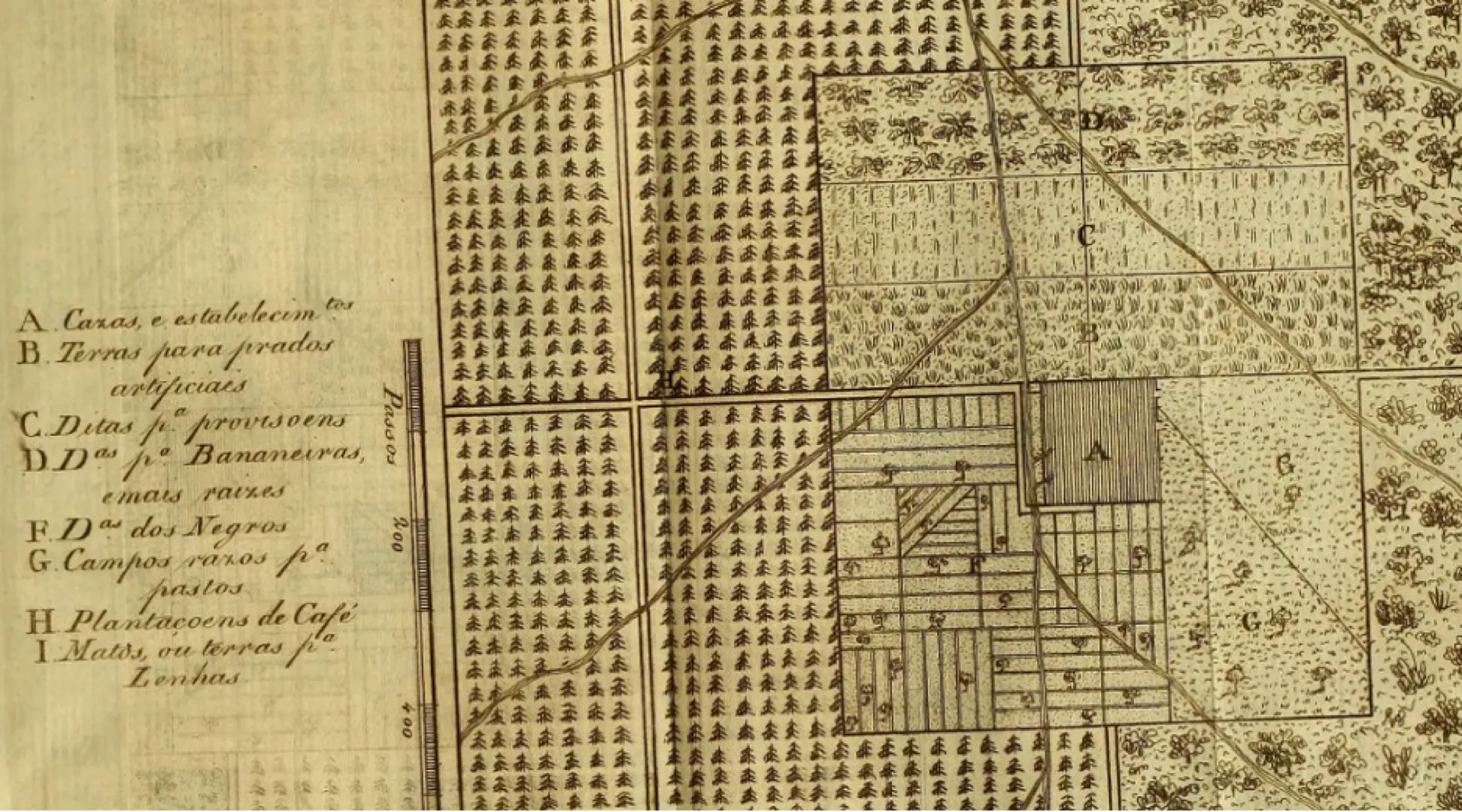
Ep 132Plantationocene
In this episode of High Theory, Neil Safier talks with us about the Plantationocene, a geological epoch that traces the effects of climate change to the historical systems of human and nonhuman environmental exploitation known as plantation agriculture. It is another name for the world we currently inhabit. In the episode, Neil describes how Donna Harraway and Anna Tsing invented the term Plantationocene in response to another recent term Anthropocene. Sources to check out include Donna Haraway’s essay, “Anthropocene, Capitalocene, Plantationcene, Chthulucene: Making Kin” Environmental Humanities 6 no. 1 (2015): 159-165. doi: 10.1215/22011919-3615934, and Paul Crutzen, “The ‘Anthropocene’” Earth Systems Science in the Anthropocene ed. Eckhart Ehlers and Thomas Krafft (Springer, 2006) pp. 13-18. He references B.F. Skinner’s novel Walden Two (MacMillan, 1962) at the end of our conversation. Neil Safier is Associate Professor in the Department of History at Brown University where he currently serves as Director of the Center for Latin American and Caribbean Studies of the Watson Institute for International Affairs. He studies the history of science, agriculture, and other forms of knowledge-making in the late-eighteenth-century Atlantic world, focusing on the plantation cultures of the Caribbean and Brazil. He was recently the director of the John Carter Brown Library, at Brown University, and many years ago, when he was more optimistic about the current global epoch, he managed grants for the Sierra Club Foundation in San Francisco, California. He is the author of Measuring the New World: Enlightenment Science and South America (U Chicago, 2008) and is cooking up two new projects, on the historical connections between natural science and plantation agriculture in the Amazon River basin and the global history of collecting. The image for this week comes from Neil’s research on the history of plantation agriculture. This drawing of a plantation from Hispaniola (Saint-Domingue) was reproduced in José Mariano da Conceição Velozo's Fazendeiro do Brazil Tome III Part II (Lisbon, 1799), in the volume dedicated to coffee production. Learn more about your ad choices. Visit megaphone.fm/adchoices
Ep 16Monetary History, Bretton Woods, and Banking Crises
Michael Bordo (Rutgers Economics Professor and Hoover Distinguished Visiting Fellow) joins the podcast to discuss his career, monetary history, the legacy of Bretton Woods 50 years later, and historical banking crises amid ongoing regional bank failures. Learn more about your ad choices. Visit megaphone.fm/adchoices
Ep 24Jennifer Burns on the Life and Lasting Influence of Milton Friedman
Jennifer Burns (Hoover Reserch Fellow and Stanford Associate Professor of History) joins the podcast to discuss her career as well as her new biography Milton Friedman: The Last Conservative (Farrar, Straus and Giroux, 2023). We discuss the life of Milton Friedman including his very brief time in Chile, his intellectual development before and after joining the University of Chicago economics faculty, the role of various people who contributed to the development of his ideas behind the scenes, along with the extent of his influence nearly 20 years after his death. Jon Hartley is an economics researcher with interests in international macroeconomics, finance, and labor economics and is currently an economics PhD student at Stanford University. He is also currently a Research Fellow at the Foundation for Research on Equal Opportunity, a Senior Fellow at the Macdonald-Laurier Institute, and a research associate at the Hoover Institution. Learn more about your ad choices. Visit megaphone.fm/adchoices
Ep 685Brendan J. Doherty, "Fundraiser in Chief: Presidents and the Politics of Campaign Cash" (UP of Kansas, 2023)
Political Scientist Brendan Doherty has a new book that dives into the ways that presidents have raised money for themselves, their parties, and other elected officials over the past six decades. Doherty is an expert on campaign fundraising, especially by presidents, and Fundraiser in Chief: Presidents and the Politics of Campaign Cash (UP of Kansas, 2023) continues the research he has been doing in this area within political science. The overarching thesis of Doherty’s work in Fundraiser in Chief is examining the intersection between campaigning and governing, especially when it comes to the president him(her)self. Doherty’s chief claim in the book is that presidential fundraising, which is usually studied and explored in direct connection with presidential campaigns, should be more fully integrated into the other dynamics and components of how a president governs and uses his/her time. In an effort to examine the time spent fundraising, not just at public events, but also in private venues and closed events, Doherty compiled an extensive data set that includes information for every president from Jimmy Carter to Donald Trump. (Doherty has continued to add to the data set to include President Joe Biden, but the research analyzed in the book concludes with the 2020 election cycle and Donald Trump’s presidency.) This is a fascinating examination of fundraising, particularly as the laws and regulations have continued to change and shift over the decades. As Doherty notes, every time there is a shift, presidents pursue different options in order to fundraise for themselves, for their parties, and for other elected officials. And since fundraising is a constant undertaking, not just ramped up during election cycles, it needs to be considered alongside other dimensions of presidential governance, like speechmaking/rhetoric, congressional relations, foreign and domestic travel, and the other ways that presidents spend their scarcest resource, their time. The fundraising world that President Jimmy Carter entered, following the establishment of new laws, regulations, and restrictions on campaign fundraising after Watergate, is much different than the world in which former President Trump and President Biden are now operating as the 2024 election cycle moves forward. Presidents must make strategic choices around fundraising, and this also shapes the ways that individuals govern from the Oval Office, the way they work with members of their parties, and the way that they work with other elected officials. Fundraiser in Chief: Presidents and the Politics of Campaign Cash is an important contribution to the scholarship on the American presidency, especially in our understanding of how governing and fundraising and campaigning all integrate into each other. Lilly J. Goren is a professor of political science at Carroll University in Waukesha, WI. She is co-host of the New Books in Political Science channel at the New Books Network. She is co-editor of The Politics of the Marvel Cinematic Universe (University Press of Kansas, 2022), as well as co-editor of the award winning book, Women and the White House: Gender, Popular Culture, and Presidential Politics (University Press of Kentucky, 2012). She can be reached @gorenlj.bsky.social Learn more about your ad choices. Visit megaphone.fm/adchoices
Ep 77Kai Jun Chen, "Porcelain for the Emperor: Manufacture and Technocracy in Qing China" (U Washington Press, 2023)
Porcelain for the Emperor: Manufacture and Technology in Qing China (University of Washington Press; 2023) looks at the history of court-sponsored porcelain production in Qing China through the work and career of the Manchu polymath Tang Ying (1682-1756). Viewing him as a technocrat — an official who combined technological specialization and managerial expertise — Kai Jun Chen uses Tang to explore how porcelain manufacture was carried out in the Qing, how technological innovations were created and passed on, and how technocrats learned their skills. At the same time, the book shows how technocrats imposed and extended imperial order over local society, and how essential technocrats were to the operation and success of Qing cultural policies. Lucidly written and complete with truly striking images, Porcelain for the Emperor is a beautiful combination of the study of material culture, literature, art history, and technology. This book should be of interest not only to historians of the Qing and the early modern world, but also art historians and curators, as well as anyone who has ever seen a piece of Qing porcelain and wondered how it came to be. Curious readers should also seek out Making the Palace Machine Work, co-edited by Kai Jun Chen, Martina Siebert, and Dorothy Ko. Sarah Bramao-Ramos is a PhD candidate in History and East Asian Languages at Harvard. She works on Manchu language books and is interested in anything with a kesike. She can be reached at [email protected] Learn more about your ad choices. Visit megaphone.fm/adchoices
Ep 142Elizabeth Anderson, "Hijacked: How Neoliberalism Turned the Work Ethic against Workers and How Workers Can Take It Back" (Cambridge UP, 2023)
What is the work ethic? Does it justify policies that promote the wealth and power of the One Percent at workers' expense? Or does it advance policies that promote workers' dignity and standing? Hijacked: How Neoliberalism Turned the Work Ethic against Workers and How Workers Can Take It Back (Cambridge UP, 2023) explores how the history of political economy has been a contest between these two ideas about whom the work ethic is supposed to serve. Today's neoliberal ideology deploys the work ethic on behalf of the One Percent. However, workers and their advocates have long used the work ethic on behalf of ordinary people. By exposing the ideological roots of contemporary neoliberalism as a perversion of the seventeenth-century Protestant work ethic, Elizabeth Anderson shows how we can reclaim the original goals of the work ethic, and uplift ourselves again. Hijacked persuasively and powerfully demonstrates how ideas inspired by the work ethic informed debates among leading political economists of the past, and how these ideas can help us today. Elizabeth Anderson is the Max Mendel Shaye Professor of Public Philosophy, Politics, and Economics at University of Michigan. She is the author of Value in Ethics and Economics (1995), The Imperative of Integration (2010), and Private Government: How Employers Rule Our Lives (and Why We Don't Talk about It) (2017). She is a MacArthur Fellow and Fellow of the American Academy of Arts and Sciences. In 2019, The New Yorker described her as 'a champion of the view that equality and freedom are mutually dependent [...] Anderson may be the philosopher best suited to this awkward moment in American life.' Learn more about your ad choices. Visit megaphone.fm/adchoices
Ep 59Jennifer E. Brooks, "Resident Strangers: Immigrant Laborers in New South Alabama" (LSU Press, 2022)
Immigrant laborers who came to the New South in the late nineteenth and early twentieth centuries found themselves poised uncomfortably between white employers and the Black working class, a liminal and often precarious position. Campaigns to recruit immigrants primarily aimed to suppress Black agency and mobility. If that failed, both planters and industrialists imagined that immigrants might replace Blacks entirely. Thus, white officials, citizens, and employers embraced immigrants when they acted in ways that sustained Jim Crow. However, when they directly challenged established political and economic power structures, immigrant laborers found themselves ostracized, jailed, or worse, by the New South order. Both industrial employers and union officials lauded immigrants' hardworking and noble character when it suited their purposes, and both denigrated and racialized them when immigrant laborers acted independently. Jennifer E. Brooks's Resident Strangers: Immigrant Laborers in New South Alabama (LSU Press, 2022) restores immigrant laborers to their place in the history of the New South, considering especially how various immigrant groups and individuals experienced their time in New South Alabama. Brooks utilizes convict records, censuses, regional and national newspapers, government documents, and oral histories to construct the story of immigrants in New South Alabama. The immigrant groups she focuses on appeared most often as laborers in the records, including the Chinese, southern Italians, and the diverse nationals of the Austro-Hungarian Empire, along with a sprinkling of others. Although recruitment crusades by Alabama's employers and New South boosters typically failed to bring in the vast numbers of immigrants they had envisioned, significant populations from around the world arrived in industries and communities across the state, especially in the coal- and ore-mining district of Birmingham. Resident Strangers reveals that immigrant laborers' presence and individual agency complicated racial categorization, disrupted labor relations, and diversified southern communities. It also presents a New South that was far from isolated from the forces at work across the nation or in the rest of the world. Immigrant laborers brought home to New South Alabama the turbulent world of empire building, deeply embedding the region in national and global networks of finance, trade, and labor migration. Learn more about your ad choices. Visit megaphone.fm/adchoices
Ep 114Adrien Sebro, "Scratchin' and Survivin': Hustle Economics and the Black Sitcoms of Tandem Productions" (Rutgers UP, 2023)
The 1970s was a golden age for representations of African American life on TV sitcoms: Sanford & Son, Good Times, The Jeffersons. Surprisingly, nearly all the decade’s notable Black sitcoms were made by a single company, Tandem Productions. Founded by two white men, the successful team behind All in the Family, writer Norman Lear and director Bud Yorkin, Tandem gave unprecedented opportunities to Black actors, writers, and producers to break into the television industry. However, these Black auteurs also struggled to get the economic privileges and creative autonomy regularly granted to their white counterparts. Scratchin' and Survivin': Hustle Economics and the Black Sitcoms of Tandem Productions (Rutgers UP, 2023) discovers surprising parallels between the behind-the-scenes drama at Tandem and the plotlines that aired on their sitcoms, as both real and fictional African Americans devised various strategies for getting their fair share out of systems prone to exploiting their labor. The media scholar Adrien Sebro describes these tactics as a form of “hustle economics,” and he pays special attention to the ways that Black women—including actresses like LaWanda Page, Isabel Sanford, and Esther Rolle—had to hustle for recognition. Exploring Tandem’s complex legacy, including its hit racially mixed sitcom Diff’rent Strokes, he showcases the Black talent whose creative agency and labor resilience helped to transform the television industry. Adrien Sebro is an assistant professor of media studies at the University of Texas at Austin. He specializes in critical media studies at the intersections of comedy, gender, and Black popular culture. Peter C. Kunze is a visiting assistant professor of communication at Tulane University. Learn more about your ad choices. Visit megaphone.fm/adchoices
Ep 210Aditya Balasubramanian, "Toward a Free Economy: Swatantra and Opposition Politics in Democratic India" (Princeton UP, 2023)
In Toward a Free Economy: Swantantra and Opposition Politics in Democratic India (Princeton University Press, 2023), Aditya Balasubramanian charts the birth and rise of a political ideology rooted in the tenets of ‘free market’ economics, and the loosely associated ideas of neoliberalism, conservatism, and libertarianism. Balasubramanian offers an altogether fresh origin story for this movement that is often framed as a Cold War North Atlantic export to the rest of the poorer, developing world championed by the International Monetary Fund backed Washington consensus. In his compellingly told and richly layered account, we are not only given one of the few comprehensive histories of the Swantantra (“Freedom”) Party and its tryst with democratic electoral politics in newly independent India, but we are also shown how the most important facets of this moment in history cannot simply rely on a narrative woven around party politics. This results in a focus on what Balasubramanian calls “economic consciousness,” and exposes us to a vast, multifarious archival base that spans print, visual, and urban cultures, economists’ papers, government films, and much more that palpably reconstructs how economic ideals floated in the political arena also circulated in and were propped up by the wider public sphere in southern and western India. The Swantantra Party emerged in the late 1950s, as a response to the Indian National Congress Party’s (INC) purported hegemony in independent India’s constitutional democratic structure. The party encouraged Indians to break with the INC, which spearheaded the anticolonial nationalist movement and now dominated Indian democracy. Rejecting heavy-industrial developmental state and the accompanying rhetoric of socialism that was seen as emblematic of INC, Swatantra promised “free economy” through its project of opposition politics. As the “free economy” idea was disseminated across various genres and cultures, it took on meanings that varied by region and language, caste, and class, and won diverse advocates. These articulations, informed by but distinct from neoliberalism, came chiefly from relatively wealthy communities who felt threatened by the INC’s economic policies as they embraced new forms of entrepreneurial activity. At their core, they connoted anticommunism, unfettered private economic activity, decentralized development, and the defense of private property. Opposition politics encompassed ideas and practice. Swatantra’s leaders imagined a conservative alternative to a progressive dominant party in a two-party system. They communicated ideas and mobilized people around such issues as inflation, taxation, and property. And they made creative use of India’s institutions to bring checks and balances to the political system. Democracy’s persistence in India is uncommon among postcolonial societies. By excavating a perspective of how Indians made and understood their own democracy and economy, Aditya Balasubramanian broadens our picture of the free market, neoliberalism, democracy, and the postcolonial world. In the process, he helps us understand why geographically specific and culturally rooted histories from the Global South are necessary in qualifying and nuancing these ostensibly universal concepts. Archit Guha is a PhD researcher in the Duke University History Department. Learn more about your ad choices. Visit megaphone.fm/adchoices