
New Books in Drugs, Addiction and Recovery
282 episodes — Page 3 of 6
Ep 126Victoria Lee, "The Arts of the Microbial World: Fermentation Science in Twentieth-Century Japan" (U Chicago Press, 2021)
Victoria Lee’s The Arts of the Microbial World: Fermentation Science in Twentieth-Century Japan (U Chicago Press, 2021) is an in-depth exploration of the social history of microbial science in modern Japan. Lee shows that Japanese scientists and artisans in food, chemical, and pharmaceutical industries harnessed a combination of premodern and modern understandings of the microbial world to create a productive approach positing microbes “as living workers” in important industries. With case studies that include sake and soy sauce, antibiotics, and biotechnology, Arts of the Microbial World weaves a historical narrative integrated with both the development of modern Japanese science and industry on the one hand and imperialism, expansion, and defeat and rebuilding on the other. Additionally, Lee couches her analysis of Japan’s microbial industries in the context of our contemporary microbiotic moment of antibiotic resistance, the microbiome, green chemistry, and lab-grown foods and pharmaceuticals. In this sense, Arts of the Microbial World will be of interest to scholars and students of Japan, the history of science, food, pharmaceuticals, and industry, but also to readers concerned about the possibilities of mobilizing non-Western technological breakthroughs in the quest for global sustainability. Nathan Hopson is an associate professor of Japanese language and history in the University of Bergen's Department of Foreign Languages. Learn more about your ad choices. Visit megaphone.fm/adchoices Support our show by becoming a premium member! https://newbooksnetwork.supportingcast.fm/drugs-addiction-and-recovery
Ep 121Meg Bernhard, "Wine" (Bloomsbury, 2023)
Today I talked to Meg Bernhard about her new book Wine (Bloomsbury, 2023). Agricultural product and cultural commodity, drink of ritual and drink of addiction, purveyor of pleasure, pain, and memory - wine has never been contained in a single glass. Drawing from science, religion, literature, and memoir, Wine meditates on the power structures bound up with making and drinking this ancient, intoxicating beverage. While wine drunk millennia ago was the humble beverage of the people, today the drink is inextricable with power, sophistication, and often wealth. Bottles sell for half a million dollars. Point systems tell us which wines are considered the best. Wine professionals give us the language to describe what we taste. This interview was conducted by Dr. Miranda Melcher whose doctoral work focused on post-conflict military integration, understanding treaty negotiation and implementation in civil war contexts, with qualitative analysis of the Angolan and Mozambican civil wars. Learn more about your ad choices. Visit megaphone.fm/adchoices Support our show by becoming a premium member! https://newbooksnetwork.supportingcast.fm/drugs-addiction-and-recovery
Ep 54Methadone and Covid-19
Helen Redmond is a Harlem-based documentary filmmaker, journalist, licensed clinical social worker, and professor at NYU. As senior editor and a multimedia journalist at Filter, a website that covers drug news, she’s been documenting America’s addiction crisis and treatment system for years. Her new documentary, Swallow THIS: A Documentary About Methadone & COVID-19, is currently on tour across the United States. We discuss the impacts the pandemic has had on methadone access in America – as well as the changes it hasn’t made – and put addiction treatment into a larger historical perspective. Emily Dufton is the author of Grass Roots: The Rise and Fall and Rise of Marijuana in America (Basic Books, 2017). A drug historian and writer, her second book, on the development of the opioid addiction medication industry, is under contract with the University of Chicago Press. Learn more about your ad choices. Visit megaphone.fm/adchoices Support our show by becoming a premium member! https://newbooksnetwork.supportingcast.fm/drugs-addiction-and-recovery
Ep 133Malcolm F. Purinton, "Globalization in a Glass: The Rise of Pilsner Beer through Technology, Taste and Empire" (Bloomsbury, 2023)
Globalization in a Glass: The Rise of Pilsner Beer through Technology, Taste and Empire (Bloomsbury, 2023) by Dr. Malcolm Purinton charts the spread of Pilsner beer from its inception in 1842 to clearly show the changes wrought by globalization in an age of empire. Its rise was dependent not only on technological innovations and faster supply chains, but also on the increased connectedness of the world and the political and economic structures of empire. Drawing upon a wide range of archival sources from Europe, the Americas, and Sub-Saharan Africa, this study traces the spread of industrial beer brewing in Europe from the late 18th to the early 20th century to show how a single beer style became the global favourite through advances in science, business and imperial power. In highlighting the evolution of consumer tastes through changing hierarchical relationships between the British metropole and colonies, as well as the evolution of business organizations and practices, Globalization in a Glass contributes to ongoing debates about globalization, empire, and trade. It argues that, despite the might and power of the British Empire as a colonizing force, the effects of globalization, imperial trade networks, and colonial migration led to the domination of the most popular Continental European style of beer, the Pilsner, over British-style ales. This interview was conducted by Dr. Miranda Melcher whose doctoral work focused on post-conflict military integration, understanding treaty negotiation and implementation in civil war contexts, with qualitative analysis of the Angolan and Mozambican civil wars. Learn more about your ad choices. Visit megaphone.fm/adchoices Support our show by becoming a premium member! https://newbooksnetwork.supportingcast.fm/drugs-addiction-and-recovery
Ep 138Peter Thilly, "The Opium Business: A History of Crime and Capitalism in Maritime China" (Stanford UP, 2022)
Opium is an awkward commodity. For the West, it’s a reminder of some of the shadier and best forgotten parts of its history. For China (and a few other countries), it’s a symbol of national humiliation, left to the past–unless it needs to shame a foreign country. But the opium trade survived for decades, through to the end of the Second World War. How did that trade actually work? How was it possible to trade a good that was, at best, tolerated in the strange gap between legal and illegal. This trade is what Peter Thilly covers in his book The Opium Business: A History of Crime and Capitalism in Maritime China (Stanford University Press, 2022). In this interview, Peter and I talk about opium, how people traded this quasi-legal good, and the changing opium trade–including a surprising source of illicit drugs in the region. Peter Thilly is Assistant Professor of History at the University of Mississippi. He is currently working on a global microhistory of the 1853 Small Sword Uprising. You can find more reviews, excerpts, interviews, and essays at The Asian Review of Books, including its review of The Opium Business. Follow on Twitter at @BookReviewsAsia. Nicholas Gordon is an associate editor for a global magazine, and a reviewer for the Asian Review of Books. He can be found on Twitter at @nickrigordon. Learn more about your ad choices. Visit megaphone.fm/adchoices Support our show by becoming a premium member! https://newbooksnetwork.supportingcast.fm/drugs-addiction-and-recovery
Ep 55Christopher H. Evans, "Do Everything: The Biography of Frances Willard" (Oxford UP, 2022)
Frances Willard (1839-1898) was one of the most prominent American social reformers of the late nineteenth century. As the long-time president of the Woman's Christian Temperance Union (WCTU), Willard built a national and international movement of women that campaigned for prohibition, women's rights, economic justice, and numerous other social justice issues during the Gilded Age. Emphasizing what she called "Do Everything" reform, Willard became a central figure in international movements in support of prohibition, women's suffrage, and Christian socialism. A devout Methodist, Willard helped to shape predominant religious currents of the late nineteenth century and was an important figure in the rise of the social gospel movement in American Protestantism. The first biography of Frances Willard to be published in over thirty-five years, Do Everything: The Biography of Frances Willard (Oxford UP, 2022) explores Willard's life, her contributions as a reformer, and her broader legacy as a women's rights activist in the United States. In addition to chronicling Willard's life, historian Christopher H. Evans examines how Willard crafted a distinctive culture of women's leadership, emphasizing the importance of religious faith for understanding Willard's successes as a social reformer. Despite her enormous fame during her lifetime, Evans investigates the reasons why Willard's legacy has been eclipsed by subsequent generations of feminist reformers and assesses her importance for our time. Jane Scimeca is Professor of History at Brookdale Community College. @JaneScimeca1 Learn more about your ad choices. Visit megaphone.fm/adchoices Support our show by becoming a premium member! https://newbooksnetwork.supportingcast.fm/drugs-addiction-and-recovery

Ep 74Pharmacological Histories Ep. 4: Andy Roberts on LSD's Cosmic Courier
Michael Hollingshead, the man who turned Timothy Leary onto LSD, managed to fundamentally influenced modern drug culture whilst remaining virtually anonymous in popular culture at large. In this episode, biographer Andy Roberts talks us through the life of a key character in psychedelic history. Of all the figures associated with the history of LSD there is none more enigmatic than Michael Hollingshead. Appearing as if from nowhere, he turned Timothy Leary on to LSD in 1962, and was influential in Leary's years at Harvard, Millbrook, and beyond. A Zelig-like character, Hollingshead was a key player in London's early LSD scene. In 1965 he went to London to establish a cultural beachhead for Leary's LSD philosophy at the World Psychedelic Centre in Chelsea. Following a spell in prison, where he dosed KGB spy George Blake, he continued to pursue adventures with the Brotherhood of Eternal Love, established a psychedelic commune, created the first electronic I Ching installation, published an underground magazine, and spent time in Nepal, before dying a mysterious death in Bolivia in the 1980s. Psychedelic trickster guru, or conman and charlatan? Exactly who Hollingshead was and what his motives were remain unclear. Some believed he was working for the secret services, others that he was just a Leary wannabe, his aspirations destroyed by his deviant personality and addiction to alcohol and opiates. Divine Rascal is the first reliable biography of one of psychedelia's key figures, without whom the trajectory of LSD in the world would have been radically different. Learn more about your ad choices. Visit megaphone.fm/adchoices Support our show by becoming a premium member! https://newbooksnetwork.supportingcast.fm/drugs-addiction-and-recovery
Ep 15Michelle Smirnova, "The Prescription-To-Prison Pipeline: The Medicalization and Criminalization of Pain" (Duke UP, 2023)
In The Prescription-To-Prison Pipeline: The Medicalization and Criminalization of Pain (Duke UP, 2023), Michelle Smirnova argues that the ongoing opioid drug epidemic is the result of an endless cycle in which suffering is medicalized and drug use is criminalized. Drawing on interviews with eighty incarcerated individuals in Missouri correctional institutions, Smirnova shows how contradictions in medical practices, social ideals, and legal policies disproportionately criminalize the poor for their social condition. This criminalization further exacerbates and perpetuates drug addiction and poverty. Tracing the processes by which social issues are constructed as biomedical ones that necessitate pharmacological intervention, Smirnova highlights how inequitable surveillance, policing, and punishment of marginalized populations intensify harms associated with both treatment and punishment, especially given that the distinctions between the two have become blurred. By focusing on the stories of people whose pain and pharmaceutical treatment led to incarceration, Smirnova challenges the binary of individual and social problems, effectively exploring how the conceptualization, diagnosis, and treatment of substance use may exacerbate outcomes such as relapse, recidivism, poverty, abuse, and death. Learn more about your ad choices. Visit megaphone.fm/adchoices Support our show by becoming a premium member! https://newbooksnetwork.supportingcast.fm/drugs-addiction-and-recovery
Ep 493Peter Thilly, "The Opium Business: A History of Crime and Capitalism in Maritime China" (Stanford UP, 2022)
The Opium Business: A History of Crime and Capitalism in Maritime China (Stanford UP, 2022) explores the opium trade — but not through the relatively well-trodden history of the ‘Opium Wars.’ Instead, in this wonderfully rich book Peter Thilly investigates the little known social history of the opium trade in coastal southern Fujian province. The Opium Business focuses on the relationship between the state and local businesses, charting how it changed as opium went from contraband to tax staple in the late nineteenth century, and then from tax staple to prohibited commodity in the early twentieth century. While this book is sure to interest anyone keen to learn more about modern Chinese history, the history of capitalism, and the history of global narcotics, this book should also be of interest to anyone looking to read about some truly fascinating individuals who made the 'opium business' happen. By uncovering the history of the tax farmers, roving gangs, smugglers, and 'opium kings' who moved, sold, and hid opium, Thilly's book reminds us that it was people — with competing motivations, complicated backgrounds, and networks of friends — who made the opium trade happen. Sarah Bramao-Ramos is a PhD candidate in History and East Asian Languages at Harvard. She works on Manchu language books and is interested in anything with a kesike. She can be reached at [email protected]. Learn more about your ad choices. Visit megaphone.fm/adchoices Support our show by becoming a premium member! https://newbooksnetwork.supportingcast.fm/drugs-addiction-and-recovery

Ep 73Pharmacological Histories Ep. 3: Bita Moghaddam on Ketamine
In this episode, Bita Moghaddam discusses the emergence of ketamine as a combat anesthetic in the Vietnam war, its transformation into a recreation drug central to club culture, and its current transition into a treatment for depression. Ketamine, approved in 2019 by the Food and Drug Administration for the treatment of depression, has been touted by scientists and media reports as something approaching a miracle cure. This volume in the MIT Press Essential Knowledge series chronicles the ascent of a drug that has been around for fifty years--in previous incarnations, a Vietnam-era combat anesthetic and a popular club drug--that has now been reinvented as a treatment for depression. Bita Moghaddam, a leading researcher in neuropharmacology, explains the scientific history and the biology of ketamine, its clinical use, and its recently discovered antidepressant effects, for the nonspecialist reader. Learn more about your ad choices. Visit megaphone.fm/adchoices Support our show by becoming a premium member! https://newbooksnetwork.supportingcast.fm/drugs-addiction-and-recovery

Ep 71Pharmacological Histories Ep. 1: Nancy D. Campbell on Naloxone
Drawing on interviews with approximately sixty advocates, drug users, former users, friends, families, witnesses, clinicians, and scientists; Nancy D. Campbell has drawn together a history of a defining tragedy of contemporary life; the overdose. I ask her about the reality of drug overdoses and one of the tools being used by activists to prevent more deaths--Naloxone. For years, drug overdose was unmentionable in polite society. OD was understood to be something that took place in dark alleys--an ugly death awaiting social deviants--neither scientifically nor clinically interesting. But over the last several years, overdose prevention has become the unlikely object of a social movement, powered by the miracle drug naloxone. In OD, Nancy Campbell charts the emergence of naloxone as a technological fix for overdose and describes the remaking of overdose into an experience recognized as common, predictable, patterned--and, above all, preventable. Naloxone, which made resuscitation, rescue, and "reversal" after an overdose possible, became a tool for shifting law, policy, clinical medicine, and science toward harm reduction. Liberated from emergency room protocols and distributed in take-home kits to non-medical professionals, it also became a tool of empowerment. After recounting the prehistory of naloxone--the early treatment of OD as a problem of poisoning, the development of nalorphine (naloxone's predecessor), the idea of "reanimatology"--Campbell describes how naloxone emerged as a tool of harm reduction. She reports on naloxone use in far-flung locations that include post-Thatcherite Britain, rural New Mexico, and cities and towns in Massachusetts. Drawing on interviews with approximately sixty advocates, drug users, former users, friends, families, witnesses, clinicians, and scientists--whom she calls the "protagonists" of her story--Campbell tells a story of saving lives amid the complex, difficult conditions of an unfolding unnatural disaster. Learn more about your ad choices. Visit megaphone.fm/adchoices Support our show by becoming a premium member! https://newbooksnetwork.supportingcast.fm/drugs-addiction-and-recovery
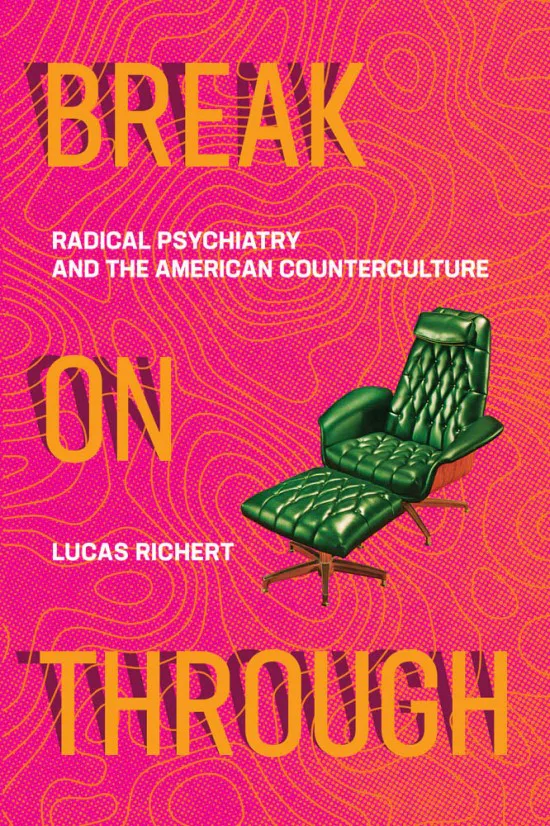
Ep 65Break on Through: Radical Psychiatry and the American Counterculture
In Break On Through, Lucas Richert explores Anti-psychiatry, psychedelics, and radical challenges to psychiatry and the conventional treatment of mental health in the 1970s. In this interview Lucas discusses the issues that run through the sixties and seventies and how they're forming debates about mental health today. "Antipsychiatry," Esalen, psychedelics, and DSM III: Radical challenges to psychiatry and the conventional treatment of mental health in the 1970s. The upheavals of the 1960s gave way to a decade of disruptions in the 1970s, and among the rattled fixtures of American society was mainstream psychiatry. A "Radical Caucus" formed within the psychiatric profession and the "antipsychiatry" movement arose. Critics charged that the mental health establishment was complicit with the military-industrial complex, patients were released from mental institutions, and powerful antipsychotic drugs became available. Meanwhile, practitioners and patients experimented with new approaches to mental health, from primal screaming and the therapeutic use of psychedelics to a new reliance on quantification. In Break on Through, Lucas Richert investigates the radical challenges to psychiatry and to the conventional treatment of mental health that emerged in the 1970s and the lessons they offer for current debates. Drawing on archives and government documents, medical journals, and interviews, and interweaving references to pop (counter)culture into his account, Richert offers fascinating stories of the decade's radical mental health practices. He discusses anti-Vietnam War activism and the new diagnosis of post-traumatic stress disorder given to some veterans; the radical psychiatrists who fought the system (and each other); the entry of New Age-style therapies, including Esalen's Human Potential Movement, into the laissez-faire therapeutic marketplace of the 1970s; the development of DSM III; and the use of LSD, cannabis, and MDMA. Many of these issues have resonance today. Debates over medical marijuana and microdoses of psychedelics echo debates of the 1970s. With rising rates of such disorders as anxiety and depression, practitioners and patients continue to search for therapeutic breakthroughs. Learn more about your ad choices. Visit megaphone.fm/adchoices Support our show by becoming a premium member! https://newbooksnetwork.supportingcast.fm/drugs-addiction-and-recovery
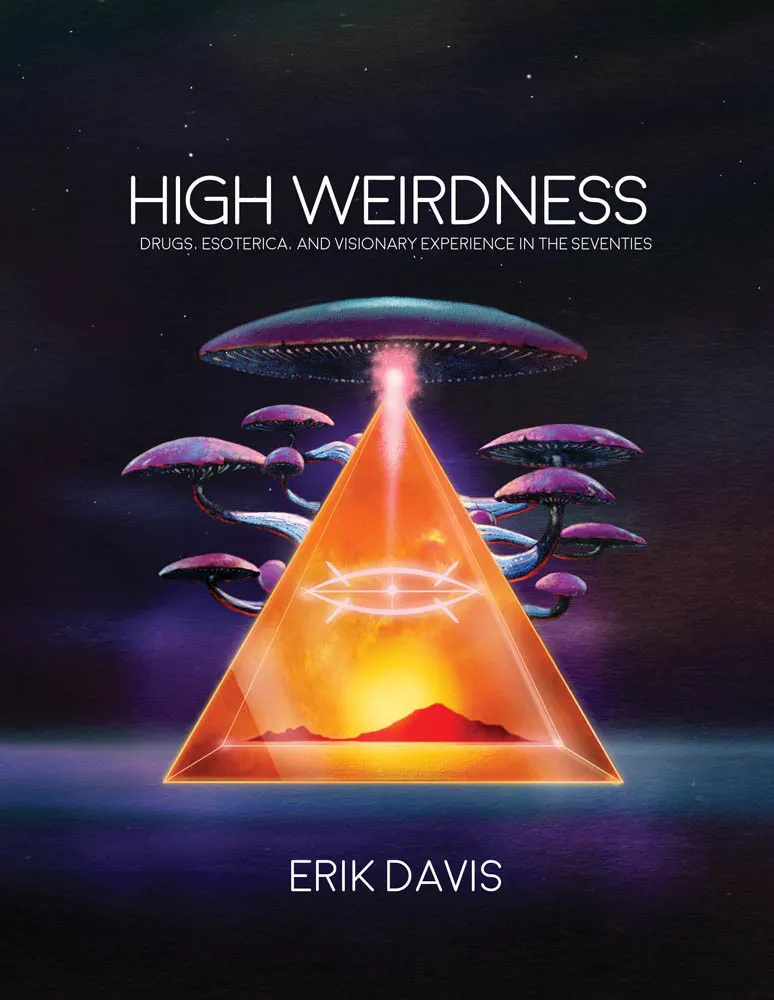
Ep 61High Weirdness: Drugs, Esoterica, and Visionary Experience in the Seventies
Author of High Weirdness, Erik Davis discusses psychedelic politics, media paranoia, conspiracy theories, and consensus reality in the time of COVID-19. A study of the spiritual provocations to be found in the work of Philip K. Dick, Terence McKenna, and Robert Anton Wilson, High Weirdness charts the emergence of a new psychedelic spirituality that arose from the American counterculture of the 1970s. These three authors changed the way millions of readers thought, dreamed, and experienced reality--but how did their writings reflect, as well as shape, the seismic cultural shifts taking place in America? In High Weirdness, Erik Davis--America's leading scholar of high strangeness--examines the published and unpublished writings of these vital, iconoclastic thinkers, as well as their own life-changing mystical experiences. Davis explores the complex lattice of the strange that flowed through America's West Coast at a time of radical technological, political, and social upheaval to present a new theory of the weird as a viable mode for a renewed engagement with reality. Learn more about your ad choices. Visit megaphone.fm/adchoices Support our show by becoming a premium member! https://newbooksnetwork.supportingcast.fm/drugs-addiction-and-recovery
Ep 44Nadia Davis, "Home Is Within You: A Memoir of Recovery and Redemption" (Girl Friday Books, 2021)
Home Is Within You As a young Latina and Native American lawyer and former wife of California’s attorney general and treasurer, Nadia Davis has long been subjected to public scrutiny. In this powerful ah-mage homage to finding one’s worth in the face of mental health struggles, addiction, and public shaming, Davis shares her remarkable story. She reveals the depths of the darkness she went through, while gracefully offering transformational healing and an end to the choking grasp of shame. Lyrical and captivating, Home Is Within You: A Memoir of Recovery and Redemption (Girl Friday Books, 2021) recounts the author’s experience of trauma and addiction amid a highly publicized abusive relationship. Davis is brutally honest about her experiences and generous in revealing the paths she found to wholeness through spiritual advocacy, healthy co-parenting, and a dedication to preventing generational trauma. Home Is Within You shares one woman’s courageous journey to recovery as a mother and as a woman, and her narrative is a defense of privacy, parenthood, and autonomy. Nadia Davis is the mother of three sons, a writer, attorney, kundalini yoga teacher and former executive director and elected official. She graduated from U.C.L.A. with a degree in Sociology and Specialization in Juvenile Justice, Loyola Law School with a Doctorate, and has received numerous state and national awards for her work improving the lives of others, including the John F. Kennedy Jr. Public Service Award, National Womens' Political Caucus Woman of the Year, and Hispanic Woman of the Year L.U.L.A.C. Her journey of recovery from childhood and adult trauma, a near death car accident, chronic pain, public shaming, addiction and mental health is an inspiration to many. She shows readers a way out of darkness into connection with their infinite true selves and our home within. Nadia lives in Southern California happily co-parenting her three sons. For more information, please visit her website. Learn more about your ad choices. Visit megaphone.fm/adchoices Support our show by becoming a premium member! https://newbooksnetwork.supportingcast.fm/drugs-addiction-and-recovery
Ep 639Hernán Flom, "The Informal Regulation of Criminal Markets in Latin America" (Cambridge UP, 2022)
Political Scientist Hernán Flom has written a fascinating and nuanced analysis of how the criminal drug markets operate in Argentina and Brazil. Instead of tracking the path that illegal drugs take or examining how the criminal justice system works in Latin American countries, Flom has focused, instead, on the illegal drug markets as economic and political institutions to examine how they actually operates within Brazil and Argentina. From this perspective, we learn quite a lot about market forces, civilian and police institutions, and “law and order” approaches in both these countries. The Informal Regulation of Criminal Markets in Latin America (Cambridge UP, 2022) provides a comparative analysis of the criminal markets in these two countries—Brazil and Argentina—as well as differentiating between how these markets work in larger, urban centers, and in smaller cities. This effectively teases out distinctions between how police work with or against these criminal markets, and how the local and national politicians often articulate distinct approaches to how to manage criminal enterprises. The Informal Regulation of Criminal Markets in Latin America examines patterns in the relationships between police, politicians, drug cartels, and criminal actors. These patterns are not necessarily new, but as Flom makes clear, they operate in different ways in different venues and with regard to different types of informal arrangements. In doing a cross national comparison as well as internal comparisons within country, Flom has been able to get at some distinctions that come from the colonial past that has also led to different racial configurations in these comparative urban environments. The research also measures different levels of both police and criminal violence, to gage the kinds of relationships that may be in place between these often-opposing entities. The relationship between the police, as subnational units, and politicians also figures into the various levels of police violence. The Informal Regulations of Criminal Markets in Latin America gets at the key variables that come into play in regard to police conduct and the kinds of policies that politicians are both articulating and trying to implement—often through the police. This is a multi-dimensional analysis that explores criminal markets from important and unique perspectives. Flom worked at the National Ministry of Security in Argentina during the course of this research, and he is able to bring his scholarly expertise as well as his own experience to the research and analysis, making this a particularly rich comparison across countries and urban centers within those countries. Lilly J. Goren is a professor of political science at Carroll University in Waukesha, WI. She is co-editor of The Politics of the Marvel Cinematic Universe (University Press of Kansas, 2022), as well as co-editor of the award winning book, Women and the White House: Gender, Popular Culture, and Presidential Politics (University Press of Kentucky, 2012), Email her comments at [email protected] or tweet to @gorenlj. Learn more about your ad choices. Visit megaphone.fm/adchoices Support our show by becoming a premium member! https://newbooksnetwork.supportingcast.fm/drugs-addiction-and-recovery
Ep 227Clare Griffin, "Mixing Medicines: The Global Drug Trade and Early Modern Russia" (McGill-Queen's UP, 2022)
Clare Griffin's book Mixing Medicines: The Global Drug Trade and Early Modern Russia (McGill-Queen's UP, 2022) introduces the reader to the dynamic and complex world of early modern Russian medical drugs, from the enthusiasm for newly imported American botanicals to the disgust at Western European medicines made from human corpses. Based on a unique set of previously unused sources, this book is the first study of how the Russian Empire took part in the early modern global trade in medical drugs. The extensive and detailed records kept by the Moscow court show how ingredients produced elsewhere and passed through the massive, long-distance trade network of the early modern world were finally consumed. Looking at medicine as materia medica gives us a different perspective than when looking at practitioners, texts, and ideas. Erika Monahan is the author of The Merchants of Siberia: Trade in Early Modern Eurasia (Cornell UP, 2016) and a 2023-2024 Alexander von Humboldt Fellow Learn more about your ad choices. Visit megaphone.fm/adchoices Support our show by becoming a premium member! https://newbooksnetwork.supportingcast.fm/drugs-addiction-and-recovery
Ep 305Judy L. Mandel, "White Flag: A Memoir" (Legacy Book Press, 2022)
Cheryl said many times that "I'm done with that life, I'll never go back to it." But she did. When her Aunt Judy finds her in jail after two years of thinking she may be dead, she hopes and prays this is a second chance for her niece. Her sensitive, funny, bookworm niece. Her big sister's eldest daughter, the sister who has since died. And through writing White Flag: A Memoir (Legacy Book Press, 2022), bestselling author Judy L. Mandel finds that it didn't start with Cheryl, but that the tentacles of trauma explored in her first book Replacement Child have grabbed hold of her niece too. She struggles with being powerless to help Cheryl, and she discovers that transgenerational trauma and epigenetics may have started this avalanche of pain. She wonders why some people can recover from addiction, and others cannot. Why some are able to raise their white flag of surrender. Learn more about your ad choices. Visit megaphone.fm/adchoices Support our show by becoming a premium member! https://newbooksnetwork.supportingcast.fm/drugs-addiction-and-recovery
Ep 189Elizabeth Kelly Gray, "Habit Forming: Drug Addiction in America, 1776-1914" (Oxford UP, 2023)
Habitual drug use in the United States is at least as old as the nation itself. Elizabeth Kelly Gray's book Habit Forming: Drug Addiction in America, 1776-1914 (Oxford UP, 2023) traces the history of unregulated drug use and dependency before 1914, when the Harrison Narcotic Tax Act limited sales of opiates and cocaine under US law. Many Americans used opiates and other drugs medically and became addicted. Some tried ‘Hasheesh Candy’, injected morphine, or visited opium dens, but neither use nor addiction was linked to crime, due to the dearth of restrictive laws. After the Civil War, American presses published extensively about domestic addiction. Later in the nineteenth century, many people used cocaine and heroin as medicine. As addiction became a major public health issue, commentators typically sympathized with white, middle-class drug users, while criticizing such use by poor or working-class people and people of color. When habituation was associated with middle-class morphine users, few advocated for restricted drug access. By the 1910s, as use was increasingly associated with poor young men, support for regulations increased. In outlawing users' access to habit-forming drugs at the national level, a public health problem became a larger legal and social problem, one with an enduring influence on American drug laws and their enforcement. Rachel Pagones is an acupuncturist, educator, and author based in Cambridge, England. She was chair of the doctoral program in acupuncture and Chinese medicine at Pacific College of Health and Science in San Diego before moving to the UK. Learn more about your ad choices. Visit megaphone.fm/adchoices Support our show by becoming a premium member! https://newbooksnetwork.supportingcast.fm/drugs-addiction-and-recovery
Ep 220Tricia Starks, "Cigarettes and Soviets: Smoking in the USSR" (Cornell UP, 2022)
Seeing cigarette smoking as a cultural phenomenon of Western modernity is perhaps easier when the test case is outside the US where the narrative is dominated by Big Bad Tobacco and litigation. Tricia Starks's two volume study does just that. Her second volume, Cigarettes and Soviets: Smoking in the USSR (Cornell University Press, 2022) traces the rise and fall of cigarettes during the Soviet period. (Her first volume covered the pre-Revolutionary era.) In a beautifully written and jargon-free account illustrated with dozens of color plates, Starks tracks how the early revolutionaries tried unsuccessfully to combat mass smoking, how subsequent Soviet leaders made peace with it, and how in the post-war period, Soviet health authorities slowly made inroads against smoking, albeit with different arguments than those used in the anti-tobacco campaigns in the West. Daniel Peris is Senior Vice President at Federated Hermes in Pittsburgh. He can be reached at [email protected] or via Twitter @HistoryInvestor. His History and Investing blog and Keep Calm & Carry On Investing podcast are here. Learn more about your ad choices. Visit megaphone.fm/adchoices Support our show by becoming a premium member! https://newbooksnetwork.supportingcast.fm/drugs-addiction-and-recovery
Ep 343Carlos Alberto Sánchez, "A Sense of Brutality. Philosophy after Narco-Culture" (Amherst College Press, 2020)
Contemporary popular culture is riddled with references to Mexican drug cartels, narcos, and drug trafficking. In the United States, documentary filmmakers, journalists, academics, and politicians have taken note of the increasing threats to our security coming from a subculture that appears to feed on murder and brutality while being fed by a romanticism about power and capital. Carlos Alberto Sánchez uses Mexican narco-culture as a point of departure for thinking about the nature and limits of violence, culture, and personhood. A Sense of Brutality. Philosophy after Narco-Culture (Amherst College Press, 2020) argues that violent cultural modalities, of which narco-culture is but one, call into question our understanding of "violence" as a concept. The reality of narco-violence suggests that "violence" itself is insufficient to capture it, that we need to redeploy and reconceptualize "brutality" as a concept that better captures this reality. Brutality is more than violence, other to cruelty, and distinct from horror and terror--all concepts that are normally used interchangeably with brutality, but which, as the analysis suggests, ought not to be. In narco-culture, the normalization of brutality into everyday life is a condition upon which the absolute erasure or derealization of people is made possible This book is available open access here. Host Pamela Fuentes historian and editor of New Books Network en español. Learn more about your ad choices. Visit megaphone.fm/adchoices Support our show by becoming a premium member! https://newbooksnetwork.supportingcast.fm/drugs-addiction-and-recovery
Ep 4Divine Intoxication: A Discussion about Alcoholism, Grace, Sainthood, and Women in the Church
Author Heather King discusses her journey from the alcoholic abyss to redemption and new life (which she described in her book, Parched, 2006), St. Thérèse of Lisieux and the Little Way (whom she wrote about in her book, Shirt of Flame, 20011), the Communion of Saints, literature, women in the Church. In this conversation, we talk over the “Little Ways” that we may look for in our lives to follow the Way of Jesus—as women, men, parents, clerics, lay-people, writers, teachers, workers, and every other kind of human—whether or not anyone see us doing it, except God. Learn more about your ad choices. Visit megaphone.fm/adchoices Support our show by becoming a premium member! https://newbooksnetwork.supportingcast.fm/drugs-addiction-and-recovery
Ep 176Mikkael A. Sekeres, "Drugs and the FDA: Safety, Efficacy, and the Public's Trust" (MIT Press, 2022)
How the FDA was shaped by public health crises and patient advocacy, told against a background of the contentious hearings on the breast cancer drug Avastin. Food and Drug Administration approval for COVID-19 vaccines and the controversial Alzheimer's drug Aduhelm made headlines, but few of us know much about how the agency does its work. Why is the FDA the ultimate US authority on a drug's safety and efficacy? In Drugs and the FDA: Safety, Efficacy, and the Public's Trust (MIT Press, 2022), Mikkael Sekeres--a leading oncologist and former chair of the FDA's cancer drug advisory committee--tells the story of how the FDA became the most trusted regulatory agency in the world. It took a series of tragedies and health crises, as well as patient advocacy, for the government to take responsibility for ensuring the efficacy and safety of drugs and medical devices. Before the FDA existed, drug makers could hawk any potion, claim treatment of any ailment, and make any promise on a label. But then, throughout the twentieth century, the government was forced to take action when children were poisoned by contaminated diphtheria and smallpox vaccines, an early antibiotic contained antifreeze, a drug prescribed for morning sickness in pregnancy caused babies to be born disfigured, and access to AIDS drugs was limited to a few clinical trials while thousands died. Sekeres describes all these events against the backdrop of the contentious 2011 hearings on the breast cancer drug Avastin, in which he participated as a panel member. The Avastin hearings, he says, put to the test a century of the FDA's evolution, demonstrating how its system of checks and balances works--or doesn't work. Galina Limorenko is a doctoral candidate in Neuroscience with a focus on biochemistry and molecular biology of neurodegenerative diseases at EPFL in Switzerland. Learn more about your ad choices. Visit megaphone.fm/adchoices Support our show by becoming a premium member! https://newbooksnetwork.supportingcast.fm/drugs-addiction-and-recovery
Ep 1Alejandro Anaya-Muñoz and Barbara Frey, "Mexico's Human Rights Crisis" (U Pennsylvania Press, 2019)
Lawless elements are ascendant in Mexico, as evidenced by the operations of criminal cartels engaged in human and drug trafficking, often with the active support or acquiescence of government actors. The sharp increase in the number of victims of homicide, disappearances and torture over the past decade is unparalleled in the country's recent history. According to editors Alejandro Anaya-Muñoz and Barbara Frey, the war on drugs launched in 2006 by President Felipe Calderón and the corrupting influence criminal organizations have on public institutions have empowered both state and nonstate actors to operate with impunity. Impunity, they argue, is the root cause that has enabled a human-rights crisis to flourish, creating a climate of generalized violence that is carried out, condoned, or ignored by the state and precluding any hope for justice. Mexico's Human Rights Crisis (U Pennsylvania Press, 2019) offers a broad survey of the current human rights issues that plague Mexico. Essays focus on the human rights consequences that flow directly from the ongoing war on drugs in the country, including violence aimed specifically at women, and the impunity that characterizes the government's activities. Contributors address the violation of the human rights of migrants, in both Mexico and the United States, and cover the domestic and transnational elements and processes that shape the current human rights crisis, from the state of Mexico's democracy to the influence of rulings by the Inter-American Court of Human Rights on the decisions of Mexico's National Supreme Court of Justice. Given the scope, the contemporaneity, and the gravity of Mexico's human rights crisis, the recommendations made in the book by the editors and contributors to curb the violence could not be more urgent. Learn more about your ad choices. Visit megaphone.fm/adchoices Support our show by becoming a premium member! https://newbooksnetwork.supportingcast.fm/drugs-addiction-and-recovery
Ep 109John Briscoe, "Crush: The Triumph of California Wine" (U Nevada Press, 2018)
In 1910, the future of California wine looked dim. Beset by crises ranging from earthquakes to insect infestations, and with momentum moving toward prohibition, the nascent industry seemed dead on the vine. How then, a mere sixty years later, did a blind taste test from some of France's toughest sommeliers judge California wines superior to their French counterparts? In Crush: The Triumph of California Wine (University of Nevada Press, 2018), writer, lawyer, and University of California Berkeley Distinguished Fellow John Briscoe explains who rescued the California wineries and how they accomplished the task. This is a global story two hundred years in the making, full of fascinating stories and larger than life characters. As California wines face an uncertain, climate-changed, future, Briscoe argues we should look to the past to understand how the state's viticulture has weathered difficult storms in its long and fascinating history. Dr. Stephen R. Hausmann is an assistant professor of history at the University of St. Thomas in Minnesota. Learn more about your ad choices. Visit megaphone.fm/adchoices Support our show by becoming a premium member! https://newbooksnetwork.supportingcast.fm/drugs-addiction-and-recovery
Ep 51P. E. Caquet, "Opium's Orphans: The 200-Year History of the War on Drugs" (Reaktion Books, 2022)
The global war on drugs began some 150 years before US President Richard Nixon launched the current chapter of America’s drug war in 1971. In Opium’s Orphans: The 200-Year History of the War on Drugs (Reaktion Books, 2022), P. E. Caquet tells the story of “how an ever-larger group of mind-altering products came to be prohibited throughout the world, for what reasons, and with what effects.” The story opens with Britain’s two Opium Wars against the Chinese. Caquet shows how policies based on the properties of opium have been applied to disparate substances. The book describes how a worldwide effort, long led by the United States, to eliminate drugs at their sources has had unplanned consequences – economic, social, and political – while falling far short of the drug war’s stated goals. Finally, Caquet describes how “the last decade has seen an increasingly direct challenge to the international drug-control system.” Opium’s Orphans is a wide-ranging account of a profoundly consequential history whose origins, rationale, and effects raise difficult questions of the limits of governmental action and the scope of human freedom. Steve Beitler’s work in the history of medicine focuses on how pain has been understood, treated, experienced, and represented. His recently published articles examined the history of opiates in American football and surveyed the history of therapeutic drugs. He can be reached at [email protected] Learn more about your ad choices. Visit megaphone.fm/adchoices Support our show by becoming a premium member! https://newbooksnetwork.supportingcast.fm/drugs-addiction-and-recovery
Ep 7The Psychedelic World of Hollywood Hospital
In this podcast episode, Greg Marchildon interviews Erika Dyck on the book she co-authored with Jesse Donaldson on an unusual chapter in Canada’s medical history. Entitled The Acid Room: The Psychedelic Trials and Tribulations of Hollywood Hospital, this book was published by Vancouver’s Anvil Press in 2021. This is a history of a private hospital in greater Vancouver which specialized in treatments for alcoholism, trauma and other conditions using LSD, mescalin and other psychotropic substances from the late 1950s until it shut down in the early 1970s. Erika Dyck is professor of History and Canada Research Chair in the History of Medicine at the University of Saskatchewan. This interview was produced with the support of The Champlain Society. The mission of The Champlain Society is to increase public awareness of, and accessibility to, Canada’s rich store of historical records. Gregory P. Marchildon is the Ontario Research Chair in Health Policy and System Design with the Institute of Health Policy, Management and Evaluation at the University of Toronto. Learn more about your ad choices. Visit megaphone.fm/adchoices Support our show by becoming a premium member! https://newbooksnetwork.supportingcast.fm/drugs-addiction-and-recovery
Ep 7NBN Classic: Matt Oram, "The Trials of Psychedelic Therapy: LSD Psychotherapy in America" (Johns Hopkins UP, 2018)
This episode proved remarkably popular, so we're reposting it as an NBN classic for those who missed it the first time. Are we in the midst of a psychedelic renaissance? If so, what can we learn about the present moment through the history of psychedelic experiments in the past? Matt Oram discusses contemporary debates about LSD and MDMA and brings much-needed context with his new book, The Trials of Psychedelic Therapy: LSD Psychotherapy in America (Johns Hopkins University Press, 2018), Oram talks about the role of psychiatry and the pharmaceutical industry as well the field of drug regulation. He underlines, too, that the history of psychedelics is a lot more complicated than researchers have previously suggested. Lucas Richert is an associate professor in the School of Pharmacy at the University of Wisconsin, Madison. He studies intoxicating substances and the pharmaceutical industry. He also examines the history of mental health. Learn more about your ad choices. Visit megaphone.fm/adchoices Support our show by becoming a premium member! https://newbooksnetwork.supportingcast.fm/drugs-addiction-and-recovery
Ep 8Mike Jay, "Mescaline: A Global History of the First Psychedelic" (Yale UP, 2019)
Psychedelics are not terribly new. And the drug mescaline is certainly not new. Mike Jay's new book, Mescaline: A Global History of the First Psychedelic (Yale University Press, 2019), tells two trippy stories: one that is about Indigenous use and another about Western society's adoption of the drug in culture and medicine. He discusses perceptions of mescaline in science, culture, and the psychedelic renaissance. The book - and the discussion - is eye-opening. Mike Jay is a freelance writer and public intellectual. He is the author of over a dozen books and regularly contributes to the the London Review of Books, the Wall Street Journal and the Literary Review. He works as a curator and exhibit designer for the Wellcome Trust in London. Lucas Richert is an associate professor in the School of Pharmacy at the University of Wisconsin, Madison. He studies intoxicating substances and the pharmaceutical industry. He also examines the history of mental health. Learn more about your ad choices. Visit megaphone.fm/adchoices Support our show by becoming a premium member! https://newbooksnetwork.supportingcast.fm/drugs-addiction-and-recovery
Ep 50Keri Blakinger, "Corrections in Ink: A Memoir" (St. Martin's Press, 2022)
Corrections in Ink (St. Martin's Press, 2022) is an electric and unforgettable memoir about a young woman's journey-from the ice rink, to addiction and a prison sentence, to the newsroom-emerging with a fierce determination to expose the broken system she experienced. An elite, competitive figure skater growing up, Keri Blakinger poured herself into the sport, even competing at nationals. But when her skating partnership ended abruptly, her world shattered. With all the intensity she saved for the ice, she dove into self-destruction. Then, on a cold day during Keri's senior year, the police stopped her. Caught with a Tupperware container full of heroin, she was arrested and ushered into a holding cell, a county jail, and finally into state prison. There, in the cruel "upside down," Keri witnessed callous conditions and encountered women from all walks of life-women who would change Keri forever. Two years later, Keri walked out of prison sober and determined to make the most of the second chance she was given-an opportunity impacted by her privilege as a white woman. She scored a local reporting job and eventually moved to Texas, where she started covering nothing other than: prisons. Now, over her career as an award-winning journalist, she has dedicated herself to exposing the broken system as only an insider could. Not just a story about getting out and getting off drugs, this rich memoir is about finding redemption within yourself, as well as from the outside world, and the power of second chances. Keri Blakinger is a staff reporter for The Marshall Project, an online news source about the criminal justice system. Her Twitter handle is @keribla. Joel Tscherne is an Adjunct History Professor at Southern New Hampshire University. His Twitter handle is @JoelTscherne. Learn more about your ad choices. Visit megaphone.fm/adchoices Support our show by becoming a premium member! https://newbooksnetwork.supportingcast.fm/drugs-addiction-and-recovery
Ep 49Rick Strassman, "The Psychedelic Handbook: A Practical Guide to Psilocybin, LSD, Ketamine, MDMA, and DMT/Ayahuasca" (Ulysses Press, 2022)
Entering the world of psychedelic drugs can be challenging, and many aren't sure where to start. As research continues to expand and legalization looms on the horizon for psychedelics like psilocybin, you may need a guide to navigate what psychedelics are, how they work, and their potential benefits and risks. The Psychedelic Handbook: A Practical Guide to Psilocybin, LSD, Ketamine, MDMA, and DMT/Ayahuasca (Ulysses Press, 2022) is a complete manual that is accessible to anyone with an interest in these "mind-manifesting" substances. Packed with information on psilocybin, LSD, DMT/ayahuasca, mescaline/peyote, ketamine, MDMA, ibogaine, 5-methoxy-DMT ("the toad"), and Salvia divinorum/salvinorin A, this book is your ultimate reference for understanding the science and history of psychedelics; discovering their potential to treat depression, PTSD, substance abuse, and other disorders, as well as to increase wellness, creativity, and meditation; learning how to safely trip and explaining what we know about microdosing; and recognizing and caring for negative reactions to psychedelics. Clinical research psychiatrist, founding figure of the American psychedelic research renaissance, and best-selling author of DMT: The Spirit Molecule, Dr. Rick Strassman shares his experience and perspectives as neither advocate nor foe of psychedelics in order to help readers understand the effects of these remarkable drugs. Geert Slabbekoorn works as an analyst in the field of public security. In addition he has published on different aspects of dark web drug trade in Belgium. Find him on twitter, tweeting all things drug related @GeertJS. Learn more about your ad choices. Visit megaphone.fm/adchoices Support our show by becoming a premium member! https://newbooksnetwork.supportingcast.fm/drugs-addiction-and-recovery
Ep 108Sanjiv Chopra, "Coffee the Magical Elixir: Facts That Will Astound and Perk You Up" (Bookbaby, 2021)
Today I talked to Sanjiv Chopra about his book Coffee the Magical Elixir: Facts That Will Astound and Perk You Up (Bookbaby, 2021) 2.25 billion cups of coffee are consumed globally everyday. Coffee has a myriad of health benefits the overwhelming majority are which not known to the lay public and even physicians. There has been a plethora of research published in peer reviewed scientific journals attesting to the health benefits of coffee. They are mechanistic explanations and often a dose dependent benefit. Coffee drinkers have a lower risk of seven common cancers, cirrhosis of the liver, type 2 diabetes, Parkinson's Disease, and many other common ailments. Astoundingly coffee drinkers, both women and men have lower total and cause specific mortality. Telomeres are caps at the end of our chromosomes that protect the chromosomes from sticking to each other and from fraying. Shorten telomere length implies accelerated cellular aging and is seen in mothers of chronically disabled children and care givers of folks with Alzheimer's Dementia. Longer telomere length is seen in individuals who exercise, meditate, are on the Mediterranean diet and those who drink coffee. Here is a mind boggling fact. Increase caffeine intake is linked with shortened telomeres, while increased coffee intake is linked with longer telomeres. Coffee has thousands of constituents and it is not caffeine that confers the health benefits. Learn more about your ad choices. Visit megaphone.fm/adchoices Support our show by becoming a premium member! https://newbooksnetwork.supportingcast.fm/drugs-addiction-and-recovery
Ep 106Allyson P. Brantley, "Brewing a Boycott: How a Grassroots Coalition Fought Coors and Remade American Consumer Activism" (UNC Press, 2021)
Before the craft beer revolution, Coors was a hot commodity. Impossible to find outside a few states in the West, the beer had a level of "cool" that only comes from scarcity. However, this veneer of desirability masked all manner of unfair and discriminatory labor practices within the Coors Brewing Company itself. In Brewing a Boycott: How a Grassroots Coalition Fought Coors and Remade American Consumer Activism (UNC Press, 2021), La Verne University professor Allyson Brantley describes how labor activists built a coalition that punctured the aura surrounding the iconic beer brand and created lasting change within the company. Chicano activists, union organizers, and LGBTQ protesters found common ground in aligning against Coors, and the story of their boycott movement - its failures as well as its successes - shows that activism and coalition building were vibrant and viable strategies, even during the depths of Reagan era conservatism. The story of Coors is the story of corporate union busting, New Right conservatism, and grassroots activism, all poured into one can. Dr. Stephen R. Hausmann is an assistant professor of history at the University of St. Thomas in Minnesota. Learn more about your ad choices. Visit megaphone.fm/adchoices Support our show by becoming a premium member! https://newbooksnetwork.supportingcast.fm/drugs-addiction-and-recovery
Ep 34The Heroin Clinic
At Crosstown Clinic, doctors are turning addiction treatment on its head: they’re prescribing heroin-users the very drug they’re addicted to. This is the story of one clinic’s quest to remove the harms of addiction, without removing the addiction itself. —————————-SUPPORT THE SHOW—————————- You can support the show for free by following or subscribing on Spotify, Apple Podcasts, or whichever app you use. This is the best way to help us out and it costs nothing so we’d really appreciate you clicking that button. If you want to do a little more we would love it if you chip in. You can find us on patreon.com/dartsandletters. Patrons get content early, and occasionally there’s bonus material on there too. ——————-ABOUT THE SHOW—————— For a full list of credits, contact information, and more, visit our about page. Learn more about your ad choices. Visit megaphone.fm/adchoices Support our show by becoming a premium member! https://newbooksnetwork.supportingcast.fm/drugs-addiction-and-recovery
Ep 2Jamie Ducharme, "Big Vape: The Incendiary Rise of Juul" (Henry Holt, 2021)
It began with a smoke break. James Monsees and Adam Bowen were two ambitious graduate students at Stanford, and in between puffs after class they dreamed of a way to quit smoking. Their solution became the Juul, a sleek, modern device that could vaporize nicotine into a conveniently potent dosage. The company they built around that device, Juul Labs, would go on to become a $38 billion dollar company and draw blame for addicting a whole new generation of underage tobacco users. Time magazine reporter Jamie Ducharme follows Monsees and Bowen as they create Juul and, in the process, go from public health visionaries and Silicon Valley wunderkinds to two of the most controversial businessmen in the country. With rigorous reporting and clear-eyed prose that reads like a nonfiction thriller, Big Vape: The Incendiary Rise of Juul (Henry Holt, 2021) uses the dramatic rise of Juul to tell a larger story of big business, Big Tobacco, and the high cost of a product that was too good to be true. Jamie Ducharme is a correspondent at Time magazine, where she covers health and science. Caleb Zakarin is the Assistant Editor of the New Books Network (Twitter: @caleb_zakarin). Learn more about your ad choices. Visit megaphone.fm/adchoices Support our show by becoming a premium member! https://newbooksnetwork.supportingcast.fm/drugs-addiction-and-recovery
Ep 127Tara Nurin, "A Woman's Place Is in the Brewhouse: A Forgotten History of Alewives, Brewsters, Witches, and CEOs" (Chicago Review Press, 2021)
Tara Nurin explores women in all aspects of the brewing industry in A Women's Place is in the Brewhouse (Chicago Review Press, 2021). Women have brewed beer throughout most of human history. Their role as family and village brewer lasted for hundreds of thousands of years--through the earliest days of Mesopotamian civilization, the reign of Cleopatra, the witch trials of Medieval and Renaissance Europe, and the settling of colonial America. A Woman's Place Is in the Brewhouse celebrates the contributions and influence of female brewers and explores the forces that have erased them from the brewing world. It's a history that's simultaneously inspiring and demeaning. Wherever and whenever the cottage brewing industry has grown profitable, politics, religion, and capitalism have grown greedy. On a macro scale, men have repeatedly seized control and forced women out of the business. Other times, women have simply lost the minimal independence, respect, and economic power brewing brought them. But there are more breweries now than at any time in American history and today women serve as founder, CEO, or head brewer at more than one thousand of them. As women continue to work hard for equal treatment and recognition in the industry, author Tara Nurin shows readers that women have been--and are once again becoming--relevant in the brewing world. Rebekah Buchanan is a Professor of English and Director of English Education at Western Illinois University. Her research focuses on feminism, activism, and literacy practices in youth culture, specifically through zines and music. Learn more about your ad choices. Visit megaphone.fm/adchoices Support our show by becoming a premium member! https://newbooksnetwork.supportingcast.fm/drugs-addiction-and-recovery
Ep 196Matthew Clark, "Botanical Ecstasies: Psychoactive Plant Formulas in India and Beyond" (Psychedelic Press, 2021)
In Botanical Ecstasies: Psychoactive Plant Formulas in India and Beyond, Dr Matthew Clark proposes that soma/hoama is instead an ayahuasca-like plant complex made from many different species. He discusses a range of candidates that reliably grow in the right areas and which in combination might produce an effect similar to the so-called 'classic' psychedelics. These early ecstatic experiences, he suggests, contributed to the emergent concept and ritual techniques of mysticism. Raj Balkaran is a scholar, online educator, and life coach. For information see rajbalkaran.com. Learn more about your ad choices. Visit megaphone.fm/adchoices Support our show by becoming a premium member! https://newbooksnetwork.supportingcast.fm/drugs-addiction-and-recovery
Legal Regulation of Drugs

Ep 73Legal Regulation of Drugs
Carl Hart speaks with Kim about America’s punitive drug laws, and how we might change them for the better. He argues that we should legalize and regulate the sale of all drugs, in the same way we regulate the sale of alcohol, to improve the health, equity, and liberty of our society. Dr. Hart is a professor of behavioral neuroscience in the Department of Psychology at Columbia University. You can learn how his scientific research in Neuropsychopharmacology relates to the politics of human experience in his new book Drug Use for Grown-Ups: Chasing Liberty in the Land of Fear (Penguin Random House 2021). Image: Creative Commons Music used for promotional material: ‘A Better Tomorrow’ by astrofreq Learn more about your ad choices. Visit megaphone.fm/adchoices Support our show by becoming a premium member! https://newbooksnetwork.supportingcast.fm/drugs-addiction-and-recovery
Ep 102Anna Sergi et al., "Ports, Crime and Security: Governing and Policing Seaports in a Changing World" (Bristol UP, 2021)
The COVID-19 pandemic, Brexit and the US-China trade dispute have heightened interest in the geopolitics and security of modern ports. Ports are where contemporary societal dilemmas converge: the (de)regulation of international flows; the (in)visible impact of globalization; the perennial tension between trade and security; and the thin line between legitimate, illicit and illegal. Applying a multidisciplinary lens to the political economy of port security, Ports, Crime and Security: Governing and Policing Seaports in a Changing World (Bristol UP, 2021) presents a unique outlook on the social, economic and political factors that shape organized crime and governance. Advancing the research agenda, this text bridges the divide between global and local, and theory and practice. Geert Slabbekoorn works as an analyst in the field of public security. In addition he has published on different aspects of dark web drug trade in Belgium. Find him on twitter, tweeting all things drug related @GeertJS. Learn more about your ad choices. Visit megaphone.fm/adchoices Support our show by becoming a premium member! https://newbooksnetwork.supportingcast.fm/drugs-addiction-and-recovery
Ep 104Robin Goldstein and Daniel Sumner, "Can Legal Weed Win?: The Blunt Realities of Cannabis Economics" (U California Press, 2022)
Cannabis "legalization" hasn't lived up to the hype. Across North America, investors are reeling, tax collections are below projections, and people are pointing fingers. On the business side, companies have shut down, farms have failed, workers have lost their jobs, and consumers face high prices. Why has legal weed failed to deliver on many of its promises? Can Legal Weed Win?: The Blunt Realities of Cannabis Economics (U California Press, 2022) takes on the euphoric claims with straight dope and a full dose of economic reality. This book delivers the unadulterated facts about the new legal segment of one of the world's oldest industries. In witty, accessible prose, economists Robin Goldstein and Daniel Sumner take readers on a whirlwind tour of the economic past, present, and future of legal and illegal weed. Drawing upon reams of data and their own experience working with California cannabis regulators since 2016, Goldstein and Sumner explain why many cannabis businesses and some aspects of legalization fail to measure up, while others occasionally get it right. Their stories stretch from before America's first medical weed dispensaries opened in 1996 through the short-term boom in legal consumption that happened during COVID-19 lockdowns. Can Legal Weed Win? is packed with unexpected insights about how cannabis markets can thrive, how regulators get the laws right or wrong, and what might happen to legal and illegal markets going forward. Robin Goldstein is an economist and author of The Wine Trials, a controversial exposé of wine snobbery that has become the world’s best-selling guide to cheap wine. Daniel Sumner is Frank H Buck, Jr. Distinguished Professor of Agriculture and Resource Economics at the University of California, Davis. Together they take readers on a tour of the economics of legal and illegal weed, showing where cannabis regulation has gone wrong and how it could do better. John Emrich has worked for decades years in corporate finance, business valuation and fund management. He has a podcast about the investment space called Kick the Dogma. Learn more about your ad choices. Visit megaphone.fm/adchoices Support our show by becoming a premium member! https://newbooksnetwork.supportingcast.fm/drugs-addiction-and-recovery
Ep 169Andrew Bickford, "Chemical Heroes: Pharmacological Supersoldiers in the US Military" (Duke UP, 2021)
In Chemical Heroes: Pharmacological Supersoldiers in the US Military (Duke UP, 2021), Andrew Bickford analyzes the US military's attempts to design performance enhancement technologies and create pharmacological "supersoldiers" capable of withstanding extreme trauma. Bickford traces the deep history of efforts to biologically fortify and extend the health and lethal power of soldiers from the Cold War era into the twenty-first century, from early adoptions of mandatory immunizations to bio-protective gear, to the development and spread of new performance enhancing drugs during the global War on Terrorism. In his examination of government efforts to alter soldiers' bodies through new technologies, Bickford invites us to contemplate what constitutes heroism when armor becomes built in, wired in, and even edited into the molecular being of an American soldier. Lurking in the background and dark recesses of all US military enhancement research, Bickford demonstrates, is the desire to preserve US military and imperial power. Dr. Bickford is Associate Professor of Anthropology at Georgetown University. You can learn more about his work here. Learn more about your ad choices. Visit megaphone.fm/adchoices Support our show by becoming a premium member! https://newbooksnetwork.supportingcast.fm/drugs-addiction-and-recovery
Ep 47Timmen Cermak, "Marijuana on My Mind: The Science and Mystique of Cannabis" (Cambridge UP, 2022)
Few substances have been researched as extensively, and debated as fiercely, as cannabis. In Marijuana on My Mind: The Science and Mystique of Cannabis (Cambridge University Press, 2022), psychiatrist Timmen Cermak offers a balanced, science-based analysis of how marijuana affects people physiologically, psychologically, and spiritually. Cermak draws on current understandings of the brain and nervous system to describe how cannabis achieves its effects as well as how it can pose risks to some individuals. Cermak believes that most people can enjoy cannabis safely as long as they apply sensible guidelines and precautions. Far different in tone from the heated polemics that cannabis can inspire, Marijuana on My Mind is a deeply informed assessment of what we know about cannabis and how people can deploy that knowledge wisely. Steve Beitler’s work in the history of medicine focuses on how pain has been understood, treated, experienced, and represented. His recently published articles examined the history of opiates in American football and surveyed the history of therapeutic drugs. He can be reached at [email protected] Learn more about your ad choices. Visit megaphone.fm/adchoices Support our show by becoming a premium member! https://newbooksnetwork.supportingcast.fm/drugs-addiction-and-recovery

S1 Ep 84On Addiction and Spirituality
EChris Grosso is a youth mental health group facilitator with Newport Academy, public speaker, writer, and author of Indie Spiritualist (Beyond Words/Simon & Schuster, 2014), Everything Mind (Sounds True, 2105) and Dead Set On Living (Simon & Schuster/Gallery Books, 2018). He writes for Revolver Magazine, ORIGIN Magazine, and Huffington Post, and has spoken and performed at Wanderlust Festival, Celebrate Your Life, Yoga Journal Conference, Sedona World Wisdom Days, Kripalu, Sun Valley Wellness Festival, and more. Chris is passionate about his work with people who are in the process of healing or struggling with addictions of all kinds. He speaks and leads groups in detoxes, yoga studios, rehabs, youth centers, hospitals, conferences, and festivals worldwide. He is a member of the advisory board for Drugs over Dinner, hosts The Indie Spiritualist Podcast on Ram Dass’s esteemed Be Here Now Network and is a member of The Evolutionary Leaders. Learn more about your ad choices. Visit megaphone.fm/adchoices Support our show by becoming a premium member! https://newbooksnetwork.supportingcast.fm/drugs-addiction-and-recovery
Ep 317Anthony Hatch, "Silent Cells: The Secret Drugging of Captive America" (U Minnesota Press, 2019)
It’s no secret that the United States has the most expansive prison system of any nation in the world. And the US carceral system overwhelmingly and unjustly impacts Black and Brown individuals and communities. With postwar efforts to dismantle Jim Crow policies, our era of mass incarceration reproduced the old logics of white supremacism that uphold racist capitalism in this new setting. These are the things we know. But in his book, Silent Cells: The Secret Drugging of Captive America (U Minnesota Press, 2019), Professor Anthony Hatch observes a feature of mass incarceration essential to its everyday function that many of us had never considered: the large-scale, persistent use of psychotropic drugs, including antipsychotics and antidepressants, not for medical care but rather to control the behavior of incarcerated people. Making a persuasive claim drawn from his training in STS and sociology, Hatch observes how the drugs are used at the level of individual brain chemistry to commit “soul murder” with enormous systemic implications and political stakes. What’s more, the carceral elites’ use of psychotropic drugs for the purposes of pacification, not care, of their wards extends to other (often state-backed) settings of “captive America,” including the military, foster care, elder care, and international detention centers. “Is it possible for the US carceral state to exist without psychotropics,” Hatch asks. “I think we can say the answer is no.” Silent Cells accomplishes more than the (important) tasks of documentation and analysis. It is a work of liberatory social science. The book is of a piece with Hatch’s abolitionist agenda that he pursues through his generous and generative scholarly and activist engagements, including his work as director of the Black Box teaching laboratory and chair of the Program in Science in Society at Wesleyan University. This interview was a collaborative effort among Professor Laura Stark and students at Vanderbilt University in the course “Prison.” Please email Laura with any feedback on the interview or questions about the collaborative interview process: [email protected] . Learn more about your ad choices. Visit megaphone.fm/adchoices Support our show by becoming a premium member! https://newbooksnetwork.supportingcast.fm/drugs-addiction-and-recovery
Ep 46Maia Szalavitz, "Undoing Drugs: The Untold Story of Harm Reduction and the Future of Addiction" (Hachette, 2021)
Undoing Drugs: The Untold Story of Harm Reduction and the Future of Addiction (Hachette Go, 2021) tells a long-running, but largely unknown, story of how a few people and groups – propelled at first by the AIDS pandemic -- swam against one of the most powerful policy tides in America – our nation’s 50-year war on drugs. Maia Szalavitz’s book is a personal and political history of the idea of harm reduction, which is a philosophy, a set of health practices, and a call to action. Harm reduction is a powerful alternative to virtually all of the “conventional wisdom” about drugs and drug policy. Harm reduction starts by asserting that the health and safety of drug users, their families, and their communities should be the top priority of drug policy. Undoing Drugs is a global story, with stops in Liverpool, Amsterdam, the San Francisco Bay Area, Vancouver, Glasgow, and New York. By giving life to the saying that “the personal is political,” Szalavitz shows how America might still turn away from the massive failures of the drug war to embrace an approach that seeks to put people first. Steve Beitler’s work in the history of medicine focuses on how pain has been understood, treated, experienced, and represented. Recently published articles examined the history of opiates in American football and surveyed the history of therapeutic drugs. He can be reached at [email protected]. Learn more about your ad choices. Visit megaphone.fm/adchoices Support our show by becoming a premium member! https://newbooksnetwork.supportingcast.fm/drugs-addiction-and-recovery
Ep 8The Future of Life Expectancy: A Discussion with Angus Deaton
In 2015, Professor Angus Deaton of Princeton University and his wife Professor Anne Case published a paper highlighting the rising mortality rate among middle-aged white non-Hispanic Americans. They described "deaths of despair" which were often related to drug and alcohol poisoning and suicide. They followed up with a widely read book: Deaths of Despair and the Future of Capitalism (Princeton UP, 2020). In this podcast Owen Bennett-Jones discusses the issue of life expectancy and asks what trends relating to life expectancy are likely to occur in the future. Owen Bennett-Jones is a freelance journalist and writer. A former BBC correspondent and presenter he has been a resident foreign correspondent in Bucharest, Geneva, Islamabad, Hanoi and Beirut. He is recently wrote a history of the Bhutto dynasty which was published by Yale University Press. Learn more about your ad choices. Visit megaphone.fm/adchoices Support our show by becoming a premium member! https://newbooksnetwork.supportingcast.fm/drugs-addiction-and-recovery
Ep 1Todd R. Clear and Natasha A. Frost, "The Punishment Imperative: The Rise and Failure of Mass Incarceration in America" (NYU Press, 2015)
Over the last 40 years, the US penal system has grown at an unprecedented rate―five times larger than in the past and grossly out of scale with the rest of the world. In The Punishment Imperative: The Rise and Failure of Mass Incarceration in America (New York University Press, 2013), criminologists Todd Clear and Natasha Frost argue that America’s move to mass incarceration from the 1960s to the early 2000s was more than just a response to crime or a collection of policies adopted in isolation; it was a grand social experiment. Tracing a wide array of trends related to the criminal justice system, this book charts the rise of penal severity in America and speculates that a variety of force have finally come together to bring this great social experiment to an end. Todd R. Clear is University Professor of Criminal Justice at Rutgers University, Newark. He was also the founder of Rutgers University-Newark’s New Jersey Scholarship and Transformative Education in Prisons (NJ-STEP) consortium. Schneur Zalman Newfield is an Assistant Professor of Sociology at Borough of Manhattan Community College, City University of New York, and the author of Degrees of Separation: Identity Formation While Leaving Ultra-Orthodox Judaism (Temple University Press, 2020). Learn more about your ad choices. Visit megaphone.fm/adchoices Support our show by becoming a premium member! https://newbooksnetwork.supportingcast.fm/drugs-addiction-and-recovery
Ep 135Carl Erik Fisher, "The Urge: Our History of Addiction" (Penguin, 2022)
Even after a decades-long opioid overdose crisis, intense controversy still rages over the fundamental nature of addiction and the best way to treat it. With uncommon empathy and erudition, Carl Erik Fisher draws on his own experience as a clinician, researcher, and alcoholic in recovery as he traces the history of a phenomenon that, centuries on, we hardly appear closer to understanding—let alone addressing effectively. As a psychiatrist-in-training fresh from medical school, Fisher was soon face-to-face with his own addiction crisis, one that nearly cost him everything. Desperate to make sense of the condition that had plagued his family for generations, he turned to the history of addiction, learning that the current quagmire is only the latest iteration of a centuries-old story: humans have struggled to define, treat, and control addictive behavior for most of recorded history, including well before the advent of modern science and medicine. A rich, sweeping account that probes not only medicine and science but also literature, religion, philosophy, and public policy, The Urge: Our History of Addiction (Penguin, 2022) illuminates the extent to which the story of addiction has persistently reflected broader questions of what it means to be human and care for one another. Fisher introduces us to the people who have endeavored to address this complex condition through the ages: physicians and politicians, activists and artists, researchers and writers, and of course the legions of people who have struggled with their own addictions. He also examines the treatments and strategies that have produced hope and relief for many people with addiction, himself included. Only by reckoning with our history of addiction, he argues—our successes and our failures—can we light the way forward for those whose lives remain threatened by its hold. The Urge is at once an eye-opening history of ideas, a riveting personal story of addiction and recovery, and a clinician’s urgent call for a more expansive, nuanced, and compassionate view of one of society’s most intractable challenges. Carl Erik Fisher is an addiction physician and bioethicist. He is an assistant professor of clinical psychiatry at Columbia University, where he works in the Division of Law, Ethics, and Psychiatry. He also maintains a private psychiatry practice focusing on complementary and integrative approaches to treating addiction. Thomas Kingston is currently a Huayu Enrichment Scholar, studying Mandarin Chinese at National Cheng Kung University, as he finds himself in post MPhil and pre PhD limbo. He holds an MA in Pacific Asian Studies from SOAS, University of London and an MPhil in Philosophy from Renmin University of China. His research interests focus on the political and intellectual histories of nationalism(s), imaginaries and colonialism in the East and Southeast Asian context. Learn more about your ad choices. Visit megaphone.fm/adchoices Support our show by becoming a premium member! https://newbooksnetwork.supportingcast.fm/drugs-addiction-and-recovery
Ep 45Randall Horton, "Dead Weight: A Memoir in Essays" (Northwestern UP, 2022)
Dead Weight: A Memoir in Essays (Northwestern UP, 2022) chronicles the improbable turnaround of a drug smuggler who, after being sentenced to eight years in state prison, returned to society to earn a PhD in creative writing and become the only tenured professor in the United States with seven felony convictions. Randall Horton's visceral essays highlight the difficulties of trying to change one's life for the better, how the weight of felony convictions never dissipates. The memoir begins with a conversation between Horton and Ralph Ellison's Invisible Man statue in New York City. Their imagined dialogue examines the psychological impact of racism on Black men and boys, including Horton's separation from his mother, immediately after his birth, in a segregated Alabama hospital. From his current life as a professor and prison reformer, Horton looks back on his experiences as a drug smuggler and trafficker during the 1980s-1990s as well as the many obstacles he faced after his release. He also examines the lasting impact of his drug activity on those around him, reflecting on the allure of economic freedom and the mental escapism that cocaine provided, an allure so strong that both sellers and users were willing to risk prison. Horton shares historical context and vivid details about people caught in the war on drugs who became unsuspecting protagonists in somebody else's melodrama. Lyrical and gripping, Dead Weight reveals the lifelong effects of one man's incarceration on his psyche, his memories, and his daily experience of American society. Dr. Horton is a Professor of English at the University of New Haven. Jay Shifman is a vulnerable storyteller, a stigma-destroying speaker, and the founder of Choose Your Struggle podcast. A guy in long-term recovery, Jay is dedicated to ending stigma and promoting fact-based education around Mental Health, Substance Misuse & Recovery, and Drug Use & Policy. You can learn more about Jay at his links here. For more information, visit: https://jay.campsite.bio/ or find him on your favorite social media platform. Learn more about your ad choices. Visit megaphone.fm/adchoices Support our show by becoming a premium member! https://newbooksnetwork.supportingcast.fm/drugs-addiction-and-recovery
Ep 172James McHugh, "An Unholy Brew: Alcohol in Indian Religion and History" (Oxford UP, 2021)
The first book on alcohol in pre-modern India, James McHugh's An Unholy Brew: Alcohol in Indian Religion and History (Oxford UP, 2021) uses a wide range of sources from the Vedas to the Kamasutra to explore intoxicating drinks and styles of drinking, as well as sophisticated rationales for abstinence found in South Asia from the earliest Sanskrit written records through the second millennium CE. Raj Balkaran is a scholar, educator, consultant, and life coach. For information see rajbalkaran.com. Learn more about your ad choices. Visit megaphone.fm/adchoices Support our show by becoming a premium member! https://newbooksnetwork.supportingcast.fm/drugs-addiction-and-recovery