
New Books in Critical Theory
2,324 episodes — Page 19 of 47
Ep 264Nancy Lindisfarne and Jonathan Neale, "Why Men?: A Human History of Violence and Inequality" (Hurst, 2023)
How did humans, a species that evolved to be cooperative and egalitarian, develop societies of enforced inequality? Why did our ancestors create patriarchal power and warfare? Did it have to be this way? These are some of the key questions that Dr. Nancy Lindisfarne and Dr. Jonathan Neale grapple with in Why Men? A Human History of Violence and Inequality (Hurst, 2023). Elites have always called hierarchy and violence unavoidable facts of human nature. Evolution, they claim, has caused men to fight, and people—starting with men and women—to have separate, unequal roles. But that is bad science. Why Men? tells a smarter story of humanity, from early behaviours to contemporary cultures. From bonobo sex and prehistoric childcare to human sacrifice, Joan of Arc, Darwinism and Abu Ghraib, this fascinating, fun and important book reveals that humans adapted to live equally, yet the earliest class societies suppressed this with invented ideas of difference. Ever since, these distortions have caused female, queer and minority suffering. But our deeply human instincts towards equality have endured. This book is not about what men and women are or do. It’s about the privileges humans claim, how they rationalise them, and how we unpick those ideas about our roots. It will change how you see injustice, violence and even yourself. This interview was conducted by Dr. Miranda Melcher whose forthcoming book focuses on post-conflict military integration, understanding treaty negotiation and implementation in civil war contexts, with qualitative analysis of the Angolan and Mozambican civil wars. Learn more about your ad choices. Visit megaphone.fm/adchoices Support our show by becoming a premium member! https://newbooksnetwork.supportingcast.fm/critical-theory
Ep 422Daniele Lorenzini, "The Force of Truth: Critique, Genealogy, and Truth-Telling in Michel Foucault" (U Chicago Press, 2023)
A groundbreaking examination of Michel Foucault’s history of truth. Many blame Michel Foucault for our post-truth and conspiracy-laden society. In this provocative work, Daniele Lorenzini argues that such criticism fundamentally misunderstands the philosopher’s project. Foucault did not question truth itself but what Lorenzini calls “the force of truth,” or how some truth claims are given the power to govern our conduct while others are not. This interest, Lorenzini shows, drove Foucault to articulate a new ethics and politics of truth-telling precisely in order to evade the threat of relativism. The Force of Truth explores this neglected dimension of Foucault’s project by putting his writings on regimes of truth and parrhesia in conversation with early analytic philosophy and by drawing out the “possibilizing” elements of Foucault’s genealogies that remain vital for practicing critique today. Dr. Richard Grijalva is an ACLS Emerging Voices Postdoctoral Fellow with the Center for Mexican American Studies (CMAS) at the University of Texas at Austin. Learn more about your ad choices. Visit megaphone.fm/adchoices Support our show by becoming a premium member! https://newbooksnetwork.supportingcast.fm/critical-theory
Ep 420Henrik Fürst and Erik Nylander, "The Value of Art Education: Cultural Engagements at the Swedish Folk High Schools" (Palgrave MacMillan, 2023)
Is art education worthwhile? In The Value of Art Education: Cultural Engagements at the Swedish Folk High Schools (Palgrave MacMillan, 2023), Henrik Fürst, Associate Professor in the Department of Education at Stockholm University and Erik Nylander, Associate Professor in Education at Linköping University, explore this question using the case study of a unique form of educational institution in Sweden. Drawing on a project that examined questions of admissions, teaching, assessments, students’ experiences, and the value and values of art itself, the research delivers a comprehensive picture of why and how art education matters. Rich in detail and offering more general reflections on the importance of the arts, the book is essential reading across the social sciences and humanities, as well as for those interested in defending arts education. Learn more about your ad choices. Visit megaphone.fm/adchoices Support our show by becoming a premium member! https://newbooksnetwork.supportingcast.fm/critical-theory
Ep 425Frederick V. Engram, "Black Liberation Through Action and Resistance: MOVE" (Rowman & Littlefield, 2023)
Black Liberation through Action and Resistance: MOVE (Rowman & Littlefield, 2023) serves as a call to action for Black millennials and co-conspirators who are immersed in the work of Black liberation or want to begin their own journey toward anti-racism. Its central mission is to provide additional context to an ongoing discussion regarding Black liberation and proper allyship. The theory behind MOVE challenges anti-Blackness, patriarchy, white supremacy, and misogynoir ideologies aimed at the continued oppression of the descendants of the American enslaved. Dr. Frederick V. Engram Jr. is an assistant professor of higher education at Fairleigh Dickinson University. His research focuses on understanding how African Americans comprehend anti-Black racism in higher education and the criminal justice system. Latoya Johnson is an editor, writer, and bibliophile with a master's in Humanities. Her research and writing interests include books and reading in popular culture, the public history of women's fiction, and women in Greco-Roman mythology. Learn more about your ad choices. Visit megaphone.fm/adchoices Support our show by becoming a premium member! https://newbooksnetwork.supportingcast.fm/critical-theory
Ep 682Claire Jean Kim, "Asian Americans in an Anti-Black World" (Cambridge UP, 2023)
Where do Asian Americans fit into the U.S. racial order? How do we understand anti-Asian racism in relation to structural anti-Blackness? Are Asian Americans subordinated comparably to Black people or permitted adjacency to whiteness? For Dr. Claire Jean Kim, the police murder of George Floyd and the surge in anti-Asian hate during the COVID-19 pandemic make these questions urgent – and the answers may alter the US racial order. In Asian Americans in an Anti-Black World (Cambridge UP, 2023), Dr. Kim argues that understanding US racial dynamics requires careful analysis of two forces: anti-Blackness and white supremacy. Dr. Kim’s meticulously researched book treats White supremacy and anti-Blackness as “kinetic forces or energy flows that have shaped and been shaped by the structural regimes of slavery, colonialism, capitalism, settler colonialism, and empire across the globe.” White supremacy lifts up one group as it pushes down all others. Anti-Blackness “abjects Blackness and elevates not-Blackness.” Based on her detailed analysis of law, history, and politics, Dr. Kim demonstrates how Asian Americans are “dynamically constituted as not-white, but above all not-Black” – and that Not-Blackness is a “vital form of property in an anti-Black world.” The construction of Asian Americans as not-white but above all not-Black has determined their positionality for nearly two centuries. Asian Americans are “dynamically positioned and weaponized by the U.S. state as it seeks to preserve structural anti-Blackness.” How Asian Americans choose to respond to their not-Black status will help to define racial politics in the U.S. in the twenty-first century. Can “Asian Americanness be reimagined as a force that destabilizes, rather than stabilizes, an anti-Black world? Dr. Claire Jean Kim is Professor of Political Science and Asian American Studies at University of California, Irvine, where she teaches classes on race, politics, and human-animal studies. She is the author of two previous award-winning books, Bitter Fruit: The Politics of Black-Korean Conflict in New York City (Yale University Press, 2000) and Dangerous Crossings: Race, Species, and Nature in a Multicultural Age (Cambridge University Press, 2015). Susan Liebell is a Professor of Political Science at Saint Joseph’s University in Philadelphia. Learn more about your ad choices. Visit megaphone.fm/adchoices Support our show by becoming a premium member! https://newbooksnetwork.supportingcast.fm/critical-theory
Ep 320Sarah Mayorga, "Urban Specters: The Everyday Harms of Racial Capitalism" (UNC Press, 2023)
Racial capitalism, invisible but threaded throughout the world, shapes our lives. Focusing on the experiences of white, Black, and Latinx residents of Cincinnati, Sarah Mayorga argues that residents' interpretations of their circumstances, what she calls urban specters, are often partial recognitions of the exploitation and dehumanization produced by racial capitalism. In Urban Specters: The Everyday Harms of Racial Capitalism (UNC Press, 2023), much scholarly work on racial capitalism has necessarily focused on historical, theoretical, and macro-level accounts. Mayorga takes these vital insights and applies them to two contemporary working-class neighborhoods, centering the lives of working-class and poor people. Using data from interviews with 117 residents, Mayorga maps how racial capitalism creates the everyday harms people know all too well. Chronic underdevelopment, private property, and policing, she shows, have produced these harms. In this enlightening book, Mayorga identifies small windows into abolitionist possibilities that create different types of relations, ones based on care and connection. This is a guide for anyone trying to understand urban inequality, but also more importantly, for how we might create a different world. Richard E. Ocejo is professor of sociology at John Jay College and the Graduate Center of the City University of New York (CUNY). Learn more about your ad choices. Visit megaphone.fm/adchoices Support our show by becoming a premium member! https://newbooksnetwork.supportingcast.fm/critical-theory
Ep 421Simone Varriale, "Coloniality and Meritocracy in Unequal EU Migrations: Intersecting Inequalities in Post-2008 Italian Migration" (Bristol UP, 2023)
How do migrants make sense of migration? In Coloniality and Meritocracy in unequal EU migrations: Intersecting Inequalities in Post-2008 Italian Migration (Bristol UP, 2023), Simone Varriale, Lecturer in Sociology at Loughborough University, explores the experiences of Italian migrants to Britain to critique notions of meritocracy. Combining a rich set of interview data with a deep understanding of theories of colonialism, and inequality, the book rethinks the recent history of migration in the EU. The book challenges existing narratives of both who is a migrant and the meaning of migration, as well as critiquing stereotypes associated with Northern and Southern Europe. The book is essential reading across the social sciences and humanities, as well as for anyone wishing to understand inequality and migration today. Dave O'Brien is Professor of Cultural and Creative Industries, at the University of Manchester. Learn more about your ad choices. Visit megaphone.fm/adchoices Support our show by becoming a premium member! https://newbooksnetwork.supportingcast.fm/critical-theory
Ep 419Pat Thomson and Christine Hall, "Schools and Cultural Citizenship: Arts Education for Life" (Routledge, 2023)
Why study the arts in school? In Schools and Cultural Citizenship: Arts Education for Life (Routledge, 2023), Pat Thomson, Professor of Education at the University of Nottingham and Christine Hall, Emeritus Professor and former Head of Education at the University of Nottingham, examine this question by introducing findings from the Tracking Arts Learning and Engagement (TALE) Project. The book reflects on perspectives of teachers, students, school managers, and arts organisations as to how “arts rich” schools are constituted and what is needed for them to survive and thrive. The book is offers deep theoretical and empirical insights, and will be accessible and essential reading across the arts and humanities, the social sciences, and for anyone interested in the value of arts education. Dave O'Brien is Professor of Cultural and Creative Industries, at the University of Manchester. Learn more about your ad choices. Visit megaphone.fm/adchoices Support our show by becoming a premium member! https://newbooksnetwork.supportingcast.fm/critical-theory
Ep 262Arjun Shankar, "Brown Saviors and Their Others: Race, Caste, Labor, and the Global Politics of Help in India" (Duke UP, 2023)
In Brown Saviors and Their Others: Race, Caste, Labor, and the Global Politics of Help in India (Duke UP, 2023), Arjun Shankar draws from his ethnographic work with an educational NGO to investigate the practices of “brown saviors”—globally mobile, dominant-caste, liberal Indian and Indian diasporic technocrats who drive India’s help economy. Shankar argues that these brown saviors actually reproduce many of the racialized values and ideologies associated with who and how to help that have been passed down from the colonial period, while masking other operations of power behind the racial politics of global brownness. In India, these operations of power center largely on the transnational labor politics of caste. Ever attentive to moments of discomfort and complicity, Shankar develops a method of “nervous ethnography” to uncover the global racial hierarchies, graded caste stratifications, urban/rural distinctions, and digital panaceas that shape the politics of help in India. Through nervous critique, Shankar introduces a framework for the study of the global help economies that reckons with the ongoing legacies of racial and caste capitalism. Arjun Shankar is Assistant Professor of Culture and Politics at Georgetown University. Alize Arıcan is a Society of Fellows Postdoctoral Scholar at Boston University and an incoming Assistant Professor of Anthropology at CUNY—City College, focusing on urban renewal, futurity, care, and migration. You can find her on Twitter @alizearican. Learn more about your ad choices. Visit megaphone.fm/adchoices Support our show by becoming a premium member! https://newbooksnetwork.supportingcast.fm/critical-theory
Ep 202Norman Solomon, "War Made Invisible: How America Hides the Human Toll of Its Military Machine" (New Press, 2023)
More than twenty years ago, 9/11 and the war in Afghanistan set into motion a hugely consequential shift in America’s foreign policy: a perpetual state of war that is almost entirely invisible to the American public. War Made Invisible: How America Hides the Human Toll of Its Military Machine (New Press, 2023), by the journalist and political analyst Norman Solomon, exposes how this happened, and what its consequences are, from military and civilian casualties to drained resources at home. From Iraq through Afghanistan and Syria and on to little-known deployments in a range of countries around the globe, the United States has been at perpetual war for at least the past two decades. Yet many of these forays remain off the radar of average Americans. Compliant journalists add to the smokescreen by providing narrow coverage of military engagements and by repeating the military’s talking points. Meanwhile, the increased use of high technology, air power, and remote drones has put distance between soldiers and the civilians who die. Back at home, Solomon argues, the cloak of invisibility masks massive Pentagon budgets that receive bipartisan approval even as policy makers struggle to fund the domestic agenda. Necessary, timely, and unflinching, War Made Invisible is an eloquent moral call for counting the true costs of war. Jeff Bachman is an associate professor at American University’s School of International Service in Washington, DC. Learn more about your ad choices. Visit megaphone.fm/adchoices Support our show by becoming a premium member! https://newbooksnetwork.supportingcast.fm/critical-theory
Ep 50James V. Fenelon, "Indian, Black and Irish: Indigenous Nations, African Peoples, European Invasions, 1492-1790" (Routledge, 2023)
In this interview James Fenelon discusses his new book entitled Indian, Black and Irish: Indigenous Nations, African Peoples, European Invasions, 1492-1790, recently published with Routledge (2023). The book traces 500 years of European-American colonization and racialized dominance, expanding our common assumptions about the ways racialization was used to build capitalism and the modern world-system. Professor Fenelon draws on personal experience and the agency of understudied Native (and African) resistance leaders, to weave a story too often hidden or distorted in the annals of the academy, that remains invisible at many universities and historical societies. Fenelon identifies three epochs of racial constructions, colonialism, and capitalism that created the USA. Indigenous nations, the first to be racialized on a global scale, African peoples, enslaved and brought to the Americas, and European immigrants. It offers a sweeping analysis of the forces driving the invasion, occupation, and exploitation of Native America and the significance of labor in American history provided by Indigenous people, Africans, and immigrants, specifically the Irish. Indian, Black and Irish makes major contributions toward a deeper understanding of where Supremacy and Sovereignty originated from, and how our modern world has used these socio-political constructions, to build global hegemony that now threatens our very existence through wars and climate change. It will be a vital resource to those studying history, colonialism, race and racism, labor history, and indigenous peoples. James Fenelon is Professor of Sociology and Director of the Center for Indigenous Peoples Studies at California State University, San Bernardino. He is also currently the Lang Visiting Professor for Issues of Social Change at Swarthmore College. His books include Redskins? Sports Mascots, Indian Nations and White Racism, Indigenous Peoples and Globalization (with Thomas D. Hall), and Culturicide, Resistance and Survival of the Lakota (Sioux Nation). Indian, Black and Irish: Indigenous Nations, African Peoples, European Invasions, 1492-1790, is published with Routledge Aidan Beatty is a lecturer in the history department at Carnegie Mellon University Learn more about your ad choices. Visit megaphone.fm/adchoices Support our show by becoming a premium member! https://newbooksnetwork.supportingcast.fm/critical-theory
Ep 201Nicole Nguyen, "Terrorism on Trial: Political Violence and Abolitionist Futures" (U Minnesota Press, 2023)
Rather than functioning as a final arbiter of justice, U.S. domestic courts are increasingly seen as counterterrorism tools that can incapacitate terrorists, maintain national security operations domestically, and produce certain narratives of conflict. Terrorism on Trial: Political Violence and Abolitionist Futures (University of Minnesota Press, 2023) by Dr. Nicole Nguyen examines the contemporary role that these courts play in the global war on terror and their use as a weapon of war: hunting, criminalising, and punishing entire communities in the name of national security. Dr. Nguyen advocates for a rethinking of popular understandings of political violence and its root causes, encouraging readers to consider anti-imperial abolitionist alternatives to the criminalization, prosecution, and incarceration of individuals marked as real or perceived terrorists. She exposes how dominant academic discourses, geographical imaginations, and social processes have shaped terrorism prosecutions, as well as how our fundamental misunderstanding of terrorism has led to punitive responses that do little to address the true sources of violence, such as military interventions, colonial occupations, and tyrannical regimes. Nguyen also explores how these criminal proceedings bear on the lives of defendants and families, seeking to understand how legal processes unevenly criminalise and disempower communities of colour. A retheorization of terrorism as political violence, Terrorism on Trial invites readers to carefully consider the role of power and politics in the making of armed resistance, addressing the root causes of political violence, with a goal of building toward a less violent and more liberatory world. This interview was conducted by Dr. Miranda Melcher whose doctoral work focused on post-conflict military integration, understanding treaty negotiation and implementation in civil war contexts, with qualitative analysis of the Angolan and Mozambican civil wars. Learn more about your ad choices. Visit megaphone.fm/adchoices Support our show by becoming a premium member! https://newbooksnetwork.supportingcast.fm/critical-theory
Ep 178Nick Riemer, "Boycott Theory and the Struggle for Palestine: Universities, Intellectualism and Liberation" (Rowman & Littlefield, 2022)
The academic boycott of Israel, a branch of the pro-Palestinian Boycott, Divestment and Sanctions (BDS) campaign, is one of the richest—and most divisive—topics in the politics of knowledge today. In Boycott Theory and the Struggle for Palestine: Universities, Intellectualism and Liberation (Rowman & Littlefield, 2022), Nick Riemer addresses the most fundamental questions raised by the call to sever ties with Israeli universities, and offers fresh arguments for doing so. More than a narrow study of the boycott campaign, the book details how academic BDS relates to a range of live controversies in progressive politics on questions such as disruptive protest, silencing and free speech, the real-world consequences of intellectual work, the rise of the far right, and the nature of grassroots campaigning. Written for open-minded readers, the book presents the fullest justification for the academic boycott yet given, considering BDS efforts on campuses around the world. The opening chapters explore the fundamentals of the academic boycott campaign, detailing the conditions on the ground in Palestinian and Israeli higher education and analyzing debates over the boycott and its adoption or resistance in the west. The later chapters contextualize the boycott with respect to broader questions about the links between theory and practice in political change. Directly rebutting the arguments of BDS’s opponents, Boycott Theory and the Struggle for Palestine demonstrates the political and intellectual soundness of a controversial and often misrepresented campaign. In defending an original view of the differences between reflecting on politics and doing it in the specific context of the liberation of Palestine, the book’s arguments will have a resonance for many wider debates beyond the context of either universities or the Middle East. Nick Riemer is senior lecturer in the Department of English at the University of Sydney. As a Palestine solidarity activist, Riemer has published widely in both academic and popular outlets and been criticized openly by conservative media. In addition to his Palestine solidarity work, his political activity includes long-term, close involvement both with the Australian National Tertiary Education Union and with the Refugee Action Coalition in Sydney, a grassroots refugee rights group. He has written for The Guardian, Jacobin, Al Jazeera English, The Australian, The Sydney Morning Herald and many other publications. Morteza Hajizadeh is a Ph.D. graduate in English from the University of Auckland in New Zealand. His research interests are Cultural Studies; Critical Theory; Environmental History; Medieval (Intellectual) History; Gothic Studies; 18th and 19th Century British Literature. YouTube channel. Twitter. Learn more about your ad choices. Visit megaphone.fm/adchoices Support our show by becoming a premium member! https://newbooksnetwork.supportingcast.fm/critical-theory
Ep 235Denise D. Meringolo, "Radical Roots: Public History and a Tradition of Social Justice Activism" (Amherst College Press, 2021)
Uncovering a radical tradition at the heart of public history within the United States, Radical Roots: Public History and a Tradition of Social Justice Activism (Amherst College Press, 2021) redefines our sense of the past and future of public historical practice. Its editor, Denise D. Meringolo proposes an alternative and more radical understanding of public history’s beginnings that has been marginalized in prior studies of the past of the historian profession. Reflecting on this radical past, Radical Roots’ contributors discuss the history, ethics, and power of public history, theorizing a model of public history that is future focused, committed to advancing social justice, and deeply committed to creating a more inclusive public record. Sections on museum practices, oral history, grassroots preservation, and community-based learning offer an array of local case studies and examples, from the early-twentieth-century to the present day. Throughout, the contributors to Radical Roots reflect on their experiences in public history with candor, self-reflection, and humility. This contemporary and engaging volume provides critical lessons to all those interested in mobilizing public history towards social justice and equality. This book is available open access here. Denise D. Meringolo is the Vice-President/President-Elect of the National Council on Public History and a scholar-practitioner in the field of public history working at the University of Maryland, Baltimore County. Her book Museums, Monuments, and National Parks: Toward a New Genealogy of Public History (published in 2012) won the 2013 National Council on Public History prize for the best book in the field. Thomas Cryer is a PhD Student in American History at University College London, where he studies race, nationhood, and memory through the life, scholarship, and activism of the historian John Hope Franklin. Learn more about your ad choices. Visit megaphone.fm/adchoices Support our show by becoming a premium member! https://newbooksnetwork.supportingcast.fm/critical-theory
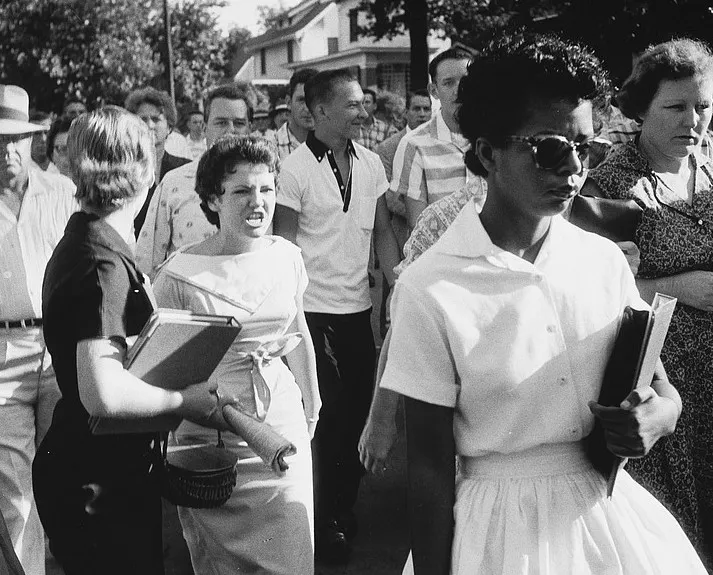
Ep 130Decolonizing Praxis
In this episode of High Theory, Erin Pineda talks about decolonizing praxis. Black American activists in the 1950s and 1960s used strategies of civil disobedience and nonviolent direct action as part of a broader anticolonial movement, and reading their story in an international context can help us rethink the narrative of the US civil rights movement enshrined in American political theory. In the episode Erin references Jack Halberstam’s concept of “low theory” which derives from the work of Stuart Hall, and appears in the book, The Queer Art of Failure (Duke UP 2011). She also references several mainstream liberal political philosophers who set the terms of the debate about “civil disobedience” in the US academy in the 1970s, John Rawls Theory of Justice (Harvard UP, 1971), Hugo Bedau, “On Civil Disobedience” (Journal of Philosophy 58, no. 21 (1961): 653-665) and Carl Cohen, Civil Disobedience: Conscience, Tactics, and the Law (Columbia University Press, 1971). Pineda writes against this tradition. The American activists she studies developed a different set of theoretical commitments to civil disobedience that are a bit less polite, and have a bit more potential for actual revolution. Erin Pineda is the Phyllis Cohen Rappaport ’68 New Century Term Professor of Government at Smith College. She teaches courses in the history of political thought, democratic theory, race and politics, social movements and American political thought. Her research interests include the politics of protest and social movements, Black political thought, race and politics, radical democracy and 20th-century American political development. If you want to learn more about the topics she discusses in this episode, read her book! It’s called Seeing Like an Activist: Civil Disobedience and the Civil Rights Movement (Oxford UP, 2021). The image for this episode is a famous photograph of Black student Elizabeth Eckford being jeered by white student Hazel Bryan as she attempts to enter Little Rock Central High School, taken by Will Counts on 4 September 1957, one of the more famous images of school desegregation from the US Civil Rights Movement. This digital version came from wikimedia commons. Learn more about your ad choices. Visit megaphone.fm/adchoices Support our show by becoming a premium member! https://newbooksnetwork.supportingcast.fm/critical-theory
Ep 239Noa Shaindlinger, "Displacement and Erasure in Palestine: The Politics of Hope" (Edinburgh UP, 2023)
Noa Shaindlinger's Displacement and Erasure in Palestine: The Politics of Hop (Edinburgh UP, 2023) explores the ways in which Palestinians negotiate physical and symbolic erasures by producing their own archives and historical narratives. With a focus on the city of Jaffa and its displaced Palestinian population, Noa Shaindlinger argues that the Israeli state ‘buried’ histories of mass expulsions and spatial appropriations. Based on a wide-variety of sources, this book brings together archival, literary, ethnographic and oral research to engage with ideas of settler colonialism and the production of history, violence and memory, refugee-hood and diaspora. Roberto Mazza is currently an independent scholar. He is the host of the Jerusalem Unplugged Podcast and to discuss and propose a book for interview can be reached at [email protected]. Twitter and IG: @robbyref Website: www.robertomazza.org Learn more about your ad choices. Visit megaphone.fm/adchoices Support our show by becoming a premium member! https://newbooksnetwork.supportingcast.fm/critical-theory
Ep 418Kevin Passmore, "Fascism: A Very Short Introduction" (Oxford UP, 2014)
What is fascism? Is it revolutionary? Or is it reactionary? Can it be both? Fascism is notoriously hard to define. How do we make sense of an ideology that appeals to streetfighters and intellectuals alike? That calls for a return to tradition while maintaining a fascination with technology? And that preaches violence in the name of an ordered society? In Fascism: A Very Short Introduction (Oxford UP, 2014), Kevin Passmore brilliantly unravels the paradoxes of one of the most important phenomena in the modern world--tracing its origins in the intellectual, political, and social crises of the late nineteenth century, the rise of fascism following World War I -including fascist regimes in Italy and Germany -and the fortunes of 'failed' fascist movements in Eastern Europe, Spain, and the Americas. He also considers fascism in culture, the new interest in transnational research, and the progress of the far right since 2002. Dr. Kevin Passmore is a Reader in History at Cardiff University. His The Right in the Third Republic was published by OUP in November 2012. He has continued to publish widely on fascism since publication of the VSI in 2002, but has also written on the history of the social sciences and historical writing. Morteza Hajizadeh is a Ph.D. graduate in English from the University of Auckland in New Zealand. His research interests are Cultural Studies; Critical Theory; Environmental History; Medieval (Intellectual) History; Gothic Studies; 18th and 19th Century British Literature. YouTube channel. Twitter. Learn more about your ad choices. Visit megaphone.fm/adchoices Support our show by becoming a premium member! https://newbooksnetwork.supportingcast.fm/critical-theory
Ep 150Sonja K. Pieck, "Mnemonic Ecologies: Memory and Nature Conservation along the Former Iron Curtain" (MIT Press, 2023)
The first book-length scholarly treatment of Germany's largest conservation project, the Green Belt, Mnemonic Ecologies: Memory and Nature Conservation along the Former Iron Curtain (MIT Press, 2023) by Dr. Sonja Pieck presents a new interdisciplinary approach: that effective restoration and conservation of wounded land must merge ecology with memory. Since the Cold War's end in 1989, German conservationists have transformed the once-militarised border between East and West Germany into an extensive protected area. Yet as forests, meadows, and wetlands replace fences, minefields, and guard towers, ecological recovery must reckon with the pain of the borderlands' brutal past. The lessons gained by conservationists here, Pieck argues, have profound practical and ethical implications far beyond Germany. Can conservation help heal both ecological and societal wounds? How might conservation honor difficult socioecological pasts? Deeply researched and evocatively written, this beautiful, interdisciplinary investigation into the legacy of war and nature's resurgence blends environmental history, ethics, geography, and politics with ecology and memory studies. Amid our rampant biodiversity crisis, Mnemonic Ecologies shows why conservation must include humanized landscapes in its purview, thus helping to craft a new conservation ethos that is collaborative, empathetic, and more sensitive to the connections between humans and the places they inhabit. This interview was conducted by Dr. Miranda Melcher whose doctoral work focused on post-conflict military integration, understanding treaty negotiation and implementation in civil war contexts, with qualitative analysis of the Angolan and Mozambican civil wars. Learn more about your ad choices. Visit megaphone.fm/adchoices Support our show by becoming a premium member! https://newbooksnetwork.supportingcast.fm/critical-theory
Ep 318The Radical Imagination in Reactionary Times
Professors Alex Khasnabish and Max Haiven are authors of a book called The Radical Imagination: Social Movement Research in the Age of Austerity (Bloomsbury, 2014). Their book examines how social movements imagine (and build) radical new futures. Additionally, the book critically intervenes in broader social movement theory, and suggests new approaches for scholar-activists. As part of a recent episode of Darts and Letters, “Mutual Aid & the Anarchist Radical Imagination,” we spoke to Alex and Max about how these ideas help us make sense of autonomous and anarchist-styled movement building. However, we had a much broader conversation about the book, its legacy, and how we should understand it today. That longer conversation is here. We cover: the history of social movement theory, how it (mis)understands prefigurative politics, and how to make sense of the burgeoning far right. In a time where reactionary movements offer radical visions – space colonization, transhumanist enhancement, life extension, and more – how are we to make sense of the radical imagination? Do they have a kind of new reactionary radical imagination, or is it more of the same? We discuss. Learn more about your ad choices. Visit megaphone.fm/adchoices Support our show by becoming a premium member! https://newbooksnetwork.supportingcast.fm/critical-theory
Ep 151Grant H. Kester, "The Sovereign Self: Aesthetic Autonomy from the Enlightenment to the Avant-Garde" (Duke UP, 2023)
In The Sovereign Self: Aesthetic Autonomy from the Enlightenment to the Avant-Garde (Duke UP, 2023), Grant Kester examines the evolving discourse of aesthetic autonomy from its origins in the Enlightenment through avant-garde projects and movements in the nineteenth and twentieth centuries. Kester traces the idea of aesthetic autonomy—the sense that art should be autonomous from social forces while retaining the ability to reflect back critically on society—through Kant, Schiller, Hegel, Marx, and Adorno. Kester critiques the use of aesthetic autonomy as the basis for understanding the nature of art and the shifting relationship between art and revolutionary praxis. He shows that dominant discourses of aesthetic autonomy reproduce the very forms of bourgeois liberalism that autonomy discourse itself claims to challenge. Analyzing avant-garde art and political movements in Russia, India, Latin America, and elsewhere, Kester retheorizes the aesthetic beyond autonomy. Ultimately, Kester demonstrates that the question of aesthetic autonomy has ramifications that extend beyond art to encompass the nature of political transformation and forms of anticolonial resistance that challenge the Eurocentric concept of “Man,” upon which the aesthetic itself often depends. Kaveh Rafie is a PhD candidate specializing in modern and contemporary art at the University of Illinois at Chicago. His dissertation charts the course of modern art in the late Pahlavi Iran (1941-1979) and explores the extent to which the 1953 coup marks the recuperation of modern art as a viable blueprint for cultural globalization in Iran. Learn more about your ad choices. Visit megaphone.fm/adchoices Support our show by becoming a premium member! https://newbooksnetwork.supportingcast.fm/critical-theory
Ep 177Alexandre Baril, "Undoing Suicidism: A Trans, Queer, Crip Approach to Rethinking (Assisted) Suicide" (Temple UP, 2023)
Note: This episode contains a discussion of suicide. A list of resources is available below. In Undoing Suicidism: A Trans, Queer, Crip Approach to Rethinking (Assisted) Suicide (Temple UP, 2023), Alexandre Baril argues that suicidal people are oppressed by what he calls structural suicidism, a hidden oppression that, until now, has been unnamed and under-theorized. Each year, suicidism and its preventionist script and strategies reproduce violence and cause additional harm and death among suicidal people through forms of criminalization, incarceration, discrimination, stigmatization, and pathologization. This is particularly true for marginalized groups experiencing multiple oppressions, including queer, trans, disabled, or Mad people. Undoing Suicidism questions the belief that the best way to help suicidal people is through the logic of prevention. Alexandre Baril presents the thought-provoking argument that supporting assisted suicide for suicidal people could better prevent unnecessary deaths. Offering a new queercrip model of (assisted) suicide, he invites us to imagine what could happen if we started thinking about (assisted) suicide from an anti-suicidist and intersectional framework. Baril provides a radical reconceptualization of (assisted) suicide and invaluable reflections for academics, activists, practitioners, and policymakers. An open access edition of Undoing Suicidism, made available by the Faculty of Social Sciences at the University of Ottawa, is available here. Alexandre Baril ([email protected]) is Associate Professor at the University of Ottawa. His work is situated at the crossroads of gender, queer, trans, disability/crip/Mad studies, critical gerontology and critical suicidology. His commitment to equity has earned him awards for his involvement in queer, trans and disabled communities, including the Canadian Disability Studies Association Tanis Doe Francophone Award, and the Equity, Diversity and Inclusion President’s Award at the University of Ottawa. A prolific author who won the Young Researcher Award from the Faculty of Social Sciences at the University of Ottawa (2023), he has given over 200 presentations at the international level and has over 80 publications. Resources: SAFE HOTLINES and ONLINE SUPPORT GROUPS: Trans LifeLine (trans/non-binary): 1-877-330-6366 (Canada) and 1-877-565-8860 (USA) Autisme Soutien: Online support for autistic people (French Canada) BlackLine (BIPOC): 1-800-604-5841 (USA) REGULAR HOTLINES (might trace your call and contact emergency services): Talk Suicide Canada: 1-833-456-4566 Suicide.ca (Québec): 1-866-APPELLE The Hope for Wellness Helpline (Indigenous people in Canada): 1-855-242-3310 The Samaritains (USA): 1-212-673-3000 A full transcript of the interview is available for accessibility. Clayton Jarrard is a Research Project Coordinator at the University of Kansas Center for Research, contributing to initiatives at the nexus of research, policy implementation, and community efforts. His scholarly engagement spans the subject areas of Cultural Anthropology, Queer Studies, Disability Studies, Mad Studies, and Religious Studies. Clayton is also a host for the Un/Livable Cultures podcast. Learn more about your ad choices. Visit megaphone.fm/adchoices Support our show by becoming a premium member! https://newbooksnetwork.supportingcast.fm/critical-theory
Ep 82The Future of Incarceration: A Discussion with Colleen P. Eren
The United States has long been associated with a very harsh criminal justice system with, in some cases, people serving long sentence for minor crimes. But attempts to reform the system have proven very difficult. In her new book Reform Nation: The First Step Act and the Movement to End Mass Incarceration (Stanford UP, 2023), Colleen P. Eren explains why. Listen to her in conversation with Owen Bennett Jones. Owen Bennett-Jones is a freelance journalist and writer. A former BBC correspondent and presenter he has been a resident foreign correspondent in Bucharest, Geneva, Islamabad, Hanoi and Beirut. He is recently wrote a history of the Bhutto dynasty which was published by Yale University Press. Learn more about your ad choices. Visit megaphone.fm/adchoices Support our show by becoming a premium member! https://newbooksnetwork.supportingcast.fm/critical-theory
Ep 253Mukti Lakhi Mangharam, "Freedom Inc.: Gendered Capitalism in New Indian Literature and Culture" (Bloomsbury, 2023)
While globalization is often credited with the eradication of 'traditional' constraints tied to gender and caste, in reality the opening up of the Indian economy in the 1990s has led to a decline in freedom for many female, Dalit, and lower class Indians. This book explores the contraction of what it means to be free in post-liberalization India, examining how global capitalism has exacerbated existing inequalities based on traditional femininities and masculinities, while also creating new hierarchies. Mukti Lakhi Mangharam's book Freedom Inc.: Gendered Capitalism in New Indian Literature and Culture (Bloomsbury, 2023) argues that post-1990s literature and culture frequently represents and reinforces the equation of free-market capitalism with individual freedom within the new 'idea of India.' However, many texts often also challenge this logic by pointing to more expansive horizons of autonomy for the gendered self. Through readings of texts as diverse as Dalit women's life-writing, pop fiction, realist novels, self-help, regional film, and Netflix TV shows, Mukti Mangharam investigates how notions like 'free trade,' 'entrepreneurship,' and 'self-help' are experienced, embodied, and challenged by disadvantaged peoples, and by women differently than men. In the process, Freedom Inc. explores how different literary forms illuminate alternative and buried pathways to fuller freedoms. Learn more about your ad choices. Visit megaphone.fm/adchoices Support our show by becoming a premium member! https://newbooksnetwork.supportingcast.fm/critical-theory
Ep 416Orisanmi Burton, "Tip of the Spear: Black Radicalism, Prison Repression, and the Long Attica Revolt" (U California Press, 2023)
Tip of the Spear: Black Radicalism, Prison Repression, and the Long Attica Revolt (University of California Press, 2023) boldly and compellingly argues that prisons are a domain of hidden warfare within US borders. With this book, Orisanmi Burton explores what he terms the Long Attica Revolt, a criminalized tradition of Black radicalism that propelled rebellions in New York prisons during the 1970s. The reaction to this revolt illuminates what Burton calls prison pacification: the coordinated tactics of violence, isolation, sexual terror, propaganda, reform, and white supremacist science and technology that state actors use to eliminate Black resistance within and beyond prison walls. Burton goes beyond the state records that other histories have relied on for the story of Attica and expands that archive, drawing on oral history and applying Black radical theory in ways that center the intellectual and political goals of the incarcerated people who led the struggle. Packed with little-known insights from the prison movement, the Black Panther Party, and the Black Liberation Army, Tip of the Spear promises to transform our understanding of prisons—not only as sites of race war and class war, of counterinsurgency and genocide, but also as sources of defiant Black life, revolutionary consciousness, and abolitionist possibility. This interview was conducted by Dr. Jesi Faust whose research focuses on the gendered and racialized structures of Spanish colonialism in Morocco and the Philippines, their connections to contemporary imperialism and counterinsurgency, and indigenous resistance. Learn more about your ad choices. Visit megaphone.fm/adchoices Support our show by becoming a premium member! https://newbooksnetwork.supportingcast.fm/critical-theory
Ep 71Margaret Hillenbrand, "On the Edge: Feeling Precarious in China" (Columbia UP, 2023)
Margaret Hillenbrand’s On the Edge: Feeling Precarious in China (Columbia UP, 2023) examines the negative cultural forms that have emerged in response to China’s exclusionary contemporary socioeconomic system. Hillenbrand considers the social strain exerted on members of the “underclass,” the 300 million migrant workers whose toil has underwritten China’s economic rise since the passing of the command economy. She describes the socio-legal condition of disenfranchisement, an internal displacement or “civic-half life” experienced by marginalized workers, as “zombie citizenship,” a purposefully inflammatory definition that evokes both the workers’ experience of civic suspension and their class others’ fears of falling into similar abjection. In this compelling narrative, contemporary Chinese social, legal, and cultural life is wrapped in an ambient mood of jeopardy. Through close readings of diverse texts, performances, and films that both amplify and diffuse the violent conflicts of dispossession and dislocation, she makes the case for culture’s capacity to “intervene palpably in social experience.” The cultural forms Hillenbrand introduces and analyzes themselves teeter on the edge, on one hand, the edge of exploitation and aesthetic empowerment. The ugly feelings these works evoke affectively concretize the “ever-impending dissolution of that apparent boundary” between those already on the cliff’s edge and those who may yet come to share this precarious space. I look forward to probing the complexities of this freighted and violent cultural work with our guest. Julia Keblinska is a postdoc at the East Asian Studies Center at the Ohio State University specializing in Chinese media history and comparative socialisms. Learn more about your ad choices. Visit megaphone.fm/adchoices Support our show by becoming a premium member! https://newbooksnetwork.supportingcast.fm/critical-theory

Ep 129Txt
In this episode of High Theory, Matthew Kirschenbaum talks about txt, or text. Not texting, or textbooks, but text as a form of data that is feeding large language models. Will the world end in fire, flood, or text? In the full interview, Matthew recommended Tim Maughan’s novel Infinite Detail (Macmillan, 2019) as an excellent example of writing about the end of the internet, and Emily St. John Mandel’s Station Eleven (Knopf, 2014) as a positive example of a post-internet apocalypse. In the episode he references a paper by Beder et al., “On the Dangers of Stochastic Parrots: Can Language Models Be Too Big?” FAccT '21: Proceedings of the 2021 ACM Conference on Fairness, Accountability, and Transparency (March 2021): 610–623. And several apocalyptic scenarios, including the dead internet theory and the gray goo hypothesis. Matthew Kirschenbaum is Distinguished University Professor of English and Digital Studies at the University of Maryland and Director of the Graduate Certificate in Digital Studies. His books include Track Changes: A Literary History of Word Processing (Harvard UP 2016) and Mechanisms: New Media and the Forensic Imagination (MIT Press, 2008). With Kari Kraus, he co-founded and co-directs BookLab, a makerspace, studio, library, and press devoted to what is surely our discipline's most iconic artifact, the codex book. See mkirschenbaum.net or follow him on Twitter (or X?) as @mkirschenbaum for more. Because we are hoping to encourage the text apocalypse, we made today’s image using generative AI. Specifically Saronik made it using the prompt “Text” in Canva’s AI interface. Learn more about your ad choices. Visit megaphone.fm/adchoices Support our show by becoming a premium member! https://newbooksnetwork.supportingcast.fm/critical-theory
Ep 61Mutual Aid and the Anarchist Radical Imagination
This episode of Darts and Letters examines the theory and practice of anti-statist organizing. There’s a story you can tell about the post-Occupy left gravitating towards a more state-oriented kind of politics, exemplified by the enthusiasm around Bernie Sanders, The Squad, and others. However, this misses autonomous and anarchist-inflected (and sometimes, explicitly anarchist) social movements that have brought enormous energy, and enormous change–from the movement for black lives, to organizing for Indigenous sovereignty, and so much more. In this episode, we look at the Kurdish movement, and mutual aid experiments across North America. First, we look at the work of the late libertarian socialist Murray Bookchin. Bookchin broke with Marxism, and later anarchism, and eventually developed an idiosyncratic ecological and revolutionary theory that said radical democracy could be achieved at the municipal level. This Vermont-based theorist has been enormously influential, including in an area formerly known as Rojava. There, the Kurdish people are making these ideas their own, and developing a radical feminist democracy–while fighting to survive. We speak with Elif Genc about these ideas, and about how the Kurdish diaspora implements them within Canada. Next, what is mutual aid? Peter Kropotkin’s Mutual Aid: A Factory of Evolution (1902) examines how cooperation and reciprocity are core to nature. To anarchists, this should be generalized to radical political program, and a radically new way of living. Darts and Letters producer Marc Apollonio speaks to Payton McDonald about how the theory and practice of mutual aid drives many social movements across North America. Payton is co-directing a four-part documentary series called the Elements of Mutual Aid: Experiments Towards Liberation. Finally, how do social movement scholars understand (or misunderstand) autonomous social movements? There’s a tendency to dismiss movements that do not make clear tangible demands, and deliver pragmatic policy victories (see: Occupy). However, Max Haiven and Alex Khasnabish say that this misses something key to radical social movements: their radical imagination. These movements do not want to just improve this system, they want to imagine, and create (or prefigure), a different system. We discuss their book the Radical Imagination: Social Movement Research in the Age of Austerity, the blind spots of social movement theory, and whether there might be a new style of organizing emerging that is somewhere between the the statist and the anti-statist. This episode received support from the Social Sciences and Humanities Research Council of Canada. It’s part of our mini-series that we are producing which looks at the radical imagination, in all its hopeful and its sometimes troubling manifestations. The scholarly leads are Professors Alex Khasnabish at Mount Saint Vincent University and Max Haiven at Lakehead University. They are providing research support and consulting to this series. For a full list of credits of Cited Media staff, visit our about page. Learn more about your ad choices. Visit megaphone.fm/adchoices Support our show by becoming a premium member! https://newbooksnetwork.supportingcast.fm/critical-theory
Ep 236Paraska Tolan-Szkilnik, "Maghreb Noir: The Militant-Artists of North Africa and the Struggle for a Pan-African, Postcolonial Future" (Stanford UP, 2023)
Upon their independence, Moroccan, Algerian, and Tunisian governments turned to the Global South and offered military and financial aid to Black liberation struggles. Tangier and Algiers attracted Black American and Caribbean artists eager to escape American white supremacy; Tunis hosted African filmmakers for the Journées Cinématographiques de Carthage; and young freedom fighters from across the African continent established military training camps in Morocco. North Africa became a haven for militant-artists, and the region reshaped postcolonial cultural discourse through the 1960s and 1970s. Paraska Tolan-Szkilnik's book Maghreb Noir: The Militant-Artists of North Africa and the Struggle for a Pan-African, Postcolonial Future (Stanford UP, 2023) dives into the personal and political lives of these militant-artists, who collectively challenged the neo-colonialist structures and the authoritarianism of African states. Drawing on Arabic, Spanish, Portuguese, French, and English sources, as well as interviews with the artists themselves, Paraska Tolan-Szkilnik expands our understanding of Pan-Africanism geographically, linguistically, and temporally. This network of militant-artists departed from the racial solidarity extolled by many of their nationalist forefathers, instead following in the footsteps of their intellectual mentor, Frantz Fanon. They argued for the creation of a new ideology of continued revolution—one that was transnational, trans-racial, and in defiance of the emerging nation-states. Maghreb Noir establishes the importance of North Africa in nurturing these global connections—and uncovers a lost history of grassroots collaboration among militant-artists from across the globe. Paraska Tolan-Szkilnik is Assistant Professor of History at Suffolk University. Tugrul Mende holds an M.A in Arabic Studies. He is based in Berlin as a project coordinator and independent researcher. Learn more about your ad choices. Visit megaphone.fm/adchoices Support our show by becoming a premium member! https://newbooksnetwork.supportingcast.fm/critical-theory
Ep 11Aurelian Craiutu, "Why Not Moderation?: Letters to Young Radicals" (Cambridge UP, 2023)
Moderation is often presented as a simple virtue for lukewarm and indecisive minds, searching for a fuzzy center between the extremes. Not surprisingly, many politicians do not want to be labelled 'moderates' for fear of losing elections. Why Not Moderation?: Letters to Young Radicals (Cambridge UP, 2023) challenges this conventional image and shows that moderation is a complex virtue with a rich tradition and unexplored radical sides. Through a series of imaginary letters between a passionate moderate and two young radicals, the book outlines the distinctive political vision undergirding moderation and makes a case for why we need this virtue today in America. Drawing on clearly written and compelling sources, Craiutu offers an opportunity to rethink moderation and participate in the important public debate on what kind of society we want to live in. His book reminds us that we cannot afford to bargain away the liberal civilization and open society we have inherited from our forefathers. Learn more about your ad choices. Visit megaphone.fm/adchoices Support our show by becoming a premium member! https://newbooksnetwork.supportingcast.fm/critical-theory
Ep 220John Arena, "Expelling Public Schools: How Antiracist Politics Enable School Privatization in Newark" (U Minnesota Press, 2023)
Exploring the role of identitarian politics in the privatization of Newark’s public school system In Expelling Public Schools, John Arena explores the more than two-decade struggle to privatize public schools in Newark, New Jersey—a conflict that is raging in cities across the country—from the vantage point of elites advancing the pro-privatization agenda and their grassroots challengers. Analyzing the unsuccessful effort of Cory Booker—Newark’s leading pro-privatization activist and mayor—to generate popular support for the agenda, and Booker’s rival and ultimate successor Ras Baraka’s eventual galvanization of the charter movement, Arena argues that Baraka’s black radical politics cloaked a revanchist agenda of privatization. John Arena's book Expelling Public Schools: How Antiracist Politics Enable School Privatization in Newark (U Minnesota Press, 2023) reveals the political rise of Booker and Baraka, their one-time rivalry and subsequent alliance, and what this particular case study illuminates about contemporary post–civil rights Black politics. Ultimately, Expelling Public Schools is a critique of Black urban regime politics and the way in which antiracist messaging obscures real class divisions, interests, and ideological diversity. Laura Beth Kelly is an assistant professor of Educational Studies at Rhodes College in Memphis, Tennessee. Learn more about your ad choices. Visit megaphone.fm/adchoices Support our show by becoming a premium member! https://newbooksnetwork.supportingcast.fm/critical-theory
Ep 1369Tariq D. Khan, "The Republic Shall be Kept Clean: How Settler Colonial Violence Shaped Antileft Repression" (U Illinois Press, 2023)
The Republic Will Be Kept Clean: How Settler Colonial Violence Shaped Antileft Repression (University of Illinois Press, 2023) by Dr. Tariq D. Khan examines the long relationship between America’s colonising wars and virulent anticommunism. The colonising wars against Native Americans created the template for anticommunist repression in the United States. Dr. Khan’s analysis reveals bloodshed and class war as foundational aspects of capitalist domination and vital elements of the nation’s long history of internal repression and social control. Dr. Khan shows how the state wielded the tactics, weapons, myths, and ideology refined in America’s colonising wars to repress anarchists, labour unions, and a host of others labelled as alien, multi-racial, multi-ethnic urban rabble. The ruling classes considered radicals of all stripes to be anticolonial insurgents. As Dr. Khan charts the decades of red scares that began in the 1840s, he reveals how capitalists and government used much-practised counterinsurgency rhetoric and tactics against the movements they perceived and vilified as “anarchist.” This interview was conducted by Dr. Miranda Melcher whose doctoral work focused on post-conflict military integration, understanding treaty negotiation and implementation in civil war contexts, with qualitative analysis of the Angolan and Mozambican civil wars. Learn more about your ad choices. Visit megaphone.fm/adchoices Support our show by becoming a premium member! https://newbooksnetwork.supportingcast.fm/critical-theory
Ep 140Rachel O'Dwyer, "Tokens: The Future of Money in the Age of the Platform" (Verso, 2023)
Platform capitalism is coming for the money in your pocket. Wherever you look, money is being re-placed by tokens. Digital platforms are issuing new kinds of money-like things: phone credit, shares, gift vouchers, game tokens, customer data--the list goes on. But what does it mean when online platforms become the new banks? What new types of control and discrimination emerge when money is tied to specific apps or actions, politics or identities? Tokens opens up this new and expanding world. Exploring the history of extra-monetary economies, Rachel O'Dwyer shows that private and grassroots tokens have always haunted the real economy. But as the large tech platforms issue new money-like instruments, tokens are suddenly everywhere. Amazon's Turk workers are getting paid in gift cards. Online streamers trade in wishlists. Foreign remittances are sent via phone credit. Bitcoin, gift cards, NFTs, customer data, and game tokens are the new money in an evolving economy. It is a development challenging the balance of power between online empires and the state. Tokens may offer a flexible even subversive route to compensation. But for the platforms themselves they can be a means of amassing frightening new powers. An essential read for anyone concerned with digital money, inequality, and the future of the economy. Long-listed by the Financial Times' Best Business Books of 2023 even before publication, Rochel O'Dower's Tokens: The Future of Money in the Age of the Platform (Verso, 2023) tackles the proliferation of alternatives to central bank-issued money through an enagaging and easy-to-access narrative. Bernardo Batiz-Lazo is currently straddling between Newcastle and Mexico City. You can find him on twitter on issues related to business history of banking, fintech, payments and other musings. Not always in that order. @BatizLazo Learn more about your ad choices. Visit megaphone.fm/adchoices Support our show by becoming a premium member! https://newbooksnetwork.supportingcast.fm/critical-theory
Ep 416Stephanie R. Larson, "What It Feels Like: Visceral Rhetoric and the Politics of Rape Culture" (Pennsylvania State UP, 2021)
What it feels like: Visceral Rhetoric and the Politics of Rape Culture (Penn State Press, 2021) by Dr. Stephanie Larson interrogates an underexamined reason for our failure to abolish rape in the United States: the way we communicate about it. Using affective and feminist materialist approaches to rhetorical criticism, Dr. Larson examines how discourses about rape and sexual assault rely on strategies of containment, denying the felt experiences of victims and ultimately stalling broader claims for justice. Investigating anti-pornography debates from the 1980s, Violence Against Women Act advocacy materials, sexual assault forensic kits, public performances, and the #MeToo movement, Dr. Larson reveals how our language privileges male perspectives and, more deeply, how it is shaped by systems of power—patriarchy, white supremacy, ableism, and heteronormativity. Interrogating how these systems work to propagate masculine commitments to “science” and “hard evidence,” Dr. Larson finds that US culture holds a general mistrust of testimony by women, stereotyping it as “emotional.” But she also gives us hope for change, arguing that testimonies grounded in the bodily, material expression of violation are necessary for giving voice to victims of sexual violence and presenting, accurately, the scale of these crimes. Larson makes a case for visceral rhetorics, theorizing them as powerful forms of communication and persuasion. Demonstrating the communicative power of bodily feeling, Dr. Larson challenges the long-held commitment to detached, distant, rationalized discourses of sexual harassment and rape. Timely and poignant, the book offers a much-needed corrective to our legal and political discourses. This interview was conducted by Dr. Miranda Melcher whose doctoral work focused on post-conflict military integration, understanding treaty negotiation and implementation in civil war contexts, with qualitative analysis of the Angolan and Mozambican civil wars. Learn more about your ad choices. Visit megaphone.fm/adchoices Support our show by becoming a premium member! https://newbooksnetwork.supportingcast.fm/critical-theory
Ep 25Joshua May, "Neuroethics: Agency in the Age of Brain Science" (Oxford UP, 2023)
Is free will an illusion? Is addiction a brain disease? Should we enhance our brains beyond normal? Neuroethics: Agency in the Age of Brain Science (Oxford UP, 2023) blends philosophical analysis with modern brain science to address these and other critical questions through captivating cases. The result is a nuanced view of human agency as surprisingly diverse and flexible. With a lively and accessible writing style, Neuroethics is an indispensable resource for students and scholars in both the sciences and humanities. Joshua May is Associate Professor of Philosophy and Psychology at the University of Alabama at Birmingham. He is the author of Regard for Reason in the Moral Mind (Oxford University Press, 2018) and co-editor of Agency in Mental Disorder (Oxford University Press, 2022). Morteza Hajizadeh is a Ph.D. graduate in English from the University of Auckland in New Zealand. His research interests are Cultural Studies; Critical Theory; Environmental History; Medieval (Intellectual) History; Gothic Studies; 18th and 19th Century British Literature. YouTube channel. Twitter. Learn more about your ad choices. Visit megaphone.fm/adchoices Support our show by becoming a premium member! https://newbooksnetwork.supportingcast.fm/critical-theory
Ep 56Sharon Patricia Holland, "an other: a black feminist consideration of animal life" (Duke UP, 2023)
In an other: a black feminist examination of animal life (Duke UP, 2023), Sharon Patricia Holland offers a new theorization of the human animal/divide by shifting focus from distinction toward relation in ways that acknowledge that humans are also animals. Holland centers ethical commitments over ontological concerns to spotlight those moments when Black people ethically relate with animals. Drawing on writers and thinkers ranging from Hortense Spillers, Sara Ahmed, Toni Morrison, and C. E. Morgan to Jane Bennett, Jacques Derrida, and Donna Haraway, Holland decenters the human in Black feminist thought to interrogate blackness, insurgence, flesh, and femaleness. She examines MOVE's incarnation as an animal liberation group; uses sovereignty in Morrison's A Mercy to understand blackness, indigeneity, and the animal; analyzes Charles Burnett's films as commentaries on the place of animals in Black life; and shows how equestrian novels address Black and animal life in ways that rehearse the practices of the slavocracy. By focusing on doing rather than being, Holland demonstrates that Black life is not solely likened to animal life; it is relational and world-forming with animal lives. Sharon P. Holland (she/her) is the President of the American Studies Association. She is also the Townsend Ludington Distinguished Professor in American Studies at the University of North Carolina at Chapel Hill. She served as Chair of the Department from July 2020- July 2022. Callie Smith, PhD. is a museum educator and poet based in Louisiana. Learn more about your ad choices. Visit megaphone.fm/adchoices Support our show by becoming a premium member! https://newbooksnetwork.supportingcast.fm/critical-theory
Ep 415S. D. Chrostowska, "Utopia in the Age of Survival: Between Myth and Politics" (Stanford UP, 2021)
A pathbreaking exploration of the fate of utopia in our troubled times, this book shows how the historically intertwined endeavors of utopia and critique might be leveraged in response to humanity's looming existential challenges. Utopia in the Age of Survival: Between Myth and Politics (Stanford UP, 2021) makes the case that critical social theory needs to reinstate utopia as a speculative myth. At the same time the left must reassume utopia as an action-guiding hypothesis—that is, as something still possible. S. D. Chrostowska looks to the vibrant, visionary mid-century resurgence of embodied utopian longings and projections in Surrealism, the Situationist International, and critical theorists writing in their wake, reconstructing utopia's link to survival through to the earliest, most radical phase of the French environmental movement. Survival emerges as the organizing concept for a variety of democratic political forms that center the corporeality of desire in social movements contesting the expanding management of life by state institutions across the globe. Vigilant and timely, balancing fine-tuned analysis with broad historical overview to map the utopian impulse across contemporary cultural and political life, Chrostowska issues an urgent report on the vitality of utopia. S.D. Chrostowska is Professor of Humanities and Social & Political Thought at York University. She is the author of Literature on Trial: The Emergence of Critical Discourse in Germany, Poland, and Russia, 1700-1800 (2012), among other titles. Morteza Hajizadeh is a Ph.D. graduate in English from the University of Auckland in New Zealand. His research interests are Cultural Studies; Critical Theory; Environmental History; Medieval (Intellectual) History; Gothic Studies; 18th and 19th Century British Literature. YouTube channel. Twitter. Learn more about your ad choices. Visit megaphone.fm/adchoices Support our show by becoming a premium member! https://newbooksnetwork.supportingcast.fm/critical-theory

Ep 128Visibility
In this episode of High Theory, Margaret Galvan talks about the queer politics of Visibility. In her work the activist practices of representation take concrete form in comic books, photographs, and even drawings on lecture slides! In the episode, she discusses the photography of Nan Goldin and queer comic books in the 1980s. She quotes Adrienne Rich’s 1980 essay “Compulsory Heterosexuality and Lesbian Existence.” She also references This Bridge Called My Back: Writings By Radical Women of Color, and Gloria Anzaldúa’s Borderlands/La Frontera. At the end of the episode she references the Lesbian Avengers, who have amazing images. Margaret Galvan is an assistant professor of English at the University of Florida. Her research examines how visual culture operates within the print media of feminist and queer social movements of the 1970s-1990s. Her brand new book In Visible Archives: Queer and Feminist Visual Culture in the 1980s, is out this fall from University of Minnesota Press‘s Manifold Scholarship Series. You should go check it out! Because the amazing images Margaret talks about were drawn recently, they’re still in copyright. Our image this week is from Gladys Parker’s comic Mopsy which ran from 1937 to 1966. Parker was a successful female artist in a world of mainstream US comic books dominated by men. Learn more about your ad choices. Visit megaphone.fm/adchoices Support our show by becoming a premium member! https://newbooksnetwork.supportingcast.fm/critical-theory
Ep 114John Guillory Professes Criticism (JP, Nick Dames)
John Guillory (NYU English author of the pathbreaking Cultural Capital) is here to discuss his amazing new Professing Criticism: Essays on the Organization of Literary Study (U Chicago Press, 2022) He speaks with John and with Nick Dames, co-editor of Public Books, Professor of Humanities at Columbia and most recently author of The Chapter: A Segmented History from Antiquity to the Twenty-First Century (Princeton 2023). The gap between criticism and scholarship looms large, as does the utility of Panofsky's 1940 distinction between "monuments" and "documents." they ask what sorts of cultural documents achieve aesthetic memorability, for good or for ill. Mentioned in the episode: W. B Yeats, "Monuments of unageing intellect"; a line from "Sailing to Byzantium" (1933). George Eliot, in Middlemarch (1871-2): "Would it not be rash to conclude that there was no passion behind those [Samuel Daniels] sonnets to Delia which strike us [nowadays] as the thin music of a mandolin?" Hannah Arendt, Lectures of Kant's Political Philosophy (1982) on judgment, and how general categories can be brought to bear on particulars. Willa Cather, The Professor's House (1925) Randall Jarrell, Pictures from an Institution: A Comedy (1954; John has a short "B-Side" appreciation in Public Books). Elaine Hadley, Living Liberalism Pierre Bourdieu, Distinction Alvin Gouldner , The Future of Intellectuals and the Rise of the New Class (1979) Listen and Read here. Learn more about your ad choices. Visit megaphone.fm/adchoices Support our show by becoming a premium member! https://newbooksnetwork.supportingcast.fm/critical-theory
Ep 1368Maxine Berg and Pat Hudson, "Slavery, Capitalism and the Industrial Revolution" (Polity, 2023)
In their remarkable new book Slavery, Capitalism, and the Industrial Revolution (Polity, 2023), Professor Maxine Berg and Professor Pat Hudson “follow the money” to document in revealing detail the role of slavery in the making of Britain’s industrial revolution. Slavery was not just a source of wealth for a narrow circle of slave owners who built grand country houses and filled them with luxuries. The forces set in motion by the slave and plantation trades seeped into almost every aspect of the economy and society. In textile mills, iron and copper smelting, steam power, and financial institutions, slavery played a crucial part. Things we might think far removed from the taint of slavery, like 18th century fashions for indigo- patterned cloth, sweet tea, snuff boxes, mahogany furniture, ceramics and silverware, were intimately connected. Even London’s role as a centre for global finance was partly determined by the slave trade as insurance, financial trading and mortgage markets were developed in the City to promote distant and risky investments in enslaved people. The result is a bold and unflinching account of how Britain became a global superpower, and how the legacy of slavery persists. Acknowledging Britain’s role in slavery is not just about toppling statues and renaming streets. We urgently need to come to terms with slavery’s inextricable links with Western capitalism, and the ways in which many of us continue to benefit from slavery to this day. This interview was conducted by Dr. Miranda Melcher whose doctoral work focused on post-conflict military integration, understanding treaty negotiation and implementation in civil war contexts, with qualitative analysis of the Angolan and Mozambican civil wars. Learn more about your ad choices. Visit megaphone.fm/adchoices Support our show by becoming a premium member! https://newbooksnetwork.supportingcast.fm/critical-theory
Ep 259Naisargi N. Davé, "Indifference: On the Praxis of Interspecies Being" (Duke UP, 2023)
In Indifference: On the Praxis of Interspecies Being (Duke UP, 2023), Naisargi N. Davé examines the complex worlds of animalists and animalism in India. Through ethnographic fieldwork with animal healers, animal activists, farmers, laborers, transporters, and animals themselves, and moving across animal shelters and dairy farms to city streets and abattoirs, Davé shows how human-animal relations often manifest through care and violence. More surprisingly, what Davé also finds animating interspecies relationality in India is an ethic of indifference---that is, an orientation of mutual regard rather than curiosity, love, desire, or animus. For Davé, indifference is a respect for others in their otherness that allows human and nonhuman animals to flourish in immanent encounters. Indifference, then, becomes the basis for an interspecies ethics and a method of care and practice in everyday life. With indifference, Davé describes both a mode of relationality in the world and a scholarly approach: seeking what is possible when we approach ethico-political concepts with indifference rather than commitment or antagonism. Moments of indifference, Davé contends, offer the promise of otherwise worlds. Shraddha Chatterjee is a postdoctoral Visiting Scholar at University of Houston, and author of Queer Politics in India: Towards Sexual Subaltern Subjects (Routledge, 2018). Learn more about your ad choices. Visit megaphone.fm/adchoices Support our show by becoming a premium member! https://newbooksnetwork.supportingcast.fm/critical-theory
Ep 413Melanie Williams, "A Taste of Honey" (Bloomsbury, 2023)
What makes a film a classic? In A Taste of Honey (Bloomsbury, 2023), published as part of the BFI Film Classics series, Melanie Williams, a Professor of Film and Television Studies in the School of Art, Media and American Studies at the University of East Anglia, tells the story of the films production and reception. The book explores the key themes of the film situating ideas of class, gender, race, and sexuality in both a historical context as well as thinking through the contemporary and continuing relevance of the film. Adding new insights to an overview of the existing critical responses, the book will be of interest across the arts and humanities, as well as for anyone interested in one of British cinema’s most important films. Learn more about your ad choices. Visit megaphone.fm/adchoices Support our show by becoming a premium member! https://newbooksnetwork.supportingcast.fm/critical-theory
Ep 165Kevin F. Adler and Donald W. Burnes, "When We Walk By: Forgotten Humanity, Broken Systems, and the Role We Can Each Play in Ending Homelessness in America" (North Atlantic Books, 2023)
Think about the last time that you saw or interacted with an unhoused person. What did you do? What did you say? Did you offer money or a smile, or did you avert your gaze? When We Walk By: Forgotten Humanity, Broken Systems, and the Role We Can Each Play in Ending Homelessness in America (North Atlantic Books, 2023) takes an urgent look at homelessness in America, showing us what we lose—in ourselves and as a society—when we choose to walk past and ignore our neighbors in shelters, insecure housing, or on the streets. And it brilliantly shows what we stand to gain when we embrace our humanity and move toward evidence-based people-first, community-driven solutions, offering social analysis, economic and political histories, and the real stories of unhoused people. Authors Kevin F. Adler and Donald W. Burnes, with Amanda Banh and Andrijana Bilbija, recast chronic homelessness in the U.S. as a byproduct of twin crises: our social services systems are failing, and so is our humanity. A necessary, deeply humanizing read that goes beyond theory and policy analysis to offer engaged solutions with compassion and heart, When We Walk By is a must-read for anyone who cares about homelessness, housing solutions, and their own humanity. Stephen Pimpare is a Senior Fellow at the Carsey School of Public Policy at the University of New Hampshire. Learn more about your ad choices. Visit megaphone.fm/adchoices Support our show by becoming a premium member! https://newbooksnetwork.supportingcast.fm/critical-theory
Ep 69Joo Ok Kim, "Warring Genealogies: Race, Kinship, and the Korean War" (Temple UP, 2022)
“[W]hat is our relationship to the Korean War and to the affinities” of different institutions that produce knowledge about the Korean War? (130) In her book, Warring Genealogies: Race, Kinship, and the Korean War (Temple UP, 2022), Joo Ok Kim “conceptualizes racialized formations of kinship emerging from the Korean War as a problem of knowledge” (4). Through a close reading of Chicanx and Asian American cultural productions as well as archives produced by white penitentiary prisoners and the United Daughters of the Confederacy, Joo Ok considers how Chicanx and Korean diasporic works critique white supremacist expressions of kinship that emerge from the official memorialization about the war. Further critiquing the division in disciplines and periodization in academia that forecloses discussions about colonialism spanning multiple geographic locations and temporalities, Joo Ok examines how queer hermeneutic helps us to reconsider “minor” and humble instances of kinships between Asian-Latino cultural productions. This book will be a wonderful addition to any interdisciplinary scholarship that critically thinks about US militarism, knowledge production, and the Korean War, as well as anyone who is interested in learning more about the Korean War. Joo Ok Kim is an assistant professor of cultural studies at UCSD, and her research and teaching interests include transpacific critique, literatures and cultures of the Korean War, and United States multiethnic literature and culture. Her selected publications include Warring Genealogies: Race, Kinship, and the Korean War (Temple University Press, 2022), which is part of Critical Race, Indigeneity, and Relationality Series, and contributions to “Keywords for Comics Studies” (2021), a special issue of Verge: Studies in Global Asias, and a special issue of MELUS: Multi-Ethnic Literature of the United States (2020). Da In Ann Choi is a PhD student at UCLA in the Gender Studies department. Her research interests include care labor and migration, reproductive justice, social movement, citizenship theory, and critical empire studies. She can be reached at [email protected]. Learn more about your ad choices. Visit megaphone.fm/adchoices Support our show by becoming a premium member! https://newbooksnetwork.supportingcast.fm/critical-theory
Ep 68Michael D. Smith, "The Abundant University: Remaking Higher Education for a Digital World" (MIT Press, 2023)
For too long, our system of higher education has been defined by scarcity: scarcity in enrollment, scarcity in instruction, and scarcity in credentials. In addition to failing students professionally, this system has exacerbated social injustice and socioeconomic stratification across the globe. In The Abundant University, Michael D. Smith argues that the only way to create a financially and morally sustainable higher education system is by embracing digital technologies for enrolling, instructing, and credentialing students—the same technologies that we have seen create abundance in access to resources in industry after industry. The Abundant University: Remaking Higher Education for a Digital World (MIT Press, 2023) explains how we got our current system, why it’s such an expensive, inefficient mess, and how a system based on exclusivity cannot foster inclusivity. Smith challenges the resistance to digital technologies that we have already seen among numerous institutions, citing the examples of faculty resistance toward digital learning platforms. While acknowledging the understandable self-preservation instinct of our current system of residential education, Smith makes a case for how technology can engender greater educational opportunity and create changes that will benefit students, employers, and society as a whole. Smith, the J. Erik Johnson Chaired Professor of Information Technology and Marketing at Carnegie Mellon University, argues that American higher education is subject to market forces just like any other industry. Forbes says, “With a straightforward, conversational style, Smith succeeds in portraying the current problems bearing down on higher education and offering a set of bold solutions for a future where he envisions a college education becoming ‘more open, flexible, inclusive, and lower-priced.’ The Abundant University is a provocative book that should be read by higher ed insiders as well as those in the general public who care about expanding the reach and the impact of higher education.” John Emrich has worked for decades in corporate finance, investment management, and corporate strategy. He has a podcast about the investment advisory industry called Kick the Dogma. Learn more about your ad choices. Visit megaphone.fm/adchoices Support our show by becoming a premium member! https://newbooksnetwork.supportingcast.fm/critical-theory
Ep 24Michael D. Gordin, "Pseudoscience: A Very Short Introduction" (Oxford UP, 2023)
Everyone has heard of the term "pseudoscience," typically used to describe something that looks like science, but is somehow false, misleading, or unproven. Many would be able to agree on a list of things that fall under its umbrella - astrology, phrenology, UFOlogy, creationism, and eugenics might come to mind. But defining what makes these fields “pseudo” is a far more complex issue. It has proved impossible to come up with a simple criterion that enables us to differentiate pseudoscience from genuine science. Given the virulence of contemporary disputes over the denial of climate change and anti-vaccination movements - both of which display allegations of “pseudoscience” on all sides - there is a clear need to better understand issues of scientific demarcation. Pseudoscience: A Very Short Introduction (Oxford UP, 2023) explores the philosophical and historical attempts to address this problem of demarcation. This book argues that by understanding doctrines that are often seen as antithetical to science, we can learn a great deal about how science operated in the past and does today. This exploration raises several questions: How does a doctrine become demonized as pseudoscientific? Who has the authority to make these pronouncements? How is the status of science shaped by political or cultural contexts? How does pseudoscience differ from scientific fraud? Pseudoscience: A Very Short Introduction both answers these questions and guides readers along a bewildering array of marginalized doctrines, looking at parapsychology (ESP), Lysenkoism, scientific racism, and alchemy, among others, to better understand the struggle to define what science is and is not, and how the controversies have shifted over the centuries. Pseudoscience: A Very Short Introduction provides a historical tour through many of these fringe fields in order to provide tools to think deeply about scientific controversies both in the past and in our present. Morteza Hajizadeh is a Ph.D. graduate in English from the University of Auckland in New Zealand. His research interests are Cultural Studies; Critical Theory; Environmental History; Medieval (Intellectual) History; Gothic Studies; 18th and 19th Century British Literature. YouTube channel. Learn more about your ad choices. Visit megaphone.fm/adchoices Support our show by becoming a premium member! https://newbooksnetwork.supportingcast.fm/critical-theory
Ep 172Alda Balthrop-Lewis, "Thoreau's Religion: Walden Woods, Social Justice, and the Politics of Asceticism" (Cambridge UP, 2021)
Balthrop-Lewis's Thoreau's Religion: Walden Woods, Social Justice, and the Politics of Asceticism (Cambridge UP, 2021) presents a ground-breaking interpretation of Henry David Thoreau's most famous book, Walden. Rather than treating Walden Woods as a lonely wilderness, Balthrop-Lewis demonstrates that Thoreau's ascetic life was a form of religious practice dedicated to cultivating a just, multispecies community. The book makes an important contribution to scholarship in religious studies, political theory, English, environmental studies, and critical theory by offering the first sustained reading of Thoreau's religiously motivated politics. In Balthrop-Lewis's vision, practices of renunciation like Thoreau's can contribute to reforming social and political life. This book transforms Thoreau's image, making him a vital source for a world beset by inequality and climate change. Balthrop-Lewis argues for an environmental politics in which ecological flourishing is impossible without economic and social justice. Alda Balthrop-Lewis is a Research Fellow at the Institute for Religion and Critical Inquiry at Australian Catholic University, Melbourne. She holds a Ph.D. in Religion from Princeton University and has taught Religious Studies at Brown University. Her research, which focuses on religious ethics and the circulation of ideas among theological, artistic, and popular idioms, has appeared in the Journal of the American Academy of Religion and the Journal of Religious Ethics. Ilana Maymind is a lecturer at the Religious Studies Department at Chapman University. Learn more about your ad choices. Visit megaphone.fm/adchoices Support our show by becoming a premium member! https://newbooksnetwork.supportingcast.fm/critical-theory
Ep 133Kathrin Eitel, "Recycling Infrastructures in Cambodia: Circularity, Waste, and Urban Life in Phnom Penh" (Routledge, 2022)
Kathrin Eitel's book Recycling Infrastructures in Cambodia: Circularity, Waste, and Urban Life in Phnom Penh (Routledge, 2022) examines the recycling infrastructure in Phnom Penh, Cambodia. It considers the circular flows of waste and practices through 'infracycles', maintenance practices that tinker with the social and capitalist order, and postcolonial ways of doing politics that co-constitute predominant waste fantasies from which naturecultures ooze out, shaping urban life in their own way. In this context, socially marginalized waste pickers contest the capitalist system by creating tropes about freedom, labor autonomy, and the will to survive. In this regard, they are also meddling about a new social order that represents the fine line Cambodia is sashaying between tradition and modernity. Waste fantasies that are a result of environmental problematizations, however, perpetuate postcolonial ways of doing politics by exuding notions of waste as detached from its sociocultural context. But ultimately, waste slips through the cracks of these dominant imaginaries and global waste reduction models enacting new versions of what waste and the city is, providing opportunities for another future waste policy. This book is a unique contribution to the field of infrastructure studies emphasizing the importance of perceiving infrastructure as circular in smaller 'infracycles', rather than linear. It will be of interest to researchers in the field of environmental anthropology, science and technology studies, urban studies, and Southeast Asian studies. The Introduction of this book is available for free in PDF format as Open Access from the individual product page at www.routledge.com. It has been made available under a Creative Commons Attribution-Non Commercial-No Derivatives 4.0 license. Kathrin Eitel is a Postdoctoral Fellow in the Department of Social Anthropology and Cultural Studies at the University of Zurich. Professor Michele Ford is the Director of the Sydney Southeast Asia Centre, a university-wide multidisciplinary center at the University of Sydney, Australia. Learn more about your ad choices. Visit megaphone.fm/adchoices Support our show by becoming a premium member! https://newbooksnetwork.supportingcast.fm/critical-theory
Ep 309C. J. Pascoe, "Nice Is Not Enough: Inequality and the Limits of Kindness at American High" (U California Press, 2023)
Nice is not enough: Inequality and the Limits of Kindness at American High (University of California Press, 2023) by Dr. C. J. Pascoe is a provocative story of contemporary high school that argues that a shallow culture of kindness can do more lasting harm than good. Based on two years of research, Nice Is Not Enough shares striking dispatches from one high school's "regime of kindness" to underline how the culture operates as a band-aid on persistent inequalities. Through incisive storytelling and thoughtful engagement with students, this brilliant study by Dr. Pascoe exposes uncomfortable truths about American politics and our reliance on individual solutions instead of profound systemic change. Nice Is Not Enough brings readers into American High, a middle- and working-class high school characterized by acceptance, connection, and kindness—a place where, a prominent sign states, "there is no room for hate." Here, inequality is narrowly understood as a problem of individual merit, meanness, effort, or emotion rather than a structural issue requiring deeper intervention. Surface-level sensitivity allows American High to avoid "political" topics related to social inequality based on race, sex, gender, or class. Being nice to each other, Dr. Pascoe reveals, does not serve these students or solve the broader issues we face; however, a true politics of care just might. This interview was conducted by Dr. Miranda Melcher whose doctoral work focused on post-conflict military integration, understanding treaty negotiation and implementation in civil war contexts, with qualitative analysis of the Angolan and Mozambican civil wars. Learn more about your ad choices. Visit megaphone.fm/adchoices Support our show by becoming a premium member! https://newbooksnetwork.supportingcast.fm/critical-theory
Ep 68Takeo Rivera, "Model Minority Masochism: Performing the Cultural Politics of Asian American Masculinity" (Oxford UP, 2022)
There are few grand narratives that loom over Asian Americans more than the “model minority.” While many Asian Americanist scholars and activists aim to disprove the model minority as “myth,” author Takeo Rivera instead rethinks the model minority as cultural politics. Rather than disproving the model minority, Rivera instead argues that Asian Americans have formulated their racial and gendered subjectivities in relation to what Rivera terms “model minority masochism.” Examining hegemonic masculine Asian American cultural performance across multiple media, from literature and theater to videogames and activist archives, Rivera details two complementary forms of contemporary racial masochism: a self-subjugating masochism which embraces the model minority, and its opposite, a self-flagellating masochism that punishes oneself for having been associated with the model minority at all. Listen in as we discuss his book Model Minority Masochism: Performing the Cultural Politics of Asian American Masculinity (Oxford UP, 2022) Julia H. Lee is professor of Asian American Studies at the University of California, Irvine. She is the author of three books: Interracial Encounters: Reciprocal Representations in African and Asian American Literatures, 1896-1937 (New York University Press, 2011), Understanding Maxine Hong Kingston (University of South Carolina Press, 2018), and The Racial Railroad (New York University Press, 2022). With Professor Josephine Lee, she is co-editor of Asian American Literature in Transition, 1850-1930 (Cambridge University Press, 2021), a Choice Outstanding Academic Title for 2022. You can find her on Twitter @thejuliahlee. Learn more about your ad choices. Visit megaphone.fm/adchoices Support our show by becoming a premium member! https://newbooksnetwork.supportingcast.fm/critical-theory
Ep 16Tanya Maria Golash-Boza, "Before Gentrification: The Creation of DC's Racial Wealth Gap" (U California Press, 2023)
This book shows how a century of redlining, disinvestment, and the War on Drugs wreaked devastation on Black people and paved the way for gentrification in Washington, DC. In Before Gentrification: The Creation of DC's Racial Wealth Gap (U California Press, 2023), Tanya Maria Golash-Boza tracks the cycles of state abandonment and punishment that have shaped the city, revealing how policies and policing work to displace and decimate the Black middle class. Through the stories of those who have lost their homes and livelihoods, Golash-Boza explores how DC came to be the nation's "murder capital" and incarceration capital, and why it is now a haven for wealthy White people. This troubling history makes clear that the choice to use prisons and policing to solve problems faced by Black communities in the twentieth century--instead of investing in schools, community centers, social services, health care, and violence prevention--is what made gentrification possible in the twenty-first. Before Gentrification unveils a pattern of anti-Blackness and racial capitalism in DC that has implications for all US cities. Learn more about your ad choices. Visit megaphone.fm/adchoices Support our show by becoming a premium member! https://newbooksnetwork.supportingcast.fm/critical-theory