
New Books in Critical Theory
2,324 episodes — Page 10 of 47
Ep 83Silvia Vong, "Critical Management Studies and Librarianship" (Library Juice Press, 2024)
Critical Management Studies and Librarianship: Critical Perspectives on Library Management Education and Practice (Library Juice Press, November 2024) introduces key concepts in the field of critical management studies (CMS) and critiques dominant theories and concepts in the management field. The aim of CMS is to denaturalize dominant theories in the management field by introducing works and research from other fields (e.g., queer feminist theories, postcolonial studies, critical race theory). In this edited volume, Silvia Vong brings together contributions that offer critical perspectives on dominant CMS issues contextualized in LIS management education and practice such as strategic planning, consumer and assessment culture, and management institutes to name a few. In addition, the book includes discussions around approaches to leading using research and literature outside of the business and management literature to redress epistemic injustice in management education and provide inclusive and diverse perspectives on leadership. Silvia Vong is an Assistant Professor, Teaching Stream at University of Toronto’s iSchool. She was a professional librarian for 15 years in various roles at different Canadian universities ranging from liaison librarian to head of public services to associate dean of scholarly, research, and creative activities. Her experience in teaching, collections, scholarly communications, and management contributed to her research as a professional in critical management studies in librarianship as well as addressing anti-racism in the profession. Jen Hoyer is Technical Services and Electronic Resources Librarian at CUNY New York City College of Technology. She is co-author of What Primary Sources Teach: Lessons for Every Classroom (2022) and The Social Movement Archive (2021), and co-editor of Armed By Design: Posters and Publications of Cuba’s Organization of Solidarity of the Peoples of Africa, Asia, and Latin America (2025). Learn more about your ad choices. Visit megaphone.fm/adchoices Support our show by becoming a premium member! https://newbooksnetwork.supportingcast.fm/critical-theory
Ep 28Mirca Madianou, "Technocolonialism: When Technology for Good is Harmful" (Polity, 2024)
With over 300 million people in need of humanitarian assistance, and with emergencies and climate disasters becoming more common, AI and big data are being championed as forces for good and as solutions to the complex challenges of the aid sector. Technocolonialism: When Technology for Good is Harmful (Polity, 2024) argues, however, that digital innovation engenders new forms of violence and entrenches power asymmetries between the global South and North. Dr. Madianou develops a new concept, technocolonialism, to capture how the convergence of digital developments with humanitarian structures, state power and market forces reinvigorates and reshapes colonial legacies. The concept of technocolonialism shifts the attention to the constitutive role that digital infrastructures, data and AI play in accentuating inequities between aid providers and people in need. Drawing on ten years of research on the uses of digital technologies in humanitarian operations, Dr. Mirca Madianou examines a range of practices: from the normalization of biometric technologies and the datafication of humanitarian operations to experimentation in refugee camps, which are treated as laboratories for technological pilots. In so doing, the book opens new ground in the fields of humanitarianism and critical AI studies, and in the debates in postcolonial studies, by highlighting the fundamental role of digital technologies in reworking colonial genealogies. This interview was conducted by Dr. Miranda Melcher whose new book focuses on post-conflict military integration, understanding treaty negotiation and implementation in civil war contexts, with qualitative analysis of the Angolan and Mozambican civil wars. Learn more about your ad choices. Visit megaphone.fm/adchoices Support our show by becoming a premium member! https://newbooksnetwork.supportingcast.fm/critical-theory
Ep 510James Fenwick, "Archive Histories: An Archaeology of the Stanley Kubrick Archive" (Liverpool UP, 2024)
What can archives tell us about the film industry? In Archive Histories: An Archaeology of the Stanley Kubrick Archive (Liverpool UP, 2024), James Fenwick, a senior lecturer in cultural and creative industries at the University of Manchester examines the range of possibilities offered by The Stanley Kubrick Archive at the University of London. The book draws on the experience of being an archival researcher to situate the archive in relation to time and place, specifically London and the early 2020s. It connects the diversity of material held in the archive, much of it the everyday record of film industry lives, to key issues of work, sustainability, and technological change shaping media production today. A rich, fascinating and personal narrative, the book will be essential reading for film scholars, as well as the wider arts and humanities community. Learn more about your ad choices. Visit megaphone.fm/adchoices Support our show by becoming a premium member! https://newbooksnetwork.supportingcast.fm/critical-theory
Ep 79Wilton S. Wright, "Rewriting Resistance to Social Justice Pedagogies" (Lexington Books, 2024)
Resistance to feminist, queer, and antiracist pedagogies can take many forms in the composition class: silence during class discussion; tepid, bland writing that fails to engage with course content; refusal to engage with feminist and queer ideas; open and direct challenges to professors’ authority. According to Wilton Wright, Rewriting Resistance to Social Justice Pedagogies (Lexington Books, 2024) argues that composition studies has not adequately addressed the complex and deeply local contexts and causes of resistance. Therefore, the author argues that resistance research must first understand the origins and purpose for a student’s resistance, interrogating the language used to name and describe students who resist. Composition instructors must then give students the tools to uncover and investigate their reasons for resistance themselves, challenging students to continually interrogate their resistances. This book utilizes feminist composition pedagogies, masculinity studies, and queer pedagogies to engage student resistance in the writing classroom. Michael O. Johnston, Ph.D. is a Assistant Professor of Sociology at William Penn University. He is the author of The Social Construction of a Cultural Spectacle: Floatzilla (Lexington Books, 2023) and Community Media Representations of Place and Identity at Tug Fest: Reconstructing the Mississippi River (Lexington Books, 2022). His general area of study is at the intersection of space, behavior, and identity. He is currently conducting research about the negotiation that humans make between oneself, identification of place, and the attachment/s they have to those places. To learn more about Michael O. Johnston you can go to his personal website, Google Scholar, Bluesky (@professorjohnst.bsky.social),Twitter (@ProfessorJohnst), or by email at [email protected] Learn more about your ad choices. Visit megaphone.fm/adchoices Support our show by becoming a premium member! https://newbooksnetwork.supportingcast.fm/critical-theory
Ep 236Peter Brian Barry, "George Orwell: The Ethics of Equality" (Oxford UP, 2023)
George Orwell is sometimes read as disinterested in (if not outright hostile) to philosophy. Yet a fair reading of Orwell's work reveals an author whose work was deeply informed by philosophy and who often revealed his philosophical sympathies. Orwell's written works are of ethical significance, but he also affirmed and defended substantive ethical claims about humanism, well-being, normative ethics, free will and moral responsibility, moral psychology, decency, equality, liberty, justice, and political morality. In George Orwell: The Ethics of Equality (Oxford UP, 2023), philosopher Peter Brian Barry avoids a narrow reading of Orwell that considers only a few of his best-known works and instead considers the entirety of Orwell's corpus, including his fiction, journalism, essays, book reviews, diaries, and correspondence, contending that there are ethical commitments discernible throughout his work that ground some of his best-known pronouncements and positions. While Orwell is often read as a humanist, egalitarian, and socialist, too little attention has been paid to the nuanced versions of those doctrines that he endorsed and the philosophical sympathies that led him to embrace them. Barry illuminates Orwell's philosophical sympathies and contributions that have either gone unnoticed or been underappreciated. Philosophers interested in Orwell now have a text that explores many of the philosophical themes in his work and Orwell's readers now have a text that makes the case for regarding him as a worthy philosopher as well as one of the greatest Anglophone writers of the 20th century. Peter Brian Barry is Professor of Philosophy and the Finkbeiner Endowed Professor in Ethics at Saginaw Valley State University. He is the author of Evil and Moral Psychology and The Fiction of Evil as well as several papers in ethics, applied ethics, and social and political philosophy. He has contributed to The Cambridge Companion to Nineteen Eighty-Four, The Oxford Handbook of George Orwell, and George Orwell Studies. Morteza Hajizadeh is a Ph.D. graduate in English from the University of Auckland in New Zealand. His research interests are Cultural Studies; Critical Theory; Environmental History; Medieval (Intellectual) History; Gothic Studies; 18th and 19th Century British Literature. YouTube channel. Twitter. Learn more about your ad choices. Visit megaphone.fm/adchoices Support our show by becoming a premium member! https://newbooksnetwork.supportingcast.fm/critical-theory
Ep 508Philip Rathgeb, "How the Radical Right Has Changed Capitalism and Welfare in Europe and the USA" (Oxford UP, 2024)
Radical right parties are no longer political challengers on the fringes of party systems; they have become part of the political mainstream across the Western world. How the Radical Right Has Changed Capitalism and Welfare in Europe and the USA (Oxford UP, 2024) shows how they have used their political power to reform economic and social policies in Continental Europe, Northern Europe, Eastern Europe, and the USA. In doing so, it argues that the radical right's core ideology of nativism and authoritarianism informs their socio-economic policy preferences. However, diverse welfare state contexts mediate their socio-economic policy impacts along regime-specific lines, leading to variations of trade protectionism, economic nationalism, traditional familialism, labour market dualism, and welfare chauvinism. The radical right has used the diverse policy instruments available within their political-economic arrangements to protect threatened labour market insiders and male breadwinners from decline, while creating a racialized and gendered precariat at the same time. This socio-economic agenda of selective status protection restores horizontal inequalities in terms of gender and ethnicity, without addressing vertical inequalities between the rich and the poor. Combining insights from comparative politics, party politics, comparative political economy, and welfare state research, the book provides novel insights into how the radical right manufactures consent for authoritarian rule by taming the socially corrosive effects of globalised capitalism for key electoral groups, while aiming to exclude the rest from democratic participation. Philip Rathgeb is an associate professor in Social Policy in the School of Social and Political Science at the University of Edinburgh. Previously, he was a Postdoctoral Researcher in the Department of Politics and Public Administration at the University of Konstanz. Philip holds a PhD in Political and Social Sciences from the European University Institute (EUI) and held visiting positions at Harvard University, Lund University, University of Southern Denmark, and the EUI. His research interests are in comparative political economy and comparative politics, with a particular focus on welfare states, industrial relations, and party politics. His first book Strong Governments, Precarious Workers was published with Cornell University Press in 2018. Morteza Hajizadeh is a Ph.D. graduate in English from the University of Auckland in New Zealand. His research interests are Cultural Studies; Critical Theory; Environmental History; Medieval (Intellectual) History; Gothic Studies; 18th and 19th Century British Literature. YouTube channel. Twitter. Learn more about your ad choices. Visit megaphone.fm/adchoices Support our show by becoming a premium member! https://newbooksnetwork.supportingcast.fm/critical-theory
Ep 234Michael Sonenscher, "After Kant: The Romans, the Germans, and the Moderns in the History of Political Thought" (Princeton UP, 2023)
In this wide-ranging work, Michael Sonenscher traces the origins of modern political thought and ideologies to a question, raised by Immanuel Kant, about what is involved in comparing individual human lives to the whole of human history. How can we compare them, or understand the results of the comparison? Kant’s question injected a new, future-oriented dimension into existing discussions of prevailing norms, challenging their orientation toward the past. This reversal made Kant’s question a bridge between three successive sets of arguments: between the supporters of the ancients and moderns, the classics and romantics, and the Romans and the Germans. Sonenscher argues that the genealogy of modern political ideologies—from liberalism to nationalism to communism—can be connected to the resulting discussions of time, history, and values, mainly in France but also in Germany, Switzerland, and Britain, in the period straddling the French and Industrial revolutions. What is the genuinely human content of human history? Everything begins somewhere—democracy with the Greeks, or the idea of a res publica with the Romans—but these local arrangements have become vectors of values that are, apparently, universal. The intellectual upheaval that Sonenscher describes involved a struggle to close the gap, highlighted by Kant, between individual lives and human history. After Kant is an examination of that struggle’s enduring impact on the history and the historiography of political thought. Michael Sonenscher is a fellow of King’s College at the University of Cambridge. His many books include Before the Deluge (Princeton), Sans-Culottes (Princeton), and Jean-Jacques Rousseau. Morteza Hajizadeh is a Ph.D. graduate in English from the University of Auckland in New Zealand. His research interests are Cultural Studies; Critical Theory; Environmental History; Medieval (Intellectual) History; Gothic Studies; 18th and 19th Century British Literature. YouTube channel. Twitter. Learn more about your ad choices. Visit megaphone.fm/adchoices Support our show by becoming a premium member! https://newbooksnetwork.supportingcast.fm/critical-theory
Ep 233Richard Bourke, "Hegel’s World Revolutions" (Princeton UP, 2023)
G.W.F. Hegel was widely seen as the greatest philosopher of his age. Ever since, his work has shaped debates about issues as varied as religion, aesthetics and metaphysics. His most lasting contribution was his vision of history and politics. In Hegel’s World Revolutions (Princeton UP, 2023), Richard Bourke returns to Hegel’s original arguments, clarifying their true import and illuminating their relevance to contemporary society. Bourke shows that central to Hegel’s thought was his anatomy of the modern world. On the one hand he claimed that modernity was a deliverance from subjection, but on the other he saw it as having unleashed the spirit of critical reflection. Bourke explores this predicament in terms of a series of world revolutions that Hegel believed had ushered in the rise of civil society and the emergence of the constitutional state. Bourke interprets Hegel’s thought, with particular reference to his philosophy of history, placing it in the context of his own time. He then recounts the reception of Hegel’s political ideas, largely over the course of the twentieth century. Countering the postwar revolt against Hegel, Bourke argues that his disparagement by major philosophers has impoverished our approach to history and politics alike. Challenging the condescension of leading thinkers—from Heidegger and Popper to Lévi-Strauss and Foucault—the book revises prevailing views of the relationship between historical ideas and present circumstances Richard Bourke is professor of the history of political thought and a fellow of King’s College at the University of Cambridge. He is the author of a number of books, including Empire and Revolution: The Political Life of Edmund Burke (Princeton). Morteza Hajizadeh is a Ph.D. graduate in English from the University of Auckland in New Zealand. His research interests are Cultural Studies; Critical Theory; Environmental History; Medieval (Intellectual) History; Gothic Studies; 18th and 19th Century British Literature. YouTube channel. Twitter. Learn more about your ad choices. Visit megaphone.fm/adchoices Support our show by becoming a premium member! https://newbooksnetwork.supportingcast.fm/critical-theory
Ep 402Andrew Smith, "Class and the Uses of Poetry: Symbolic Enclosures" (Palgrave Macmillan, 2024)
Sociologists have had surprisingly little to say about poetry as a topic while sometimes also making grandiose claims that sociology is/should be like poetry. These are the prompts which begin Andrew Smith’s Class and the Uses of Poetry: Symbolic Enclosures (2024, Palgrave Macmillan). Drawing upon discussions with working class readers of poetry, and interviews with unpublished poets, Smith draws our attention to the ways in which poetry has been enclosed, or fenced off, from working class readers. Influenced by, though offering some criticisms, of, Bourdieu’s approach to the sociology of culture, he shows us how readers become aware of this enclosure but nevertheless engage in collective understanding of the poems they are presented with. In doing do, Smith reminds us of the need to emphasise the aesthetic elements of poetry, and culture more generally, including its creative and expressive affordances. A reader of his book realises that a critical sociology of poetry needs to attest not just to the symbolic capital in who is seen as ‘legitimate’ readers and producers of poetry but also how those shut off from it lose out on the uses of poetry. Our discussion covers what led Smith to pursue this work, how sociology has, and might in future confront poetry, his experiences of running these reading groups and suggests why, perhaps, we should also perhaps reject the ‘society of the segue way’ and savour some of the finitude which poetry might offer. Your host, Matt Dawson is Professor of Sociology at the University of Glasgow and the author of G.D.H. Cole and British Sociology: A Study in Semi-Alienation (2024, Palgrave Macmillan), along with other texts. Learn more about your ad choices. Visit megaphone.fm/adchoices Support our show by becoming a premium member! https://newbooksnetwork.supportingcast.fm/critical-theory
Ep 179Ryan Tan Wander, "Settler Tenses: Queer Time and Literatures of the American West" (Texas Tech UP, 2024)
In today’s cultural and political climate of relative LGBTQ+ inclusion, Settler Tenses: Queer Time and Literatures of the American West (Texas Tech University Press, 2024) by Dr. Ryan Tan Wander provides a literary history that rewrites our understanding of when and how queerness began to align with US nationalism and settler colonialism, tracing the discursive production of masculinities in late nineteenth and early twentieth-century literatures of the American West. Current scholarly understandings often equate turn-of-the-century representations of the US frontier with hypermasculinity and heteronormativity. Simultaneously, scholars tend to view queer inclusion—that is, the civil and political inclusion of those who make up the “-Q+” of the initialism LGBTQ+—as a phenomenon of post–Civil Rights era activism. Settler Tenses provides a deeper history of queerness in US history by showing that literature created frontier masculinities that representationally yoked a range of queer bodies and subjectivities to national identity as the US consolidated its sovereignty in the late nineteenth and early twentieth centuries. Reframing and explaining anew the provenance and significance of the links between queerness and US nationalism and settler colonialism, Settler Tenses will appeal to an audience of advanced undergraduates as well as researchers and scholars in American literary studies, gender, queer, and sexuality studies, settler colonial studies, and critical race and ethnic studies. This interview was conducted by Dr. Miranda Melcher whose new book focuses on post-conflict military integration, understanding treaty negotiation and implementation in civil war contexts, with qualitative analysis of the Angolan and Mozambican civil wars. Learn more about your ad choices. Visit megaphone.fm/adchoices Support our show by becoming a premium member! https://newbooksnetwork.supportingcast.fm/critical-theory
Ep 16Michael Tondre, "Oil" (Bloomsbury, 2024)
Black gold. Liquid sunlight. Texas tea. Oil remains the ur-commodity of our global era, having been distilled from ancient algae and marine life to turn modernity's wheels. Wars are fought over it. Some communities are displaced by its extraction, so that others may reap its benefits. But despite its heated history, few will ever see oil on the ground. Shrouded within a labyrinth of oil fields, pipelines, and manufacturies, it tends to be known only through its magical effects: the thrill of the road, the euphoria of flight, and the metamorphic allure of everything from vinyl records to celluloid film and synthetic clothing. In Oil (Bloomsbury, 2024), Dr. Michael Tondre shows how hydrocarbon became today's pre-eminent power. How did oil come to structure selfhood and social relations? And to what extent is oil not only a commercial product but a cultural one-something shaped by widely imagined dreams and desires? Amid a warming world unleashed by fossil fuels, oil appears as a rich resource for thinking about histories of globalization and technology no less than the energetic underpinnings of literature, film, and art. This interview was conducted by Dr. Miranda Melcher whose new book focuses on post-conflict military integration, understanding treaty negotiation and implementation in civil war contexts, with qualitative analysis of the Angolan and Mozambican civil wars. Learn more about your ad choices. Visit megaphone.fm/adchoices Support our show by becoming a premium member! https://newbooksnetwork.supportingcast.fm/critical-theory
Ep 507August H. Nimtz and Kyle A. Edwards, "The Communist and the Revolutionary Liberal in the Second American Revolution" (Brill, 2024)
The last decade has seen a resurgence of interest and urgency to questions of racial oppression and emancipation. We’ve now had about a decade of activists fighting for the idea that Black Lives Matter which eventually culminated in the summer of 2020 with millions taking to the streets. The actual concrete victories have been more of a mixed bag, which leads us to the question: what sort of politics are needed to achieve real emancipation? This led Kyle Edwards and August Nimtz back to the American Civil War, and more specifically to the writings of Karl Marx and Frederick Douglass. Both wrote quite prolifically on the events that were happening and were enthusiastic about its possibilities for the advancement of human freedom, but both brought some very different political values and ideas to their analysis. In studying these two figures together, Edwards and Nimtz are able to show how both a fight for Communism rooted in class struggle and a revolutionary liberalism rose to this profound historical moment. The result is The Communist and the Revolutionary Liberal in the Second American Revolution: Comparing Karl Marx and Frederick Douglass in Real-Time (Brill, 2024), a study with a concrete answer to the question of what sort of politics will be needed going forward. Published as part of the Historical Materialism book series by Brill and Haymarket. Kyle Edwards is a Curriculum Administrator at the University of Minnesota, and a member of AFSCME 3800. August Nimtz is a professor in the political science department at the University of Minnesota. He is the author of numerous books, including Marxism versus Liberalism: Comparative Real-Time Political Analysis and The Ballot, the Streets―or Both: From Marx and Engels to Lenin and the October Revolution. Learn more about your ad choices. Visit megaphone.fm/adchoices Support our show by becoming a premium member! https://newbooksnetwork.supportingcast.fm/critical-theory
Ep 201Alva Gotby, "Feeling at Home: Transforming the Politics of Housing" (Verso, 2025)
Housing is more than bricks and mortar. The home is where our hopes and dreams play out, and it lies at the heart of our lives. This is where we rest, eat, and relax. The home we enjoy can determine our health, life expectancy, and day-to-day well-being. In contrast, the lack of a stable residence can lead to mental and physical illness and often premature death. This is central to how we conceive of a good and dignified life. In Feeling at Home: Transforming the Politics of Housing (Verso, 2025), Alva Gotby grapples with the practical and emotional questions of housing – domestic labour, privacy, security, ownership, and health. Is it possible to imagine success without home ownership? Gotby makes clear that solving the housing crisis is about much more than housing stock. It is about revolutionising our everyday lives and labours. Louisa Hann has a PhD in English and American studies from the University of Manchester, specialising in the political economy of HIV/AIDS theatres. Her recent book, HIV/AIDS and the Stage, is out with Liverpool University Press Learn more about your ad choices. Visit megaphone.fm/adchoices Support our show by becoming a premium member! https://newbooksnetwork.supportingcast.fm/critical-theory
Ep 507Arthur Bradley, "Staging Sovereignty: Theory, Theater, Thaumaturgy" (Columbia UP, 2024)
Staging Sovereignty: Theory, Theater, Thaumaturgy (Columbia University Press, 2024) explores the relationship between theater and sovereignty in modern political theory, philosophy, and performance. Author Arthur Bradley considers the theatricality of power—its forms, dramas, and iconography—and examines sovereignty’s modes of appearance: thrones, insignia, regalia, ritual, ceremony, spectacle, marvels, fictions, and phantasmagoria. He weaves together political theory and literature, reading figures such as Plato, Aristotle, Montaigne, Leibniz, Kant, Hegel, Schmitt, Benjamin, Derrida, and Agamben alongside writers including Shakespeare, Cervantes, Schiller, Melville, Valéry, Kafka, Ionesco, and Genet. Arthur Bradley is professor of comparative literature at Lancaster University. His most recent book is Unbearable Life: A Genealogy of Political Erasure (Columbia, 2019). Learn more about your ad choices. Visit megaphone.fm/adchoices Support our show by becoming a premium member! https://newbooksnetwork.supportingcast.fm/critical-theory
Ep 20James Malazita, "Enacting Platforms: Feminist Technoscience and the Unreal Engine" (MIT Press, 2024)
An analysis of the game engine Unreal through feminist, race, and queer theories of technology and media, as well as a critique of the platform studies framework itself. In this first scholarly book on the Unreal game engine, James Malazita explores one of the major contemporary game development platforms through feminist, race, and queer theories of technology and media, revealing how Unreal produces, and is produced by, broader intersections of power. Enacting Platforms: Feminist Technoscience and the Unreal Engine (MIT Press, 2024) takes a novel critical platform studies approach, raising deeper questions: what are the material and cultural limits of platforms themselves? What is the relationship between the analyst and the platform of study, and how does that relationship in part determine what “counts” as the platform itself? Malazita also offers a forward-looking critique of the platform studies framework itself. The Unreal platform serves as a kind of technical and political archive of the games industry, highlighting how the techniques and concerns of games have shifted and accreted over the past 30 years. Today, Unreal is also used in contexts far beyond games, including in public communication, biomedical research, civil engineering, and military simulation and training. The author's depth of technical analysis, combined with new archival findings, contributes to discussions of topics rarely covered in games studies (such as the politics of graphical rendering algorithms), as well as new readings of previously “closed” case studies (such as the engine's entanglement with the US military and American masculinity in America's Army). Culture, Malazita writes, is not “built into” software but emerges through human practices with code. Rudolf Inderst is a professor of Game Design with a focus on Digital Game Studies at the IU International University of Applied Science, department lead for Games at Swiss culture magazine Titel kulturmagazin, editor of “DiGRA D-A-CH Game Studies Watchlist”, a weekly messenger newsletter about Game Culture and curator of @gamestudies at tiktok. Learn more about your ad choices. Visit megaphone.fm/adchoices Support our show by becoming a premium member! https://newbooksnetwork.supportingcast.fm/critical-theory
Ep 3Jennifer Greenburg, "At War with Women: Military Humanitarianism and Imperial Feminism in an Era of Permanent War" (Cornell UP, 2023)
At War with Women: Military Humanitarianism and Imperial Feminism in an Era of Permanent War (Cornell University Press, 2023) by Jennifer Greenburg reveals how post-9/11 politics of gender and development have transformed US military power. In the mid-2000s, the US military used development as a weapon as it revived counterinsurgency in Iraq and Afghanistan. The military assembled all-female teams to reach households and wage war through development projects in the battle for "hearts and minds." Despite women technically being banned from ground combat units, the all-female teams were drawn into combat nonetheless. Based on ethnographic fieldwork observing military trainings, this book challenges liberal feminist narratives that justified the Afghanistan War in the name of women's rights and celebrated women's integration into combat as a victory for gender equality. Dr. Jennifer Greenburg critically interrogates a new imperial feminism and its central role in securing US hegemony. Women's incorporation into combat through emotional labor has reinforced gender stereotypes, with counterinsurgency framing female soldiers as global ambassadors for women's rights. This book provides an analysis of US imperialism that keeps the present in tension with the past, clarifying where colonial ideologies of race, gender, and sexuality have resurfaced and how they are changing today. This interview was conducted by Dr. Miranda Melcher whose new book focuses on post-conflict military integration, understanding treaty negotiation and implementation in civil war contexts, with qualitative analysis of the Angolan and Mozambican civil wars. Learn more about your ad choices. Visit megaphone.fm/adchoices Support our show by becoming a premium member! https://newbooksnetwork.supportingcast.fm/critical-theory
Ep 248Cordelia Fine, "Testosterone Rex: Myths of Sex, Science, and Society" (Norton, 2018)
Many people believe that, at its core, biological sex is a fundamental, diverging force in human development. According to this overly familiar story, differences between the sexes are shaped by past evolutionary pressures―women are more cautious and parenting-focused, while men seek status to attract more mates. In each succeeding generation, sex hormones and male and female brains are thought to continue to reinforce these unbreachable distinctions, making for entrenched inequalities in modern society. In Testosterone Rex: Myths of Sex, Science, and Society (Norton, 2018), psychologist Cordelia Fine wittily explains why past and present sex roles are only serving suggestions for the future, revealing a much more dynamic situation through an entertaining and well-documented exploration of the latest research that draws on evolutionary science, psychology, neuroscience, endocrinology, and philosophy. She uses stories from daily life, scientific research, and common sense to break through the din of cultural assumptions. Testosterone, for instance, is not the potent hormonal essence of masculinity; the presumed, built-in preferences of each sex, from toys to financial risk taking, are turned on their heads. Moving beyond the old “nature versus nurture” debates, Testosterone Rex disproves ingrained myths and calls for a more equal society based on both sexes’ full, human potential. Cordelia Fine is a Canadian-born British philosopher of science, psychologist, and writer. She is a full professor in the History and Philosophy of Science programme at the University of Melbourne, Australia. Morteza Hajizadeh is a Ph.D. graduate in English from the University of Auckland in New Zealand. His research interests are Cultural Studies; Critical Theory; Environmental History; Medieval (Intellectual) History; Gothic Studies; 18th and 19th Century British Literature. YouTube channel. Twitter. Learn more about your ad choices. Visit megaphone.fm/adchoices Support our show by becoming a premium member! https://newbooksnetwork.supportingcast.fm/critical-theory
Ep 506Matthew McManus, "The Political Theory of Liberal Socialism" (Routledge, 2024)
In The Political Theory of Liberal Socialism (Routledge, 2024), McManus presents a comprehensive guide to the liberal socialist tradition, stretching from Mary Wollstonecraft and Thomas Paine through John Stuart Mill to Irving Howe, John Rawls, and Charles Mills. Providing a comprehensive critical genealogy of liberal socialism from a sympathetic but critical standpoint, McManus traces its core to the Revolutionary period that catalyzed major divisions in liberal political theory to the French Revolution that saw the emergence of writers like Mary Wollstonecraft and Thomas Paine who argued that liberal principles could only be inadequately instantiated in a society with high levels of material and social inequality to John Stuart Mill, the first major thinker who declared himself a liberal and a socialist and who made major contributions to both traditions through his efforts to synthesize and conciliate them. McManus argues for liberal socialism as a political theory which could truly secure equality and liberty for all. An essential book on the tradition of liberal socialism for students, researchers, and scholars of political science and humanities. Matthew McManus is a lecturer in Political Science at the University of Michigan, USA. He is the author of The Political Right and Equality (Routledge) and A Critical Legal Examination of Liberalism and Liberal Rights among other books. Morteza Hajizadeh is a Ph.D. graduate in English from the University of Auckland in New Zealand. His research interests are Cultural Studies; Critical Theory; Environmental History; Medieval (Intellectual) History; Gothic Studies; 18th and 19th Century British Literature. YouTube channel. Twitter. Learn more about your ad choices. Visit megaphone.fm/adchoices Support our show by becoming a premium member! https://newbooksnetwork.supportingcast.fm/critical-theory
Gabriele Badano and Alasia Nuti, "Politicizing Political Liberalism: On the Containment of Illiberal and Antidemocratic Views" (Oxford UP, 2024)
How should broadly liberal democratic societies stop illiberal and antidemocratic views from gaining influence while honouring liberal democratic values? This question has become particularly pressing after the recent successes of right-wing populist leaders and parties across Europe, in the US, and beyond. Politicizing Political Liberalism: On the Containment of Illiberal and Antidemocratic Views (Oxford University Press, 2024) by Alasia Nuti and Gabriele Badano develops a normative account of liberal democratic self-defence that denounces the failures of real-world societies without excusing those supporting illiberal and antidemocratic political actors. This account is innovative in focusing not only on the role of the state but also on the duties of nonstate actors including citizens, partisans, and municipalities. Consequently, it also addresses cases where the central government has at least been partly captured by illiberal and antidemocratic agents. Gabriele Badano and Alasia Nuti's approach builds on John Rawls's treatment of political liberalism and his awareness of the need to 'contain' unreasonable views, that is, views denying that society should treat every person as free and equal through a mutually acceptable system of social cooperation where pluralism is to be expected. The authors offer original solutions to vexed problems within political liberalism by putting forward a new account of the relation between ideal and non-ideal theory, explaining why it is justifiable to exclude unreasonable persons from the constituency of public reason, and showing that the strictures of public reason do not apply to those suffering from severe injustice. In doing so, the book further politicizes political liberalism and turns it into a framework that can insightfully respond to the challenges of real politics. Alasia Nuti is senior Lecturer in Political Theory at the University of York. Her work is situated at the intersection of analytical political theory, critical theory, gender studies and critical race theory Morteza Hajizadeh is a Ph.D. graduate in English from the University of Auckland in New Zealand. His research interests are Cultural Studies; Critical Theory; Environmental History; Medieval (Intellectual) History; Gothic Studies; 18th and 19th Century British Literature. Learn more about your ad choices. Visit megaphone.fm/adchoices Support our show by becoming a premium member! https://newbooksnetwork.supportingcast.fm/critical-theory
Negative Life
Steven Swarbrick and Jean-Thomas Tremblay talk about negative life, which names the misalignment of individual and species survival, as a condition of thought and film. In developing this concept, they shed light on the gaps within the rhetoric of entanglement, and push against ethics and politics that insist on the values of human and nonhuman relations. Negative life already inheres in existing social relationships because the world is already broken. Steven and Jean-Thomas critique much of ecocriticism’s romantic attachment to contingencies and solutions that would have us ignore this truth. Steven Swarbrick is Associate Professor of English at Baruch College, City University of New York. He is the author of two books: The Environmental Unconscious: Ecological Poetics from Spenser to Milton (University of Minnesota Press, 2023) and The Earth Is Evil (forthcoming from the University of Nebraska Press, “Provocations” series, 2025). He is a coauthor, with Jean-Thomas Tremblay, of Negative Life: The Cinema of Extinction (Northwestern University Press, 2024). He has been a guest at High Theory in the past, and his previous episode on ‘The Environmental Unconscious’ can be found here. Jean-Thomas Tremblay is Associate Professor of Environmental Humanities and Director of the Graduate Program in Social and Political Thought at York University, in Toronto. He is the author of Breathing Aesthetics (Duke University Press, 2022) and, with Steven Swarbrick, a coauthor of Negative Life: The Cinema of Extinction (Northwestern University Press, 2024). Excerpts from a book-in-progress on climate action, liberal sensemaking, and the "world" concept have appeared in Critical Inquiry and are forthcoming in Representations. Image: © 2025 Saronik Bosu. The silhouette of a forest and that of a cow floating above it, against an orange sky, and a general atmosphere of smoke and haze. Learn more about your ad choices. Visit megaphone.fm/adchoices Support our show by becoming a premium member! https://newbooksnetwork.supportingcast.fm/critical-theory

S3 Ep 31In Conversation: Epistemology, Critical Race Theory and Critical Muslim Studies
In this episode, Uzma Jamil is speaking to Stephen Sheehi on epistemology, critical race theory and critical Muslim studies. Learn more about your ad choices. Visit megaphone.fm/adchoices Support our show by becoming a premium member! https://newbooksnetwork.supportingcast.fm/critical-theory
Ep 122Christopher Phelps and Robin Vandome, "Marxism and America: New Appraisals" (Manchester UP, 2021)
If the United States has been so hostile to Marxism, what accounts for Marxism's recurrent attractiveness to certain Americans? Marxism and America: New Appraisals (Manchester University Press, 2021) sheds new light on that question in essays engaging sexuality, gender, race, nationalism, class, memory, and much more, from the Civil War era through to 21st century cultures of activism. This book is an invaluable resource for historians and theorists of US political struggle. I was joined for this interview by editors Christopher Phelps and Robin Vandome (both University of Nottingham), and contributors Mara Keire (Oxford University) and Andrew Hartman (Illinois State University). We discussed the impetus behind the book and its broader scholarly context, before turning to Mara's chapter ("Class, commodity, consumption: theorizing sexual violence during the feminist sex wars of the 1980s") and finally Andrew's chapter ("Rethinking Karl Marx: American liberalism from the New Deal to the Cold War"). We hope you enjoy our conversation as much as we enjoyed recording it! Catriona Gold is a PhD candidate in Geography at University College London, researching security, subjectivity and mobility in the 20-21st century United States. Her current work concerns the US Passport Office; she has previously published on US Africa Command and the 2013-16 Ebola epidemic. She can be reached by email or on Twitter. Learn more about your ad choices. Visit megaphone.fm/adchoices Support our show by becoming a premium member! https://newbooksnetwork.supportingcast.fm/critical-theory
Ep 9Adam Elliott-Cooper, "Black Resistance to British Policing" (Manchester UP, 2021)
As police racism unsettles Britain's tolerant self-image, Black Resistance to British Policing (Manchester UP, 2021) details the activism that made movements like Black Lives Matter possible. Adam Elliott-Cooper analyses racism beyond prejudice and the interpersonal - arguing that black resistance confronts a global system of racial classification, exploitation and violence. Imperial cultures and policies, as well as colonial war and policing highlight connections between these histories and contemporary racisms. But this is a book about resistance, considering black liberation movements in the 20th century while utilising a decade of activist research covering spontaneous rebellion, campaigns and protest in the 21st century. Drawing connections between histories of resistance and different kinds of black struggle against policing is vital, it is argued, if we are to challenge the cutting edge of police and prison power which harnesses new and dangerous forms of surveillance, violence and criminalisation. Black Resistance to British Policing is a must read for all those who are interested in the history of the British Empire, its enduring legacies, and anti-colonial and anti-racist resistance. Adam Elliot-Cooper is a Lecturer (Assistant Professor) in Public and Social Policy at Queen Mary University of London. He is also co-author of Empire’s Endgame: Racism and the British State (Pluto Press, 2021). He sits on the board of The Monitoring Group, an anti-racist organisation challenging state racisms and racial violence. Deniz Yonucu is a Lecturer (Assistant Professor) in the School of Geography, Politics, and Sociology at Newcastle University. Her work focuses on counterinsurgency, policing and security, surveillance, left-wing and anti-colonial resistance, memory, racism, and emerging digital control technologies. Her book, Police, Provocation, Politics Counterinsurgency in Istanbul (Cornell University Press, 2022), presents a counterintuitive analysis of policing, focusing particular attention on the incitement of counterviolence and perpetual conflict by state security apparatus. Learn more about your ad choices. Visit megaphone.fm/adchoices Support our show by becoming a premium member! https://newbooksnetwork.supportingcast.fm/critical-theory
Ep 176Joel Whitebook, "Freud: An Intellectual Biography" (Cambridge UP, 2017)
We interview Dr. Joel Whitebook, philosopher and psychoanalyst about his book Freud: An Intellectual Biography (Cambridge UP, 2017). Dr. Whitebook works in Critical Theory in the tradition of the Frankfurt School, developing that tradition with his clinical and philosophical knowledge of recent advances in psychoanalytic theory. The life and work of Sigmund Freud continue to fascinate general and professional readers alike. Joel Whitebook here presents the first major biography of Freud since the last century, taking into account recent developments in psychoanalytic theory and practice, gender studies, philosophy, cultural theory, and more. Offering a radically new portrait of the creator of psychoanalysis, this book explores the man in all his complexity alongside an interpretation of his theories that cuts through the stereotypes that surround him. The development of Freud's thinking is addressed not only in the context of his personal life, but also in that of society and culture at large, while the impact of his thinking on subsequent issues of psychoanalysis, philosophy, and social theory is fully examined. Whitebook demonstrates that declarations of Freud's obsolescence are premature, and, with his clear and engaging style, brings this vivid figure to life in compelling and readable fashion. Learn more about your ad choices. Visit megaphone.fm/adchoices Support our show by becoming a premium member! https://newbooksnetwork.supportingcast.fm/critical-theory
Ep 194Peter Mandler, "The Crisis of the Meritocracy: Britain's Transition to Mass Education Since the Second World War" (Oxford UP, 2020)
How did public demand shape education in the 20th century? In The Crisis of the Meritocracy: Britain’s Transition to Mass Education since the Second World War (Oxford UP, 2020), Peter Mandler, Professor of Modern Cultural History at the University of Cambridge, charts the history of schools, colleges, and universities. The book charts the tension between demands for democracy and the defence of meritocracy within both elite and public discourses, showing how this tension plays out in Britain’s complex and fragmented education system. Offering an alternative vision to the popular memory and perception of education, a note of caution about the power of education to cure social inequalities, and a celebration of public demand for high quality education for all, the book is essential reading across the humanities, social sciences, and for anyone interested in understanding education in contemporary society. Learn more about your ad choices. Visit megaphone.fm/adchoices Support our show by becoming a premium member! https://newbooksnetwork.supportingcast.fm/critical-theory
Ep 287Todd McGowan, "Universality and Identity Politics" (Columbia UP, 2020)
The great political ideas and movements of the modern world were founded on a promise of universal emancipation. But in recent decades, much of the Left has grown suspicious of such aspirations. Critics see the invocation of universality as a form of domination or a way of speaking for others, and have come to favor a politics of particularism—often derided as “identity politics.” Others, both centrists and conservatives, associate universalism with twentieth-century totalitarianism and hold that it is bound to lead to catastrophe. This book develops a new conception of universality that helps us rethink political thought and action. Todd McGowan argues that universals such as equality and freedom are not imposed on us. They emerge from our shared experience of their absence and our struggle to attain them. McGowan reconsiders the history of Nazism and Stalinism and reclaims the universalism of movements fighting racism, sexism, and homophobia. He demonstrates that the divide between Right and Left comes down to particularity versus universality. Despite the accusation of identity politics directed against leftists, every emancipatory political project is fundamentally a universal one—and the real proponents of identity politics are the right wing. Through a wide range of examples in contemporary politics, film, and history, Universality and Identity Politics (Columbia UP, 2020) offers an antidote to the impasses of identity and an inspiring vision of twenty-first-century collective struggle. Todd McGowan is professor of film studies at the University of Vermont. His previous Columbia University Press books are The Impossible David Lynch (2007), Capitalism and Desire: The Psychic Cost of Free Markets (2016), and Emancipation After Hegel: Achieving a Contradictory Revolution (2019). He is the coeditor of the Diaeresis series at Northwestern University Press with Slavoj Žižek and Adrian Johnston. He is also cohost of the Why Theory podcast, which brings continental philosophy and psychoanalytic theory together to examine cultural phenomena. Learn more about your ad choices. Visit megaphone.fm/adchoices Support our show by becoming a premium member! https://newbooksnetwork.supportingcast.fm/critical-theory
Ep 260Stuart Elden, "The Early Foucault" (Polity Press, 2021)
What were the key ideas and influences on Michel Foucault’s early career? In The Early Foucault (Polity Press, 2021), Stuart Elden, Professor of Political Theory and Geography at the University of Warwick and author of the Progressive Geographies blog, charts Foucault’s formative intellectual years leading up to the publication of the ground-breaking The History of Madness. The book uses a range of new archival material, much of which has been only recently accessible, to show the influence of teachers, mentors, and colleagues, as well as Foucault’s practice as an academic and writer during the 1950s and early 1960s. Telling the story of the possible intellectual trajectories, in psychology and philosophy, Foucault might have followed, along with a clear examination of the roots of his later work, the book is essential reading across the humanities and social sciences. Dave O'Brien is Chancellor's Fellow, Cultural and Creative Industries, at the University of Edinburgh's College of Art. Learn more about your ad choices. Visit megaphone.fm/adchoices Support our show by becoming a premium member! https://newbooksnetwork.supportingcast.fm/critical-theory
Ep 164Camille Robcis, "Disalienation: Politics, Philosophy, and Radical Psychiatry in Postwar France" (U Chicago Press, 2021)
On this episode, J.J. Mull interviews scholar and historian Camille Robcis. In her most recent book, Disalienation: Politics, Philosophy, and Radical Psychiatry in Postwar France (University of Chicago Press, 2021), Robcis grapples with the historical, intellectual, psychiatric and psychoanalytic meaning of institutional psychotherapy as articulated at Saint-Alban Hospital in France by exploring the movement’s key thinkers, including François Tosquelles, Frantz Fanon, Félix Guattari, and Michel Foucault. Anchored in the history of one hospital, Robcis's study draws on a wide geographic context—revolutionary Spain, occupied France, colonial Algeria, and beyond—and charts the movement's place within a broad political-economic landscape, from fascism to Stalinism to postwar capitalism. J.J. Mull is a poet, training clinician, and graduate student at Smith College School for Social Work currently living in Northampton, MA. He can be reached at [email protected]. Learn more about your ad choices. Visit megaphone.fm/adchoices Support our show by becoming a premium member! https://newbooksnetwork.supportingcast.fm/critical-theory
Ep 488I. Augustus Durham, "Stay Black and Die: On Melancholy and Genius" (Duke UP, 2023)
In Stay Black and Die: On Melancholy and Genius (Duke UP, 2023), I. Augustus Durham examines melancholy and genius in black culture, letters, and media from the nineteenth century to the contemporary moment. Drawing on psychoanalysis, affect theory, and black studies, Durham explores the black mother as both a lost object and a found subject often obscured when constituting a cultural legacy of genius across history. He analyzes the works of Frederick Douglass, Ralph Ellison, Marvin Gaye, Octavia E. Butler, and Kendrick Lamar to show how black cultural practices and aesthetics abstract and reveal the lost mother through performance. Whether attributing Douglass’s intellect to his matrilineage, reading Gaye’s falsetto singing voice as a move to interpolate black female vocality, or examining the women in Ellison’s life who encouraged his aesthetic interests, Durham demonstrates that melancholy becomes the catalyst for genius and genius in turn is a signifier of the maternal. Using psychoanalysis to develop a theory of racial melancholy while “playing” with affect theory to investigate racial aesthetics, Durham theorizes the role of the feminine, especially the black maternal, in the production of black masculinist genius. Learn more about your ad choices. Visit megaphone.fm/adchoices Support our show by becoming a premium member! https://newbooksnetwork.supportingcast.fm/critical-theory

S3 Ep 30In Conversation: The Antinomies of Afropessimism
In this episode, S. Sayyid talks with Barnor Hesse (Northwestern University) on the Antimonies of Afropessimism. Professor Barnor Hesse teaches in the department of African American Studies, at Northwestern University, he is the author of Raceocracy: White Sovereignty and Black Life Politics (forthcoming); co-editor of After #Ferguson, After #Baltimore: The Challenge of Black Death and Black Life for Black Political Thought; editor of ‘Unsettled Multiculturalisms & co-author of ‘Beneath the Surface: Racial Harassment’ Learn more about your ad choices. Visit megaphone.fm/adchoices Support our show by becoming a premium member! https://newbooksnetwork.supportingcast.fm/critical-theory
Ep 141Frederick Crews, "Freud: The Making of an Illusion" (Picador, 2018)
The figure of Sigmund Freud has captivated the Western imagination like few others. One hundred and twenty-five years after the publication of Studies on Hysteria, the good doctor from Vienna continues to stir controversy in institutions, academic circles, and nuclear households across the world. Perhaps Freud’s sharpest and most adamant critic, Frederick Crews has been debating Freud’s legacy for over thirty years. His latest work, Freud: The Making of an Illusion (Picador, 2018) challenges us with an extensive psychological profile of the legend here revealed as scam artist. What some analysts might argue to be a 750 page character assassination, Crews maintains is simply a recitation of facts which leaves readers to draw their own conclusions. One might wonder if the story of facts that is conveyed is not itself a counter myth. Was Freud a megalomaniacal, greedy, cocaine-addled opportunist and psychoanalysis a pseudoscience that has reigned tyrannically over twentieth century thought? Making use of Freud’s extensive letters to Martha Bernays, Crews paints a “damning portrait” (Esquire) of a money hungry, adulterous, and uncaring man. How can this portrait be reconciled with the radically meaningful and deeply transformative process many of us know psychoanalysis to be? Is the tyranny of rationality preferable to the tyranny of myth? Does the unmaking of the myth of the man undo the gift of his work? In this interview Crews responds to questions of what it means to have an empirical attitude, how we should “test” the process of healing, what’s so tempting about Freud, and what should become of psychoanalysis today. Meticulously researched, the Crews of the Freud wars is back again, and he’s going in for the kill shot. Cassandra B. Seltman is a writer, psychoanalyst, and researcher in NYC. [email protected] Learn more about your ad choices. Visit megaphone.fm/adchoices Support our show by becoming a premium member! https://newbooksnetwork.supportingcast.fm/critical-theory
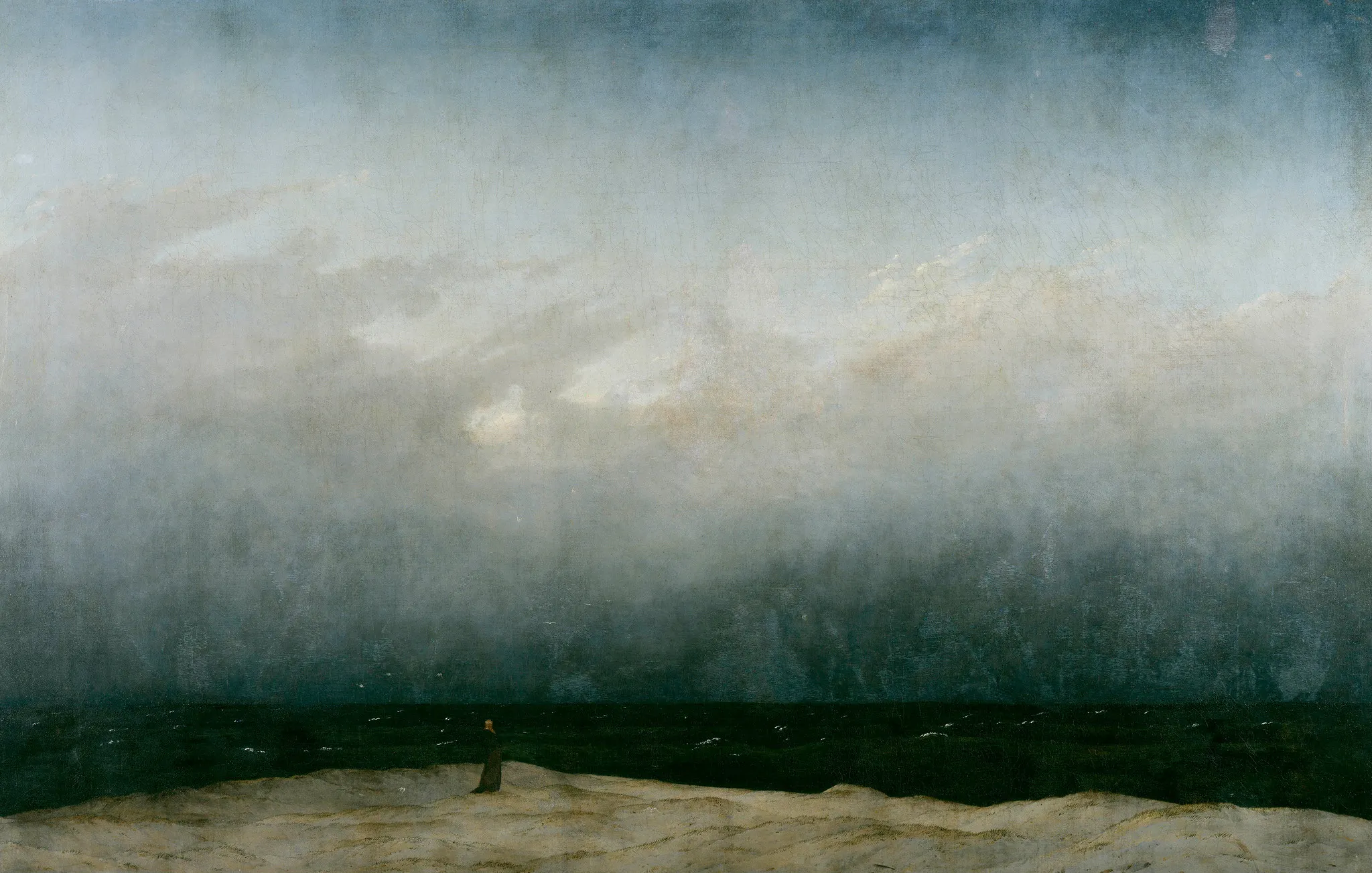
Ep 151Loneliness
Loneliness is what results when a person is cut off from the living world. Ecological loneliness, in particular, is reciprocal - what we mete out always comes back to trouble us. However, as Laura Marris demonstrates, loneliness can entail the shadow work for understanding how a society based on capital and on growth, can create profound isolation. She suggests that this work can look like ground truthing a place that has changed over time, that was once familiar to us, either as individuals or as collectives, but now appears alien. Laura Marris is an essayist, poet, and translator. Her writing has appeared or is forthcoming in The Believer, Harper’s, The New York Times, The Paris Review Daily, The Yale Review, Words Without Borders and elsewhere. She has received fellowships from MacDowell, a Katharine Bakeless Fellowship from the Bread Loaf Writer’s Conference, and a grant from the Robert B. Silvers Foundation. Her first solo-authored book, The Age of Loneliness, was published by Graywolf in August, 2024. She lives in Buffalo. Image: “The Monk by the Sea” by Caspar David Friedrich, now housed at the Alte Nationalgalerie in Berlin. The image is in the public domain. Learn more about your ad choices. Visit megaphone.fm/adchoices Support our show by becoming a premium member! https://newbooksnetwork.supportingcast.fm/critical-theory
Ep 504Emily Herring, "Herald of a Restless World: How Henri Bergson Brought Philosophy to the People" (Basic Books, 2024)
Herald of a Restless World: How Henri Bergson Brought Philosophy to the People (Basic Books, 2024) is the first English-language biography of Henri Bergson, the philosopher who defined individual creativity and transformed twentieth century thought. At the dawn of the twentieth century, Henri Bergson became the most famous philosopher on earth. Where prior thinkers sketched out a predictable universe, he asserted the transformative power of consciousness and creativity. An international celebrity, he made headlines around the world debating luminaries like Bertrand Russell and Albert Einstein about free will and time. The vision of creative evolution and freedom he presented was so disruptive that the New York Times branded him "the most dangerous man in the world." In the first English-language biography of Bergson, Emily Herring traces how his celebration of the time-bending uniqueness of individual experience struck a chord with those shaken by modern technological and social change. Bergson captivated a society in flux like no other. Long after he faded from public view, his insights into memory, time, joy and creativity continue to shape our perceptions to this day. Herald of a Restless World is an electrifying portrait of a singular intellect. Emily Herring is a writer based in Paris. She studied philosophy at the Sorbonne and received her PhD in the history and philosophy of science from the University of Leeds. Her work has appeared in the TLS and Aeon. Morteza Hajizadeh is a Ph.D. graduate in English from the University of Auckland in New Zealand. His research interests are Cultural Studies; Critical Theory; Environmental History; Medieval (Intellectual) History; Gothic Studies; 18th and 19th Century British Literature. YouTube channel. Twitter. Learn more about your ad choices. Visit megaphone.fm/adchoices Support our show by becoming a premium member! https://newbooksnetwork.supportingcast.fm/critical-theory
Ep 337Harvey J. Kaye, "The British Marxist Historians" (Zero Book, 2022)
The British Marxist Historians, originally published in 1995, remains the first and most complete study of the founders of one of the most influential contemporary academic traditions in history and social theory. In this classic text, Kaye looks at Maurice Dobb and the debate on the transition to capitalism; Rodney Hilton on feudalism and the English peasantry; Christopher Hill on the English Revolution; Eric Hobsbawm on workers, peasants and world history; and E.P. Thompson on the making of the English working class. Kaye compares their perspective on history with other approaches, such as that of the French Annales school, and concludes with a discussion of the British Marxist historians' contribution to the formation of a democratic historical consciousness. The British Marxist Historians is an indispensable book for anyone interested in the intellectual history of the late twentieth century. Harvey J. Kaye is the Ben & Joyce Rosenberg Professor of Democracy and Justice Studies at the University of Wisconsin-Green Bay, an award-winning author of numerous books, including Thomas Paine and the Promise of America, a frequent contributor to the Huffington Post and The Daily Beast, and a repeat guest on radio and television programs such as To the Best of Our Knowledge, the Thom Hartmann Show, and Bill Moyers' Journal. Morteza Hajizadeh is a Ph.D. graduate in English from the University of Auckland in New Zealand. His research interests are Cultural Studies; Critical Theory; Environmental History; Medieval (Intellectual) History; Gothic Studies; 18th and 19th Century British Literature. YouTube Channel. Twitter. Learn more about your ad choices. Visit megaphone.fm/adchoices Support our show by becoming a premium member! https://newbooksnetwork.supportingcast.fm/critical-theory
Ep 264Peter Salmon, "An Event, Perhaps: A Biography of Jacques Derrida" (Verso, 2020)
Who is Jacques Derrida? For some, he is the originator of a relativist philosophy responsible for the contemporary crisis of truth. For the far right, he is one of the architects of Cultural Marxism. To his academic critics, he reduced French philosophy to “little more than an object of ridicule.” For his fans, he is an intellectual rock star who ranged across literature, politics, and linguistics. In An Event, Perhaps (Verso, 2020), Peter Salmon presents this misunderstood and misappropriated figure as a deeply humane and urgent thinker for our times. Born in Algiers, the young Jackie was always an outsider. Despite his best efforts, he found it difficult to establish himself among the Paris intellectual milieu of the 1960s. However, in 1967, he changed the whole course of philosophy: outlining the central concepts of deconstruction. Immediately, his reputation as a complex and confounding thinker was established. Feted by some, abhorred by others, Derrida had an exhaustive breadth of interests but, as Salmon shows, was moved by a profound desire to understand how we engage with each other. It is a theme explored through Derrida’s intimate relationships with writers such even as Althusser, Genet, Lacan, Foucault, Cixous, and Kristeva. Accessible, provocative and beautifully written, An Event, Perhaps will introduce a new readership to the life and work of a philosopher whose influence over the way we think will continue long into the twenty-first century. Peter Salmon is an Australian writer living in the UK. His first novel, The Coffee Story, was a New Statesman Book of the Year. He has written for the Guardian, the New Humanist, the Sydney Review of Books and Tablet, as well as Australian TV and radio. Formerly Centre Director of the Jon Osborne/The Hurst Arvon Centre, he also teaches creative writing. Morteza Hajizadeh is a Ph.D. graduate in English from the University of Auckland in New Zealand. His research interests are Cultural Studies; Critical Theory; Environmental History; Medieval (Intellectual) History; Gothic Studies; 18th and 19th Century British Literature. YouTube Channel. Twitter. Learn more about your ad choices. Visit megaphone.fm/adchoices Support our show by becoming a premium member! https://newbooksnetwork.supportingcast.fm/critical-theory
Ep 503Ben Highmore, "Playgrounds: The Experimental Years" (Reaktion, 2024)
After World War II, a new kind of playground emerged in Northern Europe and North America. Rather than slides, swings, and roundabouts, these new playgrounds encouraged children to build shacks and invent their own entertainment. Playgrounds: The Experimental Years (Reaktion, 2024) tells the story of how waste grounds and bombsites were transformed into hives of activity by children and progressive educators. It shows how a belief in the imaginative capacity of children shaped a new kind of playground and how designers reimagined what playgrounds could be. Ben Highmore tells a compelling story about pioneers, designers, and charities--and above all--about the value of play. Learn more about your ad choices. Visit megaphone.fm/adchoices Support our show by becoming a premium member! https://newbooksnetwork.supportingcast.fm/critical-theory
Ep 199Peter Singer, "Consider the Turkey" (Princeton UP, 2024)
A turkey is the centerpiece of countless Thanksgiving and Christmas dinners. Yet most of us know almost nothing about today’s specially bred, commercially produced birds. In this brief book, bestselling author Peter Singer tells their story—and, unfortunately, it’s not a happy one. Along the way, he also offers a brief history of the turkey and its consumption, ridicules the annual U.S. presidential “pardon” of a Thanksgiving turkey, and introduces us to “a tremendously handsome, outgoing, and intelligent turkey” named Cornelius. Above all, Singer explains how we can improve our holiday tables—for turkeys, people, and the planet—by liberating ourselves from the traditional turkey feast. In its place, he encourages us to consider trying a vegetarian alternative—or just serving the side dishes that many people already enjoy far more than turkey. Complete with some delicious recipes for turkey-free holiday feasting, Consider the Turkey (Princeton University Press, 2024) will make you reconsider what you serve for your next holiday meal—or even tomorrow’s dinner. Peter Singer is a professor of bioethics, with a background in philosophy. He works mostly in practical ethics and is best known for Animal Liberation and for his writings about global poverty. Learn more about your ad choices. Visit megaphone.fm/adchoices Support our show by becoming a premium member! https://newbooksnetwork.supportingcast.fm/critical-theory
Ep 502Rebecca Ball, "A Hundred English Working-Class Lives, 1900-1945" (Palgrave MacMillan, 2024)
How do ordinary people write the stories of their lives? In A Hundred English Working-Class Lives, 1900-1945 (Palgrave MacMillan, 2024), Rebecca Ball, a lecturer in history at Manchester Metropolitan University, presents the microhistory of a series of working-class autobiographies. Ranging from childhood experiences, through education, work, marriage and death, the book draws on the hundred voices to paint a rich and evocative picture of working-class life. These lives are lived against the backdrop of huge global events, not least of which are two world wars. Yet what comes through is the sense of continuity of everyday life even in the face of such huge social change. Offering theoretical reflection for historians as well as being accessible to general readers, the book is essential reading for anyone interested in understanding life in the first half of the twentieth century. Learn more about your ad choices. Visit megaphone.fm/adchoices Support our show by becoming a premium member! https://newbooksnetwork.supportingcast.fm/critical-theory
Ep 483Jennifer C. Nash, "How We Write Now: Living with Black Feminist Theory" (Duke UP, 2024)
In How We Write Now: Living with Black Feminist Theory (Duke UP, 2024), Jennifer C. Nash examines how Black feminists use beautiful writing to allow writers and readers to stay close to the field’s central object and preoccupation: loss. She demonstrates how contemporary Black feminist writers and theorists such as Jesmyn Ward, Elizabeth Alexander, Christina Sharpe, and Natasha Trethewey mobilize their prose to ask readers to feel, undo, and reassemble themselves. These intimate invitations are more than a set of tools for decoding the social world; Black feminist prose becomes a mode of living and feeling, dreaming and being, and a distinctly affective project that treats loss as not only paradigmatic of Black life but also an aesthetic question. Through her own beautiful writing, Nash shows how Black feminism offers itself as a companion to readers to chart their own lives with and in loss, from devastating personal losses to organizing around the movement for Black lives. Charting her own losses, Nash reminds us that even as Black feminist writers get as close to loss as possible, it remains a slippery object that troubles memory and eludes capture. Learn more about your ad choices. Visit megaphone.fm/adchoices Support our show by becoming a premium member! https://newbooksnetwork.supportingcast.fm/critical-theory
Ep 501Larry S. Temkin, "Being Good in a World of Need" (Oxford UP, 2022)
In a world filled with both enormous wealth and pockets of great devastation, how should the well-off respond to the world's needy? This is the urgent central question of Being Good in a World of Need (Oxford UP, 2024). Larry S. Temkin, one of the world's foremost ethicists, challenges common assumptions about philanthropy, his own prior beliefs, and the dominant philosophical positions of Peter Singer and Effective Altruism. Filled with keen analysis and insightful discussions of philosophy, current events, development economics, history, literature, and age-old wisdom, this book is a thorough and sobering exploration of the complicated ways that global aid may incentivize disastrous policies, reward corruption, and foster “brain drains” that hinder social and economic development. Using real-world examples and illuminating thought experiments, Temkin discusses ethical imperialism, humanitarian versus developmental aid, how charities ignore or coverup negative impacts, replicability and scaling-up problems, and the views of the renowned economists Angus Deaton and Jeffrey Sachs, all within the context of deeper philosophical issues of fairness, responsibility, and individual versus collective morality. At times both inspiring and profoundly disturbing, he presents the powerful argument that neglecting the needy is morally impermissible, even as he illustrates that the path towards helping others is often fraught with complex ethical and practical perils. Steeped in empathy, morality, pathos, and humanity, this is an engaging and eye-opening text for any reader who shares an intense concern for helping others in need. Larry S. Temkin is Emeritus Professor of Philosophy at Rutgers. He graduated number one from the University of Wisconsin/Madison before pursuing graduate work at Oxford and earning his PhD from Princeton. He is the author of Inequality, hailed as "one of the [20th century's] most important contributions to analytical political philosophy" and of Rethinking the Good, described as a "tour de force" and "a genuinely awe-inspiring achievement." Temkin's approach to equality has been adopted by the World Health Organization. An award-winning teacher, he has received fellowships from Harvard, All Souls College and Corpus Christi College at Oxford, the National Institutes of Health, the Australian National University, the National Humanities Center, the Danforth Foundation, and Princeton. Morteza Hajizadeh is a Ph.D. graduate in English from the University of Auckland in New Zealand. His research interests are Cultural Studies; Critical Theory; Environmental History; Medieval (Intellectual) History; Gothic Studies; 18th and 19th Century British Literature. YouTube channel. Twitter. Learn more about your ad choices. Visit megaphone.fm/adchoices Support our show by becoming a premium member! https://newbooksnetwork.supportingcast.fm/critical-theory
Ep 328Jess A. Goldberg, "Abolition Time: Grammars of Law, Poetics of Justice" (U Minnesota Press, 2024)
How can Black Atlantic literature challenge conventions and redefine literary scholarship? Abolition Time: Grammars of Law, Poetics of Justice (U Minnesota Press, 2024) is an invitation to reenvision abolitionist justice through literary studies. Placing critical race theory, queer theory, critical prison studies, and antiprison activism in conversation with an archive of Black Atlantic literatures of slavery, Jess A. Goldberg reveals how literary studies can help undo carceral epistemologies embedded in language and poetics. Goldberg examines poetry, drama, and novels from the nineteenth century through the twenty-first--such as William Wells Brown's The Escape, Angelina Weld Grimké's Rachel, Toni Morrison's A Mercy, and Claudia Rankine's Citizen--to consider literature and literary scholarship's roles in shaping societal paradigms. Focusing on how Black Atlantic literature disrupts the grammar of law and order, they show how these texts propose nonlinear theories of time that imagine a queer relationality characterized by care rather than inheritance, property, or biology. Abolition Time offers a framework for thinking critically about what is meant by the term justice in the broadest and deepest sense, using close reading to inform the question of abolishing prisons or the police and to think seriously about the most fundamental questions at the heart of the abolitionist movement. Learn more about your ad choices. Visit megaphone.fm/adchoices Support our show by becoming a premium member! https://newbooksnetwork.supportingcast.fm/critical-theory
Ep 38Whiteness, Accents, and Children's Media
In this episode of the Language on the Move podcast, Brynn Quick speaks with Dr. Laura Smith-Khan about language and accents in children’s media, from Octonauts to Disney to Bluey, and they investigate what a choice as seemingly banal as a character’s accent has to do with whiteness, standard language ideology, and securing a nation’s borders. They then reflect on Laura’s most recently published paper (with co-authors Distinguished Professor Ingrid Piller and Dr. Hanna Torsh) and how accents and language are used to shape discourses around migration and belonging. For additional resources, show notes, and transcripts, go here. Learn more about your ad choices. Visit megaphone.fm/adchoices Support our show by becoming a premium member! https://newbooksnetwork.supportingcast.fm/critical-theory
Ep 198Nick Couldry, "The Space of the World: Can Human Solidarity Survive Social Media and What If It Can't?" (Polity, 2024)
Is human solidarity achievable in a world dominated by continuous digital connectivity and commercially managed platforms? And what if it’s not? Professor Nick Couldry explores these urgent questions in his latest book, The Space of the World: Can Human Solidarity Survive Social Media and What If It Can’t? (Polity, 2024), as discussed in a recent interview with the New Books Network. In a conversation with Joanne Kuai, Couldry reflects on how society has ceded critical decisions to Big Tech, enabling these companies to construct what he calls our "space of the world"—the artificial environment of social media platforms that now shapes much of our social existence. He argues this delegation of power was reckless, with far-reaching and damaging social consequences. While the harmful effects on social life, youth mental health, and political solidarity are widely recognized, Couldry emphasizes a deeper issue that has been overlooked: humanity’s decision to allow businesses to define and exploit this shared digital space for profit. In doing so, we disregarded centuries of political thought on the conditions required for healthy and non-violent politics. This oversight has jeopardized a vital resource in the era of the climate crisis: solidarity. In The Space of the World, the first book in his trilogy Humanising the Future, Couldry proposes a transformative vision for redesigning digital spaces to foster, rather than erode, solidarity and community. He stresses that caring for our shared digital space is no longer optional—it is an urgent task that must be tackled collectively. Nick Couldry is Professor of Media, Communications and Social Theory in the Department of Media and Communications at LSE. As a sociologist of media and culture, he approaches media and communications from the perspective of the symbolic power that has been historically concentrated in media institutions. He is interested in how media and communications institutions and infrastructures contribute to various types of order (social, political, cultural, economic, ethical). His work has drawn on, and contributed to, social, spatial, democratic and cultural theory, anthropology, and media and communications ethics. Learn more about your ad choices. Visit megaphone.fm/adchoices Support our show by becoming a premium member! https://newbooksnetwork.supportingcast.fm/critical-theory
Ep 165Pinelopi Koujianou Goldberg, "The Unequal Effects of Globalization" (MIT, 2023)
The recent retreat from globalization has been triggered by a perception that increased competition from global trade is not fair and leads to increased inequality within countries. Is this phenomenon a small hiccup in the overall wave of globalization, or are we at the beginning of a new era of deglobalization? Former Chief Economist of the World Bank Group Pinelopi Koujianou Goldberg tells us that the answer depends on the policy choices we make, and in The Unequal Effects of Globalization (MIT Press, 2023), she calls for exploring alternative policy approaches including place-based policies, while sustaining international cooperation. At this critical moment of shifting attitudes toward globalization, The Unequal Effects of Globalization enters the debate while also taking a step back. Goldberg investigates globalization's many dimensions, disruptions, and complex interactions, from the late twentieth century's wave of trade liberalizations to the rise of China, the decline of manufacturing in advanced economies, and the recent effects of trade on global poverty, inequality, labor markets, and firm dynamics. From there, Goldberg explores the significance of the recent backlash against and potential retreat from globalization and considers the key policy implications of these trends and emerging dynamics. As comprehensive as it is well-balanced, The Unequal Effects of Globalization is an essential read on trade and cooperation between nations that will appeal as much to academics and policymakers as it will to general readers who are interested in learning more about this timely subject. Pinelopi (Penny) Koujianou Goldberg is the Elihu Professor of Economics and Global Affairs and an Affiliate of the Economic Growth Center at Yale University. She holds a joint appointment at the Yale Department of Economics and the Jackson School of Global Affairs. From 2018 to 2020, she was the Chief Economist of the World Bank Group. Goldberg was President of the Econometric Society in 2021 and has previously served as Vice-President of the American Economic Association. From 2011-2017 she was Editor-in-Chief of the American Economic Review. She is member of the National Academy of Sciences and the American Academy of Arts and Sciences, recipient of Guggenheim Memorial Foundation and Sloan Research Fellowships, and recipient of the Bodossaki Prize in Social Sciences. She is also a Distinguished Fellow of the Centre for Economic Policy Research (CEPR), research associate at the National Bureau of Economics Research (NBER), research fellow at the Institute for Fiscal Studies (IFS) in London, UK, fellow of the CESifo research network in Germany, and member of the board of directors of the Bureau of Research and Economic Analysis of Development (BREAD). Interviewer Peter Lorentzen is an Associate Professor of Economics at the University of San Francisco, a nonresident scholar at the UCSD 21st Century China Center, an alumnus of the Public Intellectuals Program of the National Committee on US-China Relations, and is currently a visiting scholar at the Stanford Center on China’s Economy and Institutions. His research focuses on the economics of information, incentives, and institutions, primarily as applied to the development and governance of China. He created the unique Master’s of Science in Applied Economics at the University of San Francisco, which teaches the conceptual frameworks and practical data analytics skills needed to succeed in the digital economy. Learn more about your ad choices. Visit megaphone.fm/adchoices Support our show by becoming a premium member! https://newbooksnetwork.supportingcast.fm/critical-theory
Ep 115Matthew Chin, "Fractal Repair: Queer Histories of Modern Jamaica" (Duke UP, 2024)
In Fractal Repair: Queer Histories of Modern Jamaica (Duke UP, 2024), Matthew Chin investigates queerness in Jamaica from early colonial occupation to the present, critically responding to the island’s global reputation for extreme homophobia and anti-queer violence. Chin advances a theory and method of queer fractals to bring together genealogies of queer and Caribbean formation. Fractals—a kind of geometry in which patterns repeat but never exactly in the same way—make visible shifting accounts of Caribbean queerness in terms of race, gender, and sexual alterity. Drawing on this fractal orientation, Chin assembles and analyzes multigenre archives, ranging from mid-twentieth-century social science studies of the Caribbean to Jamaica’s National Dance Theatre Company to HIV/AIDS organizations, to write reparative histories of queerness. Chin’s proposal of a fractal politics of repair invests in the horizon of difference that repetition materializes, and it extends reparations discourses intent on overcoming the past and calculating economic compensation for survivors of violence. Learn more about your ad choices. Visit megaphone.fm/adchoices Support our show by becoming a premium member! https://newbooksnetwork.supportingcast.fm/critical-theory
Ep 378Ulises Ali Mejias and Nick Couldry, "Data Grab: The New Colonialism of Big Tech and How to Fight Back" (U Chicago Press, 2024)
In the present day, Big Tech is extracting resources from us, transferring and centralizing resources from people to companies. These companies are grabbing our most basic natural resources--our data--exploiting our labor and connections, and repackaging our information to control our views, track our movements, record our conversations, and discriminate against us. These companies tell us this is for our own good, to build innovation and develop new technology. But in fact, every time we unthinkingly click "Accept" on a set of Terms and Conditions, we allow our most personal information to be kept indefinitely, repackaged by companies to control and exploit us for their own profit. In Data Grab: The New Colonialism of Big Tech and How to Fight Back (The University of Chicago Press, 2024), Ulises Mejias and Nick Couldry explain why postindustrial capitalism cannot be understood without colonialism, and why race is a critical factor in who benefits from data colonialism, just as it was for historic colonialism. In this searing, cutting-edge guide, Mejias and Couldry explore the concept of data colonialism, revealing how history can help us understand the emerging future--and how we can fight back. Mention in this episode: Tierra Comun (English Version) Ulises A. Mejias is professor of communication studies at the State University of New York at Oswego. Nick Couldry is professor of media, communications, and social theory at the London School of Economics and Political Science and faculty associate at Harvard University’s Berkman Klein Center for Internet and Society. Dr. Michael LaMagna is the Information Literacy Program & Library Services Coordinator and Professor of Library Services at Delaware County Community College. Learn more about your ad choices. Visit megaphone.fm/adchoices Support our show by becoming a premium member! https://newbooksnetwork.supportingcast.fm/critical-theory
Ep 77Lindsay Weinberg, "Smart University: Student Surveillance in the Digital Age" (Johns Hopkins UP, 2024)
In Smart University: Student Surveillance in the Digital Age (Johns Hopkins University Press, 2024), Lindsay Weinberg evaluates how this latest era of tech solutions and systems in our schools impacts students' abilities to access opportunities and exercise autonomy on their campuses. Using historical and textual analysis of administrative discourses, university policies, conference proceedings, grant solicitations, news reports, tech industry marketing materials, and product demonstrations, Weinberg argues that these more recent transformations are best understood as part of a longer history of universities supporting the development of technologies that reproduce racial and economic injustice on their campuses and in their communities. Mentioned in this episode is this piece that Dr. Weinberg wrote in Inside Higher Ed: Lindsay Weinberg is a clinical assistant professor and the Director of the Tech Justice Lab in the John Martinson Honors College at Purdue University. Dr. Michael LaMagna is the Information Literacy Program & Library Services Coordinator and Professor of Library Services at Delaware County Community College. Learn more about your ad choices. Visit megaphone.fm/adchoices Support our show by becoming a premium member! https://newbooksnetwork.supportingcast.fm/critical-theory
Ep 500Neil Atkinson, "Transformer: Klopp, the Revolution of a Club and Culture" (Canongate, 2024)
How did Jurgen Klopp change Liverpool? In Transformer: Klopp, the Revolution of a Club and Culture (Canongate, 2024), Neil Atkinson, host of The Anfield Wrap tells the story of Klopp’s time at the football club and in the city. The book ranges widely, from socio-cultural history, through personal memoir, to tactical analysis and contemplations on the changing styles and patterns of football. Structured around 19 key games, the book also features reflections on the need for a transformation in English (as well as European and global) football governance, alongside politics and society more generally. Funny, moving, and deeply poignant, the book will be of interest to anyone seeking to understand football, culture and society in past decade. Learn more about your ad choices. Visit megaphone.fm/adchoices Support our show by becoming a premium member! https://newbooksnetwork.supportingcast.fm/critical-theory

S2 Ep 28In Conversation: Critical Race Theory and Black Lives Matter
In this episode, Dr. Hizer Mir speaks with Momodou Taal on Critical Race Theory and Black Lives Matter. Learn more about your ad choices. Visit megaphone.fm/adchoices Support our show by becoming a premium member! https://newbooksnetwork.supportingcast.fm/critical-theory
Ep 338Jarrett Zigon, "How Is It Between Us?: Relational Ethics and Care for the World" (HAU Books, 2023)
How Is It Between Us?: Relational Ethics and Care for the World (HAU Books, 2023) offers a new theory of relational ethics that tackles contemporary issues. In How Is It Between Us?, Jarrett Zigon puts anthropology and phenomenological hermeneutics in conversation to develop a new theory of relational ethics. This relational ethics takes place in the between, the interaction not just between people, but all existents. Importantly, this theory is utilized as a framework for considering some of today’s most pressing ethical concerns - for example, living in a condition of post-truth and worlds increasingly driven by algorithms and data extraction, various and competing calls for justice, and the ethical demands of the climate crisis. Written by one of the preeminent contributors to the anthropology of ethics, this is a ground-breaking book within that literature, developing a robust and systematic ethical theory to think through contemporary ethical problems. Jarrett Zigon is a social theorist, philosopher and anthropologist at the University of Virginia, where he is the William & Linda Porterfield Chair in Bioethics and Professor of Anthropology. From 2018 to 2020, he was the founding director of the Center for Data Ethics and Justice at the University of Virginia. Yadong Li is a PhD student in anthropology at Tulane University. His research interests lie at the intersection of economic anthropology, medical anthropology, hope studies, and the anthropology of borders and frontiers. More details about his scholarship and research interests can be found here. Learn more about your ad choices. Visit megaphone.fm/adchoices Support our show by becoming a premium member! https://newbooksnetwork.supportingcast.fm/critical-theory