
Natural Resources University
613 episodes — Page 10 of 13
S1 Ep 162Fish University - Gulf Red Snapper Management | #162
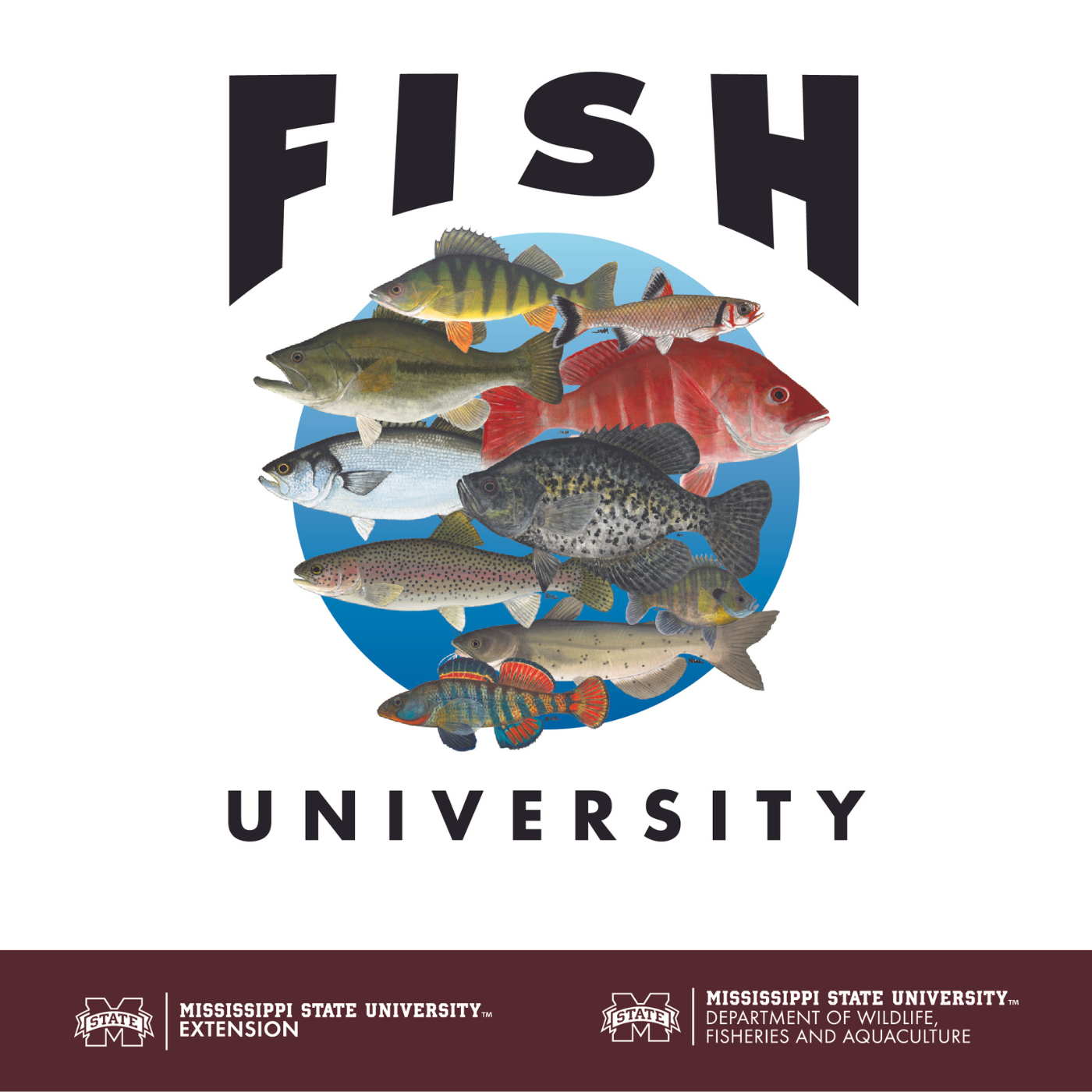
As the Gulf of Mexico Red Snapper fishing seasons kick off for 2023, Wes sits down with Dr. Marcus Drymon, and Assistant Extension Professor with extensive experience in Red Snapper research and management. Marcus tells the history of Red Snapper fishing, some of the controversies and conflicts that have arisen between recreational and commercial anglers, managers, and scientists, and they discuss the status of Red Snapper research and management. Tune in an let Fish University dispel some of the myths and highlight some of the challenges in the management of this iconic fishery. Do you have questions or comments? Follow the Fish University Facebook community and chat with Wes or suggest future episodes! Follow Natural Resources University on Instagram, YouTube, Twitter, & Facebook
S1 Ep 161Wild Turkey Science - What is TFT about? | #161
Turkeys for Tomorrow Legal Council and board member Carter Weeks joins us to discuss how TFT got started, the vision of the organization, and how you can get involved to make a difference. To learn more about TFT, check out turkeysfortomorrow.org. Dr. Marcus Lashley (DrDisturbance) (Academic Profile) Dr. Will Gulsby (dr_will_gulsby) (Academic Profile) Turkeys for Tomorrow (turkeysfortomorrow) UF DEER Lab (ufdeerlab) Donate to wild turkey research: UF Turkey Donation Fund , Auburn Turkey Donation Fund This podcast is made possible by Turkeys for Tomorrow, a grassroots organization dedicated to the wild turkey. To learn more about TFT, go to turkeysfortomorrow.org. Help us help turkeys by rating this podcast and sharing it with your friends and family. Music by Artlist.io Produced & edited by Charlotte Nowak

S1 Ep 160Deer University - Burn baby burn! | #160
There's no doubt that prescribed fire is good for wildlife habitat, but what's the best time of year to burn? What are the pros and cons of burning during the dormant season (winter) and the growing season (spring and summer)? In this episode Bronson and Steve visit with MSU Deer Lab graduate student Luke Resop and discuss the findings from his research where he examined the response of vegetation to dormant and growing season fire. Which is the best? You guessed it…IT DEPENDS. Check out the MSU Deer Lab's online seminar series (here) and choose the Natural Resources option from the Categories drop down menu. You will have to create an account to view the seminars. The seminars are free unless you are seeking professional educational credits. Also, be sure to visit our YouTube channel (here)

S1 Ep 159Wild Turkey Science - Brooding and nesting cover (Part 2/2) | #159
Dr. Craig Harper joins to disclose step-by-step instructions on how to implement better brooding and nesting cover on your property. This is an episode you won't want to miss. Dr. Craig Harper (Website) Dr. Marcus Lashley (DrDisturbance) (Academic Profile) Dr. Will Gulsby (dr_will_gulsby) (Academic Profile) Turkeys for Tomorrow (turkeysfortomorrow) UF DEER Lab (ufdeerlab) Donate to wild turkey research: UF Turkey Donation Fund , Auburn Turkey Donation Fund This podcast is made possible by Turkeys for Tomorrow, a grassroots organization dedicated to the wild turkey. To learn more about TFT, go to turkeysfortomorrow.org. Help us help turkeys by rating this podcast and sharing it with your friends and family. Music by Artlist.io Produced & edited by Charlotte Nowak
S1 Ep 158Wild Turkey Science - Brooding and nesting cover (Part 1/2) | #158
Dr. Craig Harper joins to disclose step-by-step instructions on how to implement better brooding and nesting cover on your property. This is an episode you won't want to miss. Dr. Craig Harper (Website) Dr. Marcus Lashley (DrDisturbance) (Academic Profile) Dr. Will Gulsby (dr_will_gulsby) (Academic Profile) Turkeys for Tomorrow (turkeysfortomorrow) UF DEER Lab (ufdeerlab) Donate to wild turkey research: UF Turkey Donation Fund , Auburn Turkey Donation Fund This podcast is made possible by Turkeys for Tomorrow, a grassroots organization dedicated to the wild turkey. To learn more about TFT, go to turkeysfortomorrow.org. Help us help turkeys by rating this podcast and sharing it with your friends and family. Music by Artlist.io Produced & edited by Charlotte Nowak
S1 Ep 157Habitat University - Getting kids engaged in habitat management through WHEP | #157
In this episode, Jarred and Adam explain the Wildlife Habitat Education Program, which engages kids from throughout the country in wildlife habitat management through 4-H and FFA. Adam and Jarred first discuss the structure of the program and how it's implemented in states across the country, and then they explore the national competition, including featuring voices of competitors from the 2022 National Competition in Kentucky. If you're interested in starting a WHEP club in your community, you should reach out to your local or state 4-H or FFA leaders. Learn more about the program and how to get involved at the link below. Help us improve the podcast by taking this Habitat University Listener Feedback Survey: https://purdue.ca1.qualtrics.com/jfe/form/SV_5oteinFuEzFCDmm Resources from the episode: Learn more about WHEP at: https://www.whep.org/
S1 Ep 156Timber University - Financial considerations for forestland investment | #156
Forestland and its subsequent management are still sound investments! Join us in this episode of Timber University as we discuss some of the things you should consider when investing in natural resources. We also discuss how timber value varies depending upon a different location and onsite factors. For questions or comments, email us at [email protected] Be sure to subscribe directly to Timber University and follow NRU on Instagram, YouTube, Twitter, and Facebook.
S1 Ep 155Wild Turkey Science - Status of turkeys in FL (Part 2/2) | #155
FWC Wild Turkey Management Program Coordinator Buddy Welch discloses details on the previous and on-going research conducted on wild turkeys. Then, discussion of Florida landowner resources, cost-share programs, and habitat characteristics unique to the state that are vital for turkey population. This is Part 2 of this episode. Resources from the episode: FWC Wild Turkey Summer Survey (opens June 1) Florida Wildlife Corridor Florida Fish and Wildlife Conservation Commission 2022 Annual Wild Turkey Hunting Status Report Wild Turkey Cost Share Program Dr. Marcus Lashley (DrDisturbance) (Academic Profile) Dr. Will Gulsby (dr_will_gulsby) (Academic Profile) Turkeys for Tomorrow (turkeysfortomorrow) UF DEER Lab (ufdeerlab) Donate to wild turkey research: UF Turkey Donation Fund , Auburn Turkey Donation Fund This podcast is made possible by Turkeys for Tomorrow, a grassroots organization dedicated to the wild turkey. To learn more about TFT, go to turkeysfortomorrow.org. Help us help turkeys by rating this podcast and sharing it with your friends and family. Music by Artlist.io Produced & edited by Charlotte Nowak
S1 Ep 154Fish University - How to kill fish | #154
You know what to do when your pet cat or dog is sick, but have you ever thought about who to call when your pet fish are under the weather? In this episode, Wes chats with Dr. Jessie Sanders, a mobile aquatic veterinarian and author, to talk fish health. From sick Koi and goldfish to whether fish get constipated, no discussion is out of bounds. Join in for a fun and informative discussion about your aquatic scale babies. Do you have questions or comments? Follow the Fish University Facebook community and chat with Wes or suggest future episodes! Follow Natural Resources University on Instagram, YouTube, Twitter, & Facebook
S1 Ep 153Wild Turkey Science - Status of turkeys in FL (Part 1/2) | #153
FWC Wild Turkey Management Program Coordinator Buddy Welch joins us to disclose details on the state's season frameworks, restocking history, and harvest trends. Then, a look into the previous and on-going research studies conducted on wild turkeys across Florida. This is Part 1 of this episode. Resources from the episode: FWC Wild Turkey Summer Survey (opens June 1) Florida Wildlife Corridor Florida Fish and Wildlife Conservation Commission 2022 Annual Wild Turkey Hunting Status Report Wild Turkey Cost Share Program Dr. Marcus Lashley (DrDisturbance) (Academic Profile) Dr. Will Gulsby (dr_will_gulsby) (Academic Profile) Turkeys for Tomorrow (turkeysfortomorrow) UF DEER Lab (ufdeerlab) Donate to wild turkey research: UF Turkey Donation Fund , Auburn Turkey Donation Fund This podcast is made possible by Turkeys for Tomorrow, a grassroots organization dedicated to the wild turkey. To learn more about TFT, go to turkeysfortomorrow.org. Help us help turkeys by rating this podcast and sharing it with your friends and family. Music by Artlist.io Produced & edited by Charlotte Nowak
S1 Ep 152Working Wild U - Colorado wolf reintroduction and the great divide | #152
We've covered a lot this season: wolves, working lands, and some of the ideas and management practices that divide and unite the people of the American West. In our final episode of the season, Alex and Jared are headed to Colorado, where a ballot initiative, passed in 2020, requires Colorado Parks and Wildlife to reintroduce wolves to the western part of the state by the end of 2023. Full show notes: https://workingwild.us/season-one/13-colorado-wolf-reintroduction-and-the-great-divide/
S1 Ep 151Wild Turkey Science - Wild turkey populations in PA (Part 2/2) | #151
PA Game Commission wild turkey biologist Mary Jo Caselena joins us to disclose details on their state's mark recapture study, population trends, and private landowner incentive programs. Then, a look into the largest conducted, multi-state mid-Atlantic hen population study. This is Part 2 of this episode. Resources from the episode: PA Landowner Programs Casalena, M. J., et al. "Understanding the new normal: wild turkeys in a changing northeastern landscape." Proceedings of the National Wild Turkey Symposium. Vol. 11. 2015. 5 Environmental Factors that Affect Turkey Populations Board of Game Commissioners Meeting January 27, 2023 Pennsylvania NRCS PSU cooperative extension's county offices Corrections: CREP enrollment is currently 91,739 acres and has not reached maximum acreage in over 10 years. Predation rates are influenced by habitat quality (on local and landscape scales), weather, and disease. Mary Jo Caselena 1-833-742-4868 [email protected] Dr. Marcus Lashley (DrDisturbance) (Academic Profile) Dr. Will Gulsby (dr_will_gulsby) (Academic Profile) Turkeys for Tomorrow (turkeysfortomorrow) UF DEER Lab (ufdeerlab) Donate to wild turkey research: UF Turkey Donation Fund , Auburn Turkey Donation Fund This podcast is made possible by Turkeys for Tomorrow, a grassroots organization dedicated to the wild turkey. To learn more about TFT, go to turkeysfortomorrow.org. Help us help turkeys by rating this podcast and sharing it with your friends and family. Produced and edited by Charlotte Nowak
S1 Ep 150Wild Turkey Science - Wild turkey populations in PA (Part 1/2) | #150
PA Game Commission wild turkey biologist Mary Jo Caselena joins us to disclose details on their state's mark recapture study, population trends, and private landowner incentive programs. Then, a look into the largest conducted, multi-state mid-Atlantic hen population study. This is Part 1 of 2 for this episode. Resources from the episode: PA Landowner Programs Casalena, M. J., et al. "Understanding the new normal: wild turkeys in a changing northeastern landscape." Proceedings of the National Wild Turkey Symposium. Vol. 11. 2015. 5 Environmental Factors that Affect Turkey Populations Board of Game Commissioners Meeting January 27, 2023 Pennsylvania NRCS PSU cooperative extension's county offices Corrections: CREP enrollment is currently 91,739 acres and has not reached maximum acreage in over 10 years. Predation rates are influenced by habitat quality (on local and landscape scales), weather, and disease. Mary Jo Caselena 1-833-742-4868 [email protected] Dr. Marcus Lashley (DrDisturbance) (Academic Profile) Dr. Will Gulsby (dr_will_gulsby) (Academic Profile) Turkeys for Tomorrow (turkeysfortomorrow) UF DEER Lab (ufdeerlab) Donate to wild turkey research: UF Turkey Donation Fund , Auburn Turkey Donation Fund This podcast is made possible by Turkeys for Tomorrow, a grassroots organization dedicated to the wild turkey. To learn more about TFT, go to turkeysfortomorrow.org. Help us help turkeys by rating this podcast and sharing it with your friends and family. Produced and edited by Charlotte Nowak
S1 Ep 149Wild Turkey Science - What's changed in MS? (Part 2/2) | #149
Wildlife Biologist John Gruchy gives us his fastball pitch on adjusting old fields, even food plots, into poult-rearing cover. This is Part 2 of Monday's episode. Dr. Marcus Lashley (DrDisturbance) (Academic Profile) Dr. Will Gulsby (dr_will_gulsby) (Academic Profile) Turkeys for Tomorrow (turkeysfortomorrow) UF DEER Lab (ufdeerlab) Donate to wild turkey research: UF Turkey Donation Fund , Auburn Turkey Donation Fund This podcast is made possible by Turkeys for Tomorrow, a grassroots organization dedicated to the wild turkey. To learn more about TFT, go to turkeysfortomorrow.org. Help us help turkeys by rating this podcast and sharing it with your friends and family. Produced by Charlotte Nowak
S1 Ep 148Timber University - Forest taxes for the forest landowner | #148
Forest tax is a very specialized area in the tax codes. Many forest landowners, CPAs, and lawyers are often not well versed with this type of taxation. This episode of Timber University is recorded with the intent of highlighting some of the more pertinent areas of tax law that concern landowners and their forest management. For questions or comments, email us at [email protected] Be sure to subscribe directly to Timber University and follow NRU on Instagram, YouTube, Twitter, and Facebook.
S1 Ep 147Wild Turkey Science - What's changed in MS? (Part 1/2) | #147
Wildlife Biologist John Gruchy joins the show to discuss the timeline of landscape changes across Mississippi, consequences of earlier management decisions, and what we've got to eradicate moving forward. Check back Thursday for Part 2 of this episode. Dr. Marcus Lashley (DrDisturbance) (Academic Profile) Dr. Will Gulsby (dr_will_gulsby) (Academic Profile) Turkeys for Tomorrow (turkeysfortomorrow) UF DEER Lab (ufdeerlab) Donate to wild turkey research: UF Turkey Donation Fund , Auburn Turkey Donation Fund This podcast is made possible by Turkeys for Tomorrow, a grassroots organization dedicated to the wild turkey. To learn more about TFT, go to turkeysfortomorrow.org. Help us help turkeys by rating this podcast and sharing it with your friends and family. Produced by Charlotte Nowak
S1 Ep 146Wild Turkey Science - Bonus episode | #146
Marcus and WIll jump back on to correct literature data on exotic grasses from Monday's episode, clarify a few points on CRP and burning during nesting, and swap turkey hunting stories. Referenced paper: Barnes, Thomas G., Stephen J. DeMaso, and Matt A. Bahm. "The impact of 3 exotic, invasive grasses in the southeastern United States on wildlife." Wildlife Society Bulletin 37.3 (2013): 497-502. Get your call: https://honeycombcustomcalls.com/collections/our-partners/products/chasing-tales Dr. Marcus Lashley (DrDisturbance) (Academic Profile) Dr. Will Gulsby (dr_will_gulsby) (Academic Profile) Turkeys for Tomorrow (turkeysfortomorrow) UF DEER Lab (ufdeerlab) Donate to wild turkey research: UF Turkey Donation Fund , Auburn Turkey Donation Fund This podcast is made possible by Turkeys for Tomorrow, a grassroots organization dedicated to the wild turkey. To learn more about TFT, go to turkeysfortomorrow.org. Help us help turkeys by rating this podcast and sharing it with your friends and family. Produced by Charlotte Nowak
S1 Ep 145Wild Turkey Science - Has turkey habitat changed? | #145
In this episode, we discuss the large-scale habitat changes that may have contributed to wild turkey decline, key management strategies that shifted the landscapes, what changes contributed to habitat loss, and what we can do to save the poults moving forward. Papers: Barnes, Thomas G., Stephen J. DeMaso, and Matt A. Bahm. "The impact of 3 exotic, invasive grasses in the southeastern United States on wildlife." Wildlife Society Bulletin 37.3 (2013): 497-502. Carmichael Jr, D. Breck. "The Conservation Reserve Program and wildlife habitat in the southeastern United States." Wildlife Society Bulletin (1997): 773-775. Martinuzzi, Sebastián, et al. "Scenarios of future land use change around United States' protected areas." Biological Conservation 184 (2015): 446-455. Napton, Darrell E., et al. "Land changes and their driving forces in the Southeastern United States." Regional Environmental Change 10 (2010): 37-53. Nowacki, Gregory J., and Marc D. Abrams. "The demise of fire and "mesophication" of forests in the eastern United States." BioScience 58.2 (2008): 123-138. Griffith, Jerry A., Stephen V. Stehman, and Thomas R. Loveland. "Landscape trends in mid-Atlantic and southeastern United States ecoregions." Environmental Management 32 (2003): 572-588. Videos: Leaf Traits Affect Fire Behavior in Upland Hardwoods How Varying Fire Return Intervals Affect Plant Communities Over Decades Dr. Marcus Lashley (DrDisturbance) (Academic Profile) Dr. Will Gulsby (dr_will_gulsby) (Academic Profile) Turkeys for Tomorrow (turkeysfortomorrow) UF DEER Lab (ufdeerlab) Donate to wild turkey research: UF Turkey Donation Fund , Auburn Turkey Donation Fund This podcast is made possible by Turkeys for Tomorrow, a grassroots organization dedicated to the wild turkey. To learn more about TFT, go to turkeysfortomorrow.org. Help us help turkeys by rating this podcast and sharing it with your friends and family. Produced by Charlotte Nowak
S1 Ep 144Wild Turkey Science - OK update (Part 2/2): Reproductive ecology of Rios and Easterns | #144
Dr. Colter Chitwood re-joins the podcast to give us an update of the on-going turkey research in the state of Oklahoma. Learn details of the hunter-led work estimating vital rates to increase poult per hen ratios, and learn how state-wide genetics can help us understand turkey movement across the landscape. Dr. Colter Chitwood (Academic Profile) Dr. Marcus Lashley (DrDisturbance) (Academic Profile) Dr. Will Gulsby (dr_will_gulsby) (Academic Profile) Turkeys for Tomorrow (turkeysfortomorrow) UF DEER Lab (ufdeerlab) Donate to wild turkey research: UF Turkey Donation Fund , Auburn Turkey Donation Fund This podcast is made possible by Turkeys for Tomorrow, a grassroots organization dedicated to the wild turkey. To learn more about TFT, go to turkeysfortomorrow.org. Help us help turkeys by rating this podcast and sharing it with your friends and family. Produced by Charlotte Nowak
S1 Ep 143Habitat University - Farm bill biologists & beyond: Pheasants & Quail Forever's approach to private land conservation | #143
When it comes to getting boots on the ground for private lands conservation, Pheasants Forever & Quail Forever is a leader. This episode we are joined by Quail Forever Tennessee State Coordinator, Brittney Viers, to discuss all the work PF & QF does for wildlife on private lands. From Farm Bill Biologists to Precision Ag & Conservation Specialists, tune in to learn about the wide-ranging roles of PFQF employees, and how they work to create and enhance habitat on private lands. Help us improve the podcast by taking this Habitat University Listener Feedback Survey: https://purdue.ca1.qualtrics.com/jfe/form/SV_5oteinFuEzFCDmm Resources from the episode: Find your local Pheasants Forever or Quail Forever Biologist: https://quailforever.org/Habitat/findBiologist.aspx Contact a Precision Ag & Conservation Specialist: https://www.pheasantsforever.org/Conservation/Precision-Agriculture/Contact.aspx
S1 Ep 142Wild Turkey Science - Burning during nesting | #142
Dr. Chris Moorman rejoins the podcast to discuss the use of prescribed fire during nesting season. Plus, gain inside details on the studies Dr. Moorman has led concerning burn timing as it relates to ground nesting birds. Papers: Kilburg, Eric L., et al. "Wild turkey nest survival and nest‐site selection in the presence of growing‐season prescribed fire." The Journal of Wildlife Management 78.6 (2014): 1033-1039. Kilburg, Eric L., et al. "Wild turkey prenesting-resource selection in a landscape managed with frequent prescribed fire." Southeastern Naturalist 14.1 (2015): 137-146. Kroeger, Anthony J., et al. "Northern bobwhite non‐breeding habitat selection in a longleaf pine woodland." The Journal of Wildlife Management 84.7 (2020): 1348-1360. Winiarski, Jason M., et al. "Nest-site selection and nest survival of Bachman's Sparrows in two longleaf pine communities." The Condor: Ornithological Applications 119.3 (2017): 361-374. Dr. Chris Moorman (habitatdoc) (Academic Profile) Dr. Marcus Lashley (DrDisturbance) (Academic Profile) Dr. Will Gulsby (dr_will_gulsby) (Academic Profile) Turkeys for Tomorrow (turkeysfortomorrow) UF DEER Lab (ufdeerlab) Donate to wild turkey research: UF Turkey Donation Fund , Auburn Turkey Donation Fund This podcast is made possible by Turkeys for Tomorrow, a grassroots organization dedicated to the wild turkey. To learn more about TFT, go to turkeysfortomorrow.org. Help us help turkeys by rating this podcast and sharing it with your friends and family. Produced by Charlotte Nowak
S1 Ep 141Wild Turkey Science - OK update (Part 1/2): Reproductive ecology of Rios and Easterns | #141
Dr. Colter Chitwood re-joins the podcast to give us an update of the on-going turkey research in the state of Oklahoma. Learn details of the hunter-led work estimating vital rates to increase poult per hen ratios, and learn how state-wide genetics can help us understand turkey movement across the landscape. Dr. Colter Chitwood (Academic Profile) Dr. Marcus Lashley (DrDisturbance) (Academic Profile) Dr. Will Gulsby (dr_will_gulsby) (Academic Profile) Turkeys for Tomorrow (turkeysfortomorrow) UF DEER Lab (ufdeerlab) Donate to wild turkey research: UF Turkey Donation Fund , Auburn Turkey Donation Fund This podcast is made possible by Turkeys for Tomorrow, a grassroots organization dedicated to the wild turkey. To learn more about TFT, go to turkeysfortomorrow.org. Help us help turkeys by rating this podcast and sharing it with your friends and family. Produced by Charlotte Nowak
S1 Ep 140Working Wild U - Co-producing technology to reduce conflict | #140
Today, Alex and Jared explore how livestock producers and researchers are working together to adapt old world tools into new world technologies to help reduce conflicts. They'll look at how innovative solutions can often be simple, and how new tools can help keep people, livestock, and wildlife safe. Full show notes: https://workingwild.us/season-one/12-co-producing-technology-to-reduce-conflict/
S1 Ep 139Fish University - Gator gar! | #139
Did you know that fish much larger than you with a mouth full of sharp teeth might be swimming just below the surface of your favorite swimming hole? Don't worry, these ancient creatures do not have a taste for humans. In this episode, Wes interviews Matt Wegener (Florida Fish and Wildlife Commission) and Kayla Kimmel (U. S. Fish and Wildlife Service) about the biology and conservation of one of North America's largest fish, the Alligator Gar. Do you have questions or comments? Follow the Fish University Facebook community and chat with Wes or suggest future episodes - https://www.facebook.com/profile.php?id=100087242320601
S1 Ep 138Working Wild U - Old World tools to new world technology | #138
In this episode, Alex and Jared dive into techniques that can help ranchers reduce conflicts between wolves and livestock. They'll explore how a new spin on an old tool increases the effectiveness of fencing, how putting riders back on the range can have a multitude of benefits, and how one valley in Montana is working together to compost carcasses to reduce attractants on the landscape. But applying these tools takes know-how, money, and time. Who pays for conflict reduction efforts that support both wildlife and working lands? Full show notes: https://workingwild.us/season-one/11-old-world-tools-to-new-world-technology/
S1 Ep 137Wild Turkey Science - What we learned from density dependence | #137
We review our recent episodes on the density dependence hypothesis, what we learned from conversations with experts, and implications this may have on management of the wild turkey moving forward. Papers: Bond, Bobby T., et al. "Thirty-year case study showing a negative relationship between population and reproductive indices of eastern wild turkeys in Georgia." Georgia Journal of Science 70.2 (2012): 5. Dr. Marcus Lashley (DrDisturbance) (Academic Profile) Dr. Will Gulsby (dr_will_gulsby) (Academic Profile) Turkeys for Tomorrow (turkeysfortomorrow) UF DEER Lab (ufdeerlab) Donate to wild turkey research: UF Turkey Donation Fund , Auburn Turkey Donation Fund This podcast is made possible by Turkeys for Tomorrow, a grassroots organization dedicated to the wild turkey. To learn more about TFT, go to turkeysfortomorrow.org. Help us help turkeys by rating this podcast and sharing it with your friends and family. Produced by Charlotte Nowak
S1 Ep 136Wild Turkey Science - AL update, is there a dominant gobbler? | #136
In this episode, we give you an update on the ongoing projects in Alabama including preliminary results on which gobblers can breed, the most common predators of nests, effects of hunting on gobbling, and more. Paper: Proportion of tom's had testes large enough that they could breed Dr. Marcus Lashley (DrDisturbance) (Academic Profile) Dr. Will Gulsby (dr_will_gulsby) (Academic Profile) Turkeys for Tomorrow (turkeysfortomorrow) UF DEER Lab (ufdeerlab) Donate to wild turkey research: UF Turkey Donation Fund , Auburn Turkey Donation Fund This podcast is made possible by Turkeys for Tomorrow, a grassroots organization dedicated to the wild turkey. To learn more about TFT, go to turkeysfortomorrow.org. Help us help turkeys by rating this podcast and sharing it with your friends and family. Produced by Charlotte Nowak
S1 Ep 135Timber University - Casualty Loss and the Forest Landowner | #135
In this episode, we take on the difficult subject of casualty loss. This is a subject no landowner looks forward to, but planning for the worst is sound planning. Join us as we discuss what the IRS considers a casualty, how to determine your loss in the eyes of the IRS, and how best to move forward, from a Forest Tax perspective, after one occurs. Resources: Tips for Landowners Attempting to Salvage Hurricane Damaged Timber For questions or comments, email us at [email protected] Be sure to subscribe directly to Timber University and follow NRU on Instagram, YouTube, Twitter, and Facebook.
S1 Ep 134Wild Turkey Science - A different perspective on density dependence | #134
Is density dependence operating on wild turkeys? Dr. Bret Collier walks us through his point of view on density dependence and whether it is responsible for observed changes in turkey populations. We cover a lot of ground and discuss various aspects of wild turkey biology from many studies and regions. Papers Byrne, M. E., Chamberlain, M. J., & Collier, B. A. (2015). Potential density dependence in wild turkey productivity in the southeastern United States. In Proceedings of the National Wild Turkey Symposium (Vol. 11, pp. 329-351). Collier, B. A., Melton, K. B., Hardin, J. B., Silvy, N. J., & Peterson, M. J. (2009). Impact of reproductive effort on survival of Rio Grande wild turkey Meleagris gallop intermedia hens in Texas. Wildlife Biology, 15(4), 370-379. Randel, C. J., Aguirre, R., Jones, D. A., Schaap, J. N., Willsey, B. J., Peterson, M. J., & Silvy, N. J. (2005). Nesting ecology of Rio Grande wild turkey in the Edwards Plateau of Texas. In Proceedings of the National Wild Turkey Symposium (Vol. 9, pp. 37-243). Schwertner, T. W., Peterson, M. J., & Silvy, N. J. (2007). Effect of precipitation on Rio Grande wild turkey poult production in Texas. In Proceedings of the National Wild Turkey Symposium (Vol. 9, pp. 127-132). Dr. Bret Collier (drshortspur) (Academic Profile) Dr. Marcus Lashley (DrDisturbance) (Academic Profile) Dr. Will Gulsby (dr_will_gulsby) (Academic Profile) Turkeys for Tomorrow (turkeysfortomorrow) UF DEER Lab (ufdeerlab) Donate to wild turkey research: UF Turkey Donation Fund , Auburn Turkey Donation Fund This podcast is made possible by Turkeys for Tomorrow, a grassroots organization dedicated to the wild turkey. To learn more about TFT, go to turkeysfortomorrow.org. Help us help turkeys by rating this podcast and sharing it with your friends and family. Produced by Charlotte Nowak

S1 Ep 133Deer University - Just how bad is dog hunting on deer? | #133
Seems like you either love dog hunting, or hate it. There's no in between. But what does the research say about the effects of dog hunting on deer herds? In this episode we visit with Dr. Gino D'Angelo, a professor at the Warnell School of Forestry and Natural Resources at the University of Georgia. Gino is one of the few biologists that has studied a deer population routinely hunted with dogs. Gino will fill us in on the effects of dog hunting and best management practices if dog hunters hunt a property adjacent to you. Check out the MSU Deer Lab's online seminar series (here) and choose the Natural Resources option from the Categories drop down menu. You will have to create an account to view the seminars. The seminars are free unless you are seeking professional educational credits. Also, be sure to visit our YouTube channel (here)
S1 Ep 132Wild Turkey Science - Density-dependence in upland game birds | #132
What is density-dependence and could it be driving the patterns we're seeing in declining populations? Dr. Mark McConnell joins Marcus and Will to pull knowledge from research on density-dependence in upland game bird species and how these factors may affect wild turkey populations. Papers: Byrne, Michael E., et al. "Nest site fidelity and nesting success of female wild turkeys." Wildlife Society Bulletin 46.2 (2022): e1279. Guthrie, Joshua D., et al. "Evaluation of a global positioning system backpack transmitter for wild turkey research." The Journal of Wildlife Management 75.3 (2011): 539-547. Londe, David W., et al. "Review of range‐wide vital rates quantifies eastern wild Turkey population trajectory." Ecology and Evolution 13.2 (2023): e9830. McGhee, Jay D., and James M. Berkson. "Estimation of a nonlinear density-dependence parameter for wild turkey." The Journal of wildlife management 71.3 (2007): 706-712. McGhee, Jay D., and Jim Berkson. "Correlation of eastern wild turkey poult: hen ratios with population indices to detect reproductive density dependence." Virginia Journal of Science 58.3 (2007): 3. Stevens, Bryan S., et al. "Structural uncertainty limits generality of fall harvest strategies for wild turkeys." The Journal of Wildlife Management 81.4 (2017): 617-628. Taylor II, Jimmy D., et al. "Seasonal survival and cause-specific mortality of northern bobwhites in Mississippi." National Quail Symposium Proceedings. Vol. 4. No. 1. 2000. Vangilder, Larry D., and Eric W. Kurzejeski. "Population ecology of the eastern wild turkey in northern Missouri." Wildlife Monographs (1995): 3-50. Dr. Mark McConnell (Academic Profile) Dr. Marcus Lashley (DrDisturbance) (Academic Profile) Dr. Will Gulsby (dr_will_gulsby) (Academic Profile) Turkeys for Tomorrow (turkeysfortomorrow) UF DEER Lab (ufdeerlab) Donate to wild turkey research: UF Turkey Donation Fund , Auburn Turkey Donation Fund This podcast is made possible by Turkeys for Tomorrow, a grassroots organization dedicated to the wild turkey. To learn more about TFT, go to turkeysfortomorrow.org. Help us help turkeys by rating this podcast and sharing it with your friends and family. Produced by Charlotte Nowak

S1 Ep 131Habitat University - 50 Solutions to the private lands challenge: Idaho | #131
In this episode, we wrap our mini-segment on approaches to private lands habitat management with a visit to a state with only about 30% private land: Idaho! Sal Palazzolo is the State Wildlife Habitat Program Manager for the Idaho Department of Fish & Game. He works with staff and partners to manage habitat throughout the state on private and public lands and took Adam on a tour of the state and its diversity to admire their unique challenges and share some of their successes! Help us improve the podcast by taking this Habitat University Listener Feedback Survey: https://purdue.ca1.qualtrics.com/jfe/form/SV_5oteinFuEzFCDmm Learn more about private land programs in Idaho here: https://idfg.idaho.gov/wildlife/lands
S1 Ep 130Wild Turkey Science - Which vital rates are most important to turkey populations? | #130
What does the available wild turkey research tell us and what gaps need to be filled moving forward? Dr. Chitwood walks us through 50+ years of published literature on eastern wild turkey vital rates. They literally incorporated all of the vital rates published on easterns into a model, to determine the status of population trajectories, and identify which factor was most important in driving those trajectories. This is the first release of the only known, all-inclusive meta-analysis on the wild turkey, so tune in, it is powerful. If you're thinking nesting or brooding success…think again. Paper: Londe, David W., et al. "Review of range‐wide vital rates quantifies eastern wild Turkey population trajectory." Ecology and Evolution 13.2 (2023): e9830. Figures: Figure 01 Figure 02 Dr. Colter Chitwood (Academic Profile) Dr. Marcus Lashley (DrDisturbance) (Academic Profile) Dr. Will Gulsby (dr_will_gulsby) (Academic Profile) Turkeys for Tomorrow (turkeysfortomorrow) UF DEER Lab (ufdeerlab) Donate to wild turkey research: UF Turkey Donation Fund , Auburn Turkey Donation Fund This podcast is made possible by Turkeys for Tomorrow, a grassroots organization dedicated to the wild turkey. To learn more about TFT, go to turkeysfortomorrow.org. Help us help turkeys by rating this podcast and sharing it with your friends and family. Produced by Charlotte Nowak
S1 Ep 129Wild Turkey Science - I lease land...what about me? | #129
It's obvious that we need to do something about poult-rearing cover. What are the opportunities for you to help on land you don't own? Join Marcus and Will as they discuss what desirable brooding cover looks like, how to achieve it, and how and where our listeners have improved turkey habitat on the places they hunt. This is a bonus episode for the tremendous feedback and questions received related to this topic. Paper: Palmer, William E., et al. "Effect of field borders and nest‐predator reduction on abundance of northern bobwhites." Wildlife Society Bulletin 33.4 (2005): 1398-1405. Dr. Marcus Lashley (DrDisturbance) (Academic Profile) Dr. Will Gulsby (dr_will_gulsby) (Academic Profile) Turkeys for Tomorrow (turkeysfortomorrow) UF DEER Lab (ufdeerlab) Donate to wild turkey research: UF Turkey Donation Fund , Auburn Turkey Donation Fund This podcast is made possible by Turkeys for Tomorrow, a grassroots organization dedicated to the wild turkey. To learn more about TFT, go to turkeysfortomorrow.org. Help us help turkeys by rating this podcast and sharing it with your friends and family. Produced by Charlotte Nowak
S1 Ep 128Timber University - Site preparation for forestland establishment | #128
Join us in this episode of Timber University as we discuss the pros and cons of site preparation in forestry. Many forest managers are familiar with the various mechanical and chemical site preparation methods available, but may not know how they compare with each other in implementation and effectiveness. This episode is intended to familiarize you with the most commonly encountered treatments currently used in forestry. For questions or comments, email us at [email protected]. Be sure to subscribe directly to Timber University and follow NRU on Instagram, YouTube, Twitter, and Facebook.

S1 Ep 127Working Wild U - Wolf management in the Pacific Northwest | #127
So far this season, we've been spending a lot of time in the Northern Rockies, in the states where grey wolves first returned to the West – whether by reintroduction or recolonization. But in 2008, dispersing wolves from Idaho denned in both eastern Oregon and Washington, where they hadn't been seen since the 1940's. In this episode, Alex and Jared explore how different geography, politics and management goals put wolves in the center of a tough dynamic in the Pacific Northwest. Full show notes: https://workingwild.us/season-one/10-wolf-management-in-the-pacific-northwest/
S1 Ep 126Wild Turkey Science - Which turkey predators? | #126
While at the Southeast Deer Study Group, Marcus and Will sit down to reflect on the recent predation episodes. They discuss key takeaways, lessons learned, and where mindsets began to shift. Paper: Palmer, William E., et al. "Effect of field borders and nest‐predator reduction on abundance of northern bobwhites." Wildlife Society Bulletin 33.4 (2005): 1398-1405. Dr. Marcus Lashley (DrDisturbance) (Academic Profile) Dr. Will Gulsby (dr_will_gulsby) (Academic Profile) Turkeys for Tomorrow (turkeysfortomorrow) UF DEER Lab (ufdeerlab) Donate to wild turkey research: UF Turkey Donation Fund , Auburn Turkey Donation Fund This podcast is made possible by Turkeys for Tomorrow, a grassroots organization dedicated to the wild turkey. To learn more about TFT, go to turkeysfortomorrow.org. Help us help turkeys by rating this podcast and sharing it with your friends and family. Produced by Charlotte Nowak
S1 Ep 125Working Wild U - Wolves dispersing in the modern West | #125
When wolves disperse, they are increasingly moving through human-dominated landscapes where they often get into trouble. In today's episode, Alex and Jared explore where wolves are, where different people think they should be, and the tricky business of managing and living with wolves in a changing world. Links from the episode: Gray Wolf Spotted 3 Times In Ventura County Believed To Have Traveled From Oregon Study: Does dispersal make the heart grow bolder? Avoidance of anthropogenic habitat elements across wolf life history NPR: To conserve U.S. lands, ecologists want wolves and beavers to 're-wild' the West Oregon Department of Fish and Wildlife – Wolves in Oregon Full show notes: https://workingwild.us/season-one/09-wolves-dispersing-in-the-modern-west/
S1 Ep 124Wild Turkey Science - NC research update: Largest private land turkey study | #124
200 private landowners, 25,000+ acres of private land, years of data… on hundreds of birds!?! If you live or hunt in North Carolina this episode is a must-listen! Dr. Chris Moorman joins Marcus and Will to reveal details on a unique, multi-regional wild turkey research project taking place in the state of North Carolina. Stay tuned for a later NC research update for details on how the project is progressing. Dr. Chris Moorman (Academic Profile) Dr. Marcus Lashley (DrDisturbance) (Academic Profile) Dr. Will Gulsby (dr_will_gulsby) (Academic Profile) Turkeys for Tomorrow (turkeysfortomorrow) UF DEER Lab (ufdeerlab) Donate to wild turkey research: UF Turkey Donation Fund , Auburn Turkey Donation Fundv This podcast is made possible by Turkeys for Tomorrow, a grassroots organization dedicated to the wild turkey. To learn more about TFT, go to turkeysfortomorrow.org. Help us help turkeys by rating this podcast and sharing it with your friends and family. Produced by Charlotte Nowak
S1 Ep 123Fish University - Developments in bass fishing | #123
The world of fishing, and especially bass fishing, has changed considerably in the past 50 years. In this episode, Wes sits down with retired fisheries expert and active angler Dr. Hal Schramm to discuss how the techniques, science, and management of bass fishing has evolved over the past 50 years and what the next great challenges may be. Do you have questions or comments? Follow the Fish University Facebook community and chat with Wes or suggest future episodes! Follow Natural Resources University on Instagram, YouTube, Twitter, & Facebook
S1 Ep 122Wild Turkey Science - So, you think you know nest predators? | #122
Dr. Bret Collier joins Marcus and Will to challenge the status quo of how we view wild turkey nest predation. Bringing a new perspective to how we define predators, Dr. Collier breaks down our conventional approach, while proposing a few new methods, to controlling wild turkey predation. Resources from the episode: Byrne, Michael E., and Michael J. Chamberlain. "Seasonal space use and habitat selection of adult raccoons (Procyon lotor) in a Louisiana bottomland hardwood forest." The American midland naturalist 166.2 (2011): 426-434. Dreibelbis, Justin Z., et al. "Predation of Rio Grande wild turkey nests on the Edwards Plateau, Texas." The Wilson Journal of Ornithology 120.4 (2008): 906-910. Fyffe, Nathan, et al. "Nesting perseverance by a female Gould's Wild Turkey (Meleagris gallopavo mexicana) under multiple direct predation threats." The Wilson Journal of Ornithology 130.4 (2018): 1041-1047. Healy, W. M., and S. M. Powell. Wild turkey harvest management: biology, strategies, and techniques. US Fish and Wildlife Service, Biological Technical Publication. BTP-R5001-1999, Washington DC, USA, 1999. Keever, Allison C., et al. "Early nest initiation and vegetation density enhance nest survival in Wild Turkeys: La iniciación temprana del nido y la densidad de la vegetación mejoran la supervivencia del nido en Meleagris gallopavo silvestris." Ornithology 140.1 (2023): ukac050. Schwertner, T. Wayne, Markus J. Peterson, and Nova J. Silvy. "Raccoon abundance and Rio Grande wild turkey production in central Texas." Proceedings of the Annual Conference of the Southeastern Association of Fish and Wildlife Agencies. Vol. 58. 2004. Dr. Bret Collier (drshortspur) (Academic Profile) Dr. Marcus Lashley (DrDisturbance) (Academic Profile) Dr. Will Gulsby (dr_will_gulsby) (Academic Profile) Turkeys for Tomorrow (turkeysfortomorrow) UF DEER Lab (ufdeerlab) Donate to wild turkey research: UF Turkey Donation Fund , Auburn Turkey Donation Fundv This podcast is made possible by Turkeys for Tomorrow, a grassroots organization dedicated to the wild turkey. To learn more about TFT, go to turkeysfortomorrow.org. Help us help turkeys by rating this podcast and sharing it with your friends and family. Produced by Charlotte Nowak
S1 Ep 121Working Wild U - The Yellowstone Wolf | #121
Many people, when they think about wolves, think of Yellowstone National Park. And for good reason; it has some of the best wolf watching in the world. But tensions rose when changes to Montana's wolf hunt along the Park border were made just before the 2021-22 season. Join Alex and Jared as they explore wolves in and around Yellowstone National Park. They'll look at how wolves are managed differently depending on where they are on a map, and what that really means for the communities around the Park. Plus, can non-consumptive users help fund wildlife conservation? Full shownotes: https://workingwild.us/season-one/08-the-yellowstone-wolf/
S1 Ep 120Wild Turkey Science - Effectiveness of trapping across game bird species | #120
With limited research on wild turkey predator trapping, Marcus and Will turn to Dr. Dwayne Elmore for his professional and personal experience with predator trapping across various game bird species. Join as they pull and apply concepts from the available body of literature to help us further understand predator control for wild turkeys. Resources from the episode: Ellis‐Felege, Susan N., et al. "Predator reduction results in compensatory shifts in losses of avian ground nests." Journal of Applied Ecology 49.3 (2012): 661-669. Messmer, Terry A., et al. "United States public attitudes regarding predators and their management to enhance avian recruitment." Wildlife Society Bulletin (1999): 75-85. Sanders, Heather Nicole. Impacts of invasive wild pigs on wild turkey reproductive success. Diss. Texas A&M University-Kingsville, 2017. Cooper, Susan M., and Tim F. Ginnett. "Potential effects of supplemental feeding of deer on nest predation." Wildlife Society Bulletin (2000): 660-666. Huang, Miranda HJ, et al. "Identifying Aflatoxin Exposure Risk from Supplemental Feeding of Deer." The Journal of Wildlife Diseases 58.2 (2022): 384-388. Dale, Leah L., Timothy J. O'Connell, and Dwayne Elmore. Aflatoxins in wildlife feed: Know how to protect wildlife. Oklahoma Cooperative Extension Service, 2015. Donate to wild turkey research: UF Turkey Donation Fund , Auburn Turkey Donation Fund Dr. Marcus Lashley (DrDisturbance) Dr. Will Gulsby (dr_will_gulsby) Turkeys for Tomorrow (turkeysfortomorrow) UF DEER Lab (ufdeerlab) This podcast is made possible by Turkeys for Tomorrow, a grassroots organization dedicated to the wild turkey. To learn more about TFT, go to turkeysfortomorrow.org. Help us help turkeys by rating this podcast and sharing it with your friends and family. Produced by Charlotte Nowak
S1 Ep 119Fire University - Fire coordination and education | #119
Marcus is joined by Jenn Fawcett, Extension Associate & SERPPAS Prescribed Fire Work Group Coordinator for NC State University. Join as they discuss the various avenues of education and coordination available to landowners across the southeast wanting to get fire on their land. Resources from the episode: https://kstate.maps.arcgis.com/apps/webappviewer/index.html?id=3eacaaf1a3514d3da2e5215b5dd55f9b https://sites.cnr.ncsu.edu/southeast-fire-update/prescribed-burn-associations// https://www.frames.gov/catalog/21218 Dr. Marcus Lashley- @DrDisturbance Check out our newest podcast, Wild Turkey Science! Enroll now in our free, online fire course. Available to all. This podcast is supported by listener donations - thank you for being a part of this effort. For more information, follow UF DEER Lab on Instagram, Facebook, Twitter, YouTube.
S1 Ep 118Wild Turkey Science - The science on trapping | #118
Marcus and Will delve deeper into the research on wild turkey predator trapping. Join as they break down key findings, interpret study designs, discuss strengths and limitations, and continue the conversation of controversy surrounding wild turkey predator trapping. Resources from the episode: Speake, Daniel W. "Predation on wild turkeys in Alabama." 4th National Wild Turkey Symposium. Little Rock, Arkansas (USA). 2-5 Mar 1980.. 1980. Williams Jr, L. E., D. H. Austin, and T. E. Peoples. "Turkey nesting success on a Florida study area." 4th National Wild Turkey Symposium. Little Rock, Arkansas (USA). 2-5 Mar 1980.. 1980. Gulsby, William D., et al. "White‐tailed deer fawn recruitment before and after experimental coyote removals in central Georgia." Wildlife Society Bulletin 39.2 (2015): 248-255. Smith, Rebecca K., et al. "Effectiveness of predator removal for enhancing bird populations." Conservation Biology 24.3 (2010): 820-829. Donate to wild turkey research: UF Turkey Donation Fund , Auburn Turkey Donation Fund Dr. Marcus Lashley (DrDisturbance) Dr. Will Gulsby (dr_will_gulsby) Turkeys for Tomorrow (turkeysfortomorrow) UF DEER Lab (ufdeerlab) This podcast is made possible by Turkeys for Tomorrow, a grassroots organization dedicated to the wild turkey. To learn more about TFT, go to turkeysfortomorrow.org. Help us help turkeys by rating this podcast and sharing it with your friends and family. Produced by Charlotte Nowak
S1 Ep 116Wild Turkey Science - Turkey predators | #116
What eats turkeys? Has the predator context changed? We give you a look from the literature, historical writings, discuss underrepresented predators, and breakdown important concepts in predator prey dynamics. Resources from the episode: Chitwood et al. 2020. Raccoon Vigilance and Activity Patterns When Sympatric with Coyotes Gulsby et al. 2017 Landscape heterogeneity reduces coyote predation on white-tailed deer fawns Kelly et al. 2015. Seasonal and Spatial Variation in Diets of Coyotes in Central Georgia Nelson et al. 2022. Fine-scale resource selection and behavioral tradeoffs of eastern wild turkey broods Donate to wild turkey research: UF Turkey Donation Fund , Auburn Turkey Donation Fund Dr. Marcus Lashley (DrDisturbance) Dr. Will Gulsby (dr_will_gulsby) Turkeys for Tomorrow (turkeysfortomorrow) UF DEER Lab (ufdeerlab) This podcast is made possible by Turkeys for Tomorrow, a grassroots organization dedicated to the wild turkey. To learn more about TFT, go to turkeysfortomorrow.org. Help us help turkeys by rating this podcast and sharing it with your friends and family. Produced by Charlotte Nowak
S1 Ep 115#115 | Fish University - Nutrients and sediments
In this episode, Wes talks with Dr. Beth Baker of Mississippi State University. Beth and Wes discuss sediment and nutrients in our water and how they affect fish and other aquatic life. Do you have questions or comments? Follow the Fish University Facebook community and chat with Wes or suggest future episodes! Follow Natural Resources University on Instagram, YouTube, Twitter, & Facebook
S1 Ep 114#114 | Wild Turkey Science - You've got questions, here are our answers…
Thank you for the overwhelmingly positive feedback. We felt compelled to address major themes in the questions y'all gave us from the first topic series. Here we address several major questions and also highlight things brought to our attention by the audience. Help us help turkeys by rating this podcast and sharing it with your friends and family. Donate to wild turkey research: UF Turkey Donation Fund , Auburn Turkey Donation Fund Dr. Marcus Lashley (DrDisturbance) Dr. Will Gulsby (dr_will_gulsby) Turkeys for Tomorrow (turkeysfortomorrow) UF DEER Lab (ufdeerlab) This podcast is made possible by Turkeys for Tomorrow, a grassroots organization dedicated to the wild turkey. To learn more about TFT, go to turkeysfortomorrow.org. Produced by Charlotte Nowak

S1 Ep 113#113 | Working Wild U - State management in the Northern Rockies
In 2021, the Montana and Idaho legislatures each passed a suite of bills liberalizing wolf hunting. These changes ignited national debate around fair chase ethics, norms of state wildlife management decision-making, and potential relisting of wolves in the Northern Rockies under the Endangered Species Act. Honing in on Montana, hosts Alex and Jared explore what these recent changes to wolf hunt regulations could mean for wolf populations in the state and for people who share the landscape with wolves. Plus, they seek to understand if a collaborative, ground-up, scientifically and publicly-informed management approach could create more durable solutions that might help prevent pendulum swings in the future. Links and resources from State management in the Northern Rockies The Boone and Crockett Club's Fair Chase statement The Boone and Crockett Club's position on predator management U.S. Fish and Wildlife Service press release on the status review of gray wolf in the Western U.S. Understanding Rural Attitudes Toward the Environment and Conservation in America, by Robert Bonnie Research led by Eric Olson, published in Conservation Letters: "Pendulum Swings in Wolf Management Led to Conflict, Illegal Kills, and a Legislated Wolf Hunt" (PDF) Montana Free Press bill tracker 2021 legislative history of: SB 314: Revise laws related to wolf harvest SB 267: Authorize reimbursement for wolf trapping and hunting Official Montana Wolf Harvest Data from Montana Fish, Wildlife and Parks Montana Hunt Regulations: fwp.mt.gov/hunt/regulations/wolf Check out WLA's Working Wild Challenge: westernlandowners.org/working-wild-challenge/ Recommended listening: The On Land Podcast, presented by Western Landowner's Alliance Please take our listener survey: https://montana.qualtrics.com/jfe/form/SV_b7bDYRyUKs8j2pU Credits Working Wild U is a production of Montana State University Extension and Western Landowners Alliance with support from the Arthur M. Blank Family Foundation, Western SARE and you, our listeners. Today's episode was directed and edited by Zach Altman and produced by Matthew Collins, Zach Altman, Alex Few, Jared Beaver, and Abby Nelson. Our hosts are Jared Beaver and Alex Few. Louis Wertz is our Executive Producer. Music is from Artlist and Blue Dot Sessions. Special thanks to Kathleen Shannon for helping edit this episode, and thanks to Doug Smith, Abby Nelson, Dan Vermillion, Mike Jimenez, and Ken Mills. Follow Working Wild U on Facebook, Instagram and TikTok. Please rate and review the show on Apple podcasts, and share this episode with a friend or neighbor!
S1 Ep 112#112 | Wild Turkey Science - What did we learn about the role of season frameworks?
Is the science settled? Will and Marcus have a deep discussion about what we learned from the first few episodes, what data we have, what is missing, and where we should go from here. Paper: Considerations for Timing of Spring Wild Turkey Hunting Seasons in the Southeastern United States Help us help turkeys by rating this podcast and sharing it with your friends and family. Donate to wild turkey research: UF Turkey Donation Fund , Auburn Turkey Donation Fund Dr. Marcus Lashley (DrDisturbance) Dr. Will Gulsby (dr_will_gulsby) Turkeys for Tomorrow (turkeysfortomorrow) UF DEER Lab (ufdeerlab) This podcast is made possible by Turkeys for Tomorrow, a grassroots organization dedicated to the wild turkey. To learn more about TFT, go to turkeysfortomorrow.org. Produced by Charlotte Nowak