
Show overview
NASA's Curious Universe has been publishing since 2020, and across the 6 years since has built a catalogue of 108 episodes, alongside 6 trailers or bonus episodes. That works out to roughly 45 hours of audio in total. Releases follow a monthly cadence, with the show now in its 11th season.
Episodes typically run twenty to thirty-five minutes — most land between 19 min and 32 min — though episode length varies meaningfully from one episode to the next. None of the episodes are flagged explicit by the publisher. It is catalogued as a EN-US-language Science show.
The show is actively publishing — the most recent episode landed 1 weeks ago, with 19 episodes already out so far this year. Published by NASA.
From the publisher
Come get curious with NASA. As an official NASA podcast, Curious Universe brings you mind-blowing science and space adventures you won't find anywhere else. Explore the cosmos alongside astronauts, scientists, engineers, and other top NASA experts who are achieving remarkable feats in science, space exploration, and aeronautics. Learn something new about the wild and wonderful universe we share. All you need to get started is a little curiosity. NASA's Curious Universe is an official NASA podcast hosted by Padi Boyd and Jacob Pinter. Discover more original NASA shows at nasa.gov/podcasts
Latest Episodes
View all 108 episodesRoman Series: Liftoff!
Roman Series: Why NASA’s Roman Space Telescope Will Make Unexpected Discoveries
Roman Series: The Technology Inside NASA’s Newest Space Telescope
Roman Series: Jupiters Around Other Suns
Roman Series: NASA’s New View of the Dark Universe
Launching Soon: NASA’s Roman Space Telescope
There’s More Space in Your Life Than You Think
Meet the Artemis III Crew
Catching Up With Perseverance on Mars
Bonus: Behind the Scenes of Artemis II with NASA Experts
Update: Artemis II Crew Comes Home
Update: Artemis II Crew Flies Around the Moon
S11 Ep 7Artemis II: How NASA’s Moon Mission Returns to Earth
Liftoff! NASA’s Artemis II mission launched on April 1, 2026, carrying four Moonbound astronauts. After an approximately 10-day mission, Artemis II ends with a splash. Lili Villarreal, the recovery and landing director for Artemis II, leads the team that will bring home the astronauts and their spacecraft. She describes the recovery playbook, which includes many contingency plans, and the rehearsals that have prepared her team for the mission. For Artemis II news and the latest launch information, visit nasa.gov/artemis-ii
S11 Ep 6Artemis II: The Ground Teams Powering NASA's Moon Mission
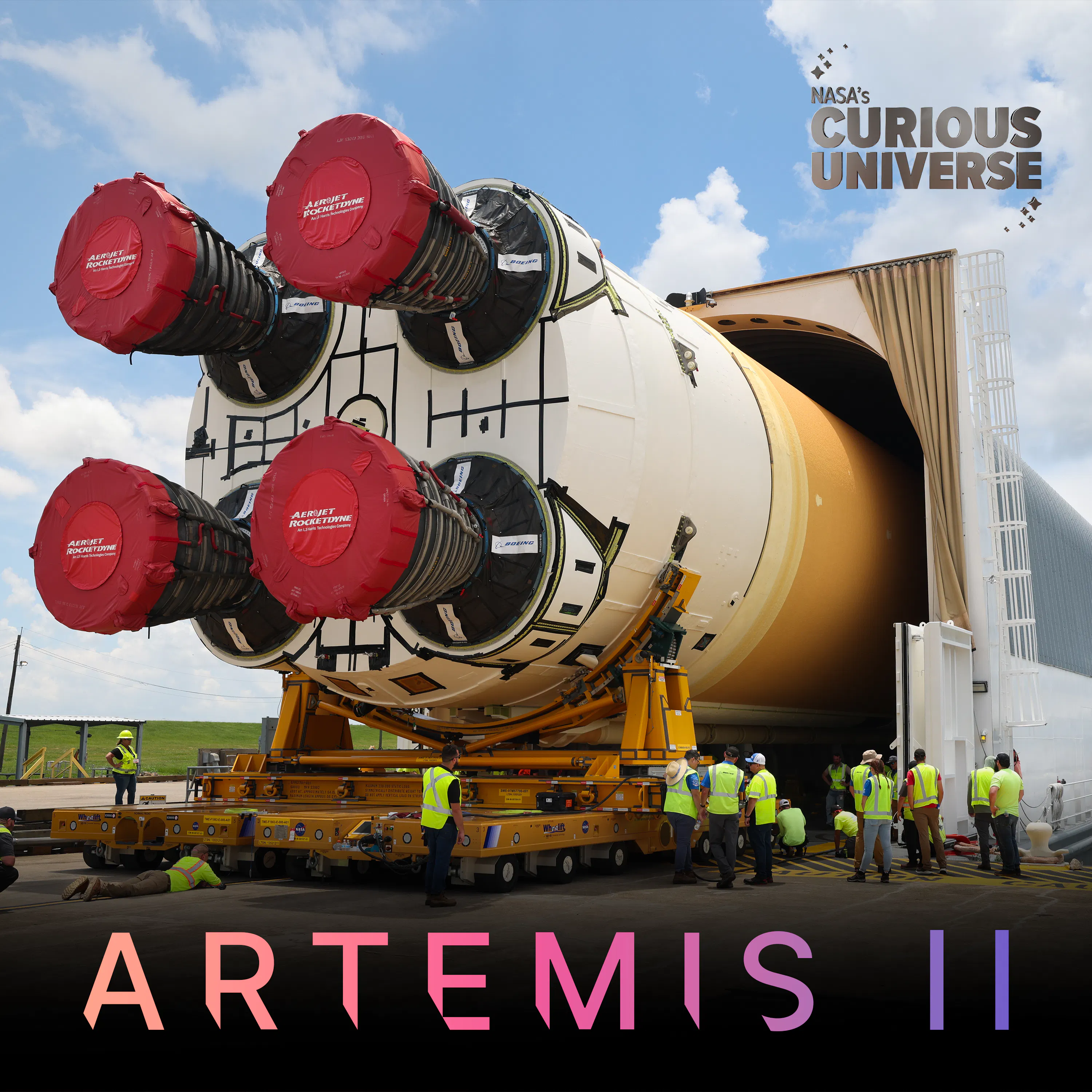
Behind NASA’s Artemis II mission and the astronauts who will fly around the Moon, teams on the ground are essential. Explore some of the epic equipment that makes Artemis II possible—the mobile launcher, crawler-transporter, and NASA’s barge Pegasus—and meet a few of the many specialists who act as the shoulders lifting astronauts into space. For Artemis II news and the latest launch information, visit nasa.gov/artemis-ii

S11 Ep 5Artemis II: How NASA Will Study the Moon—And the Astronauts Going There
During Artemis II, four astronauts will see the lunar surface as few humans have—and possibly, parts of the Moon’s far side that no one has seen before. Learn what lunar science questions NASA hopes to answer through the astronauts' eyes with lunar geologist Kelsey Young. And those astronauts will also be subjects of science. Jancy McPhee, associate chief scientist of NASA’s Human Research Program, explains how studying human health on Artemis II will prepare us for exploration deeper into space than ever before. For Artemis II news and the latest launch information, visit nasa.gov/artemis-ii
S11 Ep 4Artemis II: Inside NASA’s New Ride to the Moon
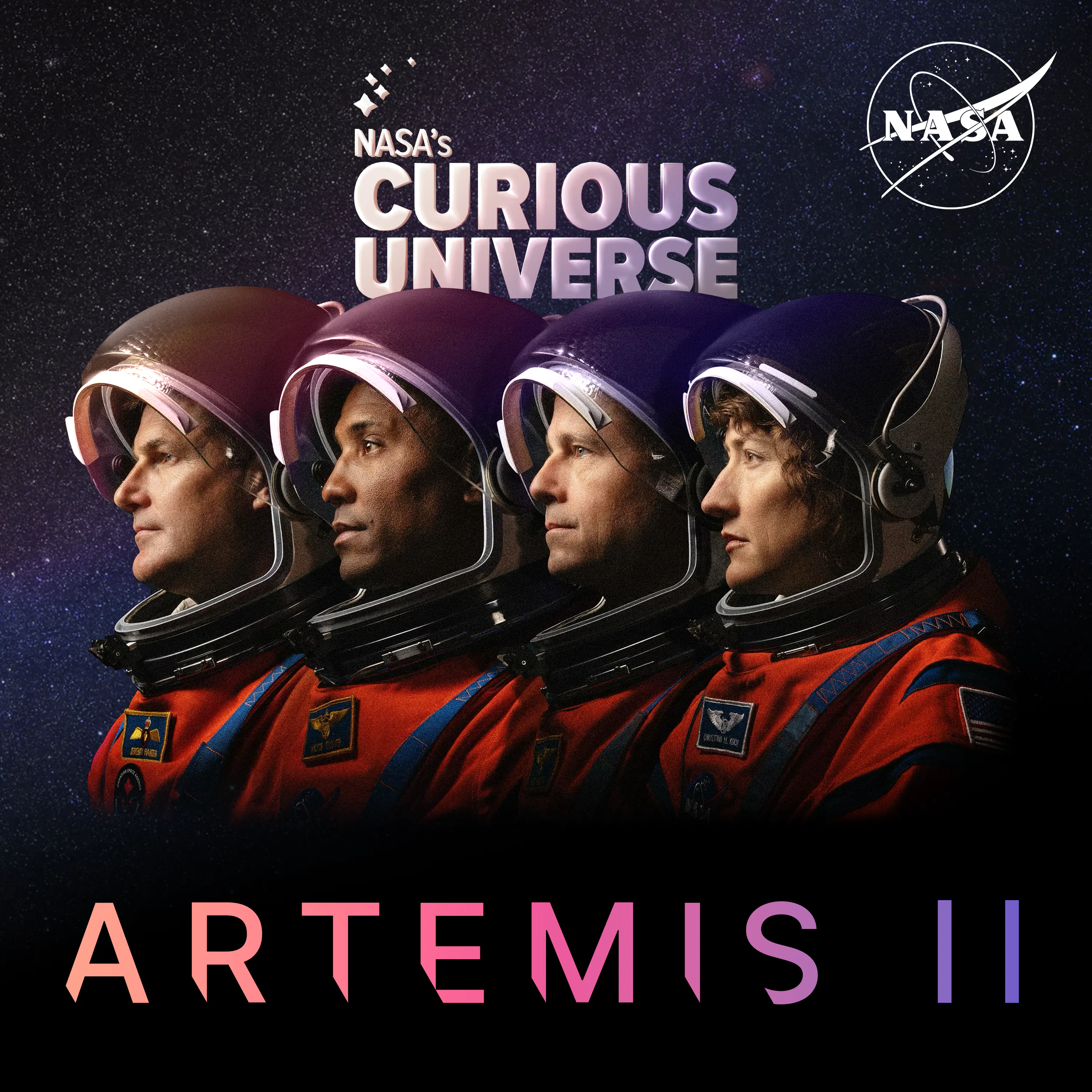
During Artemis II, humans will fly Orion—NASA’s next-generation spaceship designed to take us to the Moon and beyond—for the first time. Tour Orion with Branelle Rodriguez, the vehicle manager for Artemis II, to hear about the support systems that keep astronauts alive and how exactly you use the bathroom en route to the Moon. Then, pop the hood of NASA’s most powerful rocket, the Space Launch System, with David Beaman, one of its key architects. For Artemis II news and the latest launch information, visit nasa.gov/artemis-ii

S11 Ep 3Artemis II: What NASA Learned From Launching Artemis I
In 2022, NASA launched Artemis I, an uncrewed test flight of the rocket and spacecraft that will send humans to the Moon. Go inside Firing Room 1—the nerve center for Artemis launches—and hear from the engineers who launched Artemis I, including the intricate procedures they developed just to fuel the rocket correctly. Now NASA is preparing to launch Artemis II—and to send humans around the Moon. For Artemis II news and the latest launch information, visit nasa.gov/artemis-ii

S11 Ep 2Artemis II: Meet the Moonbound Astronauts
This year, four NASA astronauts will fly around the Moon and back for the first time since the Apollo program. Their mission is called Artemis II. It’s a key test flight that will set the stage for humans to land on the lunar South Pole for the first time and set up a long-term presence there. In this episode, meet your intrepid Artemis II crew: commander Reid Wiseman, pilot Victor Glover and mission specialists Christina Koch and Jeremy Hansen. For Artemis II news and the latest launch information, visit nasa.gov/artemis-ii
S11 Ep 1Launching Soon: Artemis II
trailerThis year, four NASA astronauts are flying around the Moon and back—and Curious Universe is bringing you along for the ride. The mission is called Artemis II. It’s a key test flight that will set the stage for future missions to land on the lunar South Pole for the first time and set up a long-term presence there. In this limited series, get to know your Artemis II astronaut crew, go behind the scenes at NASA facilities across the country and discover the teamwork, passion and problem-solving fueling humanity’s return to the Moon—and beyond. For Artemis II news and the latest launch information, visit nasa.gov/artemis-ii
S10 Ep 1Cosmic Dawn with Nobel Laureate John Mather
The James Webb Space Telescope is doing something astronomers dreamed about for decades: peering into our universe’s early past, a period known as cosmic dawn. A new NASA documentary—also called Cosmic Dawn—chronicles the inside story of Webb’s design, construction, and launch. John Mather, who won the 2006 Nobel Prize for Physics, proposed the telescope and led its science team for decades. In this interview, Mather talks about his life, his research, and the pre-dawn phone call telling him he had won the Nobel Prize. Find more at nasa.gov/cosmicdawn This episode was updated on Dec. 19, 2025, to provide a video version on platforms that support video.