
Movies and Books in Audio
70 episodes — Page 2 of 2
S1 Ep 21Tarzan and the Golden Lion: Chapter Eleven
Tarzan and the Golden Lion is an adventure novel by American writer Edgar Rice Burroughs, the ninth in his series of twenty-four books about the title character Tarzan. It was first published as a seven part serial in Argosy All-Story Weekly beginning in December 1922; and then as a complete novel by A.C. McClurg & Co. on March 24, 1923. Plot summary The story picks up with the Clayton family, Tarzan, Jane Porter and their son Korak, returning from their adventures in the previous novel (#8). Along the way they find an orphaned lion cub, which Tarzan takes home and trains. Flora Hawkes, a previous housemaid of the Clayton's had overheard of Tarzan's discovery of the treasure chamber in the lost city of Opar (from The Return of Tarzan and Tarzan and the Jewels of Opar) and had managed to copy his map to it. She concocted a plan to lead an expedition to collect the gold. As a contingency to discourage any local denizens from questioning them, she sought out and found a Tarzan look-alike named Esteban Miranda to accompany them. Two years passed since the Clayton family picked up their lion cub, making the year around 1935 and Tarzan would have been about 47 years old. His Greystoke estate had become financially depleted due his support of the Allies war efforts and he concluded it was time to return to Opar for another withdrawal. Tarzan encountered Hawkes' party, where he was drugged and ended up in the hands of the Oparians. Queen La, who had come into disfavor with the high priest, felt she had nothing to lose by escaping with Tarzan through the only unguarded route—a path to the legendary valley of diamonds, from which no one had ever returned. There, Tarzan found a race of humans who were little better than animals in intelligence, being enslaved by a race of intelligent gorillas. With the help of his golden lion Jad-bal-ja, Tarzan used the natives to restore La to power. Before leaving he accepted a bag of diamonds for a reward. Meanwhile, Esteban Miranda convinced Tarzan's Waziri party to take the gold from Hawkes' party while most of them were out hunting. He then buried the gold so he could retain it later. The real Tarzan eventually confronted the imposter, who managed to pilfer Tarzan's bag of diamonds. Esteban Miranda was then chased by Jad-balja, but escaped into a river. Esteban Miranda was later captured and permanently imprisoned by a local tribe. Tarzan lost the diamonds but was able to attain the gold and return with it. Film adaptations Comic adaptations The book has been adapted into comic form by Gold Key Comics in Tarzan nos. 172-173, dated April–May 1969, with a script by Gaylord DuBois and art by Russ Manning. "Tarzan and the Golden Lion" was the basis for an episode of Filmation's animated Tarzan, Lord of the Jungle series. Here, the intelligent gorillas were depicted as a race of gorilla men called the Bolmangani where they fought with Tarzan when they were imprisoning a race of monkey people and some animals.
S1 Ep 20Tarzan and the Golden Lion: Chapter Ten
Tarzan and the Golden Lion is an adventure novel by American writer Edgar Rice Burroughs, the ninth in his series of twenty-four books about the title character Tarzan. It was first published as a seven part serial in Argosy All-Story Weekly beginning in December 1922; and then as a complete novel by A.C. McClurg & Co. on March 24, 1923. Plot summary The story picks up with the Clayton family, Tarzan, Jane Porter and their son Korak, returning from their adventures in the previous novel (#8). Along the way they find an orphaned lion cub, which Tarzan takes home and trains. Flora Hawkes, a previous housemaid of the Clayton's had overheard of Tarzan's discovery of the treasure chamber in the lost city of Opar (from The Return of Tarzan and Tarzan and the Jewels of Opar) and had managed to copy his map to it. She concocted a plan to lead an expedition to collect the gold. As a contingency to discourage any local denizens from questioning them, she sought out and found a Tarzan look-alike named Esteban Miranda to accompany them. Two years passed since the Clayton family picked up their lion cub, making the year around 1935 and Tarzan would have been about 47 years old. His Greystoke estate had become financially depleted due his support of the Allies war efforts and he concluded it was time to return to Opar for another withdrawal. Tarzan encountered Hawkes' party, where he was drugged and ended up in the hands of the Oparians. Queen La, who had come into disfavor with the high priest, felt she had nothing to lose by escaping with Tarzan through the only unguarded route—a path to the legendary valley of diamonds, from which no one had ever returned. There, Tarzan found a race of humans who were little better than animals in intelligence, being enslaved by a race of intelligent gorillas. With the help of his golden lion Jad-bal-ja, Tarzan used the natives to restore La to power. Before leaving he accepted a bag of diamonds for a reward. Meanwhile, Esteban Miranda convinced Tarzan's Waziri party to take the gold from Hawkes' party while most of them were out hunting. He then buried the gold so he could retain it later. The real Tarzan eventually confronted the imposter, who managed to pilfer Tarzan's bag of diamonds. Esteban Miranda was then chased by Jad-balja, but escaped into a river. Esteban Miranda was later captured and permanently imprisoned by a local tribe. Tarzan lost the diamonds but was able to attain the gold and return with it. Film adaptations Comic adaptations The book has been adapted into comic form by Gold Key Comics in Tarzan nos. 172-173, dated April–May 1969, with a script by Gaylord DuBois and art by Russ Manning. "Tarzan and the Golden Lion" was the basis for an episode of Filmation's animated Tarzan, Lord of the Jungle series. Here, the intelligent gorillas were depicted as a race of gorilla men called the Bolmangani where they fought with Tarzan when they were imprisoning a race of monkey people and some animals.
S1 Ep 19Tarzan and the Golden Lion: Chapter Nine
Tarzan and the Golden Lion is an adventure novel by American writer Edgar Rice Burroughs, the ninth in his series of twenty-four books about the title character Tarzan. It was first published as a seven part serial in Argosy All-Story Weekly beginning in December 1922; and then as a complete novel by A.C. McClurg & Co. on March 24, 1923. Plot summary The story picks up with the Clayton family, Tarzan, Jane Porter and their son Korak, returning from their adventures in the previous novel (#8). Along the way they find an orphaned lion cub, which Tarzan takes home and trains. Flora Hawkes, a previous housemaid of the Clayton's had overheard of Tarzan's discovery of the treasure chamber in the lost city of Opar (from The Return of Tarzan and Tarzan and the Jewels of Opar) and had managed to copy his map to it. She concocted a plan to lead an expedition to collect the gold. As a contingency to discourage any local denizens from questioning them, she sought out and found a Tarzan look-alike named Esteban Miranda to accompany them. Two years passed since the Clayton family picked up their lion cub, making the year around 1935 and Tarzan would have been about 47 years old. His Greystoke estate had become financially depleted due his support of the Allies war efforts and he concluded it was time to return to Opar for another withdrawal. Tarzan encountered Hawkes' party, where he was drugged and ended up in the hands of the Oparians. Queen La, who had come into disfavor with the high priest, felt she had nothing to lose by escaping with Tarzan through the only unguarded route—a path to the legendary valley of diamonds, from which no one had ever returned. There, Tarzan found a race of humans who were little better than animals in intelligence, being enslaved by a race of intelligent gorillas. With the help of his golden lion Jad-bal-ja, Tarzan used the natives to restore La to power. Before leaving he accepted a bag of diamonds for a reward. Meanwhile, Esteban Miranda convinced Tarzan's Waziri party to take the gold from Hawkes' party while most of them were out hunting. He then buried the gold so he could retain it later. The real Tarzan eventually confronted the imposter, who managed to pilfer Tarzan's bag of diamonds. Esteban Miranda was then chased by Jad-balja, but escaped into a river. Esteban Miranda was later captured and permanently imprisoned by a local tribe. Tarzan lost the diamonds but was able to attain the gold and return with it. Film adaptations Comic adaptations The book has been adapted into comic form by Gold Key Comics in Tarzan nos. 172-173, dated April–May 1969, with a script by Gaylord DuBois and art by Russ Manning. "Tarzan and the Golden Lion" was the basis for an episode of Filmation's animated Tarzan, Lord of the Jungle series. Here, the intelligent gorillas were depicted as a race of gorilla men called the Bolmangani where they fought with Tarzan when they were imprisoning a race of monkey people and some animals.
S1 Ep 18Tarzan and the Golden Lion: Chapter Eight
Tarzan and the Golden Lion is an adventure novel by American writer Edgar Rice Burroughs, the ninth in his series of twenty-four books about the title character Tarzan. It was first published as a seven part serial in Argosy All-Story Weekly beginning in December 1922; and then as a complete novel by A.C. McClurg & Co. on March 24, 1923. Plot summary The story picks up with the Clayton family, Tarzan, Jane Porter and their son Korak, returning from their adventures in the previous novel (#8). Along the way they find an orphaned lion cub, which Tarzan takes home and trains. Flora Hawkes, a previous housemaid of the Clayton's had overheard of Tarzan's discovery of the treasure chamber in the lost city of Opar (from The Return of Tarzan and Tarzan and the Jewels of Opar) and had managed to copy his map to it. She concocted a plan to lead an expedition to collect the gold. As a contingency to discourage any local denizens from questioning them, she sought out and found a Tarzan look-alike named Esteban Miranda to accompany them. Two years passed since the Clayton family picked up their lion cub, making the year around 1935 and Tarzan would have been about 47 years old. His Greystoke estate had become financially depleted due his support of the Allies war efforts and he concluded it was time to return to Opar for another withdrawal. Tarzan encountered Hawkes' party, where he was drugged and ended up in the hands of the Oparians. Queen La, who had come into disfavor with the high priest, felt she had nothing to lose by escaping with Tarzan through the only unguarded route—a path to the legendary valley of diamonds, from which no one had ever returned. There, Tarzan found a race of humans who were little better than animals in intelligence, being enslaved by a race of intelligent gorillas. With the help of his golden lion Jad-bal-ja, Tarzan used the natives to restore La to power. Before leaving he accepted a bag of diamonds for a reward. Meanwhile, Esteban Miranda convinced Tarzan's Waziri party to take the gold from Hawkes' party while most of them were out hunting. He then buried the gold so he could retain it later. The real Tarzan eventually confronted the imposter, who managed to pilfer Tarzan's bag of diamonds. Esteban Miranda was then chased by Jad-balja, but escaped into a river. Esteban Miranda was later captured and permanently imprisoned by a local tribe. Tarzan lost the diamonds but was able to attain the gold and return with it. Film adaptations Comic adaptations The book has been adapted into comic form by Gold Key Comics in Tarzan nos. 172-173, dated April–May 1969, with a script by Gaylord DuBois and art by Russ Manning. "Tarzan and the Golden Lion" was the basis for an episode of Filmation's animated Tarzan, Lord of the Jungle series. Here, the intelligent gorillas were depicted as a race of gorilla men called the Bolmangani where they fought with Tarzan when they were imprisoning a race of monkey people and some animals.
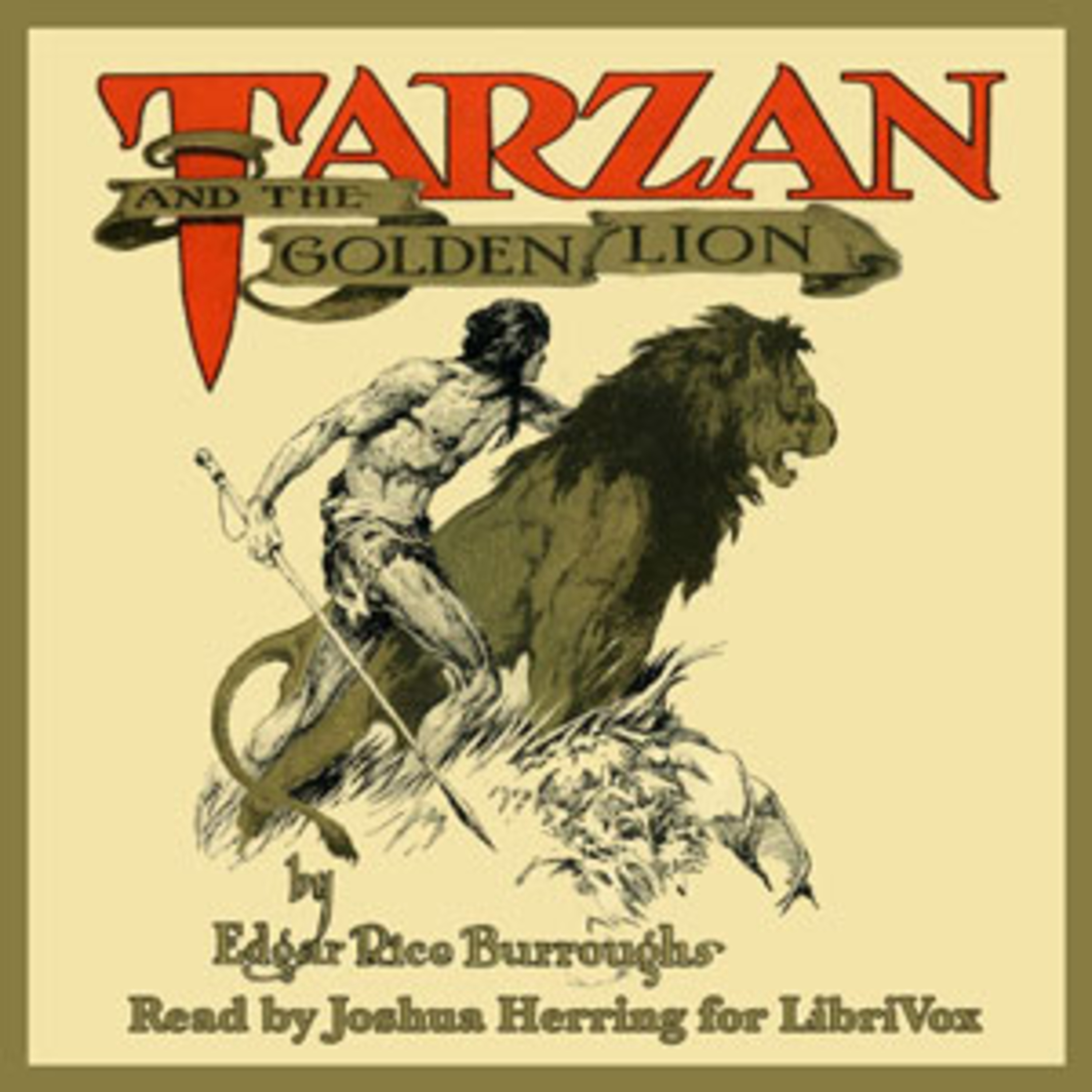
S1 Ep 17Tarzan and the Golden Lion: Chapter Seven
Tarzan and the Golden Lion is an adventure novel by American writer Edgar Rice Burroughs, the ninth in his series of twenty-four books about the title character Tarzan. It was first published as a seven part serial in Argosy All-Story Weekly beginning in December 1922; and then as a complete novel by A.C. McClurg & Co. on March 24, 1923. Plot summary The story picks up with the Clayton family, Tarzan, Jane Porter and their son Korak, returning from their adventures in the previous novel (#8). Along the way they find an orphaned lion cub, which Tarzan takes home and trains. Flora Hawkes, a previous housemaid of the Clayton's had overheard of Tarzan's discovery of the treasure chamber in the lost city of Opar (from The Return of Tarzan and Tarzan and the Jewels of Opar) and had managed to copy his map to it. She concocted a plan to lead an expedition to collect the gold. As a contingency to discourage any local denizens from questioning them, she sought out and found a Tarzan look-alike named Esteban Miranda to accompany them. Two years passed since the Clayton family picked up their lion cub, making the year around 1935 and Tarzan would have been about 47 years old. His Greystoke estate had become financially depleted due his support of the Allies war efforts and he concluded it was time to return to Opar for another withdrawal. Tarzan encountered Hawkes' party, where he was drugged and ended up in the hands of the Oparians. Queen La, who had come into disfavor with the high priest, felt she had nothing to lose by escaping with Tarzan through the only unguarded route—a path to the legendary valley of diamonds, from which no one had ever returned. There, Tarzan found a race of humans who were little better than animals in intelligence, being enslaved by a race of intelligent gorillas. With the help of his golden lion Jad-bal-ja, Tarzan used the natives to restore La to power. Before leaving he accepted a bag of diamonds for a reward. Meanwhile, Esteban Miranda convinced Tarzan's Waziri party to take the gold from Hawkes' party while most of them were out hunting. He then buried the gold so he could retain it later. The real Tarzan eventually confronted the imposter, who managed to pilfer Tarzan's bag of diamonds. Esteban Miranda was then chased by Jad-balja, but escaped into a river. Esteban Miranda was later captured and permanently imprisoned by a local tribe. Tarzan lost the diamonds but was able to attain the gold and return with it. Film adaptations Comic adaptations The book has been adapted into comic form by Gold Key Comics in Tarzan nos. 172-173, dated April–May 1969, with a script by Gaylord DuBois and art by Russ Manning. "Tarzan and the Golden Lion" was the basis for an episode of Filmation's animated Tarzan, Lord of the Jungle series. Here, the intelligent gorillas were depicted as a race of gorilla men called the Bolmangani where they fought with Tarzan when they were imprisoning a race of monkey people and some animals.
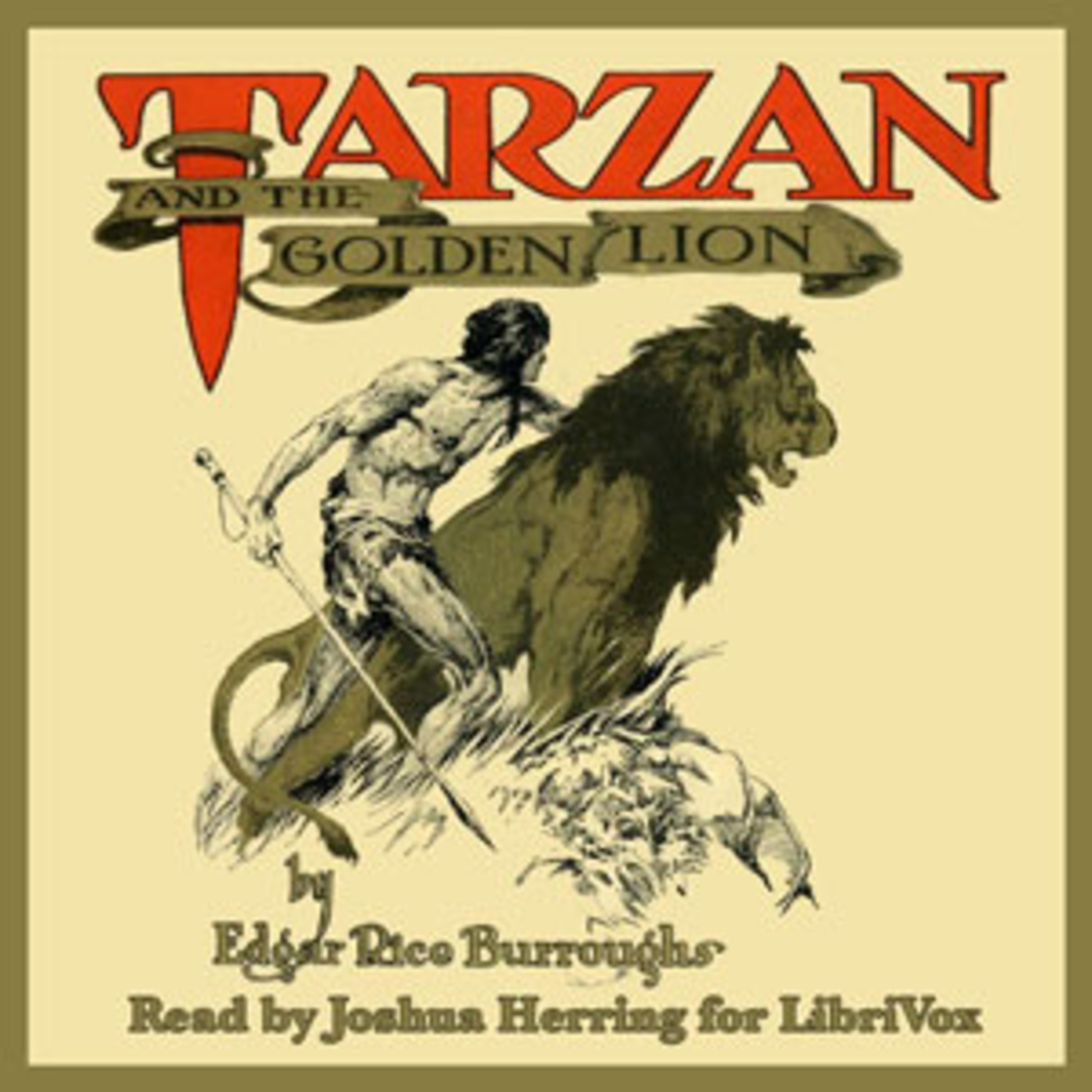
S1 Ep 16Tarzan and the Golden Lion: Chapter Six
Tarzan and the Golden Lion is an adventure novel by American writer Edgar Rice Burroughs, the ninth in his series of twenty-four books about the title character Tarzan. It was first published as a seven part serial in Argosy All-Story Weekly beginning in December 1922; and then as a complete novel by A.C. McClurg & Co. on March 24, 1923. Plot summary The story picks up with the Clayton family, Tarzan, Jane Porter and their son Korak, returning from their adventures in the previous novel (#8). Along the way they find an orphaned lion cub, which Tarzan takes home and trains. Flora Hawkes, a previous housemaid of the Clayton's had overheard of Tarzan's discovery of the treasure chamber in the lost city of Opar (from The Return of Tarzan and Tarzan and the Jewels of Opar) and had managed to copy his map to it. She concocted a plan to lead an expedition to collect the gold. As a contingency to discourage any local denizens from questioning them, she sought out and found a Tarzan look-alike named Esteban Miranda to accompany them. Two years passed since the Clayton family picked up their lion cub, making the year around 1935 and Tarzan would have been about 47 years old. His Greystoke estate had become financially depleted due his support of the Allies war efforts and he concluded it was time to return to Opar for another withdrawal. Tarzan encountered Hawkes' party, where he was drugged and ended up in the hands of the Oparians. Queen La, who had come into disfavor with the high priest, felt she had nothing to lose by escaping with Tarzan through the only unguarded route—a path to the legendary valley of diamonds, from which no one had ever returned. There, Tarzan found a race of humans who were little better than animals in intelligence, being enslaved by a race of intelligent gorillas. With the help of his golden lion Jad-bal-ja, Tarzan used the natives to restore La to power. Before leaving he accepted a bag of diamonds for a reward. Meanwhile, Esteban Miranda convinced Tarzan's Waziri party to take the gold from Hawkes' party while most of them were out hunting. He then buried the gold so he could retain it later. The real Tarzan eventually confronted the imposter, who managed to pilfer Tarzan's bag of diamonds. Esteban Miranda was then chased by Jad-balja, but escaped into a river. Esteban Miranda was later captured and permanently imprisoned by a local tribe. Tarzan lost the diamonds but was able to attain the gold and return with it. Film adaptations Comic adaptations The book has been adapted into comic form by Gold Key Comics in Tarzan nos. 172-173, dated April–May 1969, with a script by Gaylord DuBois and art by Russ Manning. "Tarzan and the Golden Lion" was the basis for an episode of Filmation's animated Tarzan, Lord of the Jungle series. Here, the intelligent gorillas were depicted as a race of gorilla men called the Bolmangani where they fought with Tarzan when they were imprisoning a race of monkey people and some animals.
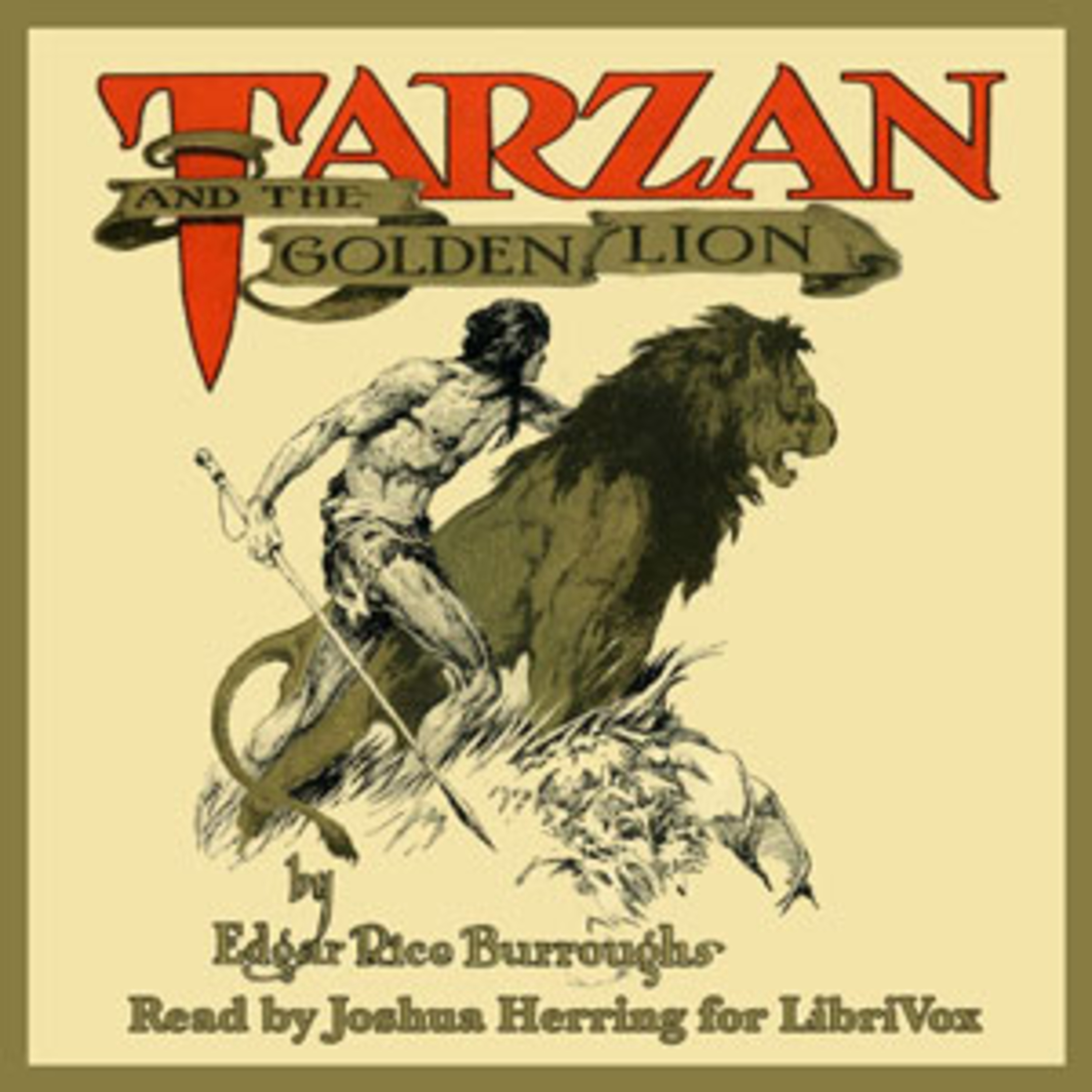
S1 Ep 15Tarzan and the Golden Lion: Chapter Five
Tarzan and the Golden Lion is an adventure novel by American writer Edgar Rice Burroughs, the ninth in his series of twenty-four books about the title character Tarzan. It was first published as a seven part serial in Argosy All-Story Weekly beginning in December 1922; and then as a complete novel by A.C. McClurg & Co. on March 24, 1923. Plot summary The story picks up with the Clayton family, Tarzan, Jane Porter and their son Korak, returning from their adventures in the previous novel (#8). Along the way they find an orphaned lion cub, which Tarzan takes home and trains. Flora Hawkes, a previous housemaid of the Clayton's had overheard of Tarzan's discovery of the treasure chamber in the lost city of Opar (from The Return of Tarzan and Tarzan and the Jewels of Opar) and had managed to copy his map to it. She concocted a plan to lead an expedition to collect the gold. As a contingency to discourage any local denizens from questioning them, she sought out and found a Tarzan look-alike named Esteban Miranda to accompany them. Two years passed since the Clayton family picked up their lion cub, making the year around 1935 and Tarzan would have been about 47 years old. His Greystoke estate had become financially depleted due his support of the Allies war efforts and he concluded it was time to return to Opar for another withdrawal. Tarzan encountered Hawkes' party, where he was drugged and ended up in the hands of the Oparians. Queen La, who had come into disfavor with the high priest, felt she had nothing to lose by escaping with Tarzan through the only unguarded route—a path to the legendary valley of diamonds, from which no one had ever returned. There, Tarzan found a race of humans who were little better than animals in intelligence, being enslaved by a race of intelligent gorillas. With the help of his golden lion Jad-bal-ja, Tarzan used the natives to restore La to power. Before leaving he accepted a bag of diamonds for a reward. Meanwhile, Esteban Miranda convinced Tarzan's Waziri party to take the gold from Hawkes' party while most of them were out hunting. He then buried the gold so he could retain it later. The real Tarzan eventually confronted the imposter, who managed to pilfer Tarzan's bag of diamonds. Esteban Miranda was then chased by Jad-balja, but escaped into a river. Esteban Miranda was later captured and permanently imprisoned by a local tribe. Tarzan lost the diamonds but was able to attain the gold and return with it. Film adaptations Comic adaptations The book has been adapted into comic form by Gold Key Comics in Tarzan nos. 172-173, dated April–May 1969, with a script by Gaylord DuBois and art by Russ Manning. "Tarzan and the Golden Lion" was the basis for an episode of Filmation's animated Tarzan, Lord of the Jungle series. Here, the intelligent gorillas were depicted as a race of gorilla men called the Bolmangani where they fought with Tarzan when they were imprisoning a race of monkey people and some animals.
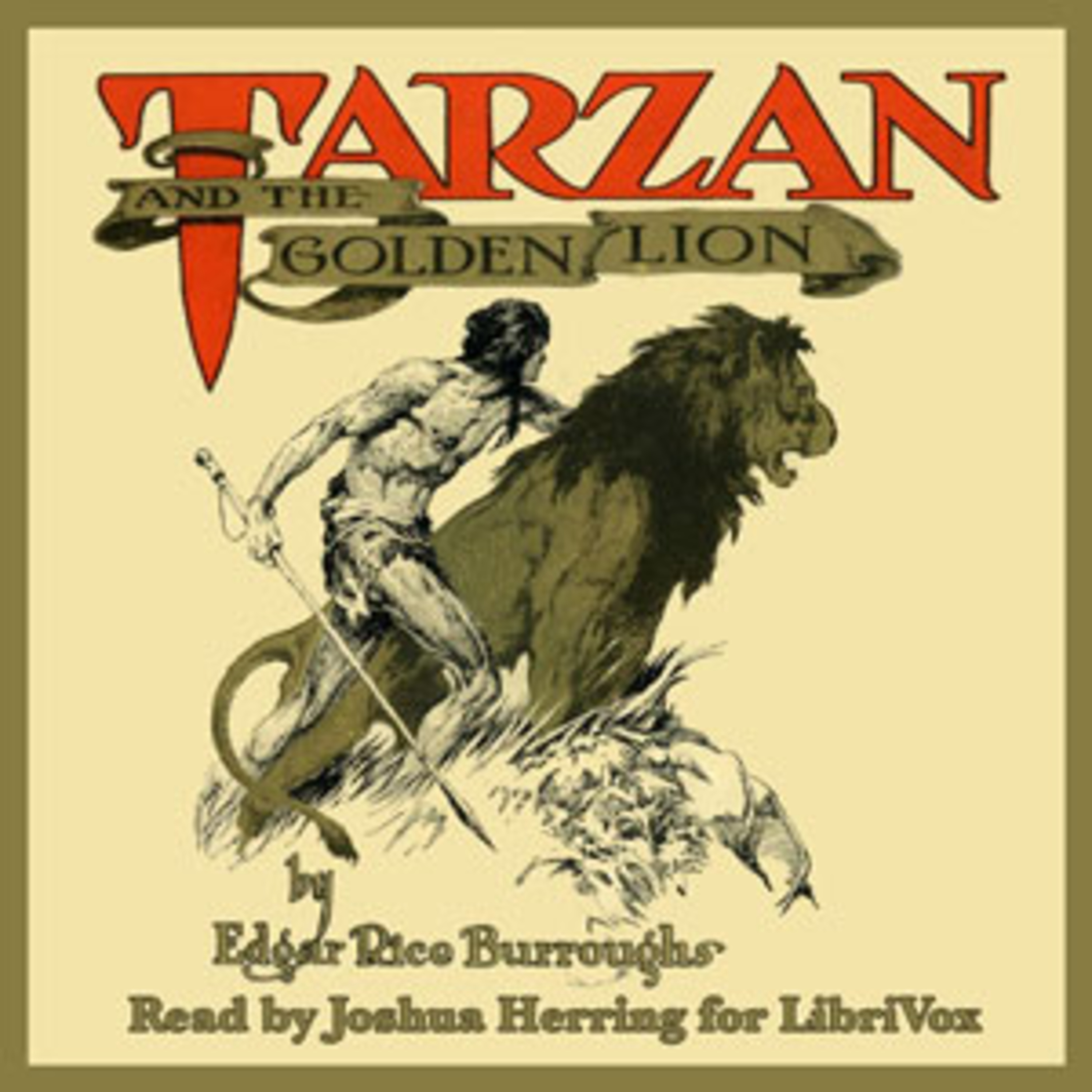
S1 Ep 14Tarzan and the Golden Lion: Chapter Four
Tarzan and the Golden Lion is an adventure novel by American writer Edgar Rice Burroughs, the ninth in his series of twenty-four books about the title character Tarzan. It was first published as a seven part serial in Argosy All-Story Weekly beginning in December 1922; and then as a complete novel by A.C. McClurg & Co. on March 24, 1923. Plot summary The story picks up with the Clayton family, Tarzan, Jane Porter and their son Korak, returning from their adventures in the previous novel (#8). Along the way they find an orphaned lion cub, which Tarzan takes home and trains. Flora Hawkes, a previous housemaid of the Clayton's had overheard of Tarzan's discovery of the treasure chamber in the lost city of Opar (from The Return of Tarzan and Tarzan and the Jewels of Opar) and had managed to copy his map to it. She concocted a plan to lead an expedition to collect the gold. As a contingency to discourage any local denizens from questioning them, she sought out and found a Tarzan look-alike named Esteban Miranda to accompany them. Two years passed since the Clayton family picked up their lion cub, making the year around 1935 and Tarzan would have been about 47 years old. His Greystoke estate had become financially depleted due his support of the Allies war efforts and he concluded it was time to return to Opar for another withdrawal. Tarzan encountered Hawkes' party, where he was drugged and ended up in the hands of the Oparians. Queen La, who had come into disfavor with the high priest, felt she had nothing to lose by escaping with Tarzan through the only unguarded route—a path to the legendary valley of diamonds, from which no one had ever returned. There, Tarzan found a race of humans who were little better than animals in intelligence, being enslaved by a race of intelligent gorillas. With the help of his golden lion Jad-bal-ja, Tarzan used the natives to restore La to power. Before leaving he accepted a bag of diamonds for a reward. Meanwhile, Esteban Miranda convinced Tarzan's Waziri party to take the gold from Hawkes' party while most of them were out hunting. He then buried the gold so he could retain it later. The real Tarzan eventually confronted the imposter, who managed to pilfer Tarzan's bag of diamonds. Esteban Miranda was then chased by Jad-balja, but escaped into a river. Esteban Miranda was later captured and permanently imprisoned by a local tribe. Tarzan lost the diamonds but was able to attain the gold and return with it. Film adaptations Comic adaptations The book has been adapted into comic form by Gold Key Comics in Tarzan nos. 172-173, dated April–May 1969, with a script by Gaylord DuBois and art by Russ Manning. "Tarzan and the Golden Lion" was the basis for an episode of Filmation's animated Tarzan, Lord of the Jungle series. Here, the intelligent gorillas were depicted as a race of gorilla men called the Bolmangani where they fought with Tarzan when they were imprisoning a race of monkey people and some animals.
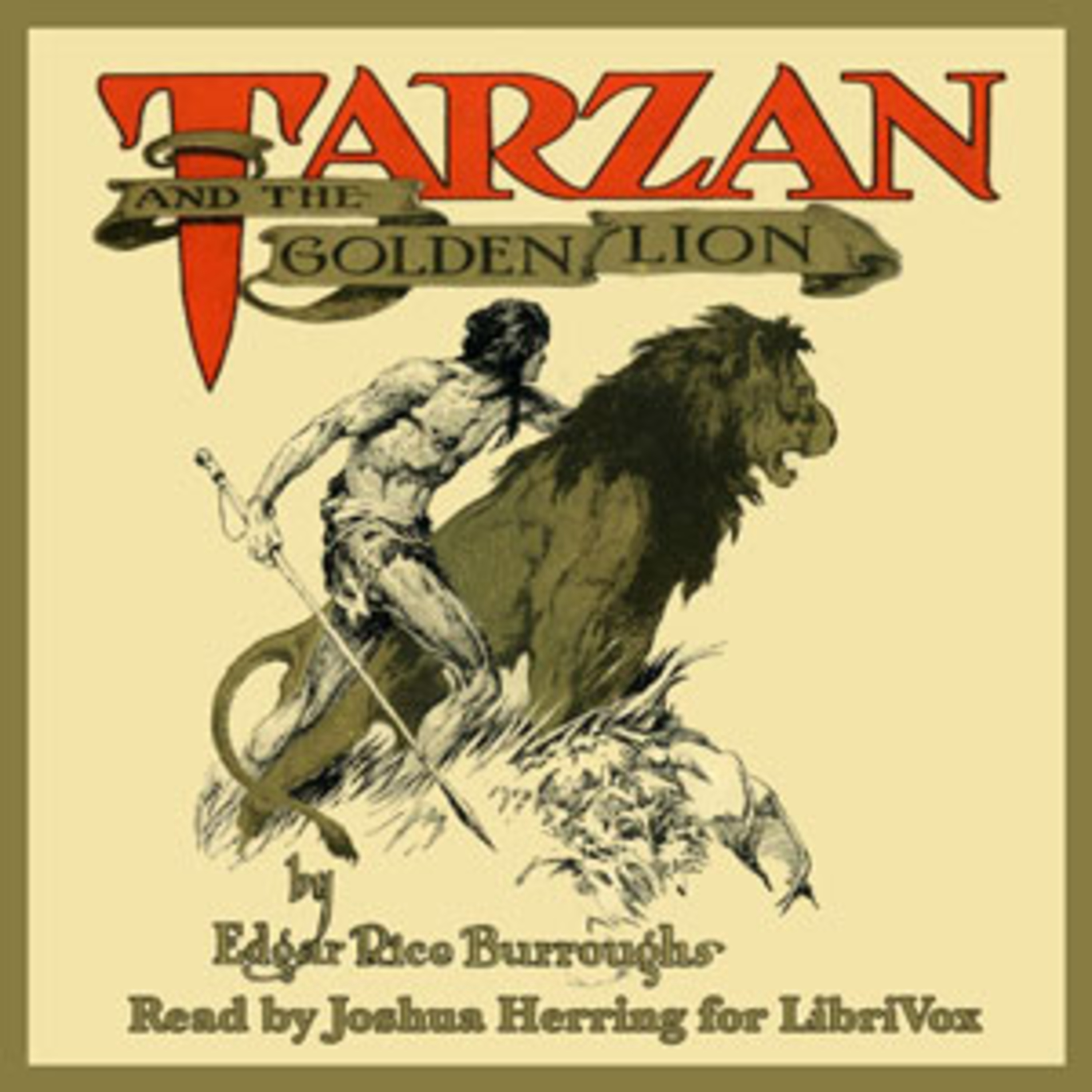
S1 Ep 13Tarzan and the Golden Lion: Chapter Three
Tarzan and the Golden Lion is an adventure novel by American writer Edgar Rice Burroughs, the ninth in his series of twenty-four books about the title character Tarzan. It was first published as a seven part serial in Argosy All-Story Weekly beginning in December 1922; and then as a complete novel by A.C. McClurg & Co. on March 24, 1923. Plot summary The story picks up with the Clayton family, Tarzan, Jane Porter and their son Korak, returning from their adventures in the previous novel (#8). Along the way they find an orphaned lion cub, which Tarzan takes home and trains. Flora Hawkes, a previous housemaid of the Clayton's had overheard of Tarzan's discovery of the treasure chamber in the lost city of Opar (from The Return of Tarzan and Tarzan and the Jewels of Opar) and had managed to copy his map to it. She concocted a plan to lead an expedition to collect the gold. As a contingency to discourage any local denizens from questioning them, she sought out and found a Tarzan look-alike named Esteban Miranda to accompany them. Two years passed since the Clayton family picked up their lion cub, making the year around 1935 and Tarzan would have been about 47 years old. His Greystoke estate had become financially depleted due his support of the Allies war efforts and he concluded it was time to return to Opar for another withdrawal. Tarzan encountered Hawkes' party, where he was drugged and ended up in the hands of the Oparians. Queen La, who had come into disfavor with the high priest, felt she had nothing to lose by escaping with Tarzan through the only unguarded route—a path to the legendary valley of diamonds, from which no one had ever returned. There, Tarzan found a race of humans who were little better than animals in intelligence, being enslaved by a race of intelligent gorillas. With the help of his golden lion Jad-bal-ja, Tarzan used the natives to restore La to power. Before leaving he accepted a bag of diamonds for a reward. Meanwhile, Esteban Miranda convinced Tarzan's Waziri party to take the gold from Hawkes' party while most of them were out hunting. He then buried the gold so he could retain it later. The real Tarzan eventually confronted the imposter, who managed to pilfer Tarzan's bag of diamonds. Esteban Miranda was then chased by Jad-balja, but escaped into a river. Esteban Miranda was later captured and permanently imprisoned by a local tribe. Tarzan lost the diamonds but was able to attain the gold and return with it. Film adaptations Comic adaptations The book has been adapted into comic form by Gold Key Comics in Tarzan nos. 172-173, dated April–May 1969, with a script by Gaylord DuBois and art by Russ Manning. "Tarzan and the Golden Lion" was the basis for an episode of Filmation's animated Tarzan, Lord of the Jungle series. Here, the intelligent gorillas were depicted as a race of gorilla men called the Bolmangani where they fought with Tarzan when they were imprisoning a race of monkey people and some animals.
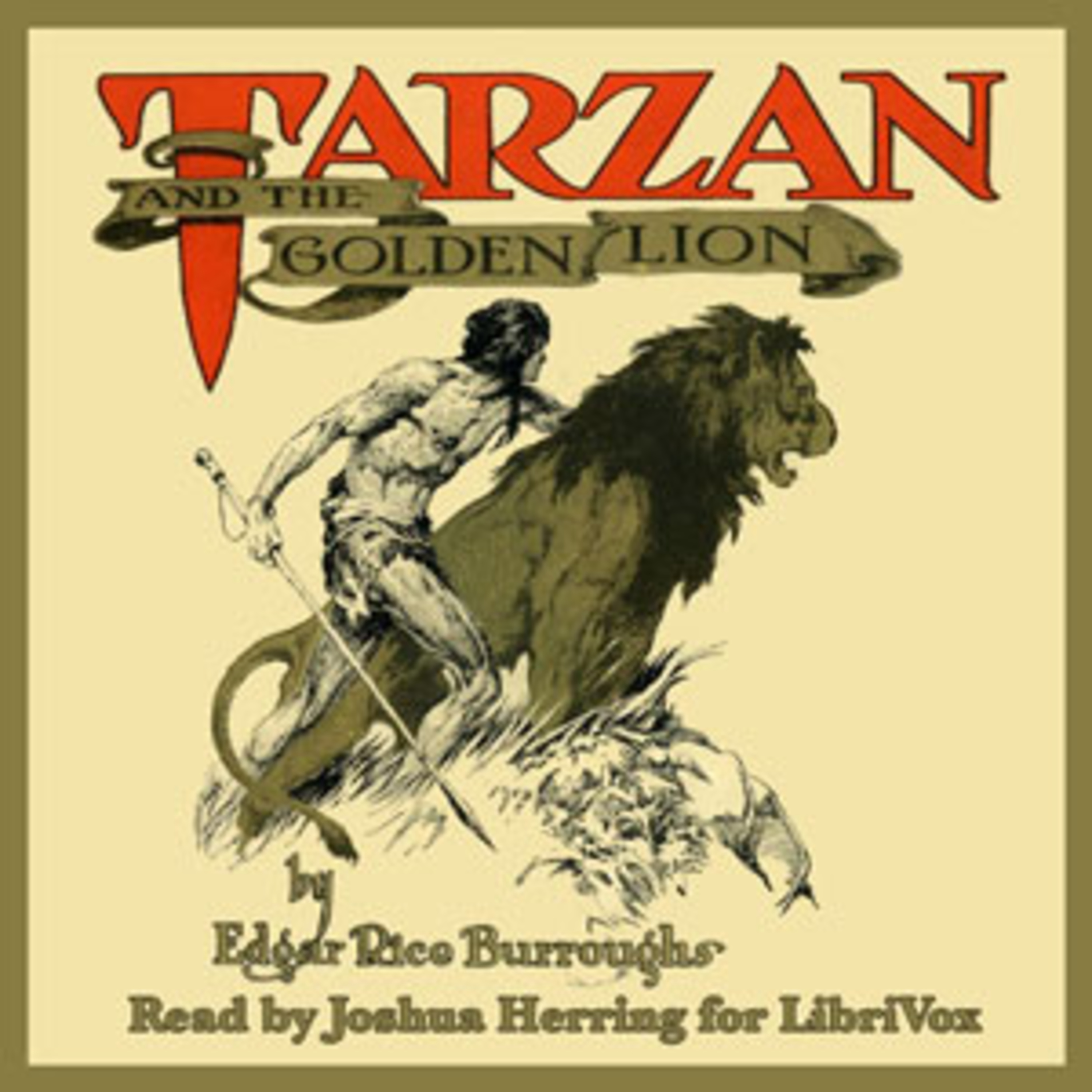
S1 Ep 12Tarzan and the Golden Lion: Chapter Two
Tarzan and the Golden Lion is an adventure novel by American writer Edgar Rice Burroughs, the ninth in his series of twenty-four books about the title character Tarzan. It was first published as a seven part serial in Argosy All-Story Weekly beginning in December 1922; and then as a complete novel by A.C. McClurg & Co. on March 24, 1923. Plot summary The story picks up with the Clayton family, Tarzan, Jane Porter and their son Korak, returning from their adventures in the previous novel (#8). Along the way they find an orphaned lion cub, which Tarzan takes home and trains. Flora Hawkes, a previous housemaid of the Clayton's had overheard of Tarzan's discovery of the treasure chamber in the lost city of Opar (from The Return of Tarzan and Tarzan and the Jewels of Opar) and had managed to copy his map to it. She concocted a plan to lead an expedition to collect the gold. As a contingency to discourage any local denizens from questioning them, she sought out and found a Tarzan look-alike named Esteban Miranda to accompany them. Two years passed since the Clayton family picked up their lion cub, making the year around 1935 and Tarzan would have been about 47 years old. His Greystoke estate had become financially depleted due his support of the Allies war efforts and he concluded it was time to return to Opar for another withdrawal. Tarzan encountered Hawkes' party, where he was drugged and ended up in the hands of the Oparians. Queen La, who had come into disfavor with the high priest, felt she had nothing to lose by escaping with Tarzan through the only unguarded route—a path to the legendary valley of diamonds, from which no one had ever returned. There, Tarzan found a race of humans who were little better than animals in intelligence, being enslaved by a race of intelligent gorillas. With the help of his golden lion Jad-bal-ja, Tarzan used the natives to restore La to power. Before leaving he accepted a bag of diamonds for a reward. Meanwhile, Esteban Miranda convinced Tarzan's Waziri party to take the gold from Hawkes' party while most of them were out hunting. He then buried the gold so he could retain it later. The real Tarzan eventually confronted the imposter, who managed to pilfer Tarzan's bag of diamonds. Esteban Miranda was then chased by Jad-balja, but escaped into a river. Esteban Miranda was later captured and permanently imprisoned by a local tribe. Tarzan lost the diamonds but was able to attain the gold and return with it. Film adaptations Comic adaptations The book has been adapted into comic form by Gold Key Comics in Tarzan nos. 172-173, dated April–May 1969, with a script by Gaylord DuBois and art by Russ Manning. "Tarzan and the Golden Lion" was the basis for an episode of Filmation's animated Tarzan, Lord of the Jungle series. Here, the intelligent gorillas were depicted as a race of gorilla men called the Bolmangani where they fought with Tarzan when they were imprisoning a race of monkey people and some animals.
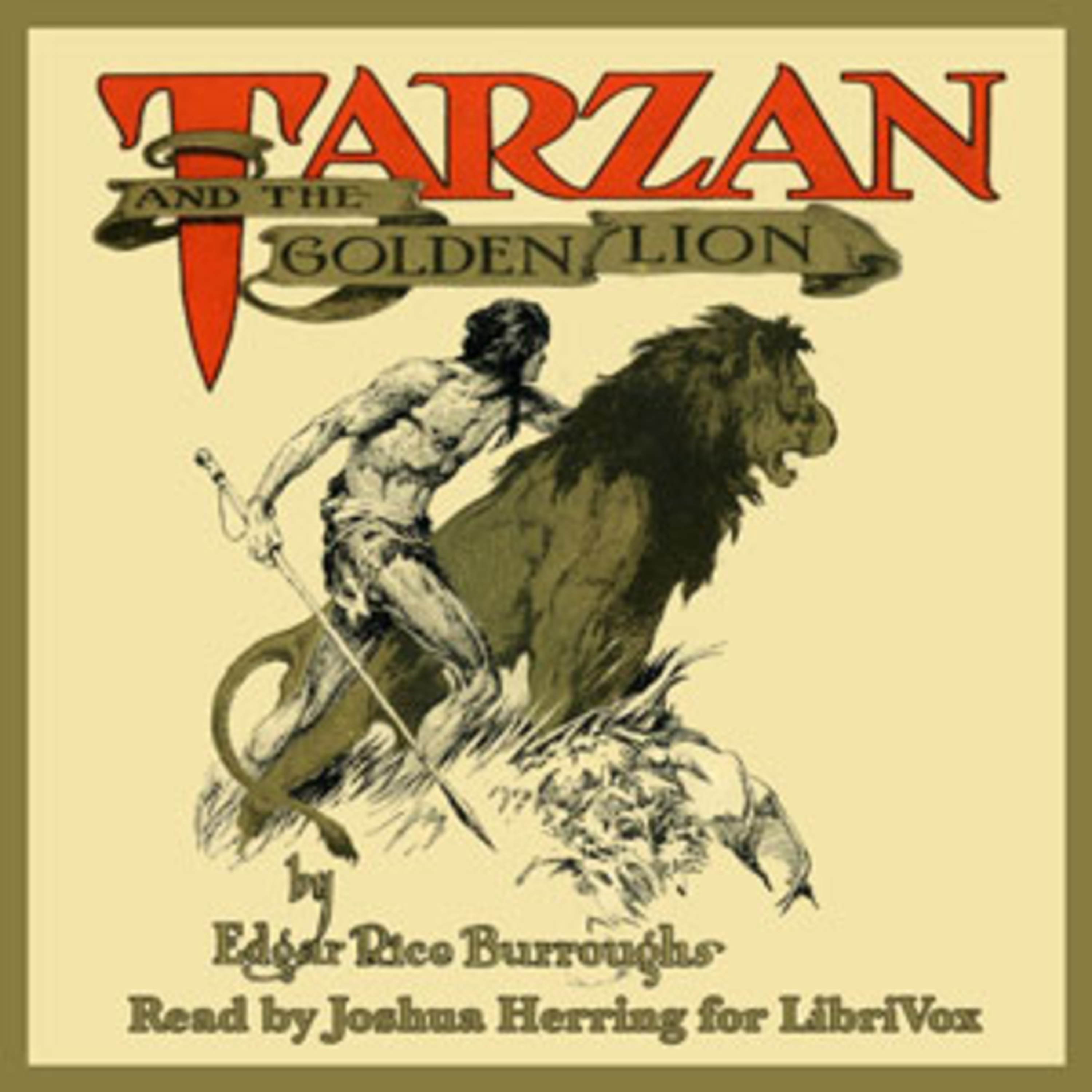
S1 Ep 11Tarzan and the Golden Lion: Chapter One
Tarzan and the Golden Lion is an adventure novel by American writer Edgar Rice Burroughs, the ninth in his series of twenty-four books about the title character Tarzan. It was first published as a seven part serial in Argosy All-Story Weekly beginning in December 1922; and then as a complete novel by A.C. McClurg & Co. on March 24, 1923. Plot summary The story picks up with the Clayton family, Tarzan, Jane Porter and their son Korak, returning from their adventures in the previous novel (#8). Along the way they find an orphaned lion cub, which Tarzan takes home and trains. Flora Hawkes, a previous housemaid of the Clayton's had overheard of Tarzan's discovery of the treasure chamber in the lost city of Opar (from The Return of Tarzan and Tarzan and the Jewels of Opar) and had managed to copy his map to it. She concocted a plan to lead an expedition to collect the gold. As a contingency to discourage any local denizens from questioning them, she sought out and found a Tarzan look-alike named Esteban Miranda to accompany them. Two years passed since the Clayton family picked up their lion cub, making the year around 1935 and Tarzan would have been about 47 years old. His Greystoke estate had become financially depleted due his support of the Allies war efforts and he concluded it was time to return to Opar for another withdrawal. Tarzan encountered Hawkes' party, where he was drugged and ended up in the hands of the Oparians. Queen La, who had come into disfavor with the high priest, felt she had nothing to lose by escaping with Tarzan through the only unguarded route—a path to the legendary valley of diamonds, from which no one had ever returned. There, Tarzan found a race of humans who were little better than animals in intelligence, being enslaved by a race of intelligent gorillas. With the help of his golden lion Jad-bal-ja, Tarzan used the natives to restore La to power. Before leaving he accepted a bag of diamonds for a reward. Meanwhile, Esteban Miranda convinced Tarzan's Waziri party to take the gold from Hawkes' party while most of them were out hunting. He then buried the gold so he could retain it later. The real Tarzan eventually confronted the imposter, who managed to pilfer Tarzan's bag of diamonds. Esteban Miranda was then chased by Jad-balja, but escaped into a river. Esteban Miranda was later captured and permanently imprisoned by a local tribe. Tarzan lost the diamonds but was able to attain the gold and return with it. Film adaptations Comic adaptations The book has been adapted into comic form by Gold Key Comics in Tarzan nos. 172-173, dated April–May 1969, with a script by Gaylord DuBois and art by Russ Manning. "Tarzan and the Golden Lion" was the basis for an episode of Filmation's animated Tarzan, Lord of the Jungle series. Here, the intelligent gorillas were depicted as a race of gorilla men called the Bolmangani where they fought with Tarzan when they were imprisoning a race of monkey people and some animals.
S1 Ep 10The life of Joan Ruth Bader Ginsburg
Joan Ruth Bader Ginsburg, was an American jurist who was an associate justice of the Supreme Court of the United States from 1993 until her death in 2020. She was nominated by President Bill Clinton and was generally viewed as belonging to the liberal wing of the Court. Ginsburg was the second woman to serve on the U.S. Supreme Court, after Sandra Day O'Connor. During her tenure Ginsburg wrote notable majority opinions, including United States v Virginia (1996), Olmstead v L C (1999), and Friends of the Earth, Inc. v Laidlaw Environmental Services, Inc. (2000). Between O'Connor's retirement in 2006 and appointment of Sonia Sotomayor in 2009, she was the only female justice on the Supreme Court. During that time, Ginsburg became more forceful with her dissents. Ginsburg was born and grew up in Brooklyn, New York. Her older sister died when she was a baby, and her mother died shortly before Ginsburg graduated from high school. She earned her bachelor's degree at Cornell University and married Martin D Ginsburg, becoming a mother before starting law school at Harvard, where she was one of the few women in her class. Ginsburg transferred to Columbia Law School, where she graduated joint first in her class. After law school, Ginsburg entered academia. She was a professor at Rutgers Law School and Columbia Law School, teaching civil procedure as one of the few women in her field. Ginsburg spent much of her legal career as an advocate for gender equality and women's rights, winning many arguments before the Supreme Court. She advocated as a volunteer attorney for the American Civil Liberties Union and was a member of its board of directors and one of its general counsel in the 1970s. In 1980, President Jimmy Carter appointed her to the U S Court of Appeals for the District of Columbia Circuit, where she served until her appointment to the Supreme Court. Ginsburg received attention in American popular culture for her fiery liberal dissents. She was playfully and notably dubbed "The Notorious R B G" by a law student, a reference to the late Brooklyn-born rapper The Notorious B I G, and she later embraced the moniker. Ginsburg died at her home in Washington D C, on September 18, 2020, at the age of 87, from complications of metastatic pancreatic cancer.
S1 Ep 9Woodstock
Woodstock was a music festival held August 15–18, 1969, on Max Yasgur's dairy farm in Bethel, New York, 40 miles (65 km) southwest of Woodstock. Billed as "an Aquarian Exposition: 3 Days of Peace & Music" and alternatively referred to as the Woodstock Rock Festival, it attracted an audience of more than 400,000. Thirty-two acts performed outdoors despite sporadic rain. The festival has become widely regarded as a pivotal moment in popular music history as well as a defining event for the counterculture generation. The event's significance was reinforced by a 1970 documentary film, an accompanying soundtrack album, and a song written by Joni Mitchell that became a major hit for both Crosby, Stills, Nash & Young and Matthews Southern Comfort. Music events bearing the Woodstock name have been planned for anniversaries including the tenth, twentieth, twenty-fifth, thirtieth, fortieth, and fiftieth. In 2004 Rolling Stone magazine listed it as number 19 of the 50 Moments That Changed the History of Rock and Roll. In 2017 the festival site became listed on the National Register of Historic Places.
S1 Ep 8The San Francisco cable car system
The San Francisco cable car system is the world's last manually operated cable car system. An icon of San Francisco, the cable car system forms part of the intermodal urban transport network operated by the San Francisco Municipal Railway. Of the 23 lines established between 1873 and 1890, only three remain (one of which combines parts of two earlier lines): two routes from downtown near Union Square to Fisherman's Wharf, and a third route along California Street. While the cable cars are used to a certain extent by commuters, the vast majority of their seven million annual passengers are tourists, and as a result, the wait to get on can often reach two hours or more. They are among the most significant tourist attractions in the city, along with Alcatraz Island, the Golden Gate Bridge, and Fisherman's Wharf. The cable cars are listed on the National Register of Historic Places. The cable cars are separate from San Francisco's heritage streetcars, which operate on Market Street and the Embarcadero, as well as from the more modern Muni Metro light rail system.
S1 Ep 7The US Constitution (Part 2 of 4)
Preamble. The preamble to the Constitution serves as an introductory statement of the document's fundamental purposes and guiding principles. It neither assigns powers to the federal government, nor does it place specific limitations on government action. Rather, it sets out the origin, scope and purpose of the Constitution. Its origin and authority is in "We, the people of the United States". This echoes the Declaration of Independence. "One people" dissolved their connection with another, and assumed among the powers of the earth, a sovereign nation-state. The scope of the Constitution is twofold. First, "to form a more perfect Union" than had previously existed in the "perpetual Union" of the Articles of Confederation. Second, to "secure the blessings of liberty", which were to be enjoyed by not only the first generation but for all who came after, "our posterity".
S1 Ep 6The US Constitution (Part 1 of 4)
The Constitution of the United States is the supreme law of the United States of America. The Constitution, originally comprising seven articles, delineates the national frame of government. Its first three articles embody the doctrine of the separation of powers, whereby the federal government is divided into three branches: the legislative, consisting of the bicameral Congress (Article I); the executive, consisting of the president (Article II); and the judicial, consisting of the Supreme Court and other federal courts (Article III). Article IV, Article V and Article VI embody concepts of federalism, describing the rights and responsibilities of state governments, the states in relationship to the federal government, and the shared process of constitutional amendment. Article VII establishes the procedure subsequently used by the thirteen States to ratify it. It is regarded as the oldest written and codified national constitution in force. Since the Constitution came into force in 1789, it has been amended 27 times, including one amendment that repealed a previous one, in order to meet the needs of a nation that has profoundly changed since the eighteenth century. In general, the first ten amendments, known collectively as the Bill of Rights, offer specific protections of individual liberty and justice and place restrictions on the powers of government. The majority of the seventeen later amendments expand individual civil rights protections. Others address issues related to federal authority or modify government processes and procedures. Amendments to the United States Constitution, unlike ones made to many constitutions worldwide, are appended to the document. All four pages of the original U.S. Constitution are written on parchment. According to the United States Senate: "The Constitution's first three words—We the People—affirm that the government of the United States exists to serve its citizens. For over two centuries the Constitution has remained in force because its framers wisely separated and balanced governmental powers to safeguard the interests of majority rule and minority rights, of liberty and equality, and of the federal and state governments." The first permanent constitution of its kind, it is interpreted, supplemented, and implemented by a large body of federal constitutional law, and has influenced the constitutions of many other nations such as Australia.
S1 Ep 5History of popcorn
Popcorn (popped corn, popcorns or pop-corn) is a variety of corn kernel which expands and puffs up when heated; the same names are also used to refer to the foodstuff produced by the expansion. A popcorn kernel's strong hull contains the seed's hard, starchy shell endosperm with 14 to 20% moisture, which turns to steam as the kernel is heated. Pressure from the steam continues to build until the hull ruptures, allowing the kernel to forcefully expand, from 20 to 50 times its original size, and then cool. Some strains of corn (taxonomized as Zea mays) are cultivated specifically as popping corns. The Zea mays variety everta, a special kind of flint corn, is the most common of these. Popcorn is one of the six major types of corn, which includes dent corn, flint corn, pod corn, flour corn, and sweet corn.
S1 Ep 3History of sliced bread
Sliced bread is a loaf of bread that has been sliced with a machine and packaged for convenience. It was first sold in 1928, advertised as "the greatest forward step in the baking industry since bread was wrapped". This led to the popular idiom "greatest thing since sliced bread".

S1 Ep 2Death of Alexander the Great
The death of Alexander the Great and subsequent related events have been the subjects of debates. According to a Babylonian astronomical diary, Alexander died between the evening of June 10 and the evening of June 11, 323 BC, at the age of thirty-two. This happened in the palace of Nebuchadnezzar II in Babylon. Macedonians and local residents wept at the news of the death, while Achaemenid subjects shaved their heads. The mother of Darius III, Sisygambis, having learned of Alexander's death, refused sustenance and died a few days later. Historians vary in their assessments of primary sources about Alexander's death, which results in different views.

S1 Ep 11906 San Francisco earthquake
The 1906 San Francisco earthquake struck the coast of Northern California at 5:12 a.m. on Wednesday, April 18 with an estimated moment magnitude of 7.9 and a maximum Mercalli intensity of XI (Extreme). High intensity shaking was felt from Eureka on the North Coast to the Salinas Valley, an agricultural region to the south of the San Francisco Bay Area. Devastating fires soon broke out in the city and lasted for several days. More than 3,000 people died.