
Moore Impact: The Darla Moore School of Business Podcast
63 episodes — Page 2 of 2

Ep 13Focusing on South Carolina Resident Students
Episode 13: Focusing on South Carolina Resident StudentsHost:Kasie Whitener, Clinical Assistant Professor, ManagementGuest:Dr. Deb Hazzard, Associate Dean for the Office of Access, Opportunity, and EngagementDeborah Hazzard, DBA, MBA, CDE®, serves as Associate Dean of Access, Opportunity and Community Engagement at the Darla Moore School of Business. A native of Columbia, South Carolina, Hazzard holds a professional doctorate from Georgia State University, an Executive MBA from Winthrop University and a bachelor’s degree in business management from North Carolina State University. She also earned a Diversity and Inclusion Professional certificate from Cornell University and holds a Certified Diversity Executive (CDE) credential. Read more of her bio here.The Moore School and the Office of Access, Opportunity, and Community Engagement prioritize respect for every individual and embrace varied perspectives as the cornerstones of collaboration. Our faculty, staff and students bring a wealth of experiences, making them invaluable assets to our community. The Moore School strives to create an environment where everyone is not just valued but has equal opportunities to succeed, including providing opportunities specifically for South Carolinians. Learn more about the office here.Topics of conversation:Dr. Hazzard’s journey The mission to engage resident South Carolina studentsSC Chamber of Commerce Business WeekBusiness Success Academy and the scholarship opportunities it presentsHow the Office of Access, Opportunity, and Community Engagement functionsThe Lake City and Florence District Three connectionsPower Forward through Richland One, Richland Two, and now Florence ThreePower Forward kickoff event at Pastides Alumni CenterWhat the summer work is like for the OfficeRising Scholars program and success-focused programming for current DMSB studentsHow to engage the Office for more information, to support or participate in programmingTo engage the Office of Access, Opportunity, and Community engagement email [email protected] with any inquiry and someone will respond.To learn more about the Darla Moore School of Business visit this site.To be a guest or suggest a topic for our podcast, click here.Photo courtesy RDNE Stock project on Pexels.com Moore Impact is a product of the Darla Moore School of Business at the University of South Carolina. For episodes, notes, and links visit sc.edu/moore

Ep 12Dean Rohit Verma on Excellence at the Darla Moore School
Episode 12: Dean Rohit Verma on Excellence at the Darla Moore SchoolHost:Kasie Whitener, Clinical Assistant Professor, ManagementGuest:Dr. Rohit Verma, Dean, Darla Moore School of BusinessDr. Rohit Verma came to the Darla Moore School as its new dean in August of 2023. On the occasion of his one year anniversary, he joined the Moore Impact podcast to talk about what the first year has been like, his vision for the future of the school, the primary audiences for the school, and how to leverage historical success – including the 50 years of international business – into future triumphs.Some of Dean Verma’s bio is below but the rest can be found at this link.Rohit Verma is the Dean, USC Educational Foundation Distinguished Professor and Professor of Management Science at the Darla Moore School of Business. He received his Ph.D. in Business Administration from the David Eccles School of Business, University of Utah. He also holds an M.S. in Metallurgical Engineering from the University of Utah and a B.Tech. from the Indian Institute of Technology, Kanpur (India).Topics of conversation:What the first year has been likeThe vision for the second year - take a look at all our strengths and say how can we enhance them furtherThree facets of education today:Potential students, current students and past studentsWhy should students attend university when they can get basic knowledge online?How does the Moore School plan to differentiate itself?Experiential learning, classroom innovation, and creation of new knowledgeAmerican universities have three missions: education or delivery of knowledge, research or creating new knowledge and third translating that knowledge into the world to make impactStructure and achievements of the Moore SchoolNew initiatives in 2024-2025To learn more about the Darla Moore School of Business visit this site.To be a guest or suggest a topic for our podcast, click here. Moore Impact is a product of the Darla Moore School of Business at the University of South Carolina. For episodes, notes, and links visit sc.edu/moore

Ep 11Swirls of Data and Ideas in Management Science
Episode 11: A Fun Swirl of Data and Ideas in Management ScienceHostDr. Kasie Whitener, Clinical Assistant Professor, ManagementGuestDr. Joel Wooten, Associate Professor of Management ScienceDr. Joel Wooten wants to know “What makes a good idea?” His research focuses on innovation and entrepreneurship, and his classroom experience includes courses in innovation and design, web-based products and services, business analytics, and statistics. He holds doctoral and master's degrees from the Wharton School at the University of Pennsylvania and a bachelor's degree from Georgia Tech. His recent projects include work with innovation tournaments and recommendation systems as well as research partnerships with XPRIZE and Merck. With a history of entrepreneurial involvement, he has helped companies ranging from Fortune 500 firms to a local barbecue restaurant chain. Prior to returning to academia, he spent three years as a strategy consultant for Bain & Company.Conversation Topics:Innovation topics and innovation contests: How can companies engineer better solutions to things?Tools we can use versus innate creativity for problem solvingIs it better to have more ideas? Or better to have crazier ideas?Classes Joel teaches: business analytics, innovation and design, qualitative analysis: sports analyticsUsing data to show that NBA referees are betting on games, or how home field advantage actually worksWhy should someone study management science?Lots of important questions revealed during COVID about how do businesses actually get things done?The Moore School has a hands-on approach, experiential learning, and a focus on making learning more funWhat kind of work can the students be expecting to do? - real, tactical stuffCompanies tend to think they know what the problem is, but they often don’t. In the class we spend a lot of time exploring and observing and asking, “Is this really a problem?”No tests, no exams, no textbook, just practical work that applies what we’re learning to real outcomesPMBA class in innovation and design - students have a unique perspective on the business worldNew class Music analytics - sports was changed by Moneyball, the music industry is a little behind but seeing something similar: Taking the same approach as the sports class and answer questions for an upcoming bandWhat sorts of jobs to Management Science majors get when they leave the Moore School?To learn more about Joel Wooten visit this site.To learn more about the Management Science major at DMSB, click here.To learn more about the Darla Moore School of Business visit this site.To be a guest or suggest a topic for our podcast, click here. Moore Impact is a product of the Darla Moore School of Business at the University of South Carolina. For episodes, notes, and links visit sc.edu/moore

Ep 10Paths to Success: The MHR Program at Moore
Episode 10: The MHR Program: A Pipeline to ExtraordinaryHostKasie Whitener, Clinical Assistant ProfessorGuestDr. Mazen Aziz, Managing Director, Master of Human Resources ProgramDr. Maz Aziz has been Managing Director of the MHR program at the Moore School for three years and with the University of South Carolina for 11 years. He earned his undergraduate and PhD degrees from the University of South Carolina and a Masters of Human Resource Development from Clemson University. The Master of Human Resources program is a 16-month program that includes early onboarding and a cohort structure that fully engages students to ensure success. The program leverages business partner companies - many of whom hire Moore School graduates - to provide students an experiential learning environment. Moore School MHR graduates are known for their professionalism and that is a designed feature of the program.Conversation topics:Students usually enter the MHR program directly from undergraduate studiesFully residential onsite program classes are usually during the dayFully supported: assigned a second year student buddy, a faculty mentor, and a group project mentorMostly business students but take students from any disciplineCurrent alumni and graduate assistants communicate what’s expected when we say “professionalism”Behavioral interviews, resume building, and other onboarding skills worked on after admissionInformation sessions held weekly with partner companies looking to hireProject teams change up and the diversity is a huge advantageBusiness partners trust were producing high quality professionalsCompanies are saying soft skills are most importantMHR program’s critical skills include resiliency, time management, managing generational differences in the workforceKey stats:40-46 students admitted every yearAcceptance rate about 46%70% female30% underrepresented100% placement within 3 monthsTo learn more about the Masters in Human Resources program visit this site.To learn more about the Darla Moore School of Business visit this site.To be a guest or suggest a topic for our podcast, click here. Moore Impact is a product of the Darla Moore School of Business at the University of South Carolina. For episodes, notes, and links visit sc.edu/moore

Ep 9Research and Learning Projects that Influence Tax Policy
S1 E9: Research and Learning Projects that Influence Tax PolicyHostKasie Whitener, Clinical Assistant ProfessorGuestDr. Jason DeBacker, Associate Professor, EconomicsDr. DeBacker’s route to academia went through Washington, D.C. After an undergraduate degree at University of Georgia and graduate school at the University of Texas, Dr. DeBacker worked at the Department of Treasury for the federal government. Public finance economics is his specialty and it was at Treasury that Dr. DeBacker recognized the importance of academic research in policy making. After a post at Middle Tennessee State, Dr. DeBacker joined the Darla Moore School, an R1 institution, where he continues to contribute to policy-influential research.As a classroom Professor, Dr. DeBacker teaches Macroeconomics, a required class for undergraduates in Economics, and this year will teach a Political Economy undergraduate course. Dr. DeBacker’s classroom is focused on connecting the news students read each day with the mathematical practices that influence political initiatives. Dr. DeBacker is a contributor to the Policy Simulation Library, a non-profit open-source software hub for economic modeling. Dr. DeBacker’s research interests include environmental economics, tax code incentives, and game theory.Conversation topics:Empirical analysis of public policy and tangible questionsPolicy Simulation Library - open source policy centerLook at public policy and do it in a transparent way, make the knowledge available to the publicHonors section of intermediate macro that will engage these toolsBuild up a macroeconomic model from scratchTwo areas of research using IRS audit data: 1) how taxes affect business decisions and how do we administer the tax code and how compliant are people? 2) higher marginal rate encourage people to comply more or less?Economics major is a strong foundation for business studentsHuman behavior and how humans respond to incentivesThe tools to understand the world through incentivesEconomic Policy and Innovation Center “EPIC” bringing the important questions to bear the research in the department and the students who are motivated to transfer this knowledge to the State HouseTo learn more about the Policy Simulation Library visit this site.To learn more about studying Economics at the Darla Moore School visit this site.To learn more about the Darla Moore School of Business visit this site.To be a guest or suggest a topic for our podcast, click here. Moore Impact is a product of the Darla Moore School of Business at the University of South Carolina. For episodes, notes, and links visit sc.edu/moore

Ep 8Studying Finance at the Moore School
Episode 8: Studying Finance at the Moore SchoolHostKasie Whitener, Clinical Assistant ProfessorGuestDr. Eric Powers, Associate Professor, Finance Department ChairDr. Powers’s research focuses on fixed-income policies of corporations as well as corporate capital investment policy and corporate restructuring and has appeared in leading peer-reviewed academic journals such as the Journal of Finance, Journal of Financial Economics and Journal of Corporate Finance. The finance major is the largest at the Darla Moore School making up one-third of the 1500 students in any given cohort. In this episode, Dr. Powers talks about the wide range of opportunity in undergraduate studies including the Finance Scholars program, what’s exciting about studying finance, and what’s on the horizon for the 2024-25 school year. Finance graduates go on to work in a variety of fields including investment banking, commercial banking, corporate finance, investment management, and consulting.Conversation topics:The attraction of finance: very fast moving, very large scale (1:31)Start out as an analyst - mergers and acquisitions, buy-side (buy companies) or sell-side (get bought) - a whole lot of valuation involved (3:41)Looking at the financial statements, making forecasts, figure out what they’re going to generate in terms of cash flows, trying to come up with the story the company is telling (3:58)Four year business program - freshmen come in and take accounting, statistics, and economics, all as prerequisites as gateways into the major but sophomore year, then they’ll take their core class (6:15)Finance Scholars is the specialty honors program in the finance department (9:21)100 applications, 32 selected this past yearIncludes a set of classes - first pair FIN 365 and two other classes - case study based class, teams of two, focus on some aspect of valuation1 credit hour practicums - alumni bring a company they’ve done the valuation process for, provide financials and tell the story, and the students develop a pitch deck motivating why it’s an attractive company for sale, class culminates in a presentation in front of investment bankers (14:01)Faculty mix: a good group focused on financial institution research, Allen Berger among the most cited researchers; some others focus on family banking and family financial decisions, home finance focus; skill set in risk management and insurance; corporate finance (24:00)Eric’s research - the impact of some regulations out of the financial crisis - Dodd-Frank legislation (25:51)Researchers are keeping their skillsets current by reading the research to make them more effective in the classroom, how AI helps that (34:04)Upcoming experimental classes (34:44) - 1) private capital markets, 2) foundations of institutional investing - being taught by members of the SC Retirement System, they manage $25B in assets and will be talking about that; 3) real estate law; 4) 1-credit course on personal investing for the graduating senior - investment advisors from Columbia to offer that class in the fall; the idea came from Elizabeth Babb’s honors thesisFurther out (37:20) - a course on AI and its application in finance; right now AI can do a pretty good pro forma already, so how do we harness that? Also, quantum computing a collaborative effort with math, physics, and engineering, $15M from state budget to fund SC Quantum (Joe Queenan) - living within the Boyd FoundationTo learn more about studying finance at the Moore School visit this link.To learn more about the Finance Scholars honors program visit this link.To learn more about the Moore School in general visit this link. Moore Impact is a product of the Darla Moore School of Business at the University of South Carolina. For episodes, notes, and links visit sc.edu/moore

Ep 7MIBS Alumna Spotlight Elena Arecco Bridgmon
Episode 7: Pathways to Living an Epic Life Host:Kasie Whitener, Clinical Assistant ProfessorGuest:Elena Arecco Bridgmon, co-founder of LUMO and “MIBS” alumThis episode’s guest is an accomplished alum of the Darla Moore School of Business Masters in International Business or “MIBS” program. Elena Arecco Bridgmon had a distinguished career with Bank of America before setting out on her entrepreneurial journey with LUMO. In this episode, we discuss how the Moore School influenced Elena’s career, how it set her up for success, why she decided to strike out on her own, and what she hopes to do through LUMO.Elena said you need three things to get into graduate school: 1) to have done well in undergrad, 2) GMAT scores are high, and 3) you need business experience. Her graduate school experience propelled her into a career in coaching that has flourished with LUMO. Real-life practical experience gives students the ability to contribute in a real meaningful way and Elena’s MIBS classmates also had real world experience, some of them from other countries meaning individuals could speak to the impact of business on the culture and economy.Conversation topics:The richness of the MIBS experience (3:30)Coaching is a legitimate field and occupation (15:00)Coach Training & Certification - learned about it 2013, enrolled in 2017 (18:59)Started training in 2017, didn’t leave full time employment until 2021 (20:46)Named the company Epic Life Coaching inspired by a University of South Carolina Law School alum and SC Court of Appeals judge, the late Tanya Gee (24:59)Capacity is constrained; coaching + business development = too much time, needed to leave BofA to focus on Epic Life (26:02)Luscious Mother - bestie Sarah Olin had been doing her own thing and Elena worked with Sarah on Luscious Mother retreats, decide to collaborate and forma deeper bench of coaches working togetherPivoted in 2021 to be a B2B organization where companies hire Luscious Mother to coach their employees; Changed to LUMO (32:03)Women want to thrive in their life and their career (33:30)Manager training program - oftentimes promoted because they were good at what they did, but don’t have the manager skill set (33:35)LUMO’s philosophies around coaching, meeting clients where they are and being in conversation with you and very interactive small groups of 25 - cohorts with three coachesThe myth of the work-life balance (38:00)Be in a relationship with your direct reports (41:10)Tools that enable organization and structure: EOSTo learn more about LUMO visit LUMOleadership.comTo learn more about the Darla Moore School’s International Business Masters Degree click hereTo learn more about the Darla Moore School visit sc.edu/moore Moore Impact is a product of the Darla Moore School of Business at the University of South Carolina. For episodes, notes, and links visit sc.edu/moore
Ep 6Lake City: A Living Laboratory for Entrepreneurship
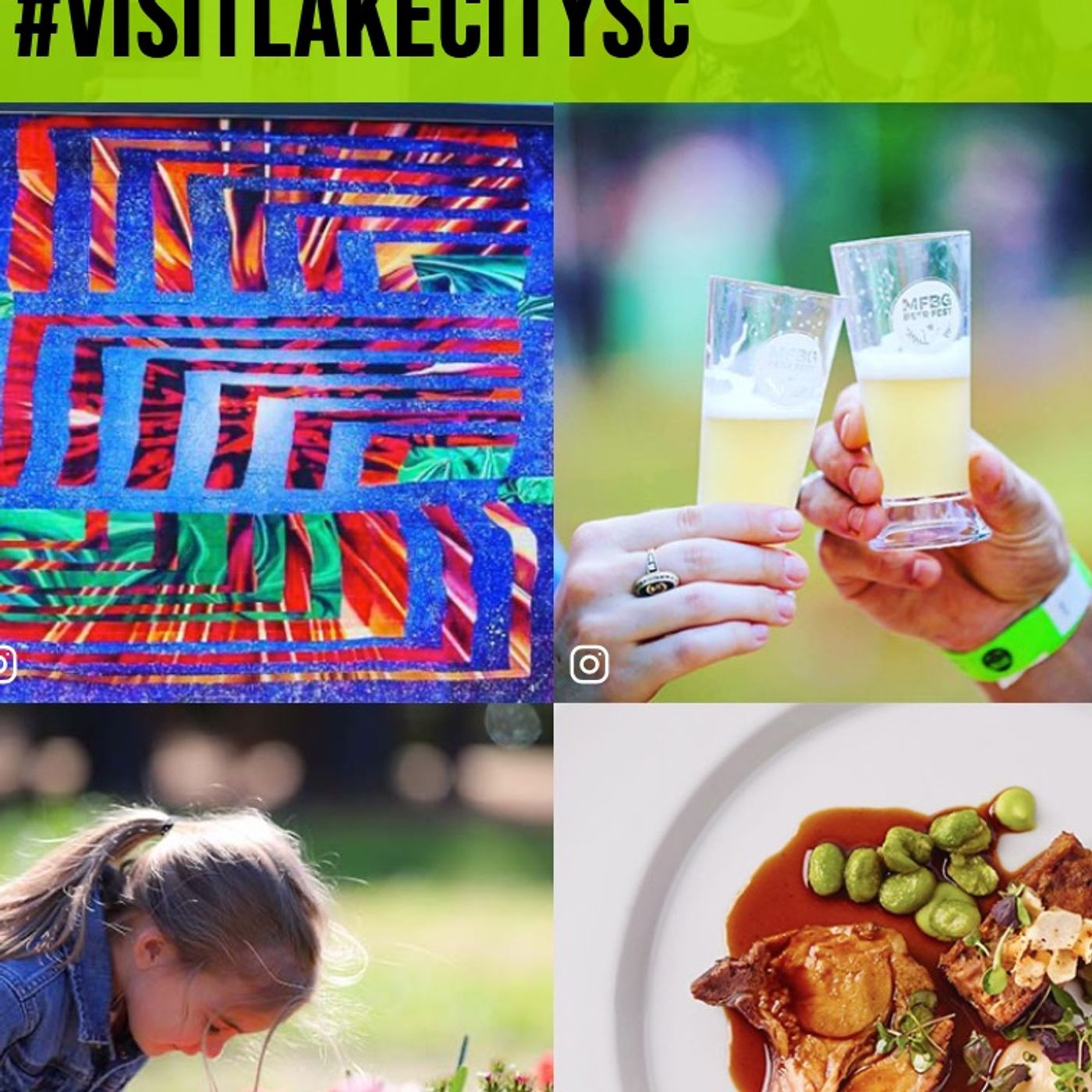
Lake City, S.C.: A Living Laboratory for EntrepreneurshipHost:Kasie Whitener, Clinical Assistant Professor, ManagementGuest:Mara Zepeda, Entrepreneur in Residence at the Faber Entrepreneurship CenterNobody asks better questions than Mara Zepeda. After a decade of enterprise creation, Mara has come to believe that it isn't the organization but rather the interconnections and relationships between people that enact effective change and progress. (credit Jennifer Brandel's work on the Interstitium, https://www.the-interstitium.com/) Considering herself an "interstitionary" not an organizational leader, Mara embarked on a journey of place-based projects to create, in the words of Margaret Wheatley, "islands of sanity."Locally, Mara serves Cola Love and Made With Cola Love, an economic and community development network that is building from a place of love in Columbia, South Carolina. She is also an Entrepreneur-in-Residence at the Darla Moore School of Business, building bridges between the institution and its legendary namesake.Mara remains engaged with the organization she founded, Zebras Unite, as a board member. Zebras Unite was recently adopted as part of the economic strategy for the country of Japan, the third largest economy in the world.In this episode, Mara and Kasie talk about the recently concluded first-ever domestic onsite Maymester through the Honors College, a class dedicated to examining the economic model in place in Lake City, South Carolina under the stewardship of philanthropist and business school namesake, Darla Moore. Here are the topics for the conversation:Mara’s background in a community of renaissance people - artist entrepreneurs (1:00)The Columbia entrepreneurial ecosystem and Mara’s place in it (3:40)Cola Love - dreamed up with Mara, Nell Fuller, and Julie Tuttle; connecting the spaces, time, energy, and opportunities (5:40)Various pop-ups “The Liberation is Lit” bookstore on Rosewood; Spring Supper pop-up in the space next to Mr. Friendly’s (6:20)Santa Fe Institute - studies complexity science; Darla Moore is on the board of the The Santa Fe Institute; SFI came and led a delegation to Lake City to observe what was happening in Lake City (8:50)Curious about reciprocity between DMSB and Lake City (10:00)The building of the Maymester class (11:05)The timing of Artfields - what we were able to see and hear (16:20)A small town living laboratory of complex systems (17:20)The history of Artfields - 12 Southeastern states, juried prizes, 500+ pieces of art; 9 days, visual art, displays are across the businesses in Lake City, using a lottery system, the businesses are able to choose the art (seen in a picture) they want to display (23:00)The art is in the businesses, so you enter the retail, services, spaces to view fine visual art (24:20)It’s been 12 years and they want to brand themselves as a year-round art town to have sustained economic impact through art and artists (25:00)Lake City’s assets (according to Darla Moore): 1) an entrepreneurial backbone, 2) proximity to Florence (a much bigger town), 3) “we are cute” - they had not demolished the Main Street buildings and the original architecture could be renovated to get the 1910’s vibe of old-timey downtown spaces. (28:00)Market towns, agriculture, and seasonal “pops” of activity (29:00)Moore Farms and Botanical Gardens (31:00) testing plants for S.C. ecosystemNon-profits, foundations, and philanthropic work require revenue (33:30)Liberatory technology and local ecosystems - sustainability indicators “what can the local community provide for itself?” (35:00)The long term relationship between the Darla Moore School and the Lake City experiment (38:00)What does the 2025 Lake City Maymester class look like? (39:00)Takeaway: people have a desire for community, novelty, and momentum (41:45) and when pedagogy can create opportunities for those things, it’s a quality experience.Learn more about Artfields at this linkLearn more about the Moore School of Business at this linkLearn more about the South Carolina Honors College here Moore Impact is a product of the Darla Moore School of Business at the University of South Carolina. For episodes, notes, and links visit sc.edu/moore

Ep 5Getting Inspired by Artfields
Visit Lake City for ArtfieldsHost:Kasie Whitener, Clinical Assistant Professor, ManagementGuests:Reagan Gonzalez, Center Manager for Center for Executive SuccessionAlantis Seckal, Center Manager for Smart State Center for Innovation + CommercializationArtfields is the 10-day annual event that transforms Lake City, South Carolina into an art town. In 2024, the Moore School sent a bunch of faculty and staff to experience Artfields as not only is Lake City our school namesake, Darla Moore’s hometown, but Artfields is spearheaded by the Moore Foundation and is the entrepreneurial effort of a coalition of Lake City leaders. In visiting Artfields, our Moore School faculty and staff hoped to get a glimpse into the event’s breadth and depth.This episode is an interview with two staff members, Reagan Gonzalez, Center Manager for Center for Executive Succession, and Alantis Seckal, Center Manager for Smart State Center for Innovation + Commercialization. Their perspectives on the art they saw and the way Artfields consumed Lake City, are testaments to the power of the event. In its twelfth year, Artfields welcomed ~80,000 people to Lake City to browse local shops, businesses, and restaurants, all transformed into galleries with nearly 400 pieces on public display, many for the first time.Winners of the Lake City Artfields 2024 grand prizes can be found here.Conversation topics:Being inspired by kid artHanging Cherry Trees and interpreting artists’ intentionsShopping and ArtingHow Artfields worksSpecific pieces’ interpretations and impactsExpectations of ArtfieldsThe expansion of Lake City via ArtfieldsThe connections between Lake City, Artfields, and our student experience at the Darla Moore School of Business in Columbia This has been Moore Impact. When you learn Moore, you know more, and when you know Moore, you do more. Thanks for listening.Learn more about Artfields at this linkLearn more about the Moore School of Business at this linkLearn more about the Center Manager for Center for Executive SuccessionLearn more about the Center Manager for Smart State Center for Innovation + Commercialization Moore Impact is a product of the Darla Moore School of Business at the University of South Carolina. For episodes, notes, and links visit sc.edu/moore

Ep 4More Impactful Learning Experiences in Entrepreneurship
Episode 4: More Impactful Learning Experiences in EntrepreneurshipHost:Dr. Kasie Whitener, Clinical Assistant Professor, ManagementGuest:Dr. Geoffrey Graybeal, Clinical Associate Professor, ManagementConversation topics:UN sustainable development goalsCollege accreditation around those goalsClasses working in teams to tackle the SDGsLook at a global problem with a local perspectiveDoSomething.org - social campaigns (energy consumption for example)SEC pitch competition and the levels of competitorsBoyd Innovation Center resource linksHipster, a hustler, and a hacker (business and IT)Research-based discussion around failure and learning from setbacksTiming (also in literature) might be the barrierDo something they’ve never done before, do something where they try to ge rejectedThese entrepreneurial skills can serve you elsewhere in lifeThe entrepreneur education is resilience, being comfortable with ambiguity, risk toleranceThe mindset is what’s valuableThe Columbia, S.C. ecosystem and its current status as an emerging supportive networkWhen you learn more, you know Moore. And when you know Moore, you do more.Thanks for listening! Moore Impact is a product of the Darla Moore School of Business at the University of South Carolina. For episodes, notes, and links visit sc.edu/moore
Ep 3the sustainability skillset
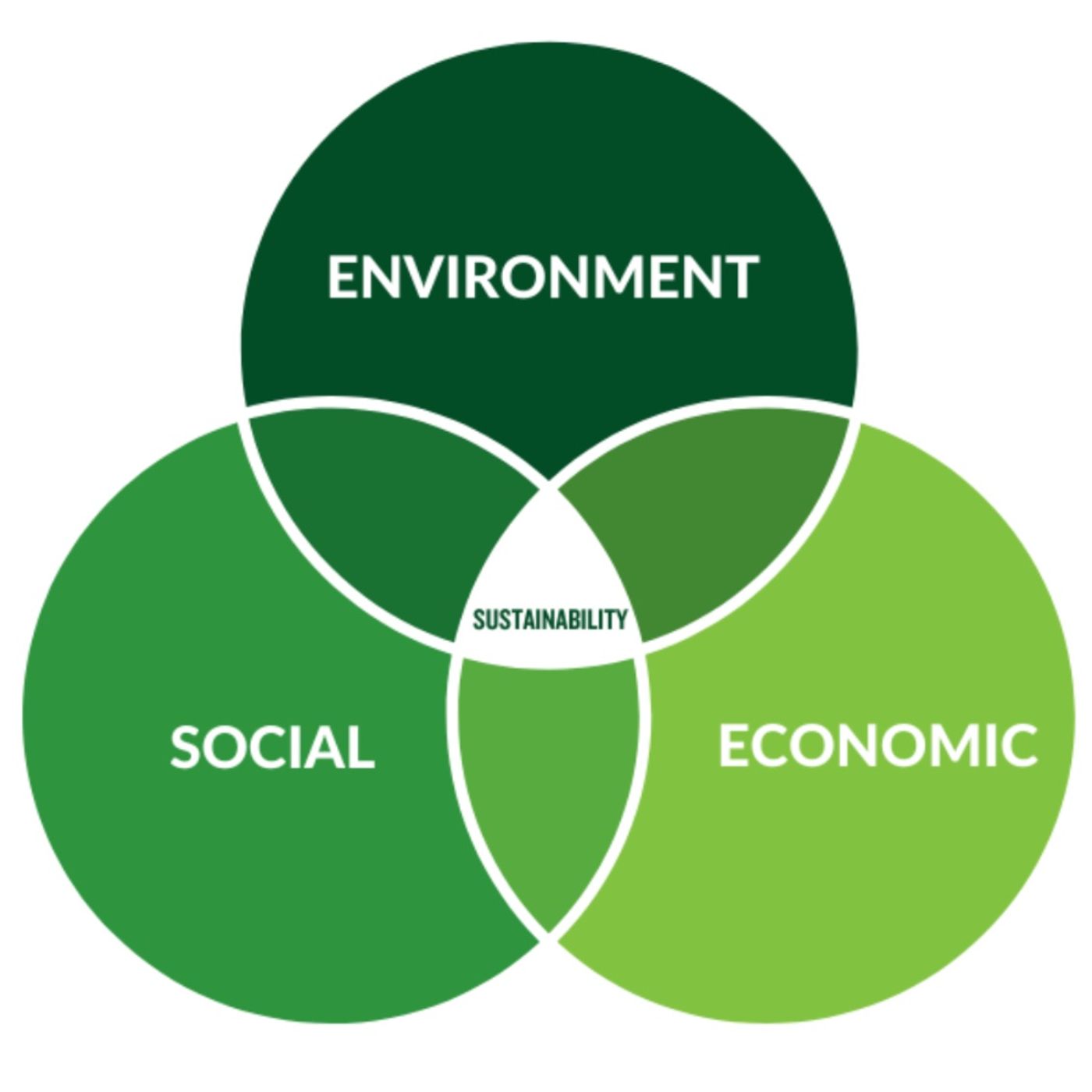
Episode 3: The Sustainability SkillsetHost:Dr. Kasie Whitener, Clinical Assistant Professor, ManagementGuest:Dr. Kealy Carter, Clinical Associate Professor, Marketingepisode photo courtesy of Colorado State at this link.Conversation topics:Applied research: what are the big issues facing businesses today?Sustainability - growth in sustainably marketing products Is sustainability a corporate buzzword?No, companies have been engaging on this for 35 or 40 yearsThe word itself has just seen exponential use in media and policyUN sustainable development goalsEnvironmental, Social, EconomicSustainability is a global problem and requires attention and action across multiple categories of stakeholdersCorporateNGOsGovernmentsScope 1, Scope 2, Scope 3 emissions and companies addressing their own environmental impactValue chain impacts: how to we influence suppliers and consumers1 - the emissions of your specific activities (i.e. manufacturing)2 - the emissions of your suppliers as you accessed their products (i.e. energy production and consumption)3 - all the emissions throughout your value chain - from raw material growth and transport, to product disposal - much harder to affect but where many companies are focused nowIn the classroom: what businesses are we studying? What conversations are we having?The business case for these focused activitiesThis is not philanthropy or altruism, it’s strategy.The triple bottom line: People, Planet, ProfitA lot of these companies have been on this journey for decadesInvestment community started paying attention to ESG performanceThe tension between short term gains and long term investments and where sustainability lives thereinThe sustainability concentration: a 12-credit sequence that can be added on to any major in the Moore SchoolLifecycle recognition and analysisCarbon footprint metrics and analysisReporting frameworks and their strengths and weaknessesCollaborative efforts in South Carolina including SC Nexus for Advanced Resilient EnergyThe functional skillset and the bigger picture understanding of sustainability: an interdisciplinary concept that requires understanding outside of the traditional business education - get the science, get the engineering, get the added components to provide a full understanding and accessible skillset.When you learn Moore, you know more, and when you know Moore, you do more.Thanks for listening! Moore Impact is a product of the Darla Moore School of Business at the University of South Carolina. For episodes, notes, and links visit sc.edu/moore
Ep 2Alliance Building with the McNair Institute
Episode 2: Alliance Building with the McNair Institute for Entrepreneurism and Free EnterpriseHost:Dr. Kasie Whitener, Clinical Assistant Professor, ManagementGuests:Dr. Dirk Brown, Faculty Director, McNair Institute for Entrepreneurism and Free EnterpriseConversation topics:McNair Institute origins, mission, and accomplishmentsIntercampus Alliance as a SC Department of Commerce-funded initiativeEntrepreneurship as a vehicle for enhancing educationEntrepreneurship programs that bridge campus to the communityAlumni and allies that strengthen the efforts of McNair, Faber, and other entrepreneurial efforts on campusThe benefits to USC students of an entrepreneurial effort across the USC system.When you learn more, you know Moore. And when you know Moore, you do more.Thanks for listening! Moore Impact is a product of the Darla Moore School of Business at the University of South Carolina. For episodes, notes, and links visit sc.edu/moore

Ep 1New Venture Exploration and Proving Ground
Episode 1: New Venture Exploration at MooreHost: Dr. Kasie Whitener, Clinical Assistant Professor, ManagementGuests:Jake Shriver – business school senior in managementLucas Sevathian – business school exchange student from FranceConversation topics:Both apps encourage the user to make changes off the screen.Both apps have a mental health / individual confidence essence.Both apps will have access to some valuable data.How do the app businesses hope to monetize and support the effort?How will the experience of the pitch competition Proving Ground affect the development of the business?What will you do with the business when you graduate?When you learn more, you know Moore. And when you know Moore, you do more.Thanks for listening! Moore Impact is a product of the Darla Moore School of Business at the University of South Carolina. For episodes, notes, and links visit sc.edu/moore