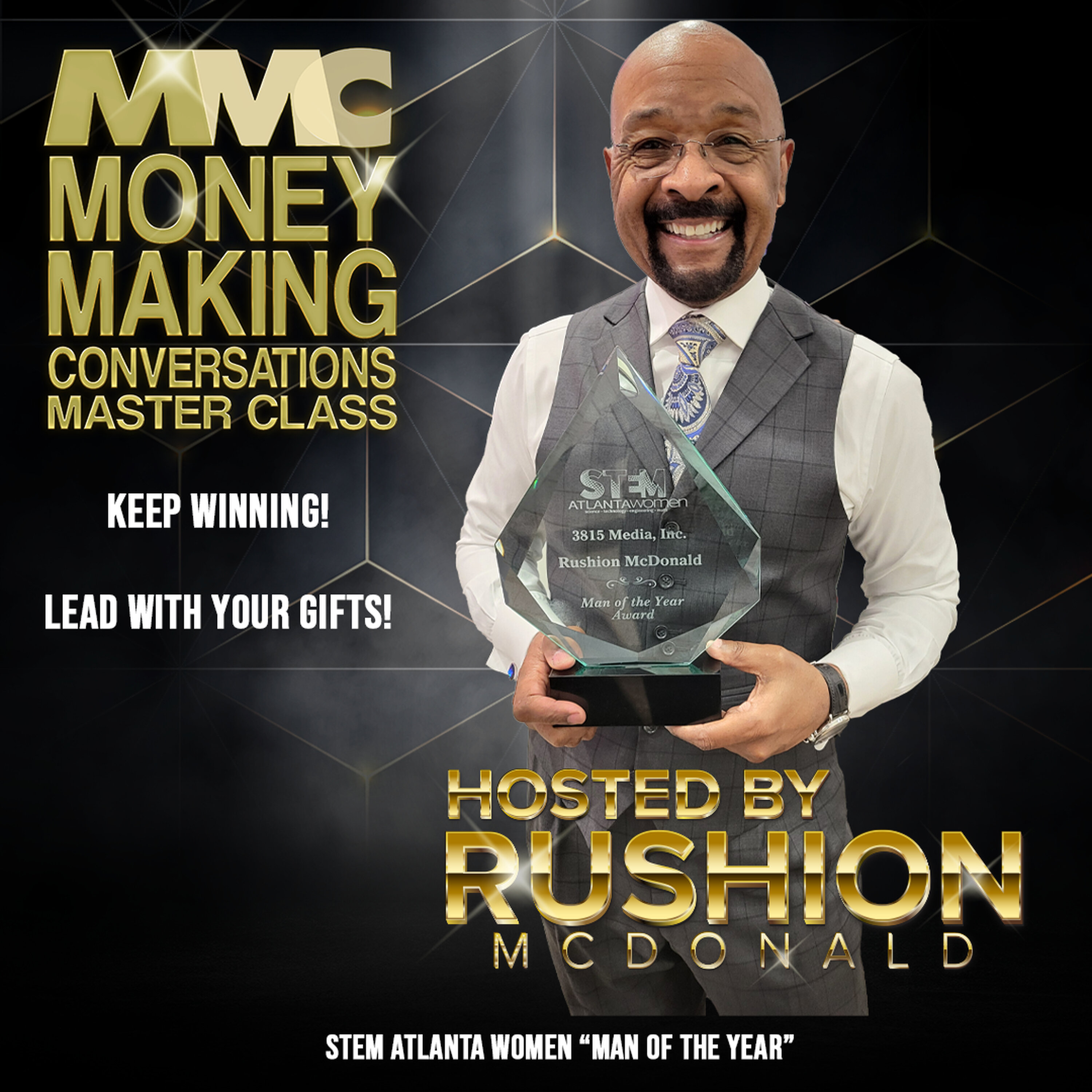
Money Making Conversations Master Class
2,219 episodes — Page 13 of 45
Financial Tips: Former NFL player discusses financial literacy and lifestyle discipline faced by professional athletes that can apply to entrepreneurs.
Brand Building: Interview focuses on Entrepreneurship, real estate, education, overcoming poverty, and building generational wealth.
Brand Building: He helps first-time buyers confidently purchase profitable businesses to build wealth.
Purpose Driven: Her mission is to empower women to heal, lead, and monetize their purpose.
Business Tip: Interview focuses on access to affordable capital to help business owners grow sustainably rather than be crushed by debt.
Brand Building: She shares strategies for educators to supplement their income and maintain their passion for teaching.
Financial Advice: He is demystifying personal finance, redefine wealth‑building, and emphasize the importance of preparation.
Community Uplift: She issues a call to action for volunteers, mentors, corporations, and donors to support youth programs.
Career Change: A full-time attorney turned baker and founder of Confectionist Bakery.
Overcoming the Odds: Shares his journey from combat veteran to overcoming fear and turning passion into profit through his Million Dollar Speaker Framework.
Entrepreneur: At 24 years of age owned two Candlewood Suites and an Embassy Suites in Georgia.
Overcoming the Odds: From incarceration to Inspiration. After being denied parole, he took control of his own legal journey.
Financial Tips: He educates listeners—especially and aspiring millionaires—on financial planning, wealth management, and risk mitigation strategies.
Career Change: She Offers custom balloon installations for weddings, birthdays, corporate events, gender reveal setups and bridal showers.
Employment: Launch health care staffing to serve Green Bay, but national demand found her—clients from Texas and Arizona.
Mental Health: House of Healing, a project centered on emotional wellness, vulnerability, and mental health among Black men.
Mental Health: She educates on stress, entrepreneurship burnout, compassion fatigue, and financial equity in the mental health field.
Financial Tips: She educates listeners on practical, legal strategies for budgeting, taxes, business structure, and generational wealth.
Mental Health: Practice: Her company, Fit Life Wellness offers Virtual therapy, clinical supervision, and mental health resources
Overcoming the Odds: She shares her inspiring story of rising from humble beginnings to becoming a high-ranking executive in a Fortune 500 company.
Mental Health: She says Many women become consumed by titles—mother, wife, caregiver—and lose sight of their personal identity and dreams.
Music Icon: He shares real-world lessons from a 40+ year entertainment career. Highlight professional preparation, mindset, and integrity.
Training: She helps individuals and organizations reach their goals through structured, science-based coaching.
Financial Tips: He introduces four financial pillars: management of wealth, real estate, business ownership and investing.
Career Change: #1 ranked real estate advises first-time and seasoned home buyers about selling and buying a home.
Financial Strategies: She explains the value of estate planning and clarifies the differences and roles of wills, trusts, and powers of attorney
Education Tips: Author of a bestselling SAT prep book and partnered with Mark Cuban after from Shark Tank.
Overcoming the Odds: Oversees operations and financial strategy for Rolling Stone, Billboard, Variety, The Hollywood Reporter, Vibe, SXSW.
Real Estate: Shares his journey as a trailblazer in commercial real estate, overcoming industry challenges as a Black entrepreneur.
College Education: He explains NIL and encourages parents to let student-athletes make their own college decisions.
Motivation: From project failures to the death of his father, he shows how adversity can reshape purpose and leadership.
Empowerment: Her coaching business, 11 Master Consulting, empowers others to transcend adversity and manifest success.
Mental Health: Interview highlights the importance of mental wellness, particularly in the elite sports, and entrepreneurial spaces.
Business Tip: She educates entrepreneurs of color—about equitable access to capital.
Career Change: She enables people to use AI for financial empowerment, career resilience, and modern entrepreneurship.
Overcoming the Odds: His story showcases how family heritage and values can shape a business vision across generations.
Career Tips: Her Google Career Scholarships generate thousands of dollars in job opportunities.
Brand Building: Inspire entrepreneurs—especially Black women—to pursue business ownership, develop strong business plans.
Mental Health Tips: Her goal is to highlight burnout, financial struggles, and systemic issues in healthcare industry.
Overcoming the Odds: He discusses strategies for reducing recidivism and creating pathways to success via career development.

Financial Tips: Discusses the appeal and additional costs of tiny homes: foundation, utilities, permits, and construction.
Listen and subscribe to Money Making Conversations on iHeartRadio, Apple Podcasts, Spotify, www.moneymakingconversations.com/subscribe/ or wherever you listen to podcasts. New Money Making Conversations episodes drop daily. I want to alert you, so you don’t miss out on expert analysis and insider perspectives from my guests who provide tips that can help you uplift the community, improve your financial planning, motivation, or advice on how to be a successful entrepreneur. Keep winning! Two-time Emmy and Three-time NAACP Image Award-winning, television Executive Producer Rushion McDonald interviewed Paul Dashevsky. Serial entrepreneur and founder of Maxwell, a platform focused on Accessory Dwelling Units (ADUs), also known as tiny homes: 🎯 Purpose of the Interview To educate listeners on the growing trend of Accessory Dwelling Units (ADUs), their practical uses, legal considerations, and how platforms like Maxwell help homeowners navigate the process of building or buying tiny homes—especially in light of new options like Amazon’s prefab homes. 🗝️ Key Takeaways What Are ADUs? Formerly known as tiny homes or granny flats, ADUs are small, secondary housing units built on residential properties. They range from 150 to 1200 square feet and serve various purposes: rentals, studios, housing for aging parents, or personal retreats. Growing Popularity Driven by housing shortages and affordability issues, especially in states like California. Governments are easing restrictions to allow more ADUs to be built, including San Diego’s initiative to allow unlimited ADUs if they’re affordable. Use Cases Rental income Housing for retirees or aging parents Studios (music, yoga), guest houses, or nanny quarters Amazon’s Entry Amazon now sells prefab two-story tiny homes under \$50,000. While appealing, buyers must understand the additional costs and logistics: foundation, utilities, permits, and construction. Legal & Practical Considerations ADUs must be permitted and built to code to be safe and legally rentable. Homeowners should consult their city’s building department before starting. A certificate of occupancy is required for someone to legally live in the unit. Maxwell Platform Offers resources, videos, and guidance for anyone interested in building or buying ADUs. Helps users find reliable contractors and understand the full scope of building an ADU. Impact on Property Value ADUs generally increase property value by adding rentable living space. They are a viable wealth-building strategy through real estate investment. Social Impact ADUs could be a solution to homelessness by providing affordable housing options. Cities like San Diego are already exploring this potential. 💬 Notable Quotes “You’re not building a Lego kit here.” — Paul Dashevsky on the complexity of constructing ADUs “There’s no success without sacrifice.” — Rushion McDonald, echoing the theme of entrepreneurship “Go down to your building department at your city and ask them what guidelines they have.” — Paul’s advice on starting an ADU project “If you invest in real estate… that’s a great way to build wealth.” — Paul on the financial benefits of ADUs “I wish America would look at the possibilities of seeing what ADUs can do for the homeless community.” — Rushion McDonald on the social potential of tiny homes #SHMS #STRAW #BESTSee omnystudio.com/listener for privacy information.
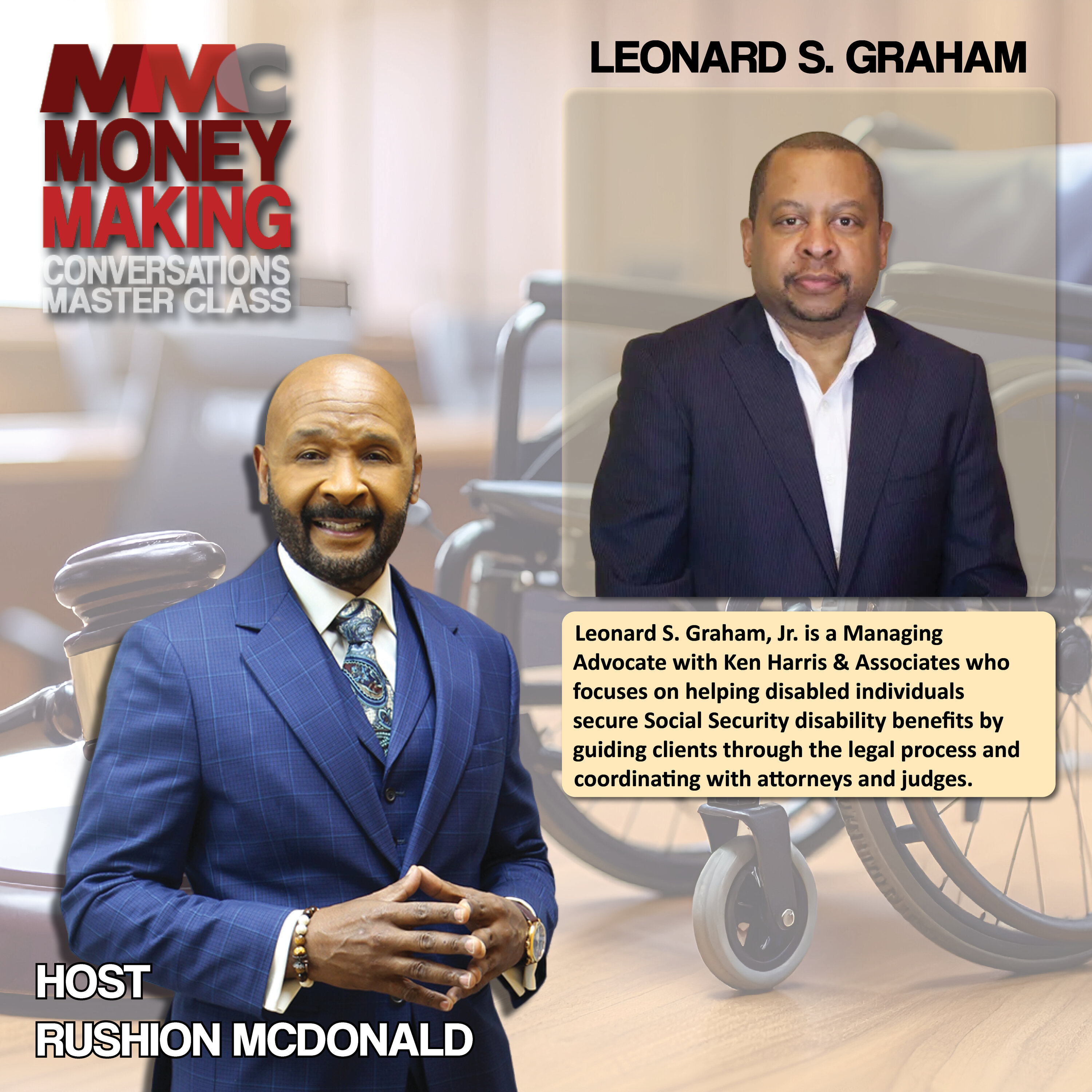
Life Benefits: He explains how Social Security Disability Insurance (SSDI) and Supplemental Security Income (SSI) really works.
Listen and subscribe to Money Making Conversations on iHeartRadio, Apple Podcasts, Spotify, www.moneymakingconversations.com/subscribe/ or wherever you listen to podcasts. New Money Making Conversations episodes drop daily. I want to alert you, so you don’t miss out on expert analysis and insider perspectives from my guests who provide tips that can help you uplift the community, improve your financial planning, motivation, or advice on how to be a successful entrepreneur. Keep winning! Two-time Emmy and Three-time NAACP Image Award-winning, television Executive Producer Rushion McDonald interviewed Leonard S. Graham. Social Security disability advocate, Leonard S. Graham joined Rushion McDonald on Money Making Conversations Master Class to explain how Social Security Disability Insurance (SSDI) and Supplemental Security Income (SSI) really work, who qualifies, and how misconceptions prevent people—especially within the Black community—from receiving benefits they are legally entitled to. Graham has over 35 years of experience assisting clients nationwide with disability claims, appeals, and hearings. The conversation sheds light on the disability process, eligibility, the appeals system, the role of advocates vs. attorneys, and the importance of education, honesty, and persistence in navigating Social Security. 🎯 Purpose of the Interview The interview aims to: Educate listeners on Social Security disability benefits, including eligibility, filing, and appeals. Debunk common myths, such as the belief disability is only for seniors. Explain SSDI vs. SSI, work credits, resource limits, and Medicare connections. Highlight the importance of advocacy, especially for underserved communities unfamiliar with the system. Encourage individuals not to fear or stigmatize applying for disability, and to avoid misinformation from non‑professionals. 🔑 Key Takeaways 1. Disability Isn’t Just for Seniors Many mistakenly think Social Security disability is only for people over 65, but anyone with the required work credits can qualify, regardless of age—even individuals in their 20s or 30s. 2. Working Does NOT Automatically Disqualify You Applicants can work while applying as long as they do not exceed the monthly substantial gainful activity (SGA) threshold of $1,690 per month. 3. Every Claim Is Unique—Don’t Compare Your Case to Others Graham warns clients not to take advice from neighbors or relatives because each disability case depends on medical evidence, work history, age, and individual conditions. 4. SSDI Requires Work Credits; SSI Is Needs-Based SSDI: Requires 20 credits minimum, 40 credits for maximum benefit, earned through past work. Assets do not affect eligibility. SSI: For people with low resources ($2,000 single / $3,000 married). Primary home/car do not count as resources. 5. Medicare Comes After Approval Medicare eligibility begins 24 months after being awarded SSDI benefits. 6. Appeals Are Normal—Most Initial Claims Are Denied 95% of initial applications are denied, and the real opportunity often comes during a hearing before an administrative law judge. Persistence is essential. 7. Honesty Prevents Fraud & Overpayments Applicants should always disclose their financial situation truthfully to avoid fraud investigations and repayment demands. 8. Disability Benefits Can Provide Back Pay Approved claimants often receive a Notice of Award detailing monthly benefits and any back pay owed. Representatives are only paid from back pay—not monthly benefits. 9. Stigma & Fear Prevent People from Applying Graham emphasizes that pride, fear, and misinformation often stop people—especially in the Black community—from seeking help, even when disability support could save them financially. 🗣️ Notable Quotes ✔ On Who Needs Disability “What if you get in a car accident… or have an illness and you can’t work? Those are reasons to file for disability.” ✔ On Misinformation “Don’t talk to your neighbor or relatives about your claim… Each claim is its own individual claim.” ✔ On Work Limits “You can still work and have an active claim as long as you don’t gross over $1,690 a month.” ✔ On Stigma “Some people feel applying for benefits makes them look a certain way. But the system is there to help you when you are unable to work.” ✔ On Honesty “Just tell the truth. If they catch you on the fraud side, you’ll have to pay the money back.” ✔ On Perseverance “Getting a denial is nothing out of the norm… The key is to continue with the claim.” #SHMS #STRAW #BESTSee omnystudio.com/listener for privacy information.
Career Switch: She shares how she pivoted into tech in 2021 with no degree, went from $40K to six figures within 90 days.
Brand Building: Cable Hall of Fame inductee, recognizing his leadership and impact in cable, sports media, and Black‑owned media institutions.
Brand Building: Her Medase Cocktails journey is a masterclass example of entrepreneurship driven by vision, preparation, and authenticity.
Brand Building: Executive Producer states longevity comes from reinvention The Harlem Globetrotters predate the NBA and helped globalize basketball.
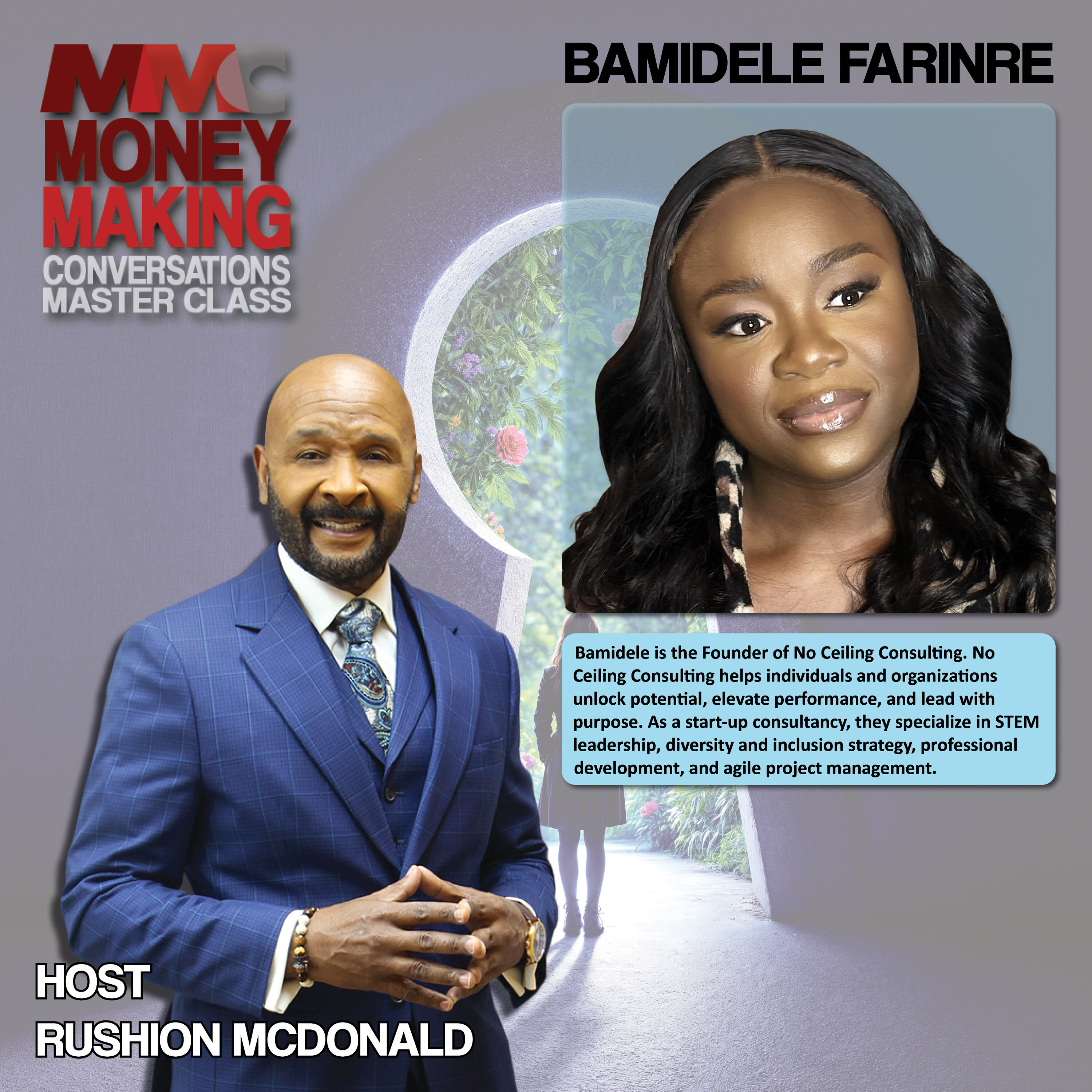
Brand Building: Her firm helps individuals and organizations unlock potential, elevate performance, and lead with purpose, specializing in STEM leadership.
Two-time Emmy and Three-time NAACP Image Award-winning, television Executive Producer Rushion McDonald interviewed Bamidele Farinre Founder of No Ceiling Consulting, a biomedical scientist, STEM expert, agile project manager, and advocate for professional development, mentorship, and removing internal and systemic limitations (“ceilings”). They discuss her STEM background, the evolving role of AI in science, the meaning of “no ceilings,” navigating personal and professional barriers, mentorship, setbacks, agile leadership, and how individuals—especially people of color—can create opportunity even in the face of bias and structural limitations. 🎯 Purpose of the Interview The purpose of having Bamidele on the show was to: 1. Highlight her work at No Ceiling Consulting Her firm helps individuals and organizations unlock potential, elevate performance, and lead with purpose, specializing in STEM leadership, DEI, professional development, and agile project management. 2. Explore the concept of “No Ceilings” She provides a framework for breaking through personal and professional barriers—emphasizing that many “ceilings” are internal, learned, or based on access and systemic issues. 3. Discuss STEM, AI, and the future of work She explains the growing role of automation and AI, how it reshapes STEM roles, and why professionals must upskill, adapt, and embrace professional development. 4. Provide strategies for career advancement Her insights include mentorship, persistence, self‑advocacy, managing setbacks, and adopting agile mindsets. 💡 Key Takeaways 1. STEM + AI = New Opportunities, Not Job Loss Automation and AI enhance efficiency, reduce manual labor, and create new roles—especially in labs and diagnostics. Instead of replacing workers, AI demands that professionals upskill and leverage technology for faster, better outcomes..txt).txt) 2. “No Ceilings” Means Removing Internal + External Barriers Bamidele distinguishes between: Personal ceilings Internal doubts Imposter syndrome Feeling “not enough” despite capability Learned perceptions from bias or discouraging environments Professional ceilings Being overlooked for opportunities Lack of access to resources (even when resources exist) Systemic barriers, bias, and limited upward mobility “No ceilings” means operating from a mindset of possibility, not limitation. 3. Mentorship Is the Missing Link in Many Careers Mentorship provides: Guidance Access A blueprint from those who have “been there” Confidence building She explains that while mentorship is more visible today, access to the right mentorship still matters. 4. Setbacks Are Strategies in Disguise She argues setbacks can redirect you to more aligned paths. Her personal example: She failed her A‑level science subjects in the UK A lecturer told her to “rethink her career” Instead, she re‑enrolled, tried again, and succeeded Setbacks force reassessment, new strategies, and new paths—if you don’t let them define you. 5. Professional Success Requires Initiative and Advocacy She emphasizes: Don’t wait for opportunities—go after them Knock on multiple doors Apply for roles even if you don’t feel 100% ready Learn from interviews even if you don’t get the job Rushion supports this point with his IBM story: opportunity started when he stopped complaining and clearly shared his goals. 6. Agile Leadership Applies Beyond Technology Agile principles help leaders: Think quickly and adapt Focus on collaboration and accountability Encourage self‑management Support teams through “servant leadership” Reflect and iterate rather than waiting for perfect plans Agile mindset = resilience + responsiveness. 7. Faith, Vision, and Purpose Drive Her Journey Bamidele speaks candidly about: Faith guiding her through rejection and setbacks Conversations with God grounding her Believing her life is a “living testimony” of grace and perseverance 🗣 Notable Quotes (with citations) On AI and automation “Automation makes life easier… without it, manual methods take hours, weeks, months to get results.”.txt) [Bamidele F…(Podcast) | Txt] On embracing AI “AI is not taking your jobs, but those that ignore the AI will be left behind.” On personal ceilings “You’re thinking to yourself, ‘I can’t do it,’ even though you have the evidence to show you can.” On professional ceilings “You may have access, but you don’t have access to access.” On initiative “I don’t wait for opportunities—I always go for it. Worst case, you’ll say no.” On setbacks “When you have a setback, you’re thinking: what can I do? This can’t stop me.” On mindset “Life is all about risk. You have to look for solutions; there has to

Brand Building: He gives insights on relationship-building, authenticity, and visibility—reinforcing that in the digital era, it’s not just “who you know,” but who knows you.
Listen and subscribe to Money Making Conversations on iHeartRadio, Apple Podcasts, Spotify, www.moneymakingconversations.com/subscribe/ or wherever you listen to podcasts. New Money Making Conversations episodes drop daily. I want to alert you, so you don’t miss out on expert analysis and insider perspectives from my guests who provide tips that can help you uplift the community, improve your financial planning, motivation, or advice on how to be a successful entrepreneur. Keep winning! Two-time Emmy and three-time NAACP Image Award-winning television Executive Producer Rushion McDonald interviewed Brendan Kaminsky. Founder of B Known Agency, a boutique branding and digital marketing firm specializing in sports and entertainment. Kaminsky shares his journey from consulting, to working at ESPN, to eventually launching his own agency. He discusses helping major personalities like Stephen A. Smith, Jalen Rose, Harrison Barnes, and Rich Eisen develop strong social media identities and storytelling strategies. Brendan explains why he left ESPN after six and a half years—despite the security, prestige, and Disney benefits—to pursue entrepreneurship. He describes how brand building has shifted from traditional media to a landscape where relatability, vertical video, audience engagement, and consistent content matter more than follower counts. He also talks about the pressure of managing public-facing work in real time, the importance of being accessible to high‑profile clients, the rising role of AI in content creation, and how social platforms have become core to modern marketing strategies. Additionally, Brendan shares specific examples of working with Jalen Rose on mixing sports commentary with community-focused storytelling and describes how Rich Eisen’s annual “Run Rich Run” 40‑yard dash evolved into a signature charitable brand moment. The interview closes with insights on relationship-building, authenticity, and visibility—reinforcing that in the digital era, it’s not just “who you know,” but who knows you. PURPOSE OF THE INTERVIEW 1. To highlight Brendan Kaminsky’s entrepreneurial journey McDonald explores how Kaminsky transitioned from a major corporation (ESPN) to founding a successful agency. 2. To educate listeners on the evolving world of branding and digital media Kaminsky explains how branding now depends on relatability, vertical video, and engagement over follower count. 3. To provide actionable guidance for entrepreneurs and creators The interview teaches how consistency, accessibility, and storytelling help build a recognizable digital brand. 4. To show how athletes and media personalities use content to expand influence Brendan walks through real client strategies—from Jalen Rose’s community work to Rich Eisen’s fundraising dash. 5. To explore the role of AI in modern marketing Kaminsky discusses how AI assists with analytics, research, and identifying viral content moments. KEY TAKEAWAYS 1. Relatability drives modern branding People connect with authenticity, not polished promotion. Talk to your audience, not at them. 2. Engagement matters more than follower count Algorithms reward content that resonates, regardless of how many people follow you. A creator with 10,000 followers can hit a million views. 3. Social media requires presence and accessibility High-profile clients expect responsiveness; being available is key to agency success. 4. Vertical video is the new standard Optimizing content for mobile consumption is essential—TV graphics no longer dictate how content is built. 5. AI is an asset, not a threat Kaminsky uses AI for virality scoring, caption suggestions, research, and identifying strong clips from long-form content. 6. Data tells the story Success can be clearly measured through views, engagement, and growth—unlike billboards or traditional media. 7. Use “hot topics” to highlight deeper work For clients like Jalen Rose, trending sports conversations help drive attention to community-focused initiatives like his leadership academy. 8. Brand moments can start from something small Rich Eisen’s 40-yard dash evolved into a signature charity event and content anchor. 9. Entrepreneurship requires trusting your gut He left ESPN without telling anyone beforehand to avoid discouragement—because he felt the pull to build his own vision. 10. Visibility creates opportunity In the digital era, it’s not just who you know—it’s who knows you. NOTABLE QUOTES On entrepreneurship “I trusted my gut… I didn’t tell one person I was leaving ESPN because I didn’t want anyone to make me doubt myself.” On branding “People want to relate to you. They want to get to know you.” “Talk direct
Brand Building: He focuses on modern marketing strategy and personal branding in the digital era.
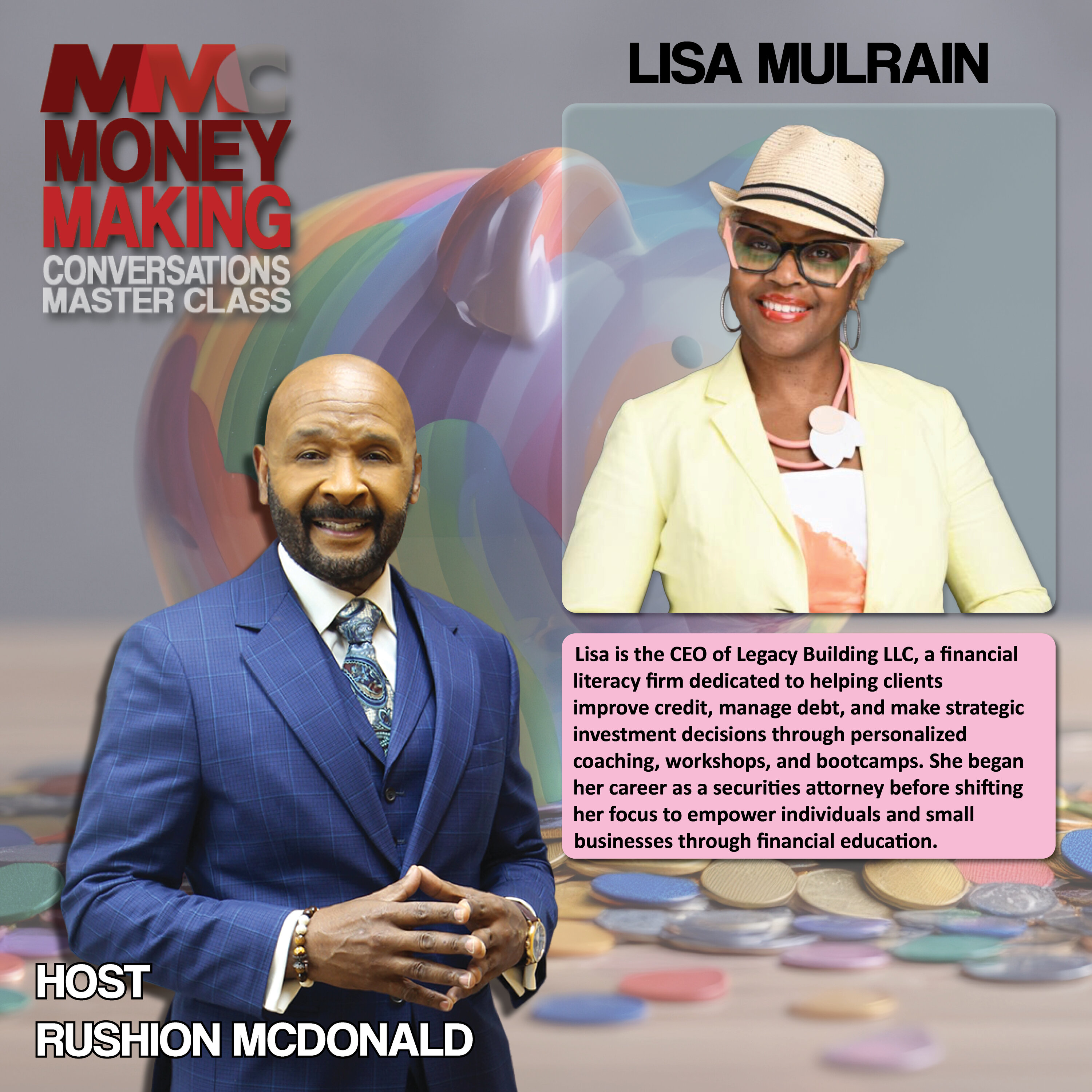
Financial Tips: Her interview educates people on entrepreneurship, financial literacy, credit repair, estate planning.
Listen and subscribe to Money Making Conversations on iHeartRadio, Apple Podcasts, Spotify, www.moneymakingconversations.com/subscribe/ or wherever you listen to podcasts. New Money Making Conversations episodes drop daily. I want to alert you, so you don’t miss out on expert analysis and insider perspectives from my guests who provide tips that can help you uplift the community, improve your financial planning, motivation, or advice on how to be a successful entrepreneur. Keep winning! Two-time Emmy and Three-time NAACP Image Award-winning, television Executive Producer Rushion McDonald interviewed Lisa Mulrain. CEO of Legacy Building LLC and founder of Mulrain Law, in a wide‑ranging conversation about financial literacy, credit repair, estate planning, community impact, and the mindset shifts required for long-term financial success. The discussion highlights her personal journey, her transition from federal service to entrepreneurship, and her mission to educate and empower individuals—especially in minority communities—to build and protect wealth. 🎯 Purpose of the Interview The purpose of Lisa’s appearance on Money Making Conversations Masterclass was to: 1. Educate listeners on financial literacy She breaks down credit repair, debt management, estate planning, and smart investing in simple, actionable terms. 2. Promote her services Lisa shares how Legacy Building LLC helps clients strengthen their financial footing and how Moraine Law protects the assets they build. 3. Inspire financial empowerment Lisa’s personal story—from growing up in a financially challenged environment to becoming a securities attorney and entrepreneur—reinforces the idea that financial transformation is possible for anyone. 4. Encourage mindset change She stresses that financial improvement begins with understanding one’s money mindset, especially for people raised in environments of scarcity. 💡 Key Takeaways Below are the major themes and lessons Lisa shares throughout the discussion. 1. Your Money Mindset Shapes Your Financial Life Lisa emphasizes that many financial problems stem from long‑standing beliefs formed during childhood—especially in communities where money was scarce. People often develop a “lack mentality”, influencing decisions like using credit irresponsibly or putting bills in a child’s name. She teaches clients to first understand why they ended up in financial trouble before addressing how to fix it. 2. Credit Repair Requires Understanding the Root Cause Lisa rejects quick‑fix credit repair approaches. Instead, she helps clients: Assess what led to their financial hardship Identify self-inflicted issues (overspending, poor planning) Contact creditors directly Negotiate payoffs or settlements Avoid repeating the same mistakes She notes that high‑interest credit cards (often 20%+) make it nearly impossible to pay off debt without a consolidation strategy. 3. Estate Planning Is Essential—Not Optional Lisa stresses that everyone, not just wealthy people or seniors, needs an estate plan. Key points: A will and trust prevent the state from deciding what happens to your assets. Even celebrities like Prince and Aretha Franklin suffered consequences of no estate plan, leading to long probate battles. Trusts allow individuals to manage their own assets during life and ensure smooth transfer after death. Estate planning protects homes, bank accounts, cars, jewelry, and other valuables. She also explains that a trust must be funded and a will acts as a secondary backup. 4. Smart Investing Starts Early and Happens Consistently Lisa outlines a clear investing roadmap: ✔ Use employer 401(k) match Not contributing at least, the match percentage (e.g., 4% in federal roles) means leaving free money on the table. ✔ Open and fund a Roth IRA After‑tax money → tax‑free growth Contributions can be withdrawn without penalty before age 59½ in emergencies Limits vary by age and year (e.g., $7,000 to $8,500) ✔ Open a brokerage account She prefers long‑standing firms like Charles Schwab and Fidelity that allow fractional investing. ✔ Time in the market beats timing the market Small consistent investments grow over time; you don't need large sums to start. ✔ Always research Look at a company’s history, layoffs, strategy, and performance over time before investing. 5. Combining Law + Finance Gives Clients Full Protection Lisa explains the unique advantage of running a financial literacy firm and a law firm: Legacy Building: teaches people to build assets Moraine Law: protects those assets This integrated model helps clients avoid mistakes, shield wealth, and plan for long-term financial security. 6. Her Vision for Legacy Building LLC In 5 years, she sees: National and international expansion Partnerships with small businesses Partnerships with government agencies where employees earn goo