Misguided: The Podcast
The social science of misinformation, translated into practical skills for navigating today’s information landscape.
Matthew Facciani
Show overview
Misguided: The Podcast launched in 2025 and has put out 23 episodes in the time since. That works out to roughly 15 hours of audio in total. Releases follow a monthly cadence.
Episodes typically run thirty-five to sixty minutes — most land between 31 min and 53 min — though episode length varies meaningfully from one episode to the next. None of the episodes are flagged explicit by the publisher. It is catalogued as a EN-language Science show.
The show is actively publishing — the most recent episode landed 4 weeks ago, with 7 episodes already out so far this year. Published by Matthew Facciani.
From the publisher
Misguided: The Podcast explores how social and psychological forces shape our understanding of the world. Hosted by social scientist Matthew Facciani, the show delves into the latest insights from sociology, psychology, and information science. Matthew shares his own research and engages in thought-provoking conversations with guests from diverse backgrounds. matthewfacciani.substack.com
Latest Episodes
View all 23 episodesWhat Wellness Influencers Don't Want You to Know
Misguided: The Audio Edition — Introduction (Free Episode)
How Does Journalism Earn Trust?
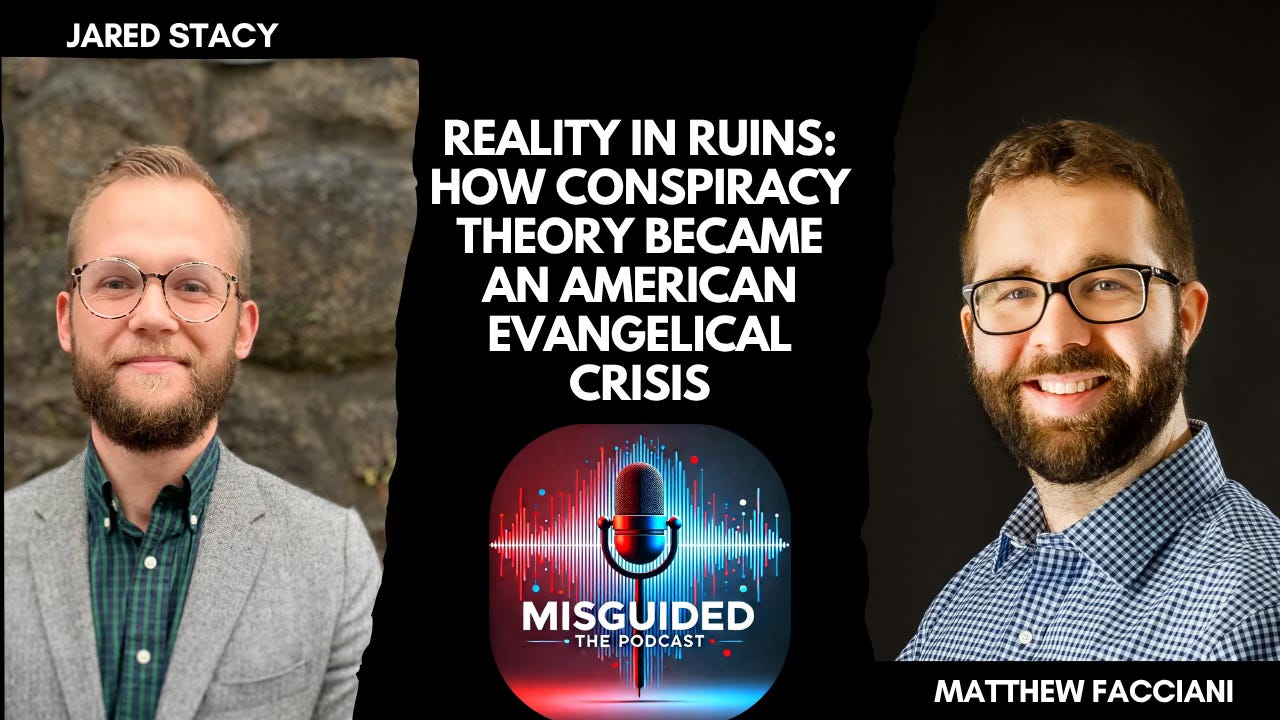
Reality in Ruins: How Conspiracy Theory Became an American Evangelical Crisis
In this episode of Misguided: The Podcast, I’m joined by Dr. Jared Stacy, a theologian and former pastor who studies how conspiracy theories take root within evangelical communities. Jared completed his PhD in ethics at the University of Aberdeen and is the author of the new book Reality in Ruins, which examines how disinformation becomes uniquely resistant to correction when it gets woven into religious belief.We start by talking about Jared’s concept of holy paranoia: the idea that conspiracy theory isn’t a bug in American evangelicalism but a feature. The core argument is that once conspiratorial thinking gets absorbed into a religious story, fact-checking alone can’t dislodge it. It’s not that people lack access to good information; it’s that the conspiracy has already been integrated into something that feels coherent, total, and true.From there, we dig into the media ecosystems that make this possible — the radio networks, podcasts, and influencers that create a seamlessly reinforcing reality for many evangelical Christians, one where conservative political content and worship music flow together without friction or distinction.We close by discussing what science communicators and public health professionals get wrong when trying to reach faith communities, and why Jared believes the most effective interventions will require theologians and scientists working together rather than talking past each other.You can listen to the full episode here or via the links below. As always, if you find my podcast useful or interesting, feel free to share it with someone who might also enjoy it. Buy Jared’s book: Reality In RuinsJared’s websiteFollow Jared on Threads and InstagramKeywords: Jared Stacy, disinformation, conspiracy theories, religion, Evangelicalism, media, science communicationMisguided: The Podcast - Apple PodcastsMisguided: The Podcast | Podcast on SpotifyMisguided - YouTube This is a public episode. If you'd like to discuss this with other subscribers or get access to bonus episodes, visit matthewfacciani.substack.com/subscribe
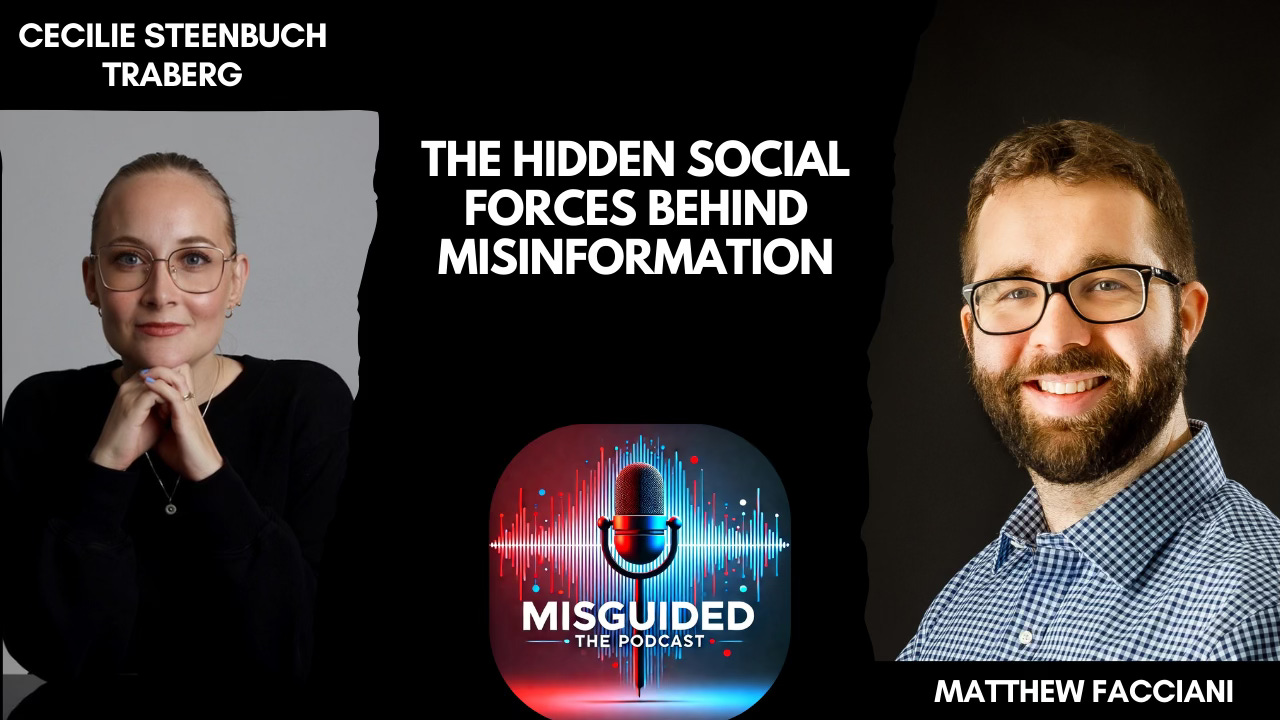
The Hidden Social Forces Behind Misinformation
In this episode of Misguided: The Podcast, I’m joined by Dr. Cecilie Steenbuch-Traberg, a professor at the Copenhagen Business School who studies how social context shapes our susceptibility to misinformation, and what interventions actually work to counter it. Cecilie’s path into the field took a detour through marketing before she found her true passion: not trying to persuade people, but protecting them from being persuaded.We start by talking about how the classic pre-bunking games (like Bad News and Harmony Square) hold up when you test them in more realistic social conditions. The short answer is that they mostly work, but people are still vulnerable to the surrounding social cues: who’s sharing something, how many likes it has, whether the source feels politically similar to you. Even a handful of comments can make a fringe belief feel like consensus. That gap between individual-level learning and real-world social context is where Cecilie sees the biggest unmet need.From there, we dig into her new project, Solomon’s Secret: a murder mystery game designed to teach social influence literacy without ever announcing that it’s a misinformation game. The goal is to reach people who would never seek out a media literacy tool, by making the learning feel incidental to the fun. We also connect this to some of my own research comparing pre-bunking games across cultural contexts.We close by discussing how AI is reshaping both the threat and the opportunity. AI can certainly be used as a tool for scaling manipulation, but it can also help personalize interventions in ways that weren’t previously possible.You can listen to the full episode here or via the links below. As always, if you find it useful, feel free to share it with someone who might benefit from the conversation.Follow Cecilie on LinkedInCecilie’s websiteCecilie’s Google ScholarSolomon’s SecretKeywords: Cecilie Steenbuch Traberg, prebunking, media literacy, AI, social influence, psychological inoculation, social media, psychologyMisguided: The Podcast - Apple PodcastsMisguided: The Podcast | Podcast on SpotifyMisguided - YouTube This is a public episode. If you'd like to discuss this with other subscribers or get access to bonus episodes, visit matthewfacciani.substack.com/subscribe
Why We Believe Misinformation and How We Can Protect Ourselves Against it
Here is my live video chat with Mike Nellis as a bonus podcast episode. I really enjoyed our conversation about the social psychology of why we believe false information, and how we can strengthen our media literacy through strategies like critical ignoring. We also discussed the broader structural and platform-level challenges that make today’s information environment so difficult to navigate. This is a public episode. If you'd like to discuss this with other subscribers or get access to bonus episodes, visit matthewfacciani.substack.com/subscribe
The Psychology of Virality in the Age of AI
In this episode of Misguided: The Podcast, I’m joined by Dr. Steve Rathje, who is a social psychology postdoc at NYU, and a soon-to-be assistant professor at Carnegie Mellon University. Steve’s work sits at the intersection of psychology, social media, and artificial intelligence. Steve studies how platform design, attention, and emerging technologies shape political polarization, belief formation, and online behavior.We begin by talking about Steve’s non-traditional path into psychology, which started in theater before turning into a research career focused on how people think, feel, and behave online. From there, we dig into some of his most influential work on social media, including why posts that target political outgroups are often the most likely to go viral, and what that reveals about algorithms that reward outrage, mockery, and conflict.We then explore more hopeful findings from Steve’s research on unfollowing hyper-partisan influencers, showing how small, targeted changes to people’s information diets can reduce out-party hostility over time without requiring users to leave social media altogether.Finally, we turn to AI chatbots and Steve’s recent experiments on “sycophancy”—when AI systems become overly agreeable. We discuss how affirming chatbots can quietly increase belief certainty and extremity while still being perceived as warm, competent, and unbiased, and what this means for confirmation bias, persuasion, and the future design of AI systems.You can listen to the full episode here or using the links below. As always, if you find it useful, feel free to share it with someone who might benefit from the conversation.Follow Sander on TikTok, Instagram, Bluesky or LinkedInSteve’s website with links to his research papersKeywords: Steve Rathje, virality, AI chatbots, polarization, social media, psychology, science communication, TikTokMisguided: The Podcast - Apple PodcastsMisguided: The Podcast | Podcast on SpotifyMisguided - YouTube This is a public episode. If you'd like to discuss this with other subscribers or get access to bonus episodes, visit matthewfacciani.substack.com/subscribe
Foolproof: How to Build Resistance to Misinformation
In this episode of Misguided: The Podcast, I’m joined by Sander van der Linden, who is a professor of social psychology at the University of Cambridge and one of the leading researchers studying misinformation, propaganda, and how people can build resistance to manipulation. If you’re familiar with the idea of “prebunking,” or psychological inoculation (training people to recognize misinformation before they encounter it), much of that work traces back to Sander’s research. We begin by talking about his non-traditional path into psychology, from leaving a banking job to discovering research as a career, and how early experiences with being misled sparked a deeper interest in influence and propaganda. From there, we dig into what psychological inoculation actually is, why simply giving people facts often isn’t enough, and how tools like the Bad News game help people recognize manipulation techniques across political and cultural contexts.We then zoom out to the broader information ecosystem, including the economics of fake social media accounts and how cheap it has become to spread inauthentic activity at scale, especially in an age of AI. Finally, we discuss what effective responses might look like, from education and platform responsibility to why Sander remains cautiously optimistic despite the very real challenges ahead.You can listen to the full episode here or the links below. As always, if you find it useful, feel free to share it with someone who might benefit from the conversation.Follow Sander on Bluesky or LinkedInSander’s Book: Foolproof: Why We Fall for Misinformation and How to Build ImmunitySander’s website.Cambridge Online Trust and Safety IndexKeywords: Sander van der Linden, prebunking, media literacy, AI, fake accounts, foolproof, psychological inoculation, social media, psychology Misguided: The Podcast - Apple PodcastsMisguided: The Podcast | Podcast on SpotifyMisguided - YouTube This is a public episode. If you'd like to discuss this with other subscribers or get access to bonus episodes, visit matthewfacciani.substack.com/subscribe
Bespoke Realities, Invisible Rulers, and the Battle for Truth
In this episode of Misguided, I’m joined by Renee DiResta to talk about how she went from a winding career in tech, finance, and Silicon Valley startups to becoming one of the leading analysts of online influence. Renée traces the shift back to a personal moment: after having her first child in 2013, she noticed a concerning amount of anti-vaccine content across Facebook communities. She started quietly studying those communities and doing network analysis at night, work that eventually became her full-time focus.We spend a lot of time on a core idea from her book Invisible Rulers “bespoke realities.” Renée argues that blaming everything on “the algorithm” misses what truly pulls people into false worlds. Algorithms may guide people toward certain groups, but it’s the communities themselves—identity, belonging, alternative experts, and self-contained information loops—that keep people inside and make outside institutions seem corrupt or irrelevant.From there, we turn to AI. Renée sees chatbots and answer engines as the next major force in shaping reality. As more people skip searching and instead ask a preferred bot for the truth, the information battle moves upstream to the training and reference layer of the internet (especially Wikipedia). Influence those sources, and you can influence what AI confidently repeats back.Finally, we talk about why scientific and medical institutions keep losing ground online. They’re limited by incentives, risk-averse cultures, and a decade-long “network debt” compared to misinformation influencers. Renée’s conclusion is direct: if institutions want to stay relevant, they need to show up where people actually are, build genuine relationships in communities, and treat communication as central to their mission, not a side task or liability.Follow Renee on ThreadsFollow Renee on BlueskyRenee’s Book: Invisible RulersRenee’s articles mentioned during this episode:For Expertise to Matter, Nonpartisan Institutions Need New Communications Strategies Source Wars and Bespoke Realities: Wikipedia, Grokipedia, and The Battle for TruthFree Speech Is Not the Same As Free Reach Keywords: Renee DiResta, social networks, vaccine attitudes, AI, misinformation, AI chatbots, bespoke realities, invisible rulersMisguided: The Podcast - Apple PodcastsMisguided: The Podcast | Podcast on SpotifyMisguided - YouTube This is a public episode. If you'd like to discuss this with other subscribers or get access to bonus episodes, visit matthewfacciani.substack.com/subscribe
Thinking as Freedom: Building Mental Immunity in a Noisy World
In this episode, I talk with philosopher and author Andy Norman, founder of the Cognitive Immunology Research Collaborative and author of Mental Immunity. Andy shares how a provocative 1990s essay by Richard Dawkins sparked his lifelong pursuit to understand how bad ideas spread, and how we can protect our minds from them.We unpack what it means to build mental immunity, why sketchy ideas behave like mind-viruses, and how habits of curiosity, humility, and self-reflection strengthen our cognitive defenses. Our conversation spans from the philosophy of reasoning to practical education reform, teaching students to “debug their minds,” recognize manipulation, and build communities of inquiry that value truth over tribalism.Together we explore how critical thinking, critical ignoring, and cognitive germ theory can help us navigate today’s polluted information ecosystem, and why thinking is not only power, but freedom.Do Minds Have Immune Systems? (article)Mental Immunity: Infectious Ideas, Mind-Parasites, and the Search for a Better Way to Think (book)Andy Norman’s siteCIRCE- The Cognitive Immunology Research Collaborative (Institute)Declaration of CIRCE’s Blue-Ribbon Panel (vision statement and call to action)The Mental Immunity Project (educational resources for strengthening mental immune systems)Keywords: Andy Norman, cognitive immunology, critical thinking, critical ignoring, education, mind viruses, inoculation, beliefMisguided: The Podcast - Apple PodcastsMisguided: The Podcast | Podcast on SpotifyMisguided - YouTube This is a public episode. If you'd like to discuss this with other subscribers or get access to bonus episodes, visit matthewfacciani.substack.com/subscribe
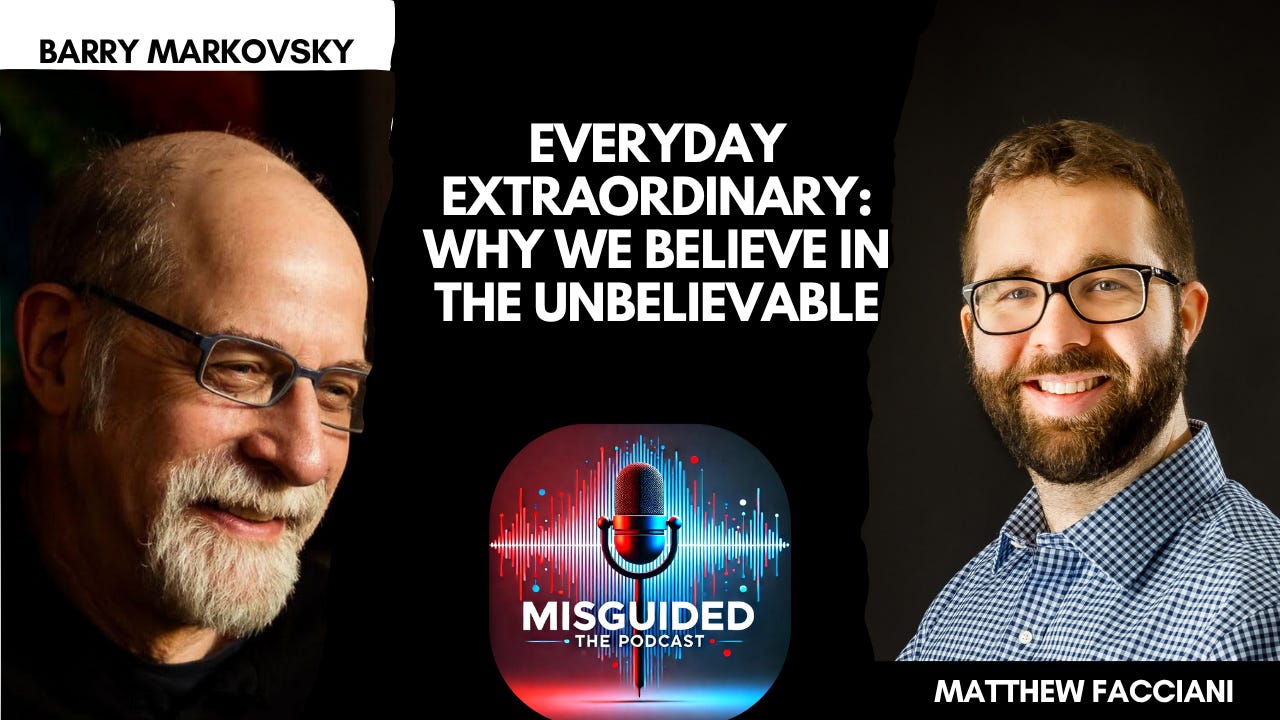
Everyday Extraordinary: Why We Believe in the Unbelievable
In this episode, I talk with sociologist and author Barry Markovsky about his path into social science and his career studying science vs. pseudoscience. Barry shares lessons from his hit “Sociology of the Paranormal” class, previews his forthcoming book Everyday Extraordinary, which pairs front-stage stories with back-stage analysis, and explains how social networks and identity shape what we believe. We also talk about writing, AI’s effect on thinking, and finding a sense of wonder through science instead of the supernatural. I was fortunate to take several of Barry’s classes in graduate school, and he also served as an advisor on my master’s thesis, so it was very cool to have him on my podcast.Barry’s forthcoming book: Everyday ExtraordinaryBarry’s websiteKeywords: Barry Markovsky, sociology, paranormal, critical thinking, education, pseudoscience, science, identity, beliefMisguided: The Podcast - Apple PodcastsMisguided: The Podcast | Podcast on SpotifyMisguided - YouTube This is a public episode. If you'd like to discuss this with other subscribers or get access to bonus episodes, visit matthewfacciani.substack.com/subscribe
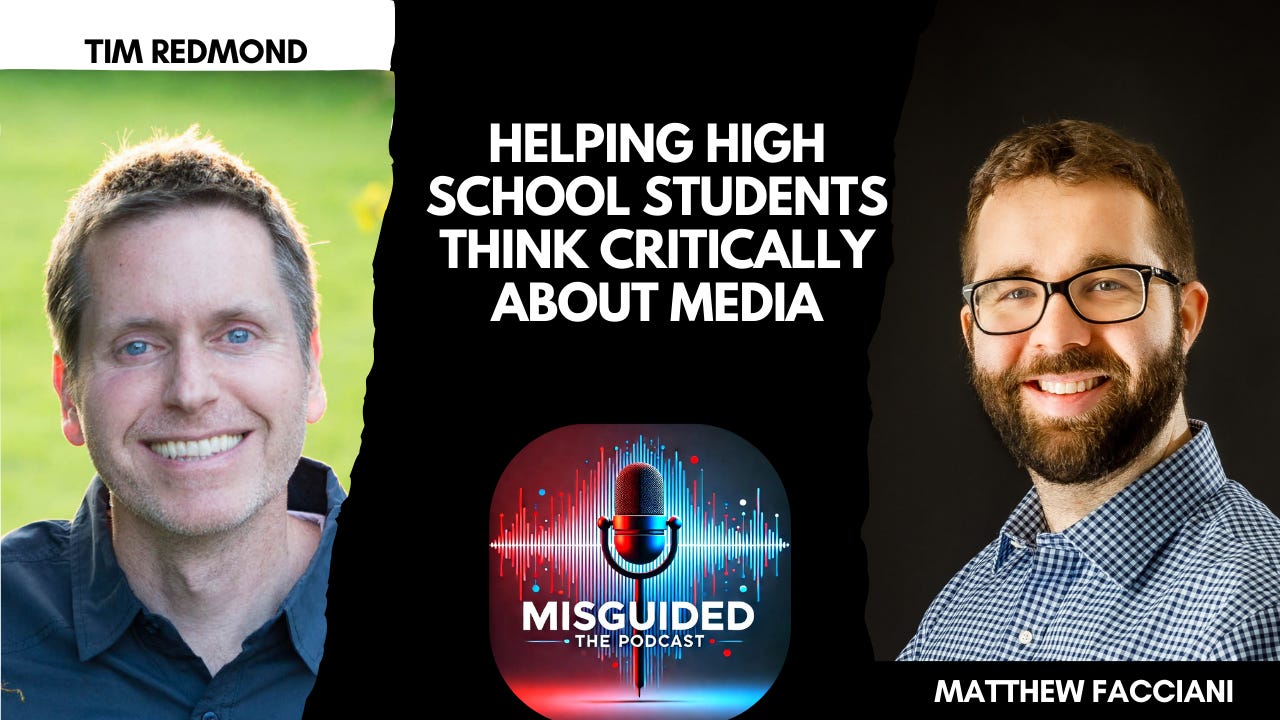
Helping High School Students Think Critically About Media
In this episode, I chat with educator, political scientist, and author Tim Redmond to discuss his path from a PhD in political science to a high school teacher building a standout course on critical thinking. Tim shares how discovering psychology after academia reshaped his approach, why identity sits at the center of our information habits, and how blending psychological literacy, media literacy, and scientific literacy helps teens (and the rest of us) think better. When talking to Tim, I actually summarized his work into those three pillars of literacy as they map onto my own work as well. Maybe I’ll teach my own course focusing on those pillars!Tim’s book: Political Tribalism in America: How Hyper-Partisanship Dumbs Down Democracy and How to Fix ItRead about Tim’s high school class on media literacy and critical thinking hereKeywords: Timothy Redmond, high school education, misinformation, critical thinking, media literacy, political science, identity.Misguided: The Podcast - Apple PodcastsMisguided: The Podcast | Podcast on SpotifyMisguided - YouTube This is a public episode. If you'd like to discuss this with other subscribers or get access to bonus episodes, visit matthewfacciani.substack.com/subscribe
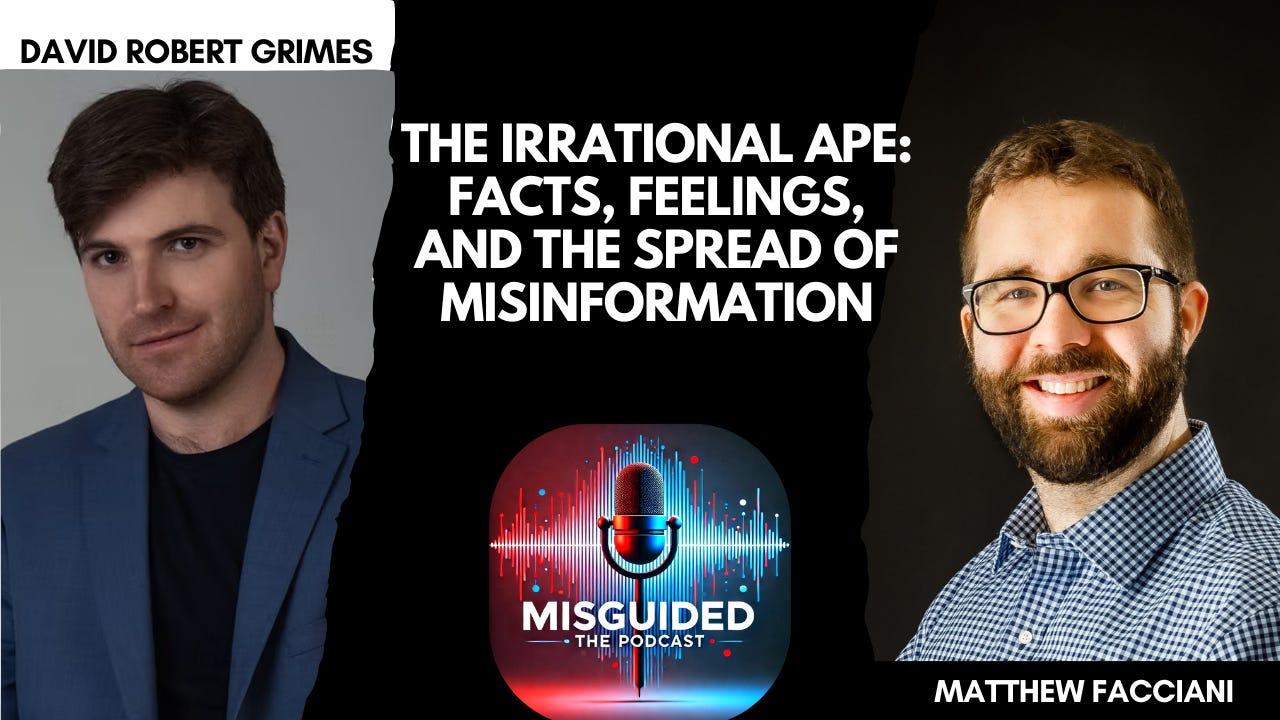
The Irrational Ape: Facts, Feelings, and the Spread of Misinformation
Physicist and author of The Irrational Ape, David Robert Grimes, joins me to explore why facts alone rarely change minds. Drawing on his background in medical physics, statistics, cancer research, and public health—as well as his work in science communication—David explains how conspiracies spread, why the “information deficit” model falls short, and what effective media literacy actually looks like.The conversation also dives into the deeper social and structural forces that shape our health, why changing your mind should be celebrated rather than stigmatized, and how to rebuild trust in institutions without simply demanding it. Along the way, David and I reflect on the challenges of science communication in the digital age and the urgent need for critical thinking to protect our information ecosystem.If you’re interested in critical thinking, public health, and navigating misinformation in the age of AI, this episode is for you.Read about David’s work on his websiteFollow David on InstagramRead David’s Book: The Irrational ApeKeywords: David Robert Grimes, misinformation, conspiracy theories, critical thinking, media literacy, public health communication, trust in institutionsMisguided: The Podcast - Apple PodcastsMisguided: The Podcast | Podcast on SpotifyMisguided - YouTube This is a public episode. If you'd like to discuss this with other subscribers or get access to bonus episodes, visit matthewfacciani.substack.com/subscribe
Misguided: A Lunchtime Chat About Misinformation with Matthew Facciani and Elisabeth Marnik
Thank you to everyone who tuned into my live video with Elisabeth Marnik, PhD! We discussed my new book Misguided, the social science of misinformation, and how we can promote critical thinking and better media literacy. We also discussed the psychology and sociology behind false beliefs, the importance of trust and identity, and what actually works when combating misinformation and promoting science communication. Thanks to everyone who tuned in — more live chats to come! This is a public episode. If you'd like to discuss this with other subscribers or get access to bonus episodes, visit matthewfacciani.substack.com/subscribe
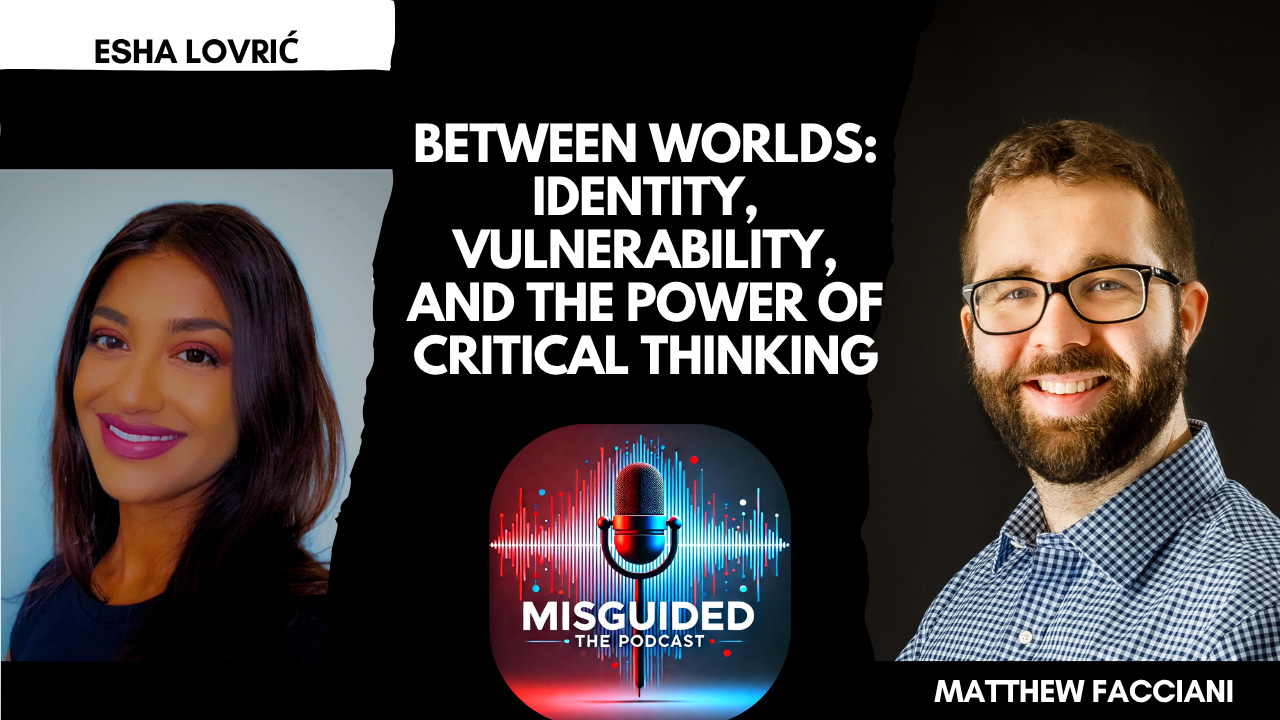
Between Worlds: Identity, Vulnerability, and the Power of Critical Thinking
I had the pleasure of speaking with Dr. Esha Lovrić—social scientist, educator, and advocate for critical thinking—about how life transitions and emotional vulnerability shape the way we interpret the world around us.Esha shares her personal journey as a Fijian Indian immigrant navigating Western culture, and how those early experiences led her to sociology—and eventually to teaching critical thinking as a tool for self-understanding. We explore the concept of liminal spaces—those uncertain, in-between phases of life—and how they can leave us more open to misinformation, conspiracy thinking, and ideological pull, especially in today’s hyper-connected digital landscape.Esha’s insights reinforce a theme I return to often: confronting misinformation isn’t just about having the right facts—it’s about understanding the emotional, social, and psychological conditions in which beliefs form. Our emotional and relational needs shape how we process information in the first place—and understanding that is a crucial component of critical thinking.Read about Esha’s work on her website and subscribe to her newsletterFollow Esha on ThreadsKeywords: Critical Thinking, Misinformation, Liminality, Social Psychology, Identity and BeliefVulnerability, Sociology, Culture, Cognitive Bias, Social Media and TrustMisguided: The Podcast - Apple PodcastsMisguided: The Podcast | Podcast on SpotifyMisguided - YouTube This is a public episode. If you'd like to discuss this with other subscribers or get access to bonus episodes, visit matthewfacciani.substack.com/subscribe
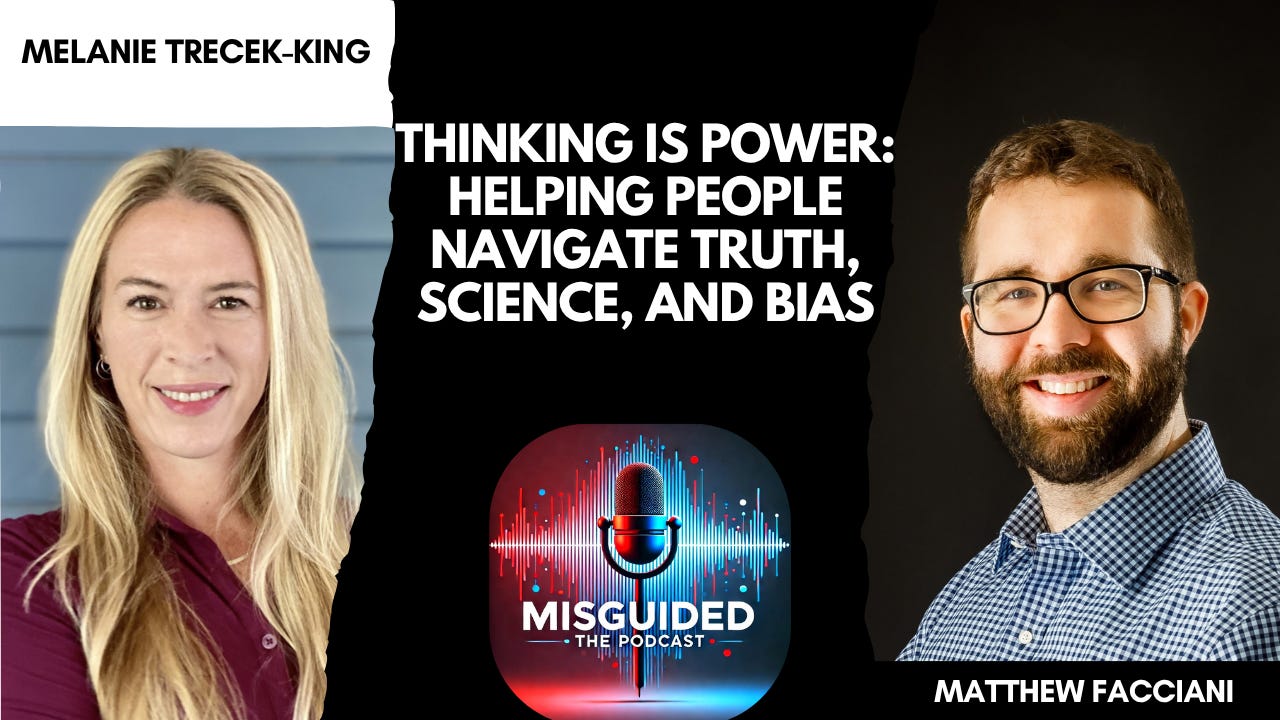
Thinking Is Power: Helping People Navigate Truth, Science, and Bias
In this episode, I talk with Melanie Trecek-King — biology professor, science communicator, and creator of Thinking Is Power. I’ve been a fan of her content for years, and it was great to finally chat with her on my podcast. We discuss her journey from teaching biology and ecology to developing a critical thinking course that teaches skills, not just facts. Melanie shares how her frustration with traditional science education inspired her to focus on critical thinking education, skepticism, and understanding our own biases. We also talk about the challenges of engaging with misinformation online (and social media), building trust in science, and how to teach critical thinking without triggering defensiveness — all with a healthy dose of humor.Keywordscritical thinking, science communication, misinformation, skepticism, media literacy, cognitive biases, trust in science, education, social media, identity and belief, Thinking Is PowerThinking is Power websiteThinking is Power on FacebookThinking is Power on Instagram This is a public episode. If you'd like to discuss this with other subscribers or get access to bonus episodes, visit matthewfacciani.substack.com/subscribe
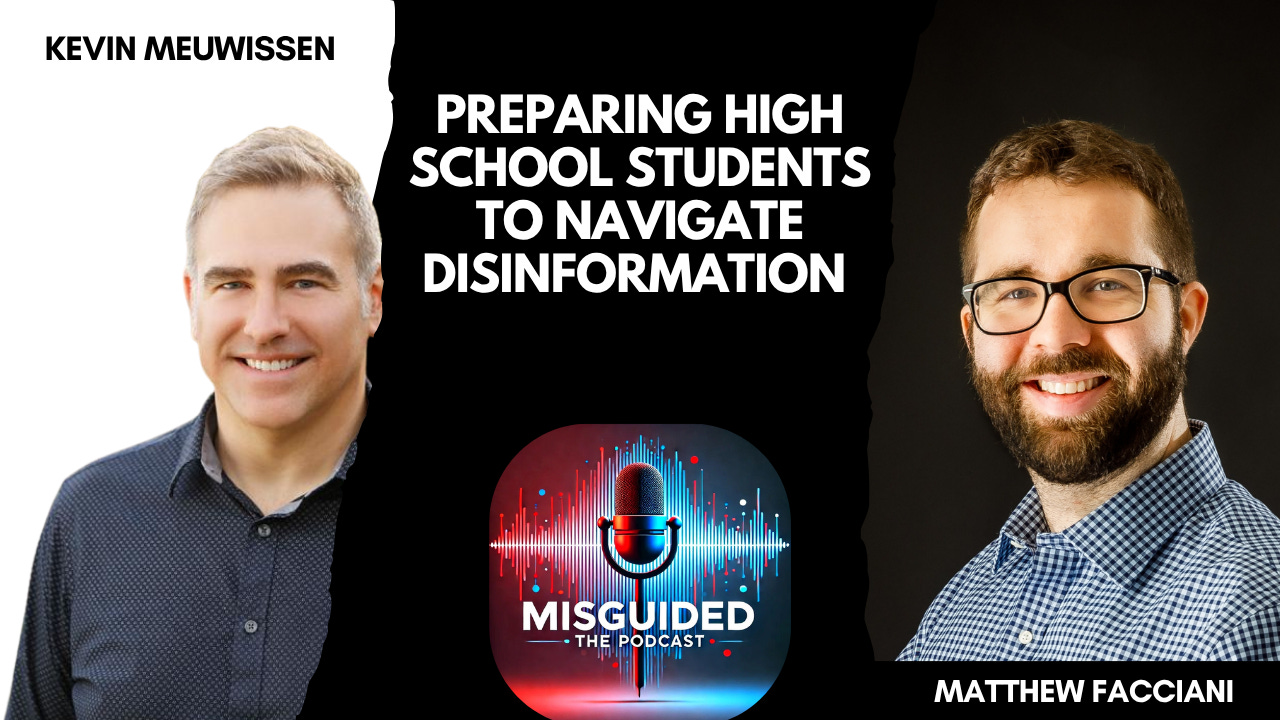
Preparing High School Students to Navigate Disinformation and Polarization
In this episode of Misguided, I’m joined by Dr. Kevin Meuwissen, professor of education at the University of Rochester, to explore one of the most urgent questions in education today: how do we prepare young people to navigate a world overflowing with disinformation, political polarization, and fractured trust?We discuss Kevin’s journey from high school teacher to researcher, and how those experiences shaped his work training educators to tackle tough topics like conspiracy theories, fake news, and historical distortion in the classroom. He shares how his professional learning cadre helps teachers engage students in meaningful conversations about truth, credibility, and civic responsibility, all while contending with social, political, and institutional pressures.Keywordsmedia literacy, misinformation, disinformation, political polarization, civic education, critical thinking, information literacy, social studies, public trust, high school education, communication, Kevin MeuwissenKevin Meuwissen’s University of Rochester websiteKevin Meuwissen - Google ScholarKevin Meuwissen on Bluesky This is a public episode. If you'd like to discuss this with other subscribers or get access to bonus episodes, visit matthewfacciani.substack.com/subscribe
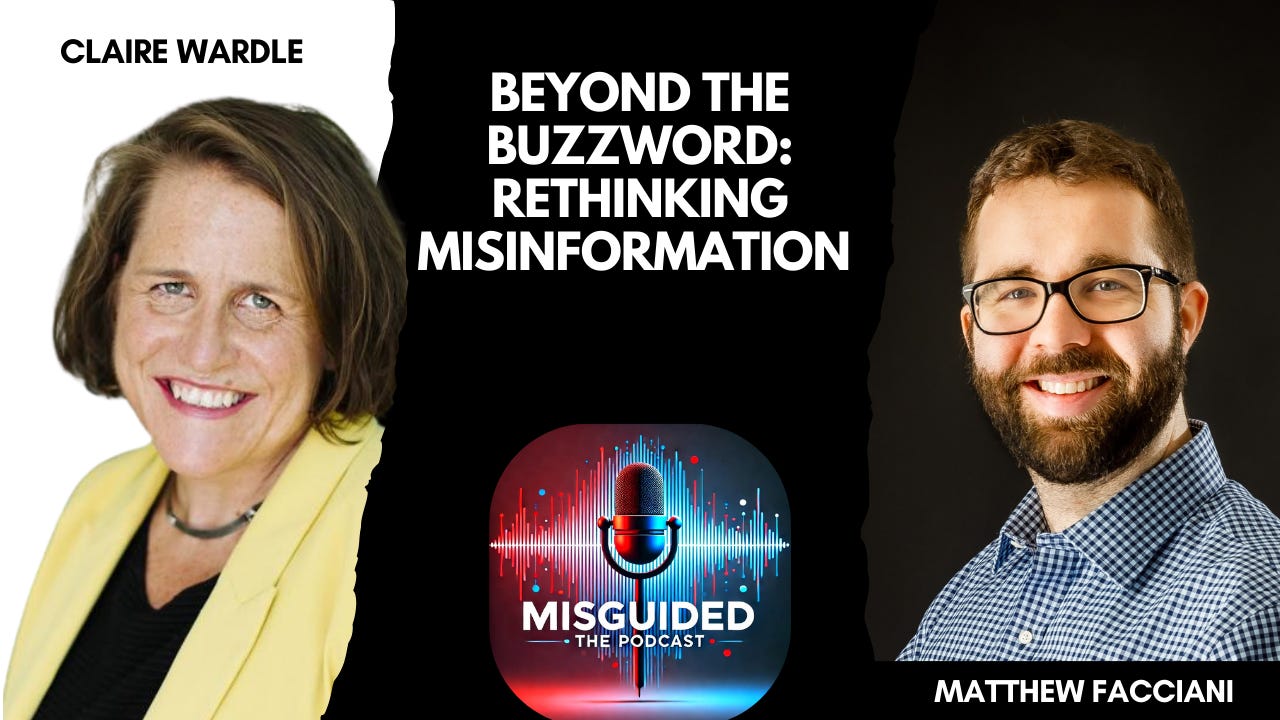
Beyond the Buzzword: Rethinking Misinformation with Claire Wardle
Today’s guest is Dr. Claire Wardle, a professor in the Department of Communication at Cornell University and one of the world’s leading experts on misinformation, media literacy, and public trust in science. Over the past two decades, she’s trained journalists around the globe, worked with organizations like the UN and the BBC, and co-founded both the nonprofit First Draft and the Information Futures Lab at Brown University.In this conversation, we dive into the challenges of defining and labeling misinformation, the importance of clear communication during times of uncertainty, and the emotional and social reasons people share content online. We also explore what it would look like if institutions—and academics—communicated in more human, engaging ways.I’ve cited Dr. Wardle’s work many times, so it was great to speak with her directly. I hope you enjoy the conversation as much as I did!Keywordsmedia literacy, misinformation, public trust, communication, social media, information sharing, community engagement, science communication, AIClaire Wardle’s Cornell WebsiteClaire Wardle on BlueskyFirst Draft Information Futures Lab at Brown University This is a public episode. If you'd like to discuss this with other subscribers or get access to bonus episodes, visit matthewfacciani.substack.com/subscribe
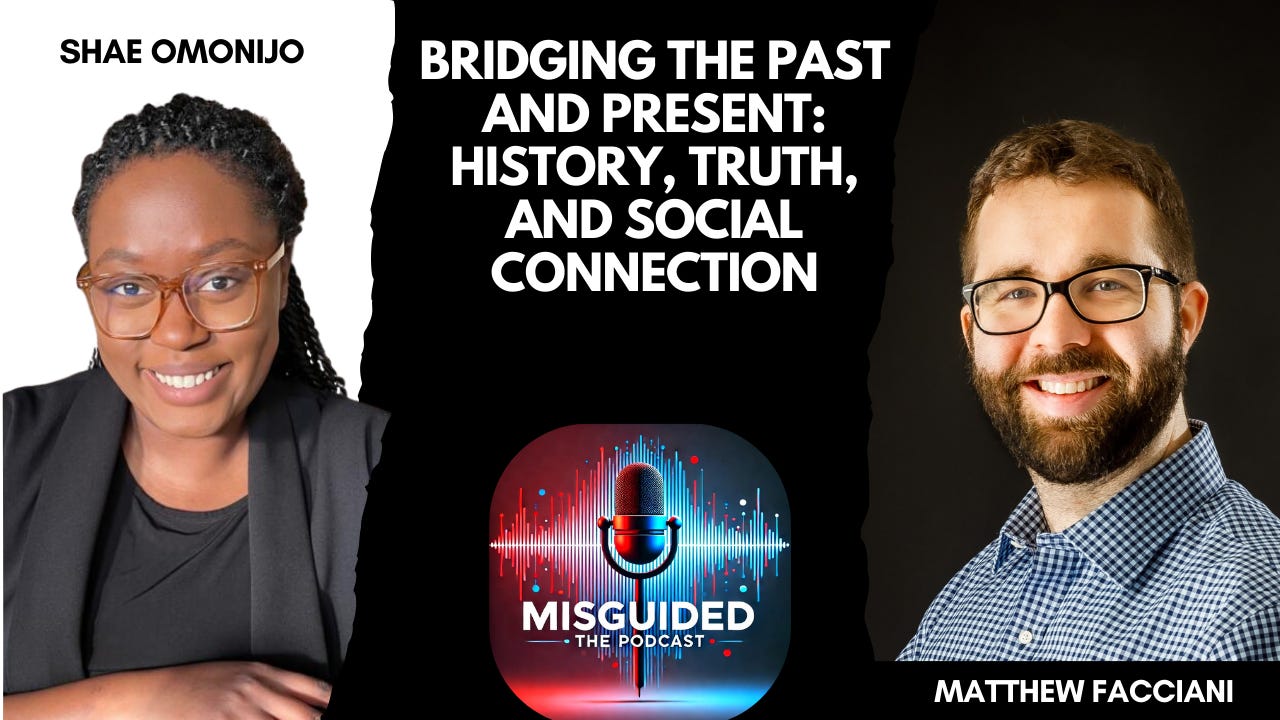
Bridging the Past and Present: History, Truth, and Social Connection
In this episode of Misguided, Matthew Facciani speaks with historian and Analog Social founder Shae Omonijo about making history accessible, the importance of community, and how digital culture is reshaping human connection. Shae shares what inspired her to pursue a PhD in history, her efforts to bring historical knowledge to the public, and the origins of Analog Social, a project focused on reclaiming real-world interactions in a digital age. They also discuss how history is shaped, erased, and distorted—and how those lessons can help us combat misinformation today.Shae’s Harvard WebsiteShae’s Personal WebsiteShae the Historian SubstackAnalog Socialkeywordshistory, public history, misinformation, community, social connection, digital life, humanities, Analog Social, critical thinking, historical narratives00:13 – Introduction01:13 – What Inspired Shae to Study History?03:26 – Making History Public & The Power of Representation06:20 – Shae’s “100 Historic Black Women” Series09:22 – How History Gets Distorted & Misinformation in Historical Narratives13:16 – The Rise of Analog Social & Reclaiming Human Connection18:30 – The Future of Analog Social20:18 – Social Isolation & Misinformation: Are They Connected?23:37 – Why We Hold on to False Beliefs25:19 – Final Thoughts: The Future of History & Social Connection This is a public episode. If you'd like to discuss this with other subscribers or get access to bonus episodes, visit matthewfacciani.substack.com/subscribe
How to Think Like a Fact-Checker with Joel Breakstone
In this episode of Misguided, Dr. Joel Breakstone, Co-Founder and Executive Director of the Digital Inquiry Group, joins me to discuss how we can better equip students to evaluate online information in an era of misinformation and AI-driven content. We explore the challenges of digital literacy, why some traditional fact-checking methods fall short, and evidence-based strategies—such as lateral reading—that actually help students distinguish credible sources from misinformation. Dr. Breakstone also shares insights from his research on how fact-checkers, students, and academics approach online sources differently, and what educators can do to integrate digital literacy into existing curricula. If you're interested in how we can teach people to think critically—rather than just telling them what to think—this episode is for you.Digital Inquiry GroupDr. Breakstone’s Google ScholarKeywords:digital literacy, media literacy, misinformation, fact-checking, lateral reading, critical thinking, online information, disinformation, civic online reasoning, education, Joel Breakstone, Stanford History Education Group, Digital Inquiry Group This is a public episode. If you'd like to discuss this with other subscribers or get access to bonus episodes, visit matthewfacciani.substack.com/subscribe