Show overview
MintPress News has published 3 episodes during 2021. That works out to roughly 3 hours of audio in total. Releases follow a several-times-a-week cadence.
Episodes typically run thirty-five to sixty minutes — most land between 51 min and 1h 1m — and the run-time is fairly consistent across the catalogue.
The catalogue appears to be on hiatus or wound down — the most recent episode landed 5.3 years ago, with no new episodes in over a year.
From the publisher
Mint Press News (MPN) is an independent online magazine that delivers in-depth, thought provoking analysis, reporting and political commentary on the most pressing issues facing our world. MPN has developed an impressive masthead of journalists, former and current academics, and political experts, who provide context and insight into issues and stories often overlooked by the mainstream media. In a headline news driven industry, MPN provides readers with an innovative form of journalism that cover long form articles and analyses that combine the “who, what, when, where, and why,” with information on how issues relate to democracy, human rights and government — giving context to the issues we cover and empowering our readers. Our critical analyses give readers an alternative perspective on the issues that really matter — without the partisanship that plagues today’s news media. At MPN, we don’t shy away from the stories that are ignored, silenced or simply overlooked by the current corporate sponsored media establishment. MPN is comprised of a team of editors, staff writers, reporters, national and international correspondents, and contributors with extensive backgrounds in political science and international relations. Our masthead includes, but is not limited to, veteran journalists, veteran war correspondents, grassroots leaders, peace activists, political analysts, world renowned authors, academics, and specialists. Mint Press News believes that news media has a social obligation in keeping people informed on subjects that directly and indirectly influence people now and in the future.
Latest Episodes
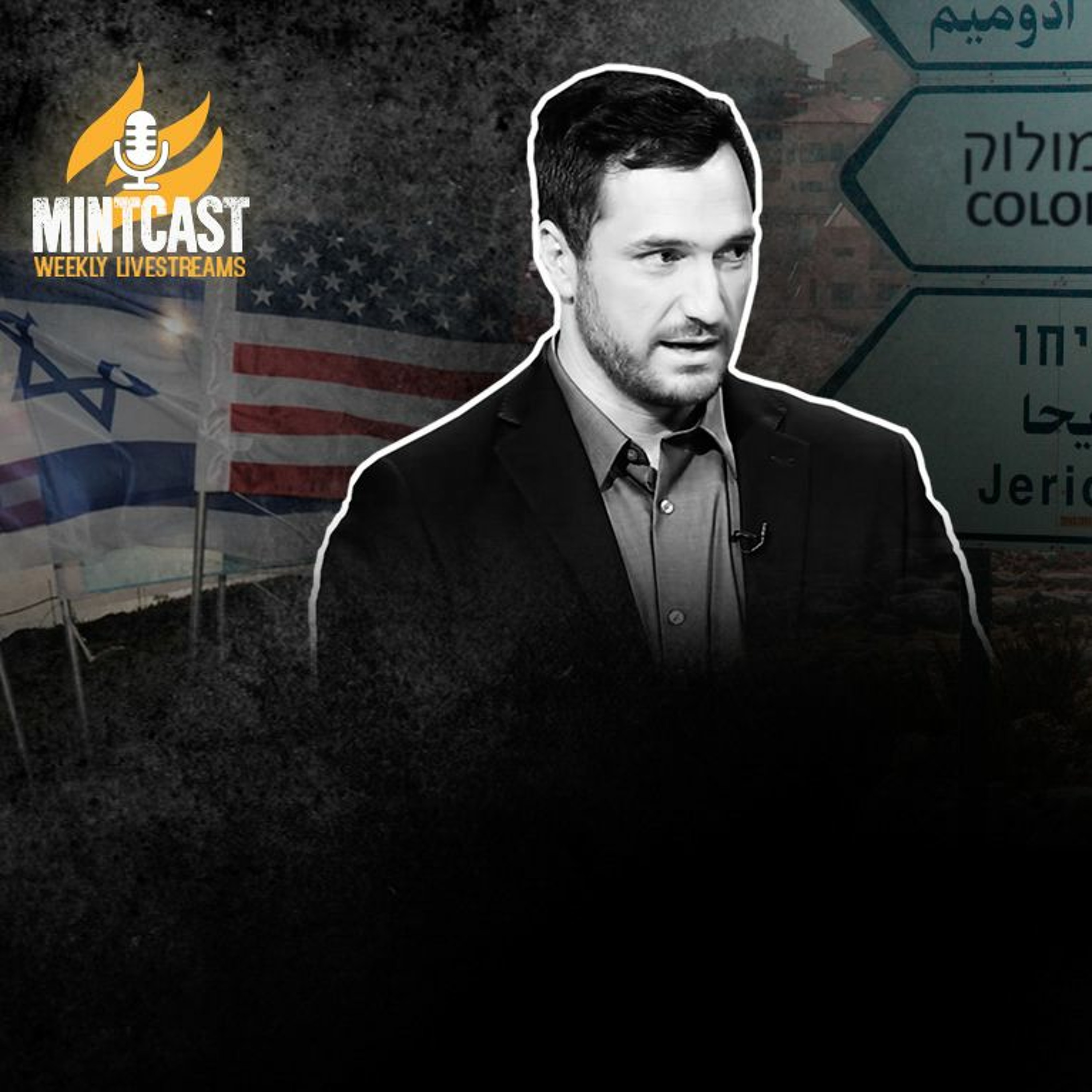
Dan Cohen on the Israeli Operatives Behind some of Colombia’s Most Violent Death Squads
Colombia is regularly described as the Israel of Latin America. Although on opposite sides of the world from each other, the two countries share many similarities. They are both key outposts of U.S. power in their regions, helping make their neighborhood safe for American businesses and American profits. Both governments are carrying out wars against indigenous populations. Both talk of a “peace process” with their enemies but neither seems to get any closer to a lasting agreement. And both smear those enemies as terrorists. Violence in both nations has made worldwide headlines of late. In Colombia, President Ivan Duque’s attempts to push through an economic shock therapy package consisting of privatizing the country’s pension and healthcare systems, reducing the minimum wage, and increasing taxes on basic necessities sent millions into the streets in a nationwide general strike. Duque has responded with an iron fist, sending first armed police and then the military into the streets to quell the protests. According to local human rights group Indepaz, 71 people have been killed, as armored cars fill the streets and drones and helicopters terrorize strikers from above. Meanwhile, in Israel, security forces attacked the Al-Aqsa Mosque in Jerusalem as worshippers were celebrating Ramadan at the third holiest site in Islam. The attack drew a response from Hamas, which began firing rockets into Israel, which, in turn, led to a massive Israeli reaction, with the IDF pounding much of Gaza into rubble. Hundreds of people were killed, thousands injured, and tens of thousands fled their homes. Among the buildings targeted were schools, a COVID-19 test center, and the headquarters of international media organizations. Unusually, Israeli actions drew criticism from the centers of power in the United States, with senior politicians and media figures alike condemning the attack and using words like “apartheid” and “ethnic cleansing” — a signal that perhaps a change in attitude is beginning to take place and real change could be around the corner. Last week, MintPress also revealed how Israel is helping Colombia repress its citizens, providing arms and training to security services. Yet a new investigation from our guest today has highlighted how the links between Israel and Colombia go far deeper and how Israeli officials were the masterminds of political massacres carried out by the Colombian government. Dan Cohen’s new work shows how the Colombian government’s genocidal policy of massacring its political opponents — over 4,000 members of the Patriotic Union Party, including two presidential candidates, 14 parliamentarians, 15 mayors, nine mayoral candidates, three members of the House of Representatives and three senators — was done on the suggestion of an Israeli official, Rafael ‘Rafi’ Eitan. Eitan was employed by the government to advise it on counterinsurgency strategies. Another Israeli, Yair Klein, provided the training for many of the most notorious far-right paramilitary groups, including the AUC, thought to have been responsible for around 80% of the killings during the civil war. The leader of the AUC, Carlos Castaño, was educated in Israel and credited the aprtheid state for teaching him all he knew about terrorism. “I learned an infinity of themes in Israel,” he wrote in his autobiography.

Chronicling Barbarism with Political Cartoonist Carlos Latuff
It is often said that a picture paints a thousand words; images have the ability to move people in ways that words alone cannot. Iconic pictures from war zones, such as those of a dead Syrian child on the beach, of Vietnamese girls covered in Napalm or American soldiers planting their flag at Iwo Jima, become anchors around which people understand conflicts, and the world more generally. Cartoons as well have the power to challenge and change people’s minds, satirizing the powerful and revealing hypocrisies in humorous ways that often push through people’s ideological barriers. The powerful understand the potential of the image, so all over the world political cartoonists are censored and repressed. In 2015, Malaysian satirist Zulkiflee SM Anwar Haque — better known as Zunar — was charged with sedition and faced 43 years in jail before a change in government led to the case being dropped. Four years later, Turkey jailed artist Musa Kart after he was accused of aiding the banned Kurdistan Workers’ Party. And after pushback over a cartoon critiquing the Israeli government’s relationship with the Trump administration, The New York Times decided to shut down its entire political cartoon operation, announcing that it would no longer print them. In the days of social media supremacy, many cartoonists are completely reliant on big tech companies like Facebook and Instagram for both their audience and their income, putting them in serious danger of being both silenced and impoverished if Silicon Valley decides it does not like their message. Today’s guest is Carlos Latuff, a Brazillian political cartoonist who has built up a following all over the world. Often compared to street artist Banksy for his style and his cutting political commentary, his art graces the pages of a host of independent media outlets, including MintPress News. Carlos was born in Rio de Janeiro in Brazil and describes himself as a “visual chronicler of barbarism.” Highly politically charged, his cartoons have won him both followers and enemies. He has been arrested multiple times due to his criticisms of the government and the police in his home country, while he is regularly tarred as anti-Semitic by defenders of the Israeli state, a charge he laughs off as “a joke worthy of a Woody Allen movie.” Carlos became particularly well known during the Arab Spring when his cartoons helped fuel revolutions across the region. Reuters called him a “hero” of the movement while The Guardian described him as the “unlikely star” of the revolt. Always political and edgy, Carlos frequently takes aim at major centers of world power, including governments like those of the United States, Israel and his native Brazil, as well as at a mainstream corporate media that distort reality and allow injustices to continue on unnoticed by the general public.
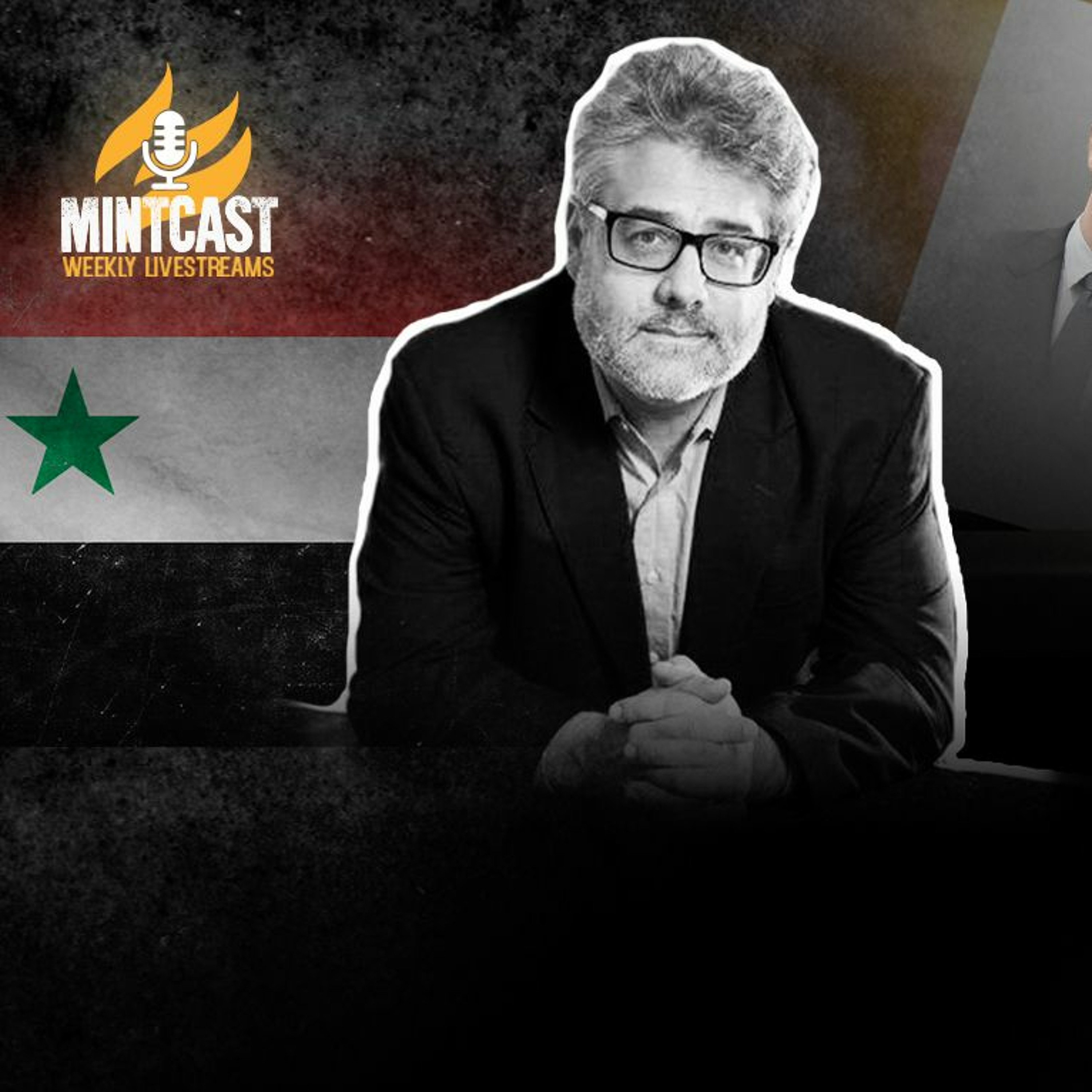
Dan Kovalik on Elections, Rebuilding and the Ongoing Proxy War in Syria
midst a decade-long war that has devastated the country, Syrians went to the polls last week in an election that gave another seven-year term to current leader Bashar al-Assad. With a turnout of over 78%, Assad achieved an overwhelming victory against his nearest opponent, Mahmoud Ahmad Marei. Supporters of the president took to the streets in the hundreds of thousands as the results were publicized, celebrating what they saw as a repudiation of violence and a step forward for the beleaguered nation. The results were endorsed by many nations friendly towards the government, such as China, Iran and Cuba. “A decisive victory was won by the incumbent head of state,” wrote the foreign ministry of Russia in a statement. “We view the elections as a sovereign affair of the Syrian Arab Republic and an important step towards strengthening its internal stability,” they added. However, opponents of the Assad administration described the contest as a sham and hopelessly rigged, claiming that his opponents were controlled stooges, that people inside Syria were forced to vote for him, while refugees were blocked from voting. “The Assad regime’s so-called presidential election is neither free nor fair. The U.S. joins France, Germany, Italy, and the U.K. in calling for the rejection of the regime’s attempts to regain legitimacy without respecting the Syrian people’s human rights and freedoms,” said Secretary of State Anthony Blinken. Many of the countries Blinken mentioned, including the United States, blocked Syrians from voting at diplomatic missions in their countries. Despite the Western reaction, Assad, in power since 2000, looks set to govern for seven more years. His major task will be attempting to break armed opposition groups in Idlib and to repair a nation destroyed by 10 years of war and crippling sanctions. The United Nations Refugee Agency estimates that over 13 million Syrians, including 6.7 million internally displaced people, require humanitarian assistance. A further 6.6 million people have left the country since fighting began in 2011. Joining MintPress to discuss the elections, the humanitarian situation and the future of the Syrian Arab Republic is Dan Kovalik. Dan is a human rights lawyer and adjunct professor of law at the University of Pittsburgh. A prolific author, Dan’s work and activism has taken him around the world, including to Colombia and Venezuela. He spent a week in Syria, where he observed the elections first-hand. Subscribe to MintCast on Spotify, Apple Podcasts, and SoundCloud. Also, be sure to check out the new Behind the Headlines channel on YouTube.