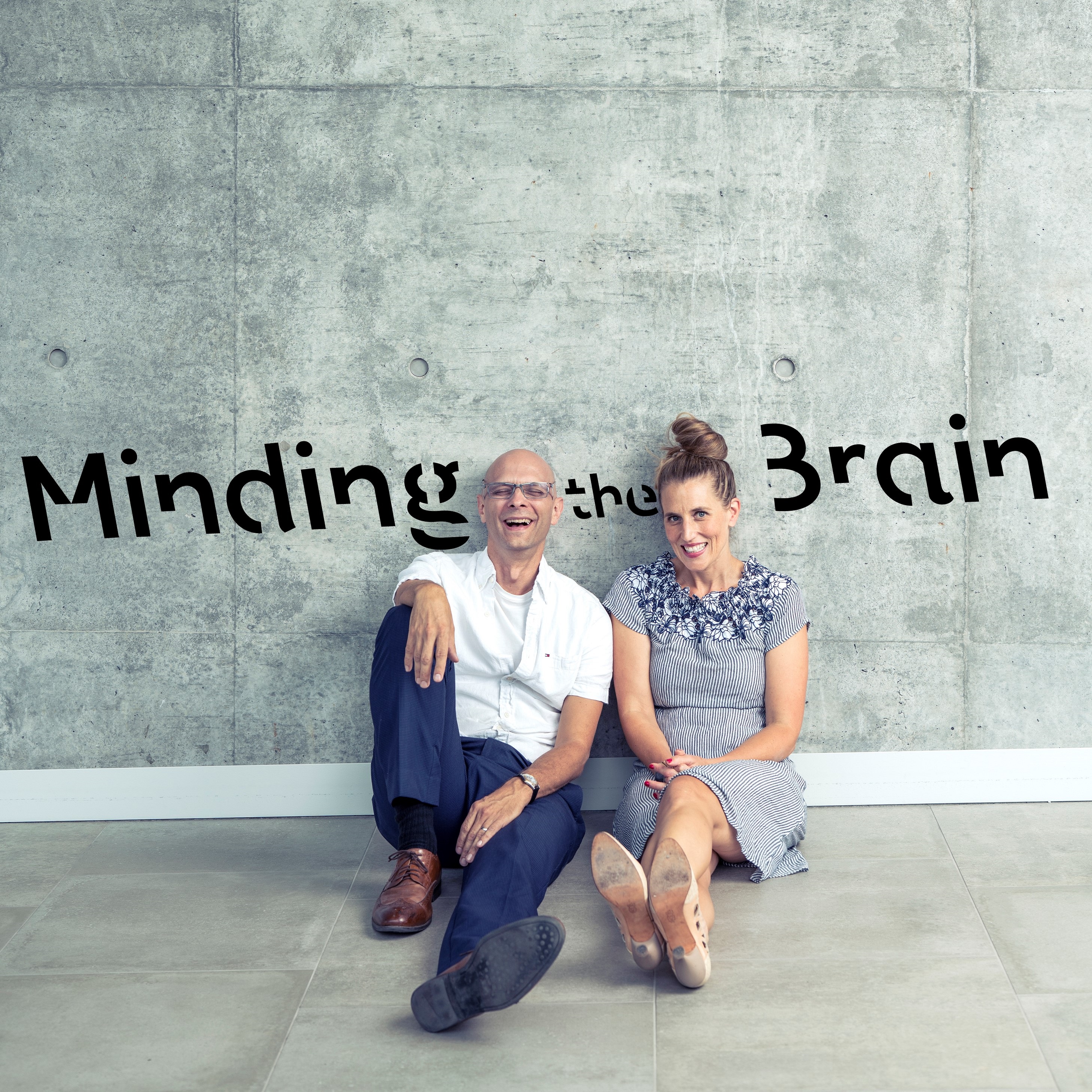
Minding the Brain
110 episodes — Page 2 of 3
#58 Goals
Why are goals important? Why are we successful in the pursuit of certain goals, but not others? Jim Davies interviews Marina Milyavskaya about how science <a class="mh-excerpt-more" href="https://mindingthebrainpodcast.com/2023/01/01/58-goals/" title="#58 Goals">[...]</a>
#57 Video Game Addiction
Can someone get addicted to video games? Join Kim and Jim as they talk about the science of addiction as applied to video games. Featuring <a class="mh-excerpt-more" href="https://mindingthebrainpodcast.com/2022/12/01/57-video-game-addiction/" title="#57 Video Game Addiction">[...]</a>
#56 Video Games
Do video games increase aggression? Are they addictive? Can video games make you smarter? Jim and Kim discuss the research on video games in this <a class="mh-excerpt-more" href="https://mindingthebrainpodcast.com/2022/11/01/56-video-games/" title="#56 Video Games">[...]</a>
#55 Caffeine
Why did plants evolve to be caffeinated? When did humans start using caffeine? What are the benefits of caffeine? Can caffeine be dangerous and is <a class="mh-excerpt-more" href="https://mindingthebrainpodcast.com/2022/10/01/55-caffeine/" title="#55 Caffeine">[...]</a>
#54 Where Are All the Aliens?
If the universe is teeming with life, and even a fraction of that life is intelligent, where are all the aliens? Join Jim and Kim <a class="mh-excerpt-more" href="https://mindingthebrainpodcast.com/2022/09/01/where-are-all-the-aliens/" title="#54 Where Are All the Aliens?">[...]</a>
#53 Alcohol
Alcohol is, by far, the most commonly used addictive drug, but how much do you really know about it? How does alcohol interact with the <a class="mh-excerpt-more" href="https://mindingthebrainpodcast.com/2022/08/01/53-alcohol/" title="#53 Alcohol">[...]</a>
#52 Hacking Your Reward System
Kim and Jim tell you how to hack your reward system! What is the brain’s reward system and why did it evolve? Is it possible <a class="mh-excerpt-more" href="https://mindingthebrainpodcast.com/2022/07/01/52-hacking-your-reward-system/" title="#52 Hacking Your Reward System">[...]</a>
#51 The Future of Depression Treatment with Dr. Benicio Frey
Kim interviews Dr. Benicio Frey about the future of depression treatment. What is depression and what are the symptoms? How is depression treated? How important <a class="mh-excerpt-more" href="https://mindingthebrainpodcast.com/2022/06/01/51-the-future-of-depression-treatment-with-dr-benicio-frey/" title="#51 The Future of Depression Treatment with Dr. Benicio Frey">[...]</a>
#50 Happiness
Jim Davies and Darren McKee talk about happiness. What is happiness? What does science say about how people can be happier? Find out the answers <a class="mh-excerpt-more" href="https://mindingthebrainpodcast.com/2022/05/01/50-happiness/" title="#50 Happiness">[...]</a>
#49 Eastern and Western Thinking
Jim interviews Dr. Richard E. Nisbett about Eastern and Western thinking. What are the differences between Eastern and Western thinking? How do economic differences impact <a class="mh-excerpt-more" href="https://mindingthebrainpodcast.com/2022/04/01/49-eastern-and-western-thinking/" title="#49 Eastern and Western Thinking">[...]</a>
#48 Pain
Kim interviews Michael Hildebrand about the topic of pain. Does everyone experience pain the same way? Why do we experience pain? Is there such a <a class="mh-excerpt-more" href="https://mindingthebrainpodcast.com/2022/03/01/48-pain/" title="#48 Pain">[...]</a>
#47 Where Are All the Geniuses?
Kim interviews Jim about the phenomenon of geniuses. Are there as many geniuses born today as there were previously? Are groundbreaking scientific discoveries still being <a class="mh-excerpt-more" href="https://mindingthebrainpodcast.com/2022/02/01/47-where-are-all-the-geniuses/" title="#47 Where Are All the Geniuses?">[...]</a>
#46 Testosterone
Jim interviews Carole Hooven, Harvard evolutionary biologist and author of the new book T: The Story of Testosterone, the Hormone that Dominates and Divides Us. <a class="mh-excerpt-more" href="https://mindingthebrainpodcast.com/2022/01/01/46-testosterone/" title="#46 Testosterone">[...]</a>
#45 Seasonal Affective Disorder
Jim interviews Kim about the phenomenon known as Seasonal Affective Disorder (SAD). Why do searches for “depression” peak in November and February? What kinds of <a class="mh-excerpt-more" href="https://mindingthebrainpodcast.com/2021/12/01/45-seasonal-affective-disorder/" title="#45 Seasonal Affective Disorder">[...]</a>
#44 Free Will
What is free will? Can humans make conscious decisions? What does the scientific evidence tell us about the existence of free will? Find out on <a class="mh-excerpt-more" href="https://mindingthebrainpodcast.com/2021/11/01/45-free-will/" title="#44 Free Will">[...]</a>
#43 Right Brain / Left Brain
The idea of brain lateralization has attained a high degree of popularity in culture. People will often refer to themselves as being “right brained” or <a class="mh-excerpt-more" href="https://mindingthebrainpodcast.com/2021/10/01/43-right-brain-left-brain/" title="#43 Right Brain / Left Brain">[...]</a>
#42 Conspiracy Theories
Kim interviews Jim about conspiracy theories. What makes conspiracy theories so appealing? What is the relationship between scientific literacy and the likelihood that someone will <a class="mh-excerpt-more" href="https://mindingthebrainpodcast.com/2021/09/01/43-conspiracy-theories/" title="#42 Conspiracy Theories">[...]</a>
Alien Abduction
Is there a scientific explanation for the alien abduction phenomenon? Is there a link between nocturnal alien visitations and the many similar stories that have <a class="mh-excerpt-more" href="https://mindingthebrainpodcast.com/2021/08/01/alien-abduction/" title="Alien Abduction">[...]</a>
Concussions
Dr. Jim Davies and Dr. Kim Hellemans interview two experts on the topic of concussions, Andree-Anne Ledoux, a Research Associate at Children’s Hospital of Eastern Ontario <a class="mh-excerpt-more" href="https://mindingthebrainpodcast.com/2021/07/01/concussions/" title="Concussions">[...]</a>
#41 Talking
Dr, Jim Davies interviews Dr. Iva Ivanova about the psychology of talking. Do different languages change the way we formulate meaning? What is syntax and how <a class="mh-excerpt-more" href="https://mindingthebrainpodcast.com/2021/06/01/41-talking/" title="#41 Talking">[...]</a>
#40 Neurodiversity
Dr. Kim Hellemans discuses neurodiversity with Tara Connolly, Patricia Berube and Kait Bowser. What is neurodiversity? Why is it important to recognize neurodiversity in higher education? How <a class="mh-excerpt-more" href="https://mindingthebrainpodcast.com/2021/05/01/40-neurodiversity/" title="#40 Neurodiversity">[...]</a>
#39 Control: Why You Do What You Do
Kim and Jim discuss the science of why we do what we do. How long does it take to form a habit? How is it <a class="mh-excerpt-more" href="https://mindingthebrainpodcast.com/2021/04/01/39-control-why-you-do-what-you-do/" title="#39 Control: Why You Do What You Do">[...]</a>
#38 Synesthesia
Some people perceive colors when they see certain words, letters or numbers, and some people experience geometric shapes as associated with certain tastes. These are <a class="mh-excerpt-more" href="https://mindingthebrainpodcast.com/2021/03/01/38-synesthesia/" title="#38 Synesthesia">[...]</a>
#37 Behavioral Addiction
Kim and Jim take a deep dive into the topic of behavioral addiction. What is behavioral addiction? Can you be addicted to food? What about <a class="mh-excerpt-more" href="https://mindingthebrainpodcast.com/2021/02/01/37-behavioral-addiction/" title="#37 Behavioral Addiction">[...]</a>
#36 Dreams
Kim interviews Jim about dreams. What are dreams and why did we evolve to have them? Are dreams symbolic representations of events in our lives? <a class="mh-excerpt-more" href="https://mindingthebrainpodcast.com/2021/01/01/36-dreams/" title="#36 Dreams">[...]</a>
#35 Depression
Jim interviews Kim about Depression. What exactly is Depression, and how many people have it? What’s the difference between being depressed, and being diagnosed with <a class="mh-excerpt-more" href="https://mindingthebrainpodcast.com/2020/12/01/35-depression/" title="#35 Depression">[...]</a>
#34 Personality Disorders
Dr. Kim Hellemans interviews Dr. O. Pete Kelly about personality disorders. What are personality disorders and what are some common symptoms? What does therapy look like <a class="mh-excerpt-more" href="https://mindingthebrainpodcast.com/2020/11/01/34-personality-disorders/" title="#34 Personality Disorders">[...]</a>
#33 Don’t Choke! Why we sometimes fail under pressure
Why does stress sometimes make us choke at the most critical moment? Jim interviews cognitive scientist Sian Beilock about this phenomenon and they discuss psychological tools <a class="mh-excerpt-more" href="https://mindingthebrainpodcast.com/2020/10/01/33-dont-choke-why-we-sometimes-fail-under-pressure/" title="#33 Don’t Choke! Why we sometimes fail under pressure">[...]</a>
#32 Sleep
Kim and Jim discuss how sleep relates to the mind and the brain. Why did sleep evolve? What is the function of dreaming? How do <a class="mh-excerpt-more" href="https://mindingthebrainpodcast.com/2020/09/01/32-sleep/" title="#32 Sleep">[...]</a>
#31 How Imagination Can Make You Happy or Miserable
Kim interviews Jim about imagination and imagines a future podcast all about star nosed moles. Can imagination make us miserable? Does fantasizing about future events <a class="mh-excerpt-more" href="https://mindingthebrainpodcast.com/2020/08/01/31-how-imagination-can-make-you-happy-or-miserable/" title="#31 How Imagination Can Make You Happy or Miserable">[...]</a>
#30 Student Mental Health
Jim interviews Kim about the important topic of student mental health. What is the impact of substances of like alcohol and marijuana, on mental health? <a class="mh-excerpt-more" href="https://mindingthebrainpodcast.com/2020/07/01/30-student-mental-health/" title="#30 Student Mental Health">[...]</a>
#29 Climate Change Psychology
Jim, Kim and special guest, Florence Daviet, CPAWS’ National Forest Program Director, discuss the important topic of climate change. What is the best way to <a class="mh-excerpt-more" href="https://mindingthebrainpodcast.com/2020/05/31/29-climate-change-psychology/" title="#29 Climate Change Psychology">[...]</a>
#28 Wrapping Your Brain Around the Coronavirus
Kim and Jim help are here to help you wrap your brain around the Coronavirus. Why are people drawn to Coronavirus conspiracy theories? What is <a class="mh-excerpt-more" href="https://mindingthebrainpodcast.com/2020/05/01/28-wrapping-your-brain-around-the-coronavirus/" title="#28 Wrapping Your Brain Around the Coronavirus">[...]</a>
#27 Emotional Expression
Dr. Davies interviews Gerald Cupchik about emotions. What do people misunderstand about emotions? How does emotional expression differ between cultures? Do childhood events have ramifications <a class="mh-excerpt-more" href="https://mindingthebrainpodcast.com/2020/04/01/27-emotional-expression/" title="#27 Emotional Expression">[...]</a>
#26: Imaginary People
Kim interviews Jim about imaginary people. Why do people we meet in our dreams seem to have a mind of their own? Why do authors <a class="mh-excerpt-more" href="https://mindingthebrainpodcast.com/2020/03/01/26-imaginary-people/" title="#26: Imaginary People">[...]</a>
#24: ADHD
Dr. Davies interviews Dr. Hellemans about ADHD. What is the difference between ADHD and ADD? How is ADHD diagnosed? Are there risks associated with the <a class="mh-excerpt-more" href="https://mindingthebrainpodcast.com/2020/01/01/24-adhd/" title="#24: ADHD">[...]</a>
#23: Hallucinations
Dr. Hellemans interviews Dr. Davies about hallucinations. What are the neural correlates of hallucinations? How many types of hallucinations are there? What is the difference <a class="mh-excerpt-more" href="https://mindingthebrainpodcast.com/2019/12/01/23-hallucinations/" title="#23: Hallucinations">[...]</a>
#22: Relationships
Dr. Davies interviews Cheryl Harasymchuk about relationships. What types of people tend to start relationships with each-other? What makes people physically attracted to each-other? Find out <a class="mh-excerpt-more" href="https://mindingthebrainpodcast.com/2019/11/01/22-relationships/" title="#22: Relationships">[...]</a>
#21: Trauma
Dr. Hellemans interviews psychologist Matthew Rippeyoung about trauma. What is trauma and how does it impact us? Where does trauma come from and what is <a class="mh-excerpt-more" href="https://mindingthebrainpodcast.com/2019/10/01/21-trauma/" title="#21: Trauma">[...]</a>
#20: Morning People & Night People
Kim and Jim discuss the apparent phenomenon of morning people and night people. Is there a biological difference between “morning people” and “night people”? Why <a class="mh-excerpt-more" href="https://mindingthebrainpodcast.com/2019/09/01/20-morning-people-night-people/" title="#20: Morning People & Night People">[...]</a>
#19: Pet Therapy
Kim and Jim interview Dr. Colleen Dell and Shannon Noonan about their work with therapy dogs. Why do dogs make such good therapy animals? Can <a class="mh-excerpt-more" href="https://mindingthebrainpodcast.com/2019/08/01/19-pet-therapy/" title="#19: Pet Therapy">[...]</a>
#18: Voices in the Head
Dr. Davies interviews Gregory Shankland about his experiences with hearing voices in his head. Gregory tells the fascinating story of how he began to hear voices, how <a class="mh-excerpt-more" href="https://mindingthebrainpodcast.com/2019/07/01/18-voices-in-the-head/" title="#18: Voices in the Head">[...]</a>
#17: Religious Experiences
Jim and Kim explore the science of having religious experiences, with the help of special guest Dr. Ann Taves. Why do people have religious experiences? <a class="mh-excerpt-more" href="https://mindingthebrainpodcast.com/2019/06/01/17-religious-experiences/" title="#17: Religious Experiences">[...]</a>
#16: Social Media & Addiction
Kim and Jim dive into the topic of social media and addiction. Can you be addicted to social media? Does using social media too much affect <a class="mh-excerpt-more" href="https://mindingthebrainpodcast.com/2019/05/01/16-social-media-addiction/" title="#16: Social Media & Addiction">[...]</a>
#15: Multitasking
Kim and Jim discuss the scientific evidence surrounding multitasking. Does multitasking make you more or less efficient? When should you multitask? Is it safe to <a class="mh-excerpt-more" href="https://mindingthebrainpodcast.com/2019/04/01/15-multitasking/" title="#15: Multitasking">[...]</a>
#14: Alcohol and the Developing Brain
Jim and Kim are joined by special guest Audrey McFarlane to discuss the impact of alcohol on the developing brain. What are the effects of <a class="mh-excerpt-more" href="https://mindingthebrainpodcast.com/2019/03/01/14-alcohol-and-the-developing-brain/" title="#14: Alcohol and the Developing Brain">[...]</a>
#13: Beauty and Neuroaesthetics
Many people think beauty is something ephemeral, subject to the arbitrary whims of individual taste and cultural trends. But philosophers have been studying beauty and <a class="mh-excerpt-more" href="https://mindingthebrainpodcast.com/2019/02/01/13-beauty-and-neuroaesthetics/" title="#13: Beauty and Neuroaesthetics">[...]</a>
#12: Why We Like Sports
People love to watch sports. The Superbowl, for example, is incredibly popular. About 111 million people, a third of everyone in the united states, watched <a class="mh-excerpt-more" href="https://mindingthebrainpodcast.com/2019/01/01/12-why-we-like-sports/" title="#12: Why We Like Sports">[...]</a>
#11: Nutrition and the Brain
According to the world health organization, obesity has reached epidemic proportions globally, with more than 1 billion adults overweight, and at least 300 million of <a class="mh-excerpt-more" href="https://mindingthebrainpodcast.com/2018/12/01/11-nutrition-and-the-brain/" title="#11: Nutrition and the Brain">[...]</a>
#10: Alien Abduction
Is there a scientific explanation for the alien abduction phenomenon? Is there a link between nocturnal alien visitations and the many similar stories that have <a class="mh-excerpt-more" href="https://mindingthebrainpodcast.com/2018/11/01/10-alien-abduction/" title="#10: Alien Abduction">[...]</a>