Mind Matters
209 episodes — Page 4 of 5

Ep 244Can Lawyer Robots Solve Complex Legal Cases?
A lawyer recently used ChatGPT in a court case, but it generated false citations. Can AI be trusted at all in the courtroom? Lawyer Richard Stevens explains how in legal cases, meaning, context, and nuance are essential, and can’t be “computed” by artificial intelligence.  Additional Resources Source
Ep 243AI Libel and Responsibility
What happens when ChatGPT doesn’t just generate false information but also slanderous and potentially harmful responses? And in legal matters, who is responsible for AI? Robert J. Marks and legal expert Richard W. Stevens discuss these topics and more in this week’s podcast episode. Additional Resources Source

Ep 242AI and Intellectual Property
The question of copyright and “fair use” is a contentious debate in the age of AI. Is AI-generated art a kind of theft? What about artists’ rights? Attorney and Bradley Center Senior Fellow Richard Stevens discusses the legalities of copyright and the challenge of artificial intelligence in today’s increasingly complicated world.  Additional Resources Source

Ep 241Alzheimer’s, Medical Ethics, and Choosing Life
From preemptive assisted suicide to selective abortions, the medical field suffers a host of ethical dilemmas. In today’s podcast episode, memory-loss expert Stephen Post joins neurosurgeon Michael Egnor to discuss Alzheimer’s, bioethics, and the intrinsic dignity of human beings.  Additional Resources Source

Ep 240AI: Is it Good or Bad for Society?
Artificial intelligence already surrounds us and has made inroads into banking, accounting, and digital technology. It’s ubiquitous. In today’s episode, Robert J. Marks reminds us that AI is like fire: its benefits and value depend on how wisely (or foolishly) we use it. Additional Resources Source

Ep 239Caring for the Deeply Forgetful
How can we compassionately relate to those suffering from Alzheimer’s disease? Is the mind more than the brain? Dr. Stephen Post, an expert in the field and author of Dignity for Deeply Forgetful People, speaks with neurosurgeon Michael Egnor on memory, consciousness, and whether the mind could have arisen from matter. Additional Resources Source

Ep 238An Antidote for Digital Addiction
With the advent of social media, rates of teenage depression, suicides, and body image problems have skyrocketed. These are symptoms of digital addiction. How can we combat digital addiction and promote digital wellness especially in youth? Kent Marks talks about his departure from Boy Scouts and his transition to Trail Life USA, which seeks to offer an antidote to digital Read More › Source

Ep 237Medicine for Digitally Addicted Boys
The Boy Scouts of America used to enjoy a booming membership. But after some significant policy changes and a giant lawsuit, the organization is rapidly declining.  In this episode, Robert Marks speaks with former Boy Scout leader Kent Marks on his experience in the organization and the enduring need to help boys navigate life in the digital age. Additional Resources Source

Ep 236Oxford Mathematician John Lennox on AI
Will AI take us over? Will we ever reach a point where humans and machines will completely merge? In this episode, world-renowned Oxford mathematician John Lennox answers questions about artificial intelligence and the transhumanist claim that AI will turn humans into gods. Additional Resources Source

Ep 235Working Towards Digital Flourishing
Dawn Wible, the founder of Talk More Tech Less, continues her conversation with Robert J. Marks on digital tech. How can we healthily use technology instead of being manipulated by Big Tech? In this episode, she lays out practical steps people can take to reclaim their time, relationships, and mental health. Additional Resources Source

Ep 234Talk More, Tech Less
Dawn Wible, founder of the digital wellness organization “Talk More Tech Less,” talks with Robert J. Marks about her advocacy for healthy screen time among children and young adults. Phone usage has dramatically increased in the last decade, especially during COVID-19. How can we be healthy and whole in a society so saturated with digital media? Additional Resources Source
Ep 233The Value and Drawbacks of ChatGPT
In this week’s episode, Robert Marks resumes his conversation with tech consultant and expert Jeffrey Funk. They focus on ChatGPT, its value and limits, and the hype that often accompanies new developments in AI. Additional Resources Source

Ep 232Navigating the Technological Age
Humans have created technology for centuries. But what happens when we stop using tech and tech starts using us? In this episode, Discovery Institute Senior Fellow Andrew McDiarmid sits down with Robert J. Marks to talk about the root meaning of technology, how it has developed, and the ways we can healthily navigate our highly technologized world. Additional Resources Source

Ep 231Where Does Innovation Come From?
In a continuation of last week’s conversation, technology experts Jeffrey Funk and Robert J. Marks explore the question of where today’s technological innovation is fostered. Academia? Private corporations? The military? Since many universities now prize publication over innovation, much of the real progress is being made elsewhere.  Additional Resources Source

Ep 230Jeffrey Funk on AI, Startups, and Big Tech
In this podcast episode, technology consultant and author Jeffrey Funk joins Robert J. Marks to talk about the artificial intelligence industry, how it’s used by Big Tech, and AI’s exaggerated hype. How do we respond to AI when technology is changing every year? Additional Resources Source

Ep 229Blake Lemoine and the LaMDA Question
In this continuation of last week’s conversation, ex-Googler Blake Lemoine tells Robert J. Marks what originally got him interested in AI: reading the science fiction of Isaac Asimov as a boy in rural Louisiana. The two go on to discuss and debate sentience in AI, non-computable traits of human beings, and the question of the soul. Additional Resources Source

Ep 228A Chat with Blake Lemoine on Google and AI Sentience
Former Google employee Blake Lemoine claimed that the Large Language Model LaMDA was a sentient being. The claim got him fired. In this episode, Lemoine sits down with Robert J. Marks to discuss AI, what he was doing at Google, and why he believes artificial intelligence can be sentient.   Additional Resources Source

Ep 227Winning and Losing Strategies for Casino Gambling
Can you beat casinos at their own game? Sometimes. Don Johnson beat Atlantic City casinos for over $15 million during a six-month period in 2011. Find out the ins and outs of casino gambling and card counting as Robert J. Marks interviews gambling expert Sal Cordova. In this intriguing podcast, you will discover how artificial intelligence plays poker, the strategies Read More › Source
Ep 226More Porn = More Trafficking
Robert J. Marks and Charlie Crockett discuss how the normalization of online pornography is connected with sex trafficking and abuse. In fact, the two industries are inextricably linked. They also discuss how military communications are affected by the widespread use of porn because of the high demand for spectrum (a limited resource). Additional Resources Source

Ep 225Social Media’s Role in Human Trafficking
Robert J. Marks and Charlie Crockett continue their conversation on the sad reality of human trafficking. In this episode, they focus particularly on how social media has become a place where predators will search and highlight children’s vulnerabilities — which so many young people share online. Marks and Crockett encourage parents to develop relationships of trust with their children and Read More › Source

Ep 224Human Trafficking In Your Own Backyard
Robert Marks speaks on the difficult topic of human trafficking with his guest Charles Crockett, who works with the anti-trafficking advocacy organization Unbound Now. Human trafficking is the fastest-growing criminal industry in the world and goes undetected all over the U.S. Marks and Crockett talk about the scope of the problem, common misconceptions about trafficking, and how to help victims in need. Read More › Source
Ep 223Is the Human Brain Just GPT-3 Made of Meat?
In this episode, Robert J. Marks talks with Pat Flynn on the Philosophy for the People podcast. Together they discuss the benefits and limits of the GPT-3, the mind-body problem, and the unique, “non-computable” qualities of the human person. Source
Ep 222Is The Mind an Illusion?
Perhaps you’ve heard of the “mind-body problem,” but what about the relationship between the mind and the brain? Is the mind just an illusion produced by the brain or is it something totally separate? Robert Marks talks with neurologist Andrew Knox on these topics and more in this week’s Mind Matters podcast episode. Additional Resources Source
Ep 221Ways the Brain Can Heal
Robert Marks and Andrew Knox continue their conversation on neurology, epilepsy, and mental illness. In this episode, they focus on the medications and practices that can help restore proper brain function, from antidepressants to forms of surgery to Elon Musk’s potential “Neuralink.” Additional Resources Source
Ep 220Ways the Brain Can Break
The brain is a marvelous organ still not understood. Artificial neural networks are supposed to be a simulation of the human brain. But comparing the brain to an artificial neural network is like comparing the human heart to a pump handle. Dr. Andrew Knox and Dr. Robert J. Marks discuss the brain, aging, and neurology. Additional Resources Source

Ep 219The Practice of Medicine and Ongoing Issues with Opioid Addiction
How does our brain chemistry affect addiction? How has artificial intelligence changed medicine? Anesthesiologist Dr. Richard Hurley discusses opioid addiction from a medical perspective with host Dr. Robert J. Marks. Then, an anonymous guest details their own experience with opioids. Finally, Dr. Hurley discusses how computer algorithms have both improved and stifled the proper practice of medicine. Additional Resources Source
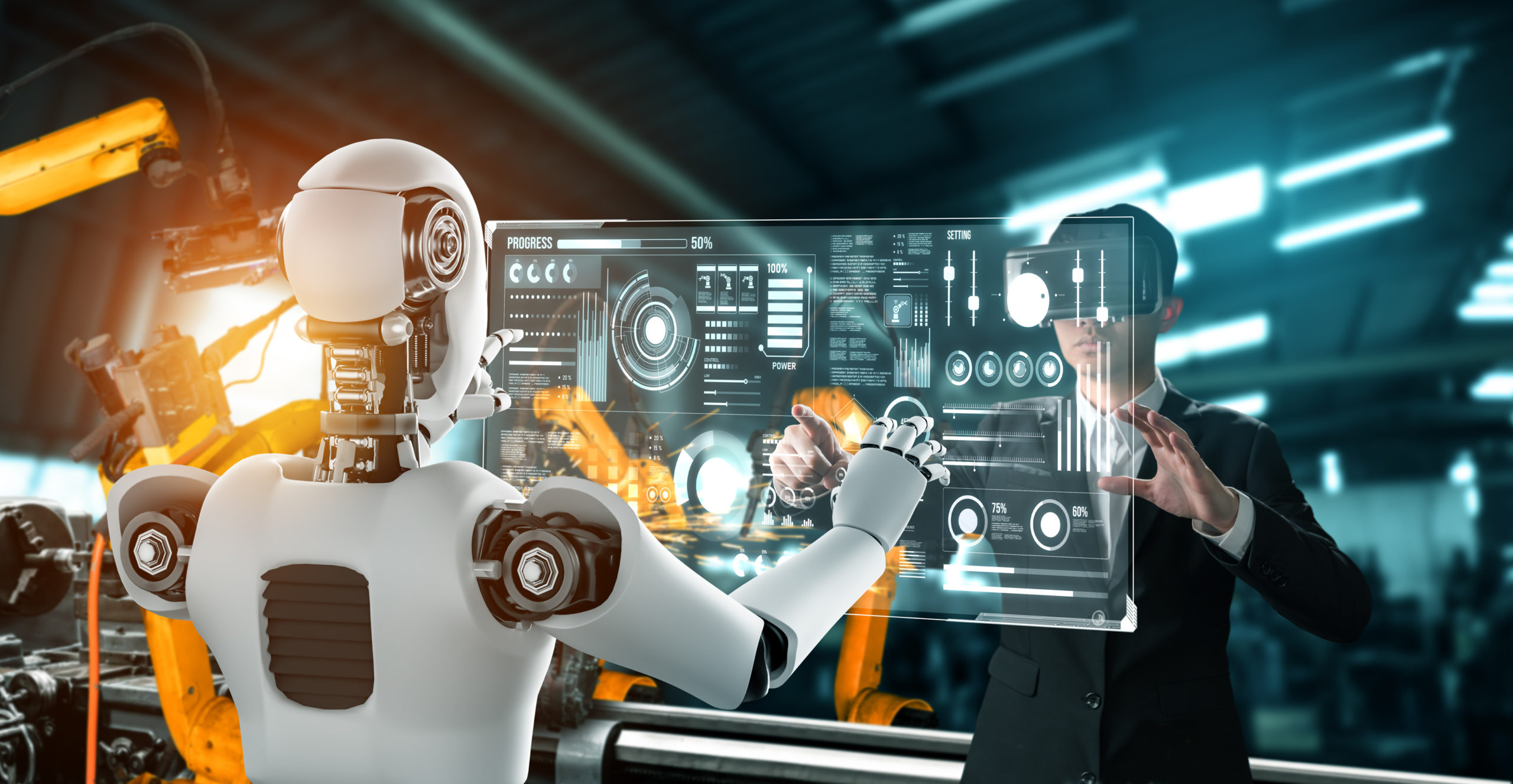
Ep 218What AI Machines Won’t Be Able to Achieve
Computer scientist and AI expert Selmer Bringsjord provides a wide-ranging discussion of artificial intelligence (AI) and its capabilities. Bringsjord, a professor at Rensselaer, addresses three features humans possess that AI machines won’t be able to duplicate in his view: consciousness, cognition, and genuine creativity. Additional Resources Source

Ep 217Defining the Role of AI in Patents
Recently, a piece of art called “Théâtre D’opéra Spatial” took home the first-place prize at the Colorado State Fair’s fine art competition in the category of digital arts/digitally manipulated photography. The art was generated using AI. Can AI hold a copyright? Can a human hold a copyright for a piece of artwork that they used AI to generate? Robert J. Read More › Source

Ep 216Can AI Be Issued Patents?
Should a computer program ever be listed as an inventor of a patent? Would AI have any right to sue for patent infringement? The US Patent Office has ruled that only “natural persons” can own patents, not machines, but should that change? Robert J. Marks discusses patent law and artificial intelligence with attorney and author, Richard W. Stevens. Additional Resources Read More › Source

Ep 215Patents and the Creativity Requirement
A new invention has to produce unexpected or surprising new results that were not anticipated by existing technology in order to be patented. Can computers generate something outside the explanation or expectation of the programmer? Robert J. Marks discusses patent law, creativity, and artificial intelligence with attorney and author, Richard W. Stevens. Additional Resources Source

Ep 214Getting Intentional About Your Screens
Our obsession today with screens is, often unintentionally, taking us to places we regret. We use these windows into the world for hours every day, often unaware how intentional content creators and app designers are in shaping our decisions and forming harmful habits. Source

Ep 213Patents: A License To Sue
What is the criteria for being granted a US patent? US Citizenship? Scrutiny? How long does a patent last? Source

Ep 212Can a Computer Be a Person?
Are we on the verge of the era of machines? Is AI destined to supplant most human endeavors and activities? Can a computer be deemed a person? And if so, should that computer be granted rights as part of the moral community? Will we ever attain immortality by uploading our minds into computers as transhumanists predict? And what the heck Read More › Source

Ep 211An Excerpt from Chapter Two of Non-Computable You
What You Do That Artificial Intelligence Never Will by Mind Matters podcast host Robert J. Marks is now available in audiobook form. Listen now to an excerpt from the second chapter as read by Larry Nobles. Will machines someday replace attorneys, physicians, computer programmers, and world leaders? What about composers, painters, and novelists? Will tomorrow’s supercomputers duplicate and exceed humans? Read More › Source

Ep 210Hinduism, Philosophy, and the Mind
Arjuna Gallagher is the host of the YouTube Channel called Theology Unleashed and a Hindu. He discusses Hinduism’s unique perspective regarding subjects such as metaphysics, evil, and free will with Dr. Michael Egnor. They also address creation, social ethics, and the relationship of the mind and the body. Additional Resources Dr. Michael Egnor Follow Arjuna Gallagher on Facebook Subscribe to Read More › Source

Ep 209Appropriate Technology: Solar Powering Hospitals, Orphanages & Schools
Under normal conditions only about 30% of the entire country of Haiti has physical connection or access to the electricity grid. Electrical engineer Brian Thomas and environmental engineer Kayla Garrett work for a small nonprofit called JustEnergy, which works in northern Haiti creating solar energy systems to power hospitals, clinics, schools, and orphanages to combat this lack of access to Read More › Source

Ep 208Appropriate Technology: The Haitian Energy Problem
Not all countries need the latest technologies. Those in developing countries don’t need high powered computers or the latest car from Tesla. They have more fundamental concerns like how do I feed my family tomorrow? Where do I get clean water? And where can I get power and energy? This effort of supplying needed technology is referred to as appropriate Read More › Source

Ep 207Get a Sneak Peek of the New Non-Computable You Audiobook
Will machines someday replace attorneys, physicians, computer programmers, and world leaders? What about composers, painters, and novelists? Will tomorrow’s supercomputers duplicate and exceed humans? Are we just wetware, natural computers doomed to obsolescence by tomorrow’s ultra-powerful artificial intelligence? Non-Computable You: What You Do That Artificial Intelligence Never Will by Mind Matters podcast host Robert J. Marks is now available in Read More › Source

Ep 206The Nature of Mind, Body, and Soul
How do the mind, the body, and the soul interact? After years of studying the brain, there are still many questions. Dr. Joshua Farris discusses free will, consciousness, and philosophy on this bingecast with Dr. Michael Egnor. Additional Resources Dr. Joshua Farris Dr. Michael Egnor Buy Dr. Joshua R. Farris’ Book: The Soul of Theological Anthropology Cartesian Exploration What is Read More › Source

Ep 205School Shooters, the AI Church, and Patents
Walter Bradley Center Director and Mind Matters podcast host Robert J. Marks discusses artificial intelligence and predicting school shootings with John Catsimatidis on The Cats Roundtable. He talks about religions based on artificial intelligence and artificial general intelligence with David Krieger on The Power Hour. Finally, he examines the idea of issuing patents to AI with Pastor Greg Young on Read More › Source

Ep 204Top Gun, HAL 9000 and Jobs of the Future
Walter Bradley Center Director and Mind Matters podcast host Robert J. Marks continues the press tour for his book Non-Computable You: What You Do That Artificial Intelligence Never Will. He discusses artificial intelligence, drone technology, and the movie Top Gun: Maverick with Michael Medved on his nationally syndicated talk show. Then, he talks about the job market and intelligent computers Read More › Source

Ep 203Staking and Liquidity on Web3
Like gold, cryptocurrency such as Bitcoin is mined. Gold becomes harder and harder to find as it is mined. In the same way, as the supply of a cryptocurrency increases, computers have to solve harder and harder problems to be awarded cryptocurrency. Staking is a is a new approach that replaces mining and reduce costs. How does it work? Adam Read More › Source

Ep 202What Is Decentralized Finance?
When you pay Uber for a ride, or anybody else, you use a bank or a third party like PayPal. What if you could pay the Uber driver directly? Decentralized finance uses blockchain to establish trust and security without government regulations. Is decentralized finance the way of the future? Adam Goad, Dr. Austin Egbert, and Dr. Robert J. Marks discuss Read More › Source

Ep 201Animal Algorithms and Artificial Intelligence
Did you know that animals have built-in algorithms? Some of these amazing algorithms allow animals to migrate to new places and navigate back to previous locations. Insects also have a wide variety of fascinating social behaviors. Where did they come from? Eric Cassell, author of Animal Algorithms, discusses animal algorithms, artificial intelligence, instincts, and irreducible complexity with Robert J. Marks. Read More › Source

Ep 200The NFT Anti-Bubble
When new technology is introduced, there is often a buildup of incredible hype. But eventually, people are going to recognize the limitations of the new technology and it can become irrelevant. Where are NFTs on this “hype curve” and will they continue to exist? Adam Goad, Dr. Austin Egbert, and Dr. Robert J. Marks discuss non-fungible tokens, the economy, and Read More › Source

Ep 199What Are NFTs?
What’s the big deal with non-fungible tokens (NFTs)? Is it worth it to invest in NFTs? How does copyright work with NFTs? Adam Goad, Dr. Austin Egbert, and Dr. Robert J. Marks discuss non-fungible tokens, blockchain, and cryptocurrency. Additional Resources Adam Goad at IEEE Xplore Dr. Austin Egbert at IEEE Xplore ”Just As Cryptocurrencies Went Mainstream — a Huge Collapse!” Read More › Source

Ep 198Web3: The Next Generation of the Internet
Futurist George Gilder forecasts that decentralization of the web is going to be the future of the internet. Data will become more personalized and stored on your local computer instead of in the cloud and companies like Google will have to figure out some way to adjust. Adam Goad and Dr. Austin Egbert discuss blockchain, Web3, decentralization, and the metaverse Read More › Source
Ep 197Mysteries of the Mind
It’s hard to know where the brain ends and the mind begins. How can studying our brains give us insight into our minds? Neuroscientist Andrew Newberg and neurosurgeon Michael Egnor sit down for a chat about all things brain related including neurotheology, methods of studying the brain, and other mind/brain phenomena. Additional Resources Andrew Newberg’s Website Michael Egnor at Discovery.org Read More › Source

Ep 196Who Controls the Tech?
Technology companies spend a lot of money trying to determine the best way to hook customers on their products. They have tremendous influence, but you have the final say. Andrew McDiarmid discusses technology, influence, and how to reset your technology use with Robert J. Marks. Additional Resources Andrew McDiarmid’s website Andrew McDiarmid at Discovery.org How to Glorify God with Your Read More › Source

Ep 195Weaving the Technology of Our Lives
We have the ability to choose how to weave technology into our lives. How can we use technology in a healthy way? What are the consequences of being always connected and having everything available instantaneously? Andrew McDiarmid discusses technology, digital wellness, and freedom with Robert J. Marks. Additional Resources Andrew McDiarmid’s website Andrew McDiarmid at Discovery.org How to Glorify God Read More › Source