Messianic Audio Teachings
206 episodes — Page 2 of 5
Revelation to Ishmael
Image and Likeness

Epistle of James 5: Faith vs Works
<p>Does the Epistle of James contradict Paul's teachings about Faith and Works of the Law? This Green Room class from James 2:14-2:26 clears up the confusion and reconciles the apostles. This class has implicatons for how we read and understand Galatians, Romans, and Paul's theology. Also includes an interesting discussion on Rahab of Jericho. Download the handout from the 2011 class below.</p>
Grieved by Various Trials
<p>If life is a test, how do you pass the test? What's the right answer? The Epistle of First Peter gives us the cheat sheet for passing life's trials, but it requires knowing something about the Day of the LORD and the Jewish apocalyptic worldview. </p>
A Word of Consolation

Imperishable, Undefiled, and Unfading
<p>It's not about going to heaven when you die, its about leaving heaven to come back to life. 1 Peter 1:1-5 teaches us that disciples of Yeshua are being born again to an inperishable, undefiled, and unfading hope kept in heaven but made physical here on earth in the resurrection of the dead. </p>

Born Again to a Living Hope
<p>To whom is the Epistle of 1 Peter addressed, Jews or Gentiles? The answer mgiht surprise you. It has to do with being "born again." This teaching explores the divide between Peter and Paul and their respective ideas about Gentile identity in the Messiah Yeshua. </p>
Born Again to a Living Hope
Epistle of James Lesson 4: Under the Law of Liberty
<p>Drawing directly on the teaching of Yeshua, James warns us against showing partiality and he enjoins us to show mercy that we might receive mercy. This important teaching from the Epistle of James was recorded in the Beth Immanuel Green Room in the summer of 2011. </p>
Gird Up Thy Loins
Epistle of James Lesson 3: Perfect Torah of Liberty
<p>What is the perfect Torah of Liberity? Unedited audio from the July 2011 Green Room Class on the Epistle of James covers James 1:19-27. </p>
Grieved by Various Trials
Epistle of James Lesson 2: Count it all Joy
<p>Lesson 2 from the summer of 2011 Green Room class on the Epistle of James covers James 1:2-18. </p>
Imperishable, Undefiled, and Unfading
Epistle of James 1: Introduction to James
<p>An introduction to James, the brother of Yeshua and his epistle. This Green Room class on the Epistle of James was recorded on June 21, 2011.</p>

Love Disrupts the Norm
<p>In this final installment of the Entrance to the Eternal Kingdom series, we look at the purpose of creation: love of God. Learn what it means to love God and how to cultivate this love.</p>
Love Disrupts the Norm
The Whole Torah in a Single Word
<p>The apostle Paul says the whole Torah is contained in a single word: love your neighbor as yourself. Does that mean that we are exempt from the other 612 commandments? This teaching further explores the question, "Which commandments of the Torah apply to Gentile disciples of Yeshua?", and it continues the discussion from the teaching titled "<a href="https://www.bethimmanuel.org/audio/when-youre-strange">When You're Strange.</a>" </p>

We Are Family
<p>It is important for us to improve ourselves personally, but to reach the kingdom, we have to grow closer as a community. Learn about the character trait of brotherly love as a step on the path to redemption.</p>
We Are Family
When You're Strange
<p>Why does Peter refer to the readers of his first epistle as "Strangers" and "Aliens"? Answering this question provides insight into the rift between Peter and Paul, the controversy over Acts 15, and the Gentile disciple's obligations to the commandments of the Torah. </p>
The Whole Torah in a Single Word
When You're Strange

Yom Hashem (Day of the LORD)
<p>The Cup of Elijah that we pour at the Seder Meal is the Cup of Wrath poured out on the nations in the Day of the LORD. This teaching from Shabbat Hagadol explains the concept of the Day of the LORD in the Seder, in the Hallel, in the New Testament, and in the story of human history.Also find part one of this teaching here: <a href="https://www.bethimmanuel.org/audio/elijahs-cup">Elijah's Cup</a>.</p>
Yom Hashem (Day of the LORD)

Elijah's Cup
<p>Why do we pour a cup for Elijah at the Seder meal? It's not just a quaint tradtion, it's the most Messianic moment in Passover Seder meal. This teaching explores the history of the tradition and the pouring out of God's wrath upon the nations, revealing the coming of the Messiah and the Day of the LORD in the course of the Seder Meal. </p>
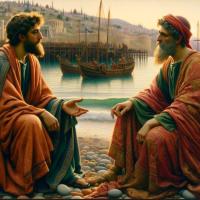
In Whatsoever Things
<p>Can Jews be "saved" even if they do not become Christians? In his famous <em>Dialogue with Trypho</em>, the second century apostolic father Justin Martyr reports a non-canonical saying of the Master which sheds significant light on the meaning of "salvation" in the New Testatment Era: "In whatsoever thngs I find you,<em> "In whatsoever things I shall take you, in these I shall judge you." </em></p>
In Whatsoever Things

It’s Not Enough to Be a Tzaddik
<p>Yeshua How can our righteousness exceed that of the scribes and Pharisees? Learn how the principle of chasidut enables one to enter the kingdom.</p>
The Suffering Tzadik (Part Two)
<p>If the wages of sin are death, that means that death pays for sins. But what if the person who dies is sinless? This teaching, part two of a two-part discussion, presents the material from the article titled “The Suffering Tzadik: How Does the Death of the Messiah Bring Atonement?” in Messiah Journal 107 by D. T. Lancaster and Toby Janicki. </p>
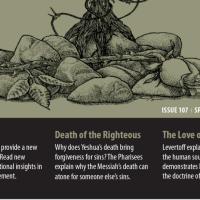
The Suffering Tzadik (Part One)
<p>How does the death of Yeshua atone for sins? The New Testament assures us that it does without explaining how. This teaching, part one of a two-part discussion, presents the material from the article titled “The Suffering Tzadik: How Does the Death of the Messiah Bring Atonement?” in Messiah Journal 107 by D. T. Lancaster and Toby Janicki. </p>
The Hidden History of Messianic Jewish Movements
<p>Where were all the Jewish believers in Yeshua between the first century and the 1970s? Listen in on a wide-ranging and epic-long conversation taking broad sweeps through church history and the strange, ever-morphing, relationship between the church and the Jewish believers as Ami Buckles and D. T. Lancaster fall down one rabbit hole after another. Nobody expects the Spanish Inquisition.</p>
It’s Not Enough to Be a Tzaddik
The Suffering Tzadik (Part Two)
The Hidden History of Messianic Jewish Movements

Am Yisrael 7: The Mikvah Episode
<p>Why does Beth Immanuel need nearly half a million dollars to build a mikvah? Ami and Daniel discuss why a mikvah is mission critical to Beth Immanuel and should be a central concern for all of Messianic Judaism.</p> <p>Learn more in this teaching titled <a href="https://www.bethimmanuel.org/audio/big-mikvah-project"><strong>THE BIG MIKVAH PROJECT</strong></a>.</p> <p>Donate to the Beth Immanuel Mikvah Fund here: <a href="https://www.bethimmanuel.org/donate/mikvah"><strong>DONATE NOW</strong></a></p>
Am Yisrael 7: The Mikvah Episode
The Suffering Tzadik (Part One)
Why Are We Like This?
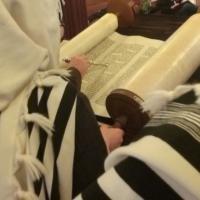
<p>Why is Beth Immanuel the way that it is? Here's the mission and vision behind Beth Immanuel Messianic Synagogue to explain the Judaism part of Messianic Judaism. </p>
Why Are We Like This?
What Shall Happen
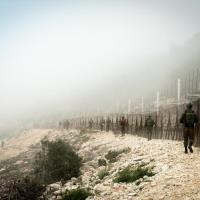
<p>What's going to happen in 2024 and the days to come? Here's a largely pessimistic assessment of the world as we stumble into the secular new year which makes the light of the hope of the coming kingdom shine all that much brighter for the darkness. </p>
What Shall Happen

Perseverance: Putting Suffering into Perspective
<p>Continuing the Entrance to the Eternal Kingdom series, we learn the importance of perseverance for achieving the mission for which your soul was created.</p>
Perseverance: Putting Suffering into Perspective

The Festival of War
<p>The Festival of Hanukkah is called "the festival of lights," but it's actually a festival commemorating a war. In this teaching, we consider the biblical perspective on war. Is there such a thing as a just or ethical war? </p>
The Festival of War
A Remnant will Escape
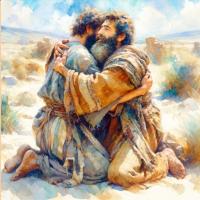
<p>What's the underlying spiritual agenda in the world-wide war against Israel? The story of Jacob dividing his family into two camps in preparation to meet Esau provides a clue that connects to the prophecies of Obadiah and a prophecy against all nations.</p>
A Remnant will Escape
Four Angels and the War for the Land of Israel
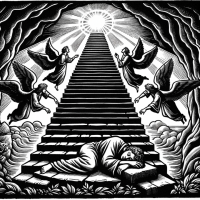
<p>Jacob's vision of a ladder reaching to heaven upon which angels ascend and descend contains a hidden meaning about spiritual warfare, the exile of the Jewish people, and their inheritance in the land of Israel. This teaching connects the dots and reveals the mission of Yeshua to redeem the Jewish people from exile. </p>