PLAY PODCASTS
Medical Mentor Coaching Podcast

Medical Mentor Coaching Podcast

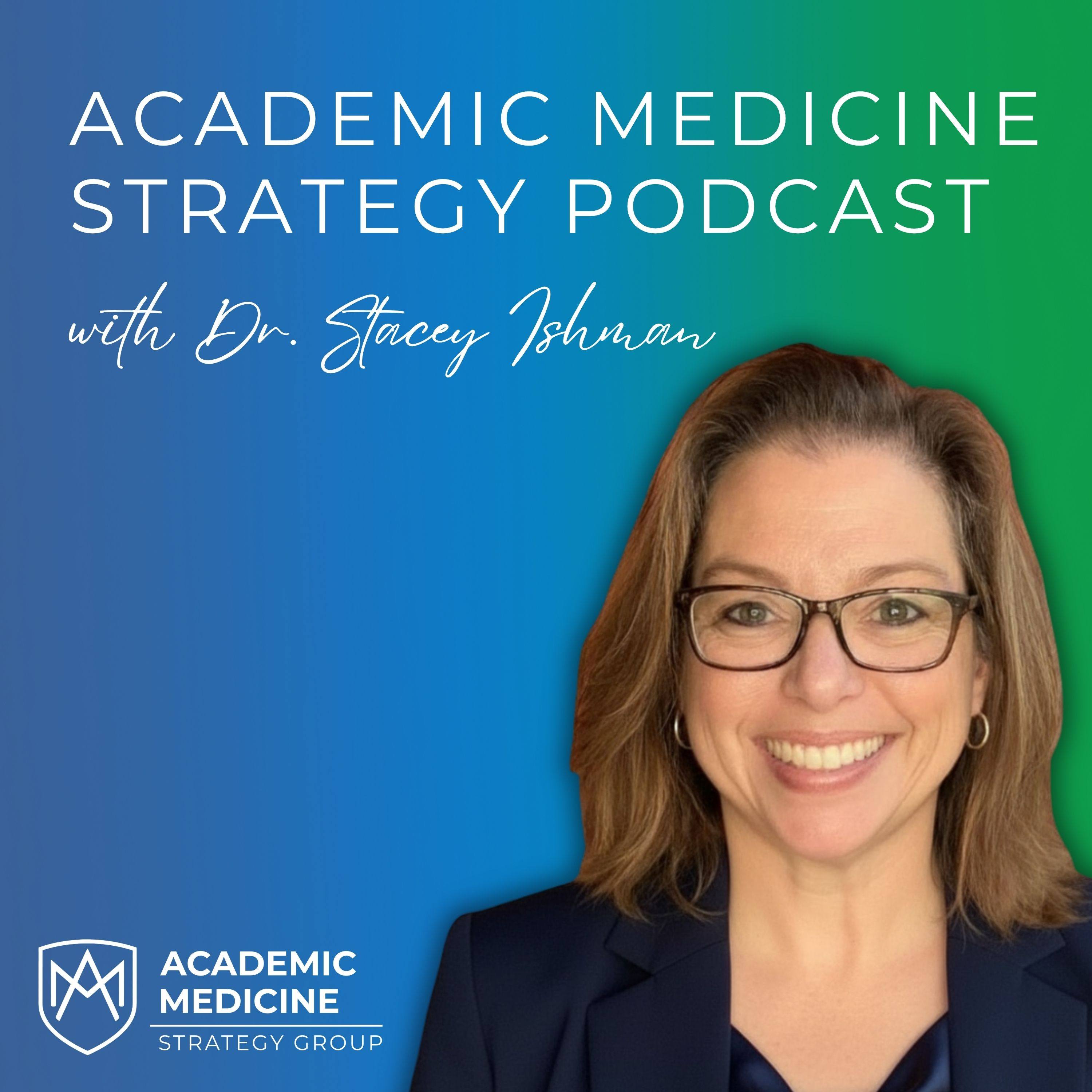
Dr. Stacey Ishman

52 episodesEN

Show overview

Medical Mentor Coaching Podcast has been publishing since 2024, and across the 2 years since has built a catalogue of 52 episodes. That works out to roughly 10 hours of audio in total. Releases follow a fortnightly cadence.

Episodes typically run ten to twenty minutes — most land between 11 min and 14 min — and the run-time is fairly consistent across the catalogue. None of the episodes are flagged explicit by the publisher. It is catalogued as a EN-language Business show.

The show is actively publishing — the most recent episode landed 2 days ago, with 20 episodes already out so far this year. Published by Dr. Stacey Ishman.

Episodes
52
Running
2024–2026 · 2y
Median length
13 min
Cadence
Fortnightly

From the publisher

Academic medicine is designed to reward output, not clarity. The result is physicians who feel overwhelmed and overextended. The Academic Medicine Strategy Podcast breaks down the systems, structures, and expectations that create that experience and how to navigate them strategically. Hosted by Dr. Stacey Ishman, a national leader in academic medicine with over 230 peer-reviewed publications, this podcast is grounded in her experience working with faculty, departments, and institutions to build clearer, more sustainable academic careers. This podcast is for: • Academic physicians across all specialties and career stages • Faculty leaders and program directors responsible for developing others • Departments and institutions focused on retention, promotion, and leadership pipelines Episodes explore the intersection of individual career strategy and institutional design, including: • Promotion pathways and why they often feel unclear • Time, effort, and why productivity is not just personal • Mentorship, sponsorship, and leadership development • Retention, burnout, and how departments can better support faculty • How to build a career that is both sustainable and nationally visible You will hear practical frameworks, real coaching insights, and behind-the-scenes thinking drawn from years of work across academic medicine.

Latest Episodes

View all 52 episodes

How to Survive an EMR Go-Live Without Burning Out

May 13, 20269 min

Negotiations: Women in Laryngology

May 6, 202653 min

Stop Trying to Write Manuscripts at 7pm After a Full Clinic Day

Apr 29, 202610 min

If Deep Work Only Happens After Everything Else, It Will Never Happen

Apr 22, 202618 min

Why Your Best Cognitive Hours Are Wasted on Email (And What to Do About It)

Apr 14, 202617 min

You Don't Have a Time Problem. You Have a Decision Problem.

You Don’t Have a Time Problem. You Have a Decision Problem Early-career physicians often feel like they’re running out of time, yet still falling behind on the work that actually moves their careers forward. In this episode, Dr. Stacey Ishman reframes the problem: it’s not about finding more time, it’s about making better decisions about where your time and energy go. This shift is critical for building a sustainable path to promotion, research, and meaningful academic impact. No need to take notes—visit the blog for a full summary of key insights. If you’re interested in working with Academic Medicine Strategy Group, visit www.amedsg.com  to learn more about our programs designed to help you build a clear, strategic path to promotion, research, and career advancement. Key Points: [00:00–00:03] The Myth of “Not Enough Time” Feeling behind isn’t due to lack of effort. Physicians are working hard, but often not on the work that actually advances their careers. [00:03–00:05] Reactive Work vs Strategic Work Most physicians operate in reactive mode—handling urgent tasks—while delaying high-impact work like manuscripts, grants, and career planning. [00:05–00:07] Motion vs Progress Being busy and productive doesn’t equal career advancement. Strategic output, not activity, is what drives promotion and reputation. [00:07–00:09] Decision Fatigue Is the Real Bottleneck The constant micro-decisions in academic medicine drain cognitive energy, leaving little capacity for deep, meaningful work. [00:09–00:11] You Can’t “Find” Time—You Allocate It Every hour is already assigned. The key is intentionally allocating time to what matters most for your career trajectory. [00:11–00:13] The Three Types of Work That Define Your Career Reactive work: urgent, externally driven Collaborative work: necessary but scheduled around others Deep work: high-value, career-defining work that requires focus [00:13–00:16] Protecting Deep Work Time Strategic work requires protected, uninterrupted time blocks. Treat this time like clinic—non-negotiable and essential. [00:16–00:18] A Practical System to Start This Week Identify one meaningful project, schedule a dedicated block, define exactly what you’ll do, and track whether it actually happens. Summary: The real barrier to career progress isn’t time—it’s unstructured decision-making. When you shift from reacting to intentionally allocating your energy toward deep, strategic work, you create momentum that compounds over time. For early-career physicians, this is the difference between staying busy and actually building a career that advances. Please RATE, REVIEW, and FOLLOW the Academic Medicine Strategy Group Podcast on your favorite platform. If you are interested in getting in touch with us or providing topic suggestions, please: ● DM me on Instagram at @sishmancoach ● Message me on LinkedIn at https://www.linkedin.com/company/medical-mentor-coaching  ● Email me at [email protected]  ● Contact me at the website at www.amedsg.com

Apr 8, 202620 min

You’re Not Burned Out — You’re Overextended by Design with Dr. Chrissie Ott

In this episode of the Academic Medicine Strategy Group, Dr. Stacey Ishman welcomes her first guest under the podcast’s new direction as part of the Academic Medicine Strategy Group—Dr. Chrissie Ott. Together, they explore how coaching transforms physician careers, why burnout is often misunderstood, and how emerging tools like AI can reshape clinical workflows. This conversation is especially relevant for physicians in their first 10 years of practice who are navigating competing demands, questioning sustainability, and looking for more effective, fulfilling ways to build their careers. No need to take notes—just check out the Blog for a full summary of these insights. If you are interested in my Academic Accelerator Course designed to chart your personalized path to promotion for physicians in the first 5 years of practice, please DM me on Instagram @sishmancoach or email me at [email protected] . This course is designed to help you set up your practice, learn finances 101, build a research program, establish a national reputation, and create a personalized promotion plan. My mission is to help you envision your ideal career and build a path to your version of success. Join us to take control of your career early. Key Points: 1. Introduction and Evolution of the Podcast (0:00 - 1:00) Overview of the transition from coaching business to Academic Medicine Strategy Group Introduction of Dr. Chrissie Ott and her unique career path 2. A Nontraditional Career Path in Medicine (1:00 - 2:30) From academic medicine to diverse clinical roles Building a portfolio career aligned with personal values Transition into physician coaching through wellness leadership 3. Why Physicians Need Coaching (4:00 - 6:00) Coaching as a proactive tool—not remediation Recognizing hidden burnout patterns (irritability, cynicism, frustration) Expanding awareness of what is possible in a medical career 4. Coaching as a Force Multiplier in Academic Medicine (6:00 - 7:30) Faculty applying coaching tools directly to trainees Example: Sphere of control vs. influence vs. concern Ripple effect from faculty development to learner growth 5. The Mindset Shift: From Constraint to Possibility (5:00 - 6:30) Challenging limiting beliefs about career paths Realizing flexibility within a medical degree Developing more supportive internal thought patterns 6. AI and the Future of Physician Workflows (8:30 - 10:30) Introduction to AI tools for documentation (e.g., ambient scribes) Moving from resistance to adoption of AI in clinical practice AI as a bridge to efficiency, not replacement of clinical judgment 7. The Real Problem: Time-Work Mismatch (12:30 - 14:30) Understanding the structural issue behind documentation burden “If you’re seeing 25 patients with hours of charting, the system is broken” Physicians as the “elasticity” absorbing system inefficiencies 8. Charting, Perfectionism, and Energy Management (10:30 - 12:30) The cost of delayed documentation (50 cents vs. $50 energy analogy) Perfectionism as a hidden driver of inefficiency Practicing “good enough” documentation to reclaim time 9. Boundaries, Freedom, and Discomfort (9:30 - 10:30) Setting boundaries in patient encounters “The cost of freedom is a little discomfort” Learning to leave the room and complete notes in real time 10. Balancing Multiple Roles and Real Life (15:30 - 18:00) Navigating clinical work, coaching, family, and leadership roles The importance of presence over perfection Short, deeply present moments vs. long distracted time 11. Practical Strategy: How to Slow Down (20:00 - 21:00) Using breathwork to regulate stress in real time 2:1 exhale-to-inhale technique for nervous system reset Applying this tool anywhere—in clinic, OR, or meetings 12. Coaching Opportunities and AI Integration (21:00 - End) Upcoming coaching lab on AI-assisted charting Combining mindset work with practical tools How to connect with Dr. Chrissie Ott Please RATE, REVIEW, and FOLLOW the Medical Mentor Coaching Podcast on your favorite platform (Apple and Spotify). If you are interested in getting in touch or suggesting future topics, please: ● DM me on Instagram at @sishmancoach ● Message me on LinkedIn: https://www.linkedin.com/company/medical-mentor-coaching  ● Email me at [email protected]  ● Visit the website: www.medicalmentorcoaching.com/welcome  If this conversation resonated with you, I highly recommend exploring Dr. Chrissie Ott’s work. Her podcast, Solving for Joy, offers thoughtful, practical insights on physician wellbeing, mindset, and sustainable careers in medicine. 🎧 Listen here: https://podcasts.apple.com/us/podcast/solving-for-joy/id1762515642  🌐 Learn more about her work: https://chrissieottmd.com/ Summary This episode reframes coaching as an essential strategy—not a last resort—for physicians navigating early career challenges. Dr. Chrissie Ott highlights how burnout often presents subtly, how mindset shifts unlock new possibilities,

Apr 2, 202623 min

Medical Mentor Coaching Is Now the Academic Medicine Strategy Group

In this episode, Dr. Stacey Ishman introduces the transition from Medical Mentor Coaching to the Academic Medicine Strategy Group, reflecting a broader mission to support not just individual physicians, but entire departments and institutions. Joined by Chief of Education Kirsten, this conversation explores the hidden gaps in academic medicine, the cost of misalignment, and how intentional career design can transform physician satisfaction, retention, and culture. No need to take notes—just check out the Blog for a summary of these insights. If you are interested in programs designed to help early-career physicians build a clear path to promotion and career alignment, DM on Instagram @sishmancoach or email [email protected] . This work is designed to help physicians create intentional careers, align their time with their values, build academic success, and develop a sustainable and fulfilling path in academic medicine. Join us to build a career you actually want to stay in. Key Points: 1. Introduction & Name Change (0:00 – 1:30) Announcement of the transition to Academic Medicine Strategy podcast Why the name change matters Expansion from individual coaching to broader institutional impact 2. Why the Brand Evolved (1:30 – 3:30) Moving beyond coaching into: Department-level strategy Institutional partnerships Growth into a team-based model Focus on culture change, not just individual success 3. Dr. Ishman’s Background & Mission (3:30 – 5:00) Career journey in academic medicine Passion for mentoring and career development Recognizing the gap between: Who physicians are What their careers actually become 4. The Hidden Gap After Training (5:00 – 6:30) Transition from structured training → unstructured faculty life Lack of guidance on: Promotion Time management Career direction The challenge of learning to say yes—and no 5. Misalignment as a System Problem (6:30 – 8:30) Physicians entering medicine with one vision Reality not matching expectations Many assume leaving is the only solution High financial and cultural cost of turnover 6. The Role of Culture & External Perspective (8:30 – 11:00) Importance of culture interviews and honest feedback Increased vulnerability when speaking to someone outside the system Departments often unaware of real pain points Opportunity to improve systems—not just individuals 7. Coaching Impact: Small Shifts, Big Change (11:00 – 12:30) Reframing overwhelm into manageable strategies Validation as a powerful first step Change doesn’t require: Leaving academic medicine Major life disruption 8. From Coaching to Faculty Development (12:30 – 14:30) Transition to group and departmental impact Shared learning amplifies results Creating a common language across teams Coaching insights spreading organically within departments 9. Growth Through Word-of-Mouth (14:30 – 15:30) Expansion driven by physician referrals Individual success leading to department-level engagement “Raving fans” bringing the work into institutions 10. Vision for the Future (15:30 – 17:00) Expanding into: Medical schools Faculty onboarding Creating scalable support systems Helping physicians start their careers with intention 11. Early Career Challenges & Uncertainty (17:00 – 18:30) Lack of clarity in first years of practice Navigating independence without guidance Normalizing uncertainty and self-doubt 12. Supporting Leaders & Departments (18:30 – 20:00) Role of department chairs in retention Key strategies: Time management Promotion planning Aligning work with interests Coaching as a high-ROI investment 13. Leadership, Culture & Feeling Seen (20:00 – 21:30) Many professionals feel invisible in their roles Importance of: Validation Agency Ownership Culture as the primary driver of retention 14. Mission & Closing Thoughts (21:30 – End) Academic medicine as a lifelong dream for many physicians Goal: help physicians stay and thrive, not leave Invitation to individuals and departments to seek support Vision of a system where physicians feel: Seen Heard Supported Summary This episode marks a pivotal shift from individual coaching to a broader, systems-level approach in academic medicine. The conversation highlights a critical truth: physicians are not struggling بسبب lack of motivation—but بسبب lack of structure, alignment, and support. By focusing on intentional career design, culture transformation, and scalable faculty development, the Academic Medicine Strategy Group aims to redefine how institutions support physicians—so they can build careers they actually want to stay in. Please RATE, REVIEW, and FOLLOW the Medical Mentor Coaching Podcast on your favorite platform. If you are interested in getting in touch or suggesting topics: ● DM on Instagram @sishmancoach ● Message on LinkedIn: Medical Mentor Coaching ● Email: [email protected]  ● Website: www.medicalmentorcoaching.com/welcome 

Mar 25, 202624 min

Turning Busyness Into Promotion Series (5 of 5): Protect Deep Work Like It Is Clinic

Turning Busyness Into Promotion Series (5 of 5): Protect Deep Work Like It Is Clinic In this episode, Dr. Stacey Ishman closes out her 5-part series on turning busyness into promotion by focusing on one of the most overlooked drivers of academic advancement: protected deep work. She explains why working harder isn’t the problem—and how failing to intentionally schedule and defend cognitively demanding work is what keeps many early-career physicians stuck. This episode offers a practical framework to help physicians reclaim their time, reduce fragmentation, and create consistent, meaningful progress toward promotion—without sacrificing their lives outside of medicine. No need to take notes—check out the blog for a full breakdown of these strategies. If you are interested in the Academic Accelerator Course designed to help physicians in their first 5 years of practice build a clear path to promotion, DM @sishmancoach on Instagram or email [email protected]. This course helps you build your academic foundation, develop your niche, create a promotion plan, and establish a national reputation—all while aligning your career with your values. Join us to take control of your trajectory. Key Points: Introduction: The Problem Isn’t Effort (0:00 - 1:00) Many physicians feel stuck despite being busy, productive, and constantly working The real issue is lack of strategy and alignment—not lack of effort Overview of the series and focus on execution through deep work Why Academic Work Must Be Protected (1:00 - 2:00) Academic work is the reason many physicians chose this path It should be treated as essential—not optional Promotion depends on meaningful academic output, not just activity What Deep Work Means in Academic Medicine (2:00 - 3:30) Defined as focused, distraction-free, cognitively demanding work Includes writing manuscripts, grants, curriculum development, and strategic planning Requires uninterrupted time to reach full cognitive potential The Cost of Fragmentation and Context Switching (3:30 - 4:30) Frequent interruptions reduce efficiency and quality of work “Attentional residue” makes it hard to refocus after switching tasks Academic environments are inherently fragmented, making deep work harder Why Busyness Doesn’t Lead to Promotion (4:30 - 5:30) Reactive work (emails, meetings, quick tasks) dominates the day Deep work gets pushed to the margins and becomes inconsistent Promotion is built on depth, not scattered productivity Personal Experience: Learning the Hard Way (5:30 - 6:30) Early career filled with productivity but lacked direction and cohesion Feedback revealed a lack of clear academic narrative Shift to protected deep work improved output and clarity Finding Your Optimal Deep Work Time (6:30 - 7:30) Early morning, late night, or midday—depends on individual energy patterns Key is identifying and consistently using your “best brain” time Environment should minimize interruptions Treat Academic Time Like Clinic Time (7:30 - 8:30) Deep work should be non-negotiable and protected Avoid giving academic time away for meetings or clinical overflow Most “urgent” requests are not true emergencies Practical Strategies for Deep Work (8:30 - 10:00) Use time blocking and pre-commitment to reduce decision fatigue Start small (even 25 minutes) and build consistency Consider structured techniques like Pomodoro if needed Define a specific output goal for each session Building a Sustainable Deep Work System (10:00 - 11:00) Aim for longer blocks (ideally 2 hours) when possible Schedule at least one larger session weekly Track outcomes (what you produced), not just time spent Focus on discipline and consistency, not perfection Final Takeaway: Make Promotion Predictable (11:00 - 12:00) Busyness is automatic; deep work must be intentional Protecting academic time is essential for long-term success Treat deep work like clinic: scheduled, defended, and non-negotiable Please RATE, REVIEW, and FOLLOW the Medical Mentor Coaching Podcast on your favorite app (Apple Podcasts and Spotify). If you are interested in getting in touch or suggesting topics: DM on Instagram: @sishmancoach● Message on LinkedIn: https://www.linkedin.com/company/medical-mentor-coaching● Email: [email protected]● Website: www.medicalmentorcoaching.com/welcome Summary:This episode emphasizes that promotion in academic medicine is not driven by how busy you are, but by how effectively you protect and use your time for deep, meaningful work. By treating academic work with the same level of priority as clinical responsibilities, early-career physicians can create consistent output, reduce overwhelm, and build a clear, sustainable path to advancement.

Mar 18, 202612 min

Turning Busyness Into Promotion Series (4 of 5): Define Your Niche Before It Defines You

Episode: Turning Busyness Into Promotion Series (4 of 5): Define Your Niche Before It Defines You In this episode of the Medical Mentor Coaching Podcast, Dr. Stacey Ishman discusses one of the most important strategic decisions early-career academic physicians can make: defining a clear niche. Many faculty work incredibly hard, but when their projects, committees, and collaborations spread across too many directions, it becomes difficult for promotion committees to understand their impact. Dr. Ishman explains why intentionally choosing a niche can accelerate recognition and promotion. She shares how focusing on one area allows research, talks, collaborations, and clinical work to reinforce each other over time. She also introduces a simple three-filter framework to help physicians evaluate and select a niche that is sustainable, meaningful, and differentiating. No need to take notes—just check out the blog for a summary of these insights. If you are interested in my Academic Accelerator Course designed to chart your personalized path to promotion for physicians in the first 5 years of practice, please DM me on Instagram @sishmancoach. You can also email me at [email protected] . This course is designed to help you set up your practice, learn finances 101, build a research program, build a national reputation, and prepare a personalized plan for promotion. My mission is to help you envision your ideal career and create a path to your version of success. Join us to kickstart your career. Key Points 1. Introduction to the Busyness Into Promotion Series (0:00 - 0:45) Overview of the series focused on turning academic busyness into promotable work. Explanation of why defining a niche is critical for translating effort into recognition and career advancement. 2. Why Your Niche Matters for Academic Recognition (0:45 - 2:30) How failing to choose a niche can lead your CV to unintentionally define your academic identity. Example of a faculty member becoming known for work they were not passionate about because of early publications and talks. 3. Dr. Ishman’s Personal Example of Choosing a Niche (2:30 - 3:45) Story of identifying pediatric sleep medicine as an underdeveloped field within otolaryngology. How selecting a specific and differentiating area created opportunities for research, collaboration, and recognition. 4. The Common Mistake: Confusing Fields with Niches (3:45 - 4:50) Why broad areas like a specialty or subspecialty are not enough to build visibility. The importance of identifying a clear and specific focus within a larger field. 5. Why Early Focus Accelerates Promotion (4:50 - 6:30) How scattered projects slow recognition and dilute impact. Why concentrating early publications and presentations in one area helps build a clear academic narrative. 6. Building a Compounding Academic Story (6:30 - 7:40) How aligned research questions, talks, committees, and collaborations reinforce expertise. Why consistent focus makes it easier for others to recognize and refer to you as an expert. 7. The Three-Filter Framework for Choosing a Niche (7:40 - 8:50) Three questions to guide niche selection: • Sustainability – Can you work in this area for at least two to three years? • Problem Clarity – Is there a defined patient, system, or educational problem you can study? • Differentiation – Is there space to build depth without duplicating what senior faculty are already doing? 8. Why a Niche Strengthens Rather Than Limits Your Career (8:50 - 9:45) Clarification that choosing a niche does not restrict clinical practice or future research areas. Instead, it provides a recognizable starting point that accelerates visibility and opportunity. 9. Summary and Department-Level Strategy (9:45 - 11:06) Why departments should support faculty in defining and building niches early in their careers. How strategic alignment of academic work can help both individuals and institutions move forward. Please RATE, REVIEW and FOLLOW the Medical Mentor Coaching Podcast on your favorite podcast app (Apple Podcasts or Spotify). If you are interested in getting in touch with us or providing topic suggestions, please: ● DM me on Instagram at @sishmancoach ● Message me on LinkedIn at https://www.linkedin.com/company/medical-mentor-coaching  ● Email me at [email protected]  ● Contact me through the website at www.medicalmentorcoaching.com/welcome

Mar 11, 202611 min

Turning Busyness Into Promotion Series (3 of 5): Stop Being a Good Citizen and Start Being Strategic

In this episode of the Medical Mentor Coaching Podcast, Dr. Stacey Ishman challenges early-career physicians to rethink how they approach service, committees, and opportunities. She explains why being reliable and saying yes to everything can quietly delay promotion — and how to instead choose roles that align with your career narrative, build your reputation, and create measurable impact. If you’ve ever felt stretched thin by service work or unsure which opportunities actually move your career forward, this episode offers a practical framework to help you be intentional with your time, energy, and yeses. No need to take notes — check out the blog for a concise summary of these insights. If you are interested in the Academic Accelerator Course designed to chart your personalized path to promotion for physicians in the first years of practice, DM on Instagram @sishmancoach or email [email protected] . This course is designed to help you build your foundation, develop a research or clinical niche, grow a national reputation, and create a clear, personalized promotion plan. The mission is to help you design your ideal career and move toward your version of success. Join us to accelerate your career trajectory. Key Points 1. Introduction: From Good Citizen to Strategic Physician (0:00 – 1:00) Overview of the series on turning busyness into promotion Why overcommitment and excessive service can slow advancement The importance of being thoughtful with yeses and nos 2. Understanding Your Career Story (1:00 – 2:00) Why not all meaningful work translates to promotion Example of curriculum work that didn’t build a promotable narrative Aligning activities with your long-term career story 3. Service Is Valuable — But Strategy Matters (2:00 – 3:00) All service roles are important to institutions The key question: Is this strategic for you? How saying yes can unintentionally block others’ opportunities 4. Reallocating Energy for Alignment (3:00 – 4:00) Letting go of excess roles to focus on leadership Sponsoring others into opportunities you leave Key insight: alignment increases satisfaction without reducing impact 5. Finding the Intersection of Joy and Promotion (4:00 – 5:00) Doing work you love vs. work that advances your rank Shifting committees to better match your niche Building a coherent narrative over time 6. When Service Compounds Your Career (5:00 – 6:00) Roles that produce scholarship, leadership, or measurable outcomes How being reliable increases requests — and workload Why promotion committees value impact over busyness 7. A Framework for Evaluating Opportunities (6:00 – 8:00) How to pause instead of automatically saying yes Key questions to assess alignment, leadership growth, and ROI Simplifying the decision: Do I enjoy it or does it move me forward? 8. Reframing Boundaries and Intentional Career Design (8:00 – 9:00) Why saying no isn’t selfish Choosing aligned service and letting go of misaligned roles Promotion as recognition of intentional, meaningful contribution 9. Closing Reflection and Call to Action (9:00 – End) Audit your current commitments for alignment Consider sponsoring others into roles you release Encouragement to share the episode with colleagues Summary Being dependable is a strength — but without strategy, it can lead to overload and stalled advancement. This episode reframes service as a tool for intentional career design, encouraging physicians to prioritize opportunities that either bring joy or clearly advance their narrative. By aligning commitments with long-term goals and focusing on measurable impact, early-career physicians can build both a sustainable workload and a promotable portfolio. Please RATE, REVIEW, and FOLLOW the Medical Mentor Coaching Podcast on your favorite app. If you’d like to connect or suggest future topics: ● DM on Instagram @sishmancoach ● Message on LinkedIn: Medical Mentor Coaching ● Email: [email protected]  ● Visit: www.medicalmentorcoaching.com/welcome 

Mar 4, 202610 min

Turning Busyness Into Promotion Series (2 of 5): Audit Your Calendar for Visibility, Not Volume

In this episode of the Medical Mentor Coaching, Dr. Stacey Ishman walks early-career physicians through a practical strategy to align their time with their promotion goals. She explains why a full calendar does not equal meaningful progress and how intentional scheduling creates the visibility needed for career advancement. If you’ve ever felt busy but unsure why your scholarship or promotable work isn’t moving forward, this episode offers a clear framework to audit your time, reclaim protected blocks, and prioritize the work that truly builds your academic career. No need to take notes — just listen and then audit your calendar using the steps outlined below. If you are interested in the Academic Accelerator Course designed to help physicians in their early career create a personalized path to promotion, you can: ● DM on Instagram @sishmancoach ● Email [email protected]  This program helps physicians build a research and promotion strategy, develop a national reputation, and design a career aligned with their goals and values. Join us to intentionally design your career. Key Points 1. Introduction to Calendar Visibility (00:00 – 01:00) Overview of auditing your calendar for visibility rather than volume Why promotable work must be scheduled to happen consistently 2. Recognizing the Gap Between Goals and Time Use (01:00 – 03:00) Comparing stated priorities with actual calendar patterns How reactive work crowds out meaningful progress 3. Promotion Committees Evaluate Output, Not Busyness (03:00 – 04:00) Why full days don’t translate into advancement Examples of work that truly counts toward promotion 4. Identifying Reactive vs Promotable Time (04:00 – 05:30) How email, meetings, and clinical spillover dominate schedules The importance of deep, protected work blocks 5. Reclaiming Administrative and Protected Time (05:30 – 07:00) Why giving away protected time doesn’t solve system problems The long-term cost of turning academic time into catch-up time 6. Case Example: Restructuring a Calendar (07:00 – 08:30) Color-coding time to reveal patterns How reclaiming blocks increased productivity and satisfaction 7. Practical Calendar Audit Exercise (08:30 – 09:30) Pulling two representative weeks Categorizing time as reactive, collaborative, or promotable Setting a target of at least 20% promotable time 8. Final Takeaways: Scheduling Promotion (09:30 – End) Why scholarship won’t happen if it waits until everything else is done The importance of planning instead of relying on more hours Summary A busy calendar can create the illusion of progress, but promotion is built on visible, intentional work. In this episode, Dr. Ishman emphasizes that the issue for most early-career physicians is not effort — it’s allocation. By auditing your calendar, protecting deep work time, and aligning your schedule with your goals, you can turn daily activity into meaningful career momentum. Small, disciplined changes in how you schedule your time can dramatically increase your output, reduce frustration, and make your priorities visible — both to yourself and to promotion committees. Please RATE, REVIEW, and FOLLOW the Medical Mentor Coaching Podcast on your favorite app. If you’d like to get in touch or suggest a topic: ● DM on Instagram @sishmancoach ● Connect on LinkedIn (Medical Mentor Coaching) ● Email [email protected]  ● Visit www.medicalmentorcoaching.com/welcome

Feb 25, 202610 min

Turning Busyness into Promotion - Build a Clear Career Story from the Start

Turning Busyness into Promotion - Build a Clear Career Story from the Start In this episode, Dr. Stacey Ishman explores why so many early-career physicians feel constantly busy yet still disconnected from meaningful progress. She explains how the real challenge isn’t time — it’s the absence of a clear priority system. Through practical examples and a simple framework, she shows how aligning daily work with long-term goals can restore momentum, clarity, and career satisfaction. No need to take notes — check out the blog for a concise summary of these insights. If you are interested in learning more about building a focused, promotable career path, you can DM on Instagram @sishmancoach or email [email protected] . Key Points 1. The Real Problem Isn’t Time (0:00 – 2:00) Why high-achieving physicians often feel overwhelmed despite being productive How full clinics, awards, and busy schedules can still mask a lack of progress toward long-term goals Introduction to the idea that priorities — not time — are the true constraint 2. Your Calendar Reveals Your Priorities (2:00 – 3:00) How time audits expose misalignment between goals and daily work Why giving up academic or strategic time to do more clinical work doesn’t solve systemic issues Reframing discretionary time as essential rather than optional 3. Why Everything Feels Urgent (3:00 – 5:00) How inbox-driven work turns into default task management The emotional and professional cost of letting reactive work dictate your schedule The key question: what are you doing today that moves your career forward? 4. Reactive vs. Strategic Work (5:00 – 7:00) Why reactive tasks provide immediate rewards but little long-term progress How delaying important work affects promotion timelines and career satisfaction The concept that “delay is not neutral” 5. The Three Types of Work Framework (7:00 – 10:00) Deep work: writing, thinking, strategy, and creation Collaborative work: teaching, mentoring, and teamwork Reactive work: emails, messages, and administrative tasks Why a true priority system intentionally allocates time for all three 6. Case Example: Permission to Prioritize (10:00 – 12:30) A coaching story illustrating how clarity often isn’t the issue — permission is How protected time reframed as “deep work” can transform engagement and satisfaction Aligning daily actions with what you actually care about 7. How to Reset Your Next 90 Days (12:30 – 14:00) Stop trying to fit more in — decide what deserves space Choose one primary outcome and schedule protected time for it Why priorities must be revisited regularly to stay aligned with evolving goals Summary Feeling busy isn’t the same as moving forward. In this episode, Dr. Ishman explains how many physicians unintentionally inherit other people’s priorities, allowing reactive work to crowd out meaningful progress. By identifying what truly matters, protecting time for deep work, and intentionally structuring the next 90 days, physicians can shift from constant busyness to purposeful career growth. The goal isn’t to work more — it’s to work in alignment with what you want your career to become. Please RATE, REVIEW, and FOLLOW the Medical Mentor Coaching Podcast on your favorite app. If you’d like to get in touch or suggest future topics: ● DM on Instagram @sishmancoach ● Connect on LinkedIn at Medical Mentor Coaching ● Email [email protected]  ● Visit www.medicalmentorcoaching.com/welcome

Feb 18, 202615 min

The Inside View: A Coaching Conversation with Client Dr. Reema Padia

The Inside View: A Coaching Conversation with Client Dr. Reema Padia In this episode of Medical Mentor Coaching, Dr. Stacey Ishman welcomes her first guest, Dr. Reema Padia, a pediatric otolaryngologist at the University of Utah and Associate Professor in her seventh year of practice. Dr. Padia shares her experience transitioning to a new institution, stepping into leadership, and navigating promotion while balancing family life and personal goals. Together, they explore how coaching can support early- and mid-career physicians in building national presence, strengthening leadership skills, and creating a career that feels both meaningful and sustainable. No need to take notes—check out the Blog for a summary of these insights. If you are interested in coaching for physicians in the first 10 years of practice—whether individually or at the department level—DM me on Instagram @sishmancoach or email me at [email protected] . My mission is to help you build clarity, momentum, and a personalized path to your version of success in academic medicine. Join us to intentionally shape your career. Key Points: 1. Introduction & Career Background (0:00 – 1:00) Introduction of Dr. Reema Padia Pediatric otolaryngologist at University of Utah Seventh year of practice, Associate Professor Transitioned institutions and stepped into leadership 2. Transitioning Institutions & Taking on Leadership (1:00 – 3:00) Moving across the country with two children New department, new leadership role Leading an established team as the “new person” Recognizing the need for support during major transitions 3. Building Trust as a New Leader (3:00 – 4:30) Balancing vision with humility Avoiding the urge to “change everything” immediately Focusing on relationship-building and trust Positioning herself as the “glue” rather than the disruptor 4. From Broad Emails to Targeted Conversations (4:30 – 6:30) Why “Let me know if you’re interested” often fails The power of one-on-one conversations Asking concrete, directed questions Creating buy-in through personal connection 5. Creating Structure: Retreats & Program Growth (5:00 – 6:30) Launching a vascular anomalies program retreat Scaling ideas realistically (lunch-hour retreat vs. grand event) Generating feedback with focused questions Supporting interdisciplinary collaboration 6. Surgical Coaching & Interdepartmental Coaching (6:30 – 9:30) Partnering with University of Colorado for resident coaching Benefits of cross-institutional coaching Psychological safety for residents What surgical coaching is and how it works Coaching focused on efficiency, communication, and teaching 7. Bringing Coaching to the Department Level (9:30 – 12:30) Why coaching isn’t just about promotion Accountability and implementation Faculty across career stages benefiting from coaching Strengthening academic alignment and shared goals 8. Expanding National Presence (11:30 – 13:00) Strategies for increasing visibility Committee involvement and academic networking Connecting with colleagues across subspecialties Coaching across the lifespan of academic medicine 9. Coaching Beyond Promotion (13:30 – 16:00) Coaching is not therapy—it’s forward-focused Individualized goal-setting Consistency and cadence (monthly vs. twice monthly sessions) The importance of accountability 10. Boundaries, Priorities & Work-Life Integration (16:00 – 18:30) Moving away from arbitrary promotion timelines Choosing activities aligned with genuine interest Letting go of “CV padding” Fully engaging in family time without guilt 11. Identity Outside of Medicine (18:30 – 19:30) Joining an adult recreational soccer league Building friendships outside of work Reclaiming personal identity beyond physician and parent 12. Setting Ambitious Personal Goals (19:00 – 19:45) Training for a Half Ironman Bringing colleagues along for the journey Modeling enjoyment and shared growth 13. Final Advice: Enjoy the Process (20:00 – 21:00) Avoiding arbitrary timelines Focusing on meaningful goals Enjoying leadership rather than rushing through it Buy-in grows when people see authentic investment 14. Closing Thoughts (21:00 – End) Growth in leadership communication Building momentum through small shifts Invitation to connect and explore coaching Please RATE, REVIEW, and FOLLOW the Medical Mentor Coaching Podcast on Apple or Spotify. If you are interested in getting in touch with us or providing topic suggestions, please: ● DM me on Instagram at @sishmancoach ● Message me on LinkedIn at https://www.linkedin.com/company/medical-mentor-coaching  ● Email me at [email protected]  ● Contact me at www.medicalmentorcoaching.com/welcome

Feb 11, 202622 min

Why Busy CVs Don't Always Advance Careers

Why Busy CVs Don’t Always Advance Careers In this episode, Dr. Stacey Ishman unpacks one of the most common and frustrating experiences in academic medicine: working hard, staying busy, and still feeling stalled when it comes to promotion. She explains why promotion criteria alone are not enough, how interpretation—not effort—drives advancement decisions, and why many early-career physicians unknowingly drift off track. This episode is especially for physicians in their first 10 years of practice who feel productive, valued, and praised—but unclear on whether their work is actually moving them toward promotion. Dr. Ishman walks through how promotion committees really evaluate candidates and how to shift from being busy to building a coherent academic narrative. No need to take notes—check out the blog for a written summary of these insights. If you want support translating promotion criteria into a strategy that reflects how decisions are actually made, join the Medical Mentor Coaching community. Key Points 1. Why Promotion Criteria Create False Security (0:00 – 1:00) Why written promotion documents feel reassuring—but often fail to explain how decisions are actually made The difference between published criteria and real-world interpretation 2. The Hidden Problem: Interpretation, Not Access (1:00 – 3:00) Why most institutions make promotion criteria easy to find How ambiguity around “reputation” (regional, national, international) creates confusion Why following the rules doesn’t guarantee advancement 3. Promotion Readiness Is Rarely Explicit (3:00 – 5:00) Why many faculty never have formal promotion readiness conversations How changing tracks and criteria over time increase misalignment The cost of outdated or incomplete advice 4. Track Matters More Than Volume (5:00 – 8:00) How clinician, educator, researcher, and administrative tracks differ Why excellent work can look weak if it doesn’t tell a clear story Examples of work that may or may not count depending on track 5. Adequate vs. Strong Evidence of Impact (8:00 – 9:30) What promotion committees mean by “strong” reputation Why expectations vary by institution and rank Why asking for examples of successful CVs matters 6. Busy Is Not the Same as Aligned (9:30 – 11:30) Why committees don’t see effort—they see patterns How scattered excellence stalls promotion The difference between productivity and trajectory 7. A Real Case of Promotion Drift (11:30 – 13:00) How a packed CV still failed to support promotion Why the issue was misalignment, not underperformance What changed once expectations were clarified 8. The Emotional Cost of Unclear Promotion Systems (13:00 – 14:30) How stalled promotion erodes confidence and engagement Why unclear systems—not personal failure—drive frustration and attrition 9. The Truth That Changes the Outcome (14:30 – End) Why promotion stalls are rarely about not working hard enough How criteria without interpretation create drift Action steps to regain clarity and momentum Summary Promotion committees do not confirm checklists. They interpret patterns. Advancement depends on a coherent academic narrative, evidence of impact at the appropriate level, and visible trajectory over time. When criteria change or interpretation is unclear, even highly productive physicians can drift off course. If your CV is full but your path feels uncertain, the issue is often structural—not personal. Clarity, alignment, and intentional strategy are what turn busy work into forward momentum. Please RATE, REVIEW, and FOLLOW the Medical Mentor Coaching Podcast on your favorite app (Apple Podcasts and Spotify). If you’d like to connect, ask a question, or suggest a topic: ● DM on Instagram: @sishmancoach ● Message on LinkedIn: Medical Mentor Coaching ● Email: [email protected]  ● Visit: www.medicalmentorcoaching.com/welcome

Feb 4, 202614 min

Stop Saying Yes The Opportunity Selection Framework That Saves Academic Careers

In this episode of Medical Mentor Coaching, Dr. Stacey Ishman unpacks why being the most reliable faculty member can quietly stall your academic career. She introduces opportunity selection as a critical (and teachable) career skill, explaining how saying yes to the wrong work—even when it’s valued and appreciated—can slow promotion, visibility, and leadership advancement for physicians in their first 10 years of practice. No need to take notes—check out the blog for a written summary of these insights. If you are interested in learning how to build a promotion-ready career strategy instead of defaulting into overcommitment, this episode will help you rethink how and when to say yes. Key Points: 1. Why the Most Reliable Faculty Get Stuck (0:00 – 2:10) How dependable, high-performing physicians often feel invisible despite being indispensable Why this stagnation is often misdiagnosed as burnout The hidden cost of doing essential but non-advancing work 2. The Real Problem Isn’t Effort—It’s Selection (2:10 – 4:00) Why productivity, resilience, and motivation aren’t the issue How academic medicine trains execution but not decision-making The long-term consequences of default yeses 3. Promotion Is About Narrative, Not Effort (4:00 – 5:45) How promotion committees evaluate coherence, trajectory, and impact Why scattered service roles dilute your story The difference between being busy and being promotable 4. The Trade-Off Between Being Helpful and Being Strategic (5:45 – 7:10) Why saying yes feels professional—and why that can be misleading How loyalty and guilt influence opportunity decisions When service helps your career and when it quietly hurts it 5. Opportunity Selection as a Career Skill (7:10 – 8:50) Why saying no is disciplined, not selfish How intentional yeses build depth, visibility, and authority How to redirect opportunities toward roles that fit your goals 6. A Real Coaching Case: Invisible Work, Missed Advancement (8:50 – 10:20) A mid-career faculty example of being passed over for leadership Why invisible institutional work doesn’t translate externally How redesigning roles and focus changes outcomes 7. What Leaders Miss—and Why Retention Suffers (10:20 – 11:40) How departments unintentionally overload their most reliable faculty Why departures often feel sudden but are actually predictable How strategic opportunity alignment can prevent attrition 8. Practical Questions Before You Say Yes (11:40 – 12:50) What this opportunity replaces How it maps to promotion criteria and skill-building Whether it advances your next step—or is time to let it go 9. From Silent Overcommitment to Strategic Careers (12:50 – 14:10) Why goodwill sustains departments but strategy drives promotion How opportunity selection benefits both faculty and institutions Making intentional career design part of academic culture Summary Academic medicine runs on reliable faculty—but careers advance through intentional strategy. In this episode, Dr. Ishman reframes saying yes as a choice that shapes your professional narrative, not a measure of commitment. By learning how to select opportunities that align with promotion criteria, leadership goals, and long-term impact, physicians can stop overcommitting by default and start building careers that move forward with clarity and purpose. Please RATE, REVIEW, and FOLLOW the Medical Mentor Coaching Podcast on your favorite app (Apple Podcasts and Spotify). If you’d like to connect with us or suggest future topics: ● DM on Instagram at @sishmancoach ● Message us on LinkedIn at Medical Mentor Coaching ● Email [email protected]  ● Visit www.medicalmentorcoaching.com/welcome

Jan 29, 202615 min

The Leadership Gap No One Talks About in Academic Medicine

In this episode of the Medical Mentor Coaching Podcast, Dr. Stacey Ishman unpacks a critical but rarely named challenge facing early-career physicians: the leadership gap that emerges after training ends. While medicine prepares physicians to execute, it does not prepare them to choose. The result is ambiguity, misalignment, and career drift that often gets mislabeled as burnout. This conversation reframes leadership development as a clarity problem—not a resilience problem—and offers a strategic lens for physicians navigating promotion, leadership roles, and long-term career direction in their first decade of practice. No need to take notes—check out the blog for a full written summary of these insights. If you are interested, book a call HERE, designed to help physicians in their first 5 years of practice chart a personalized, strategic path to promotion, please DM me on Instagram @sishmancoach or email [email protected] . This course is designed to help you intentionally set up your clinical practice, understand academic finances, build a research or education portfolio, establish a national reputation, and create a promotion-ready career narrative. My mission is to help you envision your ideal career and build a path to your version of success. Join us to start your career with clarity rather than drift. Key Points: 1. The Invisible Transition from Trainee to Faculty (0:00 – 2:00) Why early attending life feels harder than expected What medicine prepares you for—and what it does not The abrupt loss of structure after training ends 2. When Decision-Making Becomes the New Skill Gap (2:00 – 3:45) The challenge of moving from responder to decision-maker Why many physicians have never been asked what they want How vague success metrics create overwhelm 3. Values, Time, and Career Alignment (3:45 – 5:45) Why copying a mentor’s path often fails The importance of aligning values with how time is spent Understanding what promotion committees actually evaluate 4. Leadership Roles, Tracks, and Career Sequencing (5:45 – 7:45) Different leadership paths in academic medicine Why “watch and learn” no longer works How unexamined yeses lead to career drift 5. Burnout Reframed as Ambiguity (7:45 – 9:15) Why burnout is often a clarity problem The limits of self-care and resilience solutions The cost of not knowing what work actually counts 6. The Power of Strategic Clarity (9:15 – 11:15) Why clarity—not wellness programs—drives career progress Choosing leadership roles that advance rather than stall careers Regaining agency over your professional trajectory 7. Why This Is Not a Personal Failing (11:15 – 12:45) How academic medicine fails to teach career strategy Why hard work alone does not guarantee advancement The role of strategic mentorship and coaching 8. Designing Your Career by Intentional Choice (12:45 – End) Identifying decisions made by default rather than design Building a multi-year plan aligned with your track and values Why the leadership gap is real—and solvable Please RATE, REVIEW, and FOLLOW the Medical Mentor Coaching Podcast on your favorite app (Apple Podcasts and Spotify). If you are interested in getting in touch or suggesting future topics, you can: ● DM me on Instagram at @sishmancoach ● Message me on LinkedIn at Medical Mentor Coaching ● Email me at [email protected]  ● Visit www.medicalmentorcoaching.com/welcome

Jan 21, 202614 min

Why Doing Great Work Is Not Enough to Get Promoted

Why Doing Great Work Is Not Enough to Get Promoted In this episode of the Medical Mentor Coaching Podcast, Dr. Stacey Ishman breaks down one of the most misunderstood truths in academic medicine: promotion is not a reward for effort. It is an evaluation of coherence, clarity, and impact. Using real examples from faculty CVs and promotion committees, Stacey explains why excellent work can still stall—and how to align your work so it actually advances your career. No need to take notes—check out the accompanying blog for a written summary of the framework and examples discussed in this episode. If you’re interested in strategic guidance on promotion planning, academic identity, and building a coherent career narrative, reach out to Medical Mentor Coaching using the links below. Key Points 1. Why “You’re Doing Great Work” Can Be Misleading (0:00 – 1:55) Why reassurance without direction can quietly derail promotion The difference between performance and progress 2. Promotion Committees Don’t Evaluate Effort (1:55 – 3:20) What committees are actually looking for: clarity, coherence, and narrative Why invisible labor and day-to-day excellence don’t translate on paper 3. The Missing Academic Narrative (3:20 – 5:10) Why strong CVs still fail when there’s no clear focus How over-delivering across too many areas dilutes impact 4. Knowing Your Track and Criteria (5:10 – 6:55) Why many faculty don’t know their promotion track or requirements The importance of reading—and understanding—your institution’s criteria 5. Promotion Is a System, Not a Judgment (6:55 – 8:30) Why promotion is an evaluation framework with rules and precedent How guessing your way through promotion is costly 6. The Three Signals Committees Look For (8:30 – 10:20) Clear academic identity Impact beyond your home institution Time structured for advancement 7. Turning Effort Into Signal (10:20 – 11:45) How talks, publications, and service should reinforce one another Why strategy—not more work—changes trajectories 8. How to Apply This Now (11:45 – End) Define what you want to be known for Audit your work against promotion criteria Choose alignment over accumulation Summary Promotion in academic medicine is not about working harder—it’s about working with intention. Committees need to clearly articulate what you are known for, why it matters, and how your work fits together. When effort is aligned with a coherent narrative, promotion becomes legible, defensible, and achievable. Please RATE, REVIEW, and FOLLOW the Medical Mentor Coaching Podcast on your favorite podcast app. If you’d like to connect or suggest future topics: DM on Instagram: @sishmancoach Message on LinkedIn: Medical Mentor Coaching Email: [email protected]  Visit: www.medicalmentorcoaching.com/welcome

Jan 14, 202613 min

Fix Your Priorities, Not Your Time!

You Don’t Have a Time Management Problem — You Have a Priority System Failure In this episode of the Medical Mentor Coaching podcast, Dr. Stacey Ishman challenges one of the most common assumptions early-career physicians make: that feeling behind is a time problem. Drawing from real coaching examples and lived experience in academic medicine, she explains why the real issue is a missing or misaligned priority system—and how that quietly derails careers, promotions, and fulfillment. This conversation is especially relevant for physicians in their first 10 years of practice who look successful on paper but feel stalled, reactive, or frustrated underneath it all. No need to take notes—check out the blog for a written summary of these insights. If you are interested in structured support to build a focused, sustainable academic career, keep reading for ways to connect. Key Points: 1. It’s Not About Time (0:00 – 2:20) Most physicians do not have a time management problem—they have a priority and boundary problem Clinics are full, inboxes are overflowing, and goals keep getting deferred The assumption that “next year will be different” rarely holds true 2. What Your Calendar Reveals (2:20 – 3:15) “My days are full, but my priorities are not on there” A time audit shows what is actually being valued Building a national reputation requires visible, consistent focus—not scattered effort 3. Why Giving Up Discretionary Time Doesn’t Work (3:15 – 4:10) Seeing one more patient does not fix a broken system Sacrificing academic or protected time creates short-term relief without long-term progress 4. Urgency vs. Importance (4:10 – 6:00) Without a priority system, everything feels urgent Reactive work becomes all of your work Important but non-urgent work must come first or it never happens 5. Delay Is Not Neutral (6:00 – 7:15) Postponing strategic work compounds over time Promotion delays, unfocused CVs, and persistent frustration are common downstream effects 6. Looking Successful While Feeling Stuck (7:15 – 8:30) Leadership roles and committee work can mask internal dissatisfaction Burnout often appears here—but it’s a signal, not the root problem 7. The Three Types of Work You’re Juggling (8:30 – 10:30) Deep work: writing, research, thinking, creating Collaborative work: teaching, mentoring, teamwork Reactive work: email, EMR, administrative tasks A real priority system creates boundaries for all three 8. A Coaching Example: Permission, Not Clarity (10:30 – 12:30) A surgeon who knew exactly what he cared about—but hadn’t protected time for it The missing piece was permission to treat academic time as non-negotiable Alignment restored momentum and meaning 9. A 90-Day Reset (12:30 – 14:00) Stop asking how to fit more in Decide what actually needs time and space this quarter Protected time + a clear framework changes everything Summary This episode reframes productivity struggles in academic medicine and offers a more honest diagnosis: without a clear priority system, physicians inherit everyone else’s agenda. Dr. Ishman outlines why working harder isn’t the answer—and how intentional focus, protected time, and aligned priorities are what actually move careers forward. If you are interested in getting structured support around priorities, promotion strategy, and career direction, join us for the 90-Day Strategy Sprint or explore additional resources at Medical Mentor Coaching. Please RATE, REVIEW, and FOLLOW the Medical Mentor Coaching podcast on Apple Podcasts or Spotify. If you’d like to get in touch or suggest future topics: ● DM on Instagram at @sishmancoach ● Message on LinkedIn: Medical Mentor Coaching ● Email: [email protected]  ● Visit: www.medicalmentorcoaching.com/welcome

Jan 7, 202614 min

Likeable Badass Leadership

Likable Badass Leadership — Leading with Warmth and Confidence In this episode of Medical Mentor Coaching, Dr. Stacey Ishman explores the concept of Likable Badass Leadership, inspired by Likable Badass by Alison Fragale. Designed for physicians in their first 10 years of practice, this conversation reframes leadership as the intentional balance of warmth and competence—connection and confidence—especially in high-stakes academic and clinical environments. Dr. Ishman reflects honestly on her own leadership evolution, shares research-backed insights on why warmth comes first, and offers practical, actionable strategies to help physician leaders build trust, psychological safety, and followership without sacrificing clarity or authority. No need to take notes—check out the blog for a full written summary of these insights. If you’re interested in leadership development, mentorship, and career strategy for early-career physicians, this episode is for you. Key Points 1. Introduction to Likable Badass Leadership (0:00 – 1:00) Overview of the book Likable Badass by Alison Fragale Why this framework resonated deeply with physician leadership experiences The gap between competence-focused training and connection-based leadership 2. Competence vs. Connection in Physician Leadership (1:00 – 2:30) Physicians are highly trained in competence—but rarely in connection Why leading with confidence alone can unintentionally create distance The power of combining assertiveness with warmth 3. Personal Reflection: When Confidence Misses Connection (2:30 – 3:30) Dr. Ishman’s own tendency to “come in hot” and skip the human layer How intention without connection can still land poorly Lessons learned at work—and at home 4. Why Warmth Comes First (3:30 – 7:00) Psychological research showing that people assess warmth before competence How warmth creates psychological safety and openness Why competence without warmth is often perceived as abrasive or intimidating 5. Finding Your Default Leadership Pattern (7:00 – 6:30) Identifying whether you naturally lead with warmth or assertiveness The importance of intentionally strengthening the opposite muscle Examples from peer leadership conversations 6. Actionable Strategies for Likable Badass Leadership (6:30 – 9:30) Pause and ground yourself before difficult conversations Open by acknowledging the person and the problem Use curiosity, open-ended questions, and shared purpose Align expectations with mission (patient safety, team function, care quality) 7. Practical Communication and Presence Tips (9:30 – 10:30) The role of tone, pacing, and body language Why speed can read as impatience How posture, eye contact, and openness build trust 8. Feedback, Criticism, and Psychological Safety (10:30 – 11:15) Why public criticism erodes warmth instantly How to give feedback with partnership and shared goals Leading with clarity and care, not harshness 9. Leadership as a Skill You Can Build (11:15 – 12:00) Likable Badass leadership is not about changing your personality It’s about upgrading your mindset and habits The future leader you want to be starts with daily intentional choices Episode Summary Leadership in medicine is not just about being right—it’s about being trusted. In this episode, Dr. Stacey Ishman challenges the idea that competence alone is enough and introduces a more effective, human-centered model: Likable Badass Leadership. By leading with warmth first and confidence second, physicians can foster safer teams, better communication, stronger retention, and more meaningful impact. This episode offers both mindset shifts and concrete tools to help early-career physicians lead in a way that feels authentic, effective, and sustainable—without sacrificing authority or excellence. Please RATE, REVIEW, and FOLLOW the Medical Mentor Coaching Podcast on Apple Podcasts or Spotify—it truly helps us reach more physicians who need this message. If you’d like to connect with us or suggest future topics, you can: DM on Instagram: @sishmancoach Message on LinkedIn: Medical Mentor Coaching Email: [email protected]  Visit: www.medicalmentorcoaching.com/welcome  Thank you for being part of this community—and please share this episode with someone who could benefit from it.

Jan 2, 202613 min
© 2026 Academic Medicine Strategy Group