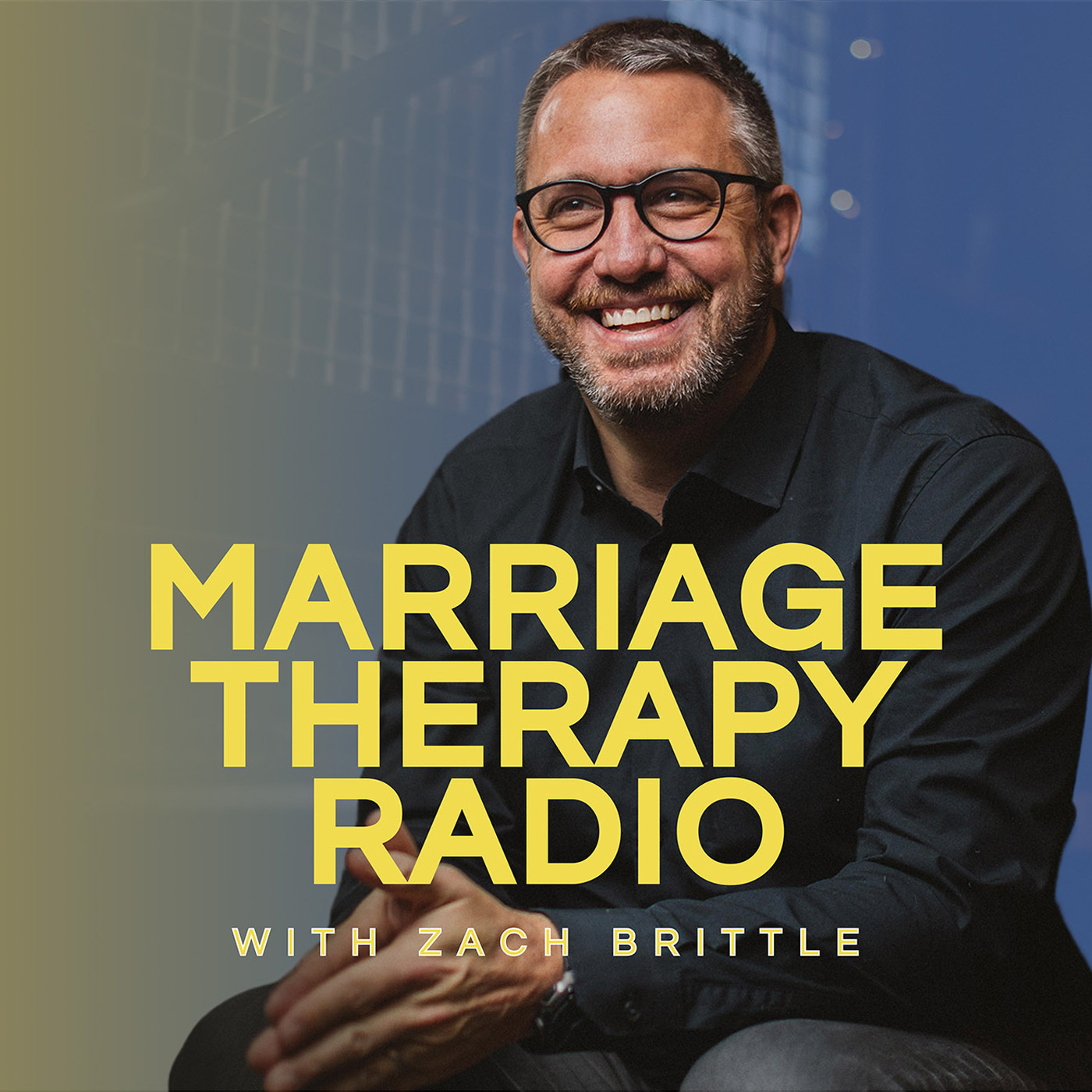
Marriage Therapy Radio
445 episodes — Page 1 of 9
Ep 445 Permission for Pleasure w/Dr. Jenni Skyler and Daniel Lebowitz
Ep 444 Why Couples Resist Change, and What It Costs to Stay Stuck w/Iona Monk & Pam Stewart
Ep-443 An NPR Journalist, Her Audio Engineer Husband, and the Negotiation That Never Ends w/Yowei Shaw & Kyle Pulley
Ep 442 Inside a Real Gottman Marriage: Don and Carrie Cole on Repair, Second Marriages, and The New Marriage Clinic Casebook
Ep 441 The Women Who Cheat And The Betrayed Men w/Adam & Judith Nisenson
Ep 440 Married, Divorced, Remarried: How One Couple Rebuilt a Marriage From Scratch w/Neal & Rachel
Ep 439 Sex as a Hobby, Not a Test You Have to Pass
Ep 438 Faith, Addiction Recovery, and Rebuilding a Blended Family w/Darryl and Tracy Strawberry
Ep 437 What Generational Trauma Skips and What It Doesn't w/Kara & Stacy (Zach's cousins)
Ep 436 When Your Nervous System Is the Third Person in the Room w/Deborah Rozman, Ph.D. & Howard Martin
Ep 435 Should You Even Be in Couples Therapy? Zach Answers on The Bomb Life w/Melissa Vogel
Ep 434 They Fell in Love Passing Notes in Med School. Thirty Years Later, They're Still Learning Each Other w/Alexandra and Rod Stockwell
Ep 433 Ironman Training With Stage 4 Cancer: Jim and Kelly on Discipline, Marriage, and Kona
Ep 432 Kings, Queens, and the Chessboard of Marriage w/A.D and Courtney
Ep 431 The Couple Who Healed Their War Zones w/Frannie and Danny
Ep 430 When the Therapist Comes Home: Marriage, ADHD, and the Work Behind the Work w/Eli & Ariella
Ep 429 The Therapist and Her Partner: What It Actually Looks Like to Live the Work w/Anna & John
Ep 428 When the Laughs Are Real: How a Comedy Couple Keeps Their Marriage Honest w/Kevin & Annie
Ep 427 When One of You Is the Problem (And It's Both of You) w/James & Molly
Ep 426 Gratitude, Attitude, Courage: What Summer Camp Taught These Two About Marriage w/Kate & Cole Kelly
Ep 425 When Life Keeps Breaking You: A Marriage Story About Illness, Resilience, and Starting Over w/Kate & Mike
Ep 424 How Two Alphas Build a Marriage That Actually Works w/Dana & Adam
Ep 423 |19 Years In: How a Dating Coach and His Wife Actually Do It w/Even and Bridget
Ep 422 She Thought He Was Just a Jerk: The Hidden Addiction That Nearly Cost Them w/ Matt & Paige
Ep 421 The Other Side of Divorce with Susie and Paul Pettit
Ep 420 What If Taking Responsibility Is the Most Romantic Thing You Can Do? w/ Arlina and Bob Allen
Ep 419 Zach on the Sexology Podcast: Negative Sentiment Override and Erotic Connection
Ep 218 Resolving Dissonance: What Bands and Marriages Have in Common w/Ron and Catrina
Zach sits down with Ron and Catrina, a married couple behind the YouTube music show Covers on the Spot, to find out what happens when you treat a relationship like a live recording session. Ron is the creative director and host of the show, where bands are given a song they have never heard and tasked with covering it in a single day. Catrina is a graphic designer on the same media team at Musora and the quieter half of a pairing that, by their own description, sounds like "something harmonic." Together, they have three kids, a shared workplace, and a relationship built on aligned values and very different processing speeds.Using a "covers on the spot" framework for the conversation, Zach gives Ron and Catrina relationship prompts and asks them to riff. What comes out is a candid look at how they handle conflict, protect their time together, and keep choosing each other through the daily grind of parenting and working side by side. Catrina is open about her tendency toward passive aggression and the work she is doing to change it. Ron talks honestly about learning to stop "winning" arguments and start listening instead. One of the most striking moments comes when Catrina says their relationship at its best sounds like silence: quiet, smooth, still moving.Zach ties it all together with a Ben Folds story about orchestras resolving dissonance, not just difference, and drops one of his signature reframes: repair is more important than resolve. This is an episode for anyone who has ever stayed up until 2 a.m. trying to fix something with their partner and wondered if there was a better way.Key TakeawaysWinning the argument is not the same thing as being right about the relationshipGiving your partner time to process is not waiting. It is participating.A relationship is not something you find. It is something you build with someone who wants to build with you.Repair is more important than resolve. You can go to bed without solving it and still be okay.Protecting your time together matters more than filling your calendar with activityThe best relationships keep evolving their sound. What worked five years ago may not be the song you need now.Constraints (kids, time, fatigue) can actually sharpen how a couple communicates, not just limit itVulnerability is daring to be fully honest with someone, not just showing them the version of yourself you think they wantGuest InfoRon (Catrina's husband): Producer and host of Covers on the Spot, a YouTube music show where bands cover a song they have never heard in a single day. Former high school musical theater teacher. Based in Chilliwack, British Columbia.Catrina (Ron's wife): Graphic designer at Musora. Handles YouTube thumbnails, Instagram assets, and physical product design. Former theater student (played Ariel in The Tempest). Self-described introvert.They have three children.They started dating January 1, 2011 after being friends since high school.Covers on the Spot: YouTube PlaylistMusora (music lessons platform): musora.comSee Privacy Policy at https://art19.com/privacy and California Privacy Notice at https://art19.com/privacy#do-not-sell-my-info.
Ep 417 Aligning Your Numbers and Your Values w/Natalie and Dan Slagle
Zach sits down with Natalie and Dan Slagle, a married couple and co-founders of Fyooz Financial Planning, to explore why money is one of the most charged—and revealing—topics in relationships.Despite being financial professionals, Natalie and Dan found themselves running into the same conflicts as the couples they serve. The issue wasn’t knowledge. It was meaning.They describe how two people can look at the exact same number—$2,700 spent this month—and experience it completely differently. For Natalie, it can trigger scarcity and concern about staying within limits. For Dan, it can represent flexibility and confidence that everything will be okay. Same number. Different story.The conversation explores how those differences are rooted in early experiences: Natalie learning at a young age to separate “needs” from “wants” and take responsibility for the latter, while Dan grew up in a household where generosity and gift-giving shaped his relationship to money.Zach helps reframe the tension: the problem isn’t who’s right—it’s that couples often don’t realize they’re talking about different contexts entirely. One partner may be thinking about this month’s budget, while the other is thinking about long-term security.Natalie and Dan share the simple but powerful practice that changed everything for them: regular, structured money conversations. By sitting down together—often in a public space to keep things grounded—and asking each other how they feel about the numbers, they’ve been able to move from assumption to alignment.The conversation expands beyond finances into time, parenting, and partnership—especially as they navigate building a business together while raising a young child. From learning how to “clock out” of work to intentionally creating space to miss each other again, Natalie and Dan offer a practical and honest look at what it takes to stay connected in a shared life.This episode is a reminder that money problems are rarely about money—they’re about meaning, communication, and learning how to build a shared vision.Key TakeawaysThe same financial number can mean completely different things to each partnerMoney is measurable, which makes conflict around it more intenseFinancial behaviors are deeply shaped by childhood experiencesAssumptions—not numbers—are often the real source of conflictStructured conversations reduce anxiety and increase alignmentTalking about how you feel about money matters as much as the mathHousehold values should guide how money is spentSeparation (work, space, roles) can increase connection in relationshipsGuest InfoNatalie & Dan SlagleNatalie and Dan are a married couple and co-founders of Fyooz Financial Planning, a firm focused on helping couples align their finances with their values and life goals. Their work sits at the intersection of financial strategy and relational dynamics—helping couples not just manage money, but communicate about it effectively.Website: https://www.fyoozfinancial.com/Free consultations available nationwide (U.S.-based clients)See Privacy Policy at https://art19.com/privacy and California Privacy Notice at https://art19.com/privacy#do-not-sell-my-info.
Ep 416 Multiple Love, One Commitment to Repair w/ Hazel Grace & Nico
Zach sits down with Hazel Grace and Nico for a wide-ranging conversation about polyamory, relational integrity, and what it actually takes to repair after conflict.Hazel Grace, a relationship coach and educator with a PhD in human sexuality, and Nico, a lumberjack and self-described relationship nerd, share how they’ve built a deeply intentional partnership within a polyamorous relationship structure. They unpack common misconceptions about polyamory—especially the idea that it’s simply about sexual freedom—and explain how their approach is rooted in responsibility, communication, and care for the entire relational ecosystem.Zach asks about Hazel Grace’s framework called The Art of Repair. Drawing from their own childhood experiences, decades of personal healing, and years of coaching couples, They outline a clear process for navigating relational ruptures and restoring trust.Through a real-life example involving a broken ankle and an emotional reaction that escalated quickly, Hazel Grace and Nico demonstrate how repair actually works in practice: pausing to regulate, developing empathy, seeking permission to talk, acknowledging what happened, naming the impact, and then rebuilding integrity.The conversation is a powerful reminder that conflict is inevitable in relationships—but repair is a skill anyone can learn.Key TakeawaysPolyamory isn’t about unlimited freedom; it requires responsibility for the impact of your choicesRelationships don’t come with fixed rules—you can design agreements that fit the people involvedMany people mistake “no conflict” for healthy relationships, but avoiding conflict can limit emotional intimacyRepair begins with regulation, not explanationEmpathy for both self and partner is essential before attempting repairAsking permission to have a repair conversation creates safety and consentUnderstanding each person’s experience matters more than determining who was “right”Repair restores trust through acknowledgment, empathy, and concrete actionsGuest InfoHazel Grace, PhDHazel Grace is a relationship and intimacy coach specializing in relational healing, sexuality, and communication. They teach workshops and courses on relationship repair and works with individuals and couples to develop deeper intimacy and emotional connection.Website: https://drhazelgrace.comWorkshops: Northern California & ColoradoCourses: Online self-paced programs on The Art of RepairNicoNico is a sawyer—running a mobile sawmill business where he mills lumber directly on clients’ properties. In the winter he works in snow removal in the mountains. He also collaborates with Hazel Grace in relationship workshops and educational programs.See Privacy Policy at https://art19.com/privacy and California Privacy Notice at https://art19.com/privacy#do-not-sell-my-info.

Ep 415 Cancer, Recovery, and Us with Pete and Tasha
Zach sits down with Pete and Tasha, a couple whose relationship was forged in the middle of some of life’s hardest realities: addiction, cancer, caregiving, recovery, and the challenge of staying connected when survival itself becomes the focus. Pete and Tasha met in Boulder after years of each pursuing health and healing in different ways. Tasha had already devoted much of her life to recovery from eating disorders, addiction, and chronic illness, and she knew she wanted a partner who was committed to that same path. Pete initially appeared to be on that path too, but as their relationship deepened, more of his struggle with addiction surfaced. Then, shortly after getting engaged, everything escalated: Pete began experiencing severe symptoms and was ultimately diagnosed with a life-threatening tumor in his mediastinum, wrapped around his trachea and pressing against his heart and lungs. What follows is not just a story about illness. It’s a story about what happens to a couple when one person becomes “the patient” and the other becomes “the caregiver,” and how hard it is to keep that dynamic from hardening into resentment, overfunctioning, codependence, and loss of reciprocity. Pete talks about how cancer forced him to confront not only his physical condition but the deeper patterns underneath his addiction and lifestyle. Tasha reflects on the toll of supporting him through treatment while also trying not to lose herself in fixing, managing, and carrying too much. Together, they explore what it means to heal in relationship: how trust gets rebuilt after dishonesty, how accountability has to become daily practice, and how love matures when both people are willing to face their own patterns. They describe practical tools they now use—like regular honesty check-ins, weekly date nights, therapy, and explicit conversations about support, food, recovery, and emotional responsibility—to keep their relationship from sliding into the old “nagging wife / resentful husband” script. This is a deeply layered conversation about partnership under pressure, and about choosing each other not just in romance, but in recovery, grief, health, and the long work of becoming whole. Key Takeaways Serious illness can expose everything already under strain in a relationship Addiction and cancer may look different, but both can force deep reckoning with identity, pain, and self-responsibility Caregiving can become overfunctioning if couples are not intentional about reciprocity Honesty has to be practiced, not assumed Recovery is not just individual; it reshapes the couple dynamic Love is not enough without accountability, boundaries, and tools Trust can be rebuilt, but it requires repeated truth-telling Healing together means learning how not to collapse into patient/caregiver roles forever Guest Info PetePete is the founder of Evolve Health https://www.evolvvhealth.com, where he supports cancer patients through coaching and resource navigation after his own experience with cancer treatment and recovery. TashaTasha is a therapeutic mentor who works with people recovering from chronic illness, addiction, and eating disorders, helping them better understand their patterns and develop healing tools for a more resilient life. Her practice is Resilient Grace https://www.resilient-grace.com. Learn more about your ad choices. Visit megaphone.fm/adchoicesSee Privacy Policy at https://art19.com/privacy and California Privacy Notice at https://art19.com/privacy#do-not-sell-my-info.

Ep 414 The State of the Union: One Year Later | with Robin and Hector
One year ago, Robin and Hector came on the show after their first year together. Now they’re back for a relationship “State of the Union.” Using a framework from the Gottman Method, Zach walks them through four powerful questions designed to help couples stay connected, prevent resentment, and strengthen emotional safety: What did we get right? How can I specifically appreciate you? Is there anything we need to repair? What’s coming up, and how can I support you? What unfolds is a masterclass in intentional love. They talk about: Learning empathy at a deeper level Building safety through micro-moments Giving each other the benefit of the doubt Taking accountability before blame creeps in Naming insecurities instead of letting them grow Supporting each other through major life transitions Robin is launching her book Real Love Ready: A Guide to Relational Literacy. Hector is preparing for a major hiking trip. They’re opening a taco shop. They’re blending families. They’re building businesses. And through it all, they’re keeping their relationship clear. This episode is both an update and a practical tool you can use immediately in your own relationship. What You’ll Learn in This Episode How to conduct a weekly “State of the Union” conversation Why positive sentiment must come before hard conversations The power of leading with accountability instead of accusation How empathy transforms conflict Why repair attempts should happen quickly How to name insecurities before they become explosions What it means to “keep the relationship clear” How to support your partner through busy seasons The Four Questions (State of the Union Framework) If you want to try this at home, here are the questions Zach uses: What did we get right this week? How can I specifically appreciate or celebrate you? Is there anything we need to repair, revisit, or apologize for? What’s coming up, and how can I support you? When practiced regularly, this keeps small issues from turning into big ones—and builds an emotional bank account that protects your relationship. Guest Info Robin Founder of Real Love Ready Website: https://www.realloveready.com Conference (In Bloom): April 10–12 Book: Real Love Ready: A Guide to Relational Literacy (Available April 7) Robin’s work centers around relational literacy—breaking down big relationship concepts into practical, learnable skills. Hector Entrepreneur, chef, and emotional growth enthusiast. Co-founder of their upcoming taco venture Creator of a long-perfected chili oil recipe (15 years in the making!) Learn more about your ad choices. Visit megaphone.fm/adchoicesSee Privacy Policy at https://art19.com/privacy and California Privacy Notice at https://art19.com/privacy#do-not-sell-my-info.
Ep 413 From Pattern to Partnership | Session 3 with Brian and Kristen
In this final session of the three-part series, Brian and Kristen reflect on what has shifted—and what still feels tender. They don’t have “big crimes” in their marriage. No betrayal. No catastrophe. What they have are patterns. And the courage to look at them. This episode centers on their struggle around the language of “over-functioner” and “under-functioner.” What started as a helpful framework became a pain point—especially for Brian, whose family-of-origin history makes accusations of “not doing enough” land deeply. Zach helps them untangle what’s really underneath the label: It’s not about over-functioning. It’s about expectations. It’s about connection before correction. It’s about role clarity. It’s about appreciation. Through a simple example—a snowy driveway on the day they learned a friend had died—the couple sees how context, grief, and unmet expectations can spiral quickly. But they also discover something new: Brian doesn’t need fewer requests. He needs more connection and appreciation first. Kristen doesn’t need better labels. She needs help carrying the mental and emotional load. In the end, they shift from asking, “Who’s over- or under-functioning?” to asking: Who’s showing up right now—and how can we show up better for each other? Key Takeaways Labels can illuminate—but they can also wound Context (stress, grief, hunger, fatigue) matters more than theory Connection before correction changes everything Over-functioning often hides an unspoken request for help Defensiveness often protects an old family-of-origin wound Appreciation softens difficult conversations “What do you want more of?” is more useful than “What do you want less of?” Playing the long game means collaborating, not competing Learn more about your ad choices. Visit megaphone.fm/adchoicesSee Privacy Policy at https://art19.com/privacy and California Privacy Notice at https://art19.com/privacy#do-not-sell-my-info.

Ep 412 Breaking the Script | Session 2 with Brian and Kristen
Brian and Kristen return after completing their homework: mapping their recurring conflict pattern step-by-step. And something shifts. Instead of focusing on who’s right, they begin identifying when the pattern starts, how it escalates, and where they might choose something different. They talk about having a “good week,” more laughter, and fewer misunderstandings—but Zach presses deeper: Was it luck, or was it intentional? What unfolds is a layered conversation about stress, chronic pain, medication changes, PMS, defensiveness, and the powerful internal story Brian carries that says, “If there’s a problem, it must be me.” Zach helps them connect the dots between depression’s lies, physiological stress, and how quickly neutral requests can turn into personal threat. The couple names their 10-step pattern openly—fight or flight, overthinking, mounting a defense, physical withdrawal—and begins experimenting with something new: interrupting the script before it reaches step six. This episode isn’t about resolution. It’s about pattern awareness and learning how to redirect before old muscle memory takes over. They close by identifying the next layer to explore in Episode 3: their over-functioner / under-functioner dynamic—and how it triggers deeper family-of-origin wounds. Key Takeaways A “good week” is often intentional, not accidental Externalizing the problem (“us vs. the schedule”) strengthens the team Physiological stress (sleep, pain, hormones, meds) directly impacts conflict Depression distorts perception and reinforces “I’m the problem” narratives Defensiveness often protects something deeply valuable Mapping a conflict pattern creates space for choice Interrupting the script—even once—builds momentum Repair matters more than resolution “Something new” is the antidote to “more of the same” Learn more about your ad choices. Visit megaphone.fm/adchoicesSee Privacy Policy at https://art19.com/privacy and California Privacy Notice at https://art19.com/privacy#do-not-sell-my-info.

Ep 411 We’ve Had This Fight Before | Session 1 with Brian and Kristen
Zach begins a three-part series with Brian and Kristen, longtime MTR listeners who volunteered to work through their marriage challenges in real time. Brian and Kristen have been together for more than two decades and credit Marriage Therapy Radio as a resource that helped them find language for patterns they felt—but couldn’t name. They describe how listening separately (not together) gave them neutral ground to reflect, build vocabulary, and bring conversations back into their marriage without escalating conflict. The focus of this first session is a familiar cycle: Brian’s defensiveness, Kristen’s experience of being misunderstood, and the growing frustration around repair always landing on one partner. Zach helps them slow the pattern down, name the dynamics at play, and examine how early family modeling, parenting pressure, and long-term habits have shaped their responses to conflict. Rather than trying to “fix” the marriage, this episode centers on clarity: understanding what actually happens when things go off the rails, differentiating between feeling attacked and being attacked, and identifying where each partner has agency. Zach reframes responsibility not as blame, but as freedom—emphasizing that each partner can choose how they show up regardless of the other’s behavior. The episode closes with a concrete assignment: mapping their recurring argument step-by-step so they can externalize the pattern and begin changing it together in the next session. Key Takeaways Long marriages still require new skills as life circumstances change Defensiveness often comes from perceived threat, not actual attack Feeling misunderstood can be as painful as being criticized Responsibility is most powerful when it’s chosen, not demanded Repair patterns can unintentionally create resentment Taking breaks during conflict can prevent escalation and shutdown Naming the pattern creates options for change Playfulness and lightness are essential for long-term connection Why This Episode Matters This episode offers a rare, transparent look at the beginning of relational work—not the polished outcome. Brian and Kristen model what it looks like to be curious, honest, and willing to be seen while still feeling stuck. For listeners, this is an invitation to recognize familiar patterns in their own relationships and to remember: insight is the first step, not the finish line. Learn more about your ad choices. Visit megaphone.fm/adchoicesSee Privacy Policy at https://art19.com/privacy and California Privacy Notice at https://art19.com/privacy#do-not-sell-my-info.

Ep 410 Make a Better You, Make a Better Marriage with Meygan and Casey Caston
Zach sits down with Casey and Meygan Caston, founders of Marriage365, to talk about how a marriage that nearly collapsed in year three became the foundation for a global relationship resource. Both Casey and Meygan grew up surrounded by divorce, affairs, and unresolved conflict. Determined not to repeat their parents’ patterns, they entered marriage with optimism—but no tools. By year three, resentment, blame, and emotional shutdown had taken over, and Meygan found herself convinced she had made the biggest mistake of her life. What changed everything wasn’t mutual effort at first—it was personal responsibility. After starting therapy alone, Meygan learned boundaries, emotional regulation, and how to take ownership of her part of the dance. Thirteen months later, her changed posture toward conflict forced a shift in the relationship dynamic, and Casey began doing his own work. Together, they share how changing one partner changes the entire system; why marriage is not about solo dancing; and how resentment—not communication—is usually the real problem couples face. Zach weaves in his own frameworks around adulthood, repair, and the “dance” of relationship, while Casey and Meygan offer practical insight from years of coaching couples in crisis. The conversation also explores forgiveness, curiosity, intentional choice, cultural myths about love, and why healthy marriages are built through habits—not hope. Key Takeaways You’re not stuck – Changing yourself changes the relationship system. Marriage is a team sport – Two people dancing separately isn’t partnership. Resentment breaks communication – Most “communication problems” are really unresolved hurt. Repair requires ownership – A real apology validates pain and invites rebuilding trust. Acceptance matters – Forgiveness doesn’t have to be instant, but honesty does. Curiosity beats defensiveness – Looking inward is the first step toward growth. Feelings fluctuate; choices endure – Love is sustained through intentional action. Differences aren’t the enemy – Harmony comes from resolving dissonance, not eliminating it. Guest Info Casey & Meygan Caston Casey and Meygan are the founders of Marriage365, a relationship coaching platform dedicated to helping couples build intentional, resilient marriages. Drawing from their own near-divorce story and years of coaching experience, they offer practical tools, habits, and frameworks for repair, communication, and connection. Instagram: https://www.instagram.com/marriage365/ New Book The Marriage Habit — releasing February 3, 2026A practical, habit-based framework for couples who want clarity on how to build a strong marriage—not just why it matters. Learn more about your ad choices. Visit megaphone.fm/adchoicesSee Privacy Policy at https://art19.com/privacy and California Privacy Notice at https://art19.com/privacy#do-not-sell-my-info.
Ep 409 No One Wins Alone: Lessons in Partnership from Escape Room Experts David and Lisa Spira
Zach sits down with David and Lisa, long-time partners and leaders in the escape room world, to explore what thousands of hours of collaborative problem-solving have taught them about communication, conflict, and teamwork. They talk about why escape rooms reward kindness over brilliance, why “being right” is a losing strategy, and how the habits that help teams escape under pressure are the same ones that help couples thrive in real life. From debriefing mistakes without blame to celebrating small wins—even when you lose—this conversation offers a surprisingly practical framework for building resilient, collaborative relationships. Key Takeaways Escape rooms reward communication and kindness, not intelligence or dominance The fastest way to lose—both in games and relationships—is trying to win alone Healthy teams normalize double-checking, feedback, and shared responsibility Conflict works best when it happens after the pressure, not during it Strong partnerships focus on learning from mistakes, not litigating them Celebrating small wins matters—even when the overall outcome isn’t perfect Mutual respect and curiosity are foundational to long-term collaboration Guest Info David & LisaPartners in life and business, David and Lisa are leading voices in the escape room community. They have played more than 1,300 escape rooms worldwide, built a global community of players, and help people experience collaborative play through reviews, tours, and industry leadership. They are the team behind Room Escape Artist, a trusted resource for discovering high-quality escape rooms around the world, and they also run curated escape room tours that bring players together across cities and countries. Website: https://roomescapeartist.com Email: [email protected] Learn more about your ad choices. Visit megaphone.fm/adchoicesSee Privacy Policy at https://art19.com/privacy and California Privacy Notice at https://art19.com/privacy#do-not-sell-my-info.
Ep 408 When Desire Changes the Marriage with Courtney and Nathan Boyer
Zach sits down with Courtney and Nathan Boyer, a couple married for over twenty years, parenting three kids, and living overseas on a U.S. military base in Germany. Courtney and Nathan share the story of a major turning point in their marriage—when Courtney asked to open the relationship after years of suppressing her needs, identity, and desire. Raised in a strict religious culture, Courtney explains how she spent much of her marriage prioritizing her husband’s career and her role as a mother, slowly becoming resentful and disconnected from herself. Nathan, a military physician, reflects on how his drive for achievement and constant “next step” mindset left him unaware of how much was being lost along the way. The couple walks through the six-month conversation that followed Courtney’s request—marked by resistance, fear, patience, and an honest willingness to walk away if they couldn’t find a way forward together. Nathan shares what it was like to realize he is deeply monogamous at his core, while Courtney names polyamory as an essential part of her identity rather than a lifestyle choice. They also talk candidly about shame, public backlash, parenting through non-traditional choices, and the surprising ways opening the relationship strengthened their emotional and sexual connection. Throughout the conversation, Zach highlights the importance of long-form conversations, adult responsibility, and the courage it takes to renegotiate a marriage rather than quietly disappear inside it. This episode is a nuanced, human look at love, consent, identity, and what it means to grow without abandoning one another. Key Takeaways Long-term marriages go through distinct cycles tied to life stages, not just emotions Suppressing needs often leads to resentment, not stability Identity shifts don’t happen overnight—they require long conversations Consent includes the real option to walk away Monogamy and polyamory can coexist in one marriage with clarity and care Erotic energy and trust can grow through expansion, not just exclusivity Adult relationships require ongoing renegotiation, not silent endurance Guest Info Courtney Boyer Relationship coach, author, and creator behind The Monopoly Couple. Courtney writes and speaks about identity, desire, religious conditioning, and non-traditional relationships. Website: https://www.courtneyboyercoaching.com/ Book: Opened (launching February 17)https://www.courtneyboyercoaching.com/store/p/opened Instagram: https://www.instagram.com/themonopolycouple/ Nathan Boyer Military physician and longtime partner to Courtney. Learn more about your ad choices. Visit megaphone.fm/adchoicesSee Privacy Policy at https://art19.com/privacy and California Privacy Notice at https://art19.com/privacy#do-not-sell-my-info.

Ep 407 Fighting the Right Enemy with Glenn and Jodie
Zach sits down with Glenn and Jodie, a married couple whose relationship has been shaped by cancer, caregiving, entrepreneurship, and a shared commitment to facing life side-by-side. Their story includes an early breast cancer diagnosis shortly after getting engaged, multiple recurrences over the years, and a present-day reality of living with cancer as a chronic condition. Through it all, Glenn and Jodie describe how the illness became something external to their marriage—an adversary they face together rather than a wedge between them. They talk openly about caregiving, helplessness, perspective, and how repeated medical crises stripped away the impulse to sweat small things. Glenn reflects on learning how to show up when he couldn’t “fix” anything, while Jodie shares how being cared for reshaped her understanding of partnership and trust. The conversation also explores the everyday friction of working together—different wiring, different priorities, and Glenn’s self-identified ADD—along with Zach’s reframing of conditions like cancer and ADHD as things couples must externalize rather than personalize. They close by sharing the work they now do together through their businesses and podcast, Couples, Inc., where they help couples who run businesses navigate boundaries, roles, and relationship health. This episode is a grounded, hopeful look at what it means to fight the right thing—and to stay on the same team over the long haul. Key Takeaways Externalize the problem – Cancer, ADHD, and other conditions aren’t your partner; they’re what you face together. Caregiving is connection – Showing up consistently matters more than having solutions. Perspective changes priorities – Repeated health crises reduced conflict around “small stuff.” Different wiring isn’t disrespect – Productivity styles and attention differences require collaboration, not blame. Mindset precedes tactics – Tools only work when used without resentment or superiority. Play the long game – Healthy relationships focus on reducing the same pain points year over year. Being on the same team is intentional – Unity doesn’t happen automatically; it’s practiced. Guest Info Glenn & Jodie Glenn and Jodie are married partners in life and business. They co-own Living Pink Communications, a marketing firm inspired by Jodie’s ongoing experience with breast cancer, and host the Couples, Inc. podcast, which supports couples who run businesses together. Website: https://livingpinkcommunications.com/ Podcast: https://couplesincpodcast.com Learn more about your ad choices. Visit megaphone.fm/adchoicesSee Privacy Policy at https://art19.com/privacy and California Privacy Notice at https://art19.com/privacy#do-not-sell-my-info.

Ep 406 What Therapy Actually Gave Us with Colette and Steve Fehr
Zach sits down with couples therapist and author Colette Jane Fehr and her husband Steve Fehr for a candid conversation about second marriage, difference, repair, and what therapy really does—and doesn’t—solve. Colette and Steve met later in life after very different first marriages and divorces. She’s an emotionally expressive, extroverted therapist from New York; he’s a reserved, analytical CPA from Kentucky. On paper, they couldn’t be more different—but from their first night talking for hours at a diner, something clicked. They talk openly about blending families with four teenage daughters, the strain that season put on their marriage, and how therapy became not a last resort but an ongoing resource. Steve reflects on learning—slowly—to speak up before resentment builds, while Colette names her own pattern of over-explaining and chasing understanding when she feels disconnected. The conversation explores how repair actually works in real marriages: who apologizes first, why pauses matter, how shame gets in the way, and why growth is measured in years—not moments. They also share what they’re navigating now: demanding careers, a major book launch, and the need to reinvest in their relationship after a season of borrowing against it. This episode is an honest look at what long-term partnership looks like when both people stay willing to learn, practice, and keep showing up—imperfectly. Key Takeaways Therapy isn’t a referee – Real change happens when each person does their own work, not when someone “wins.” Quiet creates distance – Avoiding small conversations leads to resentment and emotional shutdown. Pausing prevents damage – Taking space can be protective when emotions run hot. Repair matters more than perfection – Apologies don’t require total agreement—just ownership. Different nervous systems need different timing – One partner may need space while the other seeks immediate connection. Growth is gradual – Being better than five years ago counts—and so does staying open to future growth. Relationships require reinvestment – Work seasons drain connection unless time and intention are restored. Guest Info Colette Jane Fehr Couples therapist, speaker, podcast host, and author of The Cost of Quiet, releasing February 2026 https://www.colettejanefehr.com/new-book. Colette specializes in helping individuals and couples break patterns of avoidance and learn self-connected communication. Website: https://www.colettejanefehr.com Steve Fehr CPA and finance professional with over 30 years of experience. Steve brings a grounded, analytical perspective to conversations about communication, emotional labor, and long-term partnership. Learn more about your ad choices. Visit megaphone.fm/adchoicesSee Privacy Policy at https://art19.com/privacy and California Privacy Notice at https://art19.com/privacy#do-not-sell-my-info.

Ep 405 Lessons, Laughter, Tears, and Growth | The Year in Review
Zach looks back on a standout year of conversations by revisiting some of the most meaningful, memorable, and instructive moments from past episodes. Zach introduces each segment, offering context and reflection on why these moments matter and how they connect to the bigger picture of relational health. Across these clips, you’ll hear stories of intimacy rebuilt, grief held with humor, trust repaired, creativity sustained, and partnerships strengthened through intentional work. Whether you’re catching up, revisiting favorites, or discovering episodes you missed, this episode offers a thoughtful snapshot of what the show has been exploring all year: how real people do the real work of staying connected. Couples featured in this episode include: Susan & Tim Bratton — Episode 394https://marriagetherapyradio.com/ep-394 Kimberly Crossman & Tom Walsh — Episode 396https://marriagetherapyradio.com/ep-396 Karen Whitehouse & Helen McLaughlin — Episode 401https://marriagetherapyradio.com/ep-401 Tarah & EJ Kerwin — Episode 368https://marriagetherapyradio.com/ep-368 Baya Voce & Emmy Bush — Episode 374https://marriagetherapyradio.com/ep-374 Additional episodes mentioned by Zach: Victoria Shalet & Adam James — Episode 379https://marriagetherapyradio.com/ep-379 Brian & Toby — Episode 392https://marriagetherapyradio.com/ep-392 Billy & Melissa Hokacker — Episode 384https://marriagetherapyradio.com/ep-384 Jennifer & Andres — Episode 391https://marriagetherapyradio.com/ep-391 Zach’s Mom & Stepdad — Episode 383https://marriagetherapyradio.com/ep-383 Ira & Andrea — Multi-Episode Arc (Episodes 307–399)https://marriagetherapyradio.com/ep-397 Learn more about your ad choices. Visit megaphone.fm/adchoicesSee Privacy Policy at https://art19.com/privacy and California Privacy Notice at https://art19.com/privacy#do-not-sell-my-info.

Ep 404 Staying When It Would’ve Been Easier to Leave with Dana and Sean
Zach sits down with Dana and Sean, a couple whose nearly 30-year relationship includes teenage pregnancy, early marriage, deep faith, repeated infidelity, and an extraordinary rebuilding process that reshaped their marriage from the ground up. Dana and Sean met as children at church, reconnected in high school, and married young after an unplanned pregnancy—long before either of them knew who they were or how marriage actually worked. Pressured by religious expectations and carrying unresolved childhood trauma, they entered marriage already fractured. What followed were years of struggle: emotional immaturity, financial stress, multiple affairs, and seasons where staying together felt impossible. Instead of walking away, they chose the slow, painful work of rebuilding. Sean entered therapy to understand himself before trying to understand his wife. Dana learned to confront her own patterns, pride, and expectations—anchoring herself in faith, presence, and radical honesty. Together, they rejected shallow answers and chose accountability, counseling, and humility. Now parents of four children (ages 26–16), Dana and Sean reflect on how faith became not a rulebook but a living presence—the “third strand” that sustained them when their marriage felt dead. They talk candidly about selfishness, stubborn hope, and why staying isn’t about endurance but about vision: building a marriage their children would actually want to emulate. This conversation is raw, grounded, and deeply hopeful—a reminder that resurrection is possible, even after years of damage. Key Takeaways Early marriage magnifies unhealed trauma – Getting married young without self-knowledge set them up for struggle from the start. Staying isn’t passive – Rebuilding required therapy, in-home separation, humility, and consistent effort from both partners. Self-work precedes relationship work – Sean learned that understanding himself was essential before he could truly love Dana. Faith as presence, not pressure – Their spirituality evolved from rigid rules to lived connection and daily surrender. Infidelity doesn’t have to be the end – While not prescribing staying, they show what repair can look like when both partners commit to real change. Love languages come from childhood – Sean gives gifts; Dana craves quality time—both rooted in how they were raised. Resurrection is real – A marriage can be “dead dead” and still come back stronger the second time around. Vision sustains commitment – They stayed not just for the kids, but to model a marriage worth choosing. Guest Info Dana is a marriage coach, speaker, and host of the podcast Rebuilding Us, where she shares honest conversations about infidelity, faith, and marriage repair. She is known for her commitment to authenticity and refusal to offer shallow advice. Website: https://danache.com/ Instagram: https://www.instagram.com/mrsdanache/?hl=en Sean is a firefighter who prefers life behind the scenes. His willingness to engage in therapy, self-reflection, and accountability played a central role in their rebuilding process. Learn more about your ad choices. Visit megaphone.fm/adchoicesSee Privacy Policy at https://art19.com/privacy and California Privacy Notice at https://art19.com/privacy#do-not-sell-my-info.
Ep 403 People Matter, Things Don’t with Justin and Kylie Coulson
Zach sits down with Justin and Kylie Coulson, parents of six daughters and co-creators of the Happy Families movement. What unfolds is a deeply honest conversation about failure, repair, intention, and the long road toward building a family culture that actually feels good to live in. Justin shares a pivotal early-parenting moment that became the turning point of his life: a loss of control with one of their young children that forced him to confront who he was becoming as a father and husband. Kylie describes the clarity she felt in that moment—her love for Justin alongside her unwavering commitment to her children’s safety—and how that line in the sand changed everything. From there, the conversation traces Justin’s radical career pivot from radio to psychology, the years of study and sacrifice that followed, and the birth of the Happy Families philosophy. Together, Justin and Kylie unpack what “happy” actually means—not the absence of hardship, but the presence of connection, safety, and shared joy, especially around the family table. They share the simple but powerful structures they use to stay aligned: weekly check-ins, quarterly retreats, and a three-question framework that replaces blame with collaboration. Through stories of totalled cars, hard choices, and repaired moments, Justin and Kylie show how families are built—not through perfection, but through practised responses, accountability, and love that stays bigger than the mess. Key Takeaways We always get to choose our response – Circumstances don’t dictate behavior; intention does. People matter, things don’t – Safety, connection, and relationship always come before stuff. Happy families are built, not inherited – Skills like communication, repair, and emotional regulation are learnable. Hardship doesn’t cancel happiness – Joy is found in meaning, not ease. Repair builds trust – Conflict isn’t the enemy; unresolved conflict is. Structure creates safety – Regular check-ins and retreats help families stay aligned. Blame kills collaboration – Asking “How can we support each other?” changes everything. The table is the vision – A family that wants to be together is the real measure of success. Guest Info Justin & Kylie Coulson Justin Coulson is a parenting expert, author, psychologist, and founder of Happy Families (https://happyfamilies.com.au/). He hosts Australia’s most-downloaded parenting podcast, The Happy Families Podcast, and appears on national television. Kylie Coulson is his partner in parenting and purpose, bringing clarity, steadiness, and lived wisdom to their work together. They are parents of six daughters, grandparents to one (and counting), and passionate advocates for intentional family culture. Learn more about your ad choices. Visit megaphone.fm/adchoicesSee Privacy Policy at https://art19.com/privacy and California Privacy Notice at https://art19.com/privacy#do-not-sell-my-info.
Ep 402 Love After Losing Limbs with Kristan & Brook Seaford
Zach sits down with Kristan and Brook Seaford, a couple whose marriage was transformed overnight when Kristan contracted a rare and catastrophic infection in 2013. What began as strep throat and the flu quickly escalated into pneumonia, sepsis, organ failure, septic shock, and ultimately the loss of both hands, one foot, and part of the other—a 108-day medical ordeal across six hospitals that changed her life and their family forever. But what unfolds in this interview is not just a medical story—it’s a relationship story. Kristan describes the grief of returning home to a toddler who no longer recognized her, the ache of losing the physical abilities that once defined her identity, and the spiritual shift from fierce independence to complete dependence on God. Brook shares his own transformation as the family’s roles flipped overnight—learning to parent five children, run a home he once took for granted, and support a partner rebuilding her life. Together, Kristan and Brook talk about humor as survival, forgiveness as practice, community as a lifeline, and the unexpected gifts that emerged from unimaginable loss. They explore how their affection, partnership, and independence have evolved, how they’ve adapted to enjoy life together in new ways, and how their children have grown stronger, more empathetic, and more capable because of what their family lived through. Kristan now speaks publicly about resilience, faith, and healing—and this conversation demonstrates the courage and compassion at the heart of her work. Key Takeaways A medical miracle and a marital transformation – Kristan survived sepsis and organ failure, losing limbs but gaining a deeper sense of gratitude, faith, and purpose. Roles reversed overnight – Brook shifted from traditional breadwinner to full-time caregiver and household manager, discovering new respect for the invisible labor of parenting and home life. Anger and grief show up differently – She grieved deeply but rarely felt anger; he felt anger for her, mourning all that had been taken from someone he loved. Rebuilding attachment takes intention – Their 13-month-old daughter was terrified when Kristan came home—so Kristan slept on the nursery floor for months to rebuild their bond. Humor is holy – Dark humor and playful banter became a coping mechanism for both the trauma and the awkward social moments that followed. The story shaped their kids – Their five children grew more independent, responsible, and compassionate as they adapted to new family rhythms. Partnership evolves – Though physical limitations changed what activities they can share, they now intentionally seek “new fun” together—breweries, museums, comedy clubs, creative classes, and cruises instead of scuba diving. Her disability makes her a better counselor – Kristan says she isn’t a good mom, wife, or therapist despite what happened—but in many ways because of it. Guest Info Kristan Seaford Speaker, therapist, author, and survivor. Kristan shares her story of catastrophic illness, limb loss, resilience, and faith through her counseling practice and speaking engagements. Learn more at https://www.kristanseaford.com/. Brook Seaford Pastor, father, and caregiver whose perspective brings honesty, steadiness, and depth to the conversation. Learn more about your ad choices. Visit megaphone.fm/adchoicesSee Privacy Policy at https://art19.com/privacy and California Privacy Notice at https://art19.com/privacy#do-not-sell-my-info.

Ep 401 Don’t Get Shirty: Love, Humor & Detective Work with Karen Whitehouse & Helen McLaughlin
Zach sits down with Karen Whitehouse and Helen McLaughlin, the married duo behind the cult-hit podcast Who Shat on the Floor at My Wedding? https://www.whoshatontheflooratmywedding.com/ What began as a deeply confusing—and slightly sinister—incident on their wedding boat (“the matrimonial turd,” as Karen lovingly calls it) became a three-year dinner-party story that neither of them could stop telling. Their friends couldn’t stop talking about it either. Eventually, with Helen’s wholehearted encouragement (and financial backing), the couple turned their whodunnit into a comedy podcast—one that later went viral, beat Joe Rogan for a week, and now brings joy to listeners around the world. Karen and Helen share how the project grew from a joke into a mission: spreading joy, escapism, and silliness during some of the hardest seasons of their lives. They talk candidly about infertility, grief, bad therapy, moving from Amsterdam to a tiny English village, and the emotional evolution that shifted them from distraction to genuine self-work. Their chemistry is undeniable: they tease each other, interrupt each other, apologize quickly, and know exactly how to hold space when things get tough. Together, they explore how detective work mirrors relationship work—don’t make assumptions, stay curious, pause your biases—and how “learning each other’s love languages” helped them survive both big heartbreak and small bickers. It’s a conversation full of heart, humor, British slang, and surprisingly profound insights about partnership. Key Takeaways Comedy and curiosity can transmute pain – Turning their wedding mystery into a podcast helped them process, connect, and bring comfort to listeners going through dark times. Don’t make assumptions – Their detective work taught them that bias blinds you… in crime-solving and in conflict with your partner. Joy is a choice – Both see “spreading joy” as part of their life purpose, especially after Helen’s grief and Karen’s infertility journey. Learn each other’s triggers – Helen’s fear of abandonment and Karen’s need for praise once clashed; learning their love languages changed everything. Apology is a superpower – A small bicker resolved quickly after Karen simply said: “I have to apologize.” Big life transitions shift emotional bandwidth – Moving from Amsterdam’s buzz to the English countryside forced them to slow down and actually feel their feelings. Avoid two bottles of white wine – Their worst arguments were fueled by it. (“Anything else is fine!”) Support > solutions – During IVF heartbreak, grief, and major transitions, what mattered most was showing up for each other with compassion. Guest Info Karen Whitehouse & Helen McLaughlin Karen and Helen are the creators and voices behind the global hit podcast Who Shat on the Floor at My Wedding?, a comedic documentary series investigating a very real crime from their own wedding day. Season 3 continues their legacy of solving listener-submitted “comedy crimes” with their signature unqualified-detective charm. They live in the English countryside, where Helen works in cybersecurity and studies forex trading for fun (yes—really), and Karen is on the cusp of becoming a full-time comedy-podcast producer. Their shared mission: spread joy, silliness, and a lot of laughter Learn more about your ad choices. Visit megaphone.fm/adchoicesSee Privacy Policy at https://art19.com/privacy and California Privacy Notice at https://art19.com/privacy#do-not-sell-my-info.
Ep 399 Session 3 | Ten Days at a Time
In their third session, Zach shifts focus from reparenting the self to rebuilding trust, compassion, and connection in real time. The couple begins by reflecting on the chaos of parenting two neurodivergent children and how exhaustion, overwhelm, and constant caregiving have reshaped their marriage. The wife shares that while parenting has deep purpose and spiritual meaning, it also leaves her feeling “brought to her knees.” The husband expresses gratitude for their new home in Lisbon and admiration for her recent self-care efforts—but his words about “having more respect” land in a complicated way. What unfolds next is a layered conversation about respect versus compassion—how differently each experiences and defines those words, and how love can be both abundant and still “not land.” The wife reveals her fear that her “bucket has a hole”—that trauma keeps love from staying inside. The husband wrestles with the feeling of being both compassionate and exhausted. Zach guides them toward clarity: that differences in meaning, experience, and emotional wiring don’t mean disconnection—they’re invitations to co-create a shared vocabulary of care. By the end, the trio lands on a metaphor for healing: building an inner “city with a well and garden”. A healthy place inside the self where gratitude, curiosity, and compassion can grow. From there, they imagine a next step; ten intentional days of small, mutual choices to create a shared sense of safety and hope. Key Takeaways Parenting exposes purpose and pressure – Raising neurodivergent kids has deepened their sense of mission but also stretched their capacity for joy. Respect and compassion can get tangled – The husband’s expression of regained respect triggers the wife’s old shame wounds, revealing how love languages can misfire even when intentions are good. Compassion must land – It’s not about whether compassion exists, but whether it’s experienced and felt. Trauma leaves “holes in the bucket” – The wife describes how past pain can make love hard to hold, even when it’s generously offered. Shame cycles need space – Zach helps her imagine creating a small pause between shame and reaction—a mindful sliver that grows with practice. Safety over sameness – Each partner’s version of health looks different, but the shared goal is to meet in a “healthy place,” not to drag the other toward one definition. Gratitude and agency go together – The husband learns that his peace can’t depend on her choices; it must come from cultivating gratitude within himself. Ten-day goals – They agree to take small, concrete steps—ten days at a time—to make life together a little “more good” and a little “less bad.” Learn more about your ad choices. Visit megaphone.fm/adchoicesSee Privacy Policy at https://art19.com/privacy and California Privacy Notice at https://art19.com/privacy#do-not-sell-my-info.

Ep 398 Session 2 | Get Over Yourself (and Into Us)
In part two of this couple's therapeutic conversation, they deepen their work from surface struggles into childhood roots, body awareness, and self-recovery. The wife describes crashing after the previous session, discovering that missed medication and hormonal shifts had amplified her anxiety. That moment, she says, forced her to confront how fragile she felt—and how much fear lived beneath her irritation and exhaustion. She opens up about being a late-diagnosed autistic woman, her lifelong role as “the feeler,” and the early trauma that shaped her relationship with her body. The husband, in turn, shares the story of his complex, multi-dad upbringing and the formative moment when he finally received consistent love at age five—the same age his wife’s world fell apart. Zach draws a profound connection between those two five-year-olds: one rescued, one wounded. From there, the conversation moves toward reparenting—the practice of showing compassion, guidance, and safety to the parts of ourselves that never got them. They explore how self-care, faith, and embodiment intersect; how sobriety means far more than avoiding alcohol; and how healing requires both personal responsibility and partnership. By the end, Zach offers his distilled “two-part secret” to a healthy marriage. The result is a conversation about growing up inside your own marriage—and learning to parent yourselves, together. Key Takeaways Reparenting heals the roots – Both partners revisit their five-year-old selves to offer compassion, stability, and perspective that was missing the first time. The body is part of the marriage – Hormones, trauma, and neurodivergence live in the body; tending to them is relational work, not self-indulgence. Sobriety expands beyond alcohol – Clarity, honesty, and freedom from distraction are part of becoming emotionally sober. Faith and embodiment can align – The husband reframes yoga and self-care as spiritual practices that connect him to others and to God. Self-care supports connection – The wife recognizes that when she prioritizes herself, she’s better resourced for partnership. Relational recovery is lifelong – True sobriety includes recovery from anger, resentment, and inherited family patterns. Learn more about your ad choices. Visit megaphone.fm/adchoicesSee Privacy Policy at https://art19.com/privacy and California Privacy Notice at https://art19.com/privacy#do-not-sell-my-info.

Ep 397 Session 1 | A Peek in the Therapeutic Process
In this experimental therapy-format episode, Zach meets with a couple, 16 years into marriage, parenting two adopted, neurodivergent kids, and living abroad, to model what real therapeutic work sounds like. The wife names “the mother machine” as the force grinding her down: menopause, recent moves, ongoing renovations, executive-function challenges, and hyper-empathy that makes parenting especially taxing. The husband longs for renewed connection and shared fun, and admits to a lifelong pattern of shelving his own needs while rationally “handling” crises. Zach frames the work around three questions: What do you want? What’s in the way? How do we work on what’s in the way? They confront the tempting but flawed idea that “if we fix one partner, we fix the marriage.” With candor and care, they explore grief, desire, changing bodies, and culture-shock; the need for boundaries (including a “pass rule”); and Zach’s three-year relationship cycles lens. The conversation lands on a hopeful truth: you can’t magic back year-one chemistry, but you can adapt, plant new trees, and intentionally build intimacy for the season you’re in. Key Takeaways Name the real obstacle, not the scapegoat “Fixing” one partner doesn’t fix a marriage; the work is defining what you want, what’s in the way, and tackling those obstacles together. The “mother machine” is realMenopause, moves, neurodivergent parenting, and hyper-empathy create sustained overwhelm that crowds out self-care and couple time. Grief and expectation both live here The husband grieves the imagined dad life (beach, bikes, sailing) and asks for shared play and energy; the wife wants legitimacy for how hard this season truly is. Three-year cycles require adaptation Long-term relationships evolve in cycles; thriving couples re-design intentionally every few years instead of coasting on year-one dynamics. Body autonomy and shame need careful handling The wife resists any narrative that her body must change to make the marriage “work,” naming past control and current shame as triggers. Patterns under pressure The husband tends to detach feelings, get hyper-rational, and become the “sacrificial lamb”; the wife over-identifies with others’ feelings and floods. Celebrate the 52% while tending the rest Zach urges maximizing what’s working now, rather than only grieving what isn’t, especially in harder seasons. Containers beat loops Without structure, they “circle” the same arguments. Boundaried conversations and the “pass rule” create safety and traction. Guest InfoSixteen years married, parenting two adopted, neurodivergent kids, and navigating major life transitions abroad. Learn more about your ad choices. Visit megaphone.fm/adchoicesSee Privacy Policy at https://art19.com/privacy and California Privacy Notice at https://art19.com/privacy#do-not-sell-my-info.
Ep 396 Love Across Oceans with Kimberly Crossman & Tom Walsh
Zach sits down with Kimberly Crossman, actor, writer, and mental health advocate, and Tom Walsh, cinematographer and creative producer, for a deeply honest and inspiring conversation about love, loss, and partnership across continents.The couple, who split their time between Los Angeles and New Zealand, share how they’ve learned to stay connected while traveling constantly, navigating pregnancy, sobriety, and creative careers. Kim opens up about her journey through depression, anxiety, and miscarriage, while Tom reflects on his own path to sobriety and emotional growth. Together, they’ve built a relationship grounded in curiosity, compassion, and the shared belief that love, like art, is something you keep creating.They talk about running a production company together, how they manage conflict as opposites, and why celebrating small rituals, like handwritten notes and monthly anniversaries, keeps them grounded even when life feels uncertain.Key Takeaways Connection through consistency - Daily check-ins, “good morning” and “good night” messages, and humor help them stay close despite long-distance stretches. Mental health awareness strengthens love - Kim’s diagnosis of high-functioning depression in 2019 opened the door to deeper empathy and communication between them. Sobriety is shared growth - Tom’s decision to get sober after years of travel and industry burnout reshaped their relationship; Kim joined him in solidarity and clarity. Creativity is their glue - Their shared passion for storytelling and visual art fuels both their work and their emotional connection. Rituals of love matter - Monthly anniversary cards, dinners, and handwritten notes give their relationship structure and playfulness. Conflict reveals care - They’re learning to balance different conflict styles: her need for words and connection versus his need for space and calm. Loss leads to perspective - Their experience with miscarriage deepened their empathy, patience, and gratitude as they prepare for parenthood. Guest InfoKimberly CrossmanInstagram: @kimcrossmanKimberly is a New Zealand–born actor, writer, and mental health advocate known for her work on screen and her candid conversations about emotional wellness. Tom WalshInstagram: @the__tomwalshTom is a cinematographer, director, and creative producer with over two decades of experience in film and television. Together, Kim and Tom co-run a production company focused on storytelling for small businesses, social campaigns, and documentaries. Learn more about your ad choices. Visit megaphone.fm/adchoicesSee Privacy Policy at https://art19.com/privacy and California Privacy Notice at https://art19.com/privacy#do-not-sell-my-info.

Ep 395 Building Unity in a Blended Family with Mike and Kim Anderson
Zach sits down with Mike and Kim Anderson, coaches and founders of Blended Family Breakthrough https://www.blendedfamilybreakthrough.com/ , to talk about one of the hardest relationship challenges couples face, making a blended family work. After marrying in 2001, Mike and Kim found themselves struggling to balance parenting roles, discipline, and loyalty in a home that combined Kim’s daughter from a previous marriage with their two biological children. What began as love quickly became a crash course in blended family dynamics, emotional triggers, and communication breakdowns. Now, through their coaching practice and podcast, they help other couples avoid the painful mistakes they made. They share key principles like “connection before correction,” learning how to define shared values, and understanding the emotional traps that can divide couples, like the trapped teammate and stranded stranger dynamics. This episode offers a roadmap for couples trying to bring unity, clarity, and compassion to blended family life. Connection before correction - Step-parents should focus on building trust and emotional connection before taking on discipline. Parent from partnership - Couples must agree on shared values and expectations before implementing household rules. The “trapped teammate” dynamic - Bio parents often feel torn between loyalty to their child and loyalty to their spouse. The “stranded stranger” dynamic - Step-parents may feel like outsiders in their own home when bonds between bio parent and child are strong. Define shared values clearly - The same word (like “respect”) can mean different things to each partner; clarity prevents conflict. Bio parents lead discipline - Children accept correction better when it comes from the parent they already trust. Hope is part of the process - Healing and harmony take time, but strong remarriages can model healthy relationships for the next generation. Founders of Blended Family Breakthrough https://www.blendedfamilybreakthrough.com/ , Mike and Kim are coaches, authors, and hosts of the Blended Family Breakthrough Podcast https://www.blendedfamilybreakthrough.com/podcast. Drawing from their own challenges and victories, they help couples strengthen their marriages, unite as parents, and build thriving blended families. Key TakeawaysGuest InfoMike and Kim Anderson Learn more about your ad choices. Visit megaphone.fm/adchoicesSee Privacy Policy at https://art19.com/privacy and California Privacy Notice at https://art19.com/privacy#do-not-sell-my-info.