Man Up / Man Down
115 episodes — Page 2 of 3
S2 Ep 35Season 2 - wrap up!
Now, that's 65 episodes published.A lot more recorded.Today is the wrap up of season 2.Thanks for listening and supporting us. This year has seen a lot of changes with our first live event, new sponsors, new website and some fantastic guests.Season 3 will go live in September, with a lot of it already recorded. We are looking at different formats, a newsletter and of course another live event mid October. Details all tbc asap.In the meantime, enjoy your summer. Hosted on Acast. See acast.com/privacy for more information.
S2 Ep 34Aging Parents and the Dilemma of Assisted Suicide
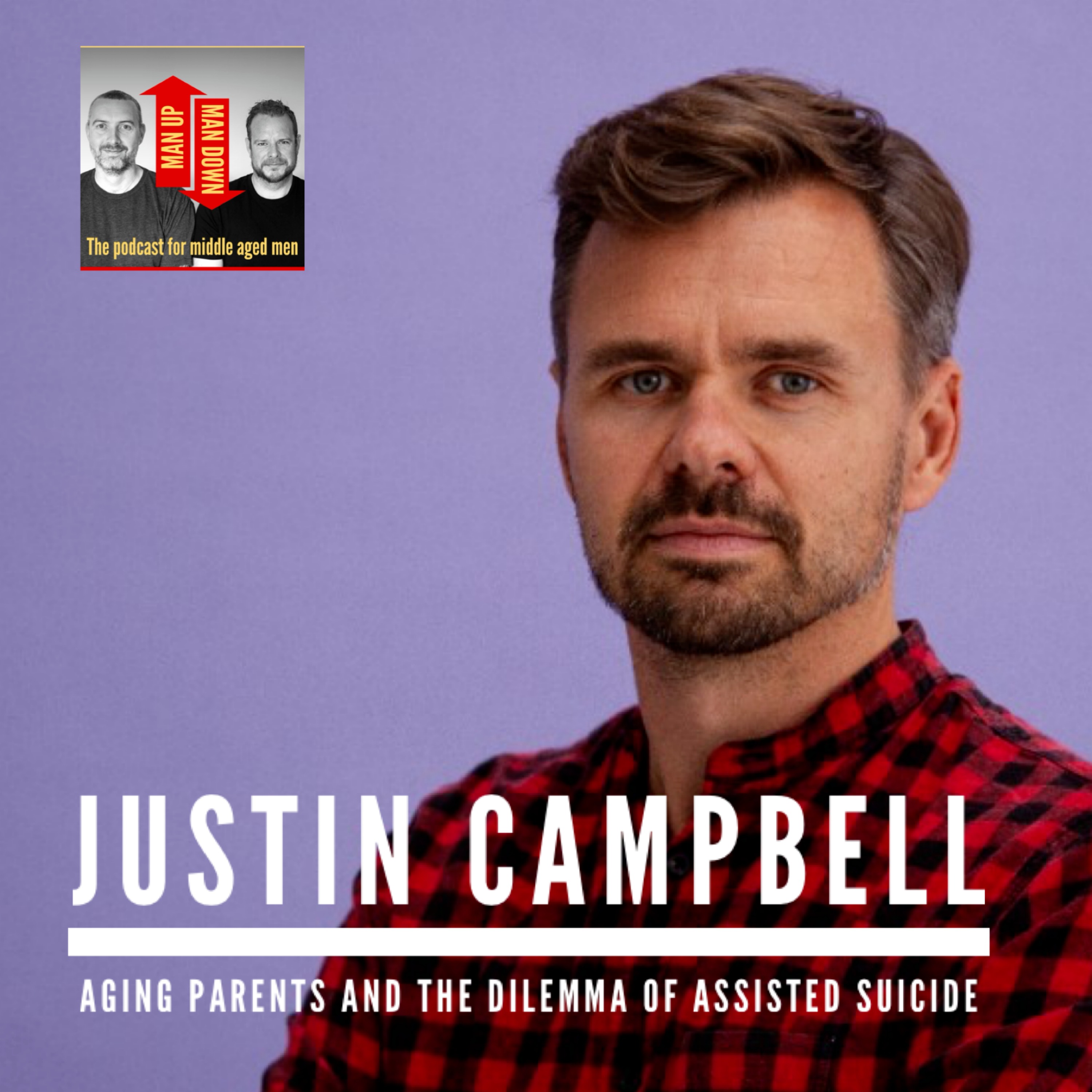
In the latest episode of "Man Up, Man Down," hosts Volker Ballueder and David Pawsey engage with Justin Campbell, co-founder of Sales Source and host of the Future Fast Digital Marketing podcast. The discussion orbits around the challenges of ailing parents, with a potential exploration into the delicate topic of assisted suicide, depending on the direction of the conversation.Justin introduces his personal and professional background, emphasising his extensive experience in B2B sales and digital marketing. He shares his recent accomplishment of completing the London Marathon and delves into his life as a Brit residing in the Netherlands, an experience paralleling Volker’s as a German in the UK.The conversation shifts to more personal matters as Justin discusses his parents' conditions: his father suffers from advanced Parkinson's disease and his mother battles anxiety. This situation is further complicated by their profound deafness, a unique family dynamic that Justin and his brother have navigated since childhood.The dialogue ventures into the sensitive areas of elderly care and the systemic challenges within the UK's health service. Justin describes the struggle of securing adequate care for his parents, touching upon the resistance often met from aging parents who view their children as figures who shouldn't dictate their choices, regardless of their own deteriorating independence.The podcast takes a more philosophical turn as the topic shifts to assisted suicide, highlighting the moral and ethical complexities surrounding the choice of ending one's life in dignity. The hosts discuss various international perspectives and legislations on assisted suicide, noting the differences between countries that allow it and the conditions under which it can be pursued.Justin advocates for more open discussions about death and the right to choose a dignified end, especially in cases where individuals suffer from irreversible health declines. The conversation reflects on broader societal and personal implications, urging a thoughtful consideration of how modern medicine extends life but also prolongs suffering.The episode is an invitation to reflect on profound issues of autonomy, dignity, and the ethics of end-of-life choices, emphasising the importance of discussing these topics more openly in society.You can find out more about Justin or get in touch with him via LinkedIn: https://www.linkedin.com/in/justinsalessource/ Hosted on Acast. See acast.com/privacy for more information.
S2 Ep 33Are we vilifying men?
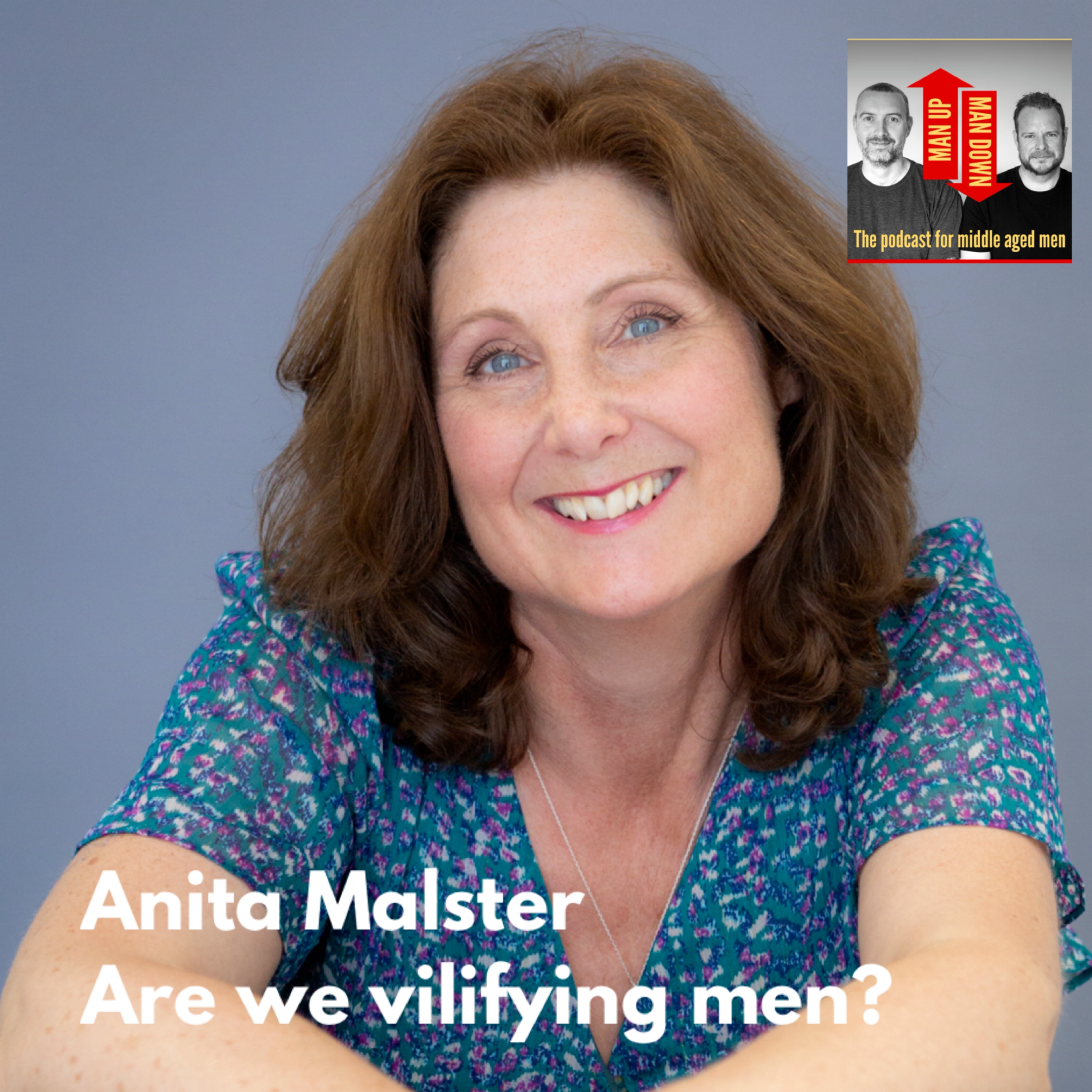
In this episode of "Man Up, Man Down," Volker and David discuss with Anita, a mental health strategist, the challenges facing men in society, particularly focusing on the construction industry and the barriers to mental health support for men. Anita shares insights into the high suicide rates among men, especially in male-dominated industries like construction, where the risk is significantly higher than the national average.The conversation delves into several key points:1. Stigma and Culture: There's a significant stigma surrounding mental health in male-dominated professions, compounded by a culture that may not always be supportive. The banter culture, while bonding, can sometimes cross into bullying, especially for those already struggling.2. Lack of Support: Anita highlights the systemic lack of support for men's mental health, including inadequate training for medical professionals in suicide prevention and a healthcare system that may not ask the right questions or provide the type of support that men find most beneficial.3. Trauma and the Criminal Justice System: Anita points out that a significant portion of the male prison population has a background of trauma, challenging the notion that men are inherently more prone to violence or aggression.4. Education and Development: Boys often fall behind in the education system, which isn't tailored to their developmental needs. The discussion touches on the importance of recognizing different learning and developmental timelines between genders.5. Seeking Solutions: The conversation also explores how men do seek help and the importance of creating safe, supportive environments for men to open up. Examples include specialised groups and initiatives that offer practical, solution-focused support in informal settings, such as men's sheds or sports teams, which facilitate open discussion and connection among men.6. Societal Shifts and Challenges: The discussion touches on the broader societal shifts and the challenges these pose to men's identity and role in society, including the impacts of the feminist movement and how advocating for men's issues is often seen as contentious.7. Looking Forward: The need for more focused efforts on men's mental health and well-being, including the establishment of roles like a minister for men's health and broader societal recognition of the unique challenges men face, is emphasised.This episode underscores the complexity of men's mental health issues, the need for tailored support systems, and the importance of societal change in how we address and support men's mental health.You can find out more and get in touch with Anita via: https://blossomtraining.org/ Hosted on Acast. See acast.com/privacy for more information.
S2 Ep 32Podcasting, Midlife and Health Scares
In this "Man Up / Man Down" podcast, hosts David Pawsey and Volker Ballueder are joined by James Marriott, who works in radio and media and edits the podcast. This episode dives into the experiences and insights from James's life, especially focusing on his journey around mindfulness, alcohol use, and personal growth.James shares his recent decision to buy a house and the financial commitments that come with it, joking about the economic climate's impact on his lifestyle. He also touches on his passion for Eurovision, revealing plans to travel there, blending his interest in cultural celebrations with his professional life in media.A significant part of the discussion revolves around James's sober journey, initiated by a health scare involving hypertension. This moment of crisis led him to evaluate his lifestyle choices, particularly his alcohol consumption, which was culturally and socially ingrained but not excessive. James's decision to stop drinking was not only a health choice but also a profound personal revelation, discovering that he is essentially a person who thrives without alcohol.The conversation also delves into the role of mindfulness in dealing with life's stresses and pressures. James, along with the hosts, discusses how mindfulness techniques have helped them manage personal and professional challenges more effectively, promoting a balanced and reflective approach to life's ups and downs.Furthermore, the hosts and James explore the broader implications of personal choices and societal norms on well-being. They discuss the pressures of maintaining social habits like drinking and how mindfulness can offer alternative ways to manage stress and social engagement.This episode not only highlights personal transformations and the power of mindfulness but also emphasises the importance of introspection and personal growth in mid-life, offering listeners insights into managing health, stress, and personal development in more fulfilling ways.You can find out more about James on his website www.wearesoundmedia.com or touch base with him via LinkedIn https://www.linkedin.com/in/james-marriott-podcast/ Hosted on Acast. See acast.com/privacy for more information.
S2 Ep 31Erectile dysfunction & men's health
In the latest episode of "Man Up / Man Down", we welcome Dr. Luke Pratsides, a prominent NHS GP from East London and head of medical at Numan, the UK's leading men's health brand. Dr. Pratsides is an expert in men's health, particularly in areas like sexual dysfunction, hormones, and weight management, and has a broad experience in hospital medicine, including trauma, orthopaedics, ophthalmology, obstetrics, gynaecology, psychiatry, general medicine, and stroke medicine.Dr. Pratsides begins by explaining his journey into medicine and how his interest in digital health started in 2016. He was particularly interested in how digital technology could enhance patient care by considering not just the clinical needs but also the emotional and practical needs of patients. He emphasises the importance of understanding what a health issue means to a patient emotionally and practically, which is often overlooked in traditional healthcare.We discuss how the NHS excels in clinical care but often falls short in addressing the emotional and practical needs of patients due to resource constraints. Dr. Pratsides notes that traditional NHS services are not designed to handle the personal and emotional aspects of healthcare efficiently, leading to feelings of neglect among patients.The conversation then shifts to the specific challenges men face in seeking healthcare. Men, due to societal norms and work pressures, often delay seeking medical help until a serious problem arises. Dr. Pratsides highlights that men are less familiar with navigating the healthcare system compared to women, who have more frequent interactions with healthcare services due to screenings and reproductive health needs.Dr. Pratsides introduces Numan’s approach to men's health, which leverages digital technology to provide accessible and personalised care. Newman focuses on conditions like erectile dysfunction, weight management, and hormone therapy. The goal is to engage men early, address underlying health issues, and prevent serious conditions like heart attacks and strokes.Volker and David share their personal experiences and questions, delving into the ripple effect of health issues on family and relationships. Dr. Pratsides explains how Numan’s digital platform allows for continuous and convenient communication with healthcare professionals, addressing both clinical and emotional needs effectively.The discussion also touches on the potential of private digital health services to complement the NHS by alleviating some of its burdens. Dr. Pratsides argues that affordable private services like Numan can take pressure off the NHS by providing timely and accessible care, thus preventing more serious health issues that require intensive NHS resources.Overall, the episode underscores the importance of a holistic approach to men's health, combining digital technology with a deep understanding of patient needs. Dr. Pratsides insights offer a promising vision of how healthcare can evolve to better serve men's health and well-being.You can find out more on www.numan.com or contact Dr. Pratsides via LinkedIn Hosted on Acast. See acast.com/privacy for more information.
S2 Ep 30On Being Men
In this episode of "Man Up/ Man Down," hosts David and Volker engage in a conversation with Yaron Engler, the founder of On Being Men. On Being Men is a programme designed for men who feel lost, lacking purpose, and struggle with negative self-talk, judgment, and a lack of intimacy and connection in their lives. Yaron's ninety-day program is not just about personal development in the traditional sense; it aims to create a space that is neither macho nor overly sensitive but focuses on helping men tap into their untapped potential to become better individuals for themselves and those around them.Yaron discusses the importance of distinguishing his programme from therapy, emphasising that it is more suitable for men ready to tackle their issues head-on, those who have already undergone some form of therapy, or who are seeking to complement their ongoing therapy with a community of like-minded individuals. The programme, which Yaron describes as a boot camp for the soul, challenges participants through exercises that promote vulnerability, honesty, and personal growth.The conversation also touches on the societal expectations of men and the stigmatisation of showing vulnerability or emotions. Yaron argues that embracing vulnerability and working through emotions is a source of true power and strength, not weakness. He highlights the value of honest feedback within the community he has created, allowing men to see their blind spots and grow in a supportive environment.Yaron's journey from overcoming personal challenges, including depression and professional uncertainty, to founding Being Men is shared as a testament to the transformative power of self-discovery and community support. He emphasises the importance of honesty, both with oneself and within relationships, as a foundational value for personal growth and fulfilment.Listeners are encouraged to explore what On Being Men offers if they feel a pull towards confronting their challenges in a supportive, non-judgmental environment. Yaron's story and the principles behind Being Men serve as an invitation to men everywhere to engage more deeply with their own journey of self-improvement and to find strength in vulnerability and connection.Find out more: https://onbeingmen.com/ Hosted on Acast. See acast.com/privacy for more information.
S2 Ep 29Man vs. Fat Football
In the latest episode of "Man Up / Man Down," hosts David Pawsey and Volker Ballueder interview Richard Crick, the head of Man V Fat Football, a programme that supports men in their weight loss and health goals through football. This year marks the 10th anniversary of the initiative, which combines the love of the sport with a structured weight loss program.Richard shares insights into the origins of Man V Fat Football, conceived when the founder, Andrew Shanahan, noticed a lack of weight loss programs catering specifically to men’s needs. The program has grown significantly, now boasting 8,200 participants across the UK, with plans to expand internationally.Throughout the episode, Richard explains how the programme not only focuses on weight loss but also builds a community among participants. They discuss how the unique scoring system, which rewards weight loss with goals, incentivises participants and fosters team spirit and mutual support.The conversation also touches on the broader impact of Man V Fat Football, highlighting stories of profound personal change and improved mental health among participants. The program’s ability to engage men in a supportive community has led to life-saving conversations and transformations, demonstrating the power of combining sport with health initiatives.As the episode wraps up, Richard outlines the future goals for Man V Fat Football, including international expansion and deeper integration with health services and local communities. The hosts reflect on the societal benefits of such programs, emphasising the potential for sport to play a pivotal role in public health and community building.You can find out more here: https://manvfat.com/ or connect with Richard via LinkedIn: https://www.linkedin.com/in/richardcrick/ Hosted on Acast. See acast.com/privacy for more information.
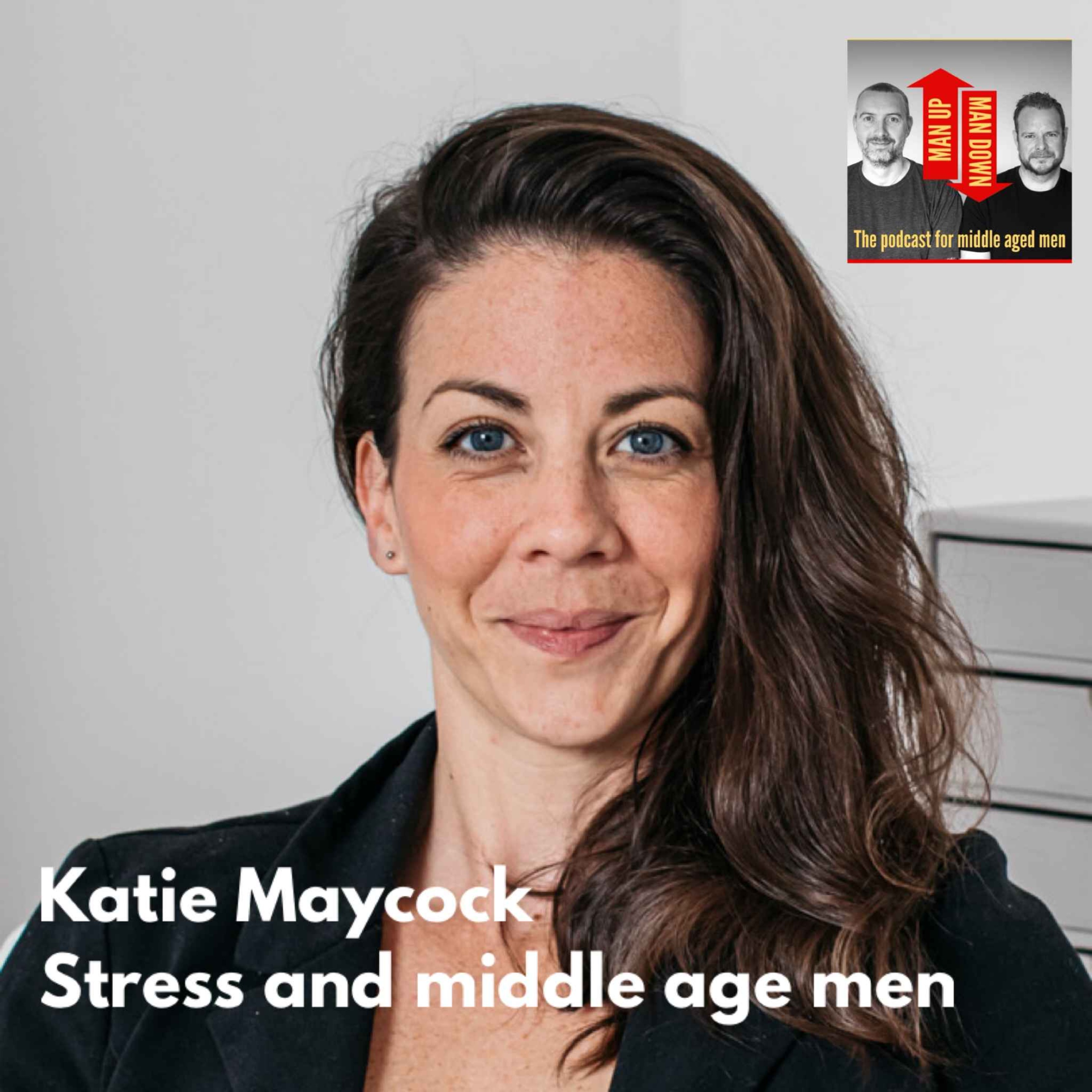
S2 Ep 28Stress, Burn out and middle age men
In this episode of Man Up / Man Down, hosts David and Volker interview Katie Maycock, the founder of Get Your Shit Together, which offers bespoke well-being strategies focusing on sustainable performance. Katie discusses the importance of addressing stress and burnout, particularly in middle-aged men, a group that often reaches a point of reflection on their well-being due to life pressures and the impacts of events like COVID-19.Katie shares her personal journey, highlighting her experiences with burnout while working in corporate sales, working long hours, and facing severe health issues due to stress. Her story emphasises the physical, mental, and emotional toll of burnout, leading her to launch Get Your Shit Together to help others manage stress and prevent burnout by combining her background in nutrition and corporate experience.The conversation delves into the stages of burnout, from excitement to physical, mental, and emotional exhaustion, stressing the importance of recognising early warning signs and addressing them. Katie stresses that burnout is not just a workplace issue, but a broader human issue influenced by various stressors, including personal pressures and societal expectations.Katie and the hosts discuss the difference between Type A and Type B personalities, with Type A individuals being more prone to burnout due to their high-stress, high-performance lifestyle. The importance of sleep, exercise, and setting boundaries is highlighted as key to preventing burnout. Katie also criticises the glorification of the "5 AM Club" mentality without adequate rest, emphasising the need for personal wellness routines tailored to individual needs.The episode underscores the necessity of personal responsibility and accountability in managing stress and avoiding burnout. Katie advocates for a holistic approach to well-being, combining physical health management with introspection on one's relationship with stress and establishing healthy boundaries and coping mechanisms.Listeners are encouraged to reflect on their stress levels and well-being, with Katie providing practical advice on recognising burnout symptoms and taking proactive steps to manage stress for sustainable performance and a healthier life.You can find out more about Katie’s services here: https://www.getyourshittogether.io/ or if you are interested in her corporate services here: https://gystwellbeing.com/ Hosted on Acast. See acast.com/privacy for more information.
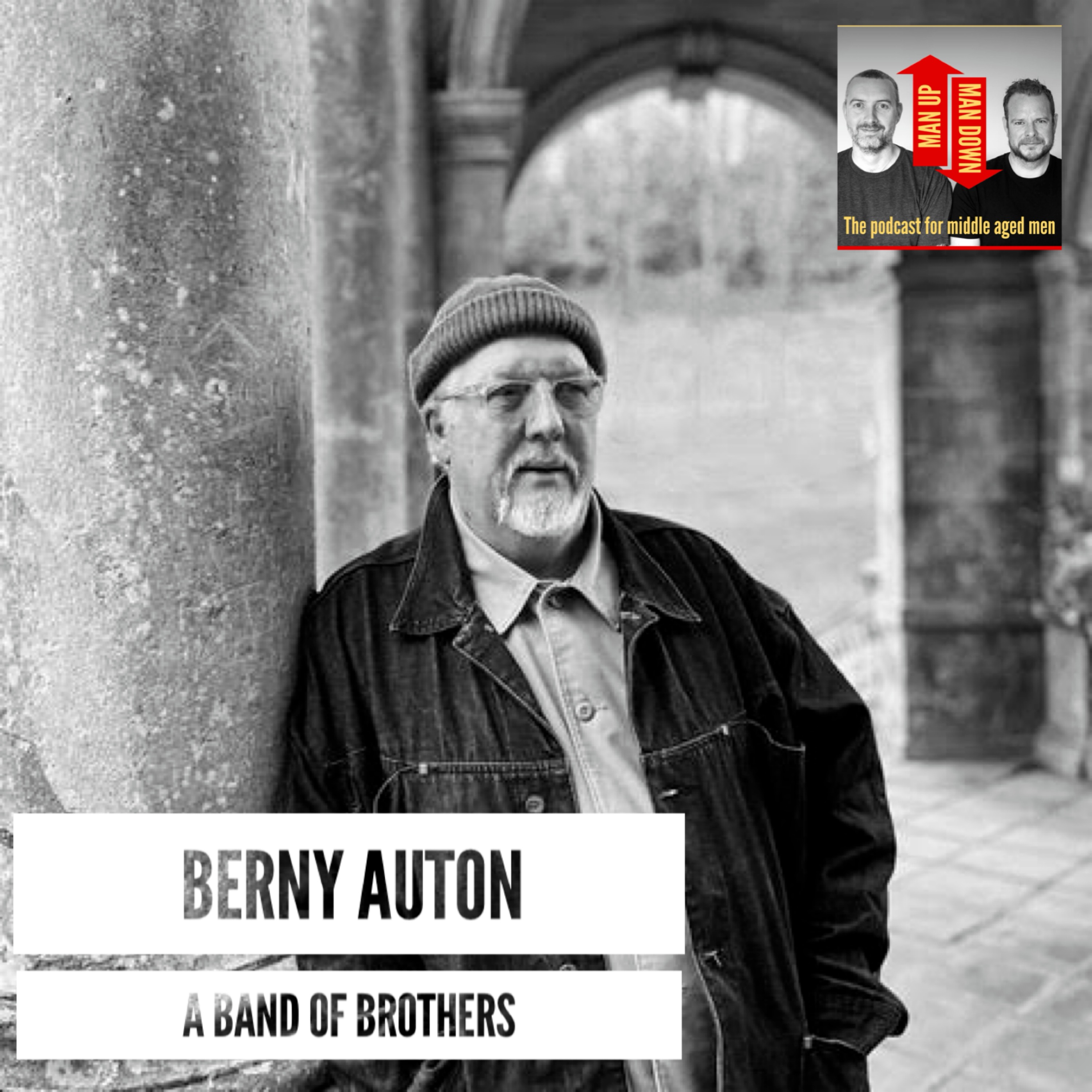
S2 Ep 27A Band of Brothers
In this episode of "Man Up, Man Down," David and Volker talk to Berny Auton from A Band of Brothers. A Band of Brothers is an organisation that mentors young men involved with or at risk of involvement in the criminal justice system. We discuss the organisation's aim to support these young men in finding a purposeful and responsible life path. Founded in 2009, the organisation assists those who've faced trauma, substance abuse, or homelessness, often resulting from early family breakdowns or care system experiences.Berny highlights the prevalence of undiagnosed mental health and nuerodiversity issues among young men in the criminal justice system and emphasises the importance of listening and non-judgmental support.Berny talks about how the mentoring process is personalised and aims to empower young men to make their own decisions. Mentors and mentees meet regularly in a neutral environment, fostering trust and open communication. The organisation's approach is not about imposing decisions but supporting the young men in their journey to adulthood, offering a contemporary rite of passage that marks their transition into responsible adult life.Berny opens up about his personal connection to the cause, driven by a traumatic event involving his daughter. This experience fuelled his commitment to contribute positively to young men's lives in his community, highlighting the transformative power of understanding, empathy, and community support.Volker and David delve into the structure and support system for mentors within A Band of Brothers, ensuring they are well-equipped to assist without bearing the emotional weight alone. The discussion touches on the challenges and rewarding moments of mentoring, emphasising the importance of patience, commitment, and the impact of genuine human connection.Berny's story and the work of A Band of Brothers illustrate the profound effect that compassionate mentorship can have on individuals and communities, offering hope and a path forward for young men at risk of falling through the cracks of the criminal justice system.You can find out more about the amazing work carried out by A Band of Brothers here https://abandofbrothers.org.uk/ and you can connect with Berny here https://www.linkedin.com/in/bernardauton Hosted on Acast. See acast.com/privacy for more information.
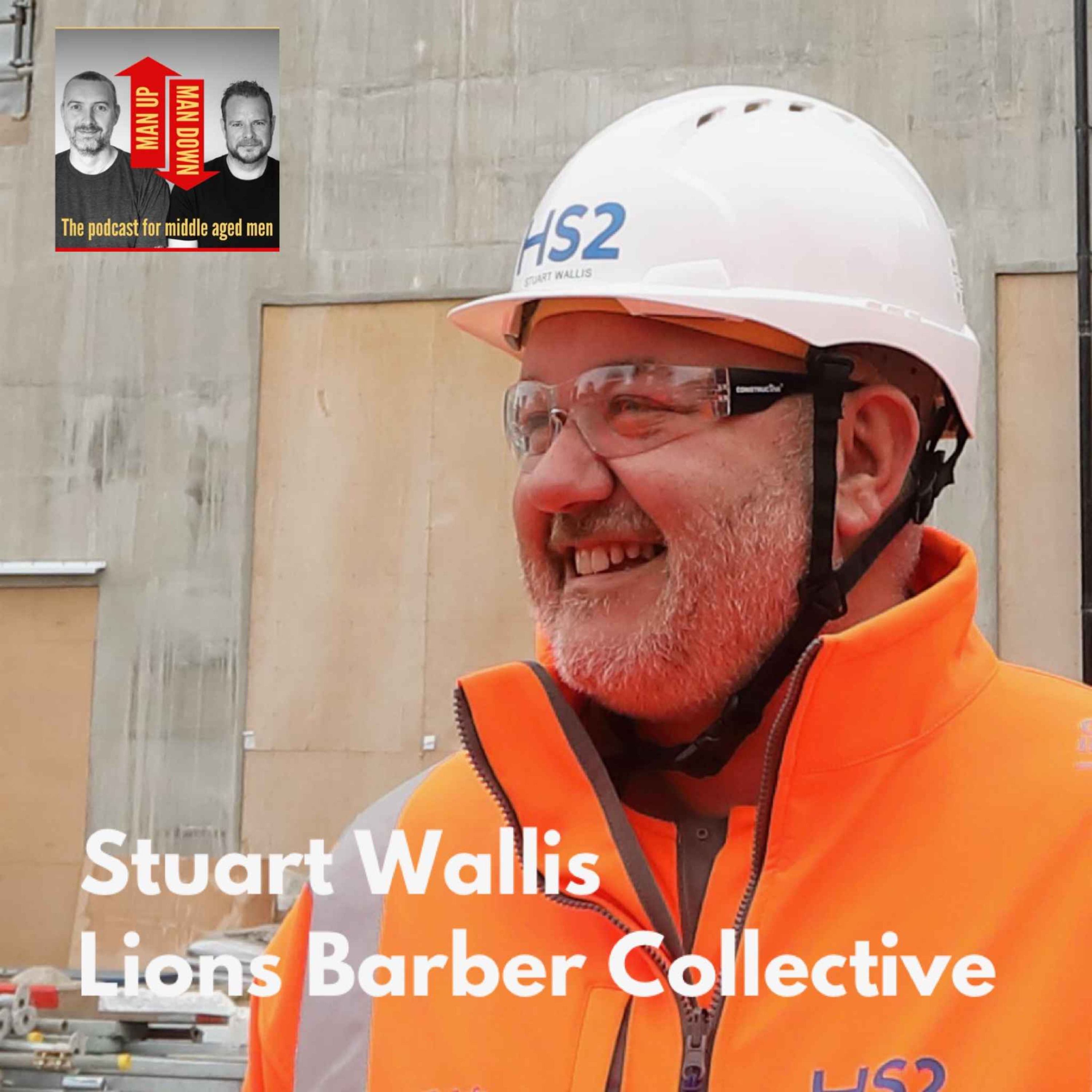
S2 Ep 26Lions Barber Collective
In this episode of "Man Up/Man Down," hosts David and Volker interview Stuart Wallis, an associate director at Mace, a global construction and consultancy company. Stuart shares his involvement with the Lions Barber Collective (LBC), a charity aiming to reduce male suicide rates, particularly in the construction industry, where the suicide rate is alarmingly high.Stuart discusses the creation of safe spaces through LBC's pop-up barbershops on construction sites, offering workers not only haircuts but also an opportunity for open conversations about mental health. The initiative aligns with Mace's commitment to employee well-being, emphasising mental health alongside physical safety. Stuart recounts personal motivations stemming from his wife's illness and the impact of COVID-19 on his family, highlighting the importance of workplace support.The discussion also touches on the challenges within the construction industry, including job instability, isolation, and the traditional macho culture that often discourages open dialogue about mental health. The LBC's approach, through Barber Talk Light training, empowers barbers to engage in mental health conversations, providing a unique avenue for support that complements traditional mental health resources.Stuart's enthusiasm for the LBC's mission is palpable, as he shares stories of the positive impact on workers' morale and mental well-being. He encourages other organisations to embrace similar initiatives, stressing the broader applicability beyond the construction industry.The episode concludes with a call to action for more awareness and support for mental health in the workplace, emphasising the LBC's role in fostering a culture of openness and care within traditionally stoic industries.You can find out more about the LBC here: https://www.thelionsbarbercollective.com/ Hosted on Acast. See acast.com/privacy for more information.
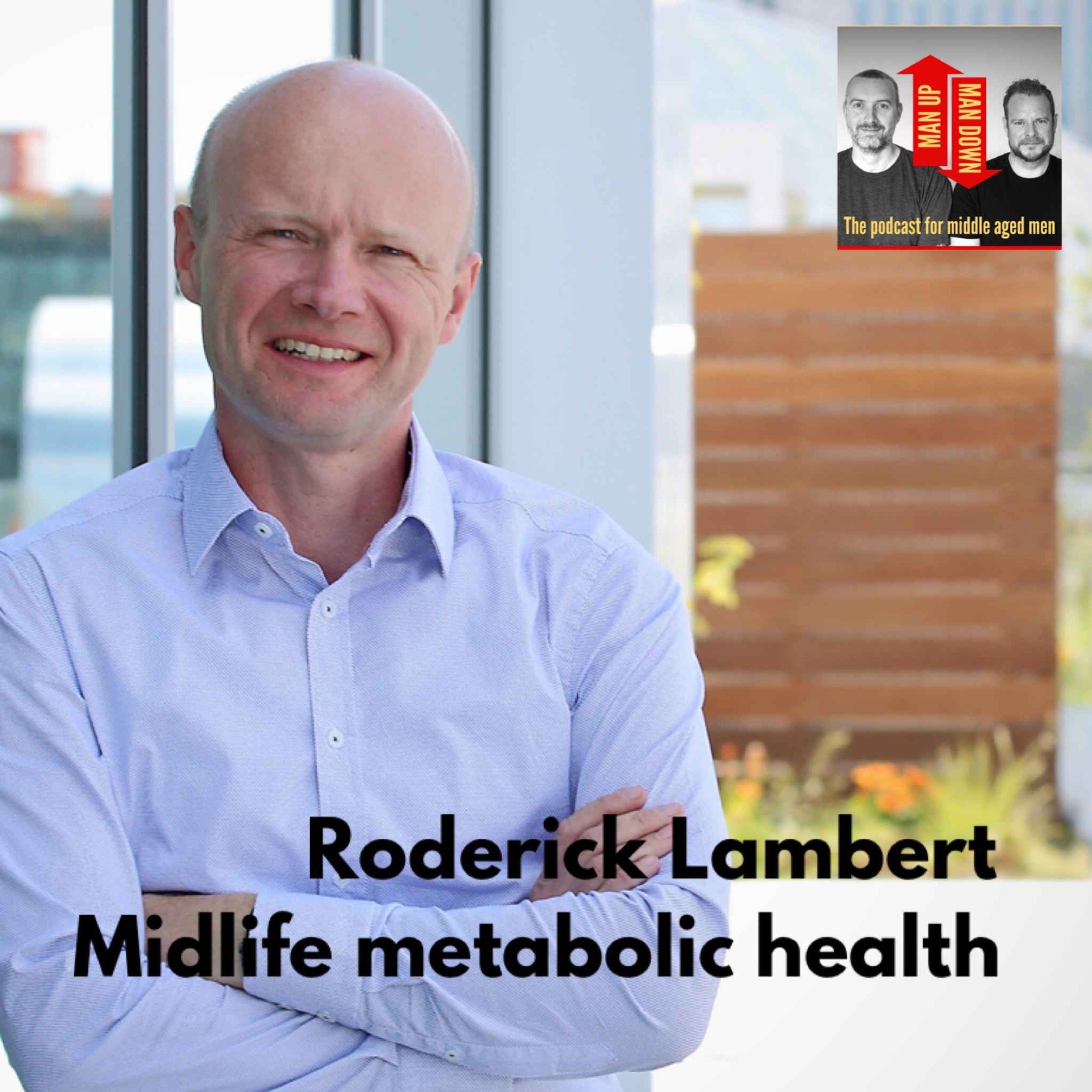
S2 Ep 25Midlife Metabolic Health - Roderick Lambert
In this episode of "Man Up Man Down," hosts David and Volker welcome Roderick Lambert, who specialises in helping midlifers lose weight and regain metabolic health. Roderick shares his personal journey of struggling with obesity for 15 years until a doctor's warning prompted him to delve into nutrition and fitness, leading him to not only lose over 20 kilograms in six months but maintain it.Roderick explains that obesity and related health issues stem from cellular and sub-cellular dysfunction, particularly within the mitochondria. He emphasises the importance of looking beyond just food and exercise, suggesting that light, water, and magnetism also play crucial roles in metabolic health.The conversation covers the historical shifts in human lifestyle, particularly the move towards an industrialised society, which has led to increased indoor living, convenience food consumption, and a departure from our evolutionary dietary patterns. Roderick argues that these changes have disrupted our natural circadian rhythms and mitochondrial function, contributing to the rise in obesity and metabolic diseases.He advocates for a diet high in animal protein for its bioavailability and satiety effects, and discusses the benefits of time-restricted eating and fasting. Roderick stresses that proper timing and quality of food, exposure to natural light, and managing artificial light exposure are key to resetting our body's internal clock and improving metabolic health.The discussion also touches on the benefits of low-intensity steady-state exercise over high-intensity workouts for fat loss, and the importance of aligning eating patterns with natural circadian rhythms for optimal health.Listeners are encouraged to explore Roderick's program and resources for more detailed guidance on achieving metabolic health and weight loss.You can find out more about his programmes here: Linkedin: http://www.linkedin.com/in/rodericklambert Instagram tag: #midlifemetabolichealthFacebook: Roderick Lambert Hosted on Acast. See acast.com/privacy for more information.
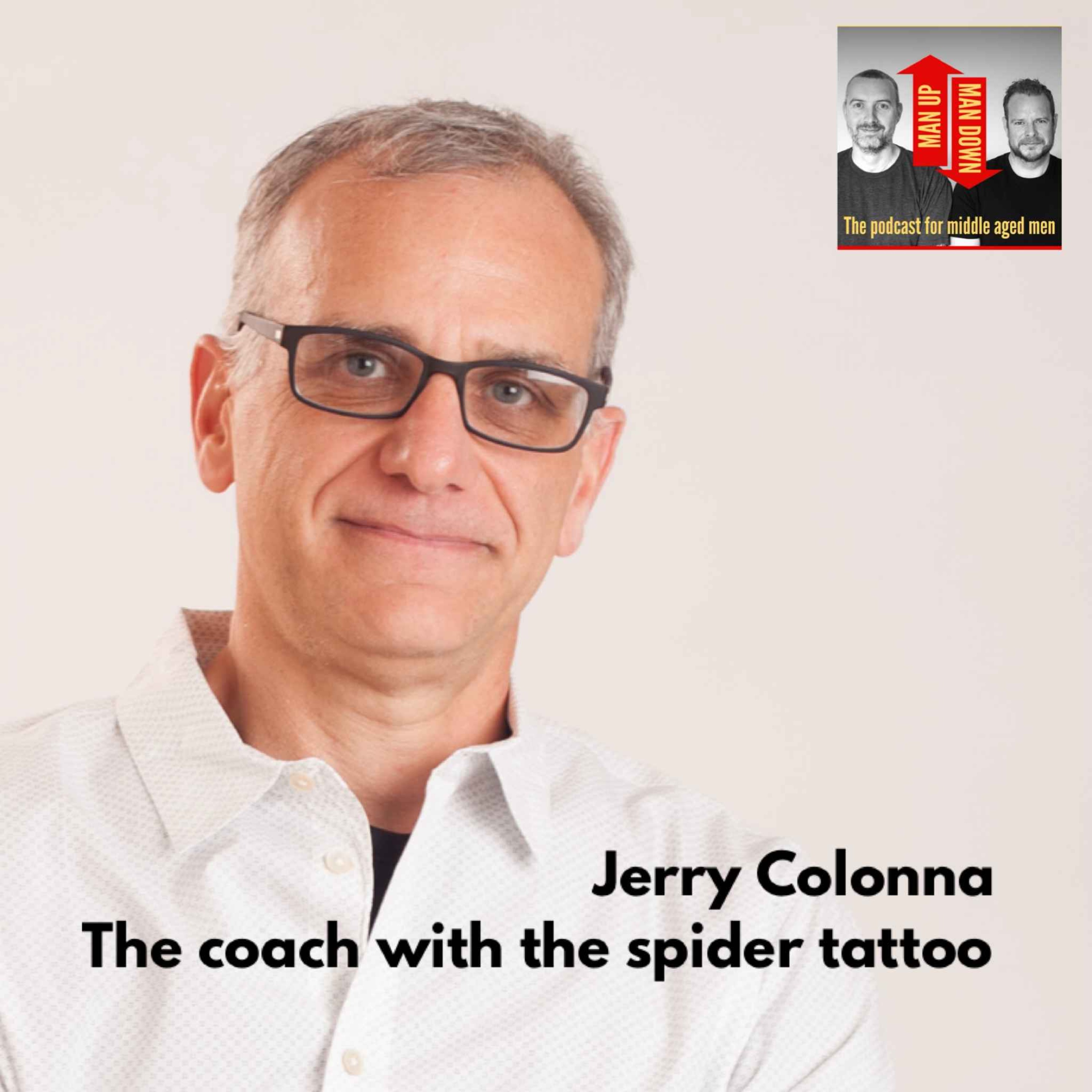
S2 Ep 24The coach with the Spider Tattoo
In this episode of the "Man Up / Man Down” podcast, hosted by Volker Ballueder and David Pawsey, guest Jerry Colonna, a leading executive coach, and CEO of Reboot, shares profound insights into midlife, personal growth, and finding purpose. Jerry, known for his experience as a venture capitalist turned coach, discusses his journey through midlife, emphasising the importance of confronting inner turmoil to achieve a more conscious life.Jerry's story includes a symbolic encounter with a spider during a soul-searching retreat, which led him to realise that worrying excessively about the future, especially about his children, was hindering his growth. This moment of clarity is memorialised by a tattoo of a spider, symbolising his lesson in worry and care. Jerry’s reflections on midlife are deeply personal, involving an internal battle where external success did not equate to internal happiness. His path to understanding involved introspection and recognising that true contentment comes from aligning one's internal and external worlds.The conversation covers the challenges men face in midlife, highlighting societal pressures to accumulate wealth and status as measures of success. Jerry advocates for a redefinition of success, focusing on personal fulfilment, relationships, and emotional well-being rather than material achievements. He emphasises the value of introspection, therapy, and confronting one's fears and insecurities as critical steps towards personal growth and happiness.Jerry also touches on the importance of legacy, viewing midlife as an opportunity to reflect on one’s contributions and the impact on future generations. He discusses his relationship with his father, exploring how understanding and forgiving past generational traumas can lead to healing and a sense of wholeness.The episode concludes with Jerry offering advice to individuals navigating midlife, urging them to recognise that they are not broken but merely experiencing a natural phase of life that calls for self-examination and acceptance. He highlights the potential for growth and renewal, encouraging listeners to embrace their journey with openness and compassion towards themselves and others.This episode provides listeners with a rich, thoughtful exploration of midlife, challenging conventional notions of success, and offering guidance on how to live a more authentic, fulfilled life. Jerry's insights inspire listeners to reflect on their own lives, confront their fears, and embark on a journey towards personal growth and self-discovery.www.reboot.ioHis books can be purchased on Amazon:Reboot: Leadership and the Art of Growing UpReunion: Leadership and the Longing to Belong Hosted on Acast. See acast.com/privacy for more information.
S2 Ep 23Solo - Duo - Episode
This solo/duo episode of Man up / Man down starts with a light-hearted banter between David and Volker, touching on personal anecdotes about local egg deliveries, dietary preferences, and their affinity for supporting local businesses. The chat meanders through personal histories, including living arrangements in London, reflections on commuting experiences, and transitions to more rural living for family and mental health benefits.David and Volker explore their work-life balance, the shift towards online work, and the importance of local community engagement. They delve into endurance sports and personal challenges, highlighting the mental and physical aspects of preparing for and participating in marathons, triathlons, and ultra-marathons. The discussion reveals personal growth through these activities and the significance of setting and overcoming challenges.The conversation shifts to future aspirations, such as swimming the English Channel and participating in other endurance events, juxtaposed with professional growth and the pursuit of qualifications in psychotherapy.This reflects on the broader theme of life’s challenges, both self-imposed and circumstantial, and the value of perseverance, community support, and gratitude.David and Volker conclude by encouraging listener engagement through their LinkedIn page and WhatsApp group, aiming to build a supportivecommunity for men to discuss various topics, including health, fitness, and personal development. They emphasize gratitude, resilience, and the importanceof community as they wrap up their insightful and multifaceted conversation. Hosted on Acast. See acast.com/privacy for more information.
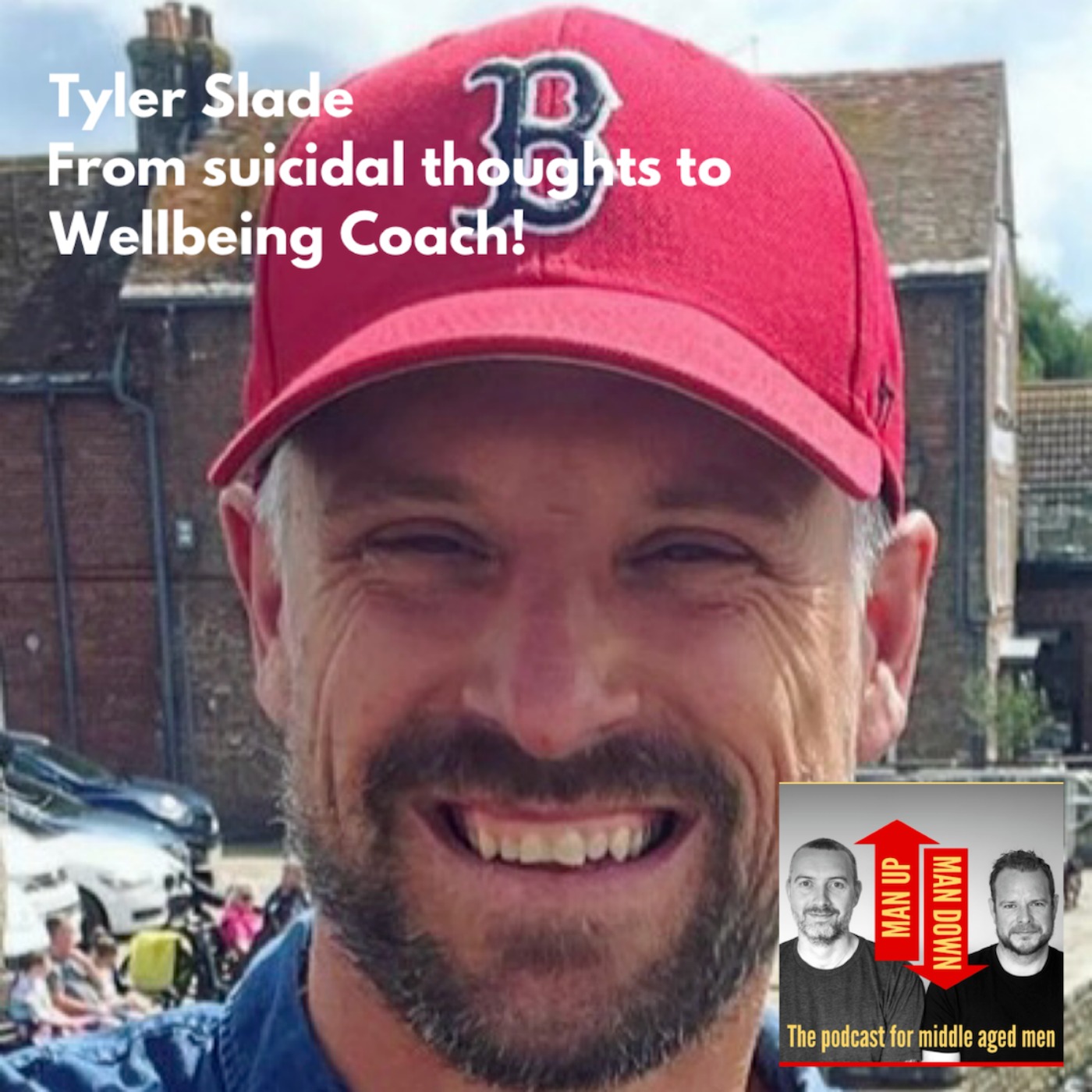
S2 Ep 22From Suicidal Thoughts to Wellbeing Coach
In this episode of "Man Up / Man Down," Tyler Slade shares his transformative journey from experiencing suicidal thoughts to becoming a mentor and guide in mental and physical health. He emphasises the importance of combining vulnerability with proactive action for mental well-being. Tyler's approach is grounded in the principles of community support, curiosity, courage, and consistent effort. He discusses how navigating life's ups and downs, encapsulated in his mantra of 'survive, strive, and thrive', is crucial for personal development. Tyler's personal struggles and experiences add depth and relatability to his insights on mental and physical health improvement.If you are interested in any of his programmes or want to reach out to him, please get in touch via LinkedIn: https://www.linkedin.com/in/tylerslade/ Hosted on Acast. See acast.com/privacy for more information.
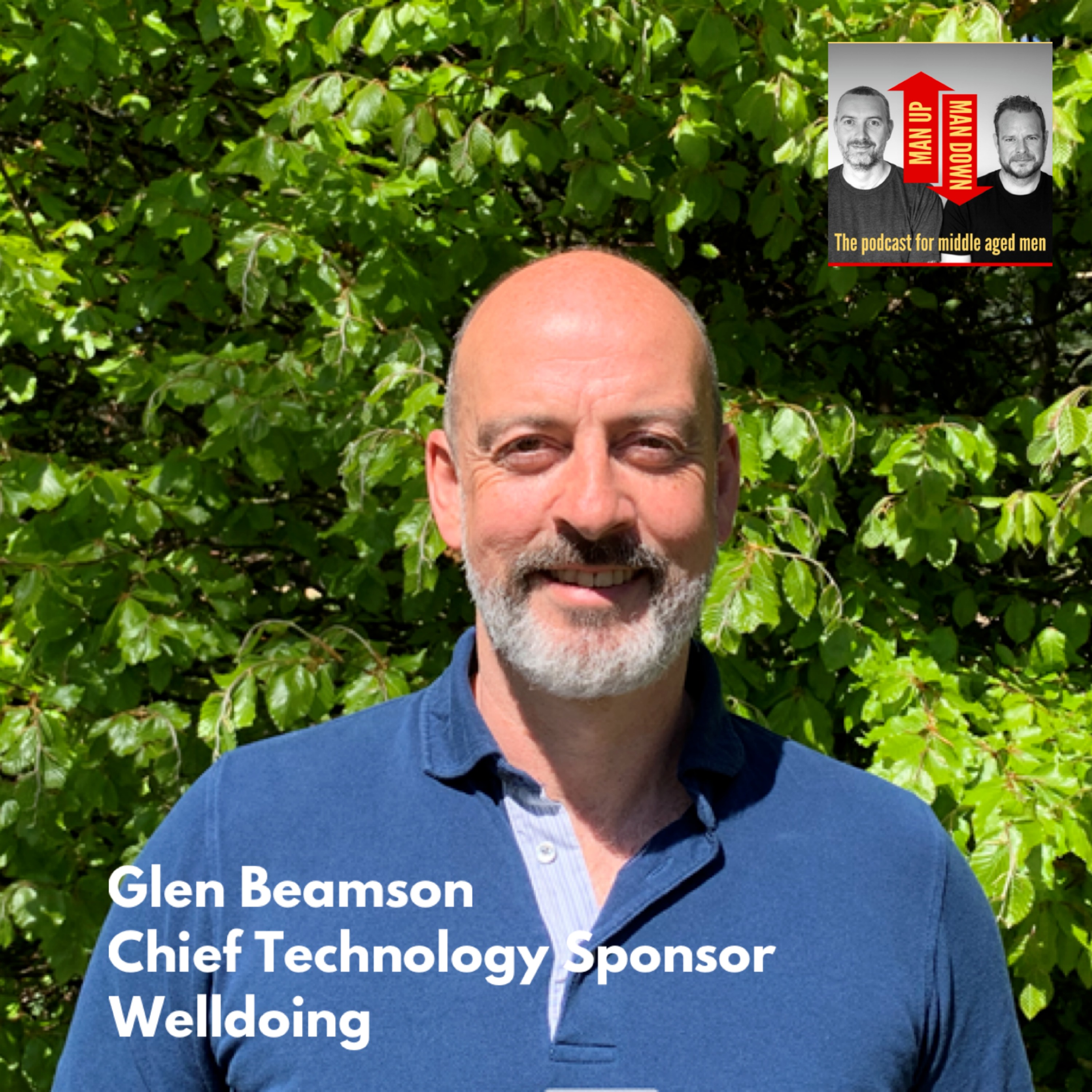
S2 Ep 21Glen Beamson, Chief Technology Sponsor at Welldoing
In this episode of Man Up Man Down, David and Volker host Glen Beamson, the Chief Technology Sponsor at Welldoing, a platform that matches individuals with the right therapist or coach. Welldoing, known for its support of mental health and self-improvement, has been a long-time supporter of the podcast. Glen, with a background in helping start-ups scale through technology and experience in big tech, is also a qualified executive coach with a passion for mental health and self-improvement. An interesting fact we discovered about Glen was his participation in the Desert Ultra, highlighting his adventurous spirit.Glen shares his journey from working in big tech and international roles to seeking a more fulfilling path in start-ups focused on social impact, particularly in conservation and mental health. His move was driven by a desire for direct involvement in socially impactful work, contrasting with the indirect impact of his previous roles in banking and technology.A significant part of the conversation revolves around Glen's unexpected venture into running an ultra-marathon, despite being advised against long-distance running due to his physical build. This experience, driven by a challenge and a sense of proving oneself, reflects a broader theme of overcoming obstacles and setting personal goals.The discussion also touches on societal changes, the importance of having adventures, and the impact of technological advancements on employment and personal fulfilment. The role of AI in therapy and the potential for new job creation in areas yet to be imagined are explored, highlighting the dynamic interplay between technology, society, and individual aspirations.Glen's reflections on his upbringing in a mining community and the impact of industrial closures on his family and community underscore the conversation. This personal history informs his views on the importance of work, community, and the pursuit of meaningful, impactful endeavours.Overall, the episode delves into themes of resilience, the pursuit of personal growth and fulfilment, and the evolving landscape of work and technology. It reflects on the importance of adaptability, the pursuit of passions, and the significance of addressing mental health openly and supportively.You can find out more about our sponsor Welldoing on www.welldoing.org Hosted on Acast. See acast.com/privacy for more information.
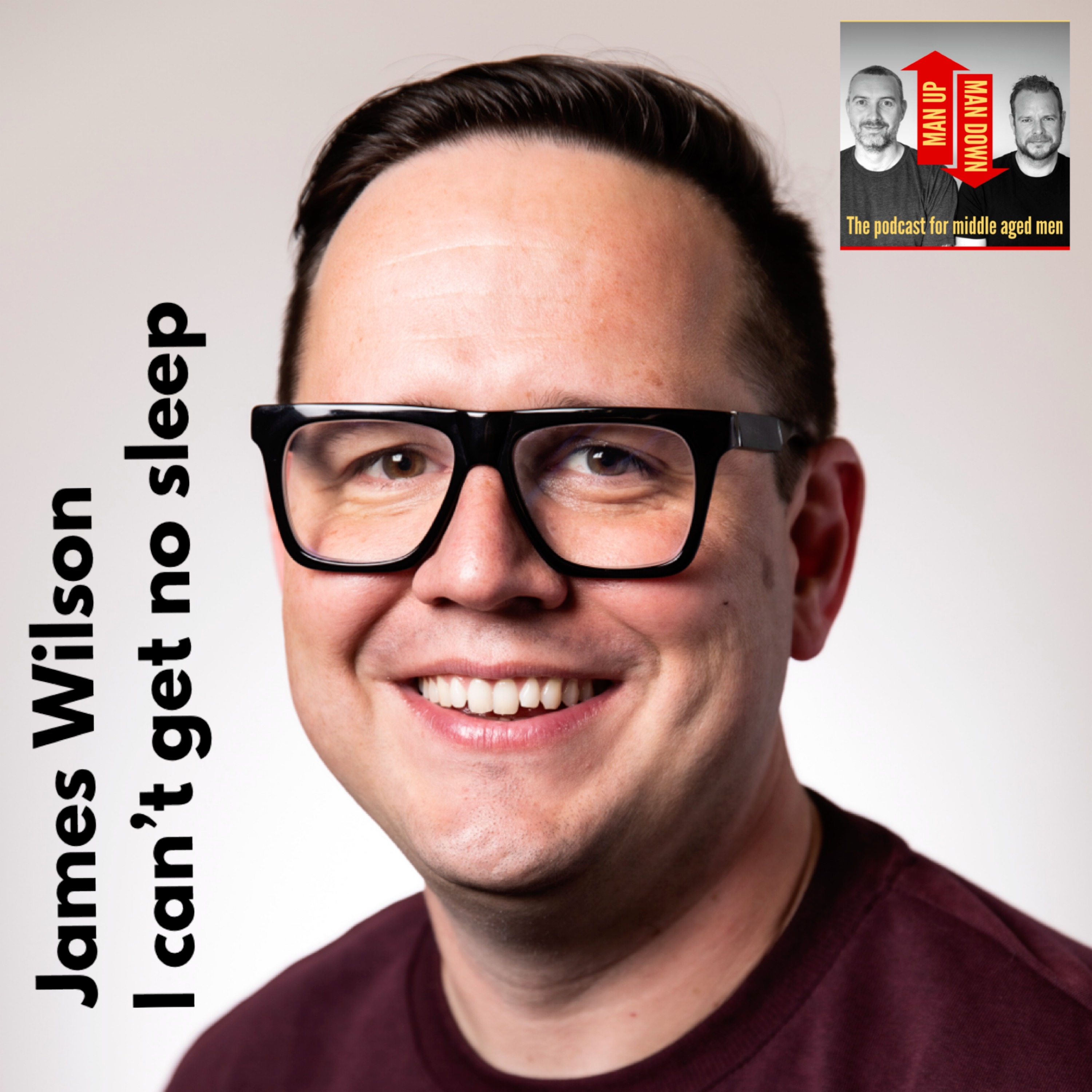
S2 Ep 20Taking the stress out of sleep
James Wilson AKA The Sleep Geek is the host of the podcast taking the stress out of sleep. He founded his company kipmate, to help people understand their sleep better, and understand which tips and tools to try to get the best kip possible. He work with organisations, sports teams and individuals delivering seminars, drop in sessions and kipmate has sort your kip, its digital tool. He has worked with the likes of M&S, AB Worked Food’s, Ernst & Young and West Ham United, contributing to their triumph in the Europa Conference League last season.He is a poor sleeper, whose family made beds and mattresses, and is on a lifelong journey to improve his own, and the world’s sleep.Volker has monitored his sleep for many years, via his phone, smart ring, and his smart watch as well. Yet, James thinks the harder you try, the harder it gets to get good sleep. He often works with footballers, and they do use trackers. However, he prefers to work with people that don’t have a tracker, as the tracker suggest you might have had a good or bad night sleep yet doesn’t really help you as well. It’s not an intervention, it is a measurement tool.James looked at 2 weeks’ worth of data from James and Volker and analysed it.Volker thinks that he is a good sleeper, naps every lunch time and can fall asleep easily, and he has his sleep optimised. David on the other hand thinks that he isn’t a good sleeper at all, using various tools and over the counter medicines to help him sleep. He also wears earplugs as he lives on a main road. David can also not sleep on the spot e.g., naps, or on planes.Further, David thinks he is in the middle of staying up late or getting up early, sleeping on his side or sometimes on his front. Whilst Volker definitely thinks he is a lark (getting up early) and falls asleep on his back, then sleeps on the right-hand side. An online test for indication can be found here.James points out that you should have separate duvets for better sleep. Also, James hardly meets couples with the same sleep type. He also recommends a pillow that helps you with your neck and or your knees. A simple thing to help you with your sleep and neck pain for instance.The three questions James asked us prior to the show was:1. How quickly do you fall asleep?Volker answered that he falls asleep instantly which is a sign of sleep deprivation. David takes 5-30 minutes. That indicates him being a good sleeper.2. How often do you wake up during the night?We all wake up at least 6 times a night, something that comes from our days as cave men protecting us from sable tooth tigers. But we only remember it when we are awake for 5 minutes or more.3. How tired are you around 10-11 am in the morning.You should be awake at that time of the day. But it can be impacted by your routine.Alcohol and stress impacts REM sleep (20%) which is our overnight counselling sessions where we process things that happen during the day. Deep sleep (20%) is more about physical recovery and Core Sleep is about 60% of our sleep.You can find out more about James’ work and get in touch via the following links:@TheSleepGeekwww.thesleepgeek.co.ukwww.kipmate.com Hosted on Acast. See acast.com/privacy for more information.
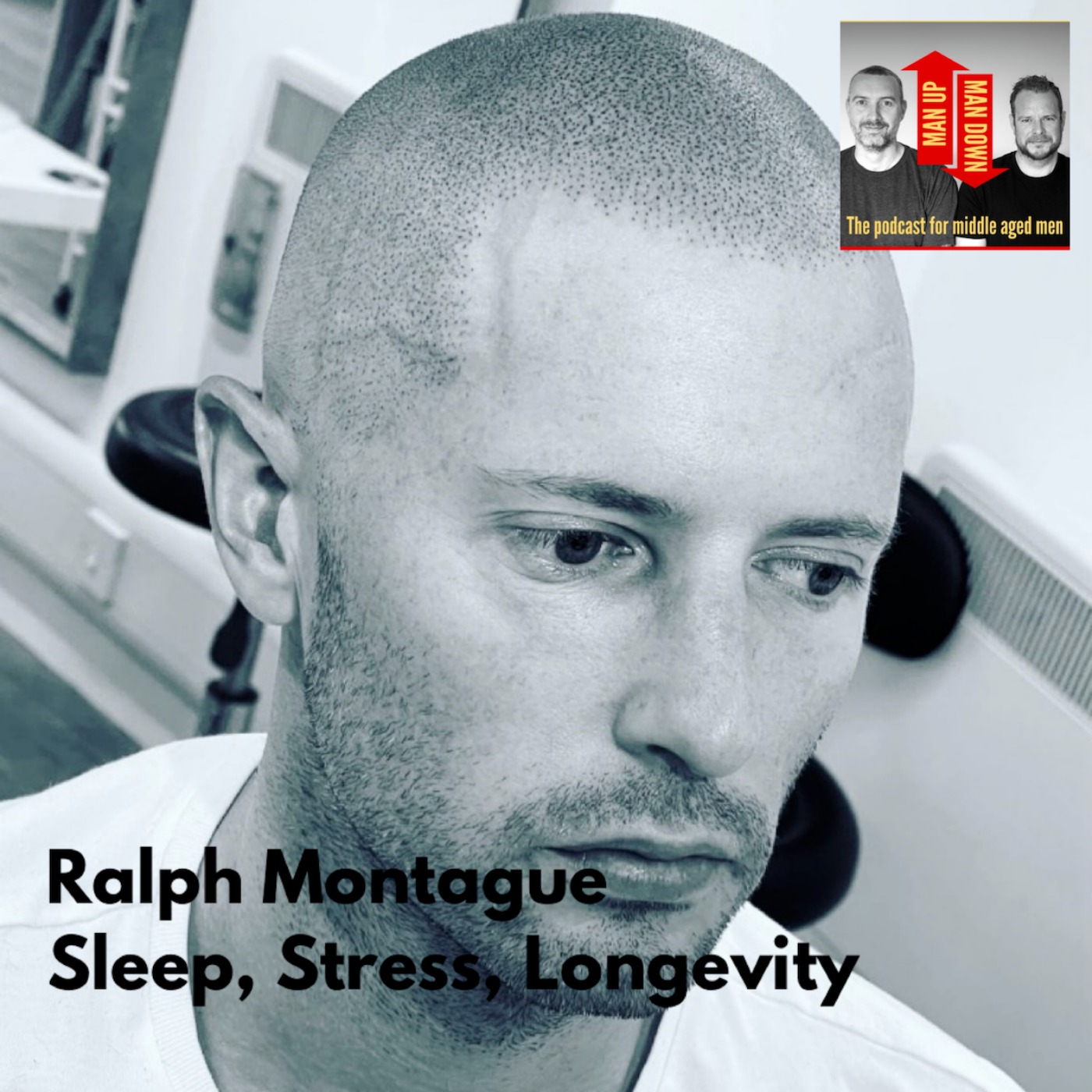
S2 Ep 19Ralph Montague on Sleep, Stress and Longevity
In this podcast episode, host Volker and David, welcomed guest Ralph Montague. Ralph is a longevity coach and founder of the Longevity Clinic. Ralph discussed his work in the anti-ageing industry, a near-death experience, and his evolution into writing self-help books, which gives advice on how we can live longer, with better health.Ralph recounts a traumatic incident where he was attacked in his sleep by his girlfriend's ex-boyfriend, leading to significant head injuries. However, Ralph believes that the knowledge he had gained, aided his recovery even utilized treatments from his previous business in skin micro-needling to help heal his wounds.He shares his transition from investment banking and real estate to opening a chain of anti-aging and longevity clinics in Cardiff, Bristol, and Newport.Ralph noticed that many clients seeking treatment to improve how they looked, as they got older had deeper internal issues, often related to stress.This prompted him to shift focus from external aesthetics to internal well-being, incorporating therapies like hyperbaric oxygen therapy, cryotherapy, and red-light therapy.Ralph describes his personal routine, which includes meditation, exercise, and a strict diet - emphasisng the importance of managing stress, sleep, and overall health. He also discusses his decision to abstain from sex for a period, focusing on his business and personal growth, and exploring the concept of hands-free orgasms, which he has written about.Diet-wise, Ralph maintains a simple, organic diet, with staples like porridge, eggs, and vegetables, emphasizing the importance of healthy eating in longevity. He comments on the impact of inflation on food prices and his philosophy of optimizing life for health and well-being.Addressing sleep and stress, Ralph offers practical tips, including the importance of meal timing, consistent sleep schedules, reducing blue light exposure, and understanding the psychological aspects of stress management. He advocates for a simple, straightforward approach to handling stress, focusing on accepting reality and controlling what one can.As the conversation wraps up, Ralph mentions his books available on Amazon, "Stop Killing Yourself" and "Stop Waking Up Tired," and his upcoming book on stress management. He also highlights his clinic's services, offering sleep and stress workshops for companies looking to optimize employee performance.The episode concludes with Ralph's offer to provide copies of his book to the hosts, and plans for a future conversation to delve deeper into various topics, including adaptogens for sleep and stress management.You can find out more about Ralph on his website or the Longevity Clinic. Hosted on Acast. See acast.com/privacy for more information.
S2 Ep 18A solo episode: Productivity and New Year Resolutions
In this podcast episode, David and Volker engage in a candid and wide-ranging discussion about personal habits, productivity, and the challenges of maintaining New Year's resolutions. The conversation starts with the struggle to maintain New Year's resolutions and the importance of setting realistic goals.David shares insights into his approach of setting goals rather than resolutions, emphasising the value of looking back at past achievements to inform future objectives. Both highlight the significance of personalised strategies, including the adoption of routines that align with individual lifestyles and values. They discuss the importance of flexibility in goal setting and the necessity of adapting plans as life circumstances change.Throughout the conversation, they touch upon various strategies for enhancing productivity, such as time blocking, habit stacking, and the benefits of incorporating exercise and mindfulness into daily routines. They also explore the concept of 'mind fasting' as a way to give the brain a break from constant stimulation.The discussion delves into the importance of not being overly rigid with habits and routines, acknowledging that it's okay to miss a gym session or deviate from a set schedule occasionally. They emphasise the importance of self-care and listening to one's body and mind's needs.Towards the end, they share personal anecdotes and tips for regaining focus and motivation, suggesting that even a brief commitment to an activity can help overcome inertia. The conversation concludes with encouragement for listeners to find what works best for them and to seek support within their community, including the WhatsApp group from Man Up / Man Down.Overall, the episode offers a relatable and pragmatic take on managing personal habits, goals, and the challenges of sustaining motivation beyond the initial enthusiasm of New Year's resolutions. Hosted on Acast. See acast.com/privacy for more information.
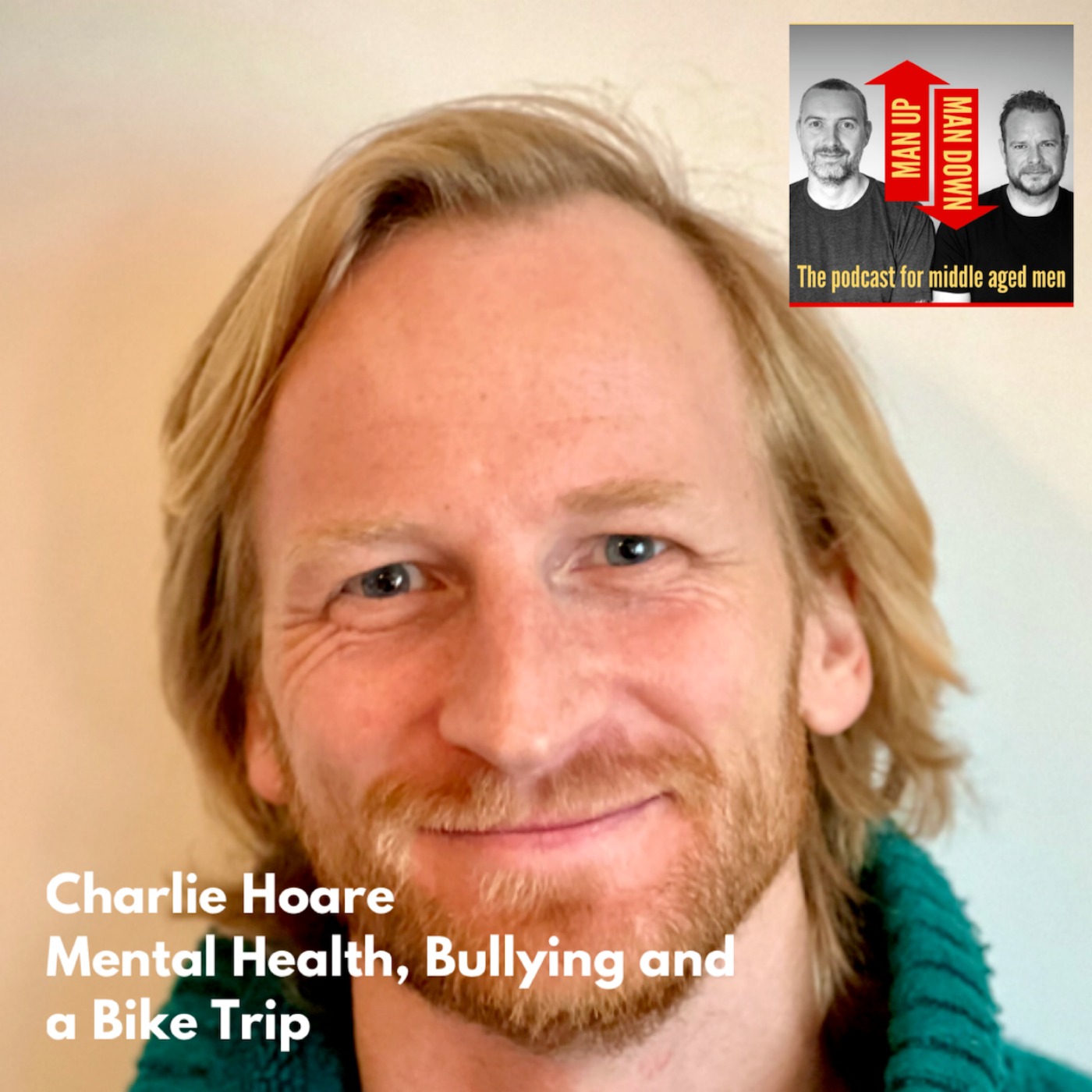
S2 Ep 17Charlie Hoare – Mental Health, Bullying and a Bike Trip
In this podcast episode of "Man Up / Man Down," Charlie Hoare, an executive coach and author, discusses his personal journey dealing with anxiety and depression, which inspired his book on male mental health.Charlie talks about how our parents’ generation had a very different upbringing, with the mantra of “a stiff upper lip” and not really expressing their emotions. Despite having a close, loving relationship with his own parents, Charlie expresses this is not the way he wants to raise his own children.Like Man Up / Man Down, he wants to encourage the next generation to be more open about their emotions and mental health, to further destroy the stigma of discussing these issues.He shares his experiences transitioning from working in the food and drink industry to coaching, focusing on wellbeing and performance.Charlie also recounts his experience of bullying, which had a major impact on his life. This resulted in him reaching out to his bully years later. They met up and Charlie describes how his bully had been holding regret about his behaviour at school.Charlie also reveals how he and his now wife, decided to cycle from Malaysia to the UK. This was despite not really having any cycling experience. Although the early stages of the journey resulted in tension and a few arguments, it ultimately proved a transformative experience that brought them closer together.Charlie says that the epic cycling trip gave him a greater appreciation of kindness in the world – coming across strangers who had little in the way of material possessions but offered food and hospitality when they needed it.He emphasises the importance of defining personal success and adapting to life's challenges, underscoring the evolving cultural understanding of mental health across generations.You can find out more about Charlie on his website https://www.charliehoare.com Hosted on Acast. See acast.com/privacy for more information.
S2 Ep 16Future Men
This podcast episode of "Man Up / Man Down" features Chris Stein, the interim CEO of Father's Development Foundation and Director of Marketing, Fundraising, and Communications at Future Men. Chris has nearly two decades of experience working with at-risk youth, young offenders, expectant fathers, and in the field of men's mental health. The conversation delves into the changing landscape of men's health issues and masculinity.Chris begins by sharing his career journey, starting with his desire to work with young people. He highlights the under-appreciation and low funding in youth services, emphasising their vital role as a bridge between family and school. Chris's early work involved integrating community services into schools, focusing on drugs, alcohol, sexual health, and mental health. He notes the significant overrepresentation of boys and young men in school exclusions and the criminal justice system.The discussion then moves to Chris's work in youth offending services, where he dealt with young people exhibiting multiple and complex needs, often leading to aggression and violence. He emphasises the importance of understanding the underlying fear and unmet needs driving these behaviours. Chris also talks about the importance of vulnerability in young men, challenging the limited emotional expressions traditionally allowed for them.Chris further discusses his work at Future Men, a London-based charity supporting boys, young men, and men during transitional life moments. He outlines various programs they offer, including the Boys Development Program for skills like communication and conflict management, and programs for fathers that focus on practical parenting skills, mental health, and the societal role of fathers.A significant part of the conversation focuses on masculinity. Chris shares insights from focus groups with boys and fathers, revealing traditional norms among younger groups and a shift in priorities among fathers. He notes the impact of cultural, religious, and socioeconomic factors on perceptions of masculinity.The podcast touches on the importance of statutory paternity leave and mental health screenings for fathers, highlighting the structural challenges men face in fulfilling their roles as parents. Chris argues for a more inclusive and supportive approach towards fatherhood, emphasising the importance of corporate social responsibility in supporting charitable organisations like Future Men.Chris concludes by outlining Future Men's philosophy, which centres around seven positive characteristics of masculinity: empathy, curiosity, nonviolence, inclusiveness, resourcefulness, resilience, and reflectiveness. He stresses that these traits are essential for all individuals, not just men. The episode ends with Chris inviting listeners to engage with Future Men's work and attend their events for further discussion and involvement in these critical issues.You can find out more here: www.futuremen.org Hosted on Acast. See acast.com/privacy for more information.
S2 Ep 15Finding yourself, the real me
Ian Sanders runs his storytelling, coaching and creativity/ work life design business. He’s the author of five books on working life including his latest, 365 Ways To Have a Good Day. Ian is resolutely independent, curious, open-minded, and rebel-spirited, and that’s led to a pretty unconventional career. It’s also given him a unique perspective on what makes people and organisations tick.His current gigs range from training leadership teams at global organisations in the art of storytelling, to being an instructor for Simon Sinek’s Optimism Company, where he runs his Redesign Your Work Day class.He starts with telling his story how he jumped into a lake as he finished a conference in Bavaria, Germany. Ian says that reaching middle age is a turning point, stepping into the Real Me. He describes how he was feeling overwhelmed with his workload. But instead of jumping on the wi-fi to check his email, he jumped into a lake instead.This turned out to be a life-changing moment for him, realising that he should and wanted to do the things that really mattered in his life as opposed to things that we were told to do or what would be within the “norm“.This lead to him getting a tattoo of the lake, his first one at 54.You can find his talk here.It‘s an honest and raw story, resonating with many leaders in organisations, building trust and connection. As a storyteller, Ian is empathetic, honest, and raw and shows his emotions. Something we have lost a little bit in today‘s society. This resonates with both David and Volker, and we are sure with most middle-aged men.He has been depressive and he finds that for many years ago he couldn‘t talk about it. However things have changed. His therapy was sharing his story, influencing others, and giving others the validation to do their own thing.Volker speaks about the poem ‘This Be the Verse’ by Philip Larkin. “They fuck you up, your mum and dad.“We talk about the age-old belief that men “shouldn‘t cry or show their emotions.” We discuss that it is still a stigma that “boys don‘t cry” but we should be encouraged to show emotions to our children but also ourselves.As David says, you are “papering over the cracks“ by ignoring emotions and teaching the wrong things.Ian suggests that he went back to being a bit more like he was in his teenage years. That resonates as you start losing yourself in the next stage in your life, when you start following that career path which is often forced upon us.And mid-life often gives us the realisation and means to be the person we wanted to be all along. Whether that is in relation to tattoos, or pure fulfilment of our inner needs.If it matters, make time for it – that‘s Ian‘s mantra. Whether that is the coffee in his local coffee shop or being present with the kids. Ian, similar to Volker has a gratitude journal, focusing on the positive things in his daily life.You can find Ian on Instagram at @iansanders and www.iansanders.com. Hosted on Acast. See acast.com/privacy for more information.

S2 Ep 14A life with ADHD
Caroline Williams is a medical journalist, who has written for a range of mainstream publications and medical journals, including The Atlantic, the BBC, The Boston Globe, The Guardian, New Scientist and The New York Times.She is also author of Move!: The New Science of Body Over Mind.However, David discovered Caroline after reading her article for the New Scientist, What’s behind the recent explosion in ADHD?. Not only was it very well written, but David was able to relate to the story behind the article – where Caroline had been diagnosed as having ADHD in her 40s.While this led to some lively discussion between David and Caroline, Volker got completely lost as the conversation jumped around so much (which David was certainly unaware of – a great example of the difference between a neurotypical and neurodiverse brain!).Through her career as a medical writer, writing about focus and concentration, and often finding herself distracted, Caroline realised she might have ADHD herself – receiving an official diagnosis at the tender age of 48.She was often told at school and by her parents that she was overactive or couldn’t concentrate. Now that we, as a society, started talking more about it, she got more support to look into it.Caroline went to the New Scientist to write about ADHD. She wanted to investigate whether, as some journalists have claimed, that diagnoses are rocketing due to private diagnosis, where it’s in the organisation’s financial interests. However, Caroline’s research has revealed that we are still under-diagnosing in the UK.Volker still doesn’t understand ADHD due to lack of experience, but enjoyed David and Caroline having such an animated conversation.Both Caroline and David just got on with life and what was thrown at them, thinking it was normal that certain things just take a bit longer. Caroline compared it to getting glasses when you suddenly realise that the world you are living in is blurred and that buildings have straight edges. Caroline is now on a test for medication to help her with ADHD.For both it’s difficult to judge how long a piece of work might take; everyday things like parking and remembering where you parked, can be a challenge. Or supermarket shopping can be challenging too, resulting in increased stress.They share a lot of tips on how to organise themselves. Whilst Volker is super organised, this adds another level of organisation even for him.As Caroline points out, don’t beat yourself up for not doing everything 100%. It’s ok that there are things that might not work every time, and that‘s ok. Accepting your brain is different to a neurotypical person.There is also a quicker route to get an ADHD diagnosis. Go to your GP and ask for a referral under the NHS right to choose.And if you want to get in touch with Caroline please reach out to her or want to read or buy her books, please visit www.carolinewilliams.net or follow her on Instagram @carolinewilliams_science Hosted on Acast. See acast.com/privacy for more information.
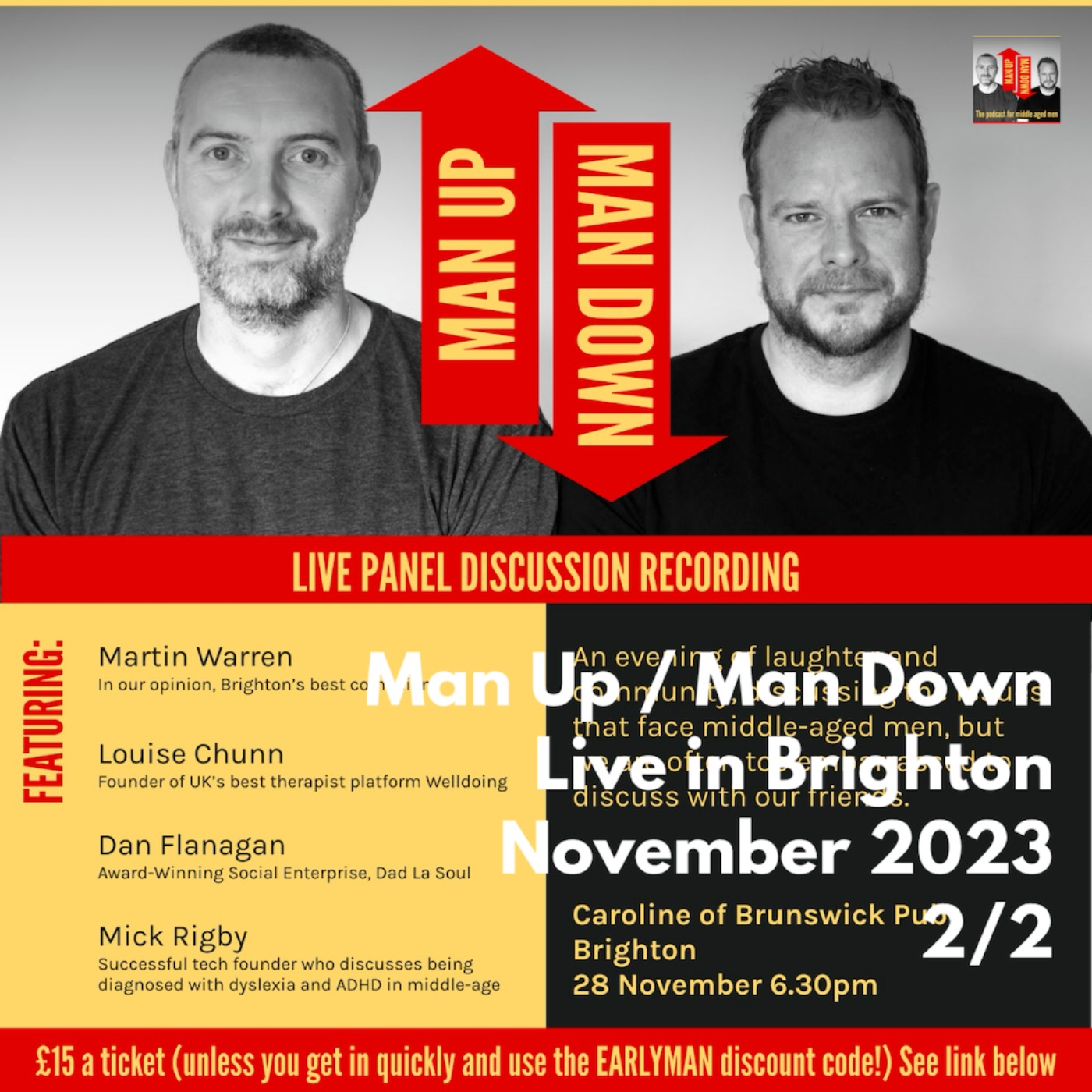
S2 Ep 13Christmas special: LIVE recording part two
This is the second part of our live recording, which took place in Brighton at the end of November.Our panel included Louise Chunn, CEO of our sponsor Welldoing, Stewart Cumming, head of operations at Dad La Soul and Mick Rigby, CEO of Yodel Mobile (who recorded a great episode with us in the first season, discussing his dyslexia and ADHD diagnosis in his 50s).We weren’t expecting so much engagement from the audience (which we were absolutely delighted with), so apologies if the audio isn’t as clear when it comes to audience discussions – this will certainly be improved for future events.The audience expressed a range of views and charged the debate.These were the views of individuals and not necessarily ones that represent Volker and David, but it was clear that there is a lot of confusion about what exactly a man’s role is in 2023/24.Topics that were discussed were:· Why do men not talk as much as they need to?· Do men still feel weak discussing their vulnerabilities?· Is it a weakness to discuss vulnerabilities?· What is the role of employers in helping men and women with mental health support?· How easy is it for an employee to raise concerns about their mental health or neurodiversity issues?· What role does social media play in causing confusion in the role men play in modern society (should we be more masculine, more vulnerable, a better financial provider, provide more emotional support)?· What emotional support do we expect from our partners as “traditional male/female roles” become blurred?· What impact did the pandemic and lockdown have on us?· What responsibility do we need to take for our own mental health?A big thanks again to our sponsors Fat Fish Digital Infigo and Welldoing and everyone that took the time and money to join us for the event.Keep your eyes peeled for the next one in 2024! Hosted on Acast. See acast.com/privacy for more information.
S2 Ep 12Christmas special: LIVE recording part one
Christmas special: LIVE recording part one – a roundtable discussion on what it means to be a man in 2023/24This special episode is the first part of our live recording, which took place in Brighton at the end of November.Our panel included Louise Chunn, CEO of our sponsor Welldoing, Stewart Cumming, head of operations at Dad La Soul and Mick Rigby, CEO of Yodel Mobile (who recorded a great episode with us in the first season, discussing his dyslexia and ADHD diagnosis in his 50s.During Louise’s keynote address, she discussed the changing landscape of men’s mental health and how Princes William and Harry had driven the conversation forward by discussing their mental health challenges.She also praised the work Volker and David had done in encouraging men to talk through the podcast.We weren’t expecting so much engagement from the audience (which we were absolutely delighted with), so apologies if the audio isn’t as clear when it comes to audience discussions – this will certainly be improved for future events.The audience expressed a range of views and charged the debate.These were the views of individuals and not necessarily ones that represent Volker and David, but it was clear that there is a lot of confusion about what exactly a man’s role is in 2023/24.Topics that were discussed were:· Why do men not talk as much as they need to?· Do men still feel weak discussing their vulnerabilities?· Is it a weakness to discuss vulnerabilities?· What is the role of employers in helping men and women with mental health support?· How easy is it for an employee to raise concerns about their mental health or neurodiversity issues?· What role does social media play in causing confusion in the role men play in modern society (should we be more masculine, more vulnerable, a better financial provider, provide more emotional support)?· What emotional support do we expect from our partners as “traditional male/female roles” become blurred?· What impact did the pandemic and lockdown have on us?· What responsibility do we need to take for our own mental health?A big thanks again to our sponsors Fat Fish Digital Infigo and Welldoing and everyone that took the time and money to join us for the event.Keep your eyes peeled for the next one in 2024! Hosted on Acast. See acast.com/privacy for more information.
S2 Ep 11An ultra run and prostate cancer
Another first for Man Up / Man Down. Our first returning guest.Andy Delderfield runs the Alcohol Free Runners Facebook community and also coaches those interested in the alcohol-free lifestyle, but need one-to-one support.Andy came on the podcast last year to tell is about his amazing transformation from booze-guzzling rugby fanatic to alcohol-free (4 years and counting), vegan, ultra runner.Sadly, at the time, Andy had also been recently diagnosed with prostate cancer. But rather than taking it easy, while receiving intensive treatment, Andy decided to enter a 250km multi-day, ultra event. Running across the Namibia desert.Andy explained that it had been an eventful year, and that it had only been two weeks since his diagnosis when we recorded the first interview, so he had still been processing the diagnosis.Andy spoke about the range of emotions that he’d felt at the diagnosis: fear and uncertainty; confusion anger.He said one of the issues was that he’d gone for a check up to see precisely how healthy he was after many years of “clean living.”As expected, his blood pressure, cholesterol and all other health indicators were fine. However, the tests revealed the possibility of prostate cancer, which proved to be correct.Andy said that men do need to be a lot more proactive about getting screened, particularly as men don’t visit the doctor as much as women; for a variety of reasons.However, he said his experience as a Positive Psychology Coach helped him through – sticking to the advice he’d give to his clients when they’re overwhelmed.This was to “control the controllable.” Obviously, he couldn’t control what was going on in his body lots and lots of different emotions that kind of came through um when I got that diagnosis. But he could control how he reacted.Andy said he was overwhelmed with information, which goes into a lot of worst-case scenarios. Essentially, he was left with two options – have the prostate removed (which would require invasive surgery) or targeted radiotherapy.While the radiotherapy had its own side effects, this was the option Andy went for – mainly because he’d already entered the Desert Ultra and didn’t want his treatment to rule him out!Andy then told us about the Desert Ultra. Despite training in Spain (where he lives), Andy said the heat impacted him more than he was expecting and thought he might have to give up mere kilometres into the race.He said that the negative thoughts entered his head – that he shouldn’t be there, that he didn’t deserve to be there.Thankfully, after intense rehydration, Andy got past that first check post and completed the race.To hear the full account of Andy’s hugely inspiring battle against cancer and the blistering heat, check out the episode.He is also raising money for Prostate Cancer UK, so please donate here.You can also see his brutally honest video diaries in his Facebook group and Instagram account. Hosted on Acast. See acast.com/privacy for more information.
S2 Ep 10Andrew Waddell - Finding Purpose in Midlife
After 20 years in advertising agencies working with lots of well known, and highly demanding, brands, Andrew suffered severe burnout. Andrew re-found his direction and purpose in life through therapy and coaching. This resulted in him leaving the corporate world, taking a Masters in Organisational Psychology and qualifying as an Associate Certified Coach with the ICF.From there he set up The Midlife Coach focusing on supporting men struggling or stuck in midlife. For the past three years he's worked with a wide range of midlife men. This includes those on the verge of depression, desperate to rediscover the joy in life, to energetic self-starters looking to build their own meaningful legacy through work and family - and everything in between.They come from all backgrounds and professions with very different needs and goals. What unites them is that they have reached the realisation that they are stuck in a rut and cannot break out of it alone.Andrew speaks about his background in advertising which led to a breakdown, with him crying on the kitchen floor, going through therapy, dealing with grief and eventually discovering what he wanted to do as a new career.He said that the main takeaway is The massive learning was that he could change his life. Comparing life to a swimming pool, he says you cannot change where you jump in, but you can swim down the lane and change direction.He set up his own coaching business in order to help people changing their life. Our generation starts figuring out what the term ‚being a dad actually means. Our fathers didn‘t show emotions or spoke about what they wanted in life necessarily. As a result our generation is figuring out what it really means to be a dad that is in touch with our emotions – learnings that we can pass on to our children to be better parents than we were.We discuss legacy and how even organisations today try to be more ‘wholesome‘ and make a difference. That legacy seems to be a common theme in middle aged men.We also discussed how there is a trade between any role that we take up – if we want to spend more time with our children, that might require a financial sacrifice. However, if we’re working all the time, to provide a better life for our family, that means we might not necessarily see them.It‘s not only about balance in life but more about having control and being choiceful of what we want to do with our time. However, it‘s about making a conscious choice rather than compromising.Burnout, according to Andrew, comes from reactivity and losing that control in life.David quotes Benjamin Disraeli, that: “Action may not always bring happiness; but there is no happiness without action.”As Andrew says, we shouldn‘t feel regret of things we did in life, and we shouldn‘t be paralysed by our dreams. In coaching he can utilise his experience and help others to get unstuck, and understand mid life. Mid Life is about making decisions and taking control back in your life. And often, time is all kids need from us.You can find Andrew as the Midlife Coach on Facebook, LinkedIn or www.midlife-coach.co.uk Hosted on Acast. See acast.com/privacy for more information.
S2 Ep 9Stuart Lotherington - Positive Mindset and Endurance
Stuart is someone that David has known for more than a decade. They met when David joined East Grinstead Triathlon and Stuart was membership secretary.At the start of the training season, the club offers a series of talks on how to improve performances. During David’s first season Stuart delivered a talk on how your mindset can impact your performance.For example, Stuart described a situation where you turn up to a race and the weather is awful. The natural reaction for most competitors is for their heads to go down. However, Stuart said, this can give you an advantage.If you accept that you can’t change the conditions and take into account that it’s put your fellow competitors into a negative mindset, then it puts you at an advantage. In short – it’s not what life throws at you, it’s how you react to it.However, it wasn’t until a few years later that David discovered that Stuart’s profession wasn’t in sports performance but in sales performance, as the managing director of sales consultancy SBR.Stuart says that while he is now a highly demand consultant, the majority of learning came from being in the sales trenches.Stuart started his sales career, some might argue at the lowest level of the sale world, by knocking on residential doors selling aerial photographs of people’s homes. He stayed there for over 10 years working his way through the ranks to be the International Head of sales.Now he demystifies the process of business development by working with organisations (ranging from Google to TikTok) and assessing the most appropriate sales process for their respective audience.However, Stuart has also taken on a range of endurance challenges such as a multi-day marathon endurance race across the Sahara (the Marathon des Sables), a race to the North pole and numerous Ironman triathlons.David said that he has always felt inspired by Stuart’s passion for adventure and new experiences, which this year alone have included a biking trip round Cuba, a road trip round Spain. In short Stuart never seems to stop!David asked where this positive mindset came from – was it something he developed through his sales experience, or did he always have this approach to life?Stuart says the first time he became aware of this was when he was booked in for his driving test - on Friday 13th. Stuart said that as soon as he saw the date, he thought “I’ve got this”.After passing the test, the examiner mentioned that he was surprised Stuart turned up, as so many had cancelled due to the date. Stuart said this approach helped him a lot when he entered the world of sales. Stating that he realised (and the data supports this) that many salespeople give up after the first couple of approaches. So, when you’re prepared to put in a little more effort (such as making extra prospecting calls), you automatically put yourself ahead of the field.Stuart said this was the approach then transferred into running and triathlon.[...]If you want to reach out to Stuart, you can do that via his LinkedIn: https://www.linkedin.com/in/stuartlotherington/He also recommends taking a look at some of SBR’s content on goal setting. Hosted on Acast. See acast.com/privacy for more information.
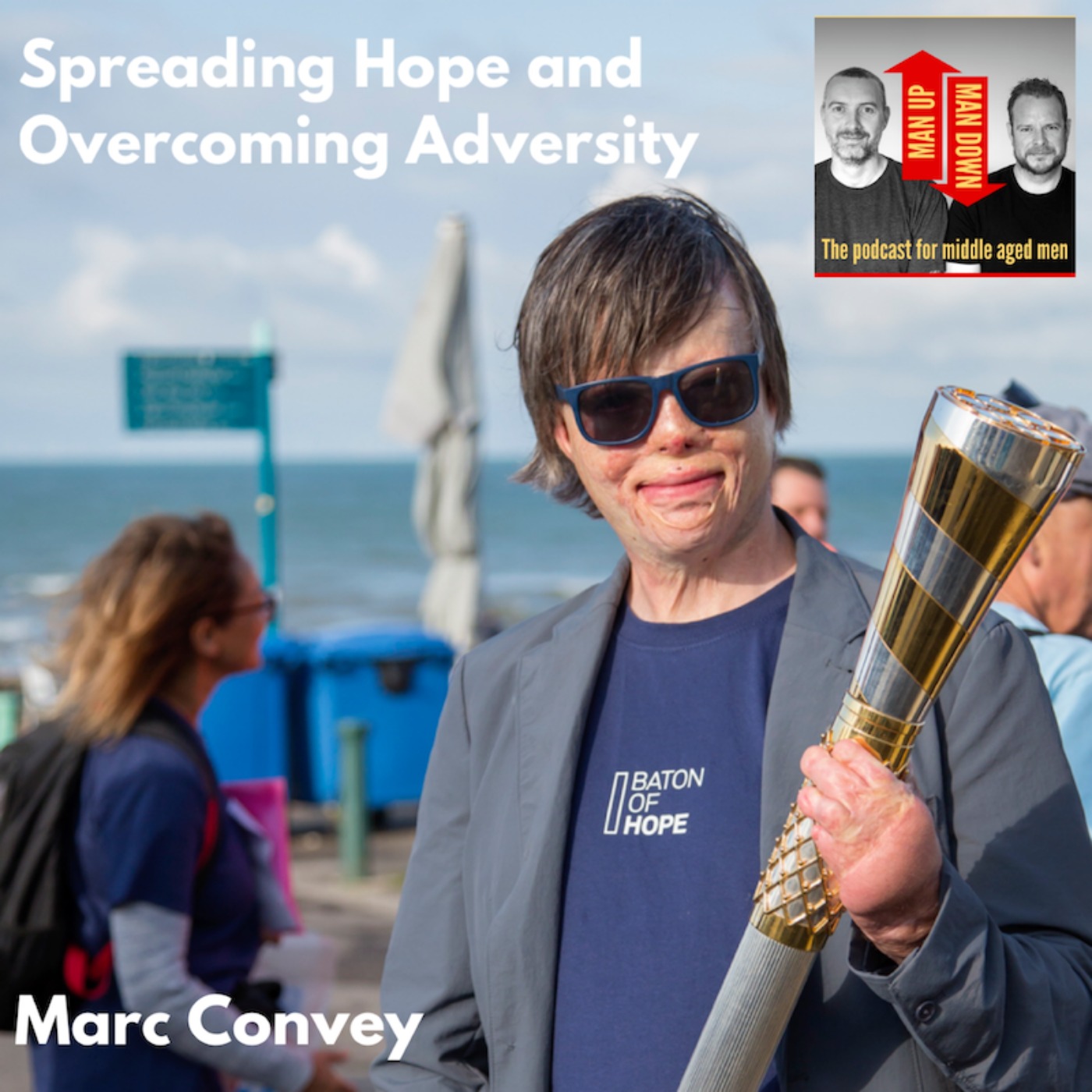
S2 Ep 8Marc Convey
Marc Convey’s story is one of the most inspiring tales you are likely to hear – it certainly was for us. Despite suffering life-altering injuries from a devastating fire, at the age of 14, when he was given a 3% chance of survival Marc's strength and determination have turned him into a beacon of hope worldwide.He shares his story and insights as a powerful speaker, promoting mental health, wellness, and resilience when chasing your dreams. Marc is also an accomplished entrepreneur and creative professional, bringing his unique talents to various industries. Discover how his passion and expertise can help you achieve your goals.Back in 1992, Mac was visiting family in Ireland. Despite the age old warning of not to play with matches, Marc accidentally started a fire in his Uncle’s garage, which contained petrol.Due to the remote location of his uncle’s house, and a severe storm, Marc was lucky to make it to hospital. But he continued to beat the odds,Suffering significant injuries, painful dressing changes every 2 hours and being unable to see due to bandaging Marc refused to give up. Marc says that there were two things that carried him through – the support of his mum, who was his primary carer for 5 years – and an incredibly stubborn attitude.When he finally well enough to fly back to London, he was put into a specialist burns unit with a doctor who Marc formed a bond with (describing him as a ‘mad professor’). Despite being told that it would be at least year before he could return to school, Marc was determined not to drop down a year.And he didn’t.He outright refused to give up, and adapted as best he could, which included him learning to write with his left hand. Despite suffering horrendous trauma, Marc states that he has never suffered from post traumatic stress (PTSD).Marc hasn’t had any nightmares, and he wants to use his book to raise awareness that trauma doesn’t have to define you; we shouldn’t put people into categories. What helped him was mindfulness which he discovered through hypnotherapy.Mark’s parents were shocked when he announced that he wanted to leave his school, which had made many adaptations for him, as he flet it wasn’t healthy to “live in a bubble”. He went to a Sixth Form College where he didn’t know many people, despite the fact that he was wearing a clear plastic mask to protect his skin.Mark surprised his parents further by announcing that he wanted to go to University, despite being told just a few years previously that he’d probably need 24 hour care.But Marc he wanted to live his own life and set his own goals. [...] Fast forwarding to today, he is writing a book about his story and talks about positive mindset; sharing his experience and journey to find himself for the past 30 years, resulting in him now having the right mindset and confidence to help others.The stage of mid-life transition and Covid made a lot of us think about what we really want in life and what is important to us.We will have Marc back once he wrote his book and hopefully join at one of our next events.You can find out more about Marc and reach out to him on LinkedIn: https://www.linkedin.com/in/marc-convey/ or via his website www.marcconvey.com (coming soon). Hosted on Acast. See acast.com/privacy for more information.
S2 Ep 7Teenage kids and family rants
This is a topic that David and Volker have discussed quite a bit in private, so felt it was finally time to record a conversation for the podcast. We discussed how you deal with your “babies” becoming young adults.David’s youngest child starts secondary school in September, so he’s busy checking out local schools. It’s a stark indicator that the children are growing up fast. Volker’s sons are now at secondary school.We discussed how once your children start high school, they are exposed to a whole range of new influences. However, there are things we got up to as teenagers but wouldn’t necessarily want our children doing. Volker says that he was already drinking and smoking at the age of 15.We also discussed, how our children grow up differently to how we grew up. Volker says his oldest exercises 5-7 times a week and doesn’t show any interest in unhealthy activities such as smoking. Is this because Volker’s sons see him exercising regularly and therefore view it as “normal”? Neither Volker or David’s parents took part in the activities they have (such as marathons and triathlons).Volker also says he talks more with his boys than his dad ever talked to him, so therefore has a much closer relationship. We also discussed that while there seems to be a greater focus on health and exercise, there can be greater on boys to have “the perfect physique” due to social media.We also discussed how porn is a lot easier to access than it was in pre-internet days. David said that when it came to his daughter, he was concerned about sharing intimate pictures in the future, with a boyfriend, which could then be used as “revenge porn.”Volker talks a lot about his parenting style and they both speak about how proud they are of both their children, forming bonds and giving them enough space to learn from their own experience. And every child is different and unique, which is super important to remember – so what is a suitable school for one child may not be suitable for another.They discuss whether they are too harsh to their children, seeing as they have grown up in a more privileged situation than David and Volker did. However, both agree that their children need to learn that items, such as iPhones need to be earned.However, we also discussed how phones give our ‘babies’ freedom as we can keep tabs on them through their phone location and talk to them at any time.Sign up for our LIVE EVENT in BRIGHTON on the 28th of November. Hosted on Acast. See acast.com/privacy for more information.
S2 Ep 6John-Paul Davies – Psychotherapy, middle aged men, burnout, and life crisis
John-Paul Davies is an experienced therapist running a full-time private practice from his home in Cobham, Surrey. However, he made this change having worked as a solicitor in the City of London for the first half of his career. While working in the legal profession, John-Paul began experiencing severe anxiety, so decided to seek therapy. Discovering the positive effect it had on him, John-Paul decided to train in psychotherapy and leave his law career behind. John-Paul explained that there is greater awareness of mental health, and the symptoms associated with it, which means “therapy has less of a stigma and is more in the public consciousness. Which means more and more men are seeking therapy. However, the question remains, can you sustain the same lifestyle as a lawyer? The golden cage is something we have discussed with several of our guests – who have left a well-paying career to find something more spiritually rewarding. We discussed the injustice that therapy, nursing or most public services jobs are paid poorly compared to other careers, that mean a lot less for the greater human good. John-Paul said that status, money and acquisition of resources are the primary drivers we’ve had since the development of mankind. However, these drivers, aren’t as necessary for survival in modern society. This is one of the reasons why an increasing number of middle-aged men are coming to therapy. The constant hustle to be better than others, chasing the next ‘high’. John-Paul said that rather than reacting to external sources, therapy helps you to understand yourself and find one’s true meaning and purpose in life. We continued to discuss how men form opinions based on societal pressure and how therapists can help men in their middle age (and anyone) with an objective opinion. We also discussed the fine line between, banter and bullying and how banter can be damaging to mental health. Volker mentions a scene from the Tom Hanks film ‘Philadelphia’, where the main character says he changed his decision to come out as gay, after his senior colleagues made homophobic jokes in the sauna. John Paul has published a self-help book, ‘Finding a Balanced Connection’ and has written about a range of wellbeing and psychological topics for various magazines and websites. John-Paul also now has a YouTube channel and podcast, where he discusses how he made his career change, what life is like as a therapist and advice on a range of mental health and wellbeing issues. If you want to find out more about John-Paul, click on the links below: LinkedIn: https://www.linkedin.com/in/john-paul-davies-30721330/ Website (contains social media links): https://www.thistrustedplace.co.uk/ YouTube: https://youtube.com/@JohnPaulDaviesTTP?si=1FJYkKV2hOzQ2IHA Podcast: https://www.buzzsprout.com/2067601Link to our LIVE EVENT in BRIGHTON on the 28th of November. Hosted on Acast. See acast.com/privacy for more information.
S2 Ep 5Talkclub
This was a special episode as it was the very first time David and Volker had recorded an episode in the same room. But we also had four guests.With us were Nathan and Gavin who run Talkclub in Haywards Heath. Talkclub is a about getting men together to talk and listen. This is an organisation that was set up (by another Gavin) after one of their friends committed suicide. Often, suicide can be prevented by simply talking. Of course, there are bigger issues and more underlying issues that play a role, but if men just store things up and don’t talk about their issues, then this isn’t helping their mental health at all.We were also joined by Adam and Chris, two regular Talkclub members. Obviously, we don’t discuss any private issues they might normally discuss. Volker attended a session before, where he and others really opened up about things. However, our mission was to showcase how the session works, why Talkclub is beneficial and to remove a barrier of anyone attending any of the Talkclub sessions around the country.If you don’t have Talkclub in your town, it’s easy to set up your own. You find all the information on the website www.talkclub.org – including a TED talk from one of the founders.When the sessions happen, it is all about sharing how well you are feeling, between a zero and a ten. Volker reflected on how he opened up in front of some random blokes. Having a safe space where you can share anything good and bad that happened.Chris and Adam were very kind to share their experience. They know each other well and are neighbours, and that’s not a problem. Also, they share things at the club rather than burdening their partners with problems they have, which means it can take pressure off a relationship.Both Chris and Adam explained that the hardest step was pushing yourself out of your comfort zone and taking that step through the door. And while getting things of your chest is a form of therapy, Chris and Adam explained that they had become much more mindful and attentive listeners in all aspects of their lives.Nathan explained that when the ‘universal group’ speaks about a big change, that’s when things usually change for men, and of course women as well. Whether that is the first child, or for all of us lockdown, which could be classified as a trauma for everyone if you wanted to see it that way. The uncertainty it created for everyone has a huge impact.But it’s not about comparing oneself to others but to support each other. It’s not about trying to give advice to someone but just letting someone know that you have listened and “heard” what they are saying. Talkclub is a place where you can find a community to talk and listen. You are part of it, but there is no competition or pecking order. It’s also free, whilst for a therapy session you have to pay. It’s about putting more tools in your toolbox to better cope with the everyday stress of life.Please check out www.talkclub.orgIf you are in the Haywards Heath area, please contact Nathan or Gavin via https://www.theunsaidspace.com/talkclub they meet on Wednesday nights. Hosted on Acast. See acast.com/privacy for more information.
S2 Ep 4Ruth Devlin - Men....let's talk menopause
Ruth Devlin's career in the health and wellbeing sector started over 30 years ago as a registered nurse, training in Edinburgh. She is passionate about taking a holistic approach to health, which is reflected during talks or when giving treatments as a reflexologist. She founded Let’s Talk Menopause in 2012 and works across all sectors providing informative talks. She is the author of a book entitled Men…Let’s Talk Menopause and regularly contributes on a variety of platforms, including radio & various podcasts. Menopause is when women stop having their menstrual period, and technically begins 12 months after their last period. Essentially what happens is oestrogen levels decline leading to an imbalance of hormones. There is a hormone replacement therapy but that’s not for everyone. There are 34 symptoms for the menopause, from sweating as though you have just come off a squash court within a few minutes (which is obviously highly embarrassing women if it happens in a public place, such as your place of work), to feeling more emotional. However not all women suffer the same symptoms and they can differ in severity from one person to another – for example, some women don’t have any hot flashes at all. It can also affect your tissues and therefore your vagina as well, resulting in less interest in sexual intercourse. That’s why Ruth wrote the book, which Volker has now read in preparation what might be coming his or any men's way. The psychological impact of menopause cannot be underestimated. Ruth says its integral to be sensitive and not make fun of your partner when she’s experiencing symptoms. Showing understanding to a partner is important at any point, but particularly when the hormones are in imbalance. From a workplace perspective, Ruth said companies need to have an inclusive culture to open the conversation about menopause. Many women are still at work aged 45-60 and additionally they might have older parents, teenage children whilst trying to keep their level of competency. This can prove a huge challenge, and workplaces are encouraged to support women. There are too many stigmas associated with menopause and for women under 40 they might have a premature menopause, resulting in similar symptoms, yet often workplaces and partners aren’t aware of it. It’s important to adjust policies and ensure the support for women in the workplace. And it’s like any health issue, we need to speak more about this! Important: Don’t compare symptoms of your wife’s menopause to your mate’s wife’s menopause down the pub – it’s different for everyone. Be kind. Useful links: https://www.letstalkmenopause.co.uk/Free menopause diaryhttps://www.womens-health-concern.org/https://www.menopausematters.co.uk/https://www.daisynetwork.org/https://eveappeal.org.uk/ Hosted on Acast. See acast.com/privacy for more information.

S2 Ep 3Dan Flanagan - Dad La Soul
Dan Flanagan is the Founder @ Dad La Soul - an award-winning social enterprise that exists to orchestrate a revolution in the way that the stories and struggles of the 6 million dads in the UK are seen, heard, and supported. Dans’ career spans 20 + years working across a range of start-up and multinational media agencies, creating campaigns for brands including Barclaycard, LG (UK), The White Stuff, Cancer Research UK, and Disney. Having spent the last seven years in the not-for-profit sector, he is now a respected thought leader in the men's mental health and fatherhood field and was awarded Judges Choice at The Social Entrepreneur of the Year Index. Dad La Soul has invested more than ten thousand hours in partnering with tech innovators, co-working spaces, local authorities, university research teams, youth music charities and social housing providers to help tackle these issues from the inside out. Dan works for the cause and not the applause and won an award from Rishi Sunak. He grew up realising that men don’t look after their kids or weren’t given the chance to. There were no men and toddler groups, no men toilets with baby changing facilities and no children products saying ‘recommended by men’. That’s what Dan wanted to change. 84 men under the age of 45 are lost to suicide each week, and one of the main reasons is that men don’t talk. This is one of the reasons why Dan set up Dad La Soul, but not as a self-help group but as a group to get men together to talk. Like the Men Shed (season 1) where men get together to fix things, and that’s when they start talking. That’s who we are. Dan used to take his kids to toddler groups or school, and he got a lot of funny looks. Dan said there were a lot of assumptions made, none of which that he was just a single dad – overhearing comments such as “he must have be a widower, as men work during the day.” “There must be something wrong if a man goes to a toddler group, probably chasing after the yummy mummies.” David said that he had similar experiences being a stay-at-home dad – not always being openly welcomed to all the mum dominated environment. Dan now runs dad and kids’ groups, of which, he says, 65% of men probably got pushed into the group by their partners, who see the benefits and gets some time off themselves. Dan says the sessions involve It’s anything from robotic workshops to play dates, sometimes they play football or have a few (alcoholic and non-alcoholic) beers. It’s all about having a good time. Yet they also have the open conversations about substance abuse and grievance. The group ranges from people on benefits to 6 figure incomes. Everyone is welcome! The events take place monthly, currently in Worthing and Brighton. The frequency is going up and Dan is launching new locations in the next few months too. Payment is voluntary and no questions are asked whether you can or cannot pay. It’s all about the community. If you want to get involved either as a volunteer or just visit, go to the website or contact Dan ([email protected]); website: https://www.dadlasoul.com Hosted on Acast. See acast.com/privacy for more information.
S2 Ep 2Gill Caleary - Imposter Syndrome
Gill Caleary's career spanned 18 years in the highly competitive realms of retail and airports. Throughout her journey, she worked in senior commercial position for various organisations such as M&S and group owned and independent UK airports. As a female professional, she often found herself as the only woman at the table. However, at the age of around 39, Gill experienced unavoidable internal turmoil marked by questioning, confusion, disconnect and a sense of suffocation in both her professional and personal life. Overwhelmed by these emotions, she reached a breaking and calmly decided to deploy the emergency slide, exiting her established path, with no whistle, life vest or light for attracting attention. However it wasn’t the instant relief she expected. She then totally fell apart - emotionally drained, burnt out, and mentally battered. In this episode we discussed her journey - how hitting 40, resulted in her questioning what she was doing and her decision to work as a consultant, non - executive professional, and coach. She guides and champions her clients through the process of confronting their own angst and success while fostering self - reflection, self - awareness, and the courage to be authentic. She realised that she was empty at the end of her days and ended up resigning. However, instead of enjoying some time off, she fell into a big hole, not knowing what to do and had a real crisis of confidence. On the outside she hid her problems and kept up appearance, but her husband realised she was struggling mentally. Traumatic experiences from her childhood had started to bubble up too. Gill found herself in a bad place, literally falling apart,not getting involved in anything, not wanting to leave the house. She then started therapy. Gill realised that all her previous roles required an element of coaching and that she wanted to focus on this element and gain more qualifications. While studying for her master, she felt imposter syndrome in a big way. So what is imposter syndrome? Imposter syndrome can be lack of self-confidence, it could be self-doubt, but the key is that there is a profound fear of ‘being found out’. The feeling that someone might burst through the door and tell you ‘We found you out, your time is up’. There is an underlying belief that you don’t have the capability to do your job. The challenge, David pointed out, is to quantify whether you have imposter syndrome and fear, or whether imposter syndrome is just ‘normal anxiety’ that we feel when we start a new job for instance. As a coach, Gill is conscious to not label anyone and points out that it’s rare for two people explain imposter syndrome in the same way. Gill says that there is still a huge challenge to get more people in the workplace to talking honestly about their feelings and mental health. Gill says a very broad description or symptom of imposter syndrome can be typified as when Someone notices the love for their job has gone and they feel a “wee bit sick of themselves”. Where the incongruence of being a leader and when you’ve got to where they got to isn’t working any longer, and something has to change. If you feel like this could be you, feel free to get in touch or reach out to Gill via LinkedIn or her website. Hosted on Acast. See acast.com/privacy for more information.
S2 Ep 1Season 2 - We are back!
Hello all, After a (we think) well deserved break, we are back with season 2! A very exciting journey ahead, with lots of interesting guests and solo episodes lined up. Thanks for over 4,000 downloads of season 1. First guest episode going live next week! Hosted on Acast. See acast.com/privacy for more information.
S1 Ep 30Wrap Up Season 1 - Thank you!
This is the wrap up of Season 1 of Man Up / Man Down. Thank you to all our guests. We had a lot of fun, and we now have big plans for Season 2. Enjoy this episode and hear you again in September for Season 2. Hosted on Acast. See acast.com/privacy for more information.
S1 Ep 29Albertina Fisher - Sex in Middle Age
Albertina Fisher is the co-founder of Revive Sex and Relationship Therapy. Albertina specialises in psychosexual and relationship therapy, working with people from all backgrounds, sexual and gender orientations, relationship types, and disabilities. She helps individuals and couples with sexual concerns and relationship issues. Albertina has particular skills in working with sexual problems, including: Relationships where sex has stopped. Where there are differences in levels of desire. Conflicting sexual interests. Problems relating to sexual functioning, such as vaginal pain or erectile difficulties. These issues often arise due to life changes, such as pregnancy, birth, bereavement, illness, and ageing. However, sometimes couples do not have any such specific problems, they just want to have better sex! From Albertina’s point of view, it is better to discuss sex in correlation with a relationship, and have both partners in the therapy room at the time room. Usually there is something that doesn’t work, and that’s why men seek her advice. Whether that is erectile disfunction or premature ejaculation or where partners cannot reach the climax during sex. Or partners have a different feeling about sex in the relationship and they cannot make it work without having someone like Albertina involved. Albertina explains that sexual issues are down to pressure we put on ourselves, which kills the passion. Women don’t necessarily come through penetrative sex, which puts pressure on the relationship. She explains there should be more ‘fun and relaxation’ in the bedroom and to just enjoy yourself more. When couples first get together, they are happy to try new things out. However, as we get older, become complacent about our ‘sex routine’. Albertina says we also often have unrealistic expectations from pornography. So men have a fictional idea of the average size. As with anything in life, we need to keep sex fresh. This becomes more difficult if both partners work hard, and as David suggested, pass each other like ships in the night. The conversation of ‘let’s try something new today’ is out of question if you barely have a chance to have any type of conversation. Albertina explains that nothing is more important than sitting down in a relationship and discussing sex. Whether it’s a discussion around sex toys or expectations, whether it is watching porn together or making more time for each other. However, Albertina made it clear that she thinks scheduling sex isn’t an option. Yet, she does suggest scheduling time for intimacy, but this doesn’t have to mean sex. This can be just spending time together, enjoying hobbies you used to enjoy, cuddling on the sofa, cuddling naked on the bed without intercourse. She said the trick is to take away any pressure and take a “see what happens approach.” She also explained that it’s rare that both couples feel desire at the same time but there is such a thing as responsive desire. This involves creating an environment that fosters desire but again, it’s a balancing act between not creating pressure, managing expectation and seeing where it goes. This approach helps you feel more like lovers than roommates living together. However if you have very different sexual drives and tastes then that is something that definitely needs discussing with an expert if it’s significantly impacting the relationship. Volker enquired whether he would still get it up at 90, and how sex changes from teenage sex to couple sex at 90. But we need to broaden the definition of sex, and understand that this can include everything from a stand up quicky in the kitchen to lying naked together without penetrative sex. Volker mentioned at the end that as today’s society we can now get sex on demand via apps, e.g. location based buzzers to inform you that someone wanting sex is in the vicinity. Obviously, a relationship is based on more than just sex, but how is this impacting future generations’ relationships? You can find out more about Albertina and Revive Sex and Relationship Therapy here: http://www.revivesexandrelationships.co.uk Resources Albertina shared: Websites and apps https://amorus.net/ https://apps.apple.com/us/app/spicer-sex-ideas-for-couples/id1335558932 https://xconfessions.app/ https://mojo.so/about https://www.omgyes.com/ https://www.dipseastories.com/ Ted talks The secret desire in a long term relationship The surprising truth about desire everyone needs to know Books Come as You Are: thebestselling guide to the new science that will transform your sex life: 1 (Come As You Are, 1) Sex at Dawn: How We Mate, Why We Stray, and What It Means for Modern Relationships Mating in Captivity: How to keep desire and passion alive in long-term relationships TV programmes Sex, love and goop on Netflix How to build a sex room on Netflix Hosted on Acast. See acast.com/privacy for more information.
S1 Ep 28Matt Pattison, Mindful Eating and Slowing Down
We met Matt Pattison when he put a post out about a course on mindful eating on Leapers. Matt is the founder of TEN - The Experience Network / Anatomy HCD & MeetingProof. He describes himself as: A Mentor/Consultant to many - mid-tier Managers to Vice Presidents/Board members. Primarily on matters of Design, Strategy and Entrepreneurship. A Chartered Human Factors specialist. A Presenter and Documentary film maker. An accomplished speaker for audiences of 50-2000 and stuff like that. David and Volker went through his programme to slow down their eating. The course, Slow the Fork Down, can be booked on Matt’s website with a 50% discount for Man Up / Man Down listeners. Just follow the link. Take control of your relationship with food. No diets. No punitive rules. You are how you eat [not just what you eat]. Matt works a lot in design for medical devices and does consulting for bigger companies on how to utilise apps, and how to improve them. However, his real passion is about preventing diseases and how that can be done via apps. As we discuss eating, we also discuss whether meal substitutes actually work and are healthy for us or not. We should slow down and need the chewing rather than just. Matt also stopped caffeine, reduced his alcohol consumption, is an avid runner and it feels a bit like as if he is experimenting with things that improve his life, make it more mindful and then comes up with a design for it. We have a vivid discussion on work life balance, and how we judge things differently as we are getting older. A realisation that we need more space, work less, being less stressed, drink less and look after us. We value family more and our connection to friends and family. As Matt points out we don’t put PPE on for our minds, but we probably should. You can contact Matt on [email protected] or LinkedIn: https://www.linkedin.com/in/mattpattison/ Hosted on Acast. See acast.com/privacy for more information.
S1 Ep 27Work Life Balance - Ollie Henderson
We welcome experienced founder and CEO, Ollie Henderson, who pivoted his career while juggling the pleasures and pressures of raising a young family. Living in North London with his 3 kids and family, he used to run a digital agency. That’s how Volker and Ollie got to know each other. Finding he needed a change, he exited the business in 2020. Not knowing what he wanted to do, he started writing about what his life should look like. Having had several burn-outs, he decided that his life needed to be more balanced. But that was easier said than done. The more Oli explored it, interviewing over 1,000 people for his book, Work/Life Flywheel: Harness the work revolution and reimagine your career without fear, he realised we can’t balance work and life. But that’s not what we should actually be aiming for. A bold statement. Oli believes that work and life need to work together and move things forward for both your career and your life. People need to see progress and how things move forward. People that are middle aged tend to contemplate changing their career, and question whether they are fulfilled in their job and the time they spend with their family. Does life look like you envisaged it growing up? Are you stuck in a rut doing what you feel you have to do? Ollie now works less but gets more done. Working flexibly, he works early mornings around his family. In his book he calls it ‘mindset’, thinking about what is important now and what does one want to achieve in the long run? And sometimes one needs to make a bold decision and to sacrifice family time for a big exit. But what is guaranteed in this world, and what is worth giving up? As David pointed out, we often end up in golden hand-cuffs. Ollie has a set routine in the morning where he doesn’t take meetings in the morning to get deep work done. By 12 pm he has worked a full day, which means anything he gets done in the afternoon is a bonus. Whilst Volker still loves his early mornings and works all the way through to 7 pm. He enjoys working, but it feels wrong doing that much work sometimes, but why not if you enjoy it? As Ollie points out, he is now in charge of his week and therefore it makes it easier for managing his time and focusing on the important things, whether that is work or family; he is also a big napper, similar to Volker who couldn’t function without his lunchtime nap 🙂 David pointed out that we might have more of our working life left than we have done already. We will be living a lot longer and the classic 3 stage life of education, work, retirement will not be the same anymore, living a multi-stage life. The book, ‘The 100 year life’, puts more emphasis on how our lives are changing as we live longer and we highly recommend reading it. Ollie also thinks that the CV is outdated and he discusses this extensively in his book. Ollie's weekly newsletter and Top 10 Careers podcast, Future Work/Life, provides news and analysis to thousands of people interested in the future of work, covering subjects like creativity and innovation, data and technology, peak performance and workplace culture. He's the author of the Amazon bestseller, Work/Life Flywheel: Harness the work revolution and reimagine your career without fear. You can find him on LinkedIn. Hosted on Acast. See acast.com/privacy for more information.
S1 Ep 26Men's Shed - Charlie Bethel
Charlie Bethel is Chief Officer of the UK Men's Sheds Association, an organisation that supports community spaces across the UK for men to 'Do Stuff'. What does ‘Do Stuff’ mean? Woodwork, metal work, electronics... basically making, fixing, upcycling. What does this achieve? 96% reduction in loneliness 75% reduction in anxiety 89% reduction in depression With over 1,000 “Sheds” in the UK, the movement helps challenge loneliness for men and women across the UK. Although many of the meeting spaces aren’t actually sheds - with venues varying from disused morgues, to chicken farms to abandoned industrial sites. So what is the theory behind the sheds? As Charlie explains - if you put six men in a room and ask them to talk, nothing really happens. However if you put a broken lawnmower in the middle of the room and some tools, it’s not long before the conversation is free flowing and reserved men are discussing health, bereavement or any other issues they have been bottling up. As we have seen across our episodes, these sheds help create purpose in someone’s life, who due to retirement or bereavement have lost their zest for life. People fix furniture, do wood work, metal working or build bird boxes. Some just come along for a cup of tea and a chat. The difference between women and men is that women seem to be able to socialise a lot better than men. Whilst David is generalising here, the sheds provide men a reason to socialise. According to stats from the US, 15% of men don’t have any friends. And besides sports, the pub is the other most likely other place you find men. Both David and Volker were shocked to discover that while, suicide is the single biggest killer of men under 46, there is also another peak of suicide among men aged around 70. The idea itself came from Australia but has now spread to Canada, the UK, Denmark and Japan. Although Charlie says he is only involved in the UK branch. The vast majority of sheds also integrate women and some are mixed as well. The challenge is that sometimes the dynamic can change but for most shed’s it’s working fine. It also helps ex offenders to integrate better into society; there are also sheds in prisons and hospices, to get people together and talk before they go, allowing for connections and making a positive impact in society. If you are interested in opening a shed, you don’t need a property but the organisation can help you to set it all up. Find out more here: www.menssheds.org.uk Hosted on Acast. See acast.com/privacy for more information.
S1 Ep 25Grievance and The New Normal Charity - Benjamin May
In today’s episode we welcome Benjamin May, the founder of the charity The New Normal. Another highly inspirational tale for a number of reasons. Ben didn’t have the most positive start in life. He was expelled from school at the age of 10 and ended up with a criminal record. Ben’s parents were getting a divorce and one of his teachers cruelly told him that “parents who get a divorce, don’t love their children”. Ben was obviously upset and planned his revenge. He waited for a little while, called the teacher at home, and left threats on her answering machines, in a voice that he didn’t think the teacher would recognise. Unfortunately she did, and 10 year old Ben was arrested and put in a cell. At that point he was told that he doesn’t have any hope in life. The minute he went to secondary school, everyone knew who he was - he was the 10 year old that had been arrested. He was also diagnosed as being dyslexic, but wasn’t supported properly, and left school with poor grades. Not knowing what he wanted to do, his mum recognised his creative side and suggested he enter the hair industry and he never looked back. Starting as a colourist Ben won many awards but never received praise from his bosses. He then became a barber on the Isle of Dogs, realising that he thrived on the conversation’s with customers. Sadly Ben’s father died. However this tragedy sowed the seed for The New Normal.One day a new client walked into Ben’s barbershop. During the conversation Jack revealed his father had recently passed away. As it was still just two years since Ben’s father had died, he could relate. The two started hanging out on a regular basis, going to gigs and football matches. Jack’s mental health took a downturn and he turned to therapy. During treatment Jack mentioned his close relationship with Ben and how helpful their conversations had been. Jack’s therapists asked Jack if he and Ben had considered starting a talking group. They decided to give it a go. In May 2018 they launched the first ever Good Grief meeting. After booking a room and then posting on social media, they didn’t think anyone would turn up. But they did. That meeting formed the basis of the charity they founded, The New Normal. From a North London community centre to a global charity that reaches many parts of the world. The New Normal now hosts 25+ meetings a month. What they do is support different communities and try and combat loneliness. The challenges people discuss is no longer just about helping those going through bereavement. The New Normal Charity now has groups focusing on people of colour, LBGTQ+, young carers, students and so on; some groups focus on mental health and wellbeing, one for people over 40 called Grey Matters, Boys and Girls talks. Ride and Run clubs. All meetings are online and anyone going through training and checks can run a group and anyone can be part of a group. What Ben and Jack envisage is to create spaces globally for people to speak and exchange. They have launched in France France and US and China are on the roadmap. Ben’s whole working life has been about holding space for others, learning how to communicate and seeing the impact of simple, straightforward conversations. We can’t wait to hear what the future holds. Please check out The New Normal Charity On Instagram you can find them on @TNNCharity and @ldn_brbr Hosted on Acast. See acast.com/privacy for more information.

S1 Ep 24Mick Rigby - Dyslexia and Neurodiversity at 54
Mick is the founder and CEO of Yodel Mobile, one of the world's leading app marketing agencies. Despite founding several successful businesses and winning industry awards, Mick was diagnosed with Dyslexia and ADHD at the age of 54, back in March 2022. Back when he was in school in the 1980s, he was tested for behavioural ‘problems’ by the local authority, but didn’t receive a diagnosis other than ‘just having problems’. Mick always had challenges with spelling and writing from an early age but just accepted it and tried to work around them. When his son was diagnosed with dyslexia 7 years ago, Mick felt that he could relate to a ot of the symptoms. As a result he had an assessment himself and was diagnosed with both dyslexia and ADHD. For him it was a huge relief, understanding why there are certain elements of life that he struggles with. Over the years he would jump feet first into opportunities, while avoiding things he wasn’t that interested in. At university he completed a Business Studies degree and found that certain elements of the course just clicked. He started working in advertising and realised that he had a creative flair. While he has a huge amount of confidence in some areas, Mick also suffers with imposter syndrome - a common feeling among the neurodiverse. Discussing Volker’s son’s recent dyslexia diagnosis, Mick congratulated him suggesting that in many ways this is an advantage - while dyslexia does make some tasks a challenge it also results in innovative thinking, approaching problems from an angle others wouldn’t consider. For example, great thinkers such as Albert Einstein, Richard Brandson and many other entrepreneurs and innovators are dyslexic. It’s important for the school to support kids with those difficulties of course, and sometimes that can be an uphill battle as Mick describes as well. While there is evidence that many people with undiagnosed neurodiversity self-medicate with alcohol and drugs to cope with the challenges, Mick never resorted to those. He manages his neurodiversity through reading or exercising. He admits that he suffers from anxiety and takes a natural antidepressant when life is particularly challenging. The main thing is he has learnt to not self-criticise himself and be kinder to himself, such as organising lunch with Volker ;-) It’s about self-compassion. Btw, we had that lunch recently and it was great to see you in person (Volker). We hope this episode draws more awareness so parents know the warning signs and symptoms to look out for. However the main message is - if your child isn’t engaged with school, it doesn’t mean they don’t have any prospects ahead of them. They just have different strengths and talents. If you want to get in touch with Mick, please connect with him on Linkedin or go via his website: https://www.linkedin.com/in/mickrigby/ www.yodelmobile.com Hosted on Acast. See acast.com/privacy for more information.
S1 Ep 23Mental Health Awareness Week - Louise Chunn from Welldoing.org
This week’s episode was a special one for a number of reasons. Mainly because we welcomed Louise Chunn, the founder of our sponsor Welldoing. Secondly, we wanted to mark the fact that it’s Mental Health Awareness Week. And obviously we talk about mental health on here A LOT! Thirdly, David was in Portugal for a stag do, so was living the digital native dream. Recording from Home 2, the nicest co-working space David has ever used. He even had a soundproof booth to record from. Although this only helped amplify the squeaky plastic stool he was perched on, which Volker helpfully pointed out, when he heard it. Fourthly, this was the first episode that David had recorded since his Dad had died. David didn’t want to go into details, but it had been a very traumatic experience (that he may share in the future). However, he wanted to thank everyone who had shown support, and reached out during this period. It’s been an emotional time. However, while it was impossible to avoid the subject, David didn’t want this to overshadow Louise’s story, who was an incredible guest. And we’re not just saying that because her organisation sponsors the show. Louise Chunn is a prize-winning journalist and former editor of a number of magazines, including Psychologies, Good Housekeeping and InStyle. She has also written for publications ranging from The Guardian to Vogue. As a former journalist himself David wanted to hear how Louise had made the leap from journalist to digital and wellness entrepreneur. Particularlyas this had happened relatively late in her career. After her third redundancy, as the internet overtook the traditional publishing industry, Louise realised she had to make a change. She also realised that any new career had to be digital, despite not being an early adopter of the internet. Like many great ideas, the concept for Welldoing.org came during a late-night discussion with Louise’s husband. Following Louise’s struggle to find the right therapist, when she needed one, he planted the idea of a platform that matches therapists with patients. Essentially a dating app for therapists and clients. Louise spoke about the challenge of working with start-up boot camps. Saying that she got the opportunity to go to Silicon Valley at the age of 59 but felt like she was 109! Despite her reservations, the concept was obviously a popular one. She said the major shift in discussing mental health came when Prince William and Harry Became more open about their challenges and experiences.Louise then spoke about how middle-age throws up a number of challenges where you are facing redundancies and the deaths of friends, relatives and parents. Whilst she doesn’t believe that everyone needs to see a therapist, she said there will be times when life does get overwhelming or there may be something that has held you back from your past that you want to address but have never been able to discuss. She said that the benefits of seeing a therapist are that it's someone you can trust, it won't go any further and you know you won’t be judged. While you have to pay for therapy, this is an important part of the process-it’s evidence that you are investing in something that’s incredibly important to you. David then had a rant about the reaction to Prince Harry’s book, stating that what he’d experienced even before his mother died would cause anyone trauma. Louise then said that in the last 12 months, there had been an increase in the volume of men using the site, particularly the paid-for matching service. Louise said that while the pandemic has been a factor, there were a number of reasons for people to use the service. She mentioned many of the issues that we have discussed on the podcast and the conversation turned to the pressures of social media and technology, which has its benefits but also has a very dark side. She said that it’s not only highly addictive but fosters constant comparison with others. Volker finally got the opportunity to speak. He touched on some points that Louise had mentioned, particularly how divorce can result in loneliness more for men. This is because friendship groups often revolve more around the female’s friends, so the man suddenly finds himself without a social life and male support. Volker also spoke about how suicide rates had increased in line with smartphone adoption. He also talked about how social media was everyone sharing all the positive things in their life. So the perspective is that you’re the only person whose life isn’t perfect. Louise spoke about how she became increasingly self-conscious and obsessed with social media metrics after opening a TikTok account to boost her profile. However, David and Louise also spoke about the benefits of Facebook which enables you to connect with people you'd lost touch with or live a great distance away. Louise said that she felt the smartphone was particularly bad as you never get a break from work. As the discussion turned to technology Volker and Louise spok
S1 Ep 22Dad Coach - Joe Horton
In this episode we welcomed Joe Horton from Guild of Dads. Joe set up the Guild of Dads podcast and brotherhood for dads in 2020 after he went through a period of great personal change and upheaval in his own life after his dads’ passing. He now coaches and mentors other professional men and dads who are at the midway point of life - to navigate this tricky time with greater balance, purpose, and thriving relationships. He also organised a monthly dads’ hike on the Ashdown Forest in Sussex aptly called The Guild of Dads Hike. Joe lives a great life, but at some point a few years ago he asked himself ‘is there something else I should do’? Given he is a keen student of personal development, he thought there must be more in life, and more he could do. Listening to a podcast about brotherhoods for men, he founded the Guild of Dads, getting dads together to walk in the forest, but also he offers 1-2-1 coaching for men. He read James Hollis who suggested that the first half of life is the ego journey, where you’re driven by materialism. The second half is the soul journey, where skills and resources are different. We often take a view on success being material values and money. All that we were told is to achieve and have success, and once we do, we often end up not knowing what to do next. We also touch on suicide. Middle-aged men are more likely to die by suicide than any other age group. Postnatal depression, addiction and workaholism, marital problems, loneliness and losing a parent all contribute to this. There is also the post kids no man’s land, and often we put on a few pounds and we don’t look after our mental health. That goes in line with abuse of alcohol or other self-medication. Volker argues that time isn’t ticking down, and that if we change our lifestyle and life to 120, we are only ⅓ through our life at 40. There is some excitement about the opportunities to live longer and have more opportunities to try new things, different jobs and meet new people. Isn’t it all about perspective and purpose? Other people seem to put their marriage on hold until the kids leave the house. That can’t be a solution. A few people hit the wall and have a re-think in terms of what priority there should be in life. Often there is just work and life, and nothing else; life is revolving around kids and that’s all there is. But we have to look at life and prioritise ourselves, and it’s not a selfish thing to do. This is one of the reasons Joe put out those walks for men to get out and invest in themselves to recharge their batteries and share their story with other men. According to Joe “Vision + Action = Meaning” - and these things need to be done regularly by men to create meaning in their life. Whether that is to build a she in the garden or going for a walk. Life is made of a lot of small ‘meanings’. Joe, who also suffers from depression, suggests that having that formula helped him to get through slumps. Some people go through life with no self-awareness and just get on with life, not looking left and right. They seem to be able to just carry on without being stressed, unless they seem calm on the outside and feel different on the inside. Again, their meaning and purpose is different to others, and society has a lot of input on how we see and interact with the world. You can find Joe on LinkedIn: https://www.linkedin.com/in/joe-horton-guildofdads/ or www.guildofdads.com Hosted on Acast. See acast.com/privacy for more information.
S1 Ep 21Fixing it with your father - Steve Core
This episode was recorded back in February, the day before David and his family visited David’s dad. Sadly it was the last time David’s wife and children saw him. However, on that day, which was the last opportunity for David to have a coherent conversation with his Dad, following some suggestions from Steve, David got to know a few things about his father’s childhood, which helped strengthen their bond. In short, David feels that he didn’t have any unresolved issues, despite a complicated relationship with his Dad. So David will always be grateful for recording this episode at (in hindsight) such a critical time. But enough about David - let’s learn more about Steve. Steve spent his 20’s and 30’s working flat out as a Marketing Manager in three big organisations. Aged 40 he “fixed it” with his father (who had put him in a children’s home at the age of 13, following the wishes of Steve’s stepmother) and this transformed his life. He followed his heart and set up his own company as a leadership coach. Since then he has worked with over 20,000 people – most of them men, in more than 100 organisations in 20 different countries. He has given Ted Talks on Understanding Men and the relationship between Fathers and Sons. More importantly for him, he has radically improved his relationships with his wife, his children and himself. His TED talk brought tears to both David’s and Volker’s eyes. We read out a part of a chapter of Steve Buddulhph’s book Manhood, You and your Father. It’s showcases the truth on how important our relationships with our dads are. Particularly the relationship of middle aged men with their parents who are now in their 70ies and up to their 90ies. Generations that found it almost impossible to talk about their emotions and feelings. Their life was about survival. And we never learnt from our fathers how to be a father. Steve, like many people his age, worked hard, had a corporate career and tried to be a good ‘bread winner’. At weekends he went out with his mates and got drunk, but they never spoke about anything important. Their conversations never had any depths. Steve subsequently saw a therapist who helped him to deal with his childhood. His mum died when he was 8, and he was put in a home at the age of 13. When he started working, he was hardly around for school plays or spending time with the kids, but on holidays when he could really focus on them. And when his father in law died, he was putting work commitments over his family commitments. Volker had a similar experience, and believes a lot of those attitudes come from us doing what generations before us believed in: hard work and providing for the family without considerations of feelings or what would be right, e.g. putting family commitments over work commitments. However, other families show more feelings, and some countries show more emotions too. Steve thinks that countries which index high for happiness usually have higher emotional connections between generations. Following his therapy Steve went and saw his father, reconciling things with him, understanding how he grew up and what made him the way he was when he was younger. This led him to be able to forgive his father. Since then he has had a nourishing and fantastic relationship with his father. Without him fixing it, he couldn’t have opened his own business. He had bad relationships with his work colleagues which all disappeared after he fixed it with his father. Steve and Volker, both from a leadership coaching perspective, come across the situation quite a bit in the workplace that men have problems with (male) work colleagues, and this is often related to their relationship with their father. Particularly if the relationship is with a superior, authoritative person. And we need more leaders in the workplace. If you want to find out more, please connect with Steve on LinkedIn or visit his website www.corebusiness.nl Hosted on Acast. See acast.com/privacy for more information.
S1 Ep 20Andy Delderfield- Alcohol Free Runners
This week we were joined by Andy Delderfield, the founder of Alcohol Free Runners. Although Andy and David only met a little over a year ago through one of the co-founders of Oner Year No Beer, they immediately hit it off and made a firm friendship. Andy’s story is that having travelled and finally settled in Spain, he began to enjoy the ex-pat lifestyle a little bit too much - spending the weekends drinking solidly and feeling like crap for the rest of the week. As a result he was overweight and depressed and his relationship with his family was suffering. He discovered the One Year No Beer Movement and after several hiccups has not had a drink in 4 years. During that time he has become a lot healthier, lost loads of weight and now runs ultra marathons. During lockdown he ran a marathon without leaving his house and has also completed the London and Valencia marathons. However his biggest achievement was a multi-day ultra-marathon across the arctic circle. David at time of recording is on a streak of being sober, and the benefits seem to be immense. Energy, control, and better sleep. However, Volker loves his bottle of red on a Friday night, making homemade pizza. Since recording the episode he is trying to break the habit of ‘red wine being default’. As Andy pointed out, society fuels drinking alcohol. We grow up with it, the amount and drinks we are allowed as we get older. From beer to hard liquor and cocktails. However, at the end of the day it is a drug and a depressant. With alcohol free beers and now decent red wine being available, we can have fun without alcohol and still enjoy our favourite drink. It seems that David and Andy had a different relationship to alcohol where they drank 6 pints on a Friday night, something Volker hasn’t done for many years. It’s not serving anyone to binge drink and if you have a problem stopping after a few drinks, then it is a time to evaluate whether drinking is still serving you. The question is why we drink and whether we are in control. There are 4 C’s: Andy makes the suggestion that everyone should take a break of alcohol for 100 days to see if it still serves them and if they are in control. What alcohol takes away is our consistency of doing things. Self-compassion is important and with alcohol you might do things that you might regret. Connection is the last one, as we think alcohol is something we need to connect to people. Recently Andy had a full health check to see what impact 4 years without alcohol had had on his body - such as lowering cholesterol. Sadly he discovered he had prostate cancer. While that’s a massive shock, without the blood tests he wouldn’t have found out until it was possibly too late. Because he’s caught it early the outlook is a lot more positive - although he is still facing quite a challenge. We wish Andy the best of luck and hope to have him on in season 2 to discuss his progress. If you are interested in ‘Alcohol Free Runners’ or working with Andy as a coach, please reach out on the links above or email him: [email protected] Hosted on Acast. See acast.com/privacy for more information.
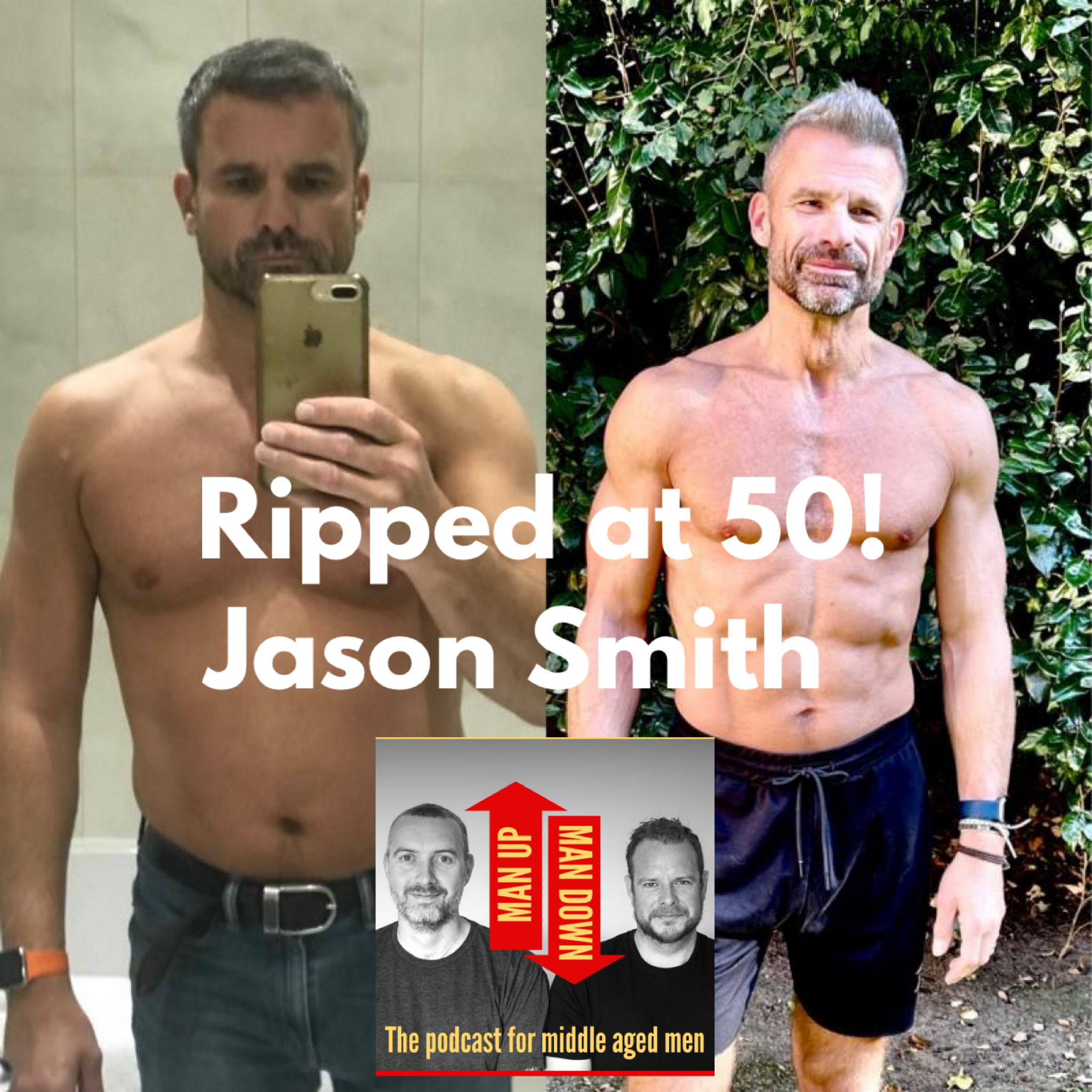
S1 Ep 19Ripped at 50 - Jason Smith
Jason is a former CMO of a multi billion dollar global media business who decided to completely change his life as he approached his 50th birthday. Fed up with his lacklustre energy and lifestyle Jason embraced health & fitness. In a remarkable personal transformation, Jason lost 20kg in weight, while self correcting several ailments and gaining a lust for life he hadn’t experienced since his teens. As a fully qualified Coach and Personal Trainer, Jason now helps tens of thousands of middle aged men to live a better, healthier life through his fast growing social media fans and PT clients. From an outside point of view Jason had a life that was to be envied. A corporate job with lots of travel, for a well known organisation. People were always excited to hear more about his work once they heard what he did. But while he had a job and career that many would dream of, he reached a point where he realised that he was no longer passionate about it. He’d lost his zest for life and felt stuck and exhausted. After seeing a docter he was diagnosed with burnout and depression and prescribed antidepressants. It was then he realised that while he wasn’t sure what he wanted to do with the second stage of his life, he knew he didn’t want to carry on the same way. So he began: Going to the gym Changing his diet Trail running Cut down on sugar and fats Swimming and tennis lessons In the space of a few months Jason lost 20kg, reducing his Body Mass Index (BMI) from “Obese to normal”, got rid of hypertension and improved his resting heart rate and VO2 max. He had never felt this good about himself. Jason’s motivation was about ‘the person he wanted to be’, really focusing on a clean diet and eating lots of protein. While Jason didn’t hire a coach to help him through it, he used self taught self development practice to help him to better himself. However, he now helps others to improve their life. Whether it is weight loss or diet change, or a combination of that paired with exercise. He always knew what he needed to do, create the WHY, a Northstar to follow. Like most busy business men, Jason realised in hindsight that he prioritised his career and the role of the “financial provider” over his relationship with his family. Jason talks about how he went on a business trip when his father had been diagnosed with cancer - “because that’s what was expected.” As Volker suggested previously, he has prioritised work over family in the past, which he regrets. David on the other hand, was in a lucky position where he could spend his children’s early years as a stay at home dad. That wasn’t always recognised as a thing for a ‘man to do’. Luckily expectations are changing. Jason says that one of the many benefits of his transformation is the amazing relationship he has with his son. We finish the podcast with a philosophical question whether 50 is halfway or not. And Jason says his best years of his life were between 50 and 53. What a statement to make! Here is to midlife. To find Jason online you can follow his Instagram account @Jason_new_u_coaching or you can find him on Tiktok here: https://www.tiktok.com/@fit_in_midlife. Jason’s website is www.new-u-coaching.com Hosted on Acast. See acast.com/privacy for more information.
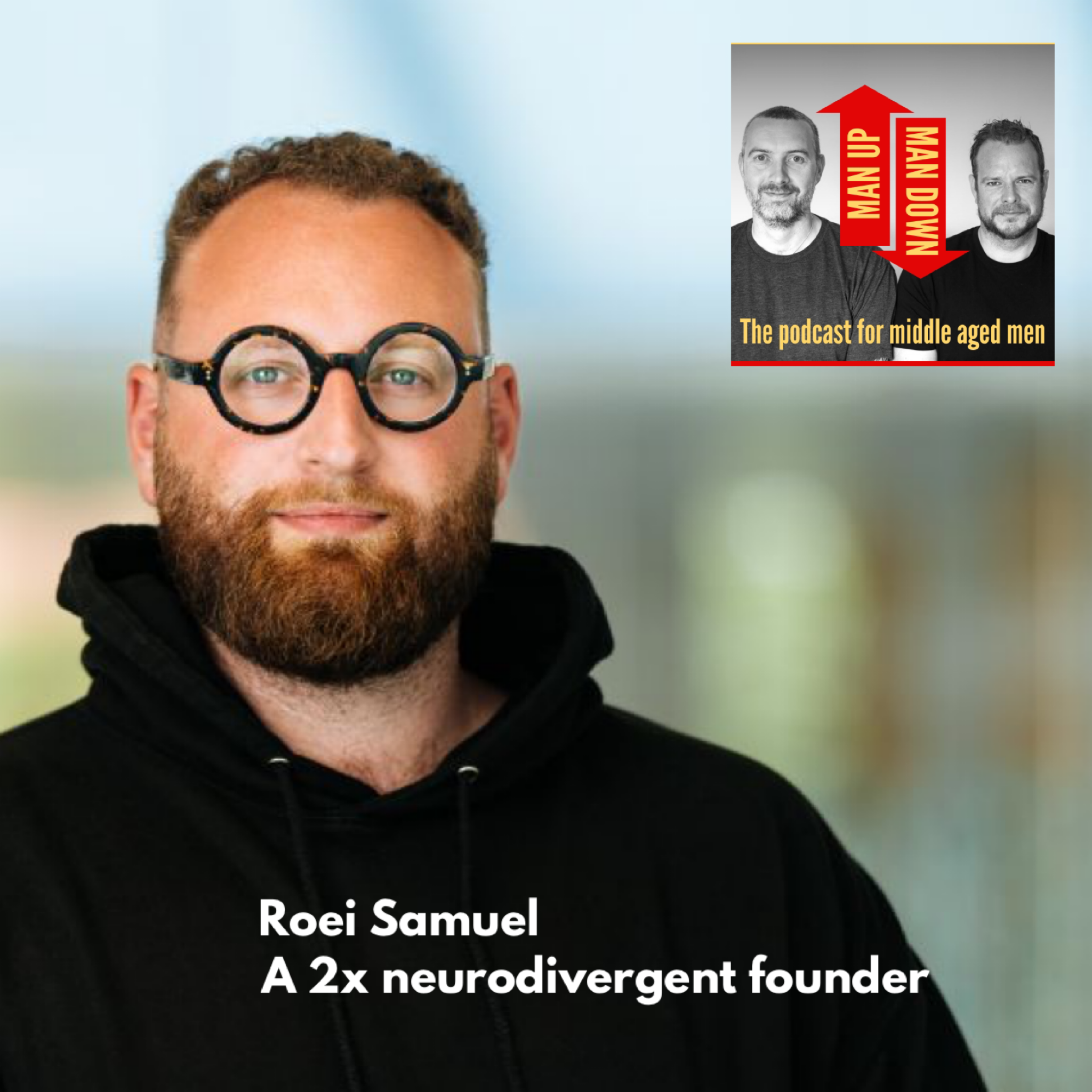
S1 Ep 182x Neurodivergent founder - Roei Samuel
We welcomed Roei Samuel who founded two companies, RealSport which got acquired and then Connectd. RealSport grew to a community of over 8 million monthly unique users across UK, USA & Australia and was acquired in 2018. After spending time as an investor, he realised that many of the frustrations he felt as a founder were also true as an investor and start-up advisor. There was a distinct lack of diversity and accessibility in investment opportunities for start-ups. All the same types of deals were going to the same group of investors - stifling innovation for both the founders and potential investors. So he founded Connectd. What we wanted to talk about today was his journey to becoming a 2x founder whilst having dyslexia and ADHD. The power behind neurodivergent founders is that they build workplaces that understand that people’s brains work differently, and the power behind neurodivergent team members is the diversity of thought. He suggested that ADHD can give you a competitive edge when being a founder, as long as you can use the part that is hyper focused to your advantage. People just think people with ADHD can’t sit still but that isn’t true. Reoi was diagnosed with dyslexia at the age of 6. After the ADHD diagnosis he went on medication, just to get through the education system. However, Roei really enjoys studying, and wanted to become a diplomat, until he realised he wasn’t very diplomatic 🙂 He never thought that he would get a job in a traditional structure, and his dad was very similar, not fitting into those structures and looked for new things to do all the time. Often ADHD isn’t diagnosed and David has been waiting for 5 and a half years (at the time of recording) to get an official diagnosis via the NHS. Reoi started running bus trips for international students at uni, and he started podcasting and had a ton of energy to get things off the ground. Roei then started RealSport to share content on social media. To stay on top of things, Roei needed a really good COO, someone who is organised and structured to fill in the blindspots his condition creates. The key is to create optimal situations based on the things he can control. Building routines, habits and having tools that work and help him. Mindfulness is a key thing as it helps to focus on one thing at a time. For him it’s all about getting up at 5 am, coffee, not drinking alcohol, avoiding sugar and high processed foods. But also having a good night’s sleep is a building block for good mental health. Again we talked about not drinking alcohol, and the improvement on sleep as well as a higher tolerance to stress. It actually helps Roei to be more focused. When it comes to networking, he finds it difficult to not drink in social environments, relationships that revolve around a drink. Yet it is for a selfish reason to not drink, and it’s important to be true to one’s own values and convictions. Roei’s morning routine is all about getting up early, exercising, commuting to work and being at his desk for 8:30 in order to get on top of his todo list. Nothing like ticking a few boxes early in the morning and being ready for the day. When it comes to 9 am, then there are whats app messages coming in, slack etc. Discipline is key for Roei, whether you take cold showers, or abstaining from alcohol or working through your emails. A fascinating insight on how to be successful as a neurodivergent founder. Thanks again for being our guest. You can reach out to Reoi via www.connectd.co or Linkedin. Hosted on Acast. See acast.com/privacy for more information.

S1 Ep 17Erectile Dysfunction and Penis Implants
This episode was definitely a sensitive subject to touch on but one that our guest, Andy Barham, dealt with, with grace and humour. When we started the podcast, the goal was to raise awareness of topics that men are embarrassed to speak about. Erectile Dysfunction is definitely one of those topics. Andy Barham was diagnosed with prostate cancer. Thankfully he caught it early and beat it after having his prostate removed. However one of the side effects of the operation was erectile dysfunction. While this is a common side effect in the early stages of recovery, Andy found that months went by without getting back to normal. After trying traditional ED medicine (the “blue pills”) he then progressively had to try more extreme methods to get an erection. The only thing that worked was self-administered injections into the penis. Understandably, this wasn’t very practical. As he explains, there was no spontaneity with injections - you had to plan well ahead. Andy persevered with this, and has an understanding wife (who is a nurse), however he said that this wouldn’t be an option for someone who was dating. He also described one particular evening when, after a few drinks, he and his wife felt frisky. However, due to his alcohol intake, his aim was slightly off and ended up injecting his thumb… Andy then began researching erectile implants. As an engineer by training, Volker was highly interested in the mechanics of the implant, which Andy was more than happy to explain. The way it works is that you have a third testical or marble sized lump, which pumps a liquid from a reservoir in your abdomen to the implant. Andy says this enables him and his wife to have more spontaneity. Andy can now last longer, and he would still get an orgasm (although the removal of his prostate means he doesn’t ejaculate). From his opinion it is even more intense, because you last longer, similar to wearing a condom. David was interested to hear about the psychological aspect of “not being able to perform.” Andy admitted that he had gotten very depressed, which wasn’t something he’d experienced before, even though he had gone through the stress of a marriage break up and other life stresses in the past. Andy said that a major factor in getting through this process was the support and understanding of his wife. However it was a slow process, trying different things (each one more extreme than the last) to get an erection. Countless hours of doctor visits, trying new medications and pumps, giving feedback, trying something new. Nothing prior to this ever pushed him over the edge, and it just shows how much pressure a non-functional ‘friend’ can put on a man! Whilst it wasn’t uncommon, 1 in 10 people who get their prostate removed, will get erectile dysfunction. However, as it was pointed out, if you are stressed and anxious, it is totally common for men not to be able to perform. And many men we spoke to, have a stash of those little blue pills ‘just in case’ to help them. The more people you speak to, more men admit that they have experience using them. Once you turn 70, 70% of men have problems with erections. During your 40ies we are looking at 5%. So the older you get, the more likely the “little chap” might need some assistance. Thankfully, as Andy has discovered there are a range of solutions that help you with it, whether it is the little blue pill, therapy if it is related to stress and anxiety or an implant. We discussed how men just don’t ‘feel like a man’ if they cannot have sex, and there is a social expectation that you have to have sex on a regular basis. And most couples would, as the average amount of sex is weekly or more. However, if some couples don’t have sex every week, there are others that have sex a lot more often. We also discussed how it’s also a common expectation that men “are always up for it” which may not be true as we get older. If you want to find out more about Andy, please reach out to him on LinkedIn or his Coloplast Patient Educator site. He likes helping others in a similar situation. His Book ‘You can stick that up your arse’ can be found on Amazon. Hosted on Acast. See acast.com/privacy for more information.
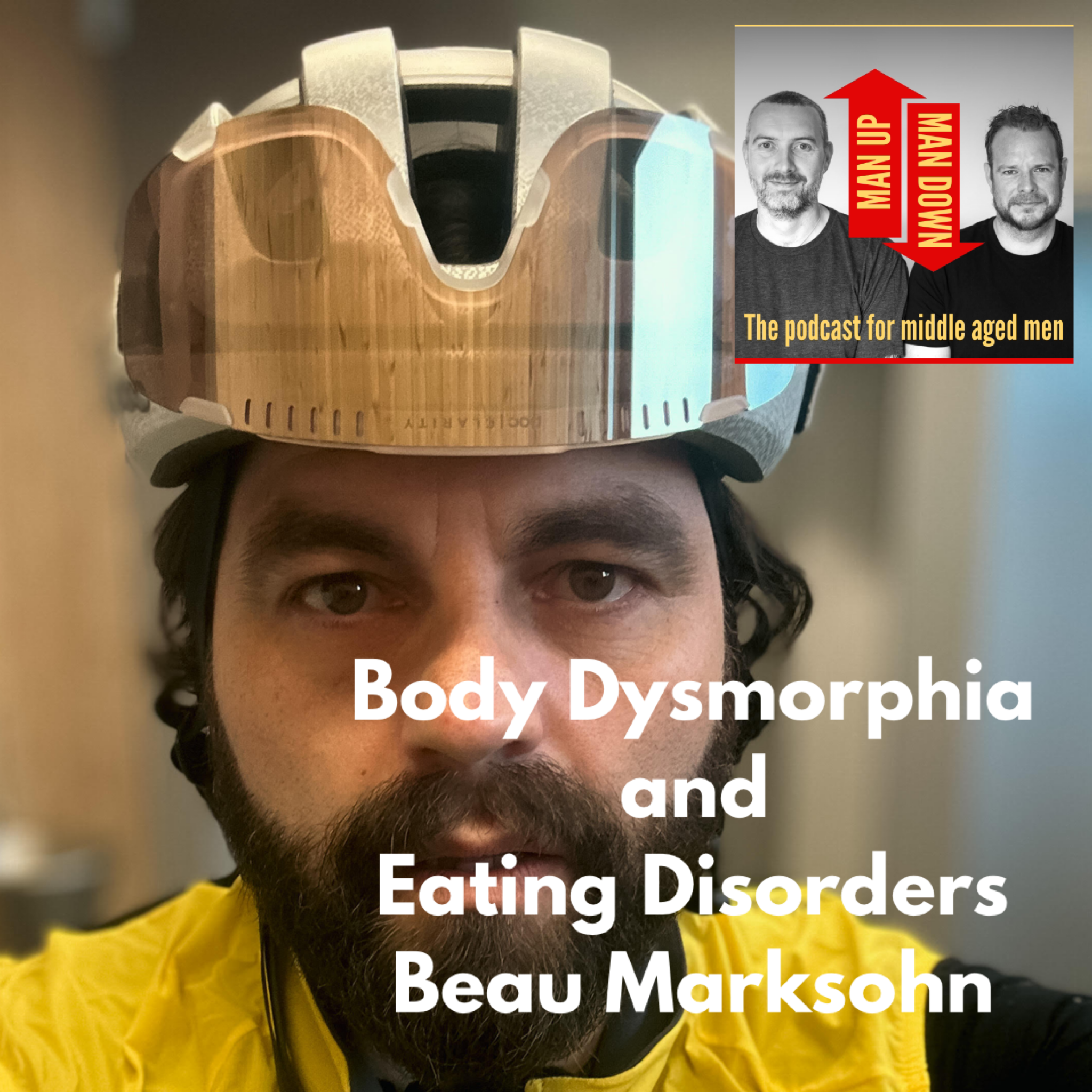
S1 Ep 16Body Dysmorphia and Eating Disorders - Beau Marksohn
Beau Marksohn joined us for an episode on body dysmorphia and eating disorders. He was born and raised in NYC and grew up in a household of severe abuse and neglect. As a result of this he struggled from the age of five from feeling insecure in his body. He was always scared as a kid growing up, never felt safe, never felt any sense of consistency and never felt loved. As a result of all of this he started using food to comfort him from a very young age, which then progressed to drugs and booze before his teens. Suicide attempts, anorexia, bulimia, living an unhealthy life, ending up going from overweight to underweight. Beau then became a compulsory exerciser and . Depression, anxiety, ADHD, addiction. In 2016 he started treatment, therapy and support to tackle his addiction issues as well as depression, anxiety and ADHD. In lockdown he started cycling, first to help the vulnerable, then to help his mental health. Beau starts by telling his story what body dysmorphia actually means. This is something David or Volker haven’t heard about, and I am sure not many of you either. The best way to explain it is going in one of the fairground mirror rooms, and one day you feel bigger, the other day slimmer. Whilst we often associate eating disorders with women, Beau didn’t find out that he suffered from body dysmorphia until he went into therapy. By sharing his story he makes sure that he doesn’t suffer in silence and other people don’t suffer in silence either. It comes back to our motto on the podcast that men need to talk more about what they do and what they suffer from. It doesn’t work for us to go into our cave every now and then and thinking it is all going to go away. Beau’s enthusiasm went further during lockdown when he started delivering food to underprivileged people and started cycling a lot more. That led to him founding a group of men to cycle together, https://dadbodcyclist.com/. There will be more content on his website shortly, but for now you can sign up to his newsletter or follow him on Instagram: https://www.instagram.com/dadbod_cyclist/ He organises Sunday brunches for men, cycling laps around Richmond Park, and you can find him on Strava and everyone is welcome. The EveryBODY ride. Beau has suffered many addictions which stems from his childhood trauma. It subsequently led to different therapies, including EMDR Therapy, Eye Movement Desensitization and Reprocessing Therapy. Over the years he has tried a lot until he came to understand the ‘why’ he is doing things and what his purpose is in life. Even cycling turned a bit into an addiction, particularly during lockdown, reminding him of his childhood experience surfing in the USA. It’s about being in the zone. His journey continues to get more people on bikes and talk about men’s mental health. An initiative that is very much aligned to Man Up / Man Down, and hopefully we will be able to do some events together in the future. Hosted on Acast. See acast.com/privacy for more information.