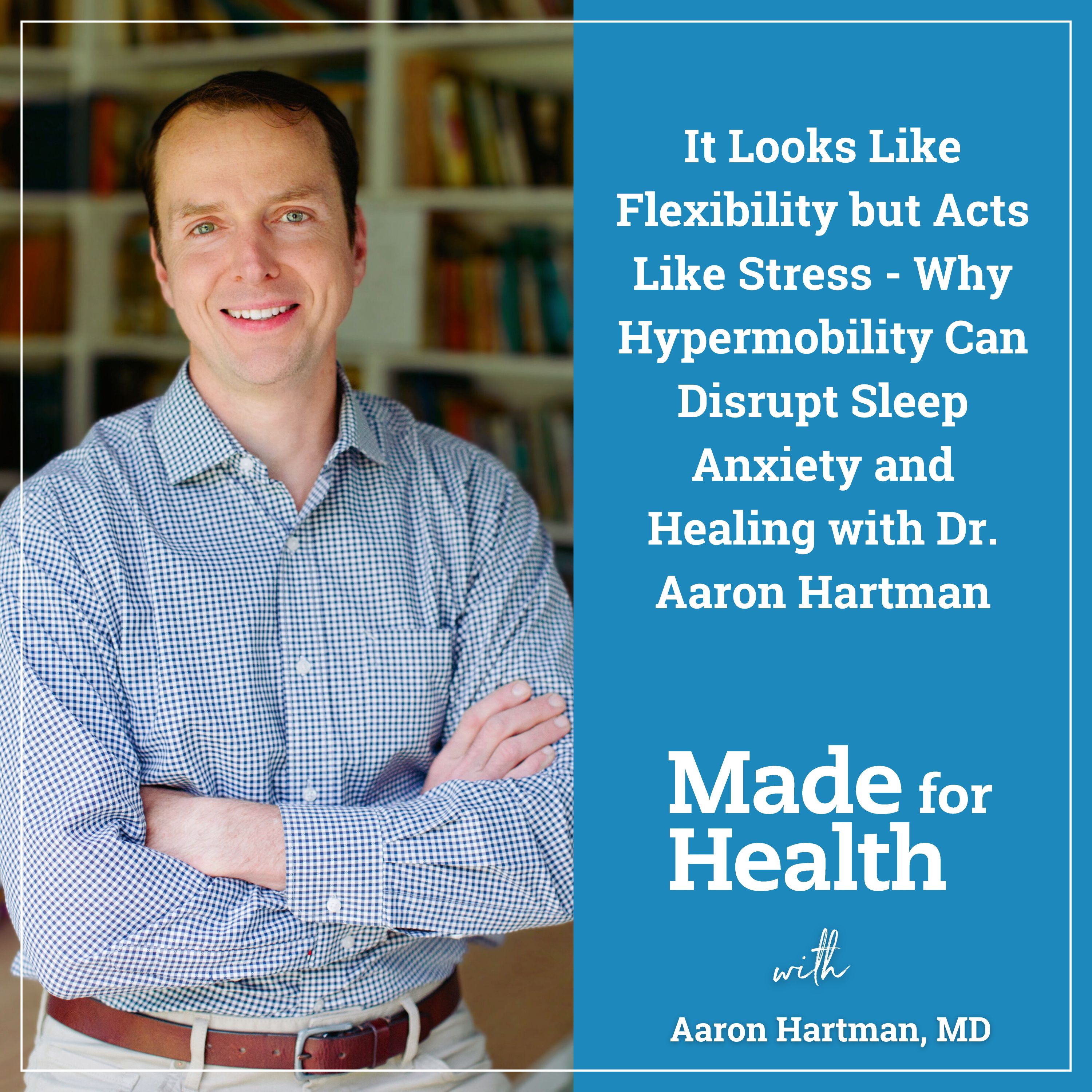
It Looks Like Flexibility but Acts Like Stress – Why Hypermobility Can Disrupt Sleep, Anxiety, and Healing | Sleep | E114
Made for Health | Medical Gaslighting | Lyme | Chronic Infections | Metabolic Syndrome | Insulin Resistance | Mystery Illness · Aaron Hartman, MD
Audio is streamed directly from the publisher (episodes.captivate.fm) as published in their RSS feed. Play Podcasts does not host this file. Rights-holders can request removal through the copyright & takedown page.
Show Notes
What if hypermobility is not a problem to fix, but a pattern that needs the right support to become a strength?
In this minisode, Dr. Aaron Hartman explores hypermobility as a commonly overlooked pattern that can influence coordination, sensory input, nervous system regulation, and long-term health. He explains how hypermobility can function as a strength when supported, but may contribute to anxiety, poor sleep, inflammation, and chronic symptoms when paired with nutrient deficiencies, environmental exposures, or infections.
This conversation helps listeners understand why hypermobility often shows up alongside chronic inflammatory conditions, neurodivergence, autonomic symptoms, and heightened stress responses, and why supportive foundations like nutrition, environment, and self-regulation matter so much for these individuals.
Key Topics Covered
- What hypermobility is and why it is more common than many people realize
- How connective tissue and fascia send constant sensory input to the nervous system
- Why hypermobility can increase coordination and reaction time, but also overstimulation
- The link between dysregulated hypermobility and anxiety, sleep disruption, and hypervigilance
- How nutrient depletion, especially vitamin C and B vitamins, can worsen tissue resilience
- Why environmental stressors like mold or chronic infections may compound symptoms
- The role of trauma and emotional stress in shifting sensitivity from strength to vulnerability
- How intuition and emotional intelligence may be heightened in some hypermobile individuals
- Why addressing environment, nutrition, movement, and self-regulation is foundational
Discover the book:
- 📘 Amazon: UnCurable: From Hopeless Diagnosis to Defying All Odds
- 🎧 Audible: https://www.audible.com/pd/UnCurable-Audiobook/B0G4NNPSF2?srsltid=AfmBOoqovf36lmHnQPTbTM9YhGlzJ40P8kCAnzrGjXknVrygXQ7az_y4
Discover the book here: https://uncurablebook.com/
Follow Dr. Aaron Hartman and Richmond Integrative & Functional Medicine
🌐 Website: https://richmondfunctionalmedicine.com/
📺 YouTube: @AaronHartmanMD