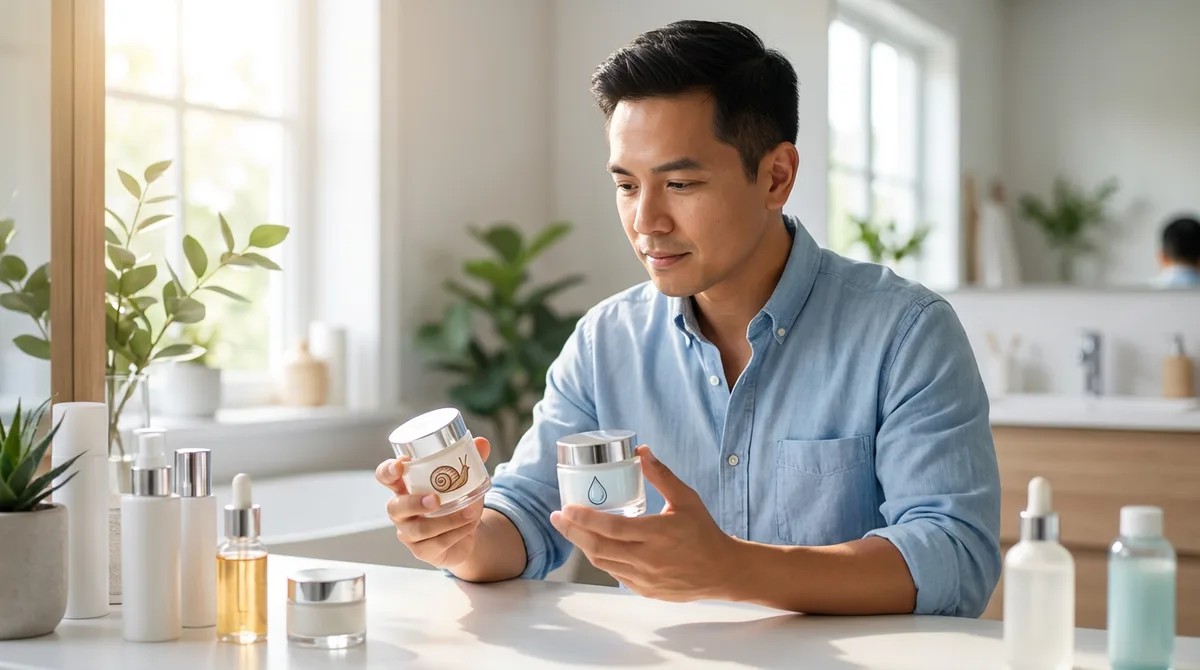
Korean Snail Mucin vs Hyaluronic Acid: Which Hydrator Works Better for Dry Skin?
Luxury Beauty on a Budget Podcast · Luxury Beauty on a Budget
Audio is streamed directly from the publisher (content.rss.com) as published in their RSS feed. Play Podcasts does not host this file. Rights-holders can request removal through the copyright & takedown page.
Show Notes
Slathering on moisturizer but still dealing with dry, flaky skin? The culprit might be what you're layering underneath. In this episode, Julian Thorne breaks down the real differences between two cult-favorite hydrators—Korean snail mucin and hyaluronic acid—examining their molecular behavior, formulation chemistry, and price-per-ounce value. Whether you're battling pure dehydration or a compromised skin barrier with redness and texture issues, you'll learn exactly which ingredient matches your skin's actual needs rather than falling for marketing hype.
- Hyaluronic acid is a pure humectant that binds up to 1,000 times its weight in water, but it doesn't signal any repair processes—it hydrates and nothing more.
- Snail mucin is a bioactive cocktail containing allantoin, glycoproteins, naturally occurring glycolic acid, and antimicrobial peptides that actively stimulate cell turnover and barrier repair while providing secondary hydration benefits.
- Multi-molecular-weight hyaluronic acid formulas are critical: low-weight HA (5–50 kDa) penetrates to plump from within, while high-weight HA (1,000+ kDa) creates a protective film that prevents water loss.
- For snail mucin, look for 90% or higher filtrate concentration from South Korean manufacturers, where low-temperature enzyme-assisted extraction preserves the bioactive proteins that cheaper heat-processed formulas destroy.
- Snail mucin edges ahead for compromised barriers, acne scarring, and inflammation-prone skin, while hyaluronic acid is the cleaner choice for pure dehydration without barrier damage.
- The economics favor hyaluronic acid at $4–15 per ounce versus snail mucin at $8–18 per ounce, but the price difference reflects snail mucin's more complex manufacturing and multi-functional benefits.
Read the full article: https://luxurybeautyonabudget.com/korean-snail-mucin-vs-hyaluronic-acid