Show overview
LUCIMA Podcast launched in 2015 and has put out 100 episodes in the time since. That works out to roughly 70 hours of audio in total. Releases follow a several-times-a-week cadence.
Episodes typically run twenty to thirty-five minutes — most land between 27 min and 57 min — though episode length varies meaningfully from one episode to the next. None of the episodes are flagged explicit by the publisher. It is catalogued as a EN-US-language Arts show.
The catalogue appears to be on hiatus or wound down — the most recent episode landed 9.8 years ago, with no new episodes in over a year. The busiest year was 2016, with 75 episodes published. Published by Charles.
From the publisher
Tune in as we chat with fashion photographers about all things fashion, editorial, beauty, photography and retouching!
Latest Episodes
View all 100 episodes
No Reference Available
I got an email asking me to share the shoot I did in the slot canyons with Lauren Hurlbut. I have most of the pictures on Instagram but not specifically all in one link like it would be if I were still uploading things to tumblr. Oh well. The photographer wanted to reference my images for a shoot he'll be doing in a similar location. "My idea is to make my shoot along the lines of the ones you did with Lauren: poses, composition, etc. Since it is one of my first shots, I want to work along some established lines. After I will allow myself some more creativity" No. (Almost) All of the pictures are on my Instagram. So it's not that I don't want to share them. It's that I don't want you to get in the habit of referencing other peoples pictures when you're trying to create something for yourself. Pardon the rant LOL :) Nerdist with Jeremy Irons: http://nerdist.com/nerdist-podcast-jeremy-irons/ Ice House: http://lucima.com/laguna-beach-ice-house-studio-fashion-photography-workshop/ Unfinished Malibu House (Eric Lloyd Wright): https://www.flickr.com/photos/michael_locke/8097045647 Dave Hill: http://davehillphoto.com
The Chicken and the Egg
A quick response to the podcast yesterday. To get better models you need a better portfolio. Right? Right. But is that what I said? I try and go more in depth to the response yesterday. Inappropriate photographers, variety (depth and specificity), Instagram image selection/layout, create and control your audience's attention, shooting for ArsenicTV, and more.
Managing Perception
I kind of think that this was once a blog post or possibly even another podcast. Too bad. One of the most common questions in my workshops is "What does it take for any given photographer to do what I do?" Most often this question takes the form of, "How do I get to shoot beautiful fashion models naked like you?" Admittedly there isn't a simple answer. That said, much of what I do is managing perceptions, particularly in the form of my online presence. The podcast explores a few of the moving parts of the machine that I've created in order to do what I do.

Evolution of Style
This podcast is long. But it rewards you in spades if you listen all the way through. It's one of the few that I actually like. When was the last time you heard me say that! This podcast is the result of a conversation I had with a model earlier in the day. We talked about my style and the evolution of that style. She asked me who my favorite photographers (Avedon/Demarchelier) were and I attempted to feebly explain why I don't follow in their footsteps even though they were my role models. I continued to compare and contrast that style with the shock value style of (Juergen) Teller and (Terry) Richardson) and why I think people on Instagram do it wrong by being lazy in their execution. The podcast shifts to discuss how I shoot. What I think about when I shoot. What I need out of the "moving parts" during a shoot. And how all those considerations create the final product. And how at the end of the day the pictures define you (and not the other way around) because actions speak louder than words and historically my imagery create a consistent stylistic trend. This was supposed to be a short podcast based upon an earlier conversation today but turned out to be more much "revelating" (technically not a word) as I continued to explore the idea.
Rose Bowl Rambling
Did I just make a podcast talking about cycling pain? Jesus Christ. So why do I ride the Rose Bowl group ride Tuesdays/Thursdays? It's dangerous. Painful. And yet it gives me so much. Except what exactly does it give me? And what, if any, are the ties to photography? Listen and find out.
Monitor Talk
Disclaimer: This stuff is really technical. If you're not interested in color accuracy and listening to my thoughts about it, then this podcast is definitely not for you. This (probably too long of a) podcast is about my brief history with color accurate displays and my challenges and experiences with them. There's about 30 minutes of history as I run through what I bought and why. And then there's about 10 minutes of drawing real conclusions. That's where the real value is. If you want the Cliff Notes version of it here it is: Buy an Eizo ColorEdge with built-in calibration sensor. If you want to know why? You'll have to listen to the podcast. MONITOR HISTORY/REFERENCE 2005 Dell Ultrascan 2405FPW 24" PVA Panel (acquired ~$200) 2009 Eizo S2402W-H 24" TN Panel (acquired ~$500) 2010 Eizo ColorEdge CG241W 24" PVA Panel (acquired ~$1200 retail $2000 and returned) 2010 Eizo ColorEdge CG241W 24" PVA Panel (acquired ~$1200 retail $2000 and returned) 2010 Eizo ColorEdge CG243W 24" IPS Panel 2014 Eizo ColorEdge CG275W 27" IPS Panel (acquired ~$1500 retail $2400) 2016 BenQ SW2700PT 27" IPS Panel (acquired ~$700 and returned) 2016 Dell UP2716D 27" IPS Panel (acquired ~$700) 2016 Eizo ColorEdge CX271 (acquired ~$900 retail $1400) 2016 Eizo ColorEdge CG318-4K (the unicorn that I want retails ~$5000) CALIBRATION HARDWARE SpyderPro3 ColorMunki i1ProDisplay Eizo CG275W built-in colorimeter PRINTERS Canon Pixma Pro 9500II Canon Prixo Pro-1 http://lucimablog.blogspot.com/2009/09/sypder3-pro-unibody-macbook-dell.html http://lucimablog.blogspot.com/2009/11/eizo-s2402w-h.html http://lucimablog.blogspot.com/2009/12/whats-good-monitordisplay.html http://lucimablog.blogspot.com/2009/12/legend-nanao-eizo-cg241w-bk.html http://lucimablog.blogspot.com/2010/01/eizo-cg243w-ftw.html http://lucimablog.blogspot.com/2016/10/color-accuracy-needs-of.html
Flow vs. Design
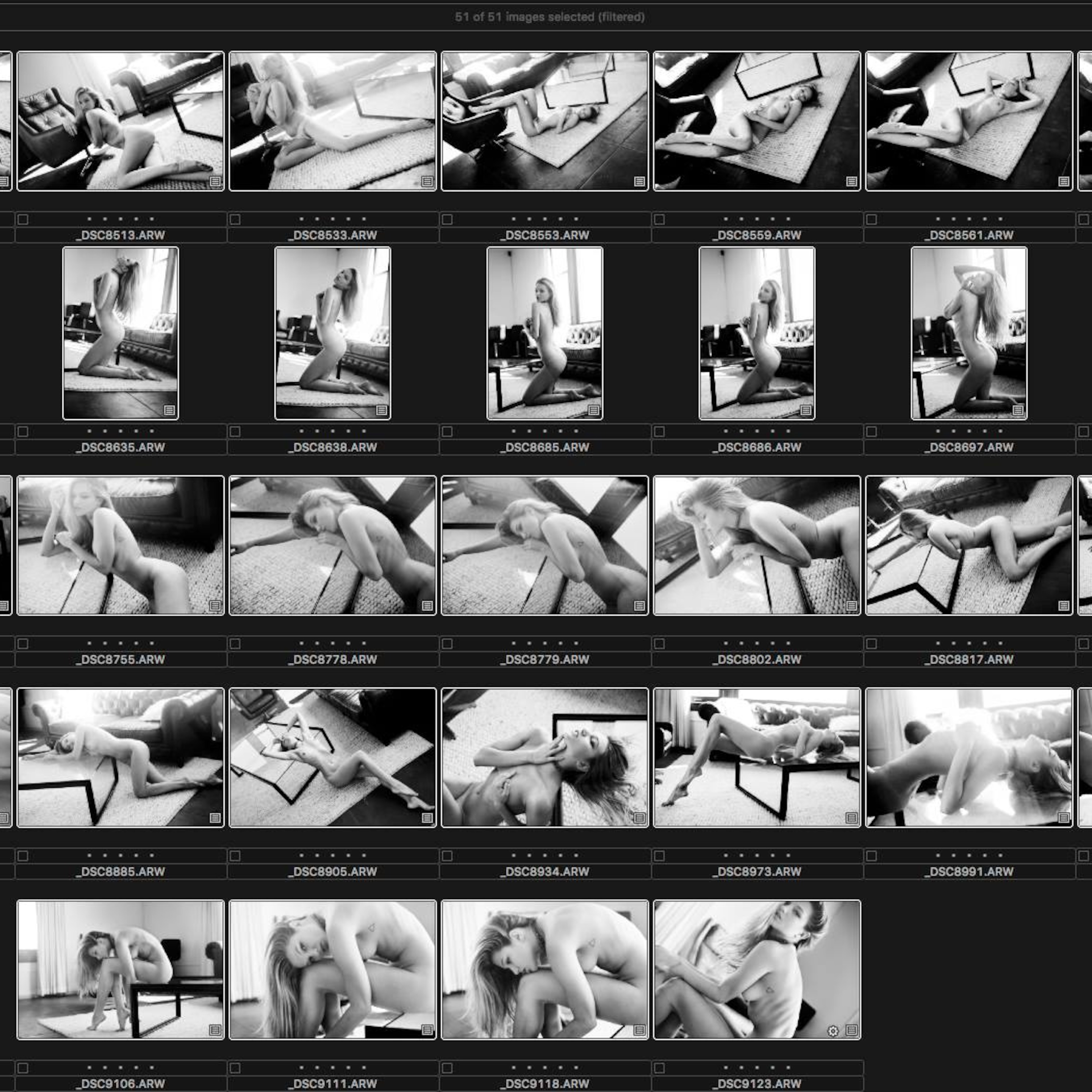
In a Facebook conversation with some photographers I wound up showing some of the shots from the last podcast. Yeah, the one where I said I was disappointed in the results because I wasn't getting proper variety and also that she was always on the ground. Well, I was wrong. Kind of. It turned out to be one of the best sets I've shot. So what gives? Did I just lie to you guys for entertainment value? Not exactly. What it boils down to is flow vs. design. You can plan all you want but when push comes to shove, you have to be in the moment. That's something a retoucher might not quite understand.
Homey Don't Play That!
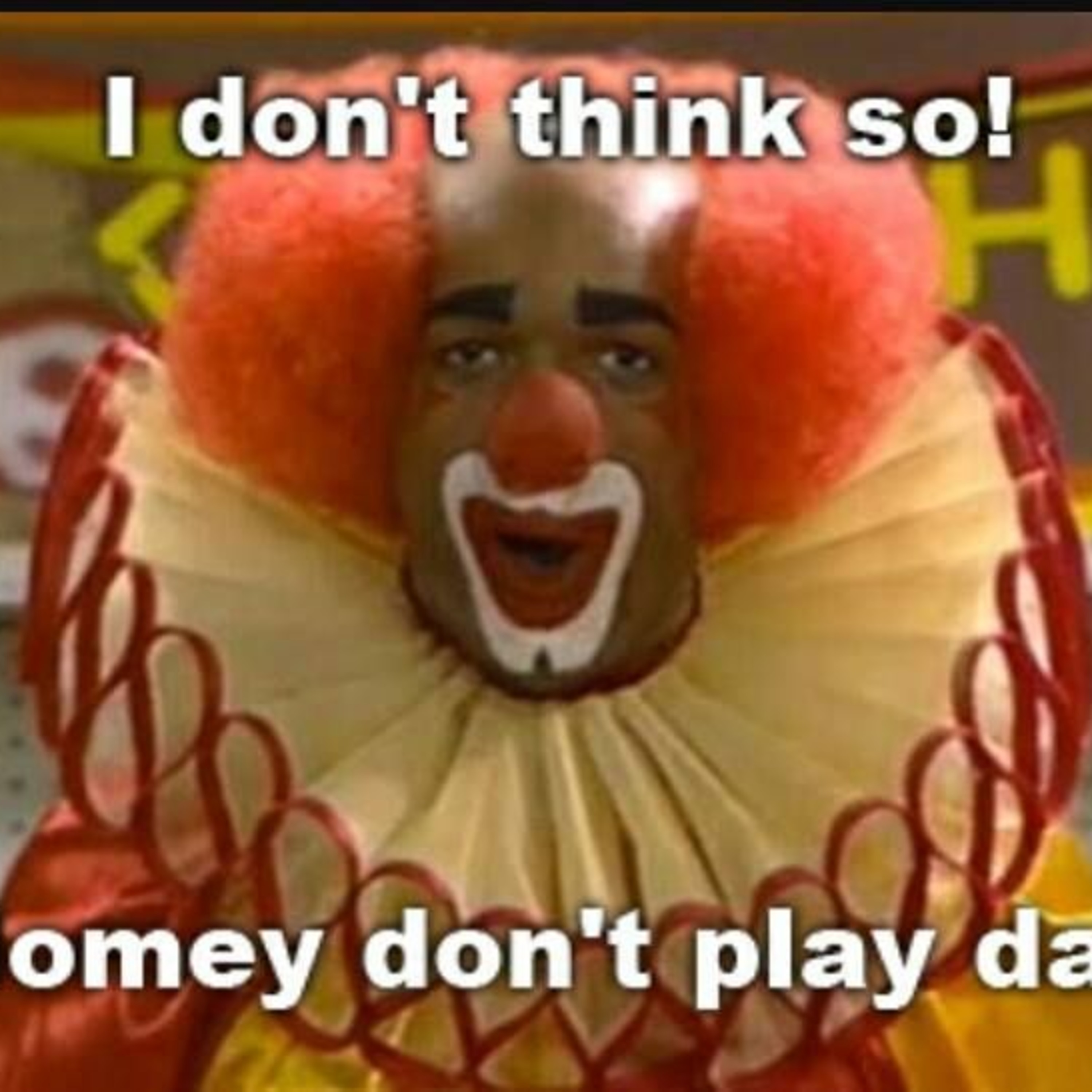
When the photographer make rookie mistakes during the shoot and the retoucher has to polish these turds. Homey don't play that! This is what happens when you think you're better than you really are. Unfortunately for me, I am both the photographer and the retoucher so basically I'm upset at myself. And yes, at some point in the past I actually thought there wasn't much left for me to learn in photography. Tisk tisk tisk.
Pass Interference
Let's say hypothetically your model requests specific photos from the shoot? What do you do? And hypothetically, why does she even have any photos to reference? Oh you hypothetically let her take phone pics of the pictures on your camera? You hypothetical dumbass. This podcast is about process and how specific parts of the process are sacred (yes, all of it).
Polishing a Turd and Optimism
Sometimes we don't see the forest from the trees. Sometimes we polish turds. The point is that as photographers this is a tough lesson to learn. Also, being away gives you new perspective. Can we be more optimistic? Why should we be more optimistic? How does one cultivate creativity?
"I Don't Like Myself Enough to Make Podcasts"
LOL :) For the record San Gabriel Valley is 200 square miles. "This is Really Hard. This is Really Really Hard."
Philosophy of No Philosophy (Part II)
The following is the formal exposé to the topic. It was written to Tabatha for her professors and her to read for her photography class. As such, there is much overlap between the podcast and the written version below, but not entirely: This was supposed to be a review of my experience with my intern Tabatha, but it evolved into a commentary of theory vs. practice. Let me first be clear that my time with Tabatha was short. 30-40 days spread out a couple times a week a couple hours at a time is hardly enough to truly assess someone. I think that Tabatha satisfied all the criteria of the internship. She followed me to nearly every single shoot during that time period. She assisted me with every aspect of every shoot and every task and even helped me assemble 3x 4’10’ aluminum sheet panels. Truth be told she was a better presence than I expected. I usually don’t allow assistants and interns to come to my shoots. Usually they are more of a distraction and obstacle to my workflow. Tabatha proved useful and did not get in the way of my process. My goal during this time was to demonstrate to Tabatha how I work. What I am driven by and why I do what I do. The purpose of even the smallest tasks was simply to reveal the inner workings of my mind; how I approach things, how I react to them, and most important how I solve problems. To this end, I believe I succeeded in delivering a unique and intensive internship to Tabatha. As a result, there exists no other person on Earth that understands how I work as a photographer, more than Tabatha Gallais. We routinely had philosophical discussions about my approach to photography. Admittedly Tabatha’s internship was an eye-opening experience for me. I don’t have any formal training in photography. While I am no stranger to higher education (BA in Economics, MA in Psychology and an MBA), the academic approach to photography is somewhat foreign to me. I have created several educational programs during my tenure as a photographer instructor. I created a “New Media" class at the New York Film Academy where I taught MA Photography students how to manage their websites, social media, SEO, etc. Under the LUCIMA brand, I created webinars for fashion photographers to systematically learn retouching and other aspects of fashion photography. Also under the LUCIMA brand, I created live weekend workshops that taught pre-production, production and post-production for both still photography and videography. Despite all the classes I have taught, there exists a fundamental difference between how I think-learn-teach photography and how formal education systems think-learn-teach photography. This discovery culminated at the end of Tabatha’s internship in a conversation with her assessment of my philosophy as a photographer. Her conclusion was that I had no philosophy towards photography. In my feeble attempts to explain to her and concede that many aspects to my work are not driven philosophically, I failed to define and defend my true position as a photographer. Theoretically, I am driven by a love of beauty in the female form. Practically I am driven by everyday constraints and problem-solving. It is at best a conjugal relationship between two warring factions. At the time of our conversation, I tried to explain to Tabatha that my approach to photography was more “mechanical” and that I approached photography the way a robot or a computer would approach photography. To solve existing problems. To simplify and remove all extra variables and “moving parts”. Philosophically, I attempt to distill my process down to its very core. A basic and raw interaction between two human beings through the art of fashion photography; devoid of all the bells and whistles that you would find on a typical shoot. What Tabatha visually observed was a task-oriented photographer that wasted little words and got straight to the point of achieving his desired outcome. In other words she observed a very efficient photographer at work. But I think what Tabatha could not truly appreciate was the evolution of this process. Throughout the past seven years I’ve learned much of the theoretical side of photography. I’ve spent countless hours on web forums pixel peeping and arguing with armchair quarterbacks about the ideal methodology to extract maximum dynamic range and resolution to achieve the sharpest and noiseless images. I’ve watched videos ad nauseum, about lighting, the use of lightmeters/grey cards/colorcheckers, profiling your camera/monitor/printer, and other technical and sometimes esoteric pursuits. I’ve read hundreds of pages in various forums about retouching at the highest levels, espoused by programmers that write the code for retouching software (Photoshop), scripts (like the spatial-frequency separation), and other editing techniques designed to back-solve certain styles of editing whether it be Dave Hill, Amy Dresser, or Guy Aroch. But it’s all just theory. I will borrow a reference from one of my favorite
What I Wanted Out of Capture One
Rather than be a critical about Capture One shortcomings, I look at this question from the other direction. What the hell did I want out of Capture One? The podcast I referenced Capture One (Part III) http://lucima.podomatic.com/entry/2016-08-11T23_38_43-07_00 edit: I really wish C1 had a gradient tool!
Response to an Email
Philadelphia is not part of New England. Listen past the point when I prematurely end the podcast. There's a "post script" portion to the podcast. I'm going to stop saying "you know", you know? Wow, there's a really rough learning lesson at the end of the podcast. Brutal. Charles you dream killer, you. Okay, I'm happier with this podcast.
Philosophy of No Philosophy (Part I)
Please forgive me for sounding tired and drowsy. It's a little early for podcasting (apparently). I'll try not to fire up the recorder at 8AM anymore. In this podcast I talk about philosophy of shooting. And Tabatha's critique of my philosophy of shooting. Her conclusion was that I had no philosophy. If you can get through the groggy retelling of the premise, hopefully you'll be handsomely rewarded with some insight to my style of shooting. Hopefully. And handsomely.
Capture One (Part III)
My 30-day trial is over. Now I have to make a decision. Do I buy it or not? My sentiments have shifted over the full 30 days and the answer might surprise you. The word of the day is CONVERGE.
Driving to Digital Transitions | Phase One Los Angeles
Ken Scott from Digital Transitions invited me to come check their Phase One cameras. Here are my thoughts on my drive over. Then some thoughts on the DJI Phantom 4.
Video and Drones
5 years ago I went into the local hobby shop to inquire about an RC helicopter capable of handling a DSLR payload. Sans camera and 2nd operator the estimate topped $8k. I failed to mention this in the podcast but this is probably the starting point of it all. Some more background information for you to consider. All the cool "flying shots" in all the videos I've ever done were shot with either long depth of field or failing continuously while racking focus and increasing/decreasing shooting distance. Which is to say, you either got a non-cinematic look, or we had to shoot the same shot over and over again because we couldn't rack focus while moving. I failed to mention this in the podcast as well. The rest of the stories in the podcast hold up, but keep these things in mind when I talk about technologies and drones etc. Condition One (the workshop video I shot 4 years ago that popped up on my feed recently): https://vimeo.com/27748575 Kate Compton (the grandaddy video that started it all): https://vimeo.com/46642437 Looking at my profile pic for this podcast, I could have shot something even better with a drone.
Morning Stock
This podcast was supposed to come out before Bait and Switch (Part I) but I released them out of order. Talking about Vegas, a clients, ArsenicTV, treats!, social media, monetizing your audience. "Are we having fun yet?"
Bait and Switch (Part I)
Nearly a year ago, I told you guys a story about a model who pulled a fast one on me. She agreed to shoot nudity in our texts and then when I arrived to our shoot she reneged on our agreement. (Rules of Engagement and True Intentions http://lucima.podomatic.com/entry/2015-07-29T11_47_11-07_00) So it happened again. Except the outcome was totally different. What changed? How do I feel this time? What is the effective difference between the last time this happened and this time?