Show overview
Lost Women of Science has been publishing since 2021, and across the 5 years since has built a catalogue of 159 episodes, alongside 6 trailers or bonus episodes. That works out to roughly 70 hours of audio in total. Releases follow a fortnightly cadence.
Episodes typically run twenty to thirty-five minutes — most land between 22 min and 35 min — though episode length varies meaningfully from one episode to the next. None of the episodes are flagged explicit by the publisher. It is catalogued as a EN-language Science show.
The show is actively publishing — the most recent episode landed 1 months ago, with 19 episodes already out so far this year. The busiest year was 2025, with 43 episodes published.
From the publisher
For every Marie Curie or Rosalind Franklin whose story has been told, hundreds of female scientists remain unknown to the public at large. In this series, we illuminate the lives and work of a diverse array of groundbreaking scientists who, because of time, place and gender, have gone largely unrecognized. Each season we focus on a different scientist, putting her narrative into context, explaining not just the science but also the social and historical conditions in which she lived and worked. We also bring these stories to the present, painting a full picture of how her work endures.
Latest Episodes
View all 159 episodesA pioneer behind x-ray crystallography, Isabella Karle
Conversations: The Rediscovery of I Who Have Never Known Men
Best Of: The Woman Who Demonstrated the Greenhouse Effect
La mujer que demostró el efecto invernadero
Tilly Edinger: The Paleoneurologist Saved By Her Science
Kamala Sohonie: The Chemist who Wanted to Feed a Nation
Sharla Perrine Boehm: An Overlooked Founder of the Internet
Best Of: Chemistry Professor and Crime Buster: The Remarkable Life of Mary Louisa Willard
Profesora de química y caza criminales: La extraordinaria vida de Mary Louisa Willard
Elizabeth Roboz Einstein: The Determined Genius Behind a Multiple Sclerosis Breakthrough
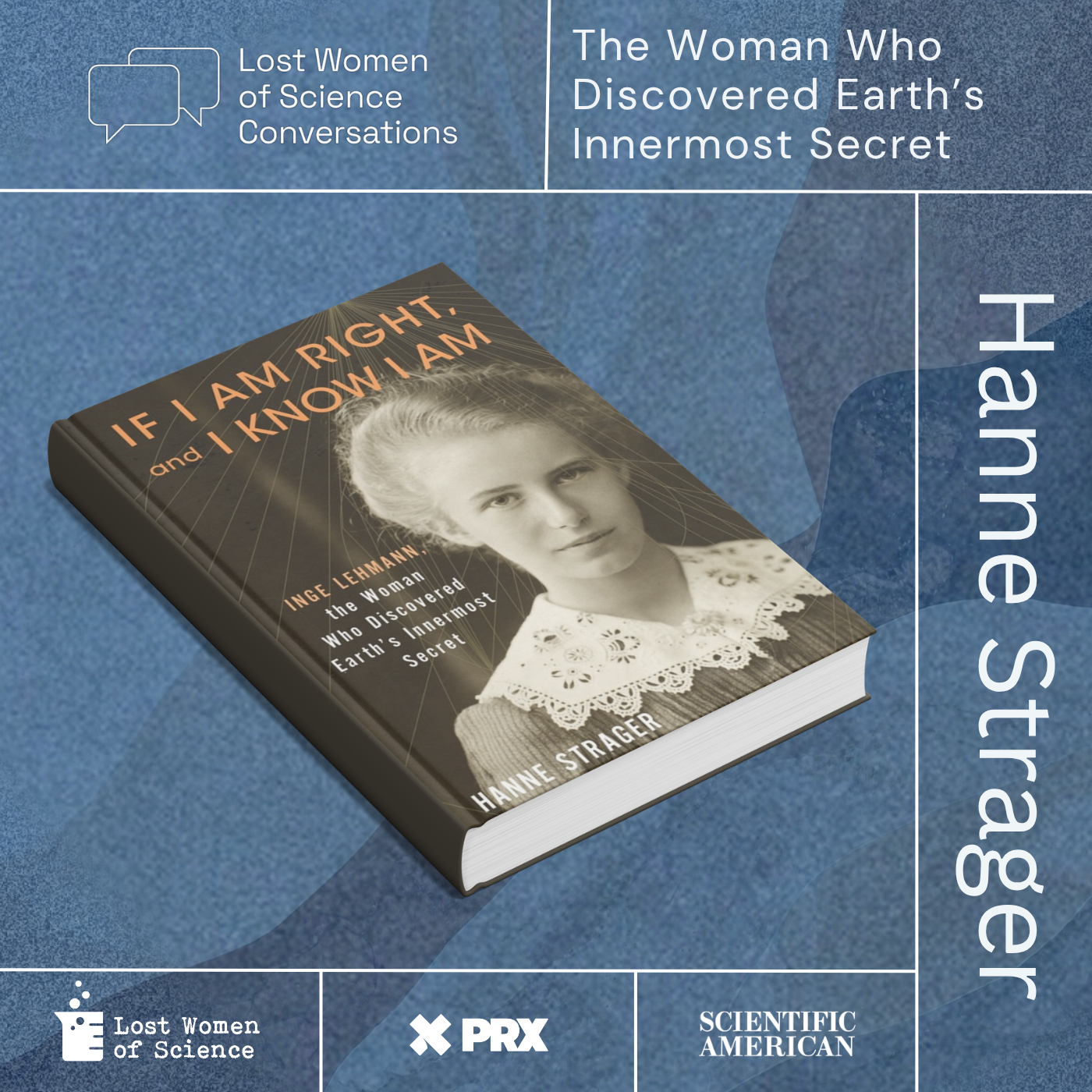
Conversation: If I Am Right, and I Know I Am: Inge Lehmann, the Woman Who Discovered Earth’s Innermost Secret
In this episode of Lost Women of Science Conversations, host Carol Sutton Lewis speaks with science writer Hanne Strager about her biography of Inge Lehmann, the pioneering Danish seismologist who discovered that Earth has a solid inner core.. Largely unknown outside scientific circles, Lehmann fundamentally transformed our understanding of what lies at the heart of our planet. She did this in 1936 by identifying anomalies in earthquake waves that others had overlooked. At the time, scientists believed Earth’s core was entirely liquid. Lehmann proposed instead that a solid inner core lay hidden within it — a groundbreaking insight that reshaped geophysics.In revisiting Lehmann’s story, Strager highlights that Lehmann’s legacy is one of resilience and perseverance — proof that early setbacks do not define a life, and that brilliance can flourish, even later in life. Learn about your ad choices: dovetail.prx.org/ad-choices

BONUS: Agnes Pockels and the Kitchen Sink Myth
This bonus episode is a co-production with Distillations, a podcast produced by the Science History Institute.Agnes Pockels did pioneering work in surface science. Her invention, the Pockels Trough, became the basis for an instrument that helped Katherine Burr Blodgett and Irving Langmuir make discoveries in material science that quietly shape our everyday world. But the way we talk about Agnes’s life and work often falls back on familiar tropes about women’s domestic roles, assumptions about how science gets done, and what it looked like to do science as a woman in the 19th century. Agnes's story invites us to rethink how we define success for scientists. Is our definition too narrow? And what might we gain if we crack it open a bit wider? Learn about your ad choices: dovetail.prx.org/ad-choices
Layers of Brilliance: Vanishing Act -- Episode Six
How is a legacy preserved, and how is someone forgotten? Determined to make a final name for himself, Irving Langmuir ventures into science that even he might classify as pathological wishful thinking, while Katharine continues her work as the diligent experimenter. But her contributions faded from both the company’s and the public’s memory. We go to visit her, to say good-bye – and we look at the wisdom she imparted to the next generation of inquiring minds. Learn about your ad choices: dovetail.prx.org/ad-choices
Layers of Brilliance: The Self You Have to Live With - Episode Five
Katharine’s relatives lead the production team to a collection of papers and artifacts stored in a New England storage unit, revealing an inner struggle she kept carefully out of sight – even as she was making history in the laboratory. Learn about your ad choices: dovetail.prx.org/ad-choices
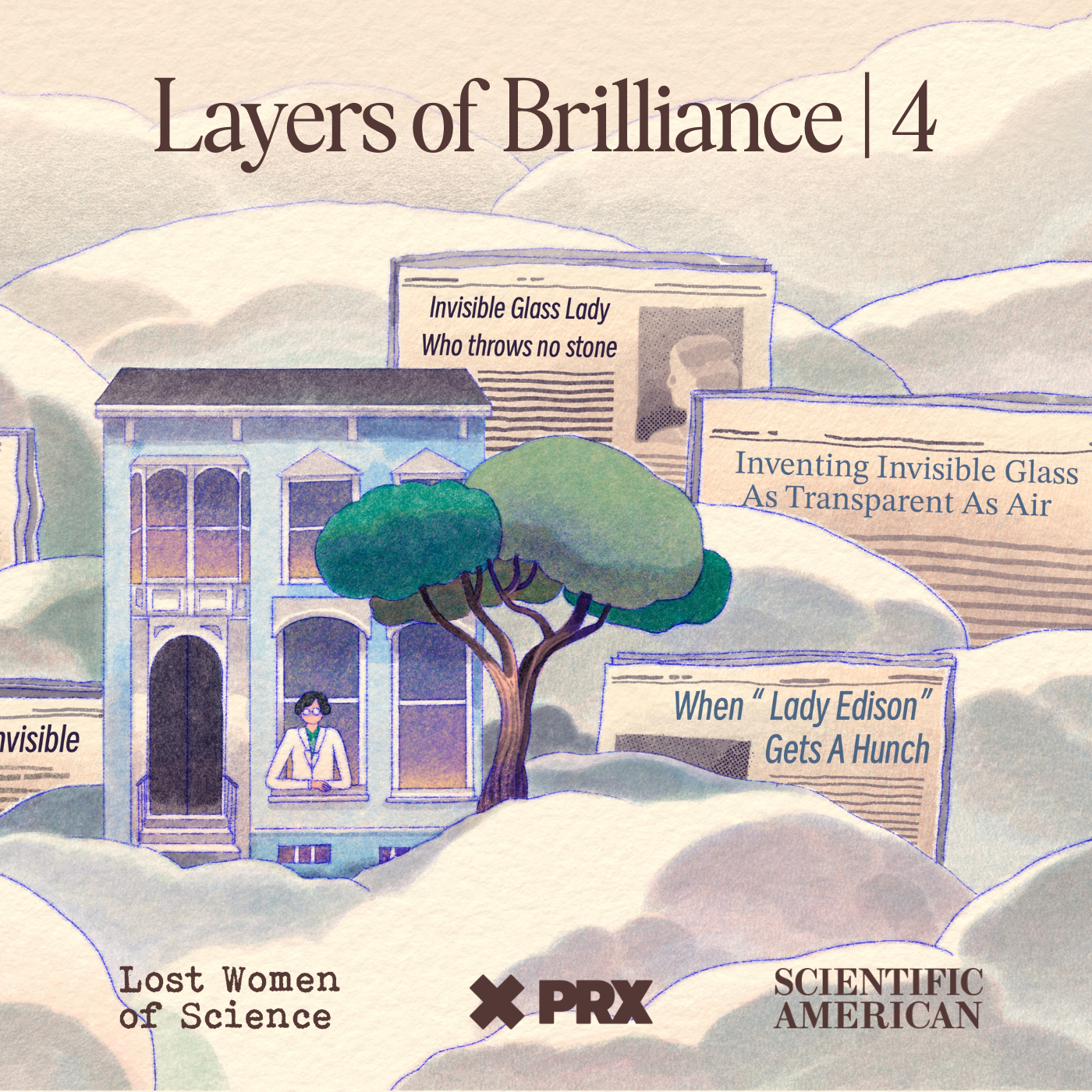
Layers of Brilliance: The Breakthrough - Episode Four
The 1930s prove to be an exceptional decade for research at The General Electric Company. Katharine Burr Blodgett works closely alongside her boss, Irving Langmuir who, in 1932, wins the Nobel Prize for Chemistry. In 1938, Katharine’s meticulous experiments with thin film coatings on solid surfaces lead to her most important breakthrough: non-reflecting glass. The General Electric Company’s public relations machine kicks into high gear. Katharine becomes an overnight sensation, both in the scientific community and in the press, which dub her discovery “invisible glass.” The assistant to the Nobel Prize winner, long invisible herself, takes center stage. Learn about your ad choices: dovetail.prx.org/ad-choices
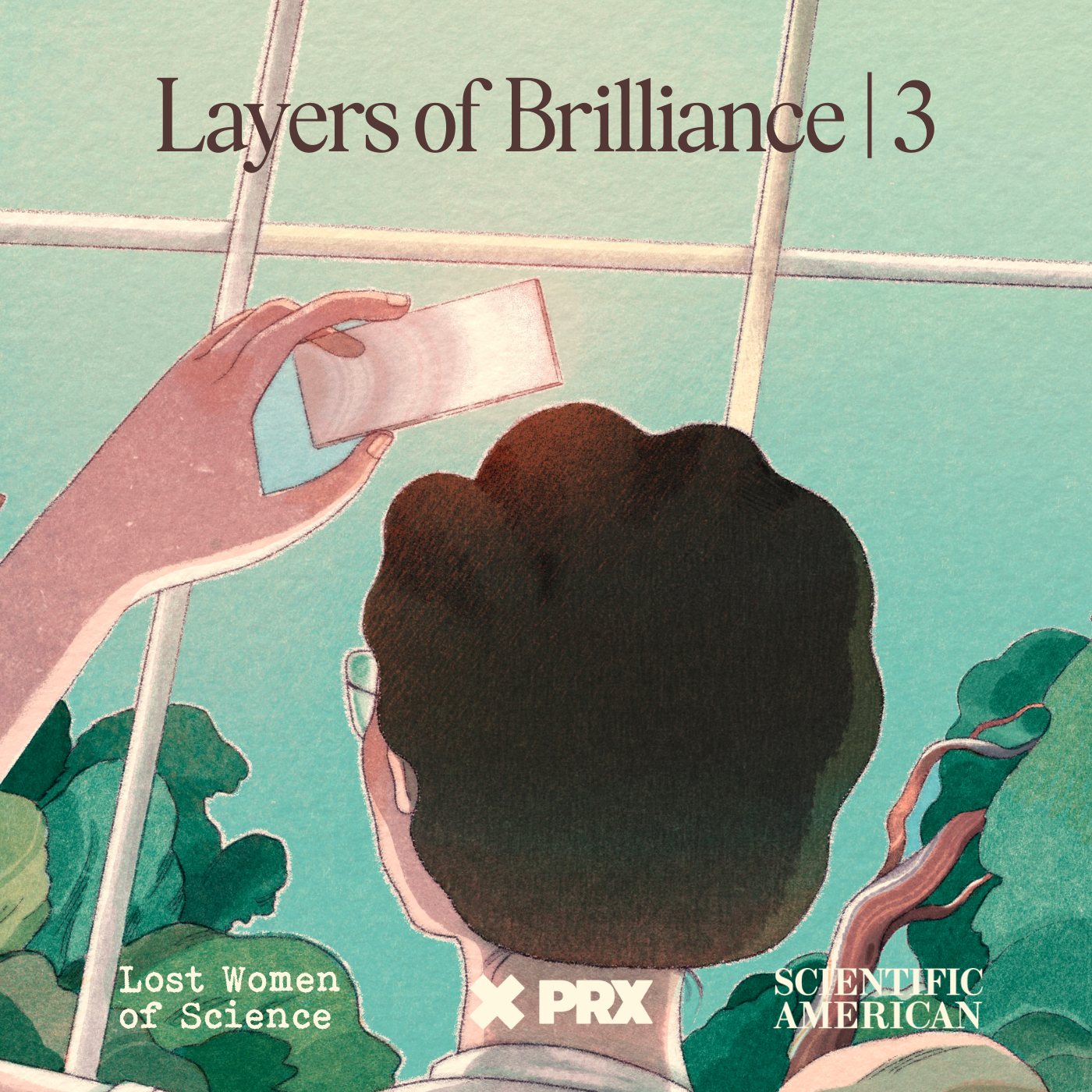
Layers of Brilliance: The Air She Breathed -- Episode Three
The only woman in a laboratory filled with men, Katharine Burr Blodgett soon becomes indispensable as an assistant to The General Electric Company’s most famous scientist, Irving Langmuir. Their working relationship is an elegant symbiosis: her forte is experimentation, his is scientific theory. We follow their partnership as they successfully find ways to build a better lightbulb but Langmuir stumbles with an off-the-wall theory of matter. All the while, Katharine builds her life in Schenectady: going to church, making new friends, falling in love. In 1924, she embarks on a new journey to the University of Cambridge, where she studies with some of the most prominent physicists of the 20th century. Learn about your ad choices: dovetail.prx.org/ad-choices
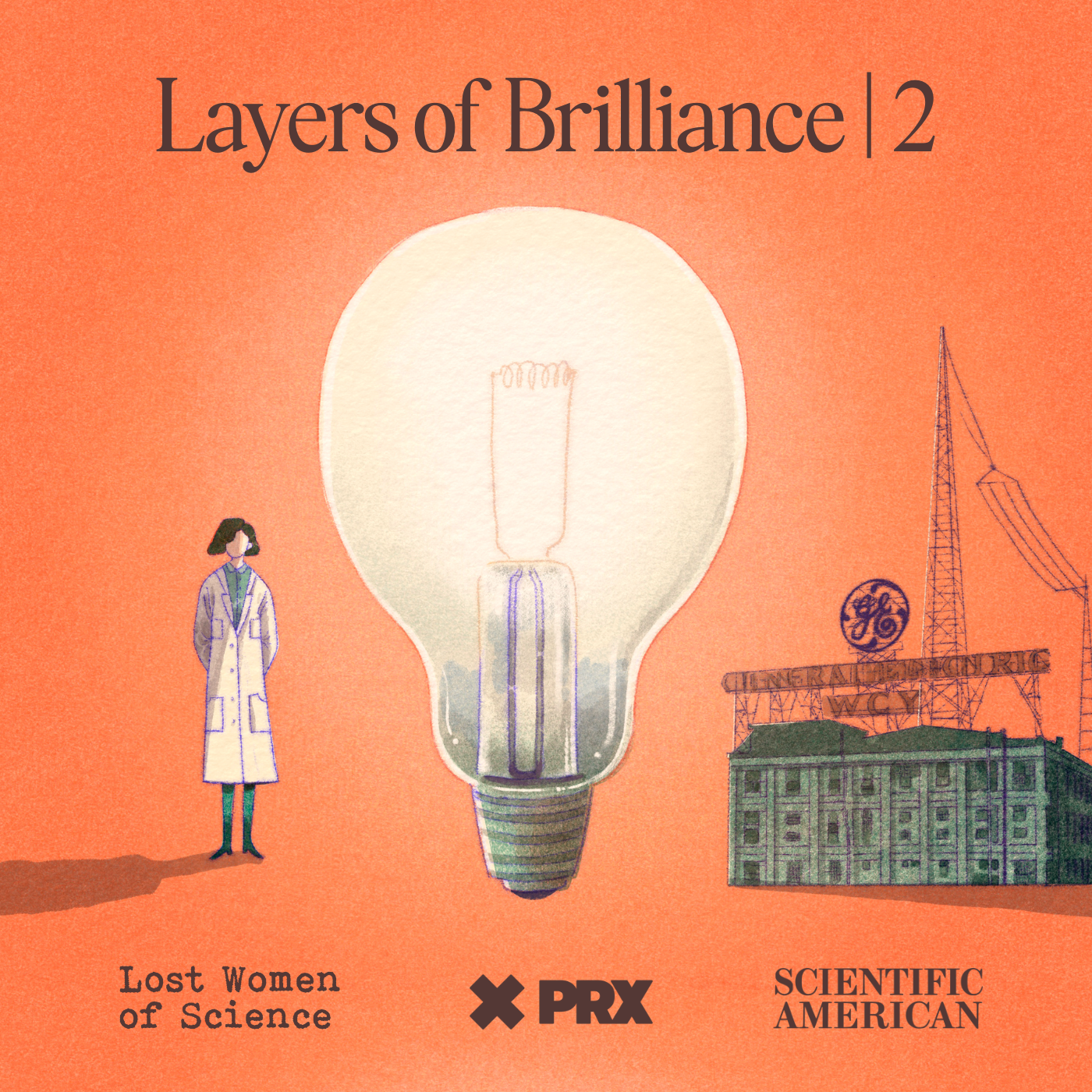
Layers of Brilliance: The 'House of Magic' -- Episode Two
Katharine Burr Blodgett arrives at The General Electric Company’s legendary research laboratory in Schenectady, New York, known as the “House of Magic.” She was just 20 years old when she entered a world built almost entirely for men. She joins as assistant to the brilliant and eccentric Irving Langmuir, a star chemist whose fundamental work in materials science and light bulbs would bring fame to him, and fortune to GE. The General Electric Company was an obvious choice for a brilliant young scientist. But was it the promise of scientific discoveries that drew Katharine to Schenectady or the need to confront the personal tragedy that marked the place where her own story began? Perhaps it was both. Learn about your ad choices: dovetail.prx.org/ad-choices
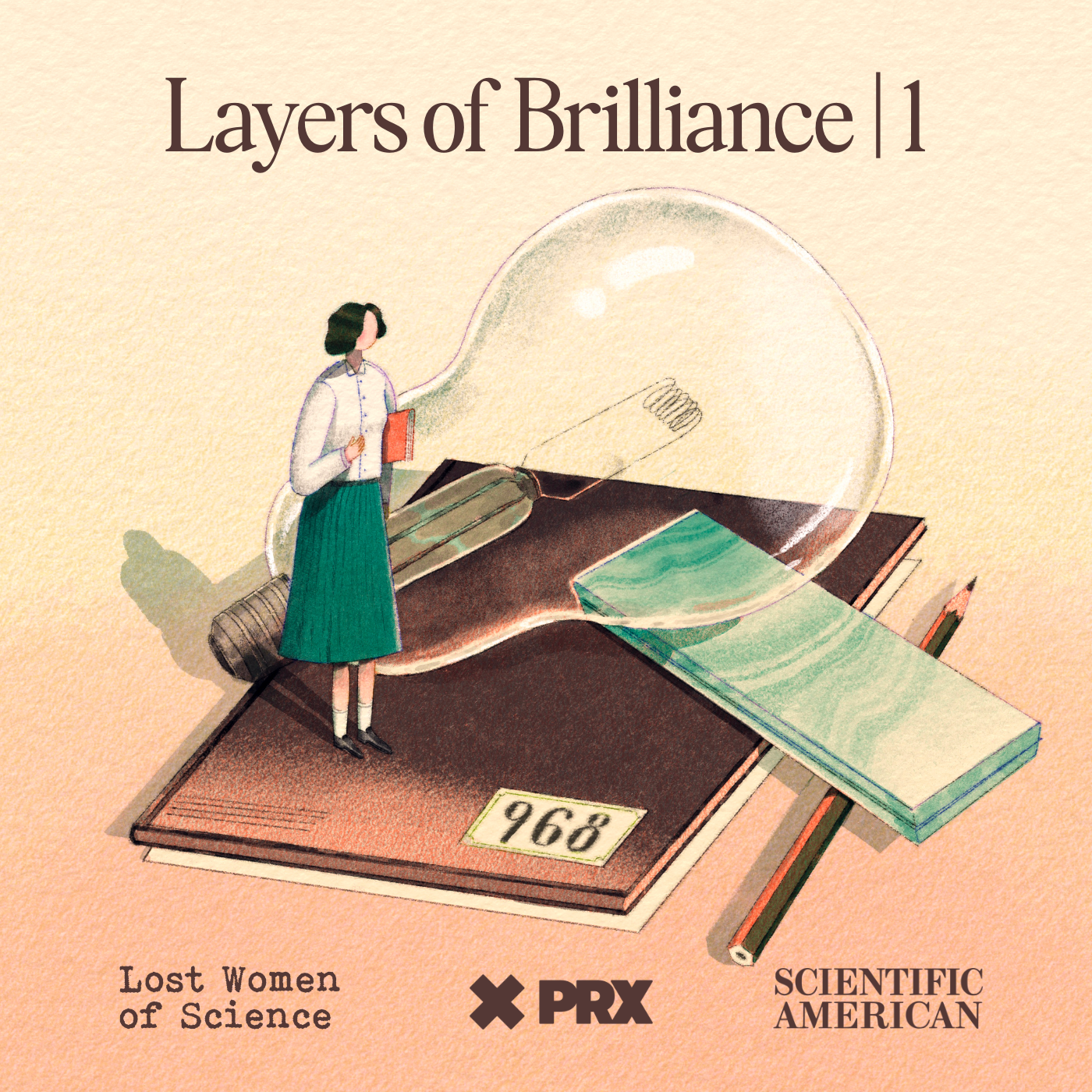
Layers of Brilliance: The Chemical Genius of Katharine Burr Blodgett - Episode One
In the first of this five-part season we trace Katharine’s early years as she picks up European languages, her early scientific education at a progressive New York school for girls and then Bryn Mawr, a women’s college. She seems destined to end up working at the General Electric Company’s industrial research lab, but first she must prove herself at the University of Chicago, where, in the middle of World War I, she works to improve the life-saving gas mask. Learn about your ad choices: dovetail.prx.org/ad-choices
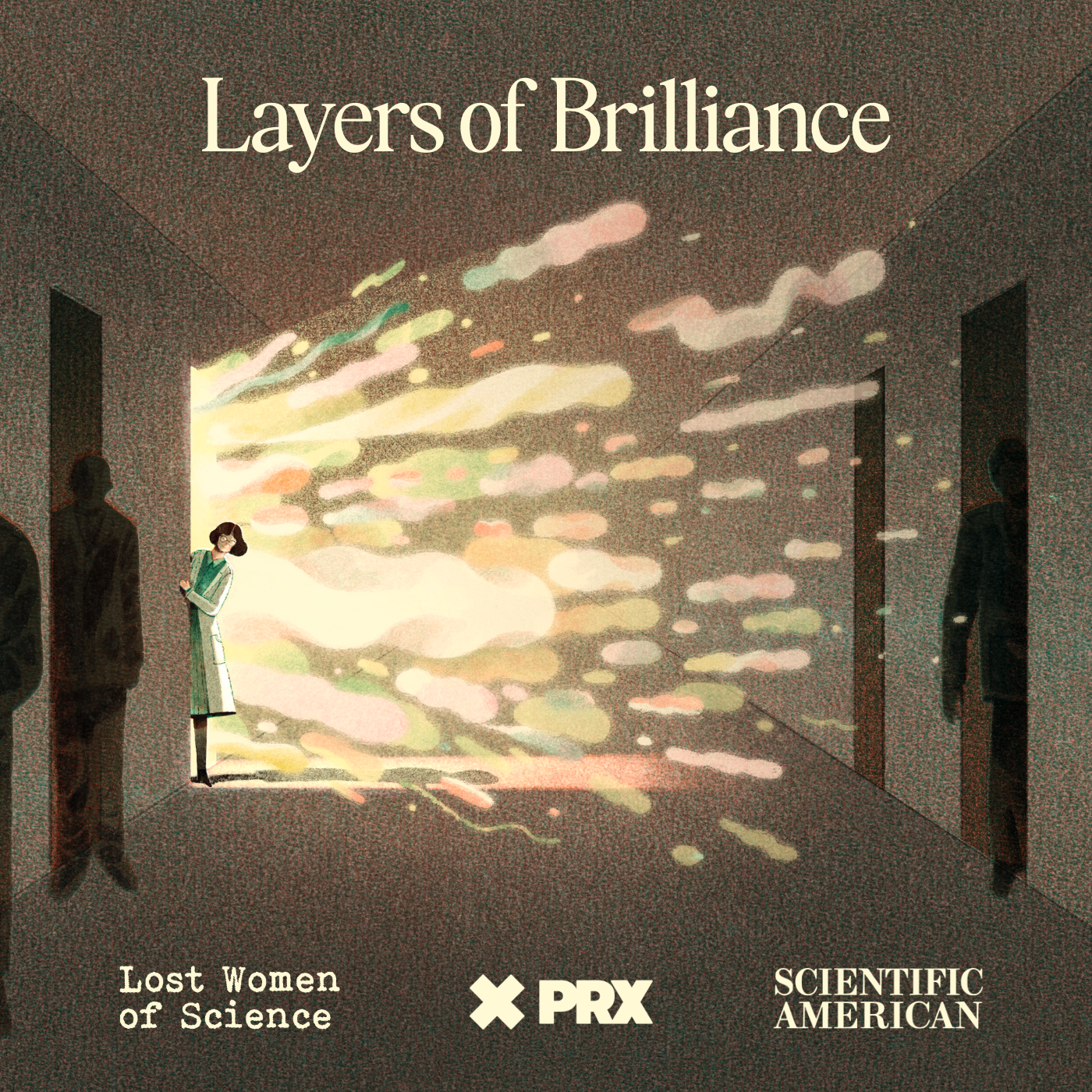
Layers of Brilliance
Introducing Layers of Brilliance, a six-part season that brings to life the story of a woman whose discoveries in materials science quietly shape our everyday world – but whose legacy was long eclipsed by the famous scientist she worked with.In 1918, at just twenty years old, Katharine Burr Blodgett arrived at the General Electric Company’s industrial research laboratory in Schenectady, New York – a place known as the House of Magic. There she began a decades-long collaboration with Irving Langmuir, GE’s star scientist, who would go on to win the Nobel Prize in Chemistry. While Langmuir became a public figure, Blodgett became something else: the mind and hands behind experiments so delicate they operated at the scale of single molecules.Blodgett’s work on films just one molecule thick would lead to multiple U.S. patents and form the basis of technologies embedded in today’s screens, optics, and electronics.Listen as we peel back the layers of Katharine Burr Blodgett’s life – how she made groundbreaking science inside a world built for men, how she struggled against profound personal challenges, and how a woman whose work helped shape modern materials science nearly disappeared from history. Learn about your ad choices: dovetail.prx.org/ad-choices
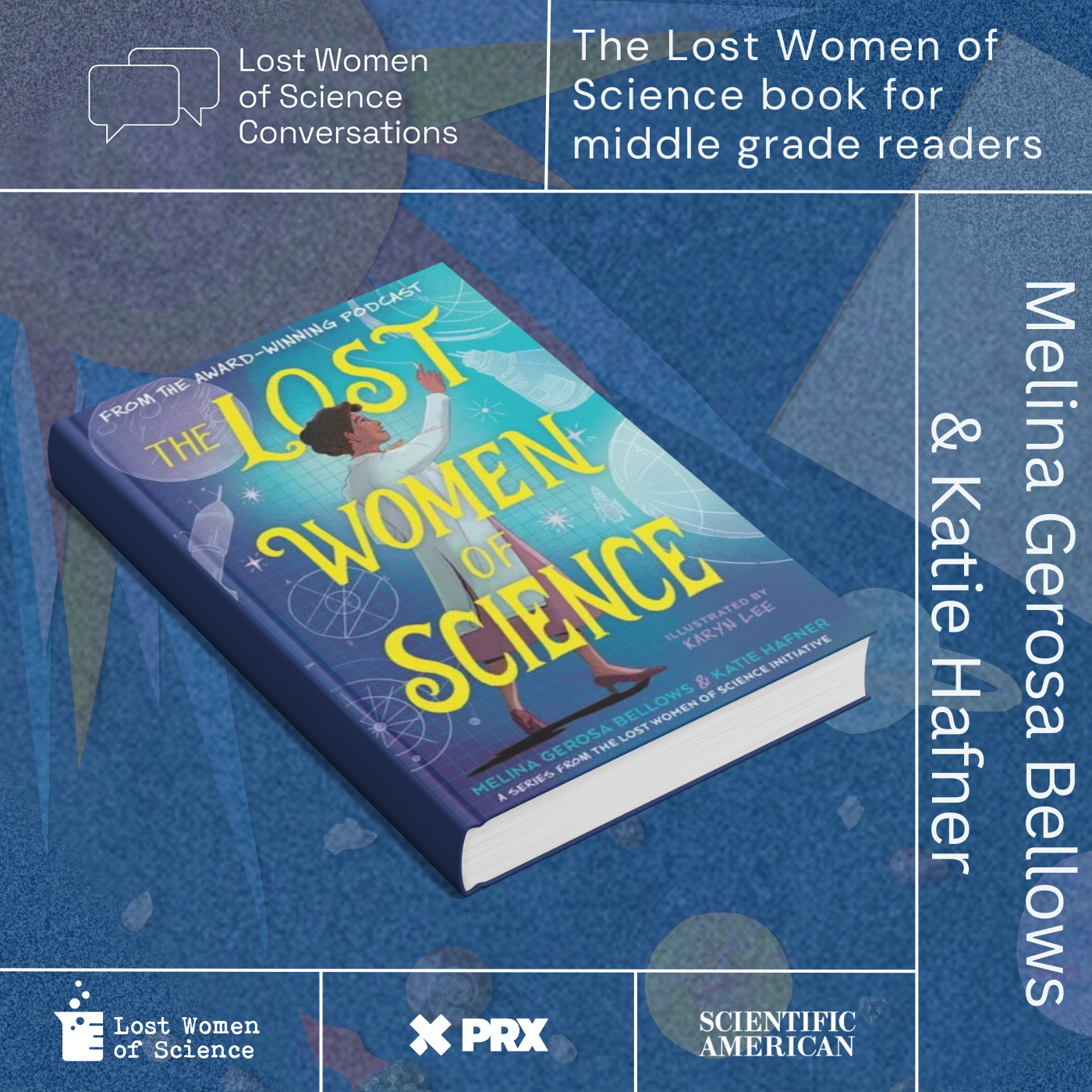
The Lost Women of Science - Our Book for Young Readers
The Lost Women of Science by Melina Gerosa Bellows and Katie Hafner is an exciting book for young readers that brings to life the stories of ten remarkable women who changed the world of science but have been forgotten, or written out of history completely. Published by Penguin Random House’s Bright Matter imprint, the book transforms podcast episodes into a collection of inspiring biographies written for middle school readers. In this Lost Women of Science Conversation, Melina and Katie talk about their favorite female scientists and why their grit and determination can help inspire curiosity in the next generation of young female (and male) scientists. For parents, teachers or grandparents looking to spark a love of science in the young people in their lives, look no further than this book this holiday season. Learn about your ad choices: dovetail.prx.org/ad-choices