
Littoral Science: Growing Knowledge in the Age of AI
The Littoral Science Podcast explores the transformative frontier where artificial intelligence meets the natural world.
Ernest Prabhakar
Show overview
Littoral Science: Growing Knowledge in the Age of AI has published 11 episodes, alongside 1 trailer or bonus episode during 2024. That works out to roughly 3 hours of audio in total. Releases follow a several-times-a-week cadence.
Episodes typically run ten to twenty minutes — most land between 13 min and 17 min — and the run-time is fairly consistent across the catalogue. None of the episodes are flagged explicit by the publisher. It is catalogued as a EN-language Technology show.
The catalogue appears to be on hiatus or wound down — the most recent episode landed 1.9 years ago, with no new episodes in over a year. Published by Ernest Prabhakar.
From the publisher
The Littoral Science Podcast explores the transformative frontier where artificial intelligence meets the natural world. Join us as we uncover how AI is reshaping research, discovery, and collaboration across disciplines—from biology and environmental science to computational models and systems thinking. Each episode delves into cutting-edge advancements, interdisciplinary breakthroughs, and the exciting future of how knowledge grows in the age of AI. Perfect for forward-thinking listeners eager to understand how science and technology co-evolve in this new era of discovery.
Latest Episodes

Ep 1Hexons: Co-Developing Hardware and Software
trailerCo-Designing the Future: A Deep Dive into HCDL, Hexons, and HomoiconicityJoin us as we explore the revolutionary world of co-design, where the traditional barriers between hardware and software development are shattered.Our expert guests explain how HCDL (Hardware-centric Design Language), built upon MLIR (Multi-Level Intermediate Representation), enables the seamless integration of hardware and software design. Imagine architects and engineers collaborating on a single blueprint, resulting in skyscrapers that are not only aesthetically pleasing but also structurally sound and energy-efficient. That's the power of HCDL.But co-design goes beyond just language. Discover the fascinating concept of Hexons, intelligent building blocks that blur the lines between hardware and software. Like a network of highly skilled teams, Hexons operate in parallel, communicate constantly, and adapt to changing conditions.Homoiconicity, a mind-bending concept where code and data are represented in the same way, further empowers co-design. Imagine a system that can analyze and optimize its own code, leading to unprecedented levels of efficiency and adaptability.With RISC-V, a flexible instruction set architecture, developers can create custom instructions tailored for Hexon-based systems. Coupled with custom ASICs (Application-Specific Integrated Circuits), the possibilities for innovation are limitless.The episode features real-world examples of companies at the forefront of this revolution. Learn how Company Ais simplifying the design of custom hardware accelerators with an HCDL-like language, while Company B is developing an operating system specifically designed for Hexon-based systems.This episode is a must-listen for anyone interested in the future of computing, from tech enthusiasts to angel investors seeking to support the companies shaping tomorrow's technology. Tune in to discover how co-design, HCDL, Hexons, and homoiconicity are paving the way for a world of smarter, more adaptable, and ultimately more capable computing systems.
Ep 10Littoral Civilization: How AI Helps Metamodernity Solve the Metacrisis
This podcast episode focuses on the concept of Littoral Civilization, a metamodern vision of how artificial intelligence (AI) could help humanity overcome the current "metacrisis." It explores how AI can be used to address challenges such as ecological collapse, socioeconomic inequality, political instability, and the erosion of collective meaning.The episode begins by discussing the metacrisis and its underlying meaning crisis, which is described as a breakdown in shared frameworks for understanding existence, the self, and society. The episode emphasizes the interconnected nature of the issues contributing to the metacrisis and highlights the need for a holistic response that goes beyond traditional ways of thinking.The episode then introduces the concept of Littoral Science, which bridges the "wet" (biological, human-centered) and "dry" (computational, digital) domains. This new discipline aims to integrate human intuition, wisdom, and ethical judgment with the processing power and pattern recognition capabilities of AI. By leveraging AI, Littoral Science seeks to develop new ways of understanding complex systems and promoting resilience in social and ecological spheres.The episode explores how AI can support metamodern meaning-making by encouraging a synthesis of seemingly opposing perspectives, such as science and spirituality. It suggests that AI can help create platforms for shared, experiential spirituality where communities can engage in meaning-making processes together. These platforms could allow individuals to revisit ancient wisdom in a contemporary context and validate insights and practices through both subjective experience and empirical feedback.The episode also examines the concept of Littoral Governance, which proposes a shift from centralized, hierarchical structures to distributed, adaptive systems that can respond dynamically to the needs of their constituencies. By using AI to decentralize decision-making while ensuring coherence across local and global scales, Littoral Governance could enable communities to tailor policies to local conditions while maintaining coordination with broader networks.The episode concludes by discussing Littoral Ethinomics, which aims to reunite ethics and economics by leveraging AI to ensure that financial decisions reflect social and environmental well-being. This approach would prioritize community welfare, social trust, and ecological stewardship in economic models, promoting sustainable growth that respects human dignity and environmental integrity.Overall, the episode emphasizes that AI should not replace human spirituality, purpose, or moral agency but should instead enhance humanity's ability to engage with these aspects of life in meaningful ways. By thoughtfully integrating AI, Littoral Civilization seeks to restore balance between analytical and relational modes of understanding and rekindle a coherent cultural narrative that encompasses purpose, mystery, and connection.The sources refer to thinkers and researchers such as Daniel Schmachtenberger, Peter Turchin, Iain McGilchrist, and Niall Ferguson, who have contributed to the ideas discussed in the episode. The episode also mentions the concept of the Littoral University, which exemplifies how Littoral Civilization might promote lifelong learning, spiritual growth, and systems thinking. It highlights the importance of embracing Littoral Science, Littoral Governance, and Littoral Ethinomics to create a civilization that harmonizes technological advancement with existential meaning. Finally, it emphasizes that the path to a Littoral Civilization is not merely a technical endeavor but a spiritual one that calls for a shared journey toward coherence, compassion, and wisdom.

Ep 9Littoral Leadership: How AI-Powered Self-Differentiation Cures Alienation
This episode examines Littoral Leadership, a leadership style for the age of AI, and its connection to self-differentiation, the ability to maintain one's identity and values while staying connected to others.This episode explores:The concept of "hardness" as defined by Venkatesh Rao and how the "hardness" offered by AI's stability presents both opportunities and challenges for leaders.The paradoxical nature of AI as both a threat and an opportunity for self-differentiation.The three ways AI can lead to alienation: from self, community, and the larger world.How Littoral Leadership, which emphasizes integrating the "wet" world of human experience with the "dry" world of AI computation, can help leaders use AI without being defined by it.The episode also discusses the four practical principles of Littoral Self-Leadership:Engaging AI as an enhancement, not a replacement, for human judgment.Cultivating personal "hardness" through self-knowledge.Balancing digital and human connection.Maintaining a non-anxious presence amidst technological change.The episode concludes by positioning Littoral Leadership as a way to reclaim human identity in a digital world by integrating AI in a way that enhances, rather than diminishes, humanity.
Ep 8Self-Trifferentiation: Littoral Identity in the Age of AI
Navigating the Digital Age: Self-Trifferentiation and the Quest for a Littoral IdentityDescription:In this episode, we explore the concept of self-trifferentiation, a framework for navigating identity in the age of AI. As artificial intelligence increasingly shapes our lives, it presents both opportunities and challenges to our sense of self. The sources posit that traditional notions of self-differentiation, balancing individuality and community, need to evolve to include our relationship with the digital realm.The episode will begin by examining how historical transformations, from the Agricultural Revolution to the Industrial Revolution, have shaped human identity. Each era has brought new complexities to the balance between self and community, leading to the need for adaptation.The episode will then discuss how the rise of AI presents a unique challenge to identity formation. AI-generated data creates digital representations of ourselves that can be both insightful and misleading. These digital reflections can influence our self-perception and lead to a sense of digital alienation, where we risk losing touch with our authentic selves. Similarly, digital platforms can foster a sense of connection while simultaneously hindering genuine human interaction.The core of the episode will focus on the concept of self-trifferentiation. This involves consciously integrating three forces: our individuality, our connection to others, and our relationship with AI. The goal is to develop a Littoral Identity, where we occupy the boundary between the analog and digital worlds, leveraging AI as a tool for growth and reflection without allowing it to define us.The episode will offer practical strategies for practicing self-trifferentiation, including:Engaging AI as a tool rather than a mirror, using its insights for self-reflection without letting it dictate our identity.Building real-world communities with digital support, using technology to facilitate but not replace genuine human connection.Balancing digital engagement with analog grounding, setting boundaries on technology use and prioritizing in-person experiences.The episode will conclude by exploring the seemingly paradoxical idea that engaging with AI can make us more human. By consciously navigating our relationship with technology, we can gain greater clarity about our own values and priorities, leading to a more authentic and fulfilling life.Key takeaways:AI presents unique challenges and opportunities to identity formation in the digital age.Self-trifferentiation offers a framework for integrating AI into our lives in a way that enhances our humanity.By cultivating a Littoral Identity, we can leverage technology while maintaining a strong sense of self and connection to others.The conscious integration of AI can paradoxically lead to a deeper understanding of our own humanity.This podcast episode aims to provide listeners with a nuanced understanding of the complex relationship between technology and identity. It offers practical strategies for navigating the digital age in a way that promotes personal growth and well-being.
Ep 7Littoral Governance: A New Politics for the Age of AI
Littoral Governance in the Age of AIThe "Littoral Governance" episode introduces a new model of governance designed to meet the challenges and harness the opportunities of the Age of AI. This model, called Littoral Governance, draws inspiration from Littoral Science, which emphasizes a collaborative approach between human intuition and AI capabilities. The core idea is to create a system that can effectively manage the increasing complexity and rapid pace of change brought about by AI, decentralized networks, and evolving social structures.Traditional political systems, from tribal societies to modern democracies, have struggled to adapt to new levels of complexity driven by technological advancements in information processing and dissemination.The Age of AI presents a particularly acute challenge, as the volume and speed of information generated by AI systems overwhelm existing hierarchical structures.Centralized decision-making becomes inefficient, creating information bottlenecks that hinder effective responses to pressing societal issues.Littoral Governance proposes a shift towards decentralized, adaptive structures that mirror the principles of Littoral Science:Co-evolution of human and AI decision-making: This involves leveraging AI for rapid data processing and analysis while maintaining human oversight for ethical and moral judgments.Real-time feedback loops: Governance structures should be designed to dynamically adapt to emerging data and societal needs, allowing for continuous policy adjustments based on real-time insights.Distributed and adaptive governance: Local communities and governments are granted greater autonomy to address their specific needs, supported by AI tools that provide localized insights.Global coordination through decentralized networks: While emphasizing local autonomy, Littoral Governance also utilizes decentralized networks to facilitate global cooperation on issues like climate change, transcending the limitations of slow-moving centralized institutions.Generativity through collaborative governance: By promoting collaboration between individuals, communities, and AI systems, Littoral Governance aims to foster continuous innovation and societal adaptation. Digital platforms that facilitate collective decision-making and crowdsourcing become essential tools for policy development and problem-solving, with AI playing a crucial role in synthesizing and prioritizing inputs.The episode highlights the need to balance the relational aspects of politics, such as trust and community cohesion, with the transactional dimensions of governance. Littoral Governance aims to achieve this balance by:Utilizing AI to optimize both efficiency and ethical outcomes in governance.Fostering a generative ethical framework where policies not only prioritize efficiency but also promote social trust, equity, and sustainability.Littoral Governance, by drawing on the principles of Littoral Science, offers a model for politics that is not only responsive to the complexities of the digital age but also ethical, adaptive, and focused on nurturing human and societal well-being.
Ep 6Littoral Ethinomics: How AI Undivorces Ethics from Economics
The rise of artificial intelligence (AI) is rapidly changing the world, including our economies. But are our current economic models, rooted in 18th-century thinking, equipped to handle the ethical challenges of this technological revolution? This episode explores "Littoral Ethinomics," a new economic paradigm that seeks to integrate ethics and human well-being into AI-driven economies.Join us as we:Explore the limitations of traditional economic models in the age of AI. [1, 2]Discover how Littoral Science, a field merging human and computational systems, offers a framework for bridging the gap between ethics and economics. [3, 4]Unpack the core principles of Littoral Ethinomics, including AI as an ethical mediator, the relational-transactional continuum, and the co-evolution of ethical and economic systems. [5-8]Discuss real-world applications of Littoral Ethinomics, from AI-driven social enterprises to ethical policy design. [9]Imagine a future where technology serves both the market and humanity. [10]Tune in to learn how Littoral Ethinomics can help us build a more just, equitable, and sustainable economy in the age of AI.

Ep 5Littoral Spirituality: A New Moral Center for the Age of AI
Title: Littoral Spirituality: A New Moral Compass for the Age of AIDescription: In a world increasingly shaped by artificial intelligence, technological disruption, and a flood of misinformation, how can we find a new moral center? This episode explores the concept of "Littoral Spirituality," a vision for faith communities that draws inspiration from the principles of Littoral Science and the Littoral University.The episode examines the need for a new moral center in the age of Universal Littoralcy, where knowledge is decentralized and accessible to all.It challenges the traditional model of top-down authority in religious institutions and proposes a shift toward shared practices that cultivate authentic spiritual experiences.It highlights the importance of faith communities becoming vibrant spaces for rigorous spiritual practice, where members engage in direct spiritual encounters and validate each other's experiences.The episode explores how these communities can leverage modern tools, such as AI-powered platforms, to guide personal spiritual practices and facilitate the sharing of spiritual insights.It emphasizes the role of faith communities as laboratories for moral innovation, where ethical and moral questions arising from technological advancements and social changes are explored in light of spiritual practice.The episode envisions these communities developing a cohesive moral framework through shared practices and collective discernment, one that is responsive to contemporary challenges while rooted in the transformative power of spiritual experience.Join us as we explore how Littoral Spirituality can provide a new moral compass for navigating the complexities of the modern age.
Ep 4Universal Littoralcy: The Scientification of Everyday Life
This episode explores Universal Littoralcy, the idea that everyone can participate in creating and validating knowledge. This is especially important today because of AI-generated misinformation and the changing job market.The episode examines how to bring the Littoral Toolbox, a platform designed for collaborative research at the Littoral University, to communities beyond the university. The episode discusses:How the Littoral Toolbox can help citizens fight misinformation and work together to verify information.How the Toolbox allows citizens to make small contributions to knowledge, which helps everyone understand things like local job trends and public health.How the Toolbox can help communities create networks to work together on important issues.How the Toolbox can help people keep learning and adapt to a world that is constantly changing.The episode emphasizes how the Littoral Toolbox can help create a world where knowledge is trustworthy and everyone can participate in building it.
Ep 3The Littoral Toolbox: A Distributed Platform for AI-Powered Science
A proposed distributed data platform called the Littoral Toolbox, designed to facilitate interdisciplinary research powered by artificial intelligence. This platform emphasizes the use of verifiable datasets, which are considered crucial for fostering trust among collaborators, ensuring the reliability of AI models, and accelerating scientific discovery. The Littoral Toolbox aims to seamlessly integrate legacy scientific tools and data sources with modern AI-driven workflows while providing robust systems for data governance, security, and ethical AI use

Ep 2The Littoral University: Redesigning Higher Education for the Age of AI
"The Littoral University: Redesigning Higher Education for the Age of AI" argues that the traditional university model, based on specialization and departmental silos, is outdated in the age of artificial intelligence. It proposes the "Littoral University" as a new educational paradigm that leverages AI and computational intelligence to create a more interdisciplinary, adaptive, and collaborative learning environment. The Littoral University would abandon traditional disciplines in favor of research hubs focused on solving global challenges, promote fluid research teams, and utilize AI-driven learning platforms to personalize education. The article also explores how the Littoral University model would disrupt traditional funding models, replacing tuition with subscription-based learning and shifting research funding towards problem-oriented, global collaborations.
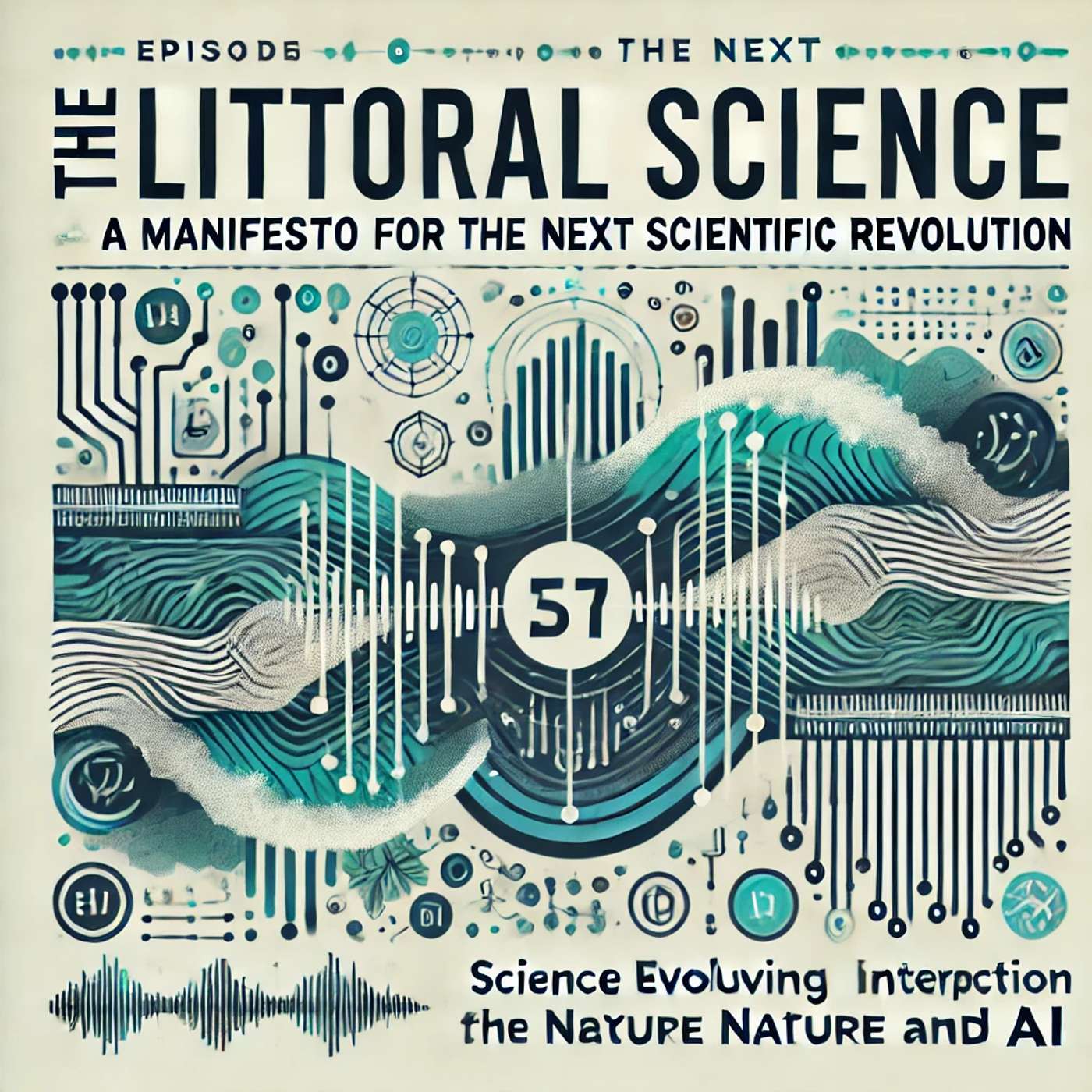
Ep 1Littoral Science: A Manifesto for the Next Scientific Revolution
"Littoral Science: A Manifesto for the Next Scientific Revolution," argues that science is on the verge of a paradigm shift, marked by the integration of AI and human collaboration. It proposes a new scientific framework, dubbed "Littoral Science," where real-world experiments and computational models co-evolve, enhancing discovery through a feedback loop. This approach emphasizes the importance of human judgment and creativity while harnessing the power of AI for data analysis, hypothesis generation, and modeling complex systems. The author highlights the ethical and epistemological challenges that arise with the increased reliance on AI, emphasizing the need for ethical inquiry alongside scientific advancement.