Linear Digressions
326 episodes — Page 7 of 7
Random Number Generation
Let's talk about randomness! Although randomness is pervasive throughout the natural world, it's surprisingly difficult to generate random numbers. And even if your numbers look random (but actually aren't), it can have interesting consequences on the security of systems, and the accuracy of models and research. In this episode, Katie and Ben talk about randomness, its place in machine learning and computation in general, along with some random digressions of their own.
Electoral Insights (Part 2)
Following up on our last episode about how experiments can be performed in political science, now we explore a high-profile case of an experiment gone wrong. An extremely high-profile paper that was published in 2014, about how talking to people can convince them to change their minds on topics like abortion and gay marriage, has been exposed as the likely product of a fraudulently produced dataset. We’ll talk about a cool data science tool called the Kolmogorov-Smirnov test, which a pair of graduate students used to reverse-engineer the likely way that the fraudulent data was generated. But a bigger question still remains—what does this whole episode tell us about fraud and oversight in science?
Electoral Insights (Part 1)
The first of our two-parter discussing the recent electoral data fraud case. The results of the study in question were covered widely, including by This American Life (who later had to issue a retraction). Data science for election research involves studying voters, who are people, and people are tricky to study—every one of them is different, and the same treatment can have different effects on different voters. But with randomized controlled trials, small variations from person to person can even out when you look at a larger group. With the advent of randomized experiments in elections a few decades ago, a whole new door was opened for studying the most effective ways to campaign.
Falsifying Data
In the first of a few episodes on fraud in election research, we’ll take a look at a case study from a previous Presidential election, where polling results were faked. What are some telltale signs that data fraud might be present in a dataset? We’ll explore that in this episode.
Reporter Bot
There’s a big difference between a table of numbers or statistics, and the underlying story that a human might tell about how those numbers were generated. Think about a baseball game—the game stats and a newspaper story are describing the same thing, but one is a good input for a machine learning algorithm and the other is a good story to read over your morning coffee. Data science and machine learning are starting to bridge this gap, taking the raw data on things like baseball games, financial scenarios, etc. and automatically writing human-readable stories that are increasingly indistinguishable from what a human would write. In this episode, we’ll talk about some examples of auto-generated content—you’ll be amazed at how sophisticated some of these reporter-bots can be. By the way, this summary was written by a human. (Or was it?)
Careers in Data Science
Let’s talk money. As a “hot” career right now, data science can pay pretty well. But for an individual person matched with a specific job or industry, how much should someone expect to make? Since Katie was on the job market lately, this was something she’s been researching, and it turns out that data science itself (in particular linear regressions) has some answers. In this episode, we go through a survey of hundreds of data scientists, who report on their job duties, industry, skills, education, location, etc. along with their salaries, and then talk about how this data was fed into a linear regression so that you (yes, you!) can use the patterns in the data to know what kind of salary any particular kind of data scientist might expect.
That's "Dr Katie" to You
Katie successfully defended her thesis! We celebrate her return, and talk a bit about what getting a PhD in Physics is like.
Neural Nets (Part 2)
In the last episode, we zipped through neural nets and got a quick idea of how they work and why they can be so powerful. Here’s the real payoff of that work: In this episode, we’ll talk about a brand-new pair of results, one from Stanford and one from Google, that use neural nets to perform automated picture captioning. One neural net does the object and relationship recognition of the image, a second neural net handles the natural language processing required to express that in an English sentence, and when you put them together you get an automated captioning tool. Two heads are better than one indeed...
Neural Nets (Part 1)
There is no known learning algorithm that is more flexible and powerful than the human brain. That's quite inspirational, if you think about it--to level up machine learning, maybe we should be going back to biology and letting millions of year of evolution guide the structure of our algorithms. This is the idea behind neural nets, which mock up the structure of the brain and are some of the most studied and powerful algorithms out there. In this episode, we’ll lay out the building blocks of the neural net (called neurons, naturally) and the networks that are built out of them. We’ll also explore the results that neural nets get when used to do object recognition in photographs.
Inferring Authorship (Part 2)
Now that we’re up to speed on the classic author ID problem (who wrote the unsigned Federalist Papers?), we move onto a couple more contemporary examples. First, J.K. Rowling was famously outed using computational linguistics (and Twitter) when she wrote a book under the pseudonym Robert Galbraith. Second, we’ll talk about a mystery that still endures--who is Satoshi Nakamoto? Satoshi is the mysterious person (or people) behind an extremely lucrative cryptocurrency (aka internet money) called Bitcoin; no one knows who he, she or they are, but we have plenty of writing samples in the form of whitepapers and Bitcoin forum posts. We’ll discuss some attempts to link Satoshi Nakamoto with a cryptocurrency expert and computer scientist named Nick Szabo; the links are tantalizing, but not a smoking gun. “Who is Satoshi” remains an example of attempted author identification where the threads are tangled, the conclusions inconclusive and the stakes high.
Inferring Authorship (Part 1)
This episode is inspired by one of our projects for Intro to Machine Learning: given a writing sample, can you use machine learning to identify who wrote it? Turns out that the answer is yes, a person’s writing style is as distinctive as their vocal inflection or their gait when they walk. By tracing the vocabulary used in a given piece, and comparing the word choices to the word choices in writing samples where we know the author, it can be surprisingly clear who is the more likely author of a given piece of text. We’ll use a seminal paper from the 1960’s as our example here, where the Naive Bayes algorithm was used to determine whether Alexander Hamilton or James Madison was the more likely author of a number of anonymous Federalist Papers.
Statistical Mistakes and the Challenger Disaster
After the Challenger exploded in 1986, killing all 7 astronauts aboard, an investigation into the cause was immediately launched. In the cold temperatures the night before the launch, the o-rings that seal off the fuel tanks from the rocket boosters became inflexible, so they did not seal properly, which led to the fuel tank explosion. NASA knew that there could be o-ring problems, but performed the analysis of their data incorrectly and ended up massively underestimating the risk associated with the cold temperatures. In this episode, we'll unpack the mistakes they made. We'll talk about how they excluded data points that they thought were irrelevant but which actually were critical to recognizing a fatal pattern.
Genetics and Um Detection (HMM Part 2)
In part two of our series on Hidden Markov Models (HMMs), we talk to Katie and special guest Francesco about more useful and novel applications of HMMs. We revisit Katie's "Um Detector," and hear about how HMMs are used in genetics research.
Introducing Hidden Markov Models (HMM Part 1)
Wikipedia says, "A hidden Markov model (HMM) is a statistical Markov model in which the system being modeled is assumed to be a Markov process with unobserved (hidden) states." What does that even mean? In part one of a special two-parter on HMMs, Katie, Ben, and special guest Francesco explain the basics of HMMs, and some simple applications of them in the real world. This episode sets the stage for part two, where we explore the use of HMMs in Modern Genetics, and possibly Katie's "Um Detector."
Monte Carlo For Physicists
This is another physics-centered podcast, about an ML-backed particle identification tool that we use to figure out what kind of particle caused a particular blob in the detector. But in this case, as in many cases, it looks hard at the outset to use ML because we don't have labeled training data. Monte Carlo to the rescue! Monte Carlo (MC) is fake data that we generate for ourselves, usually following certain sets of rules (often a Markov chain; in physics we generate MC according to the laws of physics as we understand them) and since you generated the event, you "know" what the correct label is. Of course, it's a lot of work to validate your MC, but the payoff is that then you can use Machine Learning where you never could before.
Random Kanye
Ever feel like you could randomly assemble words from a certain vocabulary and make semi-coherent Kanye West lyrics? Or technical documentation, imitations of local newscasters, your politically outspoken uncle, etc.? Wonder no more, there's a way to do this exact type of thing: it's called a Markov Chain, and probably the most powerful way to generate made-up data that you can then use for fun and profit. The idea behind a Markov Chain is that you probabilistically generate a sequence of steps, numbers, words, etc. where each next step/number/word depends only on the previous one, which makes it fast and efficient to computationally generate. Usually Markov Chains are used for serious academic uses, but this ain't one of them: here they're used to randomly generate rap lyrics based on Kanye West lyrics.
Lie Detectors
Often machine learning discussions center around algorithms, or features, or datasets--this one centers around interpretation, and ethics. Suppose you could use a technology like fMRI to see what regions of a person's brain are active when they ask questions. And also suppose that you could run trials where you watch their brain activity while they lie about some minor issue (say, whether the card in their hand is a spade or a club)--could you use machine learning to analyze those images, and use the patterns in them for lie detection? Well you certainly can try, and indeed researchers have done just that. There are important problems though--the images of brains can be high variance, meaning that for any given person, there might not be a lot of certainty about whether they're lying or not. It's also open to debate whether the training set (in this case, test subjects with playing cards in their hands) really generalize well to the more important cases, like a person accused of a crime. So while machine learning has yielded some impressive gains in lie detection, it is not a solution to these thornier scientific issues. http://www.amacad.org/pdfs/deceit.pdf
The Enron Dataset
In 2000, Enron was one of the largest and companies in the world, praised far and wide for its innovations in energy distribution and many other markets. By 2002, it was apparent that many bad apples had been cooking the books, and billions of dollars and thousands of jobs disappeared. In the aftermath, surprisingly, one of the greatest datasets in all of machine learning was born--the Enron emails corpus. Hundreds of thousands of emails amongst top executives were made public; there's no realistic chance any dataset like this will ever be made public again. But the dataset that was released has gone on to immortality, serving as the basis for a huge variety of advances in machine learning and other fields. http://www.technologyreview.com/news/515801/the-immortal-life-of-the-enron-e-mails/
Labels and Where To Find Them
Supervised classification is built on the backs of labeled datasets, but a good set of labels can be hard to find. Great data is everywhere, but the corresponding labels can sometimes be really tricky. Take a few examples we've already covered, like lie detection with an MRI machine (have to take pictures of someone's brain while they try to lie, not a trivial task) or automated image captioning (so many images! so many valid labels!) In this epsiode, we'll dig into this topic in depth, talking about some of the standard ways to get a labeled dataset if your project requires labels and you don't already have them. www.higgshunters.org
Um Detector 1
So, um... what about machine learning for audio applications? In the course of starting this podcast, we've edited out a lot of "um"'s from our raw audio files. It's gotten now to the point that, when we see the waveform in soundstudio, we can almost identify an "um" by eye. Which makes it an interesting problem for machine learning--is there a way we can train an algorithm to recognize the "um" pattern, too? This has become a little side project for Katie, which is very much still a work in progress. We'll talk about what's been accomplished so far, some design choices Katie made in getting the project off the ground, and (of course) mistakes made and hopefully corrected. We always say that the best way to learn something is by doing it, and this is our chance to try our own machine learning project instead of just telling you about what someone else did!
Better Facial Recognition with Fisherfaces
Now that we know about eigenfaces (if you don't, listen to the previous episode), let's talk about how it breaks down. Variations that are trivial to humans when identifying faces can really mess up computer-driven facial ID--expressions, lighting, and angle are a few. Something that can easily happen is an algorithm can optimize to identify one of those traits, rather than the underlying trait of whether the person is the same (for example, if the training image is me smiling, you may reject an image of me frowning but accidentally approve an image of another woman smiling). Fisherfaces uses a fisher linear discriminant to distinguish based on the dimension in the data that shows the smallest inter-class distance, rather than maximizing the variation overall (we'll unpack this statement), and it is much more robust than our pal eigenfaces when there's shadows, cut-off images, expressions, etc. http://www.cs.columbia.edu/~belhumeur/journal/fisherface-pami97.pdf
Facial Recognition with Eigenfaces
A true classic topic in ML: Facial recognition is very high-dimensional, meaning that each picture can have millions of pixels, each of which can be a single feature. It's computationally expensive to deal with all these features, and invites overfitting problems. PCA (principal components analysis) is a classic dimensionality reduction tool that compresses these many dimensions into the few that contain the most variation in the data, and those principal components are often then fed into a classic ML algorithm like and SVM. One of the best thing about eigenfaces is the great example code that you can find in sklearn--you can distinguish pictures of world leaders yourself in just a few minutes! http://scikit-learn.org/stable/auto_examples/applications/face_recognition.html
Stats of World Series Streaks
Baseball is characterized by a high level of equality between teams; even the best teams might only have 55% win percentages (contrast this with college football, where teams go undefeated pretty regularly). In this regime, where 2 outcomes (Giants win/Giants lose) are approximately equally likely, we can model the win/loss chances with a binomial distribution. Using the binomial distribution, we can calculate an interesting little result: what's the chance of the world series going to only 4 games? 5? 6? All the way to 7? Then we can compare to decades' worth of world series data, to see how well the data follows the binomial assumption. The result tells us a lot about sports psychology--if each game is independent of the others, 4/5/6/7 game series are equally likely. The data shows a different trend: 4 and 7 game series are significantly more likely than 5 or 6. There's a powerful psychological effect at play--everybody loves the 7th game of the world series, or a good sweep. And it turns out that the baseball teams, whether they intend it or not, oblige our love of short (4) and long (7) world series! http://blog.philbirnbaum.com/2007/06/winning-world-series-in-x-games.html
Computers Try to Tell Jokes
Computers are capable of many impressive feats, but making you laugh is usually not one of them. Or could it be? This episode will talk about a custom-built machine learning algorithm that searches through text and writes jokes based on what it finds. The jokes are formulaic: they're all of the form "I like my X like I like my Y: Z" where X and Y are nouns, and Z is an adjective that can describe both X and Y. For (dumb) example, "I like my men like I like my coffee: steaming hot." The joke is funny when ZX and ZY are both very common phrases, but X and Y are rarely seen together. So, given a large enough corpus of text, the algorithm looks for triplets of words that fit this description and writes jokes based on them. Are the jokes funny? You be the judge... http://homepages.inf.ed.ac.uk/s0894589/petrovic13unsupervised.pdf
How Outliers Helped Defeat Cholera
In the 1850s, there were a lot of things we didn’t know yet: how to create an airplane, how to split an atom, or how to control the spread of a common but deadly disease: cholera. When a cholera outbreak in London killed scores of people, a doctor named John Snow used it as a chance to study whether the cause might be very small organisms that were spreading through the water supply (the prevailing theory at the time was miasma, or “bad air”). By tracing the geography of all the deaths from the outbreak, Snow was practicing elementary data science--and stumbled upon one of history’s most famous outliers. In this episode, we’ll tell you more about this single data point, a case of cholera that cracked the case wide open for Snow and provided critical validation for the germ theory of disease. http://en.wikipedia.org/wiki/1854_Broad_Street_cholera_outbreak
Hunting for the Higgs
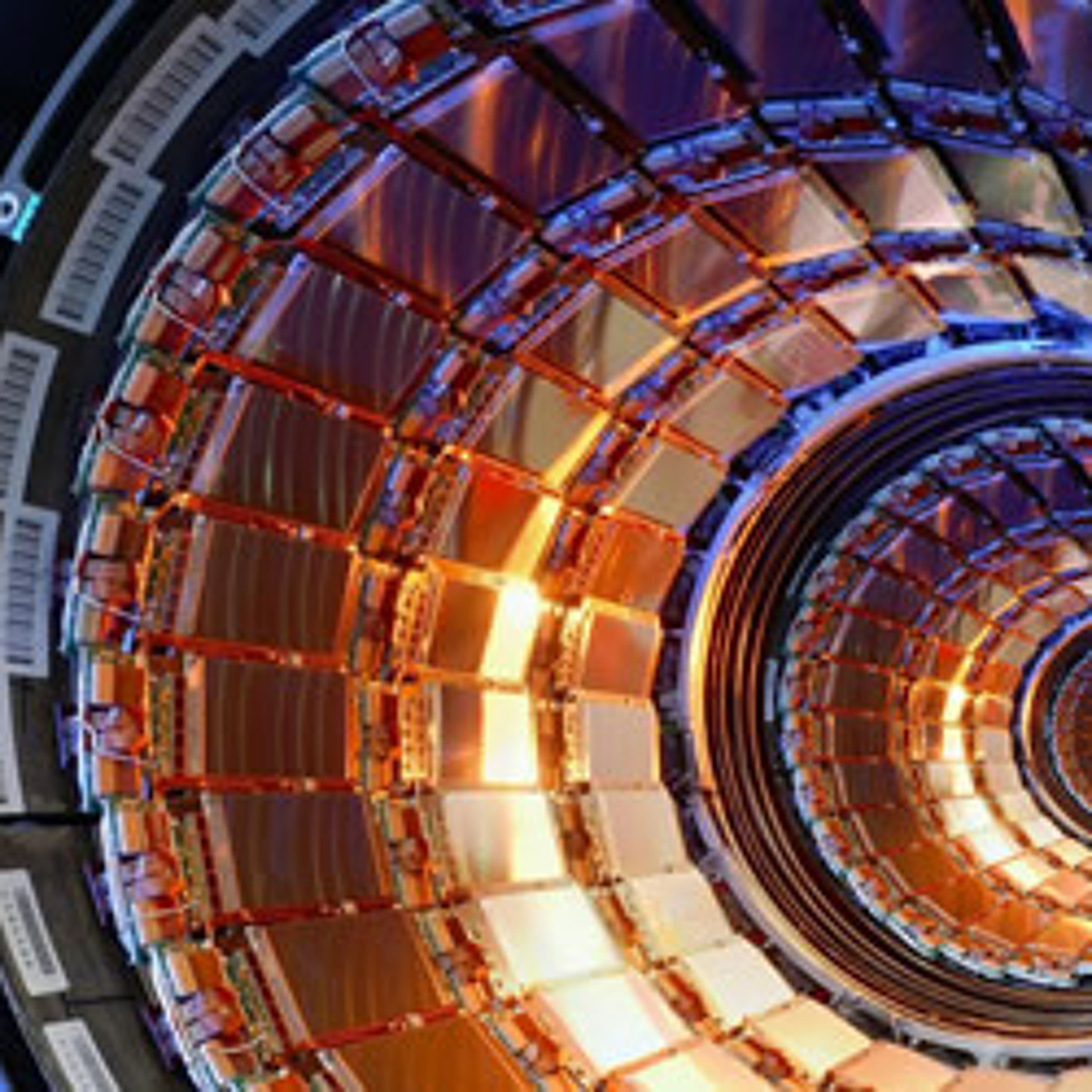
Machine learning and particle physics go together like peanut butter and jelly--but this is a relatively new development. For many decades, physicists looked through their fairly large datasets using the laws of physics to guide their exploration; that tradition continues today, but as ever-larger datasets get made, machine learning becomes a more tractable way to deal with the deluge. With this in mind, ATLAS (one of the major experiments at CERN, the European Center for Nuclear Research and home laboratory of the recently discovered Higgs boson) ran a machine learning contest over the summer, to see what advances could be found from opening up the dataset to non-physicists. The results were impressive--physicists are smart folks, but there’s clearly lots of advances yet to make as machine learning and physics learn from one another. And who knows--maybe more Nobel prizes to win as well! https://www.kaggle.com/c/higgs-boson