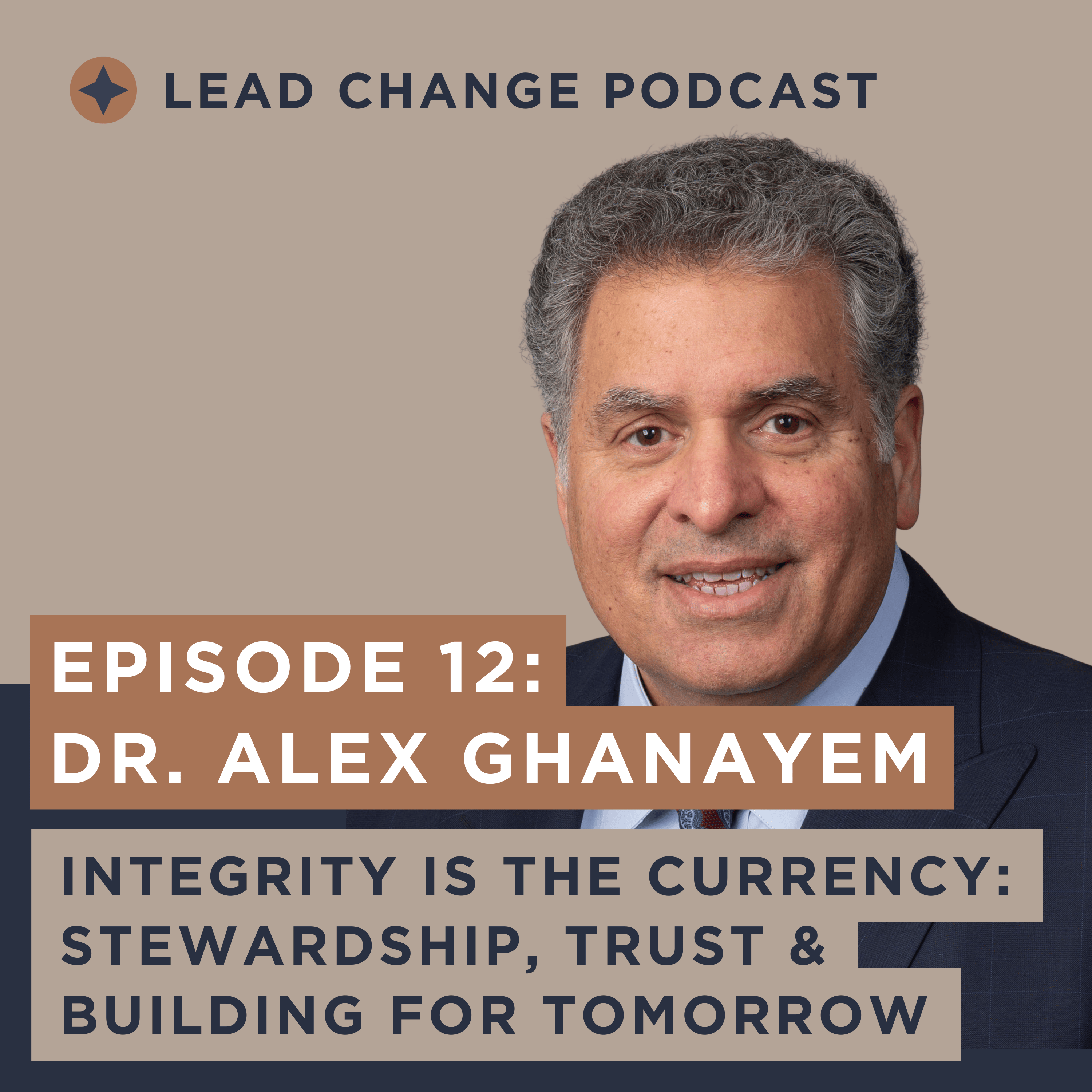
Episode 12: Dr. Alex Ghanayem Integrity Is the Currency: Stewardship, Trust & Building for Tomorrow
Lead Change · Mary Mulcahey
Audio is streamed directly from the publisher (api.riverside.fm) as published in their RSS feed. Play Podcasts does not host this file. Rights-holders can request removal through the copyright & takedown page.
Show Notes
In this episode of Lead Change, Dr. Mary Mulcahey sits down with Dr. Alex Ghanayem—orthopedic spine surgeon, longtime Loyola faculty member, department chair, and past president of the American Orthopaedic Association—for a candid and deeply reflective conversation about leadership in medicine.
Dr. Ghanayem shares how his leadership journey unfolded organically, never driven by titles or ambition, but by consistently doing the work, earning trust, and saying yes when others saw potential in him. He reflects on nearly 30 years at one institution and how stewardship, culture, and people—not individual recognition—define true leadership legacy.
The discussion explores leading through disruption (particularly the post-COVID era), the importance of financial and organizational sustainability, and why leaders must think years—not months—ahead. Dr. Ghanayem emphasizes integrity and trust as the true currency of leadership, the discipline required to stay focused amid constant noise, and the humility needed to empower others and step out of the weeds.
Throughout the episode, listeners gain practical wisdom on leadership development, the value of professional societies like the AOA, and why aspiring leaders should stop chasing titles and instead invest in relationships, allies, and the long-term health of their organizations.
Key Take-Home Points
- Leadership is earned, not planned.
Many impactful leaders never set out to lead—they focused on doing meaningful work well and accepted responsibility when trusted by others. - Integrity and trust are leadership currency.
People may disagree with you, but if they trust your intentions and integrity, productive leadership is possible—even in conflict. - Think long-term, not just short-term.
Today’s challenges were shaped by decisions made years ago; effective leaders must look 5–10 years ahead and plan accordingly. - Culture matters more than structure.
A strong, people-centered culture creates resilience, collaboration, and a willingness to go the extra mile—even in challenging environments. - Great leaders “become smaller.”
Self-awareness, humility, and understanding how your presence affects others are essential to empowering teams. - Transition from doer → manager → leader.
Leaders must resist staying in the weeds and instead trust, support, and elevate those closest to the work. - Focus on what you can control.
Noise and distractions are inevitable—discipline and strategic focus allow leaders to move forward effectively. - Don’t chase titles—build allies.
Leadership success is never achieved alone; relationships and trust built along the way make advancement possible. - Professional societies matter.
Organizations like the AOA play a critical role in leadership development, education, and safeguarding the future of musculoskeletal care.