Mapping the future of *truly* Open Models and Training Dolly for $30 — with Mike Conover of Databricks
Latent Space: The AI Engineer Podcast · Mike Conover
Audio is streamed directly from the publisher (api.substack.com) as published in their RSS feed. Play Podcasts does not host this file. Rights-holders can request removal through the copyright & takedown page.
Show Notes
The race is on for the first fully GPT3/4-equivalent, truly open source Foundation Model! LLaMA’s release proved that a great model could be released and run on consumer-grade hardware (see llama.cpp), but its research license prohibits businesses from running it and all it’s variants (Alpaca, Vicuna, Koala, etc) for their own use at work. So there is great interest and desire for *truly* open source LLMs that are feasible for commercial use (with far better customization, finetuning, and privacy than the closed source LLM APIs).
The previous leading contenders were Eleuther’s GPT-J and Neo on the small end (<6B parameters), and Google’s FLAN-T5 (137B), PaLM (540B), and BigScience’s BLOOM (176B) on the high end. But Databricks is to my knowledge the first to release not just a cleanly licensed, high quality LLM that can run on affordable devices, but also a simple Databricks notebook that can be customized to be finetuned for your data/desired style - for $30 in 30 minutes on one machine!
Mike Conover tells the story of how a small team of Applied AI engineers got convinced Ali Ghodsi and 5,000 of their coworkers to join in the adventure of building the first open source, instruction-following LLM, fine-tuned on a human-generated instruction dataset licensed for research and commercial use. He also indulges our questions on other recent open source LLM projects, CerebasGPT and RedPajama, though we recorded this a week before Stability’s StableLM release.
Stick around to the end for some easter eggs featuring AI Drake!
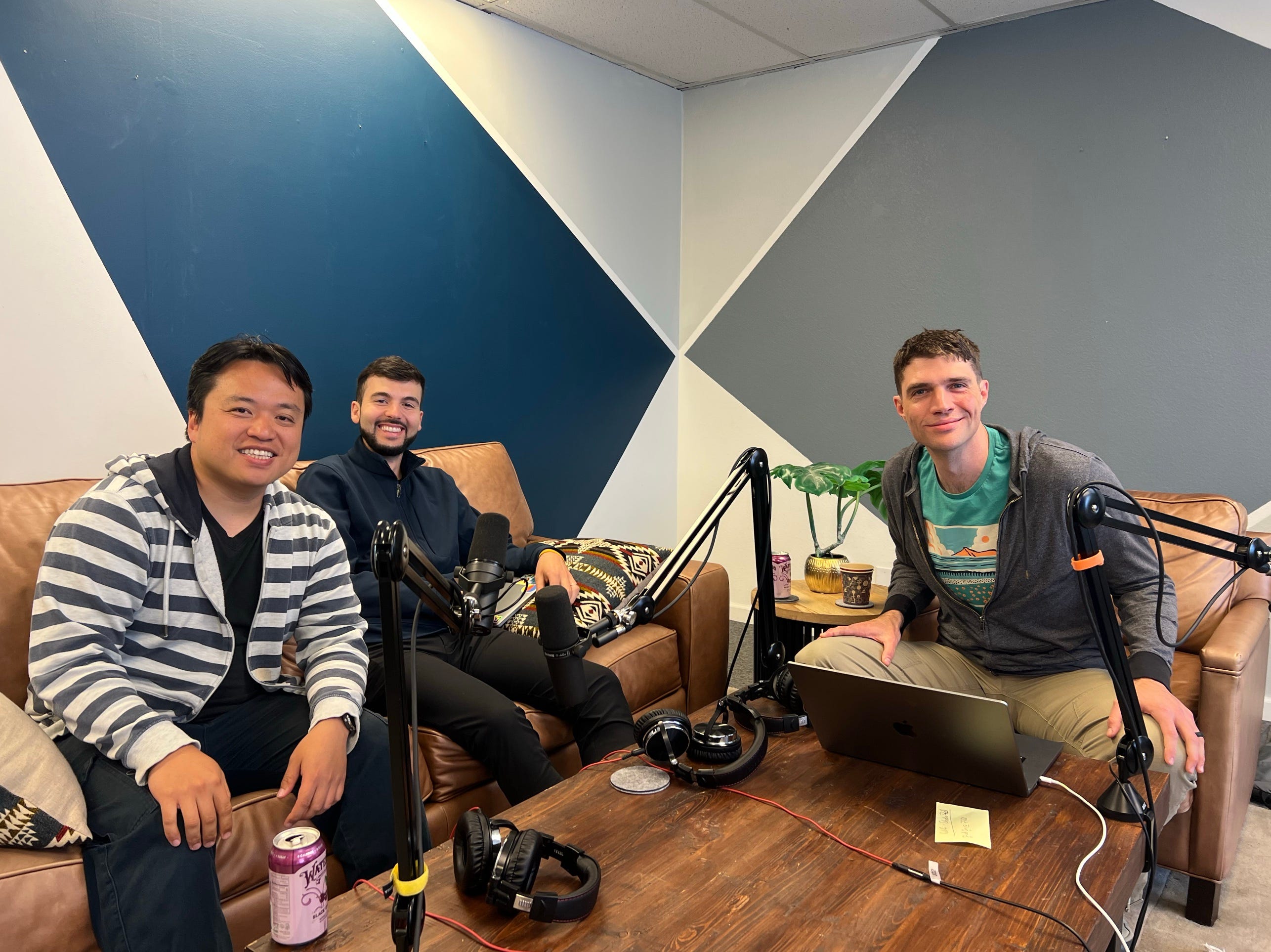
Recorded in-person at the beautiful StudioPod studios in San Francisco.
Full transcript is below the fold.
Show Notes
* Mike Conover LinkedIn and Twitter
* LLMops:
* Spreadsheets??
* Open Models
* Reflexion, Recursive Criticism and Improvement
* Lightning Round
* AI Product: Google Maps
* AI People: EleutherAI, Huggingface’s Stas Bekman
* AI Prediction: Open LLaMA reproduction, AI Twins of People (AI Drake), Valuing Perplexity
* Request for Startups: LLMOps/Benchmarks, Trail Mapping
Timestamps
* [00:00:21] Introducing Mike Conover
* [00:03:10] Dolly 1.0
* [00:04:18] Making Dolly
* [00:06:12] Dolly 2.0
* [00:09:28] Gamifying Instruction Tuning
* [00:11:36] Summarization - Thumbnails for Language
* [00:15:11] CICERO and Geopolitical AI Agents
* [00:17:09] Datasets vs Intentional Design
* [00:21:44] Biological Basis of AI
* [00:23:27] Training Your Own LLMs
* [00:28:21] You May Not Need a Large Model
* [00:29:59] Good LLM Use cases
* [00:31:33] Dolly Cost $30 on Databricks
* [00:36:06] Databricks Open Source
* [00:37:31] LLMOps and Prompt Tooling
* [00:42:26] "I'm a Sheets Maxi"
* [00:44:19] AI and Workplace Productivity
* [00:47:02] OpenAssistant
* [00:47:41] CerebrasGPT
* [00:51:35] RedPajama
* [00:54:07] Why Dolly > OpenAI GPT
* [00:56:19] Open Source Licensing for AI Models
* [00:57:09] Why Open Source Models?
* [00:58:05] Moving Models
* [01:00:34] Learning in a Simulation
* [01:01:28] Why Model Reflexion and Self Criticism Works
* [01:03:51] Lightning Round
Transcripts
[00:00:00] Hey everyone. Welcome to the Latent Space Podcast. This is Alessio Partner and CT and Residence and Decibel Partners. I'm Joan Bama, cohost swyx Brighter and Editor of Space. Welcome, Mike.
[00:00:21] Introducing Mike Conover
[00:00:21] Hey, pleasure to be here. Yeah, so
[00:00:23] we tend to try to introduce you so that you don't have to introduce yourself. Yep.
[00:00:27] But then we also ask you to fill in the blanks. So you are currently a, uh, staff software engineer at Databricks. Uh, but you got your PhD at Indiana on the University of Bloomington in Complex Systems analysis where you did some, uh, analysis of clusters on, on Twitter, which I found pretty interesting.
[00:00:43] Yeah. Uh, I highly recommend people checking that out if you're interested in getting information from indirect sources or I, I don't know how you describe it. Yes. Yeah. And then you went to LinkedIn working on. Homepage News, relevance, and then SkipFlag, which is a smart enterprise knowledge graph, which was then acquired, uh, by Workday, where you became director of machine learning engineering and now your Databricks.
[00:01:06] So that's the quick bio and we can kind of go over Yeah. Step by step. But, uh, what's not on your LinkedIn that people
[00:01:12] should know about you? So, because I worked at LinkedIn, that's actually how new hires introduce themselves at LinkedIn is this question. So I, okay. I have a pat answer to it. Uhhuh. Um, I love getting off trail in the backcountry.
[00:01:25] Okay. And I, you know, I think that the sort of like radical responsibility associated to that is clarifies the mind. And I think that the, the things that I really like about machine learning engineering and sort of the topology of high-dimensional spaces kind of manifest when you think about a topographic mat as a contour plot.
[00:01:44] You know, it's a two-dimensional projection of a three-dimensional space and it's very much like looking at information visualizations and you're trying to relate your. Localized perception of the environment around you and the contours of, uh, ridges that you see, or basins that you might go into and you're like, there's that little creek down there.
[00:02:04] And relate that to the projection that you see on the map. I think it's physically demanding. It's intellectually challenging. It's natural. Beauty is a big part of it, and you're generally spending time with friends, and so I just, I love that. I love that these are camping trips. Uh, multi-day. Yeah. Yeah.
[00:02:21] Camping. I, I hunt too, you know, I, um, shoot archery, um, big game back country hunting, but yeah. You know, sometimes it's just, let's take a walk in the woods and see where it goes.
[00:02:32] Oh yeah. You ever think about going on one of those, um, journeys in the, uh, the Australian Outbacks? Like where people find themselves?
[00:02:40] I'm
[00:02:40] a mountain. I'm a mountain guy. I like to You're mountain guy. I like to fly fish. I like to, you like to hill climb? Yeah. Like the outback seems beautiful. I think eight of the 10 most deadly snakes live in Australia. Like I'm, uh, yeah, you're good. You're good. Yeah. Yeah.
[00:02:52] Yeah. Any lessons from like, Real hill climbing
[00:02:55] versus machine learning, hill climbing.
[00:02:56] Great Dude. It's a lot like gradient descent. Yeah, for sure, man. Um, yeah, I that I have remarked on that to myself before for sure. Yeah, I don't, I'm not sure. This is like least resistance, please.
[00:03:10] Dolly 1.0
[00:03:10] That's awesome. So Dolly, you know, it's kind of come up in the last three weeks you went from a brand new project at Databricks to one of the hottest open source things out there.
[00:03:19] So March 24th you had Dolly 1.0. It was a 6 billion parameters model based on GPT-J 6 billion and you saw alpaca training set to train it. First question is, why did you start with GPT-J instead of LLaMA, which was what everybody else was kind of starting from
[00:03:34] at the time. Yeah, well, I mean, so, you know, we had talked about this a little before the show, but LLaMA's hard to get.
[00:03:40] We had requested the model weights and had just not heard back. And you know, I think our experience with the, um, The original email alias for Dolly, before it was available on hugging face, you get hundreds of people asking for it, and I think it's like, it's easy to just not be able to handle the inbound.
[00:03:56] Mm-hmm. And so like, I mean, there was a practical consideration, which is that, you know, we did not have the LLaMA weights, but additionally I think it's like much more interesting if anybody can build it. Right. And so I think that was our, um, and I had worked with the GPT-J model in the past and, and knew it to be high quality from a grammatical ness standpoint.
[00:04:15] And so I think it was a reasonable choice. Mm-hmm. Yeah.
[00:04:18] Making Dolly
[00:04:18] Yeah. Maybe we should, we can also go into the impetus of why you started work on Dolly. Uh, you had been at Databricks for about a year. Mm-hmm. Was there, was this like a top-down directive? Was this your idea? We'll see, uh,
[00:04:31] what happened? I've been working in N L P and language understanding for a fair while now.
[00:04:36] I mean certainly since Skip flag back in 20 16, 20 17, we can introduce Skip flag is that's, if that's, sorry. You know, we don't have to focus too much on it, but like, this is a, an area how information moves through networks of people is a longstanding interest of mine. And we built a hack day project and I just slacked it to our c e o and I was, you know, this was when ChatGPT came out and it was an integration into the developer experience.
[00:05:02] And I was like, as a user, this should exist. I want this. Mm-hmm. We should build this. It doesn't have to be us. And I mean, to our, uh, our leadership team is like 10 years into this journey, probably more than that at Databricks. And they are still. So hungry. It's wild. It's just wild to see these, these people in action, you know, this like this far into the marathon.
[00:05:23] And, um, he's like, great, build it. Do make it. So, you know, and I, we had have, uh, full-time responsibilities and infrastructure forecasting and infrastructure optimization. And so we did, you know, and, um, we just started building and, you know, so we'd been working on this class of technologies for, um, several months.
[00:05:46] And we had a stack that in part how we were able to kind of pivot on the balls of our feet. Uh, we repurposed a lot of existing code that we had built up, you know, in the past several quarters, um, to, to create Dolly and, and just to
[00:05:58] be clear, like is this an internal stack or is this, uh, externally available as data?
[00:06:02] Much of what we open sourced what, you know, like that that is a, that is the, the, it's, I mean, no, it's not the exhaustive stack by any account, but it's, it's some of the core components. Okay. Yeah.
[00:06:12] Dolly 2.0
[00:06:12] It only took 19 days to go from 1.0 to 2.0. Yeah. So 2.0 is 12 billion. So twist the number of parameters. You base this on the model family from Elu.
[00:06:23] I instead, and I think the, the biggest change is like instead of using the alpaca turning set, which is change generated, so it has its own limitations, you created a brand new, uh, training data set created by the Databricks employees. So I would love to talk about how you actually made that happen. You know, did you just go around and say, Hey guys, I just need to like today, spend your day coming up with the instruction set?
[00:06:47] Or like, did people volunteer to be a part of this?
[00:06:50] Yeah, I mean, so again, like a lot of credit to our founding team, they see it, I think as much as anybody you'll talk to who is a new founder or somebody trying to work in this space, like our executives have the fire and will see a, a bright neon meta future that, uh, Databricks will confidently lead.
[00:07:12] The world into. And so Ali just sent emails twice a day. Do it, do it. You know, we put together, you know, we, we use the InstructGPT sort of task families, you know, gen content generation, brainstorming close qa, open qa, paraphrasing, things like this, and basically put together these Google forms.
[00:07:34] You know, just like, how can we build this as quickly as possible? We see this need, you know, the alpaca trick is amazing that it works. It's amazing that we're highly non-obvious that, you know, for GPT-J or even lLLaMA, you know, hundreds of billions of tokens into the train, this whisper of new data, you know, sort of moves it in, moves the parameter, uh, tensors into a new part of the state space.
[00:08:02] I think, you know, my background is roughly in statistical physics related areas, and I think kind of like a phase transition. Mm-hmm. Like ice and water. It's like they're. Very, very little separates the two, but they could not be more different. And so Ali just kept haranging, like a huge email list of people.
[00:08:21] Um, thousands and thousands of people. And, um, it worked. The other thing is, you know, to our employees credit, people see the moment and they wanna be part of something. And I think there's just passion and enthusiasm for. Doing this. So it was easier than you would expect
[00:08:37] The answer is, so you put some answers in the blog post.
[00:08:40] Yeah. And they're pretty comprehensive. Cuz one of the questions was like, how do I build a campfire? Yeah. And then the response was four paragraphs
[00:08:46] of actual Truly, and I think Yeah, true. Yeah. And I think part of it is that because of the rapid adoption of these technologies like that, you have hundreds of millions of people, you know, who knows what the numbers are.
[00:08:58] But on ChatGPT. People have become educated in terms of, and opinionated about what they expect from these tools. And so I think, you know, a lot of the answers are like, written in the style of what you would want from one of these assistants. And I think just to kind of like riff on how this question of like how the composition, cuz this is really re relevant to our enterprise customers, how the composition of the dataset qualitatively shapes the resulting behaviors of the fine-tuned models that are exposed to that stimulus.
[00:09:28] Gamifying Instruction Tuning
[00:09:28] You know, you look at a dataset like flan, which is a really, really large dataset that is, I think thousand plus tasks. Um, that's, you know, kind of this. Gold standard instruction data set, and a lot of it's synthesized the responses and we'll talk about evaluation, but the responses are very brief. You know, it's like emit the word positive or negative in relation to the, you know, as a judgment of the sentiment of this utterance.
[00:09:52] And so it's, it's very multitask and I think like having thousands of different task types perform sort of irregular, you can't overfit to one specific behavior and so you have to compress and like do many things reasonably well. And so that I think you, you have to kind of wind up in interpolating between different types of behaviors that way.
[00:10:12] But there's also like the question of like, when do you predict the end of sequence token? And if your completions, particularly for instruction tuning are short. Our empirical observation is that the fine tune model emits shorter results. And so having how to build a campfire. And like a narrative thoughtful human-like description.
[00:10:36] I think it requires that demonstration to get that behavior from the model. And you had a, you had a leaderboard, um, who did
[00:10:43] what, uh, any fun shenanigans that came out of, uh, the gamification?
[00:10:46] Well, so the thing is like, you know, I think you can just ask people like be helpful. Uh, you know, like, like some people always take it too far and then Sure.
[00:10:55] Yeah. Well, so you definitely see a long tail distribution. I think I was looking at the open assistant paper last night, and I think, I mean, don't quote me on this, but something like 12 people accounted for 10% of the total responses, which is super, that's just human systems have that long tail distribution terms of activity thing.
[00:11:12] Yeah, yeah, exactly. So it's not surprising. And we see that to a some degree in our data set as well, but, um, not in the way that you would if you opened it up to the, like internet at large. So I, I think people are incentivized coworkers. Yeah. Do the right thing and you know, it's, you know, and also it's our company.
[00:11:29] Like we. Want it to actually be useful, not just a performance of usefulness. And I think people got that.
[00:11:36] Summarization - Thumbnails for Language
[00:11:36] Is there a task
[00:11:37] that you found like particularly hard to get data on? Like good data summarization?
[00:11:41] Oh, because it's like a, it's both like long, uh, it's long and requires thought, you know, you have to synthesize and as opposed to name all the people in places in this passage from Wikipedia that's like, I can kind of do that while I'm watching television, but like writing an essay.
[00:11:59] Yeah, it's a compare is hard. Yeah, there's probably more structure and like in terms of um, like an information theoretic standpoint, how much new signal each record introduces into the model. I expect that summarization is actually. A very demanding task and would not soon become overfit. We're developing our, our, I don't have like definitive answers to how that works because we're still, it's an open research project for the, for the business.
[00:12:27] Yeah. Well, I, you know, just categorically, I think sum summarization is becoming more important, the more generative ai. For freights because we kind of need to expand and we see the contract again, in terms of what, uh, what we consume in terms of, uh,
[00:12:41] information. Truly. I mean, like, to kind of riff on that, I think the, there's just so much material at your business.
[00:12:48] You think about like, uh, PRDs, like, or, you know, product requirement stocks, you know, reasonable people. You kind of want like a zoom lens on language and you want the ability to see the high level structure of something and then be able to get details on demand like you would pan or like, you know, zoom into an information visualization.
[00:13:09] I was talking with. Um, The head of AI at Notion about this and who, you know, you guys probably know and as a really remarkable person, and this idea of like, what does a thumbnail for language look like? Because like your visual cortex is structured such that like it's highly evolutionarily conserved to be able to glance at something and perceive its essence.
[00:13:28] And that makes seeing a field of thumbnails. Like you guys I think are gonna speak with, um, Lexi folks here shortly. And you can see us like the field of images in response to a query and get a sense for like, oh, these are all like moody cyber punk scenes. Mm-hmm. What is that for language? And maybe it's like, maybe it doesn't exist.
[00:13:52] Maybe it's the case. Stop me if I'm getting too far afield here. But you think about clothes as a technology that has shaped our physiology. Right. Like, and our, our phen, our phenotypic expression, we used to be covered in hair. We evolved this technology fire would also be in this class, and our bodies changed in response to it on the very long time scale of human history.
[00:14:15] Mm-hmm. It may be the case that AI in the way that the visual cortex has been evolutionarily conserved to be able to rapidly perceive things, shapes how we process information. I don't know. What to do about language right now. It looks like reading a lot of samples from different models and seeing how they perform as we move through the loss curve.
[00:14:34] That makes
[00:14:34] sense. I mean, if you think about images in text, you don't really have like peripheral vision. You know, when you're like seeing something, you focus on the main thing and then you kind of like start to expand to see the rest. Yes. Like text is kind of like a, the density is like the same across the tax.
[00:14:49] Like nothing jumps out when you see a wall of tax versus when you see an NI image. Just like something usually jumps out first. Yes. So I don't have the answer either. Was gonna say, I'm really curious word
[00:14:58] clouds, which, but that, that's the thing is like, that's such a joke, right? Wait for me. Yeah, it's like punchline.
[00:15:06] You must have
[00:15:06] done, you know, your, your Twitter
[00:15:08] work. I've cut a few word clouds in my day.
[00:15:11] CICERO and Geopolitical AI Agents
[00:15:11] Um, you know, I also think like this question of like, what are you most excited about in ai? Like what do you see as the sort of like grandest potential? And one of the things that I reflect on is, is the. Possibility of having agents that are able to, to negotiate intractable geopolitical problems.
[00:15:31] So like if you look at like, the Cicero paper from, from Meta, can you recap for those who are making Yeah. So I mean it's, you know, I don't wanna like represent somebody else's work as like you're just talking Yeah, exactly. But like, um, my understanding is that diplomacy is a, um, turn-based negotiating game, like risk where you are all making the decision in simultaneously and you're trying to convince people that you're going to do or not do something.
[00:15:56] And, uh, this paper was co-authored with one of the top diplomacy players and Meta built a system that was very, very capable at this negotiating game. I. Can envision nation states operating ais that find game theoretically optimal and sort of non exploitable steady states basically. Mm-hmm. That, you know, if you think about a lot of the large scale geopolitical disputes where it's just like human mediators are unable to find a compromise, ais may be able to satisfying conditions that you're like, yeah, actually I don't, that works for me.
[00:16:36] Mm-hmm. And to your point about like how the phobia and attention generally, but like how the actual visual cortex works, the idea that like a great writer says something in a way and it hits unique structures in your brain and you have that chemical cascade, which is understanding, we may be able to design systems that compress very long documents on a per person basis so as to maximize information transfer, and maybe that's what the thumbnail looks like.
[00:17:03] Mm-hmm.
[00:17:04] Yeah, maybe it's emojis all the way down. I dunno.
[00:17:08] Yeah.
[00:17:09] Datasets vs Intentional Design
[00:17:09] Obviously the dataset is like one of the, the big things in Dolly. Yeah. But you talked about some of these technologies being like discover, not designed, like maybe talk a bit about the process that took it to Dolly and like the experimentation
[00:17:21] there.
[00:17:22] So it's not my, my friend, my dear friend, Jacob Burk kind of had this insight, which is that AI is you, you design a jet turbine, like for sure you make a plan. Mm-hmm. And you, you know, have some working model of aerodynamics and you execute on the jet turbine. I think that with ai, generally we see. You know, this instruction following behavior that we saw in Dolly was not present in the, the base model.
[00:17:53] It, you know, effectively will, it's a, you know, very powerful base model, but it will just complete the prefix as though it's random page on the internet. We had Databricks, but also the community with Alpaca discovered that you can perturb them just, just so, and get quite different behavior. That was not really a design.
[00:18:13] I mean, it's designed in the sense that you had an intent and then you saw it happen. But we do not like choose the parameters they are arrived upon. And the question that I have is, what other capabilities are latent in these models, right? GPT-J was two years old. Can it do anything else? That's surprising?
[00:18:36] Probably so, and I think you look at, you know, particularly, and this is why the Pithia Suite is so cool, is that, and you know, a ton of credit to, for. Having this vision, and I think it will probably take some time for the research community to, to understand what to do with these artifacts that they've created.
[00:18:54] But it's effectively like this matrix of model checkpoints and sizes where you say, I'm gonna take from I think 110 million all the way up to 12 billion, which is what Dolly two is based on. And then at every checkpoint through the training run under, I think it's 2 million. Yeah. Tokens. Yeah. Well, so the, I think the Pithia suite is just trained on the pile, so it's like three, 400 million, which is probably undertrained.
[00:19:18] And did you guys see this red? I think it's red Pajama released this morning. They've reproduced the lLLaMA training data set. So, so it's 1.2 trillion tokens and it's, um, I mean, you know, a separate topic, but we looked pretty hard at what it would take to reproduce the LLaMA data set. And it's like, Non-trivial.
[00:19:35] I mean, bringing Common Crawl online and then d near de-duping it and you know, filtering it for quality. So the, the Common Crawl data set in LLLaMA is they fit a model to predict whether a page in common crawl is likely to be a reference on Wikipedia. And so that's like a way to like, I don't want lists of phone numbers, for example, or like ads.
[00:19:58] All of that is a lot of work. And so anyway, with Pit, I think we can start to ask questions like through this, this matrix with size and like checkpoint depth. We have these different model parameters. How do behaviors emerge through that training process? And at different scales, you know, maybe it will be less of a discovery process.
[00:20:22] Maybe we will get more intentional about, like, I want to elicit the fol, I want summarization, I want closed form, question answering. Those are the only things that matter to me. How much data do I need to. Generate or buy, how many parameters do I need to solve that compression problem? And maybe it will become much more deterministic, but right now it feels a lot like we're just trying things and seeing if it works, which is quite different from a lot of engineering disciplines.
[00:20:51] I'm curious, does that reflect your experiences? Like Yeah, I
[00:20:54] think like we had a whole episode on, um, kind of like scaling loss and everything with Varun from Exafunction. And I feel like the, when the Chinch paper came out, a lot of teams look at their work and they were like, we're just kind of throwing darts.
[00:21:07] Exactly. That's now one,
[00:21:10] 1.2 to, uh, 1.7 tokens, uh, you know, per, uh, per parameter. And, uh, now we're redoing everything with
[00:21:16] 20 tokens. It's exciting, but also as like, you know, I'm, I'm a, an engineer and a hacker, like I'm not a scientist, but I, you know, used to pretend to be a scientist. Not, you know, not really pretend, but like I respect the, I respect the craft and like, It's also very exciting to have something you really don't understand that well, because that's an opportunity to create knowledge.
[00:21:41] So that's part of why it's such an exciting time in the field. There's some work
[00:21:44] Biological Basis of AI
[00:21:44] on with, um, understanding the development of AI progress, uh, using biological basis. Mm-hmm. So in, in some sense, we're a speed running evolution Yeah. With training. Yeah. So in a sense that of just natural discovery of things and, and just kind of throwing epox at it Yeah.
[00:22:02] Is, makes intuitive sense to me. But, uh, I do think that it is unintuitive to estimate how different artificial life might evolve differently
[00:22:12] from biological life. Yeah. I, so like Richard Dawkins had, um, this sort of toy model called bio morphs. Which, uh, no, I haven't heard of it. Yeah, it's, I think it was dates to the eighties.
[00:22:25] So it's a pretty old school demonstration of capabilities. But the idea is that you have, imagine they look, they're little insects that look like vector art. And the parameters of how they are rendered are governed by, you know, it's parametric, right? So some of them have long antennas and some of them have wide bodies and some of them have 10 legs, some of them have four legs.
[00:22:46] And the underlying method is, is genetic algorithms where you take subsets of the parameters and kind of recombine them. And you're presented as a user with a three by three grid, and you click based on what you find subjectively beautiful. And so the fitness function, then they're re combined and you render a new set of nine by nine, some of which are mutated.
[00:23:05] And so the fitness function is your perception of aesthetic beauty. That is the pressure from the environment. And I think like with things like RLHF where you're having this preference learning task, that is a little different from next token prediction in terms of like what is synthetic life and how are our preferences reflected there?
[00:23:23] I think it's a very sort of interesting, yeah, interesting area. Okay. So a
[00:23:27] Training Your Own LLMs
[00:23:27] lot of people are very inspired by work with Dolly. Obviously Databricks, uh, is doing it. Partially out of the kindness of your hearts, but also to advertise Databricks capabilities. Uh, how should businesses who want to do the similar things for their own data sets and companies, uh, how, how should they think about
[00:23:43] going about this?
[00:23:44] I really would actually say that it's probably less about advertising our capabilities. I mean, that, you know, we're exercising our capabilities, but I, I really think that to the extent that we can help define some of the moves that reasonable teams would make in creating technologies like this, it, it helps everybody understand more clearly what needs to be done to make it useful and not just interesting.
[00:24:08] And so, one, you know, one of the canonical examples that we had in the original Dolly was write a love letter, ed Growlin Poe. Yep. Which is super cool and like very moody. You know, I, I dunno if you guys remember the particulars of it, but it was like, I. The person, the imagined person writing this letter was like, I, I basically couldn't, like, I couldn't stand you, but I can't stop thinking about you, you know, which is a very like, gothic, uh, kinda, uh, mood in, in a letter like that not relevant to the enterprise context.
[00:24:39] Right. So, you know, like it's neat that it does it, but if I don't have to buy training data that gets it to write moody, gothic letters to Edgar and Poe, and if I can be choosy about how I invest my token budget, that is useful to many businesses. And so, you know, one of the things that. We're trying to understand more clearly is I, we talked a little bit about like different tasks require that you compress in a way that generalizes, you know, if you think about it, the, the parameters as compressing language and also world knowledge.
[00:25:15] The question is like, for a given model size, how many demonstrations of summarization, for example, are required in order to get a really useful, grounded QA bot? And so I think in building these kinds of solutions and sort of seeing how the. Categories of behaviors in the instruction tuning or sort of fine tuning data sets are related to those behaviors, I think will develop a playbook for startups in the enterprise that makes it, um, so that you can move with an economy of motion.
[00:25:44] And this is related to evaluations as well. So one of the things that we had talked about sort of before we started recording was the using the EleutherAI evaluation benchmarks, and I think helm and the, you know, there's a bunch of other batteries that you can push your models through. But the metrics that we looked at first when we built the first version of Dolly, and this is on our hanging face page, you can go see this yourself.
[00:26:08] The GPT-J model. And the fine-tuned dolly model have almost identical benchmark scores, but the qualitative character of the model just couldn't be any more different. And so I think that it requires better ways to measure the desired behavior, and especially in these enterprise contexts where it's like, is this a good summary and how can I determine that without asking a person?
[00:26:37] And maybe it's kind of like you train reward bottles where you, you know, you have sort of a learned preferences and then you show, you know, you take kind of an active learning approach where you show the ones that it's most uncertain about to crowd workers and it's kind of like human in the loop.
[00:26:52] Would this be p p o ish?
[00:26:54] I mean, potential. That's, so this, that's not an area of expertise in mine yet. You know, this is something that we're also trying to, uh, more deeply understand kind of what the applicability of that stack is to, like, I'm just trying to ship. Mm-hmm. You know, my understanding is that that's somewhat challenging to bring online and also requires a fair number of labels.
[00:27:14] And so it's like from an active learning standpoint, uh, my thinking would be more like, You have a reward model that you've trained and you said like, this is based on human judgments from my employees or some crowd workers, what I want from a summarization or a close, close form question answering. And then you basically, you choose new examples to show to humans that are close to the decision boundary and that are like maximally confusing.
[00:27:38] It's like, I'm just really not sure rather than things that are far from the decision boundary. And it's, it's kind of like, I actually think there's gonna be, in terms of value creation in the next, let's say 18 to 36 months, there's still room for like old tricks. You know, like not everything has to be generative AI for it to be very valuable and very useful.
[00:27:56] And maybe, maybe these models and, and zero shot prompting just eats everything. But it's probably the case that like an ensemble of techniques will be valuable and that you don't have to, you know, establish like room temperature fusion to like, you know, create value in the world, at least for, you know, another year and a half.
[00:28:20] You know, like
[00:28:21] You May Not Need a Large Model
[00:28:21] just, just to spell it out for people trying to, uh, go deep on stuff. Um, maybe leave breadcrumbs. Um, sure. When you say techniques, you don't just mean prompting.
[00:28:29] Oh, I mean even like named entity recognition, like Yeah, there's just like classic NLP stuff, you know, like supervised learning. I mean, multi-class classifi.
[00:28:37] I have customer support tickets. I want to know whether this is going to be flagged as. P zero. Like that's just, it's not a complicated problem to solve, but it's still very valuable in these models that can deeply understand the essence of something and not necessarily generate language. But understand, I expect that you will see like s because, so for example, inference right now is time consuming.
[00:29:04] Mm-hmm. Just, you know, it's like, unless you are really rigorous, and I think it, one of the things I'm excited about at Databricks is that we're, our inference stack is very, very fast. Like orders of magnitude faster than you would get if you took the naive approach. And that leads to very qualitative, like a very different way that you interact with these models.
[00:29:22] You can explore more and understand their behavior more when it doesn't take 30 or 40 seconds to generate a sample and it's instead 1800 milliseconds. You know, that's something that's very exciting. But if you need to spend your compute budget, Efficiently and you have tens of thousands of possible things that you could summarize, but you can really only, you know, in a day do so many.
[00:29:45] Having some stack ranking of them with a classical machine learning model is just valuable. And I, I expect that you'll see like an ecosystem of tools and that it's not all going to be necessarily agents talking to agents. I could be proven wrong on that. Like, I, I don't know. We'll see. Hey,
[00:29:59] Good LLM Use cases
[00:29:59] going back to the evolutionary point, I feel like people think that the generative AI piece is like the one with the most like, uh, possible branches of the tree still to explore.
[00:30:09] So they're all focusing on that. But like you said, we're probably gonna stop at some point and be like, oh. That thing we were doing is just as good. Let's pair them together and like use that instead of just like trying to make this model do everything.
[00:30:22] Yeah. And there, yeah, there are things like categorically that only generative models can accomplish.
[00:30:28] And I do think, I mean, one of the reasons that at Databricks we see so much value for companies is that you can, with zero shot prompting, you can say, given this customer support ticket, for example, give me a summary of the key issues represented in it. And then simply by changing that prefix, say, write a thoughtfully composed reply that addresses these issues in the tone and voice of our company.
[00:30:53] And imagine you have a model that's been fine tuned on the tone voice that's in your, in your, uh, from your support team. Both of those problems historically would've taken like a reasonable machine learning team, six to eight weeks to build. And frankly, the right, the response, I'm not sure you can do it without generative techniques.
[00:31:13] And now your director of sales can do that. You know, and it's like, the thing that might make me look foolish in retrospect is that. Orders of magnitudes cheaper to do it with prompting. And maybe it's like, well, sure the inference costs are non-trivial, but it's just we've saved all of that in time. I don't know.
[00:31:33] Dolly Cost $30 on Databricks
[00:31:33] We'll see. I'm
[00:31:34] always interested in, uh, more economics of, um, of these things. Uh, and one of the headline figures that you guys put out for Dolly was the $30 training cost. Yes. How did you get that number? Was it. Much lower than you expected and just let's just go as deep
[00:31:50] as you want. Well, you just think about, so you know, we trained the original dolly on a 100 s and so one of the cool things about this is we're doing this all on Databricks clusters, right?
[00:32:00] So this like, this works out of the box on Databricks and like turns out, you know, I think you would probably need slightly different configurations if you were going to do your own full pre-training run on, you know, trillions of tokens. You have to think about things like network interconnect and like placement groups in the data center in a more like opinionated way than you might for spark clusters.
[00:32:23] But for multi-node distributed fine tuning, the Databricks stack is great out of the box. That was wonderful to find.
[00:32:32] You've been building the perfect fine tuning architecture the whole
[00:32:34] time. Yeah. You know, may, maybe it's not perfect yet, but like, It's pretty good. And I think, so for the original Dolly, it was just a single node, and so you can bring up an eight node, a 100 machine, and I'm, you know, I thinking of just the off the rack pricing from the cloud providers, it's about 30 bucks.
[00:32:55] I think the actual number's probably less than $30. For How long are you for? It was less than an hour to train the thing. It's 50, I mean it's 50 thou alpacas, 50,000 records. Right.
[00:33:04] And you've open sourced the, the notebook, which people can check out what
[00:33:07] gonna show notes. There's. The risk that I am making this up is zero.
[00:33:11] Yeah. No, no, no. I'm not, I'm
[00:33:12] not saying the I know you're not. I'm just saying I'm, I'm, I'm leaving break rooms for people to say, Hey, it, it's 30
[00:33:17] bucks, takes an hour. Go do it. It's, it's crazy. And, and that's like the, I mean, you think about, I yeah, I, I, I know for a fact that you're not suggesting that, but it's just like, what's nuts is that you can just try it.
[00:33:28] You know, you can, if you have 30 bucks, you can stand this thing up and, um, on a single machine, execute this training run. And I think I talked about like this idea that it's kind of like a phase transition. What's surprising about it, if you were to say, Hey, given a corpus of millions of instruction pairs, you can for.
[00:33:50] $10,000, which is still an order of magnitude less than it cost to train the thing, get this qualitatively different behavior. I'd be like, yeah, that that sounds about right. And it's like, yeah, if you have an afternoon, like you can do this. That was not certainly, it was not obvious to me that that was true.
[00:34:08] I think especially like, you know, like with libraries, like deep speed that, you know, so deep speed is a, is a library that gives you many different options for dealing with models that don't fit in memory and helping increase the effective batch size by, you know, for example, putting the entire model on a GP on several different GPUs and then having device local batches that are then the gradients are, are accumulated, are sort of aggregated for those, those from those different devices to get an effective batch or sharding the actual different model submodules across GPUs.
[00:34:43] And this is all available in the notebook and the, the model that we train does not fit on a single device. And so you have to shard the model across the GPUs to run the training, you know, an incredible time that like this technology is just like free and open source and it's like the Microsoft team and the, you know, the hugging face team have made it so easy.
[00:35:04] To accomplish things that even just two years ago really required a PhD. And so it's like level of effort, capital expenditure, substantially less than I would've expected. Yeah.
[00:35:17] And you, you sort of co-evolve this cuz you also happen to work on the infrastructure optimization
[00:35:21] team. Yeah, I mean that's kind of, um, like, you know, this is really kind of a separate project at Databricks, which is like making sure that we have a great customer experience and that we have the resources that are required for all of our customers.
[00:35:37] You can push a button, get a computer, uh, get a Spark cluster. And I think when you look to a world where everybody is using GPUs on Databricks, making sure that we are running as efficiently as possible so that we can make Databricks a place that is extremely cost effective to train and operate these models.
[00:35:55] I think you have to solve both problems simultaneously. And I think the company that does that effectively is, um, is gonna create a lot of value for the market.
[00:36:06] Databricks Open Source
[00:36:06] Yeah. You mentioned Spark, obviously Databricks, you know, Started, like the founders of Databricks created a spark. Yeah. At Berkeley. Then, you know, from an open source project, you start thinking about the enterprise use cases.
[00:36:18] You end up building a whole platform. Yeah. You still had a lot of great open source projects like uh, ML Flow, Delta Lakes. Yeah. Um, yeah. Things like that. How are you thinking about that was kind of the ML ops phase. Yeah. Right. As you think about the l lm ops, like needs, you know, like obviously. We can think of some of these models as the spark, so to speak, of this new generation.
[00:36:39] Like what are some of the things that you see needed in infrastructure and that maybe you're thinking about building?
[00:36:44] Yeah, I mean, um, so kind of first to address this, this matter of open source. I think, you know, Databricks has done a lot of things that, and has released into the public domain a lot of technologies where a reasonable person could have said, you should.
[00:37:00] Treat that as IP that you and no one else has. And I think time and again, the story has been more, is better and we all succeed together. And when you create a new class, people rush in to fill it with ideas and use cases and that it's, it's really powerful. It's both good business and it's good for the community.
[00:37:21] And Dolly I think is very much a natural extension of that urge, which just, I think reflects our founders tastes and beliefs about markets and, and technology
[00:37:31] LLMOps and Prompt Tooling
[00:37:31] when it comes to LM ops, which is not a phrase that rolls off the tongue. We'll, we're gonna need something better than that. We, this kinda gets back to like what is a thumbnail for text.
[00:37:43] Mm-hmm. One of the things that my team winds up doing a fair amount of right now is like slacking back and forth examples of like generated samples. Okay. Because like these evaluation benchmarks do not capture the behaviors of interest. And so we often have like a reference battery of prompts. Let's say 50 to a hundred.
[00:38:03] Write a love letter to Edgar and Poe. Yeah. Give me a list of ins. Like what are, what are one of our things is what are considerations? Like it should keep in mind when planning for a backcountry backpacking trip can you generate a list of reasonable suggestions for a backpacking trip. And you see, as you kind of move the model through the loss curve under instruction tuning that um, that behavior emerges and that like you kind of wind up qualitatively evaluating is the model doing what I want in respect to these prompts that I've seen many different models answer this model or this, this instruction tuning data set is generating shorter completions.
[00:38:40] This one is generating the. Wackier completions, you know, this one is much likelier to produce lists all of these things. I don't know if you've seen Nat Devrel. Mm-hmm. I'm sure, of course you have that idea of the grid of like, I want to run inference in parallel on arbitrary prompts and compare and contrast, like tooling like that is going to make it, and especially with a fast inference layer, and this is where I think Databricks has a lot of opportunity to create value for people is being able to serve, interact, and measure the behavior of the model as it changes over time and subject it not only to quantitative.
[00:39:19] Benchmarks, but also qualitative subjective benchmarks plus human in the loop feedback where imagine that I burn a model checkpoint and every thousand steps, I send it off to an annotation team and I get a hundred pieces of human feedback on the results. And it's like there'