
Show overview
Knowable has been publishing since 2021, and across the 4 years since has built a catalogue of 16 episodes, alongside 2 trailers or bonus episodes. That works out to roughly 6 hours of audio in total. Releases follow an irregular cadence, with the show now in its 3rd season.
Episodes typically run twenty to thirty-five minutes — most land between 20 min and 29 min — though episode length varies meaningfully from one episode to the next. None of the episodes are flagged explicit by the publisher. It is catalogued as a EN-language Science show.
The catalogue appears to be on hiatus or wound down — the most recent episode landed 1.7 years ago, with no new episodes in over a year. The busiest year was 2022, with 8 episodes published. Published by Knowable Magazine.
From the publisher
What are the limits to what's knowable — and how does our thinking about big questions in science and technology evolve over time? The Knowable Magazine podcast explores puzzles as diverse as the existence of black holes and how to build an artificial heart — with plenty of surprises along the way. Hosted by science journalists Adam Levy and Charlotte Stoddart.
Latest Episodes
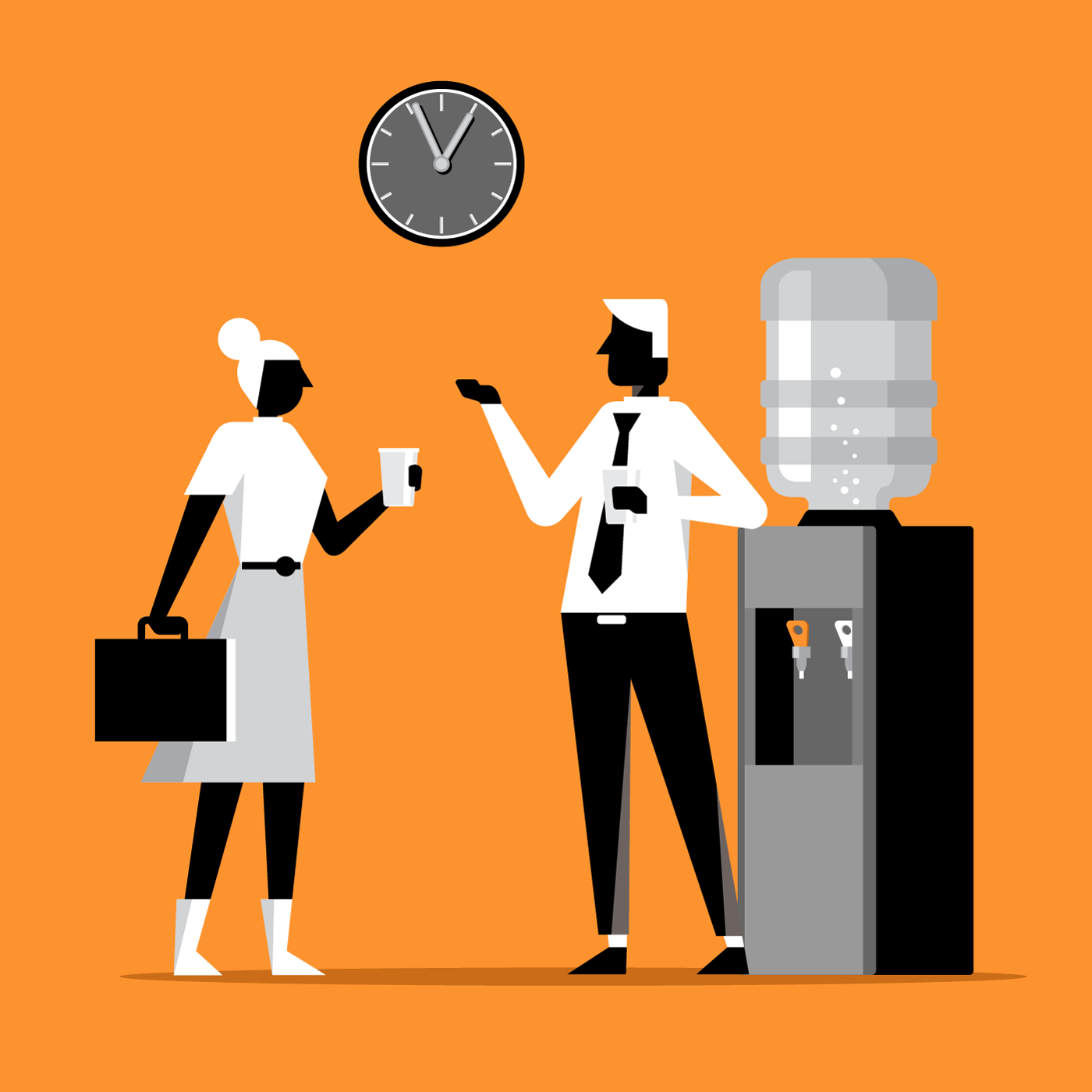
Speech interjections aren't throwaway lines
bonusBonus episode: Knowable Magazine Podcast co-host Adam Levy talks with linguists Mark Dingemanse and Martina Wiltschko about the importance of the little "throwaway" utterances we use during conversations — such as Mmhmm, Huh? and more. Long ignored by scholarship, these interjections, as they're termed, are key to keeping conversations flowing. But that realization was recent, because much of early linguistics research was done with written text and not actual, live conversations. You can read more about interjections in the related article authored by Bob Holmes at Knowable Magazine. Find the transcript of this episode, plus other podcast episodes at knowablemagazine.org/podcast.

S3 Ep 4Quantum entanglement's long journey from 'spooky' to law of nature
Quantum mechanics has always included mind-bending ideas. But the concept of quantum entanglement, famously termed "spooky at a distance" by Albert Einstein in a 1947 letter, seemed to challenge the limits of belief. It remained well on the edges of modern physics until John Stewart Bell's 1964 paper suggesting a way to actually test the baffling idea that two particles can somehow share a measured property even when well separated. Host Adam Levy chats with Nicolas Gisin of the University of Geneva about Einstein's quote, Bell's test and why it took so many decades for entanglement, the focus on the 2022 Nobel Prize in Physics, to go mainstream. Plus, how the phenomenon could help secure communications with your bank. Find the transcript and additional resources at knowablemagazine.org/podcast.
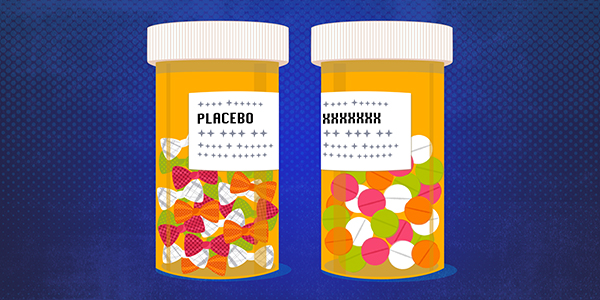
S3 Ep 3How the placebo effect went mainstream
Sloppy by modern standards — and maybe even those back then — a 1955 article on the placebo effect by Harvard anesthesiologist Henry K. Beecher was nonetheless remarkable and influential. It paved the way for sounder drug trials and pushed scientists to better understand how we process pain. To explore its significance, Host Charlotte Stoddart enlisted the help of Ted Kaptchuk, director of the Program in Placebo Studies at the Beth Israel Deaconess Medical Center in Boston, who knows the paper well. Find the transcript and additional resources at knowablemagazine.org/podcast.

S3 Ep 2The fossil that launched a dinosaur revolution
The fossil Archaeopteryx forever changed our understanding of dinosaurs and the origin of birds, but it took a century after its discovery and a one-page paper to shift scientific consensus. Here's the story of that landmark 1973 article by American paleontologist John Ostrom, and published in the journal Nature, describing the bird-like features of Archaeopteryx and convincingly arguing that birds were descended from a group of dinosaurs called theropods. Host Charlotte Stoddart speaks with paleontologist Julia Clarke of the University of Texas at Austin, whose own research focuses on the early evolution of birds and the origin of flight. Find the transcript and additional resources at knowablemagazine.org/podcast.

S3 Ep 1Scientists warned about climate change in 1965. Nothing was done.
A key report to President Lyndon B. Johnson in 1965 warned that humankind was "unwittingly conducting a vast geophysical experiment" through the burning of fossil fuels and a consequent buildup of "the invisible pollutant" — carbon dioxide — in the atmosphere. Here's the story of what happened next to that report — and what didn't, and why. Host Adam Levy speaks with Harvard science historian Naomi Oreskes, coauthor of the book Merchants of Doubt: How a Handful of Scientists Obscured the Truth on Issues from Tobacco Smoke to Global Warming. And he talks with environmental scientist Dana Nuccitelli, research coordinator for Citizens' Climate Lobby, which aims to build political will for climate solutions through citizen volunteers. Find the transcript and additional resources at knowablemagazine.org/podcast

S2 Ep 6How antidepressants changed ideas about depression
Serendipitous discoveries led to drugs like Prozac and to new insights into the physical basis of this debilitating disorder. But scientists continue to search for deeper understandings and therapies that will bring relief to those who still struggle.

S2 Ep 5How particle accelerators came to be
PODCAST: They started out so small, one could fit on the palm of your hand, but to make groundbreaking discoveries, physicists had to think really big — as in, vast machines with the power and capacity to reveal the tiniest building blocks of our universe.

S2 Ep 4The history of climate change offers clues to Earth's future
Digging — quite literally — into our planet's past to study its paleoclimate has shed light on bygone ice ages and hints at trouble ahead for our now-warming planet.

S2 Ep 3Structural biology: How proteins got their close-up
The journey to understanding these critically important molecules, in their thousands of different flavors, began with a chance discovery. Today, after decades of painstaking lab work and dizzying technological leaps, the field of protein science is exploding.

S2 Ep 2The search for exoplanets
Not that long ago, scientists found evidence that our Sun wasn't unique — other stars have their own orbiting bodies. It was a discovery centuries in the making. What does this mean for Earth today and our place in the universe? (Season 2/Episode. 2) Hyperlinks to scientists and papers in mainbar

S2 Ep 1The science of dreams
Freud thought that dreams were the gateway to our unconscious mind. Today, many scientists think the opposite: that the dreaming brain is quite similar to our awake, conscious state. But dreaming is a very personal experience and one that we can't share — making the phenomenon very difficult to study. We still don't know for sure why we dream, but in this episode, we'll hear how psychologists, neuroscientists and philosophers have been trying to answer that question. Hyperlinks to scientists and papers in mainbar

S2 Ep 1Season two trailer
trailerWhat are the limits to what's knowable — and how has our thinking about big questions in science and technology has evolved over time? Knowable Magazine's science history podcast returns on February 1, with brand new episodes exploring the science of dreams, the search for extrasolar planets, the quest to treat depression and so much more. Subscribe today to stay in the know. The Knowable Magazine podcast from Annual Reviews explores the limits to what's knowable — and how thinking about big questions in science and technology evolve over time.
S1 Ep 4Memory, the mystery
Memory, the mystery: Just in the past half-century, our understanding of how exactly our brains remember has taken huge leaps. Amazingly, this is just the beginning. The Knowable Magazine podcast from Annual Reviews explores the limits to what's knowable — and how thinking about big questions in science and technology evolve over time.
S1 Ep 3The dazzling history of solar power
The dazzling history of solar power: Once fringe and futuristic, this renewable energy shines brightly today as a cheap and efficient source of energy. Still, it remains controversial — for much different reasons. The Knowable Magazine podcast from Annual Reviews explores the limits to what's knowable — and how thinking about big questions in science and technology evolve over time.
S1 Ep 2The heart of invention
Replacing or assisting the human heart with a machine would save countless lives. But the quest to build an artificial heart has had many gruesome missteps and caused researchers to reimagine how to keep our blood flowing. The Knowable Magazine podcast from Annual Reviews explores the limits to what's knowable — and how thinking about big questions in science and technology evolve over time.
S1 Ep 1How black holes morphed from theory to reality
Black holes, from theory to reality: Physicists were mostly skeptical when the idea of black holes emerged a century ago from Einstein's work. This podcast episode tells the story of how the evidence evolved from circumstantial to conclusive. The Knowable Magazine podcast from Annual Reviews explores the limits to what's knowable — and how thinking about big questions in science and technology evolve over time.