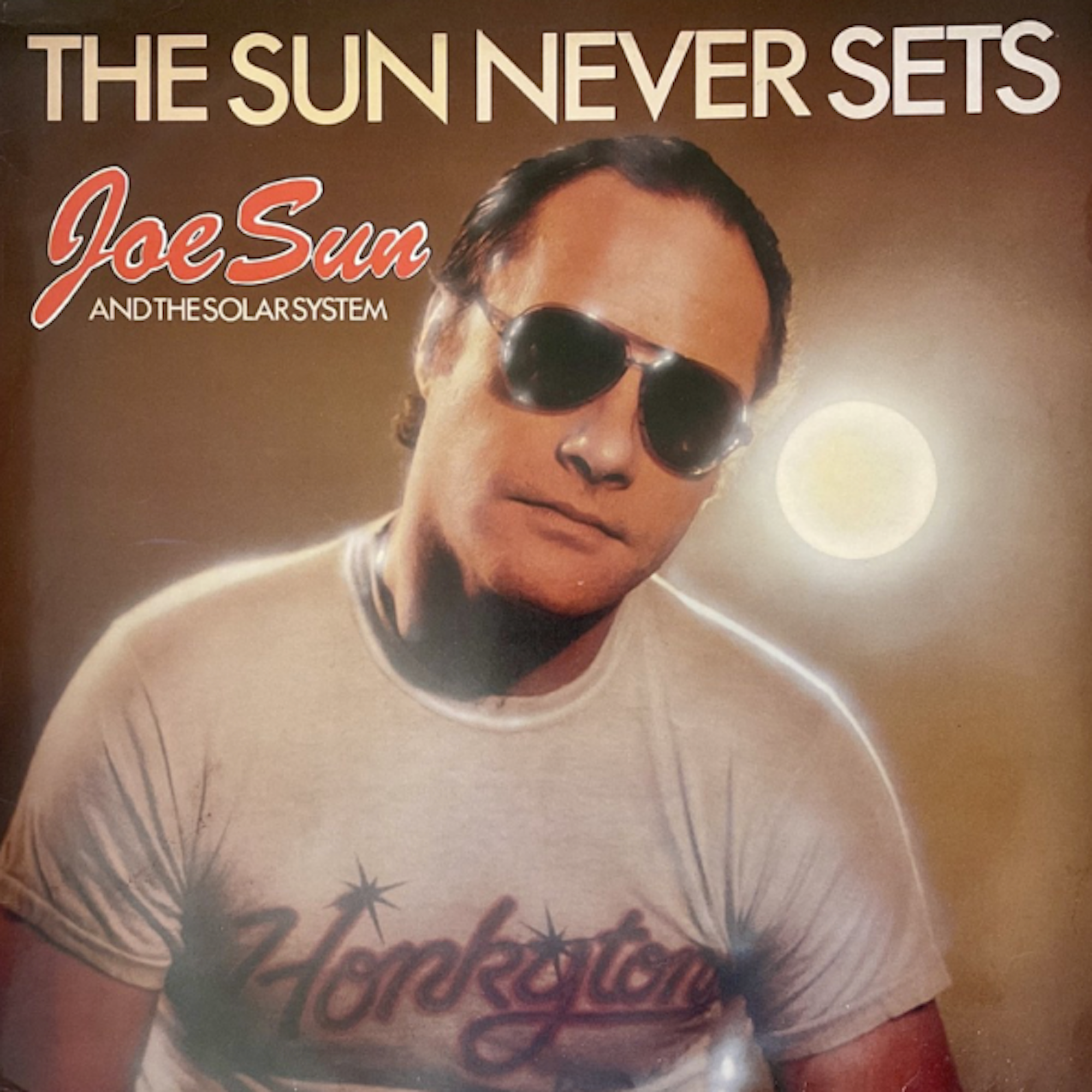
Joe Sun A Respected American Country Singer-Songwriter. The full story is in my book "There Ain't No Rules In Rock n Roll"
Kenny Dentons" There Ain't No Rules In Rock n Roll" Stories From My 45 Years in The Music Industry. · Kenny Denton
Audio is streamed directly from the publisher (content.rss.com) as published in their RSS feed. Play Podcasts does not host this file. Rights-holders can request removal through the copyright & takedown page.
Show Notes
Joe Sun was a respected American country singer-songwriter who recorded for Ovation and Elektra Records, placing 14 singles on the Billboard Hot Country Songs chart. Over his career he released 15 albums, toured the USA and Europe, voiced national Budweiser radio ads, produced two Grammy-nominated foreign albums (1989/90), and appeared as Tommy Fratter in the film Marie alongside Sissy Spacek and Morgan Freeman.
I first met Joe in Nashville in 1984 after Sonet asked me to produce an album with him. True to form, he arrived at my hotel room and immediately challenged me: “What does an English guy like you know about country music?” I replied, “Not as much as you — but my job is to bring out the best in you.” That set the tone for a relationship that was productive, if occasionally strained.
The next day he played me his songs. I heard echoes of Jerry Reed — who famously wrote “Guitar Man” and “U.S. Male” for Elvis Presley — and while Joe confidently declared each song “one hell of a great song,” I felt some were stronger than others. Still, there was solid material.
That evening Joe took me to The Bluebird Cafe in Nashville’s Green Hills. Before performing, he spoke at length about his past successes. Onstage, however, he delivered well and the audience responded warmly. During the break, I was confronted by an aggressive patron who announced he felt like punching me. Using humour rather than confrontation, I managed to defuse the situation — with no help from Joe, who had discreetly distanced himself. Looking back, I sometimes wondered if it had been a test.
We booked sessions at Glaser Sound Studios in Nashville. Joe had rehearsed with his band, Solar System, yet on recording day I discovered he had hired top Nashville session players instead. “The record has to feature big names,” he insisted. It meant starting from scratch. After replacing an unsuitable engineer and dealing with scheduling chaos, we completed the basic tracks and vocals. Visiting Texas musician Augie Myers joined us, though local players were less than welcoming.
I later persuaded Joe to bring in his own band for backing vocals — they were grateful simply to be included. But creative differences persisted. I told Sonet I couldn’t continue in Nashville and proposed finishing the album in London with Joe’s band. They agreed.
Recording at Sonet’s London studio was far smoother. Without Nashville politics or ego clashes, Joe and the band worked professionally, and the album — titled The Sun Never Sets — came together well.
Mixing at Park Studios in Sweden nearly ended in catastrophe. While editing late one night, I accidentally erased Joe’s entire harmonica solo on “The Light That Shines the Brightest.” With Joe in Nashville, re-recording wasn’t possible. I painstakingly constructed a new solo from fragments elsewhere in the track. To my immense relief, Joe never noticed.
The album achieved modest chart success with the single “Bad for Me,” though it was far from a major hit. Listening back years later, I realised it was better than I’d remembered. Still, I’ve often wondered whether our difficult first meeting shaped the project’s outcome. Unlike many artists I’ve worked with, Joe and I never stayed in touch after its completion.
Joe Sun passed away on October 25, 2019, in Palm Bay, Florida — perhaps finally reaching the place where the sun never sets.