
Israel Story
226 episodes — Page 4 of 5

S5 Ep 9From the Vault: Rabin Is…
bonusEWith all the excitement surrounding the U.S. elections, it’s perhaps easy to forget that this week also marks the twenty-fifth anniversary of the assasination of Israeli Prime Minister Yitzhak Rabin. And, as we work on our next new episode, we replay an episode we released exactly five years ago, on the occasion of the twentieth anniversary of the murder. This episode was produced by Shai Satran and Julie Subrin. Thanks to Davia Nelson, Niva Lanir, Uri Rosenwaks, Dani Zamir, David Harman, Matti Friedman, Guy Eckstein, Elad Stavi, Yonatan Glicksberg and Marie Röder.Collin Oldham composed and performed the original music in “Rabin Is Dead.” The end song is “HaStav Biladav” (‘Autumn Without Him’) by Noa (Achinoam Nini); lyrics by Natan Yonatan, and music by Achonoam Nini and Gil Dor). Stay connected with us on Facebook, Twitter, Instagram and by signing up for our newsletter at israelstory.org/newsletter/. For more, head to our site or Tablet Magazine.Stay connected with us on Facebook, Instagram, and by signing up for our newsletter at israelstory.org/newsletter/. For more, head to our site or The Times of Israel. Hosted on Acast. See acast.com/privacy for more information.
S5 Ep 959: The Last Laugh
Forty years after Carl Sagan’s ‘Golden Records’ began their long voyage into the depths of outer space, Eyal Gever - an Israeli high-tech-wunderkind-turned-conceptual-artist - received an unusual call: NASA asked him to create the first artwork to be printed in space. What, he now had to decide, truly captured the essence of humanity? Joel Shupack scored and sound-designed the episode, with original music and additional music by Blue Dot Sessions, Broke for Free and Nehora & Hadas. Sela Waisblum created the mix. Yochai Maital and Mishy Harman edited the episode. The music and lyrics of the end song - “Leil Emesh” (“Last Night”) - are by Naomi Shemer. The song used in the episode is a cover version by Nehora Kakone and Hadas Fraenkel. Stay connected with us on Facebook, Twitter, Instagram and by signing up for our newsletter at israelstory.org/newsletter/. For more, head to our site or Tablet Magazine.Stay connected with us on Facebook, Instagram, and by signing up for our newsletter at israelstory.org/newsletter/. For more, head to our site or The Times of Israel. Hosted on Acast. See acast.com/privacy for more information.
S5 Ep 858: The Dreamer
David Ben Shabat hates being called a prophet. As he sees it, he’s just a guy who stumbled upon a deep truth and wants to share it with the people. But, come to think of it, isn’t that precisely the definition of a prophet?Joel Shupack scored and sound-designed the episode, with original music and additional music by Blue Dot Sessions. Sela Waisblum created the mix.The end song, "Migdal Bavel" ('Tower of Babylon') is by System Ali. Stay connected with us on Facebook, Twitter, Instagram and by signing up for our newsletter at israelstory.org/newsletter/. For more, head to our site or Tablet Magazine.Stay connected with us on Facebook, Instagram, and by signing up for our newsletter at israelstory.org/newsletter/. For more, head to our site or The Times of Israel. Hosted on Acast. See acast.com/privacy for more information.
S5 Ep 8Bonus: Love Syndrome, Revisited
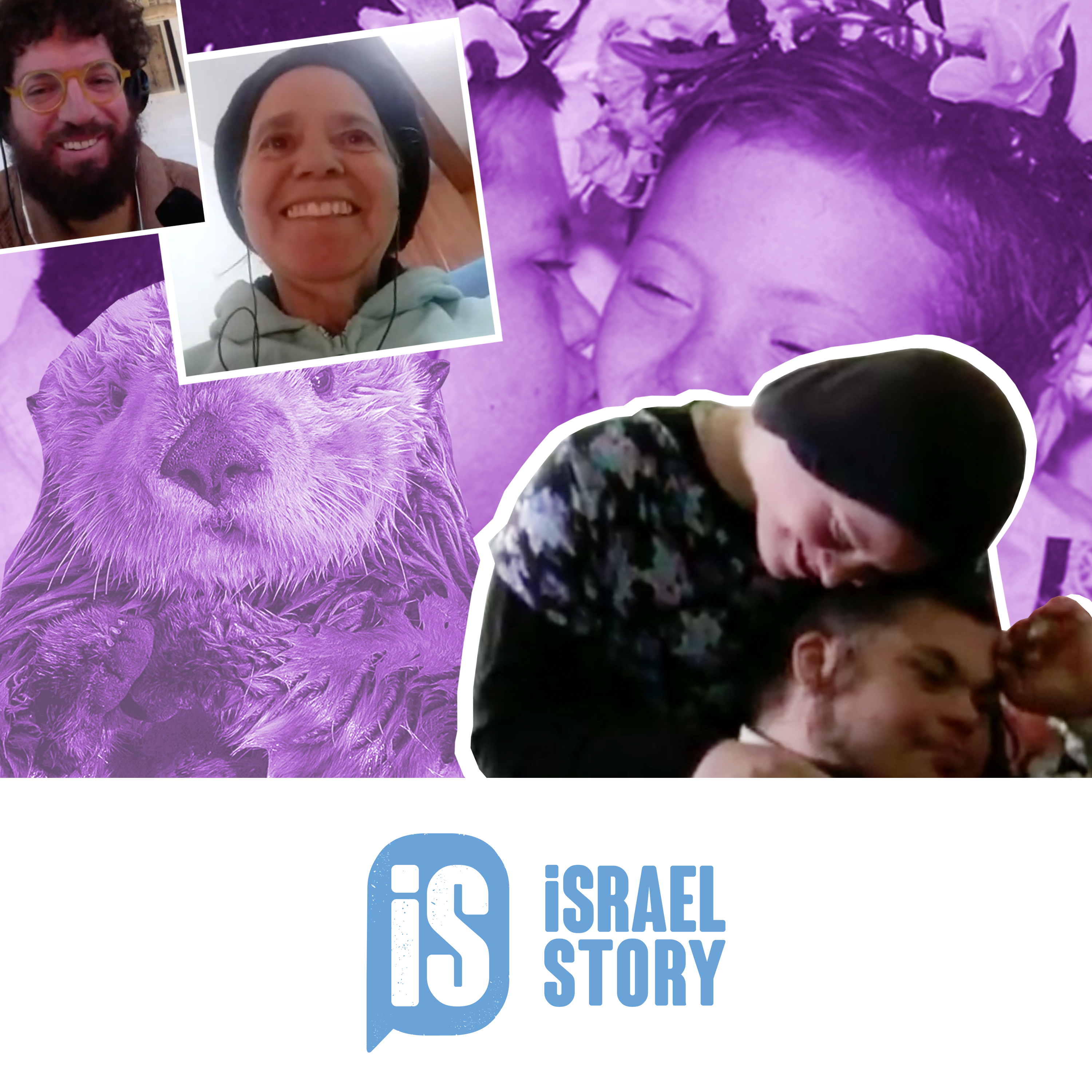
bonusNow that "Alone, Together" is over, and before we turn to stories that - gasp - have little to do with the virus, we revisit and update our most popular episode ever - "Love Syndrome." On March 22, 2020, as we were all just starting to fathom the new reality we were about to enter, hundreds of Israel Story fans went online to hear an update from an ultra-Orthodox woman from Tzfat. Six years ago, Chaya Ben Baruch’s inspiring story brought listeners around the world to tears. It was the story of a trailblazer who wouldn’t let life, and the many obstacles it presented her, dictate reality.Chaya grew up as Enid, in a “Conservadox” Jewish family in Far Rockaway, N.Y. Like many women of her generation and from her background, Chaya’s life seemed to be preordained - she’d go to school, marry a nice Jewish boy, raise a family, and be active in the community. But Enid had different plans: midway through college, she left that structured world behind and ventured off to far-away Fairbanks, Alaska, to study the mothering patterns of sea otters. A decade, three children, and one failed marriage later, Enid met Stan - a tall, Catholic salmon fisherman from the Gold Stream Valley. Together they had three more kids, the last of whom - Angkor - was born with Down Syndrome. While many parents - especially at the time - might have viewed this as a devastating misfortune, Enid and Stan saw it as an opportunity. They were determined to find Angkor a partner; a soulmate. That wish of theirs kicked off an incredible journey that led the family from Alaska to Tzfat, in the north of Israel, and - on the way - precipitated a return to Judaism. Mishy Harman brings us a tale that unfolds in courtrooms, hospitals, Ultra-Orthodox yeshivas, immigration centers and wedding halls. In today’s episode we hear the original story that aired in 2014, followed by a short update from Chaya. Did her Angkor ever find his soulmate? What happened to the young couple? And what is it like to parent special needs children who leave the nest? All this and more in an edited conversation between Chaya and Mishy at the end of the episode. The original episode was scored by Pejk Malinovski with music composed and performed by Rob Burger. Julie Subrin, Yoshi Fields, and Zev Levi edited the episode, which was mixed by Sela Waisblum. Additional music by Broke for Free. The end song, “Nekuda Tova” (“Good Point”) is by Shuli Rand, and features vocals by Ehud Banai.Stay connected with us on Facebook, Twitter, Instagram and by signing up for our newsletter at israelstory.org/newsletter/. For more, head to Stay connected with us on Facebook, Instagram, and by signing up for our newsletter at israelstory.org/newsletter/. For more, head to our site or The Times of Israel. Hosted on Acast. See acast.com/privacy for more information.
S5 Ep 757: “Alone, Together” Part VII - Something Like A Brother
Stories matter. They have the power of connecting us over time and space. And in the finale of our “Alone, Together” miniseries, we see how a podcast episode turned two strangers - a man from Migdal HaEmek, Israel, and a woman from Porto Alegre, Brazil - into soulmates. Porto Alegre is a large city in the south of Brazil, a five-hour drive from the border with Uruguay. Five rivers converge there, making it an important center of industry and commerce. Though its name means “joyful harbor,” in 2017, Porto Alegre ranked as the world’s 39th most violent city, with nearly 41 homicides per 100,000 residents. And while the city does have a sizable Jewish community, primarily Eastern Europeans who founded the local União Israelita association and settled in the Bom Fim neighborhood, there are no direct flights from Porto Alegre to Tel Aviv. So why, you might wonder, is Porto Alegre featured in the final episode of a series exploring life in Israel during the pandemic?Porto Alegre is home to Isabel Christina de Oliveira, a 54-year-old public school teacher. Isabel isn’t Jewish and has never been to Israel. But through Israel Story, and over Zoom, she found an unlikely friend with whom she could share a terribly painful experience. Back in March, Isabel traveled to Italy. Unbeknownst to her, she contracted the virus in Bergamo, and brought it back to Brazil. She was the first COVID-19 patient in her region. And though she immediately went into quarantine, she was publicly shamed and blamed, especially on social media. Vicious posts accused her of infecting the country and made her feel incredibly guilty. If all that sounds familiar, you are not mistaken: In episode 52, “In The Beginning”, we told a similar story about Roni Bargill, Israel’s patient no. 7. Under normal circumstances, Isabel and Roni would have never met. But Isabel’s daughter’s friend, a Brazilian journalist by the name of Giovana Fleck, listened to the Israel Story episode, and translated it for Isabel. The emotional upheaval they had each experienced was uncannily similar. That’s where our team came in once again, arranging a Zoom call that left everyone in tears. Joel Shupack scored and sound-designed this episode with music from Blue Dot Sessions, and Sela Waisblum created the mix. The end song, “Kore Li Kol” (A Voice is Calling) is by Dotan Moshonov. Stay connected with us on Facebook, Twitter, Instagram and by signing up for our newsletter at israelstory.org/newsletter/. For more, head to our site or Tablet Magazine.Stay connected with us on Facebook, Instagram, and by signing up for our newsletter at israelstory.org/newsletter/. For more, head to our site or The Times of Israel. Hosted on Acast. See acast.com/privacy for more information.

S5 Ep 656: "Alone, Together" Part VI - Six Feet (Under)
Israel's one thousandth COVID-19 casualty passed away this weekend. And for all of us, death has sadly been an ever-present part of life over the past six months. In the penultimate episode of our "Alone, Together" series, we bring you two stories about dying in times of Corona. Over the course of this series, we’ve shared many stories of Israelis dealing - in completely different ways - with COVID-19. We’ve heard people express fear, disappointment, shame, anger, hope and acceptance. We’ve told tales of coexistence and discrimination, nightmares and dreams, resilience and panic. But one thing shared by everyone we have encountered in the series thus far is that they have all - thankfully - survived the pandemic. Some got sick, others didn’t, but all lived to tell the tale. That, however, isn’t true of everyone. More than 1,000 Israelis have died of the disease as of early September 2020. In a country of roughly nine million, that’s about 0.0112% of the population. The mortality rate of infected patients is hovering around 0.6%. And while, both those figures are lower than most other countries, there is no doubt that COVID-19 has claimed many victims in Israel. And in our episode today we explore what it looks like to die of, or during, COVID-19. Yochai Maital and Joel Shupack scored and sound-designed this episode, with music from Blue Dot Sessions, Esther Abrami, and Papalin. The end song, “No More Corona,” is by Shai and Galit Dagan. Stay connected with us on Facebook, Twitter, Instagram and by signing up for our newsletter at israelstory.org/newsletter/. For more, head to our site or Tablet Magazine.Stay connected with us on Facebook, Instagram, and by signing up for our newsletter at israelstory.org/newsletter/. For more, head to our site or The Times of Israel. Hosted on Acast. See acast.com/privacy for more information.
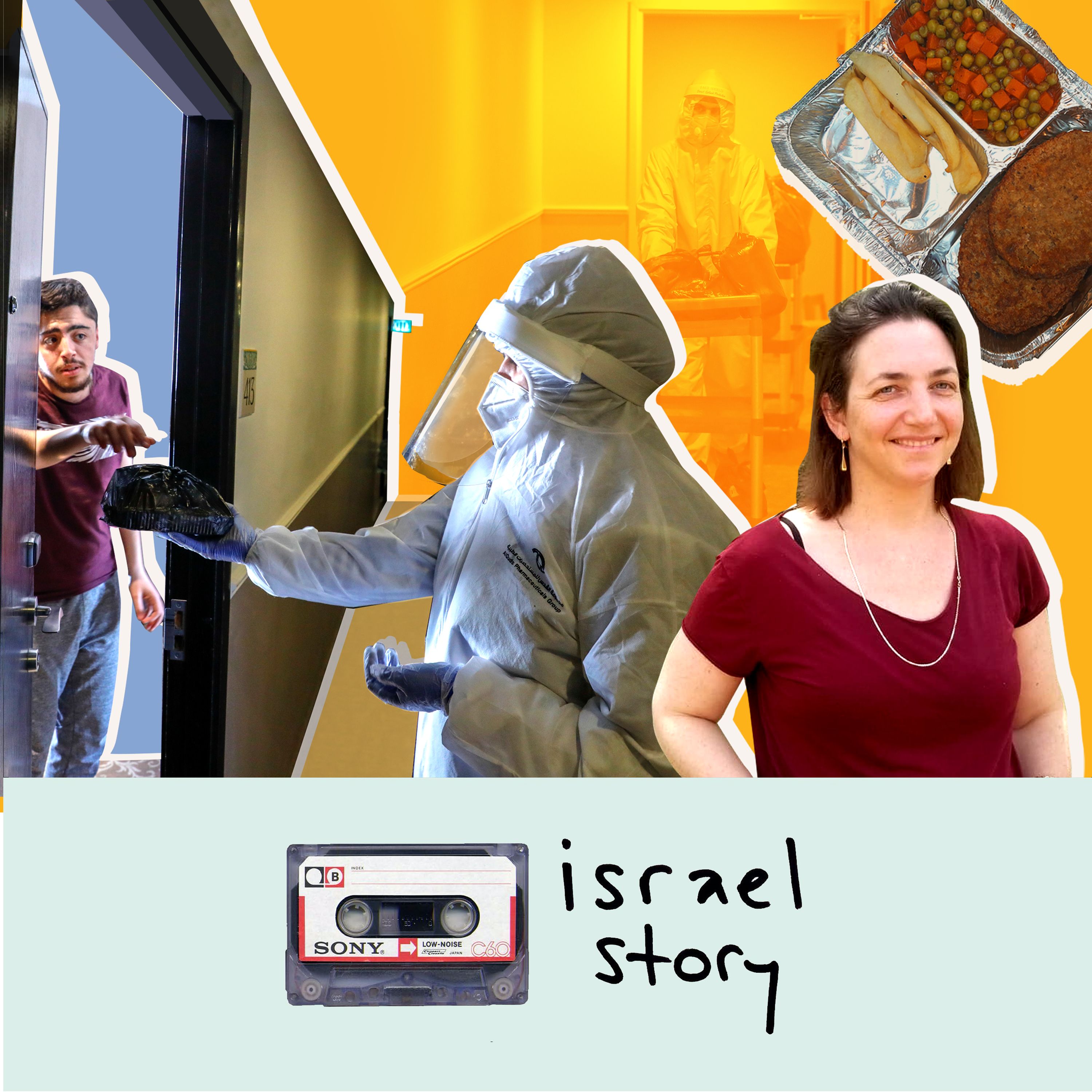
S5 Ep 555: “Alone, Together” Part V - Enjoy Your Stay
Around the world, the tourism industry essentially dried up during the pandemic. But in Israel there was one category of hotels - the so-called “Corona Hotels” - that actually thrived. And depending on whom you ask, they were either a post-apocalyptic heaven or an exit-less hell. In March 2020, Israel - like many other countries around the world - closed its borders. Since then, according to the country’s Central Bureau of Statistics, international tourism has dropped by some 99%. Hotel rooms emptied out, busy lobbies went silent, and those famous Israeli breakfast buffets remained uneaten. While you might assume this spelled the end for most hospitality establishments in Israel, there were actually some hotels that managed not only to stay open, but indeed to stay full. These were hotels leased by the government to serve as “Corona Hotels” and host two distinct populations: Israelis who had already contracted the virus and were waiting until they were no longer contagious and could safely return home, and Israelis returning from abroad who needed to make sure they weren’t bringing coronavirus into the country. Corona Hotels brought complete strangers into close, and prolonged, contact. Unsurprisingly, many of the “guests” were from segments of the population that don’t typically mix and mingle. At times this melting-pot-like experiment created friction, but it also allowed for unusual interactions to occur. Forced to cohabitate, people had to learn to get along, and—in some cases at least—even respect each other. Our episode today examines two different Corona Hotel experiences - one a heartwarming tale of coexistence, the other a dark account of agony. The episode was mixed by Sela Waisblum and scored by Joel Shupack with music from Blue Dot Sessions and sound-design help from Yochai Maital. The end song, “Bomba,” is by Hadag Nahash and Johnny Goldstein.Stay connected with us on Facebook, Twitter, Instagram and by signing up for our newsletter at israelstory.org/newsletter/. For more, head to our site or Tablet Magazine.Stay connected with us on Facebook, Instagram, and by signing up for our newsletter at israelstory.org/newsletter/. For more, head to our site or The Times of Israel. Hosted on Acast. See acast.com/privacy for more information.

S5 Ep 454: “Alone, Together” Part IV - The Lifesavers
The global pandemic has introduced us to many “lifesavers”—doctors, nurses, and medical staff who are on the frontlines day in and day out. But what happens when those ‘superheroes’ need to be saved themselves? And can saving a life end up saving your life, too?If, God forbid, you find yourself in a medical emergency in Israel, you dial 101 for Magen David Adom. Yet more often than not, before an ambulance shows up, someone else—often riding a motorcycle and donning a bright orange vest—will appear on the scene. These are the volunteer medics of a national organization called United Hatzalah, or Ichud Hatzalah in Hebrew. And those extra moments? They can literally be the difference between life and death. Ichud Hatzalah responds to roughly 1,800 calls a day, and has—according to the Israeli Heart Society—reduced the rate of cardiac-arrest deaths in Israel by as much as 50%. Private emergency medical services exist around the world, of course. But Ichud Hatzalah is unique: While most focus on a specific neighborhood or community, they cover the entire country. Their volunteers are Jews, Muslims, Christians, Druze, religious, secular, you name it. And what’s more, their services are completely free. The organization is the brainchild of a Jerusalemite who—for more than three decades now—has been single-mindedly focused on one goal: saving as many lives as possible. But what happens when, in the midst of a global pandemic, this lifesaver needs to saved himself? Being saved, we learn, can often be harder than it seems.The episode was mixed by Sela Waisblum and scored by Joel Shupack with music from Blue Dot Sessions and sound-design help from Yochai Maital. The end song, “Refa Tziri” is sung by Akiva Turgeman, Ariel Zilber, Berry Sakharof, Amir Benayoun, and Lior Elmaliach. The words are from a piyyut, or Jewish liturgical poem, written by Rabbi Raphael Antebi Tabbush of Aleppo, Syria (1853-1919), and the melody is attributed to a Judeo-Spanish song called “Triste Vida” (‘A Sad Life’). Stay connected with us on Facebook, Twitter, Instagram and by signing up for our newsletter at israelstory.org/newsletter/. For more, head to Stay connected with us on Facebook, Instagram, and by signing up for our newsletter at israelstory.org/newsletter/. For more, head to our site or The Times of Israel. Hosted on Acast. See acast.com/privacy for more information.

S5 Ep 353: “Alone, Together” Part III - Gevalt
Israel’s ultra-orthodox community was hit twice during COVID-19: First, and in disproportionate numbers, by the virus itself, and then by a wave of anti-Haredi sentiment that pervaded the country. Here’s what it looked like from their perspective.When COVID-19 first hit Israel, many of its epicenters were in Haredi, or Ultra-Orthodox, communities. More than one-third of coronavirus tests in Bnei Brak, for instance, came back positive. Some pointed a finger to the pervasive poverty and crowded dwellings, others to the packed yeshivas and mass prayers. And many pundits found an easy culprit in certain defiant rabbis who ordered their followers to ignore the public health guidelines and go on with life as normal. Before long, matters escalated, and with a climbing case count, the media reports became increasingly vicious, and a wave of anti-Haredi sentiment swept through the country. In an attempt to stop, or at least slow down, the spread of the virus, the government deployed soldiers to Haredi cities and neighborhoods. These uniformed men and women recited social-distancing guidelines, told people to wear masks, dished out fines, and enforced strict curfews and lockdowns. But if you imagine soldiers and policemen chatting away with Haredim on street corners and sharing humorous Yiddishisms, think again. Many clashes ensued, and some of them turned violent. In this unusual episode, we don’t tell the story of a central character with a clear plotline. Instead, we spent months collecting testimonies from everyday Haredi men and women who give us a glimpse into the sheltered world of Ultra-Orthodox Judaism. The episode was mixed by Sela Waisblum. “Gevalt” was scored and sound-designed by Yochai Maital, together with original music composed and performed by Ari Jacob. The rest of the episode was sound-designed and scored by Joel Shupack with music from Blue Dot Sessions. The end song, “Keter Melukha” (“Royal Crown”) is by Ishay Ribo, and was written and recorded during lockdown.Stay connected with us on Facebook, Twitter, Instagram and by signing up for our newsletter at israelstory.org/newsletter/. For more, head to our site or Tablet Magazine.Stay connected with us on Facebook, Instagram, and by signing up for our newsletter at israelstory.org/newsletter/. For more, head to our site or The Times of Israel. Hosted on Acast. See acast.com/privacy for more information.

S5 Ep 252: “Alone, Together” Part II - In the Beginning
Six months ago, very few people knew what ‘sheltering in place’ or ‘flattening the curve’ meant. Today, we live in a new world, and it’s often hard to remember what it was like at the beginning. On January 14, 2020 - exactly half a year ago - even Wuhan wasn’t yet under lockdown. There had been but a handful of reported cases outside of China, and for most of us “Corona” was - first and foremost - a refreshing beer. By February, COVID-19 was already starting to seem like a global threat. But while governments were desperately trying to piece together adequate responses, most ordinary people went on with their daily lives. Before long, however, everyone was checking the news incessantly, and looking for answers to a million menacing questions: How deadly is this disease? Is it just a bad flu or the end of times? Is COVID-19 going to affect my summer plans? Postpone the Olympics? Should we stop taking the kids to visit Grandma and Grandpa? Soon, masks and gloves were impossible to find. Hand sanitizer became the new gold standard. And sure enough, it didn’t take long before people all around the world started getting sick and dying in large numbers. With all that’s gone on over the past six months, it's easy to forget - or at least mis-remember - what it all felt like at the start. Our episode today takes us back to those early days of panic and confusion, and introduces us to two trailblazers - a nurse and a patient - who have no difficulty conjuring up the terror and uncertainty of that initial period.The episode was mixed by Sela Waisblum and sound-designed and scored by Joel Shupack with music from Blue Dot Sessions. The end song, “Yamim Shel Kolnoa” (“Cinema Days”), is performed by ‘HaTov, HaRa VeHaNa’ara’ (Josie Katz, Benny Amdursky and Israel Gurion). The lyrics were written by Ehud Manor and the melody was composed by Shmulik Kraus.Stay connected with us on Facebook, Twitter, Instagram and by signing up for our newsletter at israelstory.org/newsletter/. For more, head to our site or Tablet Magazine.Stay connected with us on Facebook, Instagram, and by signing up for our newsletter at israelstory.org/newsletter/. For more, head to our site or The Times of Israel. Hosted on Acast. See acast.com/privacy for more information.

S5 Ep 151: “Alone, Together” Part I - Mazal Tov!
The wait, ladies and gentlemen, is finally over: Israel Story is back, and is kicking off Season Five with "Alone, Together" - a brand new miniseries about Israel in the time of corona.The global pandemic has—to state the obvious—reshaped our lives, refocused our priorities, and forced us to reevaluate countless things we’ve long taken for granted. Israel was, of course, hit too, in ways that are at once unique and just like the rest of the world. We’ve had curfews and lockdowns, shifting social distancing guidelines, layoffs, isolation, discrimination, economic hardship, illness and death. We’ve also had births and bar mitzvahs, weddings and birthdays, and have witnessed unusual displays of solidarity, resilience and kindness.Throughout the miniseries, we’ll look back at the last few months and share stories that are simultaneously utterly Israeli and completely universal.COVID-19 has been a gloomy period, for different people and in different ways. But, perhaps counter-intuitively, we are going to start our miniseries with some cheer and brightness in an episode that is all about celebrations. Or, perhaps more accurately, corona celebrations.Stay connected with us on Facebook, Instagram, and by signing up for our newsletter at israelstory.org/newsletter/. For more, head to our site or The Times of Israel. Hosted on Acast. See acast.com/privacy for more information.

S5 Ep 1Introducing Our New Miniseries - "Alone, Together"
We're extremely excited to announce that Israel Story’s fifth season will begin next week, on June 30, 2020. We’ll kick off with our newest miniseries - "Alone, Together" - which is all about Israel (and Israelis) in the time of corona.Like the rest of the world, Israel experienced curfews and lockdowns, shifting social distancing guidelines, layoffs, economic hardship, illness and death. We've also had births, Bar Mitzvahs and weddings, and have witnessed unusual displays of solidarity, bravery and kindness. Throughout the miniseries we will tell stories that are at once both utterly universal and uniquely Israeli. We hope you join us for yet another storytelling adventure during which we will laugh, cry and everything in between. For updates on Israel Story's new season, follow us on Facebook, Twitter, Instagram, or by signing up for our newsletter at israelstory.org/newsletter. For more info, join our members-only community, check out Tablet Magazine, or head to our site.Original music performed and composed by Tal Kravitz, to words by poet Noam Horev.Stay connected with us on Facebook, Instagram, and by signing up for our newsletter at israelstory.org/newsletter/. For more, head to our site or The Times of Israel. Hosted on Acast. See acast.com/privacy for more information.

From the Vault: Tying a Knot
For Mother's Day, we replay one of the most touching and brave stories of motherhood we've ever aired.In 2015, on the very last day of a month-long assignment in Nepal, Israeli journalist Danna Harman ran into three local street girls. She had just finished several unsuccessful rounds of IVF, and – back in Tel Aviv –she began daydreaming of an instant family. When one of the girls contacted her following Nepal's devastating earthquake, these dreams took on an unexpected life of their own. In a story about motherhood and friendship, Danna explores the bittersweet need for adjusting expectations. Julie Subrin edited this story, Ari Jacob wrote and performed the original music, and Sela Waisblum mixed it all up. Additional music by Blue Dot Sessions. The end song, "Imma," was written and arranged by Shaike Paikov. The cover version used in the episode is by Ninet Tayeb and Yehuda Levi.Stay connected with us on Facebook, Twitter, Instagram and by signing up for our newsletter at israelstory.org/newsletter/. For more, head to our site or Tablet Magazine.Stay connected with us on Facebook, Instagram, and by signing up for our newsletter at israelstory.org/newsletter/. For more, head to our site or The Times of Israel. Hosted on Acast. See acast.com/privacy for more information.

From the Vault: A Biblical Bond
Today is Yom HaZikaron - the day of remembrance for fallen soldiers and victims of terrorism. With everyone instructed to stay home, the typically-packed military cemeteries throughout Israel are largely empty. So we wanted to bring you one of our favorite stories.In 2003, Susi Döring Preston was a Peace Corps volunteer in Thailand. That's where she met Tsiki Eyal, at a nightclub. Their passionate love affair would ultimately lead her to the sleepy Israeli town of Mazkeret Batya. There, surrounded by tears, this freckled Tulsan formed a raw, painful and hopeful bond with a woman who could, and should, have been her mother-in-law. Federica Sasso tells a story which – if the Bible were rewritten in today – might well replace the Book of Ruth. The original music was composed and performed by Ari Jacob. The episode was mixed by Sela Waisblum.Stay connected with us on Facebook, Twitter, Instagram and by signing up for our newsletter at israelstory.org/newsletter/. For more, head to our site or Tablet Magazine.Stay connected with us on Facebook, Instagram, and by signing up for our newsletter at israelstory.org/newsletter/. For more, head to our site or The Times of Israel. Hosted on Acast. See acast.com/privacy for more information.

IsraPalooza
trailerJoin us for a day filled with back-to-back interviews, concerts, workshops and classes in celebration of Israel's Independence Day!Stay connected with us on Facebook, Twitter, Instagram and by signing up for our newsletter at israelstory.org/newsletter/. For more, head to our site or Tablet Magazine.Stay connected with us on Facebook, Instagram, and by signing up for our newsletter at israelstory.org/newsletter/. For more, head to our site or The Times of Israel. Hosted on Acast. See acast.com/privacy for more information.
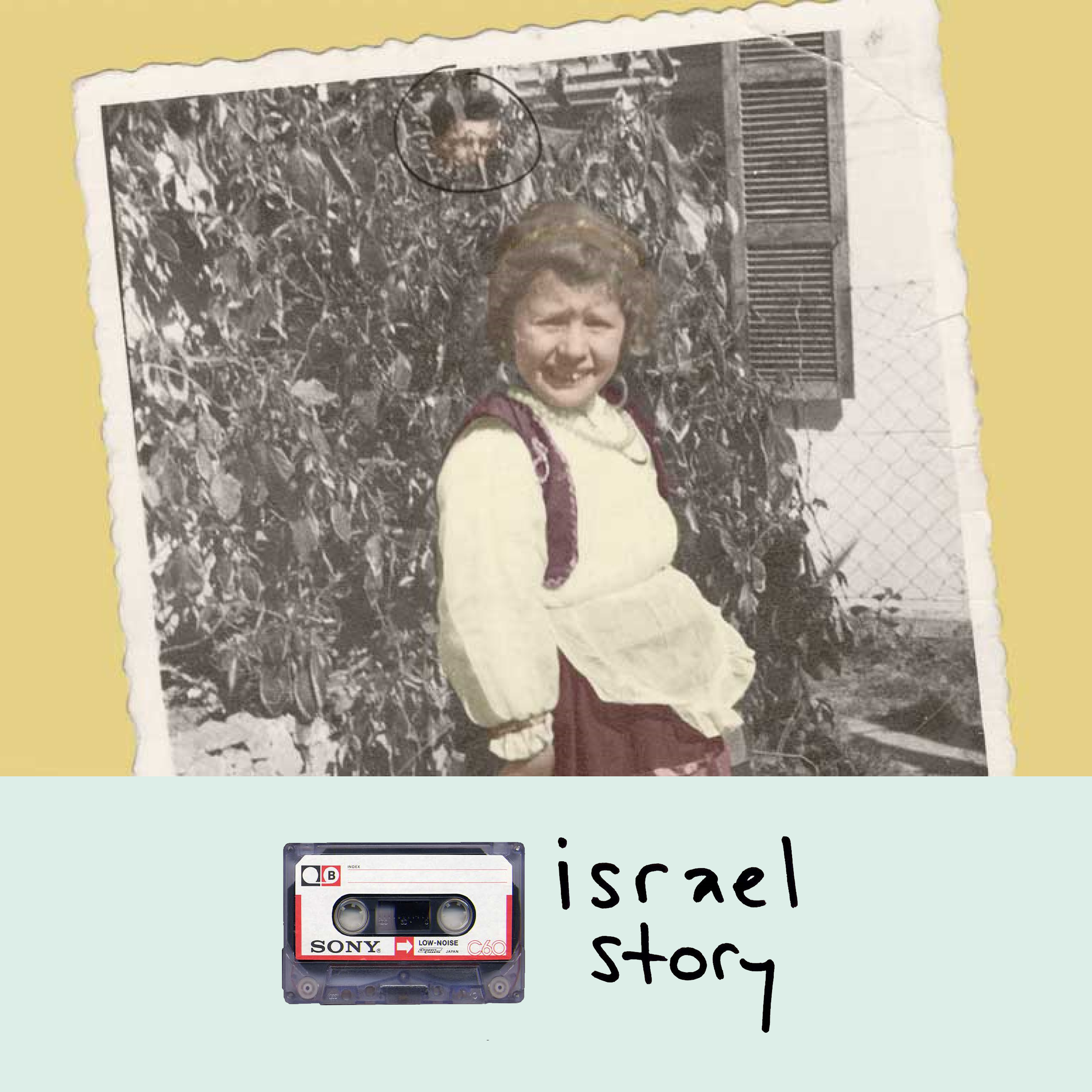
From the Vault: A Severe Case of Second Generation
It's Yom HaShoah, Holocaust Remembrance Day. Over the years we’ve aired many stories and episodes that relate to the Holocaust in different ways. But today we wanted to replay one of our favorites.Lizzie Doron was born in Tel Aviv in the early 1950s. Like many others of her generation, she grew up in the shadow of the Holocaust, and her childhood was filled with silence. Questions about her family’s past were left unanswered or ignored. So, in a neighborhood where traumatic memories were relived on a nightly basis, Lizzie had to use her imagination to fill in the blanks of her own story. And, in her mind at least, she wasn’t alone. There was always someone there, looking out for her, looking *at *her. Maya Kosover unfolds an unusual saga which ends – decades after Lizzie left her mother’s home – with a shocking discovery.The music commissioned for this episode was composed and performed by The Hazelnuts – Shira Z. Carmel, Yifeat Ziv, Ronnie Wagner and Sapir Rosenblatt. It includes a cover of Yaakov Orland's "Mihu Ha'Meyalel Ba'Ruach" and "Ten Li," an original song by Yifeat Ziv.Stay connected with us on Facebook, Twitter, Instagram and by signing up for our newsletter at israelstory.org/newsletter/. For more, head to our site or Tablet Magazine.Stay connected with us on Facebook, Instagram, and by signing up for our newsletter at israelstory.org/newsletter/. For more, head to our site or The Times of Israel. Hosted on Acast. See acast.com/privacy for more information.

S4 Ep 12We Want To Hear From You!
trailerWe want your feedback! Please fill out our listener survey.Head to israelstory.org/survey and help us keep the show free.Stay connected with us on Facebook, Instagram, and by signing up for our newsletter at israelstory.org/newsletter/. For more, head to our site or The Times of Israel. Hosted on Acast. See acast.com/privacy for more information.
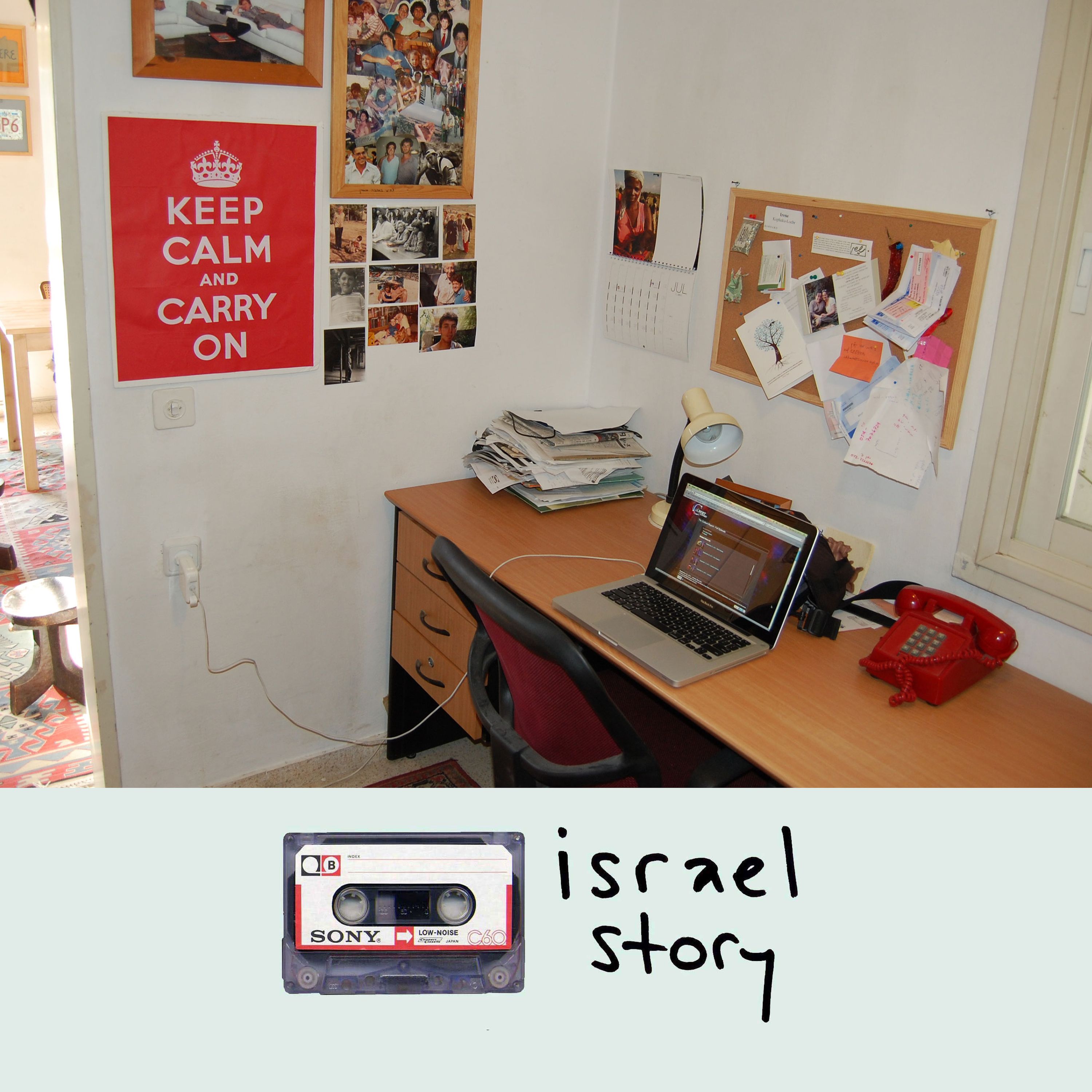
S4 Ep 1150: Keep Calm and Carry On
What does it mean to be 'in it for the long haul'? In our fiftieth episode, which is also our season finale, we explore this question in the context of both creating a podcast and forging a relationship.Some people operate within the confines of reality. Others don't. Instead, they will things into existence. Today we'll meet one such determined woman who - faced with countless obstacles - decided to keep calm, put one foot in front of the other, and carry on in pursuit of love.Stay connected with us on Facebook, Twitter, Instagram and by signing up for our newsletter at israelstory.org/newsletter/. For more, head to our site or Tablet Magazine.Stay connected with us on Facebook, Instagram, and by signing up for our newsletter at israelstory.org/newsletter/. For more, head to our site or The Times of Israel. Hosted on Acast. See acast.com/privacy for more information.

From the Vault: Whistle-Stop Tour
Back in 2014, we met Elik Fromchenko. During the day he works at an auto magazine, but - just like Clark Kent - he has a secret superpower: Elik is a world-class whistler. And, in an adventure that could only happen to an Israeli backpacker, he found himself in an ambassadorial role in Hebei Province, China.Stay connected with us on Facebook, Twitter, Instagram and by signing up for our newsletter at israelstory.org/newsletter/. For more, head to our site or Tablet Magazine.Stay connected with us on Facebook, Instagram, and by signing up for our newsletter at israelstory.org/newsletter/. For more, head to our site or The Times of Israel. Hosted on Acast. See acast.com/privacy for more information.

S4 Ep 11"An Audio Egg Roll"
trailerIf you happen to associate Christmas Eve with egg rolls, hot-and-sour soup and sesame chicken, tune in to tomorrow's re-release of one of our Season One classics - our sole China-related story.Stay connected with us on Facebook, Twitter, Instagram and by signing up for our newsletter at israelstory.org/newsletter/. For more, head to our site or Tablet Magazine.Stay connected with us on Facebook, Instagram, and by signing up for our newsletter at israelstory.org/newsletter/. For more, head to our site or The Times of Israel. Hosted on Acast. See acast.com/privacy for more information.

S4 Ep 1049: We Share The Same Sky
Rachael Cerrotti was a college freshman when she first came to Israel on a Birthright trip. Shortly thereafter, back in Philadelphia, she and her grandmother - Hana Dubova - started sitting down for what they called "storytelling sessions." The result was a ten-year-long journey in which Rachael retraced her grandmother's steps during, and in the wake of, WWII.Stay connected with us on Facebook, Twitter, Instagram and by signing up for our newsletter at israelstory.org/newsletter/. For more, head to our site or Tablet Magazine.Stay connected with us on Facebook, Instagram, and by signing up for our newsletter at israelstory.org/newsletter/. For more, head to our site or The Times of Israel. Hosted on Acast. See acast.com/privacy for more information.
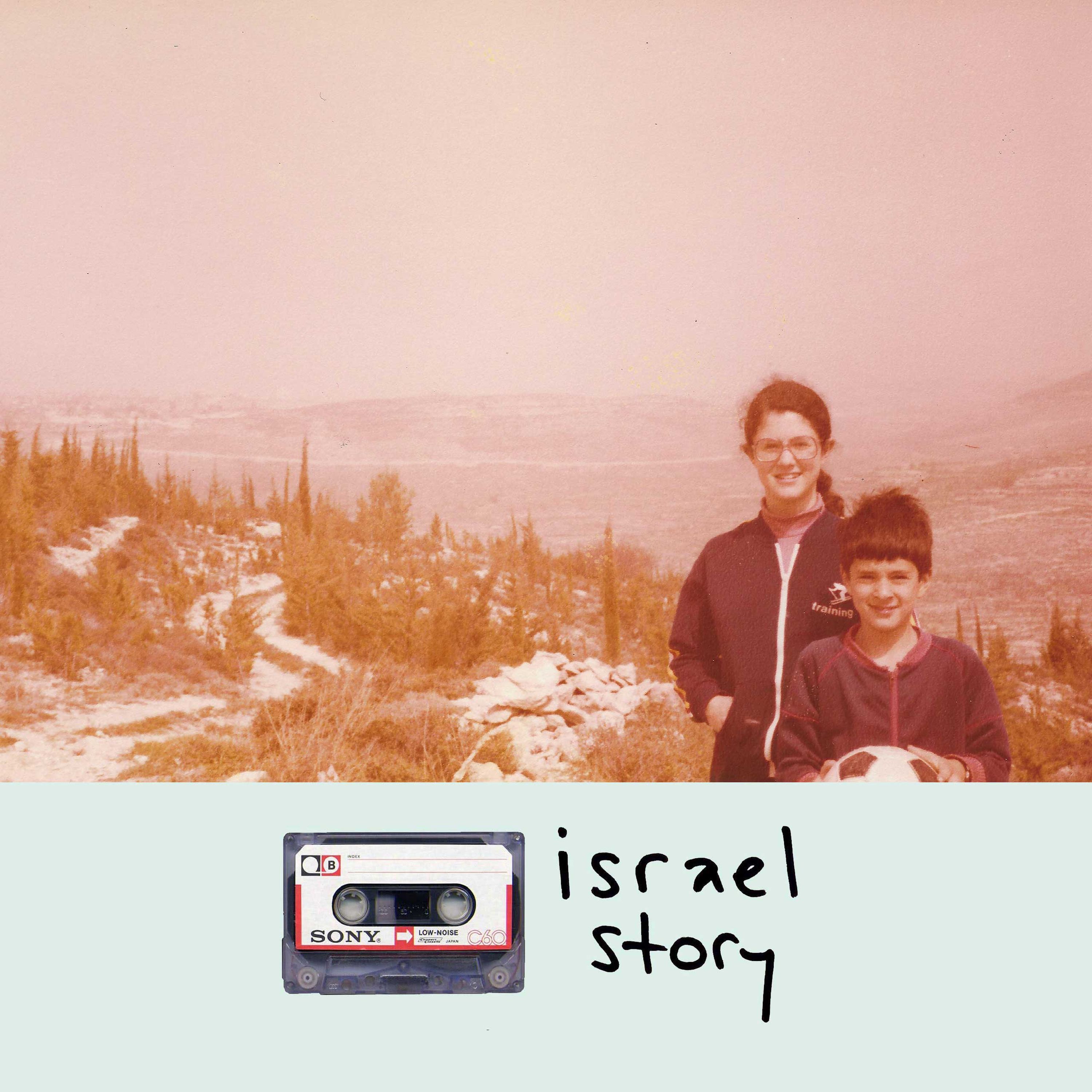
Short: "Achoti"
In our last episode, "Achi" (my brother), we told the tale of two siblings and their unusual life together. And today, we're sharing a little companion bonus track, in which senior producer Yochai Maital talks to his older sister Temira Finesilver about their very different lifestyles. Stay connected with us on Facebook, Twitter, Instagram and by signing up for our newsletter at israelstory.org/newsletter/. For more, head to our site or Tablet Magazine.Stay connected with us on Facebook, Instagram, and by signing up for our newsletter at israelstory.org/newsletter/. For more, head to our site or The Times of Israel. Hosted on Acast. See acast.com/privacy for more information.

S4 Ep 948: "Achi"
When God first spoke to Benjamin, he was reading the newspaper. That was just the start of a wild journey that led two Orthodox brothers from the Bronx to a new life, a new homeland, a new lord and - above all - to each other.Growing up, Benjamin and Reuven Berger never imagined they'd be roommates well into their seventies. Nor did they imagine their lives would unfold as brothers in faith. But from their majestic home in the serene village of Ein Kerem, they reflect on an unusual, almost biblical, path that led them far apart and then back together. In the prologue, Mishy Harman tries to understand why - if an alien landed in Israel today - it would probably think that the word "achi" is a form of Hebrew punctuation. Act I, "The Berger Bros," is a tale of two brothers who are brothers in more than just one way. Joel Shupack brings us the story of Benjamin and Reuven Berger, the Bronx-born sons of European Jews who escaped the Nazis. Tumultuous years of doubts, revelations and risks led them from a muddy copy of "Peyton Place" all the way to Jerusalem's small community of Messianic Jews. Ari Jacob composed and performed the original music in "The Berger Bros." Additional music by Blue Dot Sessions. Thanks to Dina Kraft for editorial help. Adam Milliner mixed the episode. The end song, *November, *is by Shaanan Streett, and features Selva de Mar. It was written in memory of Shaanan's sister, Tova.Stay connected with us on Facebook, Twitter, Instagram and by signing up for our newsletter at israelstory.org/newsletter/. For more, head to our site or Tablet Magazine.Stay connected with us on Facebook, Instagram, and by signing up for our newsletter at israelstory.org/newsletter/. For more, head to our site or The Times of Israel. Hosted on Acast. See acast.com/privacy for more information.
S4 Ep 10Short: The Last "Rabbi" of Baghdad - A Thanksgiving Special
Jews have been in Iraq for more than two-and-a-half millennia. Today, the entire Jewish community of Baghdad can fit in a single car. In this special Thanksgiving bonus, we bring you a conversation between Mishy Harman and Emad Levy, the last "rabbi" of Baghdad.It's a busy week. Many of you will be traveling, and those of you staying put will probably be cooking turkeys and preparing cranberry sauce. And while you are doing all that, we wanted to keep you company.With the kind of storytelling we do, most of our interviews end up on the proverbial "editing room floor." And we're often sorry about that, since we'd like you to hear them too. So today, in a new experiment for us, we bring you an edited version of an interview we recently recorded. Want to know what the last "rabbi" of Baghdad is thankful for? Listen and find out.Zev Levi edited this special. The end song, "Tahdini" is by Dudu Tassa & The Kuwaitis.Stay connected with us on Facebook, Twitter, Instagram and by signing up for our newsletter at israelstory.org/newsletter/. For more, head to our site or Tablet Magazine.Stay connected with us on Facebook, Instagram, and by signing up for our newsletter at israelstory.org/newsletter/. For more, head to our site or The Times of Israel. Hosted on Acast. See acast.com/privacy for more information.
S4 Ep 847: By the Rivers of Babylon
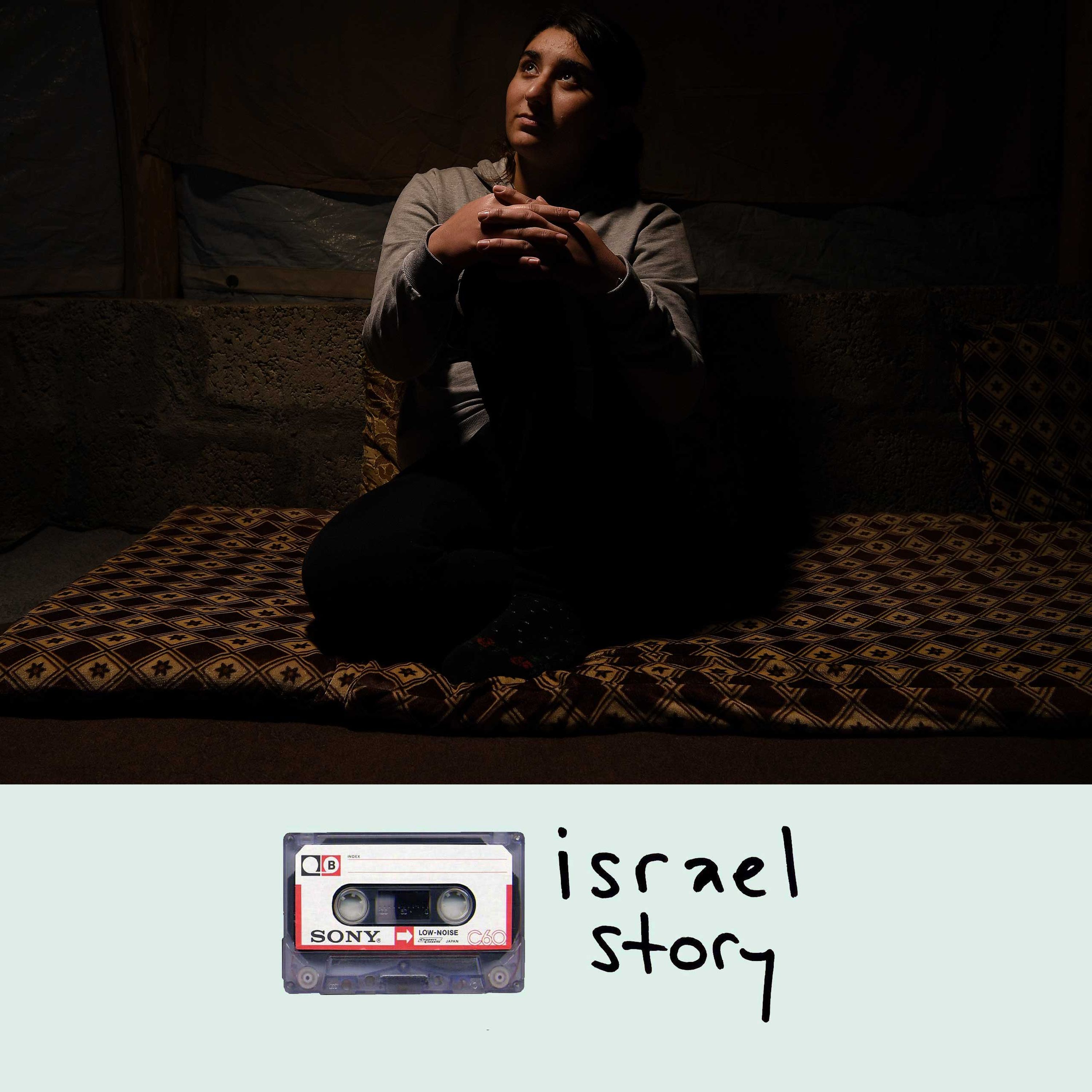
A century ago, close to one-third of Baghdad's population was Jewish. Today, just five Jews remain in the city. In today's episode, we explore the story of the Jews of Iraq, all the way from Nahum the prophet to a Jerusalemite grandma who became the unlikely champion of kidnapped Yazidi girls.Jews first arrived in what is today Iraq in the 6th century BC, after the Babylonian king Nebuchadnezzar sacked Solomon's Temple. It was from there that Ezra and Nehemiah led returning exiles back to Jerusalem. It was there that the Babylonian Talmud was debated, compiled and codified. And it was there, in 1941, that the Farhud - a violent pogrom - left hundreds of Baghdad's Jews dead and thousands injured.While there were many different phases in this 2600-year-long history, Jews knew numerous prosperous periods in the 'land between the two rivers.' There were Jewish politicians, jurists, doctors, businessmen. There was even a Jewish Miss Baghdad.Today that community is all but gone.Ari Jacob wrote the original music in “You Cannot Clap With One Hand.” Joel Shupack arranged the music for the rest of the episode, and for parts of Act I, with music from Blue Dot Sessions. Shai Satran and Mishy Harman edited the episode, and Sela Waisblum mixed it all up. It was recorded in Jonathan Friedlander's 'Quality Sound Studio' in Jerusalem. The end song is a new cover version we commissioned of Boney M.'s "Rivers of Babylon.” It was recorded, arranged and performed by Shay Perry.Stay connected with us on Facebook, Twitter, Instagram and by signing up for our newsletter at israelstory.org/newsletter/. For more, head to our site or Tablet Magazine.Stay connected with us on Facebook, Instagram, and by signing up for our newsletter at israelstory.org/newsletter/. For more, head to our site or The Times of Israel. Hosted on Acast. See acast.com/privacy for more information.

S4 Ep 9From the Vault: Herr Eichmann
To most, Adolf Eichmann - the mastermind behind the Nazis’ ‘Final Solution’ - is the ultimate symbol of evil. But to a small group of Israelis, he was no more than a gaunt and balding middle-aged prisoner. This is the story of those who looked evil in the eye, and lived to tell the tale.Last week we aired a story about Dr. Yonah Elian, the anesthesiologist who sedated Eichmann during his capture back in 1960. And today we bring you a rerun of another Eichmann story we aired back in a 2016 episode called “Of Numbers and Names.” It is the story of the select few who interacted with Eichmann as he stood trial in Jerusalem - his guards, his interrogators and even his executors. Israelis for whom the encounter with the Nazi officer wasn’t just a moment of national catharsis. It was an intimate experience. Perhaps even too intimate.This piece was produced by Katie Pulverman with help from Shai Inbal. Special thanks to Yuval Orr, Roy Barzilay, Shlomo Maital and Chanoch Lipperman. The end song, “Efer Ve’Avak” (“Ash and Dust”) is by Yehuda Poliker.Stay connected with us on Facebook, Twitter, Instagram and by signing up for our newsletter at israelstory.org/newsletter/. For more, head to our site or Tablet Magazine.Stay connected with us on Facebook, Instagram, and by signing up for our newsletter at israelstory.org/newsletter/. For more, head to our site or The Times of Israel. Hosted on Acast. See acast.com/privacy for more information.
S4 Ep 746: The Needle
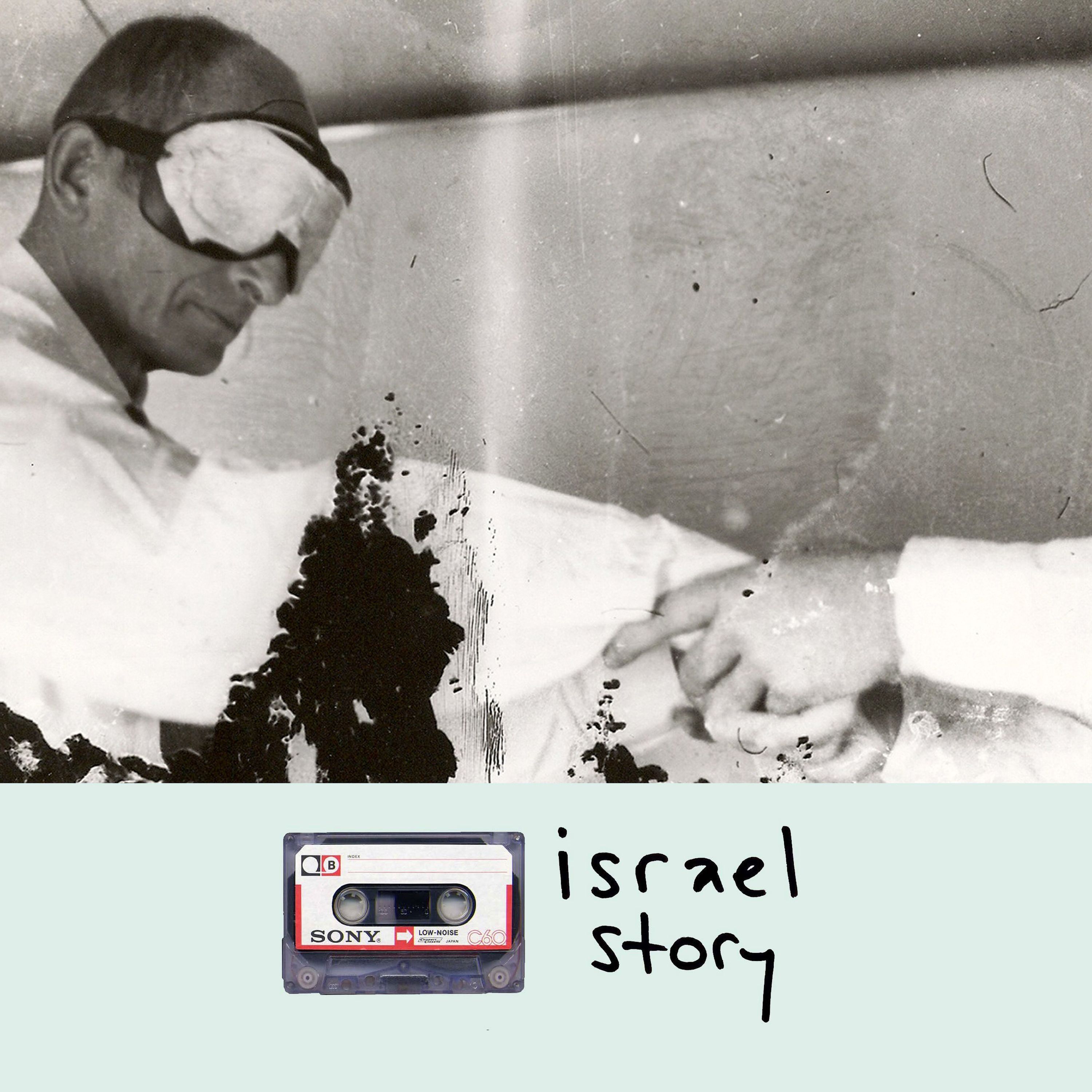
In May 1960, the Mossad captured Adolf Eichmann in Buenos Aires, and brought him to stand trial in Jerusalem. It's one of Israel's most glorified chapters, right up there with Entebbe, the bombing of the Iraqi Nuclear Reactor and Operation Solomon. So why did the doctor who sedated the Nazi mastermind minimize his role in the saga? And what can that tell us about the legacy of World War II, eighty years after its start?Last month, the world marked the eightieth anniversary of Hitler's invasion of Poland and the start of WWII. In Israel, too, this was a big milestone: Kids discussed it at school, academics held conferences at the various universities, newspapers ran articles and editorials. But this wasn't, of course, always the case in Israel. For years, the war - and the Holocaust - were taboo topics. European Jews, many Israelis felt, had gone to the camps like sheep to the slaughter, without resisting, without putting up much of a fight. That perception began to change, almost overnight, as a result of one major event - the capture and trial of Adolf Eichmann.This episode is a collaboration with "Rough Translation," an NPR podcast that tells stories from around the world that offer new perspectives on familiar conversations. Gregory Warner and Daniel Estrin bring us the complicated story of Dr. Yonah Elian, the anesthesiologist who sedated one of the world's most notorious Nazis.Marianne McCune edited the piece, and scored it together with Mike Cruz. Joel Shupack arranged the rest of the episode with music from Blue Dot Sessions. It was produced by Jess Jiang, Neal Carruth, Will Dobson, Anya Grundman, Sarah Knight, Andy Huether, John Ellis, Matt Orton, Autumn Barnes, Zev Levi, Yoshi Fields, Niva Ashkenazi, James Feder and Yochai Maital. Sela Waisblum mixed the episode. The end song, "Perurim Shel Or" ("Sparks of Light") is the first single from the new album of Israel Story's band leader, Dotan Moshonov.Stay connected with us on Facebook, Twitter, Instagram and by signing up for our newsletter at israelstory.org/newsletter/. For more, head to our site or Tablet Magazine.Stay connected with us on Facebook, Instagram, and by signing up for our newsletter at israelstory.org/newsletter/. For more, head to our site or The Times of Israel. Hosted on Acast. See acast.com/privacy for more information.

S4 Ep 645: Explosive Confession - A Yom Kippur Special
The special was recorded in Ben Wallick’s studio and was mixed by Sela Waisblum.Repentance, prayer and charity, we are told, are our saving graces when Yom Kippur comes around. And, of course, confession is a big part of that trifecta. But do we still get the coveted brownie points if that confession took thirty years?In 1989, Robby Berman - a recent Yeshiva University grad and enthusiastic Zionist - made aliyah and was drafted into the IDF. But nothing in his basic training prepared him for the blood-chilling discovery he made in his friend Tom Cole's Old City dorm-room. There, dangling from the ceiling, Robby saw what looked like a round Hershey bar. But it wasn't. Instead, he immediately realized, it was a forgotten WWII hand grenade. Old and rusty, perhaps, but still fully operational. And how does one get rid of a hand grenade? Thirty years after the dramatic events of that evening, and just in time for Kol Nidre, Robby finally comes clean.In one version of his life, he spends years in jail, as a homegrown terrorist. In the other, he walks away scot-free. What set his life on one path and not the other? In his first-person narrative, Robby answers that question and revisits his encounter with a real-world Detective Columbo.This is the second of our listener drive specials. The Israel we try to explore is all about its people, about its diversity and complexity. About a place that's both genuinely wondrous and utterly messed up. That cracks you up one moment, and brings you to tears the next. That's heartfelt, bizarre, and interesting. So, on the eve of the Day of Atonement, as we open up our hearts and think back to our own story in the past year, please consider donating. Listener support is what makes our show possible.Joel Shupack edited and produced this piece, with help from Yochai Maital, James Feder and Zev Levi. Joel also arranged the scoring with music from Blue Dot Sessions. The special was recorded in Ben Wallick’s studio and was mixed by Sela Waisblum. The end song is Shoshana Damari's version of "Etz HaRimon" ('The Pomegranate Tree'), which was written by Yaakov Orland and put to a traditional Buchari tune.Stay connected with us on Facebook, Twitter, Instagram and by signing up for our newsletter at israelstory.org/newsletter/. For more, head to our site or Tablet Magazine.Stay connected with us on Facebook, Instagram, and by signing up for our newsletter at israelstory.org/newsletter/. For more, head to our site or The Times of Israel. Hosted on Acast. See acast.com/privacy for more information.
S4 Ep 544: Dear God - A Rosh HaShanah Special
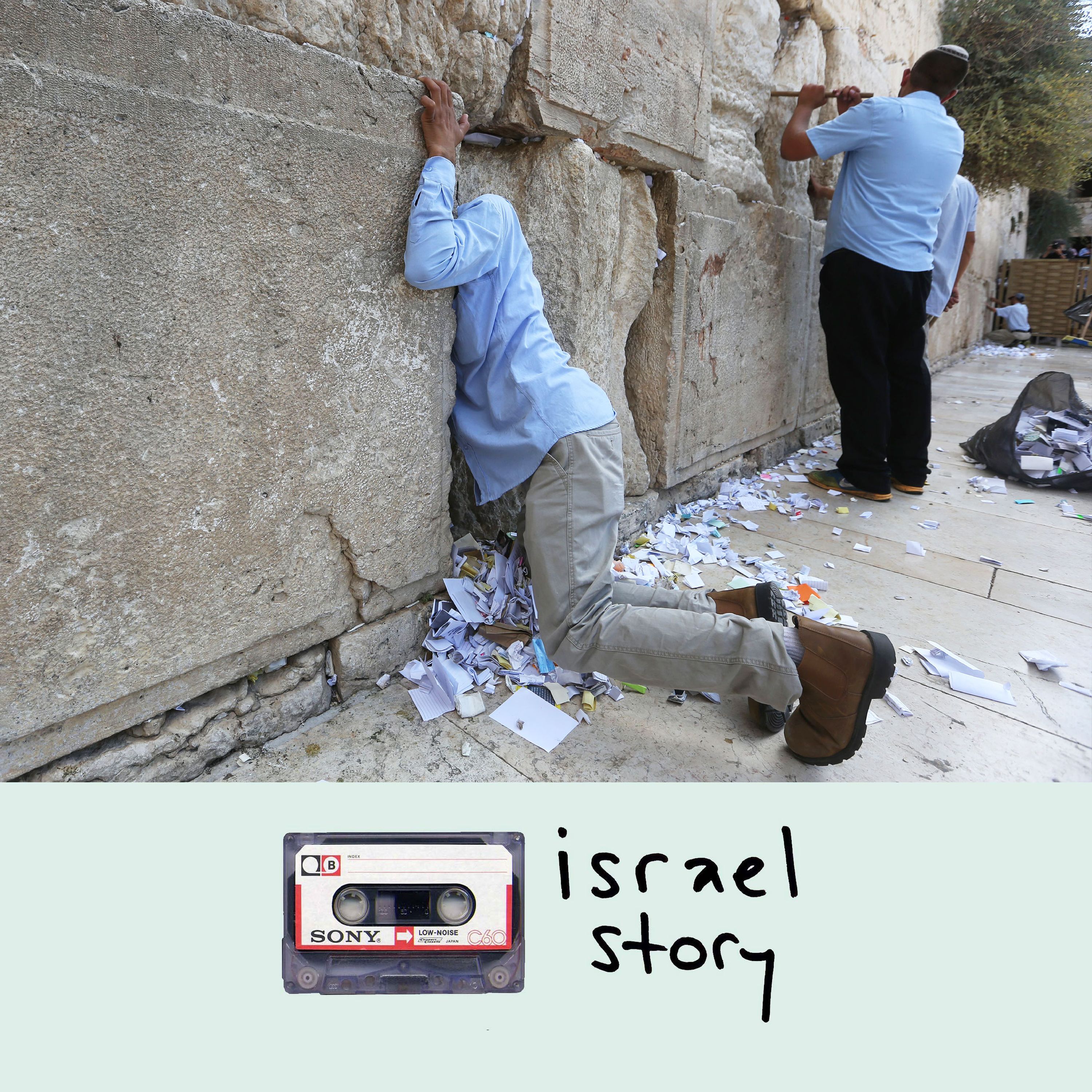
Rosh HaShanah is cleanup time, even at the Kotel. But what happens to the millions of notes tucked away in its cool crevices? And what on earth does that have to do with Leonard Cohen, impromptu sword-fights and carp fish in the bathtub?For many folks, visiting the Kotel is emotional, meaningful and - more than anything - private. In fact, the single most common experience people have at the Western Wall is inherently personal - putting a kvittel, or note in between its ancient ashlar stones. Whether you're a believer or not, the simple act of writing a small note, folding it up, and shoving it deep into the cracks is the closest we get to talking to God. But what happens to all those requests, prayers and hopes? Where do they go? Is the Kotel just an ever-expanding archive of notes? And, if so, how doesn't it run out of space?The short answer is the Rosh HaShanah cleanup. But while reporting on this peculiar semi-annual ritual, producer Yoshi Fields discovered that a cleanup can be much more than just a cleanup. It offered him an opportunity to rethink the story he was told about Israel, and evaluate how reality measured up to myth.This ''short" is also our first listener drive of the season. If you feel that the show adds something to your life, if you feel that it captures unique aspects of the crazy human tapestry called 'Israel,' please consider opening your hearts and making a donation today.Stay connected with us on Facebook, Twitter, Instagram and by signing up for our newsletter at israelstory.org/newsletter/. For more, head to our site or Tablet Magazine.Stay connected with us on Facebook, Instagram, and by signing up for our newsletter at israelstory.org/newsletter/. For more, head to our site or The Times of Israel. Hosted on Acast. See acast.com/privacy for more information.

S4 Ep 443: "The Wall" Part IV - This Wall is My Wall
In its final installment, our 'Wall' series comes full circle, back to where we began - the Kotel. But this time we won't be meeting Holocaust-survivors-turned-Palestinian-housewives. Instead, we will meet Jews who - in the name of their Judaism - have set off on a lifelong crusade.Walls can make us feel safe, warm and protected. But that's also their greatest danger. After all, walls can cut us off from what is going on outside, and hiding behind them can give us a false sense of security and stability. Throughout this series, we've tried to open up windows in the walls that make up Israeli society. And that's a tricky thing to do, really. You need to make sure you don't damage the foundations that keep us bonded together. But you also need to be ready to see your neighbor, and let your neighbor see you.Joel Shupack and Yochai Maital scored this piece, with additional music from Blue Dot Sessions, Broke For Free and Peter Gresser. The end song, "A Wall That Has a Door" is an original song commissioned by Israel Story. It was written, arranged and performed by Ari Wenig, together with Dotan Moshonov, Ruth Danon, Eden Djamchid and Ronnie Wagner-Schmidt.This episode was edited by Julie Subrin and Mishy Harman, recorded by Ben Wallick and mixed by Sela Waisblum.It was conceived as part of Israel Story's latest live show tour, "The Wall."Stay connected with us on Facebook, Twitter, Instagram and by signing up for our newsletter at israelstory.org/newsletter/. For more, head to our site or Tablet Magazine.Stay connected with us on Facebook, Instagram, and by signing up for our newsletter at israelstory.org/newsletter/. For more, head to our site or The Times of Israel. Hosted on Acast. See acast.com/privacy for more information.

Welcome, Shalom and Call Home
trailerIf you are new to the show, there are so many episodes for you to check out. Why not start with Operation Hulda, Love Syndrome, and Milk, Honey and Sweet Mary Jane?You can also sign up to our newsletter, and follow us on Facebook, Twitter and Instagram.And lastly, whether you are new to Israel Story, or have been following us from day one, do us a favor - go to Apple Podcasts, rate us and leave a review.Thanks!Stay connected with us on Facebook, Instagram, and by signing up for our newsletter at israelstory.org/newsletter/. For more, head to our site or The Times of Israel. Hosted on Acast. See acast.com/privacy for more information.

S4 Ep 342: "The Wall" Part III - The Invisibles
After visiting two of Israel's most visible walls, we shift gears to slightly more abstract ones. Walls, both new and old, that you might have a harder time finding on the ground, but will - nevertheless - show us where we came from and where we are going.Walls are something you can see. Something you can touch. Something you can run into and get a nasty bump on your head. Or... are they?! In our episode today - part three of our miniseries - we tell the stories of three walls that won't appear on your typical map. Three walls you'd probably miss unless you heard about them, well... here. But don't think that makes them less significant or present in daily Israeli society. Not at all. In fact, they help us trace our history all the way from its earliest beginnings to its menacing future.Stay connected with us on Facebook, Twitter, Instagram and by signing up for our newsletter at israelstory.org/newsletter/. For more, head to our site or Tablet Magazine.Stay connected with us on Facebook, Instagram, and by signing up for our newsletter at israelstory.org/newsletter/. For more, head to our site or The Times of Israel. Hosted on Acast. See acast.com/privacy for more information.
S4 Ep 241: "The Wall" Part II - The Other Side
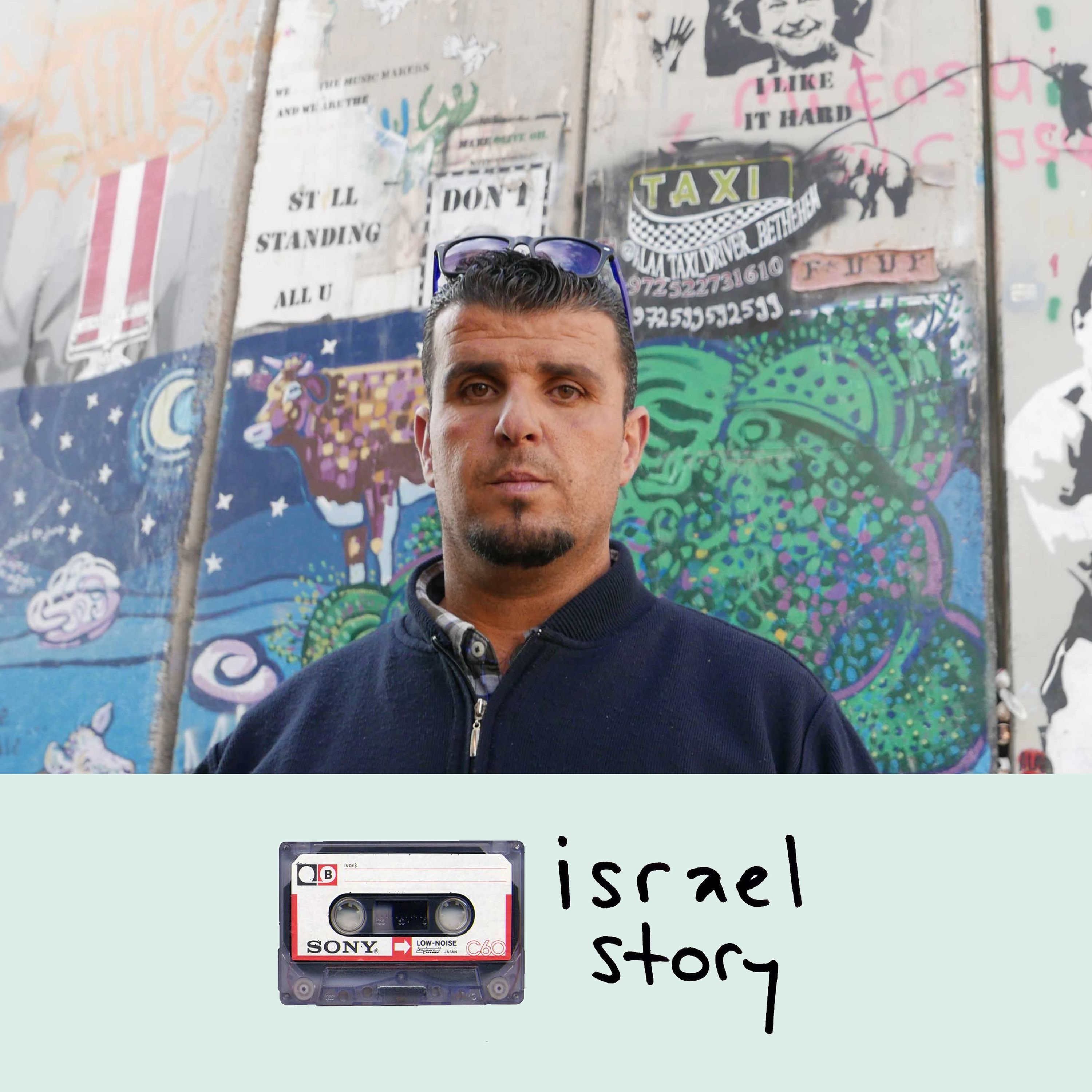
Some call it the 'security fence,' while others prefer the 'West Bank barrier.' But to most around the world it is known simply as the 'separation wall.' Our series continues with a visit to what is perhaps the most divisive symbol of the Israeli-Palestinian conflict. But as usual, we'll go beyond the politics, to the people.For the last seventeen years, when people say "the wall' and "Israel" in the same sentence, they're usually referring to something very specific: A four-hundred-and-forty-mile-long barrier - some 95% of which is a sophisticated multi-layered fence, and some of which, especially in urban areas, is an imposing concrete wall. Seen from the Israeli side, this fence/barrier/wall represents security, stability and safety. It allows us to calmly ride the bus, peacefully go out dancing, and - mainly - quietly sleep at night. Because it was, after all, born out of violence and carnage. People were getting killed often and daily. It was scary. And, as experts around the world agree, the wall has succeeded, dramatically reducing terror. But when Israelis go to bed at night, there are other people - really close by - going to bed too. And from their perspective, looking out of their window, the same wall represents something different altogether. Not safety or security, but rather, a lack of freedom.Without getting into political polemics, in our episode today we meet some of those neighbors. Regular people, living in the shadow of a wall.Stay connected with us on Facebook, Twitter, Instagram and by signing up for our newsletter at israelstory.org/newsletter/. For more, head to our site or Tablet Magazine.Stay connected with us on Facebook, Instagram, and by signing up for our newsletter at israelstory.org/newsletter/. For more, head to our site or The Times of Israel. Hosted on Acast. See acast.com/privacy for more information.

S4 Ep 140: "The Wall" Part I - Operation Hulda
And... we're back! We kick off our fourth season with a brand new miniseries - "The Wall." Today's roller-coaster of a mystery begins with Israeli paratroopers liberating the Kotel, continues with a symbolic mid-war birth, and ends up going in the most surprising direction imaginable.Everywhere we turn these days, it seems as if walls are staring back at us. Their powers are magical: They protect and alienate; keep people both in and out; and can even - as we have all seen - bring mighty governments to a total standstill. Israel, too, has its share of walls, and no, not just the West Bank separation wall. In this four-part miniseries, we visit some of the country's most famous walls journeying from the Bronze Age to the modern-day Start-Up Nation, from the soccer pitch to the Six Day War, from the holy to the political.Stay connected with us on Facebook, Twitter, Instagram and by signing up for our newsletter at israelstory.org/newsletter/. For more, head to our site or Tablet Magazine.Stay connected with us on Facebook, Instagram, and by signing up for our newsletter at israelstory.org/newsletter/. For more, head to our site or The Times of Israel. Hosted on Acast. See acast.com/privacy for more information.

Now That’s a Buzzword!
trailerA quick note from a big celebration.For more, head to our site.Stay connected with us on Facebook, Instagram, and by signing up for our newsletter at israelstory.org/newsletter/. For more, head to our site or The Times of Israel. Hosted on Acast. See acast.com/privacy for more information.

S3 Ep 1839: "Mixtape" Part IV – War, Peace and Bumper Stickers
In our season finale, we explore two songs that - perhaps more than any others - capture the complex and intermingled nature of Israeli society.Over the last four episodes, we’ve told the stories behind some of Israel’s most iconic songs. When we set off on this musical journey, we hoped to find a unicorn, a unifying island of Israeliness that escapes the usual polarization which dominates most conversations about Israel. Instead, however, we discovered that music not only reflects, but often amplifies, our contrasts. We all sing in different keys, with different words and in different voices. And that, at the end of the day, is what Israel is all about. It is not that the inherent complications go away or stop existing. It’s just that somehow, miraculously perhaps, the cacophony can almost sound harmonious.In today’s episode, the final installment of the Mixtape miniseries, we turn to Yitzhak Rabin’s 1995 assassination, and to two songs – one taking us decades back, the other catapulting us forward into the 21st century – that symbolize the messy multifariousness of Israeli society.Stay connected with us on Facebook, Twitter, Instagram and by signing up for our newsletter at israelstory.org/newsletter/. For more, head to our site or Tablet Magazine.Stay connected with us on Facebook, Instagram, and by signing up for our newsletter at israelstory.org/newsletter/. For more, head to our site or The Times of Israel. Hosted on Acast. See acast.com/privacy for more information.

S3 Ep 1738: "Mixtape" Part III – Eastward Bound
In a music scene dominated by Ashkenazi culture, Mizrahi singers had to patiently pave their way to the Israeli mainstream one song at a time. In Part III of our miniseries, we meet two Yemenite trailblazers,In Israel today, Mizrahi – or “Eastern” – music is ubiquitous. In fact, to many, it is practically synonymous with Israeli music. But that wasn’t always the case. For decades, Israeli radio stations ignored Mizrahi tunes and exclusively played music rooted in Ashkenazi traditions. That began to change in the late-1970s and early-1980s, due – in no small part – to a few veritable trailblazers.The original music in this episode was composed, arranged and performed by the Mixtape Band, led by Ari Wenig and Dotan Moshanov, together with Ruth Danon, Eden Djamchid and Ronnie Wagner-Schmidt. The final song, Ad Matay Elohay (Till When My G-d) was written by Uzi Chitman and sung by Zohar Argov. The episode was edited by Yochai Maital, recorded by Tony Hernandez at the Off Record Studios in New York, and mixed by Sela Waisblum. It is based on our latest live show, “Mixtape.” You can listen to Part I of the miniseries here and Part II here.Stay connected with us on Facebook, Twitter, Instagram and by signing up for our newsletter at israelstory.org/newsletter/. For more, head to our site or Tablet Magazine.Stay connected with us on Facebook, Instagram, and by signing up for our newsletter at israelstory.org/newsletter/. For more, head to our site or The Times of Israel. Hosted on Acast. See acast.com/privacy for more information.

S3 Ep 1637: "Mixtape" Part II – Iron and Gold
Our musical journey through the intricacies of Israeli society continues. And this time we explore a song that, ever since the dramatic month that forever changed Israeli history, has become the country's soundtrack: "Jerusalem of Gold."In 1968, an up-and-coming left-wing politician by the name of Uri Avnery brazenly suggested replacing Israel’s national anthem, HaTikvah. His proposal was surprising, given the fact that the would-be replacement was the unequivocal anthem of the Six Day War, Yerushalayim Shel Zahav.While Avnery’s motion never made it to the Knesset floor, Yerushalayim Shel Zahav has indeed become an anthem of sorts. It is probably the most recognizable and beloved Israeli tune ever, and is repeatedly voted the most important song in the country’s history.The original music, including the cover versions of Yerushalayim Shel Zahav and Yerushalayim Shel Barzel, was composed, arranged and performed live by the Mixtape Band, led by Ari Wenig and Dotan Moshanov, together with Ruth Danon , Eden Djamchid and Ronnie Wagner-Schmidt. The final song is a recording of Shuly Natan’s original rendition of the song, at Festival Ha’Zemer Ve’Ha’Pizmon in Jerusalem in May 1967. The episode was recorded by Adrian Lau at the Off Record Studios in New York, and mixed by Sela Waisblum. It is based on Israel Story’s latest live show tour, “Mixtape.”Stay connected with us on Facebook, Twitter, Instagram and by signing up for our newsletter at israelstory.org/newsletter/. For more, head to our site or Tablet Magazine.Stay connected with us on Facebook, Instagram, and by signing up for our newsletter at israelstory.org/newsletter/. For more, head to our site or The Times of Israel. Hosted on Acast. See acast.com/privacy for more information.

S3 Ep 1536: "Mixtape" Part I – Our Hope?
Welcome to 'Mixtape,' our very first mini-series. Over the course of the next four episodes, we will go on a musical journey through anthems, songs of yearning, of war, of peace, and hear the stories behind some of Israel's most iconic tunes.Let’s face it – when it comes to Israel, everything is complicated. Politics are complicated, religion is complicated, democracy is complicated, the conflict is complicated. Even our complications are complicated. These are the things that take us out to the street. That make us shout, and cry. That fill us with hope, and – just as often – plunge us into utter despair. But there is (seemingly) one island within Israeli society that escapes complexity, and brings us together more than it divides us: Israeli music. Or so, at least, we thought.In this special mini-series, we set out to explore Israeli society – warts, rifts and fuzzy togetherness alike – through the stories of some of the country’s most iconic tunes.The original music in this mini-series was composed, arranged and performed by the Mixtape Band, led by Ari Wenig and Dotan Moshanov, together with Ruth Danon, Eden Djamchid and Ronnie Wagner-Schmidt. The final song is a 1950s Tunisian rendition of HaTikvah sung by M. Cohen. The episode was recorded by Russell Castiglione and Josh Piel at the Dubway Studios in New York, and mixed by Sela Waisblum. It is based on Israel Story’s latest live show tour, “Mixtape.”Stay connected with us on Facebook, Twitter, Instagram and by signing up for our newsletter at israelstory.org/newsletter/. For more, head to our site or Tablet Magazine.Stay connected with us on Facebook, Instagram, and by signing up for our newsletter at israelstory.org/newsletter/. For more, head to our site or The Times of Israel. Hosted on Acast. See acast.com/privacy for more information.

S3 Ep 1435: Whither Thou Goest
Ruth the Moabite said she'd follow her mother-in-law, Naomi, anywhere. That blind devotion has since made her an enduring symbol of loyalty, faith and determination. And, just in time for our smorgasbord of cheesecakes, lasagnas and blintzes,Somewhere between post-Passover fatigue and summer-is-around-the-corner excitement, Shavout tends to be overlooked. But in reality, it is the secret gem of the Jewish calendar: A festival that’s all about strong women, wheat harvests, creamy cheesecakes and receiving the Torah. What else could you possibly want from a Jewish holiday?And at the center of this wondrous celebration is an unlikely heroine, the Bible’s quintessential convert to Judaism – Ruth the Moabite. Following the death of her Israelite husband, Mahlon, Ruth refused to part ways with her mother-in-law, Naomi. “Don’t urge me to leave you or to turn back from you,” she famously told her. “Where you go, I will go, and where you stay, I will stay. Your people will be my people, and your God, my God. Where you die, I will die, and there I will be buried.” Ruth followed Naomi back to Bethlehem, where she met a man, Boaz. They got married, had a son, and started an illustrious lineage, which supposedly included David, Solomon and Jesus.Ruth herself has since become a feminist icon, a symbol of acceptance and dedication. In today’s episode, we will hear three modern-day incarnations of Ruth’s story – a trio of tales about determined women who will follow their hearts to the ends of the earth for love, family and companionship.The original artwork for the episode is by Aura Lewis, and the original music was composed and performed by Ari Wenig. The final song, “At Telchi Ba’Sade,” is by Chava Alberstein. The episode was recorded by Ben Wallick and Paul Ruest, and mixed by Sela Waisblum.Stay connected with us on Facebook, Twitter, Instagram and by signing up for our newsletter at israelstory.org/newsletter/. For more, head to our site.Stay connected with us on Facebook, Instagram, and by signing up for our newsletter at israelstory.org/newsletter/. For more, head to our site or The Times of Israel. Hosted on Acast. See acast.com/privacy for more information.
S3 Ep 1334: Coming Out, Getting In
Payam Feili is a gay Iranian poet. Nadav Schwartz is an Orthodox Israeli Jew. But in ways both astoundingly similar and utterly different, both men have journeyed out of their communities, leaving behind almost everything but their identity.Tonight, Jews around the world will gather together at their seder tables. They will drink wine, ask questions, search for the Afikoman and recite the obligation to see themselves as if they personally had come out of Egypt. And that is, really, what the seder is all about – the telling and retelling of the greatest Jewish “coming out” story of all time. A story of venturing out into the unknown, of wandering in physical and metaphorical deserts and of seeking refuge in a new home.The original music in this episode was composed and performed by Ari Wenig, with help from Yochai Maital. The final song, Avarnu et Par’o (‘We Overcame Pharaoh’), is by Meir Ariel.Stay connected with us on Facebook, Twitter, Instagram and by signing up for our newsletter at israelstory.org/newsletter/. For more, head to our site or Tablet Magazine.Stay connected with us on Facebook, Instagram, and by signing up for our newsletter at israelstory.org/newsletter/. For more, head to our site or The Times of Israel. Hosted on Acast. See acast.com/privacy for more information.

S3 Ep 1233: Milk, Honey and Sweet Mary Jane
Cannabis in the Holy Land is clearly a booming business. Through the unlikely story of Amos Silver, the Israeli 'Green Giant,' we take a deep dive into the world of Telegrass, the hot application that has made buying weed as easy as ordering a pizza.According to a recent study conducted by the Israeli Anti-Drug Authority, the Holy Land might as well be rebranded as a ‘Weedtopia.’ More than a quarter of adults aged 18 to 40 reported having used marijuana within the last month. This stat, says the Authority’s chief scientist Prof. Yossi Harel-Fisch, places Israel among the countries with the highest rate of pot smokers in the world. In this episode, we chugged along the Hudson Valley and – in Poughkeepsie, New York, of all places – met up with the one man who is most committed to making that number even higher.The original music in this episode was composed and performed by Ari Wenig, with help from Yochai Maital and Ruth Danon. Additional music by Boom Pam, Meir Ariel, Michael Swissa, Michael Greilsammer, and Kevin MacLeod. The episode was edited by Shai Satran with help from Julie Subrin.Stay connected with us on Facebook, Twitter, Instagram and by signing up for our newsletter at israelstory.org/newsletter/. For more, head to our site or Tablet Magazine.Stay connected with us on Facebook, Instagram, and by signing up for our newsletter at israelstory.org/newsletter/. For more, head to our site or The Times of Israel. Hosted on Acast. See acast.com/privacy for more information.
S3 Ep 1132: King of the Hill
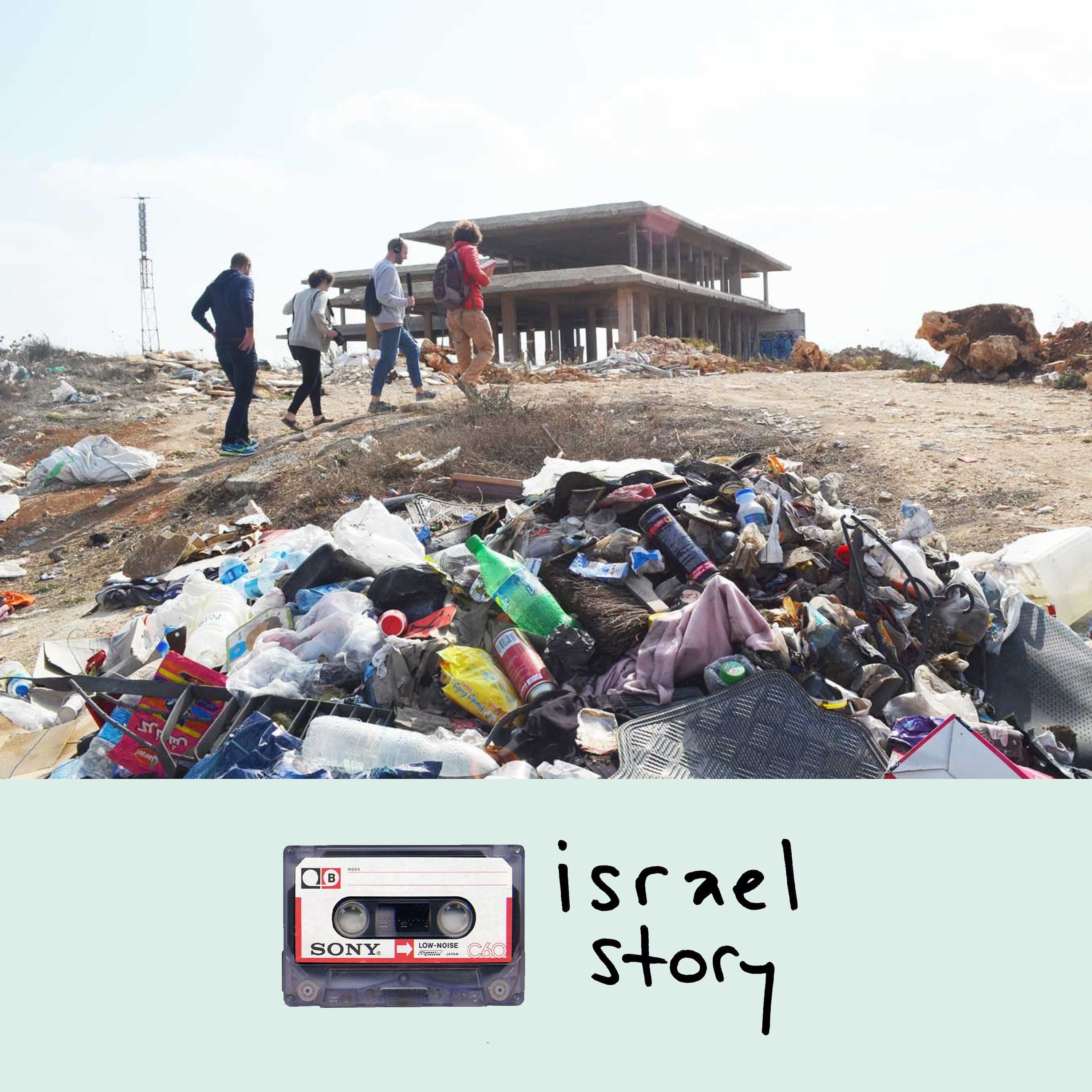
From the top of Tell El-Ful, an abandoned hilltop in East Jerusalem, you can see all the way from Amman to Tel Aviv, from Jerusalem to Ramallah. And you can also travel back and forth in time.Imagine an abandoned White House, covered with graffiti, open to the winds, full of trash, broken bottles and condom wrappers. Now go a step further and picture it against the background of the most beautiful Middle Eastern panorama you can conjure up. Ever since we learned about the existence of a deserted Hashemite palace perched atop the mound, we’ve been on a mission to uncover its past. Like many other tells in the region it has a biblical past (perhaps), an archeological past (probably) and a historical one (most definitely). But more than almost anywhere else, this litter-strewn hill is a metaphor for life in these parts: It has seen tears and blood, dreams and hopes. It has been home to kings and shepherds, soldiers and tribesmen. And it has brought together lovers and enemies; Arabs and Jews; Jordanians, Israelis and Palestinians.The original music in this episode was composed and performed by Ari Wenig, with help from Yochai Maital. The final song, “Wen Ya Galub,” is by Dudu Tassa and the Kuwaitis.Stay connected with us on Facebook, Twitter, Instagram and by signing up for our newsletter at israelstory.org/newsletter/. For more, head to our site or Tablet Magazine.Stay connected with us on Facebook, Instagram, and by signing up for our newsletter at israelstory.org/newsletter/. For more, head to our site or The Times of Israel. Hosted on Acast. See acast.com/privacy for more information.
Short: Fed-Ex Over Your Snow
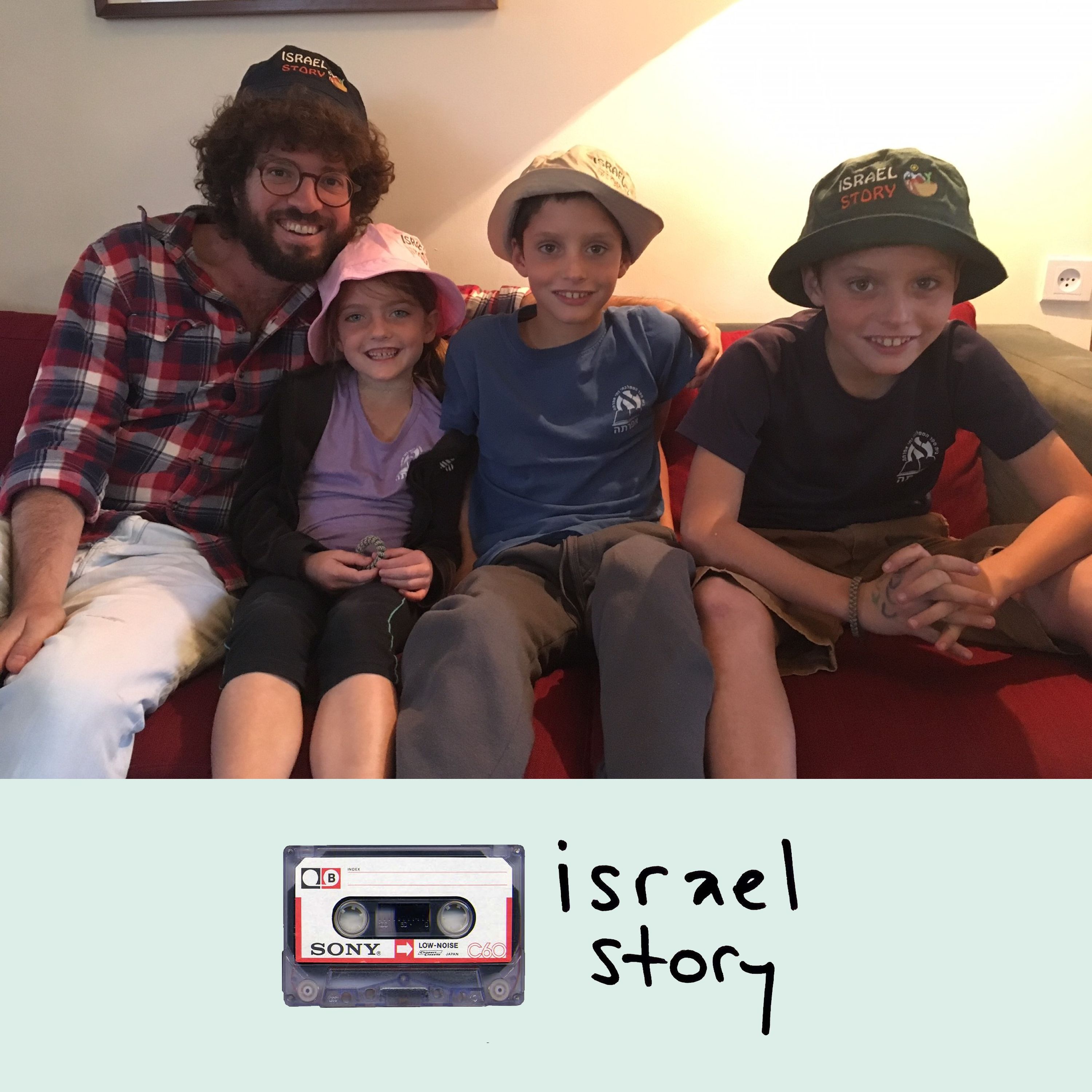
People in one-hundred-and-eighty-seven countries around the world – including Iran, Iraq and Papua New Guinea – tune in to Israel Story. And today, we went out to talk to a few, very special, fans: our youngest and oldest listeners.For more, head to our site.Stay connected with us on Facebook, Instagram, and by signing up for our newsletter at israelstory.org/newsletter/. For more, head to our site or The Times of Israel. Hosted on Acast. See acast.com/privacy for more information.

S3 Ep 1031: Dear Lord Rothschild
One hundred years after a single-page letter boosted the Zionist cause and changed the course of Jewish history, we go out in search of Balfour, and his declaration, in modern-day Israel.On November 2, 1917, Arthur James Balfour – Britain’s mustached Foreign Secretary – signed his name at the bottom of a short, typed letter addressed to a shy banker-turned-zoologist by the name of Lionel Walter Rothschild. “His Majesty’s Government view with favour the establishment in Palestine of a national home for the Jewish people,” it read. In the century since that fateful day, those words have reverberated around the world. They’ve changed reality, creating national dreams on the one hand, and squashing political aspirations on the other. And, of course, they’ve been scrutinized, analyzed and debated from every possible angle. The Balfour Declaration, for better or worse, is still very much with us. In a special commemorative episode, we set out on a less-than-intuitive journey in Balfour’s footsteps.The original music in this episode was composed and performed by Ari Wenig, with additional scoring by Yochai Maital. The episode also includes tracks by the late Nachum Heiman. The final song, “Balfour“, is by Itay Pearl.Stay connected with us on Facebook, Twitter, Instagram and by signing up for our newsletter at israelstory.org/newsletter/. For more, head to our site or Tablet Magazine.Stay connected with us on Facebook, Instagram, and by signing up for our newsletter at israelstory.org/newsletter/. For more, head to our site or The Times of Israel. Hosted on Acast. See acast.com/privacy for more information.
S3 Ep 930: Food Fight
Forget politics, forget territorial disputes, forget religion. Our new episode explores the real Middle Eastern battleground - food.Food, it turns out, is a serious business. And as we recently came to appreciate, it can lead folks to embark on all kinds of unlikely crusades. In today’s episode we tell two stories, from almost diametrically opposed perspectives, about the ways in which recognition and pride matter, especially when it comes to what we eat and drink. The first, about a Jerusalemite’s quirky liquid obsession, couldn’t be more local, whereas the second is an outsider’s take – the impressions of a visiting radio icon on her first trip to the region.The original music in “The Pitcher” was composed and performed by Ari Wenig. The final song, “Hummus Metamtem” (or “Hummus Makes You Stupid“), is by Yehoshua Sofer. The episode also features music by Yochai Maital, Kevin MacLeod, Bachar Mar-Khalife, Ibrahim Maalouf, Arthur Oskan and Hadag Nahash. It was mixed by Sela Waisblum.Stay connected with us on Facebook, Twitter, Instagram and by signing up for our newsletter at israelstory.org/newsletter/. For more, head to our site or Tablet Magazine.Stay connected with us on Facebook, Instagram, and by signing up for our newsletter at israelstory.org/newsletter/. For more, head to our site or The Times of Israel. Hosted on Acast. See acast.com/privacy for more information.

S3 Ep 829: A Better Place?
Not that long ago, an Israeli vehicle was about to change the world. But it didn’t. In today's episode, we find out why the Better Place electric car generated such excitement and inspired such devotion, and why its ultimate demise was so devastating.In 2007, long before Tesla and Elon Musk became household names, a thirty-nine-year-old Israeli tech entrepreneur by the name of Shai Agassi came out with an announcement that rattled the world: He was going to revolutionize transportation, make countries oil-free by 2020, and curb the effects of climate change. Agassi hoped to put millions and millions of drivers, all around the globe, behind the wheel of an inexpensive electric car, with virtually unlimited range. And that, he told anyone who would listen, was going to make the world a “Better Place.”The music in this episode includes original tracks composed and performed by David Peretz, as well as music by Blue Dot Sessions, Jason Shaw and Audionautix, Kevin MacLeod and Royal Free Sound, Bird Creek, Twin Musicom, Chris Zabriskie and Bensound. The final song, “Mechonit,” is by Mashina. The episode was edited by Julie Subrin and mixed by Sela Waisblum.Stay connected with us on Facebook, Twitter, Instagram and by signing up for our newsletter at israelstory.org/newsletter/. For more, head to our site or Tablet Magazine.Stay connected with us on Facebook, Instagram, and by signing up for our newsletter at israelstory.org/newsletter/. For more, head to our site or The Times of Israel. Hosted on Acast. See acast.com/privacy for more information.

S3 Ep 728: On the Outs
There are a zillion ways of being an outsider. That, of course, we all know. But what does it mean to belong, why do we want it so badly, and just how far are we willing to go in order to be on the 'inside'?Eli Amir, Eliyahu Rips and Eliezer Sonnenschein couldn’t be more different: the first is a celebrated Baghdad-born author, the second is a brilliant mathematician from Latvia, and the third is the enfant terrible of modern Israeli art. But they are all, in their own unique ways, outsiders. Their struggle for recognition took on different forms, and enjoyed – naturally – different degrees of success. But whether it’s the hora dancing circles at Kibbutz Mishmar Ha’Emek, the pages of prestigious statistical journals, or the hallowed galleries of the Tel Aviv Museum of Art, our episode explores just how far we go to feel as if we belong.The original music in ‘Skipping the Torah,’ was composed and performed by Ruth Danon. The final song, “Yeladim Kamonu”, is by Elai Botner and Yaldey Ha’Chutz. The episode also features music by Karolina, Tristan Lohengrin, Dana Boulé and Robert Schumann. It was edited by Julie Subrin and mixed by Sela Waisblum and Aviv Meshulam.Stay connected with us on Facebook, Twitter, Instagram and by signing up for our newsletter at israelstory.org/newsletter/. For more, head to our site or Tablet Magazine.Stay connected with us on Facebook, Instagram, and by signing up for our newsletter at israelstory.org/newsletter/. For more, head to our site or The Times of Israel. Hosted on Acast. See acast.com/privacy for more information.

S3 Ep 627: Jarab
They're enemies and cousins, neighbors and rivals, lovers and haters, and at times even one and the same. Ladies and gentleman, welcome to the complicated world of Israel's Arabs and Jews.More often than not, we think of Jewish-Arab relations in Israel as being adversarial. We frequently hear tales of hatred, violence, animosity and discrimination. But reality is, of course, much more complicated: Not only are some Jews actually Arabs, and vice-versa, but there is a tremendous amount of intermingling, sharing and cooperation. In this episode, we explore some of these fascinating points of contact.The original music in this episode was composed and performed by Eran Zamir, Ruth Danon, Nili Fink and Noam Sadan. The final song, ‘Tamally Ma’ak,’ is by Amr Diab and covered here by Tsahi Halevi. Ahmed Ali Moussa wrote the lyrics and Tag Sherif composed the music. The episode was mixed by Sela Waisblum.Stay connected with us on Facebook, Twitter, Instagram and by signing up for our newsletter at israelstory.org/newsletter/. For more, head to our site or Tablet Magazine.Stay connected with us on Facebook, Instagram, and by signing up for our newsletter at israelstory.org/newsletter/. For more, head to our site or The Times of Israel. Hosted on Acast. See acast.com/privacy for more information.
S3 Ep 526: Oath of Blood
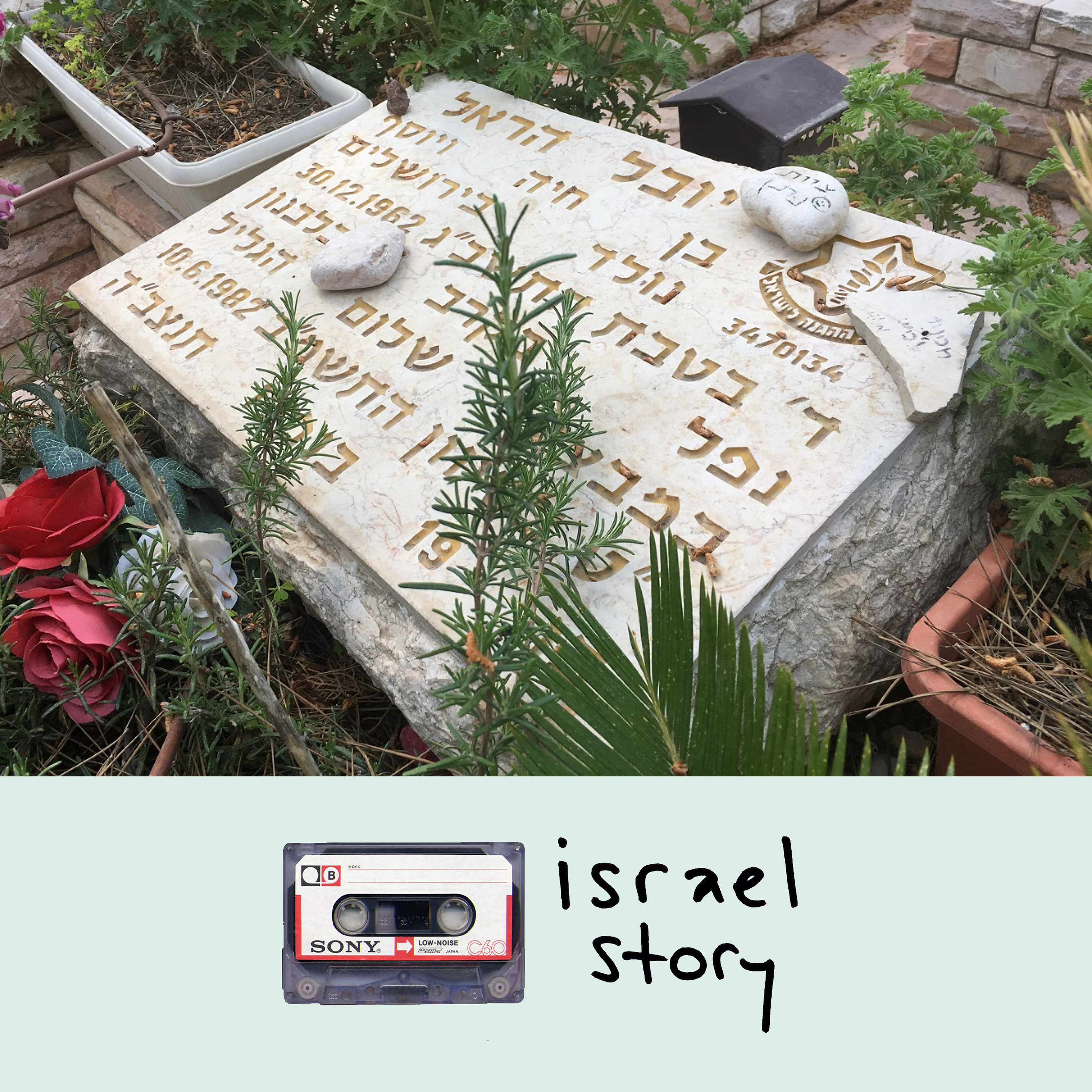
Imagine getting the worst news possible, learning it isn’t true, and then realizing it is after all — in the span of a single day. That’s what happened to the Harels of Jerusalem, in the chaotic frenzy of the First Lebanon War.In the early summer of 1982, Israel invaded Lebanon. The First Lebanon War — as it would later be called — would ultimately lead to thousands of casualties, an eighteen-year-long Israeli presence in Southern Lebanon, and growing political disillusionment around the region. In a way, it ushered in a new era in Israel, one in which the necessity of wars was publicly doubted, and leaders’ intentions were questioned and scrutinized.But for two Jerusalem families, who just happened to share the same surname, the first days of war were an even more devastating emotional whirlwind. They each went through an unimaginable cycle of shock, grief, hope and despair. By the end of that cycle, the war had formed an oath of blood between them, a covenant of sorts.The original music in this episode was composed and performed by Ruth Danon and features Sher Niv on the guitar. This episode was edited by Julie Subrin, and mixed by Sela Waisblum.Stay connected with us on Facebook, Twitter, Instagram and by signing up for our newsletter at israelstory.org/newsletter/. For more, head to our site or Tablet Magazine.Stay connected with us on Facebook, Instagram, and by signing up for our newsletter at israelstory.org/newsletter/. For more, head to our site or The Times of Israel. Hosted on Acast. See acast.com/privacy for more information.