ISF Podcast
354 episodes — Page 6 of 8
CxO series – Cyber Resiliency in a defining moment in history
Cyber Resiliency in a defining moment in historyEpisode 1: Cyber Resilience - Reaping the BenefitsSteve Durbin, Managing Director, ISFWilliam Beer, Member of the ISF USA planning teamRecorded 14th July 2020 30 mins In this first episode of our CISO series, William and Steve explore how despite the unexpected, complex and far-reaching implications of COVID-19, the verdict is clear – planning pays off. They discuss and provide examples of how those who had invested in resilience planning and testing have reaped the benefits.
Threat Horizon 2022: Internet of forgotten things
We’ve been encouraged to embrace IoT for its convenience and its integration into our daily lives. But what happens when the Internet of Things bites back? In today’s ISF podcast, ISF Managing Director Steve Durbin and podcast host Tavia Gilbert brings you the third episode in a series focusing on Threat Horizon 2022: When digital and physical worlds collide. In the series so far, Steve has explored threats that business enterprises will face between now and 2022, the consumer backlash to data harvesting and behavioural analytics, and the enormous threat of deepfakes. In today’s episode, Steve and Tavia look more in-depth at the threat posed by the Internet of Forgotten Things. How the cheap, easy-to-produce IoT devices of today, many of which were never intended to be patched or updated, might become the security risks of tomorrow as well as the complicated legal regulations regarding the production and use of these devices.https://www.securityforum.org/videos-podcasts/threat-horizon-2022-internet-of-forgotten-things/
Threat Horizon 2022: Behavioural Analytics and Deepfakes
“Highly connected ecosystems of digital devices will enable organisations to harvest, repurpose, and indeed sell sensitive behavioural data about consumers without their consent, with attackers having the potential to then target and compromise poorly secured systems and databases at will.” In today’s ISF Podcast, we bring you the second episode in a series focusing on Threat Horizon 2022: Digital and Physical World’s collide. In the previous episode, Steve Durbin, Managing Director of the ISF, and Tavia Gilbert, ISF Podcast Host, gave a broad overview of the threats that business enterprises will face between now and 2022, as well as advice for proactive leaders. In today’s episode, Steve dives in deeper into two previously mentioned topics, starting with the consumer backlash against behavioural analytics, before moving onto the fascinating yet terrifying practice of deepfakes. https://www.securityforum.org/videos-podcasts/threat-horizon-2022-behavioural-analytics-and-deepfakes/
Threat Horizon 2022: Digital and physical worlds collide
“So the real challenge I think that we have to face up to here is that organizations are simply not going to be able to disentangle the digital from the physical. And they will be forced to respond to this growing blend of threats from new technologies, people, and indeed nature.” We are heading into an era, unlike anything we've ever seen before. Digital and physical worlds are on an irreversible collision course. By 2022 organisations are not just going to be newly challenged, but in fact, plunged into crisis as ruthless attackers exploit weaknesses in immature technologies and take advantage of what is really an unprepared workforce. At the same time, natural forces will ravage infrastructure and all of this creates a perfect storm of trouble inside and outside the enterprise. In today’s ISF podcast, we are bringing you the first in a series of episodes focusing on Threat Horizon 2022: When Digital and Physical Worlds Collide. ISF Managing Director, Steve Durbin and ISF podcast host Tavia Gilbert will be discussing the broad threat overview before diving more deeply into a couple of areas that demand more attention. https://www.securityforum.org/videos-podcasts/threat-horizon-2022-digital-and-physical-worlds-collide/

Sherina Edwards - The Growing Pressure on Critical Infrastructures
“I think there are two different concerns here, right? There's an infrastructure issue, period, regardless of the pandemic. And then, of course, there's the additional pressure and increased precautions needed to address this current crisis that we're in.” In today’s ISF Podcast, Steve Durbin, Managing Director of the ISF is joined by Sherina Edwards, Partner at Quarles and Brady LLP. Sherina is an energy-professional with extensive regulatory and public policy experience. In this thought-provoking conversation, Steve and Sherina will be discussing the pressure on critical infrastructures due to the massive shift in working from home, the resulting cybersecurity concerns, and how regulatory challenges are evolving, even by the hour. https://www.securityforum.org/videos-podcasts/sherina-edwards-the-growing-pressure-of-critical-infrastructures/
Technology in a Brave New World
"I do think actually that one of the positive outcomes from COVID-19 will be that people will perhaps realise that the human element, the natural element, has a probably more significant role to play in society than technology. Technology should only ever be a tool. And I do wonder what the world will be like post-COVID-19." In this week's podcast, ISF Managing Director Steve Durbin and ISF Podcast host Tavia Gilbert have an open, wide-ranging conversation about the current global crisis, from the alarming to the hopeful. They discuss the increased threat of cyber attackers, privacy concerns with telemedicine and other home-working apps, whether technology is moving closer to a brave new world, and what we can learn from this moment in history. https://www.securityforum.org/videos-podcasts/technology-in-a-brave-new-world/

Jay Edelson - Data Privacy: The People of Illinois Vs Facebook
"The reason why it was so hard to get a settlement of this size wasn't because Facebook was worried that if they lost $550 million, it would hurt them. They can pay the 550. What they were worried about was setting some sort of precedent where now this is the price for privacy violations, and that's what we're fighting so hard for" In this episode, ISF Managing Director Steve Durbin speaks with Jay Edelson, a Chicago attorney with Edelson PC whose work has earned him the title of “Cybersecurity Trailblazer” from the National Law Journal. His firm recently settled a $550 million privacy suit against Facebook on behalf of the people of Illinois. Jay and Steve discuss that suit, the current privacy and cybersecurity legislation landscape, the influence of tech companies, facial recognition and privacy concerns with new and emerging technologies. https://www.securityforum.org/videos-podcasts/jay-edelson-data-privacy-the-people-of-illinois-vs-facebook/
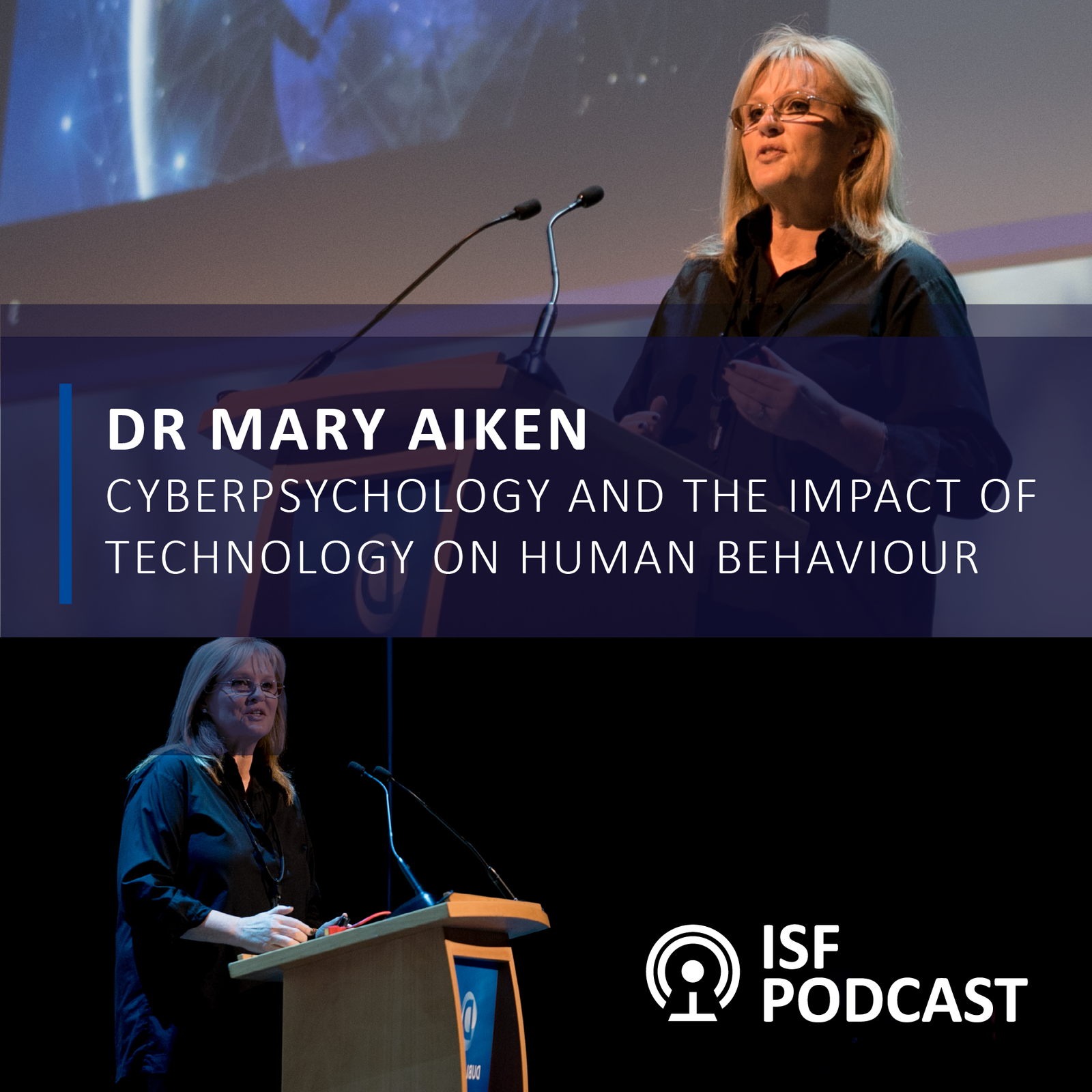
Dr Mary Aiken - Cyberpsychology and the Impact of Technology on Human Behaviour
"Everything is connected, from the protocols that we use to advise and educate parents in terms of how their children interact with technology, all the way through to hard-core cyber criminal activity. It's connected." In this ISF Podcast, Cyberpsychologist Dr Mary Aiken sits down with ISF Managing Director Steve Durbin to discuss the difference between cyberspace and real life, whether or not humans are prepared for the cyber challenges we face, the impact of technology on young children, and a fascinating potential solution to the skills shortage that could also curb cybercrime rates. Mary specialises in the impact of technology on human behaviour, and has written extensively on issues relating to the intersection between humankind and technology – or as she describes it “where humans and technology collide.” https://www.securityforum.org/videos-podcasts/dr-mary-aiken-cyberpsychology-and-the-impact-of-technology-on-human-behaviour/

Peter Hinssen - The Day After Tomorrow: Surviving Radical Innovation
"Then there's what I call the day after tomorrow. New ideas, new technologies, new innovations, new challenges, new players, new business models that can really change the nature of the game that you're in. And how much time do you as companies or leaders think about today, tomorrow and the day after tomorrow." In this week's ISF Podcast, Peter Hinssen, serial entrepreneur, best selling author, keynote speaker and Founder of Nexxworks, sits down with ISF Managing Director Steve Durbin to discuss "the day after tomorrow". Peter and Steve explore how security professionals can look past today’s tasks to prepare for the future, facilitating an innovate culture, the pace of technological transformation, how cognitive diversity could improve the workplace and more. https://www.securityforum.org/videos-podcasts/peter-hinssen-the-day-after-tomorrow-surviving-radical-innovation/

COVID-19: Top Security Tips for Working From Home
"I think it's about understanding how you combat the remote element, how you provide advice and guidance to people about what they should be doing, how they should be working." The COVID-19 outbreak has turned many regular office goers and commuters into home workers. They have been thrust into an environment that can pose novel risks for both staff and their employers. In today's Podcast, ISF Managing Director Steve Durbin will be discussing the best practices for working from home, a topic with global relevance as workforces are suddenly adjusting to working with greater independence in greater isolation and hopefully with greater interconnectedness than ever before. https://www.securityforum.org/videos-podcasts/covid-19-top-security-tips-for-working-from-home/
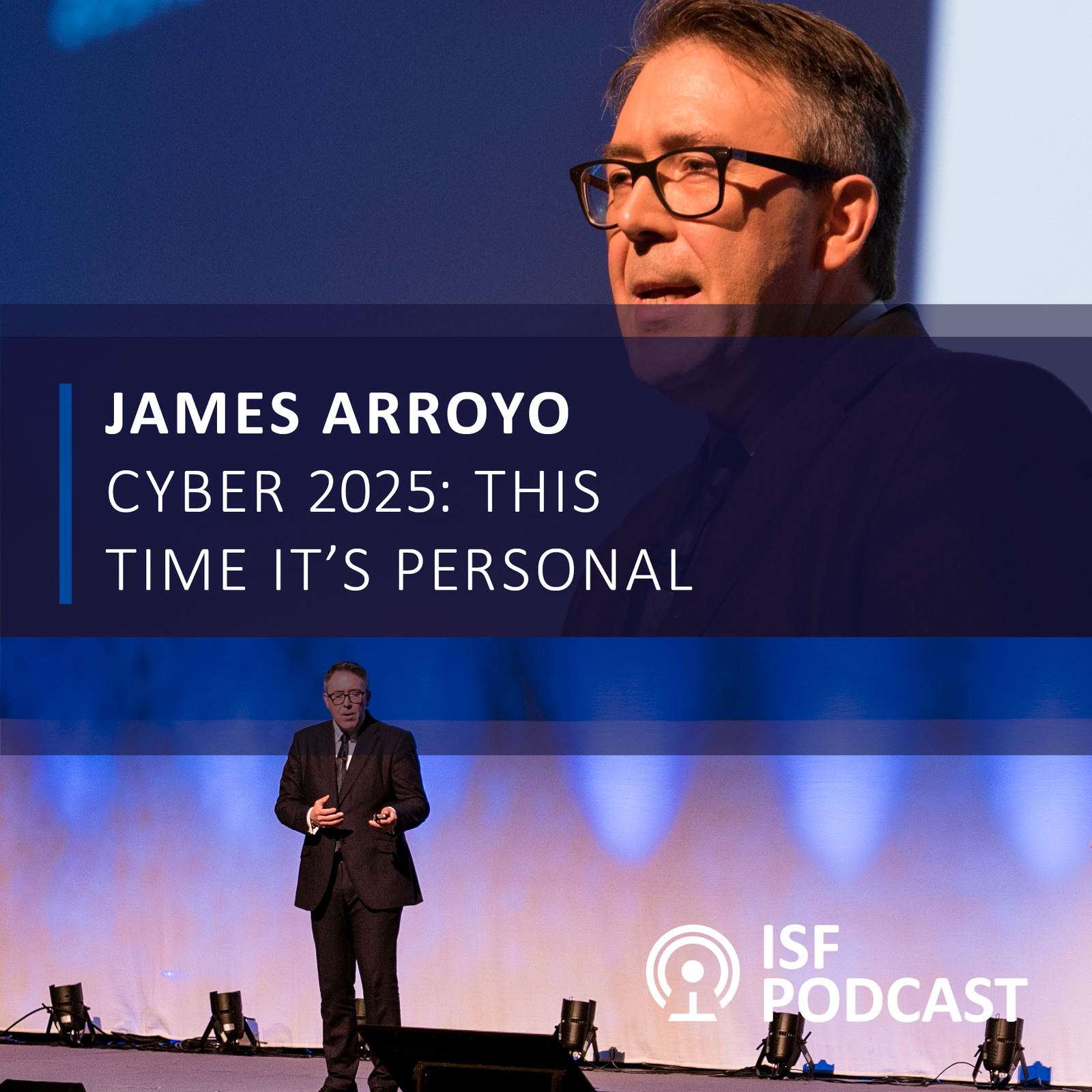
James Arroyo: Cyber 2025 - This Time it's Personal
"Reputation is everything. If you lose some money, then that's bad, it's worse if you lose personal data, people's personal data, and then they're subject to cyber attacks. That's really bad. But you can make restitution for that. If you lose your reputation, you've lost everything." In this week's ISF Podcast, James Arroyo OBE, Director of the Ditchley Foundation, sits down with ISF Managing Director Steve Durbin to discuss growing Geo-strategic tensions, recognising reputation as an organisations crown jewels and much more. https://www.securityforum.org/videos-podcasts/james-arroyo-cyber-2025-this-time-its-personal/
Nicholas Witchell & Steve Durbin: Cyber in Society
"Threat Horizon is there to try to identify upcoming threats so that we are forewarned and forearmed. And what the ISF has always done with that Threat Horizon is try to pull out issues, yes, at the basic security level, but also then say, what does this actually mean from a business standpoint? And what does a business, an organization need to do in order to avoid some of those threats, mitigate some of those risks?" In today's ISF Podcast, we're bringing you a conversation with journalist Nicholas Witchell and ISF Managing Director Steve Durbin. In this wide-ranging conversation, Steve will share his insights on the role of cyber in society and its impact on individuals and the future outlook. https://www.securityforum.org/videos-podcasts/nicholas-witchell-steve-durbin-cyber-in-society/
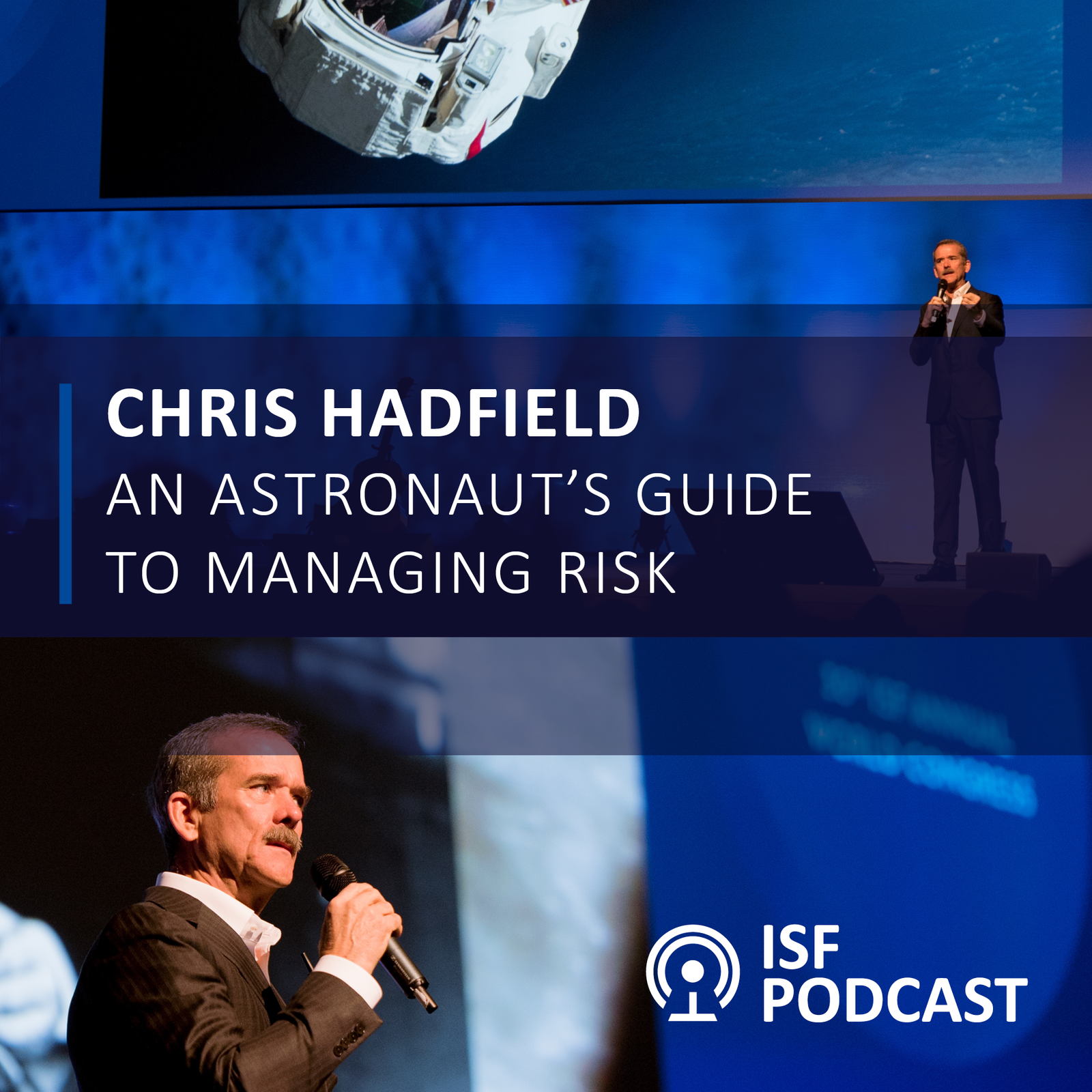
Colonel Chris Hadfield - An Astronaut's Guide to Managing Risk
"It requires persistence of professionalism. A recognising that even if I'm great at this, there are still ways for failure to happen, for it to rear its ugly head. You have to build an ever-increasing base of readiness to deal with things going wrong, readiness for failure."In this week's special ISF Podcast, Colonel Chris Hadfield, decorated astronaut, engineer and pilot, sits down with ISF Managing Director Steve Durbin to discuss his desire to become an astronaut, the need for constant retraining and self-assessment, preparing to fail, achieving goals against the odds, the speed of technology and much more.https://www.securityforum.org/videos-podcasts/colonel-chris-hadfield-an-astronauts-guide-to-managing-risk/
The CEO vs The CISO: The Security Breach Blame Game
"In today's modern way of doing business, when cyber breaches and information security make or break an organisation, there is an increased need for company structure and better use of technology." Organisations focus most of their efforts on meeting strategic and financial targets. However, the board and security leaders need to be aware that this is when cybercriminals are most likely strike – leading to reputational damage and disruption to the financial bottom line. When a security breach happens, it is the CISO who shoulders the blame. In this podcast, Steve Durbin, Managing Director of the ISF, discusses how cyberspace is not just the responsibility of one or two individuals – but the whole organisation. When it comes to security best practices, collaboration between security leaders and the board is the key to success. https://www.securityforum.org/videos-podcasts/the-ceo-vs-the-ciso-the-security-breach-blame-game/

#Cyber2020 - Striving for Cyber Resilience
“One of the criticisms around all this is that the cost of creating a cyber-resilient organisation might on the surface appear excessive. That is until a cyber crisis occurs.” In this week’s podcast, we bring you the fifth and final episode in a series focusing on forecast 2020: the global security threat outlook. Throughout the series, Steve Durbin, Managing Director of the ISF, has discussed the race for technology dominance, third-party supply chains, IoT and the Cloud, the growing risk of cybercrime as a business as well as the complexity of the geopolitical arena and technological confrontation between the US and China. In today’s final episode, Steve once again sat down with Tavia Gilbert to discuss why striving for cyber resilience is a key component of a cyber risk management strategy and why the investment and planning is worth it. https://www.securityforum.org/videos-podcasts/cyber2020-striving-for-cyber-resilience/
#Cyber2020 - China, USA, and the Geopolitical Arena
“The geopolitical area is set to remain fairly complex. I would also say sort of turbulent and fragile as the US and China battle it out for global dominance” In this week’s podcast, we bring you the fourth episode in a series focusing on Forecast 2020: the global security threat outlook. Throughout the series, Steve Durbin, Managing Director of the ISF, has discussed the race for technology dominance, third-party supply chains, IoT and the Cloud as well as the growing risk of cybercrime as a business. In this episode, Steve once again sat down with Tavia Gilbert to explore the complexity of the geopolitical arena and just how far the technological confrontation between the US and China can go. https://www.securityforum.org/videos-podcasts/cyber2020-china-usa-and-the-geopolitical-arena/
#Cyber2020 - Entrepreneurial Cybercrime
“Cybercrime is certainly an entrepreneurial growth business. There’s no getting away from it and the arrest rate is very low. So, unfortunately, cybercrime does pay”In this week’s podcast, we bring you the third episode in a series focusing on Forecast 2020: the global security threat outlook. Throughout the series, Steve Durbin, Managing Director of the ISF, has discussed the race for technology dominance as well as third-party supply chains, IoT and the Cloud.In this episode, Steve sat down with Tavia Gilbert to explore the growing risk of Cybercrime, the threat from malicious insiders, the resource pool available to criminal organisations and how concerned we should be.https://www.securityforum.org/videos-podcasts/cyber2020-entrepreneurial-cybercrime/
#Cyber2020 - Third-Party IoT and the Cloud
“So much of our critical data is now held in the cloud. Whether we put it there as individuals or organisations have put it there on our behalf. And that opens even more opportunity for cybercriminals.”In this week’s podcast, we will be bringing the second episode in a series focusing on Forecast 2020: The Global Security Threat Outlook. In the previous episode, Steve Durbin, Managing Director of the ISF spoke about China, the USA, and the race for technology dominance.In today’s episode, Steve sat down with Tavia Gilbert to explore the cyber threats around third-party supply chains, IoT, and the Cloud.https://www.securityforum.org/videos-podcasts/cyber2020-third-party-iot-and-the-cloud/
#Cyber2020 - The Race for Technology Dominance
“Technology has changed the world in which we live. Old norms are changing and it's clear that the next industrial revolution will not only be entirely technology-driven, but technology dependent.In this week’s podcast, we will be bringing you the first in a series of episodes focusing on Forecast 2020: The Global Security Threat Outlook. Over this series, ISF Managing Director Steve Durbin will be discussing the top global security threats that businesses will face in 2020 or in shorthand, things that will keep you up at night. This episode will see Steve explore the race to develop strategically important next-generation technology.https://www.securityforum.org/videos-podcasts/cyber2020-the-race-for-technology-dominance/
Chris Frenz - The Zero-Trust Network Security Model
“It showed that the risk was really unacceptable because you couldn't afford to lose a whole department. The impact on patient care would be fairly disastrous.” In this week’s ISF Podcast, Christopher Frenz, AVP of Information Security for Interfaith Medical Centre, sat down with Steve Durbin, Managing Director of the ISF, to discuss how and why Interfaith implemented a zero-trust network security model, tips for getting business leaders on board with cybersecurity plans, overcoming the challenges of working in an environment with legacy devices, and much more. https://www.securityforum.org/videos-podcasts/chris-frenz-the-zero-trust-network-security-model/
Human-Centred Security - Managing Human Vulnerabilities
“A new approach is need, one that helps organisations to understand and manage psychological vulnerabilities and adopts technology and controls designed with human behaviour in mind. And we’ve called that human-centred security.”In the last episode of the Information Security Forum’s Human-Centred Security podcast series we took a deep dive into how human vulnerabilities are exploited, but this episode sees Steve Durbin, Managing Director of the ISF, discuss how to manage those human vulnerabilities. Throughout this series, Steve Durbin joined Tavia Gilbert to explore how human vulnerabilities, whether triggered through work pressure or by a malicious attacker, can lead to errors that significantly impact an organisation's reputation or even put lives at risk.https://www.securityforum.org/videos-podcasts/human-centred-security-managing-human-vulnerabilities/
Human-Centred Security - Exploiting Human Vulnerabilities
“The methods of psychological manipulation used by attackers have not just moved online since humans entered the digital era, but today's attack techniques are more sophisticated, cost-effective and expansive, allowing attackers to effectively target individuals or to attack on a considerably larger scale.” In this podcast, Steve Durbin, Managing Director of the ISF, explores how psychological vulnerabilities present attackers with opportunities to influence and exploit humans for their own advantage. https://www.securityforum.org/videos-podcasts/human-centred-security-exploiting-human-vulnerabilities/

Laura Norén - The Crusade to Protect Employees' Data
“We are seeing, the EU being an important leader in trying to advocate for consumers' rights, to some degree for employees' rights, although I wouldn't say that that's super strong. I would like to see students going through more data science training so that they have better data literacy and are better able to advocate for themselves out in the world about what can and cannot be done.” In this ISF podcast, Laura Norén, VP of Privacy and Trust at Obsidian Security sat down with Steve Durbin, Managing Director of the ISF, to discuss data privacy for employees, whether AI is suited for cybersecurity, and more. https://www.securityforum.org/videos-podcasts/laura-noren-the-crusade-to-protect-employees-data/
Human-Centred Security - The Human Vulnerabilities
“By identifying the fundamental vulnerabilities in humans and understanding how psychology works and what triggers risky behaviour, organisations can begin to understand why their employees might make errors and then begin managing that risk more effectively”In the second part of our human-centred security series of podcasts, Steve Durbin, Managing Director of the ISF, discusses how do identify a variety of human vulnerabilities that arise in day-to-day life and in the information security sector.https://www.securityforum.org/videos-podcasts/human-centred-security-the-human-vulnerabilities/
Will Houston: The Effect of a Breach on a CISO's Value
“Not long ago it was generally seen as a bad thing. Now we’re having clients say, ‘we want somebody who’s been through a breach’.” In this ISF Podcast, Managing Director Steve Durbin is joined by Egon Zehnder consultant Will Houston to discuss the skills shortage, the effect of a breach on a CISO’s value and employability, and more. https://www.securityforum.org/videos-podcasts/will-houston-the-effect-of-a-breach-on-a-cisos-value/
Human-Centred Security - The Insider Threat
The latest ISF Podcast will bring the first in a series of episodes focusing on human-centred security. In this episode, Steve Durbin, Managing Director of the ISF, will discuss what the insider threat looks like and how to manage it. “Employees and negligence are the leading causes of security incidents but remain the least reported issue. The explosion of digital devices creates real challenges for organisations of all sizes. The majority consider themselves vulnerable to insider threats and most include insider threats in their top three security concerns” https://www.securityforum.org/videos-podcasts/isf-podcast-human-centred-security-the-insider-threat/
Innovating Your Cybersecurity
"Steve, given the speed of change in cyber, do you believe that a CEO should be encouraging innovative, out-of-the-box thinking from their CIO or CISO?" In today's ISF Podcast, Steve Durbin, Managing Director, ISF, will be discussing the importance of emotional intelligence for CISOs, accepting the inevitability of security breaches and learning from those breaches. https://www.securityforum.org/videos-podcasts/isf-podcast-innovating-your-cybersecurity/
Leaving the Weight of the World on the CIO's Shoulder
"I think that when we look at cybersecurity today, it isn't just a technology issue. It is much bigger than that. Cyber is pretty much integrated across all of an enterprise. There isn't anything that most departments in a business won't get up to that doesn't touch cyber in some way. In this week's ISF Podcast, Steve Durbin, Managaing Director, ISF, discusses not only the risks involved of leaving cybersecurity squarely on the shoulders of the CIO, but also how cybersecurity can enable growth and innovation.https://www.securityforum.org/videos-podcasts/isf-podcast-leaving-the-weight-of-the-world-on-the-cios-shoulder/
Embedding Cyber Hygiene into the Organisation
"It isn't just about technology. The human piece has a key role to play in securing our environment, and so yes, for me, the Board has to be setting an example, has to be really at the top of it's game in demonstrating leadership." In the latest ISF Podcast, we present the second of two episodes focusing on the role of the Board in cybersecurity. ISF Managing Director Steve Durbin will be discussing how the Board can address the skills shortage, as well as the evolution of the Board's role as cybersecurity further integrates into all levels of the business. https://www.securityforum.org/videos-podcasts/isf-podcast-embedding-cyber-hygiene-into-the-organisation/
Bridging the gap between the CISO & the Board
"Why is it not enough for an organization to hire a CISO and have that person report to the board periodically? Why is that not enough due diligence?"In the latest ISF Podcast, we present the first of two episodes focusing on the role of the Board in cybersecurity. ISF Managing Director Steve Durbin will be discussing how often CISOs should be meeting with the Board and how CISOs can be more effective in communicating and in meeting the security needs of the business.https://www.securityforum.org/videos-podcasts/isf-podcast-bridging-the-gap-between-the-ciso-and-the-board/
VS Subrahmanian - Cyber Security and the Individual
“Nobody is immune from attack, especially as these attacks are getting increasingly sophisticated. You have the spearphishing attacks, which are very, very highly targeted at very specific individuals. Those emails look like they're coming from friends, from professional colleagues, and emails are not the only vector. So the attacker can throw things at us from many different directions. And we've got to be cognizant of all of those.” In the second Podcast of this two-part series, VS Subrahmanian, Professor of Computer Science at Dartmouth College, discusses the risks posed by the Internet of Things, cybersecurity awareness for the general public, and more. https://www.securityforum.org/videos-podcasts/isf-podcast-vs-subrahmanian-cyber-security-and-the-individual/
VS Subrahmanian - AI: Security Benefit or Threat?
“But over the last, I would say 15 years, what's become increasingly clear is that AI, artificial intelligence, is going to play a huge role both on the defensive side and on the offensive side. So, over the next few years, we're going to see people increasingly use AI to attack systems” In the first of this two-part series, VS Subrahmanian, Professor of Computer Science at Dartmouth College, discusses both the threats and benefits of AI on cybersecurity with Steve Durbin, Managing Director, ISF. https://www.securityforum.org/videos-podcasts/isf-podcast-vs-subrahmanian-ai-security-threat-or-benefit/

Jon Fisher - Think Before You Click
“You can have the best security implementations in the world, but if your users are not trained, and they click on the link, you're going to be in trouble” In this episode of the ISF Podcast with Jon Fisher, former FBI agent and current Managing Director for Lifars, and ISF MD Steve Durbin, we will be discussing how to improve employee education in cybersecurity awareness and the best way to run a tabletop exercise. https://www.securityforum.org/videos-podcasts/isf-podcast-jon-fisher-think-before-you-click/

Jon Fisher - Law Enforcement and Business Collaboration
“Depending on your industry, you may be targeted by a different set of actors with different tactics, and I think as the CISO or as a security practitioner, you need to know what is targeting you and you need to stay apprised of the threats that are out there and how you can help defend against them.” In the first of this two-part series, Jon Fisher, Managing Director at Lifars and a former FBI agent discusses current and future cyber threats and cooperating with law enforcement with Steve Durbin, Managing Director, ISF. https://www.securityforum.org/videos-podcasts/isf-podcast-jon-fisher-law-enforcement-and-business-collaboration/

The Evolving Security Operations Centre
"I think we've really seen the concept of a SOC grow and evolve over the past 10 years or so," says Emma Bickerstaffe, Senior Research Analyst at the Information Security Forum. As your business and the threat landscape change, how do you keep pace with your security operations centre (SOC)? Emma Bickerstaffe, Senior Research Analyst, ISF and Jamie Cowper, Product Marketing Manager at IBM Security, join the podcast for a discussion about building and enhancing a SOC, or "the eyes and ears of an organisation." They cover business drivers for improving a SOC; perspectives on internal, external, and hybrid models; and the five core capabilities of a SOC. https://www.securityforum.org/videos-podcasts/isf-podcast-emma-bickerstaffe-the-evolving-security-operations-centre/
Adam Levin: Is Scaring Caring When It Comes To Cyber Security?
In the final episode of this three-part series, Adam Levin, CEO and founder of Cyber Scout and author of Swiped: How to Protect yourself in a World Full of Scammers, Phishers and Identity Thieves, offers insights into the maturity, collaborative culture, preparation, and responsiveness required for true cyber-resilience. https://www.securityforum.org/videos-podcasts/isf-podcast-adam-levin-is-scaring-caring-when-it-comes-to-cyber-security/
Adam Levin: Integrating Cyber Into The DNA Of Your Business
In the second episode of this three-part series, Adam Levin, author of Swiped: How to Protect Yourself in a World Full of Scammers, Phishers, and Identity Thieves, goes into detail about the importance of creating a thorough, integrated, cyber-resilient corporate culture. https://www.securityforum.org/videos-podcasts/isf-podcast-adam-levin-integrating-cyber-into-the-dna-of-your-business/

Adam Levin: Consumers - Protecting yourself against everyday scams
Breaches have become the third certainty in life and cyberwar has replaced the cold war. The truth is we are under attack every minute of every day. So how can we defend against everyday cyber threats?In the first episode of this three-part series, Adam Levin, chairman and founder of CyberScout, co-founder of Credit.com, and author of Swiped: How to Protect Yourself in a World Full of Scammers, Phishers, and Identity Thieves will be speaking to Steve Durbin, Managing Director, ISF on the hard truth about the insecurity of the modern technology era. Adam and Steve discuss how consumers can better protect their information, the three Ms (minimising risk exposure, monitoring systems and managing damage) and the risks that social media poses.https://www.securityforum.org/videos-podcasts/isf-podcast-adam-levin-consumers-protecting-yourself-against-everyday-scams/

Axel Voss - Mit Veränderungen Datenschutzlandschaft Schritt halten
Die Umsetzung der Allgemeinen Datenschutzverordnung in Deutschland stieß auf große Kritik. Gibt es zu viel Verwirrung um unterschiedliche Rechtsvorschriften und wie effizient ist die DSGVO in Europa heute? In der letzten Folge dieser dreiteiligen Reihe gibt Axel Voss, Vertreter der deutschen CDU im Europäischen Parlament, Einblicke in die Datenschutzlandschaft und was sich Unternehmen in den nächsten Jahren vorbereiten sollten. https://www.securityforum.org/videos-podcasts/isf-podcast-axel-voss-mit-veranderungen-datenschutzlandschaft-schritt-halten/

Dr. Ann Cavoukian: Privacy by Design, Security by Design
In today's podcast, Steve Durbin, Managing Director of the ISF talks with Dr. Ann Cavoukian, the Distinguished Expert-in-Residence of Ryerson University's Privacy by Design Centre of Excellence. Ann Cavoukian is recognised as one of the world's leading privacy experts. Since 2017, Cavoukian has been the distinguished expert in residence of Ryerson University's Privacy by Design Centre of Excellence. In fact, Ann developed the concept of Privacy by Design and its later evolution, Security by Design. In today's conversation, Dr. Cavoukian will discuss the necessity that businesses "bake in" security and privacy into their business plan. https://www.securityforum.org/videos-podcasts/isf-podcast-dr-ann-cavoukian-privacy-by-design-security-by-design/
Leo Taddeo - Know what to protect: Think like a cyber criminal
Understanding what assets are critical to your business is fundamental. Adversaries are often able to spot these assets ahead of businesses. CISOs need to be able to think like the adversary to put effective protective measures in place. In the final episode of this three-part series, Leo Taddeo, CISO at Cyxtera and former FBI agent, discusses thinking like an adversary and how the board and CISO can work together to face security threats. https://www.securityforum.org/videos-podcasts/isf-podcast-leo-taddeo-know-what-to-protect-think-like-a-cyber-criminal/

Tech Giants “versus” Gesetzgeber
In der zweiten Folge dieser dreiteiligen Serie diskutiert Axel Voss, Vertreter der deutschen CDU im Europäischen Parlament, mit Sebastian Tischer, Regionaldirektor für ISF-Regulierung, wie diese in großen Technologieunternehmen durchgesetzt werden müssen, um ihre Mission zu schützen kritische Vermögenswerte wie IP, Urheberrechte und Prozesse. Die Herausforderung wird für große multinationale Unternehmen, die in ganz Europa geschäftlich tätig sind, größer sein. https://www.securityforum.org/videos-podcasts/isf-podcast-axel-voss-tech-giants-versus-gesetzgeber/
Leo Taddeo - New York City and Cybercrime
70% of the US financial industry is located within New York City, this sits on a complex urban infrastructure. Impacting this infrastructure (through a physical or cyber-attack) will indirectly impact financial systems, causing mass disruption to businesses. In this environment, how can a CISO keep up with emerging threats? In the second part of this three-part series, Leo Taddeo, current CISO at Cyxtera and former FBI agent, offers insights into the challenges of cybercrime, physical infrastructure attack and the threats posed to the densely populated, urban area of New York City.https://www.securityforum.org/videos-podcasts/isf-podcast-leo-taddeo-new-york-city-and-cybercrime/

Axel Voss - Neue Technologien und Ethik
In der ersten Folge dieser dreiteiligen Serie diskutiert Axel Voss, Vertreter der deutschen CDU im Europäischen Parlament, mit Sebastian Tischer, Regionaldirektor ISF, Datenschutz, DSGVO-Verordnung sowie Ethik und Technologie. Axel gibt Einblicke, wie Tech-Giganten unser soziales Leben, unsere Kultur und Gesetzgebung zunehmend beeinflussen und wie Nationalstaaten ein Gleichgewicht finden müssen, um nicht zu stark von Tech-Unternehmen abhängig zu werden.In the first episode of this three part series, Axel Voss, representative of the German political party CDU in the European Parliament, discusses with Sebastian Tischer, Regional Director, ISF, data protection, the GDPR regulation and ethics and technology. Axel offers insights into how tech giants are increasingly influencing our social life, culture and legislation and how nation states need to find a balance, so as not to grow too dependent on tech corporations. https://www.securityforum.org/videos-podcasts/isf-podcast-axel-voss-new-technologies-vs-ethics/
Leo Taddeo - From FBI Agent to CISO
In the first episode of this three-part series, Leo Taddeo, Former FBI agent and current CISO of Cyxtera shares his unique history and career path from the military to law enforcement to CISO. Leo discusses with Steve Durbin, Managing Director, ISF the challenges that he has faced over the years, including technologies, Russian organised crime and more. https://www.securityforum.org/videos-podcasts/isf-podcast-leo-taddeo-from-fbi-agent-to-ciso/
Threat Horizon 2021: Digital Competitors Rip Up the Rule Book
Competing in the digital marketplace will become increasingly difficult, as threat to businesses grow in speed and precision: Software and application weaknesses will continue to be leaked online with ever-decreasing time to fix them. The break-up of tech giants will plunge those reliant on their products and services into disarray and organisations rushing to deliver ambitious digital transformations will expose their vulnerabilities instead of cementing their resilience. In the final podcast of the series, Steve Durbin Managing Director, ISF will discuss the third theme of our Threat Horizon 2021 series: Digital Competitors Rip Up the Rulebook. Steve will offer insights into the threats organisations face and the steps CISO’s can take to guard against them. https://www.securityforum.org/videos-podcasts/isf-podcast-threat-horizon-2021-digital-competitors-rip-up-the-rulebook/

Threat Horizon 2021: Digital Cold War Engulfs Business
The race to develop strategically important, next-generation technologies is laying the foundation for nation state-backed espionage where intellectual property (IP) is targeted. Cloud services will become a prime target for sabotage and drones will become both the weapon and target of choice as attackers turn their attention skywards. The question is, how can organisations, who are increasingly reliant on the cloud, prepare for this environment? In this podcast, Steve Durbin, Managing Director, ISF will discuss the second theme of our Threat Horizon 2021 series: How the Digital Cold war engulfs business. Steve offers insights into upcoming cyber threats and offers business leaders key advice to best prepare. https://www.securityforum.org/videos-podcasts/isf-podcast-threat-horizon-2021-digital-cold-war-engulfs-business/
Threat Horizon 2021: Digital Connectivity Exposes Hidden Danger
Today, digital connectivity is essential in everyday life, and this is only set to increase over the next two years as we see technology such as the Internet of things (IoT) playing a vital role in business success. By 2021, vast webs of intelligent devices, combined with increased speeds, automation and digitisation will bring new possibilities within reach of businesses and consumers. However, increasingly complex digital connectivity will increase the number of attack surfaces, amplifying existing dangers and creating new ones. In the second episode of our Threat Horizon podcast series, Steve Durbin, Managing Director, ISF will discuss digital connectivity and the potential vulnerabilities that this will expose. https://www.securityforum.org/videos-podcasts/isf-podcast-threat-horizon-2021-digital-connectivity-exposes-hidden-danger/
Threat Horizon 2021 Overview
By 2021 the world will be heavily digitised and connected. The race to develop next generation technologies will enable innovative, digital business models, yet this will leave society critically dependent on technology to function. Coupled with heightened global mistrust and rising geopolitical tensions, this will lead to cyber threats that are relentless, targeted and disruptive. In the first episode of our four part Threat Horizon 2021 series, Steve Durbin, Managing Director, ISF will identify the key threats that will effect organisations over the next 2 years and how business leaders and their teams can best prepare. https://www.securityforum.org/videos-podcasts/isf-podcast-threat-horizon-2021-overview/

The Enemy is the State: Cybersecurity and Nation-State Attacks (Mike Eckel, part 2)
Nation-state cyber-attacks have increasingly occupied news headlines in the past few years from alleged Russian electoral interference to accusations of Iranian backed cyber-terrorist groups and Chinese theft of high-value intellectual property. In the final episode of this two-part series, Steve Durbin, Managing Director, ISF, speaks with journalist Mike Eckel about the threats posed by nation-state-led cybercrime. Is it the government’s responsibility to protect you? Is your organisation a target? How do security teams convey the appropriate level of risk to their board? Should companies be allowed to hack back? In this podcast, we delve into both preparation and measures business leaders can implement to defend against nation-state cyber-attacks. https://www.securityforum.org/videos-podcasts/isf-podcast-the-enemy-is-the-state-cybersecurity-and-nation-state-attacks/