ISF Podcast
358 episodes — Page 2 of 8
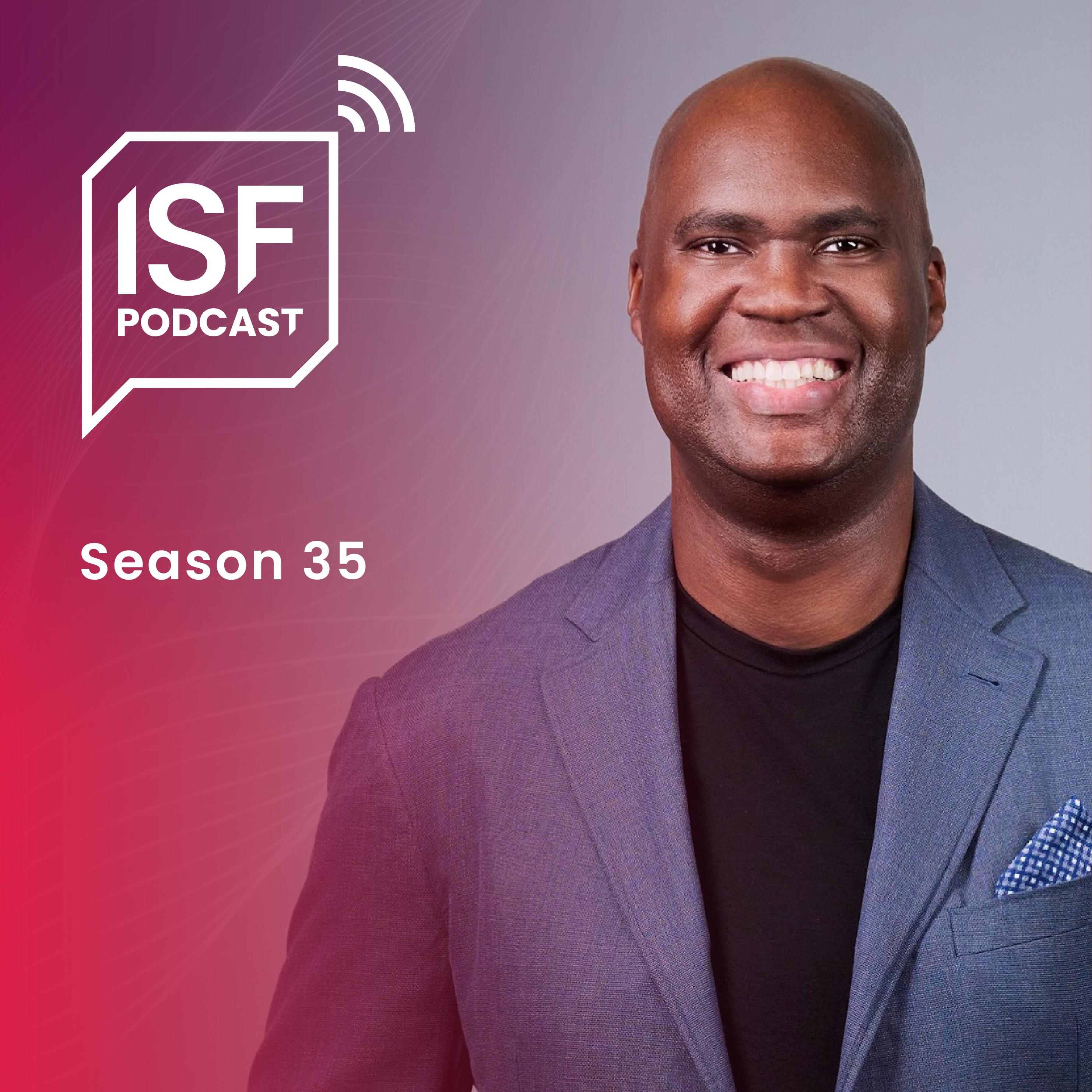
S35 Ep 5S35 Ep5: Jimmie Lee - Leading with Vision and Empathy: The North Star Approach
Today, Steve speaks with Jimmie Lee, a leadership expert with decades of experience as a senior leader at companies like Boeing, Meta, and Microsoft. He explains that one of the most important things a business leader can do in times of crisis, is to keep focus on the big picture and the long term goals. Jimmie and Steve also discuss how to manage a team in a post-covid workplace and building supply chain resilience — and why empathy matters more than ever. Key Takeaways: Empathy for your team members is more important than ever for a thriving business. Relationship-building must begin before the crisis happens. Geopolitical instability is causing a shift from risk management to resilience. Tune in to hear more about: If empathy can be taught (12:50) How to build trust in a business environment that’s more virtual than ever (15:47) Why many businesses are struggling because of today’s volatile geopolitical landscape (21:33) Standout Quotes: “There's a lot of tools that I would typically lean on or go to, but the number one is honestly just empathetic connection. It is really just connecting with the leaders and help them understand that they're not alone. I think a lot of times as a leader, you get too stuck in the problems that you start trying to solve, that you focus more trying to solve them in the business, and you go deeper instead of staying up at the leadership level and start working on the business itself.” - Jimmie Lee “Now you have trust to work off of. If you didn't have that trust and that mistake happened, it's an uphill climb to get to a point of good with that person now. I don't know that we're equipping our employees, that we're actually giving our teams that visibility, that knowledge, that training. […] Are we as companies, are we as leaders investing in our training budget in that kind of way to target those areas?” - Jimmie Lee “I think the geopolitical landscape is potentially gonna shift the visibility and the approach and the strategy from small, medium- sized businesses and middle market to have more attention on that supply chain because. When it comes to geopolitical instability, when it comes to geo-economic macro and the micro instability, resilience is key. Resilience is the lifeblood. Resilience is your ability to last, to withstand the fluctuations, but if you don't have enough visibility and awareness of all the different components that are impacted, you can't navigate those waters.” - Jimmie Lee Read the transcript of this episode Subscribe to the ISF Podcast wherever you listen to podcasts Connect with us on LinkedIn and Twitter From the Information Security Forum, the leading authority on cyber, information security, and risk management.

S35 Ep 4S35 Ep4: Yolanda Williams - Cyber on the Ground: Building Resilience in a Fragmented Landscape
Today’s episode will focus on the challenges of the cyber landscape in the United States, as Steve sits down with Yolanda Williams, who is the Cybersecurity and Infrastructure Security Agency’s cyber security coordinator in the state of Florida. Steve and Yolanda dive deep into her work communicating cyber in a region where it for many isn’t top-of-mind and how state sovereignty and lack of standardisation between local stakeholders poses unique challenges. We hope that Yolanda’s many examples of successfully working with Floridians and stakeholders across the state will resonate with listeners across the US—and perhaps across the pond, too. Key Takeaways: Cyber leaders must possess the ability to shape their communication based on what the audience is looking for. Organisations are much more open to cyber advice today than they were five years ago. Look at the language in your contracts! Mistakes can prove costly from both a financial perspective and a cyber perspective. Tune in to hear more about: How cyber connects to physical security (3:25) The challenges of a lack of standardised guidelines or federal regulation (10:23) The importance of keeping local backups and not only use the cloud (18:24) Standout Quotes: “I hear a lot of people say, ‘dumb it down.’ But you don't want to dumb it down. You just want to make sure that you're tailoring it specifically. You may have technical folks who are looking for, okay, what was the ransomware? Who did it? Who deployed it? How was it deployed? What was the payload? All those types of things. And they want to get into the deep dive of it. A lot of individuals don't. I'll speak to healthcare individuals and they're more looking at ‘I'm not a target. I'm a small doctor's office. I'm not a target.’ And one of the things we try to get across to everyone is: you are definitely a target. If you have a US IP address, you are a target.” - Yolanda Williams “There are federal guidelines for federal agencies. However, we respect our states and their sovereignty, and one of the things I found in Florida definitely was a lack of collaboration. Even from the city to the county, there's nothing structured across the board.” - Yolanda Williams “One of the steps that I recommend across the board for anyone that I'm talking to is looking at the language in your contracts, making sure that language is covering, not just what you're purchasing.[…] So making sure that you're looking at that contract language and have somebody that's looking at it that understands the lexicon, understands what is required. You can't just hire somebody off the street and say, ‘Oh yeah, write this contract,’ and they don't know what should be in the contract.” - Yolanda Williams Read the transcript of this episode Subscribe to the ISF Podcast wherever you listen to podcasts Connect with us on LinkedIn and Twitter From the Information Security Forum, the leading authority on cyber, information security, and risk management.
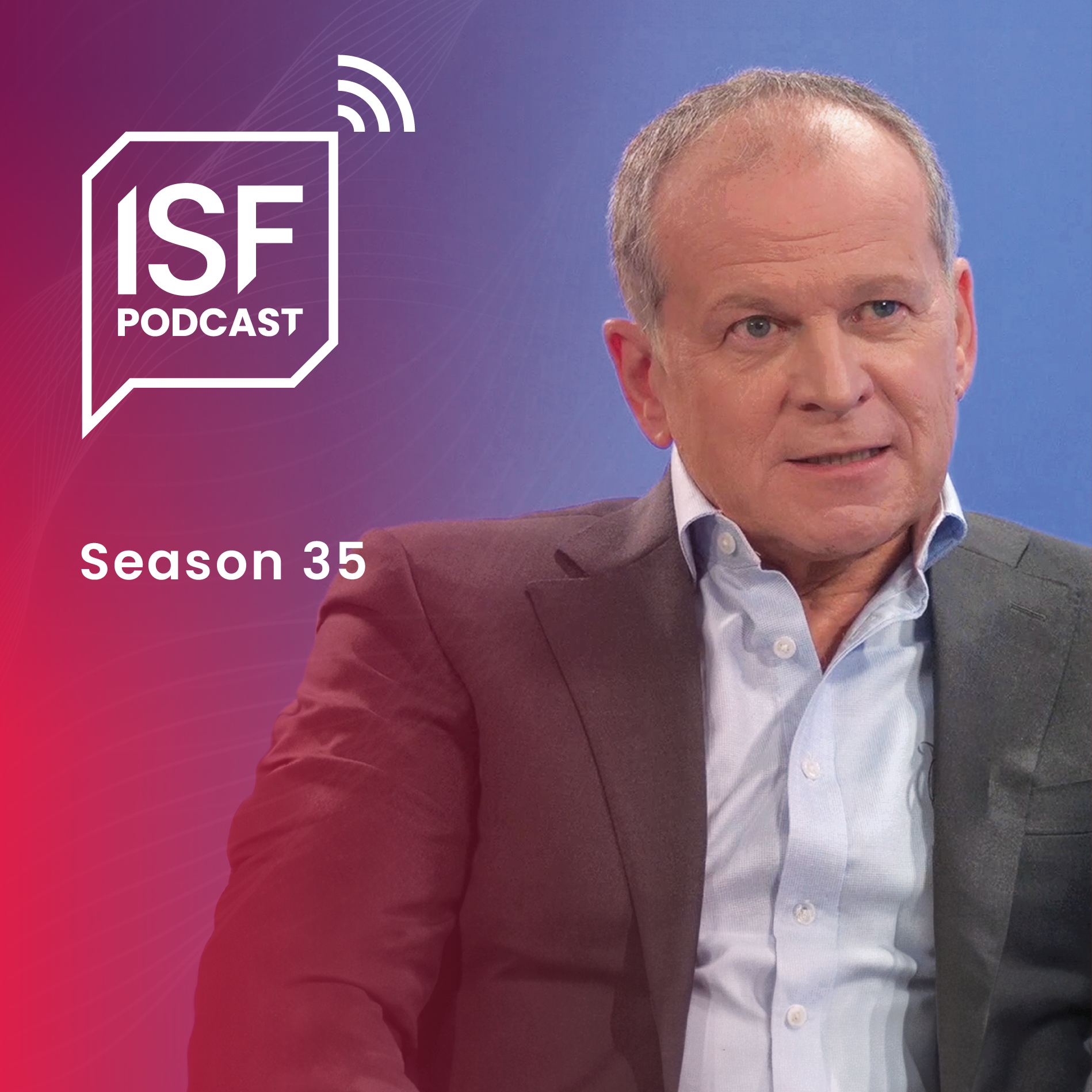
S35 Ep 3S35 Ep3: The Silent Risk in M&A: Cyber Security Oversights That Cost Millions
Financial due diligence is common practice when companies merge or one business acquires another. Cyber security due diligence, however, is not quite as common. Yet, in a world where the threat landscape changes by the day and risk is growing increasingly complex, solid cyber security practices are more important than ever. Today, Steve and Tavia dig into this very topic, and, more specifically, what role cyber security has in a merger or an acquisition. How is a cyber security review done? Why are they important? How do we balance speed with thoroughness? How do we interpret the results? There’s a lot to dig into here. Key Takeaways: Cyber due diligence is paramount in a corporate acquisition or merger. Risks of not doing cyber due diligence include both financial and reputational. Cyber due diligence is a team game. Tune in to hear more about: Who should be responsible for conducting the cyber review (4:34) How organizations can build cyber into their due diligence process (14:05) Examples of where insufficient cyber due diligence proved costly (19:05) Standout Quotes: “You can't play a team sport without a team. And for me, M&A is a team game. You can't go it alone. I think it would be a mistake for somebody to think that they could do this kind of work solo. Because as we've seen with cyber maturing, it now touches so many different parts of the organization. You do need to be involved.” - Steve Durbin “I think people are getting it. What I'm seeing now is people get it, but they don't know how to do it. That's where the cyber professional really now has to step up.” - Steve Durbin “Pre-deal, I think it is about being focused. It's about identifying, prioritizing the high risk areas that are out there that you want to look into. It's about doing things like making sure that the governance is there. It's about scanning for some of the known vulnerabilities. If you are in one particular market sector and you're buying a company in another because of expansion growth, you're going to need to be covering off a whole range of different things that perhaps might be unusual for you because you haven't been having to look into those areas.” - Steve Durbin Read the transcript of this episodeSubscribe to the ISF Podcast wherever you listen to podcastsConnect with us on LinkedIn and Twitter From the Information Security Forum, the leading authority on cyber, information security, and risk management.
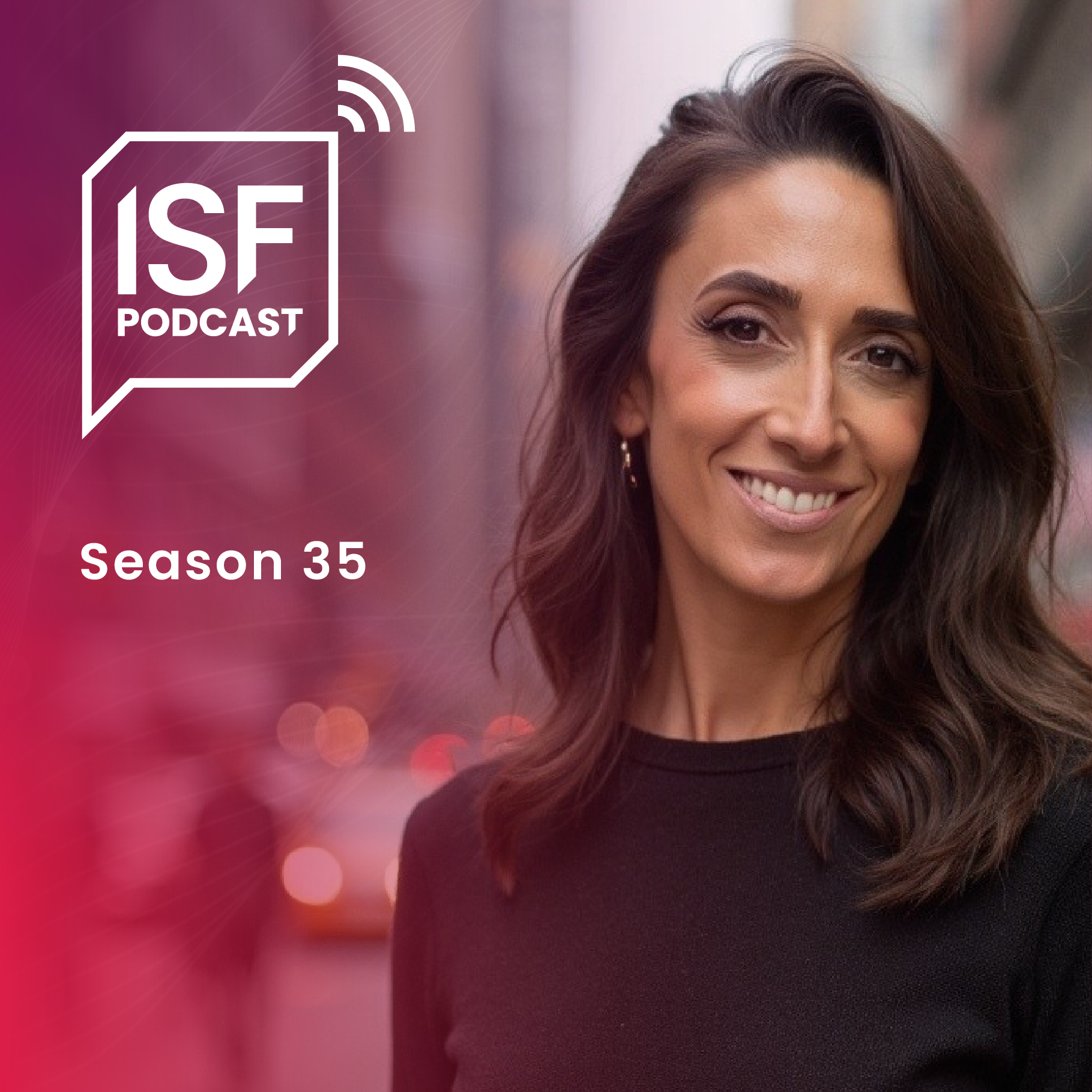
S35 Ep 2S35 Ep2: Lauren Farina - Rest After Stress: The Psychology of High Performance
Today, Steve speaks with Lauren Farina, psychotherapist and founder of Invited Psychotherapy & Coaching. Lauren and Steve discuss how wellness is becoming a bigger part of the workplace and how we can stay mentally healthy during times of stress and pressure. Also an expert on “high-performance individuals,” Lauren shares what it means to be high-performing and why rest can be just as productive as work. Key Takeaways: Being a high-performer isn’t just about work. Rest is productive Building psychological safety within an organization is the most important contributor to elite performance. Tune in to hear more about: What the “High Performer Archetype” is (6:15) The risks of not taking time to rest (11:22) How leaders can improve the performance of their teams (19:33) Standout Quotes: “ As many of us know, acute stress is quite good for us. But in the long term, the chronic unrelenting demands that I think remote working arrangements have placed on the workforce, really can erode our performance because our cognitive functioning is not at its peak when we're chronically stressed, our memory, our learning, our judgment, our decision making is compromised.” - Lauren Farina “ There was a five -year study at Google called the Aristotle Project, and the Aristotle project found that psychological safety is the single most important factor when it comes to the elite performance of individuals and groups.“ - Lauren Farina “ It is my hope that there will be an increased focus on intersectionality of performance and wellbeing and increased support of individuals and groups in cultivating wellbeing. Not only for the sake of wellbeing, but also for the sake of peak performance.” - Lauren Farina Read the transcript of this episode Subscribe to the ISF Podcast wherever you listen to podcasts Connect with us on LinkedIn and Twitter From the Information Security Forum, the leading authority on cyber, information security, and risk management.
S35 Ep 1S35 Ep1: Retaining Control: Empowering Innovation Without Losing Sight of Risk
Today, Steve Durbin and ISF Podcast Producer Tavia Gilbert are in conversation exploring the role of cybersecurity, governance and leadership in an age defined by rapid technological transformation. Artificial intelligence is now woven into daily business operations, risk models, customer engagement, and more. And while its benefits are significant, its risks are expanding just as quickly. Key Takeaways: It’s becoming increasingly apparent for leaders that cyber impacts every part of the business. AI will not replace humans in the workplace, but rather redefine what work humans do. If you as a business leader don't have clarity about what your values and ethics are by now, you better get started. Tune in to hear more about: What happens if businesses don’t implement a robust framework for ethical AI use (8:51) The role of the board when implementing AI into business operations (19:49) How to lead through change (24:20) Standout Quotes: “When cyber is involved early, it really can become a value enabler. It helps the business make smarter bets, helps it to avoid blind spots and build that sort of trust that we're looking for into everything that it does.” - Steve Durbin “AI, it does introduce huge amounts of potential, but it also introduces a new layer of risk that is more complicated, dynamic and probably difficult to manage than many people actually think or are prepared for. And one of the biggest challenges is that AI doesn't just create new vulnerabilities, it changes the nature of the threat landscape completely.” - Steve Durbin “AI is not some kind of future technology. It's been around for a very long time. Certainly in cyber terms anyway, at least 10 years, if not more. It's a lifetime in cyber, so it's not a future technology, it's here. It's shaping the way that we work, that we think, and indeed that we compete. So the question isn't whether we should engage with it, it's how do we do so responsibly and effectively. And the organizations that retain control are those that lead with clarity.” - Steve Durbin Read the transcript of this episode Subscribe to the ISF Podcast wherever you listen to podcasts Connect with us on LinkedIn and Twitter From the Information Security Forum, the leading authority on cyber, information security, and risk management.
S34 Ep 4S34 Ep4: Dr. Shonna Waters - Leading Through Disruption: Managing Risk and Resilience
Joining the podcast today is Dr. Shonna Waters, a leading researcher on the workplace of today and the future, and the Co-Founder and CEO of Fractional Insights, an organizational psychology research firm. Steve and Dr. Waters discuss the rapid transformation of the workplace, brought on by new technologies, geopolitical uncertainty, and shifting organizational priorities. They also speak about how to stay grounded when the ground around us is shaking, how security professionals can manage stress and negativity brought upon by constantly searching for threats, and how a growth mindset can help build resilience. Key Takeaways: The professional environment is changing faster than we are. How bridging the language gap between security and sales is challenging, but key for business success. A growth mindset can build resilience. Tune in to hear more about: What people look for in the workplace (1:56) How to manage stress at work (18:22) How a growth mindset can help us become more resilient (21:42) Standout Quotes: “There's a lot going on out there, and I think that there's this general sentiment that the ground is moving under our feet. We all are feeling overstimulated and ungrounded, I think, generally speaking, and it's a really hard place to navigate as an employee. It's also a really hard place to lead from.” - Dr. Shonna Waters “No matter what you're selling or producing, there is a human at the beginning of it and at the end of it, at a minimum, right? It's the concept, the leadership of it, the orchestration, no matter how much you minimize humans in the process. There's human ingenuity at the top of that chain. And then at the bottom of it, you have your customers.” - Dr. Shonna Waters “There are conscious choices that you can make to lean more into that idea that you can grow and practice. And I think for any of us, one way to really encourage ourselves around that is to think back to other things that you've done that got easier over time or you were able to improve your skills.” - Dr. Shonna Waters Read the transcript of this episode Subscribe to the ISF Podcast wherever you listen to podcasts Connect with us on LinkedIn and Twitter From the Information Security Forum, the leading authority on cyber, information security, and risk management.
S34 Ep 3S34 Ep3: Faisal Hoque - Preserving Humanity in the Age of AI
Steve Durbin engages in a compelling conversation with Faisal Hoque, a world-renowned technologist and best-selling author including his recently released ‘Transcend: Unlocking Humanity in the Age of AI’. Faisal shares his thoughts on how business leaders can preserve human values in the in the era of AI, how AI and humans can function together, and the threats posed by ceding control of our humanity to AI. Find out why he feels the government needs to provide legislative structures to protect citizens. Key Takeaways: 1. The challenge for business leaders in preserving human values amidst the rise of AI 2. How AI is gradually diminishing human emotion in daily life 3. The risks involved in relinquishing human control to AI Tune in to hear more about: 1. Preserving human values (1:14) 2. How government policies can influence society and the development of AI (6:15) 3. Harnessing the potential of AI whilst mitigating the risk (18:11) Standout quotes: 1. "The government needs to provide the legislative structures where citizens are protected. Things like intellectual property, privacy, and free market support." - Faisal Hoque 2. "The digital divide concerns me greatly. Not just with regard to AI, but with everything that we are doing from a technology standpoint." - Faisal Hoque 3. "Leaders' job is to create that psychological safety so that we can be productive and feel that we can actually contribute and fulfill our purpose, whatever that purpose is." - Faisal Hoque 4. "AI is going to be like electricity or internet. It is going to be part and parcel of everything and anything we do." - Faisal Hoque Read the transcript of this episode Subscribe to the ISF Podcast wherever you listen to podcasts Connect with us on LinkedIn and Twitter From the Information Security Forum, the leading authority on cyber, information security, and risk management.
S34 Ep 2S34 Ep2: Christopher Sestito - Stay Ahead or Fall Behind: The AI Challenge for Modern Businesses
In today's episode, Steve speaks with Christopher Sestito (also known as Tito), chairman of the board, CEO, and co-founder of HiddenLayer, a cyber security startup dedicated to preventing adversarial machine learning attacks. Tito shares his perspective on where the business world is currently when it comes to AI and cybersecurity. He also gives his thoughts on the state of AI regulation and what business leaders should do to protect their organizations in the age of AI. Key Takeaways: AI is changing the cybersecurity game Tech regulation is becoming more fragmented Securing AI is really no different from securing other parts of the business Tune in to hear more about: Why Christopher Sestito started HiddenLayer (1:28) Why AI will play an increasingly important role in organizational cyber defense (5:47) What business leaders should think about as they approach cyber in the age of AI (20:18) Standout Quotes: “I think the challenge at the AI level is how fast we've moved. There's been so many advancements that if you don't have a dedicated organization looking at this, it's really just moving too quickly to ultimately have things at a sort of hardening level at the model layer itself.” - Christopher Sestito “I think I'm a bit of a realist when it comes to artificial intelligence coming in. I think we are viewing a very fundamental shift in ultimately what's gonna affect workforces and skill sets required. I think that if I was entering the workforce right now, I'd be focusing heavily on the effects of artificial intelligence, how I can leverage artificial intelligence.” - Christopher Sestito “Every organization really needs to pay attention to their agentic strategy right now. I think if you're engaged with other enterprise organizations, as all are, everyone's building agents right now, and those agents have a lot of autonomy in order to be able to conduct transactions, in order to be able to deal with data, to be able to interact, organization or organization. And I think every CISO is gonna need to be able to really articulate what they want to be allowed here and not because we're removing humans in the loop with these agents, we're allowing them to have quite a bit of agency in order to conduct these transactions at an incredible rate.” - Christopher Sestito Read the transcript of this episodeSubscribe to the ISF Podcast wherever you listen to podcastsConnect with us on LinkedIn and Twitter From the Information Security Forum, the leading authority on cyber, information security, and risk management.
S34 Ep 1S34 Ep1: Threat Horizon 2027: Grasping for Control
Today, Steve talks about ISF's flagship foresight report "Threat Horizon 2027: Grasping for Control." In a world defined by disruption and acceleration, this report offers not just a forecast of cyber threats, but a blueprint for resilience, and Steve walks listeners through the key themes. Key Takeaways: 1 Flexibility will be key in an increasingly volatile world. 2 Cyber must be considered in every aspect of an organization’s operations. 3 Control is possible, even if it sometimes doesn’t feel like it. Tune in to hear more about: 1 Why identity is becoming more and more important for businesses (2:24) 2 How senior leaders can prepare for the future (17:06) 3 Why control is still possible (21:42) Standout Quotes: 1 “Identity is really the cornerstone of everything that we do in the digital world, and it's fast becoming one of the most critical areas for business leaders to understand and take seriously.” - Steve Durbin 2 “Leaders need to understand the economic impact of cyber risk. What are the potential costs of disruption? How would a breach affect reputation, revenue, operations? It's the reputational bit, for instance, in my case, that worries me the most. And once you start thinking in those terms. You can make many more business-aligned, informed decisions about what you are going to do because you stop looking at the cost of doing something and instead you flip it and look at the implications and associated costs of not doing it.” - Steve Durbin 3 “I think that business leaders as a group, tend to be pretty resilient individuals. I've worked a lot with entrepreneurs, and they are probably some of the most resilient that I've ever come across because they have to be. And one of the things that they always believe in, I've found, is that irrespective of what's going on around you, control is still possible. But in order to have that level of control, it takes foresight, it takes focus, and I think above all it takes flexibility and, I would say, courage.” - Steve Durbin Read the transcript of this episode Subscribe to the ISF Podcast wherever you listen to podcasts Connect with us on LinkedIn and Twitter From the Information Security Forum, the leading authority on cyber, information security, and risk management.
S33 Ep 6S33 Ep6: The Human Advantage: Thriving in Times of Technological Uncertainty
In today’s episode, Steve speaks with Tavia about how AI and other emerging technology are reshaping society, and how we as humans should react to it. Key Takeaways: AI and other emerging tech can help society, but guardrails are needed. The world is becoming more fragmented when it comes to how it views AI and tech. With AI and new technology, we have to be increasingly cautious in our interactions in cyberspace. Tune in to hear more about: Why it’s unlikely there will be international rules around AI (4:32) How technology is changing how we interact – and what that means (7:12) What people 50 years from now might say about how we’re currently handling emerging tech (22:28) Standout Quotes: “We need to be putting in place guardrails, particularly when it comes to AI, around how it's going to be used, because we are playing with a technology, the power of which we don't fully understand yet.” - Steve Durbin “I think it is about how we get the balance right. I think that it isn't about shutting down some of the technological advances that we're seeing, it is about just being a little bit more realistic about their fallibility and trying to get equilibrium back between people and tools.” - Steve Durbin “I suspect that what they will do is take a look back and go, why on earth did they do that? Why on earth didn't somebody see that there was a better way? Because that's with the benefit of hindsight, isn't it? And we've got 20-20 vision when it comes to hindsight. And so I think that we are in the here and now and we need to find a way of muddling through. And I think that everybody has a responsibility to do that.” - Steve Durbin Read the transcript of this episode Subscribe to the ISF Podcast wherever you listen to podcasts Connect with us on LinkedIn and Twitter From the Information Security Forum, the leading authority on cyber, information security, and risk management.

S33 Ep 5S33 Ep5: Bonus Episode: Ellie Pavlick - Balancing the Risk and Reward of AI
In this bonus episode, Steve speaks with Dr. Ellie Pavlick, a professor of computer science at Brown University. Dr. Pavlick’s research focuses on computational models of semantics and pragmatics which emulate human inferences in artificial intelligence. Steve and Ellie discuss generative AI, developing a pipeline of talent to work with it, and perspectives on its developing uses for organisations. Related Resources from ISF: ISF Podcast: The AI-Quantum Revolution: Today, tomorrow and the future ISF Podcast: Steve Durbin & Nicholas Witchell - The Case for Social Responsibility in AI ISF Podcast: Boosting Business Success: Unleashing the potential of human and AI collaboration Navigating Boardroom Concerns: Top 9 Cybersecurity Risks and Challenges Mentioned in this episode: ISF Analyst Insight Podcast Read the transcript of this episode Subscribe to the ISF Podcast wherever you listen to podcasts Connect with us on LinkedIn and Twitter
S33 Ep 4S33 Ep4: Bonus Episode: Federico Varese - Organised Crime Goes Digital
Tune in to this bonus episode where Steve is speaking with Prof. Federico Varese, a professor of criminology and head of the sociology department at Nuffield College at Oxford University. Prof. Varese talks with Steve about the history of organised crime in Russia and around the world, the mafia’s movement into cybercrime, and what the future may hold for these criminal organisations. Related Resources from ISF: ISF Podcast, Alexander Seger — How Global Law Enforcement Fight Cybercrime ISF Podcast, Inside the Mind of Today’s Cybercriminals, Brett Johnson Part 1 ISF Podcast, The Life of a Cybercriminal, Brett Johnson Part 2 ISF Podcast - The Democratisation of Cybercrime Misha Glenny: The Evolution of Cybercrime with Misha Glenny, author of McMafia Read the transcript of this episode Subscribe to the ISF Podcast wherever you listen to podcasts Connect with us on LinkedIn and Twitter From the Information Security Forum, the leading authority on cyber, information security, and risk management

S33 Ep 3S33 Ep3: The Drop In CEO - Steve Durbin’s Journey and Advice to Leaders
An interview with Steve Durbin, Chief Executive, ISF, hosted by CEO and Founder of The Drop In CEO Podcast, Deborah A. Coviello. Originally published by The Drop in CEO Podcast. In this episode, Steve shares his unique journey from literature to cybersecurity, emphasising the importance of curiosity, learning, and fresh perspectives in leadership. The discussion delves into the evolving landscape of cybersecurity, the necessity for business leaders to adopt a resilient and informed approach to technology and risk management, and the value of continuous education and networking. Steve offers practical advice for business leaders on safeguarding against cyber threats and highlights the dynamic interplay between technology, business strategy, and security. Episode Highlights: 01:57 Steve's Journey: From Literature to Cybersecurity 05:12 The Importance of Reading and Continuous Learning 08:02 Transitioning Careers: Embracing Technology 16:58 Information Security Forum: Mission and Impact 29:12 Practical Advice for Leaders on Cybersecurity Discover more about the Information Security Forum (ISF), and tune in to our engaging podcasts.
S33 Ep 2S33 Ep2: Neil Coole - Building Trust and Transparency in your Supply Chain
Today, Steve sits down with supply chain expert Neil Coole, who currently serves as Enterprise Partnership Director at BSI. He emphasizes the need to know your organization’s supply chain story in order to stay secure and protect your brand. He and Steve talk about how regulation can go beyond a checklist and add value for companies.Key Takeaways: 1 The covid-19 pandemic and recent conflicts have highlighted the vulnerability of today’s supply chains. 2 Standards exist as frameworks to help companies live up to responsibilities set upon them by law or consumers. 3 A harmonized assessment framework can help industries secure their supply chains and save organizations time and money. Tune in to hear more about: 1 How standards are created and what their purpose is (8:57) 2 Protecting critical infrastructure in the US (14:09) 3 The Supplier Compliance Audit Network, a community of US-based retailers and brand owners who’s created a harmonized assessment framework for its industry (23:23)Standout Quotes: 1 “The expectation now is on more trust, transparency and also traceability, especially things like tech-enabled traceability. What kind of tech-enabled traceability solutions is that client using to determine where the goods are coming from? What route are they taking? Who's opening up the cargo containers and possibly adulterating goods, stealing in transit, all those other things – that's a real concern today for these organizations who are moving hundreds of thousands of freight containers on an annual basis. It's a real risk that they have to live with. The solutions are there. It's just helping those organizations understand the role that standards, shall we say – a standard is a best-practice framework – can play in helping to reduce, or, in some cases, even mitigate some of those risks.” - Neil Coole 2 “There's opportunities for improvement everywhere, but from a maturity standpoint, we do view parts of the critical infrastructure sectors like energy and finance to be on the more mature end. And then there's a few in the middle that are learning some important lessons. And then there's those who are actively being targeted we read about all the time. They are the ones that I feel would benefit more from some of the guidance and support and information that's available for them to be less of an attractive target.” Neil Coole 3 “So, if you're a single supplier working for the top 10 biggest brands, the top 10 are sending out some form of assessment of you. You're getting that 300-page assessment document, not just from one supplier, you're getting it from all the suppliers. But if those suppliers become part of the same community and they agree to accept a single assessment outcome, no matter who has instigated it, everyone benefits. The supplier benefits – minimizes their disruption, they get to work with more brands in an open and trusted environment – and it just saves that complete disruption and unnecessary costs of delivering an assessment by multiple brands.” - Neil CooleMentioned in this episode: • Dear InfosecRead the transcript of this episodeSubscribe to the ISF Podcast wherever you listen to podcastsConnect with us on LinkedIn and TwitterFrom the Information Security Forum, the leading authority on cyber, information security, and risk management.
S33 Ep 1S33 Ep1: Kailyn Johnson - C-Suite Guide to Navigating Cyber and Geopolitical Risks
Today, Steve speaks with Kailyn Johnson, cyber intelligence and geopolitical risk lead at UK consulting firm Sibylline. Kailyn and Steve discuss the current threat landscape, focusing on areas where cyber and geopolitics overlap, and she offers some practical advice on how to contextualize security for your organization’s C-suite. Key Takeaways: 1 The dark web is becoming more democratized, opening up the door for low-skilled threat actors to cause harm. 2 Open and frequent communication between security teams and other branches of the organization, in particular those in charge of the budget, is crucial for cyber resilience operations to receive sufficient support. 3 Staying up to date on patching, knowing your supply chains, and understanding how threats to critical infrastructure can affect you, will be key for organizations in 2025. Tune in to hear more about: 1 How the dark web is becoming more democratized, and what means for businesses 2 Why showing the worth of the cyber team is tricky but critical for long-term success 3 What organizations can do better in 2025 Standout Quotes: 1 “So we're seeing just ransomware continuing to be a consistent risk to business operations, financial risk, reputational risk, security risks, operational risks. But alongside that, we're also then seeing the influx of a lot more low-skilled threat actors having now the capabilities to conduct sophisticated operations with the democratization of the dark web.” - Kailyn Johnson 2 “Showing off the value that these teams have to the people with budget, sometimes might help unlock a bit of that budget. If you're seeing the benefit of those teams, you're more likely to give them the budget that they might need for it, and whether that's internally or sometimes externally, if you've produced really good work, or if you've created all these detections that have helped improve the network security for your organization, how could we maybe publish that, whether it's internally to the stakeholders, or if it's for everyone, so people are seeing, actually, they're doing a really good job.” - Kailyn Johnson 3 “But sometimes you're so focused on the impact of the regulations that you sometimes then forget, actually the processes that we're doing are working. Then should we just maybe let things play out and see how they're going? I think there's always a bit of a worry of, are we always in compliance? And it's good that we have that worry, but it's also sometimes the case of, just keep doing what you're doing, and you've got your compliance teams to tell you when you're not.” - Kailyn Johnson Mentioned in this episode: • ISF Analyst Insight Podcast Read the transcript of this episode Subscribe to the ISF Podcast wherever you listen to podcasts Connect with us on LinkedIn and Twitter From the Information Security Forum, the leading authority on cyber, information security, and risk management.
S32 Ep 7S32 Ep7: Dr. Kate Darling - Robot Ethics and the Future of Human-Robot Interaction
Today, Steve is in conversation with Dr. Kate Darling, Research Scientist at the MIT Media Lab and Research Lead at the Boston Dynamics AI Institute. Kate has spent years studying human-robot interaction, and she speaks with Steve about the fascinating impact such interactions can have on us as people, and what that means for businesses trying to incorporate robots and AI into their customer experience. Key Takeaways: 1. It is natural for humans to project human behavior onto non-humans. 2. Using robots to help humans do their work better is smarter than replacing them. 3. More technical expertise is needed for policymaking to keep pace with new technologies. Tune in to hear more about: 1. Why humans form emotional connections with robots 2. How a grocery store robot is scaring customers 3. Pitfalls of commercializing robotics Standout Quotes: 1. “That's part of the reason that we do this, that we create these strong emotional connections, even with non-living things like robots, is because we have this drive, and especially in these emotionally difficult situations, it may even be something that helps people survive. So I don't think it's as black and white as just: we need to prevent this anymore, but it is something that we need to be extremely aware of and acknowledge that it's happening, so that we can address it appropriately where possible.” - Dr. Kate Darling 2. “So I think it's important that we're making the right choices. It's not that technology determines what happens. It really is us as a society choosing to set the right incentives for companies and invest in the right kinds of technology. And I do think that there's much more promise in that path, the path of trying to partner with these technologies and what we're trying to achieve, rather than trying to replace people or recreate something we already have.” - Dr. Kate Darling 3. “We've used most animals like tools and products, and some of them have been our companions, and my prediction for the future is that we're going to do the exact same thing with robots and AI, that most of them will be tools and products and some of them will be companions.” - Dr. Kate Darling Mentioned in this episode: • ISF Analyst Insight Podcast Read the transcript of this episode Subscribe to the ISF Podcast wherever you listen to podcasts Connect with us on LinkedIn and Twitter From the Information Security Forum, the leading authority on cyber, information security, and risk management.

S32 Ep 6S32 Ep6: Paul McKenna - Harnessing the Power of Positivity
In this episode, Steve speaks with best-selling author and hypnotist Paul McKenna about something that affects all of us — stress at work. Paul talks about the impact stress can have on workers and gives practical tips to care for yourself and the employees you lead, even in the fast-paced, “always-on” security industry. Key Takeaways: 1 It’s important to be mindful of signs of stress before it gets to burnout. 2 Mindfulness, hypnosis, and other types of self-care can significantly reduce stress. 3 For long-term success, employers should look to balance output and productivity with their employees’ mental and physical well-being. Tune in to hear more about: 1 Why we’re more stressed than ever (1:10) 2 How to identify signs that may lead to burnout (3:26) 3 How companies and leaders can support their employees well-being (12:32) Standout Quotes: 1 “It's right now a massive issue, anxiety, stress, fear, worry, because if you think about it, you turn on the TV, or you open a newspaper, you're under attack. It's the war, it's the virus, it's the economy, it's something or other. And so understandably, post the pandemic, we were out of the biological pandemic, but we're sort of in a psychological pandemic.” - Paul McKenna 2 “ Now the thing is, addiction is about changing your state of mind and body, so drinking, drug taking, gambling, sex, shopping, television and food, particularly sugar food, are the world's drugs of choice. And everybody in the world at some point feels too much stress. They feel overwhelmed, and so they resort to something to change how they feel, some of the things I just mentioned. And in a sense, some people, they form an addiction to their work because they can, you know, forget about everything else that's going on in their life. They might not have to think about their relationship or, you know, some other stress, from their family or something. So they immerse themselves in work.” - Paul McKenna 3 “Years ago, when I started corporate training, one of my colleagues, I asked him, ‘Why is it corporations pay so much money to have their staff trained?’ He said, ‘Well, I can show you,’ because look, they see that ‘days sick' goes down, the productivity goes up. So basically, by staying in the zone of balance – you've got enough output getting things done, versus balance, which is recovery time, in my mind. You get that mix right, then you're going to be more productive in the end.” - Paul McKenna Mentioned in this episode: • Dear Infosec Read the transcript of this episode Subscribe to the ISF Podcast wherever you listen to podcasts Connect with us on LinkedIn and Twitter From the Information Security Forum, the leading authority on cyber, information security, and risk management.

S32 Ep 5S32 Ep5: Duncan Wardle - Embedding a Culture of Innovation into Everyone's DNA
Today, Steve sits down with Duncan Wardle, the former head of innovation and creativity at Disney. Duncan talks to Steve about his current work teaching leaders to embrace creativity and inspire innovation in their teams. He suggests practical ways that leaders can create a more collaborative and fun work culture that will lead to more successful outcomes and enhance their teams’ job fulfillment. Key Takeaways: We’re all born with creativity, and a great leader can unlock it within people who may have lost it along the way. Creativity is the ability to have an idea; innovation is the ability to get that idea done. With AI, we have the opportunity to hand off mundane tasks and give ourselves time to think, be creative, and innovate. Tune in to hear more about: Why it matters to say “yes, and…” instead of “no, because…” The impact of AI on creativity and innovation Actions leaders can take to spark more creativity within their organizations Standout Quotes: “I define creativity as the ability to have an idea, and I think we can all do that every day. I define innovation as the ability to get that done. That's the hard part.” - Duncan Wardle “As leaders, we have responsibilities, we've got quarterly results, we've got bosses, we've got – but if the first two words out of our mouth are ‘no, because,’ they're the first two words when somebody comes at us with a new idea, they're not coming back in the door again, and they may have genius next week or next-. Just remind ourselves as leaders, we're not green lighting this idea for execution today. We're merely green housing it together, using ‘Yes, and.’ As leaders, if we can use ‘Yes, and’ before ‘No, because’ you can completely and utterly change your culture.” - Duncan Wardle “Algorithms, and everything that AI will bring to the table, will merge with the human race, creativity, intuition, empathy, imagination, etc, we will merge to become a superhuman race.” - Duncan Wardle Mentioned in this episode: ISF Analyst Insight Podcast Read the transcript of this episode Subscribe to the ISF Podcast wherever you listen to podcasts Connect with us on LinkedIn and Twitter From the Information Security Forum, the leading authority on cyber, information security, and risk management.
S32 Ep 4S32 Ep4: Sylvie de Giusto - The Power of Choice
In this episode, Steve sits down with author and leadership expert Sylvie di Giusto. Sylvie delineates five areas for everyone to consider in order to enhance their emotional intelligence. She and Steve also discuss how self-awareness and authenticity relate to situational awareness, and how improving in these areas can support career mobility. Key Takeaways: The subconscious takes up 95% of the brain – use that to your advantage to gain the trust of the people you interact with. Situational awareness is more important than one-size-fits-all ideas of “always smiling” or “maintaining eye contact. Your appearance, behavior, communication, digital footprint, and environment all matter for how people see you. Tune in to hear more about: How the meaning of emotional intelligence in business has changed over the years (01:48) Sylvie di Giusto’s A.B.C.D.E. (Appearance, Behavior, Communication, Digital footprint, Environment) framework (07:50) The four levels of visibility (20:05) Standout Quotes: “The subconscious mind of a human takes up 95% of your brain. And 95% of your brain is where emotions live, where feelings live, where your gut feelings live. And only 5% of our brain actually transmits data, facts, figures, information. That is where your contracts are, where your proposals are, where all the facts and figures are that you deliver to your clients. [...] So, I always say, why don't you use this to your advantage, that behavior, and actually use the 95% of the brain and instantly imprint that feeling of trust in them and use it to your advantage. And before they buy into your solution, into your technical solution, let them buy into you.” - Sylvie di Giusto “You have to learn to read the moment, [...] and then adjust your behavior and make more intentional choices. I think one of the biggest challenges that we have nowadays, also driven by technology because we are constantly distracted by technology, is that we run on autopilot most of the day. Most of the day, we are so in our habits, in our patterns, that we do things, say things, that we are not even aware of, and they have a macro impact on our relationships. And we have to step back and sometimes turn that autopilot off, read the room, and be more intentional with the tools that we already have.” - Sylvie di Giusto “I think that authenticity means that we all play a role, but different roles, and in those roles, we are true to ourselves. [...] And in all those roles, I promise you, I'm truly authentic. But if I would try to talk with my husband the way I talk with my clients, we wouldn't have made it to 23 years, I promise you. Or if I would treat my clients like I treat my children, or if I look at home like I would on stage, and vice versa. So, yes, we are all authentic in those roles, but I think we have to accept that you just do you, no matter the circumstances – which brings us back to situational awareness – I think it's a lie that this is possible.” - Sylvie di Giusto Mentioned in this episode: Dear InfoSec Read the transcript of this episode Subscribe to the ISF Podcast wherever you listen to podcasts Connect with us on LinkedIn and Twitter From the Information Security Forum, the leading authority on cyber, information security, and risk management.
S32 Ep 3S32 Ep3: Rear Admiral Brian Luther - Leadership in the Face of Chaos: Preparing your team for the unexpected
Today, Steve is speaking with Rear Admiral Brian Luther. After more than 30 years in the US Navy and at the Pentagon, Brian is now president and CEO of the insurance firm Navy Mutual. Brian talks about what he learned about leadership in his time commanding an aircraft carrier in the Navy and how he has translated his skills into working in the private sector. He and Steve also discuss how leaders can move from a tactical mindset into a logistical one, and prepare your team for worst case scenarios. Key Takeaways: There might be differences between generations or people of different cultures, but fundamentally most people want the same things, and basic respect goes a long way. As a leader, don’t get bogged down in tactics. Remember to think about the logistics, so there is a plan B if something goes awry. Technology can be an immensely useful tool, but don’t get overly dependent on it. Tune in to hear more about: The three stages of leadership (7:46) Conducting business in volatile regions (12:28) How a tabletop drill can reveal important weaknesses in your organization’s crisis response (18:48) Standout Quotes: “You have to very clearly articulate to the people what you want done. And if it's very specific, you say, ‘I want this done,’ and if it's generic, you say, ‘I want this outcome,’ right? You can't say I want a general outcome when you have something specific in mind, because they're going to go off and do it whatever way you want. But if you're very clear, ‘I want this done this way,’ or ‘I just want this outcome,’ and you decide, delegate, disappear, you'd be amazed at what people can do.” - Brian Luther “If you go there and give them an opportunity to see you as just who you are, and learn them just as they are, you find that there's more in common than people would give credit for. So I would always say, before you go internationally, take some time to learn where you're going and respect the culture that you're going to be operating in.” - Brian Luther “There are tremendous benefits associated with technology, but any strength pushed too far is a weakness [...]. Don't be overreliant on something, and you put all your eggs in that one basket and you lose it, and then you don't have a second or a third option. You should be asking yourself, ‘What if I lose this, what if they figure out a way to foil that?’ Because, remember, we put something out there, and in a strategic competition, there's move-countermove all the time. […] So use it as a tool, but don't be totally dependent on it that if someone takes that tool away from you, your whole organization collapses.” - Brian Luther Mentioned in this episode: Dear InfoSec Read the transcript of this episode Subscribe to the ISF Podcast wherever you listen to podcasts Connect with us on LinkedIn and Twitter From the Information Security Forum, the leading authority on cyber, information security, and risk management.
S32 Ep 2S32 Ep2: Paul Bartel - The New Front Lines: How we win the war on misinformation
In today’s episode, Steve sits down with Paul Bartel, a senior intelligence analyst with PeakMetrics. Paul was previously with the Defense Intelligence Agency, and he speaks with Steve about his experience working in the government sector, how the public and private sectors can cooperate more effectively, and what businesses can do to protect themselves from misinformation campaigns.Key Takeaways: Generative AI is rapidly changing the nature of misinformation. Social media companies must take more responsibility for moderating the content on their platforms. To protect your organization from damage from misinformation, being aware of the current information environment and what information is out there about you, is key. Tune in to hear more about: Paul Bartel’s background with the Defense Intelligence Agency (1:30) The three primary sources of misinformation in the US (4:40) How businesses can adapt to the changing information environment (17:56) Standout Quotes: “I think one of the biggest things that we have going now, and this is obviously in every sort of sector, is the use of generative AI. So what we're seeing a lot in social media now is instead of just random accounts that might be controlled by a person or two, what you're seeing is hundreds and hundreds of bot accounts that are able to push forward a large amount of information very quickly.” - Paul Bartel “The biggest thing I think that needs to start happening is the social media companies really especially need to take accountability for their own clientele base that might be spreading the misinformation.” - Paul Bartel “Getting an early handle on what's being said about them, and the information environment at large, can help them [organizations] navigate a lot of the challenges that we see in an information environment that's pushing out more and more information and can change on a minute to minute, hour to hour basis.” - Paul Bartel Mentioned in this episode:Dear InfoSec Read the transcript of this episodeSubscribe to the ISF Podcast wherever you listen to podcastsConnect with us on LinkedIn and Twitter From the Information Security Forum, the leading authority on cyber, information security, and risk management.
S31 Ep 4S31 Ep4: Emerging Threats for 2025: Q&A
Today we’re listening to the second half of Steve’s recent Emerging Threats webinar for security leaders. In this episode, Steve responds to audience questions, covering everything from government regulation to supply chain to raising awareness within your organization.Steve Durbin’s Contact Information:[email protected] Steve Durbin on LinkedInKey Takeaways: 1. Knowing what your crown jewels are and how to protect them is paramount in a volatile world. 2. The government should do what the government does well, and it should let businesses do what businesses do well. The government should provide clear guidelines, but then there should be little interference. 3. Everything begins and ends with cyber resilience. How do we deal with the aftermath of the cyber incident that inevitably will occur? Tune in to hear more about: 1. How to get the board to care about cybersecurity and cyber risk (2:48) 2. How to avoid making regulatory compliance a tick box exercise (9:13) 3. How ISF can help make your organization more resilient (26:06) Standout Quotes: 1. “I like bringing people into the cyber space that are not technical. That doesn't mean to say you don't need technical people in cyber – you do, your security team needs to have a combination of the two – but I do very much like bringing them in from the business because their perspective is very much more about how they're going to make use of the technologies and therefore the use and the role that cybersecurity can play in securing the critical assets. Now, because we obviously are in an industry where there's a shortage of skills, what it does do is open up the markets to attracting – if you get it right – a whole variety of people that perhaps you wouldn't normally be able to bring into cybersecurity. So not only does it give you fresh perspective, not only does it align you more closely with the business, but it also opens up a pool of talent that otherwise might not be there.” - Steve Durbin 2. “I don't actually differentiate very much anymore between cyber risk and enterprise risk. [...] The reason I don't is that for me, I've become very much more convinced that cyber is so integral in everything that we do, that actually you create something of a problem for yourself if you begin to differentiate between enterprise and cyber.” Steve Durbin 3. “We need to make it simple for our users to be able to contact somebody in security if they are at all concerned about something that they've seen either through their email, on a system. And all too often we're not doing that. I can't tell you the number of times I've spoken to organizations and they simply aren't doing some of those basics. We don't need to complicate it all the time.” Steve DurbinMentioned in this episode:Dear InfoSec Read the transcript of this episodeSubscribe to the ISF Podcast wherever you listen to podcastsConnect with us on LinkedIn and TwitterFrom the Information Security Forum, the leading authority on cyber, information security, and risk management.
S32 Ep 1S32 Ep1: A Sneak Peak into Season 32...
bonusWe’re starting 2025 with a preview of the episodes ahead, featuring Steve in conversation with thought leaders and security experts from around the world. We look forward to sharing the full episodes with you this winter. Stay tuned! Featured: • Rear Admiral Brian Luther, president and CEO of the insurance firm Navy Mutual • Duncan Wardle, former head of Innovation and Creativity at Disney • Dr. Kate Darling, research scientist at the MIT Media Lab, research lead at the Boston Dynamics AI Institute • Best-selling author and hypnotist Dr. Paul McKenna • Author and leadership expert Sylvie di Giusto • Paul Bartel, senior intelligence analyst with PeakMetrics Read the transcript of this episode Subscribe to the ISF Podcast wherever you listen to podcasts Connect with us on LinkedIn and Twitter From the Information Security Forum, the leading authority on cyber, information security, and risk management.
S31 Ep 3S31 Ep3: Emerging Threats for 2025
Today’s episode is our annual lookahead to next year, as we present Steve’s recent Emerging Threats webinar for security leaders. You’ll get to hear Steve share some of his thoughts on the threats cybersecurity professionals should be prepared to see in 2025. And of course, he also offers suggestions on how to handle these threats. Steve Durbin’s Contact Information:[email protected] Durbin on Linkedin Key Takeaways: Cybersecurity is becoming more of a business issue, which presents both opportunities and challenges. Supply chain, cloud storage, data integrity, and AI will be key information security issues in 2025. Information security professionals must learn how to align cybersecurity objectives with business objectives. Tune in to hear more about: Key information security challenges for 2025 (4:20) How to manage supply chain risks and AI-related security challenges (9:34) How to align cybersecurity objectives with business objectives (20:16) Standout Quotes: “The piece that worries me the most, and I've said this for a very long time, is the data integrity. AI data sets are vulnerable to deliberate poisoning or accidental pollution. Now, if I talk to AI providers, they will tell me that their AI is sufficiently intelligent, that it can really spot these things. I don't buy it. If I'm using AI, I want to make sure that the data it's actually telling me to make decisions about has a huge amount of the traditional information security guidance around it.” - Steve Durbin “The challenge for us is to align cyber risk management with the needs of the business by identifying how risk management and resilience are aligned and help to meet business objectives. That way, I can guarantee you will get the ear of the business. And if you can crack that one, then some of the other issues that we're dealing with, such as resourcing, such as alignment, such as commitment, tend to go away.” - Steve Durbin “The ones that I think are really going to succeed and flourish in 2025 are going to have aligned security with the business, and are going to have put in place mechanisms for all elements to change in sync with each other. Keeping on track is going to require a huge amount of collective collaboration across the enterprise.” - Steve Durbin Mentioned in this episode:ISF Analyst Insight Podcast Read the transcript of this episodeSubscribe to the ISF Podcast wherever you listen to podcastsConnect with us on LinkedIn and Twitter From the Information Security Forum, the leading authority on cyber, information security, and risk management.
S31 Ep 2S31 Ep2: Cyber Security under a Trump Administration: Thoughts on what lies ahead
In today’s episode, journalist Nick Witchell speaks with Steve for the second of a two-part conversation about the coming Trump administration. Nick and Steve consider how Trump’s famously unpredictable behavior may impact business confidence and the steps business leaders can take to insulate their business from possible market changes.Key Takeaways: For business leaders, there is reason to be optimistic about the incoming Trump administration. Businesses in the US can take a “sit back, wait, and see” approach and await what new policies Donald Trump introduces in the beginning of his presidency. It’s always wise to invest in cyber resilience. Tune in to hear more about: How the incoming Trump Administration can benefit businesses (1:44) How to “trump-proof” your business (5:02) The constant need for cyber resilience, no matter who’s leading the country (8:07) Standout Quotes: “So what do you expect from any incoming elected leader? Well, you hope for clarity. You hope for a very clear set of guidelines within which you can operate. You hope for removal of ambiguity. You hope for a reduction, I would say, in unnecessary regulation. The opposite of that, that what slows business down is an increase in regulation that is perhaps unnecessary and a lack of clarity. So I think that businesses will be hoping for that clarity.” - Steve Durbin “I think that certainly focusing more on the need for cyber resilience is something that business leaders need to do. I don't know that I particularly want my government to be telling me what to do. So I very much like being able to run my business in the way that I think is best suited to my needs. I'm not a fan of nanny government. What I am a fan of is clarity in government, understanding from government, and allowing me to get on and do what I'm good at.” - Steve Durbin “People are desperately looking for some form of guidance, something to trust. And I think that business leaders have a relatively unique opportunity, because we do have huge responsibility to the people that work within our businesses and also to our customers. And there's a significant opportunity, I think, in that, to carve out a path that allows us to be viewed in a way that, yes, suits the needs of the business, but also fills this gap in society for something that you can actually trust, something that people know you really do stand for and can get behind.” - Steve Durbin Mentioned in this episode: ISF Analyst Insight Podcast Read the transcript of this episodeSubscribe to the ISF Podcast wherever you listen to podcastsConnect with us on LinkedIn and TwitterFrom the Information Security Forum, the leading authority on cyber, information security, and risk management.
S31 Ep 1S31 Ep1: Why Cyber Security Deserves a Place in the Political Spotlight
In today’s episode, journalist Nick Witchell speaks with Steve about the coming Trump administration will mean for businesses. In the first part of their two-part discussion, Steve and Nick consider potential changes to the US approach to tech regulation and foreign policy.Key Takeaways: The fact that cyber security wasn’t part of Donald Trump’s campaign, doesn’t necessarily mean it won’t be a focus of his presidency. Election interference is about misinformation as much (if not more) as it is about hackers getting into voting systems. Government must collaborate with private sector to create meaningful policies around digital security. Tune in to hear more about: Expectations and hopes for the Trump administration’s approach to cyber security (2:35) Regulation of social media (6:51) The importance of cooperation between government and private sector (11:43) Standout Quotes: “If we look at some of the initiatives that he [Donald Trump] has in place around, for instance, immigration, then cybersecurity is fairly core and central to some of these programs and plans, because anything that involves technology, of course, also involves cybersecurity. So I think that that's the way we're going to start seeing cyber coming into his perspective on the world. Where it touches some of his other frontline policies, then we're going to see it playing a role.” - Steve Durbin “As soon as you implement technology without security, you're creating a huge problem for yourself further down the road; one which, unless you have invested ahead of time, is going to cost you a horrible amount of money to try to fix later.” - Steve Durbin “You need to have people in government who've actually been there and done it, because if you haven't, then where do you begin? And so I'd like to see a lot more collaboration between government and private sector in terms of getting a lot more knowledge, frontline knowledge, into some of the things that you absolutely must do to secure this technology, rather than simply deciding that that's the way we're going to go and then leaving it up to the different departments to figure things out.” - Steve Durbin Mentioned in this episode: ISF Analyst Insight Podcast Read the transcript of this episodeSubscribe to the ISF Podcast wherever you listen to podcastsConnect with us on LinkedIn and TwitterFrom the Information Security Forum, the leading authority on cyber, information security, and risk management.
S30 Ep 5S30 Ep5: Stephen Pritchard - Insights Interview: Geopolitics and cyber threats, with the ISF's Steve Durbin
An interview with Steve Durbin, ISF CEO, by Security editor Stephen Pritchard. Originally published by Security Insights Podcast.Cybersecurity and geopolitics are more tightly linked than ever.The growth of online espionage, attacks by state actors, and governments turning a blind eye to cybercrime, are all increasing risk.And the “attack surface” is growing too. More and more of what we do every day is online, and this presents more opportunities to bad actors. In a connected world, it does not take much to cause huge disruption, whether by accident or design.The rise in ransomware over the decade shows just how vulnerable we are to cyber attack. And some of the most prolific ransomware groups have at least informal ties to nation states. But behind the scenes, the threats from state-based, not just state sanctioned, cyber attacks are growing.This, in turn, needs a different response from organisations, and their security teams. Geopolitics is driving cybersecurity threats, in ways that could hardly be imagined in the early days of the information security business.Our guest this week is Steve Durbin, CEO of the Information Security Forum. As he points out, a lot has changed over the last few decades, and especially in the last few years. We are now in a very risky place. And, in an increasingly connected world, cyber has the potential to be the “Achilles Heel” of our defences, he argues.Could we see the current level of cyber threats spill over into more overt conflict? And do organisations have the resources to operate in a more dangerous world?
BONUS: Raffael Marty - Getting Inside the Mind of the Hacker
bonusIn this episode, ISF CEO Steve Durbin is in conversation with Raffael Marty, Executive Vice President and General Manager of Cybersecurity Management at ConnectWise. Raffael is also the author of Applied Security Visualization and the Security Data Lake. He and Steve discuss how to prevent data from being compromised, what government and private enterprise can learn from each other vis a vis cybersecurity, the pros and cons of cyberinsurance, and more. Related ISF Resources: Protecting the Crown Jewels: How To Secure Mission-Critical Assets Mentioned in this episode: ISF Analyst Insight Podcast Read the transcript of this episode Subscribe to the ISF Podcast wherever you listen to podcasts Connect with us on LinkedIn and Twitter From the Information Security Forum, the leading authority on cyber, information security, and risk management
BONUS: Dr. Christopher Hand - Nurturing Online Wellbeing: Exploring digital identities
bonusThis episode is the first part of a two-part conversation between Steve and Dr. Christopher Hand. Chris is a senior lecturer in psychology at the University of Glasgow in Scotland. He and Steve talk about trust and authenticity online, cyber-bullying in the context of work, and what we know so far about the decision to return to the office post-pandemic.Mentioned in this episode:ISF Analyst Insight Podcast Read the transcript of this episodeSubscribe to the ISF Podcast wherever you listen to podcastsConnect with us on LinkedIn and TwitterFrom the Information Security Forum, the leading authority on cyber, information security, and risk management
BONUS: Geoff White - From Cartels to Crypto: The digitalisation of money laundering
bonusToday, Steve is speaking with investigative tech journalist Geoff White, who has been covering tech and financial crime for more than 20 years. Listeners may be familiar with his popular podcast The Lazarus Heist for the BBC World Service, and now his new book, Rinsed: From Cartels to Crypto: How the Tech Industry Washes Money for the World's Deadliest Crooks, will be available from Penguin Random House next week. Steve and Geoff discuss current trends in organized cybercrime, how these criminals are—or maybe aren’t—adopting AI, and the difficulties law enforcement still faces in helping the victims of these crimes. Key Takeaways: 1. Nation states and government agencies have been known to adopt tactics from organized crime gangs and activists – a sort of trickle-up effect. 2. As technological advancements are presenting criminals with new avenues for money laundering, law enforcement is not always able to keep up and instead is having to prioritize high level crimes. 3. The law enforcement landscape is a fast changing world, as agencies adapt and gain more awareness of cybercrime tactics relating to AI and cryptocurrencies. Tune in to hear more about: 1. Cybercrime evolution, nation-state involvement, and tactics (3:31) 2. AI use in cybercrime, potential for innovation and defense (8:29) 3. Cybercrime and money laundering, with a focus on the role of technology and law enforcement (11:45) 4. Cybercrime, crypto, and organized crime evolution (15:59) Standout Quotes: 1. “Sometimes the tools of organized cybercrime, gangs, nation states have also learned from hacktivists. From leaks from people like WikiLeaks or from Anonymous, they've learned the damage that a leak can do a leak of information can do. And that's fed into that disinformation piece nation states now extremely astute at getting in stealing information and then weaponizing that information to change elections, to change people's attitudes, to influence world events, the nation states have got both feet in to this cybercrime game.” -Geoff White 2. “I think maybe it's worth thinking like a criminal and understanding how thinking like a criminal is different to thinking like a different type of enterprise. The reason I enjoy thinking about organized crime and covering organized crime is because it's organized. These are networks, as you say, of professional, organized people. But they're not out to win customers. They're not like Microsoft and Google who wants to come out with innovation and innovative new products to win customers in their competition. No. They want to make money from victims. And frankly, as long as you're making enough money from your victims month in month out, you don't change. There's no reason to innovate. Crime gangs innovate when law enforcement and the force of authority stop them from making the money they usually make. That's when you innovate.” -Geoff White 3. “I think there was a time when, frankly, explaining Bitcoin to sort of rank and file police officers was a struggle. I think those days are gone … There's been this realization that things like cryptocurrency is something that law enforcement needs to be on top of.” -Geoff White 4. “As cryptocurrency gets larger, as more financial institutions get behind it, as governments get behind it, yes, it can make it more legitimate, it can expand the legitimacy of it. But it also creates more noise, if you like, for the criminals to hide.” -Geoff White Mentioned in this episode: ISF Analyst Insight Podcast Read the transcript of this episode Subscribe to the ISF Podcast wherever you listen to podcasts Connect with us on LinkedIn and Twitter From the Information Security Forum, the leading authority on cyber, information security, and risk management.
S30 Ep 4S30 Ep4: BONUS: Brian Lord - AI, Mis- and Disinformation in Election Fraud and Education
bonusThis is the second of a two-part conversation between Steve and Brian Lord, who is currently the Chief Executive Officer of Protection Group International. Prior to joining PGI, Brian served as the Deputy Director of a UK Government Agency governing the organization's Cyber and Intelligence Operations. Today, Steve and Brian discuss the proliferation of mis- and disinformation online, the potential security threats posed by AI, and the need for educating children in cyber awareness from a young age.Key Takeaways:1. The private sector serves as a skilled and necessary support to the public sector, working to counter mis- and disinformation campaigns, including those involving AI.2. AI’s increasing ability to create fabricated images poses a particular threat to youth and other vulnerable users.Tune in to hear more about:1. Brian gives his assessment of cybersecurity threats during election years. (16:04)2. Exploitation of vulnerable users remains a major concern in the digital space, requiring awareness, innovative countermeasures, and regulation. (31:0)Standout Quotes:1. “I think when we look at AI, we need to recognize it is a potentially long term larger threat to our institutions, our critical mass and infrastructure, and we need to put in countermeasures to be able to do that. But we also need to recognize that the most immediate impact on that is around what we call high harms, if you like. And I think that was one of the reasons the UK — over a torturously long period of time — introduced the The Online Harms Bill to be able to counter some of those issues. So we need to get AI in perspective. It is a threat. Of course it is a threat. But I see then when one looks at AI applied in the cybersecurity test, you know, automatic intelligence developing hacking techniques, bear in mind, AI is available to both sides. It's not just available to the attackers, it's available to the defenders. So what we are simply going to do is see that same kind of thing that we have in the more human-based countering the cybersecurity threat in an AI space.” -Brian Lord2. “The problem we have now — now, one can counter that by the education of children, keeping them aware, and so on and so forth— the problem you have now is the ability, because of the availability of imagery online and AI's ability to create imagery, one can create an entirely fabricated image of a vulnerable target and say, this is you. Even though it isn’t … when you're looking at the most vulnerable in our society, that's a very, very difficult thing to counter, because it doesn't matter whether it's real to whoever sees it, or the fear from the most vulnerable people, people who see it, they will believe that it is real. And we've seen that.” -Brian LordMentioned in this episode: • ISF Analyst Insight PodcastRead the transcript of this episodeSubscribe to the ISF Podcast wherever you listen to podcastsConnect with us on LinkedIn and TwitterFrom the Information Security Forum, the leading authority on cyber, information security, and risk management.
S30 Ep 3S30 Ep3: David Weisong - Clean Energy: A CISO’s perspective on cyber security challenges
In today’s episode, Steve speaks with David Weisong, CIO of Information Systems at Energy Solutions, a growing company with many US government clients. He speaks with Steve about his experiences overseeing a full migration of the company’s security framework, how he got buy-in for security from the C-suite, and how he has approached the challenge of staffing. Key Takeaways: 1. Organisations are advised to focus on protecting critical assets and closely monitoring any supply chain issues. 2. Security leaders and teams are also having to prepare policies for AI use and investigate cloud provider dependencies. 3. Security leaders and teams should be monitoring developments in quantum, staying in step with regulations and needed skills. Tune in to hear more about: 1. Security risks in technology innovation and adoption (1:29) 2. The impact of quantum computing on cybersecurity and the need for organisations to prioritise legacy technology updates (6:59) 3. Volatility, uncertainty, and technological change in the security industry (12:45) 4. How technology innovations can disrupt and improve organisations (18:22) 5. Managing innovation in a rapidly changing digital landscape (20:40) 6. Limitations of accessing powerful technologies due to restrictions, threats, and security concerns (26:12) 7. Emerging threats and risks in technology, including quantum computing, AI, and legacy systems (32:18) Standout Quotes: 1. “We're a professional services organisation, so our contracts are the foundation. And if they're not 100% met, then you actually don't proceed. So it became very easy to say, there's cause and effect here. And that's where that's taken a lot of … repeat exposure, I think, is one part of it, but also setting the stage that it's dynamic. It's not like, oh, yeah, we're done with that, so we can just kind of move on. It's like, we're done with this particular initiative right now. And there are more, and it will be changing probably, quarter to quarter.” - David Weisong 2. “There’s a lot of things that are being put onto platforms or systems that you sometimes get into the area where you might have a unique combination of things that creates problems. And so that's where I think the industry is looking at it still in a category basis. I think there's a need for a more holistic approach, dare I say, coordination or cooperation between companies and their solution offerings.” - David Weisong 3. “When I think about the three to five year window, I mean, there's clearly more fraud and more cybersecurity attacks. It is significant, and it's not decreasing. And so the ability for both organisations to share and for the industry that serving up different solutions, there has to be a coordination and a collaboration around that. Because the priority could change from year to year.” - David Weisong Mentioned in this episode: Times Higher Education: We need a social science of data by Cristina Alaimo and Jannis Kallinikos ISF Analyst Insight Podcast Read the transcript of this episode Subscribe to the ISF Podcast wherever you listen to podcasts Connect with us on LinkedIn and Twitter From the Information Security Forum, the leading authority on cyber, information security, and risk management.
S30 Ep 2S30 Ep2: Steve Satterwhite - Learning to Build a Tech-Savy but Emotionally Intelligent Team
In today’s episode, Steve speaks with Steve Satterwhite, the founder and CEO of Entelligence, and author of "Above the Line: How the Golden Rule Rules the Bottom Line." He shares some simple but fresh ideas about how to find the right person for the right role, how to overcome the skills shortage, and why putting people first is the key to successful cybersecurity.Key Takeaways:1. Successful companies can upskill employees in technology, using positive experiences and promising opportunities.2. Satterwhite reflects on fatherhood, emphasizing the importance of helping children discover their purpose and identity.3. Satterwhite believes that the organisation’s role is to provide tools and systems for team members to thrive, while also acknowledging the reality of short-term employment.4. Open-minded technology leaders who integrate technical skills with emotional intelligence thrive. Tune in to hear more about:1. Attracting and retaining talent in the cybersecurity industry (2:40)2. Cybersecurity talent shortage and skills gap in enterprises (10:00)3. Finding and upskilling cybersecurity professionals for new technologies (16:44)4. Prioritising people in business to boost revenue and profits (21:58)5. Prioritising emotional intelligence in technology leadership (27:06)Standout Quotes:1. “I believe that that culture attracts the kind of folks that are ambitious, that are hungry to learn, that are eager to move up in whatever way that they define moving up in their lives. And I think it's our job, really, as leaders, and especially here in our organisation. It’s to create that environment so that people can thrive.” - Steve Satterwhite2. “Here’s a stupid analogy, but I like to use it because it's how I think about the business. It's really just to simplify it. Let's say that you're a new airline, or you have a new airline route that you want to go from Houston to Paris, and you're short of pilots to fly the big Dreamliner or the big Airbus from here to there. It's a different operation. So what we do is we go look for people that have been flying 737s most of their career. They're deeply passionate about flying, and they're really good at it, and all we need to do is just kind of upskill them in a short period of time just to fly a different airplane. It's still piloting, it’s still flying. That's what we do. So if you think about just the evolution of technology and the things that we're doing, all we're doing, constantly, at Entelligence is just upskilling people in the shortest possible time.” - Steve SatterwhiteMentioned in this episode:ISF Analyst Insight Podcast Read the transcript of this episodeSubscribe to the ISF Podcast wherever you listen to podcastsConnect with us on LinkedIn and TwitterFrom the Information Security Forum, the leading authority on cyber, information security, and risk management.
S30 Ep 1S30 Ep1: Dr. Andrew Newell - Deep Fakes: An attack on human identity
Today, Steve sits down with Dr. Andrew Newell, Chief Scientific Officer at the British biometrics firm iProov, for a conversation about deep fakes. As technology improves, it’s becoming ever more difficult to determine what’s real and what’s fake. Steve and Andrew discuss what this will mean going forward for security, social media platforms, and everyday technology users.Key Takeaways:1. Technology is the key to mitigating the threat of deep fakes, which are synthetic images or videos created to deceive.2. Deep fakes are becoming increasingly sophisticated, making them hard to spot.3. Newell breaks down the problem into two parts: secure identity verification and detecting synthetic images.4. Incentives for verifying imagery will radically shift as deep fakes become more prevalent. Tune in to hear more about:1. Deep fake technology and its potential impact on identity verification processes (5:57)2. Preventing deep fake images and videos using technology and algorithmic systems (9:57)3. Deep fakes and their potential uses, including filmmaking and education (13:11)4. Deep fakes and their impact on society, with a focus on technology’s role in verifying authenticity (18:43) Standout Quotes:1. “I think the urgency here — and this is the absolutely key part — is that we need to get the technology in place to make sure that the processes that rely on the genuineness of the person in imagery, that we can have something in place that we know works, that we know that we can trust, and is something that is very easy to use.” - Andrew Newell2. “I think on the protection of identity proofing systems against the threat from deep fakes, we have a technology solution now. And the urgency is to make sure that this technology is used wherever that we need to actually guard against that threat.” - Andrew Newell3. “And one of the most important things, if not the most important thing, is: when we think about a way to mitigate these threats, it has to be something that works for everybody. We cannot end up with a system that only works for certain groups in a society.” - Andrew Newell Mentioned in this episode:Dear Infosec Read the transcript of this episodeSubscribe to the ISF Podcast wherever you listen to podcastsConnect with us on LinkedIn and TwitterFrom the Information Security Forum, the leading authority on cyber, information security, and risk management.
S29 Ep 4S29 Ep4: Unity Amid the Chaos: Finding common ground in a de-stabilised society
Today we bring you the second conversation with ISF CEO Steve Durbin around the increasing impact of technology on society and business. Societies have always been divided, but how future divisions may manifest feels more uncertain than ever right now. In this episode, Steve and producer Tavia Gilbert offer an analysis of potential future scenarios, as well as practical tips for what organisations can do now to prepare.Key Takeaways:1. The future will be defined by technology and social media, leading to a shift away from traditional divisions and towards a more complex world where data and information are highly instantaneous and influential.2. Leadership will need strong empathy, consolidation skills, and the ability to challenge/be challenged.3. Leaders should assume imperfection and constantly update their situational awareness to make informed decisions. They also ought to prioritize simplicity and clear communication to build trust and drive success.Tune in to hear more about:1. Leadership and organisation in a rapidly changing world (4:44)2. The role of businesses in society, including their potential to fill the void left by declining trust in traditional leadership models (9:58)3. Information security and the importance of skepticism in the digital age (14:33)4. Technology’s impact on information sharing and nationalism (18:33)5. Trust and verification in social media and supply chains (22:35)6. Leadership, adapting to change, and the importance of soft skills in a rapidly changing world (28:23)Standout Quotes:1. “Businesses have a new responsibility in the modern era … provide guidelines and stability in a time of deep division.” - Steve Durbin2. “The one thing that is going to be so important that will differentiate the winners from the losers in the organisational stakes is: those organisations that are able to consolidate this overall sense of corporate purpose with purpose of the individual, whatever that looks like. And if we can do that, then I think that we'll create something that's particularly special and magic.” - Steve DurbinMentioned in this episode:Dear Infosec Read the transcript of this episodeSubscribe to the ISF Podcast wherever you listen to podcastsConnect with us on LinkedIn and TwitterFrom the Information Security Forum, the leading authority on cyber, information security, and risk management.
S29 Ep 3S29 Ep3: The AI-Quantum Revolution: Today, tomorrow and the future
Today’s episode is the first of three conversations with ISF CEO Steve Durbin around the coming impact of technological development on society and business. We know that new technologies have always tested organisations, and technological innovation and integration into our lives and enterprises — it’s only accelerating. We offer an analysis of potential future scenarios, as well as practical tips for what organisations can do now to prepare. Key Takeaways: 1. Organisations must prioritise supporting smaller entities in keeping up with the fast pace of technological change. 2. Security can deliver competitive advantage, but implementation challenges persist, and security risks can become low priority in a fast-paced tech landscape. 3. Organisations face pressure to modernise technology while managing legacy systems and regulatory demands. 4. CEOs must balance competing priorities, including ESG initiatives, employee expectations, and shareholder demands. 5. Political developments may force organisations to respect local restrictions on technologies. 6. Organisations are advised to protect crown jewels, ensure data protection, and monitor supply chain partners. 7. Organisations must prepare for quantum-proof encryption and socialise policies for AI use. Tune in to hear more about: 1. The impact of technological innovation on business and society, with a focus on adoption challenges and timing (0:00) 2. Security risks in technology innovation and adoption (1:29) 3. The impact of quantum computing on cybersecurity and the need for organizations to prioritize legacy technology updates (6:59) 4. Volatility, uncertainty, and technological change in the security industry (12:45) 5. How technology innovations can disrupt and improve organizations (18:22) 6. Managing innovation in a rapidly challenging digital landscape (20:40) 7. Limitations of accessing powerful technologies due to restrictions, threats, and security concerns (26:12) 8. Emerging threats and risks in technology, including quantum computing, AI, and legacy systems (32:18) Standout Quotes: 1. “Organisations could certainly find themselves cut off from the supercharged processing power, because it may be developed by a government for its own ends and restricted, expensive, all of those sorts of things, so that it effectively becomes unavailable. And I think organisations, despite all of that, are going to have to operate in the shadow of this massive computing power shift when it comes about as the pace of change accelerates, innovations proliferate, traditional life cycles of technology shorten.” - Steve Durbin 2. “If we're going to have smaller organisations within our overall ecosystem, we need to be just sparing a bit of a thought for how they might be keeping up with such a fast pace of change and how we're going to support them in continuing to meet some of the standards and bars that were setting, so that everybody benefits, frankly.” - Steve Durbin 3. “So the world is also reshaping, as we're introducing AI into what we're doing. And so again, I think that the challenge from the business perspective, from the security perspective, from the technology perspective, is really about: how do you focus on what is important for your organisation, for your people, for your customers, in a world that is constantly now changing? And the speed of that change is only going to get faster. And we haven't seen that before.” - Steve Durbin 4. “So you're in a much better position, if you can control your innovations irrespective of what's going on. But you're never going to be able, I think, to divorce yourself completely from the market, because you operate in the market. And so the speed at which the market is evolving is going to, I think, determine — to a certain extent, anyway — your success in managing your own innovation, so you may need to be innovating more quickly than you're comfortable, just in order to try to keep up.” - Steve Durbin Mentioned in this episode: ISF Analyst Insight Podcast ISF Podcast: Data Dilemmas: Outsmarting the perils of AI Read the transcript of this episode Subscribe to the ISF Podcast wherever you listen to podcasts Connect with us on LinkedIn and Twitter From the Information Security Forum, the leading authority on cyber, information security, and risk management.

S29 Ep 2S29 Ep2: Steve Durbin & Nick Witchell - Rethinking Technology Governance in a Fragmented Policy Landscape
Today, BBC journalist Nick Witchell interviews Steve about the threat landscape in light of a number of damaging hacks that have recently been made public. They consider the challenges regulators face given the current geopolitical situation and discuss how organisations can create a thorough cyber defense and response plan. Key Takeaways: 1. Organisations cannot abdicate responsibility for data security, even when outsourcing to third parties. They need strong incident response plans and ongoing assessment of third-party security capabilities. 2. In terms of any country’s political agenda on cybersecurity, AI regulation is often overshadowed by other issues. 3. Few parliamentarians and ministers come from a security background, which is one reason why it’s critical to provide guidance and insight to them. 4. A more thoughtful and funded approach to security would benefit society, considering the potential impact on people’s lives and the need for effective incident response. Tune in to hear more about: 1. Accountability and responsibility in cybersecurity (1:59) 2. Role of cybersecurity centers and national institutions (5:13) 3. Government and political involvement in cybersecurity (8:29) 4. Public awareness and the ISF’s role (12:21) 5. Risk management and security investment (16:32) 6. Concerns about technology implementation (20:14) Standout Quotes: 1. “We (at the ISF) don't want to be one of those organisations that's constantly barracking people and complaining. We want to be holding true to some of our founding principles, which is about providing best advice, providing some of the best tools, providing some of the best insights that we gather from our own team and also from our member community. But we do need to make more noise about that, because people desperately need to understand some of the implications, and indeed, very much more importantly, what they can actually practically do about it.” - Steve Durbin 2. “There is no one size fits all. That's the other thing about this. You have to have it in line with your business direction, your size, your maturity, all of those sorts of things. Very often people ask me for blueprints or, what does good look like? And my answer is always the same: it varies depending on your stage of maturity and your willingness to spend, and how important your data is to you.” - Steve Durbin Mentioned in this episode: ISF Analyst Insight Podcast Read the transcript of this episode Subscribe to the ISF Podcast wherever you listen to podcasts Connect with us on LinkedIn and Twitter From the Information Security Forum, the leading authority on cyber, information security, and risk management.
S29 Ep 1S29 Ep1: Jannis Kallinikos - Redefining Data to Reinvent the Market Economy
Today’s conversation is a fascinating discussion on the nature of data with Jannis Kallinikos, professor of Information Systems at the London School of Economics. Jannis co-wrote the recently published book Data Rules: Reinventing the Market Economy, in which he and co-author Cristina Alaimo posit that data are a fluid cultural record, rather than a static statistical entity. He and Steve discuss the implications of this understanding of data for the security industry, from how it could change regulatory approaches to how we understand ourselves as humans in relation to data. Key Takeaways: 1. Kallinikos argues that data are not just statistical entities, but cultural entities that convey aspects of our world and reality. 2. Data are cultural records, not just statistical entities, and are fundamental to economic and social transformation. 2. Durbin and Kallinikos discuss concerns about data-driven perspectives reinforcing narrow worldviews. 3. Data regulation needs to reflect data’s interactive and morphing nature and serves to protect society from greedy companies. 4. Kallinikos warns that politics has become instinct-based, with little time for reflection. Tune in to hear more about: 1. Data’s role in society, economy, and transformation (0:00) 2. Data’s impact on society, culture, and individual perspectives, with a focus on regulation and balance (7:10) 3. Data as a living entity, challenges for security professionals, and need for education (18:01) 4. Data’s impact on society and politics, with a focus on education and government’s role in protecting data (23:15) Standout Quotes: 1. “Data are cultural elements and not statistical entities. It makes a whole lot of difference. By cultural entities, we mean that they are records by which we represent our world. and we act upon the world. We use them to produce, we use them to interact, we use them to communicate. In this respect, data are cultural records, once again, and not statistical entities or entities like those ones that contemporary data science debates.“ - Jannis Kallinikos 2. “Think how many things we can do that were out of reach before these beasts and these technologies and the data we produce in the facilities that they prepare for us, how many things we can do that were not virtually possible before. So there is a positive side to it. But as you English say, there is no free lunch in life. And this applies here. We win a lot. But there are also important things that we lose.“ - Jannis Kallinikos 3. “But these are difficult discussions to have in politics. Because they require a little bit of reflection, a step back, a little bit of time. Politics, for good or bad, has become very instinct based over the last three or four decades. Instinct based, more to react, target, and produce reactions of a particular type that are mostly emotional or instinctual.“ - Jannis Kallinikos Mentioned in this episode: Times Higher Education: We need a social science of data by Cristina Alaimo and Jannis Kallinikos ISF Analyst Insight Podcast Read the transcript of this episode Subscribe to the ISF Podcast wherever you listen to podcasts Connect with us on LinkedIn and Twitter From the Information Security Forum, the leading authority on cyber, information security, and risk management.
S28 Ep 4S28 Ep4: SUMMER LISTENING Kate Montague — How to Rethink, Reset, and Refocus
For our special Summer Listening series, we revisit some favorite listens: episodes that cover some of the most important, and current, issues in cyber. In today’s episode, Steve speaks with actress, voice coach, leadership consultant, and expert in core energetics, or body-led psychotherapy, Kate Montague. Kate discusses the effectiveness in taking time to reset, what happens when you stay connected to your body and your breath, how to take the temperature of the room when the rooms are remote, and more. Learn more about Kate Montague. Mentioned in this episode: Royal Central School of Speech and Drama Read the transcript of this episode Subscribe to the ISF Podcast wherever you listen to podcasts Connect with us on LinkedIn and Twitter From the Information Security Forum, the leading authority on cyber, information security, and risk management
S28 Ep 3S28 Ep3: SUMMER LISTENING Brian Cox — Intellectual Honesty & Learning to be a Leader
For our special Summer Listening series, we revisit some favorite listens: episodes that cover some of the most important, and current, issues in cyber. Today, ISF CEO Steve Durbin is in conversation with Dr. Brian Cox, professor of Particle Physics at the University of Manchester. Dr. Cox worked on the ATLAS experiment at the Large Hadron Collider at CERN in Switzerland and has co-written several books on physics, including Why does E=mc2? and The Quantum Universe. He’s also known for appearances in many science programmes for BBC radio and television, including In Einstein's Shadow and the BBC Horizon series. Dr. Cox and Steve discuss how to translate a complex message to a lay audience, the need for intellectual honesty, and the value of play even in serious endeavors. Read the transcript of this episode Subscribe to the ISF Podcast wherever you listen to podcasts Connect with us on LinkedIn and Twitter From the Information Security Forum, the leading authority on cyber, information security, and risk management
S28 Ep 2S28 Ep2: SUMMER LISTENING – Steve Wozniak In Conversation with Steve Durbin
For our special Summer Listening series, we revisit some favorite listens: episodes that cover some of the most important, and current, issues in cyber. In this episode, ISF CEO Steve Durbin speaks with computer programmer, philanthropist, and co-founder of Apple, Steve Wozniak. Woz reminisces about the past and looks into the future of Big Tech, and considers what both could mean for the future of security. Read the transcript of this episode Subscribe to the ISF Podcast wherever you listen to podcasts Connect with us on LinkedIn and Twitter From the Information Security Forum, the leading authority on cyber, information security, and risk management

S28 Ep 1S28 Ep1: SUMMER LISTENING Sir Bob Geldof — Challenging Orthodox Thinking
For our special Summer Listening series, we revisit some favorite listens: episodes that cover some of the most important, and current, issues in cyber. In this episode, Steve speaks with a guest whose focus includes human culture, behavior, and storytelling: singer/songwriter and activist Sir Bob Geldof, lead singer of the Boomtown Rats and founding member of Band Aid, famous for raising money for Ethiopian famine relief. Steve and Sir Bob discuss the effect of the Covid19 pandemic on creativity, the political turmoil facilitated by rapidly advancing digital technology, Sir Bob’s hope for fresh ideas, the courage to embrace change, and more. Learn more about Sir Bob Geldof and the Boomtown Rats. Mentioned in this episode: Pete Briquette Simon Crowe Garry Roberts Vladimir Putin Xi Jinping Recep Tayyip Erdogan Boris Johnson Donald Trump Charles Darwin Sigmund Freud Karl Marx Live Aid Live 8 QAnon Thomas Piketty Shoshana Zuboff Marshall McLuhan Novacene: The Coming Age of Hyperintelligence by James Lovelock Richard Branson Bill Gates Steve Jobs Mark Zuckerberg Jack Ma Larry Page Sergey Brin Winston Churchill Alan Brooke George Bernard Shaw Tim Berners-Lee Johannes Gutenberg Colin Wilson The Rolling Stones Mick Jagger Keith Richards Billie Holiday John Lennon Paul McCartney Paul Allen Steve Wozniak Gaia Theory Read the transcript of this episode Subscribe to the ISF Podcast wherever you listen to podcasts Connect with us on LinkedIn From the Information Security Forum, the leading authority on cyber, information security, and risk management.
SUMMER LISTENING: Navigating the Business Interruption Minefield Begins with Simplification
For our special Summer Listening series, we revisit some favorite listens: episodes that cover some of the most important, and current, issues in cyber. In this evergreen episode, Steve and Tavia discuss the constantly changing world of risk, what security can do to prepare for and mitigate risk, the role of the business leader, and the impact of risk management on strategy and business direction. Mentioned in this episode:ISF Analyst Insight Podcast Read the transcript of this episodeSubscribe to the ISF Podcast wherever you listen to podcastsConnect with us on LinkedIn and TwitterFrom the Information Security Forum, the leading authority on cyber, information security, and risk management

S27 Ep 5S27 Ep5: Steve Durbin & Julie MacDonald - Safeguarding Your Business in Times of Instability
Steve recently sat for an interview with veteran journalist Julie MacDonald for a feature with The European. Last week, we listened to the first part of that conversation, and today, we’re hearing the second. Julie and Steve talk about scenario planning, transparency within industries, and what good leadership looks like in this complex moment in history.Key Takeaways:1. Durbin emphasizes AI’s dependence on data integrity and the importance of starting with good data.2. Durbin discusses the challenges of geopolitical threats and market flux, and how organizations must prepare for an uncertain future.3. Durbin notes increased use of ISF’s supplier assessment tools to mitigate risks due to geopolitical tensions and COVID-19.Tune in to hear more about:1. Cyber security, AI, and data integrity (0:00)2. Cyber security threats, vulnerabilities, and supply chain risks (3:40)3. Risk management, leadership priorities, and the importance of collaboration (9:28)Standout Quotes:1. “Bear in mind that when it all comes crashing down, there isn't a piece of technology in the world that will get your systems back up and running. And so don't forget the role that people have to play. So look after the people, make sure that they understand the important role that they have, because I think all too often, we talk about them being the weakest link. Actually, they're the strongest link.“ - Steve Durbin2. “You have to focus on the crown jewels. That's your starting point. Very often, people will say to me, well, how much should we be spending? And my answer to that is, it depends. It depends on your risk profile, depends how nervous you are, it depends if you're going to enter new markets, it depends if you're coming out of markets. So you have to, as the leader of an organization, I think, juggle all of those things. And you have to do it in a very sort of swanlike way.“ - Steve Durbin3. “You will make mistakes. And the mistake itself isn't important. What is important is how you recover from that, and how you learn from it going forward. And how you share that with other people in your organization. And how you become very much more agile to take advantage of some of the opportunities that that might open up.“ - Steve DurbinMentioned in this episode: ISF Analyst Insight Podcast Read the transcript of this episodeSubscribe to the ISF Podcast wherever you listen to podcastsConnect with us on LinkedIn and TwitterFrom the Information Security Forum, the leading authority on cyber, information security, and risk management.

S27 Ep 4S27 Ep4: Steve Durbin & Julie MacDonald - Risky Business: Aligning enterprise strategy with human-centred security
Steve recently sat for an interview with veteran journalist Julie MacDonald for a feature with The European. For the next two weeks, we’ll be presenting that conversation in two parts. In the first part, Julie and Steve discuss the regulatory landscape, improving communication across the business, and how enterprises can successfully marry technology with the human element of work. Key Takeaways: 1. Durbin emphasizes the importance of alignment in creating a culture that supports risk management and growth. 2. MacDonald emphasizes the need for transparency beyond organizational borders, including collaboration with competitors and regulators. 3. Large organizations have resources to keep up with supply chain risks, while midsize and small enterprises struggle. 4. Durbin stresses the need for basic security practices and security awareness training, providing feedback in real-time to help individuals remember what they should have done. Tune in to hear more about: 1. Cybersecurity risks and how businesses can manage them effectively (0:00) 2. Cybersecurity transparency, regulation, and communication (5:13) Standout Quotes: 1. “I think for security people, what they have to be better at is understanding the role that security plays in achieving the business objectives, the business strategy, because if they can do that, then suddenly they have the ear of the business. On the other side, from the business perspective, they need to understand the role that technology plays in achieving what they're trying to do. Because technology equals security equals risk.“ - Steve Durbin 2. “If you look at the way in which now, technology is all pervasive, we use different elements of technology to do our jobs. So we may be doing something on our own mobile phone, for instance, which we wouldn't have been doing before. So the importance of security awareness has actually increased significantly. “ - Steve Durbin Mentioned in this episode: ISF Analyst Insight Podcast Read the transcript of this episode Subscribe to the ISF Podcast wherever you listen to podcasts Connect with us on LinkedIn and Twitter From the Information Security Forum, the leading authority on cyber, information security, and risk management.
S27 Ep 3S27 Ep3: Ruth Rathblott - Unseen and Unheard: Creating an inclusive culture through storytelling
Today, author and disability diversity expert Ruth Rathblott offers a fresh perspective on how we understand and approach diversity in the workplace. She and Steve discuss how DEI can benefit both your culture and your business, and they give practical tips for leaders looking to build a more inclusive environment. Key Takeaways: 1. Leaders need to go first in being vulnerable and trustworthy. 2. Hiding is universal and exhausting, and people fear judgement and rejection for keeping secrets. 3. Unhiding can increase staff retention and engagement. 4. Leaders who adopt unhiding can be more innovative and creative, and better connect with millennials and Gen Z employees. 5. Unhiding is the key to connection, and it will make leaders stronger and drive business results in today’s pandemic of loneliness. Tune in to hear more about: 1. Diversity, equity, and inclusion with a focus on disability inclusion (0:00) 2. Hiding and sharing personal aspects of one’s identity in the workplace, with a focus on disability and diversity (5:08) 3. Leadership vulnerability and creating a safe space for teams to thrive (10:26) 4. The benefits of “unhiding” in the workplace, leading to increased trust, retention, and innovation (14:41) 5. Uncovering hidden potential through self-awareness and connection (18:49) Standout Quotes: 1. It's funny, I was talking to a woman recently. And she said, I love this concept of hiding, I love the work that you're doing, Ruth, and as a leader, I will never unhide to my team. And I said, okay, why? And she said, because I don't trust them. And it got me into the space of thinking, Steve, that either she has the wrong team, or she's the wrong leader. Because if we can't trust our teams, why are we in this business? Because that's our job is to build teams that trust us, that work with us, that get us to our next level in terms of a company. And so how do we create those spaces? And it's by leaders going first, and being vulnerable. - Ruth Rathblott 2. “There is a privilege in being able to unhide. I recognize that. In terms of being able, whether you're in the securities industry or in a different industry, because there are still in 2024 reasons that people would be fearful, and for good reason be fearful, of sharing parts of themselves, for retaliation, et cetera. I think where I've seen the benefit and the other side is the retention increases. People feel better about the place that they work, because they don't feel like they have to hide that part of themselves. They feel like this is a company who understands me, I'm going to stay longer. They feel more engaged with their peers, because they're not hiding.” - Ruth Rathblott 3. “I use the methods of therapy. I use the methods of journaling. I use the methods of meditation, to just take a pause in our lives to say, what is holding me back? Where am I hiding part of myself to fit in for fear of judgment and fear of rejection? Take that inventory or that audit on yourself. Acknowledge it.” - Ruth Rathblott Mentioned in this episode: ISF Analyst Insight Podcast Read the transcript of this episode Subscribe to the ISF Podcast wherever you listen to podcasts Connect with us on LinkedIn and Twitter From the Information Security Forum, the leading authority on cyber, information security, and risk management.
S27 Ep 2S27 Ep2: Jane Hyun - The Art of Cultural Fluency in the Workplace
Today is the second in a two-part conversation centered on cultural fluency with global leadership strategist and corporate coach Jane Hyun. Jane is the author of Leadership Toolkit for Asians: The Definitive Resource Guide for Breaking the Bamboo Ceiling and Breaking the Bamboo Ceiling: Career Strategies for Asians, and co-author of Flex: The New Playbook for Managing Across Differences. In this episode, Steve and Jane define cultural fluency and give more tips on fostering cohesion and innovation in global teams.Key Takeaways:1. To be effective in a global team with diverse languages and continents, leaders must recognize and attend to cultural differences.2. Mergers and acquisitions can fail due to cultural differences.3. In the security industry, retention is a significant issue, and creating a fun and thriving work environment can help address it.Tune in to hear more about:1. Cultural fluency and its importance in leadership, particularly when working with people from different backgrounds and cultures (0:00)2. Cultural fluency in the workplace (6:17)Standout Quotes:1. “It's actually about building leadership capacity to work across difference. And it's not just for one cultural group or another; it’s actually for everyone. To build that cultural self awareness and to create an environment where we can ask questions, thoughtfully, that we give some room to each other.” - Jane Hyun2. “If the leader can be attuned to those little things and show that kind of empathy that engages someone who feels, perhaps, kind of in the margins, or their voice is not always heard, I think that can make a tremendous difference in how they connect to your company, how loyal they are to you, and how much output you will get from their productivity as well.” - Jane HyunMentioned in this episode: Flex: The New Playbook for Managing Across Differences Breaking the Bamboo Ceiling: Career Strategies for Asians Leadership Toolkit for Asians: The Definitive Resource Guide for Breaking the Bamboo Ceiling ISF Analyst Insight Podcast Read the transcript of this episodeSubscribe to the ISF Podcast wherever you listen to podcastsConnect with us on LinkedIn and TwitterFrom the Information Security Forum, the leading authority on cyber, information security, and risk management.
S27 Ep 1S27 Ep1: Jane Hyun - Leading From Afar: Getting the best out of our remote workforce
Today is the first in a two-part conversation centered on cultural fluency with global leadership strategist and corporate coach Jane Hyun. Jane is the author of Leadership Toolkit for Asians: The Definitive Resource Guide for Breaking the Bamboo Ceiling and Breaking the Bamboo Ceiling: Career Strategies for Asians, and the co-author of Flex: The New Playbook for Managing Across Differences. In this episode, Steve and Jane discuss how leaders can get the best out of their workers in a remote work environment and discuss practical ways leaders can facilitate productive meetings with teams spread out all over the world. Key Takeaways: 1. Leaders must cultivate self-awareness and recognition of areas for improvement in personal and professional growth. 2. Innovation can be driven by bringing different cultural norms and views together virtually. 3. Culturally adaptive facilitation can lead to more innovative ideas in remote settings. Tune in to hear more about: 1. Navigating cultural differences in business leadership (0:00) 2. Self-awareness and cultural understanding in business leadership (3:18) 3. Remote work, cultural perspectives, and effective meeting strategies (6:51) Standout Quotes: 1. “There's no way we can keep doing things the same way. Because if we do, we're gonna get nothing different, right? We’re not going to get the innovation that we want.” - Jane Hyun 2. “I just wanted to be accepted. I just wanted to be like everybody else. But then I realized, as I matured, there's nothing wrong with my cultural background, and really, I had to lean into who I was. The values that my parents and the things that I learned from my Korean community are really interesting and good and helpful, and could be a driver for innovation for the work that we do. And until I got to that point, I don't think my work was able to truly flourish in the way I could.” - Jane Hyun Mentioned in this episode: Flex: The New Playbook for Managing Across Differences Breaking the Bamboo Ceiling: Career Strategies for Asians Leadership Toolkit for Asians: The Definitive Resource Guide for Breaking the Bamboo Ceiling ISF Analyst Insight Podcast Read the transcript of this episode Subscribe to the ISF Podcast wherever you listen to podcasts Connect with us on LinkedIn and Twitter From the Information Security Forum, the leading authority on cyber, information security, and risk management.
S26 Ep 5S26 Ep5: Amanda Fennell - The Unicorn Leader's Self-help Guide to Confidence and Competence
In this episode, Steve speaks with Amanda Fennell, a security professional with over two decades in the industry who currently serves as CISO and CIO of Prove and adjunct professor of cybersecurity at Tulane University. She talks to Steve about why a CISO must be an educator at heart, how to embrace feedback in order to grow, and how young professionals can shape their careers in security as the role of the CISO evolves. Key Takeaways: 1. Important foundational principles in security include least privilege, risk mitigation, and vulnerability management. 2. Amanda Fennell suggests that new CISOs befriend their legal officers, in order to better understand security and risk. 3. Handing change can be a key indicator of high performance in security, with those who thrive in change being more likely to be high performers. Tune in to hear more about: 1. Teaching technical skills and emotional intelligence in a technical field (2:25) 2. Security leaders’ communication and education strategies (4:35) 3. Security fundamentals and vulnerability management (10:37) 4. Evolving role of CISOs, career progression, and coping with stress in security leadership positions (13:21) 5. Managing stress and mental health in leadership roles (18:57) Standout Quotes: 1. “It was a long, long time ago. My boss sat me down for a performance review and said, you have a reputation for not taking feedback well, because you're really sure that you're right. And I took that to heart. And for a long time, I did have to fake that feedback coming to me, like, ‘Thank you for the feedback. I'll think about this. That’s so …’ You know, whatever, and just freeze your face into a smile. Now, I love it. I invite it.” -Amanda Fennel. 2. I think that probably, my other big advice for people who are first-time CISOs who are new in their role: become good friends with your legal officer.That’s going to be your best friend on the team. They understand, especially if they have compliance and audit — those people, and I say this as someone who worked at a legal tech company, software for five years — but your legal officers understand security and risk really well. And they're going to help you to interpret and translate things often. And that has been one of my biggest helps in my career. -Amanda Fennell Mentioned in this episode: ISF Analyst Insight Podcast Read the transcript of this episode Subscribe to the ISF Podcast wherever you listen to podcasts Connect with us on LinkedIn and Twitter From the Information Security Forum, the leading authority on cyber, information security, and risk management.
S26 Ep 4S26 Ep4: Geoff White - From Cartels to Crypto: The digitalisation of money laundering
Today, Steve is speaking with investigative tech journalist Geoff White, who has been covering tech and financial crime for more than 20 years. Listeners may be familiar with his popular podcast The Lazarus Heist for the BBC World Service, and now his new book, Rinsed: From Cartels to Crypto: How the Tech Industry Washes Money for the World's Deadliest Crooks, will be available from Penguin Random House next week. Steve and Geoff discuss current trends in organized cybercrime, how these criminals are—or maybe aren’t—adopting AI, and the difficulties law enforcement still faces in helping the victims of these crimes.Key Takeaways:1. Nation states and government agencies have been known to adopt tactics from organized crime gangs and activists – a sort of trickle-up effect.2. As technological advancements are presenting criminals with new avenues for money laundering, law enforcement is not always able to keep up and instead is having to prioritize high level crimes.3. The law enforcement landscape is a fast changing world, as agencies adapt and gain more awareness of cybercrime tactics relating to AI and cryptocurrencies.Tune in to hear more about:1. Cybercrime evolution, nation-state involvement, and tactics (3:31)2. AI use in cybercrime, potential for innovation and defense (8:29)3. Cybercrime and money laundering, with a focus on the role of technology and law enforcement (11:45)4. Cybercrime, crypto, and organized crime evolution (15:59)Standout Quotes:1. “Sometimes the tools of organized cybercrime, gangs, nation states have also learned from hacktivists. From leaks from people like WikiLeaks or from Anonymous, they've learned the damage that a leak can do a leak of information can do. And that's fed into that disinformation piece nation states now extremely astute at getting in stealing information and then weaponizing that information to change elections, to change people's attitudes, to influence world events, the nation states have got both feet in to this cybercrime game.” -Geoff White2. “I think maybe it's worth thinking like a criminal and understanding how thinking like a criminal is different to thinking like a different type of enterprise. The reason I enjoy thinking about organized crime and covering organized crime is because it's organized. These are networks, as you say, of professional, organized people. But they're not out to win customers. They're not like Microsoft and Google who wants to come out with innovation and innovative new products to win customers in their competition. No. They want to make money from victims. And frankly, as long as you're making enough money from your victims month in month out, you don't change. There's no reason to innovate. Crime gangs innovate when law enforcement and the force of authority stop them from making the money they usually make. That's when you innovate.” -Geoff White3. “I think there was a time when, frankly, explaining Bitcoin to sort of rank and file police officers was a struggle. I think those days are gone … There's been this realization that things like cryptocurrency is something that law enforcement needs to be on top of.” -Geoff White4. “As cryptocurrency gets larger, as more financial institutions get behind it, as governments get behind it, yes, it can make it more legitimate, it can expand the legitimacy of it. But it also creates more noise, if you like, for the criminals to hide.” -Geoff WhiteMentioned in this episode: ISF Analyst Insight Podcast Read the transcript of this episodeSubscribe to the ISF Podcast wherever you listen to podcastsConnect with us on LinkedIn and TwitterFrom the Information Security Forum, the leading authority on cyber, information security, and risk management.