Irish Times Inside Politics
1,059 episodes — Page 3 of 22
Jim O'Callaghan's explicit message on migration
Pat Leahy and Jack Horgan-Jones join Hugh to talk through the week in politics:Jim O'Callaghan's message on migration The Taoiseach's fondness for overseas tripsNew data showing a rise in eviction notices Plus the panel pick their favourite Irish Times articles of the week. Would you like to receive daily insights into world events delivered to your inbox? Sign up for Denis Staunton's Global Briefing newsletter here: irishtimes.com/newsletters/global-briefing/ Hosted on Acast. See acast.com/privacy for more information.
Could a left alliance transform Irish politics?
When Catherine Connolly was elected president with the support of every left-wing party, it sparked new hope on the left that greater cooperation between Sinn Fein, Labour, the Greens, the Social Democrats and People Before Profit could reap further electoral dividends. How realistic is that hope? And how would a left alliance actually work? Hugh talks to academic Aidan Regan and political correspondent Cormac McQuinn.Aidan Regan is a professor of political economy at the school of politics and international relations at University College DublinWould you like to receive daily insights into world events delivered to your inbox? Sign up for Denis Staunton's Global Briefing newsletter here: irishtimes.com/newsletters/global-briefing/ Hosted on Acast. See acast.com/privacy for more information.
'The world looks very different from here' - Denis Staunton's global briefing
Denis Staunton has reported from Washington, London and Berlin. Now, as Irish Times China Correspondent, he is using his new vantage point to make sense of this turbulent era as it looks from outside the Western world. In a new newsletter exclusively for Irish Times subscribers, he writes about what’s happening in geopolitics, why it matters and how it affects you. You can sign up for Denis Staunton's Global Briefing here. On today's podcast Denis talks to Hugh about some of those themes, including the growing tension between China and Japan, China's technological advancements and the economic policies of Xi Jinping and the developing situation in Ukraine. Would you like to receive daily insights into world events delivered to your inbox? Sign up for Denis Staunton's Global Briefing newsletter here: irishtimes.com/newsletters/global-briefing/ Hosted on Acast. See acast.com/privacy for more information.
Is Simon Harris fit for the role of Minister for Finance?
Ellen Coyne and Pat Leahy join Hugh Linehan to look back on the week in politics:· As Paschal Donohoe departs for pastures new at the World Bank, will his absence weaken Government? And does Simon Harris possess the right skillset for the role of Minister for Finance? It might not matter if the qualified doctors who have run the Department of Health are anything to go by. · Paschal leaving has led to a Cabinet reshuffle with Fine Gael deputy leader Helen McEntee becoming the first woman to serve as the Minister responsible for both foreign affairs and defence. She will inherit many issues in need of urgent attention, not least the progression of the Occupied Territories Bill. · And the Oireachtas transport committee was told on Wednesday that Dublin’s planned MetroLink will need about 8,000 workers for its construction. Speaking to RTÉ radio, transportation expert Brian Caulfield suggested that “something like an Olympic village” would be necessary to house workers on the project. Plus, the panel picks their favourite Irish Times pieces of the week:· Emerson Newton on how the Left are agitating for a border poll when conditions are far from ideal, and Diarmaid Ferriter on why authenticity matters more than spin in politics. Would you like to receive daily insights into world events delivered to your inbox? Sign up for Denis Staunton's Global Briefing newsletter here: irishtimes.com/newsletters/global-briefing/ Hosted on Acast. See acast.com/privacy for more information.
Paschal Donohoe’s last interview
In his final interview as an Irish politician before leaving for a new role at the World Bank, Paschal Donohoe talks to Hugh and Pat about his decision to leave politics and his record as Minister for Finance and Minister for Public Expenditure, both roles he has held since 2016. The wide-ranging discussion looks at:The circumstances that have led to Donohoe's departure, including his decision to run again in the 2025 electionThe area "we have really not done well enough" in during his tenureThe pressure Donohoe faced from other ministers to increase spendingFine Gael's shrinking number of Dáil seats and the future of the partyWhy he never wanted to become taoiseachWould you like to receive daily insights into world events delivered to your inbox? Sign up for Denis Staunton's Global Briefing newsletter here: irishtimes.com/newsletters/global-briefing/ Hosted on Acast. See acast.com/privacy for more information.
Donohoe's departure leaves the Government and Fine Gael weakened
After 14 years in Dáil Éireann and a decade in ministerial office, Fine Gael's Paschal Donohoe today announced his resignation. He leaves to take up a senior role at the World Bank in Washington, D.C.Why did Paschal Donohoe decide to go now, and where is he going?How important and consequential was Donohoe, as a politician and a minister? And just how prudent was 'Prudent Paschal'?Where does the move leave Fine Gael and the Government?They also look at the 'mini-reshuffle' precipitated by Donohoe's departure, including Tánaiste Simon Harris's move to take over in the Department of Finance. Would you like to receive daily insights into world events delivered to your inbox? Sign up for Denis Staunton's Global Briefing newsletter here: irishtimes.com/newsletters/global-briefing/ Hosted on Acast. See acast.com/privacy for more information.
‘A hot mess of uncoordinated gibberish’
Harry McGee and Pat Leahy join Hugh Linehan to look back on the week in politics:· The inauguration of Ireland’s 10th president in in St Patrick’s Hall, Dublin Castle, on Tuesday, saw Catherine Connolly deliver a stirring address, amid a real testament to the health of democracy in this country, with all sides coming together after an at times brutal election campaign. Perhaps this is something our immediate neighbours and those across the Atlantic could one day emulate. · The Government’s long-awaited housing plan, Delivering Homes, Building Communities, was published this week with the focus firmly on lifting families out of homelessness. A target of 300,000 new homes by 2030, ramping up the role of the Land Development Agency, and greatly reducing red tape when delivering homes, are some aspects of a plan that needs to become a reality if this Government is to be judged a success. · And Fianna Fáil leader Micheál Martin faces continued pressure over the failed Jim Gavin presidency campaign, but Wednesday’s parliamentary party meeting revealed that the review of the campaign will now not be completed until early December. Plus, the panel picks their favourite Irish Times pieces of the week:· The BBC makes mistakes but shouldn’t bend to Donald Trump’s will, Mark Paul on accents and belonging, and how Ireland’s forthcoming presidency of the European Council should focus the 'hot mess of uncoordinated gibberish' of some policy positions here. Would you like to receive daily insights into world events delivered to your inbox? Sign up for Denis Staunton's Global Briefing newsletter here: irishtimes.com/newsletters/global-briefing/ Hosted on Acast. See acast.com/privacy for more information.
What is wrong with Ireland’s housing and planning system?
The government has come under increasing intense criticism of its record on housing, and the sluggishness with which its addressed the need to build more affordable homes.Today on Inside Politics, Hugh Linehan discusses the issues with the planning and regulatory system that some argue is slowing down the process of boosting housing supply in Ireland.In an essay published in The Irish Times last month, the tech billionaire and founder of Stripe John Collison argued construction, and infrastructure projects more generally, are being held back by regulation and judicial barriers stemming from the planning corruption scandals of the 1980’s and 90’s.On the podcast today is Orla Hegarty, assistant professor at University College Dublin and a fellow at the Royal Institute of Architects of Ireland, dismissed Mr Collisons case, saying: “It jumps to a solution that doesn’t relate to the problem”.“There is a thinking that if the market isn’t functioning, the issue must be regulation. That’s a really naive take.”The evidence doesn’t support that" she added.Hugh is also joined by Sean Keyes, the executive director of the think tank Progress Ireland, for which John Collison is a significant financial donor, says the argument is not solely about de-regulation.“We need to build new agency. We need to build state capacity”.He added: “What the national planning framework does is basically put a thump on the scale of building in Dublin”.Produced by JJ Vernon and Andrew McNairWould you like to receive daily insights into world events delivered to your inbox? Sign up for Denis Staunton's Global Briefing newsletter here: irishtimes.com/newsletters/global-briefing/ Hosted on Acast. See acast.com/privacy for more information.
How is Catherine Connolly viewed in Europe?
As Catherine Connolly is inaugurated as Ireland’s 10th President on Tuesday, Inside Politics asks how the country’s European partners will be preparing for her presidency.What issues from the Connolly campaign may have raised eyebrows on the continent, and how might she navigate Ireland’s EU presidency in 2026?Hugh Linehan is joined by The Irish Times correspondent in Berlin Derek Scally, and in the studio by Europe correspondent Naomi O’Leary.Produced by Andrew McNair.Would you like to receive daily insights into world events delivered to your inbox? Sign up for Denis Staunton's Global Briefing newsletter here: irishtimes.com/newsletters/global-briefing/ Hosted on Acast. See acast.com/privacy for more information.
Is it possible to have a coherent debate on immigration?
Harry McGee and Cormac McQuinn join Hugh Linehan to look back on the week in politics:· With renewed criticism from left-wing Opposition leaders of Tánaiste Simon Harris, over remarks he made about migration numbers in Ireland being too high, has it become almost impossible to have an honest discussion around immigration? · Taoiseach Micheál Martin is currently away at the Cop30 climate summit in Brazil, but the fallout from Fianna Fáil’s disastrous presidential campaign shows little sign of ebbing away. Could a potential heave against the party leader be gathering momentum? · Could the controversy surrounding Ivan Yates and his admission that he advised Fianna Fáil's presidential candidate Jim Gavin, and the subsequent conflict of interest that created, all have been avoided if he highlighted it early on in the presidential campaign? · And Mayor-elect of New York City, Zohran Mamdani, has been branded a ‘commie’, among other things, by US President Donald Trump and various members of the Republican Party, but has Mamdani shown the way forward for politicians mounting an election campaign?Plus, the panel picks their favourite Irish Times pieces of the week:· The annual British search for Irish poppy refuseniks, the $20,000 AI home robot butler, and Westmeath footballer Luke Loughlin on the issue of recreational drug use and the GAA. Would you like to receive daily insights into world events delivered to your inbox? Sign up for Denis Staunton's Global Briefing newsletter here: irishtimes.com/newsletters/global-briefing/ Hosted on Acast. See acast.com/privacy for more information.
Iain Dale, chronicler of British leaders, turns his attention to Irish taoisigh
Iain Dale has written books profiling prime ministers, monarchs and dictators. Next up from the LBC broadcaster and podcaster is a book on the people - all men - who have served as taoiseach. The Taoiseach: A Century of Political Leadership profiles all who have held the office and explores the evolution of the role. But Dale didn’t write it himself this time, instead drafting in a roster of Irish writers to take on a taoiseach each. Dale talks to Hugh about Ireland’s political leaders and what examining them has taught him about Irish history and politics. Along the way they they take a lengthy diversion into Iain’s real area of expertise: UK politics. Would you like to receive daily insights into world events delivered to your inbox? Sign up for Denis Staunton's Global Briefing newsletter here: irishtimes.com/newsletters/global-briefing/ Hosted on Acast. See acast.com/privacy for more information.
How does Micheál Martin quieten dissenting voices in Fianna Fáil?
Ellen Coyne and Naomi O’Leary join Pat Leahy to look back on the week in politics:· In the wake of Catherine Connolly’s emphatic presidential election win, could there now be a legitimate prospect of a left-wing government arising from the next general election? · With anger still simmering in Fianna Fáil’s ranks after a disastrous presidential campaign, is party leader Micheál Martin looking at a leadership challenge down the line? Speaking on RTÉ Radio 1 this week, the Taoiseach criticised “unacceptable” and “hurtful” comments about him from Fianna Fáil rebels like fellow Cork TD James O’Connor. · The coalition partners are becoming more openly critical of immigration. Perhaps they are now following the example of other European countries? · And Naomi O’Leary discusses the Dutch political scene with reports suggesting the centrist D66 party caused a big upset in Dutch elections this week.Plus, the panel picks their favourite Irish Times pieces of the week:· Mary ‘Mae’ McGee who successfully fought the ban on contraception in Ireland, and Newton Emerson on how Fine Gael’s anti-British rhetoric came back to bite Heather Humphreys.Would you like to receive daily insights into world events delivered to your inbox? Sign up for Denis Staunton's Global Briefing newsletter here: irishtimes.com/newsletters/global-briefing/ Hosted on Acast. See acast.com/privacy for more information.
What would a united Ireland actually involve?
This week’s Inside Politics podcast with Hugh Linehan explores what a united Ireland would actually involve, Irish Times columnist Fintan O’Toole and Belfast Telegraph journalist Sam McBride have written a new book that addresses the case both for and against Irish unity.The structure of the book is unusual. Each journalist writes two long chapters: one arguing for unity, and one arguing against. O’Toole says the aim is to “give people a sense of what a decent argument looks like”. Too often, he suggests, the subject becomes a referendum about identity rather than a discussion of consequences. McBride agrees, saying most people “don’t get beyond the binary of are you for or against it” even though “none of us know what it would mean”.Practical questions run through the book: healthcare integration, welfare harmonisation, education, taxation and policing. McBride stresses the range of possible constitutional models. Northern Ireland could remain semi-autonomous within a united Ireland; or the island could adopt a more federal structure. “We don’t even know the most basic elements of this,” he says.Their conclusion is that everyone on the island will soon need to make an informed choice. And that requires informed understanding, not simplistic assumptions.For and Against a United Ireland is published by the Royal Irish Academy.Would you like to receive daily insights into world events delivered to your inbox? Sign up for Denis Staunton's Global Briefing newsletter here: irishtimes.com/newsletters/global-briefing/ Hosted on Acast. See acast.com/privacy for more information.
How outspoken will Connolly be as president?
Pat Leahy joins Hugh Linehan for the final episode of Election Daily for this campaign. They look at the impact of Connolly's victory on left-wing politics, wonder if Ireland is about to have a more outspoken president than ever before and consider Simon Harris and Micheál Martin's political futures. Thanks to everyone who listened to Election Daily. Inside Politics will return on Wednesday. Would you like to receive daily insights into world events delivered to your inbox? Sign up for Denis Staunton's Global Briefing newsletter here: irishtimes.com/newsletters/global-briefing/ Hosted on Acast. See acast.com/privacy for more information.
Catherine Connolly wins the presidency on a disastrous day for Fine Gael and Fianna Fáil
Votes are still being counted but it is already clear that Catherine Connolly has won the presidency by a huge margin. Connolly's victory will be confirmed at Dublin Castle this afternoon. Hugh, Jack Horgan-Jones and Ellen Coyne are there and sat down to discuss the emerging results and what they mean. How did Catherine Connolly get her campaign so right and Fine Gael theirs so wrong? What does the unprecedented level of spoiled votes really signify? And how will the government parties interpret and respond to this loss? Would you like to receive daily insights into world events delivered to your inbox? Sign up for Denis Staunton's Global Briefing newsletter here: irishtimes.com/newsletters/global-briefing/ Hosted on Acast. See acast.com/privacy for more information.
Election Daily: The highs and lows of a strange campaign
Cormac McQuinn and Jack Horgan Jones join Hugh Linehan to talk about the final day of campaigning before voters go to the polls.They look at how the Connolly campaign has managed to create momentum that sustained her push for the Áras since July and why the Humphreys campaign did not live up to expectations. Finally they pick their high and low points of the campaign.Would you like to receive daily insights into world events delivered to your inbox? Sign up for Denis Staunton's Global Briefing newsletter here: irishtimes.com/newsletters/global-briefing/ Hosted on Acast. See acast.com/privacy for more information.
Election Daily: Will the 'spoil the vote' campaign be felt on Friday?
What does a two-horse race look like in our PR-STV electoral system? What happens when you throw a zombie candidate and a 'spoil your vote' campaign into the mix? And what about turnout? Pat Leahy and Hugh Linehan nerd out with a look at how the count could play out this weekend. Would you like to receive daily insights into world events delivered to your inbox? Sign up for Denis Staunton's Global Briefing newsletter here: irishtimes.com/newsletters/global-briefing/ Hosted on Acast. See acast.com/privacy for more information.
Election Daily: Who came out on top in the final debate?
The two remaining candidates in the presidential election came into the final televised debate of the campaign needing different things.Well behind in the polls, Heather Humphreys needed to come across convincingly while landing some blows. Catherine Connolly needed not to slip up. So how did they do?On today’s episode of The Irish Times Election Daily podcast Ellen Coyne, Pat Leahy and Hugh Linehan analyse how the battle-weary candidates handled questions from hosts Miriam O’Callaghan and Sarah McInerney and whether the programme will have moved the dial for voters ahead of polling, now just two days away.Would you like to receive daily insights into world events delivered to your inbox? Sign up for Denis Staunton's Global Briefing newsletter here: irishtimes.com/newsletters/global-briefing/ Hosted on Acast. See acast.com/privacy for more information.
Election Daily: Can the 'Vicar Street Alliance' hold after this election?
Harry McGee and Jack Horgan-Jones join Hugh to talk about today's news from the presidential campaign trail:A concert in support of Catherine Connolly's campaign brought top musical artists and thousands of young people together in Dublin's Vicar Street on Monday night. The event also brought together Sinn Féin’s Mary Lou McDonald, the Social Democrats’ Holly Cairns, Paul Murphy of People Before Profit-Solidarity and Labour’s Ivana Bacik, who were photographed hand-in-hand on stage. Could the left's new-found unity be an image of the political future?The panel also look at the ongoing fallout from 'the video' and ahead to tonight's RTÉ debate. Would you like to receive daily insights into world events delivered to your inbox? Sign up for Denis Staunton's Global Briefing newsletter here: irishtimes.com/newsletters/global-briefing/ Hosted on Acast. See acast.com/privacy for more information.
Election Daily: Has Fine Gael's 'new low' attack video backfired?
Ellen Coyne and Pat Leahy join Hugh to talk about the all the latest from the presidential election campaign. There is one topic dominating the campaign today, or two related topics: Catherine Connolly's record as a barrister who worked on behalf of financial institutions in the aftermath of the property crash, and Fine Gael's negative campaigning around that record. A video posted by Fine Gael to social media and an interview Humphreys gave to a Sunday newspaper drew attention to the issue but also drew a huge negative reaction, from Connolly supporters but also from those who believe Connolly should be above such criticism due to how barristers are assigned cases. Ellen assesses Fine Gael's tactics. Who is their video really aimed at: voters or journalists? Meanwhile Pat has been speaking to members of the Bar to find out whether Connolly has any case to answer. Would you like to receive daily insights into world events delivered to your inbox? Sign up for Denis Staunton's Global Briefing newsletter here: irishtimes.com/newsletters/global-briefing/ Hosted on Acast. See acast.com/privacy for more information.
Election Daily: Is it all over bar the shouting for Heather Humphreys?
With Catherine Connolly showing an unprecedented lead for a presidential candidate one week out from polling day, could her campaign only be derailed by something extraordinary at this stage? Cormac McQuinn and Harry McGee join Hugh Linehan to discuss Connolly’s seemingly unassailable lead, the repetitive nature of recent debates, and with posters for Connolly and even Jim Gavin outnumbering Humphreys in some Dublin Fine Gael strongholds, could the party be accused of adopting a low energy approach to this campaign?Would you like to receive daily insights into world events delivered to your inbox? Sign up for Denis Staunton's Global Briefing newsletter here: irishtimes.com/newsletters/global-briefing/ Hosted on Acast. See acast.com/privacy for more information.
POLL: Catherine Connolly opens huge lead in presidential race
Catherine Connolly holds a commanding lead in the presidential election with just over a week to go before votes are cast, according to the latest Irish Times/Ipsos B&A opinion poll.The poll finds that Connolly, on 38 per cent, has almost double the support of her nearest rival, Fine Gael’s Heather Humphreys, on 20 per cent. Support for the Fianna Fáil candidate, Jim Gavin, who stopped his presidential campaign last week, but is still on the ballot paper, is at just 5 per cent.Pat Leahy joins Hugh Linehan to talk about the significance of Connolly's lead, the mountain Humphreys now has to climb to win and what her campaign may do in the final week of the race. Would you like to receive daily insights into world events delivered to your inbox? Sign up for Denis Staunton's Global Briefing newsletter here: irishtimes.com/newsletters/global-briefing/ Hosted on Acast. See acast.com/privacy for more information.
Election Daily: Is Humphreys playing it too safe?
As independent candidate Catherine Connolly and Fine Gael candidate Heather Humphreys enter the final nine days of the campaign, Jack Horgan Jones and Ellen Coyne join Hugh Linehan to launch our daily podcast coverage.A motion of no confidence in Simon Harris over controversies in Children’s Health Ireland and waiting times for scoliosis surgery was itself a presidential election event. Meanwhile Heather Humphreys has been on the campaign trail in Monaghan, with Ellen following her. It’s safe ground for the former Cavan-Monaghan TD. But is she spending too much time on home turf? Jack and Ellen compare the Humphreys and Connolly campaigns. Connolly has led in the latest polls, but who has the momentum? The Humphreys campaign is seeking the support of disenchanted centre-left voters, with help from ex-Greens Brian Leddin and Pauline O'Reilly, who this week said they regret their former party's support for Connolly. The two-horse race means intense focus on the nature of the two candidates. Could that mean the result will be more divisive than presidential elections past? Would you like to receive daily insights into world events delivered to your inbox? Sign up for Denis Staunton's Global Briefing newsletter here: irishtimes.com/newsletters/global-briefing/ Hosted on Acast. See acast.com/privacy for more information.
Is this the end of the gay rights revolution?
Hugh talks to Ronan McCrea, professor of constitutional and European law at University College London, about his new book, The End of the Gay Rights Revolution. McCrea believes that the achievements of the most successful civil rights movement of the last few decades may be more politically fragile than most people assume. He argues that these successes were largely an incidental dividend of the wider sexual revolution rather than a standalone victory. What law and culture give quickly, he says, they can also take away.The book traces the shift from decriminalisation to equality, the AIDS-era turn to pragmatism, and the post-marriage-equality problem of purpose. McCrea contends that movement overreach, mission creep to ever-broader agendas, and a reluctance to confront awkward truths leaves freedoms exposed to changing demographics, populism and a revived moral conservatism. The conversation asks what a strategy of consolidation rather than perpetual expansion would actually look like and whether it carries costs as well as benefits in a world where history rarely moves in straight lines.The End of The Gay Rights Revolution is published by Polity. Would you like to receive daily insights into world events delivered to your inbox? Sign up for Denis Staunton's Global Briefing newsletter here: irishtimes.com/newsletters/global-briefing/ Hosted on Acast. See acast.com/privacy for more information.
Head-to-head: Presidential election gets confrontational
Ellen Coyne and Harry McGee join Hugh Linehan to look back on the week in politics: · With Jim Gavin gone, the presidential election is now a two-horse race between Catherine Connolly and Heather Humphreys, and a more combative one at that as the third live debate on Thursday on RTÉ Radio’s Drivetime will attest. Is Heather Humphreys trying to appeal to voters on the left who haven’t made their mind up about Connolly yet? · As the timetable of who knew what and when becomes apparent in the Jim Gavin controversy, could those running his campaign have done anything to dampen the impact of the revelation around an unpaid debt to a former tenant from Gavin’s time as a landlord in 2009? And why did Gavin go ahead and participate in RTÉ’s televised debate last Sunday when the game was already effectively up? · And will Wednesday’s marathon Fianna Fáil party meeting provide enough catharsis for a cohort within the party questioning Micheál Martin’s leadership in the wake of the Jim Gavin fiasco? Plus, the panel picks their favourite Irish Times pieces of the week:· Manchán Magan remembered, Japan’s Iron Lady, and Ray D’Arcy leaves RTÉ.Would you like to receive daily insights into world events delivered to your inbox? Sign up for Denis Staunton's Global Briefing newsletter here: irishtimes.com/newsletters/global-briefing/ Hosted on Acast. See acast.com/privacy for more information.
'Cooking the books': Is Budget 2026 a 'cynical wheeze'?
Yesterday’s budget spelled out the Government’s tax and spending plans for next year. But what happens after that?Barra Roantee of Trinity College Dublin’s Department of Economics says it is “shocking” that there is no plan beyond 2026.“Last year we had five-year-ahead forecasting. The year before was four-year. We’re meant to be submitting a medium term plan to the European Commission.This is part of our obligations, and we were told that was going to happen over the summer. Then, it’ll happen near the budget. It still hasn’t happened, and we still have no detail. We don’t know what spending is meant to be in 2027, 2028”. He also highlights the lack of detailed costings to underpin our budgetary decisions.“In the UK they’ll have hundreds of pages of costing documents for each policy decision and we have nothing. We have, like, a page”. Roantree is also highly critical of the way Paschal Donohoe and Jack Chambers have conveyed their decisions, including “astronomical spending increases” that end up being far higher, he says, than is claimed on Budget Day. “These costings are a cynical wheeze, innumerate, and they’re being used to, I think at this stage, cook the books”. On today’s podcast Rowntree talks to Hugh Linehan and Pat Leahy about Budget 2026. Would you like to receive daily insights into world events delivered to your inbox? Sign up for Denis Staunton's Global Briefing newsletter here: irishtimes.com/newsletters/global-briefing/ Hosted on Acast. See acast.com/privacy for more information.
Calamity for Fianna Fáil as Jim Gavin drops out of the presidential race
Ellen Coyne and Jack Horgan-Jones join Hugh to talk about the stunning news of Jim Gavin's withdrawal from the presidential race, leaving Heather Humphreys and Catherine Connolly in a head-to-head battle.The news has infuriated Fianna Fáil backbenchers and leaves party leader Micheál Martin and campaign director Jack Chambers with big questions to answer over how Gavin was selected and how his campaign was run.There is also the question of which of the remaining candidates benefits most from Gavin's withdrawal.Would you like to receive daily insights into world events delivered to your inbox? Sign up for Denis Staunton's Global Briefing newsletter here: irishtimes.com/newsletters/global-briefing/ Hosted on Acast. See acast.com/privacy for more information.
Jack Chambers channels 'Margaret Thatcher' as 'big squeeze budget' looms
Pat Leahy and Jack Horgan-Jones join Hugh Linehan to talk about the week in politics: We already know next Tuesday’s budget is going to be a much less generous affair than recent years. Jack and Pat share what they know about the tough stance being taken by Ministers Paschal Donohoe and Jack Chambers in negotiations, including one Government source’s characterisation of Chambers as akin to Margaret Thatcher: “no, no, no”. Of the three presidential hopefuls, Catherine Connolly has run the strongest campaign so far. But could the news that she employed a woman convicted of firearms offences hinder her in gathering the votes she needs?Fianna Fáil candidate Jim Gavin’s campaign also made some missteps this week, hampering the novice politician’s campaign as it finds its feet. Security issues are at the top of the European agenda thanks to the ongoing war in Ukraine and the fear of Russian cyberattacks and drone incursions. Finally the panelists pick their favourite Irish Times journalism of the week including Senator Michael McDowell’s explanation for why he didn’t nominate Maria Steen, the passing of Martin Mansergh and a relatable personal problem. Would you like to receive daily insights into world events delivered to your inbox? Sign up for Denis Staunton's Global Briefing newsletter here: irishtimes.com/newsletters/global-briefing/ Hosted on Acast. See acast.com/privacy for more information.
American carnage: Keith Duggan at the Ryder Cup
Fresh from the hostile grass arena of Bethpage, where supporters of the US Ryder Cup team spent the weekend abusing their European opponents, Washington correspondent Keith Duggan returns to the podcast to discuss the latest: Some commentators have tried to link the boorish behaviour of US golf fans to the ascendancy of Trumpism. Is that justified? What lies behind the steady level of popular support for president Trump?With the dust settling on Charlie Kirk's killing and the febrile aftermath, what meaning will those events hold in the future of the MAGA movement? The US government shutdown - why it is happening and what it means. Would you like to receive daily insights into world events delivered to your inbox? Sign up for Denis Staunton's Global Briefing newsletter here: irishtimes.com/newsletters/global-briefing/ Hosted on Acast. See acast.com/privacy for more information.
Presidential debate: who came out on top and who struggled?
Pat Leahy joins Hugh to talk about the first televised debate of the presidential campaign which took place on Virgin Media Television tonight. Independent Catherine Connolly, Fine Gael’s Heather Humphreys and Fianna Fáil’s Jim Gavin debated a range of issues and did their best to come across as plausible candidates. But who dominated, and who struggled? Would you like to receive daily insights into world events delivered to your inbox? Sign up for Denis Staunton's Global Briefing newsletter here: irishtimes.com/newsletters/global-briefing/ Hosted on Acast. See acast.com/privacy for more information.
Lea Ypi investigates a family mystery and hidden history
Hugh interviews Albanian academic and author Lea Ypi about her new book Indignity: A Life Reimagined. The book is an exploration of political, historical and philosophical themes through the story of Ypi's grandmother, Leman Ypi, who experienced Albania’s tumultuous 20th century, from the collapse of the Ottoman Empire, through fascism, Nazism, communism and its fall.Lea talks about how literature helps us hear silenced histories - particularly those of women. She also discusses nation formation, the role of archives, and the analogies between historical and current political crises.Lea Ypi is Professor in Political Theory at the London School of Economics and Political Science. Indignity: A Life Reimagined is published by Penguin.Would you like to receive daily insights into world events delivered to your inbox? Sign up for Denis Staunton's Global Briefing newsletter here: irishtimes.com/newsletters/global-briefing/ Hosted on Acast. See acast.com/privacy for more information.
And then there were three – the presidential candidates set off on the campaign trail
Ellen Coyne and Cormac McQuinn join Hugh Linehan to look back on the week in politics: · Catherine Connolly, Heather Humphreys and Jim Gavin got their campaigns into full swing this week as they got out and about to meet voters and give their pitch ahead of voting day on October 25th. And while Connolly made headlines this week when she told a fireside chat with the UCD Politics Society that she believed Germany’s rearmament was like the 1930s, it will be next Monday’s televised debate that will give voters a better idea of each candidate. · While the presidential election takes all the attention, it can be easy to forget that Budget 2026 is less than two weeks away. Perhaps Paschal Donohoe and Jack Chambers are enjoying the lack of scrutiny?· And Minister for Justice Jim O’Callaghan has not ruled out Ireland using deportation hubs outside EU borders, something that would have been very controversial in the not-too-distant pastPlus, the panel picks their favourite Irish Times pieces of the week:· The bizarre political karaoke of the Lib Dems party conference, the central importance of William Shakespeare’s work to a proper education, and the influence of Kermit the Frog on Patrick Freyne’s journalism career.Would you like to receive daily insights into world events delivered to your inbox? Sign up for Denis Staunton's Global Briefing newsletter here: irishtimes.com/newsletters/global-briefing/ Hosted on Acast. See acast.com/privacy for more information.
Maria Steen falls at the final hurdle
Ellen Coyne and Pat Leahy join Hugh to talk about how independent candidate Maria Steen came close but ultimately failed to secure a nomination to run for the presidency. Why did the coalition that supported her take so long to decisively swing behind her? And what does it mean for the race?Would you like to receive daily insights into world events delivered to your inbox? Sign up for Denis Staunton's Global Briefing newsletter here: irishtimes.com/newsletters/global-briefing/ Hosted on Acast. See acast.com/privacy for more information.
What our 'Charlie versus Garret' series got wrong - with Eoin O'Malley
Last year The Irish Times Inside Politics podcast released a three-part series looking back at the political rivalry between Charles Haughey and Garret Fitzgerald.That series helped to inspire DCU’s Eoin O’Malley as he set out to write a book on the same subject.Eoin talks to Hugh and Pat about the two men and what he wanted to add to the story: how their perceptions of one another influenced the decisions they made and the kind of leaders they became.Charlie Vs Garret by Eoin O’Malley is published by Eriu. Would you like to receive daily insights into world events delivered to your inbox? Sign up for Denis Staunton's Global Briefing newsletter here: irishtimes.com/newsletters/global-briefing/ Hosted on Acast. See acast.com/privacy for more information.
Can Sheridan or Steen get a presidential nomination over the line?
Pat Leahy and Jack Horgan-Jones join Hugh Linehan to look back on the week in politics:The nomination process for presidential candidates rumbles on. At the time of recording independent Gareth Sheridan has the best chance, needing two more local councils to back him. A report today looking at Sheridan’s business partner’s links with Russia may not be welcomed by his campaign as councillors around the country weigh up their decision.Meanwhile social conservative Maria Steen is gathering nominations in the Oireachtas. Can she get over the line before next Wednesday’s deadline?Mary Lou McDonald continues to be coy about who will get Sinn Féin’s backing, perhaps enjoying an opportunity to toy with the media. But who will it be - Catherine Connolly, or one of their own?Budget 2026 is drawing near. So far the focus of political debate has been on the withdrawal of one-off payments. It is an issue that cuts through, as Opposition parties well know.Plus the panelists pick their favourite Irish Times pieces of the week, including columns on a rescinded award and Ireland’s rudeness problem and a look at sport’s greatest quirkiest cheating scandals. Would you like to receive daily insights into world events delivered to your inbox? Sign up for Denis Staunton's Global Briefing newsletter here: irishtimes.com/newsletters/global-briefing/ Hosted on Acast. See acast.com/privacy for more information.
Charlie Kirk: A conservative's view on the fallout from a momentous crime
Hugh talks to Michael Brendan Dougherty, senior writer at National Review, about the murder of right wing activist and Christian nationalist Charlie Kirk and the vociferous reaction that has exposed and deepened America's political divides. Michael talks about Kirk's significant influence on young conservatives, the media's portrayal of Kirk before and after his killing and the impact on U.S. political discourse. Would you like to receive daily insights into world events delivered to your inbox? Sign up for Denis Staunton's Global Briefing newsletter here: irishtimes.com/newsletters/global-briefing/ Hosted on Acast. See acast.com/privacy for more information.
Leo Varadkar speaks his mind on reunification, Covid, Eoghan Murphy and Phil Hogan
Leo Varadkar's new memoir promises readers an insight into what the former taoiseach really thought about the monumental events - Covid, Brexit, the housing crisis - that he was centrally involved in. He talks to Hugh Linehan and Irish Times Britain and Ireland editor Mark Hennessy about the book and his life and times in politics. He explains why Eoghan Murphy may have been suited to a government role other than Housing Minister, why he and Phil Hogan still don't speak, why a Covid inquiry still hasn't happened and why the question of reunification may need serious consideration more quickly than we think. Would you like to receive daily insights into world events delivered to your inbox? Sign up for Denis Staunton's Global Briefing newsletter here: irishtimes.com/newsletters/global-briefing/ Hosted on Acast. See acast.com/privacy for more information.
Charlie Kirk shooting another example of escalating political violence in US
Harry McGee and Cormac McQuinn join Hugh Linehan to look back on the week in politics: · The assassination of the conservative activist and influencer Charlie Kirk on stage at a college campus in Utah on Wednesday is the latest chapter in America’s increasingly toxic political climate. A Donald Trump loyalist, Kirk was instrumental in mobilising younger voters during last year’s US presidential race. Unfortunately, the threat of violence is present in Irish politics too, with Tánaiste Simon Harris outspoken on the intimidation and bomb threats directed at him and his family.· The urgency with which aspiring independent presidential candidates have sought support is ramping up, with ten Oireachtas members now said to have given commitments to conservative campaigner Maria Steen to nominate her to enter the presidential election. Council nominations are also a viable route for independents but one that is narrowing all the time.· And EU Commission president Ursula von der Leyen’s proposal to suspend parts of EU-Israel trade deal could be seen as a significant shift towards the stance Ireland and others have taken as the slaughter in Gaza continues. Plus, the panel picks their favourite Irish Times pieces of the week:· Javier Milei’s right-wing ‘chainsaw revolution’ in Argentina, Ireland’s shambolic display against Armenia as their World Cup dream dies, and yet another new prime minister as France’s political crisis deepens. Would you like to receive daily insights into world events delivered to your inbox? Sign up for Denis Staunton's Global Briefing newsletter here: irishtimes.com/newsletters/global-briefing/ Hosted on Acast. See acast.com/privacy for more information.
Kelleher's rousing speech isn't enough to overcome Micheál's man
The run-in to October’s presidential election continues to pick up pace this week with the selection of Jim Gavin as Fianna Fáil’s nominee. Jack Horgan-Jones brings us behind the scenes at Fianna Fáil’s special meeting where members had to choose between newcomer Gavin and party stalwart Billy Kelleher. Could the manoeuvring that took place around this vote foreshadow leadership contests to come? Jack, Pat Leahy and Hugh Linehan also discuss Sinn Féin's stance in the presidential race now that Mary Lou McDonald has stated definitively she will not run. Does the party now clearly favour throwing in behind Catherine Connolly?Would you like to receive daily insights into world events delivered to your inbox? Sign up for Denis Staunton's Global Briefing newsletter here: irishtimes.com/newsletters/global-briefing/ Hosted on Acast. See acast.com/privacy for more information.
Starmer's Labour in disarray as the UK's divisions deepen
Keir Starmer's Labour government seems to be in big trouble, with opinion polls suggesting the possibility of a dramatic reshaping of British electoral politics in favour of Nigel Farage's Reform UK. The resignation of deputy prime minister Angela Rayner last week has shown yet more Labour weakness for Farage to eagerly exploit. It's all happening against a backdrop of deepening divisions over subjects including immigration, taxation, the economy, Gaza and freedom of speech. London correspondent Mark Paul has been trying to keep up with it all. He talks to Hugh on today's podcast. Would you like to receive daily insights into world events delivered to your inbox? Sign up for Denis Staunton's Global Briefing newsletter here: irishtimes.com/newsletters/global-briefing/ Hosted on Acast. See acast.com/privacy for more information.
It’s all systems go for this presidential election
Ellen Coyne and Cormac McQuinn join Hugh Linehan to look back on the week in politics:· With polling day expected to be October 24th, nominations are now open for the office of president and to close on September 24th. Another date to keep in mind is next Tuesday September 9th which will see a vote among Fianna Fáil’s 71-strong parliamentary party to select its presidential candidate from former Dublin football manager Jim Gavin and MEP Billy Kelleher. · And with nominations closing on September 24th, that leaves just three weeks for Independent candidates, including Gareth Sheridan, Nick Delehanty and Maria Steen, to secure nominations from local authorities. · September 20th could be a red-letter day for Sinn Féin. The party will either confirm support for Independent TD Catherine Connolly or select a candidate of their own choosing. Will questions be asked of Mary Lou McDonald if a strong candidate doesn’t materialise?· Labour’s party think-in took place in Nenagh, Co Tipperary on Thursday and was almost derailed by Tipperary North TD and former party leader Alan Kelly’s refusal to follow the party’s endorsement of Cather Connolly. Plus, the panel picks their favourite Irish Times pieces of the week:· Next month’s budget critical for the Coalition, Ireland’s past status as tradwife capital of the world, and RTÉ’S new national obsession, The Traitors Ireland. Would you like to receive daily insights into world events delivered to your inbox? Sign up for Denis Staunton's Global Briefing newsletter here: irishtimes.com/newsletters/global-briefing/ Hosted on Acast. See acast.com/privacy for more information.
The broken UN, and Ireland's role: 'There's cynicism among member states towards our so-called neutrality'
The absence of a coherent international response to the crises in Gaza and Ukraine has raised questions about what used to be called the international rules-based order. Does it still exist at all, or has the reality of raw military and economic power trumped every other consideration?Against that backdrop, what role, if any, does the United Nations have to play? And what is Ireland's role within the UN?On today's podcast Niall McCann, who recently left the United Nations Development Programme after more than a decade working throughout the UN system in positions in Africa, Europe and the Middle East, talks to Hugh about what he found at the UN, why it isn't working and how he thinks it should be reformed.He also explains why Ireland's standing within the UN is lower than is sometimes suggested. Would you like to receive daily insights into world events delivered to your inbox? Sign up for Denis Staunton's Global Briefing newsletter here: irishtimes.com/newsletters/global-briefing/ Hosted on Acast. See acast.com/privacy for more information.
Does the Presidency matter? Live at Electric Picnic
Today we bring you a recording of a live episode that took place yesterday in the Mindfield area of Electric Picnic. Hugh talked to Ellen Coyne, Jack Horgan-Jones and Pat Leahy about the meaning of the presidency, the prospects of all the potential candidates and the political calculations being made by the big parties as the race begins. Thanks to everyone who attended and to Electric Picnic. Would you like to receive daily insights into world events delivered to your inbox? Sign up for Denis Staunton's Global Briefing newsletter here: irishtimes.com/newsletters/global-briefing/ Hosted on Acast. See acast.com/privacy for more information.
Does Jim Gavin have what it takes for a presidential campaign?
Jack Horgan-Jones and Pat Leahy join Hugh Linehan to look back on the week in politics: · It seems highly likely that former Dublin football manager Jim Gavin has the blessing of Taoiseach Micheál Martin to seek a nomination to contest the presidential election for Fianna Fáil. Cork MEP Billy Kelleher is also seeking support for a nomination through parliamentary party colleagues. Kelleher is a seasoned and formidable vote-getter, but how would Gavin perform should be find himself on the campaign trail? · Catherine Connolly is already well and truly on the campaign trail, with fundraising and volunteer recruitment ramping up. Connolly is very much the anti-establishment candidate, but will she be able to build a vote beyond that? · And Sinn Féin are the missing piece in this presidential race jigsaw – will they put forward their own candidate in the form of Mary Lou McDonald or Pearse Doherty? Or will they decide to throw their weight behind Catherine Connolly instead? Plus, the panel picks their favourite Irish Times pieces of the week:· Governor of California Gavin Newsom is trolling Donald Trump, Lara Marlowe is reporting from Ukraine, and what would Reform leader Nigel Farage do to the Good Friday Agreement?Would you like to receive daily insights into world events delivered to your inbox? Sign up for Denis Staunton's Global Briefing newsletter here: irishtimes.com/newsletters/global-briefing/ Hosted on Acast. See acast.com/privacy for more information.
Are we still living in De Valera's Ireland?
Éamon De Valera died on August 29th, 1975. Fifty years on, the Ireland of today would hardly be recognisable to the revolutionary leader, taoiseach and president who famously extolled the simple virtues, comely maidens and frugal comforts of the traditional Ireland he wished to see. But in many ways, argues Irish Times reporter and historian Ronan McGreevy, we are still living in De Valera's Ireland. He talks to Pat Leahy about Dev's unexpected legacy in Irish politics, society, diplomacy and academia. Would you like to receive daily insights into world events delivered to your inbox? Sign up for Denis Staunton's Global Briefing newsletter here: irishtimes.com/newsletters/global-briefing/ Hosted on Acast. See acast.com/privacy for more information.
Heather Humphreys is the likely Fine Gael candidate, but Fianna Fáil are yet to show their hand in this presidential race
Harry McGee and Ellen Coyne look back on the week in politics:· The presidential race is the only show in town with Fine Gael recovering remarkably well from the news last week that Mairead McGuinness was dropping out for health reasons. Within days of that bombshell, Heather Humphreys and Seán Kelly emerged as rivals for the party candidacy, but Humphreys’ momentum and popularity across party lines makes her a strong favourite to win the race for the nomination. · And while Fine Gael can count three legitimate potential candidates, Taoiseach Micheál Martin is playing his cards close to his chest with Fianna Fáil yet to put anyone forward. Perhaps former Taoiseach Bertie Ahern will eventually get the nod? · Will Sinn Féin throw their support behind Catherine Connolly in the absence of an obvious candidate in their own ranks? Mary Lou McDonald aside of course. Plus, the panel picks their favourite Irish Times pieces of the week:· Walking the Boyne Valley Camino, and Rose of Tralee winner Katelyn Cummins.Would you like to receive daily insights into world events delivered to your inbox? Sign up for Denis Staunton's Global Briefing newsletter here: irishtimes.com/newsletters/global-briefing/ Hosted on Acast. See acast.com/privacy for more information.
Ukraine: Possibility and peril as Trump pushes for Putin-Zelenskiy meeting
Ukrainian president Volodymyr Zelenskiy welcomed Monday’s summit at the White House with US president Donald Trump as a “major step forward” towards ending Europe’s deadliest conflict in 80 years and towards setting up a trilateral meeting with Russia’s president Vladimir Putin and Trump in the coming weeks.The meeting, attended by European leaders as well as Zelenskiy and Trump, resulted in one potentially major win for Ukraine: Trump's suggestion the US could play a role in providing security guarantees for Ukraine in a post-war era.But how reliable is Trump’s support, and what would such security guarantees look like?Eastern Europe correspondent Dan McLaughlin and Europe correspondent Jack Power join Hugh to talk about the details of the discussions and why the path towards any sort of peace deal remains difficult and unpredictable.Would you like to receive daily insights into world events delivered to your inbox? Sign up for Denis Staunton's Global Briefing newsletter here: irishtimes.com/newsletters/global-briefing/ Hosted on Acast. See acast.com/privacy for more information.
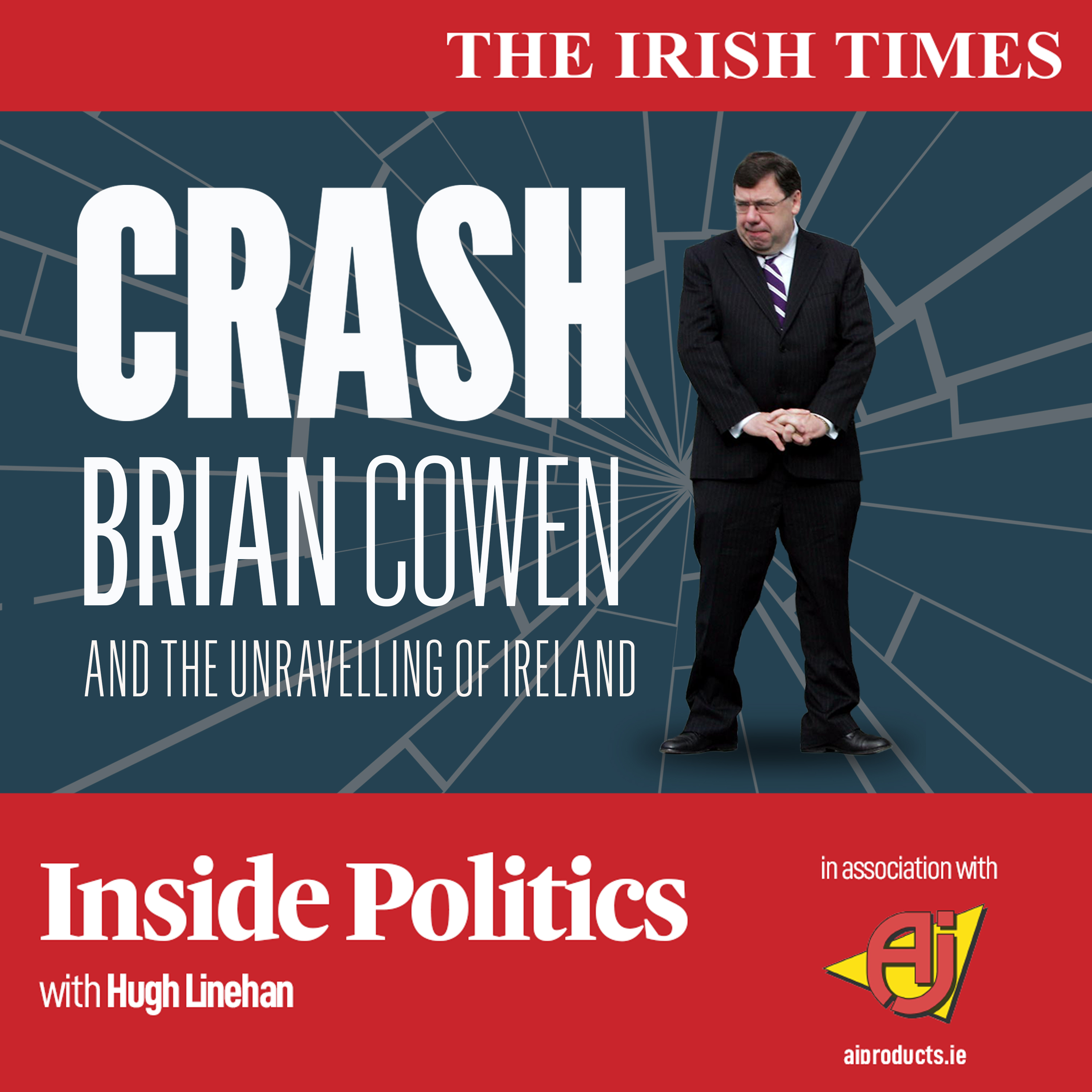
Crash, part three: Ireland hits rock bottom and politics changes forever
Pat Leahy and Hugh Linehan bring the story of Brian Cowen’s ill-fated 2008-2011 government to its conclusion.Following Cowen’s embarrassing appearance on Morning Ireland in late 2010, many in the country and within his own party gave up on him. For Cowen and Fianna Fáil, the writing was on the wall.But first, the country’s worsening fiscal situation would lead to one of the lowest moments in Ireland’s modern history. The events of November 2010 and the subsequent general election in 2011 would reshape Irish society and politics forever. Would you like to receive daily insights into world events delivered to your inbox? Sign up for Denis Staunton's Global Briefing newsletter here: irishtimes.com/newsletters/global-briefing/ Hosted on Acast. See acast.com/privacy for more information.
McGuinness's shock withdrawal throws the presidential race wide open
The surprise withdrawal from the presidential election race of Fine Gael candidate Mairead McGuinness on health grounds has introduced even more uncertainty to an already unpredictable contest. On today's podcast Ellen Coyne and Cormac McQuinn join Hugh to assess the state of the campaign. Who will Fine Gael choose to replace McGuinness on their ticket? When will Fianna Fáil nominate a candidate? Would Dr Tony Holohan's Covid record be an asset or a liability if he decided to run? Could McGuinness's withdrawal carry downsides for independent candidate Catherine Connolly? And who exactly is Gareth Sheridan? The panel also pick their favourite Irish Times articles of the week, including an emotional preview of Oasis at Croke Park, a review of the pro golfers appearing in Happy Gilmore 2 and a dispatch from a small Welsh town that hit the jackpot. Would you like to receive daily insights into world events delivered to your inbox? Sign up for Denis Staunton's Global Briefing newsletter here: irishtimes.com/newsletters/global-briefing/ Hosted on Acast. See acast.com/privacy for more information.
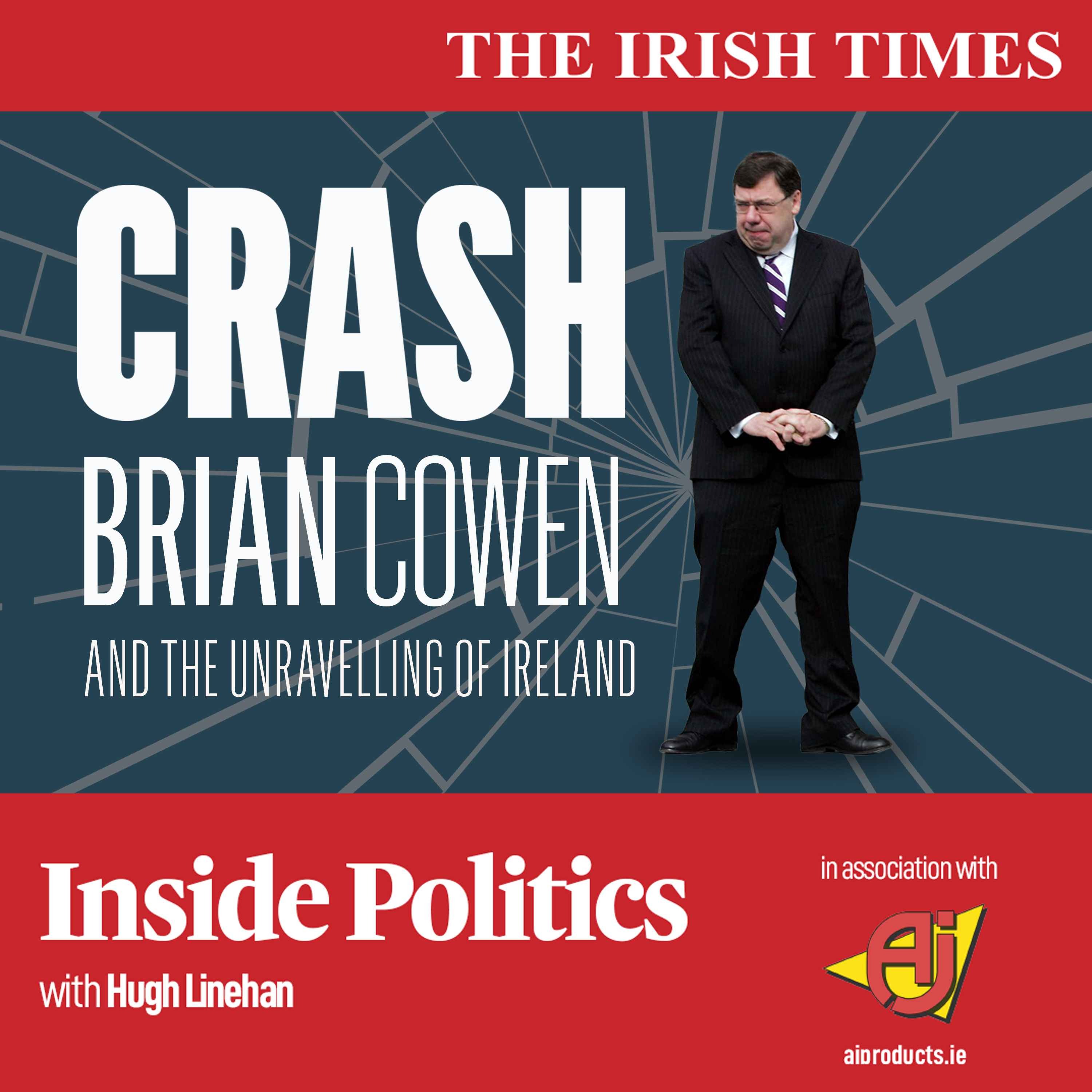
Crash, part two: austerity bites and Cowen’s Morning Ireland humiliation
In part two of a three-part series on Brian Cowen’s ill-fated 2008-2011 government, Pat Leahy and Hugh Linehan continue the story.After the fateful 2008 decision to bail out Ireland’s banks, Cowen and his Minister for Finance Brian Lenihan spent the next year struggling to shore up Ireland’s worsening finances.Throughout 2009 and 2010 the mood in the country darkened as recession bit. Spending cuts and tax rises were introduced in a series of hair-shirt budgets.As a result, confidence in the government was already on the floor when Cowen made an infamous appearance on Morning Ireland in September 2009. But what did Cowen actually say in the interview, and what impact did it have? Would you like to receive daily insights into world events delivered to your inbox? Sign up for Denis Staunton's Global Briefing newsletter here: irishtimes.com/newsletters/global-briefing/ Hosted on Acast. See acast.com/privacy for more information.