Investment Climate
145 episodes — Page 1 of 3
Why Germany Needed a New Olive Oil Brand | Julius Rüßmann, OYL Foods
Oliver Fuss × Tony Grinston — Dual Use: Agri-Food × Army (FoodFunder / AER)
The Drop: Raising Money During A Down Market - Featuring - Mark Kahn, Divya Murthy, And Tomas Turner
Guillaume Béland (Zone Agtech): Quebec’s Agrifood Hub, CapEx→OpEx & Strategic Capital for Founders
Adam Tarshis (Mozza Foods) — Growing Real Casein in Soybeans
Javed Husain (Totaleehalal) — Bootstrapping a UK Halal Food Delivery Marketplace
Why "A Flat Round Is the New Up Round," and Investing Through the Food-Tech Reset - Collateral Good
On Winning Pitch Competitions and its 5-Minute Pitch Anatomy - Nurtured Nuts: Bryant Williams
CPG Venture Math Behind a Series A, and Making Founders "Whole" on Dilution - Iris Ventures
Re-Examining Tech Adoption: Lance Lively on Market Pull, CPG Unlocking, and Beyond Meat’s Missteps
On Landing DSM as a Strategic Lead, & Why He Chose B2B Over Building a Brand- Lorenzo Pessini, NOUS
Being "Found" by Investors, Pivoting from Product to Platform, Turning LOIs into Paid Pilots - XiA'H
On Ghent's Founder-Friendly Spin-Out Playbook, and Why Lean Beats Big in AgTech- Chiara Guidi, B-COS
Landing a Strategic Corporate Lead, and Structuring University IP - Just Meat Protein
On Crossing to the Other Side of the Table, & Off-Take Agreements Over LOIs-Darko Mandich, gener8tor
Raising Friends-and-Family in a Frozen Market & Giving a VC Goosebumps in 5-Mins - Saku Biosciences
Treating Every Investor as "One Shot," Selling w/o Selling, and Fundraising as a Probability Matrix
On Treating the Raise Like a Sales Process, 110-Slide Data Room, & Turning Complex Into Compelling
On Out-Scoping University Research, Techno-Economics, and Avoiding False Assumptions- Elissa, Twynam
On Surviving the Long Game, and Renegotiating a "No" - Sérgio Pinto, Cellva Ingredients
On "Agtech 2.0," Managing Smart Capital Stacks, and Scaling via OEMs- Liron Yanay, AgriPass Robotics
On Bypassing "Grant Traps" & the Art of Professional Pre-Seed Agtech Strategy - Arnout, Rockstart
On Why Execution-First Models Beat Capex-Heavy Tech - Alberto Criado, Cardumen Capital
On Why Vertical SaaS Still Rules in the Era of AI - Nils Eiteneyer, Capnamic
On Why Family Offices Beat VCs in the Hard-Tech Winter - Jaap Zijlstra, Navus
On Navigating a 14-Month Biotech Seed Round & Making Whole Milk from Mammary Cells- Opalia: Jennifer
On the Strength of the Syndicate Model and De-Risking AgriFood Investing - Branch Venture Group
On why the "Plant-Based Meat" thesis failed & pivoting a $50M fund to Defense Tech - Champel Capital
On the 16M CHF Series A, licensing IP to sugar giants,& bypassing CapEx-Charles Pontvianne,Planetary
On non-dilutive govt hacks, dodging the OpenAI threat, & $1.1M pre-seed pitch - Dan Bull, Scanabull
On the €8M Food Forecast Series A & why European VCs run Due Diligence Post-Term Sheet- SHIFT Invest
On surviving Corporate VC Due Diligence and the 1% Conversion Rate Reality - Tomas Turner, Cosaic
€10M non-dilutive hack, surviving deep expert "grilling," & avoiding the CapEx trap- Georg Schaumann
On $50M DeepTech Thesis & why Southern EU is the ultimate VC testing ground-José, Eatable AdventureS
On navigating the Alt-Protein pivot and why startups can't disrupt Nestlé- Kim Odhner, Unovis
On securing 6.5M round, partnering with Kubota, and the 1-2yrs farmer ROI- Kristoffer Magnor, Kilter
On "Venture Math", B2B Corporate Synergy, & Pre-Regulatory Playbook - Alex Davisson, Plug and Play
On spinning Plant Cell IP out of the university and the B2C trap - Mick Riley, Forever Harvest
On the Growth Investor Mindset and the B2B vs. B2C Scale-Up Playbook - Fabio Ziemssen, Zintinus
Surviving CapEx leap, supply chain economics, building a Corporate inside a Startup - Planet A Foods
On securing paid POCs and why marketing claims are noise to a $7B corporate - Ziv Kohav, ICL Group
Zubi Capital, Johan Morales on Spain as the Go-To-Market Hub & the death of Consumer Behavior pitch
Bootstrapping SynBio, "Functional Assay" of sales, & First Principles valuation - Tomorrow, Inc
Corporate Open Innovation & surviving the 6-month Pilot timeline- Jara van den Bogaerde, Royal Cosun
On NZ massive govt match-funding & escaping the Agri-Food VC winter- Sandhya Sriram, Sprout Agritech
On Italy's "Untapped" AgriFood Market & Private Equity Exit Strategy - David Bassani, Maia Ventures
S2 Ep 83On the Hybrid VC-Advisory Model & the Art of the Hard Pivot - Jonas Ahm-Lundgren, The Footprint Firm
Episode 83: The Footprint Firm: Jonas Ahm-Lundgren on the Hybrid VC-Advisory Model and the Art of the Hard Pivot In this episode, I sit down with Jonas Ahm-Lundgren, Partner at the Footprint Fund, which recently announced the first close of their €76M pre-seed and seed climate tech fund. Jonas breaks down their highly unusual structure—operating a venture fund under the same roof as a major sustainability advisory firm—and how this "army of smart folks" gives them an unfair advantage in corporate networking and due diligence. We dig into their investment in Octarine Bio, detailing how the founders executed a brilliant hard pivot from medical psilocybin to bio-based colorants for textiles and food. Jonas also explains why tackling deeply fragmented, high-pollution markets like textile dyeing requires a 12-year fund structure and an immense amount of founder resilience. 🎧 Listen to the full episode to hear Jonas's "whaling ship" analogy for venture capital and why startups should never ignore unsolicited inbound interest from Fortune 500 companies.Key Facts The Footprint Fund:Goal: To invest €0.5M to €2M checks in early-stage climate tech companies across Northern Europe, prioritizing deep impact aligned with massive financial returns.Milestone: Closed a €76M debut fund backed by a highly condensed roster of top-tier Danish LPs, including Novo Holdings, Northeast Family Office, and the Danish government fund EIFO.
S2 Ep 82Evergreen Select: Jim Miller on Big Pharma execution, 3D scaffolding, and the Hybrid Meat strategy
Episode 82: Evergreen Select: Jim Miller on Big Pharma execution, 3D scaffolding, and the Hybrid Meat strategy In this episode, I sit down with Jim Miller, President and CEO of Evergreen Select, a cultivated meat company that has raised roughly $55M to date, backed heavily by lead investor S2G. Jim brings over 30 years of Fortune 500 biotech and Big Pharma execution (including COVID vaccine commercialization) to the cultivated meat sector. He breaks down why Evergreen abandoned complex plant-based hybrid blends in favor of a direct "drop-in" strategy: blending their 100% lean, non-GMO cultivated beef biomass directly with traditional ground beef. We dive into the science behind their 3D bovine scaffolding that allows them to harvest solid chunks instead of a liquid slurry—achieving massive titers north of 350 grams per liter—and how they are positioning their product as a hedge against the volatile spot prices of the traditional beef industry. 🎧 Listen to the full episode to hear Jim’s masterclass on extreme board transparency and why daily scrums are vital for startup survival.Key Facts Evergreen Select:Goal: To supply meat processors with a highly scalable, non-GMO cultivated lean beef biomass that blends seamlessly with traditional ground beef to stabilize costs and supply.Milestone: Successfully raised ~$55M to date (with a recent $8M injection) while advancing regulatory dossiers for commercialization in both the US and Singapore.
S2 Ep 81On Regenerative Economy and why VCs are wrong to ignore Consumer Brands - Tom Doornik, Doen Ventures
Episode 81: Doen Ventures: Tom Doornik on the Regenerative Economy and why VCs are wrong to ignore Consumer BrandsIn this episode, I sit down with Tom Doornik, Investment Associate at Doen Ventures, an Amsterdam-based early-stage impact VC backed by the Doen Foundation. Tom walks us through their thesis on the "regenerative economy" and why they write €350K to €700K pre-seed and seed checks for both B2B enabling tech and B2C sustainable brands across the Benelux, DACH, and Nordic regions. We dive deep into their recent investment in Koppie, a Belgian startup creating a single-ingredient coffee alternative from fermented legumes. Tom explains how Koppie bypassed the heavy CapEx trap by seamlessly integrating into existing coffee supply chains and CDMOs, allowing them to compete on price immediately amidst massive global coffee supply shortages. 🎧 Listen to the full episode to hear how Tom navigates the regulatory labeling challenges of alternative coffee and why Doen Ventures actively seeks out impact-driven FMCG brands.Key Facts Doen Ventures:Goal: To invest in the "regenerative economy" (from regenerative agriculture to the blue economy), focusing on restoring harm done to the planet rather than just incremental resource efficiency.Milestone: Actively managing a portfolio of nearly 70 investments and deploying €350K to €700K initial checks (with multi-million follow-on capacity) across Northern Europe.Alex’s Top Findings: The Ultimate CapEx Hack: Supply Chain Interoperability. Doen Ventures didn't just invest in Koppie for the science; they invested because the commercialization path was hyper-efficient. Koppie's legume-based coffee alternative utilizes standard off-the-shelf roasting machinery and downstream CDMOs. By acting as a seamless "drop-in" product, they avoid the multi-million dollar VC death trap of building a proprietary factory, keeping their unit economics at true price parity. "They don't need to build their own factory or production line. They can work with existing parties that have the machinery to get production going. And I think for the phase they're in, that's a huge advantage because... it lowers CapEx requirements, therefore funding requirements. And it just makes the whole funding play way easier."The "Systemic Change" LP Structure. Because Doen Ventures is part of a foundation, they aren't bound by traditional GP/LP return pressures that force VCs to chase quick SaaS multiples. This allows them to focus purely on "systemic change." They define impact not just as resource efficiency (doing less bad), but true regeneration—actively restoring degraded soil health and relieving the ecological pressure caused by the global coffee supply chain. "We don't have a very typical GP/LP structure. We have money that is aimed at realizing systemic change... The way we look at impact is regeneration, meaning how can we actually restore or regenerate the harm that we have done over the years."The Contrarian Bet on B2C Consumer Brands. While the vast majority of FoodTech VCs are currently running away from consumer brands (favoring B2B ingredients), Doen Ventures is actively leaning in. Tom highlights that systemic change requires mass consumer adoption, and dismissing brands as mere "marketing wrappers" ignores the necessary reality of actually selling the transition to the end-user. "We're really looking for consumer brands as well. I think for many investors, there's quite some doubts or hesitancy about brands, seeing them more as marketing wrappers and we actually see them as a very valuable tool to drive impact because in the end you need to convince consumers."
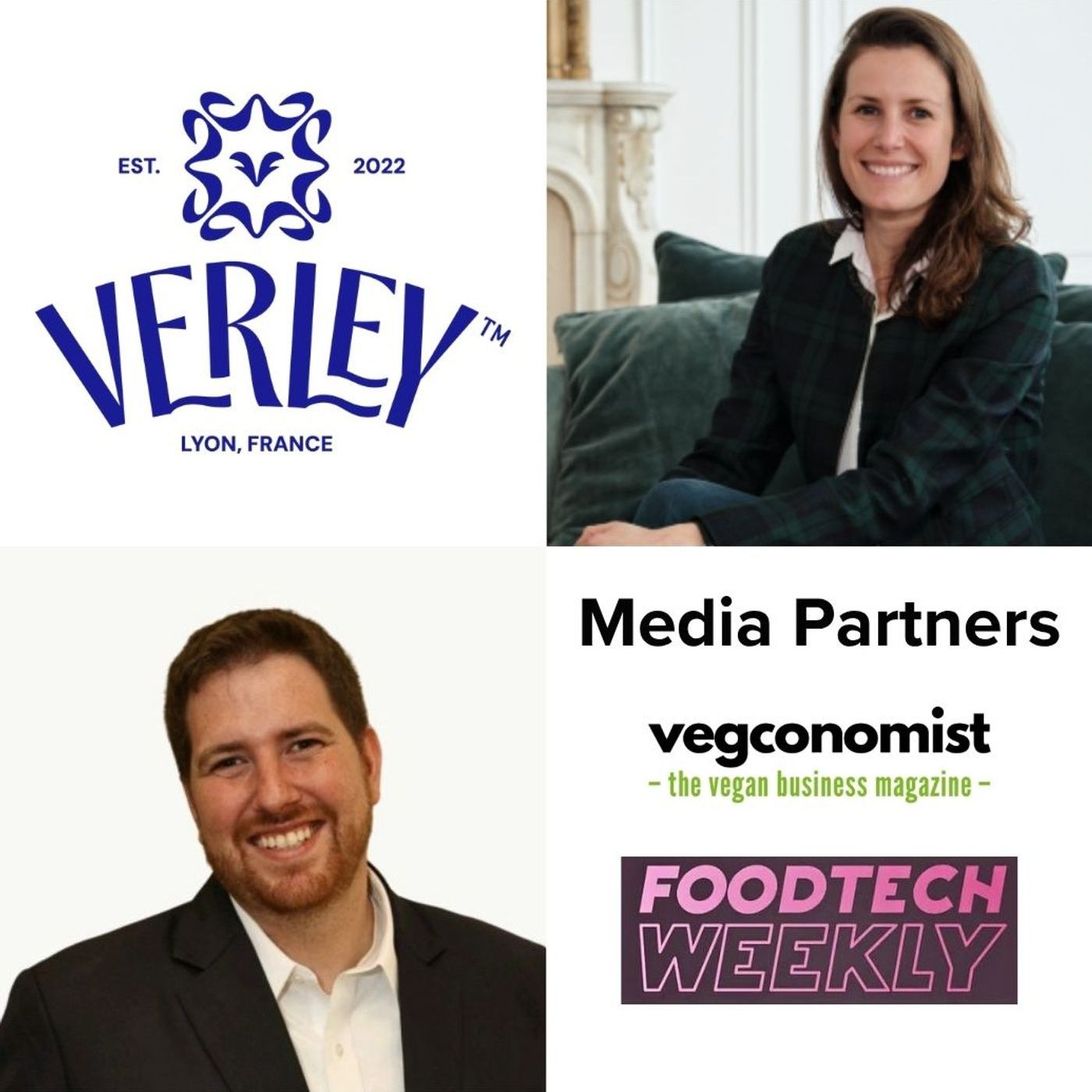
S2 Ep 80On closing a $38M Series A without a bridge round and executing on time - Hélène Briand, Verley Food
Episode 80: Verley Food: Hélène Briand on closing a $38M Series A without a bridge round and executing on time In this episode, I sit down with Hélène Briand, Co-founder and Chief Innovation & Commercial Officer at Verley Food, a French precision fermentation company that recently made headlines by closing a massive $38M Series A led by Alvin. Hélène reveals the disciplined, milestone-obsessed playbook that allowed them to go from Seed to Series A without needing a bridge round. We discuss how she proved commercial traction before having a product to sell by putting prospective customers directly on the phone with investors, why they chose to scale up with a North American CDMO rather than building their own CapEx-heavy facility, and how they secured a crucial "No Questions" letter from the FDA in record time. 🎧 Listen to the full episode to hear why Hélène hired dedicated Project Managers to keep scientists on schedule and why focus is the ultimate fundraising hack.Key Facts Verley Food:Goal: To develop the next generation of functionalized whey protein (BLG) for the food industry using precision fermentation.Milestone: Raised a $38M Series A (including significant non-dilutive backing from Bpifrance) and secured a "No Questions" letter from the FDA.Alex’s Top Findings: The Power of Hitting Milestones (No Bridge Required). The FoodTech industry is notorious for delayed timelines and endless bridge rounds. Verley Food stands out because they actually delivered on the exact scientific and regulatory milestones they promised their Seed investors. Hélène attributes this to intense focus (refusing to expand beyond BLG protein) and the crucial decision to hire dedicated, non-lab-working Project Managers whose sole job is to keep the scientific team executing on schedule. "We eat on time and we have been overachieving it. And this has made the difference... We hired two project managers dedicated to execution and project management... They're not working in the lab. They're just here to manage the milestone and building the mitigation plan."Proving Market Traction Pre-Commercialization. How do you prove traction when you don't have volume to sell? Verley Food didn't rely on theoretical TAM charts. They built an in-house applications team to solve specific pain points for FMCGs (like creating highly stable, high-protein acidic beverage shots). When it came time to fundraise, Hélène put those prospective customers directly on the phone with the VCs to vouch for the immediate market need. "We also are lucky to have good relationships with [our customers] to be able to discuss directly with our investors. So it was first of all allowing investors to touch the credibility as well on the market so they had direct access... They get on call with investors directly and we are not involved."The Strategic CDMO Choice (And Why North America). Rather than burning capital building their own facility in France, Verley opted to scale through a Contract Development and Manufacturing Organization (CDMO) in North America. Hélène explains that finding a partner with the exact downstream filtration equipment and the "agility" to handle a startup's pace was more important than simply chasing the cheapest labor costs in Asia, especially since they are targeting a premium, high-margin functional ingredient market. "I realized how hard is it when you are in your company to handle your R&D... and on top of it manage with industrial equipment... We are leveraging CMO as much as we can until we fully de-risk the technology at industrial scale... You can make two times trying CMO all around the world. Yes, it's about price, but it is not our first criteria."