PLAY PODCASTS
Investment Climate

Investment Climate

113 episodes — Page 1 of 3

€10M non-dilutive hack, surviving deep expert "grilling," & avoiding the CapEx trap- Georg Schaumann

May 14, 202646 min

On $50M DeepTech Thesis & why Southern EU is the ultimate VC testing ground-José, Eatable AdventureS

May 12, 202632 min

On navigating the Alt-Protein pivot and why startups can't disrupt Nestlé- Kim Odhner, Unovis

May 7, 202633 min

On securing 6.5M round, partnering with Kubota, and the 1-2yrs farmer ROI- Kristoffer Magnor, Kilter

Apr 30, 202634 min

On "Venture Math", B2B Corporate Synergy, & Pre-Regulatory Playbook - Alex Davisson, Plug and Play

Apr 28, 202626 min

On spinning Plant Cell IP out of the university and the B2C trap - Mick Riley, Forever Harvest

Apr 23, 202629 min

On the Growth Investor Mindset and the B2B vs. B2C Scale-Up Playbook - Fabio Ziemssen, Zintinus

Apr 22, 202635 min

Surviving CapEx leap, supply chain economics, building a Corporate inside a Startup - Planet A Foods

Apr 21, 202647 min

On securing paid POCs and why marketing claims are noise to a $7B corporate - Ziv Kohav, ICL Group

Apr 16, 202638 min

Zubi Capital, Johan Morales on Spain as the Go-To-Market Hub & the death of Consumer Behavior pitch

Apr 14, 202627 min

Bootstrapping SynBio, "Functional Assay" of sales, & First Principles valuation - Tomorrow, Inc

Apr 13, 202633 min

Corporate Open Innovation & surviving the 6-month Pilot timeline- Jara van den Bogaerde, Royal Cosun

Apr 9, 202633 min

On NZ massive govt match-funding & escaping the Agri-Food VC winter- Sandhya Sriram, Sprout Agritech

Apr 7, 202636 min

On Italy's "Untapped" AgriFood Market & Private Equity Exit Strategy - David Bassani, Maia Ventures

Apr 6, 202644 min

S2 Ep 83On the Hybrid VC-Advisory Model & the Art of the Hard Pivot - Jonas Ahm-Lundgren, The Footprint Firm

Episode 83: The Footprint Firm: Jonas Ahm-Lundgren on the Hybrid VC-Advisory Model and the Art of the Hard Pivot In this episode, I sit down with Jonas Ahm-Lundgren, Partner at the Footprint Fund, which recently announced the first close of their €76M pre-seed and seed climate tech fund. Jonas breaks down their highly unusual structure—operating a venture fund under the same roof as a major sustainability advisory firm—and how this "army of smart folks" gives them an unfair advantage in corporate networking and due diligence. We dig into their investment in Octarine Bio, detailing how the founders executed a brilliant hard pivot from medical psilocybin to bio-based colorants for textiles and food. Jonas also explains why tackling deeply fragmented, high-pollution markets like textile dyeing requires a 12-year fund structure and an immense amount of founder resilience. 🎧 Listen to the full episode to hear Jonas's "whaling ship" analogy for venture capital and why startups should never ignore unsolicited inbound interest from Fortune 500 companies.Key Facts The Footprint Fund:Goal: To invest €0.5M to €2M checks in early-stage climate tech companies across Northern Europe, prioritizing deep impact aligned with massive financial returns.Milestone: Closed a €76M debut fund backed by a highly condensed roster of top-tier Danish LPs, including Novo Holdings, Northeast Family Office, and the Danish government fund EIFO.

Apr 2, 202636 min

S2 Ep 82Evergreen Select: Jim Miller on Big Pharma execution, 3D scaffolding, and the Hybrid Meat strategy

Episode 82: Evergreen Select: Jim Miller on Big Pharma execution, 3D scaffolding, and the Hybrid Meat strategy In this episode, I sit down with Jim Miller, President and CEO of Evergreen Select, a cultivated meat company that has raised roughly $55M to date, backed heavily by lead investor S2G. Jim brings over 30 years of Fortune 500 biotech and Big Pharma execution (including COVID vaccine commercialization) to the cultivated meat sector. He breaks down why Evergreen abandoned complex plant-based hybrid blends in favor of a direct "drop-in" strategy: blending their 100% lean, non-GMO cultivated beef biomass directly with traditional ground beef. We dive into the science behind their 3D bovine scaffolding that allows them to harvest solid chunks instead of a liquid slurry—achieving massive titers north of 350 grams per liter—and how they are positioning their product as a hedge against the volatile spot prices of the traditional beef industry. 🎧 Listen to the full episode to hear Jim’s masterclass on extreme board transparency and why daily scrums are vital for startup survival.Key Facts Evergreen Select:Goal: To supply meat processors with a highly scalable, non-GMO cultivated lean beef biomass that blends seamlessly with traditional ground beef to stabilize costs and supply.Milestone: Successfully raised ~$55M to date (with a recent $8M injection) while advancing regulatory dossiers for commercialization in both the US and Singapore.
Apr 1, 202633 min

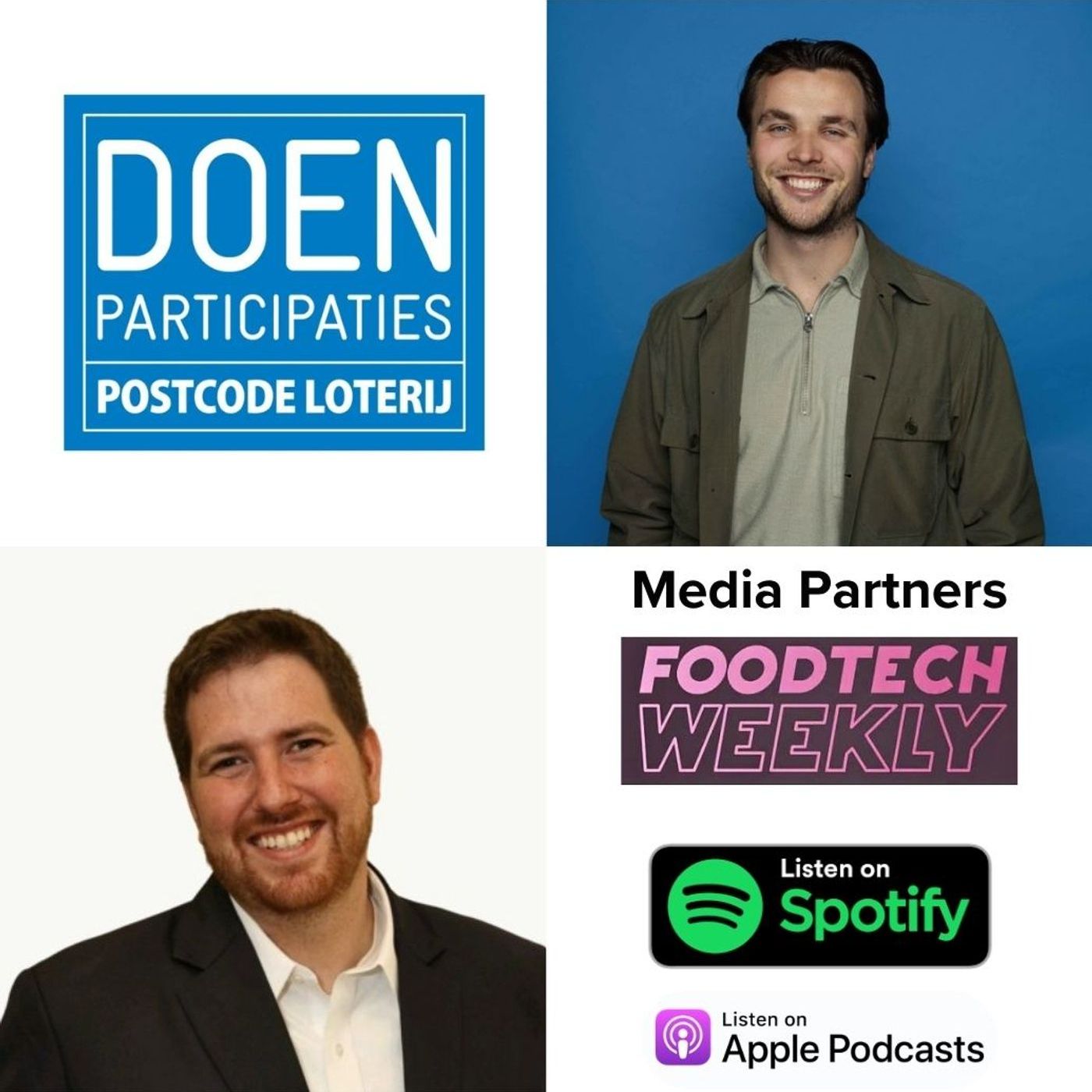
S2 Ep 81On Regenerative Economy and why VCs are wrong to ignore Consumer Brands - Tom Doornik, Doen Ventures

Episode 81: Doen Ventures: Tom Doornik on the Regenerative Economy and why VCs are wrong to ignore Consumer BrandsIn this episode, I sit down with Tom Doornik, Investment Associate at Doen Ventures, an Amsterdam-based early-stage impact VC backed by the Doen Foundation. Tom walks us through their thesis on the "regenerative economy" and why they write €350K to €700K pre-seed and seed checks for both B2B enabling tech and B2C sustainable brands across the Benelux, DACH, and Nordic regions. We dive deep into their recent investment in Koppie, a Belgian startup creating a single-ingredient coffee alternative from fermented legumes. Tom explains how Koppie bypassed the heavy CapEx trap by seamlessly integrating into existing coffee supply chains and CDMOs, allowing them to compete on price immediately amidst massive global coffee supply shortages. 🎧 Listen to the full episode to hear how Tom navigates the regulatory labeling challenges of alternative coffee and why Doen Ventures actively seeks out impact-driven FMCG brands.Key Facts Doen Ventures:Goal: To invest in the "regenerative economy" (from regenerative agriculture to the blue economy), focusing on restoring harm done to the planet rather than just incremental resource efficiency.Milestone: Actively managing a portfolio of nearly 70 investments and deploying €350K to €700K initial checks (with multi-million follow-on capacity) across Northern Europe.Alex’s Top Findings: The Ultimate CapEx Hack: Supply Chain Interoperability. Doen Ventures didn't just invest in Koppie for the science; they invested because the commercialization path was hyper-efficient. Koppie's legume-based coffee alternative utilizes standard off-the-shelf roasting machinery and downstream CDMOs. By acting as a seamless "drop-in" product, they avoid the multi-million dollar VC death trap of building a proprietary factory, keeping their unit economics at true price parity. "They don't need to build their own factory or production line. They can work with existing parties that have the machinery to get production going. And I think for the phase they're in, that's a huge advantage because... it lowers CapEx requirements, therefore funding requirements. And it just makes the whole funding play way easier."The "Systemic Change" LP Structure. Because Doen Ventures is part of a foundation, they aren't bound by traditional GP/LP return pressures that force VCs to chase quick SaaS multiples. This allows them to focus purely on "systemic change." They define impact not just as resource efficiency (doing less bad), but true regeneration—actively restoring degraded soil health and relieving the ecological pressure caused by the global coffee supply chain. "We don't have a very typical GP/LP structure. We have money that is aimed at realizing systemic change... The way we look at impact is regeneration, meaning how can we actually restore or regenerate the harm that we have done over the years."The Contrarian Bet on B2C Consumer Brands. While the vast majority of FoodTech VCs are currently running away from consumer brands (favoring B2B ingredients), Doen Ventures is actively leaning in. Tom highlights that systemic change requires mass consumer adoption, and dismissing brands as mere "marketing wrappers" ignores the necessary reality of actually selling the transition to the end-user. "We're really looking for consumer brands as well. I think for many investors, there's quite some doubts or hesitancy about brands, seeing them more as marketing wrappers and we actually see them as a very valuable tool to drive impact because in the end you need to convince consumers."
Mar 30, 202624 min

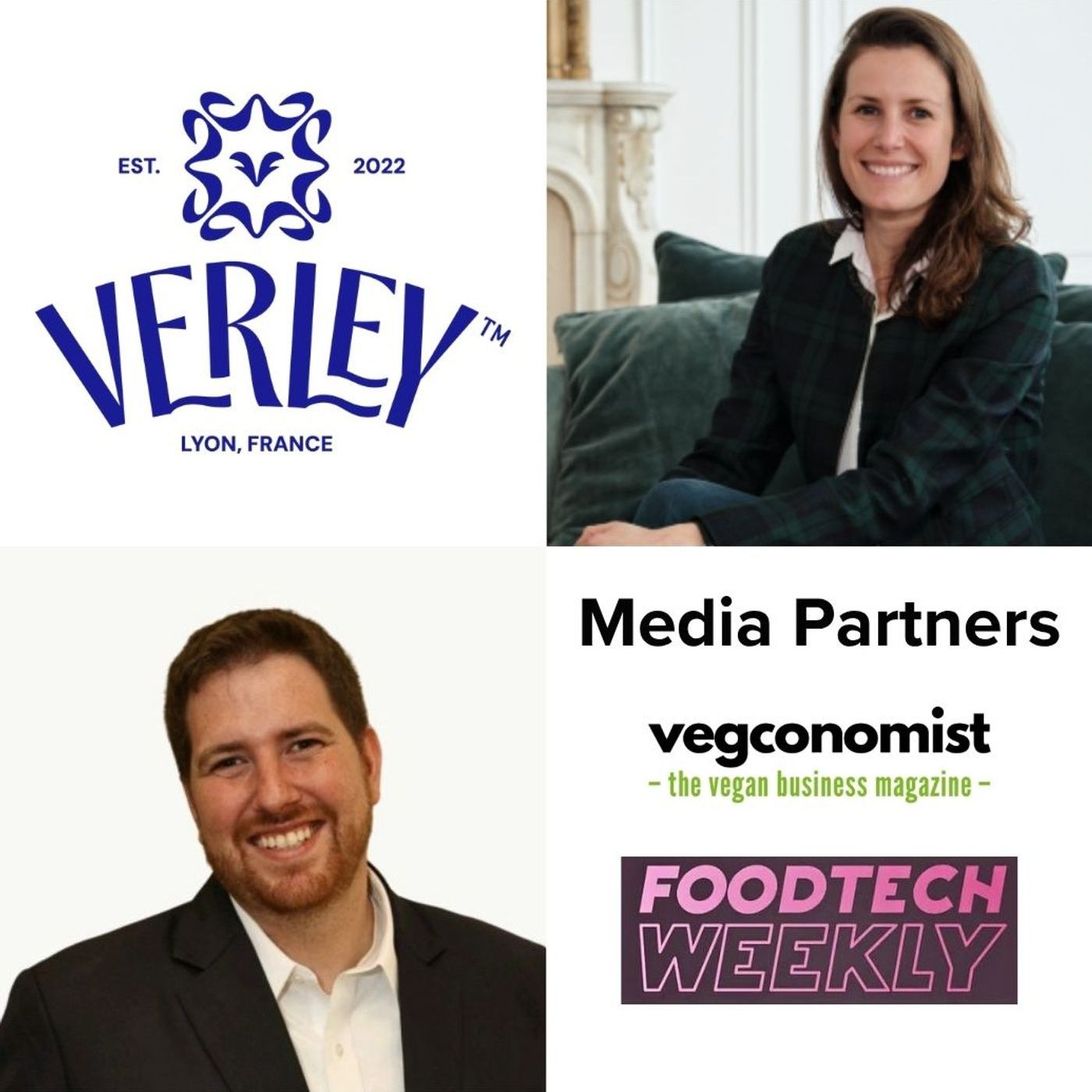
S2 Ep 80On closing a $38M Series A without a bridge round and executing on time - Hélène Briand, Verley Food

Episode 80: Verley Food: Hélène Briand on closing a $38M Series A without a bridge round and executing on time In this episode, I sit down with Hélène Briand, Co-founder and Chief Innovation & Commercial Officer at Verley Food, a French precision fermentation company that recently made headlines by closing a massive $38M Series A led by Alvin. Hélène reveals the disciplined, milestone-obsessed playbook that allowed them to go from Seed to Series A without needing a bridge round. We discuss how she proved commercial traction before having a product to sell by putting prospective customers directly on the phone with investors, why they chose to scale up with a North American CDMO rather than building their own CapEx-heavy facility, and how they secured a crucial "No Questions" letter from the FDA in record time. 🎧 Listen to the full episode to hear why Hélène hired dedicated Project Managers to keep scientists on schedule and why focus is the ultimate fundraising hack.Key Facts Verley Food:Goal: To develop the next generation of functionalized whey protein (BLG) for the food industry using precision fermentation.Milestone: Raised a $38M Series A (including significant non-dilutive backing from Bpifrance) and secured a "No Questions" letter from the FDA.Alex’s Top Findings: The Power of Hitting Milestones (No Bridge Required). The FoodTech industry is notorious for delayed timelines and endless bridge rounds. Verley Food stands out because they actually delivered on the exact scientific and regulatory milestones they promised their Seed investors. Hélène attributes this to intense focus (refusing to expand beyond BLG protein) and the crucial decision to hire dedicated, non-lab-working Project Managers whose sole job is to keep the scientific team executing on schedule. "We eat on time and we have been overachieving it. And this has made the difference... We hired two project managers dedicated to execution and project management... They're not working in the lab. They're just here to manage the milestone and building the mitigation plan."Proving Market Traction Pre-Commercialization. How do you prove traction when you don't have volume to sell? Verley Food didn't rely on theoretical TAM charts. They built an in-house applications team to solve specific pain points for FMCGs (like creating highly stable, high-protein acidic beverage shots). When it came time to fundraise, Hélène put those prospective customers directly on the phone with the VCs to vouch for the immediate market need. "We also are lucky to have good relationships with [our customers] to be able to discuss directly with our investors. So it was first of all allowing investors to touch the credibility as well on the market so they had direct access... They get on call with investors directly and we are not involved."The Strategic CDMO Choice (And Why North America). Rather than burning capital building their own facility in France, Verley opted to scale through a Contract Development and Manufacturing Organization (CDMO) in North America. Hélène explains that finding a partner with the exact downstream filtration equipment and the "agility" to handle a startup's pace was more important than simply chasing the cheapest labor costs in Asia, especially since they are targeting a premium, high-margin functional ingredient market. "I realized how hard is it when you are in your company to handle your R&D... and on top of it manage with industrial equipment... We are leveraging CMO as much as we can until we fully de-risk the technology at industrial scale... You can make two times trying CMO all around the world. Yes, it's about price, but it is not our first criteria."

Mar 26, 202641 min

S2 Ep 79On Open Innovation, the AI Nutrition Threat, and How to Pilot with a €15B Dairy Giant - Arla Foods

Episode 79: Arla Foods: Gilai Nachmann on Open Innovation, the AI Nutrition Threat, and How to Pilot with a €15B Dairy Giant In this episode, I sit down with Gilai Nachmann, Senior Project Manager of Open Innovation & Partnerships at Arla Foods, the largest dairy cooperative in Europe with €15 billion in annual revenue. Gilai breaks down Arla’s aggressive new mandate: sourcing 30% of all innovation ideas externally by 2030. He shares the exact playbook for startups looking to partner with Arla, detailing the specific problem statements they are actively funding pilots for—including sugar reduction, alternative cocoa, and navigating impending CO2 taxes. Gilai also reveals Arla's strategic fear of AI-driven personalized nutrition apps cutting FMCG brands out of the consumer relationship, and how startups can help them stay relevant in a digital-first food future. 🎧 Listen to the full episode to hear exactly how much sample volume you need to trigger a paid pilot with Arla and why pitching them precision fermentation dairy is a non-starter.Key Facts Arla Foods Open Innovation:Goal: To execute an Open Innovation strategy where 30% of all new product ideas come from external sources (startups, SMEs) by 2030.Milestone: Integrated the Open Innovation team with an internal accelerator to drastically speed up the pilot and LOI process for external startups, reducing corporate bottlenecking.Alex’s Top Findings:The "Goldilocks" Timing for Novel Ingredients (2 Years Out). Startups often struggle with when to approach a massive FMCG corporate. Gilai is highly specific: if you are 4-5 years away from commercialization, it is too early. However, if you are exactly two years away from EFSA (European Food Safety Authority) regulatory approval and can produce 20-50 kilos for a pilot plant test, that is the perfect time to engage Arla so they can prepare to launch alongside your approval. "If you're two years away from EFSA, I'd say that's the perfect time to engage because we want to be first runners in the area... we can all launch together when you're ready... They need to have sufficient quantity for us to pilot it... at least 20 to 50 kilos."The Strategic Threat of AI-Driven Nutrition. Arla isn't just looking for physical ingredients; they are actively scouting digital solutions. Gilai highlights a major corporate fear: if AI agents (like ChatGPT integrated with Instacart or HelloFresh) begin dictating personalized meal plans, legacy food brands could become invisible commodities. Arla wants to partner with digital platforms to ensure their products are the recommended health solutions inside these closed AI ecosystems. "If the AI picks your food for you, what is the position of a big FMCG company in this world?... Maybe in a future where AI selects food products for you, brands don't exist. And how do we stay relevant in that future?... We don't want to build these engines... but we want to be the health partner."Don't Pitch Precision Fermentation Dairy to a Farmer Co-op. It is critical to know your audience. While Arla is actively seeking solutions for sugar reduction and alternative cocoa, Gilai warns startups against pitching precision-fermented dairy proteins (like synthetic whey or casein). Because Arla is fundamentally a cooperative owned by dairy farmers, their mandate is to support cow-based agriculture, not replace it. "Arla is a farmer-owned cooperative. And our opinion is we're not going to look into precision fermentation as a core area for our business. We're going to focus on building our farmers' capabilities... It's not something we're going to invest in doing pilots on."

Mar 24, 202631 min

S2 Ep 78On winning Pre-Seed funding with the "Low Inclusion" fiber thesis - Jens & Ida, Ora Biotics

Episode 78: Ora Biotics: Jens Eklöf & Ida Krogh Sjöholm on winning Pre-Seed funding with the "Low Inclusion" fiber thesis In this episode, I sit down with Jens Eklöf (CEO/CTO) and Ida Krogh Sjöholm (Commercial Officer), the co-founders of Ora Biotics, a Danish startup developing the next generation of precision prebiotics. They share the tactical playbook of how they cold-called their way to a €300k pre-seed round led by Rockstart and Delphinus Venture Capital, specifically designed to fund their critical €300k US-based human clinical trial. We discuss why they pair a commercial co-founder with a technical lead from day one, how they utilized €60k in Danish government grants to survive their first year, and the exact science of why "low inclusion" fibers bypass the heavy CapEx traps that destroy other ingredient startups. 🎧 Listen to the full episode to hear how they navigated the delicate "founder spouse" conversation regarding runway and salary expectations.Key Facts Ora Biotics:Goal: To produce a highly targeted, precision prebiotic fiber for metabolic health that does not cause bloating and remains 100% stable in challenging applications like acidic beverages and gummies.Milestone: Raised a ~€300k pre-seed round (post-money cap below €2M) from Rockstart and Delphinus Venture Capital.Alex’s Top Findings: The "Low Inclusion" Margin Moat. The fundamental problem with most fiber startups is that they require massive doses to be effective, which forces brands to alter recipes and forces the startup to build massive, CapEx-heavy production facilities to hit volume targets. Ora Biotics solves this by targeting specific gut bacteria, meaning their fiber requires a very low dose to be effective. This "low inclusion rate" means they can command high margins while relying entirely on asset-light Contract Manufacturers (CDMOs). "If you have lower inclusion, it's also easier to make it a drop-in solution to whatever product you just happen to have... The dose is certainly our key to get really nice margins already from the beginning. We are producing with contract manufacturers, right? We are not building a big optimized production line ourselves."De-Risking with the "Gold Standard" Clinical Trial. While fiber can be sold legally as a food ingredient without a clinical trial, major FMCG brands will not risk their reputation (or lawsuits, a la Olipop) on unsubstantiated health claims. Orbiotics specifically raised their €300k round to fund a randomized, placebo-controlled human study in the US. This data is the exact milestone investors demanded to unlock the next funding round. "If you want to say anything about the health benefits in almost all markets in the world, you need to substantiate that... if you are a big brand and you want to know and you want the integrity to know that the ingredient you put in there gives the benefits... you want a human study. And that's also what we want to go for."The Power of the Commercial Co-Founder at Pre-Seed. Many deep-tech startups fail because they are led by purely technical founders who wait years to speak to customers. Ora Biotics brought Ida (Commercial Officer) on board at the very beginning. Her ability to define the B2B strategy, handle investor storytelling, and secure Letters of Intent (LOIs) for food-grade sample testing before the product was even finalized was critical to winning their pre-seed funding. "I worked more on the storytelling and the market positioning and all of that, which is my background, right? I have a commercial background, I'm not a scientist... We have a few companies now who have said that they've signed the LOAs. They want to test it in their applications. So I think that is an opener."

Mar 19, 202643 min

S2 Ep 77On the Evergreen Advantage & the "Low Inclusion, High Margin" thesis by Mathias Lorenz, Delphinus VC

Episode 77: Delphinus Venture Capital: Mathias Brink Lorenz on the Evergreen Advantage and the "Low Inclusion, High Margin" thesis In this episode, I sit down with Mathias Brink Lorenz, CEO and Managing Partner of Delphinus Venture Capital, a newly formed €80M evergreen fund backed exclusively by four major Danish corporates and a university endowment. Mathias pulls back the curtain on the perverse incentives of the traditional "10+2" VC model, explaining how the pressure to generate management fees often forces GPs into bad deals and inflated valuations. He breaks down why Delphinus operates as an evergreen structure focused solely on long-term Net IRR and why they are hyper-focused on the Danish ecosystem. Finally, Mathias delivers a masterclass on FoodTech unit economics, explaining why commodity alternatives (like cocoa or bulk protein) struggle, and why the real venture returns lie in "low inclusion, high margin" ingredients like enzymes and complex savory flavors.Key Facts Delphinus Venture Capital:Goal: To deploy an €80M evergreen fund into Danish research-focused startups (Pre-Seed to Series B) across AgriFood, Bioeconomy, MedTech, and Dual-Use tech.Milestone: Successfully launched the fund with an unusual and highly aligned LP base of three major Danish corporates (Norlys, Heartland, Salling Group) and Aarhus University Research Foundation (AUFF).Alex’s Top Findings: The Flaw in the Traditional VC Model. Mathias offers a candid critique of the standard 10-year venture capital structure. He argues that traditional VCs are incentivized to optimize for management fees and short-term paper markups to raise their next fund, rather than focusing on the long-term health of the startup. Delphinus uses an evergreen structure with a lower management fee, tying GP compensation almost entirely to carry, ensuring alignment with the founders' actual path to profitability rather than artificial valuation bumps. "A traditional VC is under pressure to invest at a certain pace no matter if the deal is good or not... What is it you are solving for at seed stage? A high evaluation... just to get to the next fund. So all of those behaviors inherent in the ecosystem of VCs, we're trying not to go to."The "Picks and Shovels" Strategy for FoodTech. Startups building massive, capital-intensive indoor farms or attempting to replace bulk commodities often suffer from terrible gross margins. Mathias advises focusing on the technology that enables the industry—the "picks and shovels." He looks for B2B solutions and enabling technologies that offer high-margin support to the broader AgriFood ecosystem. "Often it's better to put on the picks and shovels approach... those would be the great sort of VC bets rather than the individual miner going into the mountain and maybe striking silver or gold... And I think I see the same in agri-food tech... betting on the high-tech solutions, high-margin supporting technologies."The "Low Inclusion, High Margin" Ingredient Thesis. Why did Delphinus invest in Reduced (savory flavors) and Orbiotics (prebiotics)? Because they follow the enzyme playbook. When your ingredient makes up only a tiny fraction of the end product's total volume (low inclusion rate) but is critical to the product's function, flavor, or label (high value), you can command massive gross margins without significantly impacting the FMCG's overall unit cost. "If you sell a loaf of bread, the actual cost assigned to the enzyme is minuscule. What really matters for your unit cost is the flour... So if the color [or flavor] makes all the difference for how the yogurt is perceived... you can charge a premium. It's really about how much of the total product cost do you constitute with your own ingredient."

Mar 17, 202643 min

S2 Ep 76Navigating the Agri-Tech Landscape: Insights from Proba's CEO Sijbrand Tieleman

Episode 76: Proba: Sijbrand Tieleman on raising an Extension Round and dominating a hyper-niche market In this episode, I sit down with Sijbrand Tieleman, Co-founder and CEO of Proba, an Amsterdam-based startup tackling the massive footprint of fertilizer emissions. Sijbrand walks us through his recent €1.25M ($1.5M USD) extension round, which was led by existing investor Future Food Fund. We discuss the strategic decision to raise from the current cap table rather than burning time chasing new investors, the reality of setting achievable milestones, and why agriculture startups cannot be measured by traditional SaaS ARR metrics. Most importantly, Sijbrand delivers a masterclass on finding a competitive moat by becoming the absolute world leader in a highly specific, hyper-niche use case before expanding into larger markets. 🎧 Listen to the full episode to hear how Sijbrand navigated the delicate valuation negotiations with his existing investors to secure 18-24 months of runway.Key Facts Proba:Goal: To help the agri-food supply chain quantify and reduce greenhouse gas emissions specifically related to fertilizer use.Milestone: Recently closed a €1.25M extension round, primarily funded by their existing investors, to focus entirely on business execution without the distraction of a protracted fundraising roadshow.Alex’s Top Findings: The Power of the Hyper-Niche. Startups often fail by trying to solve too many problems across too many industries. Proba initially explored steel and cement before pivoting entirely to fertilizer emissions. Sijbrand explains that by picking a "vertical within a vertical," Proba created a monopoly. They didn't just target agriculture; they targeted the specific emissions effect of nitrification inhibitors used alongside urea fertilizer for coffee grown in the Minas Gerais region of Brazil. "The more opportunity you give yourself to become successful, that I think is kind of a lesson... just make it super small and then extend from there... You want to position yourself in a way that there's no competition. If somebody wants to solve the problem, they more or less need to come to you."The "Insider" Extension Round. Instead of spending 8 months pitching 100 new VCs, Proba chose to raise an extension round directly from their current investors. Sijbrand reveals that they began discussing the need for this follow-on capital just two months after closing the previous round. By maintaining transparent communication and setting realistic milestones, they secured the cash needed to focus on the business rather than the roadshow. "We kind of took a bit of an implicit decision to say... we can go out there to the capital market and basically spend a lot of time finding a new investor without guarantee on success, or we spent a bit less time together with the existing investors and basically have more time to spend in the actual business."Agriculture SaaS is Not Silicon Valley SaaS. Sijbrand highlights a critical disconnect between generalist VCs and AgTech startups. Generalist funds demand rapid Month-over-Month Monthly Recurring Revenue (MRR) growth. However, agriculture operates on physical, annual growing seasons. Proba partnered with specialized investors (Future Food Fund) who understand that growth in this sector is a compounding, season-by-season process, not an overnight software rocket ship. "Building a business in agriculture has a bit of a different speed... things need to grow in a physical world and they grow in one growing season... The normal SaaS investors who are used to [rapid] ARR levels are not interested yet.”

Mar 12, 202634 min

S2 Ep 75"Anti-Fund" model and the harsh realities of expanding into Asia - Isabelle Decitre, ID Capital

Episode 75: ID Capital: Isabelle Decitre on the "Anti-Fund" model and the harsh realities of expanding into Asia In this episode, I sit down with Isabelle Decitre, founder of ID Capital, a Singapore-headquartered venture investment and innovation advisory firm. Isabelle reveals why she deliberately chose not to raise a traditional VC fund, opting instead to invest her own capital (writing tag-along Series A checks up to $1M) to maintain flexibility and leverage deep "ecosystem intelligence." We discuss the brutal truth about expanding into Asian markets, why startups need to stop using "China is big" as a business plan, and how Australian startup AllG successfully pivoted from complex casein micelles to high-margin Lactoferrin to de-risk their commercialization. Finally, Isabelle throws down a spicy challenge to the industry, questioning if the Silicon Valley "Power Law" actually works in AgriFoodTech. 🎧 Listen to the full episode to hear Isabelle’s unfiltered thoughts on funds that rely on a single lucky exit to show returns.Key Facts ID Capital:Goal: To invest in and advise Series A AgriFoodTech startups through a climate lens, focusing heavily on adjacent sectors like circularity and biomanufacturing.Milestone: Rebranding their flagship 10-year annual conference from "Future Food Asia" to "Future Fit Asia," reflecting a shift beyond just food matrices into the interconnectedness of soil and human health.Alex’s Top Findings:The "Anti-Fund" Ecosystem Model. Isabelle doesn't manage LP money; she invests from her own balance sheet. She argues that the traditional VC mold forces GPs to promise 20%+ IRRs that often aren't realistic in FoodTech. By remaining independent, ID Capital operates as a "one-stop shop" offering startups optionality: if a direct investment isn't the right fit, she can leverage her advisory arm to facilitate introductions to massive strategic corporate clients or showcase the tech at her conference. "We are not a fund... I'm investing my own money. We don't have any LP... I didn't see myself promising 20% plus IRR on a time period of six years... The way I wanted to see myself as a significant player was not just by being defined by my check size, but being defined by whom I could influence and bring around the table."The Asia Expansion Reality Check: Stay in Your Habitat. Startups frequently pitch Asia expansion based solely on the region's massive population. Isabelle warns that entering Asia is a massive cost center long before it generates revenue. If a startup is thinly funded, her advice is blunt: stay home. You must have dedicated capital and a localized strategy, not just "wishful dreaming." "The best advice I can give you is just to remain in your natural habitat and ecosystem and don't waste your money traveling to China or Asia every other day. It will cost you a bomb... What looks good is when people start to have the awareness that developing Asia would be a cost first before it's a source of revenue."Pivoting to High-Margin Optionality (The AllG Playbook). Investors today want startups to be as de-risked as possible. Isabelle highlights her investment in AllG to show what good pivoting looks like. Even though they had world-class expertise in precision fermentation for casein micelles, they didn't stubbornly stick to that narrative. They aggressively pivoted to a higher-value, faster-to-commercialize compound (Lactoferrin) and leaned into the Chinese market. "They didn't stay fixated on one application or one narrative. Although they were really very, very proficient in casein micelles... they thought very smartly of pivoting toward higher value compounds... It is really about not being wedded to your own science and your own narrative."

Mar 10, 202625 min

S2 Ep 74On unlocking Canada’s $7B AgTech boom and solving the scale-up "Valley of Death" - Mike Wolsfeld, AgWest Bio

Send a textOn unlocking Canada’s $7B AgTech boom and solving the scale-up "Valley of Death" - Mike Wolsfeld, AgWest BioInvestment Climate Podcast: Fundraising Playbooks From Food Tech CEOs and VCs In this podcast series, Alex Shandrovsky interviews investors about benchmarks for funding Alt Proteins in 2025 and uncovers the investment playbooks of successful Climate Tech CEOs and Leading VCs.Podcast Host Alex Shandrovksy is a strategic advisor to numerous global food tech accelerators and companies, including alternative proteins and cellular agriculture leaders. His focus is on investor relations and post-raise scale for agrifood tech companies. This podcast is syndicated through our media partners, Foodtech Weekly and Vegconomist.Episode 74: AgWest Bio: Mike Wolsfeld on unlocking Canada’s $7B AgTech boom and solving the scale-up "Valley of Death" In this episode, I sit down with Mike Wolsfeld, who manages the Techcom Fund at AgWest Bio. Operating as an equity investment fund ($50k–$300k checks) embedded inside a non-profit, Mike shares how they are turning Saskatchewan into a global magnet for precision fermentation and ag-tech startups. We discuss their unique mandate: attracting international deep-tech companies (like Argentina's Ergo) to the Canadian Prairies without forcing them to move their headquarters. Mike breaks down how their GAAP (Global Agri-Food Advancement Partnership) facility bridges the critical scale-up gap between bench science and commercial co-manufacturing, and why Canada’s crown corporations, like Farm Credit Canada (FCC), are deploying a historic $7 billion into the sector despite a broader VC downturn. 🎧 Listen to the full episode to hear Mike’s advice on how foreign startups can tap into Canada's massive pools of non-dilutive capital.Key Facts AgWest Bio:Goal: To invest in and support early-stage ag-tech and food-tech companies by leveraging Saskatchewan's deep agricultural history, biotech talent pool, and specialized infrastructure.Milestone: Actively deploying a $7M evergreen fund while scaling the GAAP facility to help international precision fermentation companies seamlessly enter the Canadian ecosystem.Alex’s Top Findings:The "Gateway to Canada" Geo-Arbitrage. AgWest Bio offers a highly founder-friendly entry into the Canadian ecosystem. Unlike many regional funds that demand a full headquarters relocation, Mike’s fund only requires a federally incorporated subsidiary and 1-2 local employees. This allows international founders to access Canada's massive non-dilutive grants and specialized infrastructure without disrupting their global cap tables. "We're not asking for companies to entirely reincorporate, move everything here, move families... really, at minimum, what it looks like is a federally incorporated company with at least one or two full-time employees here in the province... I'm not interested in forcing companies to move here; I'm interested in supporting companies in their existing strategy."Bridging the Fermentation "Valley of Death". The hardest part of precision fermentation isn't the lab science; it's scaling from milliliters to commercial thousands of liters. AgWest Bio manages the GAAP facility to explicitly solve this missing middle step, providing heavily discounted, shared-use bioreactors (5L to 100L) to get startups ready for large-scale co-manufacturing. "We're really trying to fill what we saw as a gap between that lab scale, bench scale, and scale up... taking things out of an academic sort of research stage into that pre-commercialization... proving that it can scale up from milliliters to liters to 10 liters to sort of 20, 50."The $7 Billion Crown Corporation Lifeline. While traditional VC fundrais

Mar 5, 202635 min

S2 Ep 73On the Open Innovation Playbook and bypassing the Western retail trap - Auroni Majumdar, CJ Foods

Send a textEpisode 73: CJ Foods: Auroni Majumdar on the Open Innovation Playbook and bypassing the Western retail trap In this episode, I sit down with Auroni Majumdar, Vice President of R&D Global Open Innovation at CJ Foods. Auroni pulls back the curtain on how a global food giant evaluates external technology, revealing why it operates on a strict 6-to-24-month horizon rather than chasing 10-year moonshots. We discuss the eight core product categories CJ cares about, why a startup's regulatory and shelf-life readiness is non-negotiable, and how startups can bypass the grueling 3-year Western retail reset cycle by leveraging CJ's vertical integration in Asian markets. Finally, Auroni outlines a highly unique "Triangle Partnership" where CJ’s Bio division provides the fermentation scale-up capacity while the Foods division acts as the guaranteed offtake customer. 🎧 Listen to the full episode to hear Auroni’s advice on how to build an internal champion and why pitching technology without doing your homework on their current unit economics is a major red flag.Key Facts CJ Foods:Goal: To source mature, externally developed technologies (ingredients, process, packaging) to drive immediate growth across 8 global strategic categories (including dumplings, Korean fried chicken, kimchi, and sauces).Milestone: Successfully integrated 6 distinct technology adoptions (including sweeteners, sensors, and solid-state fermentation capabilities) within the last calendar year.Alex’s Top Findings:The "Near-Term" Mandate: No Science Projects. Auroni is exceptionally clear: CJ Foods is in the business of using technology, not commercializing raw academic research. If your tech is 3-4 years away from regulatory approval or commercial scale, it is too early for their core pipeline. They prioritize solutions with proven unit economics, and that can hit the market within 6 to 24 months. "I want to do what we do well, or CJ does well, right? What we do well is we launch products fast on a global basis... I don't want to spend money doing research projects. That's not what I do. That's not my business model... I'm a great user. I'm a great evaluator."Bypassing the Western Retail Trap. Startups often get mesmerized by the idea of landing a massive Western FMCG contract, ignoring that nationwide US distribution—dictated by rigid big-box retailer shelf resets and mandatory shelf-life studies—can take over 3 years to execute. Auroni highlights that CJ offers a faster, more nimble alternative through its vertical integration and the inherently quicker innovation cycles of Asian markets. "In the US, nationwide distribution requires your big box retailers... inherently, if you're a startup that's working in this system... you're already at three years in this system... CJ in Korea can move extremely fast. We're very vertically integrated... it might not be as big as [a Western MNC], but it'll be big and meaningful, and it'll be quicker."The CJ "Triangle" of Scale: Foods + Bio + Startup. One of the most unique advantages CJ offers precision fermentation startups is its internal structure. CJ can facilitate a three-way partnership: the startup provides the IP, the CJ Bio Foundry provides the heavy CapEx fermentation scale-up, and the CJ Foods division acts as the built-in, guaranteed offtake customer. "Where there's offtake demand from the food side, where there's a technology provider that needs scale-up capability... and then there's a business [CJ Bio] that has fermentation capability and connecting that triangle in a way that there's mutual benefit across the three parties."

Mar 3, 202652 min

S2 Ep 72Harmony Baby Nutrition: Del Afonso on Geo-Arbitrage, securing a $6M Brazilian grant, and bypassing the infant formula cartel

Send a textHarmony Baby Nutrition: Del Afonso shares how to get funded in 2026Investment Climate Podcast: Fundraising Playbooks From Food Tech CEOs and VCs In this podcast series, Alex Shandrovsky interviews investors about benchmarks for funding Alt Proteins in 2025 and uncovers the investment playbooks of successful Climate Tech CEOs and Leading VCs.Podcast Host Alex Shandrovksy is a strategic advisor to numerous global food tech accelerators and companies, including alternative proteins and cellular agriculture leaders. His focus is on investor relations and post-raise scale for agrifood tech companies. This podcast is syndicated through our media partners, Foodtech Weekly and Vegconomist.Episode 72: Harmony Baby Nutrition: Del Afonso on Geo-Arbitrage, securing a $6M Brazilian grant, and bypassing the infant formula cartel In this episode, I sit down with Del Afonso, Founder and CEO of Harmony Baby Nutrition. Del shares his masterclass on "geo-arbitrage"—how he bypassed the exorbitant costs of the Boston biotech bubble by setting up formulation labs in Brazil and analytical labs in Hong Kong, stretching his 18-month runway significantly. We dive into how his team successfully secured a massive $6M non-dilutive grant from the Brazilian Development Agency to build a local manufacturing and R&D hub. Del also explains his bold pivot away from the endless R&D cycle to commercialize their "Generation 1" product via a Direct-to-Consumer (D2C) brand, rather than falling into the B2B ingredient trap with legacy corporations.🎧 Listen to the full episode to hear why powdered formula is fundamentally flawed and how Harmony is raising a $2M bridge round to bring a sterile, liquid alternative to the market.Key Facts Harmony Baby Nutrition:Goal: To revolutionize the $100B infant nutrition industry by creating a sterile, human-breastmilk-based liquid formula that supports gut microbiome health without industrially added sugars.Milestone: Secured a $6M grant from the Brazilian Development Agency to build an R&D and manufacturing center, and is currently raising a $2M convertible note to drive the commercial launch of their Gen 1 product in the US.Alex’s Top Findings:The Geo-Arbitrage Playbook: Extending Runway with Global R&D. Operating a biotech startup in Cambridge, MA, is prohibitively expensive. Del’s solution was to keep the HQ in the US but offshore the heavy scientific lifting. By utilizing highly qualified PhDs in Brazil and leveraging 70% wage reimbursement programs in Hong Kong, Harmony drastically cut their burn rate. "We grew up on scarcity. Big time... The amount of money we were paying for a senior researcher in the US, we can hire four to five researchers in Brazil. So it's unbelievable the difference... It's a strategic way that we can balance a bit of the high cost of doing science within the Boston area."Drawing the Line on the "Endless" R&D Cycle. Many deep-tech founders get stuck in the lab perfecting their technology while their runway evaporates. Del realized that to survive the current fundraising winter, they had to draw a hard line in the sand, freeze the "Generation 1" formula, and pivot entirely to commercialization to prove revenue traction before attempting a Series A. "Doing R&D could be like an endless process. And how do you actually get a point, okay, we have enough... I got all the researchers... to say listen, this is the deadline for this... If not, we're gonna turn on the key, we're gonna do only the commercial work."Value Capture Requires a B2C Brand, Not a B2B Partnership. While selling a patented ingredient to a giant like Nestlé seems like the easier path, it leaves the startup with zero bargaining power. Del emphasizes that in mon

Feb 26, 202636 min

S2 Ep 71Kost Capital: Bodil Sidén on the "Trojan Horse" B2B strategy and redefining the VC Power Law

Send a textKost Capital: Bodil Sidén shares how to get funded in 2026Investment Climate Podcast: Fundraising Playbooks From Food Tech CEOs and VCs In this podcast series, Alex Shandrovsky interviews investors about benchmarks for funding Alt Proteins in 2025 and uncovers the investment playbooks of successful Climate Tech CEOs and Leading VCs.Podcast Host Alex Shandrovksy is a strategic advisor to numerous global food tech accelerators and companies, including alternative proteins and cellular agriculture leaders. His focus is on investor relations and post-raise scale for agrifood tech companies. This podcast is syndicated through our media partners, Foodtech Weekly and Vegconomist.Episode 71: Kost Capital: Bodil Sidén on the "Trojan Horse" B2B strategy and redefining the VC Power Law In this episode, I sit down with Bodil Sidén, General Partner at Kost Capital, a Copenhagen-based €20M early-stage venture fund and food tech studio. Bodil explains why the first wave of food tech struggled by focusing on low-margin B2C outputs, and why Kost Capital’s playbook revolves strictly around high-margin "inputs" (ingredients and enabling tech) functioning as "Trojan horses" for the existing food industry. We discuss their unique venture studio model—building "inception cases" from scratch in their basement test kitchen—and why €250k–€750k pre-seed checks are the perfect vehicle to co-lead deals alongside generalist VCs. Bodil also breaks down her thesis on the convergence of GLP-1s, wearable health tech, and the functional food transition, sharing insights from recent investments like Amass and Nordic Biofoods. 🎧 Listen to the full episode to hear why Bodil is actively looking for "insanely impatient" founders who aren't afraid to stalk their customers.Key Facts Kost Capital:Goal: To invest in high-margin B2B inputs (ingredients and enabling tech) that drive the global nutrition transition without forcing mass behavioral change.Milestone: Successfully launched a €20M fund backed by strong anchor investors, including EIFO (the Danish Sovereign Wealth Fund), featuring an integrated in-house test kitchen and team of chefs to incubate startups.Alex’s Top Findings:The "Trojan Horse" Strategy: B2B Inputs over B2C Outputs. The era of launching low-margin, capital-intensive B2C meat alternatives is challenging. Kost Capital focuses on high-value ingredients (colorants, texturizers, Omega-3s) and enabling software that plugs directly into the existing 95% of the food industry. This avoids the need to build expensive new factories or fight food giants for grocery shelf space. "We don't really take a bet on new behaviors or anything, but want to improve what's already on the plate out there... If you look at the outputs that often have very low margins and that are competing with large food corporates with sort of insane distribution and marketing budgets... it just doesn't really add up."Redefining the VC "Power Law" for FoodTech. For a €20M fund, you don't need a single 100x unicorn IPO to return the fund. Bodil argues that the FoodTech exit market relies heavily on trade sales and acquisitions by massive food corporates. By utilizing their venture studio to mitigate early risk, Kost Capital can target highly realistic acquisition sizes while maintaining a healthy fund return. "The advantage of having a 20 million fund is that to have a fund returner, you need obviously a smaller exit... in the food space, if you look at the exit market, it is often a trade sale or like an acquisition... we also have an opportunity to mitigate a little bit more and have a few more actually pretty solid exits across the portfolio."Customer Stalking over "Dusty IP." Too many deep-tech founders

Feb 25, 202654 min

S2 Ep 70V5 Food and Ag Bio Fund: Kristian Bennetsen on the €2B Co-Investment Opportunity and the "CDMO Play" for Cultured Meat

Send a textV5 Verde Equity: Kristian Bennetsen shares how to get funded in 2026Investment Climate Podcast: Fundraising Playbooks From Food Tech CEOs and VCs In this podcast series, Alex Shandrovsky interviews investors about benchmarks for funding Alt Proteins in 2025 and uncovers the investment playbooks of successful Climate Tech CEOs and Leading VCs.Podcast Host Alex Shandrovksy is a strategic advisor to numerous global food tech accelerators and companies, including alternative proteins and cellular agriculture leaders. His focus is on investor relations and post-raise scale for agrifood tech companies. This podcast is syndicated through our media partners, Foodtech Weekly and Vegconomist.Episode 70: V5 Food and Ag Bio Fund: Kristian Bennetsen on the €2B Co-Investment Opportunity and the "CDMO Play" for Cultured Meat In this episode, I sit down with Kristian Bennetsen, General Partner of V5 Verde Equity and the newly launched V5 Food and Ag Bio Fund. With a target of €50M and a first close of €20M imminent, Kristian is targeting the often-neglected TRL 7-9 stage—companies with proven, operational technology ready to scale. Drawing on his experience founding Roslin Technologies (the UK’s largest ag-tech startup), Kristian breaks down his unique "Co-Investment" strategy, which unlocks up to €2B in infrastructure capital to help portfolio companies build factories in Asia and the Middle East. We discuss why he is betting on CDMOs (Contract Development and Manufacturing Organizations) rather than consumer brands in cellular agriculture, and why land-based aquaculture (RAS) is a core thesis for 2025. 🎧 Listen to the full episode to hear why Kristian puts his own personal capital into the fund to keep his "hand on the stove."Key Facts V5 Verde Equity:Goal: To invest in Northern European animal life science and ag-tech companies at the commercialization stage (TRL 7-9).Milestone: Launching a €50M fund with a specialized €2B co-investment facility to finance heavy CapEx infrastructure projects globally.Alex’s Top Findings:The "Infrastructure Gap" Solution: A €2B Co-Investment Vehicle. VC money is for IP and teams; it isn't efficient for building steel in the ground. Kristian has structured a vehicle that allows sovereign wealth funds and corporates (specifically in the Middle East and Asia) to step in and fund the €100M+ production facilities needed by portfolio companies once the tech is proven. This allows the VC fund to stay agile while still enabling massive scale. "This is like one co-investment opportunity to follow the company around the globe... setting up production facilities in these key markets... It requires north of a hundred million euros to do such an infrastructure investment... The co-investment opportunities arise from that."The "CDMO" Bet: Don't Pick the Horse, Own the Racetrack. In the volatile cellular agriculture market, betting on a single consumer brand or cell line is risky. Kristian’s contrarian thesis is to invest in the infrastructure (CDMOs) that will process any winning cell line. He believes the immediate value lies in high-margin ingredients (coffee, chocolate, cosmetics) rather than commodity meat, which struggles with unit economics. "I have a really high conviction to scaling a cultured meat with the right CDMO player... You don't know which cell line is gonna prevail and succeed in 20 years' time. But if you have the infrastructure to funnel through, you can always buy in the lines or work with a new player."Personal Capital as Conviction Signal. Kristian's investment of his own capital into the fund serves as a powerful conviction signal and a clear statement of alignment between GP and LPs. As he put it, “Of course I would invest my own money

Feb 19, 202623 min

S2 Ep 69FLOCEAN: Alexander Fuglesang on leveraging Oil & Gas heritage for Water Tech and the "Flat Round" strategy

E

Send a textFLOCEAN: Alexander Fuglesang shares how to get funded in 2026Investment Climate Podcast: Fundraising Playbooks From Food Tech CEOs and VCs In this podcast series, Alex Shandrovsky interviews investors about benchmarks for funding Alt Proteins in 2025 and uncovers the investment playbooks of successful Climate Tech CEOs and Leading VCs.Podcast Host Alex Shandrovksy is a strategic advisor to numerous global food tech accelerators and companies, including alternative proteins and cellular agriculture leaders. His focus is on investor relations and post-raise scale for agrifood tech companies. This podcast is syndicated through our media partners, Foodtech Weekly and Vegconomist.Episode 69: FLOCEAN: Alexander Fuglesang on leveraging Oil & Gas heritage for Water Tech and the "Flat Round" strategy In this episode, I sit down with Alexander Fuglesang, Founder and CEO of FLOCEAN, a Norwegian company moving freshwater production to the subsea. Alexander shares the grueling 18-month journey of closing a Series A that involved a mix of philanthropists, sovereign climate funds (Nysnø), specialized VCs (Burnt Island Ventures), and a major strategic (Xylem). We discuss the harsh reality that the water industry is just as conservative as oil & gas, forcing FLOCEAN to pivot from selling massive projects to building a "First of a Kind" (FOAK) unit on their own balance sheet. Alexander also breaks down the specific Project Finance/SPV structure they use to fund high-CapEx infrastructure and how they identified their beachhead market of 94 countries based on depth, scarcity, and geopolitical stability.🎧 Listen to the full episode to hear how Alexander’s existing investors saved the round by offering a flat valuation term sheet to trigger outside interest.Key Facts FLOCEAN:Goal: To decentralize freshwater production by moving reverse osmosis subsea, reducing energy use by 30-50%, and eliminating land use.Milestone: Closed a multi-stage Series A with Xylem and Nysnø while securing their first municipal client in Norway.Alex’s Top Findings:The "Flat Round" Bridge to Strategics. When the Series A dragged into a second closing, and the market cooled, FLOCEAN’s existing investors (Three Bird Partners and Burnt Island) didn't force a down round. Instead, they offered a term sheet at the same valuation to signal confidence. This lack of predatory terms gave Alexander the leverage to shop the deal and eventually land Xylem as a major strategic investor. "Our two lead investors... said we're going to write you a term sheet for the same valuation and we're supporting. If you can take that out there and you can shop around... we will encourage that... that went into triggering the interest of Xylem... and then the round got seriously oversubscribed."Being ‘Climate Tech’ Can Actually Hurt You. FLOCEAN struggled by being lumped into capital-heavy climate categories like batteries and hydrogen. Their challenge was reframing from “green infrastructure” to “commercial water producer with climate upside.” " It was quite challenging because the physical stuff is capital-intensive, and we were quite early lumped into sort of the climate tech space. We're a water producer with the next generation sort of technology, but we're lumped together with green infrastructure, batteries, and EVs. "The Pivot: Building "First of a Kind" (FOAK) on Spec. Despite a strong track record in subsea oil & gas, FLOCEAN realized that no client wants to be first, and no infrastructure investor wants to fund the pilot. The pivot was accepting that they had to finance the first commercial-scale unit themselves to prove the technology before unlocking project finance. "We were quite convinced that we could... go straight for a big, profitable commercial pro

Feb 12, 202624 min

S2 Ep 68FoodSparks: Yoni Glickman shares how to get funded in 2026

Send a textFoodSparks: Yoni Glickman shares how to get funded in 2026Investment Climate Podcast: Fundraising Playbooks From Food Tech CEOs and VCs In this podcast series, Alex Shandrovsky interviews investors about benchmarks for funding Alt Proteins in 2025 and uncovers the investment playbooks of successful Climate Tech CEOs and Leading VCs.Podcast Host Alex Shandrovksy is a strategic advisor to numerous global food tech accelerators and companies, including alternative proteins and cellular agriculture leaders. His focus is on investor relations and post-raise scale for agrifood tech companies. This podcast is syndicated through our media partners, Foodtech Weekly and Vegconomist.Episode 68: FoodSparks: Yoni Glickman on the death of the "Power Law" in FoodTech and the GLP-1 RevolutionIn this episode, I sit down with Yoni Glickman, Managing Partner of FoodSparks (PeakBridge’s seed-stage fund). Yoni shares why PeakBridge completely avoided the hype cycles of vertical farming and insect protein, focusing instead on a rational, "boring" thesis: solving real problems in the food system. Yoni breaks down why he believes the "Power Law" (one 10x exit returning the fund) doesn't apply to FoodTech and how he constructs a portfolio for realistic 2-5x returns. We also dive into his four new investments—including Finnish mushroom leader Kääpä Biotech and GI-health platform Evinature—and discuss the massive, underappreciated impact of "Direct-to-Patient" pharma and GLP-1 drugs on the future of nutrition. 🎧 Listen to the full episode to hear Yoni’s breakdown of why B2B ingredient blends are the smart play over consumer brands.Key Facts FoodSparks:Goal: To invest at the intersection of health, nutrition, and food, avoiding "invented problems" and focusing on scalable B2B solutions.Milestone: Actively deploying from "Growth 2" fund with a unique structure: Seed pockets ($300k-$500k) for validation and Series A checks ($2M-$5M) for scaling.Alex’s Top Findings:The "Power Law" is Dead in FoodTech. Yoni challenges the Silicon Valley VC model where one moonshot pays for all failures. In FoodTech, success comes from rational portfolio construction where a cluster of companies delivers solid 2-5x returns, rather than betting on a single 100x unicorn. "Food is not gonna be, ever in my belief, a 'you bet in some sort of technology and you return the funds with one investment 10x'... You need to construct your portfolio in a rational way... and really end up in an overall fund return of what we're looking at, which is the three to four X."Strategic CapEx Only. PeakBridge isn't allergic to CapEx, but they are allergic to generic CapEx. Yoni explains their investment in Kääpä Biotech (mushrooms): they will fund CapEx if it builds a defensive moat (like specific extraction tech or growing protocols), but generic downstream processing should always be outsourced. "I'm not allergic to CapEx, I'm allergic to massive CapEx... The CapEx should be strategic when it does something special. So I don't want to invest in generic CapEx because you can often find CMOs to do the generic CapEx."The "Dry Blend" B2B Pivot. Using their portfolio company "Whip" (plant-based ice cream) as an example, Yoni explains why they pushed the founders away from a consumer brand. The winning model is selling a complex, hard-to-reverse-engineer dry ingredient blend to existing ice cream makers, avoiding the cash-burn of marketing and cold-chain logistics. "We don't believe that the opportunity is gonna be in consumer because you're going to have to spend a huge amount of money on marketing... We believe that you have a wonderful product which can be moved to the B2B framework... It's not that simple to reverse

Feb 5, 202638 min

S2 Ep 67GOTA Ventures: Vincent Kuiper shares how to get funded in 2026

Send a textGOTA Ventures: Vincent Kuiper shares how to get funded in 2026Investment Climate Podcast: Fundraising Playbooks From Food Tech CEOs and VCs In this podcast series, Alex Shandrovsky interviews investors about benchmarks for funding Alt Proteins in 2025 and uncovers the investment playbooks of successful Climate Tech CEOs and Leading VCs.Podcast Host Alex Shandrovksy is a strategic advisor to numerous global food tech accelerators and companies, including alternative proteins and cellular agriculture leaders. His focus is on investor relations and post-raise scale for agrifood tech companies. This podcast is syndicated through our media partners, Foodtech Weekly and Vegconomist.Episode 67: GOTA Ventures: Vincent Kuiper on why Syndicates are winning in 2025 and the "Deal-by-Deal" playbook. In this episode, I sit down with Vincent Kuiper, Co-founder of GOTA Ventures, a European investment syndicate disrupting the traditional VC model. Vincent explains why launching a traditional fund as an emerging manager is broken in the current climate and how he utilized the syndicate structure to aggregate over 50 industry experts from 13 countries. We dive into the mechanics of "deal-by-deal" investing, how to monetize without a management fee, and GOTA’s hybrid thesis that balances 12-year deep tech timelines with the faster liquidity of consumer brands. 🎧 Listen to the full episode to hear how Vincent turned his MBA thesis into a live investment vehicle that targets 8 high-conviction deals a year.Key Facts GOTA Ventures:Goal: To build the strongest ecosystem in Europe for food tech investing by lowering the barrier to entry for industry experts.Milestone: Successfully launched a syndicate with 50+ active investors (operators, scientists, executives) investing €150k-€500k per deal.Alex’s Top Findings:The Syndicate Advantage: Speed and "Smart" Access. For emerging managers, raising a fund is expensive and slow. Vincent argues that the syndicate model allows for agility and, crucially, democratizes access. By lowering minimum tickets (to ~€5k), GOTA unlocks capital from industry scientists and operators who have deep expertise but cannot write the €250k check required by traditional LPs. "As an emerging manager, it's simply easier to raise capital for a specific deal than for a fund... We have industry operators, executive scientists, all these kinds of experts that don't have the capital to join a VC fund as an LP, but they do have the capital to join... with lower ticket sizes."Aligned Economics: The "No Management Fee" Model. Unlike traditional VCs charging a 2% annual fee regardless of performance, GOTA operates on a lean "Closing Fee + Carry" model. This ensures the GPs are fully aligned with the investors—they only make real money if the portfolio companies exit successfully. "The closing fee basically covers our expenses and nothing more than that. So we are fully aligned with our investors that we really need to look for upside in our investment opportunities."The Hybrid Thesis: Balancing Deep Tech with CPG. GOTA takes a contrarian approach by mixing deep tech (Ingredient Innovation/Infrastructure) with Consumer Brands. Vincent explains this is a deliberate portfolio construction strategy to balance the 10-12 year horizons of deep tech with the potentially faster (5-7 year) exits of consumer goods, offering liquidity diversity to angels. "We combine tech-heavy investments with consumer brands... With the consumer brands, your exits are probably between five and seven years. With the more deep tech plays it's 10 to 12 years, and we really believe that the opportunities are in both areas."

Jan 29, 202635 min

S2 Ep 66Matr Foods: Randi Wahlsten on raising €40M for CapEx and redefining "Meat Alternatives"

Send a textMatr Foods: Randi Wahlsten shares how to get funded in 2026Investment Climate Podcast: Fundraising Playbooks From Food Tech CEOs and VCs In this podcast series, Alex Shandrovsky interviews investors about benchmarks for funding Alt Proteins in 2025 and uncovers the investment playbooks of successful Climate Tech CEOs and Leading VCs.Podcast Host Alex Shandrovksy is a strategic advisor to numerous global food tech accelerators and companies, including alternative proteins and cellular agriculture leaders. His focus is on investor relations and post-raise scale for agrifood tech companies. This podcast is syndicated through our media partners, Foodtech Weekly and Vegconomist.Episode 66: Matr Foods: Randi Wahlsten on raising €40M for CapEx and redefining "Meat Alternatives" In this episode, I sit down with Randi Wahlsten, CEO and Co-founder of Matr Foods, a Danish startup that just secured a massive €40M Series A led by Nova Holdings and the European Investment Bank. Randi reveals how she moved from a pilot line in an old fish factory to funding a "First of a Kind" (FOAK) industrial facility. We discuss why Matr Foods rejected the asset-light CDMO model out of necessity, how they achieved an 80-90% repurchase rate by targeting high-end culinary partners first, and why the future of the industry isn't "meat substitution" but creating entirely new food categories focused on gut health and fiber. 🎧 Listen to the full episode to hear Randi’s strategy on pricing for profitability rather than "fake success."Key Facts Matr Foods:Goal: To create a new category of fungal-fermentation food that is clean-label and fiber-rich, rather than a direct "meat mimic."Milestone: Closed a €40M Series A (Equity + Debt) to build a proprietary industrial-scale production facility.Alex’s Top Findings:Your lead investor might come from a “non-fundraising” moment. Randi didn’t meet Novo through a formal intro or a classic pitch meeting. It started because she joined a debate/panel and did a short pitch in that setting. Afterward, a Novo investor approached her and said, “Let’s talk,” and that opened the door. “ I was asked to participate in a debate where I needed to do a little bit of a pitch for a panel, and one of the people on the panel was a Nova Holdings investor, and he came up to me afterwards and said, ‘That's really interesting. Let's have that conversation,’ and that really is how it started. I would normally never think that those kinds of setups would lead to anything, but in our case, it did.”CapEx wasn’t a strategic preference. It was forced by reality. In a climate where investors love "asset-light," Matr Foods went heavy. Randi explains that for novel fermentation technologies, the CDMO capacity simply doesn't exist yet. By building their own facility, they secure IP, speed of innovation, and long-term margin control that third-party manufacturing can never offer. "We looked at the market very thoroughly across Europe... and we couldn't find anyone anywhere who had facilities that would be close to ready to produce the product... It was by necessity that we said then we're gonna have to scale this technology ourselves."The "Quality of Revenue" Metric. With limited pilot volume (20-30 tons), Matr couldn't rely on massive sales data to raise its Series A. Instead, they focused on who was buying (aspirational brands like Gasoline Grill) and the repurchase rate. Proving that 80-90% of chefs re-ordered was more valuable than vanity metrics from deep discounting. "You can make a fake success by putting it out in the market at half price... but that's not really proof of anything. We’ve seen... between 80 and 90% repurchase rate. So we've seen,

Jan 22, 202636 min

S2 Ep 65Agronomics Limited: Jim Mellon shares how to get funded in 2026

Send a text Agronomics Limited: Jim Mellon shares how to get funded in 2026Investment Climate Podcast: Fundraising Playbooks From Food Tech CEOs and VCs In this podcast series, Alex Shandrovsky interviews investors about benchmarks for funding Alt Proteins in 2025 and uncovers the investment playbooks of successful Climate Tech CEOs and Leading VCs.Podcast Host Alex Shandrovksy is a strategic advisor to numerous global food tech accelerators and companies, including alternative proteins and cellular agriculture leaders. His focus is on investor relations and post-raise scale for agrifood tech companies. This podcast is syndicated through our media partners, Foodtech Weekly and Vegconomist.Episode 65: Agronomics Limited: Jim Mellon shares how to get funded in 2026In this episode, I sit down with Jim Mellon, the billionaire entrepreneur and Executive Director of Agronomics, a leading listed company in the field of cellular agriculture. Jim provides a candid, no-holds-barred post-mortem on the recent collapses of industry darlings Believer Meats and Meatable, attributing their downfall to gross overspending and "over-speced" facilities. He contrasts this with his current "frugal" playbook, revealing how portfolio company Clean Food Group acquired a fully functional production facility in Liverpool for just £1M—a fraction of the cost of new builds. Jim also breaks down his aggressive expansion into the Middle East, detailing the specific energy advantages and 50% government subsidies that make the UAE the next logical hub for fermentation. 🎧 Listen to the full episode to hear Jim’s forecast for the next 12 months and why he believes "stainless steel lasts forever.”Key Facts Agronomics Limited:Goal: To invest in "Clean Food" (Cellular Agriculture and Precision Fermentation) with a focus on IP ownership and asset-light or distressed-asset models.Milestone: Portfolio company Clean Food Group recently acquired a production facility for £1M and is set to produce thousands of tons of oil next year; Meatly received approval for pet food in the UK.Alex’s Top Findings:The "Frugal" Playbook: Buying Distressed Assets. The era of building greenfield mega-facilities is over. Jim’s winning strategy involves identifying distressed industrial assets and repurposing them. By buying a facility in Liverpool for £1M (essentially the cost of scrap) rather than building new, the cost of capital drops from ~25% of turnover to 4%. ”We recognized that stainless steel lasts forever. So if you can acquire stainless steel that's maybe been in production for 50 years and refurbish it, it's a lot cheaper than getting it made in China... We paid 1 million pounds for that... It means that the capital cost of carry for that company... is 4% of turnover.”Why the Giants Fell: Over-Specing and Over-Valuation. Jim offers a blunt assessment of why Believer Meats and Meatable entered administration. It wasn't just the market downturn; it was an internal failure to manage cash burn and an obsession with building "state-of-the-art" facilities that the unit economics couldn't support yet. “The symptomatic problem of the companies that have gone bad for investors have been overspending and overvaluation... Believer Meats... built a state-of-the-art facility in North Carolina which was over specced, frankly. And Meatable was also, in my opinion, overspending... leases of 1.6 million euros a year... high wages. Lots of unnecessary activities.”What “Good” Looks Like: Frugal + Opportunistic + Controlled IP + Near Market. Jim gives a clear success checklist: founders who spend carefully, own the critical tech, and can sell something in the near term — not a decade out. “ So wha

Jan 15, 202637 min

S2 Ep 64The Yield Lab: Gentiane Gorlier shares how to get funded in 2026

Send a text The Yield Lab: Gentiane Gorlier shares how to get funded in 2026Investment Climate Podcast: Fundraising Playbooks From Food Tech CEOs and VCs In this podcast series, Alex Shandrovsky interviews investors about benchmarks for funding Alt Proteins in 2025 and uncovers the investment playbooks of successful Climate Tech CEOs and Leading VCs.Podcast Host Alex Shandrovksy is a strategic advisor to numerous global food tech accelerators and companies, including alternative proteins and cellular agriculture leaders. His focus is on investor relations and post-raise scale for agrifood tech companies. This podcast is syndicated through our media partners, Foodtech Weekly and Vegconomist.Episode 64: The Yield Lab: Gentiane Gorlier shares how to get funded in 2026In this episode, I sit down with Gentiane Gorlier, General Partner at The Yield Lab Europe, an early-stage VC fund with 32 investments across the AgriFood value chain. Gentiane shares a refreshingly contrarian view on why animal protein and health remain critical investment areas for the next decade, despite the hype around alternative proteins. We dive deep into why the "Silicon Valley SaaS" model breaks when applied to biology, the harsh reality that consumers will not pay a "Green Premium," and The Yield Lab’s specific playbook for engaging corporate strategics. Currently raising their second fund, Gentiane explains how they help startups navigate the "valley of death" by bringing multiple corporates to the cap table to ensure balance and commercial viability. 🎧 Listen to the full episode to hear how Gentiane identifies deep-tech winners and why she believes the best time to invest in AgriFood is right now.Key Facts The Yield Lab:Goal: Enabling entrepreneurs to sustainably revolutionize agrifood systems globally.Milestone: Successfully managing a portfolio of 32 companies and currently raising Fund II to deploy larger follow-on checks (up to €6M).Alex’s Top Findings:The Contrarian Bet: Animal Health is Here to Stay. While many investors pivoted entirely to alt-protein, The Yield Lab Europe maintains that animal protein remains a cornerstone of the global food system. The focus is on efficiency, ethics, and vaccines to reduce emissions per unit, rather than waiting for an alt-protein takeover that isn't technically or economically ready. ”We strongly believe that animal protein and animal health should continue to be in the investment thesis for the next years. We absolutely believe that alternative protein is part of the future, but we're simply not there yet... So the real question for us is not whether it exists, but how efficiently and responsibly and ethically it's produced.”The "Green Premium" is a Myth: Unit Economics Must Lead. The collapse of the insect farming and indoor ag hype cycles taught a brutal lesson: neither consumers nor corporations will pay more just for sustainability. Startups must reach price parity and have a clear path to profitability without relying on a "sustainability tax" that the market refuses to pay. “Nobody wants to pay for sustainability, and that's really something we learn... The economics needs to make sense. Corporate [partners] won't buy your product if it's more expensive... We have seen companies that pivoted away from food ingredients into cosmetics just simply because the food market was not ready to pay the price.”Strategic Corporate Engagement: The "Two-Corporate" Rule. Engaging corporates too early can burn a startup, but engaging them right is the key to an exit. Gentiane advises against being beholden to a single strategic partner. Instead, aim for two or more strategics to create competitive tension and ensure the startup isn't "manhandled" by one company's internal restructuri

Jan 8, 202643 min

S2 Ep 63First Bight Ventures: Veronica Breckenridge shares how to get funded in 2026

Send a textFirst Bight Ventures: Veronica Breckenridge shares how to get funded in 2026Investment Climate Podcast: Fundraising Playbooks From Food Tech CEOs and VCs In this podcast series, Alex Shandrovsky interviews investors about benchmarks for funding Alt Proteins in 2025 and uncovers the investment playbooks of successful Climate Tech CEOs and Leading VCs.Podcast Host Alex Shandrovksy is a strategic advisor to numerous global food tech accelerators and companies, including alternative proteins and cellular agriculture leaders. His focus is on investor relations and post-raise scale for agrifood tech companies. This podcast is syndicated through our media partners, Foodtech Weekly and Vegconomist.Episode 63: First Bight Ventures: Veronica Breckenridge shares how to get funded in 2026In this episode, I sit down with Veronica Breckenridge, Managing Partner of First Bight Ventures, for a deep, no-nonsense look at why most industrial biotech companies fail—and how a different investment model can actually work. We talk about why “industrial biotech is not venture-backable” is a lazy myth, how CapEx-heavy businesses can deliver strong equity returns if founders know how to finance assets without burning dilution, and why SaaS-style thinking has done real damage to biomanufacturing. Veronica unpacks her thesis around drop-in, cost-parity technologies, design-for-manufacturability, early strategic validation, and why she avoids product-market risk like the plague. We dig into her portfolio decisions, including a rare AgriFood bet, the role of non-dilutive capital (including DoD and government funding), why green premiums don’t exist but health premiums do, and why most exits in this space will be disciplined M&A—not unicorn fantasies. If you’re a founder or investor navigating deep tech, bio-based chemicals, or industrial biotech in the post-hype era, this conversation is a masterclass in realism, capital efficiency, and how to build companies that can actually survive—and exit.Key Facts First Bight Ventures:Goal: Capture the massive value creation opportunity, a multi-trillion-dollar industrial transition from petroleum to biology-based manufacturing for chemicals and materials.Alex’s Top Findings:Industrial Biotech Is Venture-Backable (If You Finance CapEx Correctly). Veronica’s core contrarian belief is that industrial biotech isn’t “uninvestable” — founders just finance it incorrectly. When CapEx is funded with project finance, credit, or non-dilutive capital instead of equity, companies can still generate strong venture-style returns without relying on SaaS-like margins. ” The biggest contrarian I think for me is industrial biotech is not worth investing. My belief is that's not true. 'cause if you know how to leverage, if you understand how to finance that CapEx, without using equity capital, you could still grow an equity. Efficient model in term of going to market and commercialize so that your equity return can be still solid.”Early Strategic Buyers De-Risk Exit, Not Just Commercialization. First Bight introduces strategics early — not for optics, but to define specs, manufacturability, and eventual M&A pathways. Veronica won’t invest unless she already sees credible strategic interest shaping the company’s trajectory. “I don’t invest unless I already feel like I’m working with the strategic — they help define the specs you must hit to be acquired.”Capital Efficiency Is a Strategy, Not A Constraint. Veronica repeatedly contrasts founders who “burn equity” versus those who design the company to qualify for debt, project finance, and grants. Her point is blunt: unless you’re Elon Musk, you can’t raise unlimited capital to pay for

Dec 25, 202557 min

S2 Ep 62Oyster Bay Venture Capital: Felix Leonhardt shares how to get funded in 2026

Send a textOyster Bay Venture Capital: Felix Leonhardt shares how to get funded in 2026Investment Climate Podcast: Fundraising Playbooks From Food Tech CEOs and VCs In this podcast series, Alex Shandrovsky interviews investors about benchmarks for funding Alt Proteins in 2025 and uncovers the investment playbooks of successful Climate Tech CEOs and Leading VCs.Podcast Host Alex Shandrovksy is a strategic advisor to numerous global food tech accelerators and companies, including alternative proteins and cellular agriculture leaders. His focus is on investor relations and post-raise scale for agrifood tech companies. This podcast is syndicated through our media partners, Foodtech Weekly and Vegconomist.Episode 62:Oyster Bay Venture Capital: Felix Leonhardt shares how to get funded in 2026In this episode, I sat down with Felix Leonhardt, Partner at Oyster Bay Venture Capital, to unpack what it really looks like to raise and run a €100M+ impact food/ag fund in today’s market—and how founders can learn from the GP playbook. We got into why they deliberately built a “proof-of-partnership” SPV between Fund I and Fund II (four concentrated deals), why they sized Fund II around having enough firepower to lead seed, lead/co-lead Series A, and still follow into B, and how painful “errors of omission” (not being able to follow on) shaped their strategy. Felix broke down fundraising as a pure sales funnel (ICP, pipeline, conversions) and explained why “two years is normal” when LPs are trusting you for a decade—plus the unique frustration that funds don’t create urgency until the very end. Finally, we talked about why their LP base is heavily food-industry operators (mid-sized, capital-rich businesses who feel disruption directly), why that doesn’t limit their investing (because it matches their thesis), and what they want most from the community: more high-quality deal flow that can genuinely move the food system forward.Key Facts Oyster Bay Venture Capital:Goal: Team up with the rare founders who disrupt the food system for the better.Alex’s Top Findings:Fundraising a Fund Is Still Just Sales (Treat It Like a Funnel). Felix frames fund fundraising the same way he sold vegan ice cream: define your ICP, build a pipeline, work the funnel. The mindset shift matters—LPs are giving you money for ~10 years, so a 2-year sales cycle is normal, not a failure. That realism keeps you consistent instead of being emotionally reactive. ” Now I think any fundraising process is a sales process. It's a funnel. I have a customer profile, and I have different sorts of customer segments. I just need to understand which ones are the most likely ones to convert and obviously focus on these and build a pipeline of leads that we can target.”The Real Lesson From Fund I: Under-Following Is the Most Expensive Mistake. Oyster Bay VC didn’t size Fund II bigger for ego—they sized it so they could lead, follow on, and have governance strength. Fund I picked strong companies, but the fund was too small to keep firepower for follow-ons, which cost upside. They also saw cases where being a small investor meant watching “wrong” decisions without leverage to influence outcomes. “The error of omission… is the most costly and most painful one… we missed out on a lot of upside because we couldn’t follow on.”Your Best LPs Might Not Be “Institutional LPs” (Food Industry Families > Traditional Fund Allocators). They learned that many classic institutional fund allocators weren’t the match: the fund is “too small” for them and the sector is niche. Instead, Oyster Bay’s best-fit LP base became mid-sized to large food-industry owners/operators who feel disruption, don’t have big innovation departments,

Dec 18, 202527 min

S2 Ep 61McWin Capital Partners: Martin Davalos shares how to get funded in 2026

Send a textMcWin Capital Partners: Martin Davalos shares how to get funded in 2026Investment Climate Podcast: Fundraising Playbooks From Food Tech CEOs and VCs In this podcast series, Alex Shandrovsky interviews investors about benchmarks for funding Alt Proteins in 2025 and uncovers the investment playbooks of successful Climate Tech CEOs and Leading VCs.Podcast Host Alex Shandrovksy is a strategic advisor to numerous global food tech accelerators and companies, including alternative proteins and cellular agriculture leaders. His focus is on investor relations and post-raise scale for agrifood tech companies. This podcast is syndicated through our media partners, Foodtech Weekly and Vegconomist.Episode 61: McWin Capital Partners: Martin Davalos shares how to get funded in 2026In this episode, I sit down with Martin Davalos, Partner at McWin Capital Partners, to unpack how a serious food-tech investor actually thinks about this market. We talk about McWin’s unique model of combining one of Europe’s largest restaurant platforms with a focused food-tech fund, and how that creates real “farm-to-fork” synergies for portfolio companies. Martin uses The EVERY Company as a live case study—why McWin led both the Series C and now the Series D, what convinced them the tech and regulatory risk were truly de-risked, and why starting with bakery applications and egg replacement is such a powerful commercial wedge (price stability, guaranteed supply, and “better-for-you” fortification in products like high-protein donuts). We then dive into the hard stuff: down rounds, pay-to-play, milestones, follow-on decisions, and how founders should approach their existing investors long before runway gets short. Martin also explains why food-tech can still deliver solid VC-style returns—if you’re realistic about exits, obsessive about unit economics, and willing to build deep, hands-on relationships between founders and investors.Key Facts McWin Capital Partners:Goal: Lead the food industry through positive change and create value on behalf of investors and portfolio companies by leveraging its scale, network, and experience to deliver outstanding returns.Alex’s Top Findings:How McWin Decides on Follow-On: “What Needs to Be True?” For follow-on investments, McWin basically reruns IC from scratch: revisit the original thesis, examine what happened since, and ask, “What needs to be true for us to keep backing this?” Sometimes that means a full support round; sometimes a more cautious bridge, but it’s always a deliberate, structured decision. ” So, for follow-on, we look at our initial investment thesis on that company, what has happened since our investment thesis, and then the second piece is what needs to be true for us to continue supporting this company.”Why EVERY Became a Conviction Bet (Series C and D Lead). McWin first led EVERY’s Series C and then doubled down to lead the Series D because, in their view, the company has crossed a major inflection point: tech risk reduced, regulatory boxes ticked, real customers, and a serious IP moat. For Martin, this is the transition from “R&D project” to “real business” — exactly when he wants to size up. “We find EVERY is in a fantastic inflection point… It’s moved from an R&D company to now producing and selling a product.”What Happens After Your First VC Call (and What You Should Ask). Inside McWin, an initial call is followed by an immediate internal calibration session: different team members (tech, finance, digital, ops) compare notes, decide if it fits their themes, and, if yes, move it to a structured pipeline + IC process. Martin wishes founders would be more proactive in asking how McWin can help beyond th

Dec 12, 202542 min

S2 Ep 60Chromologics: Gerit Tolborg shares how to get funded in 2026

Send a textChromologics: Gerit Tolborg shares how to get funded in 2026Investment Climate Podcast: Fundraising Playbooks From Food Tech CEOs and VCs In this podcast series, Alex Shandrovsky interviews investors about benchmarks for funding Alt Proteins in 2025 and uncovers the investment playbooks of successful Climate Tech CEOs and Leading VCs.Podcast Host Alex Shandrovksy is a strategic advisor to numerous global food tech accelerators and companies, including alternative proteins and cellular agriculture leaders. His focus is on investor relations and post-raise scale for agrifood tech companies. This podcast is syndicated through our media partners, Foodtech Weekly and Vegconomist.Episode 60: Chromologics: Gerit Tolborg shares how to get funded in 2026In this episode, I sit down with Gerit Tolborg, co-founder & CEO of Chromologics, to unpack how you turn a PhD discovery—a fungus that naturally makes a brilliant red pigment—into a venture-backed ingredient company on the brink of FDA/EFSA submission. We talk about why Chromologics chose to raise a fully insider round instead of going back to the market, how weird and “all-or-nothing” the regulatory world is for food colorants, and why red is both the biggest commercial opportunity and the hardest technical problem. Gerit walks through the real economics of natural colors (performance vs price vs supply chain risk), why their non-GMO fermentation process is a quiet superpower with regulators and consumers, and how she thinks about scaling via CMOs first instead of betting the company on a big CapEx plant. If you care about where the next generation of clean-label ingredients will actually come from—and what investors really underwrite in these plays—this conversation goes deep.Key Facts Chromologics:Goal: Develop fermentation-derived, natural food colors to replace unstable, supply-constrained, and animal-derived redsRecently raised €7 million from Novo Holdings, EIFO, Döhler Ventures, Collateral Good, and The Synergetic Group, bringing its total funding to nearly €20 million.Alex’s Top Findings:When Your Biggest Risk Is Invisible: Fundraising Around Regulation. Chromologics deliberately raised a €7M internal round from existing shareholders (Novo Holdings, EIFO) instead of going to market. They’re at a sensitive regulatory inflection point where colors are “all or nothing” until dossier submission—something incumbents who’ve watched the journey can underwrite more easily than new VCs. This path lets Gerit focus on building and de-risking instead of burning months on data rooms and external DD for a hard-to-price stage. ” So from an outside investor, the risk-reward balance is maybe not so easy to grasp as from someone who's actually been following our journey all the way and really seen us step-wise, maturing and de-risking the regulatory process along the way. So if there's enough capital around the table that we actually would need to bring the company from where we are today, it would have been a really big next value inflection point. Why waste valuable time and maybe risk unfavorable valuation if we can just manage on our own?”CDMOs Now, Strategic Exit Later. In today’s market, Gerit sees little sense in raising huge CapEx for a plant before proving commercial pull. Chromologics has already lined up a CDMO and designed its process to work at standard 100 m³ fermentation scale, where the economics make sense. Long term, she expects the real upside to be in a strategic exit: a large ingredient or food company plugging Chromologics’ IP and regulatory dossiers into its own, cheaper capacity. “ I think there's no investor right now that is willing to invest a hundred million euros into a CapEx project before I ev

Dec 9, 202537 min

S2 Ep 59Maia Farms: Gavin Schneider shares how to get funded in 2026

Send a textMaia Farms: Gavin Schneider shares how to get funded in 2026Investment Climate Podcast: Fundraising Playbooks From Food Tech CEOs and VCs In this podcast series, Alex Shandrovsky interviews investors about benchmarks for funding Alt Proteins in 2025 and uncovers the investment playbooks of successful Climate Tech CEOs and Leading VCs.Podcast Host Alex Shandrovksy is a strategic advisor to numerous global food tech accelerators and companies, including alternative proteins and cellular agriculture leaders. His focus is on investor relations and post-raise scale for agrifood tech companies. This podcast is syndicated through our media partners, Foodtech Weekly and Vegconomist.Episode 59: Maia Farms: Gavin Schneider shares how to get funded in 2026In this episode, I sit down with Gavin Schneider, CEO and co-founder of Maia Farms, one of the most capital-efficient and rapidly scaling players in the mushroom and mycelium ingredient space. Gavin walks me through how Maia raised $6.5M—not from a planned target list, but from a warm intro by a larger fund that passed on leading and instead connected them to a perfect-fit Vancouver climate investor, leading to one of the fastest close cycles I’ve seen. We get into how Maia built momentum through major Canadian grants, strong customer references, and a data room ready for instant due diligence, and why staying asset-light and profitable matters more than ever in food-tech today. Gavin also shares the real challenge ahead: keeping up with demand as Maia moves from hundreds of tons to thinking in millions of tons of mushroom protein by 2050. This conversation is a masterclass in disciplined scaling, capital strategy, and building a food company that actually feeds people—and I’m excited for you to hear it.Key Facts Maia Farms:Goal: Support food makers with versatile, scalable solutions that outperform soy and mold-based alternatives.Recently raised $6.5M with Protein Industries Canada and Greater Vancouver Food Bank (GVFB) as investors.Alex’s Top Findings:Your Lead Investor Might Not Be on Your Original List. Gavin’s lead investor came via a warm intro from a larger fund that ultimately passed on Maia as “too early”—but then made the perfect connection to a local Vancouver climate-focused fund. He underscores the importance of always asking for feedback and referrals when a fund says no, because the best-fit investor may be one degree away, not already on your spreadsheet. ” It was actually an introduction from a larger fund with who we had been engaged and had some discussions. They felt that we were just too early for their stage of investment. So they made an introduction to another group, and things actually happened in quite rapid progression from the time of introduction to closing the deal, and it happened within a matter of weeks. You never know who will get you where you need to go.”A Simple, Thoughtful Data Room Beats Fancy Software. For this round, Maia ditched expensive data-room platforms and ran everything through Google Drive, using its newer security features plus a clear structure and “checklist” mindset. Gavin stress-tested the data room with incubator mentors and updated it continuously based on investor objections, treating every “no” as an input to improve the next investor’s experience. “If you’re already paying for [Google], I think that groups that are paying an extra $1,500 for a specialized data room… you’re able to get to the same result and the same level of security today with Google Drive. Follow your standard checklists… and ask yourself as you’re going through it: if I were interrogating this company, what pieces of information would I also like to see here?”

Dec 4, 202532 min

S2 Ep 58EcoTech Capital: Adam Bergman shares how to get funded in 2025

Send a textEcoTech Capital: Adam Bergman shares how to get funded in 2025Investment Climate Podcast: Fundraising Playbooks From Food Tech CEOs and VCs In this podcast series, Alex Shandrovsky interviews investors about benchmarks for funding Alt Proteins in 2025 and uncovers the investment playbooks of successful Climate Tech CEOs and Leading VCs.Podcast Host Alex Shandrovksy is a strategic advisor to numerous global food tech accelerators and companies, including alternative proteins and cellular agriculture leaders. His focus is on investor relations and post-raise scale for agrifood tech companies. This podcast is syndicated through our media partners, Foodtech Weekly and Vegconomist.Episode 58: EcoTech Capital: Adam Bergman shares how to get funded in 2025In this episode, I sit down with Adam Bergman, Managing Director at Ecotech Capital and one of the most respected voices in global AgTech and FoodTech finance, for a brutally honest, data-driven look at the state of exits, valuations, fundraising, and what it will take for founders to survive 2025–2026. Adam breaks down why most exits today are distressed sales, why strategics have lost trust after years of overhyped promises, and why 2026 may be both the start of a new upswing and the highest-bankruptcy year in the sector. We dive into what real milestones look like now, which business models still attract capital, why robotics and automation are surging, the long-term future of cultivated meat, and how GLP-1 drugs and the MAHA movement could reshape global food demand. This is an unfiltered masterclass on what founders must do to stay alive—and what success will realistically look like over the next decade.Key Facts EcoTech Capital:Goal: Committed to offering strategic insight and financial direction to companies on key growth strategies, tactical initiatives, and strategic alternatives to help companies develop a strategy for continued growth and ultimately a successful future exit, whether through an IPO or M&A transaction.Adam has raised $1.5B+ across AgTech, FoodTech, and ClimateTech.Alex’s Top Findings:“The Exit Winter”: Why There Are Almost No Exits in Ag & Food Tech Today. Adam explains that the current lack of exits is rooted in unrealistic valuations, overfunding from 2018–2021, and stalled IPO/M&A markets. Most exits today are either fire sales or companies selling at invested capital, not valuation. Strategics feel burned, private equity can’t touch unprofitable companies, and the sector is stuck until real profitability appears. ”Very few companies in this industry have reached profitability — and if you don’t have profitability, you’re going to struggle to get anyone in PE. And so now, who are you left with from an M&A perspective? You're left with strategics. Strategics can be great buyers.”2026 Will Be the “Great Shakeout Year”. Adam predicts that 2026 will bring the highest wave of bankruptcies the sector has ever seen. Many companies have been surviving on safes from 2022–2025, and investors will soon need to decide which portfolio companies to continue supporting. This will expose zombie companies and force consolidation. “ By 2026, you’ll have companies that’ve done safes for three or four years. Investors will finally ask: Is this business actually close to scale and profitability? If we've been unable to get other outside investors to put money into the company in the last few years, has anything changed? Can we get any outside capital? What does the exit landscape look like for this company and others?”What Companies Should Do Now: Narrow Focus and Hit Real Milestones. Adam says the strongest CEOs today are ruthlessly narrowing scope, cutting burn, and focusing on

Nov 27, 20251h 10m

S2 Ep 57Remilk: Ori Cohavi and Yochai Maytal Share How They Created Real Dairy Without Cows.

Send a textRemilk: Ori Cohavi and Yochai Maytal Share How They Created Real Dairy Without Cows.Investment Climate Podcast: Fundraising Playbooks From Food Tech CEOs and VCs Today's episode is different in an investment climate. I usually interview founders right after they raise capital, but this conversation is about what matters even more: delivering on promises to investors, partners, and, most importantly, consumers. Remilk is moving from vision to reality. The company is officially launching in Israel, rolling out cafes, and then grocery store shelves across the country, producing real milk without cows. In partnership with God Dairies, one of Israel's most established dairy manufacturers and distributors, this is execution at scale. It might be the moment that redefines, revitalizes, and even saves food tech. This podcast is syndicated through our media partners, Foodtech Weekly and Vegconomist.Episode 57: Remilk: Ori Cohavi and Yochai Maytal Share How They Created Real Dairy Without Cows.In this episode, I sit down with Remilk Co-Founder & CTO Ori Cohavi and Upstream Bioprocess Lead Yochai Maytal for the most honest, behind-the-scenes deep dive yet into their groundbreaking cow-free dairy launch with Gad Dairies. We break down the blind taste tests (including my own), why their milk froths, cooks, and tastes indistinguishably from traditional dairy, how they achieved positive gross margins at an industrial scale, and the strategic JV model that’s letting them enter the market differently from any other precision-fermentation company. We also dig into past challenges, the truth behind the board shake-up, global expansion strategy, the path to competing with subsidized dairy, and what it will take for Remilk to reshape the global dairy industry.Key Facts Remilk:Goal: To create real dairy without a single cow, bringing a message of hope and joy to our planet, our body… and cows!Alex’s Top Findings:75% Less Sugar, Same Experience. By removing lactose, Remilk eliminates the natural milk sugar that quietly adds 5% sugar to every glass. They replace it with a much smaller amount of “table sugar,” leveraging its higher sweetness to keep the sensory profile while cutting total sugar by 75%. The result is a product that tastes like regular milk, with a similar sweetness perception but far less sugar load. This gives them a strong “better for you” angle without asking consumers to sacrifice taste. ” It's actually very similar to the level of sweetness of milk, but it has 75% less sugar. We do not use any lactose in the product. You can put in a quarter of the amount [of sugar] and get the same experience.”The JV Model: Tech & Brand as Equal Partners. Rather than just selling ingredients, Remilk built a full joint venture with Gad, one of Israel’s premium dairy brands (~₪1B+ business). Remilk brings the protein, formulations, and process know-how; Gad brings market knowledge, brand trust, and distribution. “ We are responsible for the technology, for supplying the end products, and Gad is mostly responsible for the marketing efforts for the distribution. But I think what we are doing is much more than co-branding, so it's much more than being an intel inside or remake inside. When I look at a partnership with Gad and why I think it's going to work, it's because each side brings its strength and each one is complemented by the other in its weaknesses.”Already Positive Gross Margins (Atypical in Food Tech). Unlike most novel food companies that subsidize early sales, Remilk says it wouldn’t launch if it weren’t already gross-margin positive. Milk is the hardest product economically, but they balance it with other higher-margin products in the portfolio. They emphasize that they w

Nov 19, 20251h 3m

S2 Ep 56Fragaria Fruits: Harish Varadharajan shares how to get funded in 2025

Send a textFragaria Fruits: Harish Varadharajan shares how to get funded in 2025Investment Climate Podcast: Fundraising Playbooks From Food Tech CEOs and VCs In this podcast series, Alex Shandrovsky interviews investors about benchmarks for funding Alt Proteins in 2025 and uncovers the investment playbooks of successful Climate Tech CEOs and Leading VCs.Podcast Host Alex Shandrovksy is a strategic advisor to numerous global food tech accelerators and companies, including alternative proteins and cellular agriculture leaders. His focus is on investor relations and post-raise scale for agrifood tech companies. This podcast is syndicated through our media partners, Foodtech Weekly and Vegconomist.Episode 56: Fragaria Fruits: Harish Varadharajan shares how to get funded in 2025In this episode, I sit down with Harish Varadharajan, co-founder & CEO of Fragaria Fruits, who is on a mission to redefine India’s $140B fruit-eating experience by making high-quality berries available year-round in a market that currently only sees strawberries for three months a year. Harish breaks down how they built a hyper-frugal pilot farm on just $200K of angel money, proved plant-level unit economics, unlocked crazy demand from Indian e-commerce and retail players, and then secured a $2M mix of equity and creatively structured agri-debt—including instruments that return 15–22% tax-free to HNIs. We talk about how WEH Ventures tracked them for six months, tasted the product, and offered an unsolicited term sheet, why valuations in India follow a very different “playbook” from Silicon Valley, and how Fragaria thinks about IP, competition, and government-protected markets. It’s a masterclass in capital-efficient agtech, using debt as a growth weapon, and building defensible moats in emerging markets—all anchored around something as simple and powerful as a better strawberry.Key Facts Time-travelling Milkman:Goal: To redefine the fruit meeting experience of Indian customers.Recently closed a $2M led by WEH Ventures and Rainmatter.Alex’s Top Findings:How WEH Went From “Too Early” to a Fast Term Sheet. WEH Ventures initially passed on the idea stage but tracked the team for six months. Once Fragaria had (1) plant-level performance, (2) clear demand signals from Indian e-commerce players, and (3) real interest from HNIs for debt, WEH flipped and issued a $500k term sheet within days—even though Fragaria wasn’t formally fundraising. ”WEH Ventures, at that point, thought our idea was too early. We are not a hundred percent sure of different things, which was, in a way, a good thing to happen to us at that point. So we took a bit of angel funding and we picked up the farm, brought the strawberries out by selling in the market. When WEH Ventures was tracking us, they tasted our berries, and they were like, ‘Man, these are extraordinary. These guys know what they're doing.’ Then they came back, they called me for a meeting in Bangalore on a Friday night, and on Monday, we got a term sheet for half a million.”Prove the Plant, Not the Farm. The pilot was designed only to prove product and plant-level economics, not to build a profitable farm. They worked backwards from “how do we get 2–3 kg/day to test?” and optimized everything for ultra-low CapEx. “ We have to prove we can get great quality strawberries in India. People are ready to buy these properties. So we don't need cages and tons of strawberries. We just need to get 2-3 kg of strawberries a day. We went around India for suppliers to sign in the cheapest way to build a farm. So we ended up building the farm, which is 70-80% cheaper than the Western farm.”Debt as a Core Part of the Scaling Strategy. Harish views Fragaria as half farming, half bala

Nov 13, 202529 min

S2 Ep 55Time-travelling Milkman: Dimitris Karefyllakis shares how to get funded in 2025

Send a textTime-travelling Milkman: Dimitris Karefyllakis shares how to get funded in 2025Investment Climate Podcast: Fundraising Playbooks From Food Tech CEOs and VCs In this podcast series, Alex Shandrovsky interviews investors about benchmarks for funding Alt Proteins in 2025 and uncovers the investment playbooks of successful Climate Tech CEOs and Leading VCs.Podcast Host Alex Shandrovksy is a strategic advisor to numerous global food tech accelerators and companies, including alternative proteins and cellular agriculture leaders. His focus is on investor relations and post-raise scale for agrifood tech companies. This podcast is syndicated through our media partners, Foodtech Weekly and Vegconomist.Episode 55: Time-travelling Milkman: Dimitris Karefyllakis shares how to get funded in 2025In this episode, I sit down with Dimitris Karefyllakis, co-founder & CEO of Time-Travelling Milkman, a Dutch startup redefining plant-based creaminess. The company recently closed a €2M pre-Series A round led by Puratos, a global bakery and chocolate giant that first became a strategic partner after years of R&D collaboration. Dimitris walks us through how they turned a pilot relationship into an investment, set firm fundraising timelines to close in just eight months, and scaled production to 1,000 tons of their patented oleo cream — a sunflower-seed-based fat system replacing dairy and palm oil in foods like cream cheese and chocolate fillings. With over €5M total raised (including €1M in grants) and partnerships spanning Europe and Greece, Time-Travelling Milkman is proving that capital efficiency, technical grit, and patient partnerships can outpace the hype.🎧 Listen to the full episode to hear how Dimitris raised from corporates, scaled sustainably, and built “the future of creaminess” — one sunflower seed at a time.Key Facts Time-travelling Milkman:Goal: To make plant-based dairy truly indulgent, without compromise.Recently closed a €2M pre-Series A round led by PuratosAlex’s Top Findings:Strategic Lead Came from Years of Technical Co-Development. The lead investor is a confectionery/bakery/chocolate corporation that had already been testing OleoCream for years. Familiarity with the tech and use cases made the investment discussion straightforward. ”Our lead investor is a corporation from Belgium, and they work in confectionery baking and chocolate. We had already been testing with them for a couple of years, and we saw a good strategic fit as well. They saw it from their side, and it was an easier discussion because they know what we do, they know what we want to do in the future, and they were quite right to chip in and lead the round.”De-Risking Corporate Concentration: Two Strategics on the Cap Table. Bringing two strategic balances influences and broadens commercial pathways; it also reassures future investors that the company isn’t beholden to a single corporation. “ Received this advice early on is to try to have at least two corporates on the cap table. Because then, both of them will be pulling, let's say, from different directions. But then the average will still be good for the company. That's valuable. So you don't get, let's say, manhandled by only one partner. So if you get the valuable partners that really know what you do, and they can help you.”Valuation Discipline Paid Off. Time-travelling Milkman avoided the “Gatsby years” hype. Lower prior valuations prevented painful flats/downs and enabled a fair step-up grounded in real progress and investor alignment. “ We never got the opportunity to have exaggerated valuations… now it went higher… a fair deal that was balanced from both sides.”

Nov 6, 202539 min

S2 Ep 54Seaqure Labs: Johan Henriksson shares how to get funded in 2025

Send a textSeaqure Labs: Johan Henriksson shares how to get funded in 2025Investment Climate Podcast: Fundraising Playbooks From Food Tech CEOs and VCs In this podcast series, Alex Shandrovsky interviews investors about benchmarks for funding Alt Proteins in 2025 and uncovers the investment playbooks of successful Climate Tech CEOs and Leading VCs.Podcast Host Alex Shandrovksy is a strategic advisor to numerous global food tech accelerators and companies, including alternative proteins and cellular agriculture leaders. His focus is on investor relations and post-raise scale for agrifood tech companies. This podcast is syndicated through our media partners, Foodtech Weekly and Vegconomist.Episode 54: Seaqure Labs: Johan Henriksson shares how to get funded in 2025In this episode, I sit down with Johan Henriksson, CEO & Co-founder of Seaqure Labs, on a mission to make aquaculture impact-positive with mycelium. Fresh off a €470K pre-seed (led by Sweden’s Almi with angel consortia), Seaqure is scaling mycelium-based “Myprotein” feed ingredients via solid-state fermentation, aiming to replace fishmeal/soy with a cost-competitive, sustainable, drop-in alternative. We dig into how early coffee chats with a regional investor matured into a round, why sector-agnostic local funds beat pan-EU agri VC for pre-seed, the Swedish “teacher’s exemption” that streamlined their spin-out from Chalmers, and the plan to decentralize production near sidestreams for scale. If you’re a fish farmer or feed company curious about trials—or just fungi-curious—this one’s for you. Key Facts Seaqure Labs:Goal: To make aquaculture impact-positive with mycelium.Recently raised €470K pre-seed led by Sweden’s Almi with angel consortia.Alex’s Top Findings:Local, sector-agnostic capital closed faster than EU agri-food VCs. Seaqure Labs began by pitching pan-European agri-food investors but learned many were either stage-mismatched, reserving capital for portfolios, or already “full” in a given fermentation modality. Shifting to Swedish, sector-agnostic investors with a clear business-model story accelerated the round. “ We had many dual paths as a fundraising strategy. So to be honest, we started off having a fully European VC-focused. So we've basically been around for a bit more than a year. But they did help us after we pivoted into looking more at regional and Swedish investors. So we did get good introductions to different angel investors, angel consortia, and potential VCs that are investing in AgriFood tech.”Smart use of non-dilutive ‘startup debt’ to bridge to pre-seed. A low-risk regional loan covered early salaries and project work, repaid only as revenues/profits arrive—buying time to run a disciplined pre-seed process.“There is something called… a regional loan… You can borrow… It’s a very low-risk loan… once you start generating revenue… You also start paying off this loan slowly.”Valuation: milestone-based, maturity-driven, not headline chasing. At pre-seed, they avoided inflated valuations seen in earlier European markets and aligned expectations with the current environment. The round was sized to fund key proofs (scalability, trials), accepting slightly higher dilution for realistic next-round readiness. “ We had a thought of slightly higher rounds and valuations in pre-seed… but we realized the market has changed… what matters is proving capability to the next round.”

Oct 30, 202534 min

S2 Ep 53Sonicflora: Robin Jansson shares how to get funded in 2025

Send a textSonicflora: Robin Jansson shares how to get funded in 2025Investment Climate Podcast: Fundraising Playbooks From Food Tech CEOs and VCs In this podcast series, Alex Shandrovsky interviews investors about benchmarks for funding Alt Proteins in 2025 and uncovers the investment playbooks of successful Climate Tech CEOs and Leading VCs.Podcast Host Alex Shandrovksy is a strategic advisor to numerous global food tech accelerators and companies, including alternative proteins and cellular agriculture leaders. His focus is on investor relations and post-raise scale for agrifood tech companies. This podcast is syndicated through our media partners, Foodtech Weekly and Vegconomist.Episode 53: Sonicflora: Robin Jansson shares how to get funded in 2025In this episode, I sit down with Robin Jansson, CEO & co-founder of Sonicflora, the startup building the world’s first bioacoustic plant database—using ultrasound “stress” signals from plants (like dehydration, pests, or disease) to monitor crop health in real time. Sonicflora recently raised SEK 2.7M (~€250K) led by Almi Invest, after turning an early rejection into a “yes” by reframing their story from a research project to a scalable ag-data platform. Bootstrapped nights and weekends, the team has also secured €550K in grants from AgTech Sweden and the Swedish Board of Agriculture, giving them a two-year runway to scale their plant-sound database. With partnerships at SLU and leading horticulture hubs, Sonicflora is proving how plant acoustics could redefine precision agriculture. Tune in to hear how Robin turned a hard “no” into funding success, built a business around plant sounds, and is pioneering an entirely new data layer for global agriculture.Key Facts Sonicflora:Goal: To set a new global standard for plant health monitoring, empowering agriculture to be more sustainable, resilient, and data-driven..Recently raised SEK 2.7M (~€250K) led by Almi Invest.Alex’s Top Findings:From “Hard No” to “Yes” via a Sharper Story. Refining the pitch from research-y to venture-scale unlocked the round. Robin reframed Sonicflora as a scalable data/AI company (not just a study), which reopened a passed investor and converted. “ They actually wanted to pass on that opportunity. So that was back in February. But then I actually met a colleague of his, and actually by then, we had changed our pitch just a little bit, and what we were doing and what we were planning to do. I actually convinced her to take a meeting, and then we had a meeting, and the journey just continued. It was quite a journey just to go from a quite hard no to a maybe to a yes.”The Big Vision: A New Data Layer for Agriculture. Sonicflora isn’t a sensor widget; it’s building the world’s first bio-acoustic plant database so growers can detect stress (dehydration, pests, disease) early via ultrasound signatures. “We are building the world’s first bioacoustic plant database. Plants emit sound and ultrasound… when they’re being stressed. We… analyze them and train our machine learning models.”Valuation Discipline: Dilution Guardrails Drove Target. They reverse-engineered valuation from needed cash and dilution bands (15–20%) using early benchmarks, keeping founder ownership healthy for future rounds. “ So we actually went through there's a broken cap table, like something from backing minds that shows like what's the best case, and or an average case, and then a bad case of how much diluted you can be or should be. So we looked a little bit on that to get a sense of where we should be and what phase we are in. We looked at trying to get a, not be diluted more than 20% in this first round, and looking for maybe between 15 and 20.”

Oct 23, 202527 min

S2 Ep 52The Protein Brewery: Thijs Bosch shares how to get funded in 2025

Send a textThe Protein Brewery: Thijs Bosch shares how to get funded in 2025Investment Climate Podcast: Fundraising Playbooks From Food Tech CEOs and VCs In this podcast series, Alex Shandrovsky interviews investors about benchmarks for funding Alt Proteins in 2025 and uncovers the investment playbooks of successful Climate Tech CEOs and Leading VCs.Podcast Host Alex Shandrovksy is a strategic advisor to numerous global food tech accelerators and companies, including alternative proteins and cellular agriculture leaders. His focus is on investor relations and post-raise scale for agrifood tech companies. This podcast is syndicated through our media partners, Foodtech Weekly and Vegconomist.Episode 52: The Protein Brewery: Thijs Bosch shares how to get funded in 2025In this episode, Alex sits down with Thijs Bosch, the new CEO of The Protein Brewery— a Dutch biomass-fermentation scale-up making a mycelium-based protein-and-fiber powder for food and nutrition. Fresh off a €30M Series B led by Invest-NL and BOM with continued support from existing backers (including Novo Holdings), Thijs explains how he stepped in mid-process to close a 15-month fundraise while steering a strategic pivot from alt-meat into active nutrition and healthy aging. He’s candid on valuation realities, why an eventual strategic exit is likelier than IPO, and what the team needs next: U.S. partners in sports/active nutrition and wellness ready to trial at industrial scale.Key Facts The Protein Brewery:Goal: Healthier and more sustainable fats to deliver tasty, more nutritious foods.Recently closed €30M Series B led by Invest-NL and BOM with continued support from existing backers (including Novo Holdings).Alex’s Top Findings:Investor Conviction: Customers Spoke During Due Diligence. Letting brand R&D/marketing validate taste/texture/use-case to investors beat vanity pipeline charts. “Get those customers and those promoters to talk to your investors during the commercial due diligence. That has been very helpful.”New CEO, Same Raise: Leadership Switch Mid-Process. Thijs joined five months ago and finished a 15-month fundraise already in motion—while investors assessed the new plan. “ I joined the protein brewery about five months ago. I'm new to the company, and I basically dropped in the middle of the fundraising process. I took over from the former CEO. We had to close the fundraising rounds with both the current and new investors.”Sustainability Still Matters (Even If It’s “Hygiene”). Fermentation’s land/water/CO₂ footprint remains a core part of The Protein Brewery’s investment and customer story. “ Nowadays, it's a ticket to the table or it's a hygiene factor for many scale-ups, but fermentation technology as such, and especially if you do it in a minimal process way, requires a fraction of the land, a fraction of the water, a fraction of the CO2, etc. Also, for all of our investors, it's still a key point. Sometimes it gets a bit overshadowed in the current discussions, but for a lot of investors, it is still very important.”

Oct 16, 202532 min

S2 Ep 51Perfat Technologies: Jyrki Lee-Korhonen shares how to get funded in 2025

Send a textPerfat Technologies: Jyrki Lee-Korhonen shares how to get funded in 2025Investment Climate Podcast: Fundraising Playbooks From Food Tech CEOs and VCs In this podcast series, Alex Shandrovsky interviews investors about benchmarks for funding Alt Proteins in 2025 and uncovers the investment playbooks of successful Climate Tech CEOs and Leading VCs.Podcast Host Alex Shandrovksy is a strategic advisor to numerous global food tech accelerators and companies, including alternative proteins and cellular agriculture leaders. His focus is on investor relations and post-raise scale for agrifood tech companies. This podcast is syndicated through our media partners, Foodtech Weekly and Vegconomist.Episode 51: Perfat Technologies: Jyrki Lee-Korhonen shares how to get funded in 2025On this episode, I sit down with Jyrki Lee-Korhonen, CEO & co-founder of Perfat Technologies, a Finnish spin-out turning cutting-edge lipid science into healthier, drop-in fat ingredients for food makers. Perfat just closed €2.5M—led by Beyond Impact and Newtree Impact, with follow-on from Nordic Science Investments, Big Idea Ventures, and University of Helsinki Funds—after a 7–8 month process that hinged on shifting from any CapEx to a capital-light plan. Jyrki explains how Perfat’s oleogel-based, non-novel tech (no fermentation, off-the-shelf equipment) delivers ~80% less saturated fat and up to 30% fewer calories, while adding dietary fiber—a compelling alternative to butter, palm/coconut oil, and even cocoa butter. We get into IP (patents + trade secrets acquired from the university), B2B commercialization with near-term production and distributor sales, creative valuation structuring, and the asks: intros to customers/CMOs and a Supply Chain Manager to help scale in 2025.Key Facts Perfat Technologies:Goal: Healthier and more sustainable fats to deliver tasty, more nutritious foods.Recently closed €2.5M—led by Beyond Impact and Newtree Impact, with follow-on from Nordic Science Investments, Big Idea Ventures, and University of Helsinki FundsAlex’s Top Findings:Valuation: Market Reality + Creative Structure. Benchmarks and needs set the baseline; they used a flexible, milestone/tap-on structure to align everyone. “ We came up with a structure that offered the investors the kind of valuation that they were looking for, at the same time giving a little bit of upside to the management in terms of when we meet certain milestones, etc. So it's a pretty flexible structure that we have, and so we have to have a bit of creativity to meet everyone's interests for the round. ”Investors’ CapEx Allergy → Capital-Light Plan. They pivoted away from CapEx and toward CMOs/scale partners to fit today’s investor preferences. “We initially envisaged that part of the funding would be reserved for some CapEx, but it became clear quite early on that most investors these days are quite allergic to anything that smells of CapEx. So we did adjust our fundraising a bit towards a more capital-light plan. This also allowed us to scale back a bit down the road. I, overall, don't think it was necessarily a bad thing as such. These days, you do hear a lot about investors don't want to see CapEx in the plan.”How the Lead Happened: Network > Target List. The lead wasn’t on their initial list; a warm network intro unlocked a first Nordic investment for one of the funds and brought in the second. “ The introduction came through our network. To be fair, the name wasn't on our original list, as that investor, in this case, was Beyond Impact. They hadn't been active in the Nordics in the past, so we actually ended up being their first investment in the Nordic region. And then later on, they introduced us to New Three Impac

Oct 9, 202528 min

S2 Ep 50FOOD Founders Studio: Giacomo Cattaneo and Alex Morel share how to get funded in 2025

Send a textInvestment Climate Podcast: Fundraising Playbooks From Food Tech CEOs and VCs In this podcast series, Alex Shandrovsky interviews investors about benchmarks for funding Alt Proteins in 2025 and uncovers the investment playbooks of successful Climate Tech CEOs and Leading VCs.Podcast Host Alex Shandrovksy is a strategic advisor to numerous global food tech accelerators and companies, including alternative proteins and cellular agriculture leaders. His focus is on investor relations and post-raise scale for agrifood tech companies. This podcast is syndicated through our media partners, Foodtech Weekly and Vegconomist.Episode 50: FOOD Founders Studio: Giacomo Cattaneo and Alex Morel share how to get funded in 2025On this episode, I’m joined by Giacomo Cattaneo (CEO) and Alex Morel (CTO), co-founders of FOOD Founders Studio, a venture studio building B2B food-tech companies from university IP to market-ready startups. They’ve raised $1.2M toward a CHF 3M holding-company model that funds and co-founds 3–4 ventures (roughly $1M per project) while keeping meaningful founder ownership and targeting faster, M&A-driven exits. They explain how they reverse the usual flow—start with validated industry problems, then license tech (balancing royalties/equity so founders still own the majority), and why they expect shorter timelines than typical food-tech. We close on lessons from a year-long raise (persistence beats neat timelines) and a call for partners: investors aligned with pragmatic derisking, universities/R&D labs with commercialization-ready IP, seasoned CEOs to lead new ventures, and food companies eager to pilot their off-flavor removal tech.Key Facts FOOD Founders Studio:Goal: To build and launch B2B food tech ventures from untapped European academic IP.Recently raised $1.2M toward a CHF 3M holding-company model that funds and co-founds 3–4 ventures (roughly $1M per project)Alex’s Top Findings:Timeline: A Year of “No’s,” Then Yes. It took ~12 months from first rejection to the lead check—bridged by pure grit and personal financing. “Almost a year from the first No. Me [Giacomo] and Alex were pouring money into it to make it up till our accounts were dry. Too many pieces of the puzzle of this very ambitious puzzle that is taken on its own technology. The founders, the story, the positioning on solving the systemic issues, as well as the technology. We stayed on, and fortunately, we were able to build the first foundational partnerships, and now we are building. ”From “Are You a Fund?” to “We’re In.” Giacomo and Alex converted confusion into commitment by delivering value—securing tech, partners, and an investable first venture; the family office joined the investment committee, too. “ We started like everybody, a beautiful story on a PowerPoint that promises the world. But at some point, you need to start showing you can do it. As soon as we got very confident in our selection of the first technology, we could give a real, concrete outlook about what kind of ventures we are going to build, and our ability to execute on our mission. I think that also gave the family office a better justification to sit around the table internally, trying to figure out that this just makes sense. Now this family office is in… It’s in on our investment committee as well.”Problem-First Scouting, Then Tech. FOOD Founders Studio starts by validating urgent industry problems, then sources university tech that can solve them—flipping standard “tech looking for a use” on its head. “One of the benefits… is that we do create a portfolio of startups… We take a lot of time to really refine this funnel, selecting only one technology… that becomes then the foundation of the new startup that we built.”

Oct 1, 202535 min

S2 Ep 49Decameal: Leander Hessner shares how to get funded in 2025

Send a textDecameal: Leander Hessner shares how to get funded in 2025Investment Climate Podcast: Fundraising Playbooks From Food Tech CEOs and VCs In this podcast series, Alex Shandrovsky interviews investors about benchmarks for funding Alt Proteins in 2025 and uncovers the investment playbooks of successful Climate Tech CEOs and Leading VCs.Podcast Host Alex Shandrovksy is a strategic advisor to numerous global food tech accelerators and companies, including alternative proteins and cellular agriculture leaders. His focus is on investor relations and post-raise scale for agrifood tech companies. This podcast is syndicated through our media partners, Foodtech Weekly and Vegconomist.Episode 49: Decameal: Leander Hessner shares how to get funded in 2025This episode features Leander Hessner, marine biologist and CEO/co-founder of Decameal, which upcycles invasive European green crabs and crustacean side streams into high-value feed ingredients. Leander explains how Decameal moved beyond “crab protein” to a patented separation process that yields a clean protein concentrate plus shell-derived compounds, landing pilot production inside a major Danish fish-feed company’s facility. After product trials with that partner performed well, the corporate came in as the largest check—unlocking a €700k equity round (without a formal lead) and a €1.4M Danish state grant to scale. We dig into supply security (the biomass is vast), sustainability that pencils out on price, and a path to a profitable pilot by 2027 before a CapEx-heavy scale round. Leander closes with what helps most now: intros to North American shellfish processors, feed/ingredient players, and licensing partners.Key Facts Decameal:Goal: Restoring a healthy marine life through a sustainable business model.Recently unlocked a €700k equity round (without a formal lead) and a €1.4M Danish state grant to scale.Alex’s Top Findings:Reality Check: Price & Function Beat “Green.” Sustainability alone won’t win the deal; unit economics and performance drive buying and investing decisions. ”You should probably start your pitch deck by showing your budget rather than showing your sustainability profile, because that's, in most cases, what the investors want to see. They want to know if you can actually make something that's profitable, and if it's also sustainable, then that's a plus, but it's not gonna secure you a green premium, as it's called. I had a firm belief in that in the beginning, but as I've gotten further in the process, now we've raised two times, and we've talked to many customers, it's all about the pricing and the function of what you're actually doing. That was a big surprise for me.”Valuation: Cap Table Health + Evidence. First round priced on potential; second round tied to production, timing, revenue paths, and maintaining founder ownership. " We had reached a suitable valuation from the first round that all the investors agreed to, and that would be healthy for our cap table. At that point, it's all about the potential. We didn't have much more than a product, and maybe someone who was willing to say what they were, wanted to pay for it. So the valuation at the first round was, the arguments for that weren't very strong, but we made it work anyway. The evaluation for the second round was a bit more rooted in what we can actually produce, when we can sell it, how much we can sell, and what the revenue will be. Of course, the progress that we had made since the first round and also the soft funding that we had gotten while in between the two rounds, played a big role as well.”De-Risk with Trials First, Capital Follows. Product samples and fish-feed trials with a major corporate validated performance—then

Sep 25, 202528 min

S2 Ep 48Mewery: Roman Lauš shares how to get funded in 2025

Send a textMewery: Roman Lauš shares how to get funded in 2025Investment Climate Podcast: Fundraising Playbooks From Food Tech CEOs and VCs In this podcast series, Alex Shandrovsky interviews investors about benchmarks for funding Alt Proteins in 2025 and uncovers the investment playbooks of successful Climate Tech CEOs and Leading VCs.Podcast Host Alex Shandrovksy is a strategic advisor to numerous global food tech accelerators and companies, including alternative proteins and cellular agriculture leaders. His focus is on investor relations and post-raise scale for agrifood tech companies. This podcast is syndicated through our media partners, Foodtech Weekly and Vegconomist.Episode 48: Mewery: Roman Lauš shares how to get funded in 2025This episode features Roman Lauš, founder & CEO of Mewery (Czech Republic), a cultivated-meat startup building a co-culture platform that combines animal and microbial cells to make pork and other products more efficiently. Roman shares how he pivoted his fundraising strategy in a brutal market: from early validation by Big Idea Ventures and regional VCs, to surviving with bridges and stacking non-dilutive funding, validated by EIC Accelerator, and received the Seal of Excellence from the jury. He breaks down the real lessons: founders should invest their own capital, prove a fast proof-of-concept, differentiate deeply (their proprietary co-culture is the edge), and never bank on a verbal “yes.” We also get a candid look at why he’s still bullish on cell ag (costs plummeting, second-generation tech, traction over hype) and what Mewery needs next: collaborations with meat and food manufacturers to bring products to market.Key Facts Mewery:Goal: To break down barriers to scaling and accelerating the cultivated meat industry.Recently raised €3M from the European Innovation Council (EIC) Accelerator, and from the Horizon Europe research program.Alex’s Top Findings:Capital Stack v1: Validate, Then Amplify. After friends/founder money funded initial tests, Big Idea Ventures invested (~2022), triggering strong inbound and a total of ~€800k with local funds (Power Pro Ventures, Credo Ventures) and a small grant. "Big Idea Ventures… decided to invest in us, and this was the highlight of our company because we were the only startup from the Czech Republic who has ever been funded by this fund. We just released a press release, and the next day, I woke up to my inbox being full of not spam, but more than a hundred emails from investors and partners.”Market Reality: Believe Actions, Not ‘Yes’. Verbal enthusiasm ≠ capital; keep parallel processes alive until money is wired. " I don't believe in ‘Yes’ anymore. This is very sad because if you tell me yes, I think you mean yes, but maybe it's my understanding of yes. It's not their mistake, because they want to have you in the process. We actually hang on to one investor. We thought that was it, and it took six months. We were running out of funds, and I thought this was a done deal. I don't need to look for more investors. So this is what I would change, and I think every experienced founder with fundraising would tell you the same.”Grant-First Strategy to Advance TRL. Mewery rebalanced away from VC chasing to grants (incl. EIC Accelerator), learning to write/rewrite applications, hiring an agency, and using the process to harden the R&D and commercialization roadmap. "We reapplied for some of the grants, and with the EIC accelerator, we started very early. Everybody was telling us, ‘Guys, you are too early for that. You are not in this technical readiness.’ And we were not at that time, but I said, " It doesn't matter. We will grow into it. Let's not postpone it.’ I had a gut feeling we needed t

Sep 18, 202539 min