
Intersections
76 episodes — Page 2 of 2
Introducing "5 on 45": A new podcast from the Brookings Podcast Network
Want a daily bite of analysis from Brookings experts on what's happening with the Trump administration? Subscribe to 5 on 45 through your favorite podcast app for a quick hit of commentary on the day's news. And don't forget to follow @policypodcasts on Twitter for more updates.
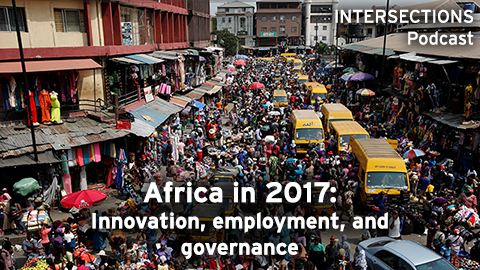
Africa in 2017: Innovation, employment, and governance
Amadou Sy, senior fellow and director of the Africa Growth Initiative, and Witney Schneidman, nonresident senior fellow at Brookings and senior international advisor for Africa at Covington & Burling LLP, examine the top priorities for Africa in 2017 set forth by the Africa Growth Initiative's annual Foresight Report. Full show notes available here: http://brook.gs/2jUHiIS With thanks to audio producer Gaston Reboredo and producer Vanessa Sauter, and also thanks for additional support from Kelly Russo, Fred Dews, and Richard Fawal. Subscribe to Brookings podcasts here or on iTunes, send feedback email to [email protected], and follow us and tweet us at @policypodcasts on Twitter. Intersections is part of the Brookings Podcast Network.
Examining President Obama's legacy
In this episode of Intersections, Molly Reynolds, a fellow with Governance Studies, and Thomas Wright, a fellow and director of the Project on International Order and Strategy, talk about President Obama's successes and failures in public policy, and what legacy he leaves behind. With thanks to audio producer Gaston Reboredo and producer Vanessa Sauter, and also thanks for additional support from Kelly Russo, Fred Dews, and Richard Fawal. Questions? Comments? Send feedback to [email protected], and follow us and tweet us at @policypodcasts on Twitter. Intersections is part of the Brookings Podcast Network.

Energy and climate policy under the Trump administration
Brookings experts Bruce Jones and David Victor forecast the future of U.S. energy and climate policies under the Trump administration, the role of state-level actors and energy markets, and what happens if the U.S. walks away from the Paris agreement. With thanks to audio producer Gaston Reboredo, Vanessa Sauter, Fred Dews, and Richard Fawal. Full show notes are available here: http://brook.gs/2ja53A6 Questions? Comments? Contact us at [email protected], or follow and tweet us at @policypodcasts on Twitter. Intersections is part of the Brookings Podcast Network.

U.S. politics and the Middle East: Polarization and regional stability
Shibley Telhami, the Anwar Sadat chair for peace and development at the University of Maryland and nonresident senior fellow at Brookings, discusses with Sarah Yerkes the increasing polarization of American views toward Israel and Palestine and the future of U.S. policy in the broader Middle East. With thanks to audio producer Gaston Reboredo, Vanessa Sauter, Basseem Maleki, Fred Dews, and Richard Fawal. Full show notes are available here: https://www.brookings.edu/podcast-episode/us-politics-and-the-middle-east/ Questions? Comments? Contact us at [email protected], or follow and tweet us at @policypodcasts on Twitter. Intersections is part of the Brookings Podcast Network.
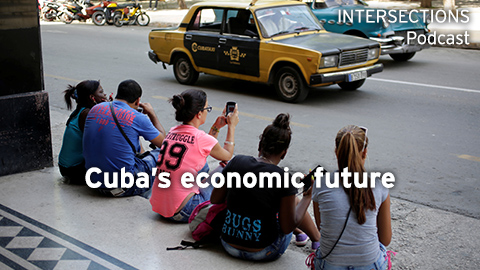
Cuba's economic future
Richard Feinberg, nonresident senior fellow with the Brookings Latin America Initiative, and Ted Piccone, senior fellow in the Latin America Initiative, discuss the passing of Fidel Castro, U.S.-Cuba relations under a Trump presidency, and how tourism can be the driver of a new Cuban economy. Full show notes available here: http://brook.gs/2gKXKw4 Thanks to audio producer Gaston Reboredo, Vanessa Sauter, Basseem Maleki, Fred Dews, and Richard Fawal. Questions? Comments? Send feedback to [email protected]. Intersections is part of the Brookings Podcast Network.
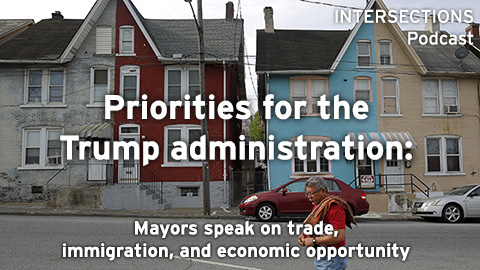
Priorities for the Trump administration: Mayors speak on trade, immigration, and economic opportunity
Amy Liu, vice president and director of the Metropolitan Policy Program at Brookings, talks with the former mayors of Philadelphia and Mesa, Arizona, Michael Nutter and Scott Smith, now both nonresident senior fellows at Brookings, about what motivated voters in their former constituencies and how a Trump presidency will affect issues of trade, immigration, and economic opportunity. Full show notes available here: http://brook.gs/2fLDTZX Thanks to audio producer Gaston Reboredo, Vanessa Sauter, Basseem Maleki, Fred Dews, and Richard Fawal. Questions? Comments? Send feedback to [email protected]. Intersections is part of the Brookings Podcast Network.
Urban governance in the 21st century: Innovating solutions
Kemal Derviş, vice president and director of the Global Economy and Development program, and Bruce Katz, inaugural Centennial Scholar, examine the multidisciplinary, adaptive approach cities take to tackling public policy challenges, and other lessons for governance in the 21st century. With thanks to audio producer Gaston Reboredo, Vanessa Sauter, Basseem Maleki, Fred Dews, and Richard Fawal. Full show notes available here: http://brook.gs/2fyfMiY Questions? Comments? Email us at [email protected] and follow us and tweet us at @policypodcasts on Twitter. Intersections is part of the Brookings Podcast Network. Please note: Intersections will be taking a break for the Thanksgiving holiday but will return on November 30.

How should the next president counter violent extremism?
As part of the Brookings Election 2016 project, the Brookings Podcast Network brings you a special edition episode in which Indira Lakshmanan, Washington columnist for the Boston Globe and contributor to Politico, moderates a conversation with Robert McKenzie, visiting fellow in the Project on U.S. Relations with the Islamic World, and Darrell West, vice president and director of Governance Studies, on ways in which the next president should address violent extremism in the United States and abroad. Special thanks to the event moderator, Indira Lakshmanan, and the events team, Eric Bull, Adrianna Pita, and Camilo Ramirez. Additional thanks to audio producer Gaston Reboredo and producer Vanessa Sauter, and also thanks for additional support from Eric Abalahin, Jessica Pavone, Nawal Atallah, Basseem Maleki, and Rebecca Viser. Full show notes available here: http://brook.gs/2fwnb69 Subscribe to Brookings podcasts here or on iTunes, and send feedback email to [email protected]. Intersections is part of the Brookings Podcast Network.
Noncognitive skills in education: What we know and why they matter
Diane Schanzenbach, senior fellow in Economic Studies and director of The Hamilton Project, and Grover "Russ" Whitehurst, senior fellow with the Center on Children and Families, discuss the importance of soft skills and the best policies and practices for teaching noncognitive skills to children. With thanks to audio producer Gaston Reboredo, Vanessa Sauter, Basseem Maleki, Fred Dews, and Richard Fawal. Full show notes available here: http://brook.gs/2dWG27I Questions? Comments? Email us at [email protected] Intersections is part of the Brookings Podcast Network.

Economic mobility and racial inequities: How the next president can revive the American dream
As part of the Brookings Election 2016 project, the Brookings Podcast Network brings you a special edition episode in which Indira Lakshmanan, Washington columnist for the Boston Globe and contributor to Politico, moderates a conversation with Isabel Sawhill, senior fellow in Economic Studies, Richard Reeves, senior fellow in Economic Studies and co-director of the Center on Children and Families, and Dayna Bowen Matthew, visiting fellow in the Center for Health Policy, on ways that the next president should address issues of race and economic mobility. Special thanks to the event moderator, Indira Lakshmanan, and the events team, Eric Bull, Adrianna Pita, and Camilo Ramirez. Additional thanks to audio producer Gaston Reboredo and producer Vanessa Sauter, and also thanks for additional support from Eric Abalahin, Jessica Pavone, Nawal Atallah, Basseem Maleki, and Rebecca Viser. Full show notes available here: http://brook.gs/2exzcE5 Subscribe to Brookings podcasts here or on iTunes, and send feedback email to [email protected]. Intersections is part of the Brookings Podcast Network.
India on the international stage
Guest interviewer Tanvi Madan, fellow and director of the India Project in Foreign Policy, Ambassador Shivshankar Menon, distinguished fellow in Foreign Policy, and Dhruva Jaishankar, fellow in Foreign Policy at Brookings India, examine India's foreign policy, particularly toward the U.S. and China, as well as its counter-terrorism approach in the wake of a cross-border attack on an Indian military position in Kashmir. With thanks to audio producer Gaston Reboredo, Vanessa Sauter, Basseem Maleki, Fred Dews, and Richard Fawal. Find the full show notes here: http://brook.gs/2dLmoL1 Questions? Comments? Email us at [email protected].
Political gridlock and the U.S. economy
Alice Rivlin, senior fellow in Economic Studies and the Center for Health Policy, and William Galston, senior fellow in Governance Studies, discuss the importance of bipartisanship in the United States and how current party divisions are detrimental to the economy. With thanks to audio producer Gaston Reboredo, Vanessa Sauter, Basseem Maleki, Fred Dews, and Richard Fawal. Full show notes available here: http://brook.gs/2cCAOyD Questions? Comments? Email us at [email protected].
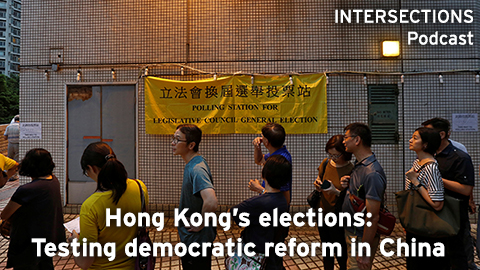
Hong Kong's elections: Testing democratic reform in China
In this episode of "Intersections," Richard Bush, senior fellow in Foreign Policy and the John L. Thornton China Center and director of the Center for East Asia Policy Studies (CEAP), and Cheng Li, senior fellow in Foreign Policy and director of the John L. Thornton China Center, discuss the recent elections in Hong Kong, the independence movement, and China's one country, two systems governance policy. With thanks to audio engineer Mark Hoelscher, Vanessa Sauter, Basseem Maleki, Fred Dews, and Richard Fawal. Questions? Comments? Email us at [email protected].
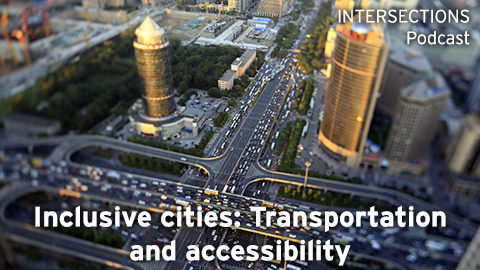
Inclusive cities: Transportation and accessibility
Adie Tomer, fellow in the Metropolitan Policy Program, and Jeff Gutman, senior fellow in Global Economy and Development, discuss how to transform transportation policy with a focus on accessibility and how cities around the world are grappling with improving infrastructure and increasing access for people of all incomes. Full show notes: https://www.brookings.edu/podcast-episode/inclusive-cities-transportation-and-accessibility/ Thanks to audio engineer Mark Hoelscher, Vanessa Sauter, Fred Dews, and Richard Fawal. Questions? Comments? Email us at [email protected].

Democracy in Turkey: Before and after the coup
In this episode of "Intersections," Kemal Kirişci, TÜSİAD senior fellow and director of the Center on the United States and Europe's Turkey Project, and Ted Piccone, senior fellow in the Project on International Order and Strategy in the Foreign Policy program, examine Turkey's history of democracy and military coups, its relationship with the Middle East and the European Union, and the Gülenist movement's relationship with the Turkish government. They also discuss the future development of the country's governance under Recep Tayyip Erdoğan. For the full show notes, visit: https://www.brookings.edu/podcast-episode/democracy-in-turkey-before-and-after-the-coup/ With thanks to audio engineer Mark Hoelscher, Carisa Nietsche, Sara Abdel-Rahim, Fred Dews and Richard Fawal. Questions? Comments? Email us at [email protected]

Venezuela in Crisis
In this episode of "Intersections," Harold Trinkunas, senior fellow and director of the Latin America Initiative, and Dany Bahar, fellow in Global Economy and Development, discuss Venezuela's political and economic crisis, and how it is the result not just of dropping oil prices, but of years of economic mismanagement. For our full show notes, go to: http://www.brookings.edu/podcasts/2016/07/venezuela With thanks to audio engineer and producer Zack Kulzer, Mark Hoelscher, Carisa Nietsche, Sara Abdel-Rahim, Jacob Saliba, Fred Dews and Richard Fawal. Questions? Comments? Email us at [email protected]

Civil wars and U.S. engagement the Middle East
"At the end of the day, we need to remember that Daesh is more a product of the civil wars than it is a cause of them. And the way that we're behaving is we're treating it as the cause. And the problem is that in places like Syria, in Iraq, potentially in Libya, we are mounting these military campaigns to destroy Daesh and we're not doing anything about the underlying civil wars. And the real danger there is—we have a brilliant military and they may very well succeed in destroying Daesh—but if we haven't dealt with the underlying civil wars, we'll have Son of Daesh a year later." – Ken Pollack "Part of the problem is how we want the U.S. to be more engaged and more involved and what that requires in practice. We have to be honest about a different kind of American role in the Middle East. It means committing considerable economic and political resources to this region of the world that a lot of Americans are quite frankly sick of… There is this aspect of nation-building that is in part what we have to do in the Middle East, help these countries rebuild, but we can't do that on the cheap. We can't do that with this relatively hands off approach." – Shadi Hamid In this episode of "Intersections," Kenneth Pollack, senior fellow in the Center for Middle East Policy and Shadi Hamid, senior fellow in the Project on U.S. Relations with the Islamic World in the Center for Middle East Policy discuss the current state of upheaval in the Middle East, the Arab Spring, and the political durability of Islamist movements in the region. They also explain their ideas on how and why the United States should change its approach to the Middle East and areas of potential improvement for U.S. foreign policy in the region. Show Notes Islamic Exceptionalism: How the Struggle Over Islam Is Reshaping the World Fight or flight: America's choice in the Middle East Security and public order Islamists on Islamism today Temptations of Power: Islamists & Illiberal Democracy in a New Middle East Ending the Middle East's civil wars A Rage for Order: The Middle East in turmoil, from Tahrir Square to ISIS Building a better Syrian opposition army: How and why With thanks to audio engineer and producer Zack Kulzer, Mark Hoelscher, Carisa Nietsche, Sara Abdel-Rahim, Eric Abalahin, Fred Dews and Richard Fawal. Subscribe to the Intersections on iTunes, and send feedback email to [email protected].

College education and student debt: Evaluating the investment
"…A lot of the conversation around college education is that tuition is increasing very rapidly, debt is increasing very rapidly and what does that mean for everyone? If we take a bigger step back we want to reframe the discussion around higher education as the potential investment available to people in our economy to help them be more productive in the labor market and to help them have better financial lives themselves. So when we think about higher education, rather than focusing all on the costs like we have been doing with the focus on the narrative about tuition and debt, I think it is important that we kind of refocus and talk about what students are getting from their college degrees. Basically encouraging people to think about this as cost-benefit analysis as they would with any other financial activity in their life. -- Beth Akers "People who have higher levels of education are far more likely to start or own a business, create jobs in that way; they are far more likely to file a patent, and do other things that are immeasurable contributions to intellectual thought and scientific thought and advancing living standards in important ways. Now quantifying those would be impossible. One that is easy to quantify, that I did in a piece a few of months ago for Brookings, is looking at not just what college graduates pay in taxes but their actual consumption as a direct benefit to local communities and the entire country." -- Jonathan Rothwell In this episode of "Intersections," Beth Akers, fellow at the Brown Center on Education Policy at Brookings, and Jonathan Rothwell, former fellow at the Metropolitan Policy Program and senior economist at Gallup, examine the current state of higher education by looking at student debt and its correlation to the value added for individuals with a college education. Show Notes Using earnings data to rank colleges: A value-added approach updated with College Scorecard data What colleges do for local economies: A direct measure based on consumption? Making college less risky to boost social mobility More data can make college less risky The game of loans: rhetoric and reality of student debt With thanks to audio engineer and producer Zack Kulzer, Mark Hoelscher, Carisa Nietsche, Sara Abdel-Rahim, Eric Abalahin, Fred Dews and Richard Fawal. Subscribe to the Intersections on iTunes, and send feedback email to [email protected].
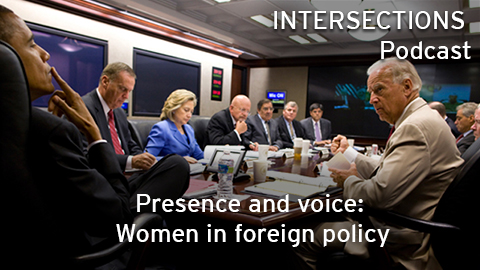
Presence and voice: Women in foreign policy
"When I go to meetings today, I see more women, and I see many more younger women coming into the field. But what's really struck me, as I've been thinking about this issue of women in foreign policy in the last couple years, is the difference between presence and voice. There are many more women working in foreign policy today, but you don't see the same proportion of women prominent in foreign policy speaking in the media, in senior positions, or even when you're all in the room together sitting at the table and speaking as the lead speaker at a conference. It's that distinction between presence and voice and what accounts for that gap. That's what I find both fascinating and frustrating."—Tamara Wittes "I think it is getting better. I think women are starting to see examples of other women who are at the table, who are speaking up, who are volunteering, who are being more confident and starting to learn that just because you might not think you are the greatest expert on something, doesn't mean you don't have the right to give your opinion and start speaking up."—Sarah Yerkes In this week's episode of "Intersections," Tamara Wittes, senior fellow and the director of the Center for Middle East Policy, and Sarah Yerkes, a visiting fellow in the Center for Middle East Policy, discuss their experiences as women working in foreign policy, both in and out of government. They also shed light on progress regarding the active participation of women in foreign policy, while looking forward to potential improvements in order to promote more equality for women's representation in government. Show Notes The Absence of Women from Middle East Policy Debates: An Update Women still overlooked in vital peacekeeping process, study finds An All-Women Symposium: The Missing XX-Factor Foreign Policy Interrupted Women Are Underrepresented In Cable News Segments On Foreign Affairs, National Security With thanks to audio engineer and producer Zack Kulzer, Mark Hoelscher, Carisa Nietsche, Sara Abdel-Rahim, Eric Abalahin, Fred Dews and Richard Fawal. Subscribe to the Intersections on iTunes, and send feedback email to [email protected].
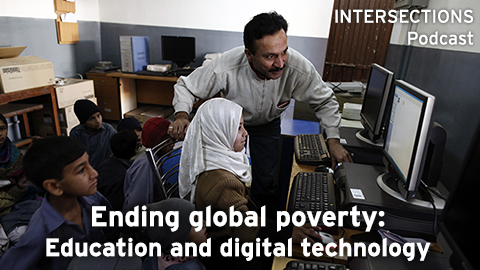
Ending global poverty: Education and digital technology
"If we think about the progress of getting people out of extreme poverty, it is really impressive. But it is actually a much slower trend then what we have seen in the spread of digital technology. The speed with which mobile phone ownership has spread around the world, access to bank accounts, biometric identification cards, people getting online – these trends are happening even faster. We are seeing 100-300 million people each year getting access to a phone or biometric ID for the first time. These trends in getting people digitally connected. . .are progressing at such speed that they're starting to reach some of the poorest people in the world. Digital technology is changing what it means to be poor because it's bringing poor people out of the margins."- Laurence Chandy "The role of governments will continue to be central in improving education. At the end of the day, they're the only ones who have the duty and the mandate to care about the poorest of the poor. But they will more and more have to partner with organizations from the private sector, the philanthropic community and the non-profit community to try to reach the most marginalized kids for education. Governments can set an enabling environment that lets these sets of actors bring their creativity, their new way of approaching intractable problems into a space where they're given the ability to scale up their work." -Rebecca Winthrop In this week's episode of "Intersections," Laurence Chandy, fellow in the Global Economy and Development program, and Rebecca Winthrop, senior fellow and director of the Center for Universal Education, discuss progress toward meeting the Sustainable Development Goals of ending poverty and achieving education for all, and how digital technologies can be harnessed in that pursuit. Also, Winthrop and Chandy addressed the tools needed to reach the last 10% - those most marginalized. Show Notes What Works in Girls' Education: Evidence for the World's Best Investment Millions learning: Scaling up quality education in developing countries Connecting the poor is the best hope for ending poverty Disrupting development with digital technologies With thanks to audio engineer and producer Zack Kulzer, Carisa Nietsche, Sara Abdel-Rahim, Brionne Smith, Eric Abalahin, Fred Dews and Richard Fawal. Subscribe to the Intersections on iTunes, and send feedback email to [email protected].
Keeping the U.S. Fiscal Ship afloat
"We set out to make this game because we think that the national debt is an important issue that budget experts talk about all the time but it is very hard for the general public to really understand, so we thought to do it in a way that is more entertaining and more fun." — Louise Sheiner "One of the goals of the game is to give people a big picture in their mind, so when some person runs for president or Congress they can say, 'Hey this person's numbers don't add up.'" — David Wessel In this episode of "Intersections," Brookings experts Louise Sheiner, senior fellow and policy director for the Hutchins Center on Fiscal and Monetary Policy, and David Wessel, senior fellow and director of the Hutchins Center, discuss their new interactive game "The Fiscal Ship." This computer game allows players to pick from a menu of tax and spending options to reduce the debt from projected levels over the next 25 years. Sheiner and Wessel also discuss the long-term changes in policy that could potentially boost the economy and reduce the debt in the future. Show Notes Why we made a computer game about the federal budget How we picked the debt goal for "The Fiscal Ship" How important is lowering the national debt? With thanks to audio engineer and producer Zack Kulzer, Carisa Nietsche, Sara Abdel-Rahim, Brionne Smith, Eric Abalahin, Fred Dews and Richard Fawal. Subscribe to Intersections on iTunes, and send feedback email to [email protected].
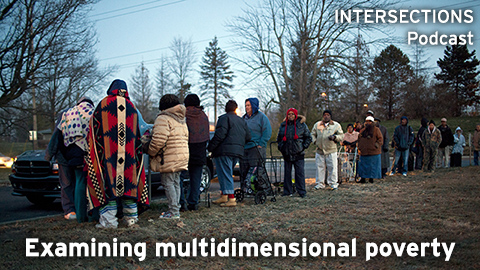
Examining multidimensional poverty
"People think poverty as a measure of income, but as a lived experience for what it means to be poor, it tends to involve a lot of other things as well. We have taken some other dimensions such as low education, lack of health insurance, being in an unemployed household, and being in an area with concentrated poverty, where 1 in 5 of your neighbors in below the poverty line. One of the interesting questions becomes, how do those different dimensions of disadvantage go together? Is it the same people experiencing all of those different kinds of disadvantage, or different people in different places experiencing different things?"—Richard Reeves "Policies need to be better integrated to work. To alleviate poverty, rarely is just increasing income going to be enough if you're facing things like deep health disparities and concentrations of poverty that carry so many other barriers that make it much harder for people to move out of poverty. This sort of a lens just gives you that multidimensional look beyond income."—Elizabeth Kneebone In this episode of "Intersections," Brookings experts Elizabeth Kneebone, fellow in Metropolitan Policy Program, and Richard Reeves, senior fellow in Economic Studies, discuss their recent research on the multiple barriers and challenges that complicate the path out of poverty, and how different dimensions of poverty affect different people across the country. Show notes The intersection of race, place, and multidimensional poverty With thanks to audio engineer and producer Zack Kulzer, Carisa Nietsche, Sara Abdel-Rahim, Eric Abalahin, Fred Dews and Richard Fawal. Subscribe to the Intersections on iTunes, and send feedback email to [email protected].

The rise of the right: Right-wing populism in the U.S. and Europe
“I locate the common roots of the rise of right-wing populism in globalization and technological change. You have a lot of people in Europe and the United States displaced, in the sense that they had decent standards of living and could count on that happening for their children...but that is in danger now” -- E.J. Dionne, Jr. “In my own country, Germany, the increasing amount of aggression and hate related to refugees, coming particularly from Eastern Germany, suggests that we underestimate the degree to which some people were taken along with reunification and globalization and some have felt stranded, not receiving some of the benefits of the last twenty or thirty years.” – Constanze Stelzenmüller In this episode of “Intersections,” scholars Constanze Stelzenmüller, the Robert Bosch senior fellow in the Center on the United States and Europe and E.J. Dionne, Jr., a senior fellow in Governance Studies discuss how economic grievances and political fragmentation are fueling the rise of right-wing political movements in the United States and Europe. Show Notes Why the right went wrong: Conservatism from Goldwater to the Tea Party and beyond. A Donald for all of us—how right-wing populism is upending politics on both sides of the Atlantic With thanks to audio engineer and producer Zack Kulzer, Carisa Nietsche, Sara Abdel-Rahim, Eric Abalahin, Fred Dews and Richard Fawal. Subscribe to Intersections on iTunes, and send feedback email to [email protected].

Confronting the issues: The presidential election
“We have to tackle a lot of problems to get Americans the jobs and standard of living that they want to get,” Elaine Kamarck says. In this inaugural episode of our new podcast series, “Intersections,” join scholars Elaine Kamarck, director of the Center for Effective Public Management and Michael O’ Hanlon, co-director of Center for 21st Century Security and Intelligence as they sit down to discuss the real issues that the presidential candidates are and aren’t talking about during this election cycle. “All of us need the promise of growth and a better economic future, therefore we have to allocate our government resources and our government reforms towards servicing that central objective.” O’Hanlon and Kamarck address what presidential candidates should be focusing on in order to ensure they are responding to voters’ top concerns. Show Notes Primary Politics: Everything You Need to Know about How America Nominates Its Presidential Candidates The Future of Land Warfare With thanks to audio engineer and producer Zack Kulzer, Carisa Nietsche, Sara Abdel-Rahim, Fred Dews and Richard Fawal. Subscribe to the Brookings Cafeteria on iTunes, and send feedback email to [email protected].
Intersections: A new podcast from The Brookings Institution
Economic recovery. Elections. Terrorism. Global poverty. Trade. Policy issues are complex and multi-faceted. Want more than the 30-second sound bite? Tune in to Intersections, a new podcast from the Brookings Institution, where two experts delve into the varying angles of the complicated issues facing our nation and the world. Subscribe now and be the first to hear new episodes. Intersections is hosted by Adrianna Pita.