Intelligent Design the Future
286 episodes — Page 5 of 6

Ep 2081Walter Bradley on The Mystery of Life’s Origin
We are grieving the recent loss of Walter Bradley, a longtime Fellow of the Center for Science and Culture at Discovery Institute and namesake of the Institute’s Walter Bradley Center for Natural and Artificial Intelligence. So today, out of our archive, we bring you the first half of Robert J. Marks's 2020 interview with Walter Bradley, co-author of the seminal 1984 intelligent design book The Mystery of Life’s Origin. The book is now available in a revised and expanded edition with updates from multiple contributors discussing the progress (or lack of it) in origins science in the 35 years since the book’s original publication. In this first of two podcasts, Bradley discusses the history of the attempts to explain life’s origin naturalistically, and how the three authors of the 1984 book came together to shake up the world of origin-of-life science. This is Part 1 of a two-part conversation. Source

Ep 2080“Do You Believe in Evolution?” Stephen Meyer Responds to Joe Rogan
Do you believe in evolution? That’s a good question that could start a very productive conversation about the origin and development of life on Earth. But the first steps are clarifying what the word “evolution” actually means and why unguided evolutionary processes are limited in power and scope. Today, host Andrew McDiarmid invites you to revisit a segment from Dr. Stephen Meyer's 2023 interview with Joe Rogan. Meyer answers Rogan's probing question comprehensively. Yes, he tells Rogan, he believes in “real evolutionary processes,” but he also believes in the limitation of those evolutionary processes, and he takes several minutes to unpack and explain some of the challenges the standard neo-Darwinian account of life faces today. McDiarmid follows up by summarizing Meyer's response and sharing excerpts from Meyer's book Darwin's Doubt to explain the importance of Meyer's arguments to the debate over evolution. Source

Ep 2079Examples of Recurring Design Logic in Living Systems
Architects, painters, musicians, and other creators apply recognizable patterns of thinking to their craft, resulting in a trademark style that sets them apart from others. Can recognizable patterns of thinking also be found in nature's design? On this episode of ID the Future, Dr. Jonathan McLatchie, a resident biologist and fellow at Discovery Institute's Center for Science and Culture, dives into the microscopic world to explore examples of what he calls recurring design logic in living systems. These recurring themes and logic are widespread in diverse, often unrelated biological systems. On the perspective of intelligent design, they'd be expected. But an unguided evolutionary perspective would have difficulty explaining this compelling line of evidence. Source

Ep 2078Dis-Inherit the Wind: Film Debunks Hollywood’s Icon of Evolution
On this ID The Future from the vault, host David Boze interviews filmmaker Fred Foote, writer and producer of the feature-length drama Alleged, which seeks to tell the real story behind the infamous 1925 Scopes Trial in Dayton, Tennessee, which pitched Darwinian evolution against belief in God. Through his own research, Foote discovered that Inherit the Wind was "almost exactly wrong" on many crucial points. Foote discusses how his movie strives to present both sides in the famous trial as fairly as possible. Source

Ep 2077How Intelligent Design Has Flourished In Spite of the Scopes Effect
The Scopes "Monkey" trial of 1925 has cast a long shadow over the evolution debate in the last century, thanks in large part to the Hollywood film Inherit the Wind, which caricatured the trial and promoted stereotypes that still persist today. On this ID The Future, host Andrew McDiarmid continues a conversation with Dr. Casey Luskin about the long history of the Scopes effect in science and how intelligent design has managed to flourish in spite of it. This is Part 2 of a two-part conversation. Source

Ep 2076A Century Later, the Spirit of Scopes is Alive and Well
The Scopes “Monkey” Trial Turns 100 this year. According to secularist legend, the Scopes trial represented a great showdown between ignorant, fundamentalist religion and enlightened, scientific progress. But what really went down in 1925? And a hundred years later, is science still suffering from the Scopes effect? On this episode of ID The Future, Dr. Casey Luskin begins a conversation with host Andrew McDiarmid about the famous trial, the play and movie based on it that reinforced unrealistic stereotypes, and some of the flashpoints in science since the trial that have fanned the flames of the debate over evolution. This is Part 1 of a two-part conversation. Source

Ep 2075Meyer, Behe, and Lennox on Science, God, and Darwin’s Other Doubt
Every Friday we pull a gem out of our archive for those who may not have enjoyed it yet. On today’s ID the Future out of the vault, Oxford’s John Lennox, Lehigh University’s Michael Behe, and Darwin’s Doubt author Stephen Meyer continue a probing conversation with host Peter Robinson on what they see as the growing evidence for intelligent design and the scientific and philosophical problems with Darwinian materialism. This is Part 2 of a two-part conversation. This interview appears on ID The Future with the kind permission of Peter Robinson and the Hoover Institution. Source

Ep 2074Artist Jody Sjogren on How Intelligent Agents Bring Ideas to Life
How does an intelligent agent go from idea to artifact? What can the process of art teach us about the evidence of design in the natural world? Today, medical illustrator and artist Jody Sjogren joins host Andrew McDiarmid to discuss the similarities between machines and living organisms and the insights art can give us about the mind of intelligent designers. This is Part 2 of a two-part conversation. Source

Ep 2073Artist Jody Sjogren on Illustrating the Icons of Evolution
Artistic license has been used to promote Darwinian evolution since the late nineteenth century. Icons of evolution have appeared in textbooks, journals, magazines, and other visual media to promote a materialist worldview that is light on evidence and weighty on assumption. But in 2000, a book came along – Icons of Evolution – that finally exposed the myths, exaggerations, and outright fakery behind ten of the most infamous icons of Darwin’s theory. Today, host Andrew McDiarmid welcomes the illustrator of that ground-breaking book, medical illustrator and artist Jody Sjogren, to discuss her experience of bringing these famous icons to life and working with author Dr. Jonathan Wells on the project. Jody also shares some of her memories of Dr. Wells, Read More › Source
Ep 2072Behe, Meyer, & Lennox: The Evidence for Design is Growing
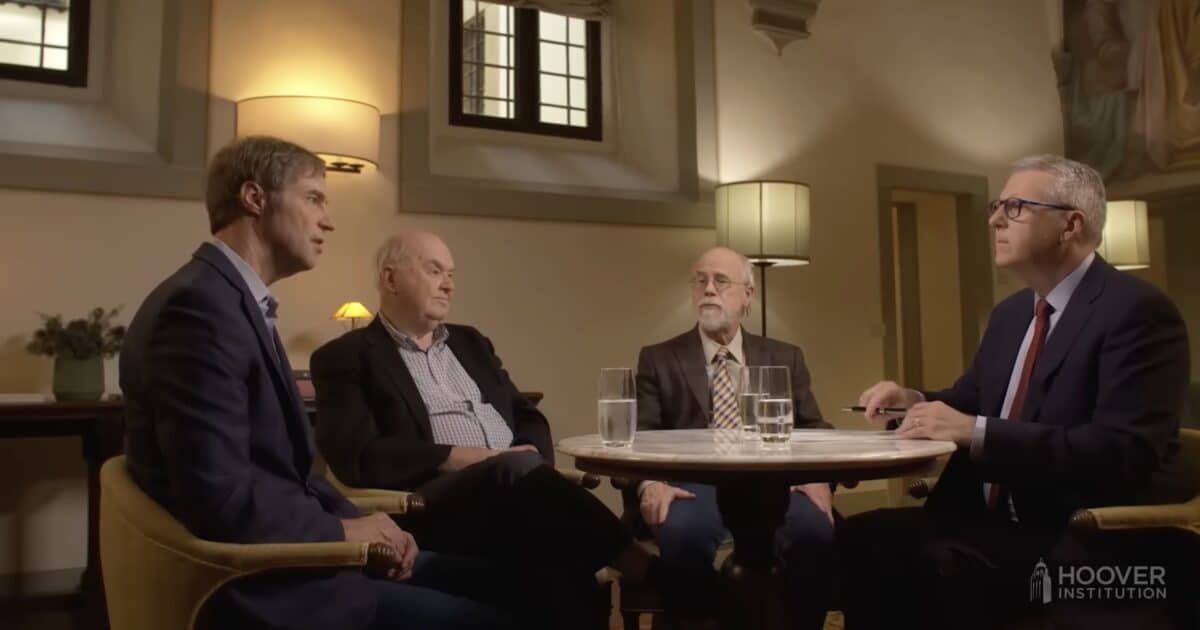
On today’s ID the Future out of the vault, Uncommon Knowledge’s Peter Robinson sits down with Michael Behe, John Lennox, and Stephen Meyer, three of the leading voices in science and academia on the case for an intelligent designer of life and the universe. In the first half of a wide-ranging conversation in Fiesole, Italy, they explore the growing problems with modern evolutionary theory and the increasing amount of evidence, uncovered by a rigorous application of the scientific method, that points to intentional design of the physical world. The conversation appears here with the generous permission of Peter Robinson and the Hoover Institution. This is Part 1 of a two-part conversation. Source

Ep 2071Brian Miller on Advancing Biology Through an Engineering Lens
Can viewing life as designed enhance scientific research? Today, host Andrew McDiarmid speaks with physicist Dr. Brian Miller about the fruitful research that can result when engineering principles are applied to the study of biological systems. Dr. Miller is part of a group that brings together engineers, scientists, and scholars to demonstrate how engineering principles, patterns, and tools can deepen the understanding of biology. The group hosts an annual Conference on Engineering in Living Systems, hosted by Discovery Institute, that highlights new insights and research projects in this bold new approach to the study of life. Here Dr. Miller gives the lowdown on current research as well as this year's conference. Source
Ep 2070Denyse O’Leary: Why Materialism Can’t Explain the Mind
Is the soul a myth? Does your mind really just boil down to brain function? On today's ID The Future, host Andrew McDiarmid speaks with journalist Denyse O'Leary about surprising findings out of neuroscience that shatter materialist assumptions. O'Leary is co-author with Dr. Michael Egnor of The Immortal Mind: A Neurosurgeon's Case for the Existence of the Soul. In this conversation, O'Leary reports on recent findings about the origin of consciousness, the challenge that near-death experiences present to materialism, and why the only way to move past materialism is to reject it fully as a model. Source

Ep 2069Stephen Meyer: God Behind the Birth of Science and the Cosmos
Do we have to choose between science and God? Absolutely not, says philosopher of science Dr. Stephen Meyer. In fact, theistic ideas about nature actually inspired the rise of modern science. On today’s ID the Future from the archive, Return of the God Hypothesis author Stephen Meyer and radio host Michael Medved discuss the arguments presented in a series of short videos featuring Dr. Meyer that explore the increasingly strong scientific case for intelligent design and for the idea that the universe is the product of a transcendent mind. Source

Ep 2068Michael Egnor Reads From His New Book The Immortal Mind
On this ID The Future, Dr. Michael Egnor reads the Introduction to his new book The Immortal Mind: A Neurosurgeon's Case for the Existence of the Soul, now available from Worthy Books. In this reading, Dr. Egnor shares his journey from being a medical student who believed science could explain everything, including how consciousness emerges from the brain and whether we have a soul, to a neurosurgeon who questioned the conventional materialist view. He discusses how years of operating on and examining patients with brain damage led him to wonder how large parts of the brain could be removed without affecting a person's mind or their ability to think, reason, believe, and desire. His personal story, including a profound experience in a hospital chapel during a family crisis, became a turning point that challenged his atheism and led him to believe that the immaterial aspects of our minds are real and that nature is an open system, not a closed one. Source

Ep 2067Jay Richards on the “Ground Clearing” Work of Jonathan Wells
Before the positive case for intelligent design can be received effectively, the case against the Darwinian evolutionary mechanism must be clearly laid out. One man who was instrumental in this initial "ground clearing operation" was biologist Dr. Jonathan Wells, our friend and colleague who passed away in 2024. On this ID The Future, host Andrew McDiarmid welcomes Dr. Jay Richards back to the podcast to share his memories of Dr. Wells and discuss the significance of Wells's life and work. Source

Ep 2066Engineered Complexity in the Microbial World
On this ID the Future from the archive, host Jonathan Witt speaks to molecular biologist and professor Dustin Van Hofwegen about his research into the engineered complexity in microbial life. Hofwegen shares his research on the famous decades-long E. coli evolution experiment conducted by Richard Lenski, which showed the sudden appearance of an ability to utilize citrate after many generations. However, Van Hofwegen's own experiments demonstrated that this "evolutionary innovation" actually points to the intelligent design built into living systems instead of an undirected process like natural selection. Source
Ep 2065Physicist Brian Miller: The Non-Algorithmic Nature of Life
For decades, we’ve thought the control center of life lies in DNA. But a new scientific framework is emerging that challenges that idea, and suggests that vast portions of the genome are immaterial and lie outside the physical world. Today, physicist Dr. Brian Miller shares his perspective on the cutting-edge, potentially revolutionary research of mathematical biologist Dr. Richard Sternberg on the immaterial aspects of the genome. In this exchange, Dr. Miller shares several examples of the immaterial nature of life. These ideas point towards the earliest stages of the next great scientific revolution and have significant implications for the intelligent design debate. Source
Ep 2064A Neurosurgeon Pulls Back the Curtain on the Soul
On this ID The Future, host Andrew McDiarmid is thrilled to welcome back renowned neurosurgeon Dr. Michael Egnor to continue discussing his new book The Immortal Mind: A Neurosurgeon's Case for the Existence of the Soul. The book tackles provocative ideas, making a case that the human soul exists and that the mind is immortal. In this compelling conversation, we unpack some of the powerful arguments and evidence Dr. Egnor has marshaled. This is Part 2 of a two-part conversation. Source

Ep 2063Michael Denton on the Primal Patterns That Govern Living Systems
On this classic ID The Future out of the vault, biochemist Dr. Michael Denton discusses the implications of recurring animal body plans, arguing that they are predetermined types that point away from purely mechanistic processes. He observes that structures like the insect body plan were fixed long ago and haven't changed. He argues they are better understood as instances of predetermined type rather than collections of historical adaptations. This predetermination, he suggests, is the product of laws of form, which he finds inexplicable on a mechanistic view of nature. Source
Ep 2062Can Evolutionary Processes Explain Human Creativity?
On this ID The Future, we're sharing a conversation that first aired on Mind Matters News, another podcast from Discovery Institute that focuses on the intersection of artificial and natural intelligence. In this episode, guest host Pat Flynn welcomes engineer Dr. Eric Holloway and professor Robert J. Marks to discuss the information cost of creativity. The conversation is based on a chapter in the recent volume Minding the Brain, authored by Dr. Holloway and Marks. This conversation originally aired on the Mind Matters News podcast. Visit mindmatters.ai/podcast for more. Source

Ep 2061Why Life Is the Most Unnatural Thing in the Universe
We usually think of life as the most natural thing there is – blooming plants, flowing water, the cycles of nature. But what if that perspective is fundamentally challenged by the very laws of physics that govern our universe? On this ID The Future, host Andrew McDiarmid welcomes physicist Dr. Eric Hedin to the podcast to discuss the compelling idea that life is the most "unnatural" thing in the universe. Dr. Hedin contends that the complex, organized nature of life defies the natural tendency of matter and energy towards disorder and equilibrium, suggesting that life requires something only an intelligent designer could provide. Source
Ep 2060New Study Shatters the 1% Human-Chimp Difference Myth
When scientists originally studied the chimp genome, they used the human genome as a template. This scaffolding technique gave birth to the popular claim that chimp and human genomes are only 1% different. But new research has now blown the 1% myth out of the water. On today's ID The Future, geologist Dr. Casey Luskin speaks with host Dr. Emily Reeves about this explosive new finding and what it means for the debate over evolution. Source

Ep 2059Register Now: HS Biology and Chemistry With Intelligent Design Integration
On this ID The Future, host Andrew McDiarmid welcomes Kristin Marais and Summer Lile, two passionate instructors from Discovery Institute Academy, to discuss their high school biology and chemistry courses, uniquely taught from the perspective that nature reflects intelligent design. These courses offer a complete, sequenced curriculum and include readings, handouts, videos, pre-recorded instructor lectures, and hands-on wet labs designed to be done at home. Live classes and one-on-one teacher drop-in sessions are also available. In this exchange, both teachers discuss what students will learn in their class and how intelligent design concepts are integrated throughout course content. Learn more and register at discoveryinstitute.academy. Source
Ep 2058The Immortal Mind: How Neuroscience Points Beyond Materialism
Is your mind more than just your brain? Does the soul actually exist? These questions have been pondered for millennia. What does the latest scientific research suggest? On this ID The Future, renowned neurosurgeon Dr. Michael Egnor begins a conversation with host Andrew McDiarmid about his new book The Immortal Mind: A Neurosurgeon's Case for the Existence of the Soul. Egnor makes a powerful case that our capacity for thought, reason, and free will points to something beyond mere brain function. After defining important terms, Egnor begins exploring the compelling evidence he has gathered across four decades of practice in neurosurgery. Along the way, Dr. Egnor also boldly challenges the Darwinian view of the mind's evolution, arguing that abstract thought and free will are immaterial and could not have arisen through natural selection. This is Part 1 of a two-part conversation. Source

Ep 2057Johannes Kepler, the Book of Nature, and the Language of Mathematics
On this episode of ID the Future from the archive, Andrew McDiarmid talks with science historian Michael Keas about pioneering mathematical astronomer Johannes Kepler, based on Keas’s book Unbelievable: 7 Myths About the History and Future of Science and Religion. Kepler studied theology before turning to math and science, and it was his belief in God that guided his extraordinary discoveries. Kepler is one of several great scientists of early modern science whose convictions about God's nature inspired their groundbreaking investigations. Source

Ep 2056Stephen Meyer: There’s a “Powerful Signal of Design” in Nature
On this ID The Future, enjoy the concluding half of a remarkable and candid discussion on the limits of Darwinian evolution and the arguments for intelligent design. The conversation, recorded in 2019, is hosted by Peter Robinson for his program Uncommon Knowledge, and features philosopher of science Dr. Stephen Meyer, mathematician and author Dr. David Berlinski, and Yale Professor of Computer Science Dr. David Gelernter. In Part 2, Stephen Meyer argues there's a "powerful signal of design" in nature. This is Part 2 of a two-part conversation. Source
Ep 2055The Mathematical Case Against Darwinian Evolution
Does the math behind Darwinian evolution add up? On this ID The Future, host Andrew McDiarmid invites you to enjoy the first half of a remarkable and candid discussion about the limits of Darwinian evolution and the arguments for intelligent design. The conversation, originally recorded in 2019, is hosted by Peter Robinson for Uncommon Knowledge, and features philosopher of science Dr. Stephen Meyer, mathematician and author Dr. David Berlinski, and Yale Professor of Computer Science Dr. David Gelernter. In Part 1, the trio engage in an honest conversation about Darwin, his “brilliant and beautiful” theory, and why it’s time to move past it. This is Part 1 of a two-part conversation. Source

Ep 2054Lost In (Search) Space: Why Randomness Challenges Neo-Darwinian Theory
On this episode of ID the Future from our archive, Dr. Paul Nelson talks with Dr. Wolf-Ekkehard Lönnig, retired geneticist at the Max Planck Institute for Plant Breeding Research in Germany, about randomness in natural selection and why randomness is such a controversial topic. Source

Ep 2053More Than a Thumb: Integrated Design in the Giant Panda
Is the famous “panda’s thumb” evidence of unguided evolutionary processes, or is it a masterpiece of engineering and the result of intelligent design? On this ID The Future, host Andrew McDiarmid concludes his conversation with retired geneticist, Dr. Wolf-Eckehard Lönnig, an intelligent design pioneer who has been offering robust criticism of Darwinian theory and advocating for intelligent design for over 50 years. The topic is Dr. Lönnig's new paper reviewing the debate over the panda’s thumb. Giant pandas have an extra digit, an elongated wrist bone, that aids the animal in walking and manipulating bamboo with great dexterity. Some claim it's a clumsy structure produced by evolutionary processes. It wouldn't win any design awards, but it gets the job done. Others call it one of the most extraordinary manipulation systems in the mammalian world and clear evidence of purposeful engineering. So which is it? Dr. Lönnig helps us answer that question. This is Part 2 of a two-part conversation. Source

Ep 2052Evolved or Engineered? A Geneticist Evaluates the Panda’s Thumb
In 1980, influential paleontologist and evolutionary biologist Stephen Jay Gould wrote that “we can know that evolution has happened by the imperfections and oddities that life shows.” But is that true? And what if we take a closer look at those assumed evolutionary oddities and see instead evidence of engineered elegance? On this ID The Future, host Andrew McDiarmid welcomes retired geneticist Dr. Wolf-Ekkehard Lönnig to the podcast to discuss his new paper reviewing the debate over the panda’s thumb. Giant pandas have an elongated wrist bone, the radial sesamoid, that allows them to handle and eat bamboo with great dexterity. Some claim it’s an imperfectly and inefficiently formed structure that is clear evidence of evolutionary processes at work. Others Read More › Source

Ep 2051How Darwinism Has Corroded Western Culture
On this ID the Future from the archive, hear the second half of Discovery Institute’s John West’s talk given at the 2020 Dallas Conference on Science and Faith, on how Darwinism has corroded Western culture. In this portion he examines the morally poisoning effects of Darwinism on marriage, sexual ethics, and religion, such that virtually anything can be defended as OK, and no particular culture’s ethic is to be preferred over another. Humankind’s spiritual purpose has likewise been eroded. Yet West closes with hope: science in our generation is discovering more and more signs of intelligent design and purpose in nature, and young researchers are learning that materialism shouldn’t be the foregone conclusion of contemporary science. This is Part 2 Read More › Source
Ep 2050David Klinghoffer Reads From His New Book Plato’s Revenge
On this ID The Future, science writer David Klinghoffer reads from his new book Plato’s Revenge: The New Science of the Immaterial Genome, now available from Discovery Institute Press. This is a compact book, but it’s the story of a very big idea, and one that has the potential to usher in the next great revolution in biology. Source
Ep 2049Plato’s Revenge: An Interview with David Klinghoffer
You're likely familiar with the genetic revolution — the discovery that physical structures in the cell, including DNA and RNA, shape every organism. But we are now overdue for another and more profound revolution in science, one you've likely heard very little about. Recent findings reveal that genetic and even epigenetic sources alone cannot account for the rich dynamism of life — not even close. Some other informational source is required. On this ID The Future, science writer and Discovery Institute Senior Fellow David Klinghoffer speaks with host Andrew McDiarmid about his new book Plato's Revenge: The New Science of the Immaterial Genome. It's a little book about a very big idea. It also tells the story of the scientist, Dr. Richard Sternberg, who has spent the last two decades bringing together cutting-edge molecular biology, higher mathematics, and commonsense reasoning to flesh out this potentially revolutionary new idea. Source

Ep 2048John West on Darwin’s Culturally Corrosive Idea
On this ID the Future from the vault, catch the first half of a public talk by political scientist John West on how Darwinism has poisoned Western culture. In the lecture, delivered at the Dallas Conference on Science & Faith, West explores how Darwin’s purely materialistic theory of evolution has drained meaning from nature, undercut the idea of inherent human dignity, and fueled the rise of scientific racism in the twentieth century. West is author of Darwin Day in America: How Our Politics and Culture Have Been Dehumanized in the Name of Science. This is Part 1 of a two-part series. Look for Part 2 in a separate episode. Source
Ep 2047Larry Sanger on Wikipedia, AI, and Preserving Human Knowledge
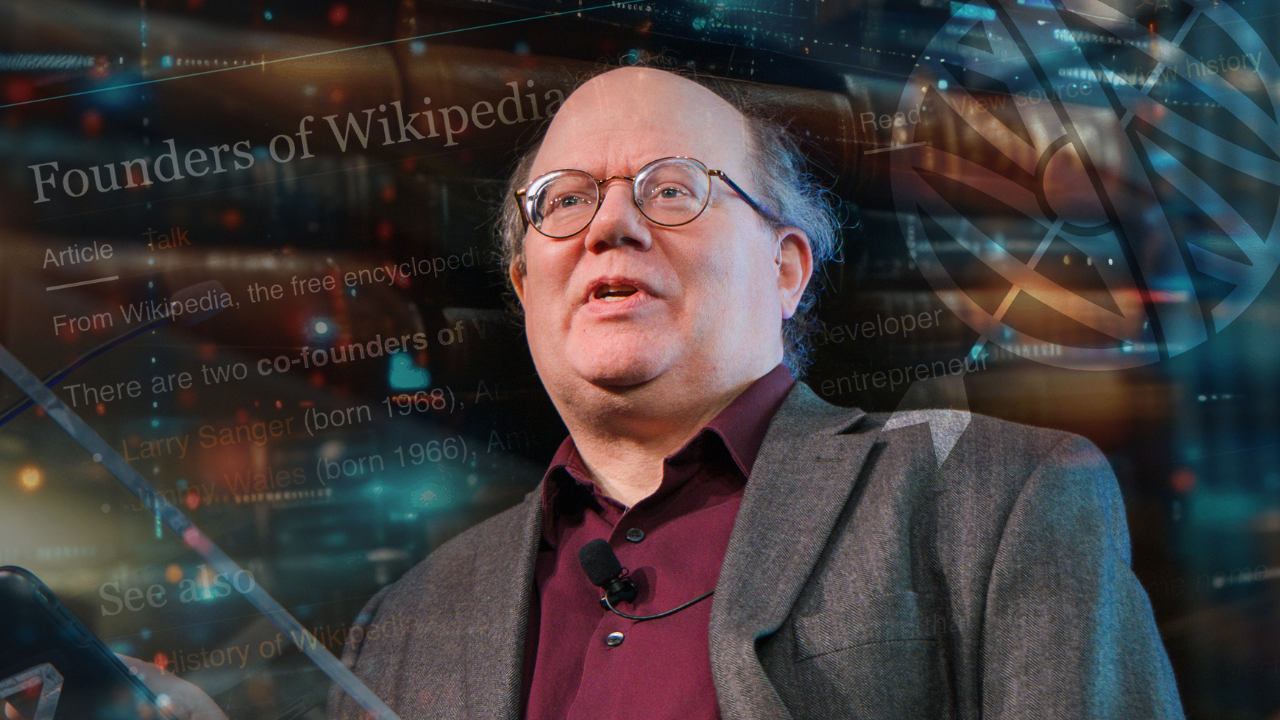
On this episode of ID The Future, hosts Andrew McDiarmid and Nathan Jacobson continue their conversation with Wikipedia co-founder Larry Sanger. In this segment, Sanger explains how his philosophy to decentralize the world's knowledge plays into science and truth-seeking in the age of AI. He talks about the shortcomings of large language models and why humans are irreplaceable and essential to increasing our understanding of the world. Sanger also discusses the challenges that online encyclopedias like Wikipedia have faced in accurately and fairly reflecting controversial or important topics. This is Part 2 of a two-part conversation. Check out Part 1 in a separate episode! Source
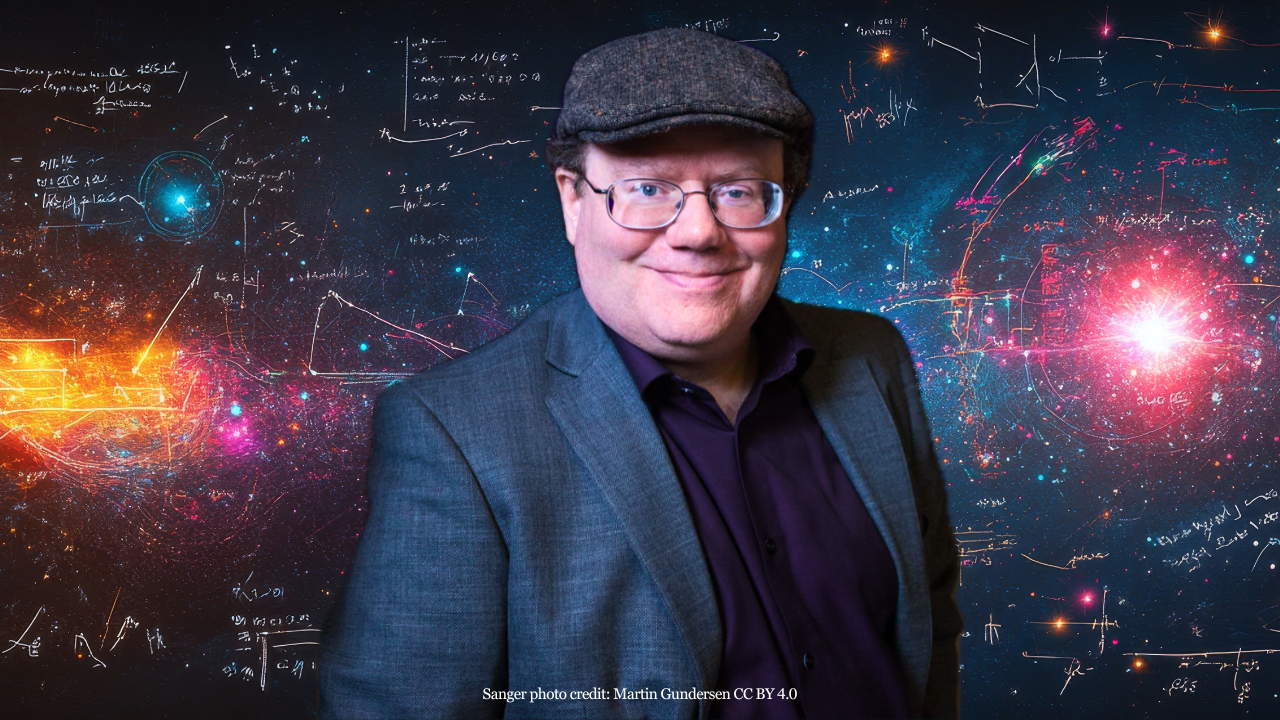
Ep 2046Skeptic to Believer: Wikipedia Co-Founder Larry Sanger’s Intellectual Journey
On this ID The Future, Wikipedia co-founder Larry Sanger joins hosts Andrew McDiarmid and Nathan Jacobson to delve into his personal evolution from longtime skeptical philosopher to belief in God. After falling out of faith in his teens, Sanger became a committed skeptic and agnostic, adhering to the principle of methodological skepticism for decades as he evaluated traditional arguments for the existence of God and found them wanting. And while Sanger was unconvinced by the claims of "new atheists" like Richard Dawkins and Daniel Dennett, he found himself drawn to the arguments of intelligent design scientists like Stephen Meyer, Michael Behe, and William Dembski. In this first half of a conversation, Sanger recounts his fascinating intellectual journey while unpacking the intelligent design arguments he found most convincing along his journey. This is Part 1 of a two-part interview. Look for Part 2 in a separate episode. Source
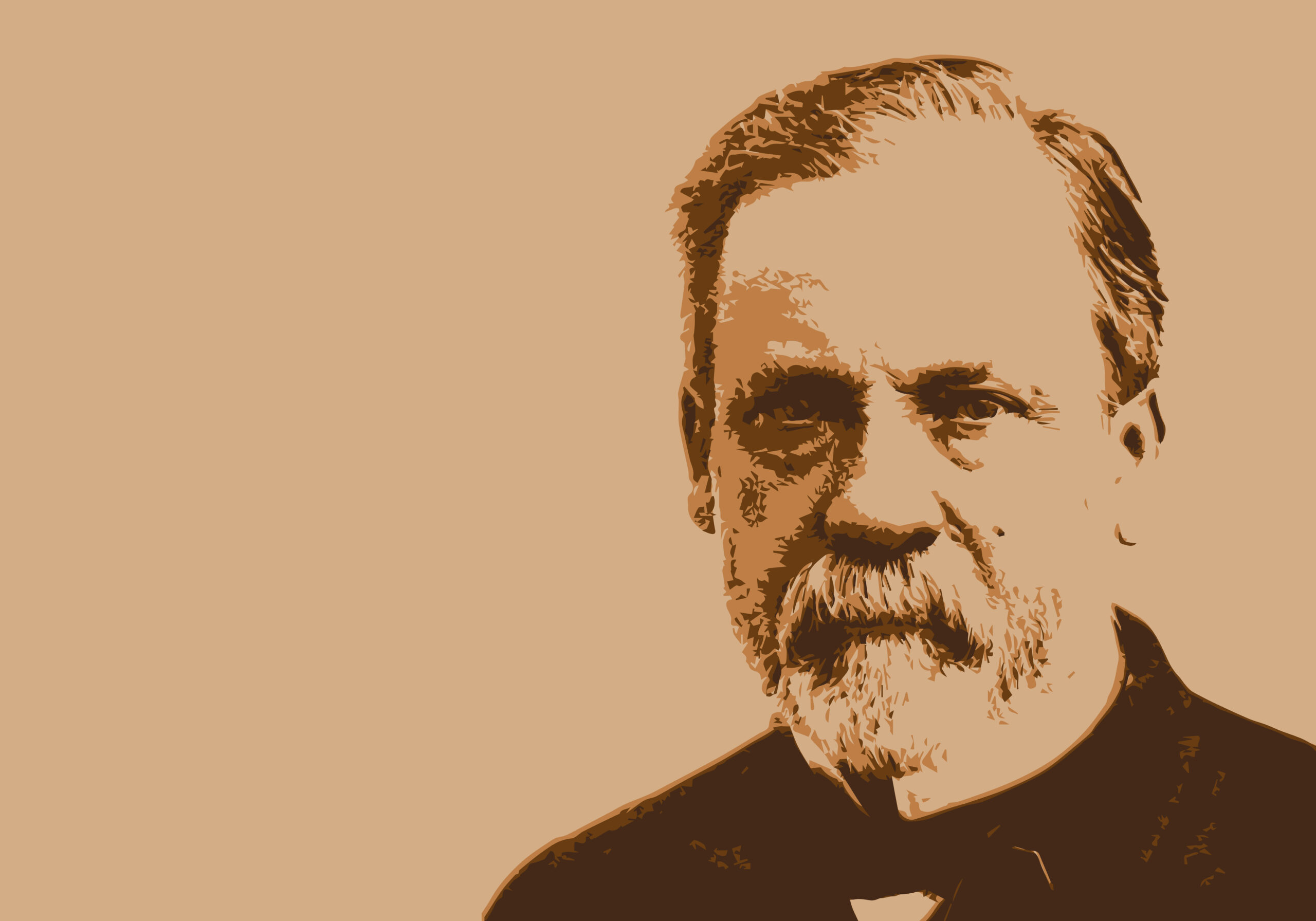
Ep 2045Louis Pasteur: A Man of Science and Faith
On this episode of ID the Future out of the archive, biologist Ann Gauger walks listeners through the triumphs, flaws, and tragedies of Louis Pasteur, the French scientist whose scientific breakthroughs have saved millions of lives, and whose work on microbes sounded the death knell of the idea of spontaneous generation. Dr. Gauger also discusses his pioneering and life-saving work on vaccines, the Christian faith that saw him through the death of his three of his children, and more. Source

Ep 2044Why the “Universe From Nothing” Model Points to Intelligent Design
Did our universe come from nothing, as some physicists have proposed? On this ID The Future, host Andrew McDiarmid critiques the audacious claim that our universe popped into existence out of nothing. What is nothing? What isn’t nothing? And how does the universe from nothing claim actually imply intelligent design? McDiarmid shares audio from the Science Uprising video series, as well a portion of an interview with Dr. Stephen Meyer, to help answer these questions. Source

Ep 2043Brian Miller on Circular Reasoning in Origin of Life Theories
Is origin of life research going round in circles? This is ID the Future, a podcast that isn't afraid to tackle the big questions about evolution and intelligent design. Today, host Eric Anderson chats with physicist Dr. Brian Miller about circular reasoning and other problems in origin of life research. They discuss the work of Stephen Meyer and James Tour, highlighting the information problem and the difficulties in natural chemical synthesis of life's building blocks. Miller analyzes a new paper on the supposed order of amino acid recruitment into the genetic code, critiquing its underlying circular reasoning. Dr. Miller also explains the concept of causal circularity in biological systems and reveals why intelligent design provides a better explanation for the origin of life than an unguided evolutionary scenario. Source

Ep 2042Robert Shedinger: Darwin’s Sacred Cause is “Historical Fiction”
On today’s ID the Future from our archive, historian of science Michael Keas concludes a two-part conversation with science-and-religion scholar Robert Shedinger about his research into the writing and work of 19th century naturalist Charles Darwin. In this segment, Shedinger makes the case that a well-known biography of Charles Darwin, Darwin’s Sacred Cause, is deeply misleading. The book tries to make Darwin seem like a saintly abolitionist. Instead, argues Shedinger, it's closer to historical fiction than the truth. This is Part 2 of a two-part conversation. Visit idthefuture.com for more. Source

Ep 2041Casey Luskin on Intelligent Design, Evolution, and the Fossil Record
On this episode, Dr. Casey Luskin concludes his conversation about the basics of intelligent design with Sam Kleckley, host of the Live Life in Motion podcast. You'll find this interview (including Part 1) particularly helpful if you are new to the science of intelligent design yourself, or you have friends or family who are open to learning more. In Part 2, Dr. Luskin begins by discussing the fossil record and the abrupt appearance of new life forms. He also tackles the often-debated question of the intelligent agent behind the design found in nature. Finally, in the realm of education, he addresses the controversy surrounding teaching evolution and intelligent design in schools. This is Part 2 of a two-part conversation. Source

Ep 2040Unpacking Intelligent Design: A Beginner’s Guide with Casey Luskin
How would you explain intelligent design to someone who has just recently begun looking into it? Perhaps you are new to it yourself, or you have a friend or family member who is curious. Today, Dr. Casey Luskin begins a two-part discussion of the basics of intelligent design with Sam Kleckley, host of the Live Life in Motion podcast. Part 1 presents a nice overview of where and when intelligent design began, how it developed, and why it is such a compelling idea for so many. Luskin also discusses some key lines of evidence for intelligent design, including the complexity of living things at the cellular level and the evidence for the fine-tuning of the universe. This is Part 1 of a two-part discussion. Source
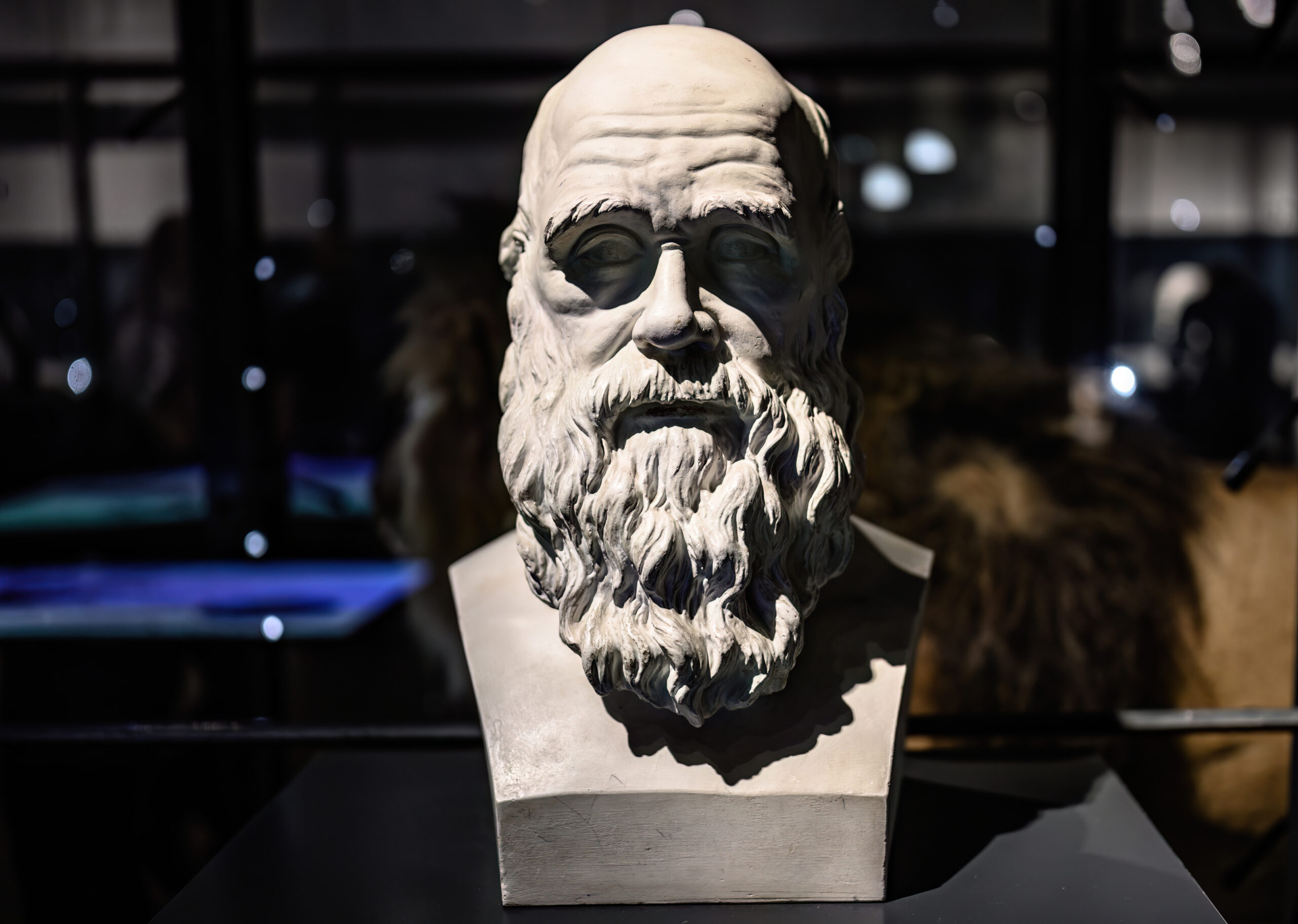
Ep 2039Rescuing Evolutionary Theory from Darwinian Mythology
Does the public promotion of Darwin's theory of natural selection match Darwin's own private view of his theory? On this episode of ID the Future out of the archive, historian of science Michael Keas begins a two-part conversation with Robert Shedinger, the Wilford A. Johnson Chair of Biblical Studies and Professor of Religion at Luther College and author most recently of The Mystery of Evolutionary Mechanisms: Darwinian Biology's Grand Narrative of Triumph and the Subversion of Religion. Shedinger reports on the contrast between Darwin's private view of his theory of natural selection and the public view as detailed in his published work. Shedinger also notes the deficiency in evidence for Darwin's proposal, despite claims to the contrary from his followers and evangelizers today. Source
Ep 2038A Celebrated Life: Colleagues Remember Dr. Jonathan Wells
On this ID The Future, we bring you excerpts from a recent gathering to celebrate the life of biologist Dr. Jonathan Wells, who passed away in September 2024 at the age of 82. Dr. Wells was one of the first fellows of Discovery Institute’s Center for Science and Culture. In 2000, Wells took the science world by storm with Icons of Evolution, a book showing how biology textbooks routinely promote Darwinism using bogus evidence — icons of evolution like Ernst Haeckel’s faked embryo drawings and peppered moths glued to tree trunks. Dr. Wells's achievements in the field of biology are notable. In this episode you’ll get a glimpse into Dr. Wells’s life and character as well as his relentless search for scientific truth. This episode includes eulogies from Dr. John West, Dr. Paul Nelson, Dr. Richard Sternberg, and Dr. Casey Luskin. Learn more about Jonathan Wells at www.jonathanwells.org. Source

Ep 2037How to Study Biology with Systems Engineering Principles
Traditional methods in biology have proven insufficient for understanding and accurately predicting complex biological systems. Why? The great majority of biologists are trained to study life from the bottom up, as the result of unguided evolutionary processes. It turns out there are better ways to observe, question, hypothesize, experiment, and analyze a complex system. On this ID The Future, host Andrew McDiarmid welcomes biochemist and metabolic nutritionist Dr. Emily Reeves to the podcast to discuss her co-authored paper on how biologists can apply principles from systems engineering to biology to better approach the study of complex living systems. Dr. Reeves explains how the new methodology works and how it can produce fruitful scientific research. Source
Ep 2036Puncturing the Science-Faith Warfare Myth
On today’s ID the Future out of the vault, join host and geologist Casey Luskin and historian of science Michael Keas for a lively conversation puncturing a series of anti-Christian myths about the history of science, including the Dark Ages myth, the flat-earth myth, the myth that humanity was rendered insignificant by the discovery of the size of the universe, and the simplistic revisionist history of Galileo and the Inquisition. What about the claim in the recent Cosmos TV series reboot that in abandoning his traditional Jewish faith, seventeenth-century philosopher Baruch Spinoza was able to provide an improved framework for doing science? As Keas argues, the truth is just the opposite. Spinoza, he says, abandoned a key tenet of Judeo-Christian theology that had proven vital to the birth of science. Source

Ep 2035Missiles & Jackhammers: How Plants Spread Themselves Far and Wide
Host Andrew McDiarmid welcomes science reporter David Coppedge to the show to explore some fascinating examples of intelligent design in the plant world. They look so helpless tied to the soil, but plants and fungi have perfected technologies for spreading themselves far and wide. Coppedge and McDiarmid unpack the ingenious methods plants and fungi use to disperse their spores. The conversation also touches on the engineering principles behind plant root systems, and how studying these natural designs can inspire advancements in human technology through biomimetics. Source

Ep 2034Brian Miller: Transforming Lives Through the Summer Seminar
On this episode of ID The Future, host Andrew McDiarmid interviews Dr. Brian Miller about Discovery Institute's Summer Seminar Program, which offers a unique opportunity for students and professionals to explore intelligent design across various scientific disciplines. Dr. Miller shares his personal journey from participant to teacher, highlighting the program's impact on his career and the transformative experiences of other past graduates. Miller and McDiarmid also review frequently asked questions about the program, including who is eligible to apply, the costs associated with the program, the focus of the curriculum, and more. Source

Ep 2033A Privileged Place for Life and Discovery
On this ID the Future out of the vault, host and geologist Casey Luskin continues his conversation with astrobiologist Guillermo Gonzalez about the many ways Earth’s place in the cosmos is finely tuned for life. In this second half of their conversation, Gonzalez zooms out to discuss the galactic habitable zone and the cosmic habitable age. Luskin says that the combination of exquisite cosmic and local fine tuning strongly suggests intelligent design, but he asks Gonzalez whether he thinks these telltale clues favor theism over deism? That is, does any of the evidence suggest a cosmic designer who is more than just the clock maker God of the deists who, in the words of Stephen Dedalus, “remains within or behind Read More › Source
Ep 2032Humility and Humor: Richard Sternberg Remembers Jonathan Wells
On this episode of ID The Future, host Andrew McDiarmid continues a series of interviews celebrating the life and legacy of Dr. Jonathan Wells, our close colleague and friend who passed away in 2024 at the age of 82 years old. Dr. Wells was one of the first fellows of Discovery Institute's Center for Science and Culture and made significant contributions to science and to the arguments for intelligent design. Today, evolutionary biologist Dr. Richard Sternberg shares personal anecdotes and insights into Dr. Wells's character, his contributions to biology and epigenetics, and the profound impact he had on those around him. Source