Instant Classics
70 episodes — Page 1 of 2
Roman Cancel Culture
What did Roman emperors really look like?
The Bayeux Tapestry: Britain’s Lost Latin masterpiece
Classic Chats: Daniel Mendelsohn on translating the Odyssey
How Homer’s Odyssey Conquered the English-speaking World
How Homer's Odyssey Conquered the Ancient World
The Vestal Virgins - just how virginal were they?
Classic Chats: Robert Harris on ‘Agrippa’
Marcus Agrippa: Power behind the throne
BONUS Emily Wilson on translating the Odyssey
Classic Chats: Charlotte Higgins on Ukrainian Lessons
BONUS: Which Translation of the Odyssey should I read?
Classical Beach Reads
Classic Chats: Count Binface (Bonus episode)
Classic Chats: Tom Hiddleston on Pompeii
Christopher Nolan's Odyssey 3: The Pedants Revolt
Christopher Nolan's Odyssey 2: Instant Verdict
Christopher Nolan's Odyssey 1: What you need to know before you go
USA 250: “I’m Spartacus!”
USA 250: Building a new Rome
USA 250: President Jackson and the Emperor’s Tomb
USA 250: America’s Roman Revolution
What did the Romans dream about?
Cleopatra 5: Cleopatra on Screen
Cleopatra 4: Cleopatra on the Page
BONUS Mary & Charlotte on the latest trailer for Christopher Nolan's Odyssey
Cleopatra 3: Life After Death
Cleopatra 2: Cleopatra Meets the Romans
Cleopatra: Last Egyptian Pharaoh
Classic Chats: Grayson Perry on why he hates classical civilisation
Talking Classics with Mary Beard
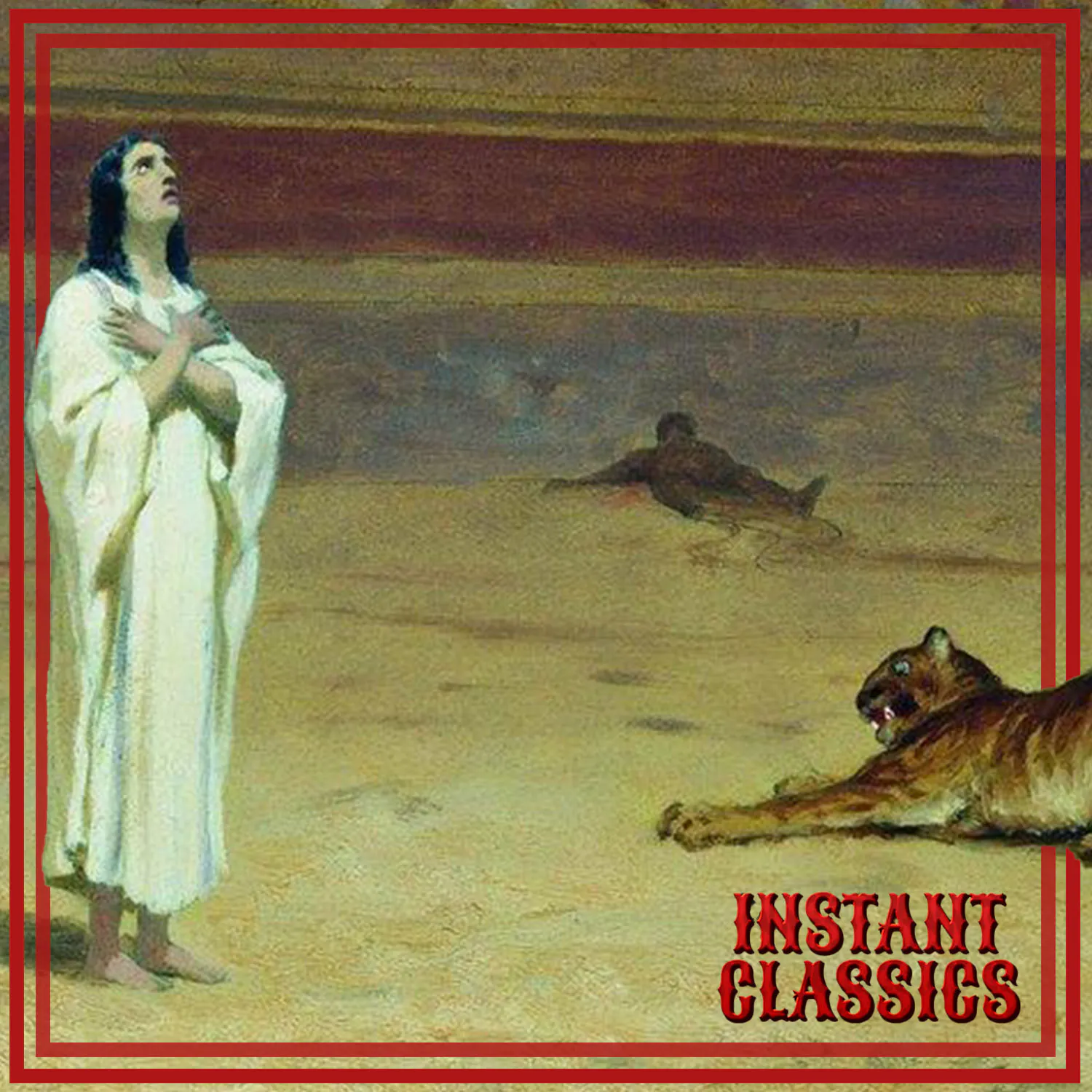
Perpetua: A Martyr in Her Own Words
Mary and Charlotte explore the story of Perpetua, a young Christian woman tortured and murdered in the Roman arena in Carthage (modern day Tunisia) for her faith in the 3rd Century CE. Astonishingly, Perpetua kept a diary during her last days - right up until the point she was led into the arena - recording her life, dreams and fearless conviction that death was better than renouncing God. Even more astonishingly, this diary survives, incorporated into a longer account of her martyrdom narrated by another hand.. Perpetua describes the attempts by both her father and the presiding Roman official to convince her to just say the words that will save her life. She describes her inability to do this, even though it means depriving her baby of its mother. She also describes several of her dreams in the days before her death. The narrator takes over to recount what happened next. Perpetua was mauled by animals and finally despatched by a gladiator. Perpetua’s account is so remarkable, many have questioned its authenticity. The current scholarly verdict is that it is real, providing a rare insight not only into female experience in the Roman Empire - but a woman living through extreme circumstances. Mary and Charlotte recommend some further reading: You can find an online translation of Perpetua’s diary here: https://www.ssfp.org/pdf/The_Martyrdom_of_Saints_Perpetua_and_Felicitas.pdf Barbara Gold, Perpetua: Athlete of God (Oxford UP, pb, 2021) and Sarah Ruden, Perpetua: the woman, the martyr (Yale UP, 2025) are accessible introductions to Perpetua (both including translations of the whole or parts of the text) More specialist studies include; Jan N. Bremmer and Marco Formisano (eds), Perpetua’s Passions (Oxford UP, 2012) Thomas J. Heffernan, The Passion of Perpetua and Felicitas (Oxford UP, 2012) @instaclassicpod for Insta, TikTok and YouTube @insta_classics for X email: [email protected] Instant Classics handmade by Vespucci Producer: Jonty Claypole Video Editor: Jak Ford Theme music: Casey Gibson Learn more about your ad choices. Visit podcastchoices.com/adchoices
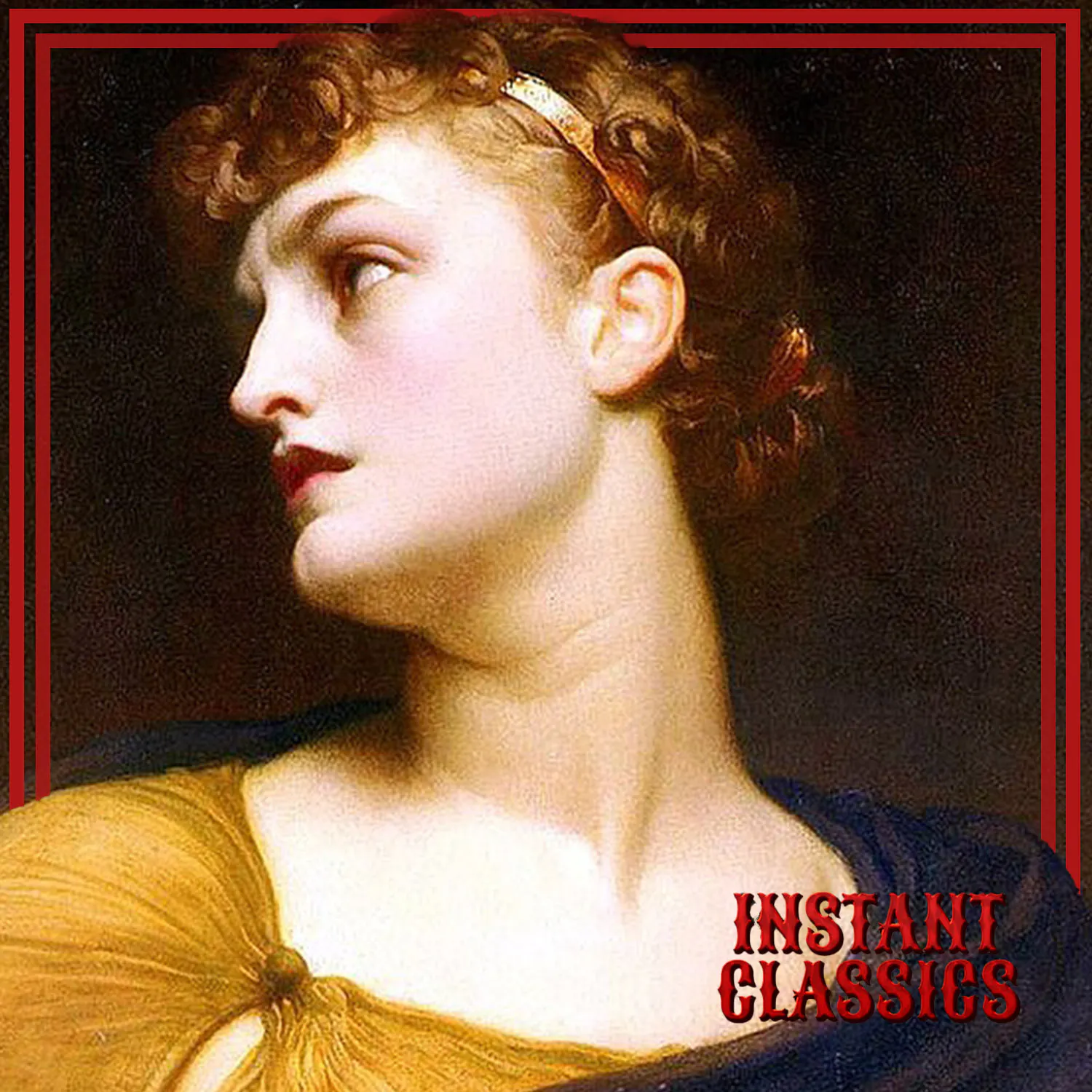
Antigone: Girl vs Tyrant
Antigone is one of the most regularly staged Greek tragedies with great actors lining up to play the part. Juliette Binoche, Juliet Stevenson and Gillian Anderson have all had a crack in recent years. In this episode, Mary and Charlotte look at why Antigone is such an enduringly interesting role. She is sometimes framed as a female Hamlet caught between family loyalties and the needs of the state. Antigone was written by Sophocles in the mid-5th Century BCE. It tells the story of King Creon’s attempts to restore order to the city of Thebes following a civil war. He orders that the body of the defeated rebel Polynices should lie unburied as punishment. Antigone, sister of Polynices, disobeys this order and gives her brother proper burial rites (as the gods demand). Creon sentences her to death for betrayal. Antigone is often portrayed as a proto-feminist icon - the brave woman standing up to the patriarchy. But is this really what Sophocles intended? King Creon has far more lines and is, like Antigone, caught in an impossible situation. There’s even one way of viewing the play as a parable on what happens when women meddle in the affairs of the state. It is, of course, precisely these ambiguities that make Antigone so popular. It raises questions that can never be answered and its relevance shifts from generation to generation. Mary and Charlotte recommend some further reading: There is a big book by George Steiner on the history of Antigone: Antigones (Oxford UP, pb, 1986), including Hegel and much more. More approachable are sections of Helen Morales, Antigone Rising: the subversive power of Greek myth (Wildfire, pb, 2021) and the video lecture by Simon Goldhill, https://www.cambridgegreekplay.com/talk-wheres-the-tragedy-in-antigone-by-prof-simon-goldhill Nelson Mandela mentions the performance on Robben Island in his Long Walk to Freedom (Back Bay Books, pb, 1995). Mary describes her own changing views of the play in Talking Classics (Profile books, 2026) @instaclassicpod for Insta, TikTok and YouTube @insta_classics for X email: [email protected] Learn more about your ad choices. Visit podcastchoices.com/adchoices
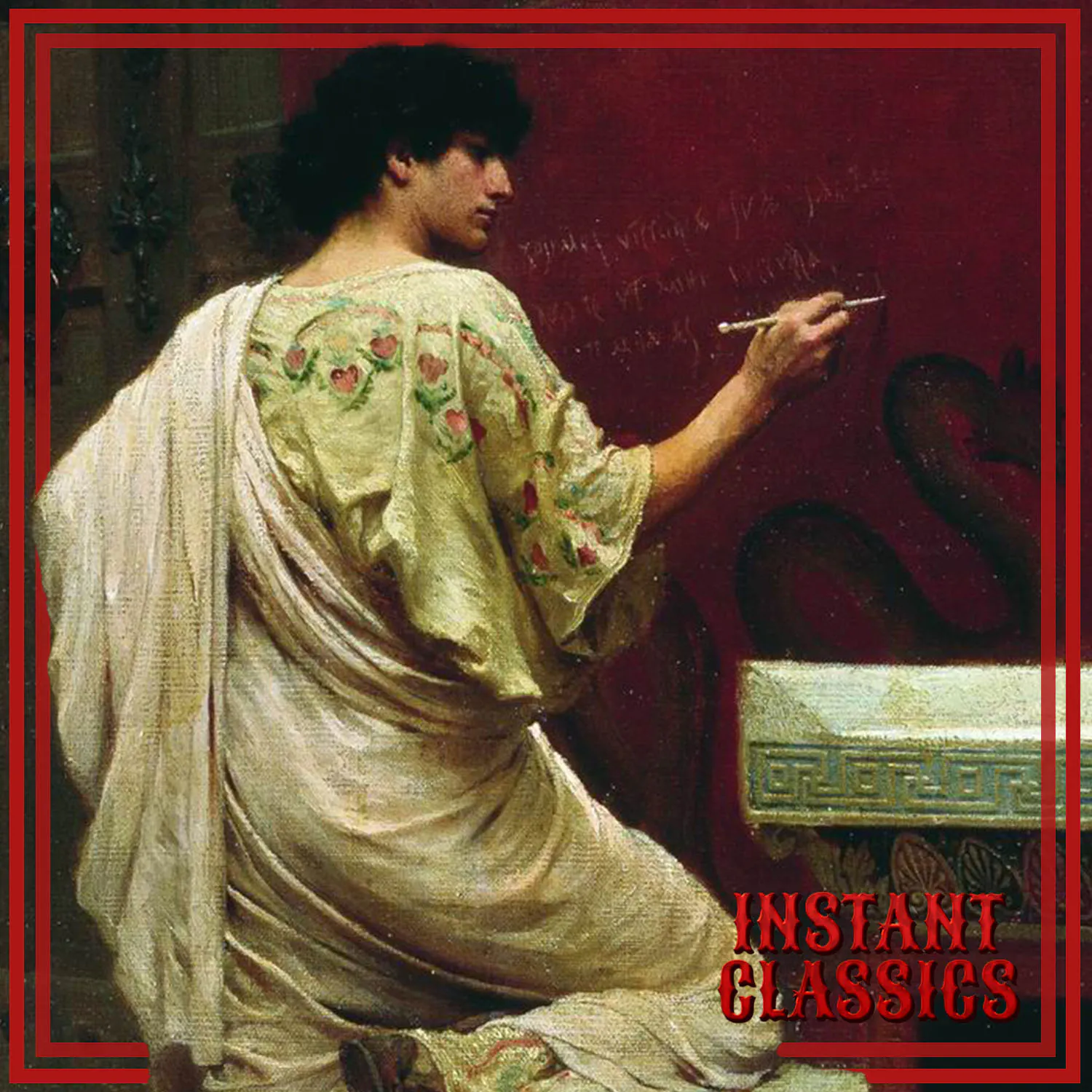
Roman Graffiti: The Writing on the Wall
Expressions of love, bawdy jokes, political satire or even just saying so-and-so was here - few things bring us as close to the Romans as their graffiti. In large part, thanks to Vesuvius preserving the streets of Pompeii and Herculaneum under rock and ash. In this episode, Mary and Charlotte look at what graffiti tells us about Roman society - both the relatable aspects and the unfathomable. Perhaps the biggest difference is the enhanced role graffiti played in a society which did not have forms of mass communication. Roman graffiti is like graffiti today, but also like social media. In both cases, nobody thought anyone would be looking at it 2000 years later. Roman graffiti goes beyond the official documents. It’s a rare glimpse of daily life and opinions that we today weren’t intended to see. Mary and Charlotte recommend some further reading: A searchable database of graffiti in Pompeii and Herculaneum: https://ancientgraffiti.org/Graffiti/ Charlotte’s article on the Spanish amphora scratched with a Virgil quote: https://www.theguardian.com/commentisfree/2023/jun/24/ancient-roman-pot-virgil-poetry Charlotte discusses the ‘conticuere omnes’ Virgil quote found in Silchester in her book Under Another Sky, Vintage, 2014 Kristina Milnor discusses Pompeian graffiti in detail in Graffiti and the Literary Landscape in Roman Pompeii (Oxford UP, 2014); there’s a chapter devoted to Virgil. For the brothel graffiti, see Sarah Levin-Richardson, The Brothel of Pompeii (Cambridge UP, 2019), chap 3. The classic study of Greek and Roman literacy is W. V. Harris, Ancient Literacy (Harvard UP, pb. 1991), developed in Alan Bowman and Greg Woolf, Literacy and Power in the Ancient World (Cambridge UP, pb, 2008) @instaclassicpod for Insta, TikTok and YouTube @insta_classics for X email: [email protected] Instant Classics handmade by Vespucci Producer: Jonty Claypole Video Editor: Jak Ford Theme music: Casey Gibson Learn more about your ad choices. Visit podcastchoices.com/adchoices
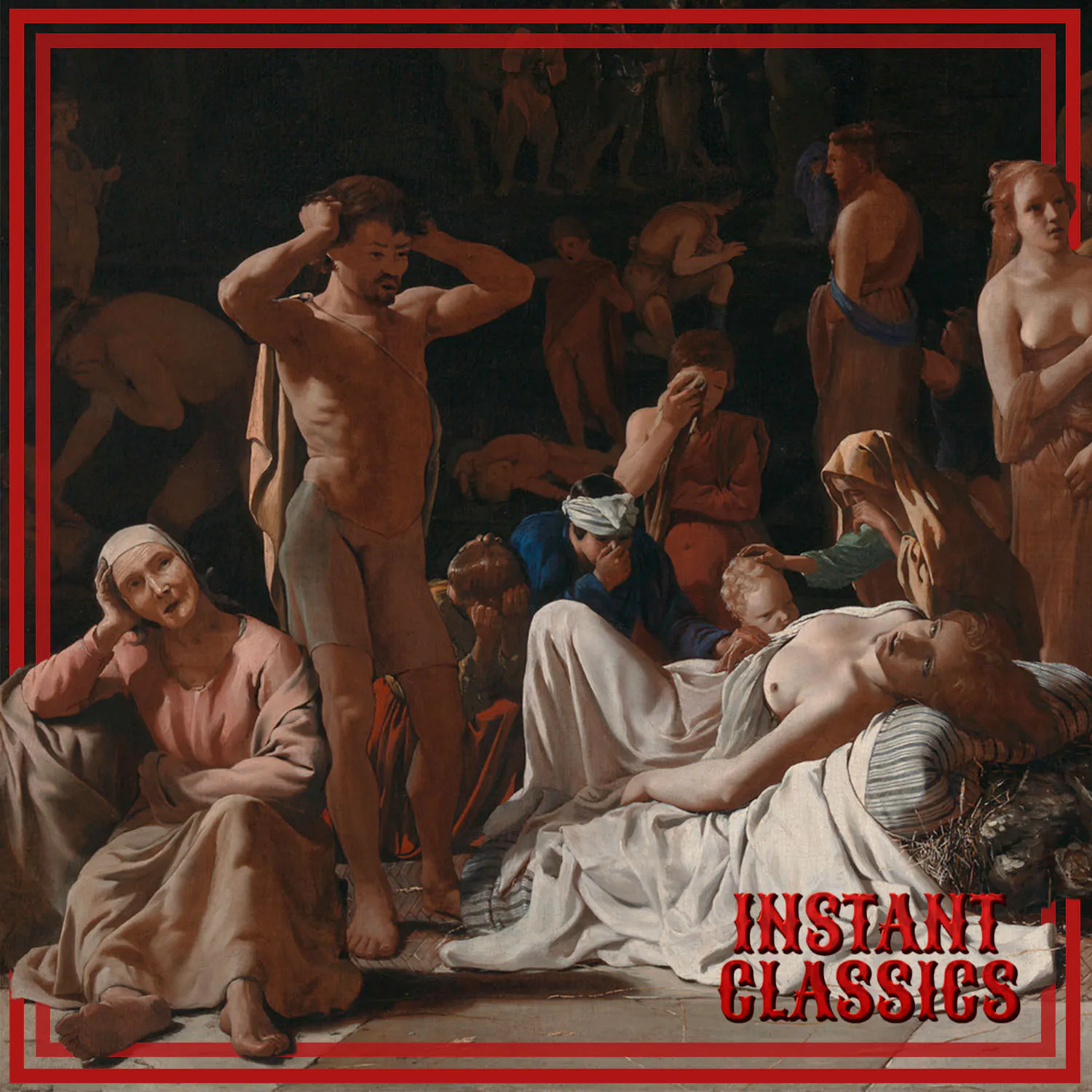
The Great Plague of Athens
In 430 BCE, Athens was hit by a terrible plague that ultimately claimed around a third of the population. All the social niceties we associate with Ancient Athens collapsed. Citizens turned on one another. The dead were left unburied. Mary and Charlotte both recount and question the ‘facts’ of the epidemic as told by historian, eyewitness and plague survivor Thucydides. Thucydides’ account is remarkable in that it aligns with the emerging science of medicine in ancient Athens by focusing on the symptoms and natural causes rather than framing it as divine retribution from the gods. Yet, for all this, the truth is hard to pin down. We still don’t know what exactly the plague was. And Thucydides’ claims to be an objective historian are undermined by the way he presents the plague as a possible response to Athenian arrogance and hubris. Yet for all the gaps, we see many of the social characteristics of epidemics that have recurred throughout history. Social collapse, finger pointing, moralising, and arguments about which ‘truth’ to believe. Mary and Charlotte recommend some further reading: Thucydides describes the plague in his History 2, 47 - 55 Plutarch describes Pericles’ death from the plague in his Life of Pericles 38. There are plenty of translations of Thucydides available online. But NB one of the most often used (a nineteenth-century version by Richard Crawley) is also one of the least reliable. Thucydides, Apollo, the Plague and the War, Lisa Kallet, The American Journal of Philology, Fall 2013, Vol. 134, No. 3, pp. 355-382 (an interesting article in which Kallet casts doubt on the purely objective, scientific account Thucydides purports to give of the plague) A Plague Like no Other: Beyond the Buboes in Thucydides' account of the Plague of Athens, by Pere Domingo, Paula Prieto, Lluis Pons, Clinical Microbiology and Infection, May 2025 (a useful round-up of the latest medical thinking on the Athenian plague) J Longrigg, ‘Death and Epidemic Disease in Classical Athens’ in V Hope and E Marshall, Death and Disease in the ancient city (Routledge, 2000) Emily Greenwood: https://yalereview.org/article/thucydides-times-trouble (a classicist reflects on the Athenian plague and Covid) @instaclassicpod for Insta, TikTok and YouTube @insta_classics for X email: [email protected] Instant Classics handmade by Vespucci Producer: Jonty Claypole Video Editor: Jak Ford Theme music: Casey Gibson Learn more about your ad choices. Visit podcastchoices.com/adchoices
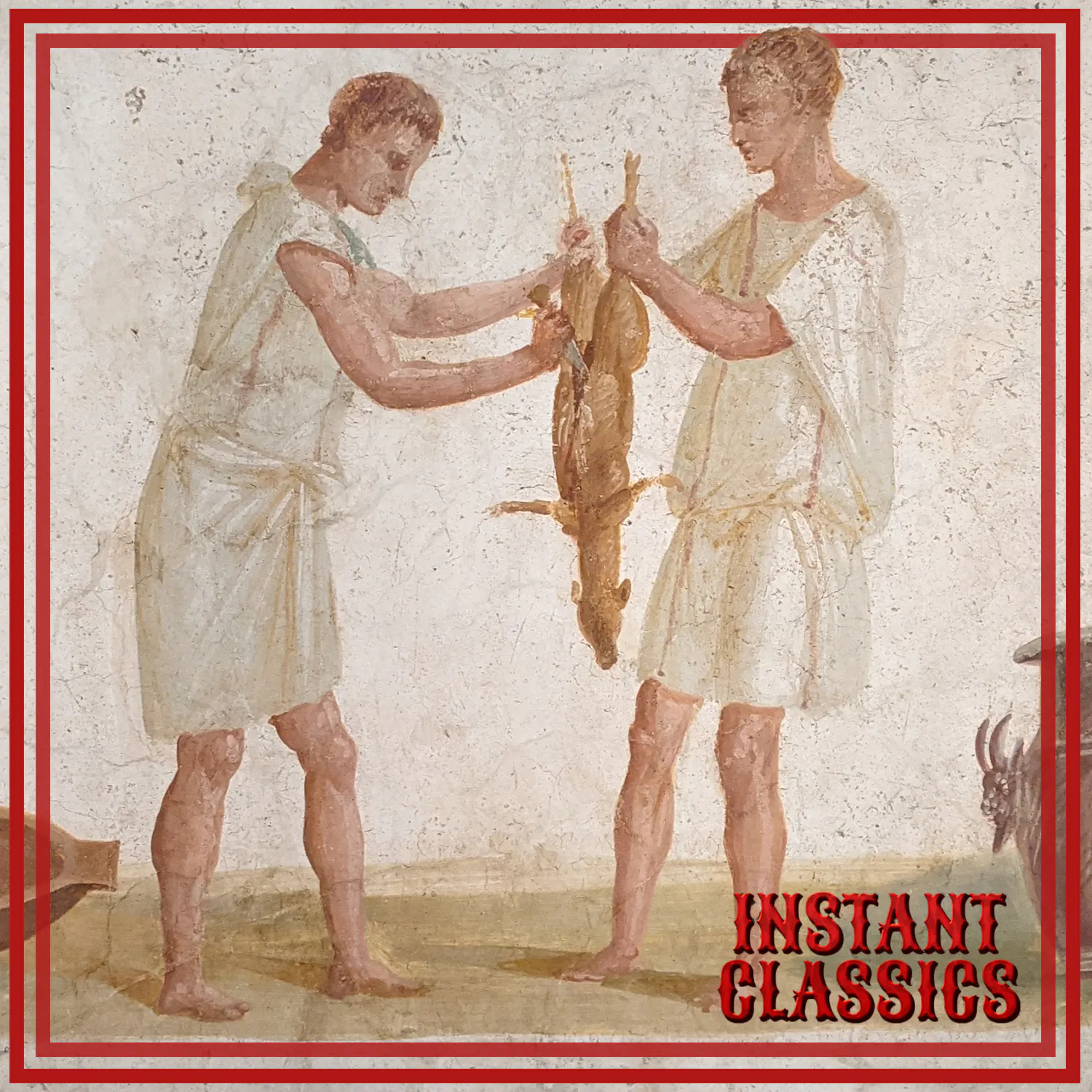
What Did the Romans Eat? Part 2: Plebs’ Food
Think Roman food and we imagine extravagant banquets involving rare delicacies. There’s some truth in this, but only for the few. In this episode, Mary and Charlotte ask: what did your average Roman eat? Cooking at home was only for the very rich - you had to have not only a kitchen, but the staff to manage it. For this reason, most Romans ate on the hoof or at fast food outlets. In Pompeii, for instance, there is surviving evidence of many such establishments: places where citizens could access a pre-cooked meal straight away. While we know that most Romans ate out, and the sorts of places where they ate, until recently there was very little evidence showing what such establishments served. Modern archaeological techniques are starting to provide answers through the analysis of excrement in Roman lavatories. Comparing the evidence from lavatories in Herculaneum and modern day Scotland, a faeces - sorry, thesis - emerges of people surviving on whatever the local countryside could provide - varying dramatically from region to region - with a few luxury imports for special occasions. Forget dormice and think cabbage. Lots of it. In myriad ways. Mary and Charlotte recommend some further reading: There is a good overview of the Herculaneum cesspit here: https://www.cambridgeamarantus.com/topics/topic-vi/63/63-evidence And detailed scientific analysis here: https://link.springer.com/article/10.1007/s11457-018-9218-y For a brief account of the menu at an ordinary Pompeian bar, see: https://www.smithsonianmag.com/smart-news/fast-food-joint-pompeii-served-snails-fish-and-wine-new-finds-suggest-180976651/ Cato’s On Agriculture – complete with its praise of cabbage – can be found in English translation here. And some information on the Bearsden latrine analysis @instaclassicpod for Insta, TikTok and YouTube@insta_classics for Xemail: [email protected] Instant Classics handmade by Vespucci Producer: Jonty Claypole Video Editor: Jak Ford Theme music: Casey Gibson Learn more about your ad choices. Visit podcastchoices.com/adchoices
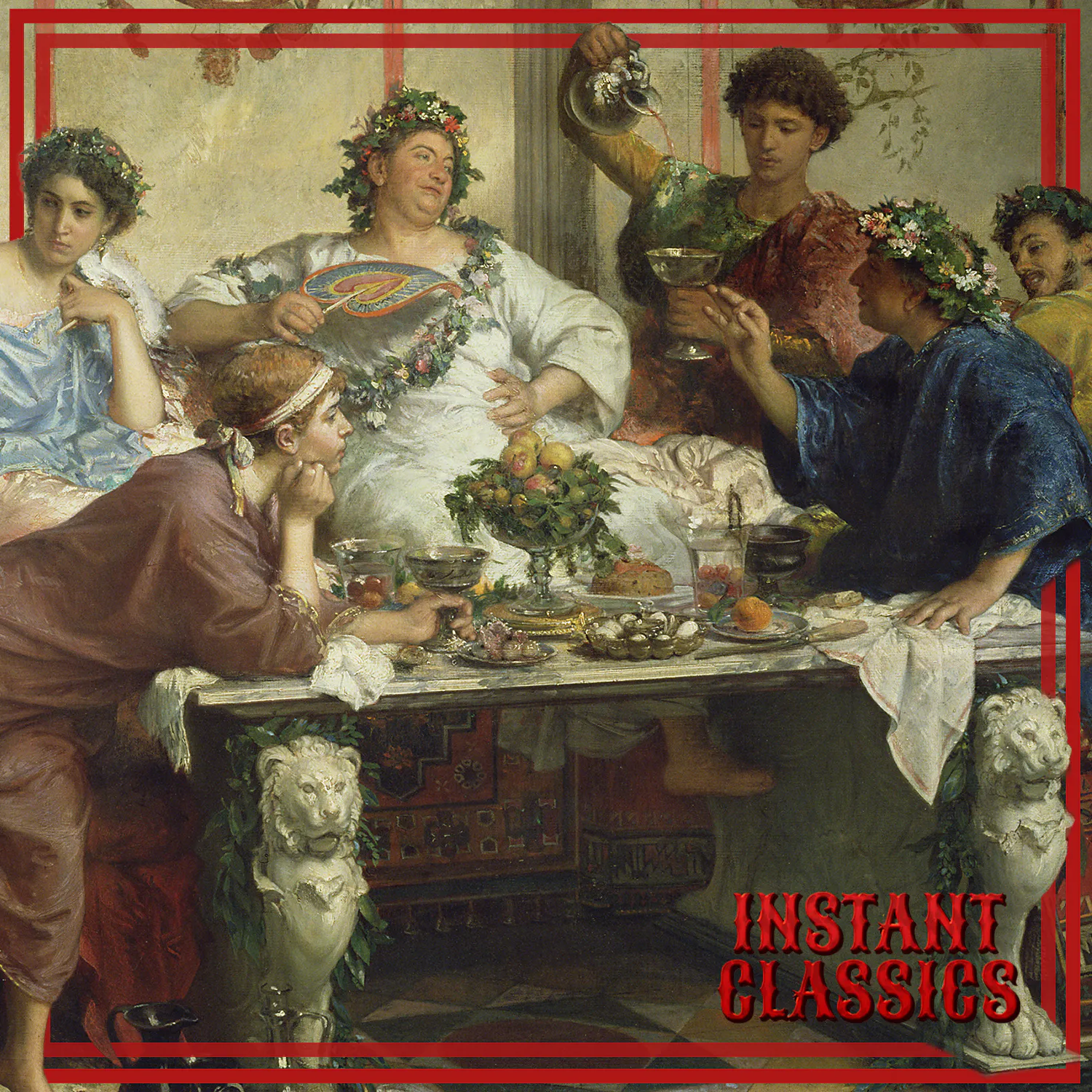
What Did the Romans Eat? Part 1: Posh Food
When we think about Roman food, most of us imagine wealthy citizens stuffing their faces with rare delicacies while reclining on their sides and taking occasional breaks to use the vomitorium (urban myth alert). In this two-part special, Mary and Charlotte cut through the fermented fish sauce to look at what the Romans really ate. And no, the vomitorium was not a place where they made themselves vomit. In this first episode, Mary and Charlotte look at posh food, beginning right at the top - in the imperial palace. Happily, there are some stories of jaw-dropping extravagance, including Elagabalus (a fave of the show) hiding pearls in the rice as a surprise for his guests. And the favourite dish of the Emperor Vitellius involved pike liver, peacock brain, flamingo tongue and lamprey sperm - all mixed together. But just as many emperors favoured a martial diet and household economy. Augustus - a snack guy - boasted about his ascetic preference for with cheese, figs and bread. Tiberius was criticised by the elite for serving leftovers. You can never trust anecdotes about the emperors, but most of the stories have a plausibility when you read them alongside a surviving cookbook - Apicius’ De re culinaria. Here we find out about garum - or fermented fish sauce (which Mary thinks is less disgusting than it sounds), animal wombs, dormice as well as a lot of vegetarian dishes (more to Charlotte’s taste). Mary and Charlotte recommend some further reading: Emperors’ reported eating habits are discussed in Mary’s Emperor of Rome (Profile pb, 2024) You can find a complete (rather lumpy) translation of Apicius online here: https://www.gutenberg.org/files/29728/29728-h/29728-h.htm Several modern writers collect some of Apicius’ recipes and adapt them for “the modern kitchen”: eg John Edwards (Rider pb, 2009), Sally Grainger (Prospect pb, 2015) and Andrew Dalby (British Museum pb, 2012) @instaclassicpod for Insta, TikTok and YouTube @insta_classics for X email: [email protected] Instant Classics handmade by Vespucci Producer: Jonty Claypole Video Editor: Jak Ford Theme music: Casey Gibson Learn more about your ad choices. Visit podcastchoices.com/adchoices

Classic Chats: Tom Holland
Mary and Charlotte talk to Tom Holland, co-host of the Rest is History. As well as being a podcasting megastar, Tom is a brilliant historian of Ancient Rome. His books include Rubicon: The Last Years of the Roman Republic, Pax: War and Peace in Rome’s Golden Age and his recent translation of Suetonius’ The Lives of the Caesars. In the first half of this episode, Tom talks about why Suetonius, with his interest in court gossip and trivia, is the historian for the current age. In the second half, he talks about his lifelong fascination with the Romans - from discovering the Asterix books as a boy, the poetry of Catullus as a teenager, and how writing a series of novels about vampires led him to write Rubicon. @instaclassicpod for Insta, TikTok and YouTube @insta_classics for X email: [email protected] Instant Classics handmade by Vespucci Producer: Jonty Claypole Video Editor: Jak Ford Theme music: Casey Gibson Learn more about your ad choices. Visit podcastchoices.com/adchoices
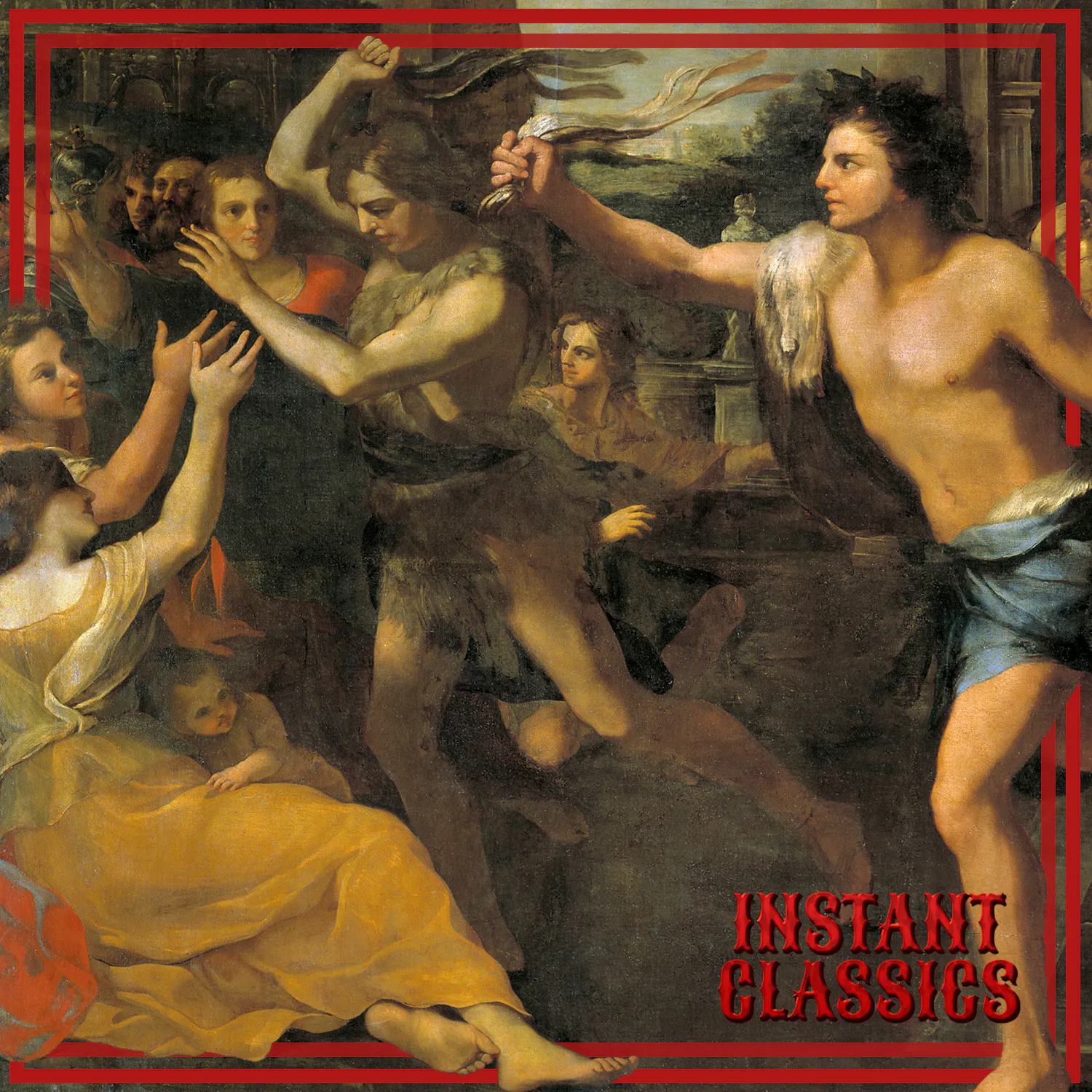
Who's Afraid of Lupercalia?
If you were to go back in time to 15 February in Ancient Rome, you might see marauding packs of naked men surging through the streets. If you were particularly unlucky one of them might whip you with a piece of goat skin. This was the Roman festival of Lupercalia. In this episode, Mary and Charlotte ask: what on earth was all this about? What did Lupercalia mean to the Romans? And what was the real purpose of any festival to the Romans? Despite its mind-boggling oddness, Lupercalia is better documented than many other Roman festivals. This is partly because the Romans themselves didn’t know really what it was about. Lupercalia was something that seemed to have always been celebrated, but opinions varied - then as now - as to what it meant. The wolfiness of lupercalia, and the suggestion the ritual began in the cave where Romulus and Remus were believed to have been suckled, implies it may have been a way for the Romans to connect with their murky origins - an example of the city performing its own past. But even this is contested. One thing is clear: despite the date, Lupercalia had nothing to do with modern Valentine’s Day - unless, of course, your idea of romance is running naked through the streets flailing a piece of animal skin… @instaclassicpod for Insta, TikTok and YouTube @insta_classics for X email: [email protected] Mary and Charlotte recommend some further reading: The Lupercalia is one of Roman religious festivals discussed in Mary’s book, with John North and Simon Price, Religions of Rome (Cambridge UP pb, 1998) volume 2 (with translation of the main ancient texts, including a section of Pope Gelasius’ pamphlet). Mary also discusses how to understand Roman festivals more widely in her chapter in C. Ando (ed.), Roman Religion, Edinburgh Readings in the Ancient World (Edinburgh UP, pb, 2003). Shakespeare’s Lupercalia is in his Julius Caesar Act 1, scene 2 Instant Classics handmade by Vespucci Producer: Jonty Claypole Video Editor: Jak Ford Theme music: Casey Gibson Learn more about your ad choices. Visit podcastchoices.com/adchoices
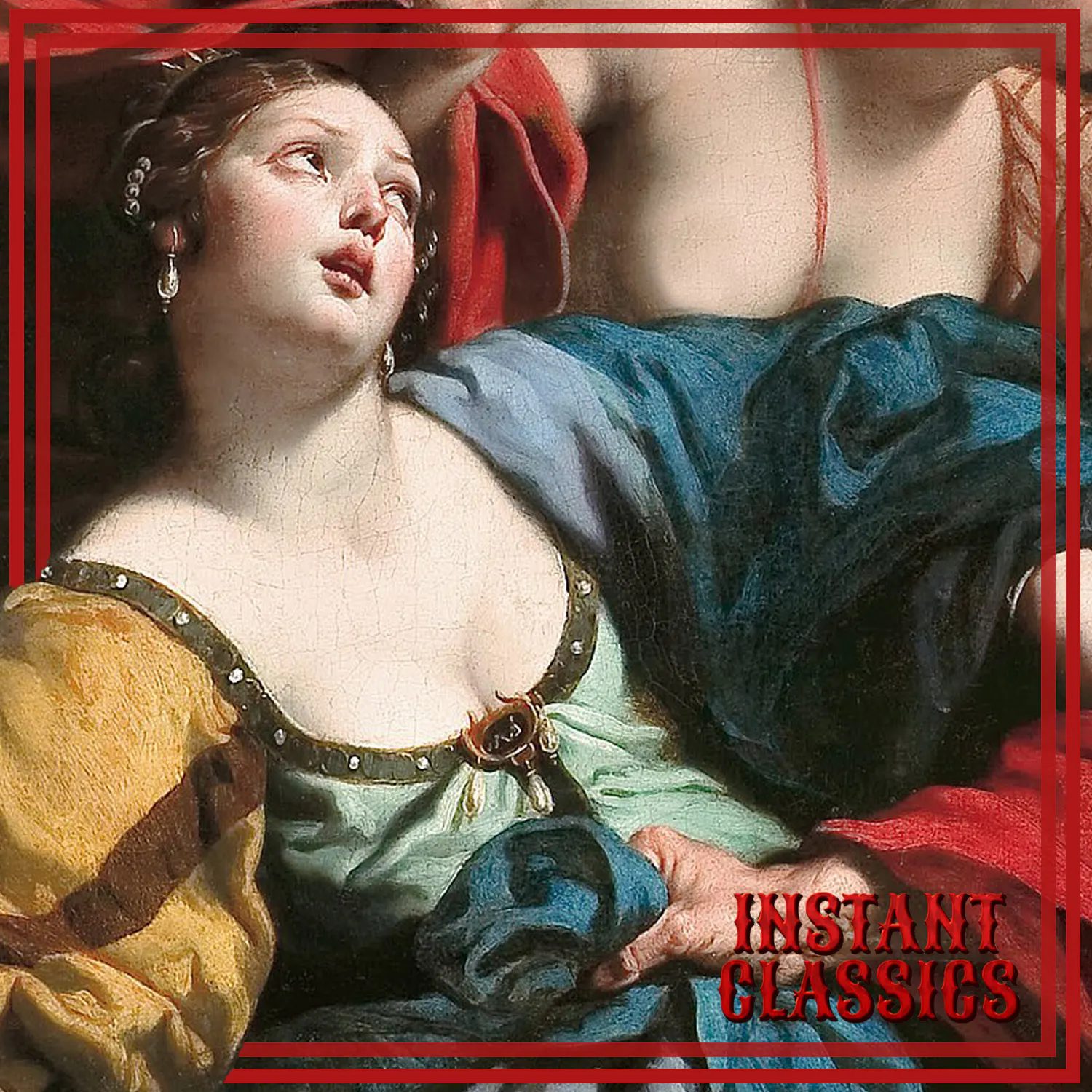
Villain, Victim... Double Agent? The Many Lives of Helen of Troy pt 4
Greece gave way to Rome and the Roman Empire too declined, but Helen of Troy survived. Forever young and relevant, she has been reimagined by generation after generation. In the last episode of this mini-series, Mary and Charlotte look at Helen’s enduring appeal in the modern age. They show how she appeared in the poetry of medieval bards, inspired playwright Christopher Marlowe to create one of the most famous lines in English literature (the face that launched a thousand ships) - and how Shakespeare, not wanting to be outdone by Marlowe, said her face launched ‘over’ a thousand ships. Mary describes some of her favourite 19th century paintings of Helen - and discusses the problem of how you paint a face that, by definition, is more beautiful than the face of any artist model. Charlotte talks about how that problem continues in cinema (with a side anecdote about asking Brad Pitt the wrong question at the launch of the film Troy). Finally, Charlotte and Mary compare some of their favourite Helens in modern literature, including Margaret Atwood’s Penelopiad (2005), Pat Barker’s The Silence of the Girls (2018) and Natalia Haynes’ A Thousand Ships (2019) @instaclassicpod for Insta, TikTok and YouTube @insta_classics for X email: [email protected] Paintings referred to: G Moreau, Helen at the Scaean Gates https://commons.wikimedia.org/wiki/File:Helene_a_la_porte_scee_-_gustave_moreau_-_2.jpg F. A Sandys, Helen of Troy https://www.liverpoolmuseums.org.uk/artifact/helen-of-troy (The original magazine illustration from which the painting is excerpted: https://collections.vam.ac.uk/item/O783702/illustration-to-helen-and-cassandra-print-sandys-frederick/ ) E de Morgan, Helen of Troy: https://www.demorgan.org.uk/collection/helen-of-troy/ Instant Classics handmade by Vespucci Producer: Jonty Claypole Video Editor: Jak Ford Theme music: Casey Gibson Learn more about your ad choices. Visit podcastchoices.com/adchoices
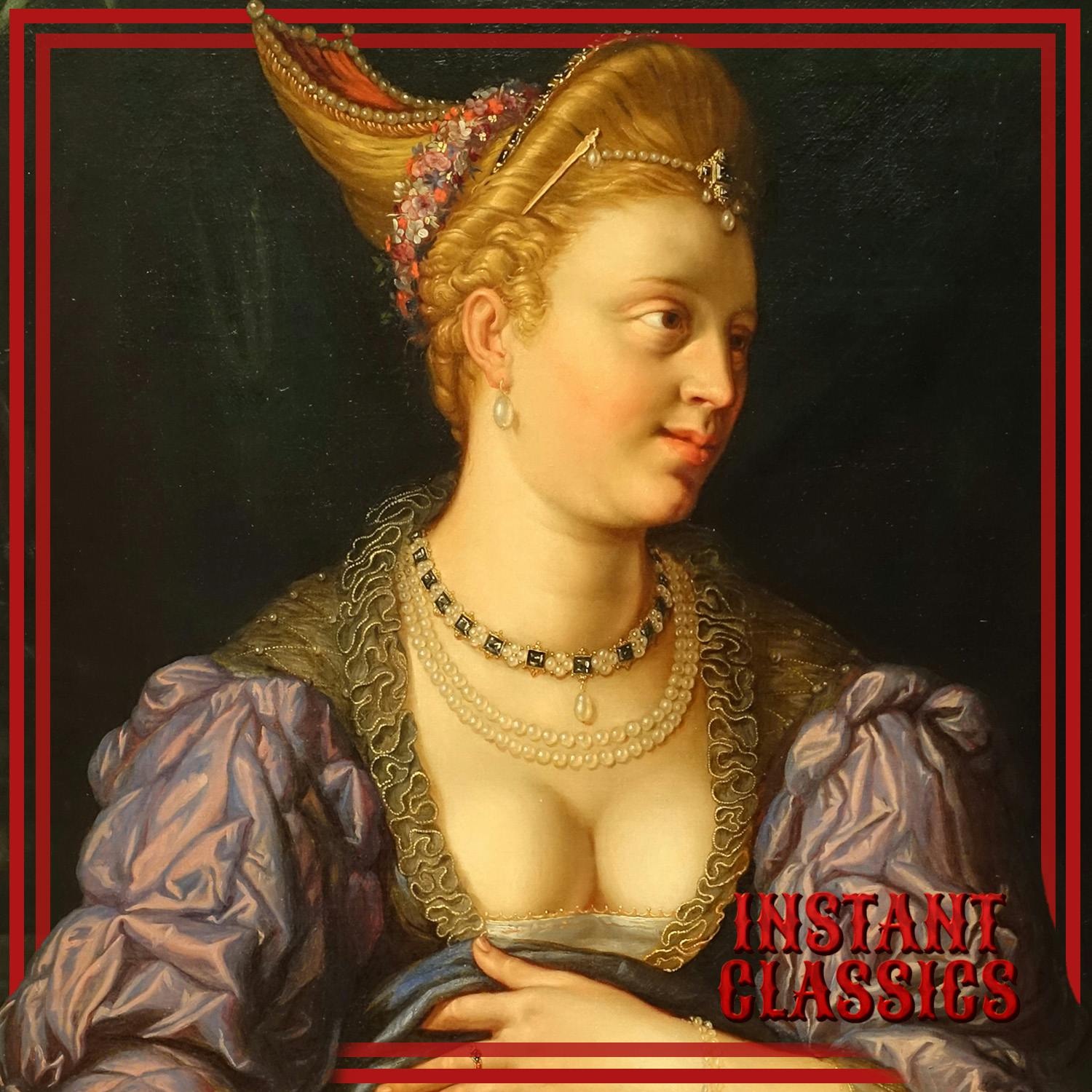
Villain, Victim... Double Agent? The Many Lives of Helen of Troy pt 3
What happened to Helen after the Trojan War? Mary and Charlotte pick up the trail of mythology’s most famous femme fatale as she makes the long journey home from Troy. The big question at the end of the previous episode was whether her husband Menelaus would kill her as revenge for betraying him with Paris. Needless to say, her charms win out and, after a long stop in Egypt, where she acquires some amazing accessories, they return home to Sparta. Just in time for Telemachus, son of Odysseus, to arrive and ask them if he knows where his father is? The Helen of The Odyssey Book 4 takes us by surprise. She and Menelaus have settled into a rather humdrum domestic companionship. And it raises the question: was all that fighting and bloodshed worth it? For this? Just as fascinating as Homer’s surprise depiction is a theory embedded in Greek texts that Helen never actually went to Troy, but sat out the whole affair in relative safety in Egypt. The Helen people saw on the ramparts of Troy was simply an eidolon - an image. Mary and Charlotte show how the true nature of Helen - villain, victim or double agent? - provided an endless source of debate, and opportunities for creative flights of fancy, in the ancient world. Finally, they look at a few of the different accounts of her final years. @instaclassicpod for Insta, TikTok and YouTube @insta_classics for X email: [email protected] Mary and Charlotte recommend some further reading: In addition to the reading recommended for the earlier episodes: The whole tradition of the phantom of Helen is discussed in detail by Norman Austin in Helen of Troy and her Shameless Phantom (Cornell UP, 2018) Helen and Menelaus in Sparta feature in Book 4 of the Odyssey (with a detailed recent discussion by J Burgess in The Oxford Critical Guide to Homer’s Odyssey, ed Christensen (Oxford UP, pb, 2025)) Herodotus’ account is at his Histories 2, 112 ff Euripides’ play Helen is available online here https://www.perseus.tufts.edu/hopper/text?doc=Perseus%3Atext%3A1999.01.0100 though it is a rather old-fashioned translation (be warned!) and there is a full performance (by students) on YouTube here: https://www.youtube.com/watch?v=-MVyAZbRaK0 Emily Wilson translated Euripides’ Helen as part of a recommended (if you want to go for it) fat selection of Greek plays in recent translation: The Greek Plays: Sixteen Plays by Aeschylus, Sophocles, and Euripides (Modern Library Classics, pbck, 2017) edited by Mary Lefkowitz and James Romm Instant Classics handmade by Vespucci Producer: Jonty Claypole Video Editor: Jak Ford Theme music: Casey Gibson Learn more about your ad choices. Visit podcastchoices.com/adchoices

BONUS Mary & Charlotte on the trailer for Christopher Nolan’s Odyssey
bonusChristopher Nolan’s adaptation of The Odyssey is set to be the blockbuster event of the summer. With the first trailers now coming online, Mary and Charlotte take a look to get a sense if the hype is worth it. Have your say at… @instaclassicpod for Insta, TikTok and YouTube @insta_classics for X email: [email protected] Instant Classics handmade by Vespucci Producer: Jonty Claypole Video Editor: Jak Ford Theme music: Casey Gibson Learn more about your ad choices. Visit podcastchoices.com/adchoices
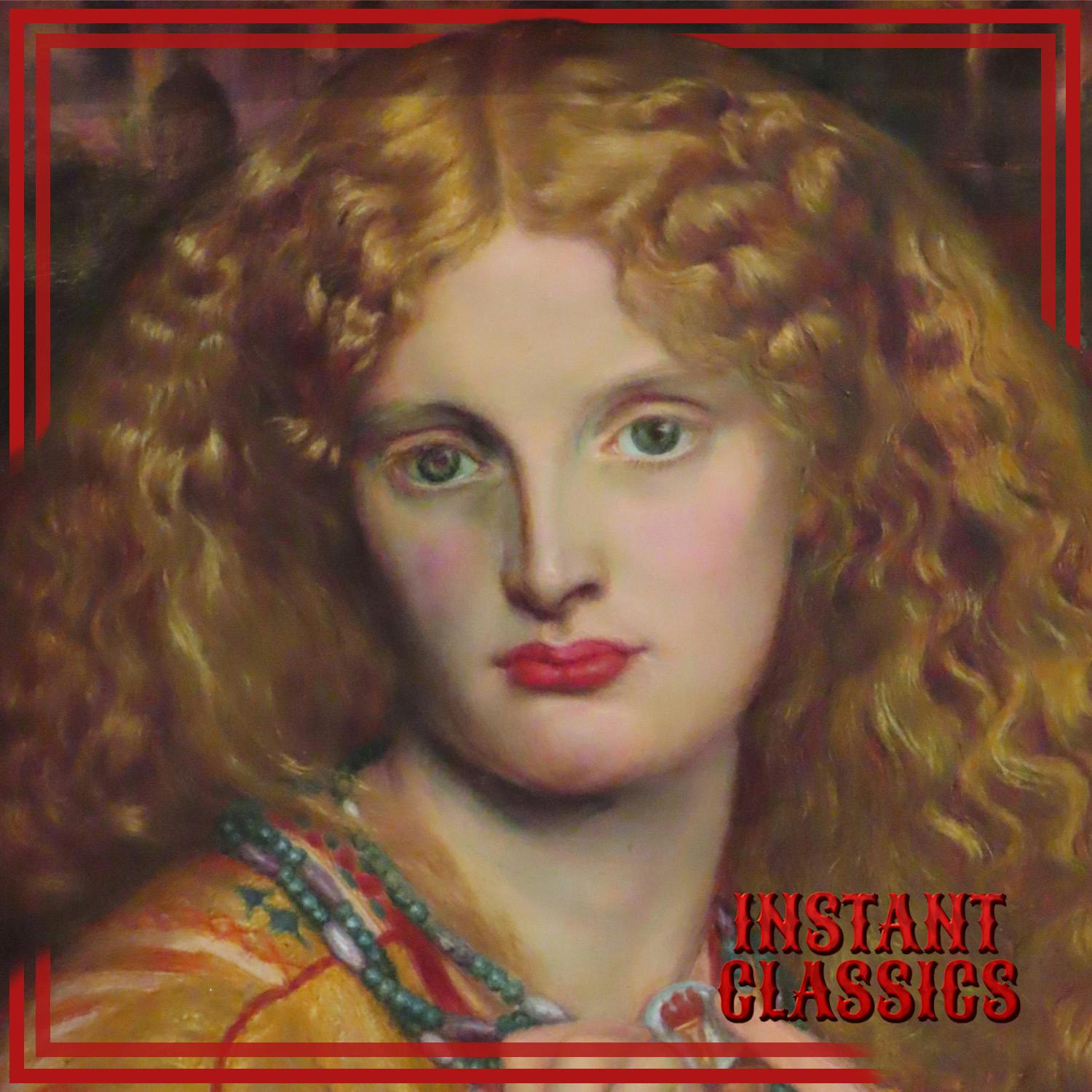
Villain, Victim... Double Agent? The Many Lives of Helen of Troy pt2
When Paris, a Trojan prince, abducted Helen of Sparta, the Greeks came in hot pursuit and besieged Troy for ten years. But what was Helen’s role in all this? Was she really kidnapped, or did she elope? And whose side was she really on during the ensuing war? Mary and Charlotte turn to a variety of ancient texts to explore these questions. In Homer’s The Iliad - the longest and greatest account of the war - Helen isn’t even one of the main characters. She watches Paris and Menelaus fight a duel in her name, draws the admiration of old men, and spends some sexy time with Paris. In The Odyssey, we find out about her role in the final episode of the war - the Trojan Horse. Here she appears more of a double agent: secretly communicating with Odysseus, but also tormenting his soldiers. In Virgil’s Aeneid, she is a hate figure and a focus of murderous fantasies for the hero Aeneas. Finally, Mary and Charlotte look at The Trojan Women by Euripides, where Helen defends herself as a victim of the gods and her own beauty. Menelaus plans to slaughter her, but we know by the end of this play that is unlikely. What happens next is the focus of the next episode! @instaclassicpod for Insta, TikTok and YouTube @insta_classics for X email: [email protected] Mary and Charlotte recommend some further reading: The key sections of the Iliad that feature Helen are Book 3 (where she appears 4 times), Book 6, 342 ff and towards the very end of Book 24. Helen herself and Menelaus tell her story of the war in Odyssey Book 4, esp. 220ff. Aeneas’s outburst against Helen is in Virgil Aeneid Book 2, 567 ff. Key modern works on Helen and her role in myth and literature are: Ruby Blondell, Helen of Troy: Beauty, Myth, Devastation (Oxford UP, pb, 2015) Bettany Hughes, Helen of Troy: Goddess, Princess, Whore (Pimlico, pb, 2013) Instant Classics handmade by Vespucci Producer: Jonty Claypole Video Editor: Jak Ford Theme music: Casey Gibson Learn more about your ad choices. Visit podcastchoices.com/adchoices
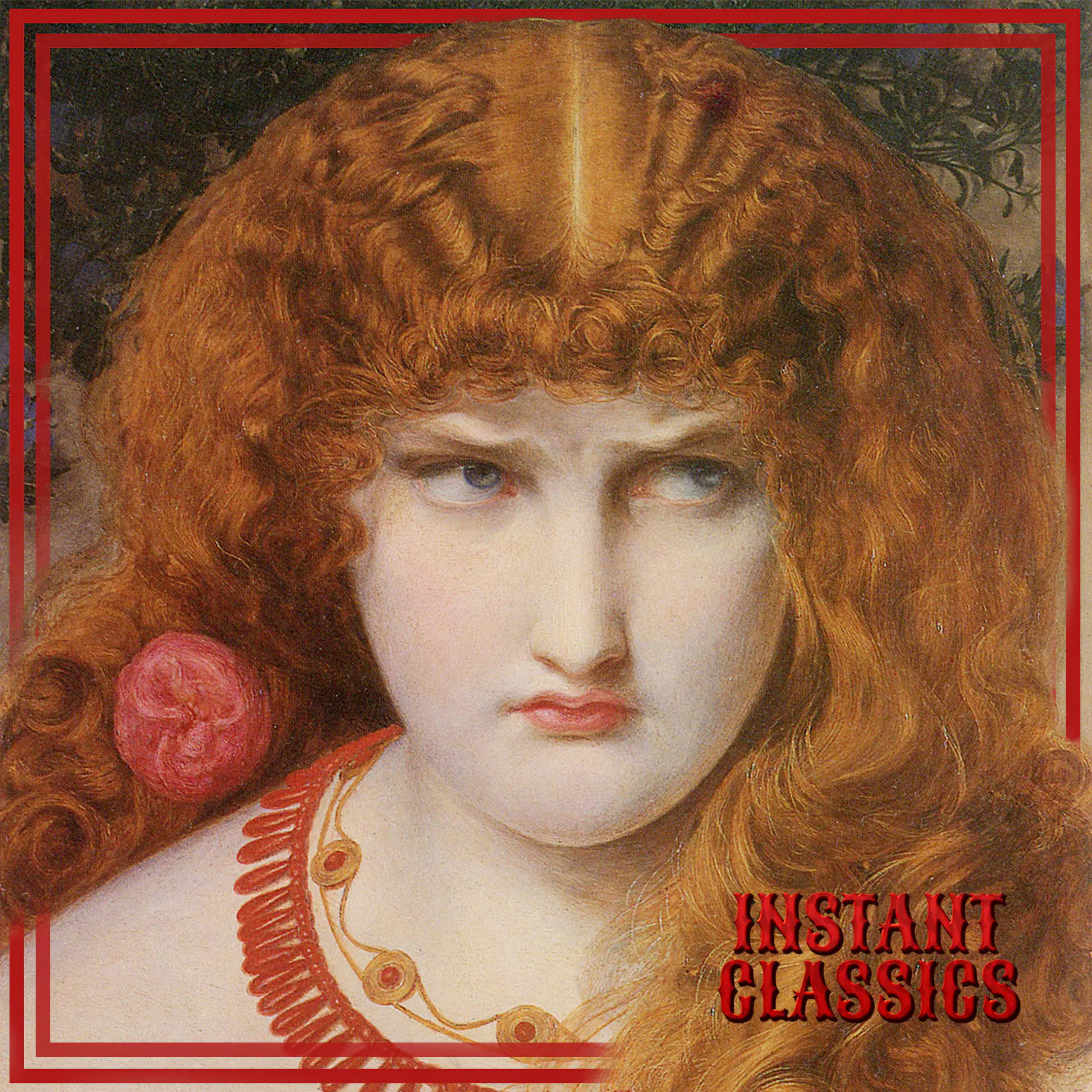
Villain, Victim... Double Agent? The Many Lives of Helen of Troy pt 1
Sex goddess. Whore. Temptress. Adulteress. Victim. Helen of Troy has been called many things. In the run-up to Christopher Nolan’s adaptation of The Odyssey later this year, amidst swirling rumours about who is playing Helen, Mary and Charlotte look beyond the labels and ask: who was Helen really and what role does she play in myth? This isn’t an easy question to answer. Accounts of Helen’s character and life come from myriad sources - many of which contradict one another. In the first episode of our four-part series, Mary and Charlotte look at Helen’s early years. She was born of a rape, when Zeus, disguised as a swan, forced himself upon Leda, Queen of Sparta. The young Helen was married to Menelaus, brother of Agamemnon, and became queen of Sparta. The trouble began hundreds of miles away and the so-called Judgement of Paris. Paris was the son of King Priam of Troy. In a high-stakes wedding game (think opening scene of The Godfather), he was asked to choose which of the goddesses Hera, Athena and Aphrodite was most beautiful. Aphrodite bribed him by promising he could have the most beautiful mortal woman in the world, conveniently forgetting that Helen was already married. Paris went to Sparta to collect his prize. He waited for Menelaus to depart the scene, then took Helen to Troy. Whether she eloped or was abducted has been debated ever since. And so… the Trojan War. @instaclassicpod for Insta, TikTok and YouTube @insta_classics for X email: [email protected] Mary and Charlotte recommend some further reading: There are many ancient accounts of the Judgement of Paris and the events leading up to it. You can find the parody of Lucian here (it’s the last of his Dialogues of the Gods): https://www.theoi.com/Text/LucianDialoguesGods1.html A more standard ancient account of Helen’s back story, her marriage and the judgement of Paris is given by Apollodorus (or Pseudo-Apollodorus!), writing during the Roman empire, see esp. 3. 10. 7 ff and Epitome 3: https://www.theoi.com/Text/Apollodorus3.html#10 and https://www.theoi.com/Text/ApollodorusE.html#3 For modern discussions of Helen (relevant to this and our later episodes): Ruby Blondell, Helen of Troy: Beauty, Myth, Devastation (Oxford UP, pb, 2015) Bettany Hughes, Helen of Troy: Goddess, Princess, Whore (Pimlico, pb, 2013) Instant Classics handmade by Vespucci Producer: Jonty Claypole Video Editor: Jak Ford Theme music: Casey Gibson Learn more about your ad choices. Visit podcastchoices.com/adchoices
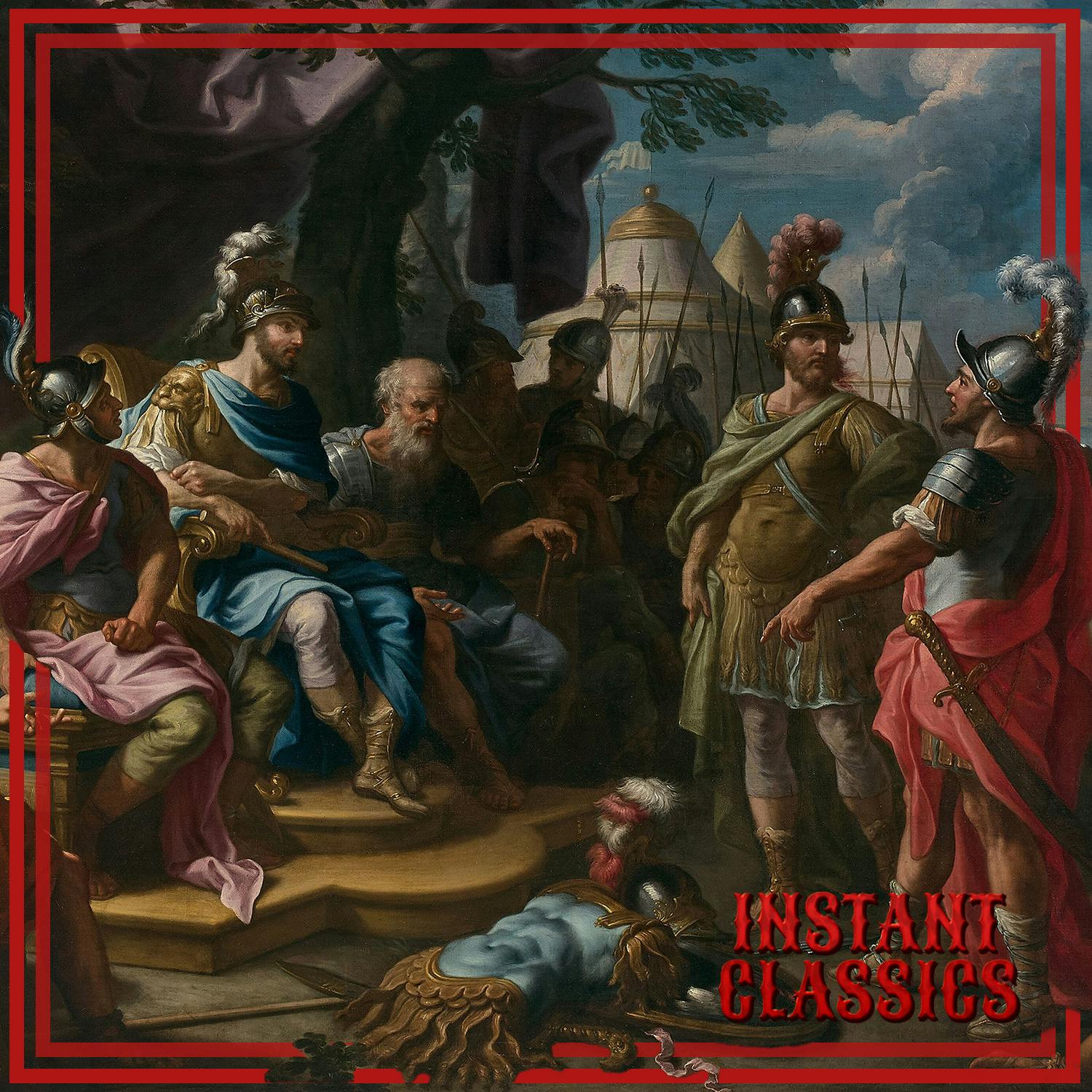
Tinker Tailor Soldier Spartan: Spies and Spycraft in Ancient Greece
We may think of Ancient Greek warfare as scantily dressed musclemen thrashing it out on the desert plain (and there may have been an element of that), but there was a whole other side of spy work too. Much of this was the result of its fraught relationship with the vast Persian empire to the east - a centuries long rivalry which makes the Cold War look like a hot skirmish. Mary and Charlotte share some of the surviving stories of Ancient Greek espionage, including secret messages concealed in women’s earrings and even tattooed onto an enslaved person’s head. Most of these stories focus on writing and it’s a reminder that in the Ancient World, writing was as innovative and inherently suspicious as drones are to us today. Societies with advanced written culture had the technological upperhand on their rivals, so it’s little surprise that the surviving stories about spies reveal an anxiety about this new form of communication. @instaclassicpod for Insta, TikTok and YouTube @insta_classics for X email: [email protected] Mary and Charlotte recommend some further reading: The story of Bellerophon is told in Book 6 of the Iliad (the “dangerous signs” line 165) The stories of Gorgo can be found in Herodotus, Histories Book 5, 49 and Book 7, 239 (she is described as one of the first cryptanalysts by David Kahn in The Codebreakers (Scribners, 1996)). She is one of the women who features in Sarah B Pomeroy, Spartan Women (OUP, pb, 2002). Herodotus Histories Book 5 (chaps 35 ff) describes the message tattooed into the slaves head. Aeneas Tacticus: the relevant passage is at section 31.20 The revolutionary effects in general of early literacy (and different technologies of writing) are discussed by Walter Ong, Orality and Literacy (Routledge pb, new ed. 2012). For Greece, in particular, Oswyn Murray’s Early Greece (Fontana pb, 2nd ed, 2010) stresses the importance of the beginnings of writing. Instant Classics handmade by Vespucci Producer: Jonty Claypole Executive Producer: Natalia Rodriguez Ford Video Editor: Jak Ford Theme music: Casey Gibson Learn more about your ad choices. Visit podcastchoices.com/adchoices

Underneath the Toga pt 2 (With Naomi Alderman)
Naomi Alderman is an author and games designer. Her books include Disobedience (adapted into a film starring Rachel Weisz), The Power (also an Amazon Prime series) and most recently The Future. She’s also an emerging classicist and reached out to Instant Classics after our episode on the toga came happily close to her MA thesis on the same subject. In this episode, Naomi sets the record straight about when and why women in Ancient Rome may have worn the toga, talks about her interest in the classical world and why studying it gives her solace. Finally, she asks the big question - which Mary and Charlotte answer too - if you could rescue one lost work of literature from the past, what would it be? This episode was recorded in a moment of immense jeopardy as Naomi waited to discover if she had passed her Classics MA or not. The next day we had our answer. Yes - and with distinction. Which is not surprising based on the evidence of her conversation in this episode. Content warning: this episode contains mildly explicit comments about sex in the ancient world. @instaclassicpod for Insta, TikTok and YouTube @insta_classics for X email: [email protected] Mary and Charlotte recommend some further reading: all Naomi’s books, games, broadcasts and myriad other activities can be found on her website, naomialderman.com The question of Roman women (and which Roman women) wearing the toga has been discussed in intricate detail for decades. Naomi’s dissertation clearly disposes of the idea that adulteresses were forced to wear it. But if you want a flavour of the arguments, one of the clearest discussions, yes clearest (!), try Thomas A J McGinn, Prostitution, Sexuality and the Law in Ancient Rome (OUP pb, 1998), esp chap 5. Mary chose the autobiography of Nero’s mother, Agrippina, as her favourite “lost work” of the ancient world. There is more on this in A. A. Barrett’s Agrippina, Mother of Nero (Routledge pb, 1999). Charlotte made a reference to a 19th century science fiction novel whose name she couldn’t remember – it was After London by Richard Jefferies Instant Classics handmade by Vespucci Producer: Jonty Claypole Executive Producer: Natalia Rodriguez Ford Video Editor: Jak Ford Theme music: Casey Gibson Learn more about your ad choices. Visit podcastchoices.com/adchoices
Instant Answers: New Year’s Day Q&A
Since Instant Classics launched, we’ve loved getting your questions and ideas for topics. So for our New Year’s Day episode, Mary and Charlotte respond to some of those which have tickled their curiosity too. Where did the Romans stash their cash? What was a trip to the doctor like for women? Why do some people still try to speak (rather than just read) Latin? Was there a Jewish community in Roman Britain? And are there any feminist role models in the pantheon of ancient gods? While it is easier to answer some of these questions than others, each gives an insight to an area of the classical world we haven’t yet examined - and reminds us that however close we think we are to the ancient Romans or Greeks, huge parts of their lives and the way they thought about the world are lost to us. Just when we think we have a handle on them, they elude our grasp once again. Charlotte and Mary’s reading suggestions Jean Andreau, Banking and Business in the Roman World (Cambridge UP, 1999) is a short guide to what Roman “bankers” got up to. For valuables stored in the Temple of Castor, see Juvenal, Satires 14, 260ff The Mildenhall Treasure, now in the British Museum: For a translation of Soranus’ On Gynecology (the qualities of a midwife are discussed near the start of Book1) Hippocrates’ words of wisdom on midwives Hippocrates on the medical dangers of being a virgin For a good online article of Roman midwives, with images of their tombstones: An article on learning to speak Latin via the Oxford Latinitas Project For teaching Latin in the 1920s by the so-call “Direct Method” Article on a possible Jewish tombstone in Roman Scotland (Warren, M., 2023, Invisibility, erasure, and a Jewish tombstone in Roman Britain. Journal for Ancient Judaism, 14 (1). pp. 1-20.) Plus – the tombstone in question with its decoration of palm fronds (or menorahs?) Mary discusses kosher garum in her book Pompeii: The Life of a Roman Town (Profile, 2009) @instaclassicpod for Insta, TikTok and YouTube@insta_classics for Xemail: [email protected] Instant Classics handmade by Vespucci Producer: Jonty Claypole Executive Producer: Natalia Rodriguez Ford Video Editor: Jak Ford Theme music: Casey Gibson Learn more about your ad choices. Visit podcastchoices.com/adchoices

A Very Merry Saturnalia to You
Every December, the Ancient Romans took part in a festival of feasting, drinking, gift-giving and awkward office parties. So far, so Christmas. But, in this episode, Mary and Charlotte ask what really went on during the Roman festival of Saturnalia and whether the comparisons to Christmas really hold? As is so often the case, we discover a people and culture similar to us in some ways, yet also completely alien. The records show that socks were sometimes Saturnalia presents – but, disturbingly, so too were enslaved people. Jokes about the boss were acceptable at Christmas parties, unless - as we discover in one macabre story - the boss happens to be the emperor Nero. The brutal side of Saturnalia becomes really apparent when you consider the differences between Santa and Saturn. One likes to spoil children, the other has a horrid habit of eating them. So if you do decide to celebrate Saturnalia, no laughing at the boss, and keep those chimneys blocked! Charlotte and Mary’s reading suggestions The best guides to the Saturnalia are the ancient sources themselves. Martial’s “gift tags” are Books 13 and 14 of his Epigrams (rather stilted translations here: https://www.ccel.org/ccel/pearse/morefathers/files/martial_epigrams_book13.htm and https://www.tertullian.org/fathers/martial_epigrams_book14.htm The Saturnalia of Nero and Britannicus is described at Tacitus Annals 13, 15. Macrobius’ Saturnalia (c 400 CE) is a long, multi-book, learned discussion (set at a Saturnalian festival), which speculates on the origins of the festival among much else. Mary discusses the chilling Roman practice of giving enslaved people as presents in her Emperor of Rome (Profile, pb, 2024) @instaclassicpod for Insta, TikTok and YouTube @insta_classics for X email: [email protected] Instant Classics handmade by Vespucci Producer: Jonty Claypole Executive Producer: Natalia Rodriguez Ford Video Editor: Jak Ford Theme music: Casey Gibson Learn more about your ad choices. Visit podcastchoices.com/adchoices

A Day at the Theatre in Ancient Athens
The Ancient Greeks, it’s often said, invented theatre - and the plays they wrote are still big box office today, particularly when you have a Hollywood star in the main part. In this episode, Mary and Charlotte wonder what a day at the theatre in Ancient Athens was actually like. Did it bear any resemblance to theatre-going experience in the West End or Broadway today? The more one gets into the nitty-gritty of Greek theatre festivals - the military parades, hymn singing, displays of war booty, processions of unmarried girls, orphans, and large phalluses - the more alien it seems. The fact that it took place in the open air and the actors wore masks is the least of it. So what was really going on when the Athenians got together to watch a play? Why was the state so involved? And would Mary and Charlotte, as women, have even been allowed in? @instaclassicpod for Insta, TikTok and YouTube @insta_classics for X email: [email protected] On Greek theatre, the context and the practicalities… Good accessible introductions are: The Cambridge Companion to Greek and Roman Theatre, ed. McDonald and Walton (Cambridge UP pb, 2011) The Cambridge Companion to Greek Tragedy, ed. Easterling (Cambridge UP pb, 1997) There is a crucial academic article on the pre-performance ceremonies by Simon Goldhill: 'The Great Dionysia and Civic Ideology', reprinted in Nothing to Do with Dionysos? Athenian Drama in Its Social Context, ed. Winkler and Zeitlin (Princeton UP, pb 1992) Greek Tragedy: Suffering Under the Sun by Edith Hall Instant Classics handmade by Vespucci Producer: Jonty Claypole Executive Producer: Natalia Rodriguez Ford Video Editor: Jak Ford Theme music: Casey Gibson Learn more about your ad choices. Visit podcastchoices.com/adchoices
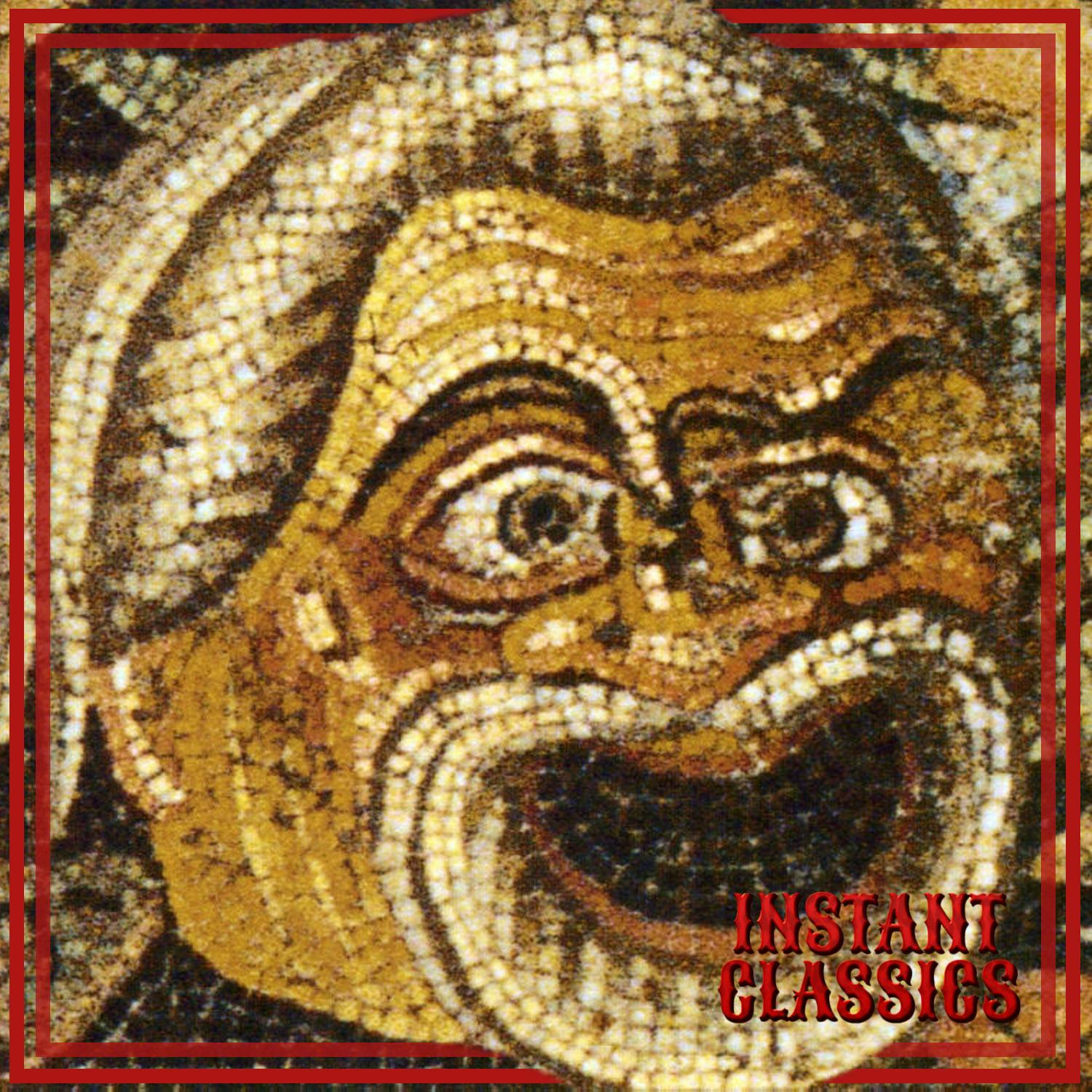
A Funny Thing Happened on the Way to the Forum (or did it?)
From Asterix to Up Pompeii to Life of Brian, there are lots of modern comedies about the Romans, but what did the Romans themselves find funny? In this episode, Mary and Charlotte share their favourite Roman jokes and ask the bigger questions: what can Roman humour tell us about the world of ancient Rome itself? Can we still ‘get’ Roman jokes and do any of them still have the power to make us laugh now? Fortunately, there’s a surprising number of Roman jokes that survive today - whether graffiti, on papyrus and an actual joke book called Philogelos. Despite the contemporary image of Rome as an autocratic, relentlessly bloodthirsty society, their jokes tell a different story. Works like Apocolocyntosis (The Pumpkinification of the divine Claudius) by Seneca show a huge irreverence to imperial grandeur, while the surviving jokes we have very rarely exhibit the cruelty we associate with a society hooked on slavery and gladiatorial games. They also suggest a widespread anxiety around self-identity - jokes about people who don’t know who they are really or how they fit into society. Finally, Mary reveals her favourite Roman joke of all time. But will Charlotte laugh? The stakes are high. Listen to find out. @instaclassicpod for Insta, TikTok and YouTube @insta_classics for X email: [email protected] Mary and Charlotte recommend some further reading: Charlotte recommends Laughter in Ancient Rome: On Joking, Tickling, and Cracking Up (UCal press pb, new ed. 2024) by one Mary Beard as ‘the’ book on Roman humour. Mary got a lot out of: J, Bremmer and H. Roodenburg, A cultural history of humour (Polity pb, 1997) J. Clarke, Looking at Laughter: Humour, Power and Transgression in Roman visual culture (UCal press, 2007). It includes the wonderful images of the philosophers on the lavatory. S Critchley, On Humour (Routledge pb, 2002) Though she warns that books on laughter are often quite serious! Available online – a translation of Seneca’s Apocolocyntosis …and of the Philogelos And there are other selections from that collection, usually omitting the ones we don’t get! Try https://diotima-doctafemina.org/translations/greek/45-jokes-from-the-laughter-lover/ The jokes of the Emperor Augustus are collected in Macrobius, Saturnalia Book 2 (you can find a translation in the Loeb Classical Library, Harvard UP) Instant Classics handmade by Vespucci Producer: Jonty Claypole Executive Producer: Natalia Rodriguez Ford Video Editor: Jak Ford Theme music: Casey Gibson Learn more about your ad choices. Visit podcastchoices.com/adchoices