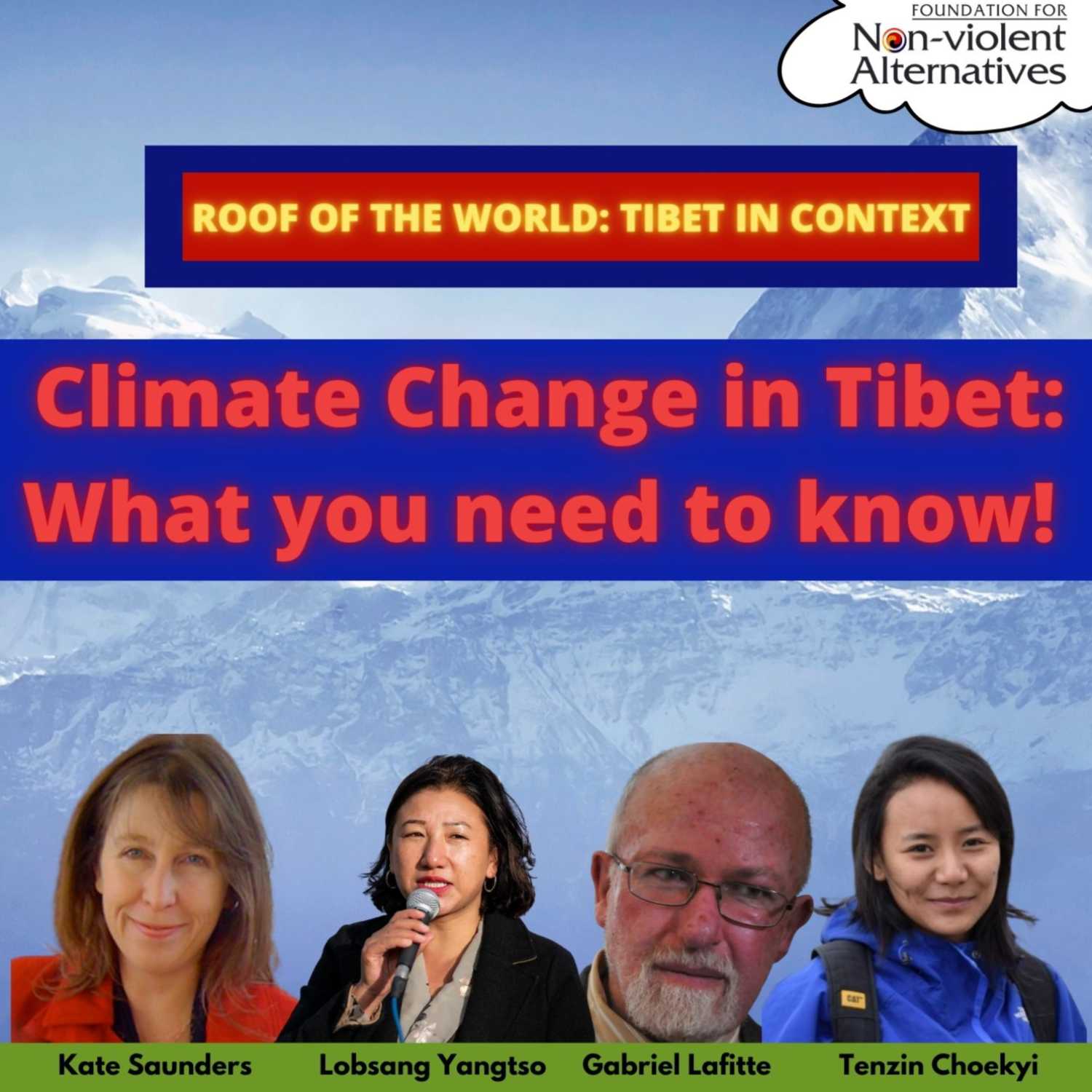
Roof of the World-Tibet in Context - Kate Saunders in conversation with Gabriel Lafitte, Lobsang Yangtso and Tenzin Choekyi
Insights From The Roof Of The World: Conversations on Tibet · FNVA
Audio is streamed directly from the publisher (content.rss.com) as published in their RSS feed. Play Podcasts does not host this file. Rights-holders can request removal through the copyright & takedown page.
Show Notes
Tibet in Context is a podcast series that gears in gaining a deeper understanding of Tibet through conversations with Tibetans, China Watchers, Tibetologists, Environmentalist and Security Experts.
In this episode, we engage with Gabriel Lafitte, Lobsang Yangtso and Tenzin Choekyi on Climate Change in Tibet and how it impacts the world.
Tibet is a biodiversity hotspot that governs the flow of the monsoon rains and creates the rivers that are sourced from Tibet – it matters to the rest of the world. Known as the Earth’s Third Pole, Tibet holds the largest store of fresh water outside the Arctics, providing water for one fifth of the global population. Like the Arctic, Tibet is experiencing profound climate change impacts. China’s hydro-damming and mineral extraction in Tibet, combined with climate change, threaten to destroy Tibet’s unique ecosystems.
This podcast focuses on the climate emergency and the critical ‘India China Tibet Triangle’. Tenzin Choekyi and Lobsang Yangtso were part of an all-female, mostly Tibetan team who spoke for Tibet at the most important meeting for the future of our planet, the United Nations Climate Change Conference COP27, held in Egypt from 6-20 November.
Gabriel explains why Tibet matters to the rest of the world, because Tibet governs the flow of the monsoon rains and creates the rivers that are sourced from Tibet. “In Tibet, China sees an abundant source of hydro power, solar power, wind power, oil and gas, all to be exported to the heavy industrial users of lowland China. In Tibet the climate is warming faster than most, as the jet stream in the upper atmosphere diverts around the plateau, which is such a massive island in the sky that it affects even the jet stream. Globally, the increasingly common droughts, forest fires, also extreme downpours and floods are intensified by the increasing meandering of the jet stream. Yet China sees only a payoff, a dividend it collects as the Tibetan Plateau gets wetter and warmer, its glaciers melt, the great rivers of Tibet increase streamflow, and China benefits.”