Influenced to Death
52 episodes — Page 1 of 2
Episode #52: MMS (Miracle Mineral Solution)
Episode #51: Placentophagy
Episode #50: Coffee, Conspiracies, & the Cost of Certainty
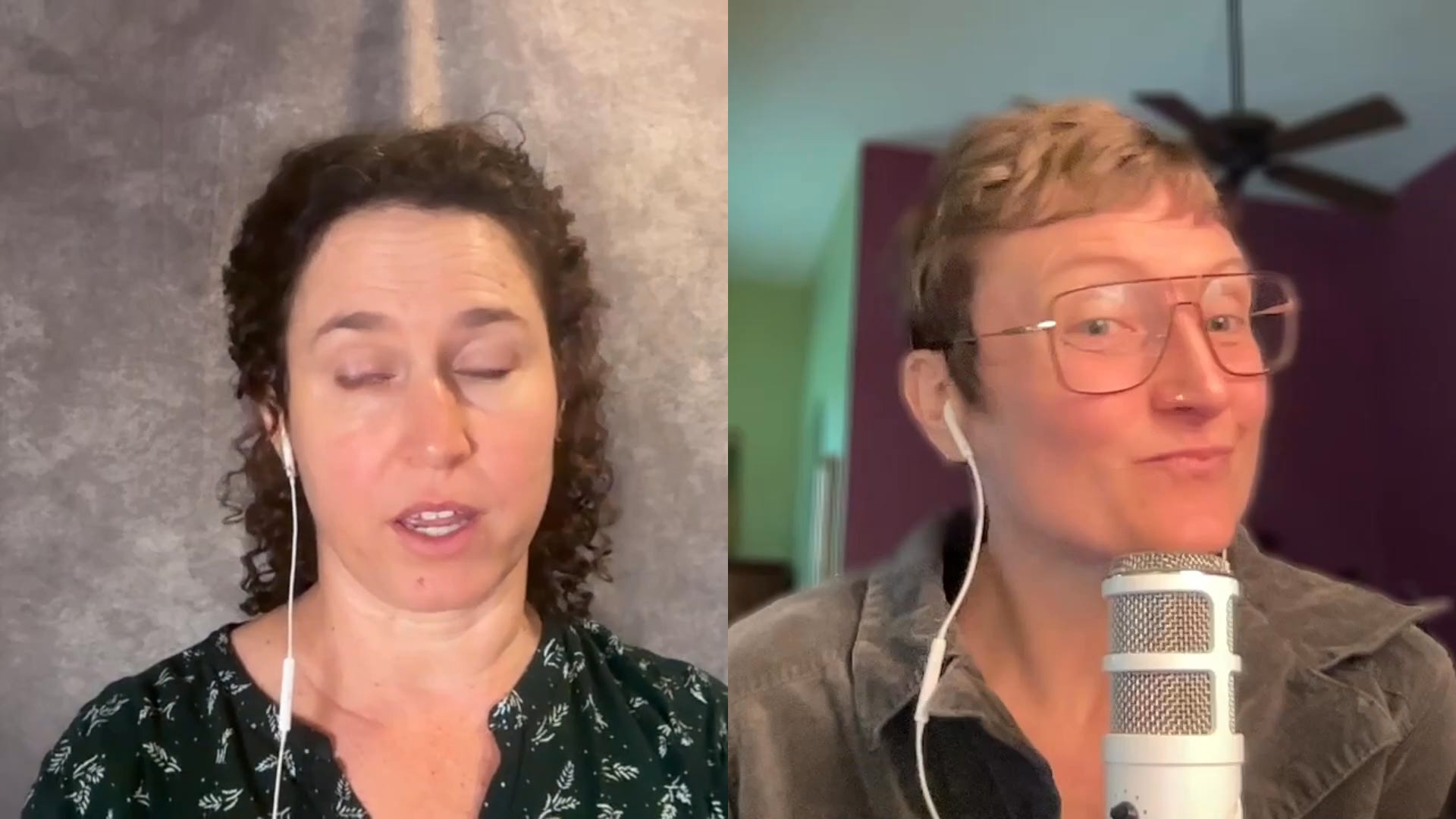
What started as a casual conversation about tea and coffee preferences quickly evolved into one of our favorite episodes yet…a wide-ranging discussion about science communication, tribalism in wellness spaces, and why being wrong in public might be the most important skill we’re not teaching.In this spontaneous episode, Hannah, Amanda, and Victoria explore the messy middle ground between absolutism and nuance in health conversations. From the Free Birth Society controversy to emerging research on mRNA vaccines and cancer treatment, they tackle why picking sides often prevents us from finding real solutions and why healthcare providers are increasingly facing hostility for presenting evidence that doesn’t fit predetermined narratives.This episode covers:* Why some people react dramatically differently to coffee versus other caffeinated beverages (plus Amanda’s near-death experience in a Mexican church)* The Free Birth Society investigation and the dangerous psychology of birth influencers* What it’s really like giving birth in a hospital* A new Nature study showing mRNA vaccines may boost cancer immunotherapy outcomes, and the hostile response it received* Why scientists being wrong is actually a feature, not a bug, of the scientific process* The vaccine-autism debate and why refusing nuance hurts everyone* How tribalism and emotion override facts in health conversations* The radicalization of wellness communities and what it means for practitionersTimestamps & Topics00:00 - Tea, Coffee & Individual Reactions 07:10 - Cannabis Allergies & Adverse Reactions 09:30 - Cross-Reactive Foods & Celiac Disease 17:56 - The Free Birth Society Investigation 24:13 - Birth Experiences & Hospital Reality 30:32 - The Trad Wife Connection33:01 - Sarah Ballantine & Being Wrong in Public33:51 - Science Communication During COVID 39:10 - The Marketing of Health Information 39:29 - Dr. Kara Fitzgerald & the mRNA-Cancer Study 46:58 - When “Functional” Becomes Dysfunctional 52:16 - The Myth of the All-Knowing Expert 54:30 - Healthcare Providers Under Attack 56:39 - The Vaccine-Autism Debate 1:01:56 - The CDC Website Changes 1:04:17 - Radicalization & Tribalism 1:07:47 - AI Healthcare Coaches Resources & LinksStudies & Articles Mentioned:* SARS-CoV-2 mRNA Vaccines Sensitized Tumors to Immune Checkpoint Blockade - Nature, October 2025* The Guardian's investigation into the Free Birth Society* CDC Page on Autism and VaccinesA note from the hosts: This spontaneous format felt like some of our best work—let us know if you’d like more episodes like this. This is a public episode. If you would like to discuss this with other subscribers or get access to bonus episodes, visit influencedtodeath.substack.com
Episode #49: IV Nutrient Therapy
We’re back from our December break with a hot-topic episode: a deep look into the research on IV nutrient therapy and whether you should partake in the currently hot trend.Guest host Amanda Jones and Victoria discuss: * The history of IV therapy, including its start in conventional medicine and the connection to orthomolecular medicine* The role of Linus Pauling and Dr. John Myers (more on him here) in promoting the popularity of ingesting large doses of nutrients and the Myers’ IV Cocktail* The IV torch was passed to Dr. Alan Gaby (author of Nutritional Medicine), who continued the tradition and research of IV nutrient therapy * Who might benefit most from IV therapy, and possible concerns when nutrients are used as drugs * Amanda’s experience with IV magnesium therapy during labor when she had pre-eclampsia * How IV nutrients made their way into spa/aesthetic/influencer culture, and the way these nutrients are spoken about in a way that sounds “medical-y” but won’t attract the ire of the FDA* Are IV spas safe? Amanda and Victoria discuss possible risks* Some concerns include a lack of randomized research, the possibility of the placebo effect, contaminants such as heavy metals or microplastics (we found multiple studies on this 😬), bypassing the stomach and first pass metabolism, individual reactions to the nutrients (such as heart arrhythmias), vitamin and antioxidant overload, medication interactions, allergic reactions, etc.* Situations when the possible benefits of IV nutrients likely outweigh the risks* The conflation of aesthetics and looking a certain way with being healthy This is a public episode. If you would like to discuss this with other subscribers or get access to bonus episodes, visit influencedtodeath.substack.com
Episode #48: Urine therapy
In this episode, Amanda and Victoria discuss the growing popularity of urine therapy, fueled by social media personalities who use their pee for lotion, sunscreen, mouthwash, and mocktails.They cover:* Their own health adventures, including a short stint of urine therapy for Amanda* The history of urine therapy, including a (highly likely) misinterpretation of the Biblical Proverb 5:15* The limited mentions of urine therapy in Traditional Chinese Medicine (qiushi) and Vedic texts (Shivambu Kalpa) that have been referenced by modern enthusiasts* What, exactly, is in pee* The claim that there are stem cells in urine (referenced studies are here and here)* Is fermented urine the way to go? Seems not if stem cells are what you’re after. :( * “Studies suggest that preserved 24 h urine samples provide around 140 viable USCs, while fresh urine offers a significantly higher yield of three to seven USC clones per 100 ml.” * The inaccurate idea that we’re able to convert the nitrogen or urea in urine into nitric oxide. * Kidneys’ role as detoxifying organs; they excrete mercury and other toxic metals via…urine This is a public episode. If you would like to discuss this with other subscribers or get access to bonus episodes, visit influencedtodeath.substack.com
Episode #47: Lean Mass Hyper-Responders
In this episode, Victoria & guest co-host Amanda Jones get to speak with John O’Connor, founder of Gene Food, Integrative Health Coach, and all-around excellent thinker.Today’s primary topic is lean mass hyper-responders (LMHR), a subset of lean people who, when they eat a low-carbohydrate, high-fat diet (LCHF), experience a massive increase in LDL cholesterol. Even though this group is relatively small, the concepts discussed apply to anyone interested in using a ketogenic or low-carb/high-fat diet, or any therapeutic diet (such as Carnivore, vegan, AIP, etc.), in a way that considers both the benefits and the risks.They cover:* Who are the lean mass hyper-responders and why you should care* Is unlimited saturated fat beneficial? Harmless? For everyone? * The KETO-CTA study* You can find critiques of the study on John’s website here and also a more technical but really excellent write-up from Alex Leaf here.* Saturated Fats and Health: A Reassessment and Proposal for Food-Based Recommendations: JACC State-of-the-Art Review* Why some people in the keto/low-carb community might be pushing so hard against the risk of elevated LDL cholesterol, and continue promoting and eating the diet* Some individuals are particularly sensitive to saturated fats…are you one of these people?* The multi-faceted risk of promoting the idea that there’s no risk of unlimited amounts of saturated fat intake, elevated LDL, and ApoB* Shoutout to Peter Attia and Dr. Tom Dayspring for their series The Straight Dope On Cholesterol* What’s the difference between LDL-C and ApoB?* Amanda gives a great explanation of why our ApoB levels matter in real life* The interesting way that plausible - but not proven - ideas can gain in popularity, even with highly educated audiences* The conversations over the KETO-CTA study outcomes and why, even in the face of black and white results, some people still skew the narrative* We discuss John’s ideas on reactivity and autoimmunity - Toxicant-induced loss of tolerance for chemicals, foods, and drugs: assessing patterns of exposure behind a global phenomenon (the paper he references)* The fallacy in focusing on mechanism (trying to track down the deep biochemistry of why something is happening) versus zooming out and focusing on the basics that we know work extremely well to improve healthA big thank you to John for coming on the show; we hope to have him on again soon! Be sure to check out Gene Food for real-world guidance on your genetic data. This is a public episode. If you would like to discuss this with other subscribers or get access to bonus episodes, visit influencedtodeath.substack.com
Episode #46: Public health vs. functional medicine
This is a free preview of a paid episode. To hear more, visit influencedtodeath.substack.comIn this episode, Hannah & Victoria discuss what Hannah’s been learning in her first semester pursuing her Master’s in Public Health. Pretty often, we realize our off-mic conversations should be part of the show, so today we’re making it happen!This is a behind-the-scenes look at Hannah’s experience and her realization that public health and functional m…
Episode #45: MTHFR
In this episode, guest host Amanda Jones and Victoria speak with Sara Russell about the MTHFR gene (the gene that leads to the creation of the methylenetetrahydrofolate reductase enzyme) and the different variants that might (emphasis on MIGHT) impact your health.Be prepared before you dive in…this is a longer discussion that covers many aspects of MTHFR, both hypothetical (primarily what we’ve seen in influence-y spaces like social media) and actual (what we’ve read in research studies and seen in clinical practice).We discuss the role of MTHFR variants in autism spectrum disorders, infertility, and other diagnoses, as well as the use of methylated B vitamins versus folic acid and folinic acid.Some of the studies Amanda, Victoria, and Sara reference include: * Overview of MTHFR and variant biochemistry* Basic write-up on MTHFR variants from the CDC* Connection to autism - here, here, and here* The connection between one variant (C677T) and blood folate levels* Homocysteine in disease* Helpful overview of homocysteine and why low levels might also be problematic* The connection between homocysteine and infertility* Genetic Biomarkers of Metabolic Detoxification for Personalized Lifestyle Medicine* Adverse Effects of Excessive Folic Acid Consumption and Its Implications for Individuals With the Methylenetetrahydrofolate Reductase C677T Genotype* Homocysteine and Psychiatric Disorders* Slow overmethylation of housekeeping genes in the body mucosa is associated with the risk for gastric cancer* Active Folate Versus Folic Acid: The Role of 5-MTHF (Methylfolate) in Human Health* DNA methylation in cancer: too much, but also too little* Homocysteine Imbalance: a Pathological Metabolic Marker* Homocysteine metabolism as the target for predictive medical approach, disease prevention, prognosis, and treatments tailored to the person* Disturbed homocysteine metabolism is associated with cancer* Intake of Methyl-Related Nutrients and Risk of Pancreatic Cancer in a Population-Based Case-Control Study in Minnesota* Association of MTHFR C677T and A1298C Polymorphisms with First-Episode Myocardial Ischemia: A Case–Control Study* https://pmc.ncbi.nlm.nih.gov/articles/PMC3294042/* https://pmc.ncbi.nlm.nih.gov/articles/PMC5536672/* https://pubmed.ncbi.nlm.nih.gov/37187267/* https://reference.medscape.com/drug/leucovorin* https://pmc.ncbi.nlm.nih.gov/articles/PMC6346075/* https://pubmed.ncbi.nlm.nih.gov/22369260/* https://pubmed.ncbi.nlm.nih.gov/18355335/* https://pubmed.ncbi.nlm.nih.gov/6781067/* https://pubmed.ncbi.nlm.nih.gov/12566489/* https://pubmed.ncbi.nlm.nih.gov/10759136/ This is a public episode. If you would like to discuss this with other subscribers or get access to bonus episodes, visit influencedtodeath.substack.com
Episode #44: Vaccines
In this episode, Hannah & Victoria speak with Dr. Heather Zwickey about vaccines.About Dr. Zwickey:Heather Zwickey earned a Ph.D. in Immunology and Microbiology from the University of Colorado Health Sciences Center with a focus on infectious disease and vaccine development. Dr. Zwickey went on to complete a postdoctoral fellowship and teach at Yale University School of Medicine, where she worked on immunotherapy for cancer.She was then recruited to the National University of Natural Medicine in Portland, OR, where she launched the Helfgott Research Institute and served as its director for 17 years. In 2009, Dr. Zwickey established the School of Graduate Studies, developing programs in integrative medicine research, nutrition, and global health, among others. As the founding dean of the graduate school, she continues to teach many courses.Dr. Zwickey currently co-leads an NIH-funded clinical research training program focused on training the next generation of integrative medicine researchers. She teaches at many universities and speaks at conferences worldwide. At Helfgott Research Institute, Dr. Zwickey applies her immunology expertise to natural medicine, with a specific interest in the gut-brain axis in neuroinflammation.With expertise in infectious disease and vaccine development, Dr. Zwickey has been sought out for her knowledge regarding COVID-19. She’s spoken on more than 50 podcasts, written articles, and been a resource for people with tough questions.They cover these questions: * Do some kids need certain vaccines while others don’t?* What is the optimal schedule for a healthy baby, toddler, or child based on the changes occurring in their immune system?* What determines the current vaccine schedule?* Is there a greater potential for adverse effects when multiple vaccines are given in tandem, ex., MMR?* What might make some children or adults more susceptible to adverse effects compared to others?* Why has the vaccine schedule changed so much in the past 25 years?* What would you say to a parent who is hesitant to vaccinate their child because they are worried about vaccine side effects?* What would you say to someone who is angry that some people choose not to vaccinate their children?* How do you think vaccines have affected health outcomes over the last 100 years?Note: We didn’t record with video because Dr. Zwickey was on hour 14 of interviews the day we spoke. This is a public episode. If you would like to discuss this with other subscribers or get access to bonus episodes, visit influencedtodeath.substack.com
Episode #43: Acetaminophen
In this episode, Victoria and guest host Amanda Jones are joined again by Bob Block, PharmD (be sure to watch our episode with him on ivermectin).We asked Bob to come back just a few days after publishing our ivermectin episode to offer a more complete baseline of information on acetaminophen, also known as paracetamol. In this episode, they discuss: * Acetaminophen, N-acetyl-para-aminophenol (APAP) or paracetamol in many countries, a non-opioid analgesic and antipyretic agent utilized for treating pain and fever* Acetaminophen’s mechanism of action, aka how it works to relieve pain and fever* The recent press conference that put acetaminophen in the spotlight* FDA news release: Evidence of Possible Association Between Autism and Acetaminophen Use During Pregnancy* Research on this topic, including:* Evaluation of the evidence on acetaminophen use and neurodevelopmental disorders using the Navigation Guide methodology* Acetaminophen Use During Pregnancy and Children’s Risk of Autism, ADHD, and Intellectual Disability* Click here for an excellent interview with this study’s author* The relationship of prenatal acetaminophen exposure and attention-related behavior in early childhood* Fever during pregnancy as a risk factor for neurodevelopmental disorders: results from a systematic review and meta-analysis* Maternal fever during pregnancy and offspring attention deficit hyperactivity disorder* Maternal inflammation may increase the risk of NDDs independent of treatment* Effects of maternal psychological stress during pregnancy on offspring brain development: Considering the role of inflammation and potential for preventive interventionIf you have questions about this episode, please leave a comment on Substack or email us directly at [email protected]. This is a public episode. If you would like to discuss this with other subscribers or get access to bonus episodes, visit influencedtodeath.substack.com
Episode #42: Ivermectin
In this episode, Victoria & Hannah are joined by Bob Block, an acute care pharmacist, to discuss ivermectin.He provides a balanced and highly informed take on an extremely influenced drug.They discuss: * The history of ivermectin, from use for river blindness to roundroom to rosacea* Ivermectin, wonder drug from Japan (the paper Hannah references)* Bob provides an easy-to-understand but expert overview of ivermectin and how it works* Why it’s not a good idea to take ivermectin from the feed store* Hannah and Victoria discuss their biases about ivermectin* Bob provides a thorough walkthrough of what studies show about the use of ivermectin in COVID-19* Some states, like Texas, have made ivermectin available over the counter* What the research shows for ivermectin’s potential in cancer* The Relationship Between News Coverage of COVID-19 Misinformation and Online Search Behavior* Ivermectin, a potential anticancer drug derived from an antiparasitic drug (explaining possible anti-cancer mechanisms)* Even though there’s promise for ivermectin in cancer treatment, all current studies are human cell studies or human cell in combination with animal arm, like this one and this one This is a public episode. If you would like to discuss this with other subscribers or get access to bonus episodes, visit influencedtodeath.substack.com
Episode #41: Apeel (paid subscribers)
This is a free preview of a paid episode. To hear more, visit influencedtodeath.substack.comIn this episode, Hannah & Victoria discuss Apeel, a company that creates edible treatments for produce to reduce food waste (and is surrounded by a maelstrom of negative press from the natural health community).This episode is for paid subscribers. If you’d like to support our 2-person mission to bring balance back to highly influenced topics, use the b…
Episode #40: Bioidentical Hormone Replacement Therapy
In this episode, Hannah & Victoria are joined by the brilliant Dr. Angie Martinez, owner of Root Cause Medicine in Arvada, Colorado.Dr. Angie has a unique and highly informed approach to BHRT, and we can’t wait for you to hear her take. We discuss: * Victoria’s negative bias against BHRT and Dr. Angie’s response* Viewing BHRT through an evolutionary lens* The difference between healthspan and lifespan, and why it’s a crucial distinction for women* What is the Grandmother Hypothesis?* Why the majority of divorces happen when women are in perimenopause and menopause* Should women be afraid of hormone replacement? Dr. Angie discusses research updates* How Dr. Angie uses BHRT as prevention versus as simply a way to address symptoms* The case for using hormones in context as part of a highly individualized health plan* Why some women feel WORSE after they start hormones* The crucial difference between oral hormones and hormones administered via other routes (subdermal, injections, etc.)* Hormone testing options and what Dr. Angie uses with her patients* The difference between synthetic and bioidentical hormones, and where conventional and functional medicine overlap* Are there some people who should avoid hormone therapy?Click here to follow Dr. Angie on Instagram.Learn more: * Information on the controversial history of BHRT* The Grandmother Hypothesis* Refuting the grandmother hypothesis This is a public episode. If you would like to discuss this with other subscribers or get access to bonus episodes, visit influencedtodeath.substack.com
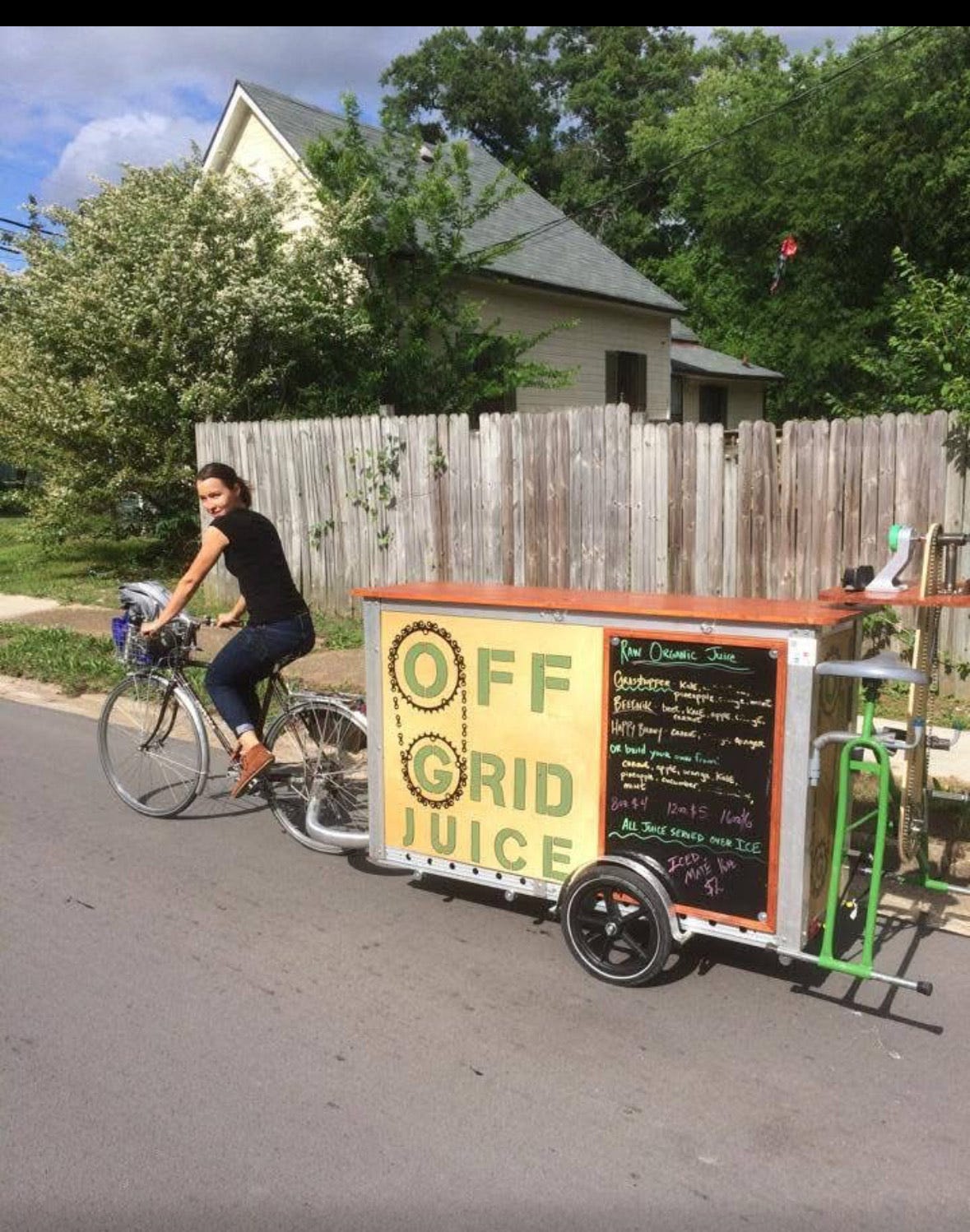
Episode #39: Get to know your hosts, Hannah & Victoria
In this episode, Hannah and Victoria discuss their backstories and give a deeper look into who they are and why they started Influenced to Death.They delve into the complexities of wellness influencing, their personal health journeys, and the role of bias in our perceptions.Key Topics:* Fluoride study update (aka fumbling through) from Victoria * Hannah tells us about her badass bicycle-powered juice bar and her journey to nutrition* Hannah taking the juice cart down to the farmers market.* When Hannah and her husband Andy were on the cover of our local outdoor magazine* Hannah at 18 or 19, about 7 years before she went GF, probably cooking grilled cheese sandwiches* Victoria’s experience going from opera singer to hitchhiker to nutrition and her diagnoses of celiac and rosaceaIf you have any questions or want to get to know us more, please let us know! You can email us at [email protected]. This is a public episode. If you would like to discuss this with other subscribers or get access to bonus episodes, visit influencedtodeath.substack.com
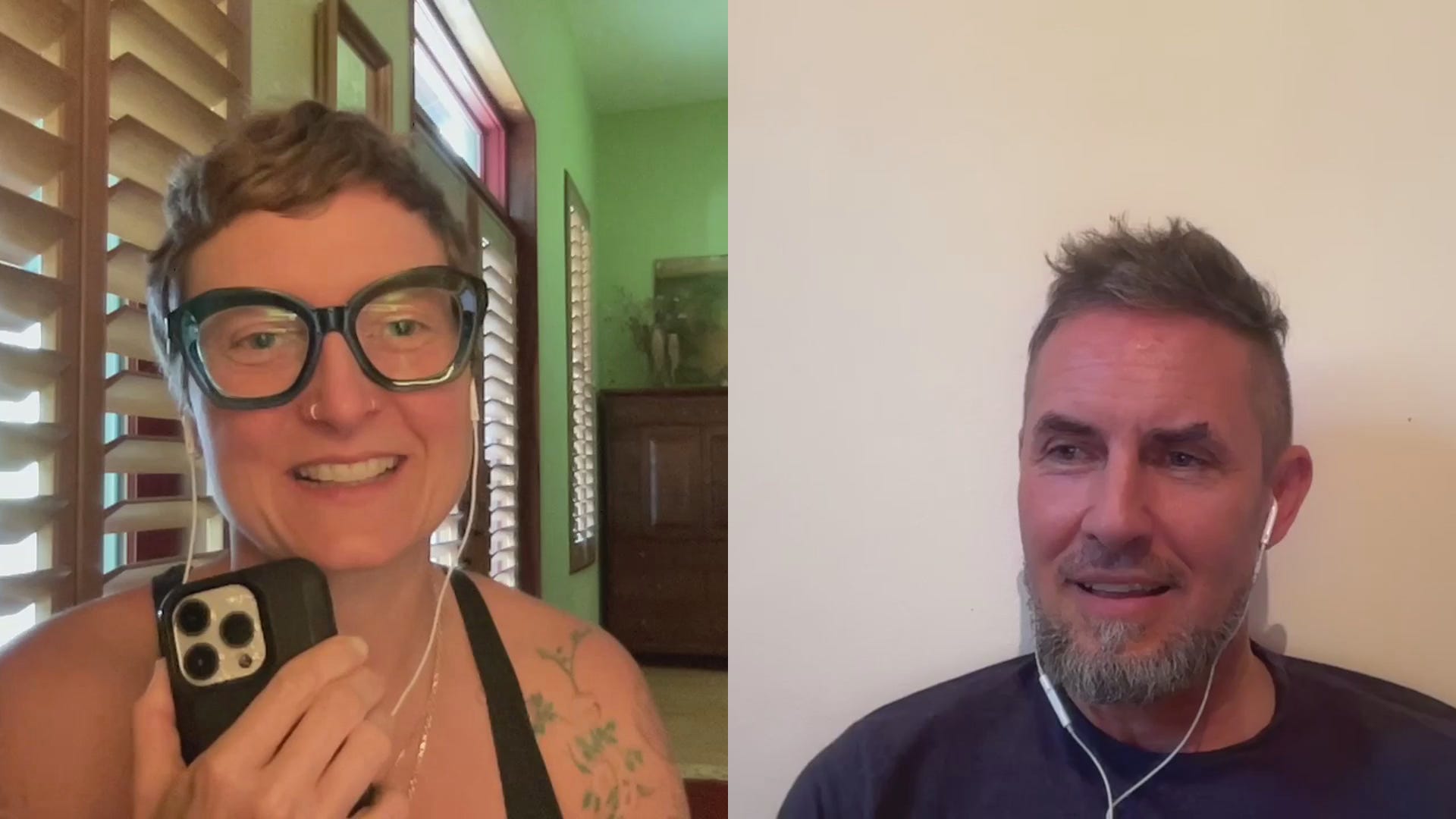
Episode #38: The Primal Diet (paid subscribers)
This is a free preview of a paid episode. To hear more, visit influencedtodeath.substack.comIn this episode, Victoria speaks with guest Jameson Simpson about a (crazy?) raw-food version of Paleo popularized by LA diet “guru” Aajonus Vonderplanitz (yes, that was really his name): The Primal Diet. They cover: * Their shared history of eating Primal and early traveling experiences in Hawai’i* Jameson’s experience of eating Primal and living at a raw-…

Episode #37: Peanuts
In this episode, Hannah & Victoria explore all aspects of the most highly influenced legume…the peanut. Are peanuts as bad as people say?They discuss: * An update on fluoride and big dental companies* The 4 varities of peanuts commercially grown in the United States and some other cool peanut facts (artifact photos here!)* The study Victoria discussed on partial colostrum feeding and increased risk of allergies in kids* How changing when allergenic foods are introduced decreases risk of allergies, the study this article was written about, and earlier reports that hadn’t yet documented the positive change reported in the latest research* The skin barrier hypothesis Hannah discussed* How the use of ANY lotion might increase the risk of allergies (this one was VERY surprising to us)* Peanut reintroduction might be possible for kids who can tolerate 1/2 a peanut (TO BE CLEAR: We are NOT recommending you try this at home! Seek medical assitance if you’re interested in reintroducing peanuts to someone who is allergic.)* The microbiome is different in babies who go on to develop allergies at a later age* Example of peanut hate we found online (here, too)* But…100% of lectins are destroyed when peanuts are roasted* But oxalates, not so much (this paper about antinutrients is really worth reading if you’re curious about the “plants are poisonous” rhetoric)* Some general info on alfatoxin and cancer risk, a mycotoxin produced by Aspergillus flavus, a ubiquitous fungus that can infect and grow in peanuts under both pre- and post-harvest conditions* Less than 20 part per billion of aflatoxin is allowed in peanuts according to FDA guidelines* But aflaxtoxin is also found in Brazil nuts, pistachios, cocoa, and some small grains such as rice. Aflatoxin M1 is also found in milk of cows that eat aflatoxin B1 contaminated crops.* It turns out, peanuts are super nutritious* They’re the 2nd highest food in resveratrol!* Soybeans contain more protein, but peanut protein may be more bioavailable (but they’re not a great DIRECT source of protein, to be clear. They’re much higher in fat than protein.)* Peanuts save millions of children’s lives each year via ready-to-use therapeutic foods like PlumpyNut (invented in 1996 by a French pediatrician), and MANA Nutrition (made in Georgia, US)* This Lancet article estimates there will be a staggering amount of deaths, especially children, caused by USAID cuts* PB&J will add 33 min to your life (sorta)Finally, please enjoy the Peanut Butter Jelly Time song. This is a public episode. If you would like to discuss this with other subscribers or get access to bonus episodes, visit influencedtodeath.substack.com
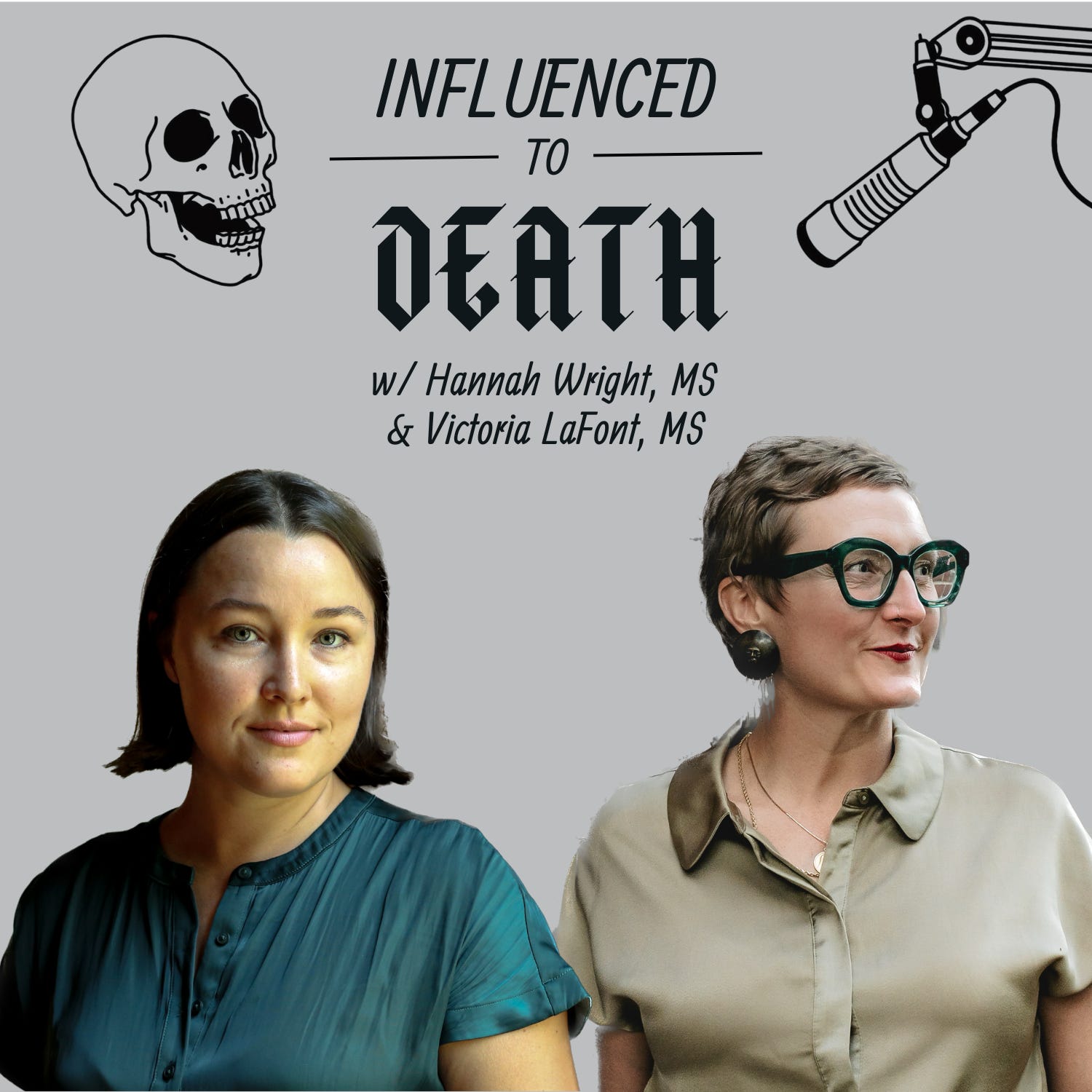
Episode #36: Do meatheads really need cardio?
In this episode, Victoria is joined by all-time favorite guest Dr. Mike T Nelson to discuss the deep physiology of meathead cardio…don’t resistance exercises like kettlebell swings and front squats get our heart rate high enough?You might remember Dr. Mike from episode #6: KETO-MANIA!We broke the traditional Influenced to Death format in this episode and had an open-format nerd-fest conversation with Dr. Mike (Hannah was on vacation, so no one was here to make Victoria follow the rules 😬).They discuss: * Dr. Mike’s super interesting history, including his work with DARPA (no, we’re not kidding…learn more about him here)* If resistance athletes need cardio outside of resistance exercises that increase their heart rate* Specific recommendations for aerobic and anaerobic exercise for optimal health * The exercise and diet regimens that are actually needed for long-term health* Tabata exercise: Is it legit?* The health benefits of increasing VO2 max and what VO2 max actually is (you can test your VO2 max!)* The million-dollar question: Do women need different training recommendations than men?* What truly moves the needle on health (teaser…it doesn’t come in a pill, lotion, potion, or fancy protocol)If you’d like to learn more from Dr. Mike, we highly recommend his classes! (We don’t make a dime off these recommendations, we just love Dr. Mike.)He’s currently offering Flexible Meathead Cardio: Level 1, Flexible Meathead Cardio: Level 2, and the Flex Diet Online Mentorship.You can learn more by signing up for his newsletter and letting him know you’re interested. This is a public episode. If you would like to discuss this with other subscribers or get access to bonus episodes, visit influencedtodeath.substack.com

Episode #35: Is AI your new health guru? (paid subscribers)
This is a free preview of a paid episode. To hear more, visit influencedtodeath.substack.comIn this episode, Hannah & Victoria discuss AI as the most powerful up-and-coming health influencer and some surprising use cases.If you’d like to listen to the full episode, for just $5/month and up, you can become a paid subscriber:They cover: * “Psychosis Fueled by Generative AI Are Tearing Families Apart As Some Claim Chatbots Represent Spiritual Highe…

Episode #34: Fluoride
In this episode, Hannah & Victoria delve into the highly controversial topic of fluoride, especially its use in public drinking water.This is the most complex and multifaceted topic yet, and lots of ground gets covered in this slightly lengthy but super interesting episode. They discuss: * Some basic fluoride facts—what it is and why it’s currently up in public discourse* Symptoms of fluorosis, aka excess fluoride exposure* The history of fluoride in drinking water (it’s been controversial from the very beginning)* The chemistry of fluoride (big thanks to chemist Kyle Carter!)* Where the fluoride in our drinking water comes from* Some brief discussion of the multitude of compounds intentionally added to municipal water* The full-body impact of fluoride exposure—effects on the pineal gland, sleep, neurological, and cognitive effects* Some popular claims about fluoride…can it be lethal?* The difference between systemic and topical use of fluoride* Other factors that can influence oral health* Hannah’s fabulous recommendation to find a trusted water filterExtra resources:* The NSF chemical search page we shared during the episode* EPA fluoride supply chain chart (where the fluoride in your water comes from)* More on how the optimal levels in drinking water were determined* The reintroduction of fluoride into Calgary, Canada’s water supply* Evidence from archeological digs shows exposure to naturally occurring fluoride in human remains* From one study we read: “The effect of fluoride is mainly achieved when applied topically, which is further enhanced when accompanied by good oral hygiene.”* In this study, fluoride is described as a double-edged sword.* The study Hannah shared on fluoride and the pineal gland* Two studies (here and here) on fluoride and sleep* Click here and here for information on fatalities connected to fluoride, as claimed in the podcast clip we shared: One child died after eating an unknown amount of fluoride-based insecticide. Otherwise…“Children who ingested up to 8.4 mg/kg of elemental fluoride in dental products had mild and self-limited symptoms, mostly gastrointestinal.”* The study Hannah shared on the effectiveness of fluoride varnish* Click here and here for information on fluoride toxicology and IQ: The determination about lower IQs in children was based primarily on epidemiology studies in non-U.S. countries such as Canada, China, India, Iran, Pakistan, and Mexico, where some pregnant women, infants, and children received total fluoride exposure amounts higher than 1.5 mg fluoride/L of drinking water. The U.S. Public Health Service currently recommends 0.7 mg/L, and the World Health Organization has set a safe limit for fluoride in drinking water of 1.5 mg/L.* Research on the oral microbiome, second only to the gut in diversity and number of bacteria, fungi, viruses, and protozoa.* Vitamins that play a role in the prevention of cavities* Vitamin D seems especially crucial* Perhaps most importantly, what toxicants are more concerning than fluoride? PFAs, heavy metals, etc. * Check your local drinking water here This is a public episode. If you would like to discuss this with other subscribers or get access to bonus episodes, visit influencedtodeath.substack.com

Bonus episode #33: Can we trust science?
In this bonus episode, Hannah & Victoria hang out with Geoff Futch, a science-loving stats nerd (we say that with love!) who has a remarkably balanced take on research, science, and how we should approach an admittedly faulty process that supplies a huge chunk of the information we use in health sciences and our day-to-day lives.They cover: * Geoff’s bio and our long-term relationship and trust in his thought processes* Why people trust the sources they do * Does “good science” even exist due to outside influences like funding, government manipulation, or other forms of bias?* How unscupulous practices and messy science have undermined our trust* A great example of how the game of “science telephone” happens and can lead to misinformation * The role of nuance and subtlety in our ability to navigate information * Why we distrust experts and how social media and influencer culture have filled that vacuum * Geoff’s recommendation to meet a scientist and become more involved in the way information comes about in your topic of interest* The real-world ways that poor information becomes accepted and intertwined as a trusted belief* Evolutionary reasons why humans are captive to their biases and what we can do to break out of siloed thinking This is a public episode. If you would like to discuss this with other subscribers or get access to bonus episodes, visit influencedtodeath.substack.com

Episode #32: MAHA
In this episode, Hannah & Victoria talk with Kelsey Keener about MAHA’s (Make America Healthy Again) impact in the first 100 days of the Trump administration.Kelsey is a 3rd-generation farmer in Southeast Tennessee at Sequatchie Cove Farm (you can read his blog at this link or follow him on Instagram @sequatchiecovefarm). His grandparents started the farm 25 years ago, and he learned from his parents and continues to teach his children about regenerative farming, as well as the community and other farmers.They discuss: * The (brief) history of MAHA * Their personal biases around MAHA and the positive and negative details of what MAHA has promoted and achieved * The reason why MAHA’s ideas and actions are extremely impactful * Skepticism about climate change and what Kelsey understands about climate change as a farmer* Changes MAHA has made in the first 100 days of the Trump administration and how it’s impacted Kelsey’s work as a small farmer* How much food actually costs versus what we pay for it as consumers * Kelsey shares surprising information about the egg shortage and government-funded relief payments* How the government currently subsidizes farming and why that might not align with popularized MAHA speaking points* How Kelsey thinks MAHA’s current policies will affect small farms in the future* Are food dyes and fluoride the most important issues to focus on for most people?Helpful links: * HHS’s list of what has been accomplished in the first 100 days* Food Policy Tracker’s first 100 days of MAHA* $1 billion that was going to help put farm fresh food in schools and food banks was cancelled. This was an amazing program that was getting fresh vegetables and even grass-fed beef into school cafeterias. Kelsey talks more about this in the episode. More info here, here, here. This is a public episode. If you would like to discuss this with other subscribers or get access to bonus episodes, visit influencedtodeath.substack.com

Episode #31: Dirt, germs, & worms (paid subscribers)
This is a free preview of a paid episode. To hear more, visit influencedtodeath.substack.comIn this episode, Hannah & Victoria explore whether dirt, germs, & worms might actually be good for us, and discuss the growing popularity of parasite cleanses.They cover: * The Old Friends Hypothesis, developed by Graham Rook—more from Graham here.* Graham’s latest publication: Evolution and the critical role of the microbiota in the reduced mental and phys…

Episode #30: Gluten, part 2
In this episode, Hannah & Victoria finish discussing the most delicious the highly controversial topic of gluten. They cover: * Some updates on continuous glucose monitors and colostrum—you can find those studies here and here (CGM) and here (colostrum).* If wheat is really different in Europe. Check out resources on that here and here.* The curious workings of the immune system and why you might react to scrambled but not hard-boiled eggs, for example. More info here and here.* The accuracy of cross-reactive food testing (Cyrex Array 4) for people who react to gluten (YIKES). The study Victoria discusses is here.* The connection between gluten reactivity and neurological/psychological symptoms and diseases, including the case study Hannah mentioned where the patient’s brain healed with a GF diet. You can find a great summary of studies on this topic here, and more info dating back to the mid-70s here. This is a public episode. If you would like to discuss this with other subscribers or get access to bonus episodes, visit influencedtodeath.substack.com

Episode #29: More on blood work in pregnancy & postpartum w/ Sara Russell
In this episode, Hannah & Victoria welcome back Sara Russell, Ph.D., to finish our discussion on research-based blood test analysis in pregnancy and postpartum, plus an exploration of the general brilliance that is speaking with Sara.We cover:* General review of the blood markers that have special postpartum ranges* 6 blood markers that can detect an early risk of preeclampsia * The incredible medicinal qualities of plain old white button mushrooms* Why you shouldn’t be afraid of soy* The brand of prenatal Sara recommends (no, she’s not affiliated!) and why choline is so crucial* The 3 layers of celiac disease and the connection to pregnancy and postpartum* The links between postpartum thyroiditis, non-celiac gluten sensitivity or celiac disease, bipolar disorder, and postpartum psychosis and why some people should NOT take SSRIs when experiencing postpartum depression* The paternal contribution to preeclampsia (yep, the dad)* Why aspirin might be a great tool for you in pregnancy You can find Sara at www.sararussellntp.com and click here for more information on her pregnancy & postpartum blood work analysis course. This is a public episode. If you would like to discuss this with other subscribers or get access to bonus episodes, visit influencedtodeath.substack.com

Episode #28: Apple Cider Vinegar & the Case of Belle Gibson (paid subscribers)
This is a free preview of a paid episode. To hear more, visit influencedtodeath.substack.comIn this episode, Hannah & Victoria discuss the now-internationally famous story of Belle Gibson, an Australian influencer who rose to fame in the mid-2000s for her social media accounts of battling and winning against brain cancer.But her Instagram account was hiding a massive secret that may have hurt her followers.We cover: * The details of the Belle Gi…

Episode #27: Methylene blue, colostrum, high-protein diets
In this episode, Hannah & Victoria create a veritable charcuterie board of influence-y topics: methylene blue, colostrum, and a high-protein diet.They briefly discuss some of the history and research on each while, as always, doing their best to be transparent about their biases. * Why do we have wellness trends in the first place?* Methylene blue is a synthetic dye, methylthioninium chloride, developed in the 1876 and used in the textile industry. It is known as the first synthetic drug in medical history.* Does methylene blue actually boost your mitochondria?* Serious contraindication of methylene blue* The contagious popularity of colostrum* Refer to Consumer Labs to find a good colostrum source; don’t get trapped in the popular brands that cost a fortune* Eureka! Details on the colostrum clinical trial Victoria butchered during the podcast* Is a high-protein diet all it’s cracked up to be?* What the research says about collagen* The difference between health-span and lifespan* Cottage cheese is the new cauliflower This is a public episode. If you would like to discuss this with other subscribers or get access to bonus episodes, visit influencedtodeath.substack.com

Episode #26: Gluten
In this episode, Hannah & Victoria dive into one of the most contentious topics in all of wellness: delicious, delicious gluten. They discuss: * What, exactly, is gluten?* Where macronutrients come from (like, originally)* If gluten is a lectin, or not, and if you should worry about eating lectins* The history of gluten and gluten-free diets* If grain and gluten hurt our health * Our opinions on whether gluten is appropriate for the general population * Victoria and Hannah’s personal experiences with gluten * The possible harms of a gluten-free diet* If cross-reactive foods are a real thing for people who react to gluten* Is celiac reversible???For our most mature listeners, the South Park explanation of gluten. This is a public episode. If you would like to discuss this with other subscribers or get access to bonus episodes, visit influencedtodeath.substack.com

Episode #25: Detox with Amanda Jones, part 2 (paid subscribers)
This is a free preview of a paid episode. To hear more, visit influencedtodeath.substack.comIn this episode, Hannah & Victoria are back with listener-favorite Amanda Jones to finish up their detox discussion. Be sure to listen to part 1 if you haven’t already!They discuss: * Why gastroenterologists don’t find toxic build-up in patients’ colons 🤔* Is lemon water an effective detox?* How to appropriately detoxify when you’ve had a toxic exposure* Is fu…

Episode #24: Should we supplement with hydrochloric acid?
In this episode, Hannah & Victoria welcome Amanda Jones back for an episode all about using supplemental hydrochloric acid.Hydrochloric acid is a popular digestive supplement in integrative medicine. But is it safe? Is it effective? Does everyone have low stomach acid?They cover the history of hydrochloric acid supplementation, the woman who discovered endogenous hydrochloric acid (the form we make ourselves), and if supplementation is all it’s cracked up to be. If you’ve taken hydrochloric acid or been told to take it to improve your digestion, especially to improve heartburn, be sure to listen to this episode! This is a public episode. If you would like to discuss this with other subscribers or get access to bonus episodes, visit influencedtodeath.substack.com

Episode #23: Functional medicine misses the mark in pregnancy
In this episode, Hannah & Victoria have the pleasure of speaking with Sara Russell on blood chemistry changes that happen in pregnancy and postpartum.Fair warning, we’re breaking our typical episode pattern because we’re so mind-blown by Sara’s work, its impact on pregnancy and postpartum, and the fact that it isn’t well-known in the world of functional medicine. We discuss:* Sara’s background and why she started researching pregnancy blood work* Methylation specifics - folic acid, methylated folate, and prenatals* Can people skip their prenatal and just take liver?* The natural user bias in pregnancy * The blood tests Sara likes to see in male and female partners before conception* What is the “zinc spark?”* Beta-carotene (provitamin A) vs. retinol (preformed vitamin A) in preconception* The primary blood tests that should be interpreted differently in pregnancy * Starting to unwind the knot of iron supplementation and metabolism in pregnancyLearn more about Sara and her work at www.sararussellntp.com. Click here to learn more about LabSmarts blood work interpretation software.Click here to learn more about Sara’s pregnancy blood work interpretation course.Click here to get a free preeclampsia guide.Click here to get a free prenatal vitamin guide. This is a public episode. If you would like to discuss this with other subscribers or get access to bonus episodes, visit influencedtodeath.substack.com
Episode #22: We review Don't Die Netflix documentary (paid subscribers)
This is a free preview of a paid episode. To hear more, visit influencedtodeath.substack.comIn this episode, Hannah and Victoria review the new Netflix documentary created by Chris Smith on multi-millionaire techpreneur Bryan Johnson, Don’t Die.Bryan lives a highly unconventional lifestyle—he engages in literally hundreds of strategies per day—as he attempts to reverse his biological age and “not die.” Spoiler alert: If you haven’t watched the…

Episode #21: Detox w/ Amanda Jones, part 1
In this episode, Hannah and Victoria speak with Amanda Jones as they explore one of the most controversial and lucrative corners of alternative wellness: DETOX. They discuss:* The interesting connections between our culture’s Christian roots and the urge to detox* The nuances of detox—it’s not all or nothing, no matter what you’ve seen online* Studies that help us gain a better understanding of what detoxification truly is and why it’s sometimes frowned on by conventional medicine * Some personal stories, including, but not limited to: enemas in the jungle, oregano oil mishaps, and photog-worthy colonic irrigation * Why simple, free steps can be just as powerful as $500 cleanses* The crucial aspect of detox that most influencers miss This is a public episode. If you would like to discuss this with other subscribers or get access to bonus episodes, visit influencedtodeath.substack.com

Ep 20Episode #20: Medicinal leeches
In this episode (that you should probably not listen to on your lunch break), Hannah & Victoria welcome back guest Jameson Simpson (of episode #8 fame) to talk about medicinal leeches. Jameson has been using leeches medicinally for over 15 years, and he and Victoria share their personal tales of leech therapy while Hannah does her best not to puke.In this episode, they discuss:* The history of leech therapy, dating back over 3500 years* Some interesting leech facts, like the fact that leeches are FDA-approved* Personal leech stories, including Victoria showing off some of her leech bite scars* Graham Rook’s “Old Friends” hypothesis and the interesting connection between our health and what we now consider unsavory but possibly beneficial bacteria, parasites, and other creatures* The risks of leech therapy and why YOU SHOULD NOT TRY THIS AT HOME This is a public episode. If you would like to discuss this with other subscribers or get access to bonus episodes, visit influencedtodeath.substack.com
Episode #19: Melatonin with Dr. Deanna Minich
In this episode, Hannah and Victoria get to speak with one of their favorite scientists, Dr. Deanna Minich, about her favorite molecule: melatonin.We discuss: * The history of melatonin, in which Dr. Minich describes early experimentation on the pineal gland and a vat of frogs (🤯 yeah, us too)* Early uses of melatonin and how melatonin was initially isolated for supplemental use before synthetic melatonin was created* The unique antioxidant properties of melatonin and why it’s so different from other antioxidants* The tendency of humans to categorize food, supplements, and interventions of all kinds into “good” and “bad” and why that’s so problematic* Is there more to molecule than meets the eye? Could it be connected to our consciousness?* Personal experiences with "dark retreats and their effects on the pineal gland * The impact of constant light exposure on our biological age* What happens to melatonin as we age chronologically * The many uses of melatonin other than facilitating our sleep cycle * The connections between atrial fibrillation, GERD, and melatonin * Some common questions and objections to supplemental melatonin, such as:* Are there any dangers in supplementing melatonin?* Why it impacts some people differently than others* If there’s danger in supplemental melatonin stopping your natural ability to make melatonin * Are there differences between synthetically produced vs. naturally derived melatonin?Read Dr. Minich’s latest publication on melatonin here.Learn more about Dr. Minich:Deanna Minich, PhD, is a nutrition scientist, international lecturer, educator, and author with over twenty years of experience in academia and the food and dietary supplement industries, and currently the Chief Science Officer at Symphony Natural Health. She has been active as a functional medicine clinician in clinical trials and in her own practice (Food & Spirit™). She is the author of seven consumer books on wellness topics, four book chapters, and over fifty scientific publications. Through her talks, workshops, groups, and in-person retreats, she helps people transform their lives practically and artfully through nutrition and lifestyle. Visit her at: www.deannaminich.com. This is a public episode. If you would like to discuss this with other subscribers or get access to bonus episodes, visit influencedtodeath.substack.com
Episode #18: The surprising benefits of stress with Dr. Sharon Bergquist
In this episode, Hannah and Victoria have the extreme pleasure of speaking with scientist, medical doctor, and inquisitive clinician Dr. Sharon Bergquist about her research into the benefits of stress. They discuss: * Why lowering your stress might not be the best idea* How stress actually makes you biologically younger * How Victoria and Dr. Bergquist met and bonded over their love of hormesis* Why carnivore diet promoters are technically right about plants being stressful, but the big aspect of stress they’re missing* Can you overdo stress and cause harm?* What we know about the benefits of stress in diverse populations* How Hannah and Victoria’s first nutrition training viewed stress…and why it was wrong* The reason we fear stress and the different forms of stress responses we have This is a public episode. If you would like to discuss this with other subscribers or get access to bonus episodes, visit influencedtodeath.substack.com

Episode #17: More on The Weston A. Price Foundation w/ Jenny McGruther
In this episode, Hannah and Victoria welcome back Jenny McGruther, genius recipe developer and all-around thoughtful human, to finish their discussion of The Weston A. Price Foundation. They cover: * More on the WAPF review of Nina Planck’s book Real Food for Mother and Baby. (You can read Nina’s response to this thumbs-down review here.)* The accuracy of the WAPF’s information and other large institutions (like the Institute for Functional Medicine 👀)* Is phytic acid really bad for you? * How to eat traditional foods when we’re not sure what our ancestors ate* Is Germ Theory or Terrain Theory true?* Raw milk * The WAPF’s response to the COVID-19 pandemic This is a public episode. If you would like to discuss this with other subscribers or get access to bonus episodes, visit influencedtodeath.substack.com
Episode #16: Will an elimination diet help my baby's eczema?
In this episode, Hannah and Victoria have the extreme pleasure of speaking with Dawn Whitten, a clinician, researcher, educator, and clinical mentor in naturopathic medicine specific to perinatal and early life health for over twenty years. (This woman knows her stuff, y’all.)Today’s topic? Maternal exclusion, aka elimination diets, as a way to address eczema or other symptoms in the baby. Does it work? Is it safe? What does the evidence say? What is Dawn’s clinical experience? Learn more about Dawn here.See all of Dawn’s publications here. 🤯………….Resources & research notes for this episode: The Australian Breastfeeding Association is a wonderful resource—it's a volunteer-run non-profit organization that uses a peer-support model. They have put together many resources for parents and are a place to go for reliable informationAnd, of course, La Leche League.The Academy of Breastfeeding Medicine is more of a professional organization, but they do have a find a practitioner function that can help parents find a practitioner fluent in breastfeeding medicine. They also have a few great handouts.And they have some great parent handouts.On maternal peanut allergen consumption while breastfeeding and infant allergy:* Reduced risk of peanut sensitization following exposure through breast-feeding and early peanut introduction* Reduced peanut sensitization with maternal peanut consumption and early peanut introduction while breastfeedingOn breastfeeding and the effect of policies and marketing of breastmilk substitutes:* Why invest, and what it will take to improve breastfeeding practices?* Marketing of commercial milk formula: a system to capture parents, communities, science, and policy* Breastfeeding in the 21st century: epidemiology, mechanisms, and lifelong effect(this is considered a seminal paper)On donor milk:* Australian Breastfeeding Association Position Statement on Donor Milk* Academy of Breastfeeding Medicine’s 2017 Position Statement on Informal Breast Milk Sharing for the Term Healthy Infant This is a public episode. If you would like to discuss this with other subscribers or get access to bonus episodes, visit influencedtodeath.substack.com
Episode #15: Discussing Dr. Google with real doctor Jordan Robertson, ND
In this episode, Victoria speaks with Dr. Jordan Robertson, founder of The Confident Clinician Club, about the effect of Google and meme’d medicine on our ability to discern helpful from trendy information and get well. Victoria and Jordan discuss: * The shift toward patients being influenced by online sources* The pull they feel in themselves toward being influenced* The most detrimental and beneficial aspects of wellness influencing* Some of the most outrageous claims they've encountered and which ones have the biggest impact* Where they see wellness influencing going in the next 5-10 years* Why critical thinking and research analysis should be reclassified as hard vs. soft skills This is a public episode. If you would like to discuss this with other subscribers or get access to bonus episodes, visit influencedtodeath.substack.com
Episode #14: The Weston A. Price Foundation w/ Jenny McGruther
In this episode, Hannah and Victoria are joined by fellow balanced babe Jenny McGruther of Nourished Kitchen fame for the beginning of a deep dive (yep, expect part 2) into the Weston A. Price Foundation.Interview with Sally and Kelly the Kitchen Kop (Kelly Moeggenborg) on how the WAPF was bornThe Nina Planck book review: Real Food for Mother and BabyDr. Kaayla Daniel’s original publication on fermented cod liver oil This is a public episode. If you would like to discuss this with other subscribers or get access to bonus episodes, visit influencedtodeath.substack.com

Episode #13: Soy, Part 2 with Dr. Mark Messina
In this episode, Hannah & Victoria speak with Dr. Mark Messina, an international expert and soy researcher. We read his research. We emailed him with high hopes. He responded! Dr. Mark brings the juice on soy, “myth-busting,” and even sheds some light on GLP-1 agonists. DO NOT SLEEP on this episode! Dr. Mark isn’t some dull researcher…he’s passionate, engaging, and one of the most knowledgeable guys on the planet when it comes to soy. This is a public episode. If you would like to discuss this with other subscribers or get access to bonus episodes, visit influencedtodeath.substack.com

Episode #12: From Anti- to Pro-Seed Oils: Telling Devoted Followers You Were Wrong with Dr. Sarah Ballantyne
In this episode, Hannah and Victoria have the pleasure of speaking with Dr. Sarah Ballantyne about her stance switch from anti- to pro-seed oils.Hi everyone, Vic here. Hannah and I asked Dr. Sarah to come on the podcast to speak with her about some of the science backing why she switched her viewpoint, but mainly about the dynamics of telling her millions of followers she was wrong. This episode is my favorite we’ve recorded so far. Why?If you’ve spent any time in the wellness world, you may have noticed that big names don’t shift their stance very often, and they especially don’t do it loudly. But in this case, Dr. Sarah not only changed her mind, she did it very publically. And very loudly. We’ve seen some nasty social media comments pointed in her direction…everything from she’s hit her head to she’s being bought by “big oil.” While I was transparent in our interview that I wasn’t so sure I was committed to incorporating vegetable oils into my diet, I fully believe she’s come to this conclusion on her own (extremely intelligent) accord and is in no way being influenced by anything other than saying what she thinks is right. And I also believe that the characteristics and skills she displays—curiosity, willingness to change her mind and say she was wrong, research literacy and commitment to staying up to date on current research, clear communication—are the EXACT qualities that will keep us moving toward the best wellness solutions EVEN IF it happens that you don’t like what she’s saying right now. These qualities starkly contrast with what we usually see from wellness influencers…the ones who are so blindly committed to a concept or idea (and the money they make from it) that they’ll lead themselves and you into illness in order to stay the course. The opposite is happening here. And I love it. We hope you enjoy the episode as much as we liked speaking with Dr. Sarah.For more on the science behind her views on vegetable oils, please click here to listen to Dr. Sarah and Stacy Toth’s discussion on The Whole View, and click here for Dr. Sarah’s interview on The Unbiased Science podcast.Dr. Sarah Ballantyne’s bioDr. Sarah Ballantyne, PhD, is the founder of Nutrivore.com and the New York Times best-selling author of Nutrivore: The Radical New Science for Getting the Nutrients You Need from the Food You Eat. She creates educational resources to help people improve their day-to-day diet and lifestyle choices, empowered and informed by the most current evidence-based scientific research. With Nutrivore, Dr. Sarah has created a positive and inclusive approach to dietary guidance, based in science and devoid of dogma, using nutrient density and sufficiency as its basic principles: Nourishment, not judgment. This is a public episode. If you would like to discuss this with other subscribers or get access to bonus episodes, visit influencedtodeath.substack.com

Episode #11: Soy, Part 1
In this episode, Hannah and Victoria explore the hyper-controversialized world of soy, one of the most studied yet misunderstood foods in our diet.History:Isoflavones first came to the attention of the scientific community in the 1940s because of fertility problems observed in sheep grazing on a type of isoflavone-rich clover. * The most economically important bean in the world* China 7000 BCE* Soybeans were introduced into the United States in 1804 and became particularly important in the South and Midwest in the mid-20th century - the majority of soybean crops are genetically modified for resistance to the herbicide glyphosate*. Brazil and Argentina are also major producers.Evidence:“Soy” = 23,500ish results in PubMed, Last 10 years, about 10K results.Phytoestrogens are a broad group of compounds that consist of isoflavones, lignans, and coumestans. Of these, isoflavones are heterocyclic phenols, the main constituents of which are genistein, daidzein, and glycitein. They have a similar structure to 17 beta-estradiol and have been shown to have biological activity exerting estrogen-like effects both in vitro and in vivo. Interesting note on isoflavones and cultural differences in consumption and genetic differences in metabolism, from M. Messina, Soy and Health Update https://www.ncbi.nlm.nih.gov/pmc/articles/PMC5188409/ : “...mean isoflavone intake among adults ranges from about 30–50 mg/day in Japan but is less than 3 mg/day in the United States, Canada, and Europe [60,61,62,63,64,65,66,67]”Understanding soy intake by milligram:It is difficult for the average consumer to even understand the consumption of isoflavones. For example, according to United States Department of Agriculture data and an assumption of about a half-cup serving, most vegetables contain “Meatless” meats contain anywhere from very little to high amounts of isoflavones depending on how they are produced. Much of the content of all soy products depends on processing, whether alcohol or water extracted, and the crop or variety. Needless to say, it is quite complicated. https://www.fertstert.org/article/S0015-0282(19)30621-1/fulltext Glyphosate residue potentially disrupting our microbiomes: https://www.ncbi.nlm.nih.gov/pmc/articles/PMC8959108/ https://www.ncbi.nlm.nih.gov/pmc/articles/PMC10561581/ https://www.sciencedirect.com/science/article/pii/S0169534722002294 Equol:“In regard to isoflavone metabolism, a striking difference among individuals is that only about 25% of non-Asians and 50% of Asians host the intestinal bacteria that convert daidzein into the isoflavonoid equol* [80]. In 2002, Setchell et al. (2002) proposed that those individuals who host these bacteria are more likely to benefit from soyfood consumption [81]” Equol [7-hydroxy-3-(4′-hydroxyphenyl)-chroman], an isoflavan produced by intestinal bacteria in response to soy isoflavone intake in some but not all humans, exhibits a wide range of biological properties: https://pubmed.ncbi.nlm.nih.gov/20519411/ More on equol: https://gutpathogens.biomedcentral.com/articles/10.1186/s13099-024-00625-9 Big picture view of interactions with hormones: Specifically, soy isoflavones are the phytoestrogen focus of the study published in this issue from Salsano et al., because they are very chemically similar to 17β-estradiol (2). The two predominant soy isoflavones, genistein, and daidzein, bind primarily to estrogen receptor (ER) β but remain very weak estrogens compared with endogenous E2. There is data that they may act by both hormonal and nonhormonal pathways, which include arresting or altering cellular growth through kinases or even epigenetics (3). https://www.fertstert.org/article/S0015-0282(19)30621-1/fulltext A Brief Historical Overview of the Past Two Decades of Soy and Isoflavone ResearchMark Messina, 2010https://www.sciencedirect.com/science/article/pii/S0022316622132049#bib84Baby formula:https://pubmed.ncbi.nlm.nih.gov/9217716/ Comparative Study Lancet. 1997 Jul 5;350(9070):23-7. doi: 10.1016/S0140-6736(96)09480-9.Exposure of infants to phytoestrogens from soy-based infant formula “From the concentrations of isoflavones in these formulas (means 32-47 micrograms/mL), the typical daily volume of milk consumed, and average body weight, a 4-month-old infant fed soy formula would be exposed to 28-47 per day, or about 4.5-8.0 mg/kg body weight per day, of total isoflavones. Mean (SD) plasma concentrations of genistein and daidzein in the seven infants fed soy-based formulas were 684 (443) ng/mL and 295 (60) ng/mL, respectively, which was significantly greater (p and an order of magnitude higher per bodyweight than typical plasma concentrations of adults consuming soy foods.”https://www.ncbi.nlm.nih.gov/pmc/articles/PMC2661347/#b7-pch14109 Concerns for the use of soy-based formulas in infant nutritionPaediatr Child Health. 2009 PMCID: PMC2661347However, they are present in relatively large amounts in soy-based formulas, such that the total isoflavone content is approximately

Episode #10: Medical Medium, Part 2
In this episode, Hannah & Victoria check out what the research has to say about MM’s claims and do their best to provide a balanced takeaway. Check out the show notes for Episode #9: Medical Medium, Part 1 for references. This is a public episode. If you would like to discuss this with other subscribers or get access to bonus episodes, visit influencedtodeath.substack.com
Episode #9: Medical Medium, Part 1
In this episode, Hannah and Victoria do their best to keep their s**t together while discussing Medical Medium, a 55-year-old self-proclaimed medium who claims the Spirit of Compassion provides him with medical information years beyond what current science has uncovered.* HistoryFrom his website, Medicalmedium.com:“Medical Medium Anthony William, the chronic illness expert, originator of the global celery juice movement and Brain Shot Therapy, and host of the Medical Medium Podcast, is the #1 New York Times best-selling author of Brain Saver, Brain Saver Protocols, Cleanses & Recipes, Cleanse to Heal, Celery Juice, Liver Rescue, Thyroid Healing, Life-Changing Foods, and the revised and expanded Medical Medium. Anthony was born with the unique ability to converse with the Spirit of Compassion, who provides him with extraordinarily advanced healing medical information that’s far ahead of its time.Since age four, Anthony has been using his gift to see into people’s conditions and tell them and their doctors how to recover their health. Over decades of helping individuals find the answers they needed, Anthony found that he could only help so many as his waiting list continued to grow. Anthony now dedicates much of his time and energy to listening to Spirit of Compassion’s information and placing it into books so everybody can have an opportunity to heal.His unprecedented accuracy and success rate as the Medical Medium have earned him the trust and love of millions worldwide, among them movie stars, rock stars, billionaires, professional athletes, and countless other people from all walks of life who couldn’t find a way to heal until he provided them with insights from above. Over the decades, Anthony has also been an invaluable resource to doctors who need help solving their most difficult cases.”4.8 million followers on InstagramHe declines to give his age in interviews. From what we could find, he’s 55 years old. Anthony is a “trusted expert” on Goop, and his books have been on NYT bestseller lists. Note: Many of his supplement links go to a company called Vimergy. It’s owned by Phil McCulskey, who appears to be a close friend. His work and claims are prolific. He may be best known for his hyperbolic claims about the curative properties of celery juice and about the Epstein-Barr Virus. He seems to flat-out make up his own definition and scientific explanation for his claims. He claims that celery juice can cure chronic disease, he details the mechanisms and processes that he says explain his claims but insists that the scientific community just hasn’t discovered them yet. He says he knows about them because the Spirit of Compassion tells him. This includes undiscovered viruses and mechanisms/physiology behind chronic diseases. All of this is woven into snippets of pretty solid holistic health advice - like eat more unprocessed foods, avoid alcohol, the body can heal, etc. He also claims that the worldwide scientific community uses his discoveries to further their understanding of human health and that many doctors successfully use his protocols to treat their patients with chronic diseases.Around 2000, he owned a health food store with his wife, Rachel Schutzman, in Machias, Maine, called Good Earth Organic Market.* Nutrition ClaimsHe claims that certain foods feed viruses in the body and recommends eliminating them. These include meat and eggs.From what I can tell, many of his protocols are strict vegan diets, consisting of mostly fruit and celery juice.He claims that any dietary fat accumulates in the liver. His idea of metabolism:“The idea that your body can switch to burning fat as fuel is also flawed. We don’t run on fat. We run on glucose, which is sugar. If it were true that our bodies could flip from burning glucose for energy to burning fat for energy, as the keto diet suggests, then it would be impossible for someone who was overweight or obese to starve. If the ketosis theory is correct, you could take away an overweight person’s food completely and they’d continue to live for a long period of time, using their fat as energy. But that’s not how it works. Fat does not convert to usable material for our bodies.”He also claims that the brain is a jellyfish-like organ is made of sugar:“There’s a highly popular belief today that the brain is made out of fat and you need to eat a lot of “healthy fats” to have good brain health and function. Sadly, this is more damaging misinformation. High-fat diets are disastrous for the brain. In truth, there is only a microscopic percentage of fat in the brain. Outside of these low traces of omegas, the brain is mostly a jellyfish-like organ made up of sugar.“Epstein Barr virus claims* Autoimmune diseases are caused by viruses, it is not possible for the body to form self-antigens. There is no genetic basis to AID. * Claims there are over 60 forms of EBV* “Doctors have no idea how the virus operates long-term”* “Medical communities are unaware that every case of monon
Episode #8: Your $111 raw food elixir...
In this episode, Hannah & Victoria sit down with Jameson Simpson to explore the underbelly of high-class hippy-dom.There are no show notes—this episode is a mix of tales from Jameson’s chaotic and seriously adventurous life (his current address: Albania) and culminates in the story of a very famous raw food influencer who sold a very expensive product made in Jameson’s filthy (filthy) dirty garage.Names have been beeped out to protect the innocent keep us from getting sued. This is a public episode. If you would like to discuss this with other subscribers or get access to bonus episodes, visit influencedtodeath.substack.com
Episode #7: Continuous Glucose Monitors
In this episode, Hannah and Victoria speak with Angie Alt about the use of continuous glucose monitors in non-diabetic populations.Angie Alt is a writer, community care activist, independent researcher, and former health coach and nutritional therapist. After a decade of helping clients manage chronic illness through nutrition and lifestyle and training practitioners to utilize the autoimmune protocol in their practices, she shifted her focus from teaching individuals about self-care concepts toward community care-centered work more well-suited to the cooperative and social nature of human well-being. Angie now writes at Notes from a Neighbor, a weekly newsletter on new ways to frame the pressing health and wellness challenges we face collectively and the small, slow, simple actions we can take to respond meaningfully. 2022 article Angie wrote that received some pushback from her audience: https://autoimmunewellness.com/are-wearable-health-trackers-helping-or-harming/Continuous Glucose Monitoring (CGM) refers to a medical device that measures glucose levels in dermal interstitial fluid. These levels correspond closely with blood glucose concentrations.History* https://www.ncbi.nlm.nih.gov/pmc/articles/PMC8120065/Continuous Glucose Monitoring Devices: Past, Present, and Future Focus on the History and Evolution of Technological Innovation>> Why CGMs were invented: Traditionally, the principal method of glucose monitoring for people with diabetes has been through self-monitoring of blood glucose (SMBG) without a clear consensus on sampling frequency that varied between four and ten times per day, for insulin-dependent patients with diabetes1999: First cgm system by Minimed: monitored along with calibration via finger stick every 6-12 hours to monitor over 3 days - info sent straight to healthcare provider Medtronic Guardian RT and the Dexcom STS—launched in 2005 and 2006 - patient could see results 2007: Dexcom first continuous monitor that recorded for 7 days2018: Abbott launched the FreeStyle Libre in the United States, the first flash glucose monitoring system Continuous monitoring allows the user to see trends vs. a finger stick which is just one measurement. 2019: Nutrisense2024: FDA approves first OTC CGM by Dexcom - intended for those 18 + who don’t require insulin Pop culture & Influencers:* https://www.instagram.com/jason.wittrock/ “Fit Dad” whose content is videos of him using his CGM to test isolated foods. * Nutrisense: CGM available without an rx, pretty popular on social media with wellness influencers https://www.instagram.com/nutrisenseio/ 2 weeks $1853 month membership $300 per monthEvidence* Review on continuous glucose monitor use in healthy populations: https://www.mdpi.com/1424-8220/22/5/2030Authors state that "CGM has a high potential for health benefits and self-optimization. More scientific studies are needed to improve the interpretation of CGM data. The interaction with other wearables and combined data collection and analysis in one single device would contribute to developing more precise recommendations for users."But one author is on the Abbott Advisory Board. Along with Ensure and Pedialyte, they also make...drumroll please...CGMs. https://www.abbott.com/consumer.html#diabetes-care* https://www.ncbi.nlm.nih.gov/pmc/articles/PMC10460390/Authors state that "The inter-day reproducibility of the CGM results was greater for subjects with diabetes (ICC 0.46 [CI 0.39–0.55]) than for normoglycaemic subjects (ICC 0.30 [CI 0.27–0.33]); the value for prediabetic subjects was intermediate (ICC 0.37 [CI 0.31–0.42]). For normoglycaemic subjects, inter-day reproducibility was poorer among the younger (ICC 0.26 [CI 0.21–0.30]) than the older subjects (ICC 0.39 [CI 0.32–0.45]).>> Inter-day reproducibility was poorest among normoglycaemic subjects, especially younger normoglycaemic subjects, suggesting the need to monitor some patient groups more often than others." * https://www.sciencedirect.com/science/article/pii/S0026049523002445 Continuous glucose monitoring in a healthy population: understanding the post-prandial glycemic response in individuals without diabetes mellitus“There has been a recent trend among individuals without diabetes using these devices as a means of monitoring their health. The increased visibility of glucose data has allowed users to study the effect lifestyle has upon post-prandial glucose levels. Although post-prandial hyperglycemia is well understood in the setting of diabetes, its impact in individuals without diabetes is less well defined. This article reviews the factors which contribute to post-prandial hyperglycemia in individuals without diabetes and how the data obtained from continuous glucose monitoring can be used to improve an individual's metabolic health.”PPHG is defined as a sharp rise in plasma glucose concentrations following food intake and is influenced by many factors including the timing, quantity and composition of a consumed meal [3].* CHO conte
Episode #6: KETO-MANIA!
In this episode, Hannah and Victoria speak with two (hilarious and highly balanced) metabolic experts, Dr. Mike T Nelson & Dr. Tim Sharpe about the ketogenic diet.You’ll want to listen if you’ve been considering going keto to lose weight, boost your fitness, or fix your metabolism.* Sign up to get Dr. Mike’s fantastic newsletter here: www.miketnelson.com or learn if you should go keto at www.shouldyouketo.com* Read Dr. Tim’s newest publication here: https://pubmed.ncbi.nlm.nih.gov/38934469/ History * Fasting is the only therapeutic measure against epilepsy recorded in the Hippocratic collection, 500 BC* Five centuries later, fasting as a therapy for seizures was documented in Biblical times. In a quotation from the King James Version of The Bible, Mark relates the story of Jesus curing an epileptic boy (Huisjen, 2000).* The first modern use of starvation as a treatment for epilepsy was recorded by a pair of Parisian physicians, Gulep and Marie, in 1911 (Guelpa & Marie, 1911). They treated 20 children and adults with epilepsy and reported that seizures were less severe during treatment, but no specific details were given. * Ketogenic diet first appears at the Mayo Clnic, 1921: In 1921, two pivotal observations were made. Woodyatt noted that acetone and beta-hydroxybutyric acid appear in a normal subject by starvation or a diet containing too low a proportion of carbohydrates and too high a proportion of fat (Woodyatt, 1921). Concurrently, Dr. Wilder at the Mayo Clinic proposed that the benefits of fasting could be obtained if ketonemia was produced by other means (Wilder, 1921). Wilder proposed that a ketogenic diet (KD) be tried in a series of patients with epilepsy. He suggested that the diet should be as effective as fasting and could be maintained for a much longer period of time. Wilder subsequently reported on patients treated with the ketone-producing diet at the Mayo Clinic and coined the term “ketogenic diet.” https://onlinelibrary.wiley.com/doi/10.1111/j.1528-1167.2008.01821.x * Use decreased when epileptic drugs were discovered, but resurged again when Dateline NBC aired a story in the mid-90s on a 2-year-old named Charlie intractable generalized seizures were greatly helped at Johns Hopkins with KD.* https://charliefoundation.org/connie/ - Incredible accounts of how KD helps some kids * Keto & pop culture: Atkin’s Diet, Dr Atkin’s Diet Revolution published in 1972, 1997 - Atkin’s bars and shakes* Plans range from 20g net carbs (keto) to 100g net carb per day (lifestyle). * From Aktins website: “A low-carb lifestyle focuses on limiting carbohydrates to help the body burn fat instead of sugar for fuel. This contributes to more consistent energy levels throughout the day, providing the energy you need to enjoy the things you love.”* More on Robert Atkins: https://www.ncbi.nlm.nih.gov/pmc/articles/PMC1126011/ (He really mistrusted mainstream science and loved working as a clinician.) This is a public episode. If you would like to discuss this with other subscribers or get access to bonus episodes, visit influencedtodeath.substack.com

Episode #5: The mysterious case of Dr. Mercola & the causal plane medium
In this episode, Hannah and Victoria discuss the recent changes happening at Mercola.com and the strange influencer influencing Dr. Mercola. Show notes: * Carnivore update - Paul Saladino eats some plants now* Dr. Mercola * 1.7 M followers on FB, 512K on IG, 417K followers on X* Osteopath, DO* Stopped treating patients in 2009 to focus on his brand. Net worth in 2017 over 100 million* In the past 10 yeras, he’s been covered by multiple outlets as either a quack or walking a fine line between holistic and kooky: 2012 article in Chicago Magazine - https://www.chicagomag.com/Chicago-Magazine/February-2012/Dr-Joseph-Mercola-Visionary-or-Quack/, BRYAN SMITH* During the COVID-19 pandemic, Mercola, his company, and social media site were warned again by the FDA in 2020–2021 for falsely advertising the efficacy of high doses of vitamin C, vitamin D3, quercetin, and pterostilbene products to "mitigate, prevent, treat, diagnose, or cure" COVID-19 disease.[8* https://www.nature.com/articles/s41598-022-24053-4 - study on vitamin D supplementation and covid* https://www.frontiersin.org/journals/nutrition/articles/10.3389/fnut.2023.1131103/full - vitamin D supplementation meta and systematic review* https://www.nature.com/articles/s41598-022-21513-9 - vitamin D status and risk of severe covid* Banned from YouTube - videos taken down and * In 2023, executives of his company Mercola Market complained that JP Morgan closed their bank accounts. The financial institution indicated those accounts were terminated when they became aware of "multiple occasions of regulatory scrutiny, raising concerns about a pattern of deceptive business practices." Source: Wikipediahttps://myfloridacfo.com/docs-sf/cfo-news-libraries/news-documents/2023/chase-letter.pdf?sfvrsn=25b03a95_2 - letter from Jimmy Patronis, CFO of the state of FL, to JP Morgan* From the Chicago Mag article by Smith: “Steven Salzberg, a prominent biologist, professor, and researcher at the Johns Hopkins University School of Medicine, calls Mercola “the 21st-century equivalent of a snake-oil salesman.” “Mercola says that his critics are wrong on all counts. Far from dispensing dangerous misinformation or trading in conspiracy theories, as some allege, he is a champion of “taking charge of our own health,” the doctor insists—a truth teller alerting Americans to what he calls the abuses, hoaxes, and myths perpetrated by the multi-billion-dollar pharmaceutical and health insurance industries.”Even Dr. Oz called him controversial.According to traffic-tracking firm Quantcast, Mercola.com draws about 1.9 million unique visitors per month, each of whom returns an average of nearly ten times a month. That remarkable “stickiness” puts the site’s total visits on a par with those to the National Institutes of Health’s website. (Mercola claims his is “the world’s No. 1 natural health website,” citing figures from Alexa.com.) Mercola’s 200,000-plus “likes” on Facebook are more than double the number for WebMD. And two of his eight books—2003’s The No-Grain Diet and 2006’s The Great Bird Flu Hoax—have landed on the New York Times bestseller list.>> Mercola says he recently donated $1 million to several alternative medicine groups, including the National Vaccine Information Center, which describes itself as a “vaccine watch dog.” Part of the money, according to the group’s website, was used to pay for an ad called “Vaccines: Know the Risk,” which was shown hourly on the CBS Jumbotron in Times Square for several weeks last spring.* Newsletter from National Vaccine Information Center that outlines the issue, June 2024: https://www.nvic.org/newsletter/may-2024/defending-freedom-of-religion* Mrs. Barbara Loe-Fisher* I was proud to work side by side in a trusted partnership with him and thankful for the generous average of $300,000 per year over a span of 15 years he donated through his foundation to NVIC, which we counted on in our annual budget to help our small staff operate four websites and implement nationwide vaccine choice advocacy programs and services.12* On March 25, 2024, NVIC received an email from someone identifying herself as the new CEO of Mercola.com informing us that donations from Dr. Mercola’s Natural Health Products Research Foundation were immediately discontinued.* The only verifiable information I had about what had happened were two articles published in Natural Products Insider on Feb. 1317 and Mar. 1, 202418 informing readers that the Mercola.com company was under new management and that Dr. Mercola was now being influenced by and taking direction from a person, who refers to himself as “the Kai” and claims to be a “psychic” channeling the voice of an “ancient and wise high-vibration entity from the causal plane” called Bahlon.19 20 21* The media articles published in February and March detailed the fact that this self- identified psychic who Dr. Mercola is now consulting with had convinced him that he, Dr. Mercola, is “a god” and “the new Jesus.”22 The articles c

Episode #3: Carnivore Diet, Part 2
In part 2, Hannah & Victoria go full carnivore nerd and explore the full spectrum of evidence surrounding an all-animal food diet.What’s the evidence for carnivore?PubMed search for “carnivore diet” returned 21 results, but only a small handful are applicable to this conversation, i.e., this diet has not been thoroughly studied.* https://journals.lww.com/co-endocrinology/abstract/2020/10000/can_a_carnivore_diet_provide_all_essential.11.aspx Can a carnivore diet provide all essential nutrients? Current Opinion in Endocrinology, Diabetes, and ObesityBy L. Amber O’Hearn, aka @ketocarnivore on X, “Eat Meat, Not Too Little, Mostly Fat” major nutrient she reports as possible deficiency is calcium, likely due to acid loadMore on her background:https://twitter.com/ambimorph * https://pubmed.ncbi.nlm.nih.gov/34934897/ Behavioral Characteristics and Self-Reported Health Status among 2029 Adults Consuming a "Carnivore Diet" * social media survey was conducted 30 March-24 June 2020 among adults self-identifying as consuming a carnivore diet for ≥6 mo* 2029 respondents (median age: 44 y, 67% male) reported consuming a carnivore diet for 14 mo (IQR: 9-20 mo), motivated primarily by health reasons (93%)* Most common sx were GI related, but still low (3-5%)* Among a subset reporting current lipids, LDL-cholesterol was markedly elevated (172 mg/dL), whereas HDL-cholesterol (68 mg/dL) and triglycerides (68 mg/dL) were optimal. Participants with diabetes reported benefits including reductions in median [IQR] BMI (4.3 [1.4-7.2]), glycated hemoglobin (0.4% [0%-1.7%]), and diabetes medication use (84%-100%)* BSL and OHH were supported by National Institute of Diabetes and Digestive and Kidney Diseases grants K23 DK119546 and R03 DK123541 to study a low-carbohydrate diet. JTM was supported by National Center for Complementary and Integrative Health training grant T32AT004094. The funders had no involvement in the design, implementation, analysis, and interpretation of the data. Author disclosures: Dr. David Ludwig: DSL reports royalties for books that recommend a carbohydrate-modified diet; his spouse owns a nutrition education and consulting business. All other authors report no conflicts of interest.* Carb/insulin model - obesity is caused by excess consumption of carbohydrate which then disrupts normal insulin metabolism leading to weight gain * Biggest issues were altered lipid profiles, specifically high LDL. Authors state that for those with a more extreme LDl response, meds could be considered. * Authors propose benefits could be due to eliminiaton of reactive foods/plant chemicals, (though they do state that plant compounds have proven benefits) * Calcium might be a problem * Did a great job of stating limitations* Limitations of Self-reported Health Status and Metabolic Markers among Adults Consuming a "Carnivore Diet" editorial“The authors are aware of many of the limitations of their study design and the generalizability of the results. It is also abundantly clear that higher-quality research is required to determine the carnivore diet’s long-term positive and adverse health effects. However, considering the propensity of media outlets and the lay public to misinterpret, exaggerate, and disseminate findings from scientific research, we believe caution should be exercised when discussing the study’s conclusions. In particular, discussion relating to the changes in health status and metabolic markers recorded in this study requires considerable reference to the unverifiable nature of the data.We congratulate the authors on taking the first steps towards scientifically quantifying the health effects of the carnivore diet and welcome any future, high-quality studies that may provide valuable data to fill the sparse literature on this specific eating pattern.”Ancestral:Some traditional people ate close to exclusive meat and fat diets due to what was available (Arctic), but most ancestral people ate plant foods. Katharine Milton laid this out in an editorial for AJCN in 2000…she looks rad af: https://nature.berkeley.edu/miltonlab/index.html She says, “The hunter-gatherer data used by Cordain et al. (4) came from the Ethnographic Atlas (5), a cross-cultural index compiled largely from 20th-century sources and written by ethnographers or others with disparate backgrounds, rarely interested in diet per se or trained in dietary collection techniques. By the 20th century, most hunter-gatherers had vanished; many of those who remained had been displaced to marginal environments. Some societies coded as hunter-gatherers in the Atlas probably were not exclusively hunter-gatherers or were displaced agricultural peoples. Because most of the ethnographers were male, they often did not associate with women, who typically collect and process plant resources.Finally, all the hunter-gatherers that were included in the Atlas were modern-day humans with a rich variety of social and economic patterns and were not “survivors from the primitive
Episode #4: #fitmom
In this episode, Hannah and Victoria welcome Brooke Cates, founder of The Bloom Method and passionate pre and postnatal fitness pioneer. They discuss the #fitmom trend and research showing that influenced postpartum fitness leaves women worse for wear. Full show notes:History of PP fitness: https://www.eternalblossombirthandbeyond.com/the-history Historical overview of pregnancy fitness, not PP fitness, but SUPER interesting to see pregnancy fitness history from the 1700s (!!!) to present: https://www.ncbi.nlm.nih.gov/pmc/articles/PMC3563105/ Great blog describing #fitmom influence: https://buildnurturerestore.com/body-image-postpartum-healing-versus-getting-your-body-back/ “A novel 2022 experimental study found that women exposed to body-focused social media posts targeted at new mothers experience not only higher rates of body dissatisfaction but also cultivated an unhealthy relationship with food, resulting in eating less and feeling guilt after eating (3).“The #fitmom study: https://bmcpregnancychildbirth.biomedcentral.com/articles/10.1186/s12884-022-05089-w#Tab2 “Our finding that this improvement in body dissatisfaction appeared to happen among mothers in our control group, but not for mothers in our intervention group, suggests that exposure to body-focused social media prevented intervention mothers from the progression of feeling better about their bodies as they move further from birth toward 12 months postpartum”#fitmom hashtag has 29.5 million videos on IGhttps://www.ncbi.nlm.nih.gov/pmc/articles/PMC7926552/ - Recovery of Abdominal Muscle Thickness and Contractile Function in Women after Childbirth“Therefore, abdominal muscle exercises might help prevent postpartum symptoms; however, because deterioration of muscle function is significant in the first four months, careful attention should be paid to exercise intensity. The study limitation was a relatively small sample size, thus future studies should involve more participants.”Pelvic organ prolapse Strenuous physical activity, exercise, and pelvic organ prolapse: a narrative scoping reviewhttps://www.ncbi.nlm.nih.gov/pmc/articles/PMC10238337/Eight prevalence studies were retrieved. Prevalence rates of symptomatic POP varied between 0 (small study within different sports) and 23% (Olympic weightlifters and powerlifters). Parity was the only factor associated with POP in most studies. There is scant knowledge of exercise and POP in the postpartum period. This is a public episode. If you would like to discuss this with other subscribers or get access to bonus episodes, visit influencedtodeath.substack.com