Inevitable
609 episodes — Page 2 of 13
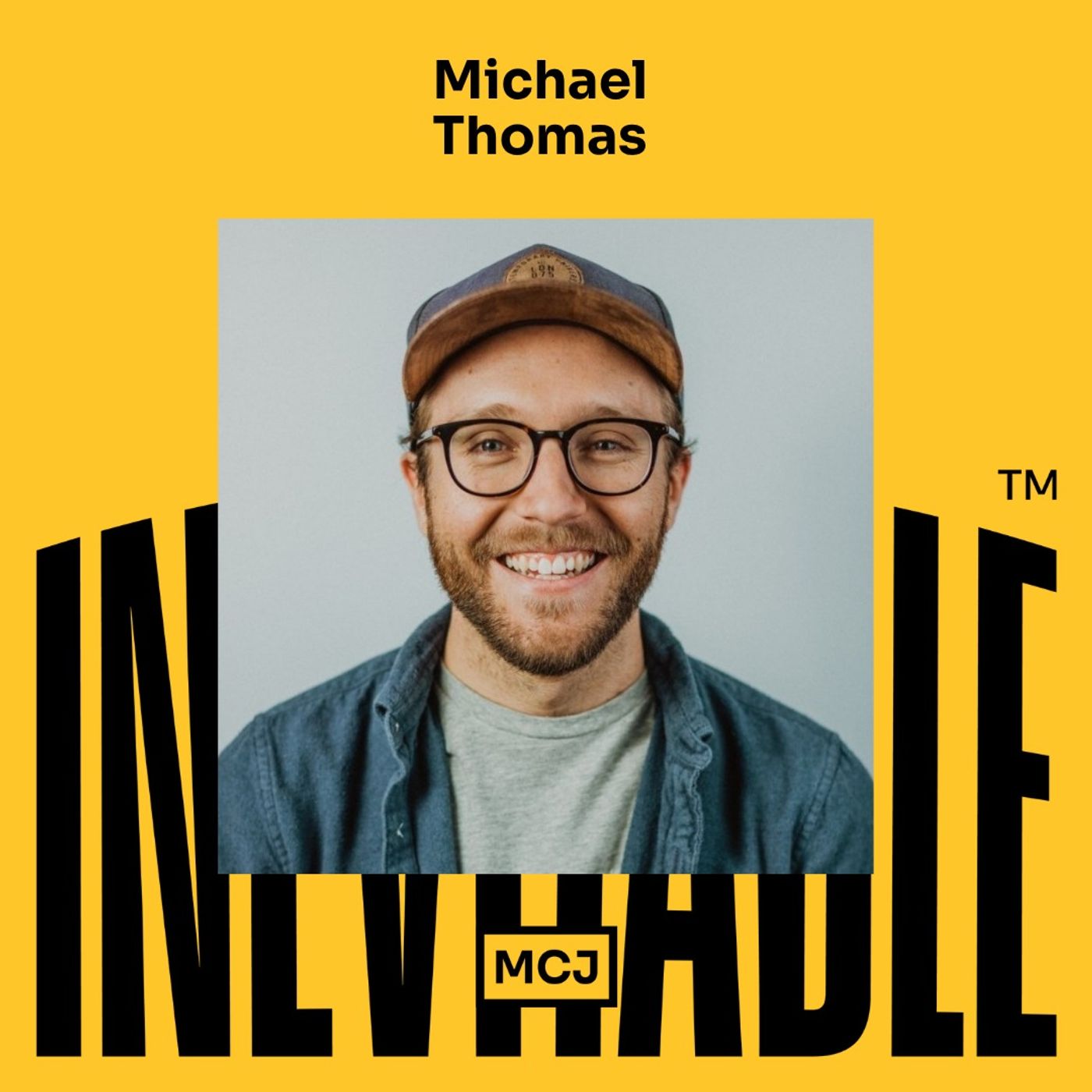
10,000 Projects, 1 Big Threat: What the Data Says About the IRA Rollback
EMichael Thomas joins us to discuss the clean energy tax provisions and industrial stimulus in the Inflation Reduction Act, which have brought billions of dollars in private investment and added gigawatts of power. However, these provisions are at risk of being cut as the "One Big Beautiful Bill" makes its way through Congress.Michael is a repeat guest and a data expert who has been tracking over 10,000 clean energy projects through his business, Cleanview. Since his last appearance, he's been highlighting the potential impact of these provisions. We discuss the challenges they face and how their loss would affect U.S. manufacturing and energy. Contrary to the name of the show, the loss of these provisions is not inevitable—Michael and Cody explore the ways we can all get involved to prevent it.Episode recorded on June 6, 2025 (Published on June 9, 2025)In this episode, we cover: [2:45] Michael’s work since his last appearance[8:34] Cleanview and its clients[10:47] IRA’s impact on clean energy[13:59] Billion-dollar investments in red states[16:22] Cuts to clean energy in the Big Beautiful Bill[19:25] Economic impacts in Republican districts[23:11] Consequences of halting clean energy deployment[29:45] The transfer of wealth behind the bill[36:25] The Musk-Trump feud[38:20] Actions people can take[44:18] Timeframes for the bill to pass and go into effect Enjoyed this episode? Please leave us a review! Share feedback or suggest future topics and guests at [email protected] with MCJ:Cody Simms on LinkedInVisit mcj.vcSubscribe to the MCJ Newsletter*Editing and post-production work for this episode was provided by The Podcast Consultant

Can We Slow the Doomsday Glacier? Arête on Glacial Intervention and Sea-Level Risk
EBrent Minchew is Co-Founder, Executive Director, and Chief Scientist at Arête Glacier Initiative, a new nonprofit launched to close the gap between frontier glaciology research and actionable sea-level forecasts—and to probe whether “brake-tapping” inside Antarctic glaciers can slow their slide into the sea. Brent explains why current models still span 1–6 feet of rise by 2100—even if Paris targets are met—and how melting glaciers, especially Antarctica’s so-called “Doomsday Glacier,” drive that uncertainty. He details why glaciology remains drastically underfunded, how sea-level changes already threaten coastal economies via insurance markets, and where Arête’s first $5 million in philanthropic capital is going. He also walks through early-stage solutions—from thermo-siphons that passively refreeze ice to pumping sub-glacial water—that could “hit the brakes” on glacier flow and buy humanity time for deep decarbonization.In this episode, we cover: [03:45] Launching Arête to bridge glacier science and solutions[05:38] Inside the “doomsday glacier” and its global risk[07:18] Why Thwaites may collapse even if we hit climate goals[09:51] Sea level rise: Millions displaced per inch[12:41] The silent crisis of glacial melt[13:28] Economic ripple effects of rising seas[15:53] What Larsen B’s collapse taught us[20:04] Arête’s model: Philanthropy + global research[22:51] Advancing glacier tech through TRL stages[25:45] How Antarctica is governed[35:28] Refreezing glaciers with thermo-siphons[45:00] Drilling costs vs. seawalls: Where’s the value?Episode recorded on May 14, 2025 (Published on June 2, 2025) Enjoyed this episode? Please leave us a review! Share feedback or suggest future topics and guests at [email protected] with MCJ:Cody Simms on LinkedInVisit mcj.vcSubscribe to the MCJ Newsletter*Editing and post-production work for this episode was provided by The Podcast Consultant

AI-Designed Materials to Cool and Decarbonize Data Centers with Orbital
EJonathan Godwin is co-founder and CEO of Orbital Materials, an AI-first materials-engineering start-up. The company open-sourced Orb, a state-of-the-art simulation model, and now designs bespoke porous materials—its first aimed at cooling data-centres while capturing CO₂ or water. Jonathan shares how his DeepMind background shaped Orbital’s “design-before-experiment” approach, why the team chose data-center sustainability as a beachhead market, and what it takes to build a vertically integrated, AI-native industrial company. The conversation explores the future of faster, cheaper R&D, the role of advanced materials in decarbonization, and the leap from software to physical products.In this episode, we cover: [02:12] Johnny’s path from DeepMind to materials start-up[04:02] Trial-and-error vs AI-driven design shift[06:40] University/industry dynamics in materials R&D[10:17] Generative agent plus simulation for rapid discovery[13:01] Mitigating hallucinations with virtual experiments[18:18] Choosing a “hero” product and vertical integration[25:43] Dual-use chiller for cooling and CO₂ or water capture[32:26] Partnering on manufacturing to stay asset-light[35:58] Building an AI-native industrial giant of the future[36:51]: Orbital’s investorsEpisode recorded on April 30, 2025 (Published on May 27, 2025) Enjoyed this episode? Please leave us a review! Share feedback or suggest future topics and guests at [email protected] with MCJ:Cody Simms on LinkedInVisit mcj.vcSubscribe to the MCJ Newsletter*Editing and post-production work for this episode was provided by The Podcast Consultant

Redesigning Nuclear Reactors for Mass Manufacturing with Aalo
EMatt Loszak is CEO and co-founder of Aalo Atomics, a startup designing 50-megawatt nuclear power plants made of pods of five 10-megawatt reactors each, targeting the data center market. Inspired by the MARVEL test reactor that his CTO Yasir Arafat led at Idaho National Lab, Aalo pursues parallel DOE and NRC pathways, betting that factory-built, pad-ready nuclear plants can slash cost, schedule, and grid-interconnection delays. Now 45 teammates strong and raising a Series B, Aalo aims to break ground on its first plant within 12 months and go critical the year after, powering the AI era with compact, clean, always-on fission.In this episode, we cover: [02:31] From SaaS to fission: Matt's founder journey[07:08] Yasir’s path and the Marvel reactor at INL[08:56] How national labs help launch commercial nuclear[12:12] Aalo’s dual regulatory path: DOE + NRC[13:45] Why Aalo is building reactors for data centers[17:19] Designing for mass manufacturing, not megaprojects[21:50] Security differences across nuclear facility types[25:03] Fuel and enrichment: what Aalo had to consider[28:02] Switching to LEU+ for supply chain resilience[31:04] Comparing XMRs, SMRs, and micro‑reactors[33:25] Inside the Aalo Pod: 5 x 10MW modules with built-in redundancy[37:15] Regulatory updates on NRC civilian licensing[38:43] Nuclear + AI: mutually transformative technologies[41:35] Hiring at Aalo: who they need nextEpisode recorded on April 23, 2025 (Published on May 19, 2025) Enjoyed this episode? Please leave us a review! Share feedback or suggest future topics and guests at [email protected] with MCJ:Cody Simms on LinkedInVisit mcj.vcSubscribe to the MCJ Newsletter*Editing and post-production work for this episode was provided by The Podcast Consultant

Inside Microsoft’s $1B Climate Fund Strategy to Hit Net Zero by 2030
EBrandon Middaugh is the senior director of Microsoft’s $1 billion Climate Innovation Fund, created in 2020 to accelerate technologies that help Microsoft and the wider economy meet aggressive 2030 sustainability goals: carbon‑negative, water‑positive, zero‑waste and ecosystem‑protective. Five years in, Brandon shares how the fund’s “invest‑to‑procure” model aligns capital with Microsoft’s own demand for clean power, fuels, carbon removal, low‑carbon materials and water solutions; what’s working (a 5‑fold jump in durable CDR contracted since launch) and where supply still lags; and why scaling markets—not just piloting tech—is central to Microsoft’s moon‑shot roadmap toward net‑zero and beyond. In this episode, we cover: [01:43] Microsoft's ambitious 2030 sustainability targets[02:59] Brandon’s path toward climate finance[10:59] The fund’s “north star” [12:18] How carbon removal demand still dwarfs current supply[17:14] Airline partnerships supporting Microsoft's net-zero goals[19:46] Investment and procurement teams’ flywheel collaboration[23:22] Water-related investments and initiatives[29:36] Program mandates: innovate, accelerate, and scale[31:57] Brandon's advice on transparent engagement with Microsoft[36:43] Predicting highly distributed future energy systems[40:16] How transformation only seems inevitable in hindsightEpisode recorded on April 10, 2025 (Published on May 12, 2025) Enjoyed this episode? Please leave us a review! Share feedback or suggest future topics and guests at [email protected] with MCJ:Cody Simms on LinkedInVisit mcj.vcSubscribe to the MCJ Newsletter*Editing and post-production work for this episode was provided by The Podcast Consultant

How Euclid Power Streamlines Clean Energy Development at Scale
EJacob Sandry is the CEO and co-founder of Euclid Power, a platform for renewable energy project development, financing, and operations—with AI-enabled services layered on top. MCJ is proud to be an investor in Euclid, having joined the company’s seed round in mid-2022.Jacob has worked in renewable power his entire career, starting at Generate Capital right out of college, where he worked under Jigar Shah. He then spent several years on the investment team at Goldman Sachs' Renewable Power Group before having the a-ha moment that led to Euclid—and left to start it with a couple of his fellow Goldman teammates.Jacob and Cody discuss how he’s seen the renewables industry evolve over the past decade, his theory of change, the insights that led to founding Euclid, and the company’s current product and traction. We also touch on his thoughts on AI, power demand curves, and more. As we see it, Jacob is riding two massive waves with Euclid: the inexorable growth of solar and storage, and the curve-bending potential of AI and workflow automation.In this episode, we cover: [1:59] Jacob’s early career and background[3:34] Working with Jigar Shah at Generate Capital[8:26] Time on the Goldman Sachs Renewable Power team[9:24] The origin story of Euclid Power[15:23] Challenges in building renewable energy projects[19:15] From internal Goldman tools to the Euclid platform[20:29] Client spotlight: UBS[21:57] Transitioning from project development to a software company[26:07] The role of AI in Euclid’s platform[31:49] Business growth and market traction[33:35] Building Euclid as a multiplayer platform[37:10] Balancing software automation with hands-on services[40:41] Current limitations of AI and automation[42:50] Jacob’s outlook on the future of renewable energy[46:05] Powering data centers and emerging demand[47:30] Where Euclid is looking for help[48:18] The meaning behind the name “Euclid”Episode recorded on April 25, 2025 (Published on May 5, 2025) Enjoyed this episode? Please leave us a review! Share feedback or suggest future topics and guests at [email protected] with MCJ:Cody Simms on LinkedInVisit mcj.vcSubscribe to the MCJ Newsletter*Editing and post-production work for this episode was provided by The Podcast Consultant

Building the Future with Patrick Maloney, CIV
EPatrick Maloney is the Co-founder and CEO at CIV, and this episode was recorded in front of a live audience at the UCLA Anderson School of Management as part of LA Climate Week.Patrick's firm, CIV, is a new venture capital investment firm based in Venice, California, that backs and builds companies at the nexus of industry and technology. Patrick has had a long, successful career in clean tech. Before CIV, he founded and led Inspire, a clean energy technology company acquired by Shell in 2021. And for his work at Inspire, he was named Ernst & Young's 2018 Entrepreneur of the Year Award winner for Clean Tech and Renewables. Before Inspire, Patrick co-founded Independence Energy and was on the founding team of Energy Plus, both of which were acquired by NRG. Patrick is also co-founder of The Nuclear Company, in which we are proud investors via our venture funds at MCJ.In this episode, we cover: [1:39] How the LA wildfires shaped Patrick’s outlook[4:12] Why energy ties into philosophy, economics, and politics[7:01] Patrick’s early steps as an energy entrepreneur[10:05] The founding story behind Inspire[10:59] Lessons for CEOs and startup founders[14:59] Why Patrick sold Inspire to Shell[17:39] Entering venture capital and what came next[20:32] What CIV is and how it got started[22:30] CIV’s first fund and core motivation[27:12] How The Nuclear Company came to be[31:31] CIV’s approach to measuring impact[32:53] Patrick’s take on “climate tech” today[35:17] Navigating today’s tariff and policy shifts[36:26] What CIV looks for in investments[39:12] The future of energy and who will lead itEpisode recorded on April 8, 2025 (Published on April 24, 2025) Enjoyed this episode? Please leave us a review! Share feedback or suggest future topics and guests at [email protected] with MCJ:Cody Simms on LinkedInVisit mcj.vcSubscribe to the MCJ Newsletter*Editing and post-production work for this episode was provided by The Podcast Consultant
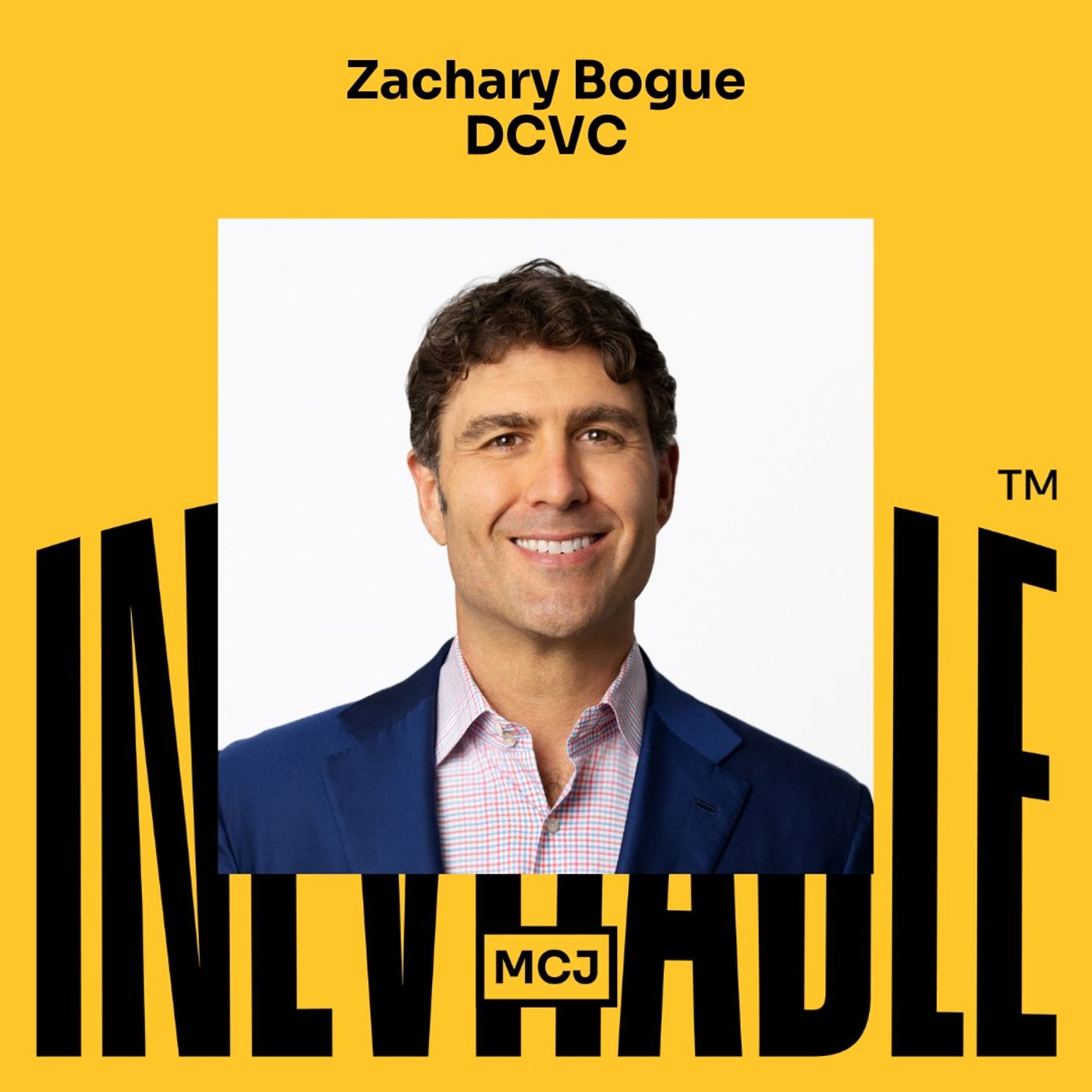
How a $4 B Deep‑Tech Fund Tackles Emissions with DCVC
EZack Bogue is co‑founder and co‑managing partner at DCVC, a $4 billion deep‑tech venture firm spanning 13 funds. In late 2024, DCVC launched DCVC Climate, a dedicated vehicle backing technologies that slash emissions in heavy industry, hasten the energy transition, and bolster climate adaptation. In this episode, Zack unpacks how the firm’s strategy evolved, how his journey—from Colorado outdoors‑kid to Harvard environmental‑science major to Silicon Valley deal‑maker—shaped his worldview, and what it takes to build a capital‑efficient deep‑tech portfolio that moves the climate needle.In this episode, we cover: [01:53] What DCVC is and Zack’s role[02:41] Why DCVC focuses on deep tech[04:04] Zack’s path from Harvard to VC[12:34] DCVC’s playbook: applied AI, capital-light, climate-aligned[15:01] Launching a climate-only fund[20:06] Measuring impact beyond CO₂[25:55] Navigating policy shifts and returns[31:41] Bridging the Series B funding gap[32:56] Solving FOAK financing challenges[37:57] DCVC’s bets: geothermal, micro-reactors, SAF, and moreEpisode recorded on March 28, 2025 (Published on April 17, 2025) Enjoyed this episode? Please leave us a review! Share feedback or suggest future topics and guests at [email protected] with MCJ:Cody Simms on LinkedInVisit mcj.vcSubscribe to the MCJ Newsletter*Editing and post-production work for this episode was provided by The Podcast Consultant

Underground Nuclear Reactors? Inside Deep Fission’s Energy Solution
ELiz Muller is the CEO and Co-founder of Deep Fission, a company pioneering a new approach to the traditional light-water nuclear reactor. Rather than using concrete and constructed containment, Deep Fission places the reactor one mile underground, fundamentally changing the design paradigm.Liz was on the show over five years ago when she was building a company focused on storing nuclear waste deep underground—a related concept. Now, she’s back with a fresh vision and a new venture. Deep Fission recently raised a pre-seed round led by Eight VC, and we wanted to catch up with her to hear how the idea came together and how she’s approaching the challenge this time around.In this episode, we cover: [1:37] Liz’s previous venture: Deep Isolation and lessons learned[4:19] The origin story of Deep Fission and the core insight that sparked it[9:37] Cost comparison between underground and traditional above-ground nuclear reactors[12:17] Deep Fission’s modular, scalable reactor design[19:10] Plans for maintenance, refueling, and long-term waste disposal[22:25] Regulatory engagement with the NRC and path to licensing[23:24] Initial commercial partnership with Endeavor Data Centers[25:07] Advantages of Deep Fission’s approach vs. traditional nuclear plants[28:23] Funding milestones and capital raised to date[29:10] Liz’s vision for the future of nuclear energy[35:03] Who Deep Fission wants to hear from—and how you can helpEpisode recorded on March 27, 2025 (Published on April 10, 2025) Enjoyed this episode? Please leave us a review! Share feedback or suggest future topics and guests at [email protected] with MCJ:Cody Simms on LinkedInVisit mcj.vcSubscribe to the MCJ Newsletter*Editing and post-production work for this episode was provided by The Podcast Consultant

Building a Real-Time Wildfire Alert Platform with Watch Duty
EJohn Mills is the Co-Founder and CEO of Watch Duty, the leading app for real-time wildfire alerts in the U.S.In this episode of Inevitable, John shares how Watch Duty became a vital public safety tool—rising to #1 in the App Store during the recent Palisades and Eaton fires in Los Angeles. As a 501(c)(3) nonprofit, Watch Duty delivers live updates on fire spread, evacuations, and recovery efforts. While historically funded by donations and memberships, the platform now also offers a pro version for first responders, utilities, and emergency managers.John discusses his vision for building a mission-driven tech company that serves the public while scaling to meet growing demand in an increasingly wildfire-prone world.In this episode, we cover: [4:00] Introduction to Watch Duty [07:39] Gaining trust and overcoming initial resistance from fire departments[09:06] How first responders are using Watch Duty [09:57] Inside the “war room” during the Palisades Fire response[13:24] How Watch Duty reporters gather and vet real-time radio traffic[17:28] Nuance and restraint in sharing emergency information [20:50] The origin story of Watch Duty [21:11] John’s journey from Silicon Valley to off-grid life and nonprofit founder[36:44] Operating as a nonprofit and scaling into new disaster zones[52:58] Why private innovation is outpacing government tech [57:22] Advice for founders building in disaster response and recovery [01:00:12] Final thoughts on mission, trust, and what’s next for Watch DutyEpisode recorded on March 12, 2025 (Published on April 3, 2025) Enjoyed this episode? Please leave us a review! Share feedback or suggest future topics and guests at [email protected] with MCJ:Cody Simms on LinkedInVisit mcj.vcSubscribe to the MCJ Newsletter*Editing and post-production work for this episode was provided by The Podcast Consultant

Securing the Energy Grid from Cyber Threats with Xage Security
ERoman Arutyunov is the Co-founder and SVP of Products at Xage Security, a Series B startup focused on protecting critical infrastructure—including energy systems—from cyber threats. Xage is backed by investors like Chevron Technology Ventures, Aramco, Piva Capital, Valor Equity Partners, and Overture.Cybersecurity is a growing concern as our energy systems become more distributed, electrified, and digitally connected. We spoke with Roman about the vulnerabilities in today’s infrastructure, the motivations behind cyberattacks, and how the rise of AI is changing the cybersecurity landscape.In this episode, we cover: [2:11] Introduction to Xage Security[3:12] Cybersecurity 101: Ransomware, nation-state threats, and attacker motivations[7:10] Operational tech (OT) vs. information tech (IT)[13:29] Xage’s Zero Trust security approach[15:45] Customer segments and differing security challenges[20:47] Navigating regulations vs. fast deployment timelines[23:40] How AI is shaping both threats and defenses[28:00] When multifactor authentication becomes a vulnerability[31:59] Real-world cyberattacks on energy systems[34:10] Xage’s funding history and growth trajectoryEpisode recorded on Feb 20, 2025 (Published on Mar 26, 2025) Enjoyed this episode? Please leave us a review! Share feedback or suggest future topics and guests at [email protected] with MCJ:Cody Simms on LinkedInVisit mcj.vcSubscribe to the MCJ Newsletter*Editing and post-production work for this episode was provided by The Podcast Consultant

Mike Schroepfer: Lessons from Scaling Meta to Investing in the Energy Transition
EMike Schroepfer is Partner at Gigascale, a venture firm he founded and self-funded to back startups building venture-scale businesses with the potential for outsized climate impact. Previously, Mike served as CTO at Meta (Facebook’s parent company) from 2013 to 2022, having originally joined in 2008 as VP of Engineering.In this episode, Mike and Cody discuss his career journey, key lessons learned, and their shared counterpoint to the often-repeated myth that "America doesn’t build hard things." They also dive into AI, energy’s role in its advancement, and the work Mike and his team are doing at Gigascale.Mike has been a longtime supporter of MCJ, and we’re honored to count him among our investors. It’s inspiring to see a technologist of his caliber not only invest in climate solutions but also roll up his sleeves to help founders tackle hard problems and build the future.In this episode, we cover: [2:08] Mike’s early career working on video software [5:28] Fundraising challenges and lessons from the dot-com crash [10:12] Working at Sun, Mozilla, and joining Facebook in 2008[13:16] Risks and opportunities of early Facebook[15:40] Managing large engineering teams and the value of humility[18:30] The era of building hard things in the U.S.[21:25] AI and energy innovation: compute, chips, and power[27:49] How scale brings down cost curve and modularized technology [32:01] How he thinks about software-based opportunities [37:40] Shrep’s pivot to climate tech after Meta[41:04] The talent interest evolution in climate [43:33] Gigascale’s investment thesis[49:49] Gigascale’s approach to identifying sectors[51:37] Storytelling and marketing in climate tech[54:10] Gigascales talent efforts for its portfolio Episode recorded on Mar 4, 2025 (Published on Mar 20, 2025) Enjoyed this episode? Please leave us a review! Share feedback or suggest future topics and guests at [email protected] with MCJ:Cody Simms on LinkedInVisit mcj.vcSubscribe to the MCJ Newsletter*Editing and post-production work for this episode was provided by The Podcast Consultant
Accelerating Data Center and Renewable Energy Siting with Paces
EJames McWalter is the CEO and co-founder of Paces, an AI-powered software platform that helps clean energy project developers identify and evaluate the best sites for new projects. Paces streamlines the process by integrating interconnection, environmental, zoning, and legal data on land parcels—key factors developers must navigate when selecting viable locations. MCJ is proud to be an investor in Paces through our venture funds.In renewable project development, one of the biggest challenges is quickly pinpointing sites with the highest likelihood of reaching operation efficiently. As James explains, this process depends on multiple factors: the capacity of the local grid, whether upgrades are needed to connect a project, the feasibility of permitting, and more. And as we discuss, the recent AI-driven data center boom is intensifying the urgency and complexity of each of these considerations.Paces’ platform is being used by both clean energy developers and data center developers who need to get projects built as quickly, cost-effectively, and cleanly as possible. A few months ago, Paces co-authored a white paper with Scale Microgrids and Stripe Climate titled Fast, Scalable, Clean, and Cheap Enough: How Off-Grid Solar Microgrids Can Power the AI Race—a report that sparked a lot of conversation. In it, they explore whether the forecasted energy demands of AI can be met with off-grid, behind-the-meter projects.Oh, and James also hosts his own podcast, Build Repeat, where he interviews project developers and others actively building and deploying clean energy solutions.With all that said, James and I dive into his background, the origins of Paces, and much more in this episode.In this episode, we cover: [2:48] Introduction to Paces and James’ background[6:26] The origin story of Paces and how James met his co-founder, Charles[9:24] Key challenges faced by clean energy project developers[11:45] Permitting bottlenecks and delays[14:57] The growing challenge of decreasing grid capacity[16:01] How Paces’ software addresses site selection challenges[19:11] The role of NIMBY opposition in the permitting process[22:42] How developers leverage Paces' platform[24:51] Paces’ customer segmentation and user types[28:08] How Paces supports data center development[30:16] Insights from Paces’ white paper on off-grid solutions for AI-driven data centers (available at offgridai.us)[38:49] The feasibility of achieving 100% renewable energy for data centers[46:10] Paces’ fundraising to date and the types of partners they’re looking forEpisode recorded on Feb 19, 2025 (Published on March 6, 2025) Enjoyed this episode? Please leave us a review! Share feedback or suggest future topics and guests at [email protected] with MCJ:Cody Simms on LinkedInVisit mcj.vcSubscribe to the MCJ Newsletter*Editing and post-production work for this episode was provided by The Podcast Consultant

Building the EV Charging Network: Lessons from Former EVgo CEO Cathy Zoi
ECathy Zoi is a clean energy veteran with a career spanning leadership roles across government, industry, and investment. Most recently, she served as CEO of EVgo from 2017 to 2023, taking the company public in 2020. EVgo is now one of the largest EV charging networks in the United States.Today, Cathy is deeply engaged in the energy and climate space. She serves on the board of directors for Con Edison, the major investor-owned utility serving the New York City metro area. She’s also on the board of Apax, a British investment firm, and sits on the investment advisory committee for EQT, a Swedish global investment organization that recently acquired Scale Microgrids. Additionally, she’s a board member at SPAN, an MCJ portfolio company, and at Soil Organic.Cathy’s career started at the Environmental Protection Agency, followed by roles in the White House during the Clinton-Gore administration and the Department of Energy under Obama. She’s worked at Silver Lake, founded a division of SunEdison focused on emerging markets, and helped lay the groundwork for Odyssey Energy Solutions, another MCJ portfolio company. Throughout our conversation, we explore her fascinating career journey, the lessons she’s learned along the way, and her perspective on the future of clean energy.In this episode, we cover: [3:01] Cathy’s early career at the EPA and the launch of Energy Star[9:15] Commercializing GHG reducers in Australia[11:59] Working with Al Gore’s Alliance for Climate Protection[14:42] Serving as acting undersecretary in the Obama administration[18:06] Advisory roles on investment platforms[23:22] Experience at SunEdison and founding Odyssey Energy[27:29] Financial discipline and capital deployment at EVgo[32:06] The future of the EV charging business[36:14] Evolution of pricing models[39:18] Board work at Con Ed and risk management[43:19] What excites her most, including beneficial electrificationEpisode recorded on Feb 25, 2025 (Published on March 13, 2025) Enjoyed this episode? Please leave us a review! Share feedback or suggest future topics and guests at [email protected] with MCJ:Cody Simms on LinkedInVisit mcj.vcSubscribe to the MCJ Newsletter*Editing and post-production work for this episode was provided by The Podcast Consultant
Why Wildfire Insurance is Broken—And How Stand is Fixing It
EDan Preston is the co-founder and CEO of Stand, a brand-new startup property insurer providing homeowners insurance for climate-exposed properties. They’re launching with a go-to-market focus on higher-end properties in California—homes that are otherwise unable to obtain affordable rates or any coverage at all due to wildfire risk.Stand claims that their differentiation, as Dan will explain in depth, comes from how they assess fire risk at the individual property level and help homeowners take proactive steps to mitigate those risks as part of the underwriting process.Dan is a seasoned entrepreneur with a win under his belt in InsurTech. He was previously the CEO of Metromile, which went public on the NASDAQ in 2020 via a SPAC merger and was later acquired by NextGen insurance company Lemonade in 2022.Stand recently raised a $30 million Series A, co-led by Inspired Capital and Lowercarbon, and came out of stealth at the end of 2024 to begin underwriting properties.Insurance risk is being priced and managed in ways that no longer match today’s realities, and we loved hearing from Dan about how Stand is tackling the challenge.In this episode, we cover: [3:49] Dan’s background in computer science and machine learning[7:00] The catalyst for starting Stand[9:22] How insurance companies typically evaluate risk[11:05] Challenges in measuring wildfire risk[17:32] Managing fire-prone communities and the importance of collective resilience[20:53] The role of private firefighters in insurance[22:08] Stand’s mission and focus on climate-exposed properties[26:53] Progress since launch and early traction[27:39] Stand’s product, technology, and risk modeling approach[33:18] Why legacy insurers have struggled to adapt to wildfire risk[38:35] What "perils" mean in insurance and why they matter[41:47] Stand’s $30M Series A funding and future plansEpisode recorded on Feb 11, 2025 (Published on Feb 20, 2025) Enjoyed this episode? Please leave us a review! Share feedback or suggest future topics and guests at [email protected] with MCJ:Cody Simms on LinkedInVisit mcj.vcSubscribe to the MCJ Newsletter*Editing and post-production work for this episode was provided by The Podcast Consultant
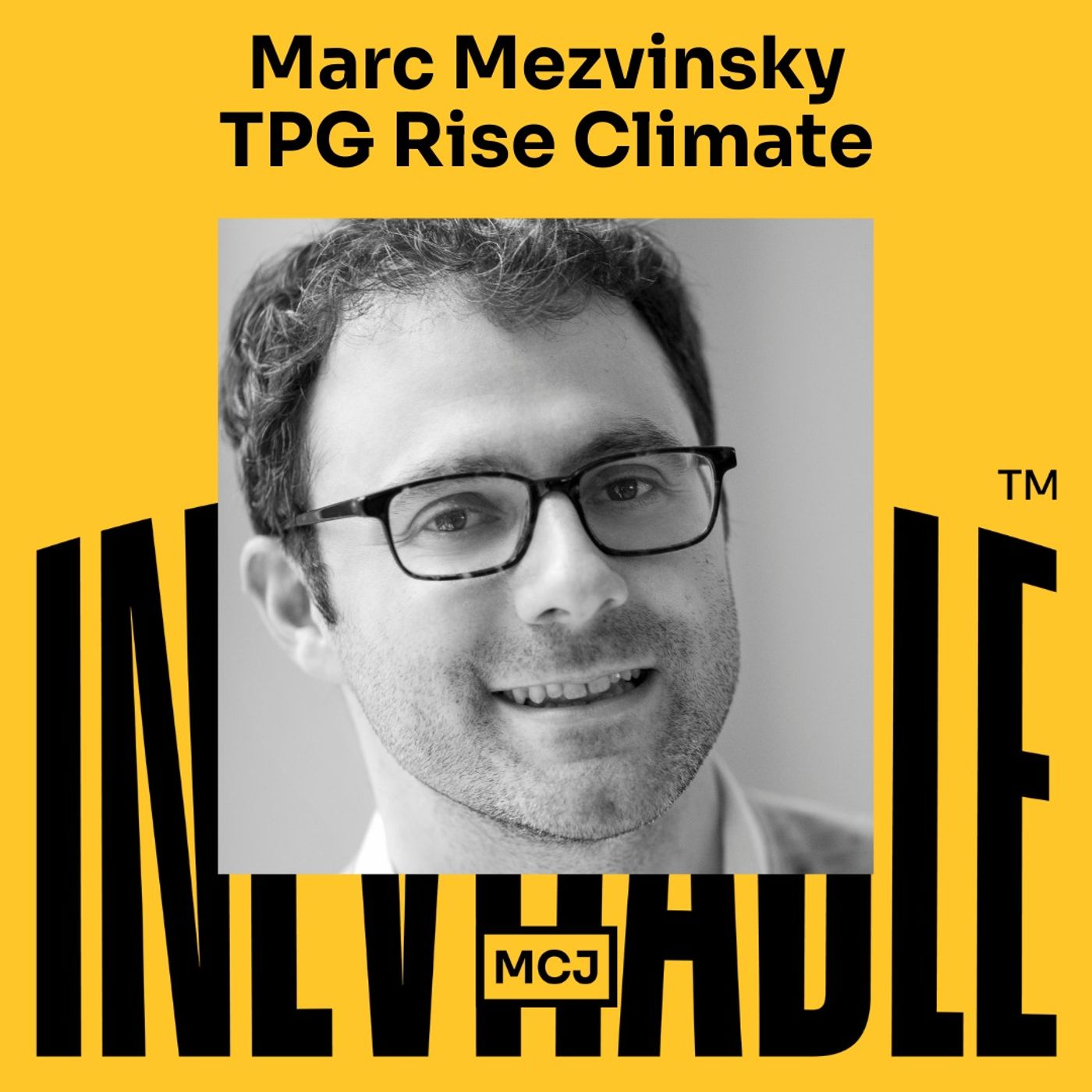
Marc Mezvinsky on TPG Rise Climate’s $7B Fund & Impact
EMarc Mezvinsky is a partner at TPG Rise Climate. TPG Rise Climate is among the largest pools of capital ever raised with a dedicated focus on climate tech. They announced a debut fund in 2021 at over $7 billion—and another very large fund currently in the works. Rise Climate is part of the broader TPG Rise platform, the impact arm of the publicly traded private equity firm TPG, which manages more than $220 billion in assets.Marc and I discuss his background and career path in finance across various asset classes, including private equity, venture capital at Social Capital, investment banking at Goldman Sachs, and hedge fund management, in addition to his work in climate tech.Of note, Marc has a fascinating personal history as the son of two former U.S. House Representatives and as the son-in-law of former U.S. President Bill Clinton and former U.S. Secretary of State Hillary Clinton—he is married to Chelsea Clinton.We also discuss how Marc approaches capital deployment at TPG Rise Climate, how he thinks about impact in his work, and how TPG Rise Climate evaluates impact relative to market-rate returns.In this episode, we cover: [3:04] An overview of TPG Rise Climate[8:34] The fund’s investment approach[11:12] TPC Rise Climate’s impact mandate[16:16] Marc’s background and path into finance[26:16] His exposure to policymaking and its impact on his work[38:10] Areas Marc and TPG Rise are exploring[44:07] Headwinds and tailwinds on Marc’s radarEpisode recorded on Jan 23, 2025 (Published on Feb 27, 2025) Enjoyed this episode? Please leave us a review! Share feedback or suggest future topics and guests at [email protected] with MCJ:Cody Simms on LinkedInVisit mcj.vcSubscribe to the MCJ Newsletter*Editing and post-production work for this episode was provided by The Podcast Consultant
How LineVision is Boosting Transmission Grid Capacity Without New Power Lines
EHudson Gilmer is the co-founder and CEO of LineVision. LineVision is a Series C-stage startup helping utilities monitor and increase the capacity of the vast network of transmission lines that serve as the vascular system of the U.S. electric grid. The U.S. transmission grid spans 600,000 to 700,000 circuit miles of high-voltage lines, connecting energy generation with consumption and delivering power across the country. This infrastructure typically lasts for decades, yet much of it was built before the advent of sophisticated software-based monitoring or persistent connectivity.LineVision provides a non-contact sensor and software system that detects issues with transmission lines and enables grid operators to safely increase their capacity—critical in an increasingly electrified world where grid constraints limit power delivery and building new transmission lines is a slow, multi-year process.We explore all this and more in our conversation with Hudson.In this episode, we cover: [2:06] An overview of transmission as one of the backbones of infrastructure in the US[7:00] LineVision’s focus on high-voltage, long distance lines [8:53] Hudon’s background and LineVision’s origin story[12:41] LineVision’s customers and who they work with[14:33] An overview of LineVision’s product [19:31] How seasonality plays into transmission capacity [22:53] The lifespan of typical transmission lines [25:10] The future of transmission line monitoring [28:11] LineVision’s funding to date [31:05] How LineVision’s business could be applied in the future[33:30] How monitoring facilitated grid security[35:42] LineVision’s new customersEpisode recorded on Jan 30, 2025 (Published on Feb 13, 2025) Enjoyed this episode? Please leave us a review! Share feedback or suggest future topics and guests at [email protected] with MCJ:Cody Simms on LinkedInVisit mcj.vcSubscribe to the MCJ Newsletter*Editing and post-production work for this episode was provided by The Podcast Consultant

Structured Capital 101: Keyframe’s Approach to Climate Finance
EJohn Rappaport is the Chief Investment Officer at Keyframe Capital, a special situations fund manager. They help management teams solve complex asset and corporate financing requirements. In finance speak, this is often referred to as structured capital—the process of separating a company's capital structure into layers, enabling each layer to be fit for an investor seeking that specific risk-return profile.As John shares, structured capital can often be a good fit for companies in the energy transition, as those in renewable energy and adjacent categories often have high upfront capital costs and a relatively low cost of ongoing production.John has spent much of his career in financial roles within the energy and transportation sectors. Prior to founding Keyframe in 2020, he joined Cyrus Capital Partners in 2008, and before that, he worked for Sankaty Advisors, a division of Bain Capital. He has lectured on structured capital and economics at Yale University and sits on the boards of many companies in the energy transition space, including Wonder Capital, Utility Data, and Sealed, among others.So, let's dive into the wonky but important world of structured capital.In this episode, we cover: [1:57] Overview of Keyframe Capital[2:52] The origin of Keyframe and a story about Terawatt Infrastructure[11:25] Understanding structured capital[17:01] Examples of structured capital: Infrastructure as a service[21:10] Keyframe’s thesis-driven approach[25:56] The data center financing challenge[31:02] When and how founders should engage with structured capital providers[35:48] Keyframe’s current focus areasEpisode recorded on Jan 21, 2025 (Published on Feb 6, 2025) Enjoyed this episode? Please leave us a review! Share feedback or suggest future topics and guests at [email protected] with MCJ:Cody Simms on LinkedInVisit mcj.vcSubscribe to the MCJ Newsletter*Editing and post-production work for this episode was provided by The Podcast Consultant
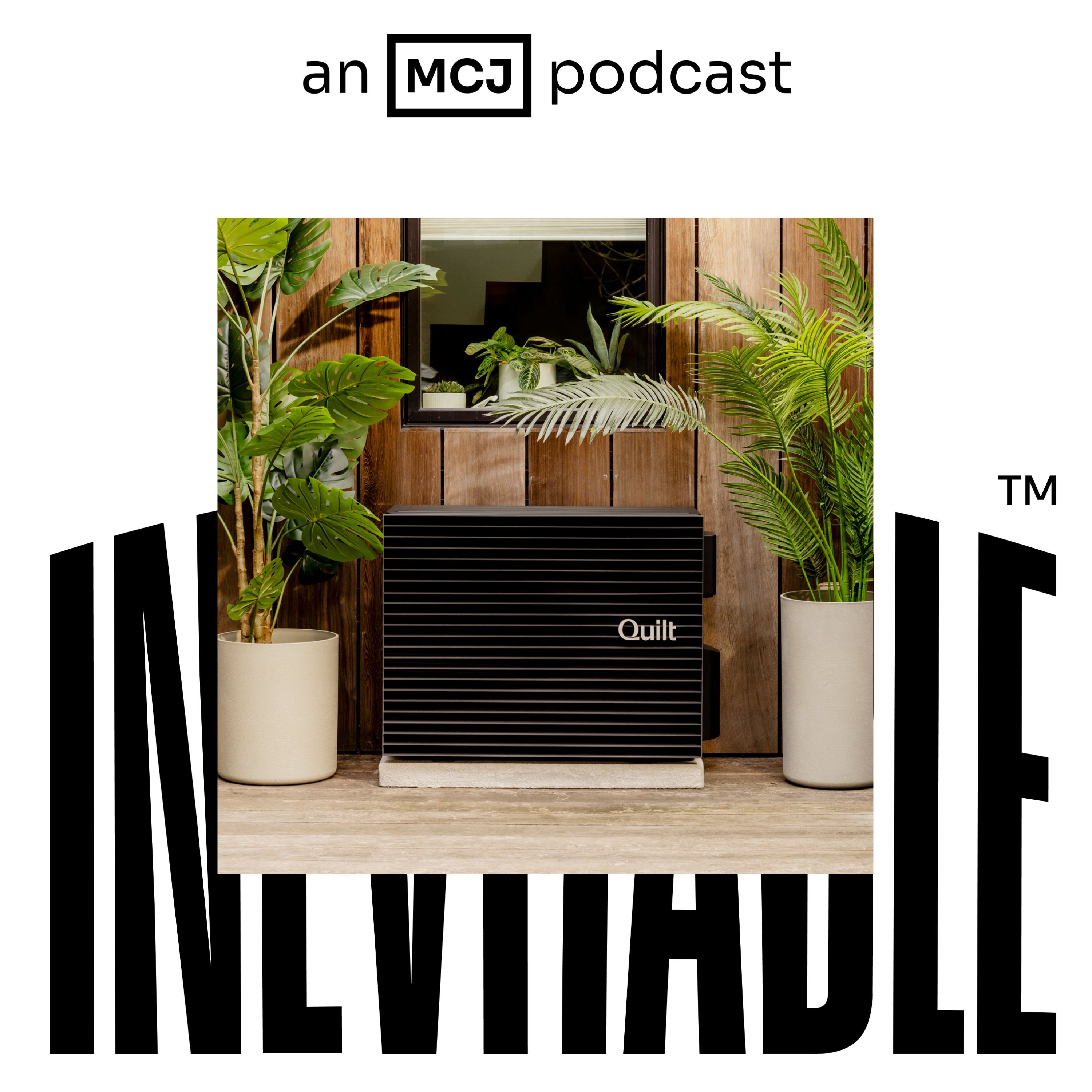
Designing Smart Heat Pumps That Work for Every Room with Quilt
EPaul Lambert is the Co-founder and CEO of Quilt, a company designing smart ductless heat pumps for residential heating and cooling with intelligent room-by-room controls. Quilt was founded in 2022 and launched in the San Francisco Bay Area in spring 2024. Since then, they have achieved hundreds of deployments and are preparing to expand to their next market in Southern California. Earlier this year, they announced a $33 million Series A financing round co-led by Energy Impact Partners and Galvanize Climate Solutions, following a $9 million seed round in 2023 co-led by Lowercarbon Capital and Gradient Ventures. MCJ is proud to have invested in both rounds through our venture funds.Before founding Quilt, Paul led sustainability efforts at Area 120, Google’s in-house incubator for product ideas developed during employees’ 20% time. He previously held product roles at Google and Twitter and began his career by founding, running, and exiting a startup called LearnDot.In this conversation, we wanted to understand Paul’s product mindset—how Quilt works, the assumptions he’s validated along the way, and how he’s approached the challenges of building the business.In this episode, we cover: [2:01] The origin of the name Quilt[3:32] An overview of Quilt’s product stack[5:37] Quilt’s installation process[8:24] An overview of mini splits[10:56] How Paul and his co-founder decided on ductless mini splits[17:09] Paul’s path from design spec to prototype[18:47] The company’s progress to date[21:38] Consumer sentiment about heat pumps[23:51] Seasonal changes that drive consumers to purchase Quilt[27:16] Paul’s biggest learnings in building the company[32:16] Design considerations in Quilt’s product[34:59] Workforce development and other inertia challenges[40:51] What’s next for Quilt[45:52] Where Quilt is hiring, plus its newly launched merch storeEpisode recorded on Dec 17, 2024 (Published on Jan 23, 2025)*Due to the recent fires, Quilt will now launch in Los Angeles in the Spring of 2025. Enjoyed this episode? Please leave us a review! Share feedback or suggest future topics and guests at [email protected] with MCJ:Cody Simms on LinkedInVisit mcj.vcSubscribe to the MCJ Newsletter*Editing and post-production work for this episode was provided by The Podcast Consultant

A New Framework for Family Offices with Integrated Capital Strategies
ESharon Schneider is the Founder of Integrated Capital Strategies, a consulting firm that helps founders and family offices drive positive social change. Her firm specializes in setting up or realigning family offices to better align with the values and evolving priorities of individuals seeking a more integrated approach to life.We invited Sharon on the show after being inspired by one of her posts, where she highlighted a growing trend: younger generations of high-net-worth families are rethinking their relationship with family wealth, especially in light of climate change.In this conversation, we explored the distinctions between impact capital, aligned capital, and catalytic capital, and how family office strategies can incorporate these concepts. We also discussed key considerations for entrepreneurs and fund managers when engaging with family offices, how family offices can structure loan guarantees to address the first-of-a-kind project finance gap—and much more.In this episode, we cover: [2:13] Sharon’s journey to founding Integrated Capital Strategies[8:42] Her perspective on catalytic capital[12:27] Feedback from family offices: privacy and urgency[16:14] Fiduciary duties of family offices[19:25] How Sharon collaborates with family offices[23:30] Tips for high-net-worth individuals[27:23] Guidance for founders approaching investors[28:53] Advice for GPs raising capital[32:55] Underutilized tools in catalytic capital[37:40] More advice for founders seeking funding[41:57] The role of corporate strategics in startups[44:11] Sharon’s outlook on the future of family office investmentsEpisode recorded on Dec 19, 2024 (Published on Jan 20, 2025) Enjoyed this episode? Please leave us a review! Share feedback or suggest future topics and guests at [email protected] with MCJ:Cody Simms on LinkedInVisit mcj.vcSubscribe to the MCJ Newsletter*Editing and post-production work for this episode was provided by The Podcast Consultant
Circular Solutions for Heavy Industry with Cocoon
EEliot Brooks is the CEO and co-founder of Cocoon. Cocoon is driving the industrial circular economy, starting with a process that helps the steel industry continue supplying a critical feedstock for cement production. This feedstock is increasingly at risk as steelmaking transitions from coal-based blast furnaces to lower-emission electric arc furnaces. Cocoon was founded on the realization that as industries decarbonize, certain process changes disrupt circular supply chains. The connection between the slag byproduct of steelmaking and the demands of cement production is their starting focus. Earlier this year, Cocoon announced a $5.4 million pre-seed round led by Wireframe, Gigascale, SOSV, and Celsius Industries.In this episode, we cover: [1:33] Introduction to Cocoon[3:13] The challenge steel decarbonization poses for the cement industry[9:56] Cocoon's process for transforming steel slag into a cementitious material[10:51] Eliot’s background and journey to working on this technology[15:46] Cocoon's business model and go-to-market strategy[19:43] Decarbonization pathways for steel and the role of electric arc furnaces[21:10] Cocoon's current technology readiness and near-term deployment plans[22:05] Building industrial expertise at Cocoon[25:07] Comparing the US and Europe as initial target markets[27:57] Cocoon's recent $5.4 million pre-seed funding round[30:00] Eliot’s perspective on bringing expertise from other industries to address challenges in steelmakingEpisode recorded on Nov 20, 2024 (Published on Jan 16, 2025) Enjoyed this episode? Please leave us a review! Share feedback or suggest future topics and guests at [email protected] with MCJ:Cody Simms on LinkedInVisit mcj.vcSubscribe to the MCJ Newsletter*Editing and post-production work for this episode was provided by The Podcast Consultant
What’s Ahead for U.S. Energy and Climate Policy with Adrian Deveny
EAdrian Deveny, former Director of Energy and Environmental Policy for U.S. Senate Majority Leader Chuck Schumer, was a key architect of the Biden-era climate policy agenda, including the landmark Inflation Reduction Act. In this conversation, we explore Adrian's perspective on what to expect from Washington, D.C., in the years ahead, as the federal government transitions to Republican control of the executive branch and both chambers of Congress.We discuss the likely fate of the climate and clean energy provisions in the Inflation Reduction Act over the next couple of years and whether there are viable pathways for new clean energy policy in the near term. Given the ambitious policies rolled out in recent years, Adrian also shares insights on the "unfinished business" he sees as critical. Spoiler alert: he believes we need to more than double our policy efforts to meet U.S. emissions targets. In this episode, we cover: [3:36] Adrian’s background and journey in the Senate[8:26] Republican trifecta’s impact on climate policy[11:47] Regulatory challenges, including Supreme Court rulings[17:48] Challenges in EPA funding and appropriations[19:53] Defending clean energy tax credits under the IRA[24:08] IRA’s impact on manufacturing and the EV supply chain[31:48] Bipartisan opportunities in geothermal, nuclear, and defense projects[45:28] Debates on permitting reform for energy projects[52:00] Future clean energy growth and market forces[55:12] Adrian’s focus on advancing federal climate policyRecommended listening: Crafting Landmark Climate Legislation Russel Kenneth DeGraffEpisode recorded on Nov 20, 2024 (Published on Jan 13, 2025) Enjoyed this episode? Please leave us a review! Share feedback or suggest future topics and guests at [email protected] with MCJ:Cody Simms on LinkedInVisit mcj.vcSubscribe to the MCJ Newsletter*Editing and post-production work for this episode was provided by The Podcast Consultant

Wildfires, Floods and Extreme Heat: Why Climate Adaptation Matters with Intact Centre
EKathryn Bakos is the Managing Director of Finance and Resilience at the Intact Centre on Climate Adaptation, an applied research center within the faculty of Environment at the University of Waterloo in Canada. Our conversation today is all about the inevitable impacts of climate change, including floods, wildfires, and heat waves in particular, as these phenomena are Kathryn's main focus. We talk about the increasing severity of each of these, the preventative efforts that individuals and communities can each take to avoid their worst effects and how risk and insurance industries are navigating these perils. And lastly, we have a conversation about why adaptation measures have seemingly lagged behind decarbonization efforts in the public consciousness about climate change. In this episode, we cover: [0:00] Overview of the Intact Centre[1:30] Canada’s climate vulnerability[2:44] Kathryn’s career path[4:00] Major risks: flooding, wildfires, heat waves[9:59] Responses to flooding: individuals, communities, industries[16:55] Updating flood maps and using AI[26:07] Wildfire risks: actions for homes and communities[34:53] Wildfire insurance and resilience challenges[37:42] Balancing adaptation and mitigation[41:28] Political will for adaptation measures[45:50] Cost-effectiveness of adaptation[46:41] Don River and Waterpark Project[48:34] Innovation in resilience technologies[51:58] Heat risks and urban solutions[58:34] Final reflections on resilience effortsResources from Intact: Three Steps to Cost-Effective Home Flood ProtectionThree Steps to a Cost-Effective FireSmart™ HomeThree Features of a Wildfire-Ready CommunityThree Steps to Cost-Effective Apartment and Condo Heat ProtectionThree Steps to Cost-Effective Home Heat ProtectionEpisode recorded on Dec 2, 2024 (Published on Jan 6, 2025) Enjoyed this episode? Please leave us a review! Share feedback or suggest future topics and guests at [email protected] with MCJ:Cody Simms on LinkedInVisit mcj.vcSubscribe to the MCJ Newsletter*Editing and post-production work for this episode was provided by The Podcast Consultant

Simplifying Clean Energy Procurement with Verse
ESeyed Madaeni is the co-founder and CEO of Verse. Verse develops software that helps organizations understand, plan, and manage clean energy. Their platform simplifies the complex clean energy procurement process, enabling companies to meet their emissions goals in the most economical way possible. MCJ is proud to be a repeat investor in Verse through our venture capital funds, including participation in their recent Series A round alongside GV and Coatue. To us, Verse embodies the inevitable shift where large companies must integrate clean energy management as a core business capability.Hyperscalers have led this trend, driven by their insatiable need for electricity to power data centers—a demand that’s only growing with AI. We believe this focus on clean energy will expand across major corporations, much like the widespread adoption of IT and cloud technologies over the past two decades. But enough from us—let’s hear directly from Seyed about what he’s building with Verse.In this episode, we cover: [1:43] Overview of Verse’s mission and focus[2:05] How Seyed founded Verse[4:54] Lessons from Seyed’s time at Fluence[6:02] Insights into the buyer side of the market[10:03] Rising demand on the U.S. energy grid[13:02] Breakdown of Verse’s customer base[17:44] Challenges corporate buyers face with energy and emissions[19:14] Overview of virtual PPAs and additionality[25:14] How Verse helps buyers make energy decisions[27:28] Importance of data in pricing and forecasting[30:40] 24/7 carbon-free energy vs. carbon matching[35:00] The role of batteries in increasing emissions[38:56] How Verse is expanding its offerings[41:15] Understanding Verse’s approach[44:00] Verse’s funding history and goalsEpisode recorded on Oct 17, 2024 (Published on Jan 2, 2025) Enjoyed this episode? Please leave us a review! Share feedback or suggest future topics and guests at [email protected] with MCJ:Cody Simms on LinkedInVisit mcj.vcSubscribe to the MCJ Newsletter*Editing and post-production work for this episode was provided by The Podcast Consultant

Inside the DOE’s Grid Deployment Office
EMaria Robinson, outgoing Director of the Grid Deployment Office at the U.S. Department of Energy, joins us to share insights from her impactful tenure. Since stepping into the role in 2022, Maria has overseen $22 billion in federal funding to drive the development of new and upgraded electric infrastructure nationwide.Recorded in person at the recent Deploy conference in Washington, DC, hosted by the DOE, Maria and Cody discuss her background, the mission of the Grid Deployment Office, and the initiatives she’s championed. We also dive into the complexities of the U.S. electric grid, including transmission, interconnect queues, permitting reform, and enhancing grid resilience amidst extreme weather and climate challenges.In this episode, we cover: [4:57] Maria’s background and work with Rep. Jay Inslee[7:33] The complexity of the U.S. electric grid[10:19] Funding sources for transmission projects[11:54] Renewables’ impact on grid design[15:13] The role of NEPA in grid projects[22:37] Powering data centers and grid distribution[25:37] Interconnect queue backlogs[27:08] The benefits of reconductoring[28:15] Grid resiliency and local utilities[33:34] Maria’s vision for the next administration[35:09] Cybersecurity challenges for the grid[36:32] Federal permitting reform for transmissionEpisode recorded on Dec 5, 2024 (Published on Dec 19, 2024) Enjoyed this episode? Please leave us a review! Share feedback or suggest future topics and guests at [email protected] with MCJ:Cody Simms on LinkedInVisit mcj.vcSubscribe to the MCJ Newsletter*Editing and post-production work for this episode was provided by The Podcast Consultant
Tin-Powered Energy Storage with Fourth Power
EArvin Ganesan is the CEO of Fourth Power, which is developing a flexible-duration thermal energy system designed to meet the needs of an electrical grid increasingly powered by renewables. Their system heats liquid tin to extremely high temperatures, circulates it through carbon blocks for heat storage, and converts that heat back to electricity on demand via thermal photovoltaics. The technology aims to address both short-duration energy storage (5–10 hours) and long-duration needs (100 hours or more), with the ability to discharge power within seconds.At the end of last year, Fourth Power raised a Series A led by DCVC, with participation from Breakthrough Energy Ventures. Arvin’s fascinating career includes time in the U.S. Senate as a senior policy advisor to the late Senator Frank Lautenberg, over five years at the U.S. Environmental Protection Agency, and nearly six years at Apple as the head of global energy and environmental policy.In this episode, we explore Arvin's career path, his decision to join Fourth Power, and why the company’s work matters for the future of energy storage.In this episode, we cover: [1:49] Arvin's career journey: From the EPA to Apple and beyond[8:13] Why Arvin chose to become CEO of Fourth Power[10:29] Focusing on electricity storage over industrial heat[12:06] Fourth Power’s thermal energy storage system explained[17:11] How Fourth Power uses photovoltaics for efficient energy conversion[20:36] Trade-offs between Fourth Power's technology and lithium-ion batteries[25:03] Co-location strategies and powering renewable energy[28:21] Collaborating with utilities to meet grid demands[31:09] Fourth Power’s milestones and current progress[32:57] Arvin’s transition to a CEO role and what he’s learning[34:59] Market optimism and the potential impact of Fourth Power’s solutionRecommended Listening: Onshoring Clean Energy with Giulia Siccardo, MESCEpisode recorded on Aug 20, 2024 (Published on Dec 12, 2024) Enjoyed this episode? Please leave us a review! Share feedback or suggest future topics and guests at [email protected] with MCJ:Cody Simms on LinkedInVisit mcj.vcSubscribe to the MCJ Newsletter*Editing and post-production work for this episode was provided by The Podcast Consultant
Frontier’s $1B Bet on Carbon Removal
EHannah Bebbington is the Head of Deployment at Frontier, an advanced market commitment created in 2022, that aims to purchase $1 billion or more of permanent carbon removal by 2030. Founded by Stripe, Alphabet, Shopify, Meta, and McKinsey, Frontier has quickly become a leading force in the carbon removal space. Its portfolio includes a "who’s who" of innovators pushing the boundaries of what’s possible in carbon removal—many of whom have been guests on this show. Cody catches up with Hannah to explore how Frontier’s program is structured, what they’ve learned so far, and her perspective on the state of carbon removal today.In this episode, we cover: [2:03] What is Frontier? An intro to its $1B commitment to carbon removal[7:00] The scale of the carbon removal challenge and future funding needs[10:42] Gaps in the industry: demand, investment, and measurement[13:21] Hannah’s background and role as Head of Deployment[16:10] Frontier’s advanced market commitment model explained[18:05] How Frontier supports early-stage companies through pre-purchases[21:32] Tips for startups applying to Frontier’s programs[27:19] Frontier’s offtake track for scaling larger projects[30:16] The importance of measurement, reporting, and verification (MRV)[35:05] Frontier’s criteria for funding: scale, cost, and permanence[42:14] Microsoft’s role as a leader in carbon removal[47:24] Key terms in Frontier’s offtake agreements[55:08] The impact of the data center boom on carbon removal[57:01] Carbon removal’s bipartisan support and policy outlookRecommended Listening:MCJ Startup Series: Charm IndustrialPermanent Geologic Carbon Storage with Vaulted DeepEnhanced Rock Weathering with Lithos CarbonCarbon Removal and Climate Policy with Heirloom and Senator Scott WienerEpisode recorded on Nov 22, 2024 (Published on Dec 9, 2024) Enjoyed this episode? Please leave us a review! Share feedback or suggest future topics and guests at [email protected] with MCJ:Cody Simms on LinkedInVisit mcj.vcSubscribe to the MCJ Newsletter*Editing and post-production work for this episode was provided by The Podcast Consultant
Stanford's Hydrogen and Natural Gas Initiatives
EDr. Naomi Boness is the managing director of the Natural Gas Initiative and co-managing director of the Hydrogen Initiative at Stanford University. With a Ph.D. in Geophysics from Stanford and over 13 years in technical and management roles at Chevron, Dr. Boness combines deep scientific knowledge with real-world experience in energy operations.In this episode, we dive into the molecule side of energy, focusing on the evolving roles of natural gas and hydrogen in a decarbonizing world. Topics range from geopolitics and energy security to emissions challenges and the future of these key resources in the energy mix.In this episode, we cover: [1:38] Dr. Boness' work and focus at Stanford [5:10] Corporate involvement: utilities, investment firms, and oil majors[7:12] Natural gas in the global energy mix and its role as a coal alternative[9:09] Addressing the critical issue of methane leaks[11:42] Incentives for midstream players to participate [13:53] Dr. Boness' pov on the idea of halting oil and gas production entirely[16:04] Geopolitical dynamics of natural gas production and exportation[20:59] Breakdown of the global gas production mix[22:55] Effects of Russia's invasion of Ukraine on the European gas market[27:10] DPower vs. heat transition and natural gas' role[29:49] Vision for the future of natural gas in a renewable energy landscape[33:55] Challenges and trade-offs in transitioning from natural gas and investing in infrastructure[39:25] Potential role of hydrogen in decarbonizing hard-to-abate sectors[43:38] Environmental impacts of hydrogen as a potential greenhouse gas[47:33] Policy and regulatory hurdles for clean hydrogen production[50:39] Issues surrounding the "45V rule" in the Inflation Reduction Act[54:21] Dr. Boness' top policy priorities and wish listEpisode recorded on Aug 14, 2024 (Published on Nov 21, 2024) Enjoyed this episode? Please leave us a review! Share feedback or suggest future topics and guests at [email protected] with MCJ:Cody Simms on LinkedInVisit mcj.vcSubscribe to the MCJ Newsletter*Editing and post-production work for this episode was provided by The Podcast Consultant

TELO’s EV Pickup for Urban Adventures
EJason Marks is the Co-founder and CEO at TELO. TELO is developing EV pickup trucks in the footprint of a Mini Cooper with a bed the size of a Toyota Tacoma and the power of a mainstream truck. They're focused on urban use cases for pickup trucks, whether that be a weekend adventurer who lives in a city or an organization whose employees need trucks for work in urban environments but are fed up with navigating giant vehicles through traffic, parking, and underground lots.We were eager to hear Jason’s perspective on why now is the right time to build an electric vehicle from the ground up, what makes TELO’s approach uniquely positioned for a significant market opportunity, and why existing truck manufacturers haven’t pursued this segment. Plus, we dive into the fascinating history of why today’s pickup trucks have become so massive in the first place.MCJ is proud to support TELO as an investor through our venture capital fund, backing founders like Jason who are reshaping industries to be cleaner, more profitable, and more resilient.In this episode, we cover: [2:26] Jason's background in automotive[4:37] An overview of TELO and its purpose[6:13] How pickups have grown significantly larger over the past 15-20 years[11:15] The current EV truck market[12:47] Truck density in urban environments and challenges[15:51] TELO's approach to building EV an pickup[17:58] China's EV phenomenon and landscape[23:08] Current US EV market[24:51] TELO's unique approach to EV pickups[28:09] The company's battery chemistry[29:49] TELO's progress to date[32:05] Big milestones Jason and his team are working towards including homologation[35:59] TELO's go to market[38:20] Jason's vision for the future of his business[39:24] TELO's latest Seed Round led by Neo[41:08] Where TELO needs help[41:44] Biggest surprises in building a vehicle companyEpisode recorded on Oct 4, 2024 (Published on Nov 21, 2024) Enjoyed this episode? Please leave us a review! Share feedback or suggest future topics and guests at [email protected] with MCJ:Cody Simms on LinkedInVisit mcj.vcSubscribe to the MCJ Newsletter*Editing and post-production work for this episode was provided by The Podcast Consultant

This Giant Aircraft Aims to Break Wind Energy’s Size Limits
EMark Lundstrom is the founder and CEO of Radia.Radia is developing the WindRunner, the world’s largest aircraft, specifically designed to transport massive offshore wind turbine blades—some reaching the length of football fields—to onshore sites. This capability, termed "GigaWind," could redefine the scope and scale of onshore wind projects. Radia isn’t stopping at building these groundbreaking aircraft; they also plan to develop wind energy projects to catalyze the GigaWind transformation. This episode dives into Radia’s verticalized approach to addressing a major challenge in wind energy: the physical limitations of transporting turbine blades via the U.S. interstate highway system. By circumventing these constraints, Radia envisions a future where wind farms can reach unprecedented scales.In this episode, we cover: [2:13] Mark's background in aerospace [6:27] Logistics of wind turbines on land today[9:03] Onshore vs. offshore wind energy in terms of turbine size, logistics, and economics [14:04] China's wind energy generation[15:53] An overview of Radia's WindRunner aircraft [20:57] Radia's plan to become a power provider[24:07] Siting and permitting process for Radia's projects [28:23] Radia's progress to date [30:20] Capital stack needed to fund Radia's WindRunner[35:05] Radia's decision to come out of stealth[38:32] Who Radia wants to hear from and hire [39:43] How Radia's solution can address AI power demandsEpisode recorded on Sept 19, 2024 (Published on Nov 13, 2024) Enjoyed this episode? Please leave us a review! Share feedback or suggest future topics and guests at [email protected] with MCJ:Cody Simms on LinkedInVisit mcj.vcSubscribe to the MCJ Newsletter*Editing and post-production work for this episode was provided by The Podcast Consultant
Building Trust in the Carbon Markets with Rubicon
ETom Montag, CEO of Rubicon Carbon, joins us to discuss the world of carbon credits. Tom has had an illustrious career, previously serving as Chief Operating Officer at Bank of America, President of Global Banking and Markets, and a member of the executive management team. He joined Merrill Lynch as Executive Vice President and Head of Global Sales and Trading in 2008, just before its merger with Bank of America. Before that, he was with Goldman Sachs, co-heading the Global Securities Business and serving on its management committee. He currently serves on the board of directors of Goldman Sachs Group Inc. and is a board member of Northwestern University, NYU Langone Medical Center, the Hispanic Federation, Deschutes Land Trust, and the Japan Society. He is also a former BlackRock board member.In this episode, we dive into why, after such an accomplished career, Tom chose to dedicate his next chapter to carbon markets. We have a fascinating conversation about the current state of voluntary carbon markets and how Tom views them in relation to the financial services industry when he started his career in the 1980s. We explore why carbon credits matter, the circumstances under which companies should use them, and the origin of Rubicon Carbon, including the role of TPG’s Rise Fund. Tom also discusses Rubicon's approach to bundled credit offerings and addresses some of the trust challenges facing the carbon markets today, as well as where he believes they are headed.In this episode, we cover: [2:19] Tom's financial background and career pathway to Rubicon [5:21] The state of the voluntary carbon market, including its size and growth potential[7:41] Parallels between the early derivatives market and the current carbon markets[11:41] Challenges around additionality, financial hedging, and trust in the carbon markets[13:41] An overview of Rubicon Carbon[20:55] Regulatory and compliance considerations around carbon markets[26:30] The need for more standardization and risk adjustment in the VCM[33:44] Examples of Rubicon Carbon's projects and partnerships[36:08] Role of oil and gas in the future of VCM[40:12] Bull and bear cases for the future of carbon marketsEpisode recorded on Aug 22, 2024 (Published on Nov 11, 2024) Enjoyed this episode? Please leave us a review! Share feedback or suggest future topics and guests at [email protected] with MCJ:Cody Simms on LinkedInVisit mcj.vcSubscribe to the MCJ Newsletter*Editing and post-production work for this episode was provided by The Podcast Consultant
Solar-Powered Data Centers with Exowatt
EHannan Parvizian is Co-founder and CEO of Exowatt. Exowatt turned heads earlier this year when it announced a $20 million Seed round with backers including Andreessen Horowitz, Atomic, and Sam Altman, the CEO of OpenAI. The company has developed a novel combined solution for energy generation and storage that concentrates heat from the sun, stores it as thermal energy, and converts it on demand to electricity.They've primarily focused their go-to-market around the data center boom driven by AI and argue that their solution is purpose-built for the massive energy need of data centers. We were eager to hear from Hannan as the rapid increase in energy demand from hyperscalers and AI remains a huge topic in the energy space, especially as we work to transition away from fossil fuels while also meeting AI-fueled demand.In this episode, we explore Hannan's insights on the limitations of "traditional" solar PV and lithium-ion battery storage in meeting these needs—and how Exowatt aims to bridge this gap.In this episode, we cover: [2:01] An overview of Exowatt[4:56] Exowatt's technology and approach[6:29] Reasons for pursuing a thermal energy storage solution[14:46] Hannan's previous startup experience[16:45] How Exowatt's Seed round came together[20:07] Response to skepticism about Exowatt's technology[24:41] Technical details on the Exowatt P3 system[29:09] Geographical and land use considerations[34:33] Comparison of Exowatt's approach to other thermal energy storage solutions[38:59] Exowatt's manufacturing and deployment strategy[41:48] Pricing and economics of the company's system[43:10] Current deployments and future growth plans[43:44] Hannan's perspectives on Exowatt's competitive advantages and challenges[46:02] Where Exowatt needs helpEpisode recorded on Oct 10, 2024 (Published on Nov 7, 2024) Enjoyed this episode? Please leave us a review! Share feedback or suggest future topics and guests at [email protected] with MCJ:Cody Simms on LinkedInVisit mcj.vcSubscribe to the MCJ Newsletter*Editing and post-production work for this episode was provided by The Podcast Consultant
Winning the Climate War with Tom Steyer
EBy now, you’ve likely noticed our refreshed look. We’re evolving the show to focus on the inevitable impacts of climate change and the groundbreaking solutions shaping our future.To kick off this next chapter our first guest on Inevitable is Tom Steyer, Co-executive Chair at Galvanized Climate Solutions, a multi-strategy investment firm focused exclusively on the climate transition. A little over a year ago, Galvanize announced the final close of its Innovation + Expansion Fund at over $1 billion, one of the largest climate venture funds ever raised. Tom is also the recent author of the New York Times bestselling book, "Cheaper, Faster, Better: How We'll Win the Climate War," and he wrote the Forward to Project Drawdown.In 2020, Tom was a Democratic presidential candidate with a climate-focused policy agenda, and he participated that year on the primary debate stage alongside now President Joe Biden and now VP Kamala Harris, among many other notable Democratic party leaders. He's the founder of NextGen America, the largest youth voter organization in the USA, which he created in 2013. But Tom hasn't always been focused on the energy transition and climate change. In 1986, he founded Farallon Capital Management, a multi-strategy hedge fund that he ran for over 25 years and grew to hundreds of employees and $20 billion in assets under management. His story of having incredible success in one field and then feeling the inevitable pull to work on the biggest problem of our time is exactly the type of pathway that we plan to explore on this show. *We recorded this episode live during Climate Week NYC, in front of a fantastic audience. We'd like to thank them for joining as well as the folks at ethic for lending their beautiful space and JP Morgan for helping to sponsor the event. In this episode, we cover: [4:55] Tom's book theme: "do the obvious thing"[9:58] Tom's book theme: "the status quo will not go on forever"[13:53] Energy is wealth and how we can collectively retire fossil energy with renewables[17:06] Tom's decision to dedicate his career to climate and his early pathway[21:34] NextGen and the org's origins[23:32] Sharpening your bullshit detector[25:03] What prompted Tom's 2020 presidential run[26:05] The catalyst to Galvanize[29:26] The firm's different focus areas and strategy[34:45] Tom's "five plus one" approach to investing[38:01] The model Tom would like O&G companies to take in the transition[40:45] Thoughts on the "climate war"[44:13] What happens when climate tech is no longer a category[46:56] Tom's thoughts on permitting halting clean energy progress[49:59] Rapid fire topics including China and India[53:13] Hyperscalers and AI[55:01] Tom's policy wish list[59:29] His call to action for listenersEpisode recorded on Sept 24, 2024 (Published on Nov 4, 2024) Enjoyed this episode? Please leave us a review! Share feedback or suggest future topics and guests at [email protected] with MCJ:Cody Simms on LinkedInVisit mcj.vcSubscribe to the MCJ Newsletter*Editing and post-production work for this episode was provided by The Podcast Consultant

Introducing: Inevitable, an MCJ podcast
trailerEClimate change is inevitable. It's already here. But at the same time, the energy transition–the rewriting of industries to be cleaner, more profitable, and more resilient–is also inevitable.Join MCJ Managing Partner Cody Simms each week as sits down with experts across sectors to explore the groundbreaking innovations and extraordinary people shaping the transition of energy and industry. Enjoyed this episode? Please leave us a review! Share feedback or suggest future topics and guests at [email protected] with MCJ:Cody Simms on LinkedInVisit mcj.vcSubscribe to the MCJ Newsletter*Editing and post-production work for this episode was provided by The Podcast Consultant

The Final Stop on My Climate Journey—And What’s Next
EToday on My Climate Journey, we’re bringing back a familiar voice: Jason Jacobs, Founder and Venture Partner at MCJ. In this special episode, Cody and Jason reflect on the evolution of MCJ and its mission to drive climate innovation. While this is the last episode under the My Climate Journey name, don’t worry—the show isn’t going away. The format will stay the same, but a new name is coming soon. Cody and Jason share lessons learned, the ongoing need for collaboration, and gratitude for the community built along the way.In this episode, we cover: [1:57] Jason's early climate journey and where MCJ fits in the transition[4:15] How Jason's feelings about climate change have evolved [6:43] The nature of discussion around topics like climate change[9:19] Jason's updated role at MCJ[10:31] His hopes for the future of the firm [11:15] Advice for folks starting their own climate journeys[12:11] Jason's thoughts on the role of oil and gas in the transition [13:17] And the role of activism [14:47] Jason's thoughts on the category of climate tech and market forces[17:50] Our collective responsibility to address the systems problem [19:57] The role of the MCJ show going forwardEpisode recorded on Oct 22, 2024 (Published on Oct 31, 2024) Enjoyed this episode? Please leave us a review! Share feedback or suggest future topics and guests at [email protected] with MCJ:Cody Simms on LinkedInVisit mcj.vcSubscribe to the MCJ Newsletter*Editing and post-production work for this episode was provided by The Podcast Consultant

Geothermal for Big Buildings with Bedrock
EJoselyn Lai is the Co-founder and CEO at Bedrock Energy. Bedrock uses geothermal energy to transform the heating and cooling of buildings. We've covered geothermal on the show a few times, but Bedrock brings a unique approach. On one end of the spectrum, we've explored large utility-scale geothermal projects, which aim to drill deep to tap into underground steam vents for turbine-powered electricity generation. On the other end, we've featured companies that drill relatively shallow wells to create underground loops, providing ground-source insulation for residential heat pumps. Bedrock falls closer to this second category but goes deeper than most residential projects, using these techniques to power heat pumps for large commercial and industrial buildings.We were interested to hear from Joselyn about the technology she's developed to pursue this opportunity, what market demand looks like, and how her solution compares against the HVAC status quo and commercial-scale air-source heat pumps.In this episode, we cover: [2:24] Overview of Bedrock Energy and its geothermal approach[4:03] How Bedrock’s methods differ from other geothermal generation techniques[5:15] Joselyn's journey to founding Bedrock Energy[8:14] Focusing on the existing HVAC market[13:18] Integration of geothermal systems into commercial buildings[16:57] Overview of Bedrock's underground geothermal technology[22:18] On-site footprint of Bedrock’s geothermal solutions[29:32] Proprietary software and drilling innovations for efficient deployments[31:29] Understanding Bedrock’s early customer base[34:26] Challenges related to geology and labor shortages[38:58] Collaborating with utilities for enhanced grid benefits[43:57] Bedrock Energy’s progress and milestones so farAdditional episodes:Residential Geothermal with Dandelion EnergyStartup Series: QuaiseEpisode recorded on Oct 3, 2024 (Published on Oct 24, 2024) Enjoyed this episode? Please leave us a review! Share feedback or suggest future topics and guests at [email protected] with MCJ:Cody Simms on LinkedInVisit mcj.vcSubscribe to the MCJ Newsletter*Editing and post-production work for this episode was provided by The Podcast Consultant

Point Source Carbon Capture with Ardent’s Membrane Solutions
EErica Nemser is CEO at Ardent, a Series A stage startup that's aiming to help drive industrial decarbonization by developing and selling membranes to perform point source carbon capture. Point source capture differs from direct air capture in that it's focused on concentrated greenhouse gas emissions coming right out of the flue of an industrial system, as opposed to direct air capture (DAC), which attempts to capture emissions from ambient air. Ardent, formerly Compact Membrane Systems, has been operating for 30 years, but its pivot to carbon capture and tech startup status is recent. In this episode, we discuss how Ardent’s technology stands out in the point source capture field, the industry's varied approaches to decarbonization, and how Erica’s leadership has guided the company's transformation.In this episode, we cover: [2:11] Rebranding from Compact Membrane Systems to Ardent[3:53] Ardent's membrane-based carbon capture solution and how it differs from other technologies [6:29] Erica's background and how it has informed her leadership at Ardent[7:37] Ardent's go-to-market strategy of partnering for scale[12:15] The company's hypothesis around facilitated transport membranes [13:05] An overview of Ardent's approach to industrial carbon capture [18:01]: Ardent’s low-energy membrane systems for carbon capture[19:50]: Overview of Ardent’s membrane system setup[23:03]: Addressing concerns about prolonging fossil fuel use with carbon capture[25:11]: Erica’s perspective on diverse solutions for industrial heat[32:06]: “Carbon Capture as a Service” explained[37:20]: Agricultural sector's interest in carbon capture[45:51]: Ardent’s global presence and talent searchEpisode recorded on Aug 1, 2024 (Published on Oct 17, 2024) Enjoyed this episode? Please leave us a review! Share feedback or suggest future topics and guests at [email protected] with MCJ:Cody Simms on LinkedInVisit mcj.vcSubscribe to the MCJ Newsletter*Editing and post-production work for this episode was provided by The Podcast Consultant

Scaling Hydrogen for Heavy Industry with Hgen
EMolly Yang is CEO and co-founder of Hgen, a company that develops clean hydrogen to decarbonize heavy industry. Specifically, they are working on alkaline electrolyzer technology to make it have higher efficiency and higher power density, which they claim will allow them to produce hydrogen with a smaller footprint and lower cost, using a modular, mass-manufacturable design.Based in Los Angeles, Hgen has raised capital from Founders Fund, Fontinalis Partners, and Seven Seven Six among others. Prior to starting Hgen, Molly was on the Product team at Tesla, where she led initiatives across Tesla's industrial and residential energy products. Her co-founder and childhood friend, Colin Ho led actuation & power system for Starship and propulsion components for Crew Dragon at SpaceX.In this episode, Molly and Cody talk all about Hgen's origin story, technology and market. Toward the end of the conversation, she offers her thoughts to other climate tech startup founders and climate tech investors about how to approach a market.In this episode, we cover:[3:13] Molly’s background at Tesla and her motivation for starting Hgen[6:09] Exploring different solutions for hard-to-abate sectors[8:30] Hgen’s focus on distributed hydrogen production through alkaline electrolysis[9:24] Comparing alkaline vs. PEM electrolyzers[14:16] The challenges and advantages of alkaline electrolyzers[16:10] Targeting markets that use hydrogen today and displacing gray hydrogen[22:10] Various use cases for hydrogen[25:06] Hgen’s progress and business model[27:49] Hgen is hiring![28:08] How different investors view hydrogen[34:25] Molly's advice for entrepreneursEpisode recorded on July 11, 2024 (Published on Oct 10, 2024) Enjoyed this episode? Please leave us a review! Share feedback or suggest future topics and guests at [email protected] with MCJ:Cody Simms on LinkedInVisit mcj.vcSubscribe to the MCJ Newsletter*Editing and post-production work for this episode was provided by The Podcast Consultant

Crafting Landmark Climate Legislation with Russell Kenneth DeGraff
ERussell Kenneth DeGraff spent 18 years as a staffer on Capitol Hill, including 12 years as the Chief Climate and Technology Advisor to Nancy Pelosi, notably during her second term as Speaker of the House. He was, as they say in the room where it happened when negotiating the landmark climate legislation of the last few years, including the Inflation Reduction Act, the Infrastructure Investment and Jobs Act, and the CHIPS and Science Act. This is a special conversation going deep into the backstory of how things work in Washington and how these once-in-a-generation climate policies came to be realized. In this episode, we cover: Russell's background and path to Capitol HillHis roles in congressional offices, including work with Congressman Mike Doyle and Speaker Nancy PelosiThe challenges of passing legislation in a closely divided SenateNegotiating and passing major climate policies like the Inflation Reduction Act, and the role of the House Select Committee on the Climate CrisisA case study on negotiating solar canalsDynamics of working with key senators, such as Joe ManchinRussell's current work with Stanford and HarvardReflections on January 6, the political climate, and the 2024 presidential electionAdvice for getting involved in electoral efforts to support climate actionRisks of losing recently passed climate policies if Democrats lose control of CongressWhy climate change is inherently a political issueEpisode recorded on Aug 6, 2024 (Published on Oct 7, 2024) Enjoyed this episode? Please leave us a review! Share feedback or suggest future topics and guests at [email protected] with MCJ:Cody Simms on LinkedInVisit mcj.vcSubscribe to the MCJ Newsletter*Editing and post-production work for this episode was provided by The Podcast Consultant

Startup Series: Battery-Powered Homes with Base
EThis My Climate Journey podcast episode was recorded in front of a live audience at the Ion during Houston Energy and Climate Startup Week. Zach Dell is the Co-founder and CEO of Base Power Company. Base aspires to build a reliable and affordable home energy service powered by distributed batteries. Their technology supports the grid during times of peak need and protects customers during outages. They claim to do this at a fraction of the cost of other solutions. Base is serving live customers in Texas and claims to be the only electricity provider to offer a home battery, monthly energy service, and installation, all in one with no requirement of rooftop solar.MCJ is a proud investor in Base via our venture capital fund. The company recently raised a $68 million Series A round via Valor Equity Partners, Thrive Capital, and others in which we participated. In this episode, we dig into Zach's journey, the origins of Base, and what he sees as the path ahead for distributed storage and home energy as he builds a vertically integrated business in this enormous space.In this episode, we cover: [2:47] Zach's background and journey into entrepreneurship, with a focus on solving energy and climate problems[7:57] How he landed on batteries and met his co-founder, Justin Lopas[14:05] Base's residential approach in Texas [22:00] The company's business model and role in the energy market [25:03] Base's ideal customer [27:30] The battery's current and future manufacturing strategy [31:00] Zach's key learnings from starting a business[32:18] Base's company culture and who they're looking to hire[36:46] How Base could grow into other energy sectors [40:00] Zach's vision for the futureEpisode recorded on Sept 10, 2024 (Published on Oct 3, 2024) Enjoyed this episode? Please leave us a review! Share feedback or suggest future topics and guests at [email protected] with MCJ:Cody Simms on LinkedInVisit mcj.vcSubscribe to the MCJ Newsletter*Editing and post-production work for this episode was provided by The Podcast Consultant

A Conversation with Oxy CEO, Vicki Hollub
E*This My Climate Journey podcast episode was recorded in front of a live audience at the Ion during Houston Energy and Climate Startup Week. Our guest is, Vicki Hollub, CEO of Occidental Petroleum (Oxy), a century-old oil and gas company employing over 12,000 people globally with a market cap near $50 billion. Recently the company has made significant investments into what they refer to as “carbon management” technologies including the acquisition of Carbon Engineering, a Direct Air Capture (DAC) company, in 2023 for $1.1 billion. Oxy is commercializing Carbon Engineering’s technology through its 1PointFive initiative and aims to deploy 70 DAC facilities by 2035. These efforts include recently receiving draft permits from the EPA for Class VI Injection wells, enabling the permanent geologic sequestration of CO₂, an advance market commitment from Microsoft to purchase 500,000 metric tons of carbon removal, and an award from the US Department of Energy for up to $500M to build a 1M ton per year facility.The conversation covers a lot of territory. Vicki acknowledges climate change and its effects on extreme weather and natural ecosystems, while also stating that Oxy does not view the energy transition as a shift away from oil and gas. Instead, she describes a future where oil and gas exploration could become carbon-negative through advancements in enhanced oil recovery (EOR), a technology that uses CO₂ to extract fossil fuels from otherwise depleted wells.This is a notable interview for MCJ as Vicki is the first oil and gas CEO we’ve had on the show. We believe it’s important to understand how a company like Oxy, which has a very large greenhouse gas emissions footprint, thinks about its future plans. We also know that many who listen to this show are interested in Oxy’s DAC efforts and their perspective on the future of the technologies and markets around it. Vicki became CEO in 2016, the first woman to lead a major American oil company. We are grateful to Katie Mehnert of ALLY Energy for connecting us with her for this conversation.In this episode, we cover: [03:28] Navigating the trust gap between O&G companies and the public[06:42] Vicki's early career path[08:32] The O&G boom in the Permian Basin in the mid-2000s[11:18] Vicki's path to becoming the first female CEO at Oxy[17:15] Changing dynamics and priorities while running a complex company like Oxy[18:00] How Vicki pitched Warren Buffet to invest in Oxy and navigated the impacts[21:11] How Oxy attracts and retains talent, plus generational differences[26:36] Challenges and opportunities Oxy sees in the energy transition[30:45] Navigating urgency relative to long-term planning[34:01] How the transition of innovation and legacy businesses could play out[44:36] Oxy's focus on carbon management, including direct air capture[49:55] Challenges in scaling DAC, including partnerships and funding[53:46] Vicki's thoughts on achieving a net-zero carbon barrel of oil[59:44] Her perspectives on the future of the oil and gas industry and its evolutionEpisode recorded on Sept 11, 2024 (Published on Oct 1, 2024) Enjoyed this episode? Please leave us a review! Share feedback or suggest future topics and guests at [email protected] with MCJ:Cody Simms on LinkedInVisit mcj.vcSubscribe to the MCJ Newsletter*Editing and post-production work for this episode was provided by The Podcast Consultant

Election Special: Navigating the Climate Vote
EThe election cycle can feel overwhelming for the average person who is climate-concerned, but not deeply political enough to understand where and how to plug in. If you have money to give, where should it go? If you have time to contribute, what should you do? We could think of no better group than the experts we have here to help walk us through it. Tiernan Sittenfeld is the Senior Vice President of Government Affairs at LCV or the League of Conservation Voters, among many other things. LCV assigns every member of the U.S. Congress with a national environmental Scorecard, which is a handy tool for tracking their voter record on issues related to climate change. Caroline Spears is the Executive Director at Climate Cabinet, which she describes as Moneyball meets climate policy. Climate Cabinet analyzes local climate and governance data to uncover high-leverage races and candidates across thousands of local offices. Caroline joined us previously on the pod a few years ago for a deep dive about her journey and her work. Eliza Nemser is the Co-founder and Executive Director at Climate Changemakers, a modern climate advocacy network built for busy, productive people. They help individuals take productive climate action through action playbooks, issue briefings and hour-of-action co-working sessions. Eliza is also a repeat guest on the show.A few disclaimers: One, this episode tends to be pretty pro-Democrat. Some of that comes from top-of-the-ticket sentiment such as former President Trump's withdrawal of the U.S. from the Paris Climate Agreement. Some of it comes from the most recent experience in Congress where the Inflation Reduction Act faced a 51 to 50 vote in the Senate that was evenly split down party lines with Vice President Harris breaking the tie. This is not to say that all Democrats are strong on climate. The Inflation Reduction Act nearly died many times inside the Democratic Party before it passed. And if you look up and down Congress and even farther into state and local politics, there are a wide range of LCV scores for Democratic candidates and there are some Republicans who are strong on climate issues as well. The second disclaimer is that climate is a huge topic. We didn't take time in the episode to talk about what it means to be a "climate voter."We've learned one thing over the years, that you should never assume that climate-concerned people always agree on solutions. We intentionally didn't spend time going deep into the pros and cons of different policy platforms. And yes, there is an argument to be made that natural gas is a bridge fuel and that replacing coal aggressively with gas will help our emissions problem. But this episode is meant for people who already know they want to see progress around clean energy deployment across our economy and want some ideas on how to get involved in the election cycle. *Watch the MCJ Collective member hub for a special Ask-Me-Anything session with Climate Changemakers. In this episode, we cover: [5:00] Intro to Tiernan and LCV[6:16] Intro to Caroline and Climate Cabinet[7:30] Intro to Eliza and Climate Changemakers[9:02] Climate stakes in this election[15:30] House and Senate race importance[21:30] Climate's political divide[28:45] House stakes this cycle[34:30] Texas election outlook[39:20] Key states to watch[42:17] Climate champion governors[44:13] LCV candidate scoring[47:15] Supporting candidates financially[57:22] How to participate and engage[1:08:21] Improving accessibility and outcomesEpisode recorded on Aug 30, 2024 (Published on Sept 16, 2024) Enjoyed this episode? Please leave us a review! Share feedback or suggest future topics and guests at [email protected] with MCJ:Cody Simms on LinkedInVisit mcj.vcSubscribe to the MCJ Newsletter*Editing and post-production work for this episode was provided by The Podcast Consultant

Startup Series: Nuclear Micro-Reactors with Radiant
EDoug Bernauer is the CEO and Co-founder of Radiant. Radiant is developing a portable nuclear micro-reactor to replace diesel generators. They raised a $40 million Series B in 2023 led by a16z, after previously raising capital from investors including USV, Founders Fund, and DCVC. They're targeting the development of a portable, mostly self-contained, one-megawatt nuclear reactor that is roughly the size of a shipping container.We've been focusing more on nuclear energy lately, exploring whether the US could reclaim its position as a global leader. With bipartisan support reflected in recent legislation like the ADVANCE Act signed into law by President Biden, there are signs of progress, but significant challenges remain.In this episode, Doug discusses these challenges and delves into Radiant’s technology, use cases, fuel, and more.In this episode, we cover: [02:28]: Radiant's micro-reactor technology and applications [04:21]: Use cases for one-megawatt reactors, including disaster relief [06:36]: Description of Radiant’s reactor[10:26]: Cooling technologies used by Radiant[12:20]: Radiant's connection with Idaho National Lab's Pele design [13:40]: DOE and DoD funding for Radiant's nuclear technology[17:02]: Customer models and sales strategies for nuclear reactors [20:43]: Nuclear Regulatory Commission (NRC) approval processes for operating reactors [21:57]: Doug’s hopes for future regulatory parity with diesel generators [24:18]: Supply chain for High-Assay Low-Enriched Uranium (HALEU) fuel [28:38]: Challenges of NRC processes for micro-reactors [32:24]: Demand signals from remote and military applications for micro-reactors [35:31]: Current financing status and future fundraising plansEpisode recorded on Aug 8, 2024 (Published on Sep 12, 2024) Enjoyed this episode? Please leave us a review! Share feedback or suggest future topics and guests at [email protected] with MCJ:Cody Simms on LinkedInVisit mcj.vcSubscribe to the MCJ Newsletter*Editing and post-production work for this episode was provided by The Podcast Consultant

Startup Series: Designing the Future of Home Energy with Haven
EJeff Chapin is the Co-founder and Chief Product Officer at Haven Energy. Haven aims to make it easier for homeowners to install home battery systems, including choosing the right battery, permitting and installation, tax credits, and virtual power plant setup. Haven recently began offering bundled installation of solar and batteries. Jeff has seen scale before as he and his co-founder, Philip Krim, previously co-founded and grew the one-time darling, direct-to-consumer mattress company, Casper. Jeff has a long-time background in design at IDEO and credits this experience with training him for the context switching that's allowed him to move across very different industries, sectors, and technologies.In this episode, we talk about consumer demand for batteries, how Haven works, the wonky and esoteric net metering regulations in California where Haven is prioritizing their go-to-market, and why Haven added solar to their offering recently. In this episode, we cover: [02:08]: Jeff's design-driven journey from IDEO to Casper[06:18]: Applying design thinking to home energy[08:45]: Retrofitting batteries to existing solar systems[11:30]: Challenges in the battery installation market[15:28]: Customizing battery options and customer incentives[21:35]: Installation process and energy management[26:03]: Financial benefits and tax credits[28:15]: Changes in net metering for rooftop solar[34:46]: Growing demand for solar and battery setups[41:06]: Series A funding and growth strategy for HavenEpisode recorded on Jul 23, 2024 (Published on Aug 29, 2024) Enjoyed this episode? Please leave us a review! Share feedback or suggest future topics and guests at [email protected] with MCJ:Cody Simms on LinkedInVisit mcj.vcSubscribe to the MCJ Newsletter*Editing and post-production work for this episode was provided by The Podcast Consultant

Startup Series: Battery-Electric Rail with Parallel Systems
EMatt Soule is the CEO and Co-founder of Parallel Systems. Parallel Systems is re-imagining how goods can be transported via rail by building automated battery-electric freight rail vehicles. These vehicles resemble box cars that can drive independently and form on-the-fly connections with each other to create mini trains. According to Matt, the goal is not to upend existing rail freight use cases but to rethink what’s possible on current rail infrastructure to address use cases traditionally managed by trucking. Before founding Parallel Systems, Matt spent 13 years at SpaceX as an engineering leader in avionics. Parallel Systems has raised around $50 million from investors, including Anthos Capital and Congruent Capital. The conversation begins with a 101 primer on railways, a topic not previously covered on the show.In this episode, we cover: [2:31] Matt's background in rocket engineering[6:14] Energy efficiency: rail vs. trucks[7:31] History of US rail transportation[9:22] Rail industry ownership and subsidies[11:21] Rail transportation's environmental impact[14:44] Rail's challenges, especially for short trips[17:23] Industries using rail transport[18:53] Rail for non-critical and luxury use cases[23:05] Overview of Parallel Systems' self-assembling trains[28:37] Benefits of battery electrification in rail[31:21] Cost comparison: Parallel Systems vs. traditional rail and trucking[34:14] Current pilots and safety considerations[39:08] Expansion plans for new geographies[40:29] Business model: selling vehicles to railroads[44:08] Future of locomotives in the rail industryEpisode recorded on July 30, 2024 (Published on Aug 22, 2024) Enjoyed this episode? Please leave us a review! Share feedback or suggest future topics and guests at [email protected] with MCJ:Cody Simms on LinkedInVisit mcj.vcSubscribe to the MCJ Newsletter*Editing and post-production work for this episode was provided by The Podcast Consultant

Startup Series: Electrifying Trucking with Flipturn
EKatie Siegel is CEO and Co-founder at Flipturn. Flipturn is an EV charging management platform for fleets and we're diving into the electrification of trucking.At the beginning of 2024, the Advanced Clean Fleets law came into effect in California creating a number of mandates for zero emissions vehicle adoption in the trucking space. And the law impacts any fleet doing business in California, so there are nationwide implications.Cody and Katie dig into this as well as the impacts on various types of trucks and routes. As fleet managers begin to anticipate compliance, they're realizing that understanding and managing charging will need to become a core competency for them. All of a sudden, things like power procurement and efficient energy usage will become a huge part of the equation for running a business that moves goods around. Flipturn raised a seed round in 2023 from Accel and Katie brings hands-on experience into the company after having previously grown her career through IPO at Samsara, a leader in telematics and Internet of Things, connectivity services for trucking and logistics. In this episode, we cover: [01:48]: Flipturn’s mission to electrify trucking and enhance fleet management[02:28]: Katie's journey from Samsara to founding Flipturn[03:39]: From telematics to EV infrastructure innovation[05:14]: Transportation's role in pollution and the shift to electrification[07:19]: Focus on electrifying last mile delivery and drayage[10:25]: Differences in EV charging needs for delivery vans vs. drayage trucks[17:23]: Flipturn’s software for efficient fleet charging[19:00]: Strategies for setting up fleet charging stations[22:21]: Challenges and solutions in vehicle electrification[27:32]: Integrating truck OEMs with charging networks[30:06]: How fleets choose charging software[33:23]: Hydrogen vehicles in new zero-emissions law[35:12]: Evolving challenges in the trucking industryEpisode recorded on Jun 27, 2024 (Published on Aug 15, 2024) Enjoyed this episode? Please leave us a review! Share feedback or suggest future topics and guests at [email protected] with MCJ:Cody Simms on LinkedInVisit mcj.vcSubscribe to the MCJ Newsletter*Editing and post-production work for this episode was provided by The Podcast Consultant

Big Tech Betting on Nature-Based Carbon Removals
EJulia Strong is the Executive Director of Symbiosis Coalition. Announced in early 2024, Symbiosis Coalition is an advanced market commitment from Google, Meta, Microsoft, and Salesforce to purchase up to 20 million tons of nature-based carbon removals. The forestry credit space has faced challenges over the last couple of years, prompting interest in how Julia and these large tech companies collaborated to stimulate activity in the sector. Conversations about forestry should be relatively straightforward, considering forests, along with oceans and soil, are natural carbon sinks. Preserving and restoring forests is crucial, yet the complexity surrounding forestry credits always brings new insights. We’re grateful to Julia for sharing more about the formation of Symbiosis Coalition, criteria for high-quality credits, barriers to bankability, and more. In this episode, we cover: An overview of Symbiosis CoalitionThe formation of the coalitionJulia's background in nature-based solutionsCriteria for high-quality forestry carbon removal projectsCounterfactuals in forest protection vs restorationRegions for reforestation effortsMotivations for landownersThe role of project developersBarriers to bankability and how Symbiosis is approaching themPotential financing and perceived riskSymbiosis' quality criteria: conservative accounting, durability, social and community benefits, ecological integrity, and transparencySymbiosis' mangrove restorationWorking with local and indigenous communitiesGoals for Symbiosis' transparencyJulia's podcast Solving Climate NaturallyEpisode recorded on July 9, 2024 (Published on Aug 12, 2024) Enjoyed this episode? Please leave us a review! Share feedback or suggest future topics and guests at [email protected] with MCJ:Cody Simms on LinkedInVisit mcj.vcSubscribe to the MCJ Newsletter*Editing and post-production work for this episode was provided by The Podcast Consultant

Decoding Coal Dispatch with RMI
EJoe Daniel is a Principal on the Carbon-Free Electricity Team at RMI.Our topic today is coal, specifically the "non-economic dispatch" of coal. This phenomenon occurs when coal-fired power plants deliver power to electricity grids even when their electricity is not the most cost-effective option, thereby disrupting the "merit order" of electricity dispatch. This complex topic is explored with Joe's help, as he provides insights into this intricate issue. The US electric grid is notoriously difficult to understand, and there may be moments when the conversation becomes challenging. However, Joe and Cody consistently strive to make the concepts clear and accessible.The complexity of the system contributes to the problems Joe highlights. Information asymmetry creates economic friction, which disadvantages renewables, despite their general economic superiority. Joe's work at RMI involves developing and deploying quantitative tools, such as RMI's Economic Dispatch Hub, which he will discuss. These tools aim to accelerate affordable and equitable utility de-carbonization pathways.In this episode, we cover: [2:42] Joe's background and work at RMI[4:25] Seasonality and cyclical trends in coal usage[6:20] Operation and flexibility of coal plants[10:05] Merit order and prioritizing resources based on cost[12:25] Types of resources and their cost ranking[16:01] Dispatching resources and electricity sources[21:03] Non-economic dispatch of coal and cost impacts[25:02] Public utility commissions' role in regulation[29:23] Need for transparency and market price signals[33:31] Smooth energy transition and coal's future role[39:09] RMI's role in providing expertise and assistance[40:30] Cost implications and solutions for non-economic dispatch[43:49] Public engagement in utility commission hearings[46:16] Policy and local engagement in clean energy adoptionEpisode recorded on July 18, 2024 (Published on Aug 4, 2024) Enjoyed this episode? Please leave us a review! Share feedback or suggest future topics and guests at [email protected] with MCJ:Cody Simms on LinkedInVisit mcj.vcSubscribe to the MCJ Newsletter*Editing and post-production work for this episode was provided by The Podcast Consultant
Startup Series: Distributed Hydrogen with Fourier
ESiva Yellamraju is the Co-founder and CEO at Fourier. Fourier's mission is to make hydrogen universally accessible with on-site and on-demand production. Fourier is not Siva's first startup, it's his fourth. He sold his last company to Apple the one before that to Google and the one before that to Polycom, so he knows a thing or two about entrepreneurship.Fourier is barely two years old and they raised a seed round in mid-April led by General Catalyst. They've largely operated in stealth. In fact, there's nothing on their website at fourier.earth other than their thesis statement for starting the company, so we were excited to learn from Siva about why he transitioned from a very successful entrepreneurial career in software to tackle a business in the energy sector. We were also eager to learn specifically about what Siva’'s building in distributed hydrogen and what he's learned from the process thus far. In this episode, we cover: [2:01] Siva’s entrepreneurial background[4:46] His decision to work on climate and energy [7:35] Customer pain point understanding [12:44] Potential use cases for distributed hydrogen, including power backup solutions and data centers[15:04] Approaching hydrogen production as a data problem[21:47] Customers working with Fourier as part of a broader movement around clean energy [24:01] Potential use cases for distributed hydrogen, including power backup solutions and data centers[27:14] Advantages of hydrogen over batteries for long-term storage and heavy transportation [33:20] Geographic markets for hydrogen deployment; the US, Germany, India, and Indonesia[35:33] Fourier's success to date and plans for commercial rollout [37:12] The goals for Fourier's pilots in the US and India [40:16] Siva's learning curves in building an energy company [42:29] Potential for India to become a leader in hydrogen[44:21] The name behind Fourier [45:34] Fourier's current capital and hiring needsEpisode recorded on July 25, 2024 (Published on Aug 1, 2024) Enjoyed this episode? Please leave us a review! Share feedback or suggest future topics and guests at [email protected] with MCJ:Cody Simms on LinkedInVisit mcj.vcSubscribe to the MCJ Newsletter*Editing and post-production work for this episode was provided by The Podcast Consultant

Japan's Energy Mix Post-Fukushima
EJapan is important to consider on the global energy stage. The country’s emissions footprint is considerably smaller than China and the U.S. While Japan's energy footprint isn't growing as rapidly as India's, it’s still the fifth-largest emitter of any country globally, with emissions representing roughly three to 4% of the global total. Japan's energy system is heavily fossil fuel-based, especially after it cut nuclear power generation from roughly one-third to zero in the aftermath of the 2011 Fukushima incident. Today we're diving into the Japanese energy economy and decarbonization efforts with Isshu Kikuma. Isshu has been with Bloomberg New Energy Finance since 2018, and up until last month his role there was Japan Energy Analyst. He just switched his focus to the energy storage world, but clearly brings a wealth of knowledge on Japan, energy, and decarbonization.We've been doing these geo tours on the pod for a while, covering countries like China, India, Brazil, and Kenya. Just check out our pod archives at the links below.In this episode, we cover:Japan's current power mix and heavy reliance on fossil fuels Decrease in nuclear power generation after the Fukushima incidentThe country's share of renewablesChallenges and potential of offshore wind in JapanPrograms and initiatives to encourage emission reductions, including the feed-in tariff schemeThe structure of Japan's power grid and interconnections between regionsThe role of industry in energy use and emissions reductionJapan's emissions targets Market-based levers and consumer programs in Japan, including the RE-100 initiative and EV subsidiesJapan's funding of coal power plants in other Southeast Asian countriesClimate change impacts on Japan and resiliency efforts The role of battery energy storage in Japan's power gridGeothermal and more✈️ Travel With Us:China’s Role in the Global Energy TransitionNarendra Taneja on India’s Energy PoliciesDr. Carlos Nobre’s Roadmap for Brazil’s Climate FuturePowering Up KenyaEpisode recorded on June 4, 2024 (Published on July 22, 2024) Enjoyed this episode? Please leave us a review! Share feedback or suggest future topics and guests at [email protected] with MCJ:Cody Simms on LinkedInVisit mcj.vcSubscribe to the MCJ Newsletter*Editing and post-production work for this episode was provided by The Podcast Consultant