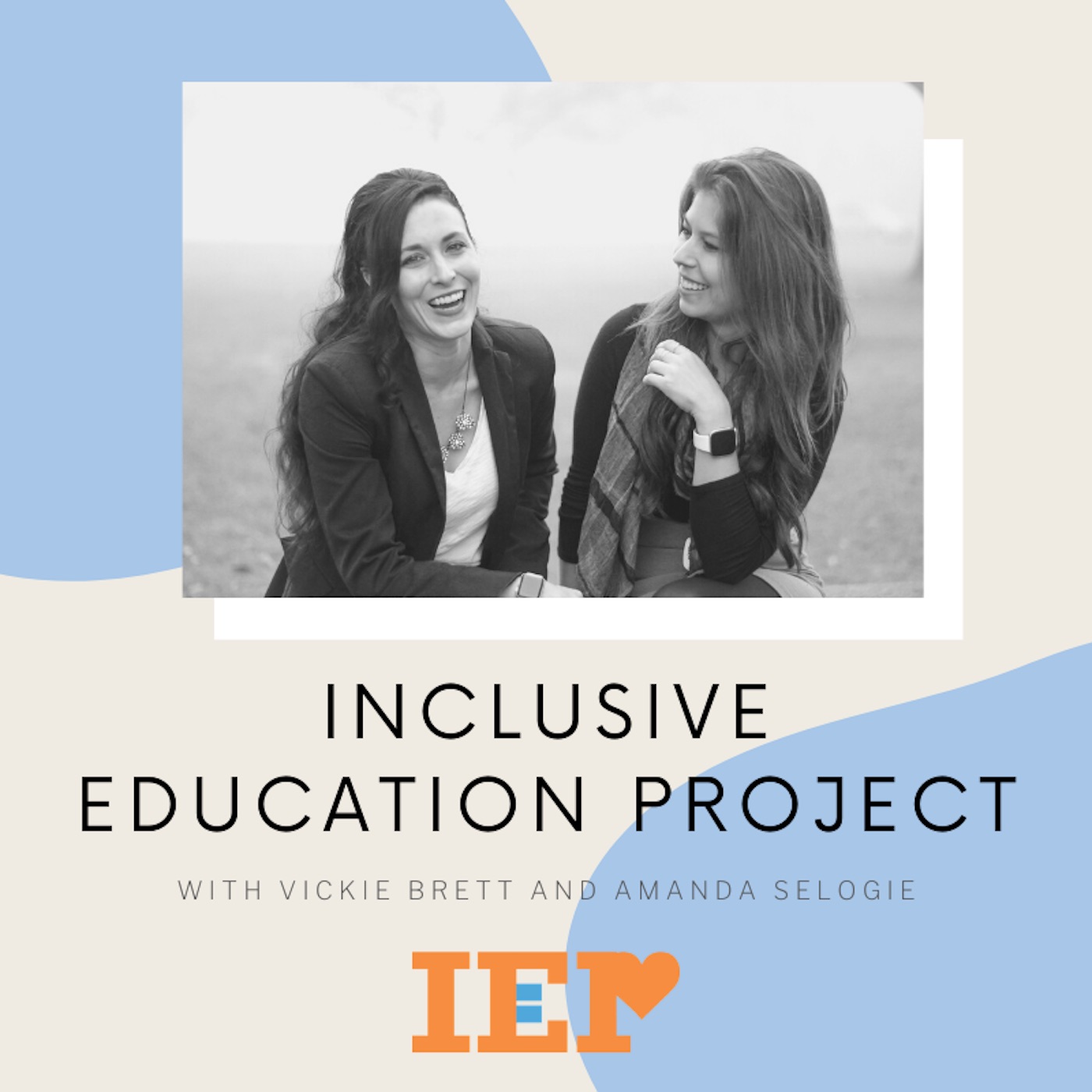
Inclusive Education Project (IEP) Podcast
221 episodes — Page 3 of 5
Ep 274Understanding the Enigma: Autism in Girls - A Conversation with Dr. Melody Abbene
Today’s topic is one that many people don’t recognize or acknowledge: autism in girls. Autism seems to present differently and to be much more commonly diagnosed in boys, so let’s learn more with today’s guest. Dr. Melody Abbene is a clinical psychologist with a specialty in working with neurodivergent people, most of whom are autistic. She does therapeutic work and adult autism assessments and is based in Los Angeles. Show Highlights:The differences in autism that present internally (more common in girls) and externally (more common in boys)Why girls with autism seem to blend in better with their peersWhere parents should begin if they suspect their child is neurodivergentHow parents can best communicate with the school team about the internal presentation of their child’s autismHow to tell that a child might have internalized autismHow “masking” is defined and describedWhy girls are more likely to be labeled with emotional disturbances and misdiagnosedLinks/Resources:Connect with Dr. Melody Abbene: WebsiteContact us on social media or through our website for more information on the IEP Learning Center: www.inclusiveeducationproject.org Thank you for listening! Don’t forget to SUBSCRIBE to the show to receive every new episode delivered straight to your podcast player every Tuesday.If you enjoyed this episode and believe in our message, then please help us get the word out about this podcast. Rate and Review this show on Apple Podcasts, Stitcher Radio, or Google Play. It helps other listeners find this show.Be sure to connect with us and reach out with any questions/concerns:FacebookInstagram–We are doing videos on Instagram, so connect with us there and send us your questions!TwitterIEP websiteEmail us: [email protected]
Ep 273Exciting Steps Toward Inclusive Education in California, with Arielle Starkman
Things are always changing in the field of education, and sometimes even new legislation and policies are like a whirlwind. Today’s episode takes a look at some exciting steps forward in inclusive education practices in California. Join us for more!Arielle Starkman is an Inclusive Education Consultant originally from New Jersey, and she now lives in Los Angeles. Her career as a special educator began right out of college when she first moved to California. Comparing her east coast experience to what she saw in California left her amazed that such a progressive state was not doing more in the field of inclusive education. Throughout her career, Arielle has held various roles as a special educator and is excited about the new initiatives that will lead to big changes for families. Show Highlights:Why new policies take a LONG time to take effect and be implementedHow the state of California has created The Inclusion Support Office Division–and what this means for students Why starting kids off on the right foot from the very first day they enter the school system is the best practice for inclusionHow the new program will increase the confidence of educators in inclusion practices and identify students’ learning needs at earlier agesHow the California Administrative Service Credential (SB 354) will focus on inclusion and impact many studentsKey takeaways: the push for universal pre-K and multi-tiered systems of support will be the initiatives that make the most impact in inclusive education in the near futureThank you for listening! Links/Resources:Contact us on social media or through our website for more information on the IEP Learning Center: www.inclusiveeducationproject.org Don’t forget to SUBSCRIBE to the show to receive every new episode delivered straight to your podcast player every Tuesday.If you enjoyed this episode and believe in our message, then please help us get the word out about this podcast. Rate and Review this show on Apple Podcasts, Stitcher Radio, or Google Play. It helps other listeners find this show.Be sure to connect with us and reach out with any questions/concerns:FacebookInstagram–We are doing videos on Instagram, so connect with us there and send us your questions!TwitterIEP websiteEmail us: [email protected] Connect with Arielle:Website: www.ariellestarkman.comEmail: [email protected] Instagram: @ariellestarkman LinkedIn: https://www.linkedin.com/in/arielle-starkman
Ep 272Why Standardized Tests Don’t Always Give a Clear Picture with Dr. Jayme Jones
As always, it seems like the summer flew by, and now we find ourselves jumping into another school year already. One question that comes up frequently in IEP meetings is why schools use standardized testing for kids with learning differences. Specifically, why do many school districts hold standardized test scores as the gold standard, when we know that kids with special needs aren’t being adequately evaluated? We are tackling this topic with Dr. Jayme Jones, who returns for a Part 2 conversation.Dr. Jayme Jones is a pediatric neuropsychologist who has maintained a private practice in CA since 1995. Her background is extensive in the assessment and treatment of preschool and school-aged children with a variety of neurodevelopmental and psychiatric disorders, and she provides regular training on many related topics. We are thrilled that Dr. Jayme is joining us for a continuation of our conversation from Episode 261.Show Highlights:Why the most important thing is to keep the context in mind with standardized testsWhy it’s challenging when none of the standardized tests are well-suited to kids with learning differences–and so the results are often misusedWhy it’s problem that protocols, manuals, and training are different for those who administer and assess tests, and not everyone knows how to integrate all the dataWhy parents feel frustrated with unnecessary standardized tests that measure special needs kids against their more typical peersHow standardized tests have their value–ONLY when they are used in conjunction with other tests and measurementsDr. Jayme’s advice for teachers and school psychologists who want to better themselves in understanding testing protocolsWhat parents can do in asking questions about standardized tests and communicating with teachers and school personnelLinks/Resources:Connect with Dr. Jayme Jones: WebsiteContact us on social media or through our website for more information on the IEP Learning Center: www.inclusiveeducationproject.org Thank you for listening! Don’t forget to SUBSCRIBE to the show to receive every new episode delivered straight to your podcast player every Tuesday.If you enjoyed this episode and believe in our message, then please help us get the word out about this podcast. Rate and Review this show on Apple Podcasts, Stitcher Radio, or Google Play. It helps other listeners find this show.Be sure to connect with us and reach out with any questions/concerns:FacebookInstagram–We are doing videos on Instagram, so connect with us there and send us your questions!TwitterIEP websiteEmail us: [email protected]
Ep 271IEP Eligibility and the Law Part 2 [Encore Edition]
For our July shows, we are featuring a few of our most helpful episodes that you might have missed during the busy school year. Today’s encore edition is the second part of last week’s episode, where we take a closer look at what the law says about IEP eligibility. This part focuses on the “other health impairments” (OHI) category. As a reminder, the Individuals with Disabilities Education Act (IDEA), sets forth 13 eligibility categories, and each state is allowed to expand (but not shrink) these categories in their implementation. Join us to learn more!Show Highlights:What is covered by the OHI (Other Health Impairments) category of the IDEAHow the IDEA code mentions “educational performance” but not academicsWhy a health impairment does not mean a medical diagnosis but can be anything that impacts a child’s healthWhy nothing in the code prohibits eligibility for a student with an OHI who is “making progress”Why we want to give parents information so they can ask about the IDEA code and how it is being interpreted for their child’s eligibility Links/Resources:Contact us on social media or through our website for more information on the IEP Learning Center: www.inclusiveeducationproject.org Thank you for listening! Don’t forget to SUBSCRIBE to the show to receive every new episode delivered straight to your podcast player every Tuesday.If you enjoyed this episode and believe in our message, then please help us get the word out about this podcast. Rate and Review this show on Apple Podcasts, Stitcher Radio, or Google Play. It helps other listeners find this show.Be sure to connect with us and reach out with any questions/concerns:FacebookInstagram–We are doing videos on Instagram, so connect with us there and send us your questions!TwitterIEP websiteEmail us: [email protected]
Ep 270IEP Eligibility and the Law Part 1 [Encore Edition]
During our summer break for July, we are featuring a few of our most popular episodes that you might have missed during the busy school year. Today’s encore edition covers a disturbing trend we’ve seen about eligibility for IEPs in which children who need services are being denied for a variety of reasons. The best way to be a prepared parent is to arm yourself with knowledge. We hope this information will be helpful as you plan for the 2023-2024 school year. Show Highlights:The starting point for eligibility: the assessmentHow the trend is for opposing counsels to use special education language and buzzwords to apply delay tactics and “wait and see” approachesWhy an IEP DOES NOT equal special day classes and removal from general education classroomsWhy struggling children are being denied IEPs with the excuse that “they are doing OK without any services”Why struggling academically is NOT the only basis for IEP services for a childWhat the law actually says about eligibility criteria for IEPLinks/Resources:Contact us on social media or through our website for more information on the IEP Learning Center: www.inclusiveeducationproject.org Thank you for listening! Don’t forget to SUBSCRIBE to the show to receive every new episode delivered straight to your podcast player every Tuesday.If you enjoyed this episode and believe in our message, then please help us get the word out about this podcast. Rate and Review this show on Apple Podcasts, Stitcher Radio, or Google Play. It helps other listeners find this show.Be sure to connect with us and reach out with any questions/concerns:FacebookInstagram–We are doing videos on Instagram, so connect with us there and send us your questions!TwitterIEP websiteEmail us: [email protected]
Ep 269How To Navigate Assessments and Accommodations [Encore Edition]
For many, the intricacies of IEPs can be overwhelming, and often, essential details in the plan may be crucial to a child’s educational success. In today’s show, we are replaying a previous episode where we break down some of those little details most often overlooked in IEPs. Join us to learn more!Show Highlights:What to consider in state testing accommodations, both typical assessments and modified/alternative assessmentsWhy assessments and accommodations should be discussed at every IEP meetingWhy it might be beneficial at times to opt out of assessments for your childHow physical education testing and district testing take placeHow to understand the terms “embedded” and “non-embedded” in regard to accommodationsHow California has a specific Medi-Cal provision to pay for some related services in the IEPHow the “Special Factors” page may differ according to districts and states but has provisions for “low incidence” studentsHow to understand the assisted technology (AT) component of the IEPLinks/Resources:Contact us on social media or through our website for more information on the IEP Learning Center: www.inclusiveeducationproject.org Thank you for listening! Don’t forget to SUBSCRIBE to the show to receive every new episode delivered straight to your podcast player every Tuesday.If you enjoyed this episode and believe in our message, then please help us get the word out about this podcast. Rate and Review this show on Apple Podcasts, Stitcher Radio, or Google Play. It helps other listeners find this show.Be sure to connect with us and reach out with any questions/concerns:FacebookInstagram–We are doing videos on Instagram, so connect with us here and send us your questions!TwitterIEP websiteEmail us: [email protected]
Ep 268The Little Things That Get Overlooked in IEPs [Encore Edition]
During our summer break for the month of July, we are featuring a few of our most popular episodes that you might have missed during the busy school year. Today’s encore edition covers important information for parents who are gearing up for the upcoming 2023-2024 school year. Join us as we break down some of those little details that are most often overlooked in IEP meetings. Show Highlights:What to consider in state testing accommodations, both typical assessments and modified/alternative assessmentsAssessments and accommodations should be discussed at every IEP meetingWhy it might be beneficial at times to opt out of assessments for your childHow physical education testing and district testing take placeUnderstanding the terms “embedded” and “non-embedded” regarding to accommodationsCalifornia has a specific Medi-Cal provision to pay for some related services in the IEPThe “Special Factors” page may differ according to districts and states but has provisions for “low incidence” studentsHow to understand the assisted technology (AT) component of the IEPLinks/Resources:Contact us on social media or through our website for more information on the IEP Learning Center: www.inclusiveeducationproject.org Thank you for listening! Don’t forget to SUBSCRIBE to the show to receive every new episode delivered straight to your podcast player every Tuesday.If you enjoyed this episode and believe in our message, then please help us get the word out about this podcast. Rate and Review this show on Apple Podcasts, Stitcher Radio, or Google Play. It helps other listeners find this show.Be sure to connect with us and reach out with any questions/concerns:Facebook
Ep 267Part 2: A Visit with Special Education Rights Hero, Attorney Jack Robinson
Today’s episode is Part 2 of our conversation with Jack Robinson, a partner and co-founder of the law firm Spies, Powers, and Robinson, in Denver, CO. In last week’s episode, he highlighted his landmark case, Endrew F v. Douglas County School District, and we discussed its impact for students with disabilities across the nation. Our focus today is Jack’s perspective on the state of special education today and how things can differ from one jurisdiction to another. As we usually do, we are taking a summer break from podcast episodes, but we wrap up on a high note with today’s continuing conversation with Jack. As we put this school year behind us, we look forward to a fun and relaxing summer as we gear up for the upcoming 2023-2024 school year. We wish you all a wonderful summer, and please keep up with us on social media and connect with us there until we return with new episodes. Join us now for more with Jack Robinson!Show Highlights:Jack’s initial reaction to the Supreme Court ruling in the Endrew F. case What he was trying to accomplish in taking the case to the Supreme CourtWhat Jack has seen since the Court’s decision was handed down AND the pandemic occurred regarding actual systemic change in education in the USKey takeaways from Jack: The value of communication and collaboration when it comes to the best interests of all childrenLinks/Resources:Connect with Jack: WebsiteContact us on social media or through our website for more information on the IEP Learning Center: www.inclusiveeducationproject.org Thank you for listening! Don’t forget to SUBSCRIBE to the show to receive every new episode delivered straight to your podcast player every Tuesday.If you enjoyed this episode and believe in our message, then please help us get the word out about this podcast. Rate and Review this show on Apple Podcasts, Stitcher Radio, or Google Play. It helps other listeners find this show.Be sure to connect with us and reach out with any questions/concerns:FacebookInstagram–We are doing videos on Instagram, so connect with us there and send us your questions!TwitterIEP websiteEmail us
Ep 266Part 1: A Visit with Special Education Rights Hero, Attorney Jack Robinson
We are so honored to have today’s guest with us for an inside look at a groundbreaking case in the field of special education litigation. Jack Robinson is a partner and co-founder of Spies, Powers, and Robinson, a law firm located in Denver, Colorado. He took one of the biggest cases in special education all the way to the US Supreme Court in 2017. In Endrew F. v. Douglas County School District, Jack represented a family that sued their school district, claiming it did not provide their autistic son with an adequate education as required by federal law. The monumental Supreme Court ruling in the case raised the standard that schools must meet in educating students with disabilities, potentially impacting millions of students across the country. Show Highlights:How the background on the Endrew F. case actually began with the Supreme Court ruling on the Thompson School District v. Luke P. case in 2008Why the Endrew F. case originated because the child was making no progress or advancement on IEP goals or objectives, along with regressing behaviorWhy it’s disheartening when the concept of what’s “right for the child” is completely ignoredWhere the state of our education system is right now, with no spirit of collaboration with parents and a predominant “Us vs. Them” mentalityThe basic timeline of the Endrew F. caseHow due process and appeals in special education cases can take years, years, and more yearsLinks/Resources:Contact us on social media or through our website for more information on the IEP Learning Center: www.inclusiveeducationproject.org Thank you for listening! Don’t forget to SUBSCRIBE to the show to receive every new episode delivered straight to your podcast player every Tuesday.If you enjoyed this episode and believe in our message, then please help us get the word out about this podcast. Rate and Review this show on Apple Podcasts, Stitcher Radio, or Google Play. It helps other listeners find this show.Be sure to connect with us and reach out with any questions/concerns:FacebookInstagram–We are doing videos on Instagram, so connect with us there and send us your questions!TwitterIEP websiteEmail us: [email protected]
Ep 265Social Workers in Schools: It’s Time to Revamp the System! with Laura Adams
Summer can be hectic for families, and we hope you have a plan to manage your parental sanity and have time to make great memories with your kids! As always, we will be here with podcast episodes full of helpful information and insights. We have a great conversation today about social workers on school campuses that have access to your child. Join us! Laura Adams is the mother of four daughters, two of which are adopted from China. She is the founder of FACTS4SafeFamilies, an organization whose mission is to transform the future for adoptive and foster children. FACTS is an acronym standing for “Foster and Adoptive Children Teaching Supports.” Laura built her organization based on her personal family experience in dealing with school social workers and the flawed system. Show Highlights:Why foster and adoptive parents need to be “detectives” to figure out what their children need as they grow and heal from past traumasHow Laura went through a disturbing situation with her child’s social work team in which DCFS was involvedWhy Laura was determined to prevent her experience from happening to other families in the future—and FACTS4SafeFamilies was begunWhat school social workers do and how their roles differ from other social workersWhy school social workers are overseen differently from state to stateWhy there is a stigma attached to a child seeing a social worker in school–and why you might not know your child sees a social worker!Why we must determine as a country what mental health care should look like in a school settingHow FACTS4SafeFamilies is developing new training resources for social workers and teachersWhat parents can do to learn more and help improve the current system of social workers in schoolsLinks/Resources:Connect with Laura and FACTS for Safe Families: Website and Email us on social media or through our website for more information on the IEP Learning Center: www.inclusiveeducationproject.org Thank you for listening! Don’t forget to SUBSCRIBE to the show to receive every new episode delivered straight to your podcast player every Tuesday.If you enjoyed this episode and believe in our message, then please help us get the word out about this podcast. Rate and Review this show on Apple Podcasts, Stitcher Radio, or Google Play. It helps other listeners find this show.Be sure to connect with us and reach out with any questions/concerns:FacebookInstagram–We are doing videos on Instagram, so connect with us there and send us your questions!TwitterIEP websiteEmail us: [email protected]
Ep 264Understanding Immersion Schools with Maria V. Ventura and Jasmine Allen-Matora
Today’s topic is a new one for the podcast, and it may be something new for our listeners. We are learning about an immersion school, how it functions, and why this education model works well for many students and families. Join us to learn more!We are joined by Maria Ventura and Jasmine Allen-Matora. Maria is a special ed teacher in a self-contained classroom of kids from TK- 5th grade. She has two master’s degrees in multicultural education and special education. Jasmine is the Prevention Intervention Support Services Coordinator and the EL designee at a local school here in California. Show Highlights:What is an immersion school?How the 90/10 model works at Jasmine’s school and progresses to a 50/50 model by 5th gradeWhy immersion school parents must take a more participatory role in their child’s educationHow kids benefit in an immersion school by learning cultural awareness and unique skills that make them more marketable later in lifeWhy students with IEPs need to have access to these resources to develop skills and talents and find opportunities to reach their full potentialWhat the statistics show about dual language students’ progressWhy “teaching Spanish” is very different from “teaching IN Spanish”The wide range of bilingual programs available, including those in Spanish, Russian, Mandarin, German, and moreHow parents can find more information about immersion schools in their areaLinks/Resources:Contact us on social media or through our website for more information on the IEP Learning Center: www.inclusiveeducationproject.org Thank you for listening! Don’t forget to SUBSCRIBE to the show to receive every new episode delivered straight to your podcast player every Tuesday.If you enjoyed this episode and believe in our message, then please help us get the word out about this podcast. Rate and Review this show on Apple Podcasts, Stitcher Radio, or Google Play. It helps other listeners find this show.Be sure to connect with us and reach out with any questions/concerns:FacebookInstagram - We are doing videos on Instagram, so connect with us there and send us your questions!TwitterIEP websiteEmail us: [email protected]
Ep 263The Value of Individualized Learning over Standardization with Dr. Rina Bliss
Our heads are spinning as we rapidly approach the end of the school year. Fresh off the first couple of post-COVID years, it is important to change things in education and revamp what’s not working well. Today’s guest helps us gain a fresh perspective on our kids as individuals, neurodiversity, and inclusive education. Join us!Dr. Rina Bliss is a genetics expert, sociologist, and the author of three books. She is also the mom of three kids under 7 years of age. A former teacher in the Oakland Unified School District, she also taught as a long-term substitute in San Francisco during her grad school years both in general ed and special ed classrooms. All of these experiences helped redefine for her what intelligence means with a more inclusive outlook. She currently teaches as an Associate Professor of Sociology at Rutgers University. Show Highlights:What “neurodivergent” means Why each student (and each person) should be treated as the individual they are and valued as the person they areWhy the numbers that indicate academic progress should NOT be the sole factor for elementary studentsWhy each student should have an individualized plan and not be grouped together and labeledWhat Rina sees in the treatment of neurodivergent childrenWhy standardization in education should be removed in favor of individualization all the way through the school yearsHow our educational system is set up on standardized education over individualized learningWhy we are ALL neuroplastic in our learning and intelligence Links/Resources:Connect with Dr. Bliss: Website, Instagram, Facebook, and TwitterGet Rethinking Intelligence: A Radical New Understanding of Our Human Potential by Dr. Rina Bliss. Contact us on social media or through our website for more information on the IEP Learning Center: www.inclusiveeducationproject.org Thank you for listening! Don’t forget to SUBSCRIBE to the show to receive every new episode delivered straight to your podcast player every Tuesday.If you enjoyed this episode and believe in our message, then please help us get the word out about this podcast. Rate and Review this show on Apple Podcasts, Stitcher Radio, or Google Play. It helps other listeners find this show.Be sure to connect with us and reach out with any questions/concerns:FacebookInstagram–We are doing videos on Instagram, so connect with us there and send us your questions!TwitterIEP websiteEmail us: [email protected]
Ep 262A Closer Look at the Emotional Disturbance Eligibility Category
The end is near! We are SO close to summer break, even though schools everywhere are finishing up at different times over the next couple of weeks. It is a busy, busy time for everyone involved in education. We need to continue to push for change, which is one thing we hope to accomplish by going through the eligibility categories. We didn’t want to let May (Mental Health Awareness Month) end without touching on the emotional disturbance category, so that’s the focus of today’s show. The category name itself carries a lot of stigmas as it relates to a lot of children’s mental health experiences that require special education and related services. Join us to learn more!Show Highlights:What the law says about the emotional disturbance categoryWhy a student only needs to qualify with ONE of the listed behaviors to be eligibleWhy a quiet kid doesn’t always mean a self-regulated and calm kidWhy qualifying within ANY of the eligibility categories simply “opens the door” for special education servicesWhy the emotional disturbance eligibility category might find students eligible when there are no other diagnoses and academic challengesWhy a common occurrence in this category is the student’s reluctance to go to school Links/Resources:Contact us on social media or through our website for more information on the IEP Learning Center: www.inclusiveeducationproject.org Thank you for listening! Don’t forget to SUBSCRIBE to the show to receive every new episode delivered straight to your podcast player every Tuesday.If you enjoyed this episode and believe in our message, then please help us get the word out about this podcast. Rate and Review this show on Apple Podcasts, Stitcher Radio, or Google Play. It helps other listeners find this show.Be sure to connect with us and reach out with any questions/concerns:FacebookInstagram–We are doing videos on Instagram, so connect with us here and send us your questions!TwitterIEP websiteEmail us: [email protected]
Ep 261Trends in Assessments and Eligibility Evaluations with Dr. Jayme Jones
If you're a parent or caregiver of a child with neurodevelopmental differences, you know how important it is to have a clear understanding of your child's eligibility for educational and treatment plans. With so many questions surrounding eligibility evaluations, it can be overwhelming to navigate the process. As we continue with our series of shows about eligibility, we are here to help with an information-packed conversation!We are excited to be joined by Dr. Jayme Jones, a pediatric neuropsychologist who has maintained a private practice in CA since 1995. Her background is extensive in the assessment and treatment of preschool and school-aged children with a variety of neurodevelopmental and psychiatric disorders, and she provides regular trainings on many related topics. In this episode, she sheds light on some of the trends she's seeing and helps provide clarity on the confusing subject of eligibility and assessments. You’ll hear her take on pandemic deficits, the conflict of interest in many school districts, and what it takes to get the support your child needs.Show Highlights:What the biggest challenges are in getting students qualified for assistanceWhy the pandemic cannot be blamed for ALL the learning deficitsWhat the difference is between IEP assessments and school assessmentsWhy individual scores are more important than aggregate scoresWhy there is often a conflict of interest between school personnel in your IEP meeting and school administratorsHow some school districts are doing it rightDr. Jayme’s advice to parents about being supportive AND being their child’s advocateWhy standardized tests are used for non-standard studentsWhy parents need to let their children failWhy parents should prioritize a comprehensive evaluation for their child (sooner, rather than later) and hire advocates and attorneys when possibleLinks/Resources:Connect with Dr. Jayme Jones: WebsiteContact us on social media or through our website for more information on the IEP Learning Center: www.inclusiveeducationproject.org Thank you for listening! Don’t forget to SUBSCRIBE to the show to receive every new episode delivered straight to your podcast player every Tuesday.If you enjoyed this episode and believe in our message, then please help us get the word out about this podcast. Rate and Review this show on Apple Podcasts, Stitcher Radio, or Google Play. It helps other listeners find this show.Be sure to connect with us and reach out with any questions/concerns:FacebookInstagram–We are doing videos on Instagram, so connect with us here and send us your questions!TwitterIEP websiteEmail us: [email protected]
Ep 260The ABCs of Inclusion with Beth Leipholtz
If you are anything like us, you are feeling the chaos of the mad scramble to the end of the school year. We always know that May feels like this, but April seems like a blur that zoomed by, and now we find ourselves trying to get those IEP meetings and transition meetings done. Our guest knows exactly what IEP chaos looks and feels like as the mom of a special needs child. She is on a mission to help other parents and families deal with diagnoses and advocate for inclusion. Join us to learn more!Beth Leipholtz is the author of The ABCs of Inclusion, a nonfiction book for parents to read with their kids. The book details the journey of Beth’s family and lets other parents know what to expect after diagnosis, and it includes the stories of 26 kids (one for each letter of the alphabet) with disabilities both seen and unseen. It is described as a picture book about disabilities that teaches kids that it’s OK to be different. Her son, Cooper, was born deaf in 2019, so she jumped right into research, learning, and early intervention services. Her small school district in Minnesota began their involvement with Cooper right after his diagnosis at six weeks of age, and Beth cannot imagine where they would be without their amazing support system. Show Highlights:How early intervention happened for Beth’s son with phenomenal supportHow and why Beth wrote her book, The ABCs of InclusionHow Beth and another parent (from Instagram) host a podcast for parents of kids with hearing lossWhy it’s important to read inclusive books to kids at early agesLinks/Resources:Connect with Beth: Website, BookContact us on social media or through our website for more information on the IEP Learning Center: www.inclusiveeducationproject.org Thank you for listening! Don’t forget to SUBSCRIBE to the show to receive every new episode delivered straight to your podcast player every Tuesday.If you enjoyed this episode and believe in our message, then please help us get the word out about this podcast. Rate and Review this show on Apple Podcasts, Stitcher Radio, or Google Play. It helps other listeners find this show.Be sure to connect with us and reach out with any questions/concerns:FacebookInstagram–We are doing videos on Instagram, so connect with us there and send us your questions!TwitterIEP websiteEmail us: [email protected]
Ep 259Deep Dive into Manifestation Determination Meetings
As a much-needed tangent from our eligibility series, today’s topic is manifestation determination meetings. We have mentioned it in previous episodes in passing, but we will take a closer look in today’s episode. We will discuss what it is, how it relates to eligibility, and what it means for schools and parents. Join us to learn more!Show Highlights:What the law says about misbehavior and manifestation determination of a student with an IEPWhy a manifestation determination meeting is essentially another kind of IEP meetingWhy an assessment should be done prior to a manifestation determination meeting to evaluate the student’s history, circumstances, etc. How behaviors should be evaluated in terms of the child’s disabilities, regardless of their eligibility categoryWhat the law allows school districts to do in determining if a behavior is a manifestation of the student’s disabilityHow the manifestation determination meeting can lead to a new placement for the child and/or expulsionWhat parents should do when in crisis about their IEP student’s behaviorLinks/Resources:Contact us on social media or through our website for more information on the IEP Learning Center: www.inclusiveeducationproject.org Thank you for listening! Don’t forget to SUBSCRIBE to the show to receive every new episode delivered straight to your podcast player every Tuesday.If you enjoyed this episode and believe in our message, then please help us get the word out about this podcast. Rate and Review this show on Apple Podcasts, Stitcher Radio, or Google Play. It helps other listeners find this show.Be sure to connect with us and reach out with any questions/concerns:FacebookInstagram–We are doing videos on Instagram, so connect with us there and send us your questions!TwitterIEP websiteEmail us: [email protected]
Ep 258The Chanda Center for Health, Advocacy, and Disability-Competent Healthcare
As we fight and advocate daily for equity and inclusivity in education for ALL children, we can’t overlook the needs of those with physical disabilities. What could be more important than making disability-competent healthcare accessible to everyone? Our guest, Chanda Hinton, joins us today to discuss the importance of medical rights and how ONE person can make a difference and effect change. Join us to learn more!Chanda Hinton is a disability advocate and the founder of the Chanda Center for Health in Denver, CO. Their mission is to deliver, advocate, and educate for integrative therapy and other services to improve health equity and outcomes for individuals with physical disabilities. Though the center works with all disabilities, they specialize in serving those with spinal cord injuries, brain injuries, cerebral palsy, multiple sclerosis, and spina bifida. Show Highlights:Chanda’s spinal cord injury and paralysis from childhood set her up to be the perfect disability rights advocateHow the center provides strong, disability-competent healthcare for the disabled–all under one roof with attention to every one of their special needsWhy the keyword in advocating for disability rights is accessMany people think there is nothing they can do to effect change in the current system—and why that’s WRONGGet started as an advocate to bring changeChanda’s advice about using advocacy and cooperation to make a differenceLinks/Resources:Connect with Chanda and the Chanda Center for Health: Website and EmailContact us on social media or through our website for more information on the IEP Learning Center: www.inclusiveeducationproject.org Thank you for listening! Don’t forget to SUBSCRIBE to the show to receive every new episode delivered straight to your podcast player every Tuesday.If you enjoyed this episode and believe in our message, then please help us get the word out about this podcast. Rate and Review this show on Apple Podcasts, Stitcher Radio, or Google Play. It helps other listeners find this show.Be sure to connect with us and reach out with any questions/concerns:FacebookInstagram–We are doing videos on Instagram, so connect with us here and send us your questions!TwitterIEP websiteEmail us: [email protected]
Ep 257Is Your Local School Board Fulfilling its Purpose? with AJ Crabill
This is your friendly reminder (again) that the school year is winding down, so make those appointments for IEP meetings and such before the time passes.In today’s show, we are joined by AJ Crabill to discuss why school boards exist and what their purpose is. He has written a book about school boards and how we can make them better. This is a fundamental topic that affects the education of our children. Join us to learn more!AJ Crabill works with schools across the country to help deploy student-led restorative practices. He invites schools to rethink how behavior is addressed and taught, and he works with superintendents and school boards at the governance and senior management layer to be intensely focused on improving student outcomes. He also helps schools be more strategic in the deployment of resources to be more student-centric. Show Highlights:Why do school systems exist? To improve student outcomesWhat is the role of the school board? To represent the vision and values of the community in the context of educationHow school boards and administrators spend time, energy, and money on issues that are NOT improving student outcomesWhy diversity matters in representing the vision and values of communitiesWhere parents can start in getting to know their school boardWhy it is powerful to push for change against the status quoHow many states have no training unique to those elected to be school board members—they are in systems that are setting them up to fail!Links/Resources:AJ Crabill’s book: Great on Their Behalf: Why School Boards Fail, How Yours Can Become EffectiveContact us on social media or through our website for more information on the IEP Learning Center: www.inclusiveeducationproject.org Thank you for listening! Don’t forget to SUBSCRIBE to the show to receive every new episode delivered straight to your podcast player every Tuesday.If you enjoyed this episode and believe in our message, then please help us get the word out about this podcast. Rate and Review this show on Apple Podcasts, Stitcher Radio, or Google Play. It helps other listeners find this show.Be sure to connect with us and reach out with any questions/concerns:FacebookInstagram–We are doing videos on Instagram, so connect with us here and send us your questions!TwitterIEP websiteEmail us: [email protected]
Ep 256A Closer Look at Autism as an Eligibility Category
We are in the final stretch of the 2022-2023 school year as most schools have had Spring Break at this point and are on the final push to the end. If there are things you need to cover with your IEP team, our advice is to get it done now! Don’t wait!In today’s episode, we are returning to our series on IEP eligibility categories; this topic is more extensive and is taking more episodes than we originally thought, but we want to take the time to cover the 13 categories with proper attention and information. Today’s category is autism, sometimes previously referred to as “autism-like.” Contrary to what most people think, a student does NOT have to have a medical diagnosis of autism to fit into this category. Join us for more!Show Highlights:How autism is defined by the IDEA as a legal (not medical) termWhat we have seen from school district reports of misinterpreting the language of the qualifications and characteristicsWhat the mandate says about “verbal and non-verbal communication and social interaction”Why parents need to be curious and ASK QUESTIONSHow autism presents with an array of characteristics and needs a deeper analysis to determine eligibilityWhat it means that “no single score or product of scores shall be used as the sole criterion for the decision of the IEP team as to the child’s eligibility for special education”How we can help parents even in other states besides CaliforniaLinks/Resources:Contact us on social media or through our website for more information on the IEP Learning Center: www.inclusiveeducationproject.org Thank you for listening! Don’t forget to SUBSCRIBE to the show to receive every new episode delivered straight to your podcast player every Tuesday.If you enjoyed this episode and believe in our message, then please help us get the word out about this podcast. Rate and Review this show on Apple Podcasts, Stitcher Radio, or Google Play. It helps other listeners find this show.Be sure to connect with us and reach out with any questions/concerns:FacebookInstagram–We are doing videos on Instagram, so connect with us there and send us your questions!TwitterIEP websiteEmail us: [email protected]
Ep 255Innovation in Inclusive Education with Jaime Sowers
Innovation in school districts comes from leadership. We often see school districts, administrators, and teachers who are hesitant to embrace change and innovation. Just because it’s always been done a certain way doesn’t mean that there isn’t room for new ideas and techniques. Today’s guest has served in various capacities in special education, and he’s here to share his experience with us. Join us to learn more!Jaime Sowers is the Advisory Team Director at BlazerWorks, an organization that helps school districts across the country with their special education staffing needs. As a 19-year-old, Jaime’s summer job at a camp for children with disabilities changed his life and set him on the special education trajectory. After spending time as a special ed teacher, he moved into leadership roles. Show Highlights:How Jaime came into special education and the work he does todayHow he saw the problem and decided to “do” something about itWhat Jaime has experienced around inclusive educationWhat we can do to shift from an academic focus to a whole-child focus for more inclusivityWhat can be done in teacher education and preparation to take a new look at inclusive educationWhy most general education teachers–and even administrators–are not properly equipped to deal with special needs, so they react with fearWhat Jaime would want teachers and administrators to know about inclusivityLinks/Resources:Connect with Jaime and BlazerWorks: WebsiteContact us on social media or through our website for more information on the IEP Learning Center: www.inclusiveeducationproject.org Thank you for listening! Don’t forget to SUBSCRIBE to the show to receive every new episode delivered straight to your podcast player every Tuesday.If you enjoyed this episode and believe in our message, then please help us get the word out about this podcast. Rate and Review this show on Apple Podcasts, Stitcher Radio, or Google Play. It helps other listeners find this show.Be sure to connect with us and reach out with any questions/concerns:FacebookInstagram–We are doing videos on Instagram, so connect with us here and send us your questions!TwitterIEP websiteEmail us: [email protected]
Ep 254What the New California Law Says about High School Diploma Options
You may have seen our “tease” for this topic on Instagram last week. We are breaking it down today and discussing the new California pathway to high school graduation. It’s a new law that was signed last year, and we began discussing this topic last year (April 21, 2022) in Episode 211, titled Transitions from High School and Beyond, Part 2. You may want to go back and listen to that episode as a preview of today’s conversation. Join us now to learn more!Show Highlights:How the new law provides a third option for exiting high school in addition to a diploma or certificate of completionHow this applies in other states, too–not just in CAWhat the provisions are in the law (51225.31A) for special needs kids regarding college acceptanceHow the new law changes the minimum requirements in various subject areasHow the new law aligns with the state standards of coursework requirementsExamples of how the new law affects kids who are in functional classesWhy IEP teams have to identify candidates for this exception before the end of their 10th-grade yearLinks/Resources:Contact us on social media or through our website for more information on the IEP Learning Center: www.inclusiveeducationproject.org Thank you for listening! Don’t forget to SUBSCRIBE to the show to receive every new episode delivered straight to your podcast player every Tuesday.If you enjoyed this episode and believe in our message, then please help us get the word out about this podcast. Rate and Review this show on Apple Podcasts, Stitcher Radio, or Google Play. It helps other listeners find this show.Be sure to connect with us and reach out with any questions/concerns:FacebookInstagram–We are doing videos on Instagram, so connect with us there and send us your questions!TwitterIEP websiteEmail us: [email protected]
Ep 253How to Navigate Assessments and Accommodations
For many, the intricacies of IEPs can be overwhelming, and often, important details in the plan may be crucial to a child’s educational success. In today’s show, we are breaking down some of those little details that are most often overlooked in IEPs. Join us to learn more!Show Highlights:What to consider in state testing accommodations, both typical assessments and modified/alternative assessmentsWhy assessments and accommodations should be discussed at every IEP meetingWhy it might be beneficial at times to opt out of assessments for your childHow physical education testing and district testing takes placeHow to understand the terms “embedded” and “non-embedded” in regard to accommodationsHow California has a specific Medi-Cal provision to pay for some related services in the IEPHow the “Special Factors” page may differ according to districts and states but has provisions for “low incidence” studentsHow to understand the assisted technology (AT) component of the IEPLinks/Resources:Contact us on social media or through our website for more information on the IEP Learning Center: www.inclusiveeducationproject.org Thank you for listening! Don’t forget to SUBSCRIBE to the show to receive every new episode delivered straight to your podcast player every Tuesday.If you enjoyed this episode and believe in our message, then please help us get the word out about this podcast. Rate and Review this show on Apple Podcasts, Stitcher Radio, or Google Play. It helps other listeners find this show.Be sure to connect with us and reach out with any questions/concerns:FacebookInstagram–We are doing videos on Instagram, so connect with us here and send us your questions!TwitterIEP websiteEmail us: [email protected]
Ep 252252: Highlights of a LONG Career in Special Education
Could there ever be a podcast guest with more experience in special education than 60+ years? We don’t think so! We are thrilled to be joined by Dr. Turner for a discussion about her career, the evolution of “special education,” and why we are still missing the mark in meeting the needs of our children. Join us to learn more!Dr. Ruth McLean Turner has had a long career in education that spanned more than sixty years. Most of those years were in service to students with disabilities as a teacher, administrator, and consultant. Her recent book is titled Special Education Leadership as a Personal Journey. Show Highlights:How Dr. Turner began her career in education after graduating from college in 1948How “special education” was very different in the 1950s–WAY before the IDEAHow Dr. Turner, as a school district administrator, made pioneering innovations in special education in Texas that were unheard of at the timeHow our education system has always been focused on labels for students with any type of special needsWhy diversity is the nature of educationWhy Dr. Turner thinks the special education system as we know it should be abolishedLinks/Resources:Get Dr. Turner’s book: Special Education Leadership as a Personal JourneyContact us on social media or through our website for more information on the IEP Learning Center: www.inclusiveeducationproject.org Thank you for listening! Don’t forget to SUBSCRIBE to the show to receive every new episode delivered straight to your podcast player every Tuesday.If you enjoyed this episode and believe in our message, then please help us get the word out about this podcast. Rate and Review this show on Apple Podcasts, Stitcher Radio, or Google Play. It helps other listeners find this show.Be sure to connect with us and reach out with any questions/concerns:FacebookInstagram–We are doing videos on Instagram, so connect with us there and send us your questions!TwitterIEP websiteEmail us: [email protected]
Ep 251Taking Inclusion and Diversity a Step Further
As Spring Break season approaches, we always like to remind you to schedule any assessments that might be needed before the end of the school year. Don’t let the timeline sneak up on you! Check-in with your school now so you don’t get pushed to the next school year. Our series on eligibility continues as we are joined by Melissa Brady Petrillo, who came up with a unique idea for children with special needs. She is a teacher in New Jersey who is passionate about books and inclusion and was inspired to see that children with disabilities and special needs see themselves mirrored in the books they read. Her goal is to help students and families understand that everyone encompasses a unique mindset that must be valued in our world today. Join us for the conversation!Show HighlightsHow Melissa saw the need and took the risk to bring awareness to the inclusion problemHow Melissa came up with evaluative criteria for books that address different learning needsWhy children need to understand diversity in order to relate to othersHow books can be used as a starting point for conversations and connectionsHow more books are being written today that portray what neurodiverse people are going throughHow Melissa provides resources for other teachers through the Teachers Pay Teachers websiteWhy libraries, our communities, and our world need to become more inclusiveWhat’s next for MelissaLinks/ResourcesConnect with Melissa: Instagram, Her book, Sometimes, Resources on Teachers Pay TeachersContact us on social media or through our website for more information on the IEP Learning Center: www.inclusiveeducationproject.org Thank you for listening! Don’t forget to SUBSCRIBE to the show to receive every new episode delivered straight to your podcast player every Tuesday.If you enjoyed this episode and believe in our message, then please help us get the word out about this podcast. Rate and Review this show on Apple Podcasts, Stitcher Radio, or Google Play. It helps other listeners find this show.Be sure to connect with us and reach out with any questions/concerns:FacebookInstagram–We are doing videos on Instagram, so connect with us there and send us your questions!TwitterIEP websiteEmail us: [email protected]
Ep 250Understanding the Most Misunderstood Eligibility Category
Welcome! Our eligibility series continues in today’s show as we take a look at one of the most misunderstood eligibility categories: Specific Learning Disabilities (SLD). Although the federal law (IDEA: Individuals with Disabilities Education Act) trumps state laws, state laws can go further but not limit the IDEA provisions. In California, most state laws are similar to the IDEA, but this may not be the case in your state. It’s worth checking how your state laws compare with the IDEA provisions. Let’s take a closer look!Show Highlights:How a Specific Learning Disability is defined under the IDEA (with the double requirement of having a diagnosis AND that it adversely affects educational process)Why a qualifying SLD has to be a specific learning deficit in a particular area of learning and not a broad diagnosis, like dyslexia or autismWhy most failures occur in the analysis of the broad language of the IDEA by school districtsHow the term “significant discrepancy” can be interpreted in different waysHow the California education code splits the qualifications into A, B, and C sections of the clarificationsHow the California code addresses the discrepancy model with specific language that demands more than one source to indicate a learning deficitWhy it’s clear that school districts should be doing more when they analyze the categories of eligibilityWhy parents have the right to ask what is meant by the language used by the school district in analyzing their student–and demand that they support their conclusion with dataLinks/Resources:Contact us on social media or through our website for more information on the IEP Learning Center: www.inclusiveeducationproject.org Thank you for listening! Don’t forget to SUBSCRIBE to the show to receive every new episode delivered straight to your podcast player every Tuesday.If you enjoyed this episode and believe in our message, then please help us get the word out about this podcast. Rate and Review this show on Apple Podcasts, Stitcher Radio, or Google Play. It helps other listeners find this show.Be sure to connect with us and reach out with any questions/concerns:FacebookInstagram–We are doing videos on Instagram, so connect with us there and send us your questions!TwitterIEP websiteEmail us: [email protected]
Ep 249The Trend Toward School Districts Denying Eligibility and Being Inflexible with Peggy Schaefer
We are continuing our series of episodes on the subject of eligibility, which will carry over into March. There is SO much to cover! We are joined today by a returning guest, who discusses what she is seeing in the trend of school districts denying IEPs to children who clearly meet eligibility requirements and trying to exit students out when they have needs and disabilities that are impacting their education. Join us for a closer look!Peggy Schaefer is a board-certified Neurological Music Therapist (NMT), and her work focuses on how the brain processes rhythm and applies it to non-musical interventions. She studied with Dr. Michael Thaut at Colorado State University, which is where this research-based approach originated. The application has been widely used with patients who have Parkinson’s disease and has been proven to be as effective as medication. Peggy’s past work has been with US service members in neurological rehab, stroke patients, Parkinson’s patients, and those with traumatic brain injuries. Show Highlights:What Peggy is seeing as a trend in children being denied IEPs, one-to-one aides, and services for alternative communicationHow taking away these students’ rights is a civil rights issueWhy it’s frustrating when the school personnel talk about what they don’t understand regarding what an individual student needs in order to learnHow workplaces have become more flexible since COVID—but schools have become more inflexibleHow the system wears down teachers AND familiesWhy punishing and shaming a child doesn’t work for long-term changeHow effective communication can make all the difference in the IEP processWhy it’s as simple as listening to what the child says they need Links/Resources:Connect with Peggy: www.theimperfectplace.com Contact us on social media or through our website for more information on the IEP Learning Center: www.inclusiveeducationproject.org Thank you for listening! Don’t forget to SUBSCRIBE to the show to receive every new episode delivered straight to your podcast player every Tuesday.If you enjoyed this episode and believe in our message, then please help us get the word out about this podcast. Rate and Review this show on Apple Podcasts, Stitcher Radio, or Google Play. It helps other listeners find this show.Be sure to connect with us and reach out with any questions/concerns:FacebookInstagram–We are doing videos on Instagram, so connect with us here and send us your questions!TwitterIEP website
Ep 248IEP Eligibility and the Law (Part Two)
Our February series on IEP eligibility continues in this episode. Today’s focus is on the “other health impairments” category. As an explanation, the Individuals with Disabilities Education Act (IDEA) sets forth 13 eligibility categories, and each state is allowed to expand on those categories but not shrink them in their implementation. Join us for a closer look.Show Highlights:What is covered by the OHI (Other Health Impairments) category of the IDEAHow the IDEA code mentions “educational performance” but not academicsWhy a health impairment does not mean a medical diagnosis but can be anything that impacts a child’s healthWhy nothing in the code prohibits eligibility for a student with an OHI who is “making progress”Why we want to give parents information to ask about the IDEA code and how it is being interpreted for their child’s eligibility Links/Resources:Contact us on social media or through our website for more information on the IEP Learning Center: www.inclusiveeducationproject.org Thank you for listening! Don’t forget to SUBSCRIBE to the show to receive every new episode delivered straight to your podcast player every Tuesday.If you enjoyed this episode and believe in our message, then please help us get the word out about this podcast. Rate and Review this show on Apple Podcasts, Stitcher Radio, or Google Play. It helps other listeners find this show.Be sure to connect with us and reach out with any questions/concerns:FacebookInstagram–We are doing videos on Instagram, so connect with us there and send us your questions!TwitterIEP websiteEmail us: [email protected]
Ep 247IEP Eligibility and the Law (Part One)
We made it through the super-long month of January, and we are officially into the second month of 2023. Whew! We have certainly had some crazy IEP meetings already, and we are seeing a disturbing new trend regarding eligibility for IEPs in which children who need services are being denied. Our February series that begins today will address this issue, and we will be going through the eligibility categories in these episodes, along with explaining what the law says about eligibility. We are starting today by sharing what we are currently seeing in our cases. Join us for a closer look!Show Highlights:The starting point for eligibility: the assessmentHow the trend is for opposing counsels to use special education language and buzzwords to apply delay tactics and “wait and see” approachesWhy an IEP DOES NOT equal special day classes and removal from general education classroomsWhy struggling children are being denied IEPs with the excuse that “they are doing OK without any services”Why struggling academically is NOT the only basis for IEP services for a childWhat the law actually says about eligibility criteria for IEPLinks/Resources:Contact us on social media or through our website for more information on the IEP Learning Center: www.inclusiveeducationproject.org Thank you for listening! Don’t forget to SUBSCRIBE to the show to receive every new episode delivered straight to your podcast player every Tuesday.If you enjoyed this episode and believe in our message, then please help us get the word out about this podcast. Rate and Review this show on Apple Podcasts, Stitcher Radio, or Google Play. It helps other listeners find this show.Be sure to connect with us and reach out with any questions/concerns:FacebookInstagram–We are doing videos on Instagram, so connect with us there and send us your questions!TwitterIEP websiteEmail us: [email protected]
Ep 246Supporting Children’s Mental Health at School and Home with Dr. Roseann Capanna-Hodge
Here we are, still in January. It’s the month that seems to go on forever! Students, parents, and teachers are well into the second semester of the school year, and we are getting lots of calls from anxious parents for many reasons. What can you do for your kid who is struggling? Let’s discuss it with today’s guest! Dr. Roseann Capanna-Hodge is on a mission to change the way we view and treat children’s mental health and show parents how to use science-backed solutions that are natural. She is an Integrative Children’s Mental Health Expert, founder of The Global Institute of Children’s Mental Health, and host of the “It’s Gonna Be OK” podcast. Over her professional career of 30+ years, she has helped thousands of children and families overcome the most challenging behavioral and mental health issues, and she’s been named by Forbes as “The thought leader in children’s mental health.”Show Highlights:How Dr. Roseann helps parents with overwhelm when their child struggles with focus, learning, mood, and anxiety problemsWhy many kids “hold it together” at school but fall apart at homeHow to be a “parent detective” to decipher the language of your child’s behavior Why data can be a parent’s best friend in understanding a child (But—grades are NOT the benchmark of mental health!)Why the emotional needs of the child MUST be more important than the IEP or 504 guidelinesHow to celebrate the child’s micro successes along the way toward the goalWhy the mother’s mental health helps determine the child’s mental healthDr. Roseann’s advice for parents about where to begin in helping their child:Don’t ignore the signs.Role model mental health for your child.Take action! (Educate yourself and find an expert to help.)Why medication should NEVER be the first answer to a problemHow to start in simple ways to help calm your child’s nervous systemLinks/ResourcesConnect with Dr. Roseann Capanna-Hodge: www.drroseann.com or FacebookContact us on social media or through our website for more information on the IEP Learning Center: www.inclusiveeducationproject.org Thank you for listening! Don’t forget to SUBSCRIBE to the show to receive every new episode delivered straight to your podcast player every Tuesday.If you enjoyed this episode and believe in our message, then please help us get the word out about this podcast. Rate and Review this show on Apple Podcasts, Stitcher Radio, or Google Play. It helps other listeners find this show.Be sure to connect with us and reach out with any questions/concerns:FacebookInstagram–We are doing videos on Instagram, so connect with us there and send us your questions!TwitterIEP websiteEmail us [email protected]
Ep 245Looking at Learning Disabilities as a Social Justice Issue with Dr. Bibi Pirayesh
We are diving deep into today’s conversation around learning differences and special educational needs. Even though we are doing so many things right in this field, there are still many changes that need to be made. Join us to learn more from today’s guest!Dr. Bibi Pirayesh is an educational therapist in the Los Angeles area. Her work includes one-on-one remediation with families and helping them navigate the school system when a child is diagnosed. She believes in the uniqueness of every child and celebrates those differences. Dr. Bibi also does advocacy work around the belief that learning disabilities are a social justice issue. Show Highlights:How children with unique needs are being discriminated against in today’s educational systemWhy the problems we need to address aren’t in the brains of our special needs children but in the way our educational system is set upHow ideologies–even those we aren’t aware of–fuel the systems used in US societyHow white supremacy is a lens through which we implement ideologyHow teacher training should include more critical thinking around consciousness and awareness–and instruction on teaching students to be critical thinkersWhat parents should know Why learning disabilities are a good context in which to learn more about social justiceHow disabilities, disability services, and disability rights are perceived todayLinks/Resources:Connect with Dr. Bibi: www.oneofonekids.org Contact us on social media or through our website for more information on the IEP Learning Center: www.inclusiveeducationproject.org Thank you for listening! Don’t forget to SUBSCRIBE to the show to receive every new episode delivered straight to your podcast player every Tuesday.If you enjoyed this episode and believe in our message, then please help us get the word out about this podcast. Rate and Review this show on Apple Podcasts, Stitcher Radio, or Google Play. It helps other listeners find this show.Be sure to connect with us and reach out with any questions/concerns:FacebookInstagram–We are doing videos on Instagram, so connect with us there and send us your questions!TwitterIEP websiteEmail us: [email protected]
Ep 244Real Inclusion with the Little Learners Program with Julie Curless
Our focus in recent shows has been on solutions for an inclusive educational environment, and today’s show follows that theme. Today’s guest is in the thick of it with her pilot program for graduate students in speech and language. Julie Curless is a speech-language pathologist who worked for nine years in a school system in Illinois. In working with students and their families, Julie developed a passion for meaningful inclusion, and she has been a presenter, consultant, and instructor to help teachers and paraprofessionals learn more about inclusion. As an instructor at Western Illinois University, she helps facilitate the Little Learners program for graduate students in speech-language pathology. Show Highlights:How Julie became involved in training teachers and professionalsHow Julie’s pilot program, Little Learners, is working at Western Illinois UniversityHow the objectives are measured in the Little Learners program regarding language, literacy, and socio-emotional skills (with parent input)How surveys were distributed to parents in a multiple-choice format so they could choose their top objectives, based on their child’s specific needsHow the Little Learners coordinates objectives, goals, baseline data, and progressHow first-year graduate students gain initial experience in the Little Learners program before they branch out to classrooms in the communityHow the Little Learners program helps graduate students at a ground-floor level to be the ones to effect change for inclusive education–all because of their “real-world experience”Links/Resources:Connect with Julie through Email if you have questions about her work and the Little Learners program at WIU. Contact us on social media or through our website for more information on the IEP Learning Center: www.inclusiveeducationproject.org Thank you for listening! Don’t forget to SUBSCRIBE to the show to receive every new episode delivered straight to your podcast player every Tuesday.If you enjoyed this episode and believe in our message, then please help us get the word out about this podcast. Rate and Review this show on Apple Podcasts, Stitcher Radio, or Google Play. It helps other listeners find this show.Be sure to connect with us and reach out with any questions/concerns:FacebookInstagram–We are doing videos on Instagram, so connect with us there and send us your questions!TwitterIEP websiteEmail us: [email protected]
Ep 243Why Inclusion is a Fight Worth Fighting with Olivier Bernier
Today’s episode is a treat as we are joined by a returning guest, Olivier Bernier. He previously appeared in Episode 183 (September 2021) with his wife. They were here to discuss their documentary film, Forget Me Not: Inclusion in the Classroom, which showcased their struggles with NYC’s school system for inclusive education for their son, Emilio. We are checking on the feedback they have received from the project and how their son is doing today. Join us!Show Highlights:How Emilio is doing this year in his inclusive kindergarten classHow the feedback has included a lot of thanks from both parents and teachersWhy some people will always disagree with the push for integrated classroomsWhy it’s important to start at very early levels to have inclusion in the general education classroomHow Olivier feels about Emilio’s current school situation and the teachers’ commitment to inclusionWhat Olivier wants other parents of neurodivergent kids to knowWhy real change happens because of parents like OlivierLinks/Resources:Contact us on social media or through our website for more information on the IEP Learning Center: www.inclusiveeducationproject.org Thank you for listening! Don’t forget to SUBSCRIBE to the show to receive every new episode delivered straight to your podcast player every Tuesday.If you enjoyed this episode and believe in our message, then please help us get the word out about this podcast. Rate and Review this show on Apple Podcasts, Stitcher Radio, or Google Play. It helps other listeners find this show.Be sure to connect with us and reach out with any questions/concerns:FacebookInstagram–We are doing videos on Instagram, so connect with us there and send us your questions!TwitterIEP websiteEmail us: [email protected]
Ep 242The Little Things that Get Overlooked in IEPs
Happy New Year! It’s hard to believe it’s 2023 already. We hope you all enjoyed a wonderful holiday season and are gearing up for the new year. In today’s show, we are breaking down some little details most often overlooked in IEPs. Join us to learn more!Show Highlights:What to consider in state testing accommodations, both typical assessments, and modified/alternative assessmentsWhy assessments and accommodations should be discussed at every IEP meetingWhy it might be beneficial at times to opt out of assessments for your childHow physical education testing and district testing take placeHow to understand the terms “embedded” and “non-embedded” regarding accommodationsHow California has a specific Medi-Cal provision to pay for some related services in the IEPHow the “Special Factors” page may differ according to districts and states but has provisions for “low incidence” studentsHow to understand the assisted technology (AT) component in the IEPLinks/Resources:Contact us on social media or through our website for more information on the IEP Learning Center: www.inclusiveeducationproject.org Thank you for listening! Don’t forget to SUBSCRIBE to the show to receive every new episode delivered straight to your podcast player every Tuesday.If you enjoyed this episode and believe in our message, then please help us get the word out about this podcast. Rate and Review this show on Apple Podcasts, Stitcher Radio, or Google Play. It helps other listeners find this show.Be sure to connect with us and reach out with any questions/concerns:FacebookInstagram–We are doing videos on Instagram, so connect with us there and send us your questions!TwitterIEP websiteEmail us: [email protected]
Ep 241How to Empower Parents for IEP Meetings with Beth Liesenfeld
Today's episode is a replay of one of our most requested episodes. Enjoy!The end of the school year is happening over the next few weeks all around the country. Like us, many parents, teachers, and professionals are involved in IEP meetings galore. We believe that parents need to be empowered to take an active role in the IEP process. Join us to learn more from our expert guest!Beth Liesenfeld is the host of the Elevate Your Advocacy podcast and the founder of Parent Friendly OT. After learning ASL and interacting with deaf people, Beth worked with children with special needs and became certified as an adaptive horseback riding instructor. She figured out that occupational therapy was her “sweet spot,” and she worked in a clinical setting in early intervention, outpatient therapy, and in-home therapy. After seeing how the OT world functions outside the school system, Beth transitioned into schools. After participating in 80 IEP meetings each year, she learned the jargon and understood the process, now using her knowledge to help other parents learn what they need to know. With this big-picture view in our post-pandemic world, she stays busy with side hustles in investment and real estate fields, along with focusing on Parent Friendly OT. Show Highlights:How Parent Friendly OT offers workshops, courses, and summits to help others understand the OT process and help parents map out their parent input planWhy the parent is THE expert on the child, knowing what works and what doesn’t work with that childWhy the parent should be the accountability partner for the IEP teamHow an IEP meeting without the parent’s input feels empty and ineffectiveWhat Beth tells parents about their role in IEP meetings in setting the vision and expectations and focusing the team’s effortWhy parents should communicate in IEP meetings about what language and measures to use to meet their child’s needsBeth shares a success story from her experience with a middle school student’s parentLinks/Resources:Thank you for listening! Connect with Beth and check out her courses and products: www. parentfriendlyot.comFind Beth’s podcast, Elevate Your Advocacy.Don’t forget to SUBSCRIBE to the show to receive every new episode delivered straight to your podcast player every Tuesday.If you enjoyed this episode and believe in our message, then please help us get the word out about this podcast. Rate and Review this show in Apple Podcasts, Stitcher Radio, or Google Play. It helps other listeners find this show.Be sure to connect with us and reach out with any questions/concerns:FacebookInstagram–We are doing videos on Instagram, so connect with us there and send us your questions!TwitterIEP websiteThis podcast is for informational and educational purposes only. It is not to be construed as legal advice specific to your circumstances. If you need help with any legal matters, be sure to consult with an attorney regarding your specific needs.
Ep 240Law Requirements for Your Struggling learner
Today's episode is a replay of one of our most requested episodes. Enjoy!We are here at the beginning of another school year, and after the chaos of the past 2-3 school years, none of us knows what to really expect for 2022-2023! One thing we are noticing is that a lot of parents want IEPs for their students. In today’s episode, we go back to basics with a refresher about what you should expect, what the law requires, and how you can be empowered to help your child. Join us to learn more!Show Highlights:Why the terminology used in “special education” is important from a legal perspectiveWhat the law provides in regards to a “free and appropriate public education”Why everything hinges on assessmentsWhy “student success team meetings” don’t exist in the legal sense and are often a delay tactic used by the school systemHow learning problems are manifesting themselves because of the trauma of COVID impeding the child’s access to learningWhy the parent’s initial suspicion of a problem is enough to request assessments from the school systemHow there is a wide range of assessments that can be done over several days or weeksWhy it’s beneficial to the parent to get a copy of the assessment a couple of days before the IEP meetingWhat the law requires in scheduling IEP meetings at a “mutually convenient time and place” (Virtual meetings are fine!)Why parents should not be afraid to ask for clarification and explanation in IEP meetingsWhy parents DO NOT have to sign the IEP paperwork at the meeting; it’s fine to take it home to look over with your partner and consider the recommendations (You can agree to the entire IEP or only parts of it.)Why parents have the right to ask for an IEP meeting at any time and not wait for the annual oneWhy it helps to provide details to the school about why something isn’t working for your child Links/Resources:Contact us on social media or through our website for more information on the IEP Learning Center: www.inclusiveeducationproject.org Thank you for listening! Don’t forget to SUBSCRIBE to the show to receive every new episode delivered straight to your podcast player every Tuesday.If you enjoyed this episode and believe in our message, then please help us get the word out about this podcast. Rate and Review this show on Apple Podcasts, Stitcher Radio, or Google Play. It helps other listeners find this show.Be sure to connect with us and reach out with any questions/concerns:FacebookInstagram–We are doing videos on Instagram, so connect with us there and send us your questions!TwitterIEP websiteEmail us: [email protected]
Ep 239Roles for Members on Your IEP Team
Today's episode is a replay of one of our most requested episodes. Enjoy!Did you know there are at least 7 different people who need to be in attendance of an IEP meeting? Today we will discuss your IEP team, who the team members are and what are their roles. In 2004, the IDEA was revised regarding the IEP team members. There are now 7 different types of people that are a part of an IEP team. Tune in and learn how the IEP team is structured, who should be a part of the team and what each of their roles are in the process.
Ep 238How to Prep for Learing Success!
Today's episode is a replay of one of our most requested episodes. Enjoy!We were recently featured on Dr. Karen Wilson’s Diverse Thinking Different Learning podcast. Today’s episode is a replay of that conversation where we discuss what parents can do over the summer to help prepare their child for a successful upcoming school year. Whether your child has been in a summer school program or on a mental health break over the summer, there are specific things you can do to ensure that your child’s IEP, 504 Plan, or evaluations are in place for success in learning. Join us to learn more!Show Highlights:How pandemic trauma has affected our children in diverse waysWhy children can be eligible for support even if they don’t have an official diagnosisWhy navigating the system can be so tricky for parentsWhy an assessment is the fundamental first step when there is any suspicion of a disability or any learning challengeHow at-home learning during the pandemic can give clues to parents about their child’s learning style and possible difficultiesWhat services are available through an IEP and 504 PlanHow parents need to handle any pushback for assessment through the school systemAdvice for parents about preparing for the next school yearWhy it’s totally acceptable to give your child a mental break over the summerHow to foster a partnership with the school district about solving your child’s problems in accessing educationThank you for listening! Links/Resources:Don’t forget to SUBSCRIBE to the show to receive every new episode delivered straight to your podcast player every Tuesday.If you enjoyed this episode and believe in our message, then please help us get the word out about this podcast. Rate and Review this show in Apple Podcasts, Stitcher Radio, or Google Play. It helps other listeners find this show.Be sure to connect with us and reach out with any questions/concerns:FacebookInstagram–We are doing videos on Instagram, so connect with us there and send us your questions!TwitterIEP websiteEmail us: [email protected] This podcast is for informational and educational purposes only. It is not to be construed as legal advice specific to your circumstances. If you need help with any legal matters, be sure to consult with an attorney regarding your specific needs.
Ep 237Progress Reports—You SHOULD Be Getting Them Regularly!
We are in that crazy time when the first half of the school year is almost over. Our focus in today’s show is on what parents should be doing right now to prepare for the next semester. Progress reports are essential to update parents about how their student is doing with the accommodations in place, and you should be receiving these from the school. Let’s take a closer look!Show Highlights:Why parents should be getting progress reports on IEP goals since their last meetingHow a progress report lets you know if your child’s accommodations are on track or need adjustmentsWhy the parents, teachers, and IEP team have to be on the same page about accommodations, terminology, progress reports, etc. How the IEP can specify different accommodations for different subjects that middle/high school students takeWhy parents shouldn’t hesitate to check in and ask for progress reports if the school isn’t providing themLinks/Resources:Contact us on social media or through our website for more information on the IEP Learning Center: www.inclusiveeducationproject.org Thank you for listening! Don’t forget to SUBSCRIBE to the show to receive every new episode delivered straight to your podcast player every Tuesday.If you enjoyed this episode and believe in our message, then please help us get the word out about this podcast. Rate and Review this show on Apple Podcasts, Stitcher Radio, or Google Play. It helps other listeners find this show.Be sure to connect with us and reach out with any questions/concerns:FacebookInstagram–We are doing videos on Instagram, so connect with us there and send us your questions!TwitterIEP websiteEmail us: [email protected]
Ep 236Dr. Karen Wilson Returns for Q & A
Hello! We are always thrilled when Dr. Karen Wilson takes the time to visit with us on the podcast. This is a collaboration episode that will also air on her podcast, Diverse Thinking - Different Learning. Together with Dr. Karen, we are addressing some of the most common IEP-related questions in an effort to inform and educate parents. Join us to learn more!Dr. Karen Wilson is a clinical neuropsychologist who specializes in pediatric assessments. She evaluates kids from age 4 through early adulthood where a struggle to learn indicates a suspected neurodevelopmental disorder. She figures out whether the problem is executive functioning, attention deficit, or inappropriate instruction. By evaluating various areas, she can pinpoint the reason for the struggle and formulate a plan for success for the child at home and school. Show Highlights:Does my child need a diagnosis to get accommodations at school?What a parent should do to request an assessment/accommodationsWhat should parents do when they approach the teacher with concerns, but the teacher discourages an assessment?If I, as a parent, do not agree with the school’s assessment results and believe that something else is going on, what are my options?How an Individualized Educational Evaluation (IEE) can qualify a child for services in 13 different categoriesIf my child has a private assessment that shows a learning disability, do I request another IEP meeting with this data, or what is the next step?How a parent can ask for reimbursement for private evaluations/services and reconsideration for accommodations in schoolWhy the federal and state education laws only apply to federally-funded schools, but private school students can still access public school services (i.e., Parents who have chosen private education have not “given up” their rights to public school services.)If the school is recommending support that is not evidence-based, can I push back to ensure that my child gets an evidence-based intervention, and what should that look like?Links/ResourcesContact us on social media or through our website for more information on the IEP Learning Center: www.inclusiveeducationproject.org Thank you for listening! Don’t forget to SUBSCRIBE to the show to receive every new episode delivered straight to your podcast player every Tuesday.If you enjoyed this episode and believe in our message, then please help us get the word out about this podcast. Rate and Review this show on Apple Podcasts, Stitcher Radio, or Google Play. It helps other listeners find this show.Be sure to connect with us and reach out with any questions/concerns.FacebookInstagram–We are doing videos on Instagram, so connect with us there and send us your questions!TwitterIEP websiteEmail us: [email protected] Connect with Dr. Karen www.westlaneuro.com
Ep 235The Therapeutic Inclusion Program with Michael Murray and Laura Balogh
Welcome! We are always excited to have expert guests on the show because we like to learn from them just like our listeners. Our conversation today is with Michael Murray and Laura Balogh, co-authors of The Therapeutic Inclusion Program: Establishment and Maintenance in Public Schools. Join us to learn more!Michael Murray has worked in therapeutic education for 20 years. He started as a paraprofessional and transitioned to being a teacher and therapist working with kids with significant social, emotional, and behavioral challenges. His experience has been in both non-public and public schools. Laura Balogh started in the early childhood field of general education. She transitioned to special education and ran a language-based program until she met and teamed up with Mike to start a therapeutic inclusion program in public schools. Even today, she describes herself as a public school special education teacher who works with kids with social and emotional challenges. Show Highlights:The purpose behind the unique structure of Michael and Laura’s new book, The Therapeutic Inclusion ProgramWhy inclusion often brings chaos and confusion to educatorsThe selling points of a therapeutic inclusion programHow a true therapeutic inclusion program is defined and structuredHow Michael and Laura envision their book being used for the most benefit with the therapeutic supervision modelHow inclusion should take place in real-life situationsLaura and Michael share a touching success story with a particular student in the therapeutic inclusion programLinks/Resources:Check out Michael and Laura’s book: The Therapeutic Inclusion ProgramContact us on social media or through our website for more information on the IEP Learning Center: www.inclusiveeducationproject.org Thank you for listening! Don’t forget to SUBSCRIBE to the show to receive every new episode delivered straight to your podcast player every Tuesday.If you enjoyed this episode and believe in our message, then please help us get the word out about this podcast. Rate and Review this show on Apple Podcasts, Stitcher Radio, or Google Play. It helps other listeners find this show.Be sure to connect with us and reach out with any questions/concerns:FacebookInstagram–We are doing videos on Instagram, so connect with us there and send us your questions!TwitterIEP websiteEmail us: [email protected]
Ep 234The Science Behind Cannabis Therapy for Special Needs with Janna Champagne
Welcome! Today’s show focuses on the controversial topic of cannabis use, specifically for those with autism. The proven health and behavior benefits are mind-boggling! Join us to learn more and have your eyes opened to a new perspective!Janna Champagne is a special needs parent of a daughter who is 20. Janna’s journey with her daughter included a lot of misinterpretation by the school system about her daughter’s academic abilities, mainly because she didn’t speak until age 10. Janna began homeschooling about a decade ago, and her daughter graduated high school with a diploma last year. Janna’s professional career took her into the nursing field, as she worked to target the underlying physical imbalances found in autism that are often overlooked by mainstream healthcare. This led to her interest in cannabis therapy, and she became a cannabis patient, grower, and consultant working with thousands of patients. Now, Janna is a retired nurse who teaches medical professionals about cannabinoid science and debunks the stigma around cannabis use. She stays busy as an educator, presenter, and speaker on the topic of cannabis. Show Highlights:The science of the medical use of cannabis in promoting homeostasis, or optimal health balanceHow Janna turned to cannabis as an alternative to opioids when she was diagnosed with autoimmune lupus–and saw remarkable resultsHow cannabis helped her daughter during puberty crisis, a common issue for those with autismJanna’s experience in seeing unbelievable improvement in hospice cancer patients due to cannabis therapyThe big improvements in Janna’s daughter due to cannabis use along with other therapiesWhat the laws, both at federal and state levels, say about cannabis useHow Janna started her research about cannabisWhat the research shows about cannabis use in younger children with autism for symptom management, anxiety, depression, etc.Why medical professionals don’t know about the benefits of cannabis and don’t understand the scienceWhere parents can begin in considering cannabis therapy for their childLinks/ResourcesContact us on social media or through our website for more information on the IEP Learning Center: www.inclusiveeducationproject.org Thank you for listening! Don’t forget to SUBSCRIBE to the show to receive every new episode delivered straight to your podcast player every Tuesday.If you enjoyed this episode and believe in our message, then please help us get the word out about this podcast. Rate and Review this show on Apple Podcasts, Stitcher Radio, or Google Play. It helps other listeners find this show.Be sure to connect with us and reach out with any questions/concerns:FacebookInstagram–We are doing videos on Instagram, so connect with us here and send us your questions!TwitterIEP websiteEmail us: [email protected] Connect with JannaWebsiteOther LinksCannabis for Autism Harm Reduction – fully cited with supporting research: https://integratedholisticcare.wordpress.com/2021/06/29/cannabis-for-autism-harm-reduction/80% reported improvement in Autism following cannabis therapy: https://satimedusa.com/blogs/research/80-of-children-with-autism-see-improvement-with-cbdCannabis Nurse Approved – free nurse guidance: www.cannabisnurseapproved.comAutism Safe Haven – 501c3 nonprofit founded by yours truly, mission: creating cannabis-inclusive autism care resources: www.autismsafehaven.orgMedia Kit Website – contact me, journey summary, current duties/roles, articles, videos/interviews etc: www.jannachampagne.com
Ep 233The Special Needs Mom Podcast with Kara Ryska [Encore Edition]
Today's show is a special encore episode of our interview with Kara Ryska. It has been one of our top downloaded episodes and you will understand why when you listen. Enjoy!We’re so happy to have Kara Ryska with us today! Kara is local to SoCal and has her own podcast that we think you will find very helpful. In this episode, Kara shares how her journey propelled her to become a life coach to specifically help other special needs moms. We’re sure you’ll find encouragement and inspiration as you listen!Show Highlights:Kara relates the story behind her becoming a special-needs mom.Kara went from feeling ill-equipped to being a mom of a child with special needs to actually becoming a life coach for other special-needs moms.“The Special Needs Mom Podcast” is a combination of Kara sharing life stories, the things that she’s currently learning, and she also interviews other special needs moms.Kara shares the differences in challenges between what her son experienced as a toddler compared to what he experiences as an eleven-year-old.Building community with other moms or being a part of groups for specific diagnoses can be amazing support systems. Links/Resources:Connect with KaraVisit her website, listen to her podcast, follow her on Instagram, and download her FREE “A Mom’s Guide to Self-Care”.Thank you for listening!
Ep 232Private Schools vs. Non-Public Schools: What Parents Should Know
We are in a new era regarding the perception of private schools, mostly due to the new perspective we have because of the COVID implications on learning. For most students, distance learning is NOT the best answer for optimum learning. We have seen an increasing trend of many students going to private schools, but questions remain about IEPs, reimbursements, and how it all works. Let’s take a closer look!Show Highlights:Understanding the terminology: private schools and non-public schools (NPS)How private schools differ from one anotherReasons a child might need a private school environment to make progressWhat the law requires for parents to receive reimbursement for educational services for a student in a private school:A statement that what the district offers/proposes is not appropriate for your childThe non-public school has to be appropriate in the services offered. Why the reimbursement hinges on enforcement through due process–and may not be a 100% reimbursement but might be limited to what is deemed “appropriate”Why the law requires the parent to give notice (i.e. ten-day letter) to the school district about placing the child in private school and seeking reimbursementLinks/Resources:Contact us on social media or through our website for more information on the IEP Learning Center: www.inclusiveeducationproject.org Thank you for listening! Don’t forget to SUBSCRIBE to the show to receive every new episode delivered straight to your podcast player every Tuesday.If you enjoyed this episode and believe in our message, then please help us get the word out about this podcast. Rate and Review this show on Apple Podcasts, Stitcher Radio, or Google Play. It helps other listeners find this show.Be sure to connect with us and reach out with any questions/concerns:FacebookInstagram–We are doing videos on Instagram, so connect with us there and send us your questions!TwitterIEP websiteEmail us: [email protected]
Ep 231Inclusion Begins in Preschool with Tamara Wanink and Brittany Anselmo
Welcome! Neurodiversity is always an important topic for us. So many people, kids AND adults, have different ways of doing things, and all those ways should be included and accepted. Today’s show features two guests who are enlightening us on ways to create an environment that celebrates neurodiversity and implements the best inclusion practices. Join us!Tamara Wanink is a mom and the director of Chico Christian Preschool in northern California. Prior to this position, Tamara was a behavioral therapist, and she now enjoys merging her therapy background with the preschool environment. Brittany Anselmo is the assistant director at Chico Christian Preschool. Prior to this position, she was an early education teacher with an additional degree in sociology. Her interest lies in the intersection of social services and the ECE field. Show Highlights:Highlights of the inclusion practices at Chico Christian PreschoolHow teacher training is done by way of knowledge, understanding, and compassion to help each child be more successfulHow all the best tools in the world aren’t useful if teachers aren’t trained to implement them and have the proper perspectiveWhat makes an inclusive environmentPractical ways to improve inclusion (Remember that a transition takes time and doesn’t happen overnight!)Links/Resources:Find out more: Chico Christian PreschoolAs mentioned in this episode, for inclusion training and resources, visit California Inclusion.Contact us on social media or through our website for more information on the IEP Learning Center: www.inclusiveeducationproject.org Thank you for listening! Don’t forget to SUBSCRIBE to the show to receive every new episode delivered straight to your podcast player every Tuesday.If you enjoyed this episode and believe in our message, then please help us get the word out about this podcast. Rate and Review this show on Apple Podcasts, Stitcher Radio, or Google Play. It helps other listeners find this show.Be sure to connect with us and reach out with any questions/concerns:FacebookInstagram–We are doing videos on Instagram, so connect with us there and send us your questions!TwitterIEP websiteEmail us: [email protected]
Ep 230Rethinking Behavioral Disorders with Peggy Schaefer
Today’s show explores the idea that we have it all wrong when it comes to behavioral disorders. From the intersection of neuroscience and music comes the theory that what we have classified as behavior issues are really movement disorders. The body’s response to music and rhythm holds the key. Join us for a look at this fascinating work!Peggy Schaefer is a board-certified Neurological Music Therapist (NMT), and her work focuses on how the brain processes rhythm and applies it to non-musical interventions. She studied with Dr. Michael Thaut at Colorado State University, which is where this research-based approach originated. The application has been widely used with patients with Parkinson’s disease and has been proven effective as medication. Peggy’s past work has been with US service members in neurological rehab, stroke patients, Parkinson’s patients, and those with traumatic brain injuries. As she noticed marked similarities in neurodegenerative patients and those with neurodevelopmental issues, she knew that this approach would be helpful for people on the autism spectrum. Show Highlights:Why Peggy believes that the “behavioral disorder” label is a way to catch those who can’t be defined otherwiseThe shocking study results that 1 in 5 people diagnosed with autism will develop Parkinson’s diseaseHow most solutions for behavioral issues fall short because they make the assumption that the behavior is a person’s choice–in reality, it’s a movement disorderHow Peggy takes a holistic approach to behavior by asking, “What is the behavior trying to communicate?”Why Peggy launched her school, The I’mperfect Place, based on a theory of disability rights from the 1980sWhy the presumption of confidence is the least dangerous assumption to makeWhy we are failing many students by making behavior modifications that challenge them to not be who they areHow the mind-body connection plays into how students learnPeggy shares a feel-good story about a student’s progress Links/Resources:Connect with Peggy: www.theimperfectplace.com Contact us on social media or through our website for more information on the IEP Learning Center: www.inclusiveeducationproject.org Thank you for listening! Don’t forget to SUBSCRIBE to the show to receive every new episode delivered straight to your podcast player every Tuesday.If you enjoyed this episode and believe in our message, then please help us get the word out about this podcast. Rate and Review this show on Apple Podcasts, Stitcher Radio, or Google Play. It helps other listeners find this show.Be sure to connect with us and reach out with any questions/concerns:FacebookInstagram–We are doing videos on Instagram, so connect with us there and send us your questions!TwitterIEP websiteEmail us: [email protected]
Ep 229Spirit League–MUCH More Than Sports with Melissa Cory
Extracurricular activities, especially sports programs, are excellent learning opportunities for students of all levels. There are many lessons learned and transferable skills that make a huge impact in enriching and enhancing life experiences. In today’s show, we learn more about Spirit League, a unique sports organization for those with special needs. Join us to learn more!Melissa Cory is an occupational therapist and the mother of four grown children, one of which was diagnosed with autism spectrum disorder. Melissa is a board member for Spirit League, a special needs sports league in Orange County, CA. The league, offering several sports for ages 6-30, aims to foster self-esteem, enhance social skills, and build friendships. Participating families can strengthen relationships, provide support, and develop community. The league began in 2004 because four families saw the need for sports opportunities for kids with developmental disabilities. With various sports offered for a wide age range, the league now includes hundreds of participants and a hefty waitlist. Show Highlights:How Spirit League goes WAY beyond teaching sports in providing community and support for families—and getting dads involved with their kidsHow the program has brought life-changing improvements in participants’ social skills, confidence, friendships, and overall self-esteemHow the program goes beyond age 18 to provide life-enriching opportunities for young adults through age 30How scholarships are available to Spirit League through grants and fundingHow Melissa has seen the growth of life skills in her son, who has gone from player to team mentor to assistant coach Links/Resources:Visit www.spiritleague.org to learn more and get on the mailing list for registration information. You can also sign up to volunteer or donate to Spirit League. Contact us on social media or through our website for more information on the IEP Learning Center: www.inclusiveeducationproject.org Thank you for listening! Don’t forget to SUBSCRIBE to the show to receive every new episode delivered straight to your podcast player every Tuesday.If you enjoyed this episode and believe in our message, then please help us get the word out about this podcast. Rate and Review this show on Apple Podcasts, Stitcher Radio, or Google Play. It helps other listeners find this show.Be sure to connect with us and reach out with any questions/concerns:FacebookInstagram–We are doing videos on Instagram, so connect with us there and send us your questions!TwitterIEP websiteEmail us: [email protected]
Ep 228Different Types of IEPs
The new school year is off and running for 2022-2023. We have had many discussions about IEPs and initial assessments in previous episodes, and now we take a closer look at the different types of IEPs, along with our best tips for parents to know. Join us to learn more!Show Highlights: The addendum (or amendment) IEP: to make changes to the IEP goals, usually at the parent’s requestThe annual IEP: when it happens, what it covers, and what you need to knowHow the parent can exercise the right to extend the timeline for the annual IEPWhy the date for meeting IEP goals or even the goals themselves might need to be changed to reflect a year’s worth of progressWhat to look for in tri-annual IEP meetings Why you should not skip assessments for seniors because of the implications for their accommodations in college or their entry into the workforceThe transition IEP: how it covers a student who is moving to a new school/program and is held within 30 days of the move Links/Resources:Contact us on social media or through our website for more information on the IEP Learning Center: www.inclusiveeducationproject.org Thank you for listening! Don’t forget to SUBSCRIBE to the show to receive every new episode delivered straight to your podcast player every Tuesday.If you enjoyed this episode and believe in our message, then please help us get the word out about this podcast. Rate and Review this show on Apple Podcasts, Stitcher Radio, or Google Play. It helps other listeners find this show.Be sure to connect with us and reach out with any questions/concerns:FacebookInstagram–We are doing videos on Instagram, so connect with us there and send us your questions!TwitterIEP websiteEmail us: [email protected]
Ep 227A Closer Look at the New IEP Learning Center
Today’s show is an information session about our new IEP Learning Center. Feel free to share our presentation with anyone who might be interested in this new resource. With all of our endeavors, the goal is to increase access to the needed resources for quality education and learning for every student, especially those with disabilities. The IEP Learning Center becomes another outlet to assist in those goals. This episode takes a look at the Arrowsmith Program, what it looks like, and what will be offered at the IEP Learning Center. Join us to learn more!Show Highlights:Why we believe the Arrowsmith Program helps to provide the “missing piece” in educational resourcesA look at who the IEP Learning Center can helpHow neuroplasticity comes into play in all aspects of learning and behaviorWhy creating new connections in the brain helps students with learning and function to a greater degree than mere repetitive workWhy the IEP Learning Center will focus on the Symbol Relations Program, which identifies, intervenes, and strengthens cognitive weaknessesHow this computer-based, teacher-directed program works to strengthen brain function and neural pathwaysResearch-based results from the Symbol Relations ProgramMeet the team of the IEP Learning CenterHow the program is offered in three learning sessions, beginning this fall, and is offered to students anywhere in the countryQ & A from the live Zoom session about the IEP Learning Center Links/Resources:Contact us on social media or through our website for more information on the IEP Learning Center: www.inclusiveeducationproject.org Thank you for listening! Don’t forget to SUBSCRIBE to the show to receive every new episode delivered straight to your podcast player every Tuesday.If you enjoyed this episode and believe in our message, then please help us get the word out about this podcast. Rate and Review this show on Apple Podcasts, Stitcher Radio, or Google Play. It helps other listeners find this show.Be sure to connect with us and reach out with any questions/concerns:FacebookInstagram–We are doing videos on Instagram, so connect with us there and send us your questions!TwitterIEP websiteEmail us: [email protected]
Ep 226What the Law Requires for Your Struggling Learner
We are here at the beginning of another school year, and after the chaos of the past 2-3 school years, none of us knows what to really expect for 2022-2023! One thing we are noticing is that a lot of parents want IEPs for their students. In today’s episode, we go back to basics with a refresher about what you should expect, what the law requires, and how you can be empowered to help your child. Join us to learn more!Show Highlights:Why the terminology used in “special education” is important from a legal perspectiveWhat the law provides in regards to a “free and appropriate public education”Why everything hinges on assessmentsWhy “student success team meetings” don’t exist in the legal sense and are often a delay tactic used by the school systemHow learning problems are manifesting themselves because of the trauma of COVID impeding the child’s access to learningWhy the parent’s initial suspicion of a problem is enough to request assessments from the school systemHow there is a wide range of assessments that can be done over several days or weeksWhy it’s beneficial to the parent to get a copy of the assessment a couple of days before the IEP meetingWhat the law requires in scheduling IEP meetings at a “mutually convenient time and place” (Virtual meetings are fine!)Why parents should not be afraid to ask for clarification and explanation in IEP meetingsWhy parents DO NOT have to sign the IEP paperwork at the meeting; it’s fine to take it home to look over with your partner and consider the recommendations (You can agree to the entire IEP or only parts of it.)Why parents have the right to ask for an IEP meeting at any time and not wait for the annual oneWhy it helps to provide details to the school about why something isn’t working for your child Links/Resources:Contact us on social media or through our website for more information on the IEP Learning Center: www.inclusiveeducationproject.org Thank you for listening! Don’t forget to SUBSCRIBE to the show to receive every new episode delivered straight to your podcast player every Tuesday.If you enjoyed this episode and believe in our message, then please help us get the word out about this podcast. Rate and Review this show on Apple Podcasts, Stitcher Radio, or Google Play. It helps other listeners find this show.Be sure to connect with us and reach out with any questions/concerns:FacebookInstagram–We are doing videos on Instagram, so connect with us there and send us your questions!TwitterIEP websiteEmail us: [email protected]
Ep 225Inclusion and the Learner-Centered Classroom with Tanya Sheckley
Most students across the country are back in school already, and some will begin within the next week or two. It’s a busy time! Our best reminders for parents are to check in with teachers about your child’s progress and request an IEP meeting for your child. We have been excited about what’s happening with teacher-centered classrooms changing to inclusive and learner-centered classrooms, so that’s our topic up for discussion today. Join us to learn more!We welcome Tanya Sheckley to the show today! She is the founder of Up Academy, a progressive elementary (and soon-to-be middle school) in the San Francisco Bay area that is inclusive of students with physical disabilities. Tanya’s motivation for Up Academy came in the form of her oldest daughter, who has cerebral palsy and needed the right educational fit where she could excel academically and get the physical care she needed. Up Academy classrooms focus on a community framework where universal accommodations allow each student to learn life skills and academic skills to be successful, no matter their disability or learning style. Show Highlights:How teachers can solve simple “othering” issues and craft their environment to be more indicative of the real worldWhy educators need to be adaptable and open to change in policies and proceduresWhy accommodations are really small, simple changes that can be made to meet students’ needs and include everyoneWhat Tanya wants parents and educators to know about creating an inclusive classroomHow inclusion for all learners begins with a relationship with students and the simple questions about what they want and needLinks/Resources:Connect with Tanya: Up Academy, Rebel Educator, LinkedIn, and FacebookCheck out Tanya’s podcast: Rebel EducatorThank you for listening! Don’t forget to SUBSCRIBE to the show to receive every new episode delivered straight to your podcast player every Tuesday.If you enjoyed this episode and believe in our message, then please help us get the word out about this podcast. Rate and Review this show in Apple Podcasts, Stitcher Radio, or Google Play. It helps other listeners find this show.Be sure to connect with us and reach out with any questions/concerns:FacebookInstagram–We are doing videos on Instagram, so connect with us there and send us your questions!TwitterIEP websiteEmail us: [email protected]