If/Then
59 episodes — Page 2 of 2
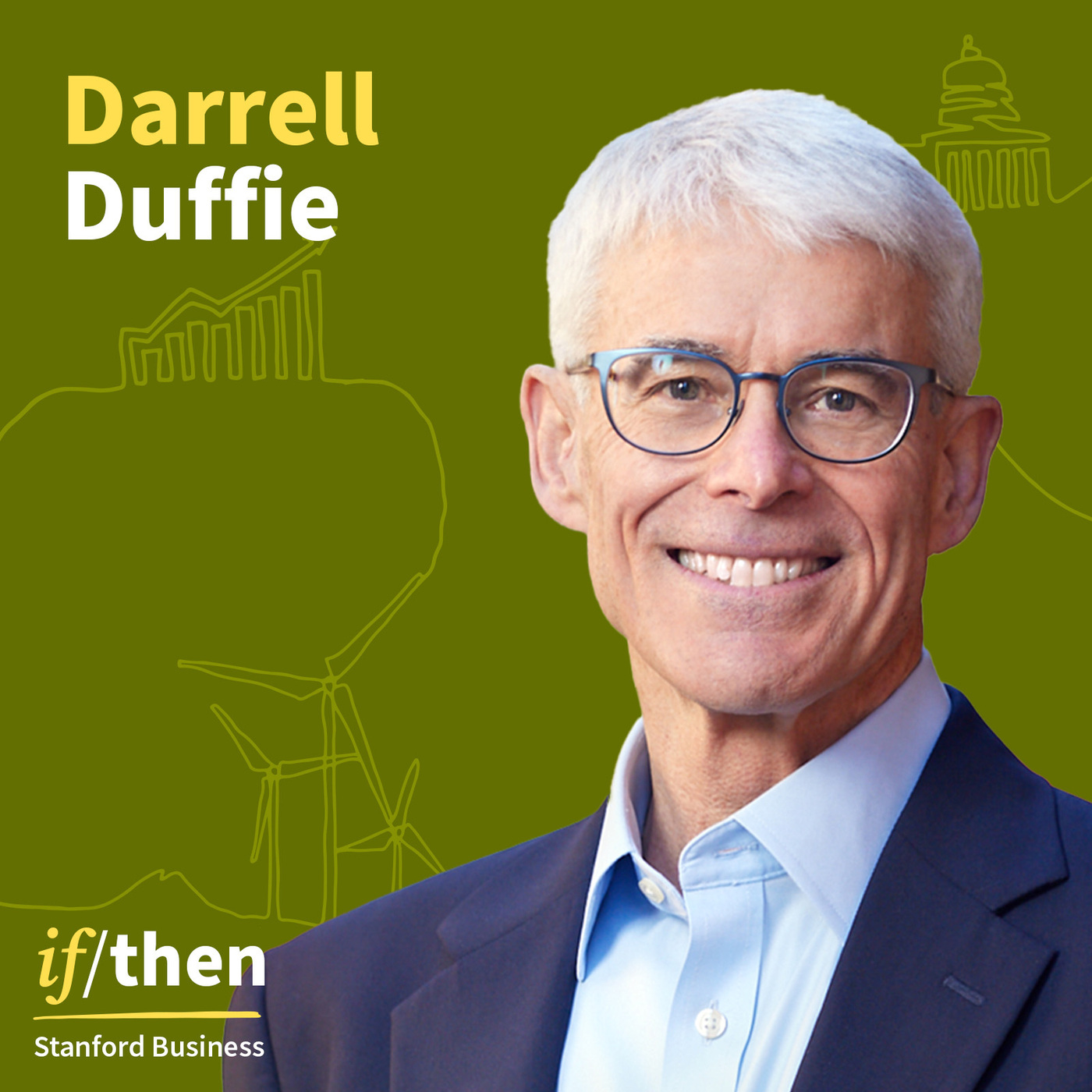
S1 Ep 8Cashless: Is Digital Currency the Future of Finance? With Darrell Duffie
Digital currency — whether privately-developed or government-issued — seems like an inevitability to Stanford Graduate School of Business finance professor Darrell Duffie. “Virtually all countries are exploring a central bank digital currency for potential use,” he says.An expert on banking, financial market infrastructure, and fintech payments, Duffie is interested in how central bank digital currencies (CBDC) could revolutionize economies around the world. The shift to a digital version of a fiat currency, still backed by a country’s central bank, could offer significant benefits compared to the current financial system. These include improved financial inclusion, lower cross-border payment costs, and more timely and secure transaction processing.The key, Duffie says, is striking the right regulatory balance to foster innovation while mitigating risks. As this episode of If/Then explores, if the U.S. wants to future-proof banking, then a digital dollar could be a solution.Key Takeaways:The benefits of central bank digital currencies: As digital versions of a country's fiat currency, backed by its central bank, CBDCs could provide advantages over the current financial system. These include improved financial inclusion, lower cross-border payment costs, and more timely and secure transaction processing.Challenges could be ahead: Duffie sees two major impediments — privacy concerns and the potential impact on the U.S. dollar's global dominance.The U.S. dollar's reserve currency status is secure for now: China's development of a "digital renminbi" raises questions about the dollar's dominance. Even so, Duffie believes the U.S. currency will maintain its position as the world's reserve currency for decades to come.Regulation will be crucial: Duffie says the U.S. lags behind other countries in establishing clear rules for cryptocurrencies and digital assets. Finding the right regulatory balance is critical if we’re going to foster innovation while mitigating risks.More Resources:Darrell Duffie, The Adams Distinguished Professor of Management and Professor of Finance.Capitol Gains: GSB Professors Share Their Expertise in DC and BeyondIf/Then is a podcast from Stanford Graduate School of Business that examines research findings that can help us navigate the complex issues we face in business, leadership, and society.See Privacy Policy at https://art19.com/privacy and California Privacy Notice at https://art19.com/privacy#do-not-sell-my-info.
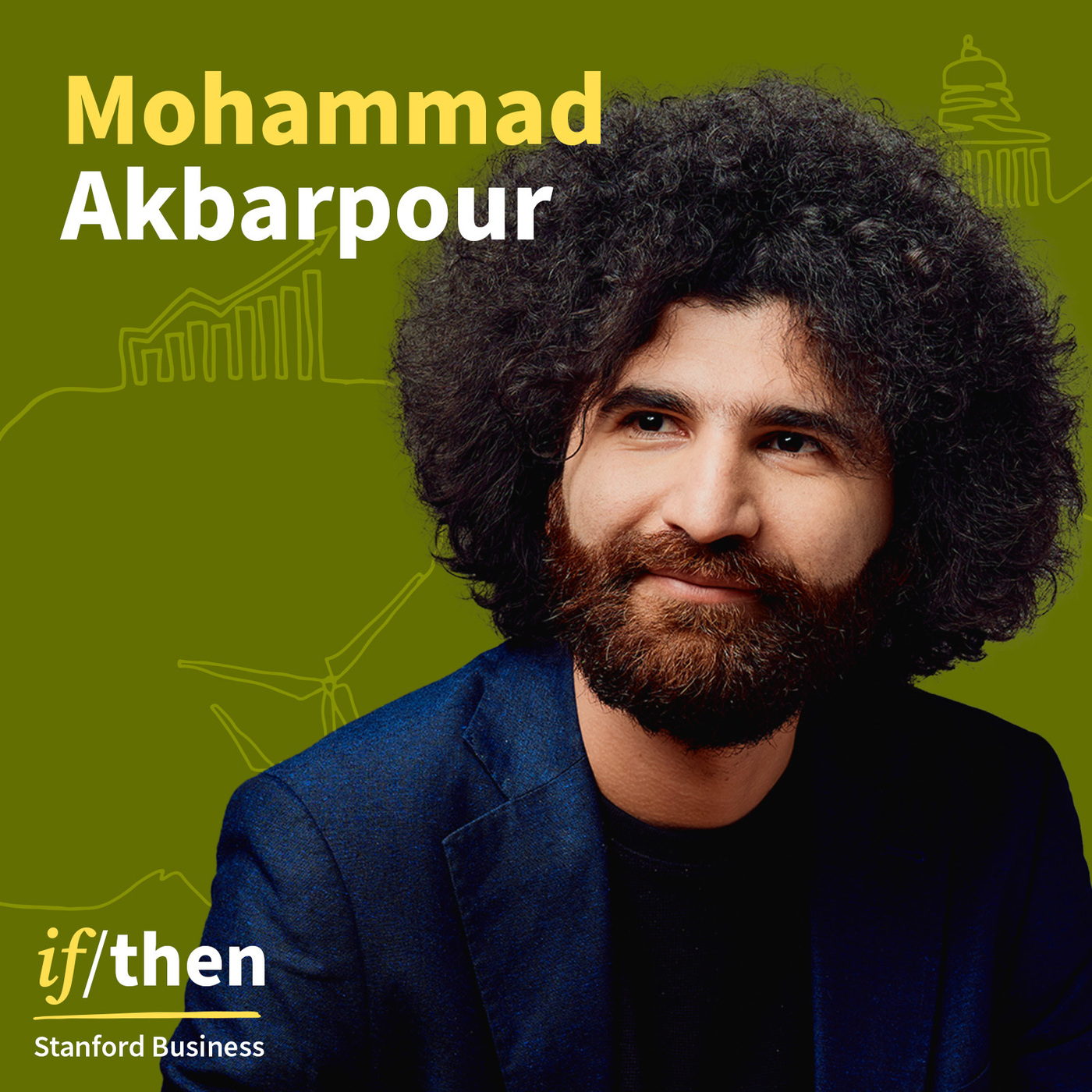
S1 Ep 7Is Money Really the Best Measure of Value? With Mohammad Akbarpour
A dollar is a dollar, right? While most conventional economic theories view money as an objective store of value, Mohammad Akbarpour says this misses a subtle but important fact: different people value money differently.Many economists assume that the price someone is willing to pay for a good or service is equivalent to the utility they get from it. But Akbarpour, an associate professor of economics at Stanford Graduate School of Business, isn’t convinced. “Different people have different marginal value for money,” he says. “If someone is willing to pay $1,000 for a Taylor Swift concert, they do not necessarily get more value [than] someone willing to pay $500. If you're willing to pay more for something, that does not mean that the social welfare is maximized for giving the good to you. It could be that you're rich.”As Akbarpour explores on this episode of If/Then: Business, Leadership, Society, money doesn’t have to be the sole decider of how scarce resources are allocated. By considering money’s subjectivity, we can design more equitable markets that maximize value and welfare for more people.Key Takeaways: People value money differently: People have different subjective valuations of money based on their own circumstances and financial well-being. $100 means something much different to the CEO of a large, successful corporation than it does to a family on the brink of eviction.Market distortions can be warranted: For some goods and services, price controls or subsidies can be more efficient than a free market at allocating resources and benefiting those with less wealth.Real-world application: From ridesharing to concert tickets, Akbarpour shares how theoretical economics can be applied to address inequality and improve society.More Resources: Mohammad AkbarpourVoices profile, Mohammad Akbarpour, "In some ways, all of academia hinges on this receptiveness to having your mind changed." Akbarpour's research in Stanford GSB Insights: What If Markets Maximized Both Efficiency and Fairness?Rigged Auctions? Why Top Bidders Don’t Always Feel Like WinnersA Beautiful Application: Using Economics to Make Kidney Exchanges More Efficient and FairIs It Ever OK to Sell (or Buy) a Kidney?Are Influencers Overrated?See Privacy Policy at https://art19.com/privacy and California Privacy Notice at https://art19.com/privacy#do-not-sell-my-info.
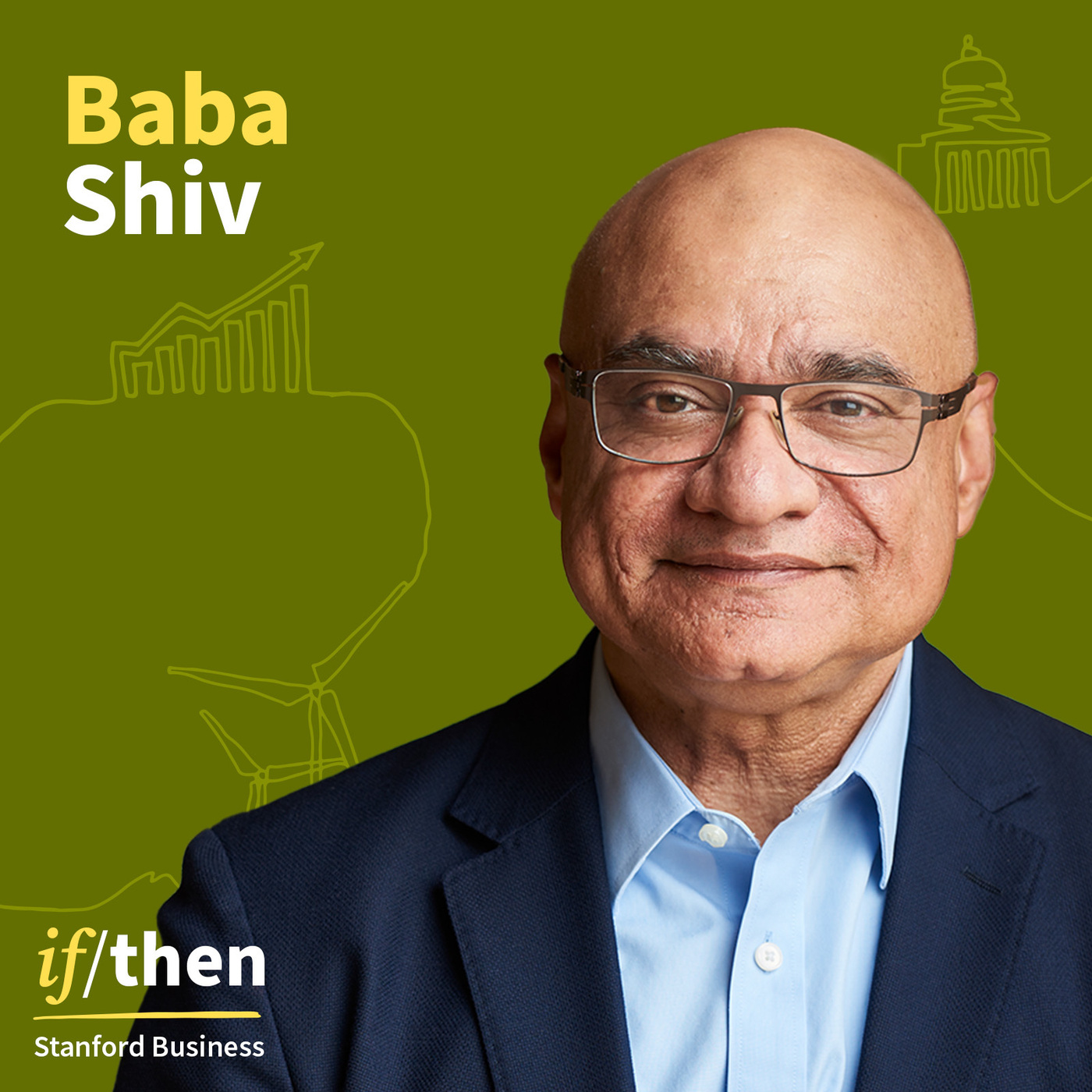
S1 Ep 6More than a Feeling: The Power of Emotional Decision-Making, with Baba Shiv
If we want to make better decisions, then we need to think more like an artist.Rationality is often seen as the gold standard when it comes to making decisions, but Professor Baba Shiv prompts us to consider: “Is a good decision based on reason? Or is it based on emotion?”Shiv is the Sanwa Bank, Limited, Professor of Marketing at Stanford Graduate School of Business. Throughout his career, he’s researched how brain structures related to emotion and motivation affect the choices we make. “Emotions, these instinctual brain-body systems, have a profound influence on our decisions and we aren’t aware of it,” he says. Even when we think we’re rationally deliberating about a decision, Shiv’s research reveals that our conscious minds are often “simply rationalizing what the emotional brain has already decided to do.”In this episode of If/Then: Business, Leadership, Society, Shiv explains why emotion can be just as powerful as rationality in helping guide decisions, and why, if we want to make better decisions, then we need to think more like an artist.Key Takeaways: Emotions drive decision-making: Human decision-making is much less rational than we think. Shiv emphasizes that emotions and instinctual brain-body systems operate at a nonconscious level to shape the choices we make.Decision confidence rooted in emotion: “Decision confidence,” Shiv says, is the conviction that we’ve made the right choice. That feeling, crucial for commitment to a chosen course of action, is fundamentally rooted in emotion.Balancing rationality and emotion: Both the scientific and artistic minds play into decision-making. While rationality and data-driven approaches have their place, incorporating emotional aspects, akin to thinking like an artist, can lead to more meaningful and confident decisions.More Resources:Baba Shiv is The Sanwa Bank, Limited, Professor of Marketing at Stanford Graduate School of Business.Class Takeaways - The Frinky Science of the Human MindVoices of Stanford GSB faculty, Baba ShivIf/Then is a podcast from Stanford Graduate School of Business that examines research findings that can help us navigate the complex issues we face in business, leadership, and society.See Privacy Policy at https://art19.com/privacy and California Privacy Notice at https://art19.com/privacy#do-not-sell-my-info.
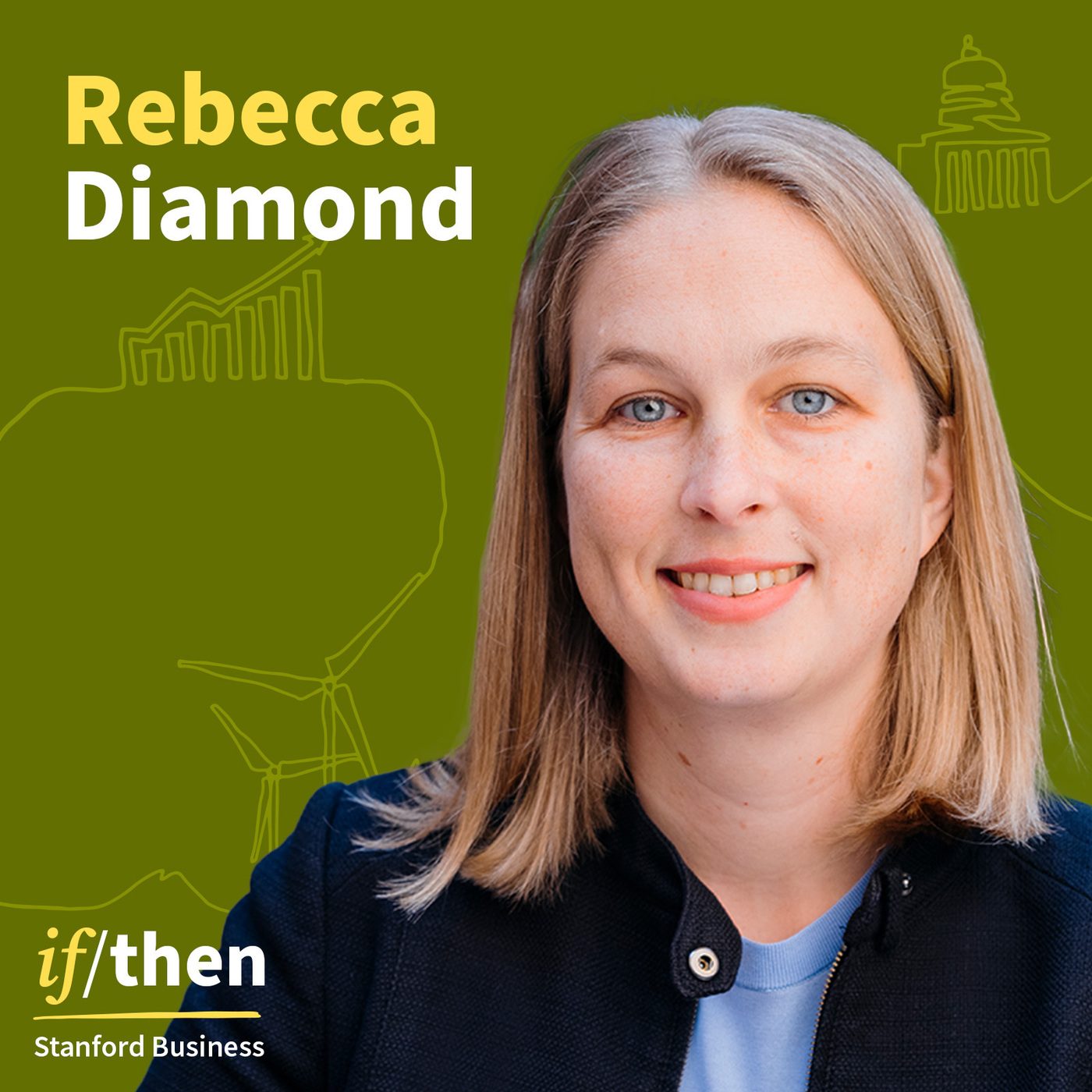
S1 Ep 5The Brain Gain: The Impact of Immigration on American Innovation, with Rebecca Diamond
Immigrants’ contributions to America include culture, cuisine — and groundbreaking ideas. “No one is that surprised that immigrants play a disproportionate role in innovation,” says Rebecca Diamond, a professor of economics at Stanford Graduate School of Business. But, she notes, “Innovation in itself is an elusive thing to measure.” By studying patents, Diamond has revealed new insights into the important role immigrants play in fueling innovation. Diamond explains more in this episode of If/Then: Business, Leadership, Society.Today, foreign-born Americans make up around 10% of the population of the United States. Yet, as Diamond found in her research, immigrants are responsible for 24% of recent U.S. patents. What’s more, she explains, these immigrant inventors serve as catalysts for their native-born collaborators, pushing them to be more creative. Altogether, Diamond says, “You find that 36% of all innovation can be attributed to immigrants.”“That’s a big number,” Diamond says. This finding not only highlights immigrants’ outsize contribution to the U.S. economy but also provides a glimpse into the teamwork that generates new ideas. “The way to have successful innovation is not to just put smart people in a room by themselves and tell ’em to think hard,” she says. “It’s to collaborate and work together and create new ideas through the synergies of their knowledge.”Immigration is a contentious political issue. Diamond notes that “any policies that would limit or lower the number of immigrants coming to the U.S. for these super high-skill innovative jobs would have a large effect on future innovation.” As this episode of If/Then explores, for America to remain a source of new ideas that contribute to economic growth and technological progress, we’ve got to understand the vital link between immigration and innovation.Key Takeaways:Outsize impact: Immigrant inventors register more patents than native-born Americans. While only 10% of U.S. citizens are immigrants, immigrants are responsible for 24% of recent patents.The collaboration connection: Immigrants positively influence the productivity of their American collaborators.The global knowledge network: Immigrants are more likely to cite foreign patents and are more likely to be cited by patents produced abroad. More Resources:Rebecca Diamond is the Class of 1988 Professor of Economics at Stanford Graduate School of Business.A New Look at Immigrants’ Outsize Contribution to Innovation int he U.S. Voices of Stanford GSB faculty, Rebecca DiamondIf/Then is a podcast from Stanford Graduate School of Business that examines research findings that can help us navigate the complex issues we face in business, leadership, and society.See Privacy Policy at https://art19.com/privacy and California Privacy Notice at https://art19.com/privacy#do-not-sell-my-info.
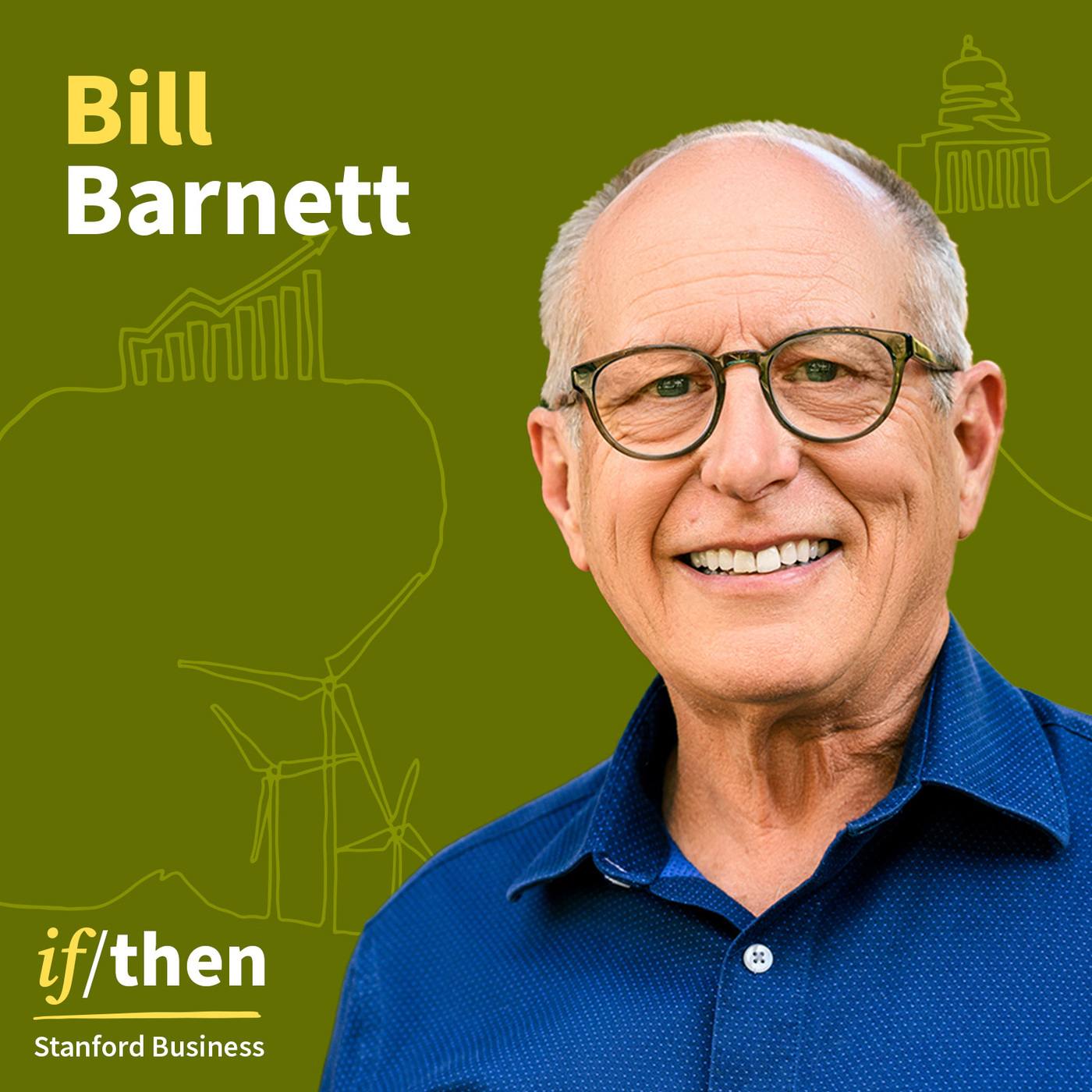
S1 Ep 4So Crazy, It Might Just Work: How to Foster Innovation That Will Change an Organization, with Bill Barnett
If we want to seriously address the climate crisis, then we need to encourage foolish business ideas.When it comes to seemingly impossible problems like the climate crisis, Professor William Barnett says we need to reach for equally impossible solutions — ideas so crazy, they just might work. “Foolishness,” he says, “is the price of genius.”A professor of organizational behavior at Stanford Graduate School of Business and a professor at the Stanford Doerr School of Sustainability, Barnett is equally interested in how organizations produce innovation. According to him, organizations need to embrace failure as a stepping stone to big breakthroughs and create cultures that encourage unconventional and even "foolish" ideas. “Ideas might well be foolish, but if they're right, they're going to be genius. Organizations that create lots of foolishness also create a lot of genius.”In this episode of If/Then: Business, Leadership, Society, Barnett unpacks how farfetched thinking could be the key to addressing climate change, and how organizations can foster the cultures necessary to fail forward and find innovative solutions.Key Takeaways:Failure is a stepping stone to innovation: Each unsuccessful attempt provides an opportunity to learn, grow, and redirect.Foolishness is the price of genius: Organizations need to promote non-consensus thinking and risk-taking, even if that means pursuing ideas that initially seem "foolish."Minimize the effects of failure: Give crazy ideas a shot, but do so at a small scale to keep failures quick and inexpensive.More Resources: William P. Barnett, The Thomas M. Siebel Professor of Business Leadership, Strategy, and Organizations at Stanford Graduate School of Business and professor at the Stanford Doerr School of Sustainability.The Red Queen Among Organizations: How Competitiveness Evolves, by William P. BarnettVoices of Stanford GSB faculty, William P. BarnettIf/Then is a podcast from Stanford Graduate School of Business that examines research findings that can help us navigate the complex issues we face in business, leadership, and society.See Privacy Policy at https://art19.com/privacy and California Privacy Notice at https://art19.com/privacy#do-not-sell-my-info.
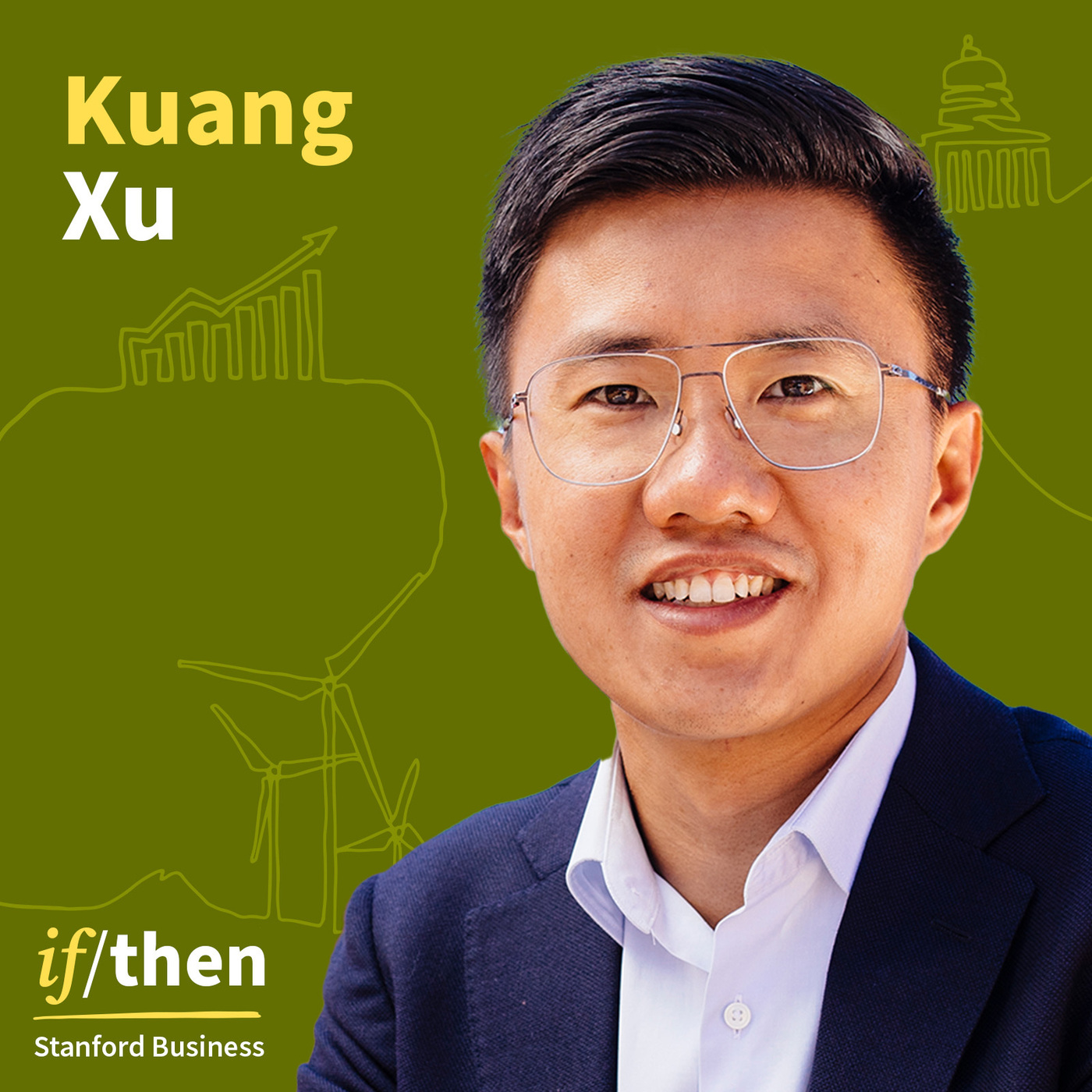
S1 Ep 3You're In Control: How and When AI Can Be a Powerful Decision-Making Tool, with Kuang Xu
If we can manage our emotions about AI, then it can be a powerful decision-making tool. Artificial intelligence’s surge in power and accessibility has inspired polarized reactions. Some people are flocking to the technology with feverish excitement. Others can’t stay far enough away. Yet according to Kuang Xu, both of these responses might be the wrong ones."When people hear ‘AI,’ their brain kind of shuts down,” says Kuang, an associate professor of operations, information, and technology at Stanford Graduate School of Business. Whether someone feels exhilarated by the possibilities of AI or terrified by its uncertain impact, Kuang says these emotionally charged reactions are like “a fight or flight response,” inhibiting our ability to make good decisions. Yet when implemented in strategic ways, AI can enable leaders to make decisions that are driven by data. With just a few simple lines of code, data becomes a powerful tool for businesses to leverage. “What decision can you change if you had the information?” Kuang asks. “Remember, at the moment, AI or data science is all about information. At the end of the day, even in the best case, you have to take that information and do something about it.” It’s clear that artificial intelligence will integrate into every industry. Yet to harness its power, leaders need to make an emotional shift. They must, as this episode of If/Then: Business, Leadership, Society explores, move away from the fear of the change AI will bring, and instead see AI for the job it can do: provide data so leaders can make more informed decisions.Key Takeaways:Effects of emotional stress: Emotional stress clouds our decision making about how we can best implement this tool.AI is a Tool, not a god: Organizations need to rise above the narrative that AI is an all-knowing oracle and reframe it as a tool for targeted decision-making.Think of AI as an intern: The tool can carry out tasks, but we still want to double check its work. More Resources: Kuang Xu, Associate Professor of Operations, Information & TechnologyStanford GSB stories featuring Kuang Xu:Class Takeaways - Data Science and AI StrategyIs Your Business Ready to Jump Into A.I.? Read This First.Kuang Xu VoicesIf/Then is a podcast from Stanford Graduate School of Business that examines research findings that can help us navigate the complex issues we face in business, leadership, and society. Each episode features an interview with a Stanford GSB faculty member.See Privacy Policy at https://art19.com/privacy and California Privacy Notice at https://art19.com/privacy#do-not-sell-my-info.
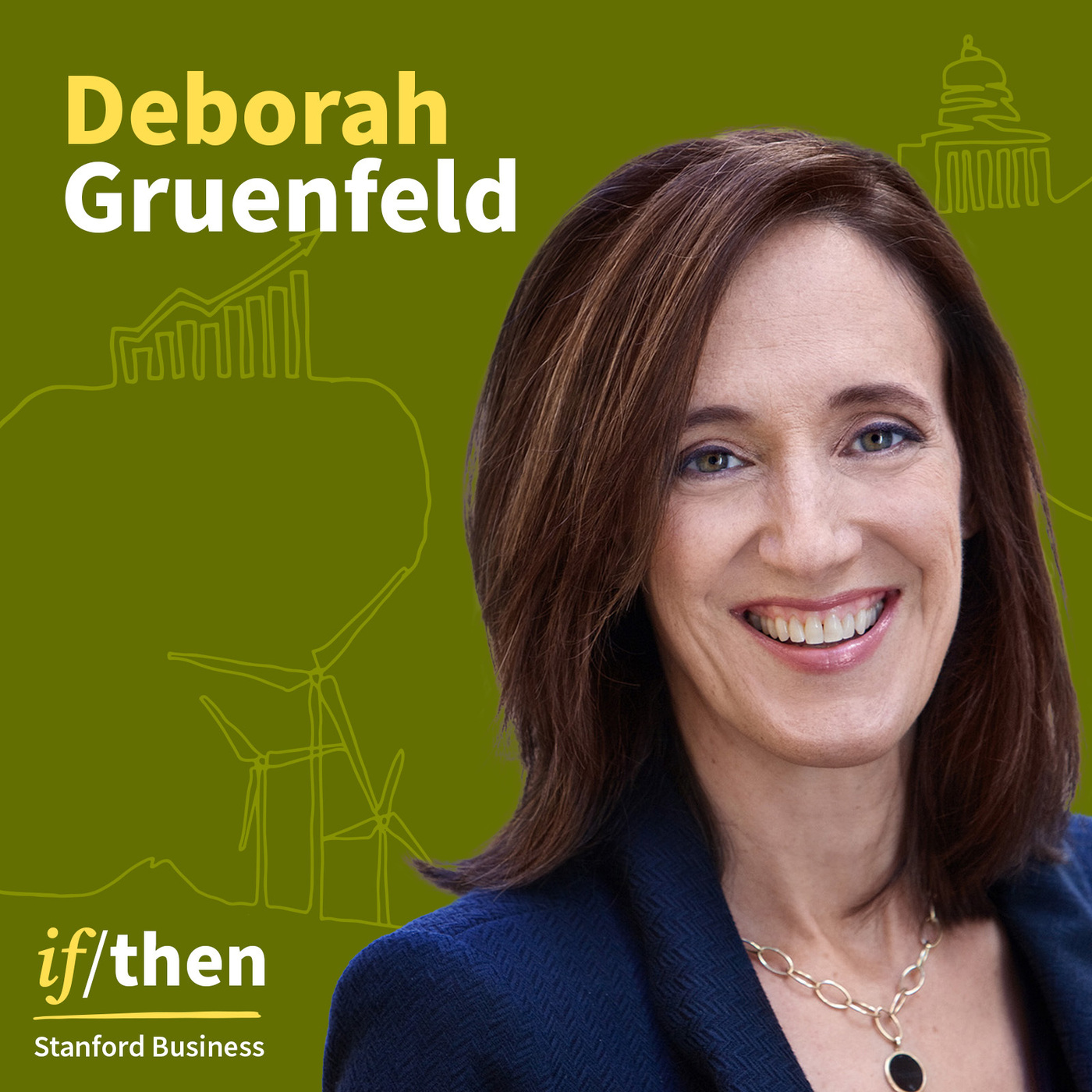
S1 Ep 2Navigating Workplace Power Dynamics, with Deborah H. Gruenfeld
If we want to change power structures, then we need to understand the animal forces that drive our behavior.As Stanford Graduate School of Business professor of organizational behavior Deborah H. Gruenfeld observes, wherever there are humans, there are hierarchies. “People have a tendency to form hierarchies almost instantly in all kinds of organizational settings, whether the task requires it or not,” she says.Gruenfeld says our actions are still very much steered by primal drives. She unpacks this in the inaugural episode of If/Then: Business, Leadership, Society.“One of the ways in which we're like animals is that we need to organize ourselves in order to survive,” says Gruenfeld, who studies group dynamics and decision-making. “It’s a very basic instinct to create structures in groups that help members coordinate so they don't have to fight with one another.”Gruenfeld’s insights open a discussion about how we can modify existing hierarchies to create relationships, organizations, and the society we want. As this episode of If/Then explores, if we want to change power structures, then we need to understand the animal forces that drive our behavior.If/Then is a podcast from Stanford Graduate School of Business that examines research findings that can help us navigate the complex issues we face in business, leadership, and society. Each episode features an interview with a Stanford GSB faculty member.More Resources:Acting with Power: Why We Are More Powerful Than We Believe, by Deborah H. Gruenfeld Deborah H. Gruenfeld on Stanford GSB's podcast, Think Fast, Talk Smart, “How to Communicate Power” Deborah H. Gruenfeld on Stanford GSB's podcast, Grit & Growth, "The Psychology of Power and Influence"Insights featuring research by Deborah H. Gruenfeld: "We Don't Like Domineering Bosses. So Why Do We Put Up With Them?" Class Takeaways: Managing Successful Groups and TeamsDiverse Teams Produce Better DecisionsSee Privacy Policy at https://art19.com/privacy and California Privacy Notice at https://art19.com/privacy#do-not-sell-my-info.
S1 Ep 1Zoom In... or Out? When Face-to-Face Meetings Matter Most, with Jonathan Levav
If we want to generate better ideas, then we need to get people back to the office.Jonathan Levav, a professor of marketing at Stanford Graduate School of Business, details his study of remote work and creativity. “Pairs that worked face-to-face generated 15 to 20% more ideas than pairs that worked on Zoom,” he notes. What’s more, in-person brainstorming helped people consider a wider and more diverse range of possibilities. “Working on Zoom was a double penalty. Fewer ideas — and a narrower set of ideas.”Remote work may be the new normal in our post-pandemic world, but Levav cautions us from accepting the status quo — especially if we want to keep our creative edge. As this episode of If/Then: Business, Leadership, Society. explores, our best ideas could still lie ahead of us — if we can all get in the same room.If/Then is a podcast from Stanford Graduate School of Business that examines research findings that can help us navigate the complex issues we face in business, leadership, and society. Each episode features an interview with a Stanford GSB faculty member. Key Takeaways: For hybrid work environments, managers should select “in-office” days based on tasks we perform better in person, such as collaboration and brainstorming.More flexible schedules for remote and office work allow employees to bring their best selves and perform better at their jobs. More Resources: Listen to Jonathan Levav’s Webby-Award winning episode on Think Fast, Talk Smart: "Leading From Home: How to Create the Right Environment for Communication" on Spotify, Apple, YouTube, or wherever you get your podcasts.Jonathan Levav, The King Philanthropies Professor of MarketingStanford GSB Insights featuring Levav's research:7 Insights to Boost Creativity at WorkEffective Recommendations Are Better Heard Than SeenCustomer Psychology: Why Don’t People Buy Your Stuff?See Privacy Policy at https://art19.com/privacy and California Privacy Notice at https://art19.com/privacy#do-not-sell-my-info.
Introducing If/Then
trailerHow do we get people back to the office? How and when can AI be a powerful decision-making tool? How will digital currencies transform payment systems?On If/Then, experts from Stanford Graduate School of Business share their research findings on a range of topics that intersect with business, leadership, and society. We’ll tackle practical, cutting-edge insights that will help you manage better, lead more confidently, and understand pressing issues affecting our lives.Join GSB senior editor and host Kevin Cool as we hear about the latest research in technology, economics, marketing, politics, and several other areas that intersect with business. Season One drops with two episodes on January 24th and new episodes release every Wednesday.See Privacy Policy at https://art19.com/privacy and California Privacy Notice at https://art19.com/privacy#do-not-sell-my-info.