IB Voices
111 episodes — Page 3 of 3

Ep 10Developing open-mindedness through TOK with Kymberley Chu
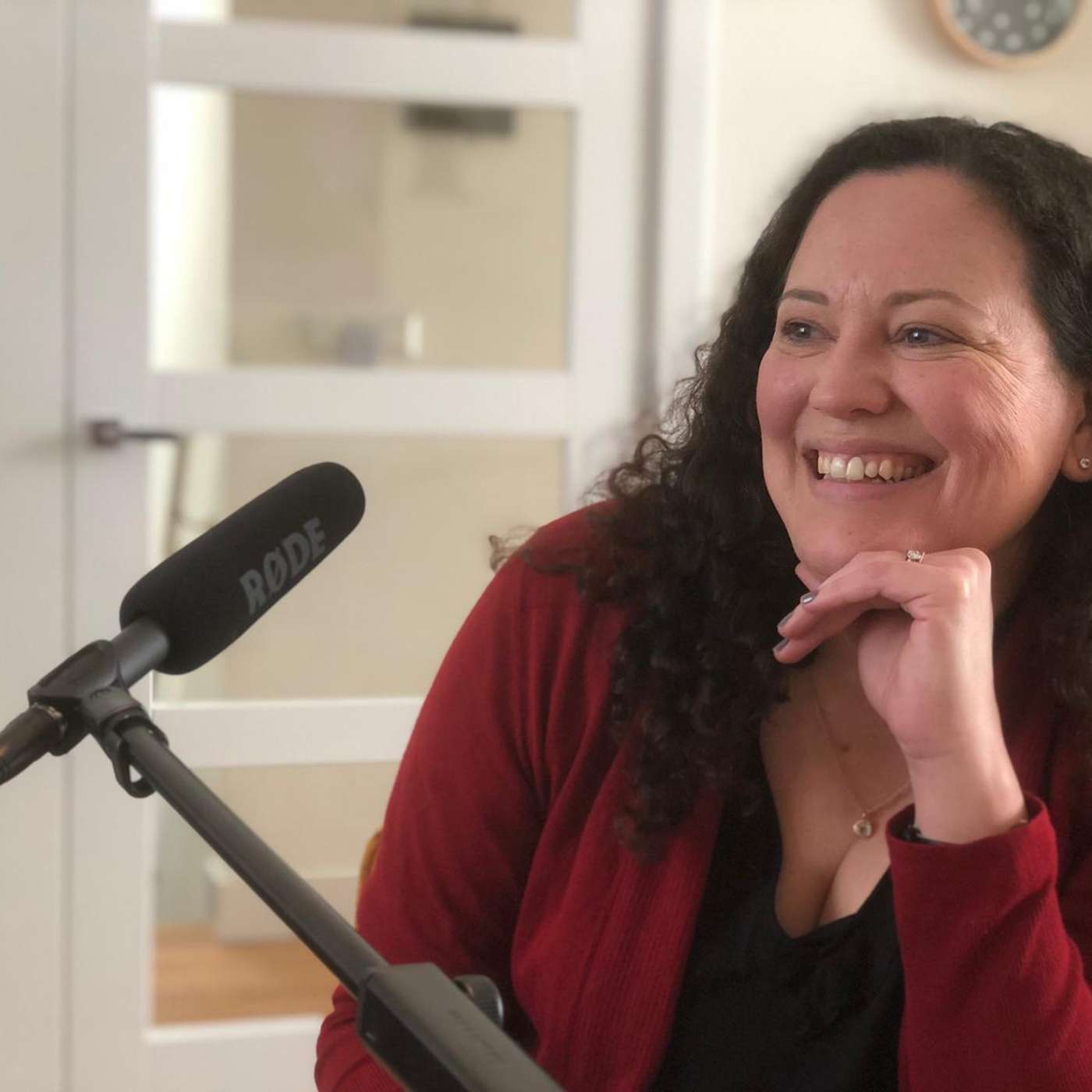
As a writer for our 2019 Graduate Voices series and Diploma Programme (DP) graduate Kymberley Chu has shared perspectives on being a third-culture kid and being a first-generation, international university student. We connected with her for more on being a global citizen, encountering stereotypes and advice for students to be open to new perspectives and identities.
Ep 9MYP Mathematics: Q&A with Terry Linton
Join Terry Linton, curriculum director for the Beanstalk education group in Beijing, as he uses his mathematics expertise to talk about the enhancements in Middle Years Programme (MYP) mathematics and ways for schools to get ready for the proposed changes.

Ep 8DP Economics with Martin Muchena
From IB teacher, workshop leader, and now curriculum manager, Martin Muchena has led the creation of the new DP Economics course, which will begin first teaching this fall. Concepts, context, and content are the three pillars of this dynamic new course as students explore economics in a holistic new way. Martin dives into the central elements of the course, the approaches to teaching and learning, and how the study of economics is actually the study of our world.

Ep 7The History of the IB Global Conference
Today’s IB Voices guest probably needs no introduction. For those of you who have been in the IB community for the better part of our past 50 years, you’ll know this man just by the sound of his laughter, or his commanding, gravelly voice. Of course, I am talking about Paul Campbell, Head of Development & Outreach for IB Americas. With the IB Global Conference coming later this year to Toronto, Canada, it felt like the perfect time to sit down with Paul and talk about the history of the IB conference, how it fits into the greater IB mission, and reflect on some of Paul’s fondest memories of previous conferences.
Ep 6Leadership, well-being and trust in the PYP
Join Rynette de Villiers, Head of School at the International School of Utrecht in the Netherlands where she discusses leading an IB continuum school and developing a culture of well-being and trust - with a focus on teacher agency.

Ep 5Izy Kali: The artist behind the IB mission
The arts have been a part of Izy Kali’s life since as long as she can remember. When her family moved to Malaysia and she began her IB Diploma Programme (DP) studies at the International School of Penang, her work as an artist only grew as part of her identity. Now, Izy is the artist behind the IB’s new mission statement poster and she speaks with us about why she was inspired by the challenge of visually representing a student’s journey with an IB education.
Ep 4The DP at Bethesda-Chevy Chase High School
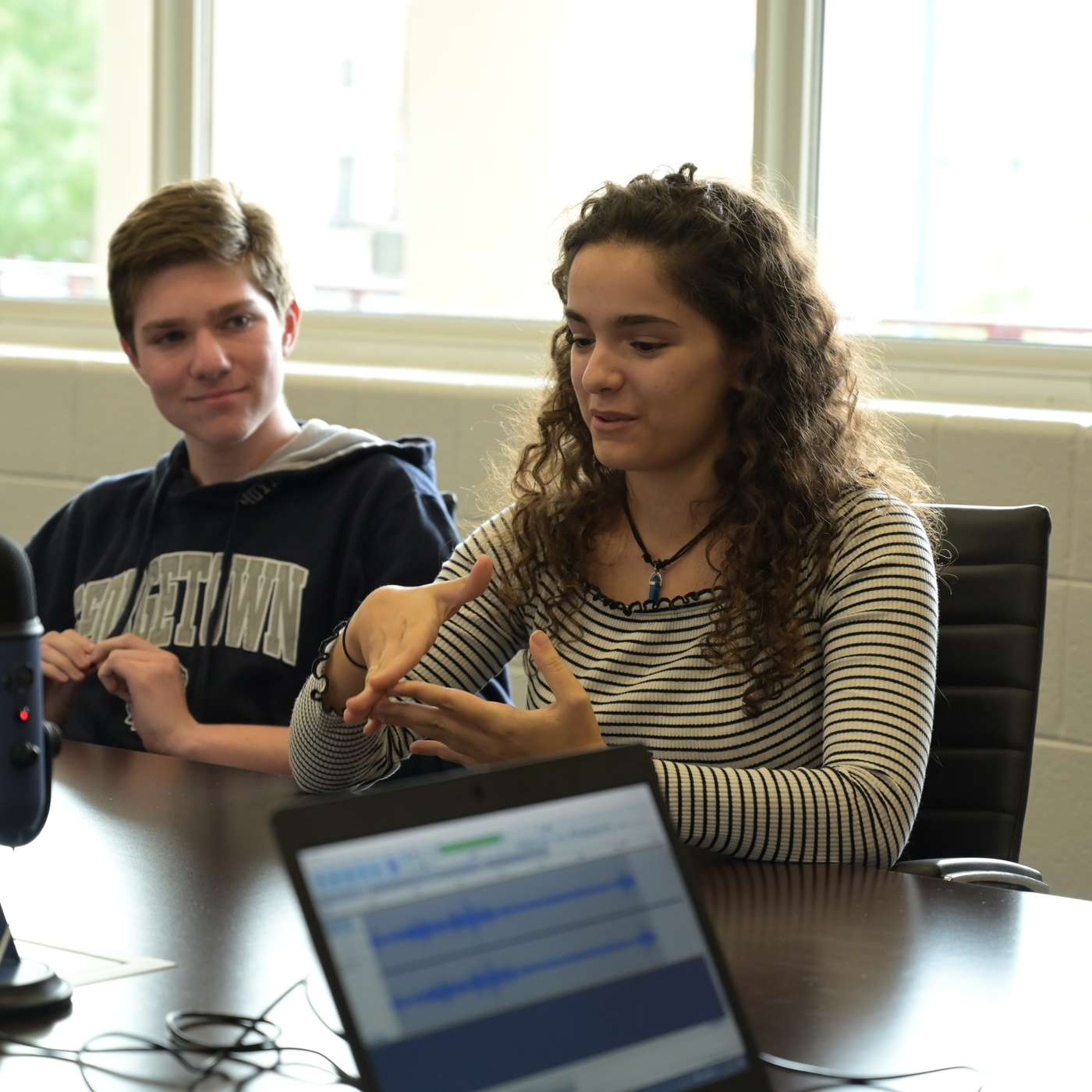
Since becoming an IB school in 1997, Bethesda-Chevy Chase High School (or B-CC), has been named one of the best public high schools in Maryland and the United States. With the school year just starting, DP juniors Emma, Eden and Nene, and seniors Eli, and Cristina discuss the challenges and benefits of the DP curriculum, and how they feel about being a part of the global IB community.

Ep 3Mackenzie Kelley
During her final year as an undergraduate at American University, Mackenzie Kelley prepared a Fulbright Program application to build upon her research interests. Her efforts led to an award and after receiving a degree in biochemistry, she moved to the island of Barbados to study the influence of gender and culture on type 2 diabetes. Mackenzie joins us to share her experience and insights from the IB Diploma Programme at the American Community School of Abu Dhabi.

Ep 2Lynn Nanticha Ocharoenchai and the strike for climate
Nanticha “Lynn” Ocharoenchai is the 21-year-old student from Chulalongkorn University behind the Climate Strike Thailand movement, which is inspired by Greta Thurnberg’s Fridays for Future school strikes. Lynn joins us to share her drive for climate action, tips for organizing large grassroots movements and, of course, her IB experience!
Ep 1The DP at the Dwight School
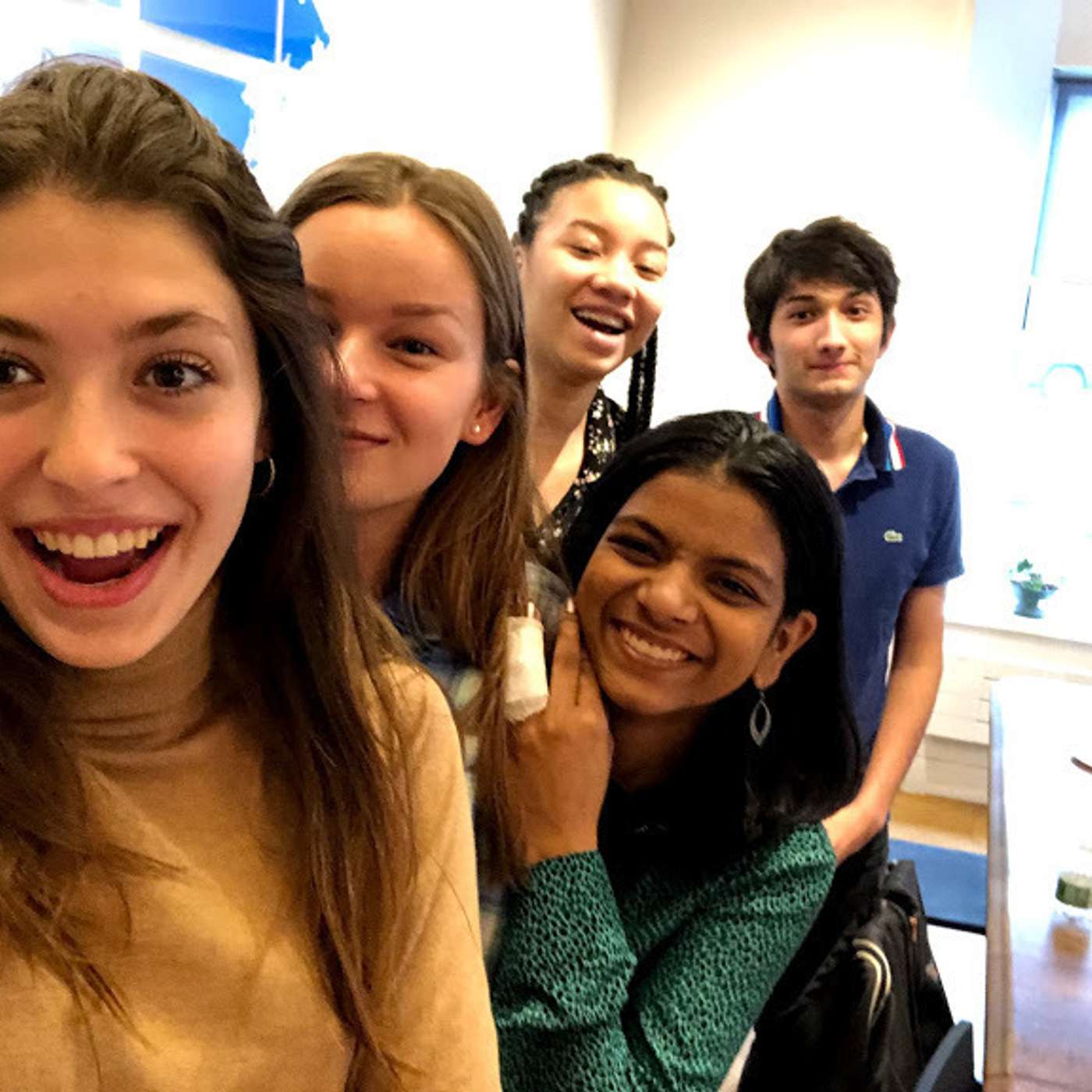
In the inaugural episode of the IB Voices Podcast, Zach from the International Baccalaureate sat down with five impressive eleventh grade Diploma Programme (DP) students, Isolde, Malvika, Charlotte, Leah and Anish, to chat about their experience in the programme at The Dwight School in New York City, New York, the first IB continiuum school in the United States.The students started the conversation about New York City, and how it’s a unique and beneficial place to study an international program since the city itself is very diverse. Charlotte, for example, is from Germany originally, and was pleasantly surprised by how many different cultures she can experience in one neighborhood!Malvika, a history buff, agreed and talked about exploring the various ethnic neighborhoods in the city, tying it back to her HL History class. Since the city itself is rich with history and museums, there are many places she can visit to enrich what she’s learning in the classroom. Leah is a business-minded junior and loves how there are so many different businesses and organizations in the city that she can utilize as resources for her HL Business class. But living in the city can be a disadvantage too since there is so much going on. Therefore, it’s important to learn how to manage time effectively, plan things in advance, and practice self-discipline.Isolda\e then added that the IB allows her and her classmates to “create their own curriculum” to pursue subjects they are interested in. For example, Isolde is passionate about refugee and migration policy, so she’s connected that to her internal assessment for her mathematics class by measuring the effect migration has on GDP (Gross Domestic Product). In turn, she now enjoys mathematics more.Malvika and Anish, another avid student of history, are liberated by the freedom the IB’s Extended Essay (EE) allows as they can dive deeper into subjects they only lightly cover in the classroom.They all agreed that the IB encourages students to go beyond the material required for classes and discover what you’re genuinely interested in and how that can help prepare you for the future.For instance, since Izolda has an interest in international relations, that informed the types of IB classes she took. Malvika, on the other hand, wants to be a veterinarian, so she took HL Biology. Leah, a lifelong music lover and performer, enrolled in Business HLto develop her skills in marketing in hopes to one day do entertainment marketing and public relations.Before the students had to go back to class, Zach asked one last question: what advice would you give yourself before starting the DP your junior year?Malvika - There’s a steep learning curve from MYP to DP – don’t give up, persist!Charlotte – Find a balance, such as working for two hours, taking a two-hour break, and then going back to work. Time management is crucial.Leah – Take thorough notes! The notes are what help you must when it’s time for exams.Anish – Choose courses you’re interested in instead of what’s is “easy” because it’s easier to perform well in a subject you enjoy.Thank you again to Isolde, Malvika, Charlotte, Leah, and Anish, the Dwight School, and Elizabeth Hutton, their incredible IB Coordinator!
Ep 1The Big Understanding
Listen to learn more about how Melanie enables her students to make the connections between existing knowledge and new learning across the year, and how key and related concepts can transfer across units of inquiry and into everyday life.Melanie’s practical tips:Before collaboratively planning your unit of inquiry – ask yourselves these questions:a. What do we want the students to learn? What are our lines of inquiry and what are the important concepts within those lines of inquiry?b. Do we have strong, concept-based central ideas?c. How can we build a flexible schedule to allow for those unexpected moments, ensuring enough time for the children to inquire into what they want to inquire into?During your unit of inquiry:a. Try sometimes keeping the central idea hidden from students at the start – and as they develop their key and related concepts, allow them to come up with their central idea.b. Reflect regularly on the key and related concepts – are they still valid for the current inquiry?c. Invite parents or people from your local community to explain big ideas and inspire learning.Visual aids:a. Create two laminated concept bank posters – invite students to add and remove key and related concepts as the unit progresses.b. Create a laminated key for each key concept – with definition/example on the back c. The children love my ‘Happy Dance’ every time they come up with a new important word for our concept bank – why not try something similar?Melanie’s No.1 tip!Constantly use the terminology of concepts with students - even the youngest children - eg “Big idea” or “big understanding”. You will be surprised how quickly the concept of concepts is absorbed into their daily life! Further reading:Melanie would like to credit the book Concept based inquiryby Rachel French and Carla Marschall for the learning that inspired this podcast.The idea for concept keys/poster was inspired by the work of Harvard Project Zero and their Visible Thinking Routines.Credits: Debbie O Hara, Stephanie Martin and Ron RitchhartLink to Concepts andteacher support material Inquiry in action, from PYP: From principles into Practice