
IAF Continued Conversations
44 episodes

Ep 44Inside Magic Mountain: How the IAF made Magic happen!
For thirty years, the International Academy for Leadership shaped liberal thinkers, activists and future decision-makers from more than 130 countries. In this special episode of “IAF Continued Conversations,” host Sven Gerst speaks with Bettina Solinger, Verena Schweickhard and Axel Friedrichsen about what made the IAF unique. They discuss the spirit of Gummersbach, the craft behind great facilitation, the power of safe learning spaces and the countless human stories that defined the Academy. As the IAF closes its doors at the Magic Mountain, this conversation captures its legacy and the lessons that will continue to matter.

Ep 43Understanding Gen Z Movements
Around the world, young people are taking to the streets to challenge failing governance systems, rising living costs and limited opportunities. These Gen Z movements share a common call for accountability, transparency and a political system that reflects their realities and expectations. In this episode of IAF Continued Conversations, hosts Arpita Nepal and Rainer Heufers speak with Kathya Berrada from Morocco and Dhananath Fernando from Sri Lanka about the rise of Gen Z Movements across the Global South. Together, they explore what sparked these youth-driven uprisings, how economic pressures and governance failures shaped public anger, and why younger generations increasingly distrust traditional political structures. Drawing on recent developments from Colombo to Casablanca, the conversation highlights how societies respond when young citizens demand accountability, transparency and a new political mindset.

Ep 42Networks, Talent, and Trust: The Foundations of Resourced Organisations
What does it really take for an organization to survive and succeed when resources are tight and expectations are high? In this episode of IAF Continued Conversations, hosts Marike Groenewald and Clinton du Preez from Anew - a leadership and organisational development agency speak with campaign, strategy and fundraising expert Jonathan Moakes about the real foundations of a resourced organization. They explore why people development is not a luxury, how to grow networks beyond familiar circles, how credibility and culture attract support, and why effective storytelling is central to modern fundraising. Packed with practical insights, honest reflections and examples from political and civil society work around the world, this episode offers leaders clear direction for building resilient organizations with lasting impact.

Ep 41Why Land Rights Matter: Rethinking Development Through Property Rights
What makes land rights such a powerful tool for freedom, development, and climate resilience? In this episode of IAF Continued Conversations, hosts Arpita Nepal and Rainer Heufers speak with land governance expert Karol Boudreaux from Landesa about why secure property rights are at the heart of liberty and prosperity. They discuss why land titles alone aren’t enough, how customary systems can work with formal law, and why patient, locally driven approaches—not top-down aid—create lasting change. From women’s empowerment in Tanzania to community-based conservation in Namibia, this conversation offers a grounded look at what truly works in development.

Ep 40The Return of Power Politics - Dragonbear and the West
EThe liberal world order is under pressure. Geopolitics is not making a comeback — it was never gone. In this episode of IAF Continued Conversations, hosts Bettina Solinger and Sven Gerst talk with geopolitical strategist Velina Tchakarova about shifting power dynamics, strategic uncertainties, and what the “bifurcation” of the global order really means. From the “Dragonbear” axis between Russia and China to Europe’s strategic hesitation, this conversation explores how liberal democracies can respond to a more competitive, fragmented world.

Ep 39How to Build 'Hard Hope'
EWhat does it mean to practice “hard hope” in politics and leadership today? In this episode of IAF Continued Conversations, hosts Marike Groenewald and Clinton du Preez from Anew - a leadership and organisational development agency - talk with Lisa Witter, CEO of the Better Politics Foundation and co-founder of Apolitical. Lisa shares her ideas on “hard hope”, a mindset that faces reality, embraces difficulty, and chooses action anyway. Together they explore how leaders can stay resilient in times of fatigue and crisis, why empathy and curiosity are crucial political skills, and what it means to build “better politics” through facilitative leadership. From neuroscience to nature, from women in politics to the role of AI in leadership, Lisa connects practical tools with deep purpose. A conversation for anyone striving to lead with integrity, courage, and a sense of possibility — even when things feel hard.

Ep 38Peak Human - How openness and institutions shape progress across time
What makes societies flourish—and what causes their decline? In this episode of IAF Continued Conversations, hosts Arpita Nepal and Rainer Heufers talk with Johan Norberg about his latest book Peak Human: How We Can Learn from the Rise and Fall of Golden Ages. Drawing on examples from Athens to Baghdad and Song China, Norberg shows how openness to ideas, trade, and innovation has fueled human progress across time and cultures. Together they explore the balance between strong institutions and creative freedom, the tension between traders and tribalists in every society, and what it takes to sustain progress in today’s interconnected world.

Ep 37The Liberal Utopia of Próspera? Charter Cities, Autonomous Zones, and the Future of Governance
What if a city could write its own rules? In this episode of IAF Continued Conversations, hosts Bettina Solinger and Sven Gerst explore the world of charter cities together with Honduran attorney and IAF alumnus Christian Betancourt, who lives and works in Próspera on the island of Roatán. Charter cities are autonomous zones with their own regulatory frameworks for business, taxation, and labor — a radical idea that challenges our usual understanding of the nation-state. Próspera is one of the most ambitious examples of this concept, offering entrepreneurs, innovators, and residents the chance to experiment with new ways of living and working. Christian shares his unique perspective as both a legal expert and a resident, giving insight into how Próspera came into being, what daily life looks like, and why Honduras, of all places, became a pioneer in this field. From its legal foundations and economic opportunities to the diverse mix of residents who call it home, this conversation brings theory and practice together in a way that makes the experiment tangible. Tune in to learn how charter cities are reshaping governance, what challenges they face, and what they might mean for the future of freedom and innovation.

Ep 36Becoming Crisis-Ready: On Leadership, Learning & Resilience
In this episode of IAF Continued Conversations, hosts Marike Groenewald and Clinton du Preez from Anew - a leadership and organisational development agency - talk with Gareth Morgan, Executive Director of Future Planning & Resilience for the City of Cape Town and coauthor, along with Peter Willis, of Becoming Good at Crises – A Field Guide for Leaders. Together they explore what it takes to lead in moments of uncertainty: from declaring a crisis, to building the right teams, to preparing capabilities during “peacetime” that allow organizations to adapt when shocks arrive. Drawing on lessons from Cape Town’s “Day Zero” drought and the COVID-19 pandemic, Gareth shares practical insights on mindset, communication, and the role of leadership in navigating the crises of our time.

Ep 35The Housing Theory of Everything
In this episode of IAF Continued Conversations, Arpita Nepal and Rainer Heufers talk with Sam Bowman—editor at Works in Progress and Head of Publishing at Stripe—about what housing has to do with everything from economic growth to climate change, fertility rates, and even innovation. Bowman explains why cities that build more homes thrive, why restrictions on housing development worsen inequality, and how proximity drives creativity and productivity. Drawing on global examples from Tokyo to London to San Francisco, the conversation explores political and economic roadblocks—and how we might begin to overcome them.

Ep 34What Elon Got Wrong About DOGE: On State Capacity and Government Efficiency
Is shrinking the state enough to fix it? Or do liberals need a better plan altogether? In this episode of IAF Continued Conversations, hosts Bettina Solinger and Sven Gerst are joined by political economist Mike Munger for a wide-ranging discussion on state capacity, government reform, and the limits of bureaucracy. From Argentina’s dramatic cuts to Elon Musk’s failed DOGE experiment, they explore why some efforts to reinvent the state spark momentum while others fall flat. But beyond the headlines, the conversation turns to a more fundamental question: What should government actually do? Drawing on political theory, real-world cases, and personal experience, Munger challenges common assumptions about efficiency, regulation, and the role of the liberal state in the 21st century. This episode asks tough questions about power, structure, and what it takes to make reforms stick. Whether you’re a policymaker, theorist, or curious listener, this conversation offers new angles on a very old problem.

Ep 33Hope and the Long Game: Leadership in an Age of Urgency
In this episode of IAF Continued Conversations, hosts Marike Groenewald and Clinton du Preez welcome Brent Colburn—former director for President Obama's reelection campaign and current Vice President for Global Public Affairs at Microsoft—to explore the challenge of leading with vision when the world demands instant results. From the “Yes We Can” breakthrough to today’s shifting political playbook, Brent shows why hope is the essential spark that fuels action. Discover how history shapes context, authenticity wins trust, and small daily steps sustain big, long-term change. Tune in and learn why hope isn’t just a feeling—it’s the foundation for any strategy.

Ep 32Unpacking Development in the World
In this episode of IAF Continued Conversations, Arpita Nepal and Rainer Heufers explore the meaning and measurement of development with economist Lant Pritchett. Drawing on decades of research and practical experience, Pritchett makes a compelling case for distinguishing between national development and individual human flourishing—two processes often conflated in policy debates. The conversation touches on the four pillars of national development: productivity, responsive governance, state capability, and equal treatment of citizens. Pritchett warns that many development agencies have shifted focus away from these fundamentals, favoring short-term, donor-driven interventions over long-term structural change. He challenges the development industry to rethink its priorities, arguing that without a renewed commitment to national transformation—including economic freedom and institutional resilience—aid risks becoming irrelevant. The episode also reflects on the role of development aid in building or undermining state capacity, and what it would take for the global development discourse to become more meaningful and effective again. This is an honest and urgent discussion on what development really means, how it should be measured, and whether current strategies are truly serving the countries they intend to support.

Ep 31Start-up Politics: How Political Entrepreneurship Can Save (Liberal) Parties
In this episode of IAF Continued Conversations, Bettina Solinger and Sven Gerst sit down with political entrepreneur Josef Lentsch to explore how liberal parties can evolve beyond traditional models. Drawing on the founding of Austria’s NEOS, insights into participatory leadership, and the rise of political technology, they map out a strategy for renewing liberalism in a rapidly changing world. Whether you’re a party insider or civic-minded citizen, discover practical lessons on culture, organization, and innovation—and learn how to turn vision into political reality.

Ep 30Freedom to Innovate: Rethinking Market Regulation
In this episode of IAF Continued Conversations, hosts Arpita Nepal and Rainer Heufers sit down with seasoned Silicon Valley entrepreneur and investor John Chisholm to tackle a critical policy question: How can we regulate markets without suffocating innovation, entrepreneurship, and economic dynamism? With over four decades of experience in the tech industry, Chisholm brings sharp insights into how regulation can support—or hinder—growth. The discussion contrasts organic regulations, which evolve from societal norms and common law, with imposed regulations, often rigid and top-down. Together, they explore how policymakers can strike the right balance, drawing on real-world examples from worker status laws, the drone industry, and financial markets. Whether you're a policymaker, entrepreneur, or simply someone interested in economic freedom and innovation, this episode offers a practical and globally informed lens on smarter regulation.

Ep 29The Art of Authentic Leadership Communication
In this episode of IAF Continued Conversations, hosts Marike Groenewald and Clinton du Preez from Anew - a leadership and organisational development agency - sit down with leadership communication expert Pamela Hart, founder of Release Your Voice, to explore the vital art of authentic leadership communication. As leaders navigate an increasingly noisy world, the need for messages that truly resonate has never been greater. Pamela shares her insights on how leaders can stay true to their values while engaging their audiences, even amidst the intense scrutiny of today’s media landscape. Discover the delicate balance between performance and authenticity, how leaders can stand firm in their beliefs while effectively communicating with diverse audiences, and how self-awareness and breathing techniques can help calm nerves and enhance performance. This episode is packed with practical advice for leaders in all sectors—from politics to business—looking to connect with their followers in a meaningful way. Tune in now and start transforming your approach to leadership communication!

Ep 28Liberal Populism? The curious case of Javier Milei
Is Javier Milei the face of liberal populism in Argentina? In this episode of IAF Continued Conversations, Bettina Solinger and Sven Gerst are joined by Marcos Falcone to discuss the rise of Argentina's controversial president. Milei, a figure often compared to populists like Trump and Erdogan, has surprised many with his unique mix of anti-establishment rhetoric and classical liberal policies. But how does his brand of populism differ from the norm, and what does it mean for Argentina’s future? From economic reforms to rule-of-law concerns, this episode dives deep into the complexities of Milei’s leadership and what it means for liberalism in Latin America. Tune in to hear insights and perspectives on one of the most polarizing figures in global politics today.

Ep 27The Power of Ideas: How Liberty Sparks Human Prosperity
In this episode of IAF Continued Conversations, hosts Arpita Nepal and Rainer Heufers are joined by renowned economist and thinker, Deirdre McCloskey. Together, they explore the forces behind human prosperity and how ideas shape progress. McCloskey challenges the common belief that economic growth is driven by capitalism, institutions, or exploitation. Instead, she argues that liberty and the freedom to innovate are the true catalysts. Through her extensive work, McCloskey highlights how the exchange of ideas fuels innovation, creating the foundation for human flourishing. Tune in to hear her perspective on why innovation, not capital, is the key to a thriving society. This conversation will shift how you think about the factors that drive progress and the role of ideas in shaping the modern world. Don’t miss it!

Ep 26Leading Beyond Crisis
In the latest episode of IAF Continued Conversations, hosts Marike Gronewald and Clinton du Preez engage in a powerful discussion with crisis management expert Thomas Lahnthaler on the theme of Leading Beyond Crisis. With a career spanning from conflict zones in Afghanistan to organizational crisis management, Thomas brings a wealth of experience to the table, offering fresh perspectives on what it truly means to lead during times of uncertainty and disruption. In today’s world, where crises seem inevitable and increasingly complex, leaders are often faced with decisions that have far-reaching consequences. But as Thomas explains, crises are not just challenges to overcome – they are opportunities to rethink, adapt, and reshape the future of organizations and communities. Drawing from his experience working in some of the world’s most volatile environments, Thomas shares how leadership in such times requires emotional intelligence, trust in your team, and a mindset of readiness rather than mere resilience. Tune in as Marike, Clinton, and Thomas explore how leaders can balance human dynamics with problem-solving, why the power of stepping back and empowering others can make all the difference, and how a shift in perspective can transform crisis into opportunity. This episode offers practical insights for anyone looking to lead with purpose and resilience through uncertainty.

Ep 25Preparing for the African Century
In the latest episode of IAF Continued Conversations, hosts Arpita Nepal and Rainer Heufers engage in a thought-provoking discussion with Ibrahim Bàbátúndé Anọ́ba, an African affairs analyst and editor of African Liberty. With Africa’s population expected to reach 2.5 billion by 2050, the question arises: is this demographic explosion a monumental opportunity or an overwhelming challenge? Ibrahim brings a wealth of insight as he explores the profound implications of Africa’s youthful population, its growing role in global geopolitics, and the transformative sectors that could shape the continent’s future. He dives into the urgent need for infrastructure investments, the rise of the fintech revolution led by Africa’s young entrepreneurs, and the political hurdles standing in the way of sustainable growth. From discussing the critical issue of foreign aid to highlighting the success stories of countries like Mauritius and Botswana, this conversation sheds light on the complexities of preparing Africa for its pivotal century. Join us as we explore how Africa can turn its youthful energy into a powerful force for economic and social progress, the risks of failed infrastructure and governance, and the role the international community must play to ensure Africa’s rising influence is nurtured responsibly. Don't miss this episode, packed with bold predictions, key insights, and actionable ideas on how the world can help Africa fully realize its potential in the years to come.

Ep 24Being Liberal: The Ontology of Freedom
EIn this engaging episode of IAF Continued Conversations, hosts Bettina Solinger and Sven Gerst explore the deeper aspects of liberalism with guest Alexandre Lefebvre, a professor of politics and philosophy at the University of Sydney. Lefebvre discusses his book, Liberalism as a Way of Life, where he challenges the conventional view of liberalism as just a political doctrine, proposing instead that liberal values, like fairness and freedom, are deeply woven into our daily lives and social practices. The conversation delves into the contradictions within liberal societies, questioning how well liberalism has lived up to its promises of fairness and equality. Lefebvre calls on liberals to examine their personal commitment to these ideals and introduces "spiritual exercises" to help cultivate a more authentic liberal life. Join Bettina, Sven, and Alexandre Lefebvre as they explore how liberalism can go beyond politics and become a transformative way of life.

Ep 23Leadership & The Philosophy of Kintsugi
In this episode of IAF Continued Conversation, hosts Marike Groenewald and Clinton du Preez engage in a thought-provoking discussion with Motoki Tonn, a specialist in mindful leadership, organizational culture, and digital accountability. With his extensive experience in Mergers & Acquisitions and social-impact initiatives, Motoki brings a unique perspective to the conversation about leadership in challenging times. Together, they delve into the Japanese art of Kintsugi, a practice of repairing broken pottery with gold, and explore the profound lessons it offers to leaders in today’s fragmented world. Motoki shares how this ancient art form, which celebrates beauty in brokenness, mirrors the journey of leadership – a journey that often involves embracing vulnerability, learning from failure, and finding strength in the process of restoration. He discusses the parallels between Kintsugi’s delicate repair process and the personal and professional growth of leaders, emphasizing the importance of patience, self-investigation, and the courage to confront the cracks within themselves and their organizations. Throughout the episode, Motoki and the hosts explore how leaders can draw from the principles of Kintsugi to navigate crises, foster empathy, and build organizations that are not only resilient but also capable of repairing and evolving in the face of adversity. They highlight the importance of mindfulness, creating space for reflection, and nurturing a leadership style rooted in care and authenticity. Tune in for a rich conversation that invites listeners to consider how embracing fragility, investing in meaningful repairs, and cultivating a mindset of continuous growth can lead to stronger, more compassionate leadership in today’s world. This episode is an exploration of how the lessons of Kintsugi can help leaders repair not just broken pottery, but also the relationships, organizations, and communities around them.

Ep 22Immigration Policy in a Liberal World
What role does immigration play in shaping societies—and how can we navigate its complexities? In this episode of IAF Continued Conversations, hosts Arpita Nepal and Rainer Heufers engage with three insightful guests: Mohammad Farid, Ken Schoolland, and Akash Budathoki. Together, they unpack the historical, social, and economic dimensions of migration, offering perspectives from Egypt, the U.S., and beyond. From examining policies that foster integration to addressing the polarization migration can create, this episode dives deep into how different nations approach the challenges of immigration. Akash Budathoki also shares his personal journey as a Bhutanese refugee in Sweden, discussing integration, identity struggles, generational differences, and ways to help children navigate these complexities. Join the conversation for an engaging discussion on migration, diversity, and the balance between individual freedom and social cohesion. Plus, gain fresh ideas on policies that can help bridge divides and foster unity.

Ep 21Does the World Still Need the West?
What is "the West"—and does the world still need it? In this thought-provoking episode of IAF Continued Conversations, hosts Bettina Solinger and Sven Gerst sit down with Thomas Kleine-Brockhoff, author of The World Needs the West, to explore these pressing questions in light of shifting global dynamics. Together, they unpack how the concept of "the West" has evolved, both from within and from the perspective of the Global South. From the impact of Donald Trump’s presidency to the challenges posed by China’s rise and systemic rivalry, this episode examines the fractures and futures of transatlantic alliances and liberal democratic values. Can the West regain its footing and address the frustrations of a disillusioned Global South? Or are we witnessing the dawn of a truly multipolar world order? Discover fresh perspectives and surprising insights—and don’t miss Thomas Kleine-Brockhoff’s book recommendation for every liberal thinker!

Ep 20Redefining Leadership - Finding Balance at the Top
Leadership comes with challenges—but what happens when the pressure at the top becomes overwhelming? In this episode of IAF Continued Conversations, hosts Marike Groenewald and Clinton du Preez sit down with leadership expert Jennifer Miksch to explore one of the most pressing issues in modern workplaces: burnout. Together, they discuss how to recognize the early signs of burnout, practical ways to respond, and what leaders and organizations can do to foster healthier work environments. From balancing heavy workloads with family responsibilities to embracing a mindshift away from glamorizing overwork, this episode challenges the “hustle culture” and reimagines leadership with empathy and balance at its core. Don’t miss the practical exercise at the end of the episode—a simple yet powerful tool you can use to start building resilience and clarity in your own life.

Ep 19What Constitutes a Liberal Education System?
What does it take to create an education system that truly fosters individual freedom, intellectual autonomy, and equal opportunities for all? In this thought-provoking episode of IAF Continued Conversations, hosts Rainer Heufers and Arpita Nepal welcome two inspiring experts, Michael Strong and Parth Shah, to explore the building blocks of a liberal education system. From the power of school autonomy and parental choice to the transformative role of the private sector in education, this conversation dives deep into innovative approaches that challenge traditional models. Hear how low-cost private schools in India are empowering families, and how Socratic Practice in the U.S. is reshaping critical thinking. Join us for a global perspective on how education can be reimagined to nurture both freedom and excellence—whether you’re an educator, policymaker, or lifelong learner.

Ep 18The Great Realignment in Politics
In this episode of IAF Continued Conversations, hosts Bettina Solinger and Sven Gerst sit down with historian and political thinker Stephen Davies to discuss the shifting landscape of global politics and his thesis on “The Great Realignment.” This conversation builds on Davies' 2018 work with the Cato Institute and explores how his predictions hold up in today’s volatile political climate. Together, Bettina and Sven delve into the concept of “The Great Realignment,” unpacking the new poles of political discourse and the forces driving these changes. What defines the populist wave we’re witnessing around the world? Is this realignment merely a reaction to contemporary issues, or is it a structural shift in global politics? And how does it differ across regions—from Europe’s “illiberal democracy” movements to Latin America's longstanding populist trends? Stephen Davies shares insights on the drivers of this realignment, considers whether populism is here to stay, and reflects on Europe’s shifting dynamics following the EU elections. To cap it off, he recommends an essential read for liberals today. Tune in for an engaging discussion on the forces shaping our political future, only on IAF Continued Conversations.

Ep 17Tech Titans: US vs. China - The Future of Global Innovation
In this episode of IAF Continues Conversations, our hosts Arpita Nepal and Rainer Heufers guide us through the fierce tech rivalry between the United States and China, exploring how this competition is shaping the future of global innovation. Joining them are Alexander Brown, Senior Analyst at MERICS, and Harold Furchtgott-Roth, Senior Fellow at the Hudson Institute, who bring insider perspectives on the policies, markets, and diverging paths of these tech superpowers. From China’s ambitious "whole-of-nation" approach to the United States' landmark CHIPS Act, the episode unpacks the policy tools each nation wields to boost its competitive edge. Are local governments and national mandates effectively steering innovation, or do political tensions risk stifling progress? Arpita and Rainer dive deep with their guests into strategic sectors like MedTech and semiconductors, exploring the role of government intervention, market forces, and the broader global impact on regions from Europe to Southeast Asia. Tune in as Arpita and Rainer navigate this complex landscape through a liberal lens, questioning whether open markets or national interests will ultimately drive the tech breakthroughs of tomorrow. Don’t miss this thought-provoking episode examining what lies ahead in a world where tech, policy, and power collide.

Ep 16Cultivating Connection in Leadership and Facilitation through the Thinking Environment
In this insightful episode of IAF Continued Conversations, hosts Marike Groenewald and Clinton du Preez engage with leadership expert Trisha Lord to unpack The Thinking Environment, a transformative framework designed to foster deeper understanding and collaboration. Together, they explore its 10 powerful components—like Attention, Equality, and Appreciation—and how these elements create an atmosphere where fresh ideas flourish, everyone’s voice is valued, and conversations become more effective. Learn how this framework can improve decision-making, build stronger teams, and cultivate trust—essential tools for navigating today’s complex challenges. If you’re curious about how to inspire creativity, promote inclusion, and drive innovation through better conversations, this episode is a must-listen!

Ep 15The State of Liberalism in 2024
Launching our refreshed podcast format with none other than Tom Palmer, we dive right in to examine the state of liberalism in 2024: How is populism shaping politics today? From Russia, Ukraine, China, Venezuela, Hungary - How do current geopolitical challenges affect us, and how do we see the future? As well as discussing the world's current hot spots and their interconnections, we will also look at successful developments. Tune in and join Bettina Solinger and Sven Gerst for an in-depth discussion with Tom Palmer on the state of liberalism and beyond!
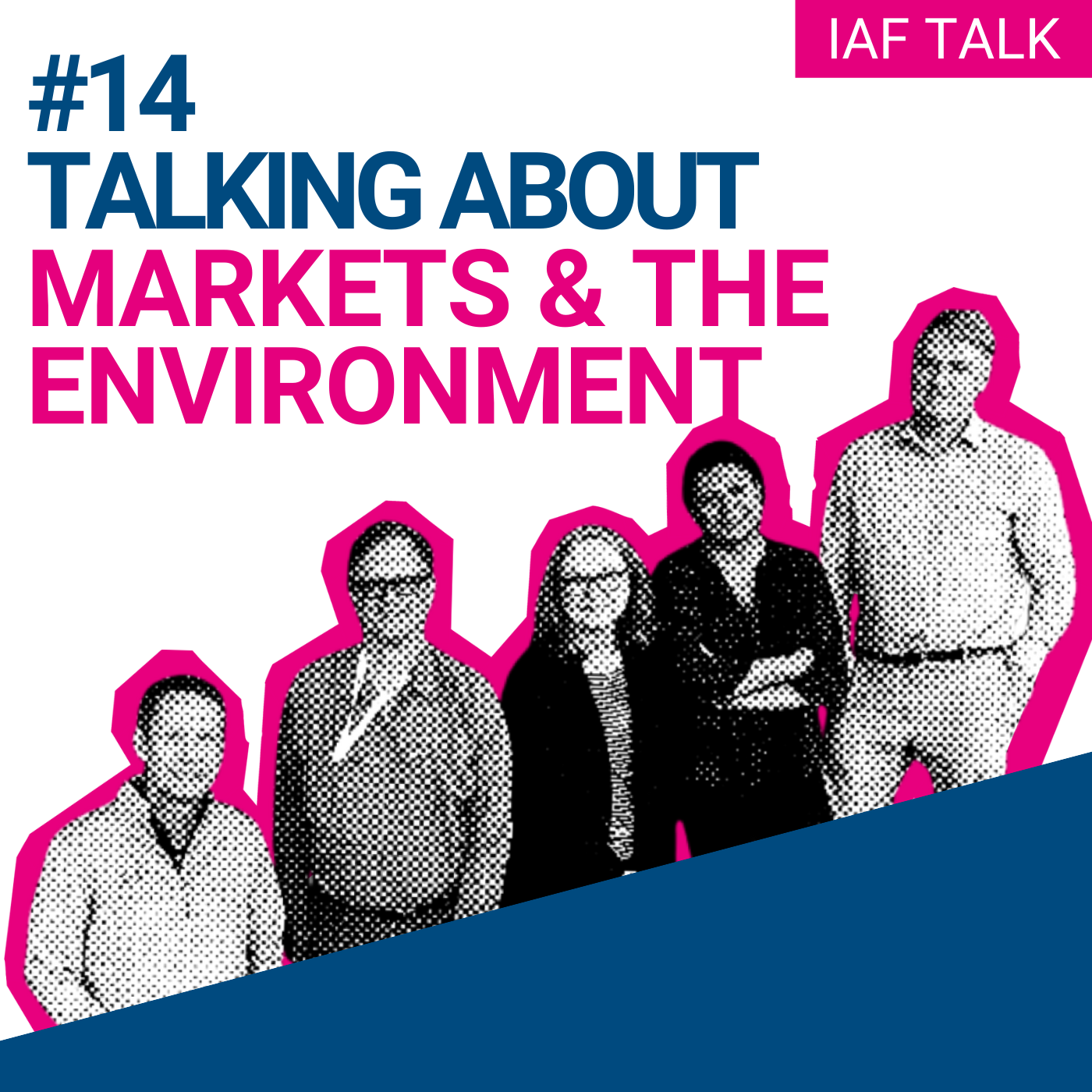
Ep 14#14 Talking about Markets & the Environment
In today's episode of IAF TALK Bettina Solinger has gathered the experts from our seminar "The Future of Market Economy" around a big table in the Academy to have an intensive talk about markets and the environment, and to tackle some important questions: why property rights are important for innovation, why some ideas that are brilliant on the paper but won't work in reality, how developing countries are dealing with climate change and, of course, if the economy is actually able to protect the environment. In this talk we are meeting Arpita Nepal, Rainer Heufers, Dr Tom G. Palmer and Prof. Dr Andrew Morriss who are not only bringing lots of expertise to the table but also present different perspectives from their experiences. We are learning from many practical examples from around the world why the protection of the environment and fighting climate change is such a complex task - and why we are still optimistic.
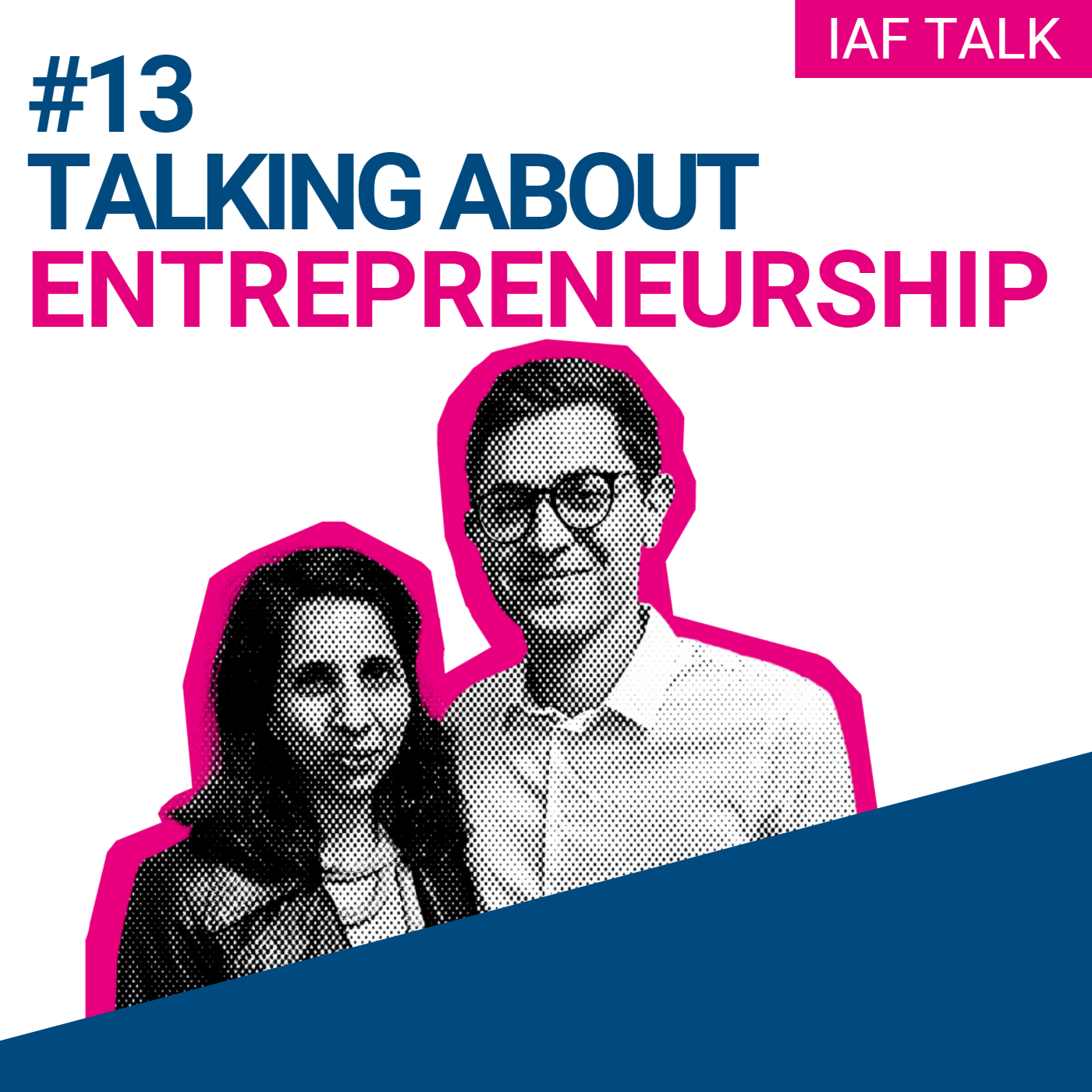
Ep 13#13 Talking about Entrepreneurship
After finishing a 12 day seminar at the IAF that has looked into entrepreneurship with more than 25 participants from all around the world and we will discuss why entrepreneurship in general matters, what we have learned throughout the seminar about entrepreneurship in specific countries. And then thirdly, what policymakers can do to boost and accelerate entrepreneurship in their respective countries. In this episode of IAF TALK we going to meet Jyoti Sachavirawong and Julian Kirchherr. Julian works as a manager in the consulting industry. He is also associated with Utrecht University in the Netherlands where he works as a researcher, and in both of these jobs he does a lot of work together with start-ups but also with policymakers to boost entrepreneurship. So this is very much a topic he is very passionate about. Jyoti is a business consultant, and I has been working on advising companies on how they can enter a market. She provides advice on marketing and communication strategy. But prior to that, she was fortunate enough to have had spent several years in the liberal family working with the Friedrich Naumann Foundation office initially in Malaysia, working on women empowerment issues, and subsequently moving on to work at the regional level on economic freedom and human rights.
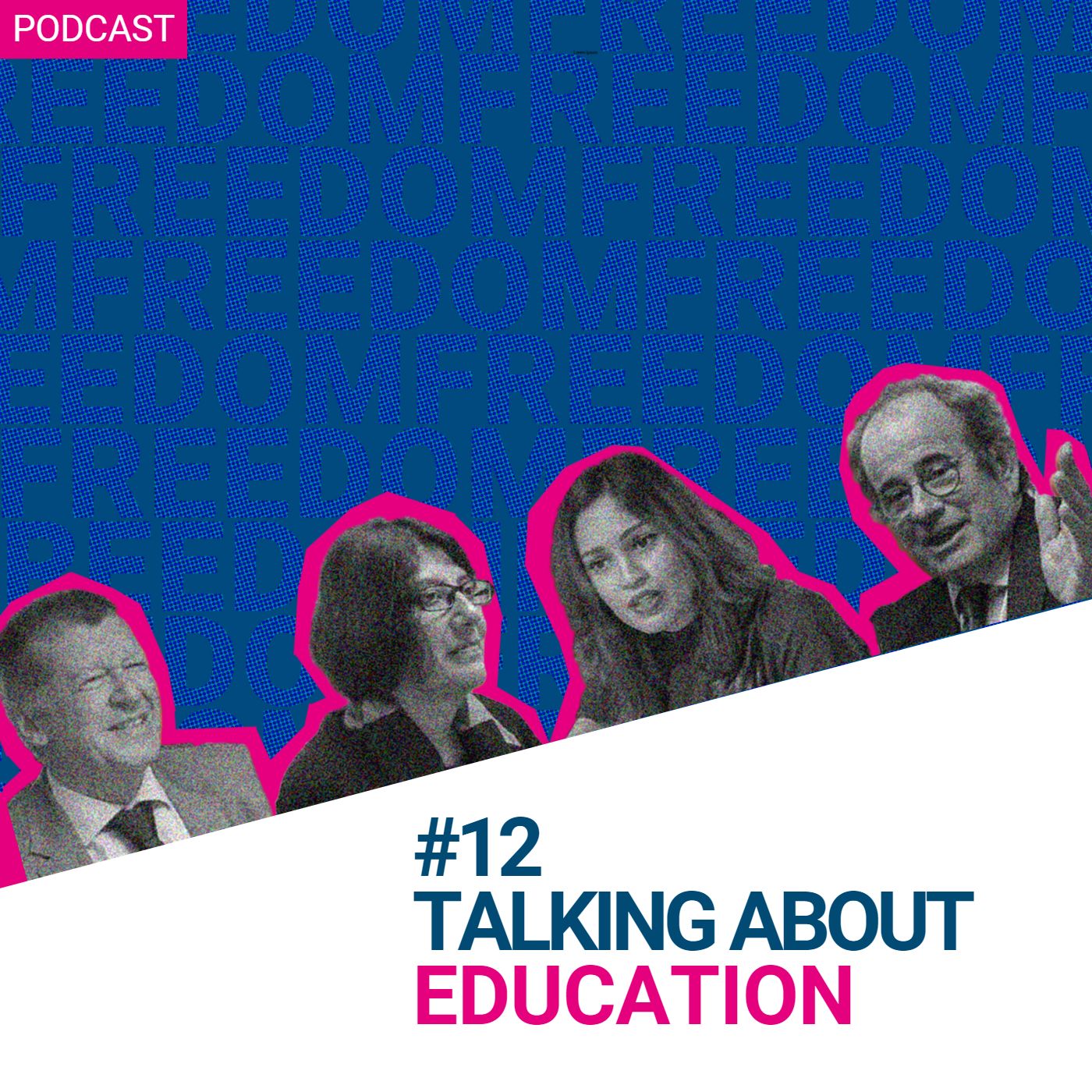
Ep 12#12 Talking about Education
Today’s episode is very special – not only because Education is a tremendously important aspect for every person’s development towards self-determination, prosperity and happiness in live but also because we would like to commemorate the late Dr Stefan Melnik who has contributed immensely to IAF, in fact he helped build and develop IAF to where it is today. Education has always been a theme very close to his heart. And this is why we would like to share with you a talk of four wonderful experts on Education that we recorded a few years back: In this episode we are meeting Professor James Tooley, who is best known for his work on low cost private education. He has worked in various parts of the world bringing together insights from his research and has published on low cost private education in – amongst others - the book “The beautiful tree”. Ekta Sodha actually is an entrepreneur who is active in the field of education, an edu-preneur perhaps, who runs a number of low-cost private schools in India. Manali Shah, who is also a facilitator at IAF and has worked for the CCS, the Center for Civil Society, in Delhi, who actually pioneered in India the idea of voucherizing the school system. And of course Dr. Stefan Melnik who has been an independent consultant specialising in training programmes for executives. He designed and directed workshops on human rights, the market economy, environmental issues, basics of liberalism, secularism and of course education reform – often but not exclusively at IAF. Stefan also moderated this discussion.
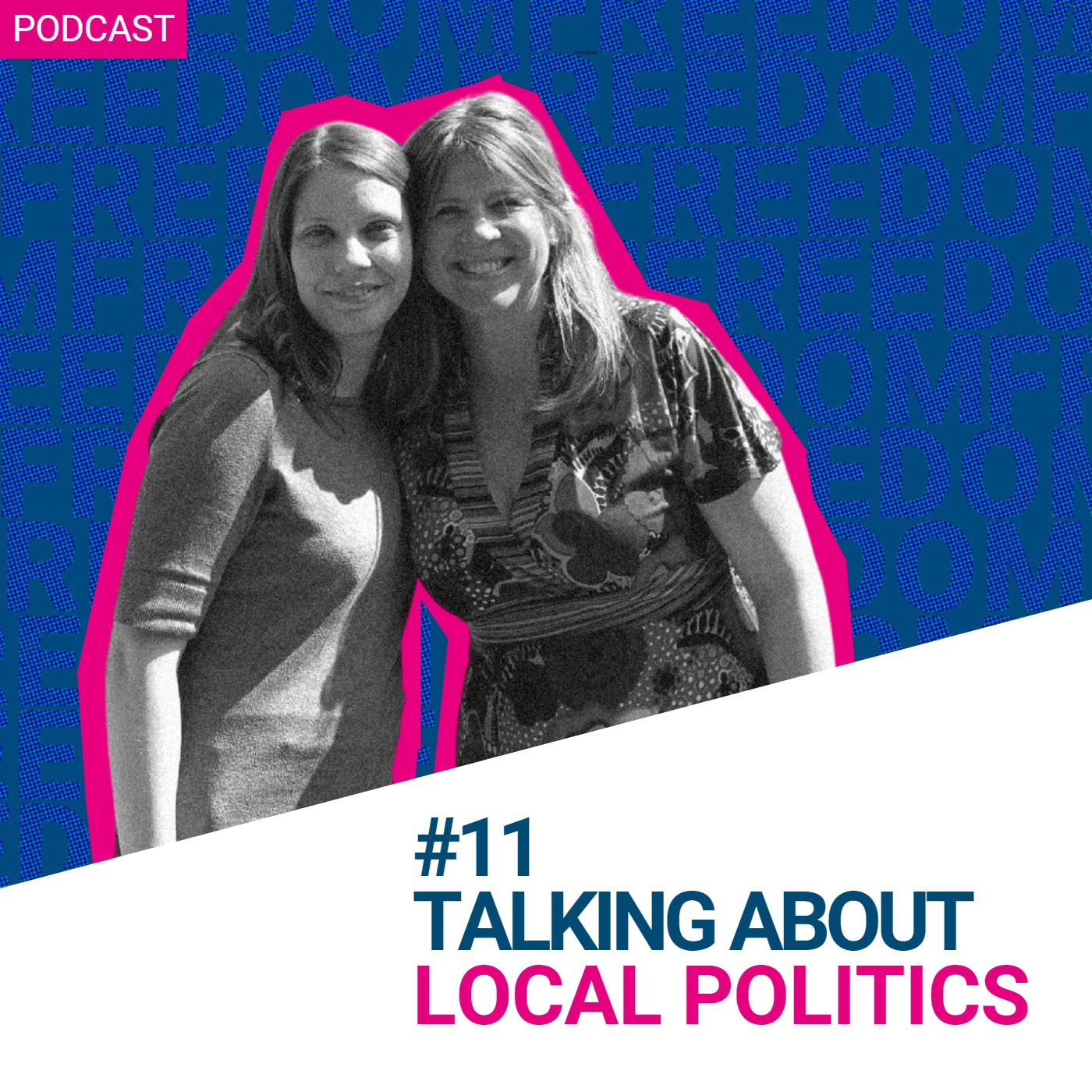
Ep 11#11 Talking about Local Politics
“All politics is local” is a prevailing phrase – not only in U.S. politics. Apart from the strategic meaning it implies a liberal view of politics – starting off from the individual, who should be instrumental in all decisions that affect their life. Looking for solutions at the local level, involving responsible individuals and making use of decentralised local competences and knowledge are important principles to get local government politics close to citizens, encourage their participation, communicate with them more effectively and make government more efficient. However, in reality local politicians around the world are facing huge challenges to implement such principles due to administrative, legal, financial, political and practical problems. In this episode of IAF TALK we are meeting Petra Franke and Kylie Hatton who facilitated our seminar on "Local Politics and Citizen's Participation" and share the insights and key learnings from the seminar.
Ep 10#10 Talking about Environment
For liberals private property is a defining characteristic of a free society. In our seminar "Liberal, Property and the Environment" we explored how the concept of private property might conceivably be a solution to problems as diverse as pollution, land degradation, overfishing, deforestation, species extinction and waste. Can enforcement of robust property rights help to protect the environment, rehabilitate areas that have suffered considerable damage, and promote the aim of achieving sustainability in the use of natural resources? Would the poor and disadvantaged sections of society stand to benefit? To what extent would successful “green” and “blue” growth policies benefit from efforts to apply and foster a property rights-based approach to economic growth and well-being? In this episode we will meet Dr. Emmanuel Martin, an Economist from France, and Sven Gerst, a PhD Student in Political Philosophy at the Department of Political Economy at King's College London, who facilitated this seminar and who will not only give us an insight into this important topic but also share their impressions of a very special excursion with eye-opening experiences and the key learnings from this seminar.

Ep 9#9 Talking about Strategic Communication
In a world dominated by competing messages, brands and ideas - how will your message resonate with your voters or supporters? Why is it so important to have a clear communication strategy and how can you actually prepare for communication in a crisis? In this episode we are meeting Kylie Hatton from South Africa and Wulf Pabst from Germany, both long standing experts on communication and strategy as well as politics, who facilitate our seminar on “Communication: Strategy and Skills” and share their key take-aways and main learnings from the seminar.
Ep 8#8 Talking about 25 Years of IAF
EThis year we have been celebrating the 25th anniversary of the International Academy for Leadership (Internationale Akademie für Führungskräfte - IAF) and together with its founding director Jörg Dehnert, his successor Birgit Lamm, and the current director of the IAF Bettina Solinger, we're taking a trip down memory lane and learn how it all started in 1995, what challenges they faced over the years and what makes it all so special at IAF.
Ep 7#7 Talking about Smart Cities
Using Apps for finding a shop or restaurant or looking for some friends nearby is already a reality and millions of people all around the world are using those conveniences every day. Still, this is just the first step of possible developments and changes of our cities. By using “big data” and digitalization our cities can turn into smart cities and help us to manage today’s and future challenges of growing cities in fields such as administration, urban planning, environment, economic development and others. Transparency, participation and better decision making should be among the chances of smarter cities as well. However - and especially from a liberal perspective - privacy protection and keeping autonomy of one’s own data must be taken into consideration. In this episode, hosted by Armin Reinartz, we're meeting Leah from South Africa who is the political head of Johannesburg's Department of Economic Development and gives us an insight in her work, Rashed from Bangladesh who is an architect involved in various urban projects with the government designing streets and addressing how people want to use them, and Marco from Mexico is especially focussing on smart regulations and smart legislation regarding urban development and city transformation and advises local and federal governments in Latin America to promote reforms.
Ep 6#6 Talking about Seminar Facilitation
"Have your program worked out doesn't mean that you are prepared" says Marike Groenewald, one of our guests in this podcast episode. Audience participation and engagement depends on the “way of being” of a facilitator. But what does it need to create a liberal environment in training sessions and events, where an audience is able to participate fully and think well for themselves? In this episode we're meeting Marike Groenewald who is the founder of Anew, an organisational and people development consultancy based in Cape Town, South Africa. Marike also served for nearly eight years as the Director of the DA's Young Leaders Programme, the party's flagship year-long leadership development course and the only programme of its kind in the world. Trisha Lord, Trainer and Coach lecturing in advanced Coaching Skills, has trained with Arnold Mindell in Process Facilitation; and is accredited by Nancy Kline as a Faculty Member, Consultant and Coach in delivering the Thinking Environment. Trisha is also based in South Africa.
Ep 5#5 Talking about Deconstructing Populism
Populists seem to be on the rise around the world and their opponents from different political camps seem to have difficulties to find the right antidote to fight that new (?) political force. Some place their bet on facts to fight lies, others on copying some of the populist features or trying to tackle what is perceived as the underlying causes that play into the hands of populists. But what is populism and why is it so dangerous for liberal open societies? What do populists have in common and how to deconstruct populism? In this episode of IAF TALK we're meeting Sven Gerst, Secretary General of IFLRY (International Federation of Liberal Youth) and Political Philosophy PhD Student at King's College London, and Radu Magdin, Global Analyst, Consultant and Trainer, who facilitated our international seminar on the topic.
Ep 4#4 Talking about Campaigning
Campaigning is a core function of any political party. It is the way through which parties connect with voters to garner enough support to get into government, and to ultimately implement its vision for a better future. Often the lack of a proper campaign structure and operation stands in the way of a party being able to turn its vision into votes. With the rise of the internet, big data and social media, traditional campaign methods have undergone radical change making it easier to communicate instantly with millions of potential voters. And yet, many liberal political parties across the world struggle to connect with voters in a world that is more connected than ever before. Furthermore, the prevalence of right-wing parties and increased populism across the political spectrum begs the question, how are progressive and liberal parties to respond to this change in a way that makes the world freer and respects the interest of the individual. In this episode of IAF TALK we're meeting Jonathan Moakes, political administrator and strategist, and Warwick Chapman, technologist and executive director, both from South Africa and both highly experienced with managing campaigns, strategies and tools. Hosted by Clinton du Preez, who himself was appointed the Deputy National Campaign Manager for Training for the Democartic Alliance’s 2019 general election campaign and after which he returned to be the Acting Director of the Development and Learning Department.
Ep 3#3 Talking about Digital Freedom
Digitalisation has opened up a world of opportunity. Today we have access to vast amounts of information, inconceivable 20 years ago. The cost of communication with others has plummeted and is now marginal. The majority of the world’s population has cheap access to the means of communication, hardware, software and the associated services. As far as freedom of expression is concerned, this no longer tends to be the privilege of professionals. Other rights have become easier to enjoy because of digital media: the right to freedom of assembly, the right to education, the ability to enforce and protect one’s right to property more effectively, the right to freedom of belief. But digitalisation and the way it has been implemented also pose serious challenges to freedom as we know it. They are in the news. They include attempts by various governments to control or cordon off the internet, efforts to abolish the principle of net neutrality, the use of social media and associated technologies for hybrid warfare, an increasing readiness to engage in “fake news” and exploiting susceptibilities in this regard, a compartmentalisation of news driven by user preferences, surveillance of internet use, internet security, and restrictions imposed by dysfunctional rules on copyright, to mention only a few. In this podcast episode we're meeting Majida Lubura (Serbia), Sukarn Singh Maini (India), Kristo Enn Vaga (Estonia) and Nicolas Martinez (Bolivia) who are sharing their experiences and personal stories of how they are benefitting from using a free internet but also how they are encountering enormous challenges. Hosted by Dr Stefan Melnik.
Ep 2#2 Talking about Innovation
Innovation is not only about robots, artificial intelligence or futuristic concepts but there are many ideas on how to be innovative as an individual or as an organization. But what is needed to stay innovative and create a company culture that is constantly innovative? In this episode of IAF TALK we're having three guests who are exchanging on the topic and give a couple of practical examples: Marike Groenewald, a leadership developer and coach from South Africa; Rainer Heufers, founder and executive director of a consulting firm that provides strategic counseling, public policy consulting, leadership training from Singapore and Armin Reinartz who is the Director of the Global Innovation Hub of the Friedrich Naumann Foundation for Freedom based in Hong Kong. This IAF TALK is hosted by Katja Manuela Egger, Consultant for Learning and Development at ABB Switzerland.
Ep 1#1 Talking about Populism
In the first episode of IAF TALK we're meeting Milosz Hodun, International Officer of Nowoczesna party in Poland, and Ines Holzegger, International Officer of YUNOS (youth organization of NEOS party Austria), who give us an insight into the latest political developments in their countries and how populism is affecting the situation. Hosted by Sven Gerst, Secretary General of IFLRY (International Federation of Liberal Youth) and Political Philosophy PhD Student at King's College London.