Humans On The Loop
Art & Philosophy for an Age of Accelerating Weirdness
Michael Garfield
Show overview
Humans On The Loop has been publishing since 2016, and across the 10 years since has built a catalogue of 270 episodes. That works out to roughly 370 hours of audio in total. Releases follow a fortnightly cadence, with the show now in its 27th season.
Episodes typically run an hour to ninety minutes — most land between 1h 7m and 1h 30m — and the run-time is fairly consistent across the catalogue. The publisher flags most episodes as explicit, so expect adult themes or strong language throughout. It is catalogued as a EN-language Society & Culture show.
The show is actively publishing — the most recent episode landed 2 months ago, with 11 episodes already out so far this year. The busiest year was 2018, with 50 episodes published. Published by Michael Garfield.
From the publisher
Let's dream better! Join paleontologist-futurist Michael Garfield for bold, far-ranging explorations into the nature of agency in the age of automation, wisdom and innovation, responsibility and power, and the care and feeding of the new superpowers conferred to us by magical technologies. Weekly dialogues at the edge of the knowable, learning to navigate Global Weirding and exponential AI with the curiosity and play required of us. Building on twenty years of independent research plus firsthand experience of the tech, arts, and science worlds, Humans On The Loop is a show to transform you and help us make better use of our greatest natural resource: our attention. michaelgarfield.substack.com
Latest Episodes
View all 270 episodesWhat Buddhist Epistemology Teaches Us about The Future of AI
Continual Learning: World Models in Natural & Artificial Intelligence with Adam Safron
Visionary Ventures & The AI-Native Avant-Garde with William Morgan of Restless Egg
Rewilding Collective Attention: Bioregional Design for Life Online with Andrea Farias
Games & Metrics: Agency as Art & Artifice with C. Thi Nguyen
Collective Futurecrafting: Play, Trauma, and The Duty of Care with Mathew Mytka
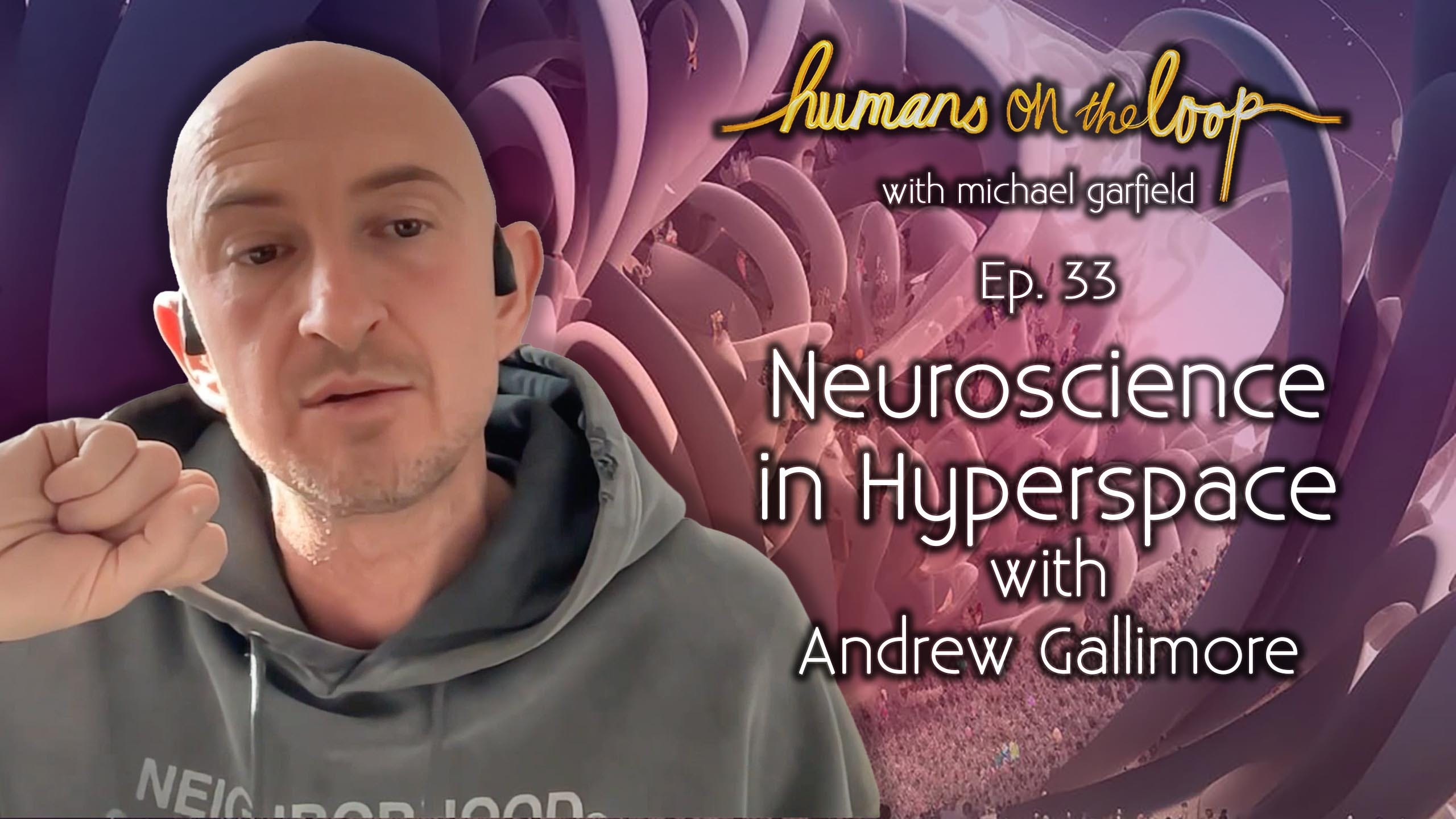
S2 Ep 33Neuroscience in Hyperspace with Andrew Gallimore
EIn this episode we join pioneering psychedelic neuroscientist Andrew Gallimore (Website | X | Instagram | Substack) to probe the bewildering high-dimensional horizons of DMT research and their implications for our understanding of consciousness and the structure of reality. In his book Death by Astonishment, Gallimore argues DMT expands the brain’s “representational reach,” enabling perception of high-dimensional structures and apparent interaction with non-human “intelligent agents,” challenging standard accounts that treat the experience as mere hallucination, dreams, or Jungian archetypes. What new shapes will we—and our sciences—take as we integrate the intense strangeness of these experiences? How do we even begin to practice “truly psychedelic” science? And what insights might we be able to bring “home” to the Flatland where we spend most of our waking lives?Andrew has talked about this work in many, many other venues (his conversations with Jesse Michels and Danny Jones were especially good), so I wanted to carry the conversation into fresh terrain. Consider this episode the “200 level course”, or at least my best attempt ask a brilliant and provocative researcher some very complicated questions.Over our two hours together we discussed neuroimaging findings that challenge the “dream” and “archetype” interpretations of DMT phenomenology, how criticality and noise in complex systems inform our understanding of the psychedelic experience, and the methodological problems inherent in studying ontologically shocking experiences while maintaining scientific rigor. We also probed the philosophical implications of DMT research—such as the possibility that consciousness is more fundamental than matter—and the possible connections between DMT hyperspace and life in an era of advanced technology. Andrew also gave some context on the Noonautics research non-profit its partnership with the newly-launched Eleusis facility, a carefully-crafted venue for extended-state DMT work. But perhaps my favorite part of this conversation was spent in speculation, about how science and even language might evolve to meet the challenges presented by the ineffable high-dimensional reality that DMT reveals to us.✨ Like/Subscribe/Comment where you listen! YouTube • Spotify • Apple Podcasts✨ Become a member for our reading group, community calls, and years of members-only recordings — including the excellent raps we had recently on Alexander Douglas and Wendell Berry.✨ Become a founding member to access my online courses, including Jurassic Worlding and How To Live In The Future.✨ Browse and buy all of the books we discuss on the show at Bookshop.org✨ Music: “Scalar Reconfigurations” & “City of Jewels”✨ Contact me to collaborate or hire me as a consultantChapters00:00:00 Intro00:08:15 Gallimore’s Origin Story00:13:00 DMT as a Technology00:20:01 “Entities” & Methodological Problems00:29:06 World Models and EEG Clues00:36:57 Why The Psychedelic State is Not a Dream00:44:11 Noise, Criticality, and New Order00:47:50 The Temperature-Noise Motif00:52:47 Metabolism & Dimensionality00:53:47 The Cortex & Representational Reach00:57:44 Do We Need New Language to Study The DMT Realm?01:00:45 Is There Only The Subject?01:09:31 Psychedelic Science As Altered Observation01:17:34 DMTx & Eleusis Plans01:21:55 The Future of Transdimensional Research01:31:44 A Call for HumilityCited WorksNeural correlates of the DMT experience assessed with multivariate EEGby Christopher Timmerman et al.The Overfitted Brainby Erik HoelThe evolution of syntactic communicationby Martin Nowak et al.The Transcension Hypothesisby John SmartMiguel Fuentes & Marco Buongiorno Nardelli on Music, Emergence, and Societyfor Complexity PodcastAncient Extinction Events, Apocalyptic Cults, and DMT Entitieswith Michael on The Danny Jones PodcastOther MentionsStephen SzáraNick SandDonald HoffmanKarl FristonJordi RibaDavid ChalmersWilliam BurroughsJohn LillyPhil DickTerence McKennaRobert Anton WilsonJohn D. BarrowMentioned & Related Podcast Episodes This is a public episode. If you'd like to discuss this with other subscribers or get access to bonus episodes, visit michaelgarfield.substack.com/subscribe
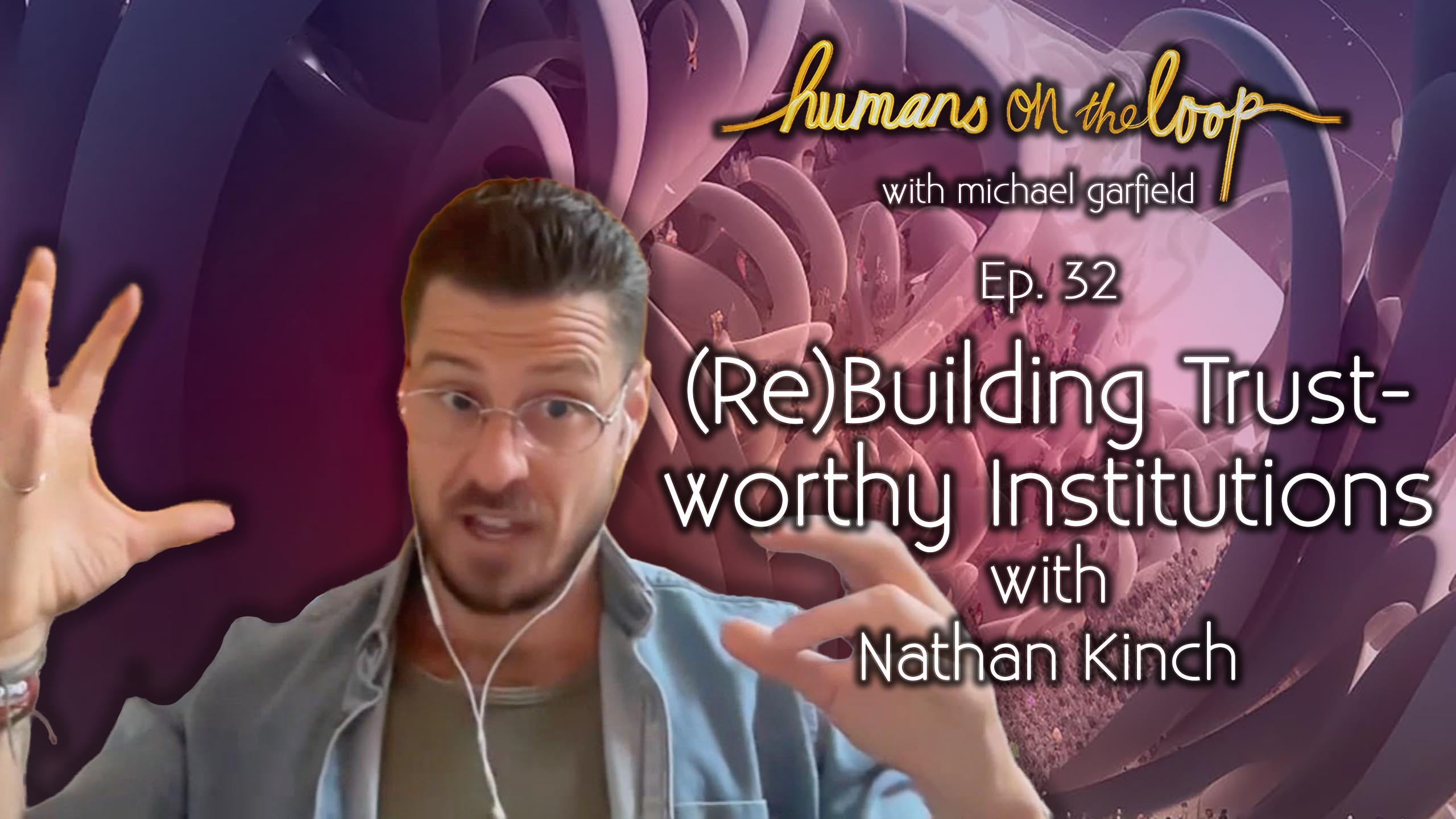
S2 Ep 32(Re)Building Trustworthy Institutions with Nathan Kinch
EToday’s very overdue conversation is with AI ethicist and organizational trust expert Nathan Kinch of Trustworthy By Design (Website | LinkedIn), asking questions like: How do institutions made of decent, well-meaning people continue to behave out of alignment with their stated values? How do we dig ourselves out of a catastrophic collapse in trust? How can we design practical, participatory “living labs” for organizational reflection and facilitate convivial, playful environments for working together?“Certainly one of the world’s leading figures on ethics in practical applications.”— Fionn Delahunty, NLP Lab at University of GalwayAs we frequently observe on this show, we need to rework our ideas of agency and identity to adapt them to advances in our understanding of complex systems. Decisions emerge within a nexus of nested, multi-scale dynamics, and our species flourishes or fumbles in intricate symbiotic relationships with the collective intelligences embodied in cultural technologies like states, markets, corporations, and social clubs — beings that, by any reasonable account, live in worlds alien to our own lived experience and demonstrate their own goals and values. Getting them to behave in ways that nourish us requires a much more nuanced theory of change than that which created them in the first place, perhaps even a radically different vision of the links between biology, psychology, society, and environment. And given that AI is a beast of a similar order to these other “egregores” — the entities of collective computation that arise from our efforts to coordinate at scale and then impose their own top-down causal influence on our thoughts and actions — learning how to align individual and organizational purpose can give us profound insight into how to live well alongside (or in the proverbial guts of) newer, more obvious forms of non-human intelligence like LLMs that amplify our biases through lossy compression and feedback, and shape both our desires and view of adjacent possibility.In other words, the “intent-to-action” gap in corporate ethics and the “paperclip machine” problem in our built wilderness of black box super-machines are structurally identical. And if we can “tame” the secular gods of the modern industrial era , our self-domesticated species may actually still get a chance at living in a zoo of our own choosing.If you are caught in a system of technologically mediated social dilemmas — and who isn’t? — this will speak to you, and I’m excited to share it.✨ If you enjoy this podcast, please consider liking, subscribing, and commenting wherever you listen: YouTube • Spotify • Apple Podcasts • Etc.✨ Become a member for access to our study group and community calls, and for those recordings — including the excellent raps we had recently on Alexander Douglas and Wendell Berry.✨ Become a founding member for access my five-week science and philosophy course at Weirdosphere and the raw recordings of every unreleased episode! (Anyone can chat with my course transcripts in a dedicated Google Notebook here.)This is a reader-supported publication. Please consider becoming a member:✨ Browse and buy all of the books we discuss on the show at Bookshop.org✨ Contact me with inquiries or hire me as a consultantReferenced & RelatedWhat’s trust got to do with it?Nathan KinchThree reasons why AI ethics is strugglingNathan KinchIf ‘Trust is a must’ for AI governance — here are 3 things regulators should doHilary SutcliffeBluesky and enshittificationCory DoctorowEnvironmentally Mediated Social DilemmasSylvie Estrela et al.FLD On Navigating Complexity in Education: A Conversation with Dave SnowdenTim LoganThe corporate cultivation of digital resignationNora Draper & Joseph TurowWilliam GibsonJohn VervaekeRajiv SethiMat MytkaNadia LeeBarronness Onora O’Neill This is a public episode. If you'd like to discuss this with other subscribers or get access to bonus episodes, visit michaelgarfield.substack.com/subscribe
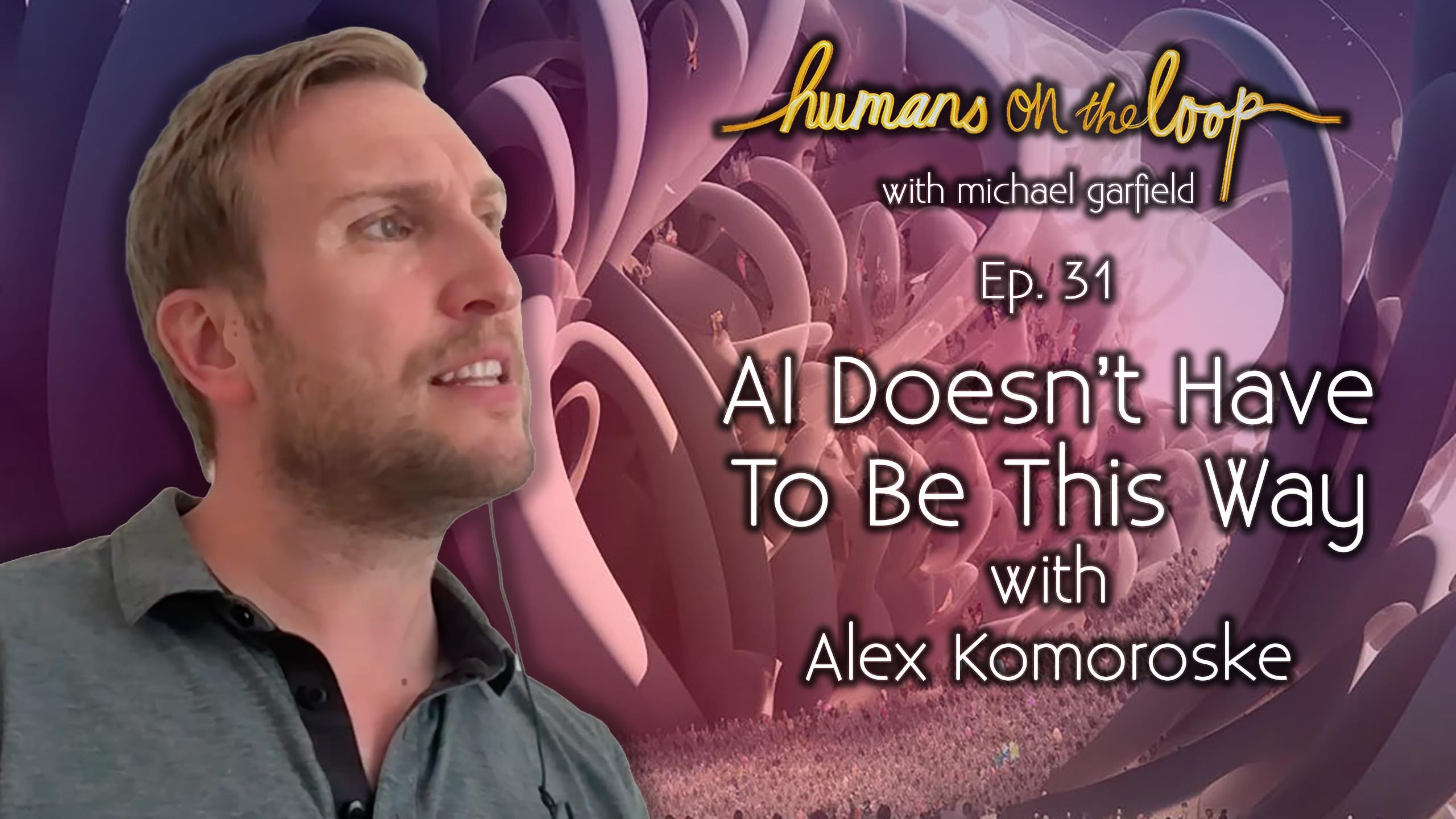
S2 Ep 31AI Doesn't Have To Be This Way feat. Alex Komoroske
EThis week go deep with Alex Komoroske, CEO and co-founder of Common Tools, about his vision for a more saner, more intentional tech paradigm in which the historical contingencies that gave us the digital world we have today have been fundamentally reworked.The version of AI most of us have come to accept or reject looks like corporate-owned super-assistants with all your data. Instead, we could have a decentralized ecosystem where software self-assembles around you—private, personal, and prosocial. Alex speaks on this possible world with authority: he spent 13 years at Google as PM Director on Chrome’s web platform, Search, and AR, and later led corporate strategy at Stripe before co-founding Common Tools with Bernhard Seefeld.Some of the waypoints in our conversation include: confidential compute, emergent ontologies, where we want friction, the tyranny of the marginal users, the rise of the generalist, the importance of context ownership, and software ephemerality.We can’t take a reasonable principled stance on the promises and perils of AI without considering the vast unexplored possibility space that Alex opens in this conversation. I’m grateful that I get to share it with you and help light the way for promising alternatives to what many of us have come to accept as “the way things are.”Links to extensive additional reading and listening below!✨ If you enjoy this podcast, please consider liking, subscribing, and commenting wherever you listen: YouTube • Spotify • Apple Podcasts • Etc.✨ Become a member to support the show and score myriad perks, like our book club: our next call is on Wendell Berry’s Standing by Words this Sunday, Feb 15th!✨ Become a founding member for access to my five-week science and philosophy course at Weirdosphere and the raw recordings of every unreleased episode! (Anyone can chat with my course transcripts in a dedicated Google Notebook here.)✨ Browse and buy all of the books we discuss on the show at Bookshop.org✨ Contact me with inquiries or hire me as a consultantReferenced & Related• The FLUX Collective (team project w/ several people mentioned in this episode)• Bits and Bobs (Alex’s long-running archive of weekly notes)• Common Ground (Alex’s dialogues w/ Aishwarya Khanduja of The Analogue Group)• The Iterative Adjacent Possible (Alex on Medium)• The Runaway Engine of Society (Alex on Medium)• Thinking like a gardener not a builder, organizing teams like slime mold, the adjacent possible, and other unconventional product advice (podcast w/ Lenny Rachitsky)• Media and Machines by Anu Atluru at Working Theorys• Accelerando & Glasshouse & Halting State (three books) by Charles Stross• The Transparent Society by David Brin• The evolution of Covert Signaling by Paul Smaldino• Landscape rules predict optimal superhighways for the first peopling of Sahul by Stefani Crabtree et al.• The Tyranny of the Marginal User by Ivan Vendrov• 1,000 True Fans by Kevin Kelly• Blindsight & Echopraxia (two books) by Peter Watts• The Computer as a Communication Device by J.C.R. Licklider & Bob Taylor• Silicon Valley’s quest to remove friction from our lives by Rohit Krishnan• The Most Valuable Commodity in the World is Friction by Kyla Scanlon• Bernhard Seefeld• Situated Software by Clay Shirky• Das Rad (animated short)• Geoffrey West• Mark Pesce• Fred Turner• Robert David SteeleExplore hundreds of related podcast episodes in the archives! This is a public episode. If you'd like to discuss this with other subscribers or get access to bonus episodes, visit michaelgarfield.substack.com/subscribe
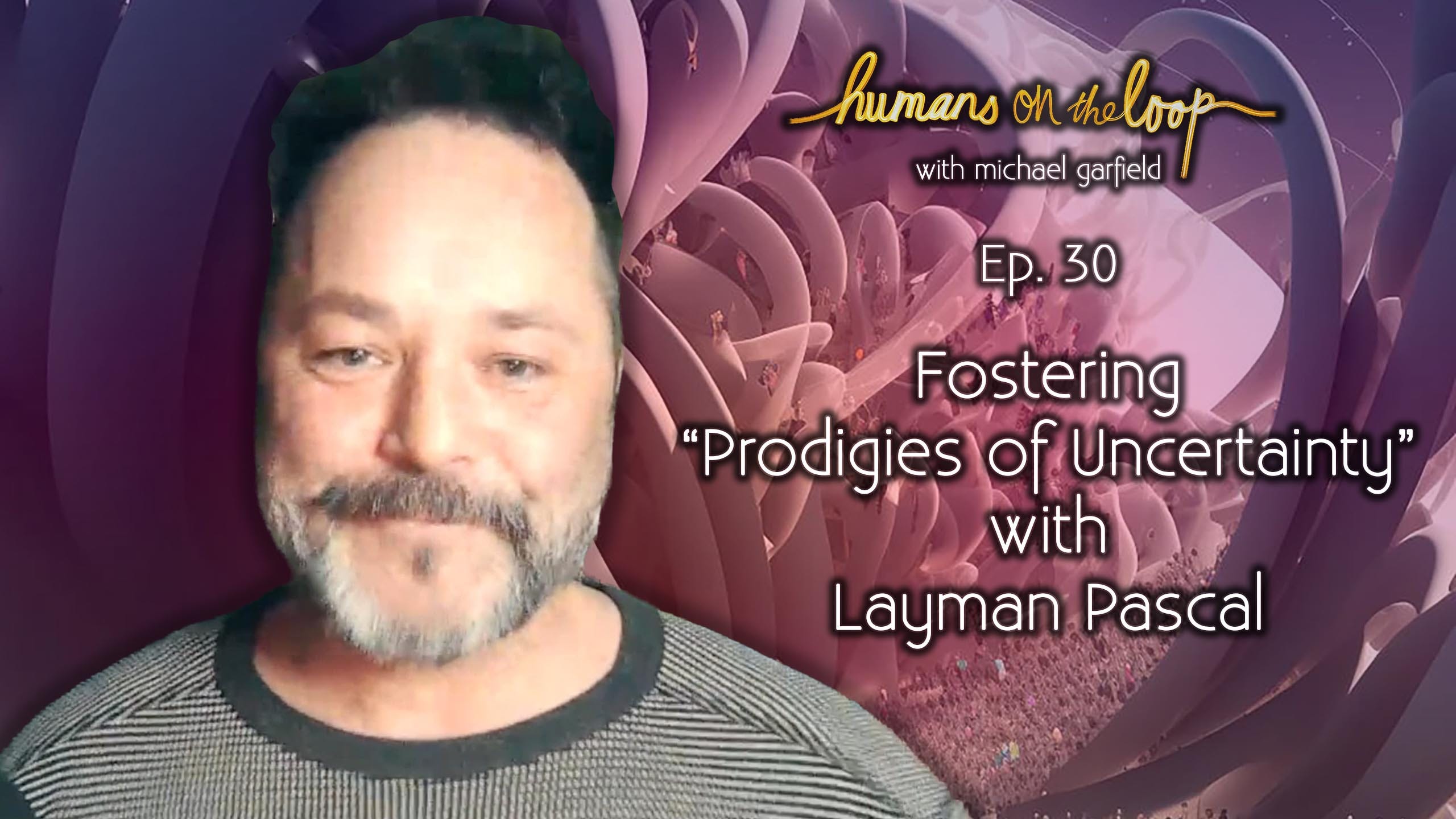
Fostering "Prodigies of Uncertainty" with Layman Pascal
The world is getting weirder every day… We need weirdness specialists. Maybe the best guy for the job is my friend, the brilliant “metashaman” (and possible octopus) Layman Pascal. In his own words, Layman “used to be a Canadian meditation teacher, yoga instructor & philosopher of Integral Metatheory but he’s feeling much better now.” He leads the Metamodern Spirituality Labs, hosts The Integral Stage, Soulmakers+, and (forthcoming) Untegral Stage podcasts, and provides unique online courses. He is also a founding member of several think tanks in the developmental psychology and spirituality space, senior editor of Emerge online & is allied to numerous institutes across the field. In addition to many journal and anthology articles, he is the author of Gurdjieff for a Time Between Worlds, Sex, Death & the Occult, as well as an upcoming book about Nietzsche. Layman is known for his philosophical work on the metaphysics of adjacency, complex nonduality, coaxial developmental stage theories, sacred naturalism, archaic futurism, embodied spirituality & the “integration-surplus model of religion and spirituality” for a post-postmodern civilization facing numerous accelerating and converging crises. In this conversation we cover a lot of ground in a very short time, including: the nature of futurity and how humankind’s relationship to the future is changing; how to surf intense peculiarity'; the abiding sociocultural role of “shamanoid” personalities and other useful weirdos; “wartime” mobilization for The Big Us; and other deep and delightful subjects. It’s my honor to finally decant this year-old recording, now more pertinent than ever…✨ If you enjoy this conversation, please consider liking, subscribing, and commenting on your favorite podcast provider to help this work (and you!) find new allies: YouTube • Spotify • Apple Podcasts • Etc.✨ Our next Humans On The Loop book club discussion is for Wendell Berry’s Standing by Words on Sunday February 15th! Become a member to participate in these calls, exclusive Discord members channels, and our monthly hangouts.✨ All of the unedited, unreleased episodes are available to founding members here.More links• Explore the archives for nine years of mind-expanding conversations• Browse (nearly!) all of the books we discuss on the show at Bookshop.org•Dig into the Humans On The Loop pitch deck• Explore the Google Notebook for How To Live In The Future, my five-week science and philosophy course at Weirdosphere• Contact me if you have burning questions!Cited pieces by Layman• The Soul of AI w/ Lee Chazen (YouTube)• The MetaModern Business Bureau (MMBB) (Substack)• Apocalyptarians (Substack)• The Society of Partial Deterritorialization (Substack)• The Two-Handed Demons (Substack)Cited pieces by others• Wendell Berry - Standing by Words• Hakim Bey - Temporary Autonomous Zone• Steven Johnson - The Revenge of the Humanities• Carol Dweck - Mindset• William James - On Some Mental Effects of the EarthquakeMentioned people with dialogues on my show• Jim Rutt (181)• William Irwin Thompson (42, 43)• Erik Davis (99, 132, 140)• Timothy Morton (223)Mentioned people without dialogues on my show• Terence McKenna (although I’ve interviewed Terence’s brilliant close friends Ken Adams and Bruce Damer multiple times; check the archives for episodes 4, 109, 209)• Alexander Bard• Andrew Huberman• Harry S. Truman• Jacques Lacan• H.P. Lovecraft• Doug Irwin• Nassim Taleb• Friedrich Nietzsche This is a public episode. If you'd like to discuss this with other subscribers or get access to bonus episodes, visit michaelgarfield.substack.com/subscribe
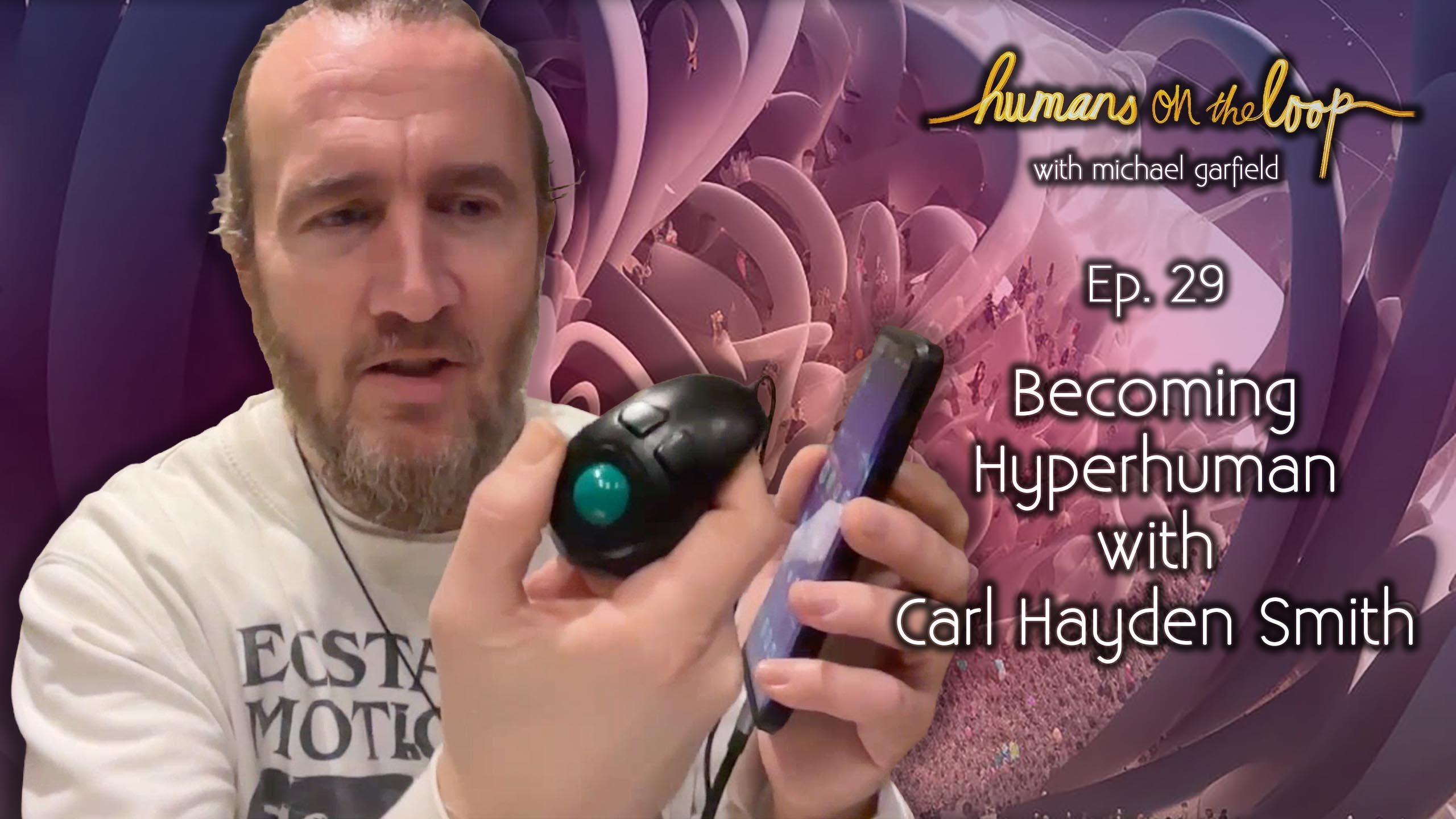
Becoming Hyperhuman with Carl Hayden Smith
This week we come at technology sideways with help from hyperspace explorer Carl Hayden Smith, Associate Professor of Media at the University of East London (Talks & Papers), Founder of The Museum of Consciousness at New College, University of Oxford , co-founder of the Cyberdelic Nexus, Director at Noonautics and head of Context Engineering at Eleusis.✨ Carl is currently teaching a course on Apocalyptic Hyperhumanism with Layman Pascal at Cadell Last’s Philosophy Portal! More info and enrollment here.✨ Our next Humans On The Loop members hangout is this Sunday January 18th at 10:00 am Mountain Time! Calendar invite coming soon for subscribers.✨ All of the unedited, unreleased episodes are available to founding members here.✨ Show Links• Dig into nine years of mind-expanding conversations• Browse the books we discuss on the show at Bookshop.org• Learn more about the Humans On The Loop project and its goals• Explore the Google Notebook for How To Live In The Future, my five-week science and philosophy course at Weirdosphere• Contact me if you have burning questions✨ MentionsMax CooperHunter S. ThompsonDoug Rushkoff Friedrich NietzscheAndrew GallimoreJohn VervaekeK. Allado-McDowellDale PendellJoël de RosnayJoshua DiCaglioCharles EisensteinFred TurnerMark ZuckerbergMichael DouglasRichard BartlettGordon White This is a public episode. If you'd like to discuss this with other subscribers or get access to bonus episodes, visit michaelgarfield.substack.com/subscribe
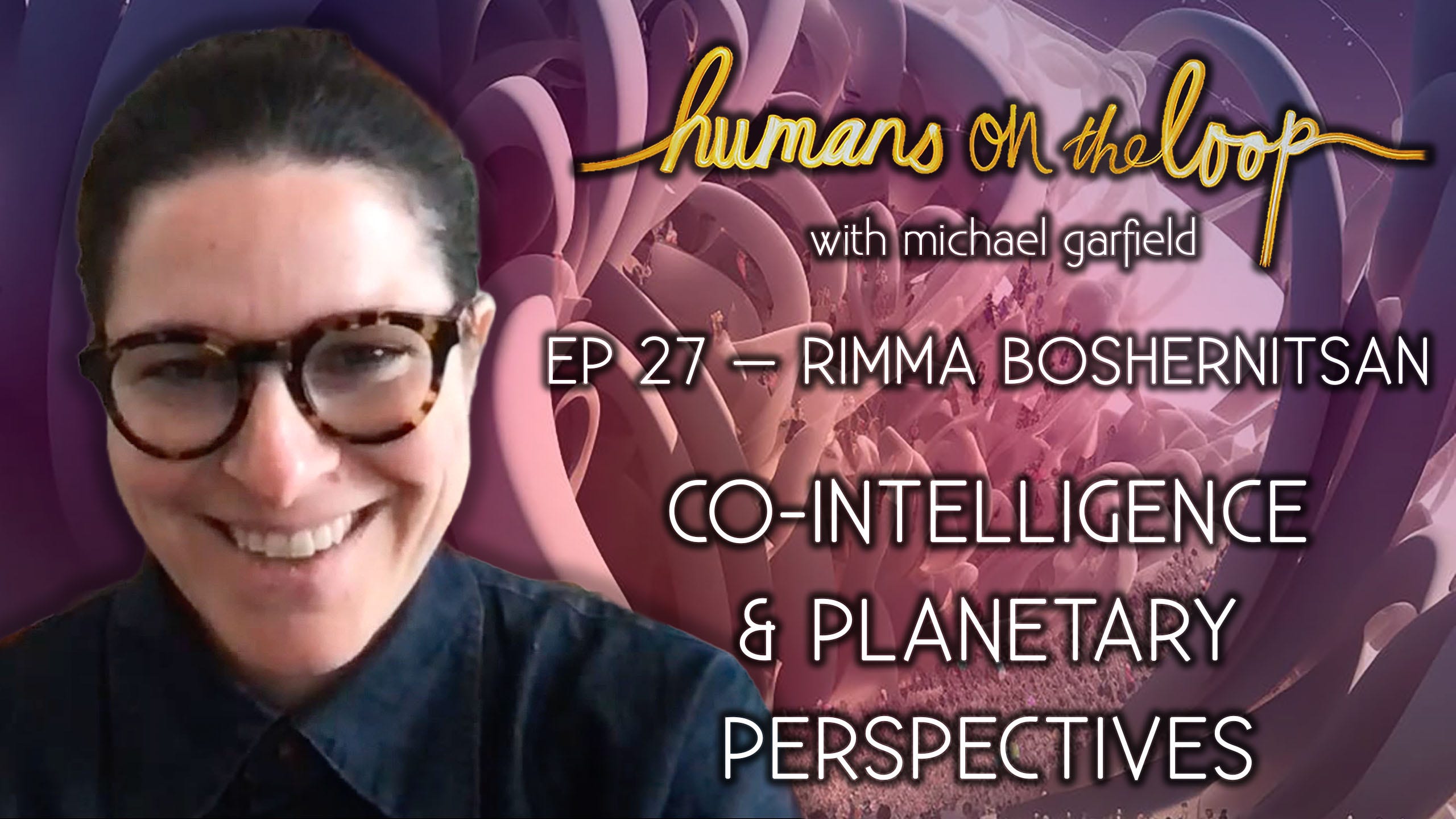
S27 Ep 2Co-Intelligence & Planetary Perspectives with Rimma Boshernitsan of DIALOGUE
EMembership | Donations | Spotify | YouTube | Apple Podcasts | Discord | FB GroupThis week (actually, April) I speak with Rimma Boshernitsan (Website | LinkedIn), a speaker, interviewer, facilitator, and advisor who has partnered with senior leadership at Fortune 500 companies—including Google, Kaiser Permanente, Roche, TATA, and Aesop—guiding them through transformation and growth. Her writing has appeared in Fast Company, Inc. Magazine, Tech Crunch and Forbes.She began her career in management consulting at Deloitte, focusing on M&A and large-scale transformation, before moving into industry advising across healthcare, consumer business, and telecommunications. Later work in the art world taught her how cultural and political insights could drive innovation and transformation in business, leading her to found DIALOGUE in 2016.She now combines strategic foresight, human-centered innovation, and interdisciplinary thinking to help her clients reframe challenges, identify opportunities, and lead with intention. She sits on the board of trustees at Headlands Center for the Arts and on the SECA Council Board at SFMOMA, and is also an advisor to Stanford’s Women in Design Program.Her most recent focus is in co-intelligence: integrating human, machine, and planetary intelligence to build future-facing organizations.I’m glad to have such an excellent partner in conversation to, as the Taoists say, “Feel our way across the river stone by stone” in a discussion about all of this and more: the re-emergence of nomadic populations and intentional communities, fumbling toward an idea of planetary culture, the role of intuition in leadership and biophilia in the design of our work spaces...it’s a marvelously nondisciplinary co-exploration.There are well over a dozen episodes in the editing queue and founding members can access the entire trove of unedited conversations before they’re released:✨ Show Links• Dig into nine years of mind-expanding conversations• Learn more about the Humans On The Loop project and its goals• Browse the books we discuss on the show at Bookshop.org• Contact me if you have a problem you think I can help you solve• Explore the interactive knowledge graph grown from over 250 episodes• Explore the Google Notebook for How To Live In The Future, my five-week science and philosophy course at Weirdosphere✨ Mentioned Media & PeopleIn Threads’ dwindling engagement, social media’s flawed hypothesis is laid bareIn a Time of Stress, Neuroaesthetic Spaces and Places Create a Path to Healing and HopeThe Triad of Intelligences: Harnessing Machine, Planetary, and Human Intuition in The Age of AIDIALOGUE Interviews: Ivy RossDIALOGUE Interviews: Susan MagsamenDIALOGUE Interviews: Kevin KellyMore Is Different: Broken symmetry and the nature of the hierarchical structure of scienceNikki SilvaBruce LiptonEd BernaysKen Wilber This is a public episode. If you'd like to discuss this with other subscribers or get access to bonus episodes, visit michaelgarfield.substack.com/subscribe
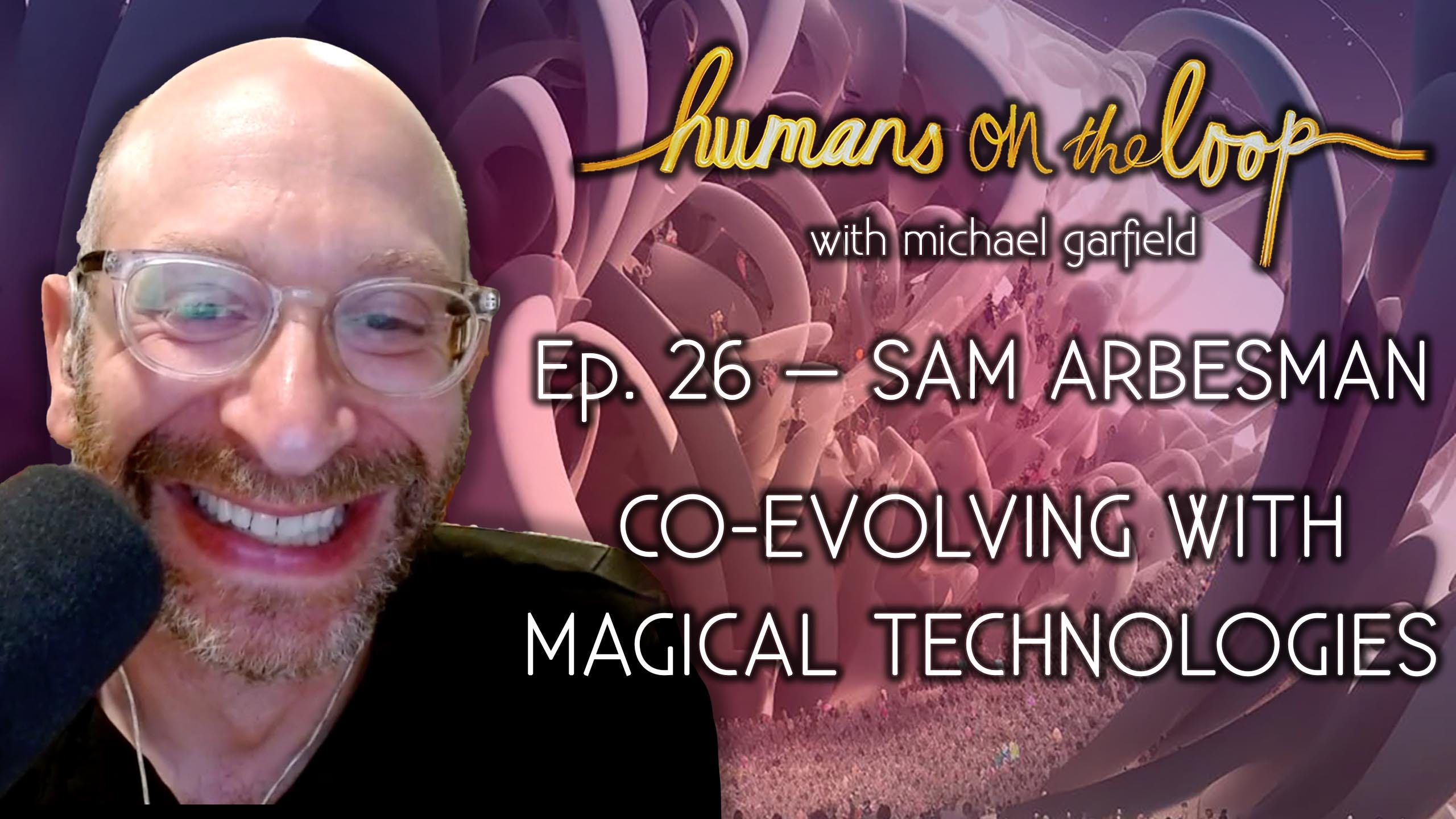
S2 Ep 26Co-Evolving with Magical Technologies feat. Sam Arbesman
EMembership | Donations | Spotify | YouTube | Apple Podcasts✨ About This EpisodeThis week I talk to Sam Arbesman, scientist-in-residence at Lux Capital, Research Fellow at the Long Now Foundation, and host of The Orthogonal Bet, weaving together and plucking at the ideas in his delightful new book, The Magic of Code: How Digital Language Created and Connected Our World…and Shapes Our Future. Sam is a brilliant scholar, a maverick mind, and a good friend—so even though we don’t see perfectly eye-to-eye about just where the analogy of code as magic works and where it falls apart, that tiny bit of friction makes for a fascinating joint exploration into the liminal zones where our categories fray and their distinctions are constantly rewritten.In this episode, we discuss:• Sam’s origin story as a code-lover (00:10:20)• Code as “algebra and fire” (00:14:17)• If code is magic, what is magic? (00:20:10)• Open-source development and open-ended innovation (00:25:48)• Rethinking the nature of “failure” in the so-called Technocene (00:32:12)• Navigating simplicity and complexity (00:38:44)• Acceptable and unacceptable sacrifices to the incomprehensibility of our technologies (00:45:02)• The squishy overlap between tech and biology (00:54:03)• The co-domestication of software bugs and people (01:03:22)• And the emerging age of ephemerality (01:15:55)It was, as it always is with Sam, a joy. I hope you get as much out of it as we did.This Saturday at 10 am PDT is the return of our monthly members hangouts. Join us!✨ Show Links• Dig into nine years of mind-expanding conversations• Learn more about the Humans On The Loop project and its goals• Browse the books we discuss on the show at Bookshop.org• Contact me if you have a problem you think I can help you solve• Explore the interactive knowledge graph grown from over 250 episodes• Explore the Google Notebook for How To Live In The Future, my five-week science and philosophy course at Weirdosphere✨ Mentioned Reading & PeopleSteven Johnson - Everything Bad Is Good For YouWilliam Alonso - “Predicting Best with Imperfect Data”Danny Hillis - “The Enlightenment Is Dead, Long Live The Entanglement”Moses Maimonides - The Guide To The PerplexedRichard Brautigan - “All Watched Over by Machines of Loving Grace”Stewart Brand - The Clock of The Long NowLawrence Lundy-BryanClive ThompsonKevin KellyJose Luis BorgesLionel Snell (Ramsey Dukes)Nadia AsparouhovaUrsula K LeGuinWilliam GibsonDavid KrakauerMichael LevinChris LangtonJim LovelockLynn MargulisAlan MooreJessica FlackMonica AndersonJeremy UtleyAlan PerlisSteve Jobs✨ Mentioned Episodes This is a public episode. If you'd like to discuss this with other subscribers or get access to bonus episodes, visit michaelgarfield.substack.com/subscribe
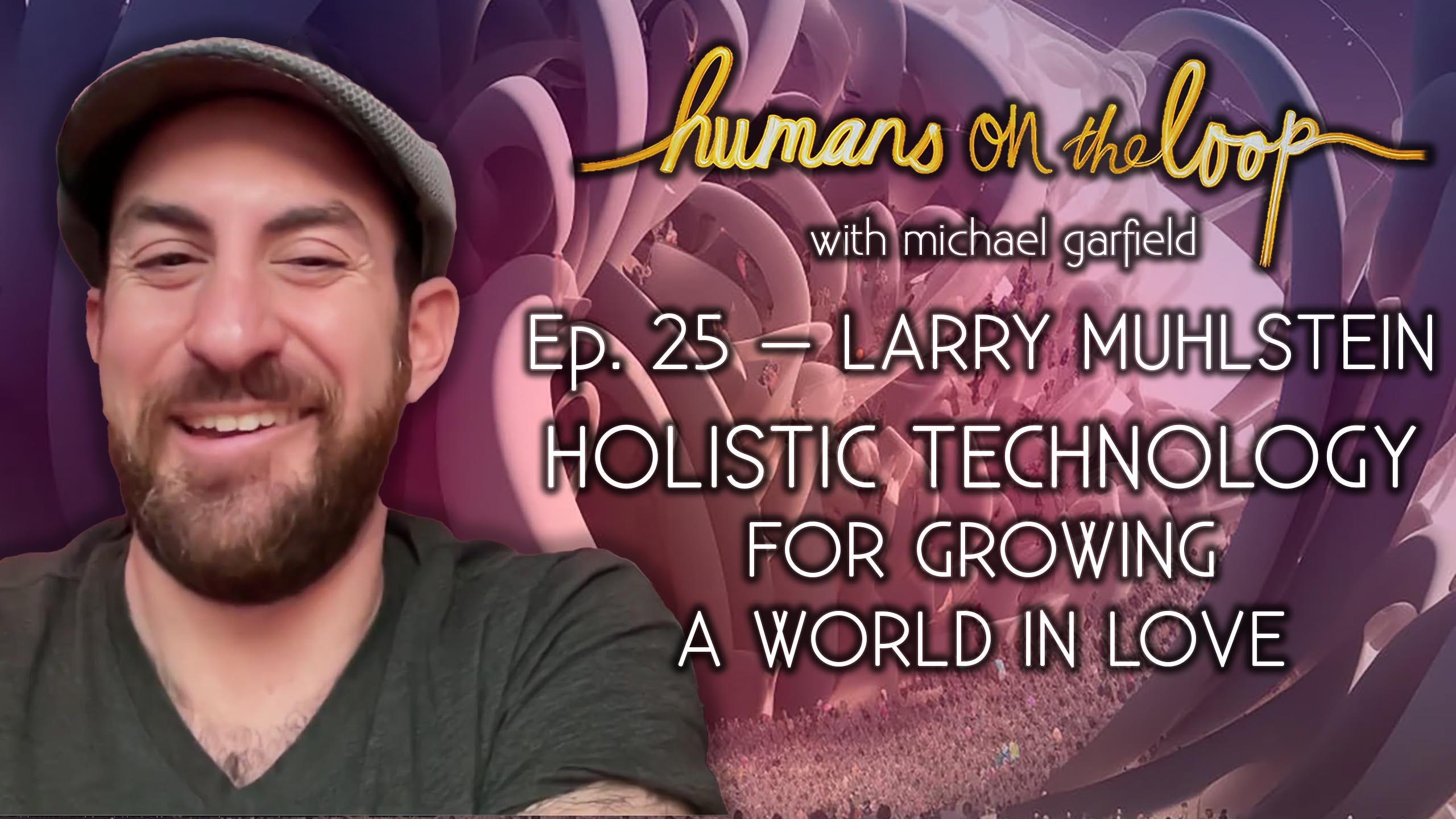
S2 Ep 25Holistic Technology for Growing a World in Love with Larry Muhlstein
EMembership | Donations | Spotify | YouTube | Apple PodcastsThis week we hear from Larry Muhlstein, who worked on Responsible AI at Google and DeepMind before leaving to found the Holistic Technology Project. In Larry’s words:“Care is crafted from understanding, respect, and will. Once care is deep enough and in a generative reciprocal relationship, it gives rise to self-expanding love. My work focuses on creating such systems of care by constructing a holistic sociotechnical tree with roots of philosophical orientation, a trunk of theoretical structure, and technological leaves and fruit that offer nourishment and support to all parts of our world. I believe that we can grow love through technologies of togetherness that help us to understand, respect, and care for each other. I am committed to supporting the responsible development of such technologies so that we can move through these trying times towards a world where we are all well together.”In this episode, Larry and I explore the “roots of philosophical orientation” and “trunk of theoretical structure” as he lays them out in his Technological Love knowledge garden, asking how technologies for reality, perspectives, and karma can help us grow a world in love. What is just enough abstraction? When is autonomy desirable and when is it a false god? What do property and selfhood look like in a future where the ground truths of our interbeing shape design and governance?It’s a long, deep conversation on fundamentals we need to reckon with if we are to live in futures we actually want. I hope you enjoy it as much as we did.Our next dialogue is with Sam Arbesman, resident researcher at Lux Capital and author of The Magic of Code. We’ll interrogate the distinctions between software and spellcraft, explore the unique blessings and challenges of a world defined by advanced computing, and probe the good, bad, and ugly of futures that move at the speed of thought…✨ Show Links• Hire me for speaking or consulting• Explore the interactive knowledge garden grown from over 250 episodes• Explore the Humans On The Loop dialogue and essay archives• Browse the books we discuss on the show at Bookshop.org• Dig into nine years of mind-expanding podcasts✨ Additional Resources“Growing A World In Love” — Larry Muhlstein at Hurry Up, We’re Dreaming“The Future Is Both True & False” — Michael Garfield on Medium“Sacred Data” — Michael Garfield at Hurry Up, We’re Dreaming“The Right To Destroy” — Lior Strahilevitz at Chicago Unbound“Decentralized Society: Finding Web3’s Soul” — Puja Ohlhaver, E. Glen Weyl, and Vitalik Buterin at SSRN✨ MentionsKarl Schroeder’s “Degrees of Freedom”Joshua DiCaglio’s Scale TheoryGeoffrey West’s ScaleHannah ArendtKen WilberDoug Rushkoff’s Survival of the RichestManda Scott’s Any Human Power Torey HaydenChaim Gingold’s Building SimCityJames P. Carse’s Finite & Infinite GamesJohn C. Wright’s The Golden OecumeneEckhart Tolle’s The Power of Now✨ Related Episodes This is a public episode. If you'd like to discuss this with other subscribers or get access to bonus episodes, visit michaelgarfield.substack.com/subscribe
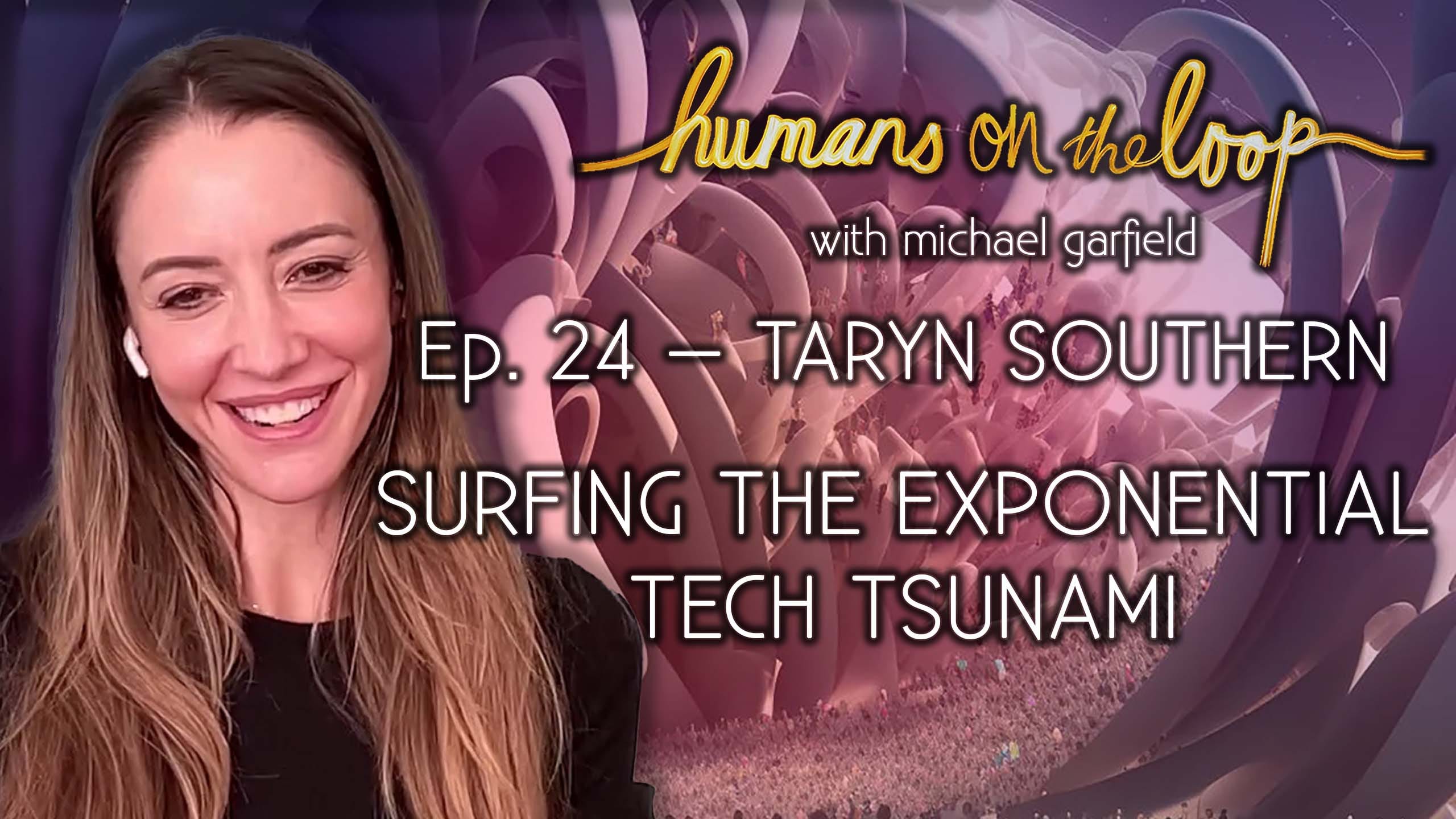
S2 Ep 24Taryn Southern on Surfing the Exponential Tech Tsunami
EMembership | Donations | Spotify | YouTube | Apple PodcastsToday’s guest Taryn Southern is someone I consider a master surfer of technological change: a fellow elder millennial, artist, creative technologist, strategist, and dancer in the liminal zones of high chop. She’s better than I am at finding the pocket, has made a name for herself for riding some serious bombs, and seems to know precisely when to bail. Starting as an actor, Internet famous for being an early YouTube influencer and her album I Am AI, the first LP composed and produced with an LLM, she caught air at the Tribeca Film Festival in 2019 with the premier of her documentary I Am Human (co-directed with Elena Gaby), an intimate look at the lives of three people with implantable brain interfaces and the medical, ethical and societal implications.She’s also produced an award-winning musical VR series for Google using Tiltbrush and Blocks, worked as Chief Storyteller for Blackrock Neurotech, minted the first song token on the Ethereum blockchain, spoken and consulted all over the world, operated as an angel investor, and survived breast cancer. In other words, she’s just the person to teach you how to hang ten instead of duck diving under the next pounder. Let’s drop in and grab the rail. Thanks for listening!If you enjoy this conversation, join the Wisdom x Technology Discord server and consider becoming a member for access to the complete archives, study groups, and community calls.Founding members also get access to the entire twenty hours of lecture and discussion from my recent course, How to Live in the Future at Weirdosphere.Show Links• Explore the interactive knowledge garden grown from over 250 episodes• Dig into nine years of mind-expanding podcasts• Explore the Humans On The Loop dialogue and essay archives• Browse the books we discuss on the show at Bookshop.org• Hire me for speaking or consultingChapters00:00 Introduction: The Promise and Perils of Technology 01:07 Welcome to Humans On the Loop 05:57 Taryn's Early Fascination with Technology 08:55 Living with Constraints and The Spirit of Exploration 31:06 AI in Personal Growth and Communication 38:52 AI as a New Religion and Therapy Tool 42:04 The Ethical Dilemmas of AI and Big Tech 47:58 The Future of AI in Governance and Society 57:42 Empowering Individuals with AI and Community InvolvementMentionsMoon RibasRolf Potts’ VagabondingDamien Walter’s “Modernity is Done”Jim O’ShaughnessySolo: A Star Wars StoryMichael Davis on Exploring the Intersection of AI & RomanceThe Evolution of SurveillanceCory Doctorow’s “enshittification”Howard Rheingold This is a public episode. If you'd like to discuss this with other subscribers or get access to bonus episodes, visit michaelgarfield.substack.com/subscribe
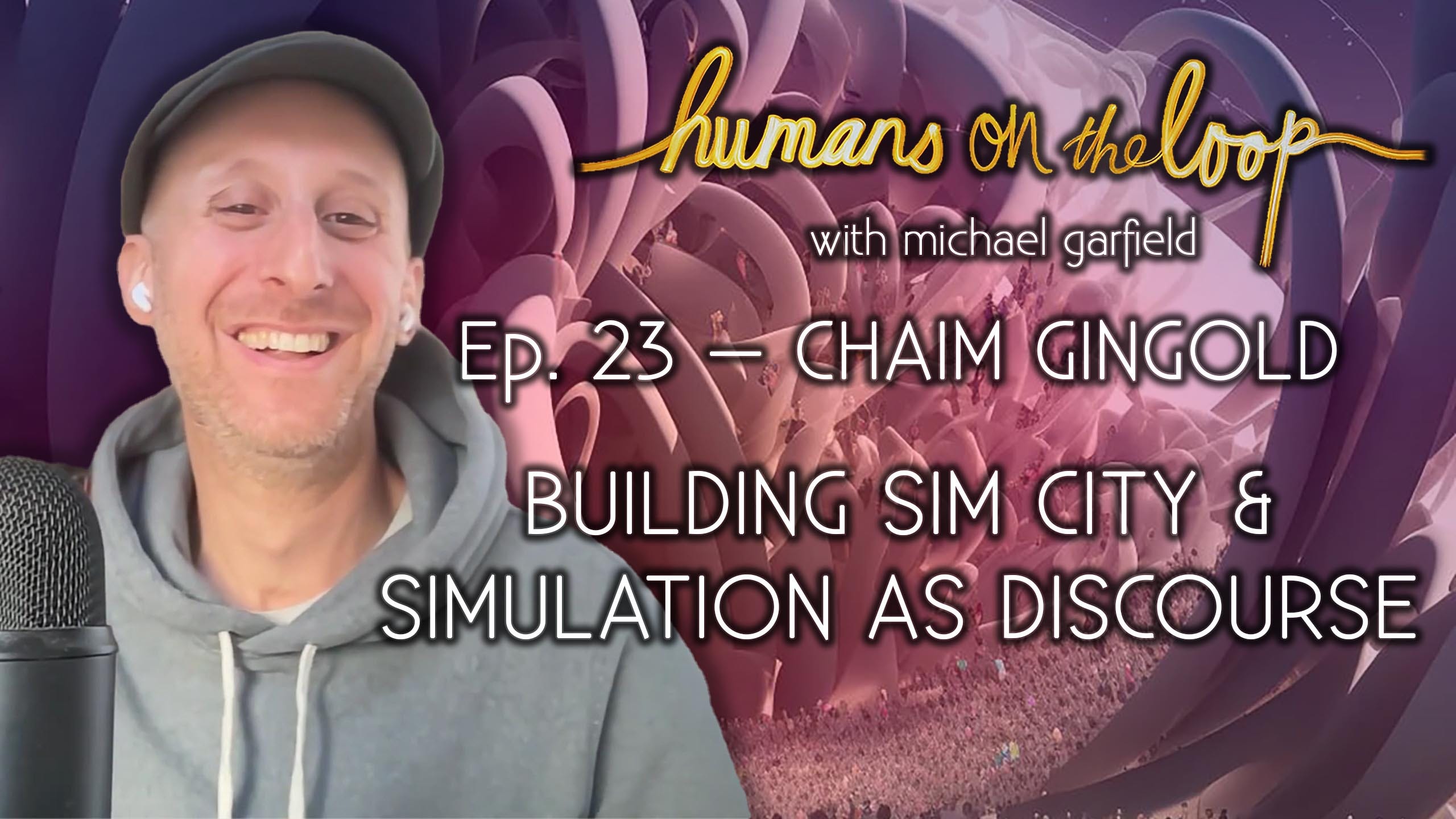
S2 Ep 23Chaim Gingold on Building SimCity & Simulation as Discourse
EMembership | Donations | Spotify | YouTube | Apple PodcastsWe live in simulated worlds of our own making, detecting patterns in the chaos and complexity of raw experience and boiling them down into operable categories and generalizations. Sometimes we do this well, and sometimes…This week’s guest, computer scientist and game designer Chaim Gingold, wrote what I consider the best book available on the history and sociality of simulations: Building SimCity: How to Put the World in a Machine (MIT Press) takes readers from the prehistory of modern computing through the post-war development of cybernetics and systems thinking and into the entangled relationship of video games, military info-tech, civil engineering, software-based education, and complexity science that forms today’s “invisible environment.” Sim City is more than a legendary video game. It is case study in how the digital revolution reshaped the ways we think, teach, design, and govern…and how what simulation as a mode of discourse can hide and reveal, oppress and empower us. In this dialogue we explore the the tensions between games and play, the analog and digital, abstraction and tactility, and mysticism and colonialism in simulation-induced experiences. We investigate the rise and fall of Sim City game developer MAXIS, weave threads through the history of computing and software development, systems science, and the philosophy of technology, and ask:What makes some abstractions better than others?If you enjoy this conversation, join the Wisdom x Technology Discord server and consider becoming a member for access to the complete archives, study groups, and community calls.Founding members also get access to the entire twenty hours of lecture and discussion from my recent course, How to Live in the Future at Weirdosphere.Show Links• Explore the interactive knowledge garden grown from over 250 episodes• Dig into nine years of mind-expanding podcasts• Explore the Humans On The Loop dialogue and essay archives• Browse the books we discuss on the show at Bookshop.org• Hire me for speaking or consultingMentionsWill WrightJohn Conway’s Game of LifeVannevar BushAlan Kay & Xerox PARCEd Catmull - Creativity, Inc.James Clerk MaxwellEthan MollickBrian Sutton-SmithGottfried LiebnizLarry OwensJay ForresterLauren F. KleinEdgar MitchellRusty SchweickertJulian of NorwichChris LangtonKen ForbisMark ZuckerbergElon MuskSam AltmanSam Arbesman - The Magic of CodeTimothy MortonDonna HarawayNick BostromJoshua DiCaglio - Scale TheoryStanislaw Lem - The CyberiadKevin Kelly - Out of ControlStewart Brand & The Whole Earth CatalogFred Turner - From Counterculture to CybercultureDe Kai - Raising AIAnd in case you missed it: This is a public episode. If you'd like to discuss this with other subscribers or get access to bonus episodes, visit michaelgarfield.substack.com/subscribe
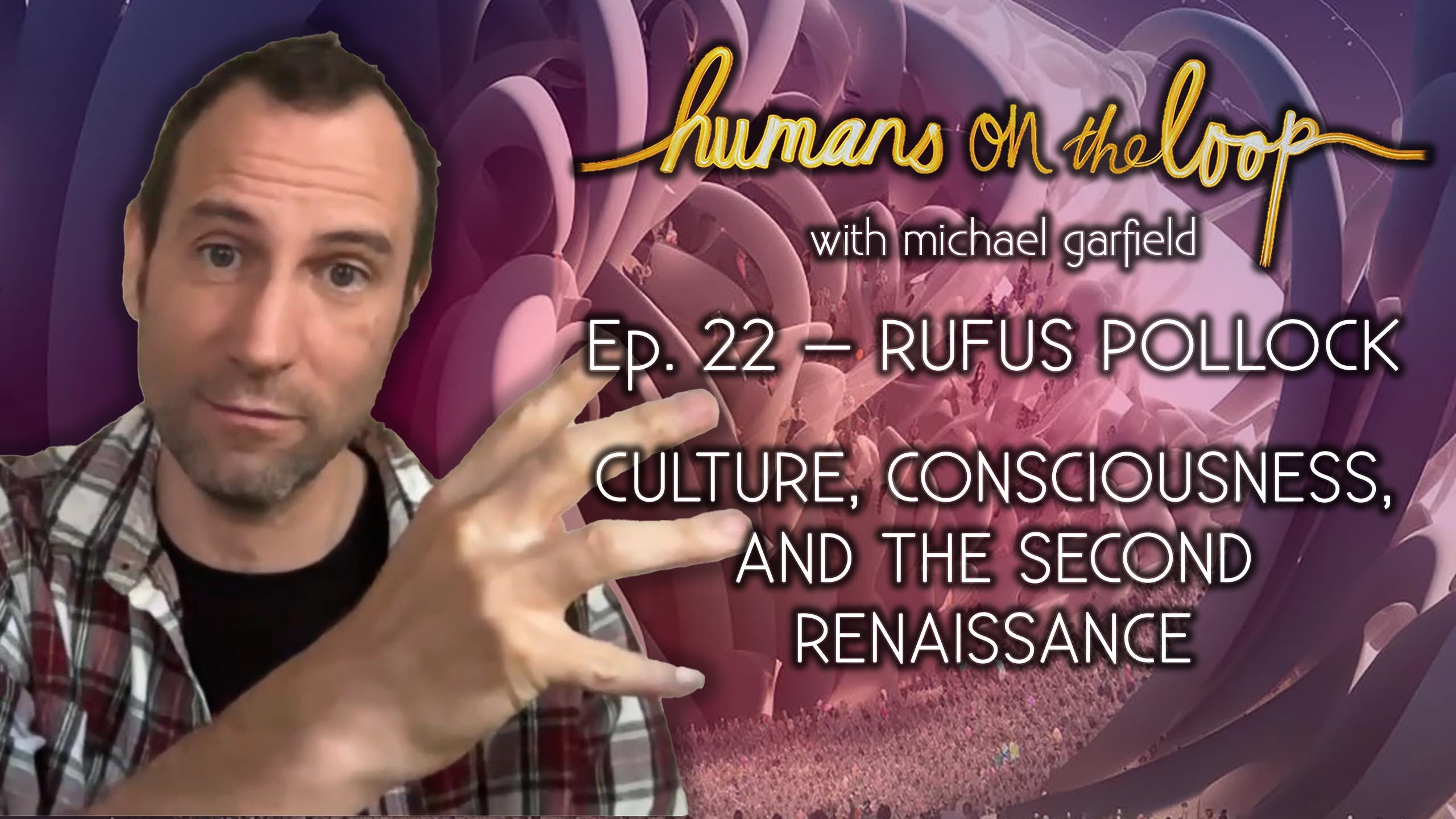
S2 Ep 22Culture, Consciousness, and the Second Renaissance with Rufus Pollock
EMembership | Donations | Spotify | YouTube | Apple PodcastsThis week I speak with Rufus Pollock (Website | Twitter | Wikipedia), former Mead Fellow in Economics at the University of Cambridge, entrepreneur, activist, author of Open Revolution and Wiser Societies, RSA Fellow, and co-founder of Life Itself, Open Knowledge Foundation, Datopian, and Second Renaissance. Rufus is a key player in the so-called “Liminal Web” and active mapper of the ecosystem of emerging changemaking organizations who, along with his wife Sylvie Barbier and an extensive network of brilliant allies, strives to promote the shifts in consciousness and culture that we need to safely navigate our age of accelerating technology with wiser, weller ways of living together.Together we get into the good, bad, and ugly of our nascent planetary culture — the tension between ecological consciousness and economic force, the demands placed on us to reclaim time-tested strategies for community and meaning in a brave new world, the intertwingling of religion and science, and why technological solutions alone are woefully inadequate (however necessary) as we face our crises of collective action. It’s an earnest, soul-searching, thoughtful, and far-reaching extra-long conversation and I hope that you find as much value in it as we did.If you enjoy this conversation, join the Wisdom x Technology Discord server and consider becoming a member for access to our study groups, community calls, and complete archives.Founding members also get access to the entire twenty hours of lecture and discussion from my recent course, How to Live in the Future at Weirdosphere.Show Links• Explore the interactive knowledge garden grown from over 250 episodes• Dig into nine years of mind-expanding podcasts• Explore the Humans On The Loop archives• Browse the books we discuss on the show at Bookshop.org• Hire me for speaking or consultingDiscussedFour Types of ProblemSecond Renaissance Whitepaper & Theory of ChangeTechnology as GodGetting over our Allergy to ReligionThe Primacy of BeingDavid Sloan Wilson - Darwin’s CathedralWilliam Irwin Thompson - Imaginary Landscape, The Digital Economy of W. Brian ArthurFederico Campagna - Prophetic CultureAlex Shakar - LuminariumArthur C. Clarke & Stephen Baxter - The Light of Other DaysJoe Henrich - The WEIRDest People in the WorldJessica Flack - Coarse-Graining as a Downward Causation MechanismMentionedBayo AkomolafeSylvie BarbierLiam KavanaughBret Easton EllisJohn StewartCarl JungDoug RushloffKarl MarxGoetheJamie WhealSteven KotlerKen WilberRobert KeganSuzanne Cook-GreuterPaul LevyGeorge W. BushUrsula K. LeGuinIain McGilchristJim O’ShaughnessyNaval RavikantThich Nhat HanhW. Brian ArthurHazel HendersonJim RuttChristopher AlexanderJamie CurcioJordan PetersonW. B. Yeats This is a public episode. If you'd like to discuss this with other subscribers or get access to bonus episodes, visit michaelgarfield.substack.com/subscribe
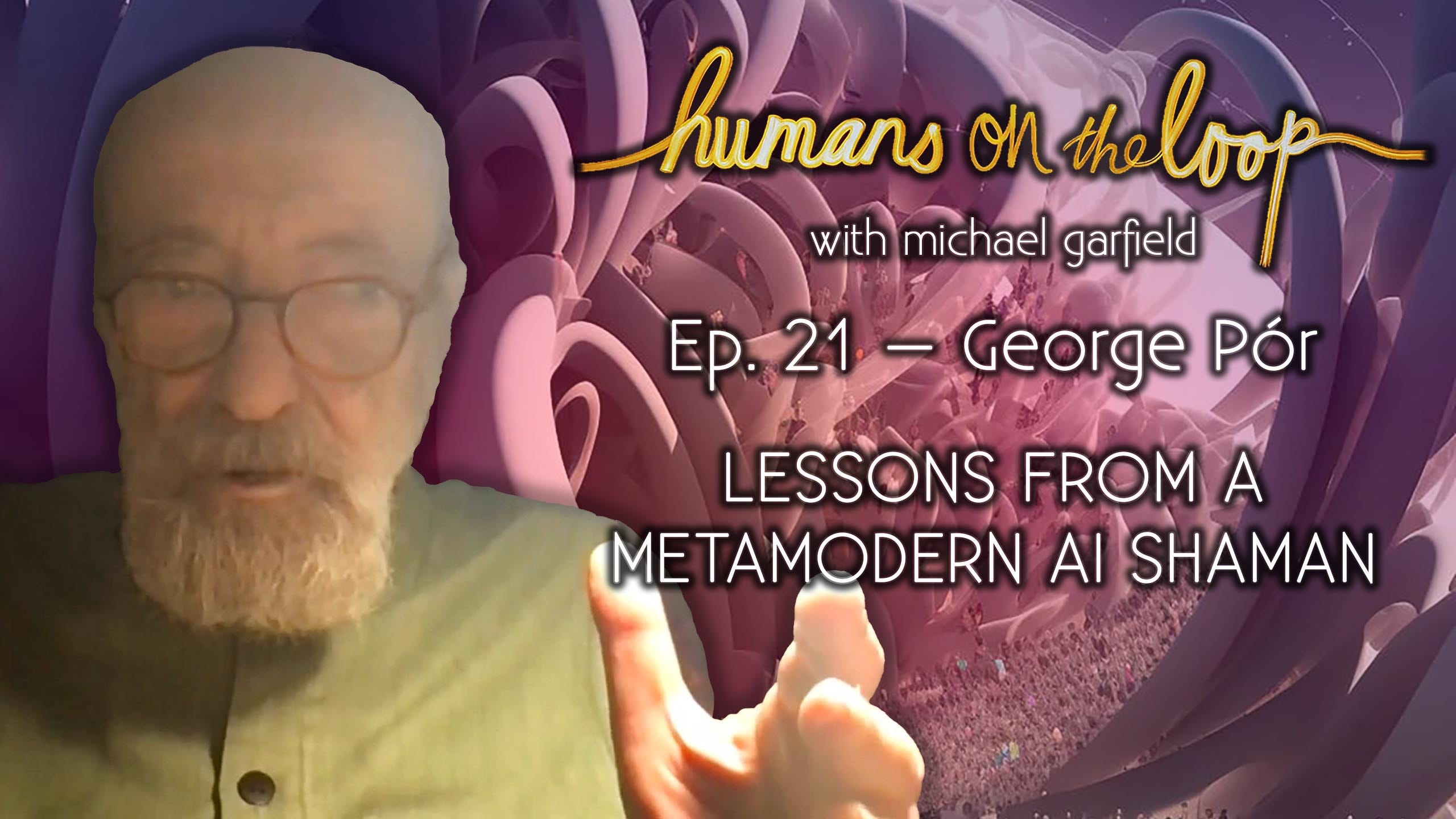
S2 Ep 21Lessons from a Metamodern AI Shaman with George Pór
EMembership | Donations | Spotify | YouTube | Apple PodcastsThis week we speak with George Pór, mentee of Doug Englebart, Founder of Future HOW, Enlivening Edge, and Campus Co-Evolve, independent scholar with past academic posts at the London School of Economics, INSEAD, UC Berkeley, California Institute of Integral Studies, and Université de Paris, wisdom-guided AI advisor at River, and consultant who has worked with clients including the UN Development Programme, HP, Greenpeace, Intel, Ford, and the World Wildlife Foundation. George has played vital roles our emerging understanding of collective intelligence, knowledge gardening, and online community. In this episode we explore his latest iteration as a Metamodern AI Shaman — what that means, why he’s promoting this approach for the cultivation of hybrid human-machine wisdom, and his theory of change for a reimagined human being in an age of collaborative planet-scale intelligence.Links• Hire me for speaking or consulting• Explore the Humans On The Loop archives• Dig into nine years of mind-expanding podcasts• Browse the books we discuss on the show at Bookshop.org• Explore the interactive knowledge garden grown from over 250 episodesDiscussedExtensive context and background summary provided by George hereRadio evolve #568 - Collective Wisdom and ChatGPT with George PórPrelude to the Rise of the Compassionate AI - George PórAI and Wisdom - George PórA Future of our Interactions with AI - George PórNobel Prize in economics awarded to trio for explaining why some nations are rich and others poor (CNN)Scaling of urban income inequality in the USA - Elisa Heinrich Mora, Cate Heine, Jacob J. Jackson, Geoffrey B. West, Vicky Chuqiao Yang, and Christopher P. KempesAI Attending Human Attending AIRelationality - David JaySeeing Like A State - James C. ScottMentioned People & EpisodesLayman PascalFrederic LalouxTimothy MortonAri KushnerStephanie LeppDavid SauvageRoss DawsonStephen ReidTurquoise SoundKate RaworthMatt SegallFrancisco Varela This is a public episode. If you'd like to discuss this with other subscribers or get access to bonus episodes, visit michaelgarfield.substack.com/subscribe

S2 Ep 20Design for Provably Safe AI with Evan Miyazono
EMembership | Donations | Spotify | YouTube | Apple PodcastsThis week’s guest is my friend Evan Miyazono, CEO and Director of Atlas Computing — a tech non-profit committed not to the false god of perfect alignment but to plausible strategy of provable safety. Focusing on community building, cybersecurity, and biosecurity, Evan and his colleagues are working to advance a new AI architecture that constrains and formally specifies AI outputs, with reviewable intermediary results, collaborating across sectors to promote this radically different and more empirical approach to applied machine intelligence.After completing his PhD in Applied Physics at Caltech, Evan led research at Protocol Labs, creating their research grants program, and led the special projects team that created Hypercerts, Funding the Commons, gov4git, and key parts of Discourse Graphs and the initial Open Agency Architecture proposal.In our conversation we talk about a wide swath of topics including regulatory scaling problems, specifying formal organizational charters, the spectre of opacity, and the quantification of trust — all, in some sense, interdisciplinary matters of “game design” in our entanglement with magical technologies and fundamental uncertainty.If you enjoy this conversation, join the Wisdom x Technology Discord server and consider becoming a member for access to our study groups, community calls, and complete archives. Founding members also get access to the entire twenty hours of lecture and discussion from my recent course, How to Live in the Future.Links• Hire me for speaking or consulting• Explore the Humans On The Loop archives• Dig into nine years of mind-expanding podcasts• Browse the books we discuss on the show at Bookshop.org• Explore the interactive knowledge garden grown from over 250 episodesDiscussed• Atlas Computing Summary Slides• Atlas Computing Institute Talks (YouTube Playlist)• A Toolchain for AI-Assisted Code Specification, Synthesis and Verification• Also, a relevant paper from Max Tegmark:Provably safe systems: the only path to controllable AGIMentionedGregory BatesonDavid DalrympleK. Allado-McDowellTerence McKennaYuval Noah HarariCosma ShaliziHenry FarrellHakim BeyNatalie DeprazFrancisco VarelaPierre VermerschPlurality InstitutePuja OhlhaverSean Esbjörn-HargensAlfred North WhiteheadDe KaiPrimer RiffAre we doing AI alignment wrong? Game designers Forrest Imel and Gavin Valentine define games as having meaningful decisions, uncertain outcomes, and measurable feedback. If any one of these breaks, the game breaks. And we can think about tech ethics through this lens as well. Much of tech discourse is about how one or more of these dimensions has broken the “game” of life on Earth — the removal of meaningful decisions, the mathematical guarantee of self-termination through unsustainable practices, and/or the decoupling of feedback loops.AI alignment approaches tend to converge on restoring meaningful decisions by getting rid of uncertainty, but it’s a lost cause. It’s futile to encode our values into systems we can’t understand. To the extent that machines think, they think very differently than we do, and characteristically “interpret” our requests in ways that reveal the assumptions we are used to making based on shared context and understanding with other people.We may not know how a black box AI model arrives at its outputs, but we can evaluate those outputs…and we can segment processes like this so that there are more points at which to review them. One of this show’s major premises is that the design and use of AI systems is something like spellcraft — a domain where precision matters because the smallest deviation from a precise encoding of intent can backfire.Magic isn’t science in as much as we can say that for spellcraft, mechanistic understanding is, frankly, beside the point. Whatever you may think of it, spellcraft evolved as a practical approach for operating in a mysterious cosmos. Westernized Modernity dismisses magic because Enlightenment era thinking is predicated on the knowability of nature and the conceit that everything can and will eventually bend to principled, rigorous investigation. But this confused accounting just reshuffled its uneradicable remainder of fundamental uncertainty back into a stubbornly persistent Real that continues to exist in excess of language, mathematics, and mechanistic frameworks. Economies, AI, and living systems guarantee uncertain outcomes — and in accepting this, we have to re-engage with magic in the form of our machines. The more alike they become, the more our mystery and open-ended co-improvisation loom back over any goals of final knowledge and control.In a 2016 essay, Danny Hillis called this The Age of Entanglement. It is a time that calls for an evolutionary approach to technology. Tinkering and re-evaluating, we find ourselves one turn up the helix in which quantitative precision helps us reckon with the new built wilderness of technology. When

S19 Ep 2Religions of the Future & The New Monstrous with Rina Nicolae
EMembership | Donations | Spotify | YouTube | Apple PodcastsWhat the hell is going on with culture right now? The Web is running evolution in fast-forward, remixing the very substrates of identity and personhood in a molten broil of post-ironic, post-human, post-truth meme-play that reminds me of nothing more than the porous networked selfhood of bacterial in a molten wash of horizontal gene transfer. RIP the genre and all hail the hyper-real individual as institution, the self-fulfilling prophecies of [EDIT: Guy Debord’s] society of the spectacle [and Baudrillard’s simulation], the revenge of religion as our accelerating techno-social evolution prompts a kind of reversal as the movement of the Tao that challenges the dreams and ideals of the Enlightenment…it is a time of monsters, a rapid recombination of worlds and ways of living in them. How to make sense of it all…or is making sense even a viable strategy when rifts and ruptures are the name of the game?Amidst the chaos of pop culture and mainstream news, my friend Rina Nicolae of Incognita swims comfortably as a thoughtful commentator. Riffing philosophically on network society and its discontents, the emergent spiritual traditions of digital natives, and the posthuman bestiary of our AI- and biotech-saturated century, Rina’s Substack is a handbook to the cyborg aesthetic, the imagistic/algorithmic complex of online identity, our entanglement with capital and the possession by and performance of meme-space.How do we not become caricatures of ourselves in the world-creating and -destroying flood of remix culture? How do we cultivate roughness, fractality, wildness, illegigility? How do we stay, as Cadell Last put it in the previous episode, “in the gaps and cracks” instead of becoming prey to the new monsters of the unleashed imagination? How do we *befriend* those monsters?William Irwin Thompson said noise characterizes the emergence of planetary culture — an age in which “Technology slays the victim” of the mind “resurrects it as art” in a new ecology of consciousness. If, then, the only way through is up and out, then join me as, once more, we dive into the noise and make music together with Rina…Links• Hire me for speaking or consulting• Explore the Humans On The Loop archives• Dig into nine years of mind-expanding podcasts• Browse the books we discuss on the show at Bookshop.org• Explore the interactive knowledge garden grown from over 250 episodes• Join the Wisdom x Technology (open) & Future Fossils (legacy) Discord serversDiscussedProphets Of A Machine FutureWhat Is Posthumanism?The New MonstrousMilady Infiltrates The VaticanKim Kardashan Was Never HumanThe AI That Can Change Your MindMentionedPriya RoseDonna HarawayBobby AzarianDavid DeutschJack HalberstamJulia ChristevaTimothy MortonK. Allado-McDowellMary ShelleyBenjamin BrattonCharlotte FangMarshall McLuhanJimi HendrixTaryn SouthernJim O’ShaughnessyKevin Kelly This is a public episode. If you'd like to discuss this with other subscribers or get access to bonus episodes, visit michaelgarfield.substack.com/subscribe