
Humankind on Public Radio
98 episodes — Page 2 of 2
Healing the Trauma of War, Pt1
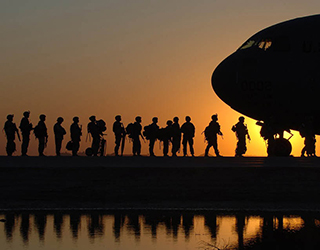
After war, our veterans face a new battle: emotional and spiritual conflict that is normal to human beings who’ve experienced intense brutality. In this documentary, we examine the effects of military violence and how people begin the journey of healing from it. We hear deeply moving stories of veterans who served in Iraq, Afghanistan and Vietnam. In trying to put their lives back together, some now participate in counseling and attend support groups with other vets. They may practice relaxation techniques, like meditation. Some have become antiwar activists. Others join volunteer activities to help refugees from war zones.
Books to Prisoners
The Prisoners Literature Project, an all-volunteer service based in Berkeley, California, packages and ships books to people who are incarcerated, as a humanitarian gesture and one that helps inmates prepare for re-entry into society.
Uncommon Ground, Pt1
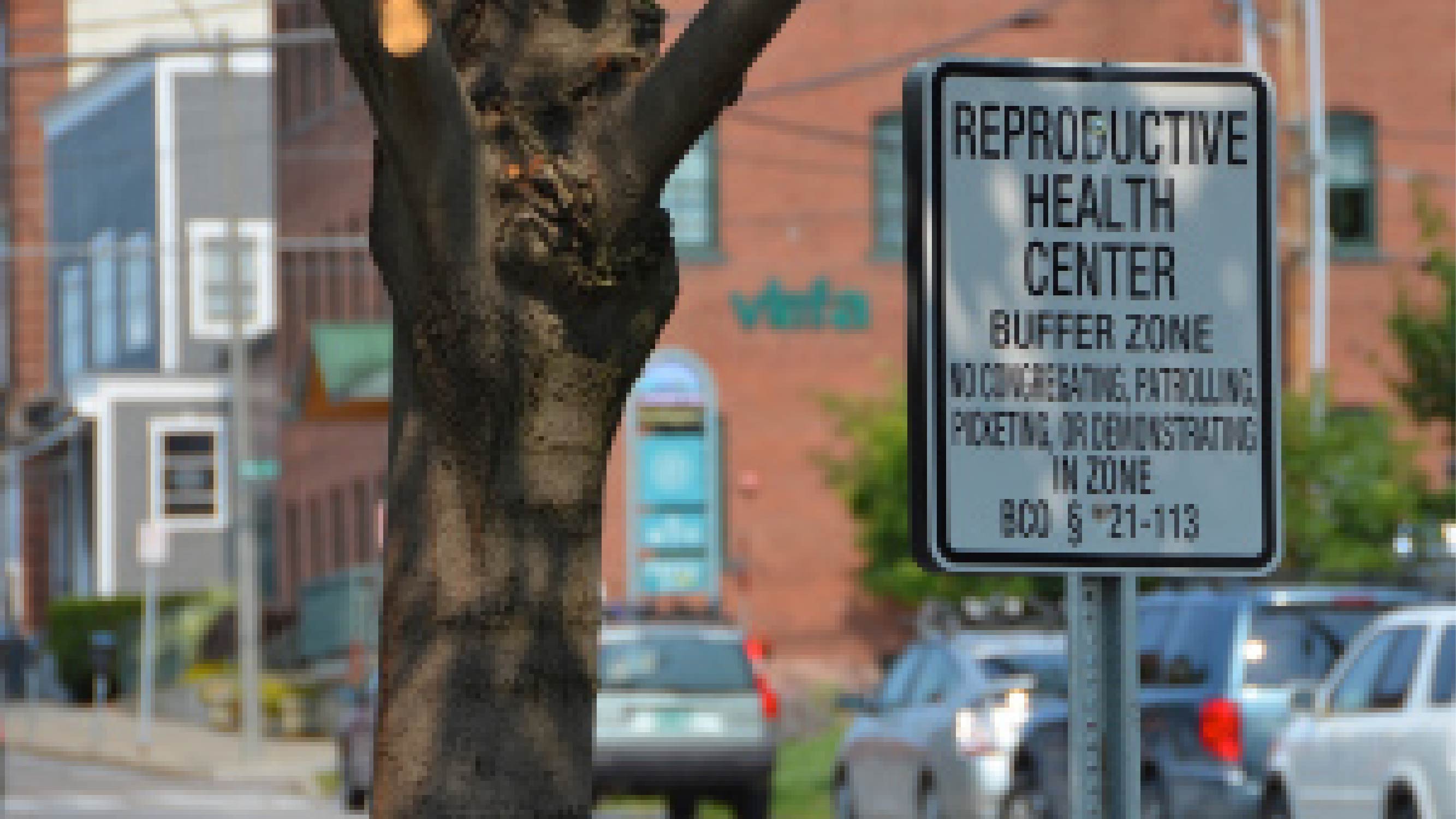
In the wake of shocking violence at abortion clinics, two apparent enemies — women representing pro-choice and pro-life factions in the Boston area, where shootings had occurred — were forced to communicate, for the sake of everyone’s safety. What unfolded over many months was one of the most mysterious and moving conversations among people of sharply differing ideologies. A remarkable encounter with continuing relevance.
After-Effects of War with Christal Presley
Christal Presley, an English teacher in Virginia who experienced “secondary trauma” in response to the extreme behavior of her father, a Vietnam-era veteran with PTSD, tells how the family began a journey of recovery.
Steps to Recovery, Pt 2
Today over two million people partake of the storytelling, the good humor, the words of wisdom and the gallons and gallons of free coffee made available to attenders of Alcoholics Anonymous meetings. AA’s basic text has been translated into more than 60 languages and has sold over 35 million English copies. We consider the history of the “12 Steps” of recovery, how this free-of-charge fellowship spread worldwide, as well as recent scientific confirmation of AA’s effectiveness.
Steps to Recovery, Pt 1
Alcoholics Anonymous marks its beginning when one hopelessly addicted drunk realized that connecting with a fellow-sufferer would create a safe zone in which both could stop their downward spiral. In the second half, we examine the AA recovery principles that have promoted sobriety for millions of recovering alcoholics and have created a template to help people worldwide who struggle with many forms of addiction.

The Way of Tao, Pt 2
“At the end of the day,” says Jonathan Star about his English translation of Tao te Ching from the original Chinese, “it’s not about attaining anything. The Tao keeps saying ‘it’s everywhere!’ It’s to notice another part of yourself that’s just overlooked. You know, we see what the mind shows us, but there’s another dimension to our being that’s constantly being overlooked.” For Star, his translation project for this slender, stunning volume, which took over a decade, was a spiritual practice. Includes further readings from Star’s translation.

The Way of Tao, Pt 1
Jonathan Star took twelve years to master the nuances of ancient Chinese in his quest to produce a remarkably lucid and evocative English translation of Lao Tsu’s brilliant masterpiece of wisdom. Guidance in the subtle art of attaining mental and emotional balance pervades Star’s brilliant translation of Lao Tsu’s timeless poetic volume of Taoist philosophy on how to lead a centered life.
The Practice of Forgiveness, Pt 2
When we nurse grudges, the person clinging to a resentment often pays a high price in anxiety, hostility, perhaps depression. What follows from that for many people, says Robin Casarjian of the Lionheart Foundation, are health-related symptoms. “And it stops you,” she says, ‘from really being able to be fully present to yourself, and to other relationships. So forgiving frees you. Forgiveness frees the forgiver.” This insight informs her fascinating work with inmates in prison, at-risk youth and others.

Aging in Community, pt. 2: Participants
Within a decade, America will be looking different. In addition to other demographic changes, 70 million Baby Boomers are now entering their retirement years. For the first time in our history, there will be more older adults than children. This huge societal change will affect how families provide eldercare, how older Americans access transportation, and whether people can age in their own homes among neighbors they know — and avoid nursing facilities, where about 30% of Covid-19 deaths occurred. These shifts will accelerate a trend that began three decades ago with passage of the Americans with Disabilities Act: local communities are attempting to become more age-friendly. What changes will this mean for how families relate, how our streets and sidewalks are designed, how we use technology? On Aging in Community, a special project from Humankind public radio, you’ll hear stories of transition and dignity — and meet people who are showing the way.
The Practice of Forgiveness, Pt 1
Author and prison therapist Robin Casarjian reframes the act of forgiveness not to condone hurtful behavior, but as a shift in perception that allows us not to take someone’s else’s misconduct so personally. Casarjian has spent decades teaching forgiveness. Drawing on her own experience of having been abused — and learning how to move on — she noticed that some people don’t regard forgiveness as an option for themselves. The implication, she says, is “I’m not going to do a favor” to someone who was hurtful. In fact, she says, forgiveness is a favor we do for ourselves. “We do it to release ourselves from the negative power that somebody has over us.”
Aging in Community, pt. 1: Connecting to Community
Within a decade, America will be looking different. In addition to other demographic changes, 70 million Baby Boomers are now entering their retirement years. For the first time in our history, there will be more older adults than children. This huge societal change will affect how families provide eldercare, how older Americans access transportation, and whether people can age in their own homes among neighbors they know — and avoid nursing facilities, where about 30% of Covid-19 deaths occurred. These shifts will accelerate a trend that began three decades ago with passage of the Americans with Disabilities Act: local communities are attempting to become more age-friendly. What changes will this mean for how families relate, how our streets and sidewalks are designed, how we use technology? On Aging in Community, a special project from Humankind public radio, you’ll hear stories of transition and dignity — and meet people who are showing the way.
Judicial Independence, pt. 4: Term Limits
The Constitution specifies that once federal judges are nominated by the president and confirmed by the Senate, they can hold their office “during good behavior,” in other words for life — unless they’ve misbehaved, that is. But the average American today lives a lot longer today than in 1789, when President George Washington signed the Judiciary Act, establishing America’s court system. In a time when justices may live into their eighties and even nineties, sometimes facing ill-health, advocates of Supreme Court reform maintain there may be constitutional ways to institute term limits. In part four of our look at the judiciary, we consider the addition of an independent body to pick cases for the Supreme Court, the role of The Federalist Society and the impact that a lack of diversity in life experience has on our federal judiciary.

Judicial Independence, pt. 3: Expanding the Court
The Republican party has not won the majority of votes in six of the last seven presidential elections. And yet vacancies on the Supreme Court have allowed Republican presidents to appoint six of the last ten justices. Does this skew the Court in a way that’s out of step with public opinion? Here we explore the history of “court-packing” as well as a range of other proposals intended to bring greater fairness and political independence to America’s judiciary.
Judicial Independence, pt. 2: Politicians In Robes?
Have our courts – intended by America’s founders to be an independent arbiter of justice – turned into another political battlefield? Are today’s judges mere “politicians in robes”? This public radio documentary series looks at crucial flashpoints in recent decades. In this divisive climate, will the frequency of 5-4 decisions by the Supreme Court increase, as Justice Ruth Bader Ginsburg suggested in June 2019? Will rulings follow the predictable blocs of liberal and conservative justices, strongly associated with the party of the president who appointed them?

Judicial Independence, pt. 1: Our Divided Court
Have our courts – intended by America’s founders to be an independent arbiter of justice – turned into another political battlefield? Are today’s judges mere “politicians in robes”? This public radio documentary series looks at crucial flashpoints in recent decades. Because federal judges are nominated by the president and confirmed the U.S. Senate, inevitably the process is somewhat politicized. But as hyper-partisanship has corrosively swept across American life, we’ll explore whether our judiciary has been infected.
The Worry Solution with Martin Rossman
Bay Area physician and Univ. of California medical professor Martin Rossman, author of “The Worry Solution”, describes ways to distinguish between what we can change and what we must learn to accept.
Safe Place in a War Zone
This episode of ‘Humankind on Public Radio’ is part of a special series, ‘The Spiritual Care Podcast’. For more episodes exploring the role of spiritual caregivers helping those in need, look for ‘The Spiritual Care Podcast’ on your preferred podcast platform. Rev. Chris Antal, a Unitarian Universalist minister in the town of Rock Tavern, New York, was drawn to service in response to the attacks of 9/11. He entered military chaplaincy partially as a way to help soldiers who are prone to harming themselves in the wake of war. He also wanted to bring a “liberal voice into a very conservative chaplaincy,” consistent with the commitment of his tradition of acceptance for people representing different faiths and sexual orientation backgrounds. In this profile, Rev. Antal explores how he was drawn to faith-based engagement with indigenous religious leaders, where he was stationed at Kandahar Air Base. “I was uniquely equipped to engage in interfaith dialogue” with Muslims. But what’s it like to be a spiritual presence in a war zone? What’s the duty to honor the lives of human beings who die in war, whether from your side or the “enemy”? Rev. Antal grew disenchanted with the U.S. military policy of deploying unmanned aircraft (drones), which are often associated with civilian casualties. In 2016, he resigned in protest from his commission as a chaplain in the Army Reserve and, after a Congressional inquiry, received an honorable discharge. We end this episode with an excerpt of Rev. Antal’s moving sermon about modern war.

Interfaith Understanding on Campus
This episode of ‘Humankind on Public Radio’ is part of a special series, ‘The Spiritual Care Podcast’. For more episodes exploring the role of spiritual caregivers helping those in need, look for ‘The Spiritual Care Podcast’ on your preferred podcast platform. We hear from chaplains and students on a college campus (Vanderbilt University in Nashville, Tennesee) with a long tradition of promoting dialogue among various groups. How can chaplains act as bridges between people of different traditions? What are the teachings of love for neighbor found within all great religious philosophies? What can we learn from potentially rich exchanges honoring diversity? How can students be encouraged to ’stretch out’ and discover new truths. How can we face and mitigate the prejudices and preconceptions that most people carry with them? And what role can interfaith service activities play in breaking down barriers?
Jailhouse Chaplains
This episode of ‘Humankind on Public Radio’ is part of a special series, ‘The Spiritual Care Podcast’. For more episodes exploring the role of spiritual caregivers helping those in need, look for ‘The Spiritual Care Podcast’ on your preferred podcast platform. The United States incarcerates more people than any other nation in the world. Federal and state prisons and county jails hold around two million prisoners. Another five or so million people are on probation or parole. Some in this diverse population are dangerous and apparently don’t seek rehabilitation to a more productive life. For many others, though, incarceration is a forced opportunity for self-examination and positive change – a process that can be supported and stimulated by spiritual care providers. In this segment, we explore in-depth the experiences of two chaplains: Paul Shoaf-Kozak, a Christian social justice advocate who oversees the chaplaincy department at the Essex County Correctional Facility in Middleton, Massachusetts, northeast of Boston; and Genko Kathy Blackman, a Buddhist teacher who has long visited jails around the Seattle area. We also hear from two prisoners about their faith journeys while behind bars.
Welcoming the Stranger
This episode of ‘Humankind on Public Radio’ is part of a special series, ‘The Spiritual Care Podcast’. For more episodes exploring the role of spiritual caregivers helping those in need, look for ‘The Spiritual Care Podcast’ on your preferred podcast platform. We visit a shelter at Seattle’s Mission for a rich exchange with a formerly homeless man who feels the spiritual care he received from mental health workers helped him develop the ability to transition into housing. We hear from a social worker, Larry Clum, who explores what it means to companion homeless people without an intent to “fix” their problem. Also, several chaplains reflect in-depth on the experience of connecting with people who are facing challenges related to mental health, addiction and homelessness. Included are comments by Kae Eaton of the Mental Health Chaplaincy, Rev. Jonathan Neufeld, community minister at Seattle Mennonite Church, and Rev. Beverly Hartz, with the Veterans Administration Puget Sound Health Care system.

Introducing the Spiritual Care Podcast
David Freudberg, host of Humankind public radio, announces a new podcast on the fascinating practice of “spiritual care”: stories of caregivers (chaplains, nurses, social workers, etc.) who provide nonsectarian support for people in need and sometimes in distress.
Simple Relaxation Exercise
A 15-minute stress reduction session to calm the body and mind.
Passengers, pt. 4: Taxation for Transportation
Gas taxes you pay at the pump go into a huge pool of federal transportation funds. How should the money be divided up? Plus high-speed rail, pro and con.
Passengers, pt. 3: Cars and Carbon
What is the global warming footprint of cars vs. public transit? Story of a family seeking a low-carbon lifestyle. Also, hear the views of transportation experts, the president of AAA, and others.
Passengers, pt. 2: The Business of Public Transit
Business people and environmentalists come together: improved public transportation helps to grow the economy, for lots of reasons. Bankers and the Sierra Club on the same side.
Passengers, pt. 1: Going Car-Free
The story of a Virginia man who accepted his county’s “challenge” to go car-free for a month; plus voices of motorists filling up at the pump; bus riders in a low-income neighborhood and others.
The Search for Well-Being, pt. 4: Maintaining Compassion for Patients
Professors of medicine and nursing describe ways to treat the whole patient. And a look at medical use of acupuncture and meditation, for which evidence of effectiveness continues to grow.
The Search for Well-Being, pt. 3: Doctors of the Future
With diet a factor in ailments from diabetes to obesity, medical students at the country’s third largest campus attend cooking classes to learn how to help patients. And future MDs tell how they would heal our health system.
The Search for Well-Being, pt. 2: When a Doctor Has Time to Listen
The problem of rushed medical visits, now standard nationwide, can strain both doctors and patients. The story of a Calif. woman who was misdiagnosed with MS, until a different doctor had the time to listen and discovered the error.
The Search for Well-Being, pt. 1: Treating the Whole Person
This look at the emergence of “integrative medicine” begins with a visit to America’s busiest trauma center, in Baltimore, where patients receive both emergency care and natural treatments to soothe the challenges of serious illness.
Catching Up with Granny D, pt. 2
A lively profile of “Granny D,” (Mrs. Doris Haddock of Dublin, New Hampshire) famous for her 14-month walk across the United States to promote campaign finance reform. (Part 2)
Catching Up with Granny D, pt. 1
A lively profile of “Granny D,” (Mrs. Doris Haddock of Dublin, New Hampshire) famous for her 14-month walk across the United States to promote campaign finance reform. (Part 1)
The Right to Vote, pt. 2
Hear a diversity of voices and views on today’s debates over whether voters should be required to show ID at the polls. Some Americans believe that ensures honest elections; while others see it as an unnecessary obstacle to minority voters. And we consider whether people who’ve committed felonies should be allowed to vote, after serving their time.
The Right to Vote, pt. 1
A fascinating history of the much-contested right to vote in America: from slaves freed after the Civil War, to women’s suffrage, to the civil rights movement. Included is the moving first-person story of a young woman who participated in the 1964 Mississippi Freedom Summer project for voter registration of African Americans.
The Power of Nonviolence, pt. 8: Moral Injury
We hear from veterans who wrestle with healing from “moral injury” which occurs after a violation of conscience, based on events they witnessed or participated in while on military duty.
The Power of Nonviolence, pt. 7: Healing the Trauma of War
We hear profiles of American soldiers who, after military duty, returned home to face another battle—the effects of Post-Traumatic Stress Disorder (PTSD).
The Power of Nonviolence, pt. 6: Deep Listening
When we’re in a disagreement, it’s sometimes hard simply to listen to the other person. But skillful listening is a core practice of conflict resolution and, potentially, a doorway to improved relations and greater self-understanding.
The Power of Nonviolence, pt. 5: Seeds of Peace
A return visit to the Seeds of Peace summer camp, when teenagers from opposing sides of conflict regions, including the Middle East, arrive for amazing encounters of dialogue and fun.
The Power of Nonviolence, pt. 4: Unblocking our Natural Empathy
How can we avoid reacting furiously when someone provokes us? Hear a fascinating array of answers from theologian Frank Rogers, Rabbi Michael Lerner, Rev. Betty Stookey and legendary folksinger Noel Paul Stookey, who performs.
The Power of Nonviolence, pt. 3: Compassion Practice
In a world given to so much brutality, it would be easy to underestimate the impact of basic human compassion in actually resolving strife, yet even in tense environments, people are transformed by gestures of understanding.
The Power of Nonviolence, pt. 2: The Spirituality of Nonviolence
We hear stories of peacemakers who draw from their diverse lives and religious traditions as a basis for breaking down barriers and promoting conflict resolution.
The Power of Nonviolence, pt. 1: Soul Force
We look back on the stunning display of forgiveness and nonviolence by the grieving families and congregants of Mother Emanuel church, where a gunman murdered black worshipers. Roof was sentenced to death today by a federal jury.
Radioactive, pt. 1
In this episode of Humankind, hear nuclear experts pro and con, an emergency room physician, and a variety of voices telling the story of a controversial reactor in Vermont. Part 1 of 2.
Resilient Nurses, pt. 4: Compassion Fatigue
This episode explores the very human level at which some nurses interact with patients at their most vulnerable moments. What spiritual questions about life and death arise in such encounters? We do nurses turn for their own support? And we look at the concept of “compassion fatigue” and ways nurses can maintain open-hearted care.
Resilient Nurses, pt. 3: The Art of Listening
How do nurses, who are exposed to continual suffering by patients, manage to keep their hearts open and maintain compassion? Nurses describe the centrality of communication with patients and the skills of “active listening.” Nurses are regenerated by the bond of caring they build with patients in need.
Resilient Nurses, pt. 2: Regaining Your Center
Inspiring stories of how active nurses use self-care techniques that help them manage, and transcend, the stresses of their essential work life, both on the job and after hours.
Resilient Nurses, pt. 1: Facing Challenge and Change
A no-holds-barred look at the stressful conditions in which many nurses work: the long hours, the emotional toll, the rapid pace, and the way that technology and institutional practices can make it hard to form a caring bond with patients.